Jonah Hex (2010) – Film Review

“Eventually, a Man’s Gotta Decide if He’s Gonna Do What’s Right. That Choice Cost Me More Than I Bargained For…” – Jonah Hex

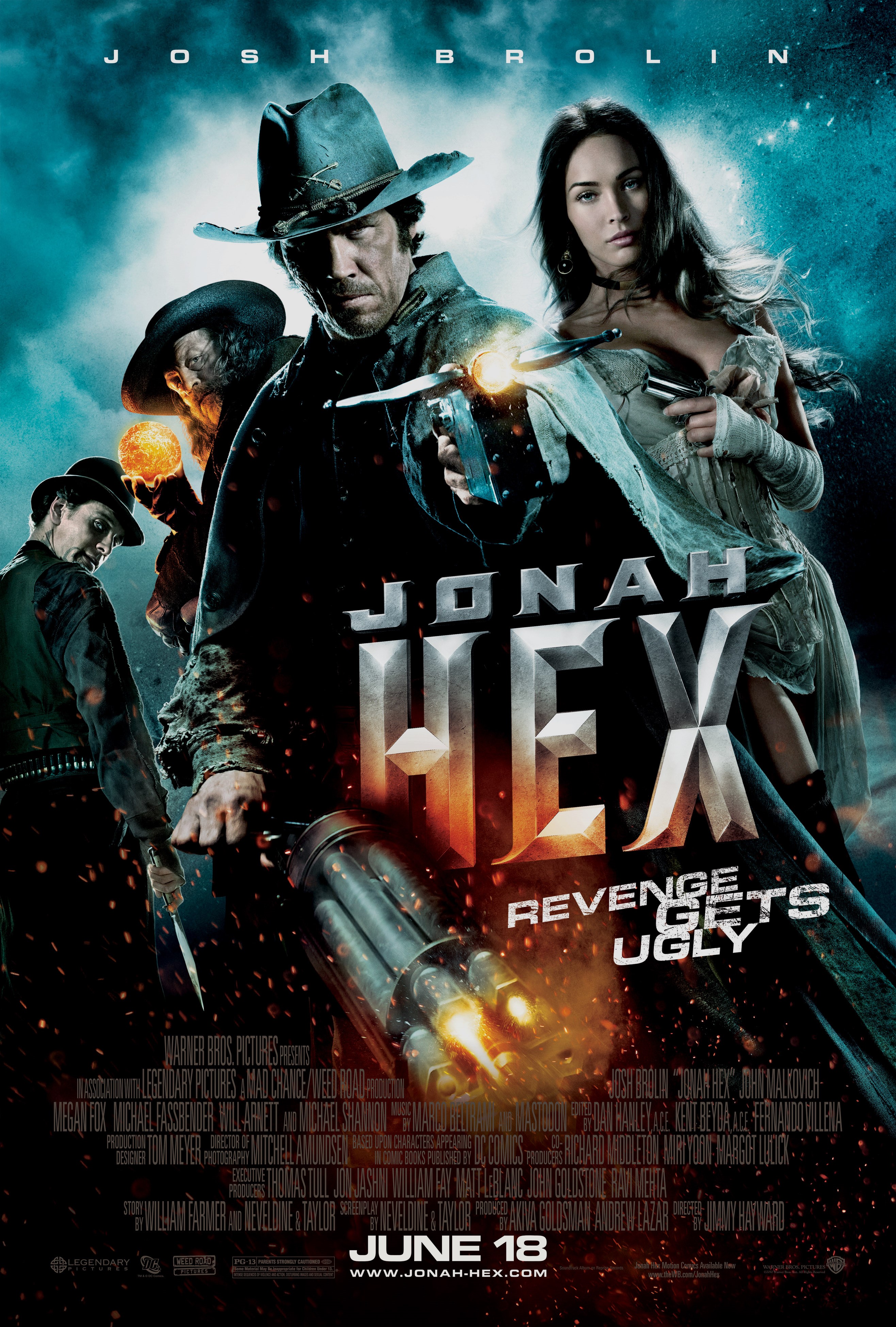
Debuting in 1972 in the All-Star Western comic book series, published by DC Comics, Jonah Woodson Hex is a gruff anti-hero created by writer John Albano and artist Tony DeZuniga. A surly, cynical bounty hunter whose face is scarred on the right side, and who, despite his reputation and disposition, is bound by a code of honour to protect and avenge the innocent across an alternate version of the United States during the 19th Century. This stern gunslinger would eventually make his way to the silver screen in 2010 with Jonah Hex, with Josh Brolin portraying the titular character and director/former animator Jimmy Hayward (Horton Hears a Who!, Free Birds) at the helm, to regrettably dreary results.

Plot Summary: After defying the unhinged Confederate General Quentin Turnbull during the Civil War, Jonah Hex is forced to watch as his family is brutally murdered in front of him. Years later, now a disfigured bounty hunter inexplicably gifted with the ability to speak to the dead, Jonah is forced into action once again to stop Turnbull and his band of Confederate extremists from unleashing a devastating assault on the Union during their Independence Day celebration…

Combining multiple comic book storylines into one to explain Jonah’s personal vendetta and facial disfigurement, depicting him as a Confederate soldier who refused an order to torch a hospital, which led to his former general and Confederate comrades murdering his family, burning down his home and branding his face. However, unlike Jonah’s more grounded portrayal in the comics, this adaptation gave Jonah the otherworldly ability to temporarily resurrect and communicate with the dead following his traumatic ordeal. While this change adds a unique, supernatural element to Jonah’s world, differentiating it from other westerns, the film ultimately fails to justify its inclusion beyond a few memorable moments.

On top of its occasionally corny dialogue, Jonah Hex rarely lets the performances of Josh Brolin, John Malkovich, Megan Fox and Michael Fassbender surpass any of their prior work, with Brolin mumbling and scowling his way through the runtime, rarely becoming more than a witty, gravelly-voiced gunslinger archetype. Due to the fast-paced narrative, certain potentially interesting aspects of the characters are also skimmed over, most notably during one scene where Jonah converses with a Black weaponsmith, who essentially forgives Jonah for fighting for the Confederacy during the Civil War. This scene is problematic for several reasons, but the foremost being that it neglects Jonah’s original intention for joining the Confederacy; aiming to protect his homeland, which then clashed with the institution of slavery. This inner conflict eventually led him to desert his post and surrender to the Union Army at Fort Charlotte in 1863, an aspect of the character that has been thoughtfully explored in the past, but not in this instance.

Another weak point of Jonah Hex is the cinematography by Mitchell Amundsen, as the film frequently feels inadequately constructed, with haphazard framing and lighting, particularly during the action sequences. Whilst the intense colour palette, period-accurate set pieces and CG effects are sometimes impressive, the general aesthetic is overly dark and excessively stylised. That said, the inventive opening sequence is perhaps the finest visual component of the film as it employs cell-shaded animation to introduce this iteration of the titular bounty hunter.

For the rock-heavy original score of Jonah Hex, screenwriter William Monahan drew inspiration from the heavy metal band Mastodon, specifically their 2006 album Blood Mountain. So much so, he personally reached out to the band to ask them to contribute to the soundtrack. Due to the film’s plummeting budget, however, most of the cast and crew had to take pay cuts, and Mastodon was no exception, recording the score for essentially no payment. Initially, composer John Powell was brought on to collaborate with Mastodon to refine the score, but after the film underwent extensive reshoots and re-edits, Powell had to leave the project for other commitments and was replaced by Marco Beltrami, whose musical sensibilities differed from Powell’s. As a result, Mastodon had to collaborate with Beltrami on a new score, which caused considerable frustration amongst the band.

Interestingly, although Jonah Hex was the first comic book adaptation to feature Josh Brolin, it certainly wasn’t the last, as the well-established actor would later portray the villainous tyrant Thanos in the Marvel Cinematic Universe, the murderous gangster Dwight McCarthy in Sin City: A Dame to Kill For (2014) and the time-travelling cyborg trooper Cable in Deadpool 2 (2018), all of which received a much more positive reception than Jonah Hex. So, it’s encouraging to see that this one negative experience didn’t completely diminish Brolin’s interest in projects based on printed media.

In summary, while Jonah Hex is widely regarded as a horrendous blockbuster owing to its negative critical reception and disappointing box-office performance, which left the character’s reputation tarnished for many years following its release before Johnathon Schaech took on the role in the DC television series, Legends of Tomorrow, which brought together a myriad of heroes, villains and creatures from DC Comics, I have never considered the film to be as terrible as many claim. Even if it’s apparent that the film went through multiple revisions and faced a series of misguided decisions and conflicting ideas, I think there are far worse blockbusters out there than Jonah Hex, many of which lack the allure of a traditional western setting. Rating: 4/10.

Countdown (2019) – Mini-Review

“You Have More Computing Power in Your Pocket Than NASA Did When They Put a Man on the Moon, but You Use It for Mostly Texting and Facebook. This Is Why Humanity’s Doomed.” – Derek

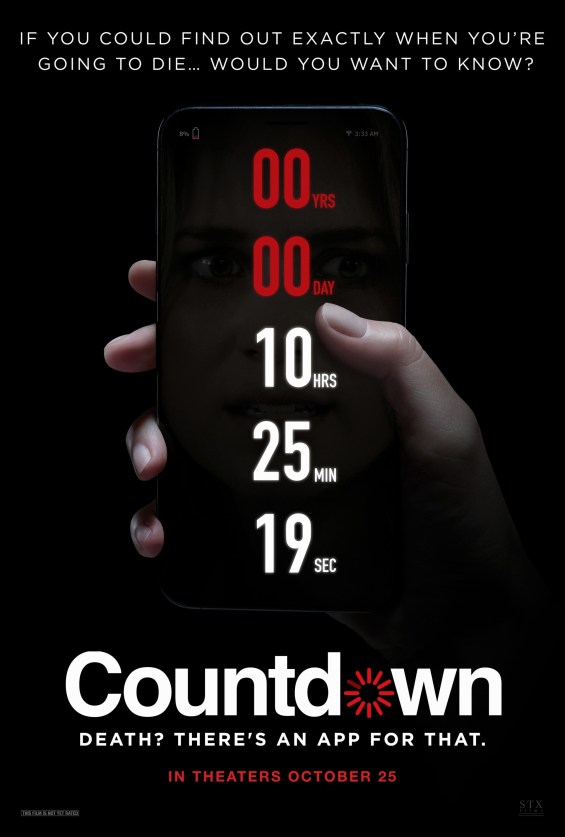
Written and directed by Justin Dec (Rolling), Countdown, released in 2019, is an uninspired, jump-scare-reliant horror that continually takes itself far too seriously in spite of its ridiculous premise of an app that calculates how much time you have left before meeting your end at the hands of the ancient demon, Ozhin.

Lacking wit, suspense and pragmatic dialogue, Countdown plays on our modern-day fixation with smartphones and their associated apps without offering anything unique, frightening or thought-provoking, ironically encouraging its audience to disengage and simply scroll on their phones. Rating: 3/10.

countdown_xxlg

Selfie From Hell (2018) – Film Review

“Something Evil Has Already Set Its Eyes on You…” – Hannah

In the horror genre, mystery plays a pivotal role in stories where the characters strive to uncover the cause behind the terrifying events they face, engaging the audience beyond scares via an instinctive desire for answers/explanations. However, in the case of 2018’s hilariously titled, low-budget horror; Selfie From Hell (or Selfieman in some regions), the central mystery frequently works to its detriment, yielding further questions and nonsensical moments rather than deepening the narrative or its underlying themes. Still, that’s not to say that a compelling mystery would’ve salvaged Selfie From Hell, as this social media-focused horror is an utter failure on every front, generally evoking boredom rather than fear.

Plot Summary: When influencer Julia falls mysteriously ill while visiting her cousin Hannah in Oregon, Hannah turns to Julia’s online content in search of an explanation for her unusual ailment. But, as she digs ever deeper, her cousin’s online activity reveals connections to the dark web, a twisted internet challenge and a malevolent, otherworldly force bleeding into reality…

Selfie From Hell, written and directed by Erdal Ceylan (Demon’s Dawn), was expanded from his earlier short film of the same name, also featuring Meelah Adams. The two-minute short consists of Adams’ character taking selfies in her home before noticing a dark figure behind her in the images, which then consumes her. As a concept for a short film, the idea is serviceable, if a little cheesy, yet doesn’t retain nearly enough depth for a feature-length undertaking, even if Ceylan makes a feeble attempt to incorporate an underlying theme of social media addiction and the dangers of careless internet usage, similar to other gimcrack social media-centric horrors, such as Smiley (2012), #Horror (2015) and Friend Request (2016). Furthermore, the previously mentioned ‘mystery’ at the centre of the film is neither intriguing nor well-constructed, presenting conundrums to the audience with little allure or clarity.

The small cast of Alyson Walker, Tony Giroux, Meelah Adams and Ian Butcher delivers fairly lacklustre performances across the board, in part due to the shoddy dialogue and characterisation, which lack depth, intrigue and any semblance of intentional humour. Regarding the characters’ relation to the plot, Hannah’s investigation into her cousin’s ailment leads her down a rabbit hole linked to a secretive website on the dark web. Here, she meets an enigmatic, patently untrustworthy individual, who gives the Selfieman (the titular creature of the film) a run for his money in the absurd name department with the online handle, F34R3473R, or “FearEater,” a character so cartoonishly malicious that his handful of appearances are rarely taken seriously. Outside of her investigation, there is a dreary romantic subplot between Hannah and her tech-savvy friend Trevor, who aids her in her exploration while secretly harbouring a crush on her, which is as predictable as it is vapid.

Visually, the cinematography by Jeremy Walter Cox is somewhat amateurish, seldom allowing for appealing shots. Other elements of the production, such as the lighting and audio, however, are adequate, which is worth noting as this isn’t always the case with low-budget flicks, especially when they place such strong emphasis on the sights and sounds surrounding their characters. What’s more, the design of the supernatural entity, the Selfieman, is rather generic, appearing only a handful of times as a towering, spindly figure with skeletal features, whilst his abilities, motivation, and the rules he abides by never receive any explanation amidst the fleeting runtime.

Being a low-budget project, Selfie From Hell didn’t have an original score composed for it, despite Peter Allen getting credited as the film’s composer. Instead, the Selfie From Hell employs an assortment of stock music, all of which are hackneyed horror tracks. In many instances, the score also telegraphs each character’s actions, often unnecessarily so, with every moment intended to be frightening or impactful, retaining a bothersome sound cue, whether that be a message arising on a laptop screen or catching a glimpse of a figure in the background of an image, which consistently fails to make these instances startling.

Even with a runtime of only seventy-three minutes, Selfie From Hell feels dragged out and overstuffed with too many ideas, all of them poorly illustrated and vying for attention, mainly because the film would rather focus on pushing a vareity of cheap, bombastic jump-scares instead of making the effort to earn its frights, some of which appear even worse as a result of the inclusion of janky, low-grade CGI to depict the Selfieman and several other supernatural elements. While some of these issues could be attributed to the film’s low budget, others certainly cannot.

In summary, clearly hoping to follow in the footsteps of Lights Out, a 2013 short film later expanded into a feature-length horror release, Selfie From Hell was, in actuality, released to little fanfare, and deservedly so. Candidly low-budget and struggling to sustain its runtime, Selfie From Hell was flawed from its very inception, being based on a short film with a rather tacky concept that only functions as a cheap thrill for horror fans. A one-trick pony with dreadful dialogue, bland performances, and a monumental overreliance on jump-scares, leading me to believe that the filmmakers didn’t give much thought to how a short film building up to a single scare could develop into a feature-length project. Rating: 1/10.

The Mouse Trap (2024) – Film Review

“I Can See You… Do You Wanna See Me?” – Mickey Mouse

Announced on January 1st, 2024, the same day Steamboat Willie (1928) entered the public domain, the animated short directed by Walt Disney and Ub Iwerks, considered by many to be Mickey and Minnie Mouse’s public debut, despite both characters actually premiering a few months prior in a test screening of Plane Crazy (1928) and the then-unreleased; The Gallopin’ Gaucho (1928). Mickey’s Mouse Trap, later renamed; The Mouse Trap, due to the Walt Disney Company still retaining the commercial rights to the character’s name, is a tedious and derivative low-budget slasher that merely takes the iconic rodent and distorts him into a thundering serial killer without any semblance of wit, dread or depth, to agonisingly painful results.

Plot Summary: On the evening of her 21st birthday, teenager Alex is surprised with a birthday party by her friends at the arcade where she works. But, not long into their night of celebration, a deranged killer dressed as Mickey Mouse interrupts their get-together, forcing Alex and her friends to use their quick thinking to survive the night…

Writer and actor, Simon Phillips, the man behind the mouse mask, is a self-described; “1980s Baby,” who loved the bloody slasher flicks of the time, explaining in an interview; “So, Mouse Trap, to Me, Was Like the Cheesy, Clichéd 1980s and 1990s Horror Movies. I Was Like, Let’s Do This. Let’s Make Mickey Mouse a Slasher Killer. Let’s Trap These Kids in an Amusement Park or an Arcade. And, Like a 1990s Movie, Don’t Think About It Too Much. Just Have Fun!” While this ambition is admirable, The Mouse Trap undoubtedly fails in the aspect of ‘fun,’ harbouring flat, irritating characters, a needlessly complicated setup and a series of vapid kills, with the obligatory, uninteresting drama of assorted jocks, nerds, goths and popular girls scattered in between. And, with quotes like “How Did I Get Stuck With You?! I’m Too Pretty for This!” the dialogue swiftly announces itself for all the wrong reasons.

The central cast of Sophie McIntosh, Alex Fen, Madeline Kelman, Ben Harris, Callum Sywyk and Mireille Gagné do their best with the weak material they are given, with McIntosh retaining at least some semblance of screen-presence in the leading role as Alex, but that’s about it, as their characters are simply cardboard cutouts, neither entertaining nor likeable, with the shoddy dialogue and scarcity of character development rarely helping in this regard. While Simon Phillips’ physical performance as the titular killer is somewhat eerie, his vocal performance is certainly not, as he utters hokey, intended-to-be-intimidating lines via a ghastly Mickey Mouse impression. Perhaps the worst part of The Mouse Trap, however, is the arbitrary cutaways to a police station where one of the survivors cryptically recounts the night’s events (including moments they weren’t even present for) merely as an excuse to pad out the runtime.

If you enjoy watching monotonous, drawn-out shots of teenagers playing air hockey or drinking seemingly nothing out of plastic party cups, then The Mouse Trap is for you. As, despite being branded as a throwback to 1980s/1990s slashers, the first on-screen kill doesn’t actually occur until almost an hour into the runtime, with each victim getting dispatched in ways that lack both memorability and solid blood/gore effects, in addition to being presented in a visually flat manner as a result of the cinematography by multitasking director Jamie Bailey (Deinfluencer, What Lurks Beneath, The Omor Heist).

On another pessimistic note, the original score by Darren Morze is a rather forgettable horror soundtrack that doesn’t justify its numerous tracks, in spite of their tongue-in-cheek titles, such as The Miracle Survivor, Cat and Mouse, Birthday Wish and Total Serial Killer Vibes. The film also implements an aggravating jump-scare-like audio cue every time Mickey appears on-screen, in what I assume is a lacklustre attempt to startle its audience.

Regarding the titular killer, The Mouse Trap does little to differentiate Mickey from any other slasher, solely depicting him as a large man in a mask with murderous intent. That said, the film does at least attempt to explain the origin of Mickey Mouse as a killer in utterly bizzare fashion, as Tim Collins, the manager of the arcade Alex works at, is soon revealed to be ‘possessed’ by a malvolent entity after watching a film reel of Steamboat Willie while sipping a glass of vodka beside film memorabilia, in a moment that is just as nonsensical as it is ridiculous. Outside of this moment, though, The Mouse Trap could just as well be a slasher headlined by Deadmau5 or any number of other mouse-related characters, as none of the traits associated with the anthropomorphic mouse are here, whether accurate or parodied, with Mickey even harbouring an unexplained ability to teleport, which has an equally unexplained weakness to strobing lights.

In summary, in typical ‘horror parody’ fashion, The Mouse Trap is neither amusing nor high-brow, nor does it make effective use of the character/franchise it is mimicking. Instead, the film struggles to justify its existence as a man in a cheap-looking mouse mask slaughters annoying teens with little personality or charm. Perhaps a trenchant satire of Disney and its squeaky-clean image as a family-friendly entertainment giant is too much to ask for, or too legally treacherous. Either way, the only merriment on offer in The Mouse Trap is the occasional piece of unintentional humour that comes from the killer’s bi-sphere silhouette. Rating: 1/10.

Grave Encounters (2011) – Film Review

“This Place Is About as Haunted as a Sock Drawer…” – Lance Preston

Impressively produced on a budget of around £89,000, the 2011 found-footage flick; Grave Encounters, is an effective, if rarely groundbreaking, contemporary horror. Whilst not as down-to-earth or as painfully slow-paced as several other found-footage releases, such as Paranormal Activity (2007) or Mr. Jones (2013), Grave Encounters wastes little time getting into the monstrosities that lie within the walls of its central setting of an abandoned psychiatric hospital, utilising its dark corridors and rusted medical equipment to deliver memorably creepy moments and a fairly unnerving atmosphere, despite its many faults.

Plot Summary: Voluntarily locking themselves inside the infamous, abandoned Collingwood Psychiatric Hospital, to increase the stakes of their ghost-hunting reality show, Grave Encounters, host Lance Preston and the rest of his team prepare to capture every minute of their overnight paranormal investigation on camera. But, as the hospital’s walls begin to shift into a labyrinth of endless corridors, each inhabited by the spirits of former staff and patients, the group soon realise they may be filming their last episode…

Written and directed by Colin Minihan and Stuart Ortiz, also known as the “Vicious Brothers,” the format and host of the fictional Grave Encounters reality show takes influence from the real-world series; Ghost Adventures, and its host, Zak Bagans, known for his black muscle t-shirts and technique of attempting to invoke paranormal activity by cursing at the supposed spectres, inviting aggression. This inspiration is evident from the outset, as Grave Encounters humorously mocks the ghost-hunting reality shows of the late 2000s, dissecting the manufactured appeal behind the format and its many tricks of the trade. For example, early on in the film, Lance pays a groundskeeper to provide a false statement during an interview that he witnessed paranormal activity on the grounds of the hospital, a known practice in supernatural reality television, as over the years, hundreds of interviewees have publicly admitted to being paid to “Just Make Something Up for the Camera.”

The central cast of Sean Rogerson, Ashleigh Gryzko, T.C. Gibson, Mackenzie Gray and Juan Riedinger provide the occasional moment of levity early in the runtime as a means to break up the flurry of distress and torment their characters later endure. During many of these moments, the characters also make offhand comments regarding their situation, referencing filmmaking conventions and well-known horror tropes that add a level of realism to the dialogue. This doesn’t mean that all of the Grave Encounters crew are strictly likeable, however, as T.J., the truculent cameraman, does far too much complaining and arguing whilst the host, Lance Preston, and the supposed psychic, James Houston, are suitably sleazy for success-hungry individuals who fabricate hauntings for a living, having never witnessed evidence of the supernatural previously. Still, the cast accurately portrays every character’s sense of unease, which is what matters most.

Shot over ten nights and two days, the majority of the cinematography for Grave Encounters by Tony Mirza fittingly matches the style of stationary and hand-held shots seen in traditional ghost-hunting reality shows, with the fictitious Collingwood Psychiatric Hospital portrayed through the real-world Riverview Hospital, an abandoned mental institution in Coquitlam, British Columbia, built at the turn of the 20th century and closed down in 2012, formerly hosting films such as Watchmen (2009). Grave Encounters utilises this ominous setting remarkably well, presenting the building as a dark, momentous presence to the point where it becomes a character in its own right. The opaque hallways of the abandoned building also greatly lend themselves to the film’s phosphorescently green colour palette as a result of the characters’ dependence on night vision to find their way around.

Similar to other found-footage flicks, Grave Encounters doesn’t possess much of a soundtrack, with the original score by Quynne Craddock only being employed for the deliberately dated, excessively edgy theme for the Grave Encounters intro and the atmospheric track that plays over the end credits, which is suitably bleak and unsettling. In an effort to differentiate itself from those other releases, however, Minihan and Ortiz wanted their spirits to be far less subtle and more forcefully frightening, desiring the various apparitions to “Visibly Run” at the audience as opposed to barely materialising or gradually moving objects.

Outside of its real-world influences, Grave Encounters follows The Blair Witch Project (1999) formula of letting its initially brash characters mentally break down before the incursion of the unnatural, embracing some found-footage clichés, such as slamming doors and slowly opening windows, whilst avoiding others in exchange for more eerie concepts, like when the group learn about the hospital’s disturbing history of lobotomies and medical experimentation. In terms of the spirits’ appearance, each harbours a serviceably sinister, if somewhat generic design, often sprinting towards the camera with a cheesy CG effect that distorts their eyes and mouth, spoiling the horror, much like the film’s frustrating overreliance on camera glitches whenever supernatural frights occur.

In summary, although Grave Encounters starts rather slowly, once the first crew member disappears, the pacing picks up nicely, with plenty of twists, turns and creepy surprises to keep the film rolling along. While hardly original or downright terrifying, Grave Encounters gets almost every beat of its found-footage premise right, succeeding in its attempt to critique the many ghost-hunting reality shows that inspired it, even surpassing its higher-budget, candidly titled 2012 sequel; Grave Encounters 2, a largely forgettable, strangely self-referential expansion to the ghostly frights and low-budget storytelling of the first. Rating: 6/10.

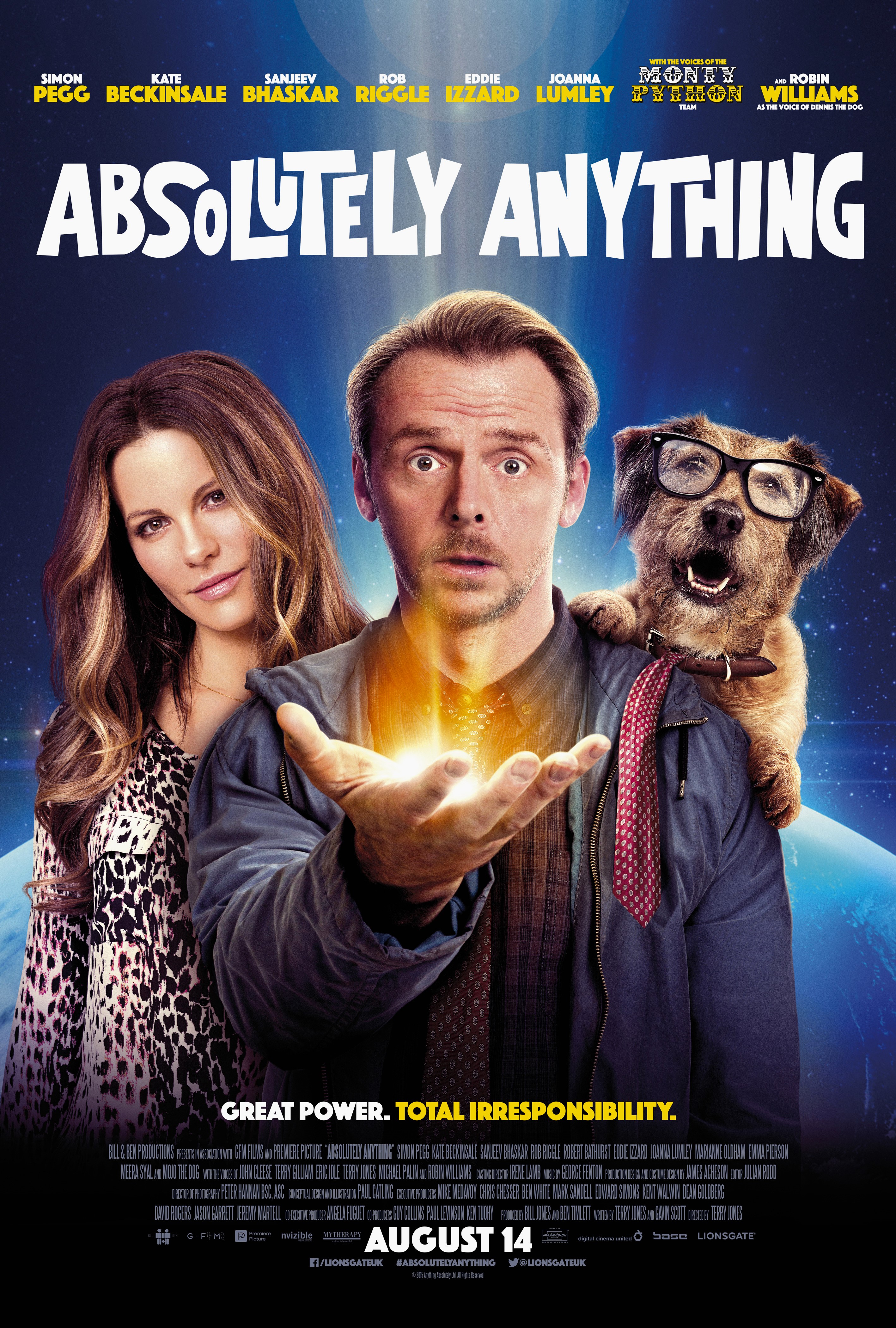
Absolutely Anything (2015) – Film Review

“Absolute Power Doesn’t Corrupt, It Just Drives You Bloody Mad!” – Neil Clarke

Released in 2015, Absolutely Anything is a zany sci-fi-comedy that explores the age-old fantasy of unlimited wish fulfillment, a concept historically associated with gods, genies and mythical beings. In this instance, however, the power rests in the hands of omnipotent extraterrestrials, who, believing in their superiority, bestow their boundless ability upon a single unsuspecting human. Alas, aside from this inventive alternative, Absolutely Anything misuses its limitless premise and affable lead, Simon Pegg, for a typical rom-com setup, offering mild, light-hearted entertainment over consistent gags, creative visuals or lasting impact.

Plot Summary: As part of an interplanetary experiment, an extraterrestrial council traverse the universe in search of intelligent life. Upon reaching Earth, they initiate their usual test of granting one randomly selected inhabitant the ability to do anything to determine whether humanity is worthy of joining their intergalactic community or should be annihilated. A test that likely spells doom for humanity as the council haphazardly selects Neil Clarke, a washout British school teacher, as their subject…

Co-written and directed by the late Terry Jones (Monty Python and the Holy Grail, Personal Services, The Wind in the Willows), Absolutely Anything draws inspiration from the 1898 short story; The Man Who Could Work Miracles, by H.G. Wells, as both stories centre on an ordinary man suddenly granted reality-altering abilities. However, the leading discrepancy between the two is how Absolutely Anything leans heavily into comedy, delivering a string of farcical scenarios that allow Pegg’s energetic performance to shine. As such, the tone throughout the film remains consistently blithe as the screenplay shies away from any deep philosophical exploration of its central concept or even any long-term consequences to Neil’s actions, as when a situation veers into chaos, Neil merely waves his hand to undo the damage, undercutting any disorder his newfound power might trigger.

As the leading man, Simon Pegg infuses Neil Clarke with an endearing blend of immaturity and dopey charm, rendering the character’s misguided desires and naïve missteps more forgivable. Still, the film undoubtedly misses the opportunity to examine how absolute power might affect the average person, for better or worse. Instead, Neil uses his ability almost entirely for petty or farcical purposes, with one of his more amusing decisions granting his loyal dog, Dennis, the capacity to speak, leading the canine to be energetically voiced by the late Robin Williams. The result is a delightfully giddy sidekick, whose witticisms often relate to the amusing traits of his species. Less enjoyable is the romantic subplot between Neil and his downstairs neighbour Catherine, portrayed by Kate Beckinsale, as despite Neil’s fascination with Catherine being at the core of the story, her character is underwritten and uninteresting, making their relationship (and her inclusion) feel obligatory rather than organic, a criticism that applies to many of the side characters.

Visually, Absolutely Anything is an odd mix of British realism and low-budget science fiction, with the majority of the film shot in and around an abandoned building that was formerly a school, cleverly repurposed to serve as Neil’s flat and the secondary school where he teaches. While these Earthbound settings help ground the otherwise outlandish story in a familiar, everyday backdrop, many of the sets throughout the runtime appear cheap and flavourless, especially when combined with the American sitcom-esque lighting and cinematography by Peter Hannan. The most jarring disparity in the film’s visuals, however, comes with the subpar CG effects, from the splicing of Simon Pegg’s head onto different bodies to the space-bound sequences of the extraterrestrial council debating; the CGI is noticeably lacking, even if the aliens’ designs exhibit visual variety.

Contrarily, the original score by George Fenton brings a whimsical energy to the film, as his compositions underscore the comedic beats with light piano melodies, lively orchestration and plucky strings that reflect Neil’s bemused reactions to his newfangled ability. For example, during the scene where Neil begins experimenting with his powers, commanding a bottle of whiskey to exchange itself only to witness it bouncing down the stairs towards the front door, the accompanying track is fittingly bouncy and eccentric.

Upon its initial release, Absolutely Anything was frequently compared to Bruce Almighty (2003), another male-led comedy about divine empowerment. But, their distinctions are actually quite significant, as Bruce Nolan, the titular character, cannot override free will, whereas Neil can. Moreover, Bruce Almighty centres on a theological framework with God as an active character, whereas Neil’s powers come from extraterrestrials he never encounters, exuberantly voiced by the surviving members of the Monty Python series. In fact, Absolutely Anything notably marks the first on-screen reunion of the Monty Python cast since The Meaning of Life (1983), and, according to Terry Jones, might be their last collaborative outing. There’s also a nod to their comedic legacy during the opening sequence, as the camera pans across space to an orbital scrapyard of discarded spaceships, one of which is from 1979’s Life of Brian.

In summary, Absolutely Anything is a comedy buoyed by its bewitching premise and the charisma of its lead. Yet, it is frustratingly superficial, opting for a low-stakes story, cartoonish gags and rom-com tropes rather than exploring the satirical or existential dimensions its narrative invites. Whilst the film does contain some moments of wit, Absolutely Anything never lives up to the potential promised by its title or the strong comedic talent it harbours. Rating: 4/10.

Double Indemnity (1944) – Film Review

“How Could I Have Known That Murder Could Sometimes Smell Like Honeysuckle?” – Walter Neff

Widely regarded as one of the greatest films released during the Golden Age of Hollywood, Double Indemnity is a 1944 crime-thriller that combines suspense and sharp wit, conveying its captivating story of murder and romance through stylish, achromatic visuals and scintillating dialogue. Despite the technical limitations of its time and the occasional dragging scene, Double Indemnity‘s favourable qualities easily outweigh its shortcomings, setting the standard for almost every noir that followed, to the point that the American Film Institute actually ranked the film as their “29th Greatest Movie of All Time” in 2007.

Plot Summary: Living a life largely devoid of excitement, the smooth-talking insurance salesman Walter Neff finds his thirst for more quenched when he encounters the seductive Phyllis Dietrichson, the weary wife of a callous husband whom she plans to murder and cash out on his ‘accidental’ death claim, eventually convincing Walter to join her devious scheme. But, when his quick-witted supervisor, Barton Keyes, becomes suspicious of the claim, Walter’s paranoia gets the better of him as the pair’s fiendish ploy begins to fall apart

Based on the novella of the same name by James M. Cain, supposedly inspired by a 1927 murder case perpetrated by a married woman and her lover, whose trial he attended whilst working as a journalist in New York. During this, Ruth Snyder persuaded her boyfriend, Judd Gray, to kill her husband, Albert, after having him take out an insurance policy with a double-indemnity clause before the couple were ultimately identified, arrested and convicted. Although the novella was well-adapted to the silver screen by screenwriters Billy Wilder and Raymond Chandler, the pair did not get along while penning the screenplay, a process loaded with arguments and behind-the-scenes drama. Nevertheless, the two writers’ squabbles may have been worthwhile as the dialogue exchanges between characters perfectly exemplify the noir genre, being both snappy and comical. So much so that the scene where Walter and Phyllis meet for the first time could be seen as the template for what virtually all notable noir films sound like.

Despite several cast members initially being apprehensive about signing on to the project, with the late lead Fred MacMurray even on the verge of turning down the role because he feared his career would be ruined by playing such a despicable character, every cast member in Double Indemnity is performing to their highest ability. From MacMurray and the late Barbara Stanwyck as murderous lovers, Walter Neff and Phyllis Dietrichson, flaunting their palpable on-screen chemistry, to the late Edward G. Robinson as Walter’s astute, snarky office manager, Barton Keyes, exhibiting a perfect balance of tenacity and humour, smelling something rotten about Mr. Dietrichson’s untimely demise, all of the performances are worthy of the screenplay’s well-crafted verbal exchanges.

Owing much of its visual brilliance to the late cinematographer John F. Seitz, an influential figure in camerawork with a career spanning several decades, Seitz’s work on Double Indemnity is often deemed a masterclass in stylish visuals. Well-known for his ability to use light and shadows to evoke mood, Seitz was instrumental in establishing the visual language of the noir genre via this film and many others, with the chiaroscuro lighting, tight framing and innovative use of darkness heightening the tension and moral ambiguity that pervade the narrative, his collaboration with the late director Billy Wilder (Sabrina, Some Like It Hot, The Apartment) only elevating Double Indemnity into a film that visually communicates its underlying themes of greed, betrayal and moral corruption as much as the dialogue. Additionally, light filtering in through blinds (a staple of the noir genre) is frequently used to visually depict Walter being ‘behind bars.’

The late Miklos Rózsa’s stagey original score is your traditional orchestral soundtrack, with the opening piece; Prelude, being a standout track, dramatically enriching the opening credit sequence where a mysterious silhouette of a man stepping toward the camera on crutches soon engulfs the screen. Following this, Rózsa adds emotional depth to the film with the track; Murder Theme, a suspenseful piece in which the striking of a timpani forms a grim rhythm, accompanied by violins that deliver a numbing pulse, alluding to the characters’ dark intentions.

Outside of the crime elements, Double Indemnity also harbours a hefty amount of romance within its narrative, largely thanks to the previously mentioned chemistry between MacMurray and Stanwyck, but also as a result of the film’s sensual moments and even moderately suggestive visuals for the time. For example, when Walter first meets Phyllis, the camera is drawn to a bracelet (or anklet) on her right ankle, with an urban legend stating that a married woman wearing a right-sided anklet indicates she is married yet available to other men. One of the many details that not only adds to the characterisation of Phyllis, but also serves as a humorous time capsule of the 1940s, when merely showing a woman’s ankle was considered scandalous.

In summary, if there is one Golden Age Hollywood classic that defines the very essence of the genre it’s a part of, it’s Double Indemnity, standing as a tremendous example of how to craft an engaging crime-thriller, building tension by employing intimate close-ups and honed dialogue. For a film from this era, you can’t do much better than Double Indemnity, a famed noir that stands the test of time after seventy years and will likely stand for seventy more, given its venerable reputation. Rating: 8/10.

Malcolm & Marie (2021) – Film Review

“Cinema Doesn’t Need to Have a Message. It Needs to Have a Heart!” – Malcolm Elliott

A contained and regaling monochrome drama, 2021’s Malcolm & Marie was one of the first feature-length films produced amidst the COVID-19 global pandemic. Written and directed by Sam Levinson (Another Happy Day, Assassination Nation), best known as the creator and lead writer of the hit teen-drama series; Euphoria, Malcolm & Marie was shot during the U.S. COVID-19 lockdown between June and July of 2020, with the approval of the Writers’ Guild of America, Directors’ Guild of America, Screen Actors’ Guild of America, and the American Federation of Television and Radio Artists, as the production followed strict safety protocols to ensure the cast and crew could work safely. With this in mind, Malcolm & Marie makes the best of challenging circumstances, utilising a singular location, minimal cast and sleek visuals to craft a captivating flick that examines how volatile personalities can clash, especially when tangled in a long-standing relationship.

Plot Summary: After returning home from the premiere of his debut project, filmmaker Malcolm Elliott and his girlfriend, Marie Jones, await what is sure to be an imminent critical and financial success. But, as the evening transpires, their celebratory night takes a turn for the worse as revelations begin to surface, testing the strength of their devotion to one another…

Between Marcel Rév’s scrumptious black-and-white cinematography and the no-holds-barred verbal brawl delivered by the central duo of Washington and Zendaya, it’s impossible to discuss Malcolm & Marie without drawing comparisons to the cinematic adaptation of Who’s Afraid of Virginia Woolf? (1966). Like the stage play the film is based upon, first staged in 1962, Who’s Afraid of Virginia Woolf? explores the complexities of the marriage of middle-aged couple Martha and George, where, late one evening, after a university faculty party, they receive an unwitting younger couple, Nick and Honey, as guests and are drawn into their bitter and frustrated relationship. Although Malcolm & Marie only focus on the two titular characters, both stories have more than a few similarities. One element of Malcolm & Marie that is unique to the film, however, is its underlying theme of the essence of cinema, examining this concept through the eyes of Malcolm as a passionate Black filmmaker who loathes the politics surrounding Black filmmakers. In fact, Malcolm’s intense dislike of an anonymous female critic from the L.A. Times is believed to be a reference to L.A. Times writer Katie Walsh, who once wrote an unfavourable review of one of Levinson’s prior directorial outings.

As the sole cast members, John David Washington and Zendaya hold the entire weight of the film on their shoulders. Thankfully, both share amazing chemistry and receive countless chances to let their talent shine as they each deliver lengthy monologues exploding with emotion. Through these monologues and the sharp dialogue, it quickly becomes apparent that the titular, well-defined couple exist in different rhythms, with Malcolm exuberantly (and obnoxiously) extolling the delights of premiering his first film as a writer and director, which pushes him to the cusp of newfound power and prestige, while Marie appears sullen, bored and utterly over Malcolm and his prickly, delicate ego that repeatedly puts strain on the pair’s relationship, often failing to acknowledge Marie’s support. However, this constant back-and-forth does come at a cost, as both characters can come across as somewhat unlikable through their many imperfections being blatantly illustrated on-screen at all times.

One of the few Netflix Originals shot to be on 35mm, the cinematography by Marcell Rév is elegant and sheeny. Yet, what makes these visuals even more impressive is that for the entirety of the runtime, the titular couple never once leave the house, as previously mentioned, merely strolling to different rooms or into the garden with a cigarette in hand as their bickering continues. Some may think this sounds dull, but I feel this approach ensnares much of the tension between the two characters and the heavy air that flows through their temporary, luxurious home. Furthermore, with both characters being chic and sophisticated, as well as returning from the premiere in their formal evening wear, there is a suave feel to the visuals of Malcolm & Marie, making the film seem like a romance from the 1930s, with tight camerawork to intensify the drama.

Likewise, the film’s original score, helmed by British musician Labrinth, reunited with Sam Levinson after composing much of the score for Euphoria, retains a similar tone to that of a 1930s drama, with the delicate, jazzy score meshing flawlessly with cleverly selected needle drops. Famed songs, like I Forgot to Be Your Lover and Get Rid of Him, are also baked into the runtime, doing much of the talking when the characters aren’t.

Interestingly, because Malcolm & Marie was produced during the COVID-19 pandemic, none of the cast or crew associated with the film received any kind of payment or entered into any agreement with the depiction of tobacco products, which is certainly admirable given the current state of cinema, where many films are greenlit purely for the sake of profit.

In summary, due to its entire runtime taking place in one location with a heavy reliance on dialogue, Malcolm & Marie will likely be a divisive flick that won’t please everyone. But, for those it will, I feel it’s more than entertaining, even if the film isn’t as layered or as tightly-knit as it thinks it is. Rating: 7/10.

Monster Trucks (2016) – Film Review

“I Don’t Know Who’s Driving, Him or Me…” – Tripp

Spawned from the mind of the four-year-old son of Adam Goodman, the then-president of the production company behind the film, Paramount, Monster Trucks is a 2016 family flick harbouring flashes of inspiration yet ultimately lacking in execution. Frequently demonstrating that a wacky storyline and a mashup of creatures and clamorous vehicles don’t necessarily yield a rollicking family film, Monster Trucks goes about its narrative with all the grace of an off-road vehicle steamrolling a row of discarded automobiles, even when it faintly echoes the beloved 1982 sci-fi classic; E.T. the Extra-Terrestrial.

Plot Summary: Looking for a way to escape the mundane town he was born into, high school senior Tripp circumvents the discomfort of his home life by toying away in his local scrapyard, gradually assembling a truck of his own from bits and pieces of scrapped vehicles. But, when an accident at a nearby oil-drilling site displaces strange, subterranean creatures with immense strength and a liking for oil, Tripp believes he’s found his key to getting out of town, unaware that his slimy, tentacled friend is actively being pursued…

Initially set for release on May 29th, 2015, before the date was moved to December 25th, then March 18th, 2016, and finally, January 13th, 2017, after several setbacks. Monster Trucks received middling reviews and poor box office numbers upon its eventual release, with Viacom blaming unspecified failures in its motion picture division for the losses the company suffered in the 3rd quarter of 2016, with reporters later piecing together details in their statement, leading them to believe this film was blamed for the loss. While not strictly underserved as Monster Trucks does possess an abundance of flaws across both its screenplay and filmmaking, director Chris Wedge (Ice Age, Robots, Epic) manages to implement some humorous moments and exciting set pieces here and there, primarily whenever the film fully commits to its bonkers title, having the signature creature, nicknamed; Creech, squeeze himself into Tripp’s turquoise-coloured truck, using his multiple tentacles to propel the vehicle along and even leap over hazards across town.

Although the central cast of Lucas Till, Jane Levy, Rob Lowe, Danny Glover and Holt McCallany deliver adequate performances, their characters are either caricatured or underdeveloped, barring the antagonists, who sufficiently serve their purpose as vile, money-hungry suits eager to profit from the newly discovered creatures through whatever means necessary. This character issue is only made worse by the dialogue, the majority of which is cheesy and blatant, lacking any semblance of subtlety or originality, especially concerning the sour relationship between Tripp and Sheriff Rick, his new stepfather, who continually conveys his unjustified distaste for Tripp.

Whether by design or not, the small, pallid town in North Dakota where Monster Trucks takes place is remarkably dull, meaning the visuals suffer as a result, aside from the odd alluring shot of natural scenery. On a more positive note concerning the visuals, the designs of the many luminescent creatures that appear throughout the runtime are simplistic yet effectively cute and cuddly, resembling various aquatic animals, namely whales and octopi. However, it’s important to mention that one of the reasons the film’s release date was pushed back so drastically was the need to redesign the creatures and thus redo most effects shots, as originally, the creatures appeared more monstrous and less cartoonish. But, after a disastrous test screening, which reportedly frightened a large portion of the juvenile audience (despite the creatures’ friendly demeanour), their appearance was altered to the design seen in the final film. With this setback in mind, the CG effects are well-detailed, if imperfect.

Boasting a handful of decent tracks, if you’re searching for a more bass-friendly soundtrack, Monster Trucks‘ original score is weighty yet occasionally a tad overbearing, in addition to a couple of the song choices, like Home by Phillip Phillips, only adding to the corniness of the film due to their unwavering positivity. The sound design is also filled with much of what you’d expect from a story revolving around large vehicles, with booming engines and scrapyard ambience providing many scenes with an audible thump.

Returning to the faults of the screenplay, much of the humour throughout the runtime is immature, often relying on goofy audio effects and continuous slime gags to obtain a cheap laugh from younger audience members. Older audience members, however, may find something to admire in the film’s handful of truck-centric practical effects, such as the implementation of the five 1950s-era Dodge trucks which were built for the film, including one with its engine in the pickup bed so it could be driven from under the hood, similar to how Creech manoeuvres the vehicle.

In summary, Monster Trucks is an underwhelming film in several ways, making me think it might have been better served should it have been a stylistic animated release rather than a costly live-action one, allowing the film to further play into the central, ludicrous concept of subterranean creatures slithering their way into vehicles to experience the high-octane rush of driving across open fields and country roads, especially when considering Chris Wedge’s prior directing experience in that field. Still, I’m obviously not in the target demographic for this flick, and those who are (e.g. young boys with an affinity for monsters and mayhem) might enjoy this one in the face of its many shortcomings. Rating: 3/10.

Puss in Boots (2011) – Film Review

“Fear Me, if You Dare!” – Puss in Boots

Released in 2011, one year after the highly-praised Shrek series supposedly concluded with Shrek Forever After (2010), Puss in Boots acts as a spin-off and prequel to the endearing ogre’s renowned franchise, retaining its emphasis on parodying fairy tales whilst supplying the titular heroic feline with an amusing, stand-alone adventure that frequently pays tribute to Spanish cinema. While not profound in terms of storytelling nor revolutionary in terms of animation, for what it lacks in depth, Puss in Boots, directed by Chris Miller (Shrek the Third), makes up for with an abundance of family-friendly wit and excitement, in spite of the initial plan to turn the film into a mere direct-to-DVD spin-off.

Plot Summary: Long before meeting Shrek and Donkey, the adorable yet cunning vigilante Puss in Boots aimed to clear his name, striving to escape his notoriety as the suspected thief of his hometown, San Ricardo. Then, one faithful night, after overhearing that the murderous outlaws Jack and Jill have come into possession of magic beans, Puss senses a window of opportunity, setting out to steal the beans in pursuit of the treasure they lead to, eventually crossing paths with an old friend

In contrast to the Shrek films, which were in production for around three years (except for the first, which was in production for almost five), Puss in Boots took over seven years to produce, entering development just after the release of Shrek 2 (2004). The film also differs from the Shrek series in other ways, most notably in its inspirations. Where the Shrek franchise became recognised for its parodying of classic fairy tales and modern pop culture, Puss in Boots is more reminiscent of Spanish cinema, namely, Spanish action and adventure flicks, harbouring references to well-known flicks, like The Mask of Zorro (1998), a film which interestingly, also featured Antonio Banderas as the lead, and Desperado (1995), another release featuring Banderas as well as his co-star Salma Hayek. As such, Puss in Boots operates as a successful mish-mash of ideas, blending elements of fairy tale fantasy with solid action sequences reminiscent of traditional vigilante flicks. The majority of the story, though, is a riff on the famed fable of Jack and the Beanstalk, a fairy tale adapted time and again. Thankfully, the writers were aware of this, implementing a handful of original ideas to form their own take on the well-worn story.

The central cast of Antonio Banderas, Salma Hayek, Zach Galifianakis, Billy Bob Thornton and Amy Sedaris are superb in their vocal performances, with the newly-introduced characters being well-defined and entertaining, from Humpty Dumpty, Puss’ intelligent yet untrustworthy ally, to Jack and Jill, an amusingly fiendish pair of villains, and the skilled thief Kitty Softpaws, who bears a fairly moving backstory. Truly, the only character that lacks interesting characterisation is Puss himself, who is essentially the same character he was in 2004, with little difference in his personality despite being younger, less experienced and more independent, harbouring no major distinctions or a compelling character arc.

For this film, an admirable decision was made to make the world of Puss in Boots appear very different from that depicted in the Shrek series. In the latter, the environments were similar to classic fairy tale illustrations, often featuring extravagant kingdoms and vibrant forests, with even the earliest appearance of Puss in Boots himself being depicted in clean, pencilled illustrations in a vast woodland environment amidst the book; Histories or Tales of Past Times, Told By Mother Goose, written by Italian author Giovanni Francesco Straparola in 1551. However, the film has a distinctly Spanish feel, with most of the runtime being set in deserts and rural towns sporting Colonial architecture, in addition to a warmer, more terracotta colour palette. The animated cinematography and the animation itself also go a long way in enhancing the film’s many action sequences and visual gags, including one set piece with a gigantic creature wreaking havoc, undoubtedly inspired by the Godzilla series.

Capturing the spirit of adventure much like the film at large, the original score by Henry Jackman is rousing, occasionally even harbouring a slight western feel. Furthermore, tracks such as Chasing Tail and Farewell San Ricardo convey Puss’ heroism and vigilante persona flawlessly, whilst Jack and Jill are granted a monstrously malicious melodic cue with the plainly-named track; Jack and Jill. The end credits song; Americano by Lady Gaga, seems rather out-of-place among the rest of the soundtrack, however, given that Puss in Boots never employed contemporary songs in its fantastical setting before this moment, unlike the Shrek franchise.

Humorously, the animators behind Puss in Boots didn’t bring any cats into the studio to study their movements for the various felines that appear throughout the runtime. Instead, they simply watched some of the millions of widespread cat videos on YouTube to make each cat’s movements as lifelike as possible and take inspiration for some of the film’s cat-related antics.

In summary, Puss in Boots is a delightful adventure with enough entertainment value to keep both younger and older audience members engaged, even if the film isn’t as memorable as some of the entries from the series its protagonist originated. Still, it likely goes without saying the film’s late-to-the-party sequel; Puss in Boots: The Last Wish (2022), was an improvement over its predecessor in almost every way. Rating: 6/10.