Silent Night (2012) – Film Review

“I’m on His Tail Now. There’s Nowhere Safe…” – Sheriff Cooper

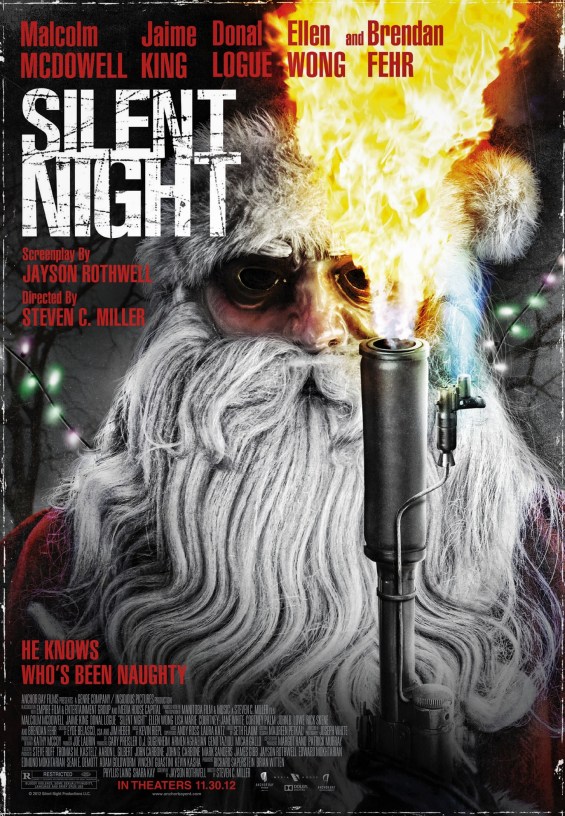
One of the most controversial films of the 1980s, primarily due to its promotional material, which featured a killer Santa Claus brandishing an axe as he emerged from a chimney. Silent Night, Deadly Night, released in 1984, is well-known amongst horror fans for its bizarre legacy, spawning a franchise consisting of four extremely low-budget sequels that had barely any relation to each other, yet still gained a cult following, thanks to their bewildering stories and unintentionally hilarious moments. Years later, in 2012, we received Silent Night, a remake of the original film that reimagines the concept of a murderous Father Christmas for modern audiences, utilising its attractive visuals and creative kills to provide slasher fanatics with their fill of ho-ho-horror, even if Silent Night is filled with many of its own unique issues.

Plot Summary: When a sadistic serial killer dressed as Santa Claus embarks on a Christmas Eve rampage through a remote Midwestern town, the local police force must follow the killer’s trail of victims in the hope of uncovering his identity and averting the rest of his festive bloodbath…

Partially inspired by the 2008 Covina Holiday Massacre, during which forty-five-year-old, Bruce Jeffrey Pardo, killed nine people at a Christmas party whilst wearing a Santa Claus suit. Silent Night isn’t the first voyage director Steven C. Miller (The Aggression ScaleMaraudersThe Line of Duty) has taken into the horror genre, though, it may be his goriest as Miller, along with screenwriter Jayson Rothwell, up the ante from the original film by jumping straight into the violence, having the kills drive the story forward as they occur one after another. However, the screenplay certainly falls short when it comes to some other aspects, like developing the characters or building intrigue regarding the true identity of the masked killer, as the characters are insipid and the mystery uninteresting, making the film’s climactic plot twist feel less than galvanising, which is only made worse by the overcompensating dialogue.

The central cast of Jaime King, Malcolm McDowell, Donal Logue and Ellen Wong all try their hardest at providing their fairly lifeless characters with a personality and a reason for the audience to empathise with them, but it’s a largely wasted effort as King and Logue merely go through the motions as small-town police officers with a few glimmers of characterisation. While McDowell truly steals the spotlight as a dimwitted and pompous sheriff, frequently coming across as if his performance was taken from another film entirely. Then there is veteran stuntman, Rick Skene, who fulfils the demanding physical requirements of the killer Santa without saying a word, using his immense stature and threatening demeanour to great effect.

Contrasting the horrific bloodshed of the story with a candy-coated aesthetic of stereotypical Christmas traditions, the cinematography by Joseph White allows for a number of visually interesting shots throughout the runtime, nearly all of which are enhanced by the festive colour palette, which employs an abundance of bright red, green and blue lights to make potentially bland locations, such as the police station or a motel, more visually appealing. And despite the moments of barbaric murder frequently falling back on hand-held shakiness in a feeble attempt to increase the brutality of said murders, Silent Night does redeem itself during its flashback sequences as these scenes are entirely coated in black and white, aside from the killer Santa’s suit, which remains a glowing red.

Contrarily, the original score by Kevin Riepl is a blaring and often tedious horror soundtrack, as outside of the track; Sheriff Cooper, which strangely contains a guitar riff that sounds as if it’s been taken from a ’70s crime-thriller. The majority of the score, including the tracks; The Chipper and Rack Mounted, are simply loud and unexceptional. Of course, being a film set at Christmas, the film also features a handful of renowned Christmas songs, such as Up on the Housetop and Deck the Halls, which thankfully aren’t overused.

Although Silent Night, Deadly Night had its fair share of gore, Silent Night takes its gruesome violence to another level, as the bloodthirsty Santa make use of a range of tools, including an axe, a cattle prod, a scythe and even a flamethrower, in addition to constantly exploiting the environment around him, such as a scene where he impales a teenager onto a mounted set of deer antlers in a clear reference to the original film. What’s more, all of the practical effects used throughout these moments are magnificent, rarely relying on CG enhancements for further shock factor.

In summary, Silent Night is a modern slasher with its heart firmly in the ’80s, and I say that as a positive thing, as rather than being dull and quickly forgettable, it maintains the same level of cheese, dark humour and seduction as Silent Night, Deadly Night, but as a result of its modern techniques, looks far better than most horror remakes/reimaginings. So, it’s truly a shame that the screenplay and original score continuously let the film down, as with a few improvements, Silent Night could’ve gone down as a certified Christmas horror classic. But, as it stands, while the film is far from a masterpiece, Silent Night will please fans of the series as well as those seeking a festive slasher. Rating: high 5/10.
silent_night_xxlg

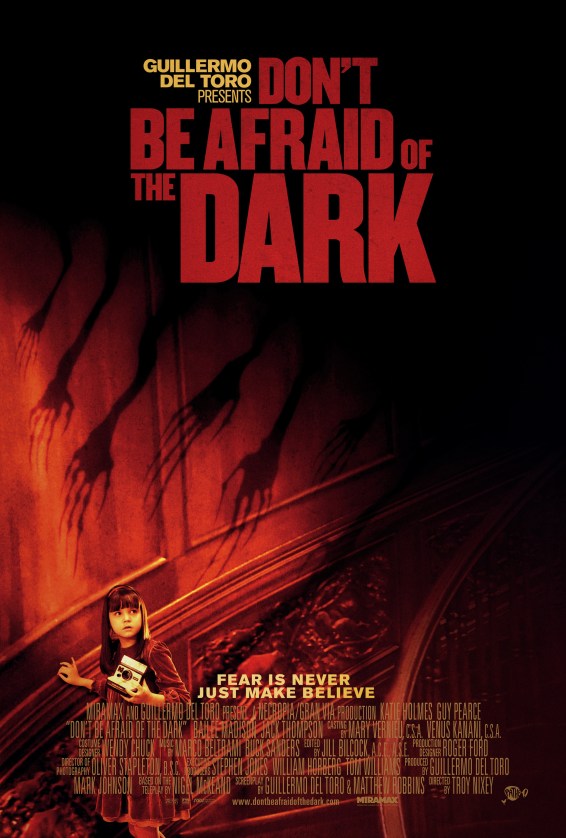
Don’t Be Afraid of the Dark (2010) – Film Review

Co-written/produced by Guillermo del Toro and directed by Troy Nixey, ‘Don’t Be Afraid of the Dark’ embraces many of the same elements as del Toro’s other films, crafting a narrative which combines both traditional gothic horror and childlike fantasy. But sadly, unlike a usual del Toro project, there is a noticeable absence in everything from captivating characters to memorising practical effects/creatures, resulting in a film that feels like a mostly copy-and-paste effort beyond one or two interesting ideas.

Plot Summary: After being sent to live with her father and his new girlfriend at their recently renovated manor, the previous home of the long-missing painter: ‘Emerson Blackwood’. Young ‘Sally’ begins to hear ominous voices emanating from the basement’s ash-pit, soon leading her to discover the cause of the painter’s disappearance…

Taking heavy inspiration from the classic H.P. Lovecraft short story: ‘The Rats in the Walls.’ ‘Don’t Be Afraid of the Dark’ is actually a remake of a low-budget 1973 TV film, as the now-iconic director Guillermo del Toro has stated in the past that he was terrified of the film when he first watched it as a child, later inspiring him to reimagine the mostly-unknown horror flick. Yet even with a much larger-budget and a more well-known cast, the film is still quite underwhelming when it comes to both its scares and story, as the film’s narrative follows a formula almost identical to many other modern horrors.

All of the performances throughout the film aren’t anything overly impressive, as whilst Katie Holmes does try her best to portray a young girl witnessing sights that no one else believes. Her character: ‘Sally’ (similar to the rest of the film’s characters) receives very limited characterisation, which does make many of the scenes revolving around the family-dynamic far less entertaining. Then there is also ‘Sally’s father and his girlfriend: ‘Kim’ portrayed by Guy Pearce and Bailee Madison respectively, and although Madison gives a serviceable performance, Pearce may give one of the weakest performances of his career here. As ‘Sally’s father: ‘Alex,’ always shows little concern or remorse when it comes to his daughter, making the character immensely difficult to resonate with.

The cinematography by Oliver Stapleton is very grand in its execution, allowing for a large number of wide-shots, some of which even flow smootly-around the various rooms of the manor. But it’s the film’s colour palette which is most worth noting, as the film utilises much more red and yellow than many other modern horrors, which is a pleasant change in terms of visuals as the more vibrant colours reflect the manor’s elegant design, which is probably one of the most visually striking ‘haunted houses’ in recent memory, with even the manor’s front entrance having a beautiful carving of an old oak tree merged into the multi-coloured glass.

Marco Beltrami and Buck Sanders provide the original score for the film, which similar to the film’s cinematography, gives the story a much more epic feel. As the heavy orchestral score could’ve easily been taken from any classic gothic horror, lending itself effectively to many scenes aside from a couple of generic tracks. The film often also features some fantastically creepy sound design, as the film’s creatures continuously speak to ‘Sally’ using their ghostly whispering voices, which seemingly echo throughout the usually empty corridors of the manor.

Although many of del Toro’s other outings do provide plenty of wonderful practical effects to gaze at, usually creating an array of unsettling and memorable creatures, ‘Don’t Be Afraid of the Dark’ takes another (less appealing) route to its monsters. As the film’s creatures are brought to life almost entirely though CG effects, which not only makes some shots appear slightly dated, but also manages to take away from nearly all of the film’s tense moments. Additionally, the film’s creature designs aren’t all that menacing, as despite the idea of evil fairytale monsters being quite unique (as the creatures are later revealed to be a sinister incarnation of tooth-fairies). The creature’s extremely small-size does make them feel very unthreatening even if it is a nice change-of-pace over having one large entity, as the film never does enough with its miniature antagonists regardless of what knives/tools they arm themselves with.

All in all, ‘Don’t Be Afraid of the Dark’ is a film that is regrettably just not worth its short runtime. As while I admire the effort to combine famed fairytale stories with a chilling atmosphere, the predominantly poor performances and numerous unexplored concepts leave the film simply another bland horror flick with a surprisingly weak screenplay by del Toro to-boot, especially when compared to much of his other work. Still, with all that said, I feel that Troy Nixey does deserve another shot in the director’s chair someday, as since this film’s initial release, he actually hasn’t worked on any other projects, which is unfortunate, as I do believe he does have some talent as a filmmaker when looking at this film’s merits. Final Rating: high 3/10.

Layout 1

The Magnificent Seven (2016) – Film Review

After taking on a number of successful action flicks in recent years, such as ‘Training Day,’ ‘Olympus Has Fallen’ and ‘The Equalizer,’ director Antonie Fuqua brings this remake of the original 1960s ensemble western to the silver screen. Combining a superb cast with some explosive moments of action and plenty of highly detailed costumes and sets, ‘The Magnificent Seven’ manages to remain an entertaining remake of the beloved western classic despite its few faults.

Plot Summary: In 1897, seven gunmen from a variety of different backgrounds are brought together by a vengeful young widow in an attempt to protect her hometown of ‘Rose Creek’ from the private army of the destructive industrialist, ‘Bartholomew Bogue,’ and his men…

Other than a few changes to the names of its characters, the remake of ‘The Magnificent Seven’ follows a very similar storyline to the original film, which was essentially just a retelling of the iconic Japanese drama; ‘Seven Samurai,’ only now set in the Wild West. As, the remake avoids making any definite changes to the narrative in favour of simply just updating the story for a more modern audience, meaning the film has much faster pacing and more of a focus on creating thrilling action set pieces than the original, which is both a good and a bad thing, as whilst the film does still pay homage to many classic westerns, the film occasionally also adopts many of the issues that plague plenty of modern blockbusters today, the most notable of which being the film’s overabundance of cheesy and predictable dialogue.

Denzel Washington, Chris Pratt, Ethan Hawk, Vincent D’Onofrio, Byung-hun Lee, Manuel Garcia-Rulfo and Martin Sensmeier all give splendid performances as the line-up of ‘The Seven,’ each portraying a different personality and skill set between them. But, of course, similar to many other films lead by a group of characters rather than just a single protagonist. ‘The Magnificent Seven’ suffers from a lack of equal development for its cast as a result of Denzel Washington and Chris Pratt as ‘Chisolm’ and ‘Josh Faraday’ hogging most of the screen-time, with the film’s antagonist; ‘Bartholomew Bogue,’ portrayed by Peter Sarsgaard, also having a deficient intimidating presence when on-screen due to this.

Whilst the film’s cinematography never falls into the category of being exceedingly bland, the cinematography by Mauro Fiore is only above-average, as although the film does feature an array of attractive close-ups and wide shots alongside its many suitably barren locations, the film also has quite a heavy overreliance on shot-reverse-shot for the many conversations between characters. However, a smaller detail that I felt added to the film’s visual appeal (and realism) is definitely its use of nature surrounding/within its various locations, as the film’s main setting of ‘Rose Creek’ is littered with trees and tall grass rather than just continuous desert similar to many other westerns, with some areas of Baton Rouge, Louisiana, where filming took place, even having to be relandscaped to further resemble the Old West.

Being the last film composer James Horner contributed towards before he sadly passed away in an accident in 2015, the original score by him and Simon Franglen does suitably feel like the score of a traditional western for the majority of the film’s runtime. Although there are still a few tracks that feel fairly generic, the soundtrack redeems itself through the great tracks; ‘Rose Creek Oppression’ and ‘Seven Riders,’ in addition to also bringing back the original film’s theme composed by the late Elmer Bernstein for its end credits.

As the remake of ‘The Magnificent Seven’ focuses more on action over anything else (with the entire final act of the film essentially being one long action sequence) a lot of pressure lies on the film to live-up to this intent, which thankfully, it does, as all of the stirring moments throughout the story make fantastic use of their impressive stunt work and subtle CG effects. That being said, nearly all of the action scenes are also distinctly missing an element of both grittiness and violence, which can be fairly distracting. As despite many of ‘Bartholomew Bogue’s guns-for-hire being shot, stabbed and blown-up, blood is barely ever seen, and whilst I understand classic westerns also didn’t really revel in violence, I’ve always seen that as more of a restriction of the time-period rather than just a skimp to lower the film’s age-rating.

In summary, while ‘The Magnificent Seven’ may not fully deliver on the ‘Magnificent’ part of its title, the film is still is an enjoyable throwback to the westerns of old with plenty of exhilarating action set pieces to boot, as even when taking into account all of the remake’s issues and general lack of memorability, I’d still say the film is on the better side of reimagined classics in recent memory and is worth a watch if you’re a true western enthusiast or perhaps just desire to see a remake that doesn’t attempt to simply recreate the original shot-for-shot. Final Rating: 7/10.

magnificent_seven_ver5_xlg

Maniac (2012) – Film Review

Directed by Franck Khalfoun (P2, I Lived, Amityville: The Awakening) and shot almost entirely through a first-person perspective, 2012’s ‘Maniac’ is a unique and extremely innovative slasher that has been enormously overlooked by fans of modern horror. While the film does admittedly have its issues, the impressive visuals and timid yet creepy performance from Elijah Wood surely make up for most of them, quickly resulting in a discomforting dive into the sadistic mind of a serial killer.

Plot Summary: After working his day job at a mannequin restoration store, the mentally ill and isolated, ‘Frank’ takes to the dark streets of Los Angeles as a serial killer with a fetish for female scalps. But, when a young artist asks him for help with her new exhibition, ‘Frank’s obsessions begin to consume him…

Although it takes a different approach to its story, ‘Maniac’ is actually a remake of the classic 1980 slasher of the same name. However, this is one of the rare occasions where I believe that the remake is possibly an improvement over the original film, as while the ’80s flick does feature plenty of over-the-top gore, the film never manages to elevate itself from being just a fairly straightforward slasher, and although it’s maybe not always successful, the remake does attempt to further develop ‘Frank’ as a character as well as exploring themes of mental health, parental ignorance and identity loss throughout its runtime.

Elijah Wood, best known for his role as ‘Frodo’ in ‘The Lord of the Rings’ series, portrays the serial killer protagonist, ‘Frank,’ as awkward and almost dry at points, making ‘Frank’ feel incredibly deranged when he interacts with other characters. Most notably, the artist and photographer, ‘Anna,’ portrayed by Nora Arnezeder, who is a clear contrast to ‘Frank’ in the way she portrays her simplistic yet likeable and innocent character, completely unaware of ‘Frank’s dark deeds as she grows closer and closer to him. The performances are slightly dragged down by writing throughout the film, however, as although the dialogue is decent for the most part, the film does still have the odd unusual line.

As previously mentioned, the remake of ‘Maniac’ is also shot nearly entirely through P.O.V. shots and it’s this cinematography by Maxime Alexandre that really makes the film stand out from many other slashers. Whilst watching the film, you can’t help but feel the tension as ‘Frank’ goes on dates or has conversations with women who we know will soon meet a gruesome fate, as the audience is fully aware of his sinister intentions, the film almost makes you feel hostage to ‘Frank’s mind. That being said, the film does sometimes take you out of the experience when it leaves the P.O.V. format for a few seconds. While I understand why the film does this (as it’s usually at crucial points within the narrative), I personally feel keeping the audience restricted to looking through ‘Frank’s eyes would’ve made the film more compelling, especially since we don’t even see ‘Frank’s face until twelve minutes into the film.

Serving as a great throwback to the classic ’80s film it’s based on, in addition to adding too many of the film’s best moments. The original score by Robin Coudert (or merely Rob, as he is usually credited) is a slick synth soundtrack. Utilising electronic waves, this underrated score is certainly a high point of the film, with my two favourite tracks; ‘Doll’ and ‘Haunted,’ both being incredibly memorable in their own right, almost feeling as if they were ripped straight from any of the iconic horrors of the 1980s.

Extremely violent and disturbing throughout, ‘Maniac’ truly pulls no punches when delving into the mind of its serial killer, meaning many viewers may be put off by the film’s highly gory deaths and unnerving murder scenes, as ‘Frank’ disposes of his victims with little remorse, dark memories of his mother during childhood fuel his violent actions. This is also where many of the film’s more bizarre moments come into play, as although it may surprise some viewers, ‘Maniac’ is partly an arthouse film as well as a slasher, as the film’s underlying themes as well as ‘Frank’s broken mind is usually displayed visually throughout the film in a variety of ways. Unfortunately, this leads to the film’s weakest aspect, however, as during many of these anomalous scenes, the film’s editing can become quite erratic, sometimes even placing cuts mid-conversation.

In summary, I deeply enjoy ‘Maniac,’ even though the film is quite problematic in some areas, mostly in regard to its unusual editing choices and occasionally lines of strange dialogue. ‘Maniac’s memorable original score, intense violence and, of course, captivating cinematography through its use of P.O.V. The film stands as definitely one of the better horror remakes in recent memory. And, although I probably wouldn’t recommend ‘Maniac’ to everyone, if you’re preferred realm of the horror genre is gory slashers, then this inventive flick is certainly not one to miss. Final Rating: 7/10.

maniac-p797147

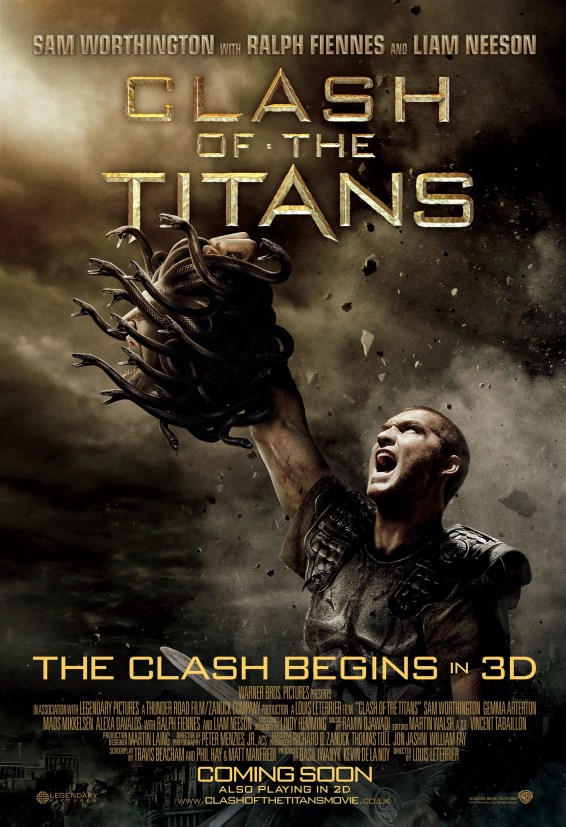
Clash of the Titans (2010) – Film Review

In this modern remake of the 1981 classic, ‘Perseus’ takes on a variety of gods and monsters in this somewhat fun, yet still very generic and sometimes even over-the-top reimagining of the original story. As, this time around, director Louis Leterrier (The Transporter, The Incredible Hulk, Now You See Me) focuses more on action set pieces and enormous CG spectacle than ever before.

Plot Summary: When ‘Perseus,’ the demigod son of ‘Zeus,’ finds himself caught in the middle of a war between gods and mortals, in which, his mortal family are killed, he gathers a war band to help him conquer the mighty ‘Kraken,’ ‘Medusa,’ and ‘Hades,’ malevolent God of the underworld…

Going off of the negative reviews from both critics and audiences, I wasn’t expecting much from ‘Clash of the Titans’ on my initial watch. However, I was surprised to find the film is mostly entertaining, as although there isn’t much substance to this remake, I still find it to be a somewhat exciting action flick, having plenty of creatures and adventure throughout its runtime, despite its various flaws. But, this may also be due to my fondness for Greek mythology, as I’ve had an interest in this area of fantastical legends/history since I was very young.

Although there aren’t any particular stand outs when it comes to the cast, Gemma Arterton, Liam Neeson, Ralph Fiennes, Mads Mikkelsen, and Jason Flemyng all do a decent job throughout the film. Sam Worthington, who, portrays the protagonist ‘Perseus,’ I personally found to be one of the weakest elements of the film, however, as despite him having a number of large roles in huge blockbusters, such as ‘Avatar’ and ‘Terminator: Salvation,’ in the past, he has always seemed extremely bland to me, never really coming across as anything other than a generic action hero with minimal charisma, and ‘Clash of the Titans’ is, unfortunately, no exception to this. 

The cinematography by Peter Menzies Jr. is also quite bland, as although I do appreciate the lack of incredibly shaky hand-held shots during many of the action scenes. Many of the shots throughout the film are usually very standard, as the cinematography never really attempts to enhance the visuals or make use of the story’s impressive and unique locations (aside from the occasional wide shot).

One very bizarre element of the film is definitely the original score by Ramin Djawadi, as although some tracks sound perfect for a fantasy epic such as this one. Other tracks almost sound as if they’ve been performed by a rock band, making them feel incredibly out-of-place within the film’s time-period. Yet, the film’s soundtrack actually does work quite well in my personal favourite scene of the film, as the scene set within ‘Medusa’s lair uses the score to build tension and atmosphere surprisingly well.

The CG effects throughout ‘Clash of the Titans’ are definitely one of the film’s better aspects, as regardless of whether it’s being used for creatures, Gods or locations, the visual effects always look great. However, this is also partially due to the designs of many of the creatures within the film, as the designs manage to perfectly blend the appearance of modern-day monsters mixed with classic Greek mythology. This also lends itself effectively to many of the various action scenes throughout the film (this obviously being the film’s main draw) as the action throughout the narrative is mostly pretty solid, making great use of the various different creatures abilities and always placing ‘Perseus’ in different dangerous scenarios.

In summary, I personally found ‘Clash of the Titans’ fairly entertaining for what it was, which is essentially is nothing more than your usual action blockbuster with some Greek mythology thrown in for good measure, as while the film is successful for what it sets out to do, the film does fall flat in many other areas, from Sam Worthington’s rather dull performance, to some of the weak writing and occasionally unusual original score, I feel only people truly interested in Greek mythology could get something out of this one. But, with all that in mind, ‘Clash of the Titans’ still isn’t the worst remake I’ve ever seen. Final Rating: 5/10.

clash_of_the_titans_ver4_xxlg

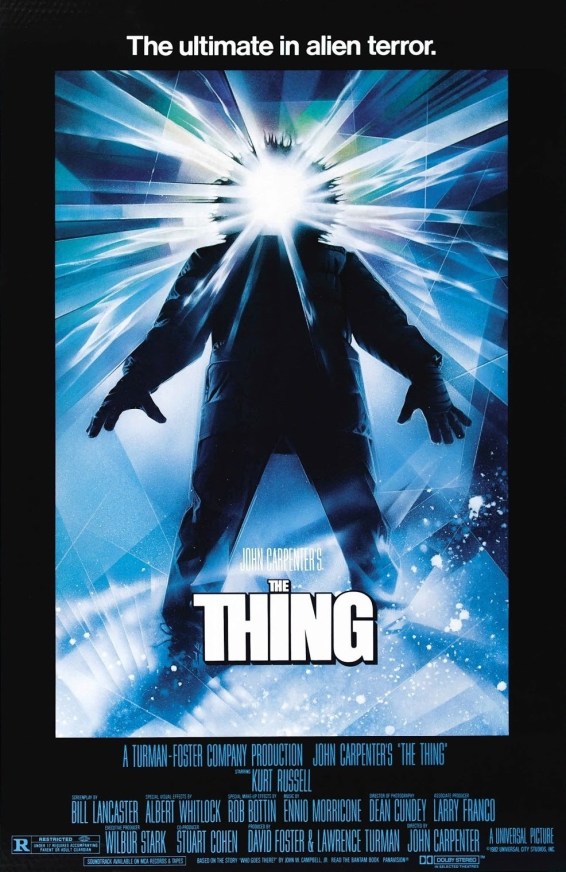
The Thing (1982) – Film Review

One of John Carpenter’s many horror classics, and one of my all-time favourites, ‘The Thing’ is a violent, eerie and creative sci-fi/body horror icon, as I personally adore this film and believe it’s one of Carpenter’s best, as the film always uses isolation and paranoia to its best extent, never failing to keep you on edge and invested throughout the entirety of its narrative and runtime.

Plot Summary: Members of an American research outpost in Antarctica find themselves battling a parasitic alien organism capable of perfectly imitating its victims. As time passes, they realise that killing the creature will be harder than they initially thought, as paranoia begins to sink in as to who has already been assimilated by the shape-shifting entity…

Although ‘The Thing’ is actually a remake of the classic; ‘The Thing from Another World,’ from 1957, I would say this is one of the rare times that a remake is better than the original as it’s constant tension building alongside the outstanding practical creature effects, make the film an incredible experience. Similar to films, such as ‘Alien’ or ‘The Fly,’ ‘The Thing’ also has a very slow opening, using its introduction to build tension and give the audience a great view of the location before the film descends into the gory, suspenseful chaos.

Kurt Russell, Keith David, Wilford Brimley, David Clennon and the rest of the cast are all decent, while Kurt Russell’s character, ‘MacReady,’ is easily my favourite simply due to his charisma, but none of the cast are terrible, by any means. However, I do feel there are too many characters within the story, as it can get confusing at many points as to which character is wrapped up within their large fluffy coats. And while I understand the need for a high body count for a film like this (which is the reason for the lack of development for many of the characters), I simply find it a little too easy to get lost at points.

Dean Cundey handles the cinematography within the film, which is decent throughout but nothing amazing, placing more of an emphasis on the practical effects within the shots, rather than the shots themselves. The cinematography, however, does still help to build tension effectivity through its many still shots and dark colour palette. Furthermore, all of the creature effects throughout the film are completely practical, giving the amazing creature designs true life by many of them being puppets or costumes rather than CGI, like most modern-day horror or sci-fi flicks. These effects truly create some very memorable scenes, as make-up effects artist, Rob Bottin, known for his work on ‘RoboCop’ and ‘Total Recall,’ truly did some of his best work on ‘The Thing.’

The original score (surprisingly not composed by John Carpenter himself) is by Ennio Morricone, but suitably does feel like a traditional Carpenter soundtrack and helps towards the eerie atmosphere as soon as the opening begins, as while maybe not as iconic as some of Carpenter’s other scores, such as ‘Halloween’ or ‘The Fog,’ etc. The original score is still brilliant in its own right and truly sets the tone for the film.

As the film takes place in an extremely isolated location and features a creature that can morph into any character, the film also never fails to keep the viewer on constant edge, as one of the best elements of the film is the paranoia the runtime continues, as any of the characters could be infected with the extraterrestrial creature. So, we never know who is going to be the next unfortunate victim, and who is their killer. Interestingly, during filming, John Carpenter didn’t even tell the actors who was the creature on set, only adding to the mystery.

In summary, ‘The Thing’ is a phenomenal entry into the genres of science fiction and horror, truly being an iconic staple of what to expect from an extraterrestrial film from then on. From its building of tension to the outstanding phenomenal practical effects as well as the constant threat, we feel whilst watching, almost placing us into the shoes of the characters themselves. Soon going on to be a true sci-fi/horror classic and becoming one of the best remakes to ever grace the silver screen. Final Rating: 9/10.

The Thing (1982) Original

A Nightmare on Elm Street (2010) – Film Review

This modern remake of the classic Wes Craven horror flick; ‘A Nightmare on Elm Street,’ unfortunately lacks any of the charm or creativity of the original as Samuel Bayer’s bland direction and Jackie Earle Haley’s eerie but not incredibly memorable portrayal of the beloved horror icon leaves much to be desired.

Plot Summary: A group of suburban teenagers all share one common bond, they are all being stalked by ‘Freddy Krueger,’ a horribly disfigured killer who hunts them in their dreams. As long as they stay awake, they stay alive…

Whilst the film definitely isn’t the worst remake I’ve seen in recent years, it most certainly is one of the most forgettable, as the film never really does anything interesting of note to give a reason for its existence (other than the production company wanting to make a large profit of course), as everything from the cinematography, to the acting, to even some of the CG effects, all come across as something from your average, low-budget slasher.

As mentioned previously, Jackie Earle Haley’s version of the ‘Freddy Kruger’ character is most certainly one of the better elements of the film. Although definitely not as memorable as the original (as Robert Englund will always be the true nightmare, in my opinion), Jackie does a respectable job of delivering his own take on the iconic character, making him more menacing and extremely creepy when on-screen as opposed to constantly cracking jokes. Freddy does still make the occasional quip every so often, however. The rest of the cast aren’t as quite as entertaining due to their limited direction and weak characterisation (as well as the poor screenplay), meaning Rooney Mara, Kyle Gallner and Katie Cassidy have very little to work with.

The film’s cinematography by Jeff Cutter is generally passable, as while not as impressive as his work on ’10 Cloverfield Lane,’ for example, is it most certainly not painful to look at throughout most of the runtime. However, one aspect of the film that is visually repellent, is the horrific colour palette the film goes for, as the film utilises an oversaturated blue and orange colour palette similar to that of a Michael Bay blockbuster, which doesn’t fit with the style or tone of the film at all.

Even the original score composed for the film by Steve Jablonsky, is a remarkably bland horror soundtrack with nothing really interesting about it, even with the classic “Elm Street Jingle,” in the background, the score really doesn’t add anything to the already boring atmosphere. The only element truly fresh to this remake is the enormous amount of jump-scares throughout the narrative, which is pretty much to be expected from any modern horror, nowadays.

As technology and filmmaking techniques have greatly evolved since the release of the original ‘Elm Street’ film in 1984, I was really expecting the film to get extremely creative with the ways ‘Freddy Kruger’ can invade people’s dreams and slaughter them, similar to the way they did within the sequels to the original film over the years. Sadly, the film pretty much recreates many of the iconic scenes from the original film almost exactly, without much thought or creative effort put into it. I did personally enjoy the new look for ‘Freddy’ though if I had to focus on a positive element of the film.

In summary, I was very disappointed with this remake, even after going in initially with very humble expectations, as aside from a few interesting CG effects here and there, the film simply isn’t memorable in the slightest. Employing the ‘A Nightmare on Elm Street’ title without understanding what actually made it such a popular and iconic franchise in the first place, leaving the film feeling like nothing more than a lethargic cash grab. Final Rating: low 3/10.

a-nightmare-on-elm-street-2010