Anomalisa (2015) – Film Review

“Sometimes There’s No Lesson. That’s a Lesson in Itself.” – Michael Stone

Originally planned to be a short film, roughly forty minutes in length, with the large sum of funds later gathered from a crowd-funder on Kickstarter pivoting the project to become feature-length, 2015’s Anomalisa is a technically impressive and exceptionally humane stop-motion drama that marks another distinctive highlight in writer and co-director Charlie Kaufman’s filmography. Serving as a thought-provoking treat for fans of introspective cinema, Anomalisa is a quirky and mesmerising exploration of mental illness seen through the eyes of a middle-aged author trapped beneath the weight of his mundane life, integrating memorable characters and dry wisecracks wherever possible to craft a story that is just as captivating as it is interpretive.

Plot Summary: After travelling to Cincinnati, Ohio, to deliver a speech at the Fregoli Hotel, motivational writer and customer service expert Michael Stone encounters Lisa, a seemingly unremarkable woman who immediately enchants him, shaking up his mundane existence after many years of feeling disconnected from his family and those around him…

Directed by Duke Johnson and Charlie Kaufman, the latter also being the screenwriter, Anomalisa is one of those films that will click with some audience members sometime after the credits roll, dwelling on many of the concepts the film focuses on through its relatively simple, yet accessible and melancholic story, a narrative made more interesting by how it’s told. Blending Kaufman’s caustic sense of humour with genuine moments of human connection, Anomalisa is stuffed with true-to-life, awkward interactions, naturalistic dialogue and numerous subtle touches, similar to many of his previous written works, such as Being John Malkovich (1999) and Eternal Sunshine of the Spotless Mind (2004). Moreover, Anomalisa acts as a direct challenge to the notion that many still seem to hold; that animated films are solely for children, combating this belief by conveying a mature story via charming stop-motion, never shying away from harsh language, nudity or even a graphic scene in which two of the lifelike, puppeteered characters engage in lovemaking.

On the topic of characters, the robust central duo of David Thewlis and Jennifer Jason Leigh are terrific, delivering superb vocal performances that (along with the dialogue) deliver characterisation to the audience, quickly making it apparent that Michael has mental baggage related to Cincinnati, bearing the scars of a love life he left behind. Right from the opening scene, it also becomes apparent that Michael is one of the only uniquely designed puppets, as every other character he encounters seems to have an identical facial structure and a similar voice with a comically flat tone, continually voiced by Tom Noonan. All of these analogous characters (male or female, adult or child) illustrate how Michael, despite his career, struggles to interact with those around him, desiring to do anything but talk to others, including his wife and son, with certain details regarding his behaviour suggesting the character is going through a mid-life crisis and/or implying he may have serious mental issues. Yet, both are merely theories, as nothing is ever confirmed.

Visually, the film’s stop-motion animation is stunning, with the felt-faced puppets lending personality to every scene. Each character lives and breathes on-screen in a way that I feel visual effects couldn’t achieve, making the fact that every character was brought to life via thousands of tiny adjustments all the more extraordinary. The animation is utilised to spectacular effect during one nightmarish dream sequence, where Michael is confronted by his seemingly deteriorating mental state, even drawing attention to his puppet’s prominent facial slit in a bizarrely humorous fourth-wall-breaking moment. On top of the animation, the cinematography by Joe Passarelli is visually striking, frequently appearing as if it has been carried over from a live-action drama.

Often coming across as a forty-minute audible representation of the film itself, the original score by Carter Burwell is a slow-paced and downcast soundtrack that occasionally features snippets of dialogue from the film’s various characters, an eccentricity that is sometimes effective and sometimes irritating, with the score’s finest track; Overture, thankfully being dialogue-free, allowing its nuanced sweetness to flourish.

Further playing into the previously mentioned theories surrounding the film, it’s interesting to note that the hotel Michael stays at, the Fregoli Hotel, is actually named after “The Fregoli Delusion,” also known as “The Delusion of Doubles,” a rare disorder in which a person holds the misconception that those around them are a single person who changes appearance or is in disguise. While Kaufman has confirmed in the past that Michael doesn’t suffer from this exact disorder, the Fregoli Delusion did serve as an inspiration for the film and functions as a reasonable explanation for some of Michael’s peculiar visions, but still doesn’t answer every inquiry an audience member may have about his mental state.

In summary, although the exquisite sop-motion animation automatically makes the film worth a viewing for anyone with even the slightest interest in stop-motion storytelling, Anomalisa will likely have its naysayers, given the film is a rather cyclical drama featuring a cynical protagonist, with perhaps too few gags mixed-in to oppose the constant cynicism. Nevertheless, the film is a well-conceived character study exploring loneliness and mental illness, impressively interpreted through a painstaking style of animation, painting a different shade of drama, a drama that I personally believe wouldn’t work as well should it have been produced with CGI or in live-action. Rating: 8/10.

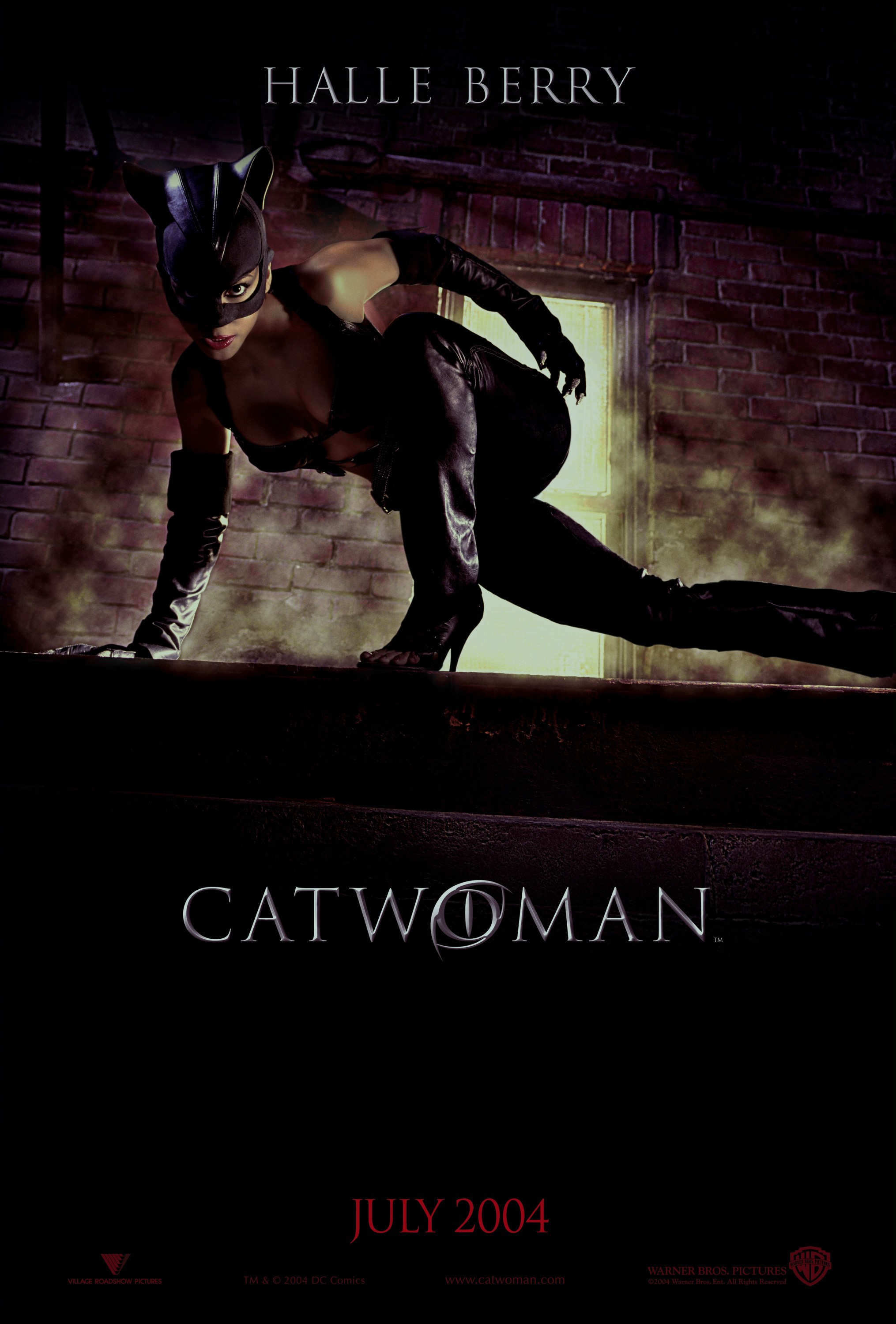
Catwoman (2004) – Film Review

“White Russian… No Ice, No Vodka, Hold the Kahlua.” – Catwoman

Widely considered one of the worst superhero blockbusters of all time, the notorious Catwoman from 2004 is a horrendous combination of an edgy 2000s music video and all of the worst aspects of a modern superhero flick. Harbouring immensely cringey, pun-based dialogue, terrible CG effects and a forced romantic subplot, among many other issues, Catwoman is a nosedive in quality from many of the beloved comic book stories featuring the famed cat burglar of the DC Universe. Still, for those who are fans of the character, there is little concern of character assassination here, as the protagonist of Catwoman is so distant from the feline that debuted in 1940 that she is virtually unrecognisable outside of the signature ears, whip and black leather outfit. As such, this seedy superhero flick is only worth seeing if you can tolerate a thrown-together story and hideous visuals merely for an ironic laugh.

Plot Summary: While toiling as a graphic designer for the cosmetics company Hedare Beauty, a mammoth corporation on the verge of releasing a revolutionary anti-ageing lotion, the shy and sensitive Patience Philips inadvertently happens upon a dark secret regarding the ointment, soon finding herself in the middle of a corporate conspiracy that eventually takes her life. But, after mysteriously reawakening with the newfound abilities of immense speed, strength, agility and ultra-keen senses, Patience transforms into Catwoman, a skilled and stealthy vigilante determined to foil her former employer’s devilish ploy…

Aside from the central (and rather superficial) underlying theme of the film, which relates to the harmful side of the cosmetics industry, naturally depicted in an over-the-top fashion with inhumane suits eager to make a profit, regardless of consumer harm, the plot of Catwoman is a formulaic yet underdeveloped superhero origin story, with most of the film revolving around the corny sequences of Patience (renamed from Selena Kyle in this iteration) discovering her numerous abilities. Similar to the unwarranted rename, this iteration of the character also possesses unexplained, supernatural abilities, unlike the original version of the character, who shared many similarities to her occasional associate, occasional foe, Batman, sporting an imposing outfit, a secret identity and exceptional fighting capabilities, yet no actual superpowers.

Becoming one of only six actors in history to own both an Oscar and a Razzie after her ‘win’ for her infamous performance in the film, Halle Berry also became the first actress to accept her Razzie in person, stepping out on stage proudly holding both Oscar and Razzie aloft, delivering the brief acceptance speech of; “I’d Like to Thank Warner Brothers for Making Me Do this Godawful, Piece of Shit Movie.” With this in mind, it’s likely not a surprise that Berry portrays Catwoman with all of the comic book cheesiness as other superhero performances of the era, from Ben Affleck’s Daredevil to Wesley Snipes’ Blade, over-delivering every line of dialogue and showcasing the cinematic sexualisation (and animalisation) of the titular character to an absurd degree, despite Catwoman’s sexually provocative side being a key part of her character in most media she appears. That said, Halle Berry does commit to her performance, and commendably so, considering that Patience spends most of her time wide-eyed and humiliatingly unhinged with a profound love of tuna. The supporting cast of Benjamin Bratt, Sharon Stone and Lambert Wilson don’t fare much better, with their performances frequently coming across as either lifeless or cartoonish.

Previously set in Catwoman’s usual home of Gotham City, with Michelle Pfeiffer reprising her role from the blockbuster sequel Batman Returns (1992) before this concept was scrapped when Pfeiffer refused to sign on, Catwoman takes place in an anonymous, grimy city that greatly resembles Gotham, yet is never confirmed to be so. Nevertheless, this iconic, fictional city’s aesthetic barely enhances the film’s visuals in the grand scheme, as the cinematography by Thierry Arbogast is continuously cluttered and visually displeasing, a flaw only exacerbated by the equally unpleasant viridescent colour palette. Moreover, the CG effects throughout the runtime are beyond appalling, appearing weightless and unconvincing, namely during scenes where Patience leaps up walls and across rooftops or when a cat is depicted via uncanny CGI, even though forty-three cats were actually trained and used for the film, seemingly removing the need for CG effects in this respect.

On another note, the soundtrack for Catwoman, primarily relying on not-so-timely songs such as Scandalous, Outrageous and Crazy in Love, is just as nostalgic as it is corny and excessively distracting. Likewise, the original score by Klaus Badelt is loud and overbearing, often unintentionally emphasising the film’s poor sound mixing, like with the clamorous track; Felineious Assault.

With Catwoman, it’s clear that the strangely mononymous French director Pitof (Vidocq, Fire & Ice: The Dragon Chronicles) set out to make a film as stylish and sensual as possible within the boundaries of its rating. And, while much of the film’s style is evidently influenced by Pitof’s background in outlandish, sultry music videos, blockbusters generally don’t rely on constant hyperactive shots, and Catwoman is a testament to why.

In summary, Catwoman is a baffling, dated mess of a superhero-led blockbuster, which is unfortunate, given how significant of a character Catwoman is, repeatedly playing a pivotal role in stories across the DC Universe, both featuring the Caped Crusader and otherwise. Thus, it’s not an exaggeration to say that Catwoman is a ‘cat-astrophe’ in practically every aspect, but definitely as an adaptation. Rating: 1/10.

catwoman_ver2_xxlg

Underwater (2020) – Film Review

“There’s a Comfort in Cynicism. There Is a Lot Less to Lose.” – Norah Price

Substituting deep space for the deep sea, Underwater is a 2020 sci-fi thriller that takes a hefty amount of inspiration from the illustrious Alien franchise, namely the original 1979 sci-fi-horror classic, with its story centring on a group of survivors navigating a dim, claustrophobic facility submerged deep beneath the ocean’s surface, all while a terrifying, otherworldly force stalks them, picking them off one by one. It’s a familiar format, to be sure, and whilst some will find this type of narrative worn out by this point, I have always enjoyed these sorts of unnerving stories, especially when filmmakers, like director William Eubank (The Signal, Paranormal Activity: Next of Kin, Land of Bad), repeatedly strive to integrate stylish visuals and elements of Lovecraftian horror to suppress the strong sense of déjà vu.

Plot Summary: Operating in the murky depths of the Mariana Trench, the Kepler 822, a research and drilling installation, slowly pushes its way towards the centre of the Earth. But, when a mysterious earthquake extensively damages much of the deep-water facility, mechanical engineer Norah Price, along with a handful of other survivors, band together and take action, faced with the immense task of suiting up and trekking across the ocean floor to safety as something sinister lurks among the facility’s scattered debris…

As a result of the Walt Disney Company’s takeover of 20th Century Fox as part of their acquisition of 21st Century Fox in 2019, Underwater‘s initial release date was drastically pushed back, with production occurring in early 2017. Due to this prolonged release and its skimpy marketing, Underwater was a financial failure, which is unfortunate, as while the film is nothing extraordinary, it is an entertaining flick that keeps up a relentless pace, clocking in at an agreeable nighty-six minutes. Still, it’s indisputable that Underwater wears its inspirations on its sleeve, both to its detriment and otherwise, sometimes appearing overly familiar, primarily through its numerous parallels to the previously mentioned Alien series, beginning straight from the opening scene as the camera slowly pans around the foreboding corridors of the Kepler Station with no dialogue spoken, similar to the opening scene of Alien (1979), where there is likewise no dialogue as the camera pans around the Nostromo, the spacecraft the central characters are aboard.

Evidently inspired by Ellen Ripley through her quick thinking and authority in the face of an unknown threat, Kristen Stewart portrays protagonist Norah Price, who, whilst not incredibly memorable or extensively developed, is given enough characterisation to make her an honourable lead, with Stewart appropriately conveying dread or courage whenever required. Furthermore, the supporting cast of Vincent Cassel, Mamoudou Athie, T.J. Miller, John Gallagher Jr. and Jessica Henwick are terrific, despite many of their characters being archetypes at best and paper-thin cutouts at worst. Yet, in all honesty, in a film such as this, I feel that is all you really need, given that most of the characters serve their purpose in merely portraying walking appetisers for the creatures that are stalking them, showcasing their fearsome capabilities. Additionally, Underwater does a splendid job whenever it delivers exposition, particularly during an early sequence between Norah and her colleague Rodrigo, where the audience is swiftly supplied with everything they need to know.

Presenting the ocean as just as frightening as the vast darkness of space, the cinematography by Bojan Bazelli is stellar for the most part, as Bazelli captures the claustrophobic atmosphere of the Kepler beautifully, supplying every moment with suspense, not only because of the creatures, but the unease induced by the opaque water and crushing pressure attempting to breach the ravaged walls of the facility, a notion amplified by the aquatic colour palette of blues, greys and greens. On top of the camerawork, the design of the creatures is meritorious, clearly taking visual influence from much of H.P. Lovecraft’s work, as well as well-known ocean-dwelling wildlife, such as anglerfish. Regrettably, however, these unsettling creature designs are partially spoilt by the second-rate CGI that perpetually represents them.

For its part, Marco Beltrami and Brandon Roberts’ original score is adept at provoking the asphyxiating claustrophobia one would feel being trapped in an underwater facility via tracks like The Bends, Sprung a Leak and Squid Market, again in a similar vein to the Alien franchise. Furthermore, the sound design throughout the runtime lends itself to the ominous atmosphere, as the submerged facility ceaselessly creaks from the damage it has endured. But, the sound design is undoubtedly at its most effective when heard during the point-of-view sequences from inside Norah’s diving suit.

Intriguingly, for the many underwater sequences, the cast sported heavy, airtight suits, each weighing around 63kg, they were then filmed on dimly lit soundstages utilising volumetric scanning. An interesting bit of trivia that, in my opinion, highlights how much effort was put into this flick outside of its undeniably poor marketing.

In summary, although Underwater is occasionally overly reminiscent (or reliant if you prefer) on renowned films across its primary genres, I don’t believe that means Underwater can’t be admired for what it is, as personally, I’d much rather see an original narrative heavily inspired by a beloved piece of cinema, than a remake or unwarranted sequel of/to one. As such, Underwater is a film that I feel will find a second life on streaming services, as this sci-fi-thriller is a pleasant watch for anyone looking to immerse themselves in some deep-sea storytelling. Rating: 6/10.

underwater_xxlg

Cocaine Bear (2023) – Film Review

“What the Fuck Is Wrong With That Bear?!” – Beth

Partially inspired by an incident that took place in 1985, where lawyer-turned-drug smuggler Andrew Thornton took to the skies to drop blocks of cocaine over Knoxville, Tennessee, before leaping out of his aircraft carrying a duffel bag containing roughly £11 million worth, ultimately falling to his death when his parachute malfunctioned. A regional black bear was believed to have stumbled upon some of his stash, as two months later, a Georgia hunter discovered a bear carcass surrounded by the remains of a bag investigators later deemed to be Thornton’s. Although no deaths were reported as a result of the intoxicated animal, with a medical examiner concluding that the two-hundred-pound beast likely overdosed within minutes, dying from cerebral haemorrhaging and respiratory heart failure, the notorious story of the amusingly nicknamed; “Pablo Escobear,” was ripe for a cinematic adaptation given its utter absurdity, and the bluntly titled; Cocaine Bear, released in 2023, aimed (yet failed) to fill that void.

Plot Summary: When a duffel bag stuffed with around $14 million in cocaine falls from the sky in the aftermath of a 1980s drug smuggling excursion, a colossal, national park-roaming American black bear unconsciously devours much of the white powder, steering the animal on a bloody path of destruction as it becomes the most dangerous apex predator on the planet for the next few hours…

Directed by Elizabeth Banks (Movie 43 – Segment: Middleschool Date, Pitch Perfect 2, Charlie’s Angels), the title of Cocaine Bear was originally intended to be a temporary working title, but the producers eventually decided to release the film under that moniker as they couldn’t think of a title more fitting. To some extent, this bit of trivia serves as a representation of the film itself, as Cocaine Bear is exactly what it sounds like; a ludicrous, violent and corny comedic thriller that adapts a story almost too outlandish to believe. Of course, to create a more marketable flick, the filmmakers do make a string of alterations to the real story as, in reality, when the animal’s carcass was found, it had already been dead for around a month, in contrast to the rampage depicted in the film, which occurs shortly after the smuggler’s death. Moreover, investigators never reported any threatening or destructive behaviour ahead of its death, nor did the bear eat the entirety of the supply Thornton was thought to have smuggled, as officials deduced that an unknown individual had fled with a portion of the stash. Still, it is an amusing tale to bring to the silver screen, especially since animal experts have always been somewhat uncertain as to whether animals experience the same type of high that humans do from substances like alcohol or marijuana, despite some animals seemingly ingesting substances like catnip and hallucinogenic mushrooms for their recreational effects.

Featuring one of the last-ever performances from famed actor Ray Liotta, as the actor sadly passed away on May 26th, 2022, a mere week after he re-recorded some of his lines during the film’s post-production phase. The central cast of Keri Russell, Alden Ehrenreich, O’Shea Jackson Jr., Isiah Whitlock Jr. and Liotta himself are all serviceable in their various roles. While some of the cast portray relatively likeable yet significantly underdeveloped, hapless residents, others lend their acting skills to portraying scummy drug peddlers who ultimately earn their comeuppance when confronting the ravenous, cocaine-plugged beast. However, whilst much of the cast is well-versed in the comedy genre, one of Cocaine Bear‘s most significant shortcomings is undoubtedly its inconsistent, overly cartoonish humour throughout.

Aside from the CG effects of the titular bear, which adequately convey its size, strength and weight, the visuals of Cocaine Bear are rather bland, rarely employing distinctive shots or creative set design as the cinematography by John Guleserian predominantly largely relies on generic mid-shots, with much of the editing harbouring little rhythm and the bloodthirsty beast’s killings possessing minimal creativity, often having a severed limb merely dumped in front of the camera.

In terms of the original score, talented composer Mark Mothersbaugh’s soundtrack is sufficient yet rather sterile in the grand scheme, with the poorly-anointed tracks of Bear Attack, Bathroom Fight and Bear Dance being the only high points as Mothersbaugh attempts to integrate a selection of instruments from the ’80s to lend authenticity to the 1980s setting.

Bizarrely, although set in an unnamed national park in Knoxville, Tennessee, Cocaine Bear was truthfully shot in Ireland, with the crooked forest trails of the Irish outdoors appearing largely indistinguishable from that of the U.S. Very few Irish actors were cast, however, excluding extras, presumably to play into this implied American setting.

In summary, Cocaine Bear stumbles even as the lowbrow flick many (myself included) expected it to be, lacking entertainment value and a strong sense of satire in spite of the film leaving a peculiar cinematic legacy, with a slew of low-budget rip-offs emerging shortly after its release, each more absurd than the last, such as Cocaine Shark (2023) and Attack of the Meth Gator (2023). Thus, I’d suggest bypassing Cocaine Bear and simply scouring for a documentary on the event. Conversely, if you are ever passing through Lexington, Kentucky, perhaps consider visiting the Kentucky for Kentucky Mall, where the bear’s preserved body is actually on display, further corroborating the animal’s enchantingly strange legacy. Rating: 4/10.

cocaine_bear_xxlg

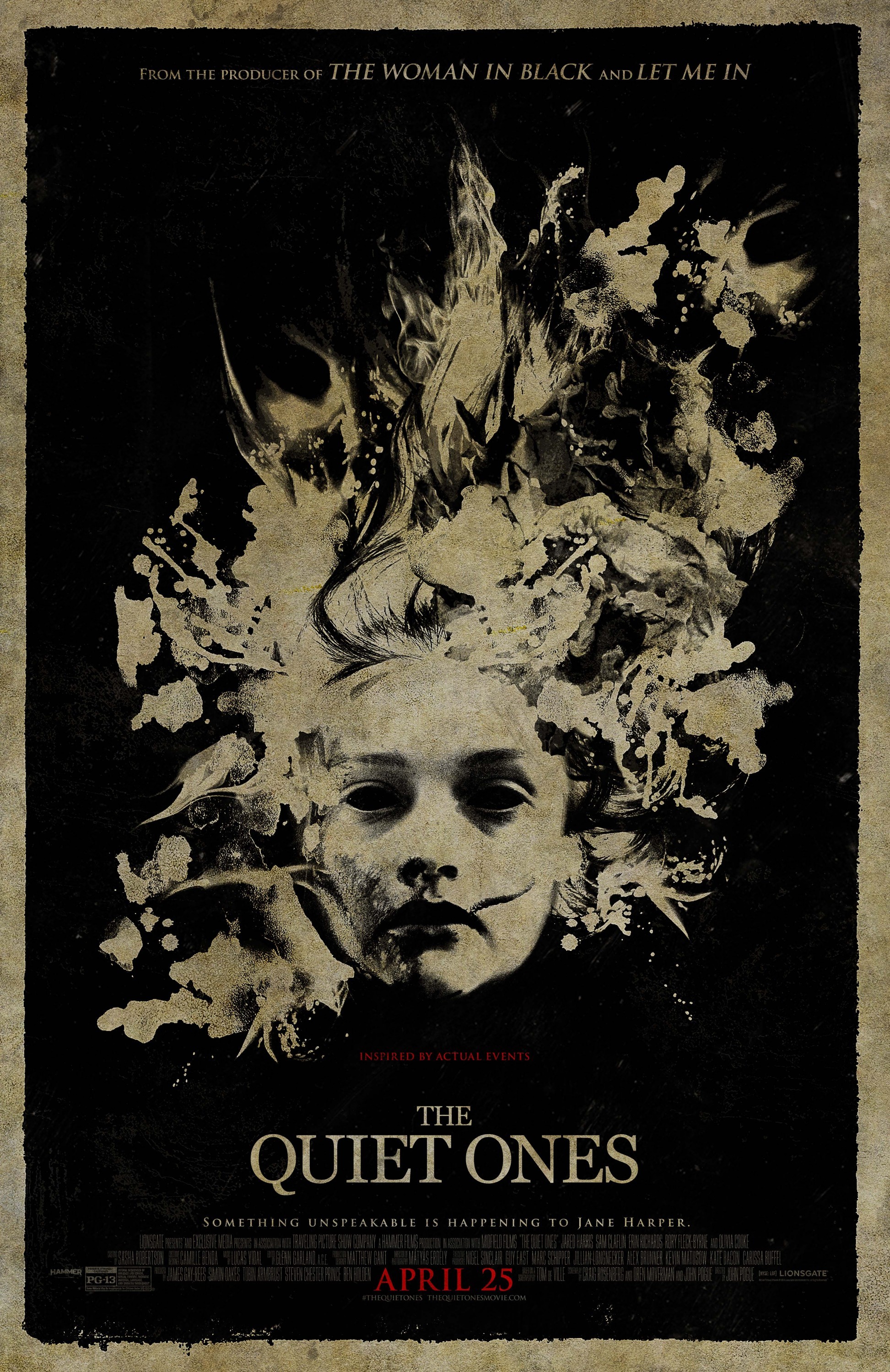
The Quiet Ones (2014) – Film Review

“What if You Could Prove That the Supernatural Was Merely a Manifestation of What Alreadly Exists in the Mind; the Subconscious?” – Professor Joepsh Coupland

Shot in 2012 yet not released until 2014, The Quiet Ones is a 1970s-set, melancholic horror loosely based on the Philip Experiment, a 1972 parapsychology experiment conducted in Toronto, Ontario, made to determine whether living subjects can communicate with fictionalised ghosts through expectations of human will. Led by mathematical geneticist Dr. A.R. George Owen and overseen by psychologist Dr. Joel Whitton, their goal was to create a fictional character through a purposeful methodology and then ‘attempt’ to communicate with it through a séance. The created character was anointed; “Philip Aylesford,” referred to as “Philip” during the test. Although participants did report feeling a ghostly presence, table vibrations, breezes, unexplained echoes and eerie noises, matching responses to questions about Philip’s life, an apparition ultimately never appeared. Nevertheless, director John Pogue (Quarantine 2: The Terminal, Blood Brother, Deep Blue Sea 3) set out to take this real-world trial and twist it into an unnerving horror flick to, regrettably, minimal success.

Plot Summary: Summoning his top students to a secluded estate on the outskirts of Oxford in 1974, the unorthodox Professor Joseph Coupland proposes to the deeply troubled orphan Jane Harper that they perform a risky experiment to manifest the darkness within her. Operating under the theory that paranormal activity is triggered by negative human energy, Joseph and his team employ a series of tests to push the young woman to the brink of sanity. But, as the morally questionable experiment continues, the professor and his ambitious students soon realise they may have unwillingly released an unrelenting horror…

Heavily rewritten during production for budgetary reasons, The Quiet Ones does have a captivating piece of inspiration at its core, with the Philip Experiment being historically regarded as one of the most promiscuous and unsettling experiments of the 1970s, often playing into the configuration of conventional séances as Dr. A.R. George Owen sat his participants around a table, dimming the lights and requesting no communication between the group, even if the experiment has been criticised in recent years for lacking systematic management and clear results due to the unreliability of séances. Similar tests were conducted in the years following creating further make-believe characters, known as “Lilith” and “Humphrey,” producing near-identical results that were eventually deemed inconclusive. Regardless, it’s a bewitching real-world event for a horror flick, mashing up elements of science and the supernatural as frightening occurrences get underway, leading the researchers to admit their understanding of life and death isn’t as accurate as they once thought.

Portraying the zealous research team, Jared Harris, Sam Claflin, Olivia Cooke, Erin Richards and Rory Fleck Byrne are on all their A-game, with Harris being a particular highlight as the intelligent and self-assured Professor Joseph Coupland, portraying the character as equal parts unpredictable and oddly calming, it’s just a shame the character’s emotional backstory isn’t utilised to its full effect. In one of her first major roles, the then-upcoming actress, Olivia Cooke, is also a stand out, portraying Jane as an immensely tragic woman who has suffered from mental illness and uncanny events almost all of her life, being sent in and out of foster homes as a result of the malevolence enveloping her like a storm.

Continuously made to appear as if portions of the film were shot on ’70s-era cameras, The Quiet Ones is one of those horror flicks that feels as if it could have very easily been conceived as an entirely found-footage endeavour, but instead, the film uses the found-footage format sparingly, only employing the visual aesthetic at pivotal moments in the narrative. Most notably, during the scene with the Kirlian photography experiment (as seen through the lens of Brian’s 16mm camera), which was actually filmed by Sam Claflin himself, although not with an authentic 1970s camera, but with the contemporary camera of cinematographer Mátyás Erdély.

Comparable to how many of the film’s frights are your typical, lethargic jump-scares, such as windows slamming, doors knocking, beds breaking and chandeliers falling (each time, the deafening scare being preceded by an elongated silence), the orginal score by Lucas Vidal features the usual assortment of rackety, blaring tracks, like Not Scientific Proof and Bathtub Attack. Perhaps some of this audible bombardment was meant to conceal that there isn’t much depth to the story beyond the underlying theme of science and its relation to the supernatural.

In addition to The Quiet Ones, the infamous Philip Experiment also inspired the horror flick; The Apparition, released a few years prior in 2012, but that isn’t too surprising, given that a 2019 poll concluded that nearly half of the American populace believes that spirits and/or demons exist, despite overwhelming evidence that belief that life persists after death is declining.

In summary, The Quiet Ones is a horror flick that, in my opinion, is deserving of its largely overlooked status in the horror genre, as most of the film relies on cheap frights and visual trickery more than genuine dread to unnerve its audience. Though the film possesses an honourable cast, an appealing setting and an intriguing real-world influence, its rather lifeless execution holds it back. In essence, The Quiet Ones is much like the experiment in its narrative, throwing ideas into a beaker and praying it works as intended, yet it doesn’t achieve the desired outcome. Rating: low 5/10.

quiet_ones_xxlg

The Darkest Hour (2011) – Film Review

“What’s the Dress Code for the End of the World? Jacket, No Tie?” – Sean

Initially intriguing yet ultimately vacuous, 2011’s The Darkest Hour is an apocalyptic blockbuster that will seem like familiar territory for most with its relatively straightforward premise of a group of survivors escaping a hostile, extraterrestrial foe, its only genuinely innovative ideas appearing in the form of its setting; Moscow, and the unique, electricity-based abilities/appearance of its unworldly invaders. Rammed with immensely corny dialogue, uninteresting characters and cheap-looking set design, The Darkest Hour fails on most fronts, leaving its title to ironically reference the fact that the film’s initial release may have been the ‘darkest hour’ for all the careers of those involved in its production.

Plot Summary: When American software developers Sean and Ben travel to Moscow to sell their latest program to investors, their Swedish associate Skyler double-crosses them, forcing them out of the deal. In an attempt to drown their sorrows, the duo head to a nightclub. Until, out of the blue, the Russian population is startled by the appearance of mysterious rays in the sky, soon discovering that the lights are, in actuality, an extraterrestrial force invading Earth and utilising our power supply to eradicate all mankind…

The inclusion of the Russian setting and, by proxy, Russian crew/extras can be attributed to producer Timur Bekmambetov, who after becoming involved in the project, allowed the production to use Moscow as a backdrop instead of the typical U.S. locations, predominantly due to Bekmambetov owning his own production company in the city, known as Bazelevs, where the majority of the film was shot, with the crew consisting of roughly 30% Americans and 70% Russians. In conjunction with director Chris Gorak (Right at Your Door), who ordinarily serves as an art director/production designer on sets, harbouring minimal experience as a director, the duo aimed to make a film that would thrill audiences and feel distinct via its foremost setting, but evidently, they did not achieve this.

The central cast of Emile Hirsch, Max Minghella, Olivia Thirlby, Rachael Taylor and Joel Kinnaman are strong names, but unfortunately, all portray rather simplistic and indistinguishable characters. Fortunately, the audience is provided with a few leads that hint towards the impending extraterrestrial invasion as protagonists Sean and Ben prepare to close the deal for a party-spot program they’ve created, only to find that their alleged business associate, Skyler, has ripped them off, stealing their idea and pushing them out. Supposedly, after putting much time and effort into their project, the pair idiotically did nothing to protect their intellectual property, merely moping around a nightclub until they encounter American traveller, Natalie, her Australian friend Anne, as well as Skyler, whom they shepherd into their group during the initial raid in spite of his earlier betrayal with next-to-no drama.

Shot in 3D as opposed to going through post-conversion. The Darkest Hour‘s production was originally fifty-eight days, with a further eight to nine days being added onto the production schedule once it was decided the film would be shot in 3D. Yet, throughout the runtime, these 3D effects barely register due to so much of the film taking place in dimly-lit environments (frequently depicted by shabby sets), the only real highlight of the 3D effects being the eye-catching opening title sequence. Furthermore, despite The Darkest Hour‘s constant attempts to bombard the audience with disintegrating civilians, handcrafted weapons and adrenalin-fulled chases across deserted, dust-covered streets, many of the film’s action sequences are fairly lacklustre, with the cinematography by Scott Kevan doing little to enhance the cinematic ennui.

From tracks like Northern Lights to Here’s Our Mission and Man Overboard, the film’s orginal score by Tyler Bates is occasionally effective but not all that memorable, often feeling just as gaudy yet creatively uninspired as the visuals, barring the score’s recurring use of bellowing electronic rhythms and propulsive synthesised experiments, serving, in a way, as an audible extension of the eerie, electrical sound design that accompanies the belligerent extraterrestrials.

As mentioned many times, the film’s unusual alien species only ever appear in some form of electrolocation, sensing the electricity in living beings by generating electrical fields. A downside of this ability, however, is that the extraterrestrials cannot see through any type of glass, as the transparent material is a poor conductor of electricity. This fascinating concept is what makes the aliens stand out when compared to invaders from other sci-fi blockbusters, especially since they are protected by electrical shields and can vaporise their victims instantaneously. As such, this imperceptible, seemingly unstoppable force draws the audience in through mystery and uncertainty, eliminating much of the population of Moscow overnight. That said, the extraterrestrial’s unpredictable, electrical abilities do begin to break down the longer the central group of survivors outwit them, given the group should lack any of the skills or knowledge needed to find a way out of their precarious situation. Of course, another minor issue arises in their colour as the aliens take on a glowing golden appearance, whereas electricity, in reality, is colourless.

In summary, The Darkest Hour is a sci-fi blockbuster that falters in its many attempts to propel its audience past their inevitable plot-related questions, the occasional wobbly acting and the easily foreseeable climax. While the film does include a handful of intriguing ideas and excellent electricity-affiliated visuals (alongside a periodic usage of real-world science), The Darkest Hour is obviously not the ‘electrifying’ experience the filmmakers intended it to be. Rating: 3/10.

darkest_hour_ver3_xxlg-transformed

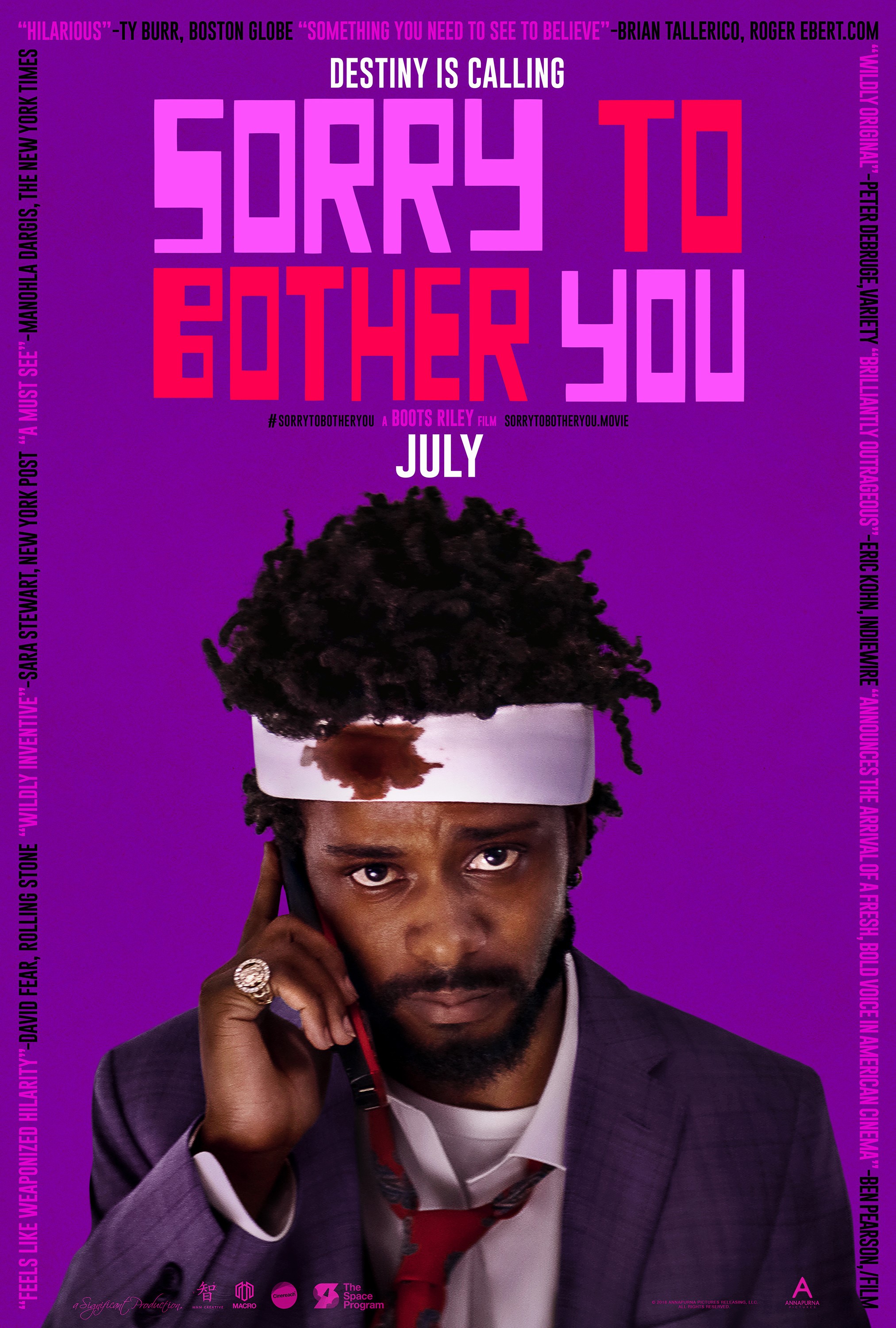
Sorry to Bother You (2018) – Film Review

“This Is Telemarketing. We’re Not Mapping the Fucking Human Genome Here. I Don’t Care if You Have Experience for This… I’ll Hire Damn Near Anyone.” – Anderson

Full of surprises and thoroughly embracing its weirdness at every turn, the 2018 social satire Sorry to Bother You serves as a fantastically refreshing flick that announces writer-director Boots Riley as a radical upcoming voice in the realm of cinema. Harbouring a captivating premise, memorable characters (both benign and despicable) and dialogue that is both snappy and humourous, Sorry to Bother You is a stylish indictment of capitalism, consumerism and cultural appropriation, all executed in a rather unconventional fashion that will likely cause some audience members to lose interest.

Plot Summary: In an alternate, present-day version of Oakland, bumbling jobseeker Cassius Green acquires a low-level position at a telemarketing firm, only to find it a dispiriting struggle as a Black man selling to predominately White customers. But, when a telemarketing veteran advises him to use his “White Voice” to make himself more appealing to potential buyers, that all changes. Now, with his newfound talent, Cassius thrives in his profession, soon being promoted to a “Power Caller,” peddling morally abhorrent yet incredibly lucrative services as he further climbs the corporate ladder…

As you might expect from its introduction, there are a lot of big ideas in Sorry to Bother You, from the power of influence ravenous corporations possess to the dehumanisation of human labour and how they are both inextricably tied to everyday racism, Sorry to Bother You juggles an assortment of relevant, weighty and thought-provoking themes. Still, the film is far from your standard social commentary, but rather a raucous, surreal mockery that remains outlandish until its last few minutes, especially regarding one particular aspect of its narrative, which could be considered a step too far into absurdity for some.

Originally, famed actor and musician Donald Glover was penned for the lead role of Cassius Green, but was ultimately unable to assume the role due to scheduling conflicts with 2018’s Solo: A Star Wars Story. Instead, Glove recommended his co-star LaKeith Stanfield from the comedy-drama television series; Atlanta, for the role. Thankfully, Stanfield holds his own as Cassius, portraying a goofy klutz who lives in his uncle’s garage, lacks conviction and often suffers from existential anxiety, frequently fretting about the sun exploding and his life bearing no significance, much to the displeasure of his activist and performance artist girlfriend, Detroit, equally well-portrayed by Tessa Thompson. Moreover, despite Cassius’ many sordid acts throughout the runtime, you never stop rooting for him on account of Stanfield’s charm, even when he’s led into making vile choices purely on his desire for more money and success, making for an entertaining character arc aided by repeatedly witty dialogue.

Aesthetically, Sorry to Bother You is just as crazed as its zany tone, with visual diversions regularly transpiring from an early sequence where Cassius converses with potential buyers over the phone before he quite literally (and creatively) crashes into their lives with his desk. Occasionally, however, these off-the-wall stylistic choices can become a little too much and hard to keep up with, with even the lustrous colour palette and cinematography by Doug Emmett being constantly vibrant and energised.

Composed by the indie art pop band, Tune-Yards, Sorry to Bother You‘s original score largely consists of bouncy techno tracks that effectively lend themselves to the film’s peculiar style, namely via tracks like Transformative Experience. On top of the original score, the film also features a variety of songs from Boots Riley himself, as Riley was previously the lead vocalist of the hip-hop group, The Coup, during which time the band produced the identically-named album; Sorry to Bother You, which he then implemented into the film, presumably for its shared title.

Spoilers ahead in this section for those who wish to go in blind, but near the end of the runtime, Cassius’ conscience arises anew as he finds himself amid his boss’ morally bankrupt world of condescending decadence and his sinister plan to create a subservient, mutated workforce, these oddball, horse-like creatures, known as the “Equisapiens,” are impressively brought to life via practical effects, with the suit and animatronic headpieces being built and designed by Amalgamated Dynamics (ADI), well-known for creating effects for sci-fi blockbusters, such as Tremors (1990), Evolution (2001) and Alien vs. Predator (2004), among many others. Interestingly, while numerous headpieces, hair patches and tattoos were employed to visually differentiate the myriad of Equisapiens, only a single suit was utilised and modified across scenes as puppeteers operated the headpieces, including one operator solely for the eyes. Whilst some may find this plot deviation ludicrous, truthfully, I feel it works in the film’s favour, given it comically plays into the notion of money-hungry higher-ups employing any method they can to increase profits and reduce labour costs.

In summary, Sorry to Bother You is a bonkers film that handles its many underlying themes with great care in spite of its lasting strangeness and general lack of subtlety. Thanks to its endless inventiveness and impressive lead performance from LaKeith Stanfield, lending his acting dexterities to a well-defined character that is equal parts endearing and loathsome, Sorry to Bother You is a distinctive flick that not only succeeds in what it’s trying to do, but also functions as a flag being unapologetically planted by its filmmaker, not only in the film industry, but in all of the industries its screenplay repeatedly ridicules and scrutinises. Rating: low 8/10.

sorry_to_bother_you_ver9_xxlg

Terminator: Dark Fate (2019) – Film Review

“Come With Me or You’ll Be Dead in Thirty Seconds…” – Grace

After bringing the titular, wise-cracking anti-hero to the silver screen with his 2016 directorial debut; Deadpool, filmmaker Tim Miller lept onto a series with evenly iconic characters, the Terminator franchise. Kicking off with the original sci-fi-action classic in 1984, Miller’s entry in the series; Terminator: Dark Fate, released in 2019, functions as both a sequel to the first two installments and a reboot of the franchise, aiming to breathe new life into this ageing sci-fi saga. Unfortunately, however, Terminator: Dark Fate is an unremarkable, mean-spirited and overly familiar affair, lacking thrilling, fast-paced action sequences and imaginative concepts, all whilst occasionally spitting in the face of the series’ most dedicated fans through its handful of baffling creative decisions.

Plot Summary: Twenty-five years after the elimination of Cyberdyne, the company that would one day create the world-ending network of supercomputers known as Skynet, another seemingly unimportant human, this time car assembly worker, Dani Ramos, is inexplicably targeted by a Terminator from the future as the shapeshifting, nearly indestructible, REV-9, is sent to eliminate her in present-day Mexico City. Luckily for Dani, a fearless protector also arrives from the future, the bionically-enhanced Resistance solider, Grace, along with a custodian from the past, a bitter, armed-to-the-teeth Sarah Connor…

Disappointed and uninvolved with Terminator 3: Rise of the Machines (2003), Terminator Salvation (2009) and Terminator Genisys (2015), producer James Cameron considers Terminator: Dark Fate to be a direct sequel to his projects; The Terminator (1984) and Terminator 2: Judgment Day (1991), remarking that while he was generally supportive of those films due to his close friendship with actor Arnold Schwarzenegger, he jumped at the offer to produce Terminator: Dark Fate, seeing it as an opportunity to oversee his franchise’s future. However, Cameron’s inherently controlling attitude did come with drawbacks as he claimed that, although he was involved in the writing process, he didn’t interfere with Miller’s oversight and never visited the set. Yet, Miller recalls things differently, claiming Cameron stepped in for some uncredited editing, finding his cut somewhat rough and prolonged. Cameron also admitted that he and Miller had their share of disagreements, ultimately leading Miller to state it’s unlikely he would work with Cameron again. These creative differences are noticeable in the final product as there is a shortage of polish in some areas, primarily in the subpar CGI and conversational dialogue, which is often corny and crass.

Blending the original’s cast with fresh faces, the central cast of Linda Hamilton, Arnold Schwarzenegger, Mackenzie Davis and Gabriel Luna all do a serviceable job of portraying their respective characters, regardless of whether they are humans or machines, newcomers or returning legends. That is, excluding Natalia Reyes as Dani Ramos, who frequently fails to believably portray Dani as a fearless and firm figure due to her short stature and rather weak line delivery.

Standing as the only Terminator film where none of the action takes place in Los Angeles, Ken Seng’s cinematography is one of the few positive aspects of Terminator: Dark Fate, as the camerawork is dynamic and favourably supports the numerous action sequences, making extensive use of the latest setting for the sci-fi saga; Mexico City. Alas, the action set pieces aren’t as arresting, lacking the physicality and grittiness of the series’ first two entries, despite the admirable inclusion of their bloody brutality.

The original score by Tom Holkenborg (a.k.a. Junkie XL) is habitually loud and imposing, initiating with the track; Terminated, and continuing with tracks like My Name Is Dani, The Wall and Screaming Turbines, the foremost of which softens the score up via Mexican-style guitars, lending a lighter tone to some scenes. Still, it likely goes without saying that, although adequate, the soundtrack doesn’t hold a candle to the original Terminator score, even if the film attempts to earn nostalgia points by implementing its well-known mix of synth, drums and electronics whenever possible, including the audible motif; “Dun Dun Dun Dun Dun.”

Spoilers ahead in this section for those who wish to go into their viewing blind, but I’m sure many are wondering where the significant character, John Conner, is in all of this. Well, in the opening scene of the film, young John is actually shot dead by a Terminator. Whilst shocking, this moment not only deprives the audience of any screen-time with the fan-favourite character, but also renders the conclusion of the second entry meaningless. Moreover, with Skynet no longer existing, thanks to the events of that film, the screenplay conjures up a ‘new’ antagonist with Legion. This almost indistinguishable, equally hostile A.I. force is just far too similar to what the series has attempted previously to appear innovative, alongside its use of an already comparable narrative structure.

In summary, Terminator: Dark Fate is just as uninspired as its bland sub-title suggests, often feeling like a sequel/reboot made out of obligation than anything else. And, with the franchise’s previous restart attempts in Terminator Salvation and Terminator Genisys, each written to be the first of a trilogy before that idea was scrapped due to a lack of critical and commercial success. Terminator: Dark Fate is yet another series revamp succumbing to a disappointing box office gross and lacklustre reviews, the rough outline written for its two sequels being discarded, leaving the future of the franchise uncertain and, in my opinion, indicating that the Terminator franchise needs to be ‘terminated’ itself, evidently running low on ingenuity and relevance. Rating: 3/10.

terminator_dark_fate_xxlg

Leave the World Behind (2023) – Film Review

“A Conspiracy Theory About a Shadowy Group of People Running the World Is Far Too Lazy of an Explanation… Especially When the Truth Is Much Scarier.” – G. H. Scott

Suspenseful, intriguing and enigmatic, 2023’s Leave the World Behind is an adaptation of the novel of the same name by Rumaan Alam. Steadily drawing its audience in through its engaging premise and stunning camerawork, this stylish Netflix Original is an apocalyptic thriller centred around the idea of humanity’s destruction being brought about by our distrust of others, our overreliance on modern technology and our lack of control over the planet. And, although not perfect, the film is a predominantly engrossing and intricate original flick for the streaming service in more ways than one.

Plot Summary: Exchanging New York City for a much-needed family getaway at a luxurious, remote rental home, couple Amanda and Clay Sanford are shaken by the late-night arrival of the sharply-dressed stranger, G. H. Scott, and his daughter, Ruth, bearing troubling news of a regional blackout and communication issues. But, as the pair are invited inside and speculate on why this rapid technological breakdown is occurring, all signs begin to point to more than a temporary malfunction…

Written and directed by Sam Esmail (Comet), creator of the incredibly gripping and considerably underrated crime-thriller television series; Mr. Robot, through which Esmail proves his extraordinary talent as a screenwriter and director. Leave the World Behind proves, once again, that Esmail is an absurdly talented filmmaker, governing the film’s pacing, upsurge in tension and consistently dour tone to an astonishing degree, all whilst enveloping the story in an unpredictable and surprisingly close to reality ‘end of the world’ scenario, even if the narrative unnecessarily harbours a lengthy runtime of almost two and a half hours. I can, however, see some taking issue with the film as a result of its conclusion, which is rather inconclusive and underwhelming after all the film’s build-up, even though the climax does answer many of the questions the audience likely possesses at that time.

The central cast of Julia Roberts, Mahershala Ali, Ethan Hawke, Myha’la, Farrah Mackenzie, Charlie Evans and Kevin Bacon all hold their own throughout the runtime, authentically portraying a concerned family, a pair of fairly unwelcomed guests and a distrustful neighbour with the appropriate dose of awkwardness and apprehension. Yet, the characters themselves aren’t given enough to make them appear memorable or complex, merely functioning as viewpoints for the audience as they piece together the sprinklings of clues and information they uncover in relation to the circumstances that are transpiring around them.

Utilising its colour palette to represent specific characters, like the colour blue, for example, being employed around the Sanford family, with their bedroom, car, clothes and other minor details all sharing this colour. The visuals, specifically the sleek cinematography by Tod Campbell, are inventive and attractive, visually conveying much of the paranoia the characters are feeling while implementing Esmail’s signature style of filmmaking via uncomfortable close-ups on the characters, positioning them in the corner of the frame to further put the audience on edge, with even the wall art in the master bedroom altering over time as Amanda and Clay’s temperament intensifies. Additionally, Leave the World Behind houses a few moments of fairly impressive CGI whenever the characters encounter a CG flamboyance of flamingos or a herd of deer near their rental home, which is certainly abnormal and visually interesting, yet the animals’ significance in the grander narrative is largely lost on me.

Crafting an outstanding score for all four series of Mr. Robot, Mac Quayle is a superb composer and continues to prove his worth with his nail-biting, horror-esque score for Leave the World Behind, continuously adding to the suspense of each and every scene, whether there is any physical peril at that time or not. During tracks such as; Beach Day and Cyberattack, Quayle’s orginal score is led by an isolated, eerie piano piece, placing the audience (for a brief moment) amid the film’s impending apocalypse and the human drama unfurling within. However, as much as the score attempts to immerse the audience in the narrative, some of the licensed songs chosen for the film have the counter effect, seeming unsuitable and irrelevant to both the tone and the story, despite the stylish opening animated sequence where one of these songs is featured, serving as an electrifying curtain-raiser.

On another note, Leave the World Behind interestingly contains several references to Esmail’s previously mentioned television series, including Amanda’s laptop and the yellow emergency kits the character, Danny, purchases both being produced by E-Corp, a fictional corporation featured in the series, as well as a book written by the Mr. Robot character, Irving, also appearing, suggesting that the stories may take place in the same universe, which would make sense, given the stories’ shared notions of hackers, cyberattacks and theories regarding online terrorist groups.

In summary, Leave the World Behind is a Netflix Original that will undoubtedly divide its audience, taking an unconventional approach to the well-known formula of the apocalyptic scenario, leaning more into the isolated paranoia and scepticism of an ordinary American family rather than the grand destruction of famed cities and their associated landmarks across the globe. Even so, whilst not quite as polished or as compelling as Esmail’s masterwork of a television series, Leave the World Behind definitely has its notable elements, in my opinion, grounding itself in reality as much as possible. Rating: 7/10.

leave_the_world_behind_xxlg

The Hole in the Ground (2019) – Film Review

“Something’s Not Right With Him…” – Sarah O’Neill

Ominous and moderately compelling, The Hole in the Ground is a 2019 Irish horror flick that, whilst well-crafted, is overly reliant on many of the conventional aspects of similar horror outings, most notably within thesinister childsubgenre. Still, with the film drawing from notions of Irish folklore, such as the concept of Changelings (children being replaced by fairy folk) and Fairy Forts (the ruins of neolithic tombs scattered across Ireland, thought to be portals to the Otherworld), co-writer and director Lee Cronin (Minutes Past Midnight – Segment: Ghost Train, Evil Dead Rise) does a sufficient enough job with the tools he is provided, even if The Hole in the Ground generally lacks ingenuity.

Plot Summary: To escape her crooked past, single mother Sarah O’Neill travels to the fringes of a rural town in the Irish countryside with her young son, Chris, to start a new life. But, after a disturbing encounter with a local resident, Sarah begins to question things, attempting to uncover if the troubling changes in her little boy are somehow connected to a mysterious crater hidden within the forest that borders their new home

According to Cronin, in addition to Irish folklore, The Hole in the Ground takes inspiration from a news story he once overheard, stating;There Was a Particular News Story I Saw About a Man in Florida Watching TV in His Armchair and a Small Sinkhole Opened Up Beneath Him. He Was Unable to Be Rescued. He Fell Down Into the Earthand I Thought That Was Horrific.Due to this inspiration, The Hole in the Ground, in execution, is less of the spiritual and bloody interpretation of the ‘malevolent child‘ concept as seen in 1976’s The Omen and more of a cross between the 2014 cinematic interpretation of maternal grief, The Babadook, and another Irish horror of changelings and woodland spirits, 2015’s The Hallow, taking a more minimalistic and character-driven approach to much of its horror and violence.

The largely unknown cast of Seána Kerslake, James Quinn Markey, Simone Kirby and Kati Outinen all portray their respective characters with devotion and authenticity, which is particularly impressive in the case of Quinn Markey, given that child acting can often make or break a piece of cinema. Thankfully, although this role requires a lot from the young actor, Quinn Markey delivers, portraying Chris with a menacing aura of otherworldliness. Likewise, Kerslake provides an anchoring performance, portraying Sarah as a struggling mother beginning to question her parental instincts following her implied escape from Chris’ abusive father. An idea that also plays into the underlying themes of the story, as I’m sure Sarah’s uncertainty regarding her parental abilities is surprisingly close to reality for some, with many mothers/fathers sometimes looking at their children only to no longer recognise them as they develop, naturally evolving into a wide-reaching inner fear and scab for the horror genre to pick at. Of course, in this case, Sarah’s suspicions surrounding her son arise from a supernatural mystery that lingers throughout the runtime. Yet, this subtext never threatens to overthrow the story, instead feeding much of the dread that permeates almost every scene.

Alongside the suitably gloomy colour palette, the cinematography by Tom Comerford retains a visually pleasant, gothic-adjacent look, avoiding hand-held shots for the bulk of the runtime. Much of this visual aesthetic can be attributed to the photographs and filmography of American photographer Gregory Crewdson, which served as a primary influence for the camerawork, with Crewdson’s work being known for staging scenes of suburbia for dramatic effect, his surreal images frequently appearing melancholic, offering ambiguous narrative suggestions and blurring the boundaries between fiction and reality, a tremendous creative choice. However, the same cannot be said for the lighting, which, in some scenes, is so dim it becomes difficult to tell what is occurring.

Opening with the sound of a singular piano note and concluding with that same note, which is then repeated to correlate with the story’s motif of something beingduplicated,the original score by Stephen McKeon is fairly audibly engaging, coming across as eerie and dramatic yet never overbearing via tracks, like Main Titles, Run Into the Woods and Mental Health.

Intriguingly, The Hole in the Ground also features several nods to The Shining (1980), including a wallpaper pattern that resembles the famed hexagonal design of the Overlook Hotel’s carpet. Regrettably, however, dissimilar to that iconic flick and many other horrors, the creature design of The Hole in the Ground is rather lacklustre in spite of the detailed costumes that bring the creatures to life, failing to share much likeness with the fascinating folkloric critters that inspired them. Conversely, despite the film’s rather humble budget of roughly £1.5 million, the rarely employed visual effects are surprisingly convincing, like the titular crater, which is presented as foreboding, even though it is merely a muddy, root-laden pit.

In summary, The Hole in the Ground is not an astonishing indie horror, but it is a passable, non-controversial one, a reasonably unnerving, by-the-book horror flick crammed with an array of familiar flavours for those well-acquainted with the genre. Exploiting parental fears where it can and exhibiting splendid filmmaking for the most part, The Hole in the Ground redeems its considerable shortage of originality through its sheer craftsmanship and narrative safety net of Irish folklore, which has previously proven to be a safe bet within the horror genre. Rating: 6/10.

hole_in_the_ground_xxlg