Strange Magic (2015) – Film Review

“Send More Goblins to Cut Down Every Primrose! No Primroses, No Potion. No Potion, No Love. Because Love Is Dangerous. It Weakens… It Rots.” – The Bog King

After selling Lucasfilm to the Walt Disney Company in late 2012, well-established writer-director George Lucas (THX 1138American GraffitiStar Wars: Episode IV – A New Hope) turned his attention away from the mega franchises of Star Wars and Indiana Jones to produce many of his long-gestating passion projects. This ambitious new turn began with the war epic; Red Tails in 2012 and shortly after Strange Magic in 2015, an animated fantasy musical that Lucas had long wanted to produce for his three daughters, having written an early draft of the story fifteen years earlier. Upon its eventual release, however, Strange Magic was deemed a colossal failure, earning only £9 million at the box office on a budget of approximately £74 million, along with receiving largely negative reviews from critics and audiences alike due to its predictable story, dreadful humour and bizarre song choices. All of which, I feel, are valid criticisms.

Plot Summary: In a mystical woodland realm where primrose flowers mark the border between two regions; the Fairy Kingdom and the Dark Forest. The undesirable, Bog King, rules over his gloomy domain without love, going so far as to imprison the Sugar Plum Fairy, who is capable of mixing love potions through the use of primroses, in a bid to permanently cease adoration across his domain…

Technically the first Lucasfilm production to be distributed by the Walt Disney Company following its acquisition. The story of Strange Magic is predominantly based on William Shakespeare’s A Midsummer Night’s Dream, as both narratives are romantic-comedies that involve misunderstandings and cross-purposes between different races or, in this case, species. The film also takes inspiration from many well-known fairy tales, including The Ugly Duckling and Beauty and the Beast for its central underlying theme, which concentrates on the belief that beauty is only skin deep and internal beauty is far more meaningful. An important message for children, to be sure. But, as a result of this subtext being delivered with zero charm or subtlety, the message itself comes across as incredibly forced and even somewhat contradictory, thanks to some of the screenplay’s ill-timed gags.

The central voice cast of Alan Cumming, Evan Rachel Wood, Elijah Kelley, Sam Palladio and Meredith Anne Bull all do a sufficient job of lending some personality to their respective characters. Especially since Strange Magic supplies very little in the way of characterisation, with a majority of the animated characters only being set apart from one another by what species they are, e.g. a fairy, elf or goblin, etc. Quite unfortunate, as for many characters, there is a solid foundation alluding to what they could’ve been should they have been further developed. For example, Marianne (the closet thing the story has to a protagonist) becomes distrustful of men once she witnesses her fiancée, Roland, cheating on her on the day of their wedding, quickly vowing to never love again and instead dedicate her life to protecting her family, specifically her sister, Dawn, who supposedly falls in love with every man she meets.

Aside from the flavourless designs of the fairies, which appear as if they’ve been yanked from any generic fantasy flick of the early 2000s, the visuals of Strange Magic are by far the film’s finest component, with nearly every shot retaining plenty of colour and ingenuity on account of the animated cinematography and the animation itself, which exhibits even the smallest of details right down to the threads on a characters’ clothing or patches of watery moss on tree branches. Yet, this isn’t too surprising, considering that Strange Magic was animated by famed visual effects company, Industrial Light & Magic, standing as their first fully animated feature since Rango in 2011.

Moving from the visuals to the music, Strange Magic is what’s known as a jukebox musical. This means that rather than creating original songs for the film, all of the songs heard throughout Strange Magic are popular songs from past decades. From Can’t Help Falling in Love to Love is Strange and I Can’t Help Myself (Sugar Pie Honey Bunch), the film’s continuous use of on-the-nose songs is undoubtedly what will make or break Strange Magic for most, as older audiences will feel as if they are being pandered to whilst younger audiences will simply be confused as to why none of the songs directly relate to any of the characters/locations within the film. Furthermore, the original score by Marius De Vries is barely distinguishable from any other fantasy score.

On a separate note, although the first entry in the Star Wars saga rarely lacked in world-building when it first introduced audiences to a galaxy far, far away. Strange Magic seems to actively avoid developing its world beyond one or two throwaway lines, establishing the two unimaginatively named regions that reside side-by-side and not much else as to how this fantastical world functions.

In summary, Strange Magic is a film that feels far too familiar to sing its own tune, with its derivative story coming across as a hodgepodge of well-worn elements from other animated and fantasy films. Most evidently, 2013’s Epic and the everlasting series of animated Tinker Bell flicks. As such, there’s virtually nothing about this fractured fairy tale that feels remotely fresh aside from some of its attractive visuals. There are enjoyable moments, of course, but, for the most part, Strange Magic is simply half-hearted and creatively lazy. Rating: high 3/10.
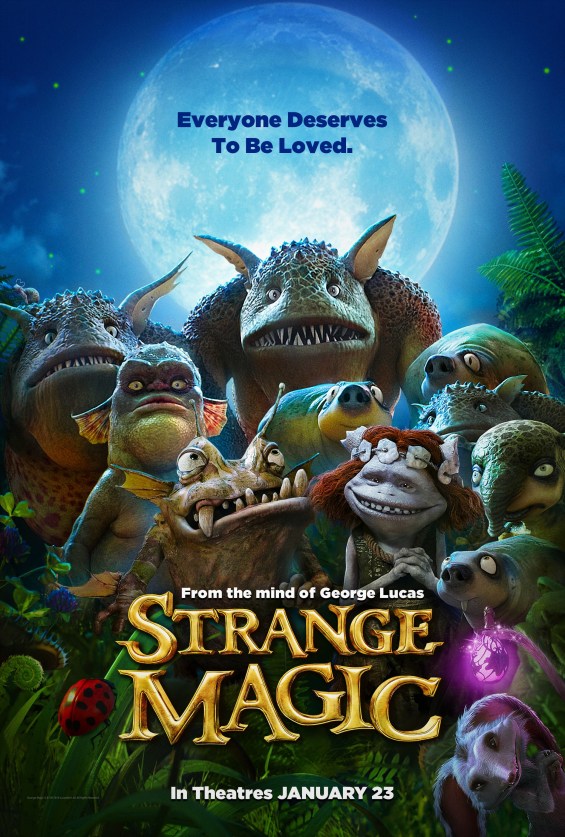
strange_magic-p940629

The Mummy (2017) – Film Review

When Universal Pictures first announced their plans to build a cinematic universe based around their gallery of iconic monsters, general audiences seemed to roll their eyes at the idea, seeing the forthcoming franchise as nothing more than a shameless attempt to copy and paste the formula of the Marvel Cinematic Universe, with the hopes of making the same box-office returns. Nevertheless, Universal continued with their plan, releasing the first instalment of the series in 2017 with ‘The Mummy,’ a film which even with the star-power of Tom Cruise, failed miserably both critically and commercially, instantly destroying any plans for the future of the franchise and embarrassingly leaving the ‘Dark Universe’ with a single film to its name.

Plot Summary: Once destined to rule all of Egypt, the beautiful princess; ‘Ahmanet’ sees her birthright stolen from her when her father begets an heir. Knowing this boy would be the Pharaoh’s new successor, ‘Ahmanet’ turns to a dark deity, selling her soul for an unholy power, for which, she is captured by the Pharaoh’s priests, mummified alive and buried in a tomb far from Egypt. Five thousand years later, opportunistic U.S. Army reconnaissance sergeant; ‘Nick Morton,’ accidentally discovers her tomb during a firefight in the Middle East, and once venturing inside, inadvertently sets her free…

According to a number of reports, Tom Cruise not only starred in ‘The Mummy,’ but also has an excessive amount of control over the film, having creative oversight on nearly every aspect of the production. So much so, that Cruise even had influence on the film’s screenplay, as it’s been stated that Cruise had his personal writing team rewrite certain scenes to give his character more screen-time and a more dramatic character arc, and even though most Universal executives weren’t thrilled about the rewrite, feeling it was disjointed and insipid, they reluctantly agreed to keep Cruise on board. Regardless, Universal Pictures soon saw the fallacy in their blind faith towards Cruise, as despite ‘The Mummy’ earning nearly £300 million worldwide, it was still considered a financial flop when taking into account its immense marketing campaign, which promoted the film purely as the franchise-vehicle it is as opposed to a riveting blockbuster.

Having both her design and gender altered to avoid any similarities with the titular villain of ‘X-Men: Apocalypse,’ which released just a year prior, ‘The Mummy/Ahmanet’ herself, portrayed by Sofia Boutella, is remarkably forgettable, never developing into a compelling or even threatening antagonist, which should be nearly impossible considering ‘The Mummy’ fills over a quarter of its runtime with extensive exposition regarding her backstory and sinister motives. Likewise, the actual protagonist; ‘Nick Morton,’ rarely benefits from Cruise’s natural charisma and wit, as ‘Nick’ is simply an unlikeable character, emerging as a foolish, self-centred adventurer and leaving in the exact same manner, in addition to being miraculously skilled with/in every type of firearm and hand-to-hand combat, of course.

When it comes to visuals, the film’s cinematography by Ben Seresin is generally visually pleasing, resulting in a fair share of alluring wide shots, yet much of the film’s beauty is consequently hindered by its ghastly colour palette, which hardly ever strays away from greys, blacks and beiges, an issue that is only worsened by the prosaic setting of modern-day London. Furthermore, the film’s action sequences (which are less frequent than most would expect) are fairly unimpressive, with many of the story’s thrilling moments having an overreliance on apace editing and CG creatures. That is, with the exception of the stunt work, which, due to Cruise’s heavy input on the film, is mostly practical and just as awe-inspiring as the stunts in the ‘Mission Impossible’ series, no thanks to director Alex Kurtzman (People Like Us).

Built around two central themes with various less significant tracks cropping up in-between, the film’s original score by Bryan Tyler is serviceable, for the most part, balancing its two signature tracks of ‘The Mummy’ and ‘Nick’s Theme,’ before then switching to far more dramatic orchestral tracks, like ‘Sandstorm,’ ‘Enchantments’ and ‘World of Monsters,’ for the film’s larger scale set pieces and handful of brief dream sequences.

Interestingly, ‘The Mummy’ wasn’t actually Universal’s first venture into crafting a cinematic universe of monsters, as the company originally envisioned 2014’s reboot of the renowned vampire in ‘Dracula Untold,’ as the first instalment in the series. There was even early talk of ‘Dracula’ appearing in ‘The Mummy,’ but this idea was ultimately scrapped, and the film was eventually cited as non-canon to the ‘Dark Universe.’ However, there are still several props alluding to other monsters within the film, as a vampire skull, along with one of the ‘Creature From the Black Lagoon’s hands, can both be seen in ‘Dr. Jekyll’s headquarters.

In summary, I feel it’s easy to see why many avoided ‘The Mummy’ when it first released back in 2017, as this film was merely Universal’s first attempt at revitalising the many well-known creatures locked away in their vault by lazily repackaging them for a new generation. The issue being that general audiences had little interest in this concept, and those that did quickly lost their engrossment as the film failed to capture even a fraction of the adventurous spirit present throughout the ’90s reboot. Instead, it seems ‘The Mummy’ will simply be lost to time, unremembered and disregarded. Final Rating: 3/10.

mummy-poster-1

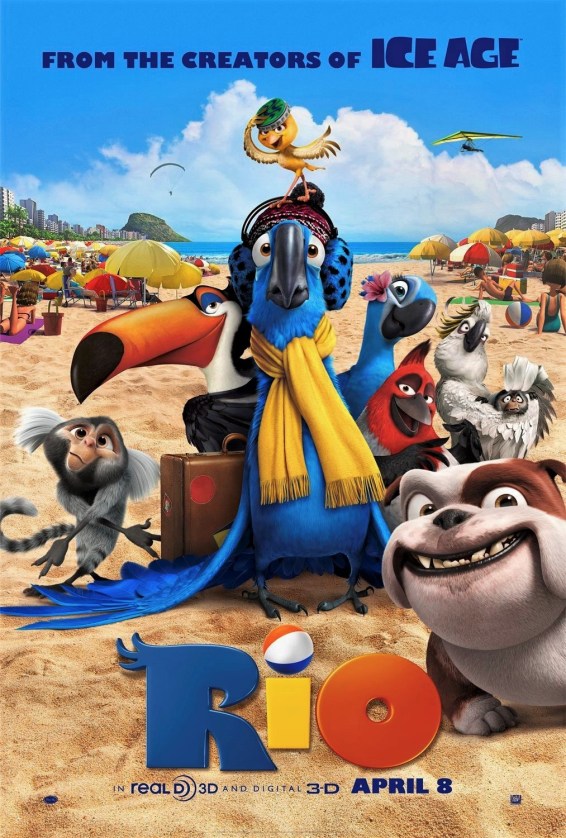
Rio (2011) – Film Review

From Blue Sky Studios, the production company behind many light-hearted family animations, like ‘Robots,’ ‘Epic,’ ‘Ferdinand,’ ‘Spies in Disguise’ and, most notably, the ‘Ice Age’ series. ‘Rio,’ released in 2011, is a vibrant animated adventure, which despite its occasionally childish humour and the relatively straightforward story is sure to keep adults and children alike joyfully content without reinventing the animation wheel, compensating for its lack of originality through its charming voice cast and exuberant chase sequences.

Plot Summary: After being captured by smugglers and taken from Brazil when he was just a hatchling, a blue macaw named, ‘Blu,’ never learned to fly and now lives a happily domesticated life in Minnesota with his owner; ‘Linda.’ But, when quirky ornithologist; ‘Tulio,’ arrives at their door and informs the pair that ‘Blu’ is the last male of his kind, the two decide to travel to Rio de Janeiro to meet ‘Jewel,’ the last female…

Taking inspiration from the true story of a Spix’s macaw named Elvis, whose owner agreed to let him join the captive breeding program to help preserve his species. ‘Rio’ may follow a very familiar formula for a family flick, yet what makes ‘Rio’ stand out is exactly that, Rio de Janeiro itself. As, director Carlos Saldanha (Ice Age, Robots, Ferdinand) is himself, a resident of Rio, and first came up with the concept in 1995, only at that point in time the story focused on a penguin washing up on the beaches of the Brazilian city. However, when Saldanha learned two other penguin-related animated features were in production, these being ‘Happy Feet’ and ‘Surf’s Up,’ he was forced to radically rewrite the film’s screenplay. Interestingly, this film is also cited as the reason why Pixar cancelled their animated project; ‘Newt,’ as it was said to have had a very similar plot.

Recording many of his lines while filming for ‘The Social Network’ was still underway, Jesse Eisenberg agreed to provide his voice for ‘Blu’ on weekends to compensate for lost time, admitting that it diverted him away from the mindset of his nearly joyless ‘Social Network’ character. And, while Eisenberg doesn’t give an unconventional performance here, Eisenberg is, in my opinion, the perfect casting choice for this kind of character, as ‘Blu’s awkward and nervous personality shines perfectly through Eisenberg’s whiny vocal performance, which is only amplified after he encounters the feisty female; ‘Jewel,’ portrayed by Anne Hathaway, as their shy romance gradually blossoms over the course of the runtime. Furthermore, the supporting cast of George Lopez, Jemaine Clement, Will.i.am, Jamie Foxx and Tracy Morgan, all do a wonderful job, with nearly every member of the cast also stretching their vocal cords for many of the film’s lively songs.

When it comes to the film’s visuals, director Carlos Saldanha uses the exquisitely rendered backdrop of his home city to great advantage, as the film’s animated cinematography is constantly swooping, soaring and spinning high above the sunny beaches and multicoloured parasols of Rio de Janeiro as ‘Blu’ and ‘Jewel’ scamper through the city on trolleys, cable cars and in one of the film’s most uplifting scenes, atop the wings of a paraglider. In spite of its characters always being on the move, ‘Rio’ also manages to avoid the usual problem animated films tend to run into, as the film’s plot moves along at just the right pace to keep younger audience members entertained.

With ‘Rio’ being Blue Sky Studios’ first attempt at a musical, one or two of the film’s songs are catchy, but inevitably are nowhere near as memorable as many songs from Disney’s vast catalogue of animated classics. Yet, I feel this may be due to Will.i.am’s potential influence, as many of the film’s songs, such as ‘Hot Wings’ and ‘Funky Monkey,’ sound like nothing more than modern, age-appropriate pop songs forced into the film’s soundtrack. Contrarily, the original score by John Powell slightly elevates itself above your standard family film score through tracks, like ‘Morning Routine,’ ‘Paradise Concern’ and ‘Birdnapped.’

Whilst the actual animation throughout ‘Rio’ is usually just as energetic and colourful as any other modern animation, it’s undoubtedly at its best when replicating Rio’s many iconic landmarks, with a large majority of them being almost picturesque. This accuracy is more than likely due to the crew’s research, as many of the film’s animators not only visited Rio de Janeiro in order to precisely replicate the city, but also consulted with a macaw expert at the Bronx Zoo for the design and movements of their avian characters.

In summary, although most audience members have always seen Blue Sky Studios as secondary to more well-known production companies, like Disney, Pixar, DreamWorks and even Sony Pictures Animation in recent years. I’ve always enjoyed Blue Sky’s animated endeavours even if many of their stories do feel fairly unoriginal from time to time, which may have even been one of the reasons that Blue Sky Studios sadly closed its doors in early 2021 following Disney’s purchase of 20th Century Fox. Nevertheless, as proved by ‘Rio,’ this issue of unoriginality can be overshadowed with the right methods, as the titular setting and dazzling colour palette ensure the film’s place as a love letter to Brazil if nothing else. Final Rating: low 7/10.

Rio-2011-poster-7-large

Arthur Christmas (2011) – Film Review

From Sony Pictures Animation and Aardman Animations, the latter being the iconic British company behind many beloved handcrafted films, such as ‘Wallace & Gromit,’ ‘Chicken Run,’ ‘Morph’ and ‘Early Man,’ comes a festive family adventure focusing on ‘Santa’s son; ‘Arthur,’ as he races across the globe to deliver a present to an overlooked child. And, although the film doesn’t feature the impeccable stop-motion animation the company is best known for, it does make up for its mostly generic CG visuals through its amusing moments, charming characters and inventive story.

Plot Summary: On the night of Christmas Eve, after ‘Santa’ and his enormous team of elves believe themselves to have succeeded in another year of present delivery for the children of the world. ‘Santa’s clumsy son; ‘Arthur,’ and a skilled gift wrapping elf, named; ‘Bryony,’ discover a young girl’s present has been misplaced, leaving her the only child in the world without a gift from ‘Santa.’ Fearing what the young girl will think when she awakens to find nothing under the tree Christmas morning, ‘Arthur’ sets out on a desperate mission with ‘Santa’s elderly father to deliver the forgotten gift…

Directed by Sarah Smith and Barry Cook, ‘Arthur Christmas’ is actually the first directorial effort from Cook since the iconic Disney flick; ‘Mulan,’ in 1998, with Smith having never directed a feature before in her career. Yet, even with these fairly inexperienced directors, ‘Arthur Christmas’ never gets muddled within its own story, managing to balance its many characters, exciting sequences and themes of family and symbolism/icons immensely well, whilst the film also cleverly answers the question that has perplexed children around the world for years, that being “How Does Santa Deliver Every Child’s Present in a Single Night?” The only major issue ‘Arthur Christmas’ suffers from as a film is its fast-pacing, which does remain very quick throughout the runtime and results in some scenes feeling very rushed.

James McAvoy portrays the film’s humble protagonist; ‘Arthur,’ who is likeable enough and easy to root for as a character in wanting to deliver the misplaced present, though I could see McAvoy’s performance irritating some viewers, as ‘Arthur’ is always very energetic, jumping from fearful to cheerful incredibly fast, even if it is a nice change-of-pace for a protagonist to have nothing but love for the Christmas season. The rest of the cast of Bill Nighy, Hugh Laurie, Ashley Jensen, Jim Broadbent and Imelda Staunton, are all exceptional in their roles as the ‘Claus’ family, adding up to a splendid family-dynamic which the story actually explores a fair amount of.

Just as lively as the film’s fast pacing, the animated cinematography for ‘Arthur Christmas’ is very innovative, constantly displaying a number of visually interesting and fairly unique shots, many of which capture the massive scale of the ‘S-1,’ the high-tech sleigh-replacement ‘Santa’ now utilises, as it soars across the sky. Additionally, with ‘Arthur’ and ‘Grandsanta’ being unfamiliar with the modern world due to them being confined to the North Pole for much of their lives, much of their journey revolves around them accidentally arriving at various locations as they attempt to find the young girl’s home in Trelew, England. And, each location manages to feel diverse and allows for many exhilarating set pieces, from the sleigh being chased by the Spanish police force through Trelew, Argentina, to ‘Arthur’ and ‘Grandsanta’ almost being eaten alive by lions after finding themselves on the Savannah plains.

However, the original score by Harry Gregson-Williams is the complete opposite, as the film’s soundtrack is your standard animated score with little memorable or interesting about it. From tracks, like ‘Trelew, Cornwall, England,’ ‘Operation Christmas’ and ‘Goodbye Evie,’ the original score is fairly disappointing when considering many of the film’s creative ideas in regards to its story. With that said, the track; ‘One Missed Child,’ does capture ‘Arthur’s true awe at the sight of the original sleigh perfectly, as short as the scene itself may be.

The animation itself isn’t extremely well detailed but does remain attractive throughout the story, despite my distaste of a few of the character’s designs that is, as I personally found many of the characters to appear far too cartoonish and even slightly unappealing, particularly, when it comes to many of the elves’ designs. These design choices are actually intentional, however, as the animators decided to approach the character designs with the goal of making them feel authentically British and quirky, rather than air-brushed and immensely appealing.

In summary, ‘Arthur Christmas’ has far more merits than it does faults, as the film serves as a refreshing take on the typical ‘Santa’ saves Christmas story. Interjecting a family dynamic and a large array of adult-centred humour into what is already an entertaining and surprisingly smart narrative for a family flick. So, even in spite of its average-looking animation and overly fast pacing, ‘Arthur Christmas’ is truly a joyful film to watch with a heartfelt message at its core, and I feel is likely to become a modern Christmas classic in time. Final Rating: 7/10.

0c1f74f2f315a3b102cde84ba1b6000e

How to Train Your Dragon (2010) – Film Review

One of the highest-regarded films from DreamWorks Animation, 2010’s ‘How to Train Your Dragon’ is successful in nearly every regard as an animated feature, making many changes to its original source material (all of which for the better), to excel as a brilliant piece of family-focused storytelling. With plenty of memorable characters, exhilarating action sequences and an outstanding original score by John Powell, ‘How to Train Your Dragon’ would soon go on to become one of DreamWorks’ most recognisable and profitable franchises for good reason.

Plot Summary: On the island of ‘Berk,’ ‘Hiccup,’ the frail son of the Viking Chief, aspires to hunt dragons and keep his home safe like the rest of his clan, earning the respect of his fellow Vikings. But, after injuring a ‘Night Fury,’ one of the rarest and most powerful dragons known to exist, ‘Hiccup’ forms an unlikely friendship with the creature, soon realising that dragons aren’t at all what Vikings believe them to be…

The first film to be directed by duo Chris Sanders and Dean DeBlois since the Disney animated classic; ‘Lilo and Stitch,’ in 2002. The film adaptation of ‘How to Train Your Dragon’ makes many alterations to the story seen in the original children’s book. As, firstly, ‘Hiccup’ does not have a love interest, and the now-iconic DreamWorks character; ‘Toothless,’ is about the size of the ‘Terrible Terror’ dragon breed, his skin is also green and red, not black. Furthermore, ‘Toothless’ gets his name when ‘Hiccup’ first finds him with no teeth. But, the film’s producers decided, with the approval of author Cressida Cowell, that it would be more cinematic to make ‘Toothless’ large enough to be ridden as a flying mount. As such, ‘Toothless’ was completely redesigned as a rare ‘Night Fury,’ a highly intelligent breed of dragon evolved for speed and stealth with teeth that retract into their jaw when shooting a fiery pulse.

Protagonist; ‘Hiccup,’ is portrayed by Jay Baruchel, a fairly under-the-radar actor. But, similar to his character in ‘The Sorcerer’s Apprentice’ from 2011, Baruchel suits a nervous character, like ‘Hiccup,’ extremely well due to his naturally anxious voice, making for a likeable yet never vexatious protagonist. Gerard Butler as ‘Hiccup’s father; ‘Stoick,’ is another member of the cast who naturally fits his character, as Butler’s rough Scottish accent melds with the hefty Viking’s design perfectly. The film also features a great ensemble cast for the other young dragon recruits through America Ferrera, Jonah Hill, Christopher Mintz-Plasse, T.J. Miller and Kristen Wiig, who together provide many of the film’s comedic moments.

The animated cinematography throughout ‘How to Train Your Dragon’ is superior to a number of other animated flicks when put in comparison, as the film continuously features beautiful visuals. The most obvious being within the scene; ‘First Flight,’ in which, ‘Hiccup’ hops aboard ‘Toothless’ for the first-time as they soar across the stunning land of ‘Berk,’ breezing over acres of forest and past/through cliffs, all while being tracked by the camera. Interestingly, many of these dragon-flying moments are also inspired by combat and aerobatic aircrafts, as ‘Toothless’ performs many aerobatic maneuvers and combinations, such as a ‘Loop and Snap.’

Nominated for an Oscar at one point-in-time, the original score by John Powell is truly sensational, a majestic score that occasionally even utilises bagpipes in order to further fit with the film’s Scottish setting (which is alluded to by the many Scottish accents). And, while Powell has always been known for creating phenomenal scores for animated flicks, with ‘Ice Age,’ ‘Kung Fu Panda’ and ‘Horton Hears a Who!,’ being just some of his sublime work, the soundtrack for:’How to Train Your Dragon’ is by far some of his best, with the tracks; ‘This is Berk’ and ‘Forbidden Friendship,’ becoming some of the most notable tracks in all animation.

The animation itself has begun to show its age in a handful of shots since the film’s initial release, but as a result of the film’s many wonderful designs, usually in relation to its dragons, which display different abilities, colours, horns and skin-tones for each breed, the film manages to redeem any shot that feels at all dated. These pleasant designs also help distract from the film’s overly fast pacing, as whilst I understand that younger viewers may have shorter attention spans, the film can sometimes feel as if its rushing through one scene to quickly get to the next.

In summary, although I possess the quite controversial opinion of disliking the sequels to ‘How to Train Your Dragon,’ as I personally find them much more generic and by-the-numbers in terms of their storylines, especially when compared to the original, the first of the series is still one of DreamWorks’ best efforts, and I’d even argue is on the level of beating out their previous fantasy franchise; ‘Shrek,’ in regard to its characters, creatures and world-building. So, even if you don’t enjoy animated/family films, perhaps ‘How to Train Your Dragon’ will sway you into the genre just as it does with its wondrous story. Final Rating: 8/10.

how-to-train-dragon-poster1

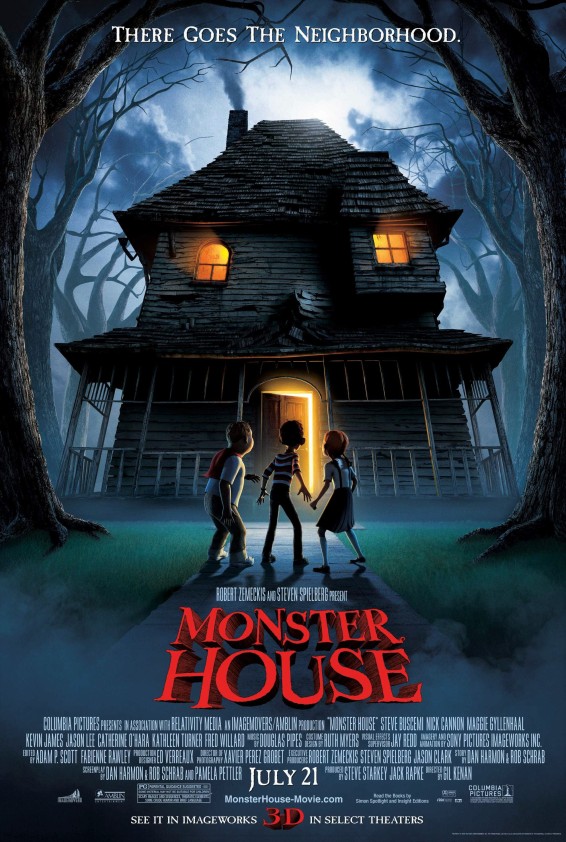
Monster House (2006) – Film Review

A personal childhood classic for me, ‘Monster House’ is one of those rare kids films that isn’t afraid to explore darker themes of death, grief and childhood fears. Whilst still managing to be a solid piece of entertainment for any family urging for a creepy adventure, as producers Robert Zemeckis and Steven Spielberg jump on board alongside Gil Kenan, director of the ‘Poltergeist’ remake from 2015, as his directorial debut, this animated adventure is always a joy to return to for me.

Plot Summary: After his cranky, elderly neighbour suffers a heart attack and is taken to hospital, suspicious teenager; ‘DJ,’ invites his clumsy best friend; ‘Chowder,’ over, only to discover that his creepy neighbour’s house is, in fact, a living, breathing monster. Now, with the help of the quick-witted student; ‘Jenny,’ the trio hatch to destroy the house before it can claim victims on Halloween night…

This simple, yet extremely strange plot is one of the best aspects of the film, as the director makes as much use out of this concept as possible. Usually getting extremely creative and even catching the audience by surprise at a few points, no matter their age. Having a great blend of both comedy and tame horror, the film has a mostly light-hearted tone, aside from the occasional dark scene, of course, which actually works quite well for the film’s story. The jokes throughout the film are also pretty decent, as despite some gags being a little too cheesy or immature at points. For the most part, the comedy throughout the film can get a laugh out of me.

The three main characters within the film are portrayed by Mitchel Musso, Sam Lerner and Spencer Locke, who all provide likeable and varied personalities to each of their respective characters, while Steve Buscemi lends his voice to the creepy ‘Old Man Nebbercracker,’ who actually turns out to a very interesting and even sympathetic character by the end of the film’s swift runtime.

The animated cinematography is overall nothing outstanding, but does lend itself well to creating some attractive shots and eerie visuals throughout the film. I also personally enjoyed how the film utilised more hand-held like camera movements during the more chaotic scenes of action or terror throughout the story. The film even blends its bright animation colour palette with a more dark/pale horror-esque palette, only a little detail, but I appreciated it regardless. The original score by Douglas Pipes is also another wonderful element of the film, combing the feel of a classic animated film with undertones of horror.

Although the animation can sometimes range in quality, the visual look of the almost stop-motion-like animation does give the film an eerie appeal. However, due to the film’s age, the film has definitely begun to show some cracks here and there, as various points in the narrative characters can begin to look a little clunky or unnatural with their movements. This is mostly due to the motion capture technology that was used very heavily throughout the film, long before films such as ‘Avatar’ or ‘Rise of the Planet of the Apes’ truly pushed the technology to its limits.

Many of the character designs throughout the film are also quite memorable, especially with the character, ‘Bones,’ in particular, who always comes to mind for me when thinking of this film. I also personally adore the design of the ‘Monster House’ itself, as the design is incredibly menacing and really feels like a true horror antagonist.

In summary, ‘Monster House’ never fails to be entertaining for me, every time I revisit it, as the film truly provides a creepy experience which most other family/animated films simply can’t, as films such as ‘Hotel Transylvania’ or ‘Goosebumps’ always try to capture this tone, but usually fall short. It’s here ‘Monster House’ succeeds, as despite some clunky animation and cheesy dialogue at points, the film succeeds in being an spooky adventure with a fantastic cast, and effective original score that the entire family could enjoy. Maybe it’s nostalgia for me, but I personally believe the film is honestly a great choice when it comes to a Halloween night, or maybe just a rainy evening. Final Rating: 7/10.

monsterhouse_poster

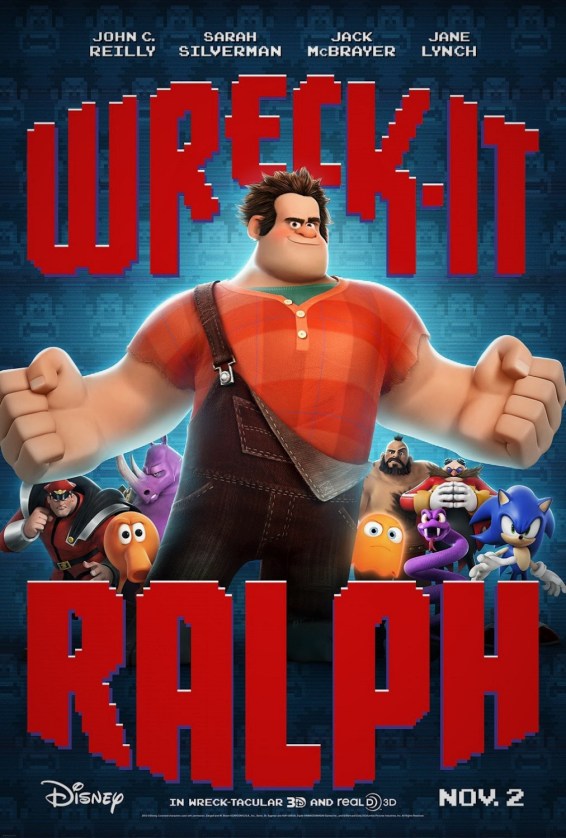
Wreck-It Ralph (2012) – Film Review

Equally entertaining for both children and parents who will catch the many references to classic arcade games, ‘Wreck-It Ralph’ is a funny, colourful, and exciting adventure from Walt Disney Animation Studios. Directed by Rich Moore, most known for his work on ‘The Simpsons,’ in addition to some other recent Disney flicks. This eight-bit odyssey may not quite match-up to some of the other iconic films Disney has released in its many years of crafting animated stories, yet is still sure to please any video game-enthusiasts in search of a new favourite.

Plot Summary: After many years of being the bad guy and being defeated in his own game day-after-day, ‘Wreck-It Ralph’ longs to be as beloved as his game’s perfect protagonist; ‘Fix-It Felix.’ So, when a modern, first-person sci-fi shooter arrives in his arcade, ‘Ralph’ sees his opportunity for heroism and happiness. But, now, with his game at risk of being put out-of-order due to his disappearance, ‘Ralph’ must quickly return home before it’s game over for everyone…

From the get-go, one of the best elements of ‘Wreck-It Ralph’ has to be its initial concept, as the film portrays the idea of video game characters coming to life in a similar fashion to the ‘Toy Story’ series, but also adds a living virtual world alongside. Interestingly, Disney first began developing an animated film based around a world of video game characters in the 1980s. At that time, the project was titled; ‘High Score,’ it was then changed to ‘Joe Jump’ in the 1990s. Until, in the late 2000s, when the film was finally pushed forward, the first two months of story development focused on ‘Fix-It Felix Jr.’ as the protagonist, which eventually evolved to the film we received in 2012.

John C. Riley and Sarah Silverman lead the cast as the titular character; ‘Wreck-It Ralph,’ and candy-coated racer; ‘Vanellope Von Schweetz,’ superbly, as unlike most animated films, the main group of actors regularly recorded their sessions together in the same room, a situation which led to large amounts of improvising and gave the cast a real sense of chemistry. But, regardless of how much of his dialogue was improvised, ‘Ralph’ still remains, in my opinion, one of the most memorable and likeable characters Disney has created in their more modern animations, mostly due to his design and understandable motivation of wanting to be seen as a hero rather than a villain. Jack McBrayer, Jane Lynch, and Alan Tudyk make up the remainder of the cast, who are all also wonderful within their roles as ‘Fix-It Felix,’ ‘Sergeant Calhoun,’ and ‘King Candy,’ respectively, as each actor plays into whichever type of game they originate from, e.g. intense sci-fi soldier with a overly dramatic backstory or a quirky kart-racer.

An area ‘Wreck-It Ralph’ is lacking, however, it’s on the promise of exploring the many different video game worlds its story implies, as while the film does explore its two signature worlds of ‘Hero’s Duty’ and ‘Sugar Rush’ effectively, ensuring each location feels vastly different in terms of both its design, animated cinematography, and colour palette. The film is limited in how many video games its characters actually explore, which is a shame when considering the many possible adventures it’s different arcade worlds could contain, especially when taking into account the huge number of cameos from video game icons, like ‘Pac-Man,’ ‘Q’bert,’ and ‘Sonic the Hedgehog.’

Although the original score by Henry Jackman is a huge missed opportunity to have a classic eight-bit score to further fit with the video game narrative, the film’s soundtrack still features plenty of great tracks, which just like the film’s visuals, alter depending on which video game world the characters are currently inside, as outside of the generally enjoyable tracks; ‘Wreck-It Ralph’ ‘Life in the Arcade,’ and ‘Messing with the Program,’ the score occasionally gets quite creative, even having an original theme created for the kart-racing game; ‘Sugar Rush’ by J-pop band; ‘AKB48,’ as the fictional video game is supposedly manufactured in Japan.

Whilst the animation itself is visually stunning and brimming with small details as with nearly every animated Disney film, the main flaw ‘Wreck-It Ralph’ suffers from its without a doubt its story structure, as what may throw many viewers off is that the film begins focused entirely on ‘Ralph’ and his journey, before then quickly and drastically changing direction to focus more on ‘Vanellope’ and her desire to become a playable ‘Sugar Rush’ racer, which can be a little jolting when recalling the film’s first act.

In summary, ‘Wreck-It Ralph’ may not always use its signature concept to its best extent, and can often go too far when it comes to some of its immature or video game-related humour. Yet, the film’s delightful characters, gorgeous and distinctive locations and beautiful animation all manage to save the film from its faults. So, despite ‘Wreck-It Ralph’ not going down with audiences as successfully as some other animated Disney flicks, like ‘Frozen’ or ‘Zootropolis,’ for example, I still feel the film is worth grabbing a joystick for, should you get the chance. Final Rating: 7/10.

wreckit_ralph_ver6_xlg

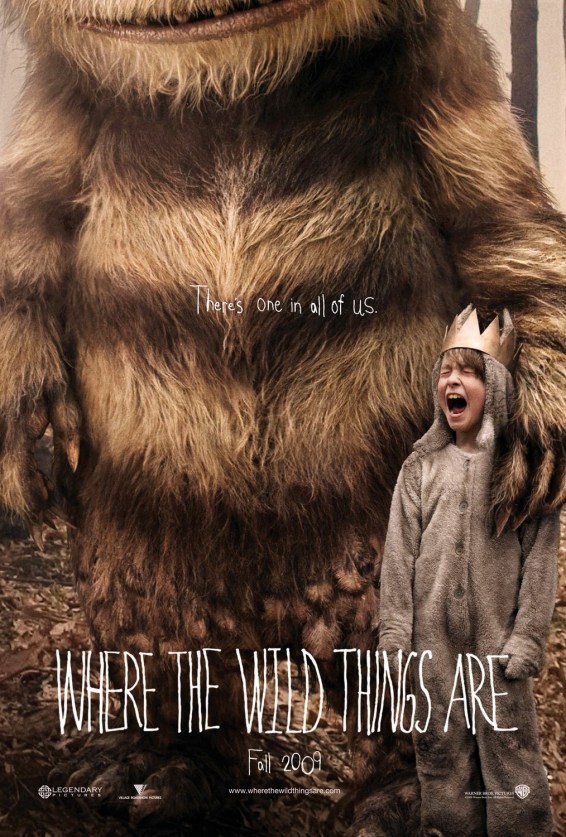
Where the Wild Things Are (2009) – Film Review

Although its themes and ideas may go over many younger viewers’ heads, 2009’s ‘Where the Wild Things Are’ feels like a film that reflects what many felt whilst being a child themselves, as writer-director Spike Jonze (Being John Malkovich, Adaptation, Her) creates a moving, thoughtful, and occasionally even woeful experience that dramatically elevates its original source material. With a charming soundtrack compiled by musician; ‘Karen O,’ and plenty of wonderful creature designs and stunning locations, ‘Where the Wild Things Are’ is truly a unique yet uncompromising film that sends its audience back to the innocent days of childhood.

Plot Summary: Following a fight with his mother and yearning for adventure, young ‘Max’ runs away from home and sails to a mysterious island filled with creatures, who take him in as their king after ‘Max’ makes a promise to solve all their problems…

As previously mentioned, the film adaptation of ‘Where the Wild Things Are’ is a large step-up from the original children’s book it’s based on by Maurice Sendak, as while the classic story of a young boy visiting a land of fantastical creatures in order to escape reality has always been a staple of children’s literature, Jonze manages to deepen the narrative with his adaptation. Having themes of maturity, imagination and balancing one’s own emotions (all of which are presented in a mature and subtle way). In fact, the film’s production company, Warner Bros. Pictures were initially so unhappy with the final film (as it was far less family-friendly than they imagined) that they wanted Jonze to start from scratch. Instead, the two eventually agreed to satisfy both parties by giving the film more time in production.

Max Records leads the cast as the excitable and resentful; ‘Max,’ who gives a genuinely brilliant performance considering the actor’s young age at the time of filming. Alongside him, of course, is the group of creatures portrayed by the voice cast of Lauren Ambrose, Chris Cooper, Catherine O’Hara, Forest Whitaker and Paul Dano, whose voices all match their respective characters flawlessly. It’s the late James Gandolfini as ‘Carol’ who really shines throughout the film, however, having the most memorable design of the all the creatures within the original book, ‘Carol’ serves as a reflection of ‘Max’s childish attributes, from his tantrums to his jealousy and sadness, all of which is given such life through Gandolfini’s performance.

While the film’s colour palette remains fairly vibrant throughout, despite featuring a large amount of beiges and browns, the cinematography by Lance Acord is sadly the weakest aspect of the film. As, ignoring the large array of stunning sunrise and sunset shots, ‘Where the Wild Things Are’ utilises hand-held camera for the majority of its runtime, which when combined with the film’s occasionally chaotic editing can make some scenes feel a little impetuous. Yet, in spite of not having a massive budget, the film’s CG effects do still hold up remarkably well, with all of the facial expressions of the creatures and extensions to many of the island’s locations not seeming even remotely out-of-place.

The film’s soundtrack, compiled by musician; ‘Karen O,’ really benefits the film’s already calming and mature presentation. From the opening track; ‘Igloo,’ through to the more upbeat tracks; ‘Rumpus’ and ‘Sailing Home,’ to even the film’s more lyric-based tracks with ‘All is Love’ and ‘Hideaway.’ The soundtrack for ‘Where the Wild Things Are’ doesn’t feel like a traditional film score in the best possible sense, giving more of an impression of a slow-paced yet beautiful acoustic guitar album, which just like the film itself, is immensely underappreciated.

However, one of my personal favourite elements of the film and certainly the most visually striking has to be the many different designs of the creatures who live on the island, as not only do the designs fit each character’s personality, but every design is also a perfect live-action recreation of the creature’s original appearances within the pages of the book, with all of the creatures being brought to life using enormous and heavily detailed suits from the Jim Henson Company rather than just simply using CGI. The Jim Henson Company are known, of course, for the creation of ‘The Muppets,’ whose familiar charm isn’t lost here.

In summary, ‘Where the Wild Things Are’ is to me, an underrated modern classic, as despite its few flaws, the film surpasses its source material and then some, creating a genuinely gut-wrenching experience at points. Whilst the film has been criticised by some since its release mostly as a result of being seen as too mature and possibly even a little frightening/disturbing for younger viewers. I believe the film gets across a number of important messages for children, and I appreciate the film’s more in depth approach to crafting an imaginative family adventure. So, although Jonze may not have an extensive catalogue of films as a director, the films he has made never cease to impress me, and ‘Where the Wild Things Are’ fits as just another piece of the puzzle. Final Rating: 8/10.

where_the_wild_things_are_xlg

The Dark Crystal (1982) – Film Review

Despite the success of the recent prequel series; ‘The Dark Crystal: Age of Resistance,’ on Netflix, most audiences still seem relatively unaware of the original ‘Dark Crystal’s existence, which, unfortunately, received mostly lukewarm reviews and massively underperformed at the box-office upon its initial release. Yet, regardless of its age, ‘The Dark Crystal’ is still, in my opinion, an extraordinary family adventure. Creating an intriguing and developed fantasy world brimming with plenty of memorable characters, spectacular locations, and terrifying creatures, all flawlessly brought to life by the film’s enormous array of brilliant practical effects and detailed puppets.

Plot Summary: Centuries ago on the world of ‘Thra,’ the mysterious ‘Dark Crystal’ was cracked and brought forth two races. One, the villainous bird-like creatures known as the ‘Skeksis,’ who now rule over the planet with an iron-fist, and the other, a peaceful of wizards race known as the ‘Mystics.’ But, after a young ‘Gelfling’s ‘Mystic’ master passes on, ‘Jen’ is sent on a quest to locate the missing shard of ‘The Dark Crystal’ and save his homeworld…

Directed by legendary puppeteers Jim Henson and Frank Oz, most known for their creation of the beloved ‘Muppets’ franchise. ‘The Dark Crystal’ is known by many for being rather frightening for younger viewers, as the film always explores its fantasy world without ever shying away from any of its darker elements. Resulting in many who experienced the film at a young age only recalling it due to being ‘traumatised’ by the film’s menacing antagonists, the ‘Skeksis.’ However, despite ‘The Dark Crystal’ giving this ghastly depth to the world it’s narrative takes place within, the film still suffers from the occasional story cliché, as while I’m sure these ideas were less-familiar in the early 1980s, the concept of ‘Jen’ being the last of his kind and having to undertake an epic journey does feel fairly overdone by today’s standards.

Stephen Garlick and Lisa Maxwell lend their voices well to the two protagonists; ‘Jen’ and ‘Kira,’ alongside the voice of Billie Whitelaw and the late Jim Henson and Frank Oz themselves as puppeteers, and while Jim Henson and Frank Oz both do a fantastic job as usual when it comes to their work with puppeteered characters. It’s the late Barry Dennen as the most devious of the ‘Skeksis,’ ‘The Chamberlain,’ who is truly superb, as ‘The Chamberlain’ soon becomes a very memorable antagonist, heavily in part because of his intentionally obnoxious high-pitched voice and now-iconic whimper.

Whilst the cinematography by the late Oswald Morris does serve the film’s story effectively, many shots throughout ‘The Dark Crystal’ are a little restricted due to the focus primarily being placed on the puppets themselves (especially when there is a large number of characters on-screen). That being said, the cinematography does still manage to provide plenty of beautiful wide shots to establish the story’s various locations, the majority of which are elevated through some incredibly impressive matte paintings and miniature sculptures.

Although I do prefer the original score by Daniel Pemberton for the Netflix prequel series, the score for the original film by Trevor Jones is still terrific, feeling like a mixture between a classic fantasy score along with some sinister undertones to help build tension. From the film’s signature track; ‘The Dark Crystal Overture,’ through the track that plays over one of the film’s final moments; ‘The Great Conjunction,’ the film’s original score is still an enjoyable piece to hear, even if it seems most audiences prefer the soundtrack of Jim Henson’s other ’80s fantasy flick; ‘Labyrinth.’

Of course, the main draw of ‘The Dark Crystal’ is (and will always be) the puppets themselves, as while the idea of not a single human appearing within a live-action film may sound daunting to some, the film’s huge variety of practical effects, from the different creatures that prowl the forests and swamps to each one of the detailed and intricate sets for ‘The Castle of the Crystal,’ every single creative aspect of the film in regards to its designs constantly feels as if great talent and effort has been put into each of them, with much of the film’s visuals actually being inspired by the illustrations of Brian Froud, who would eventually join the production as a conceptual designer.

In summary, ‘The Dark Crystal’ was truly a film ahead of its time, as despite the new prequel series helping the unique fantasy series reach a wider audience, I’m not too surprised this ambitious film has been largely forgotten in modern pop culture, as the film’s fascinating and fleshed-out world alongside its entertaining story and huge number of amazing practical effects sadly weren’t enough to save it from its eventual neglected fate. Still, even if this fantastical family adventure didn’t receive the praise it deserved when it was released in 1982, I feel it certainly can now from modern audiences, if just for its painstaking puppeteering work and great character designs alone. Final Rating: 8/10.

dark_crystal_xlg

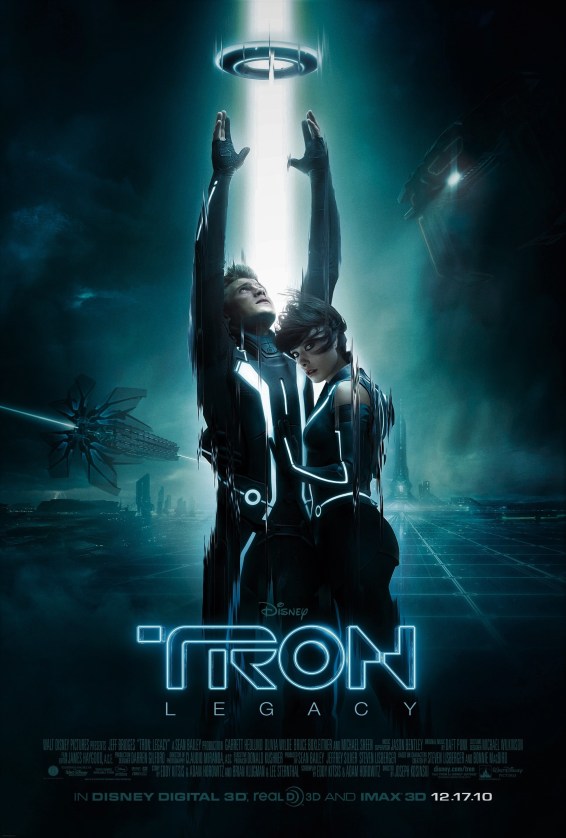
Tron: Legacy (2010) – Film Review

Although Disney has had more than enough success when it comes to its animated filmography, the iconic production company has seemingly always struggled with its live-action endeavours, as aside from the ‘Pirates of the Caribbean’ franchise, many of Disney’s attempts to kick off a live-action film series, such as ‘John Carter,’ ‘The Sorcerer’s Apprentice’ and ‘Tomorrowland,’ have all been relative flops (with the exception of their remakes of animated classics). ‘Tron: Legacy,’ the action-packed sequel to the groundbreaking cult sci-fi hit; ‘Tron,’ from 1982, is a slight improvement in this area, yet still results in a film more focused on style-over-substance.

Plot Summary: After the tech-savvy and rebellious; ‘Sam Flynn,’ begins looking into his father’s disappearance, he soon finds himself pulled into the digital world of ‘The Grid,’ where he discovers his father has been trapped for over twenty years. All the while, his father’s malevolent program; ‘CLU,’ who rules ‘The Grid,’ plans to prevent the pair’s escape and take the real world for himself…

Being set in a virtual world, nearly every scene within ‘Tron: Legacy’ takes place in fully CG locations, and although most of the film’s CG effects do hold up well and are visually appealing. The digital world of ‘The Grid’ does begin to feel quite unvaried after a point, as whilst it may look unique at first glance, the illuminated buildings and vehicles throughout the city of ‘Tron’ feel fairly repetitive, despite the film’s variety of different locations. In fact, it’s the film’s CG visuals that actually made ‘Tron: Legacy’ the most expensive film ever made by a first-time director at the time of its release, with the costume budget alone costing over £10 million.

Garrett Hudlund portrays the film’s protagonist; ‘Sam,’ alongside the supporting cast of Jeff Bridges, Olivia Wilde, and even Michael Sheen in a small role. They all give decent performances despite their dull characters, as ‘Tron: Legacy’s story and characters follow many of the same story beats as any other sci-fi adventure. However, easily the worst element of the film when it comes to its characters is the film’s antagonist. Known only as ‘CLU,’ a corrupt program created by Jeff Bridges’ character; ‘Kevin Flynn,’ as a digital copy of himself, this villain not only suffers from a barely developed motivation, but due to him being a program which doesn’t age, the film utilises CGI to make Jeff Bridges appear a similar age to that of his in the original film, which is one of the few CG effects that hasn’t aged well, appearing almost laughably bad at points.

Claudio Miranda handles the cinematography throughout ‘Tron: Legacy,’ and although the film definitely puts far more of an emphasis on its CG effects than its cinematography, there are still a fair amount of interesting shots including plenty of stunning wide shots to display the true scale of the digital world. The cinematography also makes great use of the film’s few sleek futuristic sets despite their very limited screen-time, most notably, ‘Flynn’s Safehouse,’ located on the edge of ‘The Grid.’

The original score for the film is actually composed by the techno band, ‘Daft Punk,’ whose type of music does suitably fit the sci-fi genre, and whilst some tracks do feel a little too similar to an actual techno album, in my opinion. For the most part, the soundtrack does back up the film’s narrative and adventurous tone very effectively. ‘Daft Punk’ themselves even make a short cameo within the film as a pair of DJs in the ‘End of Line’ nightclub, wearing their iconic helmets as they play one of the film’s most memorable tracks, which share the same title as the club itself.

Another great aspect of ‘Tron: Legacy’ is certainly its action set pieces, as although many of the action scenes throughout the film aren’t anything incredibly inventive. The original ‘Tron’ did introduce the creative concepts of ‘Identity/Light Disks’ and ‘Light Cycles,’ both of which return in the sequel and result in plenty of thrilling and fast-paced action sequences as ‘Sam’ is thrown into an array of gladiator-esque challenges near the beginning of the film. The various costumes worn by the characters who live within ‘The Grid’ are also worth a quick mention, as most of the characters wear a ‘Light Suit,’ which usually features fluorescent-like glowing strips that illuminate each suit in a range of colours, which never fails to be visually striking.

In summary, ‘Tron: Legacy’ is by no means a terrible film, and when it comes to Disney’s other ventures into live-action, ‘Tron: Legacy’ could even be seen as a success by some. But, with its fairly paint-by-numbers story, bland characters and an onslaught of over-done clichés, this sci-fi sequel ends up becoming more of a display for its impressive CG visuals and electronic original score rather than an exhilarating sci-fi odyssey. If you’re a fan of the original ‘Tron’ I feel you will surely enjoy this follow-up. If not, maybe look elsewhere for your fill of original science fiction. Final Rating: 6/10.

tron_legacy_ver11_xxlg