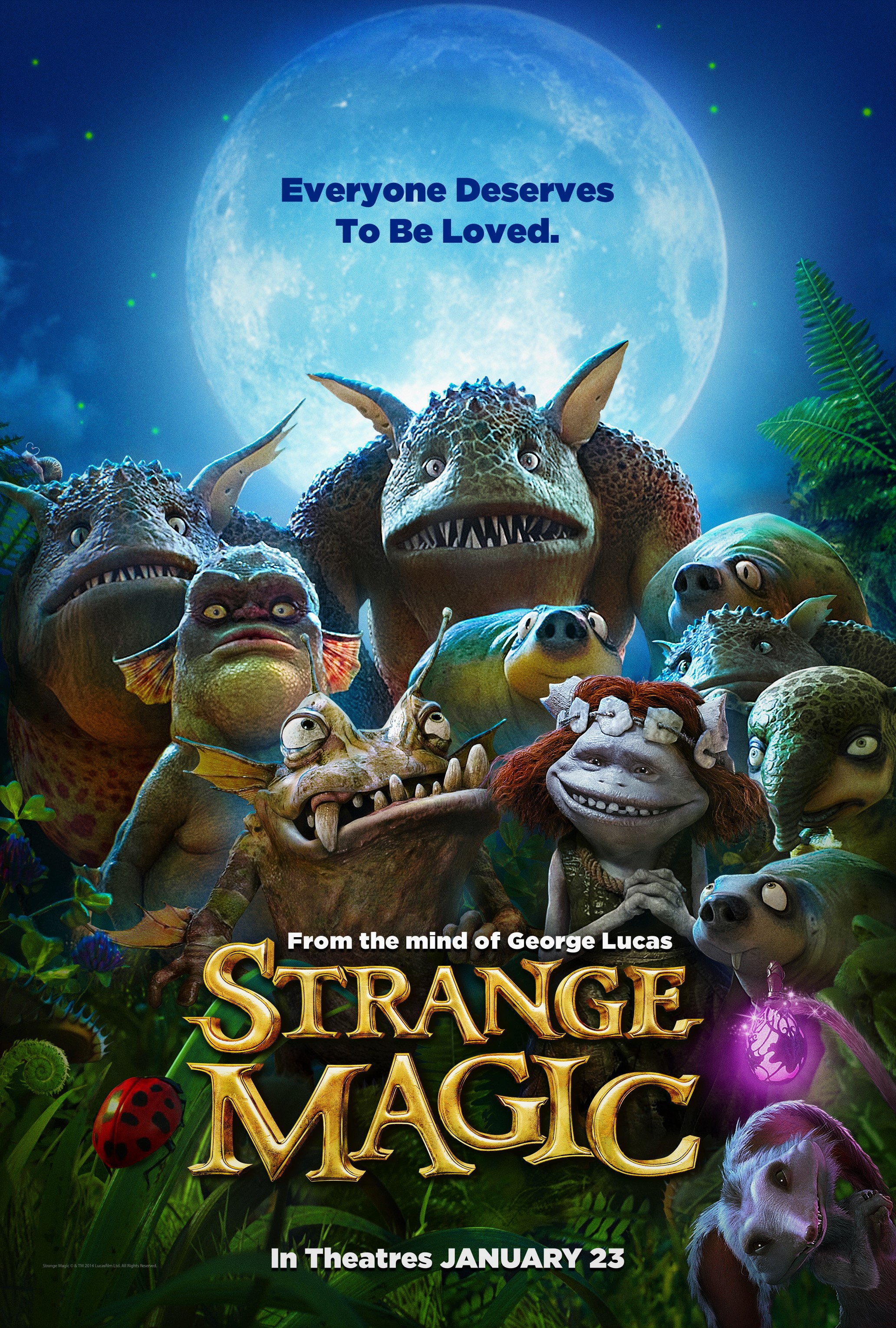
Puss in Boots (2011) – Film Review

“Fear Me, if You Dare!” – Puss in Boots

Released in 2011, one year after the highly-praised Shrek series supposedly concluded with Shrek Forever After (2010), Puss in Boots acts as a spin-off and prequel to the endearing ogre’s renowned franchise, retaining its emphasis on parodying fairy tales whilst supplying the titular heroic feline with an amusing, stand-alone adventure that frequently pays tribute to Spanish cinema. While not profound in terms of storytelling nor revolutionary in terms of animation, for what it lacks in depth, Puss in Boots, directed by Chris Miller (Shrek the Third), makes up for with an abundance of family-friendly wit and excitement, in spite of the initial plan to turn the film into a mere direct-to-DVD spin-off.

Plot Summary: Long before meeting Shrek and Donkey, the adorable yet cunning vigilante Puss in Boots aimed to clear his name, striving to escape his notoriety as the suspected thief of his hometown, San Ricardo. Then, one faithful night, after overhearing that the murderous outlaws Jack and Jill have come into possession of magic beans, Puss senses a window of opportunity, setting out to steal the beans in pursuit of the treasure they lead to, eventually crossing paths with an old friend

In contrast to the Shrek films, which were in production for around three years (except for the first, which was in production for almost five), Puss in Boots took over seven years to produce, entering development just after the release of Shrek 2 (2004). The film also differs from the Shrek series in other ways, most notably in its inspirations. Where the Shrek franchise became recognised for its parodying of classic fairy tales and modern pop culture, Puss in Boots is more reminiscent of Spanish cinema, namely, Spanish action and adventure flicks, harbouring references to well-known flicks, like The Mask of Zorro (1998), a film which interestingly, also featured Antonio Banderas as the lead, and Desperado (1995), another release featuring Banderas as well as his co-star Salma Hayek. As such, Puss in Boots operates as a successful mish-mash of ideas, blending elements of fairy tale fantasy with solid action sequences reminiscent of traditional vigilante flicks. The majority of the story, though, is a riff on the famed fable of Jack and the Beanstalk, a fairy tale adapted time and again. Thankfully, the writers were aware of this, implementing a handful of original ideas to form their own take on the well-worn story.

The central cast of Antonio Banderas, Salma Hayek, Zach Galifianakis, Billy Bob Thornton and Amy Sedaris are superb in their vocal performances, with the newly-introduced characters being well-defined and entertaining, from Humpty Dumpty, Puss’ intelligent yet untrustworthy ally, to Jack and Jill, an amusingly fiendish pair of villains, and the skilled thief Kitty Softpaws, who bears a fairly moving backstory. Truly, the only character that lacks interesting characterisation is Puss himself, who is essentially the same character he was in 2004, with little difference in his personality despite being younger, less experienced and more independent, harbouring no major distinctions or a compelling character arc.

For this film, an admirable decision was made to make the world of Puss in Boots appear very different from that depicted in the Shrek series. In the latter, the environments were similar to classic fairy tale illustrations, often featuring extravagant kingdoms and vibrant forests, with even the earliest appearance of Puss in Boots himself being depicted in clean, pencilled illustrations in a vast woodland environment amidst the book; Histories or Tales of Past Times, Told By Mother Goose, written by Italian author Giovanni Francesco Straparola in 1551. However, the film has a distinctly Spanish feel, with most of the runtime being set in deserts and rural towns sporting Colonial architecture, in addition to a warmer, more terracotta colour palette. The animated cinematography and the animation itself also go a long way in enhancing the film’s many action sequences and visual gags, including one set piece with a gigantic creature wreaking havoc, undoubtedly inspired by the Godzilla series.

Capturing the spirit of adventure much like the film at large, the original score by Henry Jackman is rousing, occasionally even harbouring a slight western feel. Furthermore, tracks such as Chasing Tail and Farewell San Ricardo convey Puss’ heroism and vigilante persona flawlessly, whilst Jack and Jill are granted a monstrously malicious melodic cue with the plainly-named track; Jack and Jill. The end credits song; Americano by Lady Gaga, seems rather out-of-place among the rest of the soundtrack, however, given that Puss in Boots never employed contemporary songs in its fantastical setting before this moment, unlike the Shrek franchise.

Humorously, the animators behind Puss in Boots didn’t bring any cats into the studio to study their movements for the various felines that appear throughout the runtime. Instead, they simply watched some of the millions of widespread cat videos on YouTube to make each cat’s movements as lifelike as possible and take inspiration for some of the film’s cat-related antics.

In summary, Puss in Boots is a delightful adventure with enough entertainment value to keep both younger and older audience members engaged, even if the film isn’t as memorable as some of the entries from the series its protagonist originated. Still, it likely goes without saying the film’s late-to-the-party sequel; Puss in Boots: The Last Wish (2022), was an improvement over its predecessor in almost every way. Rating: 6/10.
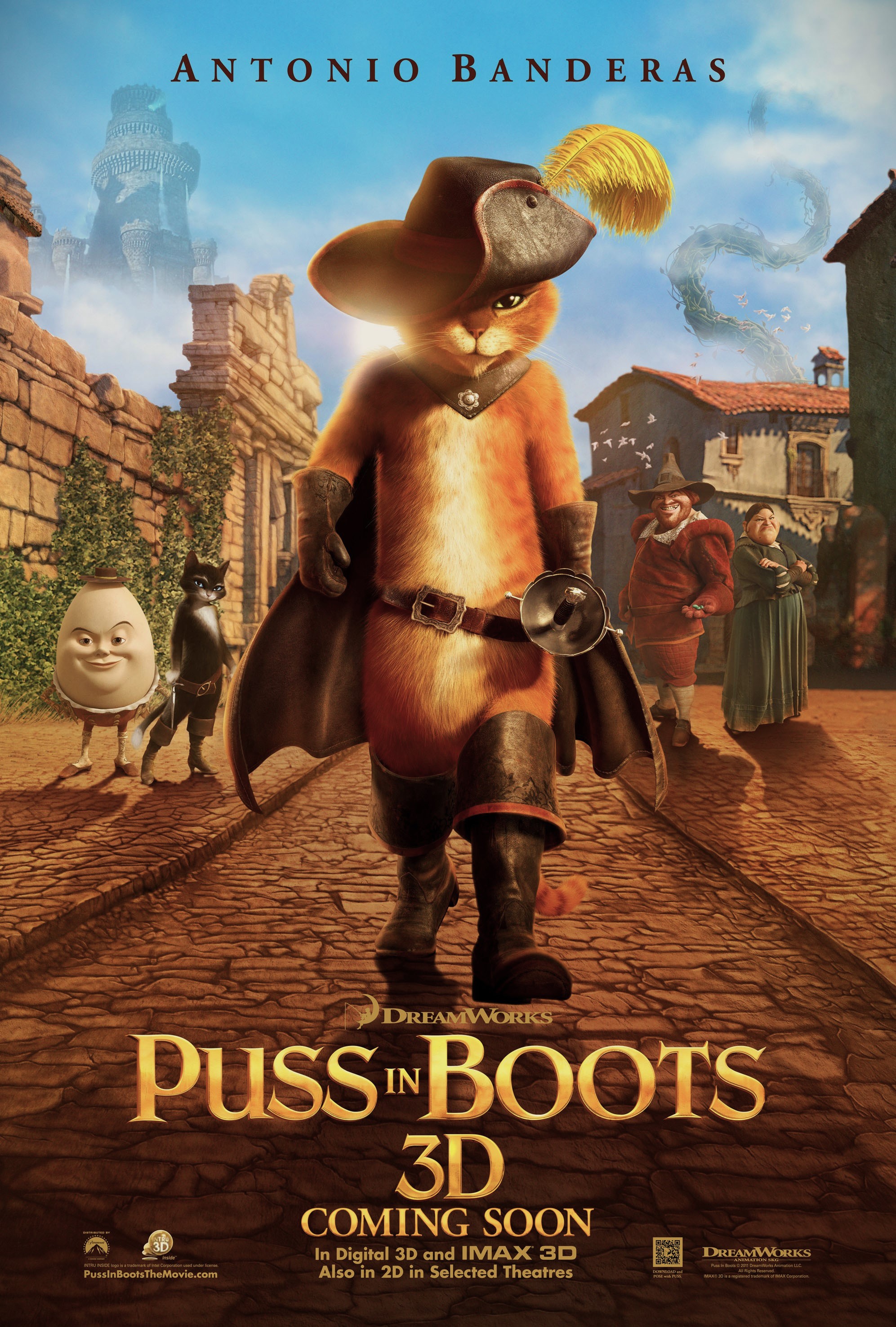
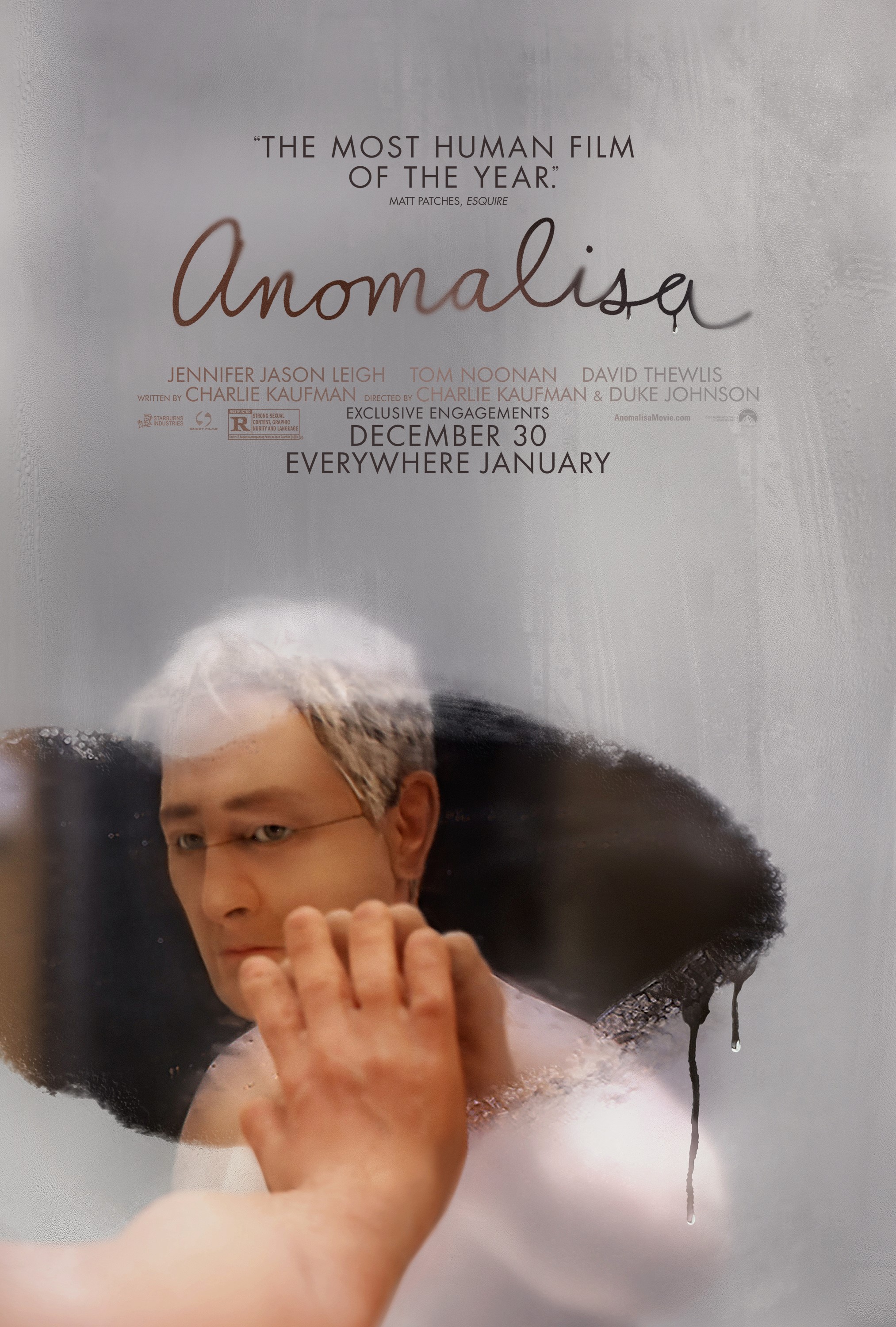
Anomalisa (2015) – Film Review

“Sometimes There’s No Lesson. That’s a Lesson in Itself.” – Michael Stone

Originally planned to be a short film, roughly forty minutes in length, with the large sum of funds later gathered from a crowd-funder on Kickstarter pivoting the project to become feature-length, 2015’s Anomalisa is a technically impressive and exceptionally humane stop-motion drama that marks another distinctive highlight in writer and co-director Charlie Kaufman’s filmography. Serving as a thought-provoking treat for fans of introspective cinema, Anomalisa is a quirky and mesmerising exploration of mental illness seen through the eyes of a middle-aged author trapped beneath the weight of his mundane life, integrating memorable characters and dry wisecracks wherever possible to craft a story that is just as captivating as it is interpretive.

Plot Summary: After travelling to Cincinnati, Ohio, to deliver a speech at the Fregoli Hotel, motivational writer and customer service expert Michael Stone encounters Lisa, a seemingly unremarkable woman who immediately enchants him, shaking up his mundane existence after many years of feeling disconnected from his family and those around him…

Directed by Duke Johnson and Charlie Kaufman, the latter also being the screenwriter, Anomalisa is one of those films that will click with some audience members sometime after the credits roll, dwelling on many of the concepts the film focuses on through its relatively simple, yet accessible and melancholic story, a narrative made more interesting by how it’s told. Blending Kaufman’s caustic sense of humour with genuine moments of human connection, Anomalisa is stuffed with true-to-life, awkward interactions, naturalistic dialogue and numerous subtle touches, similar to many of his previous written works, such as Being John Malkovich (1999) and Eternal Sunshine of the Spotless Mind (2004). Moreover, Anomalisa acts as a direct challenge to the notion that many still seem to hold; that animated films are solely for children, combating this belief by conveying a mature story via charming stop-motion, never shying away from harsh language, nudity or even a graphic scene in which two of the lifelike, puppeteered characters engage in lovemaking.

On the topic of characters, the robust central duo of David Thewlis and Jennifer Jason Leigh are terrific, delivering superb vocal performances that (along with the dialogue) deliver characterisation to the audience, quickly making it apparent that Michael has mental baggage related to Cincinnati, bearing the scars of a love life he left behind. Right from the opening scene, it also becomes apparent that Michael is one of the only uniquely designed puppets, as every other character he encounters seems to have an identical facial structure and a similar voice with a comically flat tone, continually voiced by Tom Noonan. All of these analogous characters (male or female, adult or child) illustrate how Michael, despite his career, struggles to interact with those around him, desiring to do anything but talk to others, including his wife and son, with certain details regarding his behaviour suggesting the character is going through a mid-life crisis and/or implying he may have serious mental issues. Yet, both are merely theories, as nothing is ever confirmed.

Visually, the film’s stop-motion animation is stunning, with the felt-faced puppets lending personality to every scene. Each character lives and breathes on-screen in a way that I feel visual effects couldn’t achieve, making the fact that every character was brought to life via thousands of tiny adjustments all the more extraordinary. The animation is utilised to spectacular effect during one nightmarish dream sequence, where Michael is confronted by his seemingly deteriorating mental state, even drawing attention to his puppet’s prominent facial slit in a bizarrely humorous fourth-wall-breaking moment. On top of the animation, the cinematography by Joe Passarelli is visually striking, frequently appearing as if it has been carried over from a live-action drama.

Often coming across as a forty-minute audible representation of the film itself, the original score by Carter Burwell is a slow-paced and downcast soundtrack that occasionally features snippets of dialogue from the film’s various characters, an eccentricity that is sometimes effective and sometimes irritating, with the score’s finest track; Overture, thankfully being dialogue-free, allowing its nuanced sweetness to flourish.

Further playing into the previously mentioned theories surrounding the film, it’s interesting to note that the hotel Michael stays at, the Fregoli Hotel, is actually named after “The Fregoli Delusion,” also known as “The Delusion of Doubles,” a rare disorder in which a person holds the misconception that those around them are a single person who changes appearance or is in disguise. While Kaufman has confirmed in the past that Michael doesn’t suffer from this exact disorder, the Fregoli Delusion did serve as an inspiration for the film and functions as a reasonable explanation for some of Michael’s peculiar visions, but still doesn’t answer every inquiry an audience member may have about his mental state.

In summary, although the exquisite sop-motion animation automatically makes the film worth a viewing for anyone with even the slightest interest in stop-motion storytelling, Anomalisa will likely have its naysayers, given the film is a rather cyclical drama featuring a cynical protagonist, with perhaps too few gags mixed-in to oppose the constant cynicism. Nevertheless, the film is a well-conceived character study exploring loneliness and mental illness, impressively interpreted through a painstaking style of animation, painting a different shade of drama, a drama that I personally believe wouldn’t work as well should it have been produced with CGI or in live-action. Rating: 8/10.

The Plague Dogs (1982) – Film Review

“They’re Not Masters. I Had a Master Once and I Know. Whatever the White Coats Are, They’re Not Masters…” – Snitter

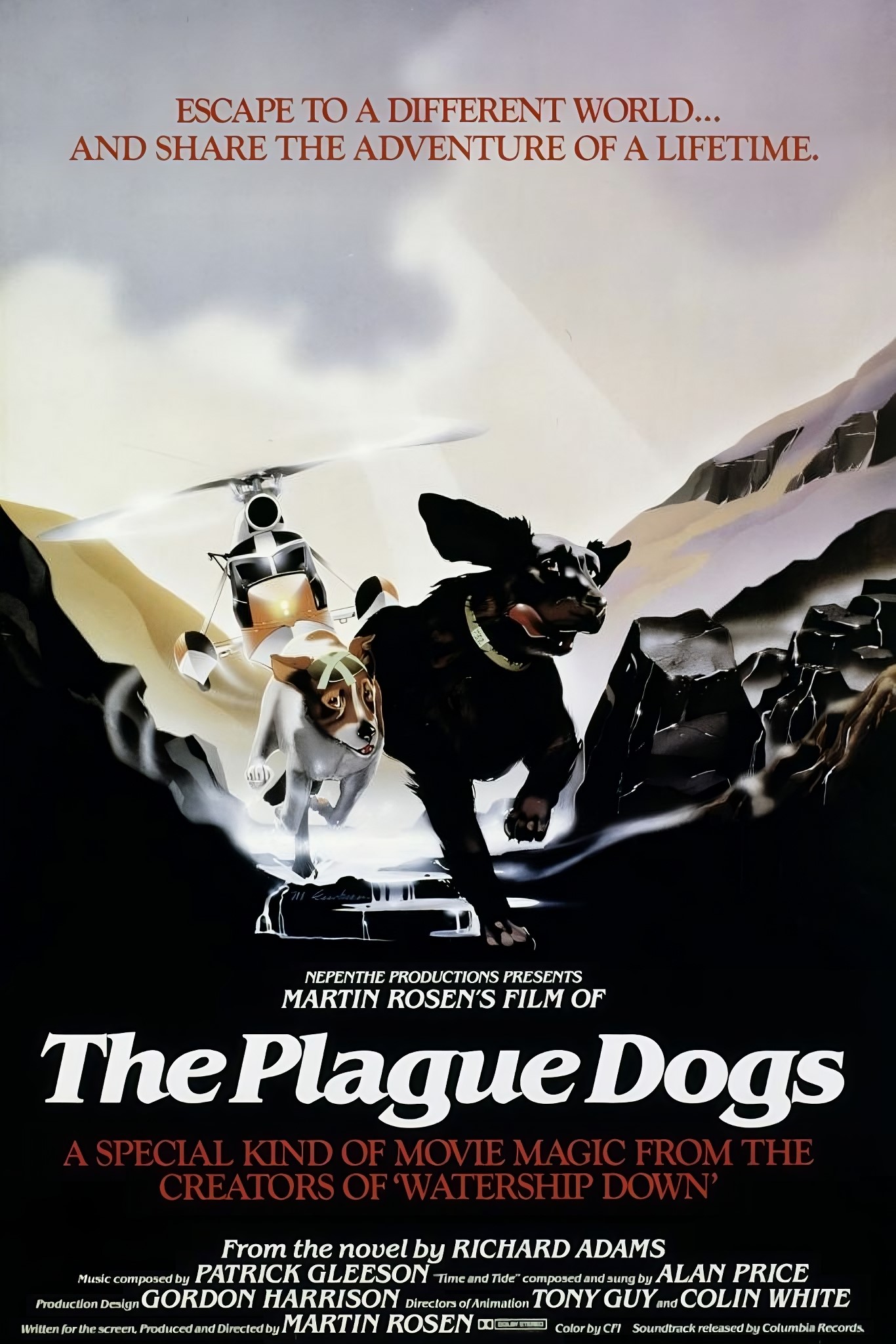
One of the longest British animated films ever released, 1982’s The Plague Dogs is an extraordinarily bleak yet emotionally resonant film that tackles the uncomfortable subject matter of animal testing, particularly in the case of canines. A beautifully melancholy and poignant story about hope, companionship and scientific boundaries, many will undoubtedly find The Plague Dogs a long-winded and generally unpleasant experience. Whereas, for those who can stomach its harrowing storytelling, The Plague Dogs will be as captivating as it is heart-rending, standing as an underappreciated, well-crafted piece of hand-drawn ’80s animation.

Plot Summary: When Snitter and Rowf, a pair of tormented dogs, manage to escape from a remote animal testing facility in Northwestern England, the facility director attempts to keep their escape quiet. But, as an increasing amount of local livestock are found dead, word soon leaks out, along with rumours that the dogs may be potential carriers of the bubonic plague…

The second animated film to be based on a novel by Richard Adam and written/directed by Martin Rosen, following the release of Watership Down in 1978, The Plague Dogs is similarly aimed at an adult audience despite its charming animal protagonists. In fact, alongside The Last Unicorn (1982) and The Secret of Nimh (1982), The Plague Dogs is amongst the darkest and most violent animated films of the late twentieth century. As such, if, like me, you’re a dog lover, many scenes throughout The Plague Dogs will be supremely challenging to watch as the canines suffer at many points, both mentally and physically, to thrust the underlying themes of the film onto the audience. And, as the film’s title would suggest, the protagonists’ daring journey is not as morally straightforward as it first may seem, as via a series of conversations between scientists, journalists and government officials, it’s suggested that Snitter and Rowf may carry a variant of the bubonic plague, thanks to the facility “White Coats,” but this is never entirely confirmed, leaving the rumours (as well as the ambiguous ending) up for interpretation.

The central voice cast of the late Sir John Hurt, Christopher Benjamin and James Bolam are all terrific in their assorted roles, delivering vocal performances that are empathic yet never too intense for the steady pacing. Moreover, the foremost duo of Snitter and Rowf are swiftly established and supplied with plenty of characterisation, as Rowf, a labrador retriever mix breed, begrudgingly follows the lead of Snitter, a determined and optimistic fox terrier, frequently acting as a foil for his mystical sanguinity, combating it with world-weary nihilism. Rowf’s pessimism is hardly irrational, however, as the pair’s horrific experiences in the facility have left them scarred, striving to use their escape as a chance to heal from those hellish experiences, with the survival guidance of a cunning fox known only as the “Tod.” Snitter is seemingly the heart of the film, though, formerly belonging to an affectionate owner who tragically died in an accident. Snitter underwent surgery of some kind during his time in the facility, resulting in a crown of bloodstained bandages around his head, ghostly hallucinations and persistent moments of distress due to a clamouring noise that only he can hear.

To match the relentlessly sombre tone, The Plague Dogs retains a shady colour palette throughout its runtime for both its stunning, watercoloured backgrounds and astonishingly realistic animation for the dogs, continuously prompting frames to resemble aged landscape paintings, complete with expansive fields, derelict farmhouses and cloud-covered peaks, which is even more impressive when considering no rotoscoping was utilised during production. Furthermore, the animated cinematography is dynamic and visually engaging as the camera glides around the dogs and their environment(s), often passing through windows and over stone walls, inadvertently helping to redeem the irksome amount of fade-to-black transitions in between.

Influenced by the techniques of American minimalism as well as the scores of Polish composer, Witold Lutosławski, Patrick Gleeson’s orginal score for The Plague Dogs conforms to the style of Rosen’s uncompromising filmmaking for the most part, as tracks, such as FreedomWondering and In the Pens, are suitably dour and fine-drawn, rarely flaring up to create room for the atmospheric sound design.

Unfortunately, regarding its reception, The Plague Dogs performed incredibly poorly critically and commercially upon its initial release, failing to live up to expectations as a follow-up to Martin Rosen’s last feature. Shortly after its UK premiere, the film’s distributor, Embassy Pictures, decided not to pursue any further theatrical releases, meaning many American animators never saw the result of their hard work, one of whom was actually a young Brad Bird, eventual writer-director of The Incredibles (2004), before he was fired during production.

In summary, the entire duration of The Plague Dogs is undeniably oozing with despair and dread. So much so, it wouldn’t be misleading to say the film is a “Prolonged Howl of Helplessness.” Still, in my opinion, the film and Rosen as a writer/director are unfairly unrecognised in the realm of animation, as while Rosen may have only orchestrated two films throughout his career, finding any animated flicks that can be compared to his filmography is virtually impossible. Rosen was a pioneer in animation, taking bold risks in his narratives and imagery alike to delve into topics the medium of animation is usually afraid to tackle, something The Plague Dogs does favourably and uncompromisingly. Rating: low 8/10.

MV5BNDA1ZDU3M2ItNTdmZC00NjlkLWJhN2UtYjY3YWI3Y2FhMThhXkEyXkFqcGdeQXVyMTQxNzMzNDI_._V1_-transformed

Batman: Under the Red Hood (2010) – Film Review

“Those Are the Heads of All of Your Lieutenants, That Took Me Two Hours. You Wanna See What I Get Done in a Whole Evening?” – The Red Hood

In 1988, the iconic DC Comics storyline; Batman: A Death in the Family, written by Jim Starlin and illustrated by Jim Aparo, was released to a mixture of acclaim and controversy, later becoming the bestselling comic of that year. This particular comic was unique, as readers were encouraged to vote for an ending to the narrative via a pay-per-call service number, deciding to either save or kill Batman’s youthful sidekick, Jason Todd, the second Robin. In the end, over ten thousand votes were cast, with a seventy-two-vote majority choosing to kill Jason, leading to one of the most recognisable comic book panels in literary history. Eventually, however, Jason Todd was brought back as part of a 2005 storyline entitled; Batman: Under the Red Hood, with an animated adaptation following in 2010, employing elements from both storylines to formulate a gripping, swarthy and exhilarating animated flick that examines the Dark Knight’s abiding moral code and its many drawbacks.

Plot Summary: When the mysterious vigilante, Red Hood, emerges in Gotham City, taking the streets by storm with the efficiency and aptitude of Batman without obeying the same moral code of never taking life, the Caped Crusader is forced to go toe-to-toe with the illusive outsider, reopening old wounds as once-buried memories resurface…

For those who haven’t read the source material, I won’t spoil any major plot points of Batman: Under the Red Hood, all I’ll say is that most of the story’s twists and turns won’t come as a shock to those paying attention. Fortunately, this level of predictability doesn’t matter much in the grand scheme, as Batman: Under the Red Hood is at its most compelling when it isn’t focusing on its revelations, but on how the characters endure them, as Red Hood takes Batman’s concept of vigilante justice and pushes it further toward the line between exemplary and immoral, despite his goal of ridding Gotham City of criminal filth being remarkably similar to that of the Cowled One. In fact, compared to many of Batman’s other adversaries, the Red Hood’s objectives are understandable and even somewhat valid, his crooked logic making sense as he asks Batman the formidable questions, forcing him to ask them of himself. Director Brandon Vietti (Superman: DoomsdayScooby-Doo! WrestleMania MysteryBatman: Death in the Family) and writer Judd Winick also seem to understand this, as it’s where the majority of their fixation goes, even if the fleeting runtime is too short to explore some of the film’s underlying themes in greater detail.

For the most part, the central voice cast of Bruce Greenwood, Jensen Ackles, Neil Patrick Harris, Jason Isaacs and Wade Williams portray their characters skillfully, delivering weighty yet not excessively intense vocal performances that embody their esteemed comic book characters, whether heroic or corrupt. For me, the cast has only one weak link, John DiMaggio as the Joker, who, aside from the character’s prominent laugh, doesn’t feel suited to the role, seeming somewhat miscast as he lacks the unvaryingly threatening, psychotic persona of the Clown Prince of Crime.

Visually, while still in line with the typical animation style of the DC Animated Original Movies assemblage, the animation/animated cinematography for Batman: Under the Red Hood is striking and distinctive. From the sharp angles of Batman to the meaty, menacing smile of the Joker, to the gloomy atmosphere of Gotham City with its shady warehouses and towering skyscrapers, usually depicted through enchanting wide shots that exhibit the illuminance of Gotham’s dominating skyline. In many ways, Batman: Under the Red Hood harbours the appearance of a literal animated comic book, rarely exhibiting its age or its undersized animation team.

Perceived as a powerhouse in the realms of both animation and video games, Christopher Drake, the composer for Batman: Under the Red Hood, has previously composed for many DC projects as Warner Bros. Animation frequently entrusts Drake to bolster many of their animated superhero flicks, most notably with projects like the adaptation of the seminal graphic novel; Batman: Year One (2011), as well as Batman: Gotham Knight (2008), Superman/Batman: Public Enemies (2009) and Green Lantern: Emerald Knights (2011). As such, it’s no surprise that Drake also does a terrific job with the original score for Batman: Under the Red Hood, starting the soundtrack off strong with the brooding opening track; Main Title, before supplying the film with further dramatic tracks, all of which seamlessly blend with the crime-ridden metropolis of Gotham City and its shadowy defender.

Intriguingly, Batman: Under the Red Hood was originally intended to be geared towards older audiences, bearing more violence. However, due to the low sales of DC projects in 2009, Warner Bros. Animation ordered the team behind the film to make edits to reduce its brutality and thus, its age rating. Yet, even with these cuts, the myriad of well-executed, easy-to-follow action sequences are thrilling, swift and surprisingly bloody.

In summary, more so than most animated DC projects, Batman: Under the Red Hood truly aims for cinematic storytelling over shallow spectacle and/or vibrance. With its stimulating action sequences, intricate animation and emotional underpinnings, Batman: Under the Red Hood is one of the finest entries in the DC Animated Original Movies catalogue. So much so, that in spite of Warner Bros. Animation continuously overusing the Dark Knight over their many other superheroes and villains, Batman: Under the Red Hood still manages to reveal a largely unexplored side of the celebrated character. Rating: high 7/10.

batman_under_the_red_hood-p527654

Mad God (2021) – Film Review

“If You Disobey Me and Remain Hostile to Me, I Will Act Against You in Wrathful Hostility. I, for My Part, Will Discipline You Sevenfold for Your Sins…” – Opening Quotation

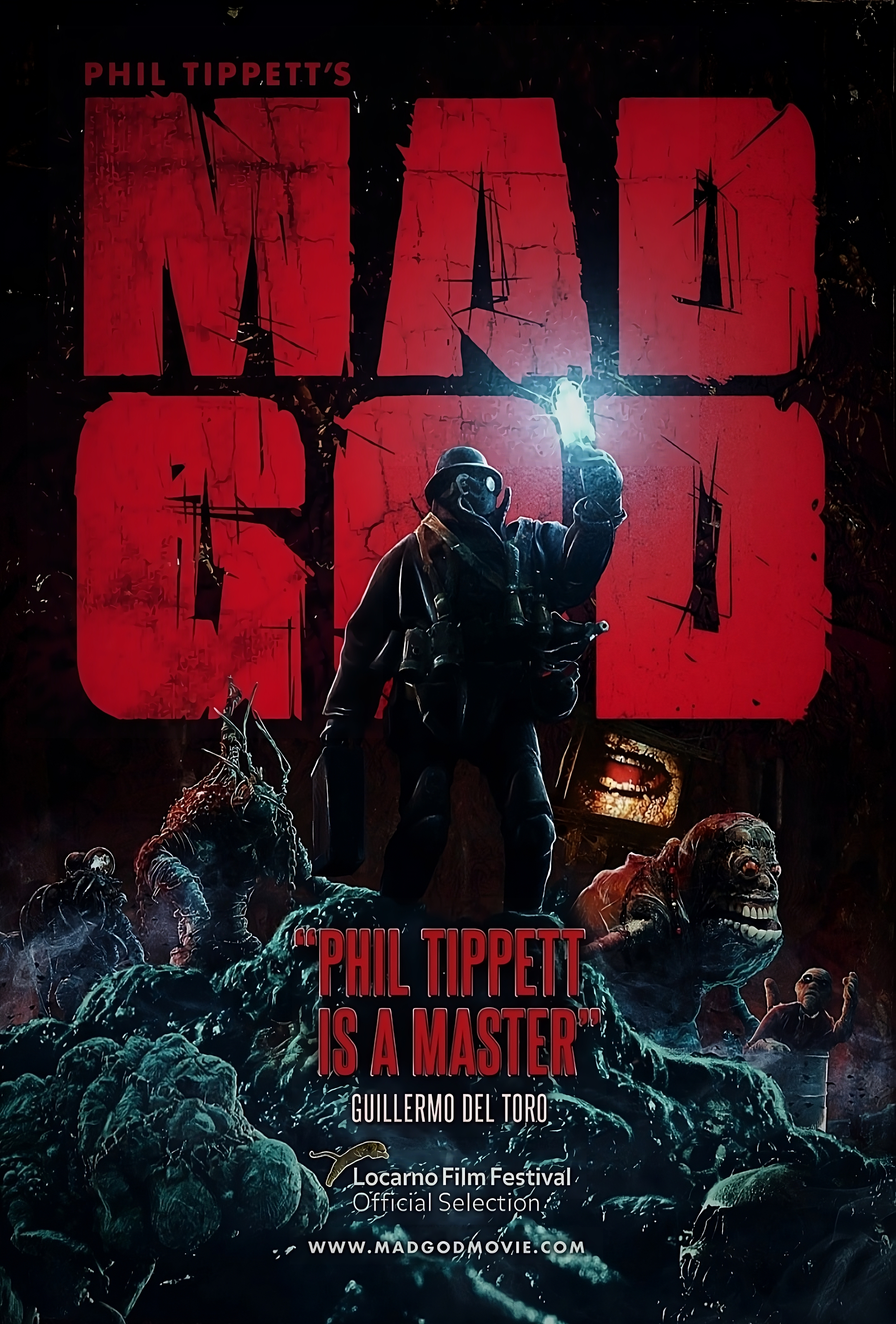
Written, produced and directed (among many other credits) by Phil Tippett, the founder and namesake of Tippett Studio, whose varied career in visual effects has spanned more than thirty years and includes two Academy Award wins and six nominations. Mad God, released in 2021, is a rich visual treat for enthusiasts of horror and stop-motion animation alike, serving as a harrowing delve into a post-apocalyptic hellscape that is both unique and disturbing. Harbouring a cinematic allure that is equal parts unsettling and mesmerising, Mad God proves that even in the age of CGI, the art form of stop-motion remains strong, even if the story and characters it’s bringing to life are far from well-developed.

Plot Summary: Equipped with a gas mask and an ageing map, the Assassin, a lone iron-clad humanoid, descends into an underworld of tortured souls, ruined cities and wretched monstrosities on a covert mission to reach the heart of this nightmarish realm of suffering…

First starting work on the project in the late 1980s, shortly after creating effects for RoboCop 2, released in 1990. Mad God has been Tippett’s pet project for over thirty years, despite the filmmaker almost considering abandoning the project when Jurassic Park was released in 1993, as CG effects appeared to make stop-motion a thing of the past. After some urging from those around him, however, Tippett decided to create a Kickstarter campaign that allowed him to complete the project. In the following years, three parts of Mad God were released online, which made up around half of the full eighty-two-minute version that was eventually screened at various film festivals. And whilst this story behind the film’s creation is certainly intriguing, Mad God‘s biggest shortcoming is that it lacks a narrative itself, or at least a coherent one. Instead, the film relies on visual storytelling and world-building as the audience follows the Assassin on his lengthy journey, encountering many distinct creatures, locations and civilisations on a mission that is never disclosed. As such, watching Mad God requires a lot of concentration to get the most out of it, much like how the project was crafted, I suppose.

With no dialogue or characterisation to speak of, Mad God‘s characters hinge entirely on their design. Thankfully, every character/creature that appears throughout the runtime is visibly repulsive, unnerving and eccentric. At the core of Mad God‘s story is a character only known as the Assassin, a silent, gas mask-wearing humanoid who also receives no characterisation, instead functioning as an audience surrogate through Tippett’s fever dream of a post-apocalyptic world. As the film features no dialogue, the central cast, including Alex Cox, Niketa Roman and Satish Ratakonda, only appear in a handful of live-action sequences, which similar to the scenes of stop-motion, are grimy and discomforting whilst relying on visuals over direct storytelling. While these sequences are interesting and count towards what little plot there is, many of these moments also pull you out of the experience and are often plagued by the film’s need to implement oral sounds to ensure the human characters don’t appear mute, meaning noises like “Eh?” and “Hmmm” become rather repetitious.

The cinematography by Chris Morley and Phil Tippett allows for spectacular framing within every scene, lending to the atmosphere and intrigue of each setting, whether its an oxidised factory of greasy machinery or a society of helpless slaves ruled over by an electronic screen that speaks in childlike gibberish. Furthermore, each of the surroundings the Assassin treks across is distinguished by the film’s colour palette, which seamlessly jumps from cold blues to vile greens and blood reds, making the stop-motion appear incredibly cinematic. Interestingly, one scene, which features a mountain of dead soldiers, was actually accomplished by melting thousands of plastic army men together on a wire. This scene took six animators around three years to complete, demonstrating the substantial amount of dedication required to animate even a single scene of Mad God.

Through prolonged tracks like Long Way Down and ConveyanceMad God‘s original score by Dan Wool enhances many of the surreal visuals in a relatively nuanced fashion, making for a soundtrack that isn’t all that memorable, but avoids becoming overbearing as to let the visuals speak for themselves. However, the sound design is where the film’s audio truly shines as the countless animalistic growls of the mutated creatures that roam Mad God‘s mystifying world are ghastly and add audible depth to whichever location the Assassin finds himself.

As most would expect from Tippett Studio, the animation itself is smooth yet appropriately unearthly, providing every creature with its own jittery method of walking/crawling that feels remarkably natural. What’s even more impressive is that, according to Tippett, a considerable amount of the animation on Mad God was actually conducted by novice students who wanted to gain some filmmaking experience.

In summary, Mad God will likely be a very divisive film on account of its largely interpretive narrative and absence of well-defined characters. But, these annoyances ultimately don’t matter that much in the grand scheme, as Mad God thrives in what it’s trying to do. Presenting itself as a love letter to stop-motion that could only be realised by a legendary visual effects artist like Phil Tippett. And with stop-motion animation in such short supply nowadays, an outstanding piece of artsy like Mad God will always be a joy to behold, faults or not. Rating: 7/10.

w1cnVYUNJU3NPYh6FBeq0voXD15-transformed

Loving Vincent (2017) – Film Review

“You Want to Know So Much About His Death, but What Do You Know of His Life?” – Marguerite Gachet

An arduous labour of love by a team of over one hundred professional artists, Loving Vincent, released in 2017, turns the renowned artwork and tragic life story of the celebrated post-impressionist artist, Vincent van Gogh, into an extraordinary biopic. Originally filmed in live-action before every frame was hand-painted over in the distinct style of van Gogh’s artwork, Loving Vincent impressively employs hundreds upon hundreds of oil paintings and transforms them into a hypnotic and ambitious animated biography, even if its story and characters are less effectively crafted than its dazzling visuals.

Plot Summary: In the summer of 1891, one year after the presumed suicide of unwonted artist, Vincent van Gogh. Postman, Joseph Roulin, tasks his reluctant son, Armand Roulin, with delivering one of the artist’s final letters to his brother, Theo van Gogh, in Paris. But, when Armand arrives in the French capital, learning that Theo has, too, met his demise, he pledges to investigate van Gogh’s untimely death by venturing to the scenic town of Auvers-sur-Oise…

Obtaining a large amount of attention after its nomination for an Academy Award for Best Animated Picture in 2018. Loving Vincent is one of the most unique films to emerge from the animation genre in recent years, as immediately from the hand-painted opening title sequence, preceded by van Gogh’s quote; “We Cannot Speak Other Than by Our Paintings.” The audience is pulled into van Gogh’s hyper-sensual worldview through the film’s striking aesthetic. Aside from the astonishing visuals, directors Dorota Kobiela and Hugh Welchman also provide an alternative take on the historic biopic by having the life of Vincent van Gogh viewed from the perspective of a young man, via the stories he is told by those who knew him. And even though this investigative storyline doesn’t quite match up to the amazing visuals on display, it’s an engaging story, nonetheless.

While the main cast of Douglas Booth, Eleanor Tomlinson, Saoirse Ronan, Robert Gulaczyk, Jerome Flynn, the late Helen McCrory and Chris O’Dowd, are all terrific in their performances, none of the characters possess a French accent. And considering that the story takes place in 1800s France, I feel the immersion of the time period/setting could’ve been greatly increased should the filmmakers have chosen to cast English-speaking French actors/actresses. Moreover, similar to the narrative, the characters of Loving Vincent are one of the film’s lesser impressive aspects. Whilst Armand Roulin is serviceable as a headstrong protagonist, eager to fight and drink before he is pulled out of his slump and instructed to deliver van Gogh’s final letter, subsequently becoming more and more invested in the alleged suicide of the gifted yet largely detested artist. The majority of the characters are given little characterisation and merely serve as plot devices to edge Armand towards his next acquaintance and/or eyewitness.

Moving onto the visuals, Loving Vincent was predominantly animated through the rotoscope technique; an animation process that consists of tracing over live-action footage frame-by-frame. This technique allowed the filmmakers to implement the characters into a number of visually stunning environments, along with numerous recreations of Vincent van Gogh’s paintings. However, only the sequences set in 1891 are animated in the style of van Gogh’s artwork, as flashback sequences are animated in the style of black and white photographs of the time period, providing a clear visual distinction. Additionally, details such as cigarette smoke, clouds or flowing rivers make for fantastic transitions between scenes. On the whole, the visuals of Loving Vincent almost appear like purified echoes of Vincent van Gogh’s artwork, as the cinematography by Tristan Oliver and Lukasz Zal, combined with the vibrant colour palette and beguiling art style, results in countless enchanting shots.

From the outset, the original score by Clint Mansell backs up the stylistic visuals with a sombre and atmospheric soundscape. Through tracks like The Night CaféThe Yellow HouseMarguerite Gachet at the Piano and Five Sunflowers in a Vase, the score creates a sense of sadness that parallels the difficult life Vincent van Gogh led. Furthermore, despite having a noticeable lack of movement in the background of certain scenes, the sound design goes a long way in fleshing out the environment around the characters, whether that be the bustling streets of Paris or a quaint farm in Auvers-sur-Oise.

According to Loving Vincent‘s official website, the collective effort of the many talented artists that worked on the project resulted in a total of eight hundred and fifty-three oil paintings, as each art piece was utilised multiple times, with succeeding frames being painted on top of the original paintings. In the final film, there are around fifty thousand hand-painted frames, which is truly an incredible feat of artsy when taking into account how much time went into just a single scene.

In summary, Loving Vincent is an outstanding achievement, not only in the genre of animation, but also in the world of filmmaking. While the story and characters do leave room for improvement, these minor issues hardly detract from Loving Vincent‘s main attribute; its ravishing visuals. From the phenomenal use of colour to the detailed backdrops and innumerable visual references to van Gogh’s most recognised artwork, Loving Vincent is a captivating tribute to one of history’s most influential artists. And, as such, I’d say Loving Vincent is a biopic well worth seeking out, even if it’s merely for the experience of witnessing the craftsmanship of hundreds of animated oil paintings on-screen. Rating: low 9/10.

loving_vincent_xlg

The Iron Giant (1999) – Film Review

“It’s Bad to Kill. Guns Kill. And You Don’t Have to Be a Gun. You Are What You Choose to Be…” – Hogarth Hughes

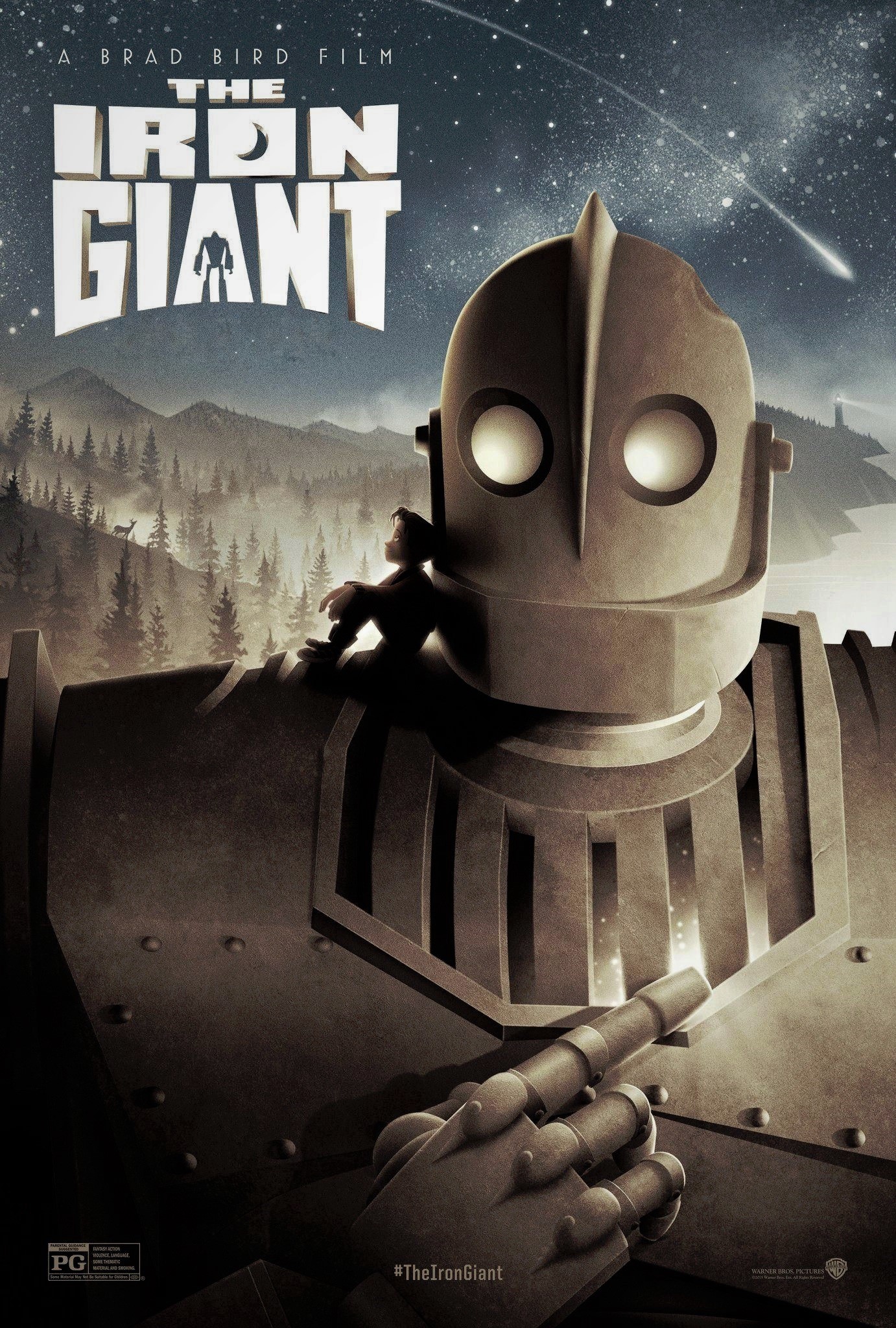
Partially based on the novel; The Iron Man by Ted Hughes, 1999’s The Iron Giant is an incredible achievement in both storytelling and animation. Tackling ambitious themes and complex animation techniques for the time through its near-seamless blend of hand-drawn and CG animation, The Iron Giant is a captivating and uplifting animated sci-fi adventure with plenty of humour and heart entrenched in its story. And while perhaps not the peak of director Brad Bird’s filmography, with The IncrediblesRatatouille and Mission: Impossible – Ghost Protocol all serving as stiff competition. As far as directorial debuts go, The Iron Giant was undoubtedly a curtain-raiser for Bird and his team.

Plot Summary: When a massive metal automaton, sent from somewhere in the black void of outer space, crash-lands on Earth just outside the small town of Rockwell, Maine. Eleven-year-old, Hogarth Hughes, stumbles across the android and quickly strikes up a friendship with the giant. But, unbeknownst to Hogarth, U.S. government agent, Kent Mansley, has his sights set on finding the extraterrestrial visitor and will stop at nothing to ensure its destruction…

Whilst The Iron Giant bears little resemblance to the novel it’s based upon, the stories behind both the novel and the film’s creation are tragic yet fascinating. As originally, the author of the novel, Ted Hughes, wrote the story as a way of comforting his children after the suicide of their mother, Sylvia Plath. Similarly, Brad Bird was in part inspired to adapt the novel as a memorial to his sister, Susan Bird, emphasising the anti-gun message of the story as she was shot by her estranged husband in a murder-suicide in 1989. His initial pitch was this; “What if a Gun Had a Soul and Didn’t Want to be a Gun?” And even if the title of the adaptation (and subsequently the titular character’s name), was later changed to The Iron Giant to avoid confusion with the renowned comic book character, Iron Man. This underlying theme has always been associated with the character and is weaved into the narrative exceptionally.

The main voice cast of Eli Marienthal, Jennifer Aniston, Harry Connick Jr., and Christopher McDonald all do a fantastic job as the central clump of well-defined characters, portraying them as surprisingly grounded personalities for an animated flick. However, the most significant member of the cast has to be Vin Diesel as the Iron Giant himself. Sharing similarities with his later role as Groot/Baby Groot in the Marvel Cinematic Universe, Diesel only speaks a total of fifty-three words throughout the entire runtime, excluding yells and groans. Yet, even with these limited lines, Diesel provides the enormous android with a suitably weighty voice and plenty of amusing/endearing moments.

On account of The Iron Giant being the first traditionally animated film to feature a principal character that is entirely computer-generated, there are a few scenes where cracks have begun to form in the animation and the animated cinematography. However, for the most part, the visuals on display throughout The Iron Giant are magnificent as the film contains an extensive amount of vibrant and alluring shots that meld both animation techniques. Many of these shots also make superb use of the remote, coastal setting of Rockwell, as well as the 1950s time period.

The original score by the late Michael Kamen is largely superior to a number of other orchestral scores for animated family flicks, with the acclaimed track; No Following, standing as a beautiful yet heart-rending composition that considerably enriches the final act. Further tracks, such as The Eye of the Storm and Souls Don’t Die, are pleasant to listen to and serve their purpose within the story, despite not being particularly memorable.

Another noteworthy aspect of The Iron Giant is how the film takes inspiration from classic sci-fi films of the 1950s. Intentionally playing into many of the staples of the science fiction genre around that time, including the widespread fears of nuclear war and Earth being invaded by creatures from another world. This ’50s inspiration even extends to the character designs with the appearance of the Iron Giant himself, who is instantly recognisable as a result of his atomic-age headpiece. Furthermore, the tentacles that emerge from the Iron Giant’s back during the final act are an unmistakable visual homage to one of the most well-known extraterrestrial films in cinematic history; The War of the Worlds, released in 1953.

In summary, whilst it still saddens me that The Iron Giant was such a box office failure upon its initial release, only grossing around £19 million on an estimated budget of £58 million. I am delighted that the film has gone on to become such a cult classic, predominately through positive word-of-mouth, no less. Releasing on August 6th, 1999, the same day as The Sixth SenseThe Iron Giant was commercially overshadowed immediately out of the gate. Moreover, following the success of Toy Story in 1995, The Iron Giant was released at a time when hand-drawn animation was being superseded by CGI. So much so, that Warner Bros. Pictures was in the process of shutting down its traditional animation division during the film’s production. And yet, The Iron Giant still flourished in spite of all these obstacles, which, in my opinion, is a testament to the efforts of Brad Bird and his masterful team of animators and creatives. Rating: low 8/10.

iron_giant_ver4_xxlg

Sausage Party (2016) – Film Review

“Sausages and Buns, Let’s Party!” – Frank

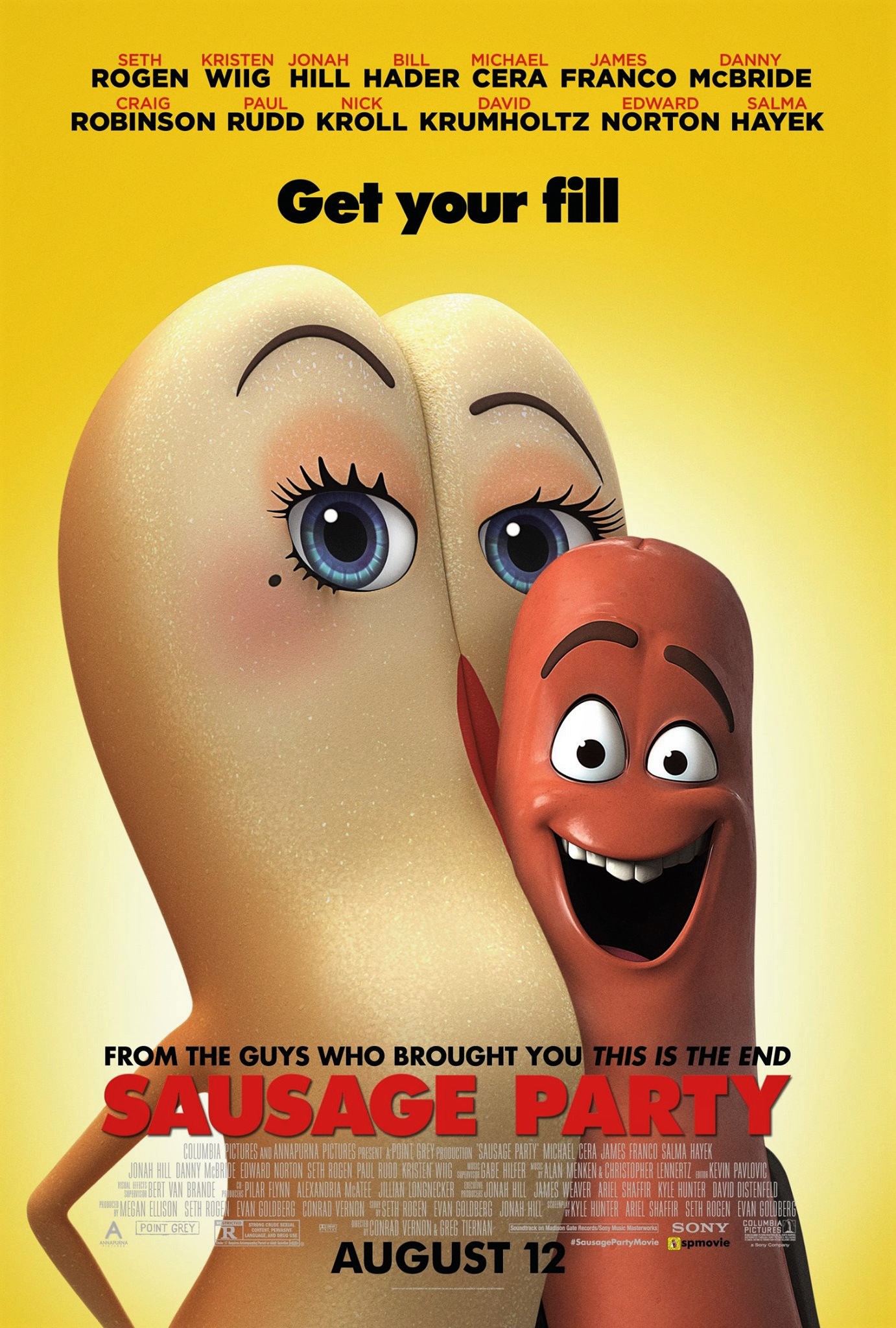
Directed by Greg Tiernan and Conrad Vernon (The Addams Family, The Addams Family 2) and co-written/produced by Seth Rogen and Evan Goldberg, Sausage Party, released in 2016, is an animated adult comedy with a very specific brand of humour, a brand that I have a strong distaste for. Lazily relying on copious amounts of foul language, sexual imagery and offensive jokes, the potential hilarity of Sausage Party‘s concept is ultimately squandered due to its dreadful execution, giving the impression that this adult-centric animation was written by a group of angsty teenagers.

Plot Summary: Eagerly awaiting the day they will be taken to the Great Beyond by their human deities, Frank the sausage, Brenda the hot dog bun, Sammy Bagel Jr. and the rest of the food items that occupy the shelves of the local supermarket, believe a code that allows them to live blissfully ignorant lives until it’s time to depart their aisle. But, when Frank learns the terrible truth that they will eventually become a human’s dinner, their shared fantasy comes crashing down, forcing the panicked perishables to devise a plan and fight back against their human foes…

An obvious parody of Disney, Pixar and DreamWorks’ animated classics. Co-writer and producer, Seth Rogen, first developed the idea for Sausage Party in 2007 while promoting Superbad and Knocked Up, as interviewers would ask Rogen what his next project would be, to which he jokingly replied; “It’s Called Sausage Party.” Rogen frequently described Sausage Party as a dreary take on family-friendly animated films, stating: “People Like to Project Their Emotions Onto the Things Around Them; Their Toys, Their Cars, Their Pets… So We Thought; ‘What Would It Be Like if Our Food Had Feelings?’ We Very Quickly Realised, That It Would Be Fucked Up.” An ingenious idea, to be sure, even if its execution leaves a lot to be desired.

Featuring the likes of Seth Rogan, Kristen Wiig, Michael Cera, Salma Hayek, Edward Norton, Jonah Hill, Bill Hader, Danny McBride, Paul Rudd and Craig Robinson, among others. Sausage Party possesses an all-star cast to voice its extensive and diverse line of animated characters. As such, the voice acting quickly becomes one of the best aspects of the film as every member of the cast puts their all into the project, despite the repeatedly low-grade dialogue. And whilst none of the characters could be described as well-developed, Brenda does make for an appropriately uptight love interest for Frank, while characters like Teresa Del Taco and Sammy Bagel Jr. are at least memorable for their cartoonish qualities.

The animated cinematography on display throughout Sausage Party is continuously frantic and often difficult to keep track of as a result of its constant movements. The animation itself also isn’t the most visually appealing as many of the characters’ designs (both human and anthropomorphitic food) are overly cartoonish, oddly sensual and repeatedly disproportionate. Still, there is a handful of amusing visual gags throughout the film. For instance, during the scene where Honey Mustard’s outburst causes two shopping trolleys to collide, hurling multiple food items toward the ground. The resulting carnage is a shot-for-shot homage to the opening sequence of 1998’s Saving Private Ryan, with all of the scene’s graphic violence being represented through burst flour bags, squished tomatoes and crumbled biscuits.

When it comes to the original score by Christopher Lennertz and Alan Menken, the soundtrack is serviceable, for the most part, with tracks like ChosenFood Massacre and Magical Sausage all serving their purpose of reinforcing scenes of both horror and humour within the story. However, where the film really shines in terms of music is the opening song; The Great Beyond, composed by Alan Menken, a composer predominantly known for scoring a number of classic animated musicals, including The Little Mermaid (1989) and Beauty and the Beast (1991). Thus, The Great Beyond is very reminiscent of the scores for those films, only with a more satirical edge, thanks to its comical lyrics and profanity.

In addition to the inconsistent quality of the humour, Sausage Party also attempts to integrate the notion of organised religion into its story, as Frank tries to convince his blissed-out companions that they might be heading not for a glorious afterlife, but rather knife-assisted oblivion. Even the Israel/Palestine conflict is riffed upon through the pairing of a lavash and a bagel. Yet, both of these underlying themes are significantly overshadowed by the constant wisecracks and needlessly shocking lines of dialogue. Moreover, the rules of Sausage Party‘s world oftentimes make no sense as many objects that aren’t food come to life, while others seemingly do not. Admittedly, this is more of a nit-pick than a true criticism for an absurdist comedy such as this, but I feel it’s always important for a story and its world to have consistency.

In summary, although Seth Rogen has expressed interest in making a sequel to Sausage Party, along with a number of other animated projects aimed toward older audiences, I have no desire to see any other projects of this nature. Lacking the abundance of laugh-out-loud moments that Rogen and Goldberg have delivered with their better efforts in the comedy genre, such as Pineapple Express (2008) and The Interview (2014), Sausage Party simply exists as a twenty-minute gag that was somehow stretched into a feature-length film, complete with shoddy writing, unpleasant animation and largely lethargic storytelling. Rating: high 3/10.

sausage_party_ver2_xxlg

Strange Magic (2015) – Film Review

“Send More Goblins to Cut Down Every Primrose! No Primroses, No Potion. No Potion, No Love. Because Love Is Dangerous. It Weakens… It Rots.” – The Bog King

After selling Lucasfilm to the Walt Disney Company in late 2012, well-established writer-director George Lucas (THX 1138American GraffitiStar Wars: Episode IV – A New Hope) turned his attention away from the mega franchises of Star Wars and Indiana Jones to produce many of his long-gestating passion projects. This ambitious new turn began with the war epic; Red Tails in 2012 and shortly after Strange Magic in 2015, an animated fantasy musical that Lucas had long wanted to produce for his three daughters, having written an early draft of the story fifteen years earlier. Upon its eventual release, however, Strange Magic was deemed a colossal failure, earning only £9 million at the box office on a budget of approximately £74 million, along with receiving largely negative reviews from critics and audiences alike due to its predictable story, dreadful humour and bizarre song choices. All of which, I feel, are valid criticisms.

Plot Summary: In a mystical woodland realm where primrose flowers mark the border between two regions; the Fairy Kingdom and the Dark Forest. The undesirable, Bog King, rules over his gloomy domain without love, going so far as to imprison the Sugar Plum Fairy, who is capable of mixing love potions through the use of primroses, in a bid to permanently cease adoration across his domain…

Technically the first Lucasfilm production to be distributed by the Walt Disney Company following its acquisition. The story of Strange Magic is predominantly based on William Shakespeare’s A Midsummer Night’s Dream, as both narratives are romantic-comedies that involve misunderstandings and cross-purposes between different races or, in this case, species. The film also takes inspiration from many well-known fairy tales, including The Ugly Duckling and Beauty and the Beast for its central underlying theme, which concentrates on the belief that beauty is only skin deep and internal beauty is far more meaningful. An important message for children, to be sure. But, as a result of this subtext being delivered with zero charm or subtlety, the message itself comes across as incredibly forced and even somewhat contradictory, thanks to some of the screenplay’s ill-timed gags.

The central voice cast of Alan Cumming, Evan Rachel Wood, Elijah Kelley, Sam Palladio and Meredith Anne Bull all do a sufficient job of lending some personality to their respective characters. Especially since Strange Magic supplies very little in the way of characterisation, with a majority of the animated characters only being set apart from one another by what species they are, e.g. a fairy, elf or goblin, etc. Quite unfortunate, as for many characters, there is a solid foundation alluding to what they could’ve been should they have been further developed. For example, Marianne (the closet thing the story has to a protagonist) becomes distrustful of men once she witnesses her fiancée, Roland, cheating on her on the day of their wedding, quickly vowing to never love again and instead dedicate her life to protecting her family, specifically her sister, Dawn, who supposedly falls in love with every man she meets.

Aside from the flavourless designs of the fairies, which appear as if they’ve been yanked from any generic fantasy flick of the early 2000s, the visuals of Strange Magic are by far the film’s finest component, with nearly every shot retaining plenty of colour and ingenuity on account of the animated cinematography and the animation itself, which exhibits even the smallest of details right down to the threads on a characters’ clothing or patches of watery moss on tree branches. Yet, this isn’t too surprising, considering that Strange Magic was animated by famed visual effects company, Industrial Light & Magic, standing as their first fully animated feature since Rango in 2011.

Moving from the visuals to the music, Strange Magic is what’s known as a jukebox musical. This means that rather than creating original songs for the film, all of the songs heard throughout Strange Magic are popular songs from past decades. From Can’t Help Falling in Love to Love is Strange and I Can’t Help Myself (Sugar Pie Honey Bunch), the film’s continuous use of on-the-nose songs is undoubtedly what will make or break Strange Magic for most, as older audiences will feel as if they are being pandered to whilst younger audiences will simply be confused as to why none of the songs directly relate to any of the characters/locations within the film. Furthermore, the original score by Marius De Vries is barely distinguishable from any other fantasy score.

On a separate note, although the first entry in the Star Wars saga rarely lacked in world-building when it first introduced audiences to a galaxy far, far away. Strange Magic seems to actively avoid developing its world beyond one or two throwaway lines, establishing the two unimaginatively named regions that reside side-by-side and not much else as to how this fantastical world functions.

In summary, Strange Magic is a film that feels far too familiar to sing its own tune, with its derivative story coming across as a hodgepodge of well-worn elements from other animated and fantasy films. Most evidently, 2013’s Epic and the everlasting series of animated Tinker Bell flicks. As such, there’s virtually nothing about this fractured fairy tale that feels remotely fresh aside from some of its attractive visuals. There are enjoyable moments, of course, but, for the most part, Strange Magic is simply half-hearted and creatively lazy. Rating: high 3/10.

strange_magic-p940629

Rio (2011) – Film Review

From Blue Sky Studios, the production company behind many light-hearted family animations, like ‘Robots,’ ‘Epic,’ ‘Ferdinand,’ ‘Spies in Disguise’ and, most notably, the ‘Ice Age’ series. ‘Rio,’ released in 2011, is a vibrant animated adventure, which despite its occasionally childish humour and the relatively straightforward story is sure to keep adults and children alike joyfully content without reinventing the animation wheel, compensating for its lack of originality through its charming voice cast and exuberant chase sequences.

Plot Summary: After being captured by smugglers and taken from Brazil when he was just a hatchling, a blue macaw named, ‘Blu,’ never learned to fly and now lives a happily domesticated life in Minnesota with his owner; ‘Linda.’ But, when quirky ornithologist; ‘Tulio,’ arrives at their door and informs the pair that ‘Blu’ is the last male of his kind, the two decide to travel to Rio de Janeiro to meet ‘Jewel,’ the last female…

Taking inspiration from the true story of a Spix’s macaw named Elvis, whose owner agreed to let him join the captive breeding program to help preserve his species. ‘Rio’ may follow a very familiar formula for a family flick, yet what makes ‘Rio’ stand out is exactly that, Rio de Janeiro itself. As, director Carlos Saldanha (Ice Age, Robots, Ferdinand) is himself, a resident of Rio, and first came up with the concept in 1995, only at that point in time the story focused on a penguin washing up on the beaches of the Brazilian city. However, when Saldanha learned two other penguin-related animated features were in production, these being ‘Happy Feet’ and ‘Surf’s Up,’ he was forced to radically rewrite the film’s screenplay. Interestingly, this film is also cited as the reason why Pixar cancelled their animated project; ‘Newt,’ as it was said to have had a very similar plot.

Recording many of his lines while filming for ‘The Social Network’ was still underway, Jesse Eisenberg agreed to provide his voice for ‘Blu’ on weekends to compensate for lost time, admitting that it diverted him away from the mindset of his nearly joyless ‘Social Network’ character. And, while Eisenberg doesn’t give an unconventional performance here, Eisenberg is, in my opinion, the perfect casting choice for this kind of character, as ‘Blu’s awkward and nervous personality shines perfectly through Eisenberg’s whiny vocal performance, which is only amplified after he encounters the feisty female; ‘Jewel,’ portrayed by Anne Hathaway, as their shy romance gradually blossoms over the course of the runtime. Furthermore, the supporting cast of George Lopez, Jemaine Clement, Will.i.am, Jamie Foxx and Tracy Morgan, all do a wonderful job, with nearly every member of the cast also stretching their vocal cords for many of the film’s lively songs.

When it comes to the film’s visuals, director Carlos Saldanha uses the exquisitely rendered backdrop of his home city to great advantage, as the film’s animated cinematography is constantly swooping, soaring and spinning high above the sunny beaches and multicoloured parasols of Rio de Janeiro as ‘Blu’ and ‘Jewel’ scamper through the city on trolleys, cable cars and in one of the film’s most uplifting scenes, atop the wings of a paraglider. In spite of its characters always being on the move, ‘Rio’ also manages to avoid the usual problem animated films tend to run into, as the film’s plot moves along at just the right pace to keep younger audience members entertained.

With ‘Rio’ being Blue Sky Studios’ first attempt at a musical, one or two of the film’s songs are catchy, but inevitably are nowhere near as memorable as many songs from Disney’s vast catalogue of animated classics. Yet, I feel this may be due to Will.i.am’s potential influence, as many of the film’s songs, such as ‘Hot Wings’ and ‘Funky Monkey,’ sound like nothing more than modern, age-appropriate pop songs forced into the film’s soundtrack. Contrarily, the original score by John Powell slightly elevates itself above your standard family film score through tracks, like ‘Morning Routine,’ ‘Paradise Concern’ and ‘Birdnapped.’

Whilst the actual animation throughout ‘Rio’ is usually just as energetic and colourful as any other modern animation, it’s undoubtedly at its best when replicating Rio’s many iconic landmarks, with a large majority of them being almost picturesque. This accuracy is more than likely due to the crew’s research, as many of the film’s animators not only visited Rio de Janeiro in order to precisely replicate the city, but also consulted with a macaw expert at the Bronx Zoo for the design and movements of their avian characters.

In summary, although most audience members have always seen Blue Sky Studios as secondary to more well-known production companies, like Disney, Pixar, DreamWorks and even Sony Pictures Animation in recent years. I’ve always enjoyed Blue Sky’s animated endeavours even if many of their stories do feel fairly unoriginal from time to time, which may have even been one of the reasons that Blue Sky Studios sadly closed its doors in early 2021 following Disney’s purchase of 20th Century Fox. Nevertheless, as proved by ‘Rio,’ this issue of unoriginality can be overshadowed with the right methods, as the titular setting and dazzling colour palette ensure the film’s place as a love letter to Brazil if nothing else. Final Rating: low 7/10.

Rio-2011-poster-7-large