Monster Trucks (2016) – Film Review

“I Don’t Know Who’s Driving, Him or Me…” – Tripp

Spawned from the mind of the four-year-old son of Adam Goodman, the then-president of the production company behind the film, Paramount, Monster Trucks is a 2016 family flick harbouring flashes of inspiration yet ultimately lacking in execution. Frequently demonstrating that a wacky storyline and a mashup of creatures and clamorous vehicles don’t necessarily yield a rollicking family film, Monster Trucks goes about its narrative with all the grace of an off-road vehicle steamrolling a row of discarded automobiles, even when it faintly echoes the beloved 1982 sci-fi classic; E.T. the Extra-Terrestrial.

Plot Summary: Looking for a way to escape the mundane town he was born into, high school senior Tripp circumvents the discomfort of his home life by toying away in his local scrapyard, gradually assembling a truck of his own from bits and pieces of scrapped vehicles. But, when an accident at a nearby oil-drilling site displaces strange, subterranean creatures with immense strength and a liking for oil, Tripp believes he’s found his key to getting out of town, unaware that his slimy, tentacled friend is actively being pursued…

Initially set for release on May 29th, 2015, before the date was moved to December 25th, then March 18th, 2016, and finally, January 13th, 2017, after several setbacks. Monster Trucks received middling reviews and poor box office numbers upon its eventual release, with Viacom blaming unspecified failures in its motion picture division for the losses the company suffered in the 3rd quarter of 2016, with reporters later piecing together details in their statement, leading them to believe this film was blamed for the loss. While not strictly underserved as Monster Trucks does possess an abundance of flaws across both its screenplay and filmmaking, director Chris Wedge (Ice Age, Robots, Epic) manages to implement some humorous moments and exciting set pieces here and there, primarily whenever the film fully commits to its bonkers title, having the signature creature, nicknamed; Creech, squeeze himself into Tripp’s turquoise-coloured truck, using his multiple tentacles to propel the vehicle along and even leap over hazards across town.

Although the central cast of Lucas Till, Jane Levy, Rob Lowe, Danny Glover and Holt McCallany deliver adequate performances, their characters are either caricatured or underdeveloped, barring the antagonists, who sufficiently serve their purpose as vile, money-hungry suits eager to profit from the newly discovered creatures through whatever means necessary. This character issue is only made worse by the dialogue, the majority of which is cheesy and blatant, lacking any semblance of subtlety or originality, especially concerning the sour relationship between Tripp and Sheriff Rick, his new stepfather, who continually conveys his unjustified distaste for Tripp.

Whether by design or not, the small, pallid town in North Dakota where Monster Trucks takes place is remarkably dull, meaning the visuals suffer as a result, aside from the odd alluring shot of natural scenery. On a more positive note concerning the visuals, the designs of the many luminescent creatures that appear throughout the runtime are simplistic yet effectively cute and cuddly, resembling various aquatic animals, namely whales and octopi. However, it’s important to mention that one of the reasons the film’s release date was pushed back so drastically was the need to redesign the creatures and thus redo most effects shots, as originally, the creatures appeared more monstrous and less cartoonish. But, after a disastrous test screening, which reportedly frightened a large portion of the juvenile audience (despite the creatures’ friendly demeanour), their appearance was altered to the design seen in the final film. With this setback in mind, the CG effects are well-detailed, if imperfect.

Boasting a handful of decent tracks, if you’re searching for a more bass-friendly soundtrack, Monster Trucks‘ original score is weighty yet occasionally a tad overbearing, in addition to a couple of the song choices, like Home by Phillip Phillips, only adding to the corniness of the film due to their unwavering positivity. The sound design is also filled with much of what you’d expect from a story revolving around large vehicles, with booming engines and scrapyard ambience providing many scenes with an audible thump.

Returning to the faults of the screenplay, much of the humour throughout the runtime is immature, often relying on goofy audio effects and continuous slime gags to obtain a cheap laugh from younger audience members. Older audience members, however, may find something to admire in the film’s handful of truck-centric practical effects, such as the implementation of the five 1950s-era Dodge trucks which were built for the film, including one with its engine in the pickup bed so it could be driven from under the hood, similar to how Creech manoeuvres the vehicle.

In summary, Monster Trucks is an underwhelming film in several ways, making me think it might have been better served should it have been a stylistic animated release rather than a costly live-action one, allowing the film to further play into the central, ludicrous concept of subterranean creatures slithering their way into vehicles to experience the high-octane rush of driving across open fields and country roads, especially when considering Chris Wedge’s prior directing experience in that field. Still, I’m obviously not in the target demographic for this flick, and those who are (e.g. young boys with an affinity for monsters and mayhem) might enjoy this one in the face of its many shortcomings. Rating: 3/10.

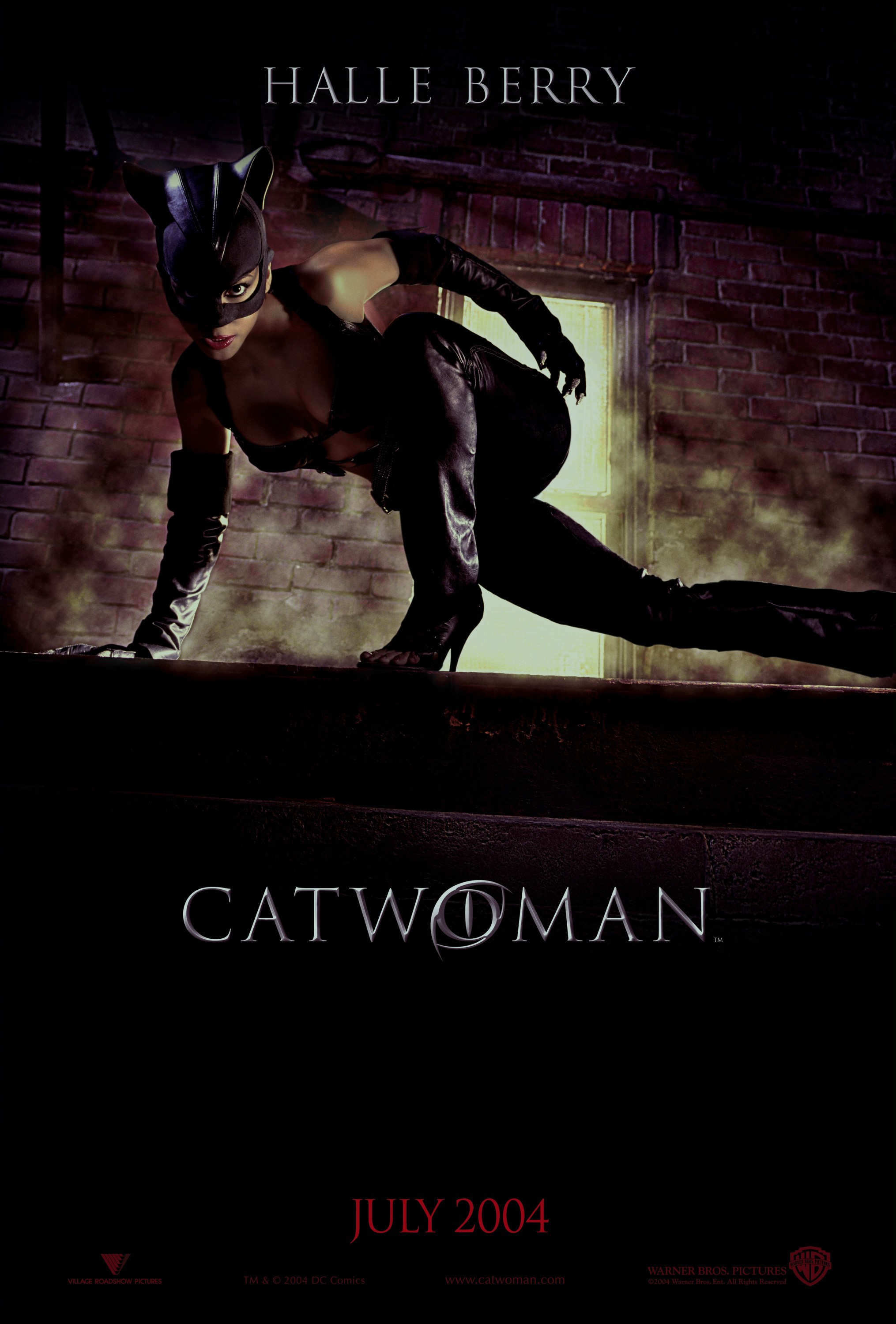
Catwoman (2004) – Film Review

“White Russian… No Ice, No Vodka, Hold the Kahlua.” – Catwoman

Widely considered one of the worst superhero blockbusters of all time, the notorious Catwoman from 2004 is a horrendous combination of an edgy 2000s music video and all of the worst aspects of a modern superhero flick. Harbouring immensely cringey, pun-based dialogue, terrible CG effects and a forced romantic subplot, among many other issues, Catwoman is a nosedive in quality from many of the beloved comic book stories featuring the famed cat burglar of the DC Universe. Still, for those who are fans of the character, there is little concern of character assassination here, as the protagonist of Catwoman is so distant from the feline that debuted in 1940 that she is virtually unrecognisable outside of the signature ears, whip and black leather outfit. As such, this seedy superhero flick is only worth seeing if you can tolerate a thrown-together story and hideous visuals merely for an ironic laugh.

Plot Summary: While toiling as a graphic designer for the cosmetics company Hedare Beauty, a mammoth corporation on the verge of releasing a revolutionary anti-ageing lotion, the shy and sensitive Patience Philips inadvertently happens upon a dark secret regarding the ointment, soon finding herself in the middle of a corporate conspiracy that eventually takes her life. But, after mysteriously reawakening with the newfound abilities of immense speed, strength, agility and ultra-keen senses, Patience transforms into Catwoman, a skilled and stealthy vigilante determined to foil her former employer’s devilish ploy…

Aside from the central (and rather superficial) underlying theme of the film, which relates to the harmful side of the cosmetics industry, naturally depicted in an over-the-top fashion with inhumane suits eager to make a profit, regardless of consumer harm, the plot of Catwoman is a formulaic yet underdeveloped superhero origin story, with most of the film revolving around the corny sequences of Patience (renamed from Selena Kyle in this iteration) discovering her numerous abilities. Similar to the unwarranted rename, this iteration of the character also possesses unexplained, supernatural abilities, unlike the original version of the character, who shared many similarities to her occasional associate, occasional foe, Batman, sporting an imposing outfit, a secret identity and exceptional fighting capabilities, yet no actual superpowers.

Becoming one of only six actors in history to own both an Oscar and a Razzie after her ‘win’ for her infamous performance in the film, Halle Berry also became the first actress to accept her Razzie in person, stepping out on stage proudly holding both Oscar and Razzie aloft, delivering the brief acceptance speech of; “I’d Like to Thank Warner Brothers for Making Me Do this Godawful, Piece of Shit Movie.” With this in mind, it’s likely not a surprise that Berry portrays Catwoman with all of the comic book cheesiness as other superhero performances of the era, from Ben Affleck’s Daredevil to Wesley Snipes’ Blade, over-delivering every line of dialogue and showcasing the cinematic sexualisation (and animalisation) of the titular character to an absurd degree, despite Catwoman’s sexually provocative side being a key part of her character in most media she appears. That said, Halle Berry does commit to her performance, and commendably so, considering that Patience spends most of her time wide-eyed and humiliatingly unhinged with a profound love of tuna. The supporting cast of Benjamin Bratt, Sharon Stone and Lambert Wilson don’t fare much better, with their performances frequently coming across as either lifeless or cartoonish.

Previously set in Catwoman’s usual home of Gotham City, with Michelle Pfeiffer reprising her role from the blockbuster sequel Batman Returns (1992) before this concept was scrapped when Pfeiffer refused to sign on, Catwoman takes place in an anonymous, grimy city that greatly resembles Gotham, yet is never confirmed to be so. Nevertheless, this iconic, fictional city’s aesthetic barely enhances the film’s visuals in the grand scheme, as the cinematography by Thierry Arbogast is continuously cluttered and visually displeasing, a flaw only exacerbated by the equally unpleasant viridescent colour palette. Moreover, the CG effects throughout the runtime are beyond appalling, appearing weightless and unconvincing, namely during scenes where Patience leaps up walls and across rooftops or when a cat is depicted via uncanny CGI, even though forty-three cats were actually trained and used for the film, seemingly removing the need for CG effects in this respect.

On another note, the soundtrack for Catwoman, primarily relying on not-so-timely songs such as Scandalous, Outrageous and Crazy in Love, is just as nostalgic as it is corny and excessively distracting. Likewise, the original score by Klaus Badelt is loud and overbearing, often unintentionally emphasising the film’s poor sound mixing, like with the clamorous track; Felineious Assault.

With Catwoman, it’s clear that the strangely mononymous French director Pitof (Vidocq, Fire & Ice: The Dragon Chronicles) set out to make a film as stylish and sensual as possible within the boundaries of its rating. And, while much of the film’s style is evidently influenced by Pitof’s background in outlandish, sultry music videos, blockbusters generally don’t rely on constant hyperactive shots, and Catwoman is a testament to why.

In summary, Catwoman is a baffling, dated mess of a superhero-led blockbuster, which is unfortunate, given how significant of a character Catwoman is, repeatedly playing a pivotal role in stories across the DC Universe, both featuring the Caped Crusader and otherwise. Thus, it’s not an exaggeration to say that Catwoman is a ‘cat-astrophe’ in practically every aspect, but definitely as an adaptation. Rating: 1/10.

catwoman_ver2_xxlg

The Darkest Hour (2011) – Film Review

“What’s the Dress Code for the End of the World? Jacket, No Tie?” – Sean

Initially intriguing yet ultimately vacuous, 2011’s The Darkest Hour is an apocalyptic blockbuster that will seem like familiar territory for most with its relatively straightforward premise of a group of survivors escaping a hostile, extraterrestrial foe, its only genuinely innovative ideas appearing in the form of its setting; Moscow, and the unique, electricity-based abilities/appearance of its unworldly invaders. Rammed with immensely corny dialogue, uninteresting characters and cheap-looking set design, The Darkest Hour fails on most fronts, leaving its title to ironically reference the fact that the film’s initial release may have been the ‘darkest hour’ for all the careers of those involved in its production.

Plot Summary: When American software developers Sean and Ben travel to Moscow to sell their latest program to investors, their Swedish associate Skyler double-crosses them, forcing them out of the deal. In an attempt to drown their sorrows, the duo head to a nightclub. Until, out of the blue, the Russian population is startled by the appearance of mysterious rays in the sky, soon discovering that the lights are, in actuality, an extraterrestrial force invading Earth and utilising our power supply to eradicate all mankind…

The inclusion of the Russian setting and, by proxy, Russian crew/extras can be attributed to producer Timur Bekmambetov, who after becoming involved in the project, allowed the production to use Moscow as a backdrop instead of the typical U.S. locations, predominantly due to Bekmambetov owning his own production company in the city, known as Bazelevs, where the majority of the film was shot, with the crew consisting of roughly 30% Americans and 70% Russians. In conjunction with director Chris Gorak (Right at Your Door), who ordinarily serves as an art director/production designer on sets, harbouring minimal experience as a director, the duo aimed to make a film that would thrill audiences and feel distinct via its foremost setting, but evidently, they did not achieve this.

The central cast of Emile Hirsch, Max Minghella, Olivia Thirlby, Rachael Taylor and Joel Kinnaman are strong names, but unfortunately, all portray rather simplistic and indistinguishable characters. Fortunately, the audience is provided with a few leads that hint towards the impending extraterrestrial invasion as protagonists Sean and Ben prepare to close the deal for a party-spot program they’ve created, only to find that their alleged business associate, Skyler, has ripped them off, stealing their idea and pushing them out. Supposedly, after putting much time and effort into their project, the pair idiotically did nothing to protect their intellectual property, merely moping around a nightclub until they encounter American traveller, Natalie, her Australian friend Anne, as well as Skyler, whom they shepherd into their group during the initial raid in spite of his earlier betrayal with next-to-no drama.

Shot in 3D as opposed to going through post-conversion. The Darkest Hour‘s production was originally fifty-eight days, with a further eight to nine days being added onto the production schedule once it was decided the film would be shot in 3D. Yet, throughout the runtime, these 3D effects barely register due to so much of the film taking place in dimly-lit environments (frequently depicted by shabby sets), the only real highlight of the 3D effects being the eye-catching opening title sequence. Furthermore, despite The Darkest Hour‘s constant attempts to bombard the audience with disintegrating civilians, handcrafted weapons and adrenalin-fulled chases across deserted, dust-covered streets, many of the film’s action sequences are fairly lacklustre, with the cinematography by Scott Kevan doing little to enhance the cinematic ennui.

From tracks like Northern Lights to Here’s Our Mission and Man Overboard, the film’s orginal score by Tyler Bates is occasionally effective but not all that memorable, often feeling just as gaudy yet creatively uninspired as the visuals, barring the score’s recurring use of bellowing electronic rhythms and propulsive synthesised experiments, serving, in a way, as an audible extension of the eerie, electrical sound design that accompanies the belligerent extraterrestrials.

As mentioned many times, the film’s unusual alien species only ever appear in some form of electrolocation, sensing the electricity in living beings by generating electrical fields. A downside of this ability, however, is that the extraterrestrials cannot see through any type of glass, as the transparent material is a poor conductor of electricity. This fascinating concept is what makes the aliens stand out when compared to invaders from other sci-fi blockbusters, especially since they are protected by electrical shields and can vaporise their victims instantaneously. As such, this imperceptible, seemingly unstoppable force draws the audience in through mystery and uncertainty, eliminating much of the population of Moscow overnight. That said, the extraterrestrial’s unpredictable, electrical abilities do begin to break down the longer the central group of survivors outwit them, given the group should lack any of the skills or knowledge needed to find a way out of their precarious situation. Of course, another minor issue arises in their colour as the aliens take on a glowing golden appearance, whereas electricity, in reality, is colourless.

In summary, The Darkest Hour is a sci-fi blockbuster that falters in its many attempts to propel its audience past their inevitable plot-related questions, the occasional wobbly acting and the easily foreseeable climax. While the film does include a handful of intriguing ideas and excellent electricity-affiliated visuals (alongside a periodic usage of real-world science), The Darkest Hour is obviously not the ‘electrifying’ experience the filmmakers intended it to be. Rating: 3/10.

darkest_hour_ver3_xxlg-transformed

Terminator: Dark Fate (2019) – Film Review

“Come With Me or You’ll Be Dead in Thirty Seconds…” – Grace

After bringing the titular, wise-cracking anti-hero to the silver screen with his 2016 directorial debut; Deadpool, filmmaker Tim Miller lept onto a series with evenly iconic characters, the Terminator franchise. Kicking off with the original sci-fi-action classic in 1984, Miller’s entry in the series; Terminator: Dark Fate, released in 2019, functions as both a sequel to the first two installments and a reboot of the franchise, aiming to breathe new life into this ageing sci-fi saga. Unfortunately, however, Terminator: Dark Fate is an unremarkable, mean-spirited and overly familiar affair, lacking thrilling, fast-paced action sequences and imaginative concepts, all whilst occasionally spitting in the face of the series’ most dedicated fans through its handful of baffling creative decisions.

Plot Summary: Twenty-five years after the elimination of Cyberdyne, the company that would one day create the world-ending network of supercomputers known as Skynet, another seemingly unimportant human, this time car assembly worker, Dani Ramos, is inexplicably targeted by a Terminator from the future as the shapeshifting, nearly indestructible, REV-9, is sent to eliminate her in present-day Mexico City. Luckily for Dani, a fearless protector also arrives from the future, the bionically-enhanced Resistance solider, Grace, along with a custodian from the past, a bitter, armed-to-the-teeth Sarah Connor…

Disappointed and uninvolved with Terminator 3: Rise of the Machines (2003), Terminator Salvation (2009) and Terminator Genisys (2015), producer James Cameron considers Terminator: Dark Fate to be a direct sequel to his projects; The Terminator (1984) and Terminator 2: Judgment Day (1991), remarking that while he was generally supportive of those films due to his close friendship with actor Arnold Schwarzenegger, he jumped at the offer to produce Terminator: Dark Fate, seeing it as an opportunity to oversee his franchise’s future. However, Cameron’s inherently controlling attitude did come with drawbacks as he claimed that, although he was involved in the writing process, he didn’t interfere with Miller’s oversight and never visited the set. Yet, Miller recalls things differently, claiming Cameron stepped in for some uncredited editing, finding his cut somewhat rough and prolonged. Cameron also admitted that he and Miller had their share of disagreements, ultimately leading Miller to state it’s unlikely he would work with Cameron again. These creative differences are noticeable in the final product as there is a shortage of polish in some areas, primarily in the subpar CGI and conversational dialogue, which is often corny and crass.

Blending the original’s cast with fresh faces, the central cast of Linda Hamilton, Arnold Schwarzenegger, Mackenzie Davis and Gabriel Luna all do a serviceable job of portraying their respective characters, regardless of whether they are humans or machines, newcomers or returning legends. That is, excluding Natalia Reyes as Dani Ramos, who frequently fails to believably portray Dani as a fearless and firm figure due to her short stature and rather weak line delivery.

Standing as the only Terminator film where none of the action takes place in Los Angeles, Ken Seng’s cinematography is one of the few positive aspects of Terminator: Dark Fate, as the camerawork is dynamic and favourably supports the numerous action sequences, making extensive use of the latest setting for the sci-fi saga; Mexico City. Alas, the action set pieces aren’t as arresting, lacking the physicality and grittiness of the series’ first two entries, despite the admirable inclusion of their bloody brutality.

The original score by Tom Holkenborg (a.k.a. Junkie XL) is habitually loud and imposing, initiating with the track; Terminated, and continuing with tracks like My Name Is Dani, The Wall and Screaming Turbines, the foremost of which softens the score up via Mexican-style guitars, lending a lighter tone to some scenes. Still, it likely goes without saying that, although adequate, the soundtrack doesn’t hold a candle to the original Terminator score, even if the film attempts to earn nostalgia points by implementing its well-known mix of synth, drums and electronics whenever possible, including the audible motif; “Dun Dun Dun Dun Dun.”

Spoilers ahead in this section for those who wish to go into their viewing blind, but I’m sure many are wondering where the significant character, John Conner, is in all of this. Well, in the opening scene of the film, young John is actually shot dead by a Terminator. Whilst shocking, this moment not only deprives the audience of any screen-time with the fan-favourite character, but also renders the conclusion of the second entry meaningless. Moreover, with Skynet no longer existing, thanks to the events of that film, the screenplay conjures up a ‘new’ antagonist with Legion. This almost indistinguishable, equally hostile A.I. force is just far too similar to what the series has attempted previously to appear innovative, alongside its use of an already comparable narrative structure.

In summary, Terminator: Dark Fate is just as uninspired as its bland sub-title suggests, often feeling like a sequel/reboot made out of obligation than anything else. And, with the franchise’s previous restart attempts in Terminator Salvation and Terminator Genisys, each written to be the first of a trilogy before that idea was scrapped due to a lack of critical and commercial success. Terminator: Dark Fate is yet another series revamp succumbing to a disappointing box office gross and lacklustre reviews, the rough outline written for its two sequels being discarded, leaving the future of the franchise uncertain and, in my opinion, indicating that the Terminator franchise needs to be ‘terminated’ itself, evidently running low on ingenuity and relevance. Rating: 3/10.

terminator_dark_fate_xxlg

Gods of Egypt (2016) – Film Review

“Every Night the Battle Between Chaos and Creation Must Go On. Otherwise, the World Will Be Destroyed…” – Ra

Based on the Egyptian myth; The Contendings of Horus and Set, a mythological tale from the Twentieth Dynasty of Egypt found in the pages of a biblical text, recounting a battle between Horus, a god who takes the form of a falcon, and Set, a sky god, lord of the desert and master of storms, disorder and warfare, Gods of Egypt, released in 2016, is a visually overblown, poorly plotted and needlessly CGI-heavy fantasy blockbuster. Playing fast and loose with its world-building and the Egyptian mythology it’s based upon, Gods of Egypt squanders much of its talented cast and admirable visual effects in exchange for shallow, action-lead spectacle. As a result, the film has largely (and unsurprisingly) been lost to the sands of time, similar to many other lustreless blockbusters of the 2010s.

Plot Summary: In an alternate Ancient Egypt where the world is flat and Egyptian gods live amongst humans, differing from mortals by their tremendous height, golden blood and ability to transform into their animalistic forms, a young thief, Bek, and his beloved girlfriend, Zaya, are attending the coronation of Horus. But, during the ceremony, Horus’ father, Osiris, is murdered by his envious brother, Set, who seizes the throne and declares a new, brutal regime…

Directed by Alex Proyas (The Crow, Dark City, I, Robot), Gods of Egypt is, as of now, Proyas’ most recent directorial effort, as the critical and commercial failure of the film (along with its casting controversy, as the film was criticised for casting predominantly caucasian actors), seriously hindered his reputation. Consequently, he has only directed a couple of short films since. While this is a cruel turn of fate for Proyas, who has demonstrated in the past that he can helm entertaining blockbusters, Gods of Egypt is evidently desultorily directed, frequently lacking polish, dramatic weight, comedic timing and vital fragments of exposition, especially when considering the film’s immense budget of over £110 million.

Ranging from uninspired to cringe-worthy, the performances throughout Gods of Egypt are inconsistent, to say the least, as Nikolaj Coster-Waldau’s valiant Horus lacks the balance of arrogance and self-pity many of his previous performances retain, whilst the performances of Brenton Thwaites, Elodie Yung, Rufus Sewell and the late Chadwick Boseman come across as superficial and exaggerated, further facilitated by their half-baked characterisation. Moreover, as the detestable Set, Gerard Butler struts, growls and bellows like an enraged grizzly bear, possessing none of the self-awareness that could have made such an over-the-top performance more enjoyable.

Primarily shot in the Australian desert, as filming in the Sahara Desert was considered too dangerous, the cinematography by Peter Menzies Jr. occasionally allows for pleasant shots of the desert landscapes and their imposing Egyptian structures. However, many of these shots are often spoilt by the enormous barrage of CGI, making every frame appear glossy and oddly sterile, even during scenes where gigantic crowds are present. Additionally, while terrifyingly indelible creatures are not as frequent in Egyptian mythology as they are in, say, Greek or Norse mythology, Gods of Egypt still features a handful of stately creature designs, namely, the massive, serpentine creature known as Apophis, an Egyptian deity of chaos that is commonly depicted as a snake in Egyptian hieroglyphs.

On another note, it’s fascinating how, despite having no evidence as to what music in Ancient Egypt sounded like, composers have adopted a specific style to depict that location and era, likely beginning with 1954’s The Egyptian, before enduring through dozens of other scores over the years, including Land of the Pharaohs (1955), The Prince of Egypt (1998) and The Mummy (1999). In regard to the orginal score for Gods of Egypt, composer Marco Beltrami weaves several Egyptian-esque themes in and around each other, as the two central deities, Horus and Set, harbour their own motifs, with Horus’ motif sounding valiant, conveying him as the more sympathetic of the two, whilst Set’s motif is far darker and shares many similarities to your more typical ‘villain themes,’ built around intense, descending brass lines. The problem, however, is that all of these tracks aren’t that memorable or unique in spite of their functionality, with most of the score just consisting of staggeringly generic action pieces. 

Due to nearly all of the film heavily utilising visual effects, it’s not surprising that the considerable CG effects implemented throughout the runtime are one of the few shining aspects of Gods of Egypt. Aside from a handful of shots which have aged questionably, most of the visual effects are impressive. In fact, one of the more unusual challenges the visual effects team faced during post-production was placing the cast inside an array of virtual environments, as most of the scenes were shot against a bluescreen. An added complexity came in the form of the size differences between gods and mortals, as the gods stand around nine feet tall, so the visual effects team had to constantly consider these size variations.

In summary, Gods of Egypt is an insipid blockbuster lacking originality, excitement and entertainment value. The film merely meanders through waves of corny dialogue, mind-numbing, CGI-reliant action sequences and a monotonous, drawn-out story brimming with contrivances and the odd interesting concept. Once again proving, alongside other poorly-received blockbusters, such as Justice League (2017), Independence Day: Resurgence (2016) and Transformers: The Last Knight (2017), that an enormous budget doesn’t necessarily yield enormous success. Rating: low 3/10.

gods_of_egypt-p1025720

Jumanji: Welcome to the Jungle (2017) – Film Review

“A Game for Those Who Seek to Find… a Way to Leave Their World Behind…” – Spencer

Seeking to modernise the premise of the 1995 fantasy-adventure classic; Jumanji, a striking premise first presented in the children’s picture book of the same name, written and illustrated by Chris Van Allsburg. 2017’s Jumanji: Welcome to the Jungle switches the concept of an enchanted, four-piece board game for a ’90s-style video game cartridge, rooting itself in well-known video game tropes. And while not quite as enjoyable as the original flick, in my opinion, Jumanji: Welcome to the Jungle is still an entertaining yet undemanding soft reboot that manages to stand on its own two feet as a jungle-set adventure, utilising its charming cast and humorous moments effectively under the capable direction of Jake Kasdan (Zero EffectOrange CountrySex Tape).

Plot Summary: After Jumanji, the bewitched jungle-themed board game, receives a mysterious modification, converting the wooden parlour game into a 1990s video game cartridge, the game is stumbled upon by high school students; Spencer, Martha, Fridge and Bethany, who are promptly pulled into its perilous world. Now, in order to return home, the group must inhabit their chosen avatars, survive the cadaverous creatures and complete the game…

Despite the original Jumanji receiving fairly mixed-to-positive reviews both when it was initially released and in the years since, recounting the simple yet captivating story of Alan Parrish, a troubled boy who comes across a cursed board game that releases lions, elephants, giant spiders and carnivorous plants into the real world to pursue its unsuspecting players. Jumanji: Welcome to the Jungle remains in the same continuity, continuing on from Alan, Sarah, Judy and Peter’s adventure by having a separate group of characters unwillingly play the game. To keep the franchise feeling fresh, however, Jumanji: Welcome to the Jungle cleverly inverts the premise of the original, transporting the characters (and, by extension, the audience) into the treacherous world of Jumanji, where many references to the original flick can be seen, including a cluster of overgrown statues modelled after the iconic board game pieces and a handcrafted hut that Alan resided inside when he was trapped in Jumanji, serving as a sweet yet modest tribute to the late Robin Williams, who portrayed the older iteration of the character.

This time around, the protagonists consist of four high schoolers serving detention together before they are transported into Jumanji following their discovery of the video game’s cartridge in their school’s storage room. Spencer, a skinny, awkward gamer becomes Dr. Smolder Braveston, portrayed by Dwayne “The Rock” Johnson, the introverted, Martha, becomes Ruby Roundhouse, portrayed by Karen Gillan, the tall and muscular jock, Fridge, becomes Franklin “Moose” Finbar, portrayed by Kevin Hart, and the would-be popular girl, Bethany, becomes Professor Shelly Oberon, portrayed by Jack Black. As can be expected with an all-star cast such as this, everyone possesses terrific chemistry with each other and embodies their real-world counterparts sufficiently whilst playing into the obvious humour in each of the teens altering into entirely different individuals, particularly in the case of Bethany, who transforms from an Instagram-obsessed teenage girl to an overweight, middle-aged cartography professor. Unfortunately, the film’s power-hungry antagonist, Van Pelt, doesn’t fare as well, lacking depth, fearfulness and presence in spite of Bobby Cannavale’s serviceable performance.

Taking advantage of the naturally beautiful scenery of Honolulu, Hawaii, specifically within the Kualoa Ranch nature reserve, Jumanji: Welcome to the Jungle makes exceptional use of its true-to-life locations and vibrant sets to immerse the audience in the precarious world of Jumanji, exhibiting the immense jungles, massive waterfalls and vast pastures that are only hinted towards in the original flick, even if the actual cinematography by Gyula Pados is somewhat flavourless.

Through tracks such as Brantford High and A Test of FriendshipJumanji: Welcome to the Jungle‘s original score by Henry Jackman constructs a clear contrast between Jumanji and the real world, as the formerly-mentioned tracks are contemporary and uplifting in nature, while tracks like Digging Up the PastThe Legend of the Jewel and The Power of Bravestone, are much more exhilarating and adventure-esque, going so far as to bring back the “Jumanji Drums,” a staple of the original Jumanji soundtrack.

When it comes to action sequences, Jumanji: Welcome To The Jungle isn’t likely to impress anyone, leaning more on the amusing moments between its cast than its scenes of hand-to-hand combat or hippopotamus ambushes. Nevertheless, most of the action throughout the runtime is passable, with one fight sequence featuring Dr. Braveston even playing into the video game truism of fighting off multiple enemies at once as the playable character. Additionally, although almost all of the CGI in the film is convincing, it’s regrettable that Jumanji: Welcome to the Jungle harbours very few practical effects, given how heavily praised the physical elements of renowned adventure flicks like The Goonies (1985) and the first three instalments of the Indiana Jones franchise are today.

In summary, whilst it’s doubtful that Jumanji: Welcome to the Jungle will be recognised for years to come as a groundbreaking 2010s blockbuster, it is a comical flick with defects, functioning as a superficial yet enjoyable soft reboot/stand-alone sequel that innovatively expands on the ideas introduced in the original Jumanji. In a bizarre way, Jumanji: Welcome to the Jungle almost feels like a self-actualisation teen flick set against the unusual backdrop of an adventurous video game due to its infrequent high school setting and marginal character growth. Rating: 6/10.

JMNJ_INTL_FNL_1SHT_LK4_04.indd

The Lost World: Jurassic Park (1997) – Film Review

“Oh, Yeah. Oooh, Ahhh, That’s How It Always Starts. Then Later There’s Running and Screaming…” – Dr. Ian Malcolm

Strangely dubbed; The Lost World: Jurassic Park, a title that appears to be out of order in its literary arrangement. This adventurous sequel to the timeless classic; Jurassic Park, released in 1993, was once among the most anticipated films of the 1990s. Yet, upon its initial release in 1997, The Lost World: Jurassic Park disappointed many for not living up to the lofty expectations set by the original, including Spielberg himself, who expressed disappointment with the film after becoming increasingly disenchanted with it during production. Nevertheless, I have always considered The Lost World: Jurassic Park somewhat underrated, harbouring an intriguing story and a more foreboding tone/aesthetic, which offsets some of its screenplay-centric faults.

Plot Summary: Four years after the catastrophe of Jurassic Park, the now-humbled John Hammond, strives to redeem himself by studying the well-being of the dinosaurs roaming free on InGen’s secondary site for bio-engineering, the secluded island of Isla Sorna. While assembling his team for this study, Hammond contacts the reluctant Dr. Ian Malcolm to convince him to join the expedition. Meanwhile, Hammond’s ignorant nephew, Peter Ludlow, intends to use his newly-obtained position as the CEO of InGen to capture as many of the island’s prehistoric species as possible for a new attraction opening in central San Diego…

Similar to the original film, The Lost World: Jurassic Park is loosely based on the novel of the same name by Michael Crichton and helmed by celebrated director Steven Spielberg. So, as is to be expected, under this masterful direction, The Lost World: Jurassic Park boasts several edge-of-your-seat moments, the stand outs of which are a scene that features a Tyrannosaurus Rex tandem bashing a mobile trailer over a cliff, as well as a sequence in which a Tyrannosaurus Rex rampages through San Diego destroying everything in its path, morphing the audience’s perception of dinosaurs from captivating, awe-inspiring creatures to truly terrifying prehistoric beasts, following the incident on Isla Nublar. However, as the runtime continues, it becomes increasingly evident that Spielberg desperately wanted to integrate as many of his own ideas into the framework of Crichton’s sequel novel as he could. A desire that ultimately results in the narrative becoming unfocused, eventually losing itself almost entirely near the end of the second act to concentrate on exciting dinosaur sequences.

Returning from the original film is Jeff Goldblum as Dr. Ian Malcolm, the remarkably entertaining pessimistic mathematician with a dry sense of humour. Accompanying Malcolm this time around is his adolescent daughter, Kelly Curtis, portrayed by Vanessa Lee Chester, and his palaeontologist girlfriend, Sarah Harding, portrayed by Julianne Moore, in addition to the other members of Hammond’s research team; wildlife photographer, Nick Van Owen, portrayed by Vince Vaughn, and tech expert, Eddie Carr, portrayed by Richard Schiff. Whilst every cast member turns in a solid performance, however, there is undoubtedly a lack of well-defined characters in The Lost World: Jurassic Park, as every character has a shortage of development beyond the dexterities they bring to their team. Roland Tembo, portrayed by the late Pete Postlethwaite, is perhaps the most compelling character of this particular entry in the series, being depicted as a jaded big-game hunter, determined to capture a male Tyrannosaurus Rex, single-handedly.

Swapping out the tidied facilities and tropical foliage of Jurassic Park for dim lighting, expansive forests and more intense violence, The Lost World: Jurassic Park‘s visuals are substantially darker than its predecessor, corresponding with the more downbeat tone of the narrative. Furthermore, the cinematography by Janusz Kaminski retains a tremendous sense of movement, while the film’s abundant use of marvellous CG effects, detailed miniatures and impressive life-sized animatronics effectively bring the dinosaurs (and a handful of locations) to life, all whilst demonstrating how far CGI had come since the first instalment in the franchise in ’93.

Once again composed by John Williams, the original score for The Lost World: Jurassic Park only contains minor hints towards the iconic theme and secondary motifs of Jurassic Park. Instead, the score houses much of its own appeal (not too dissimilar to how the visuals differ from the original film) as Williams constructs a different thematic and textural landscape for InGen’s Site B, a.k.a. Isla Sorna. As such, the soundtrack sheds much of the amazement and beauty of John Hammond’s prehistoric theme park for a more ominous soundscape. Excluding the film’s unfairly neglected theme; The Lost World, which is more wildlife adventure-inspired.

On a separate note, whilst its amusing to see franchise-staple dinosaurs like the Tyrannosaurus Rex and the Velociraptors return in The Lost World: Jurassic Park, I’ve always felt its a shame the filmmakers didn’t attempt to introduce a selection of lesser-known dinosaurs, especially with how many fantastic choices there are, as the carnivorous Alioramus, Majungasaurus and Spinosaurus (which would later appear in 2001’s Jurassic Park III), all would’ve served as significant threats and upped the ante for this much-anticipated sequel.

In summary, while it truthfully does pale in comparison to the original film, there is plenty to appreciate about The Lost World: Jurassic Park when viewed from a different perspective, as the film retains an overabundance of spectacle and exceptional visual effects, affirmed by the film’s Academy Award nomination for Best Visual Effects in 1998. Essentially, The Lost World: Jurassic Park is a perfect example of just how difficult it can be to craft an engaging sequel to a beloved cinema-altering blockbuster. Rating: 6/10.

the_lost_world_jurassic_park-p196804

Men in Black: International (2019) – Film Review

“Always Remember: The Universe Has a Way of Leading You to Where You’re Supposed to Be at the Moment You’re Supposed to Be There.” – Agent High T

Emerging several years after the entertaining yet faulty; Men in Black 3Men in Black: International, released in 2019, serves as a soft reboot of the series, aiming to bring the undisclosed extraterrestrial defenders back for another similarly amusing, alien-blasting adventure. However, predominantly due to its outlandish story, trite humour and absurdly horrendous dialogue, Men in Black: International rarely reaches the heights of the 1997 sci-fi-comedy classic, nor the later, lesser entries in the well-known franchise, even with its noteworthy stars of Chris Hemsworth and Tessa Thompson carrying over much of their on-screen chemistry from 2017’s Thor: Ragnarok.

Plot Summary: After sharing an eye-opening encounter with an extraterrestrial as a child, Agent M, the M.I.B.’s newest probationary recruit, finds herself under the wing of Agent H, a past-his-prime hero of the closemouthed organisation, operating at the London branch. Meanwhile, a duo of shape-shifting alien assassins arrive on Earth, seeking a devastating super-weapon that could place the entire galaxy at risk…

Based on The Men in Black comic book series, created and written by Lowell Cunningham, Men in Black: International is the first film in the franchise not directed by Barry Sonnenfeld. Instead, the film was directed by F. Gary Gray (FridayThe NegotiatorStraight Outta Compton), making Men in Black: International the second Gray-directed sequel to a Sonnenfeld flick, the first being; Be Cool in 2005, a sequel to 1995’s Get Shorty. Needless to say, this change in leadership (and screenwriters) could be seen as more of a negative than a positive, as the film lacks much of the disturbing violence and revolting practical effects present in the original trilogy as extensively as the satire. Furthermore, Men in Black: International‘s narrative leaves much to be desired, appearing overly simplistic and somehow equally convoluted, barring a couple of interesting concepts, such as a portal for transporting alien refugees or a mole within the M.I.B. organisation. The film is dragged down further by its ever-present cringey dialogue, which is near vomit-inducing in its many attempts to seem relevant. To its credit, Men in Black: International does, at least, manage to expand the universe of the films by introducing various international branches of the covert organisation, as its title suggests.

With Will Smith and Tommy Lee Jones openly stating they would not return to the franchise for Men in Black: International, new leading actors/actresses had to be chosen. Still, they do appear in the film briefly, having long passed into legend as agents in a dramatised painting in the M.I.B. London head office. Regrettably, however, the revamped cast of Chris Hemsworth, Tessa Thompson, Liam Neeson, Rafe Spall and Rebecca Ferguson are continually overblown in their performances, bouncing from scene to scene with ample energy regardless of tone. This issue is only made worse by the characterisation, which frequently forgets to provide the characters with motivations for their actions or any semblance of depth beyond the basics we learn of them, with Agent H being the foolish, once-hotshot agent of M.I.B. having previously saved Earth from an extraterrestrial invasion, whilst Agent M has desired to be an agent of the organisation since she was young.

Immaculate and radiant yet unimaginative, the cinematography by Stuart Dryburgh shares more of a visual resemblance to superhero blockbusters from the Marvel Cinematic Universe than any previous Men in Black instalment. Likewise, dissimilar to earlier entries in the franchise, Men in Black: International‘s plethora of extraterrestrial designs are dreadfully cartoonish in appearance, lacking the individuality and repulsive naturality of the series’ previous designs, all of which are unfortunately brought to life exclusively via CGI, with very few costumes/prosthetic make-up pieces employed. Having said that, there is one exception to this defect; the designs of the primary antagonists, the Hive, who retain a visually striking design, taking on the appearance of luminous, orange star clusters in a human physique.

In keeping with the rest of the Men in Black series, the original score is composed by Danny Elfman and newby Chris Bacon, who strive to capture the same musical spirit as previous franchise instalments through tracks like Job InterviewHere Comes Trouble and End Credits. And, for the most part, the composers are successful in this goal as the score sounds reminiscent of the original trilogy’s soundtracks while thankfully avoiding any lousy endeavours to modernise the series’ iconic theme.

When it comes to the humour, it’s apparent that there is a hefty deficiency of wit and surprise within the screenplay. As a result, most of the jokes throughout the runtime are either sluggish, irritating or immature. Additionally, during one particular scene, set within a hidden, extraterrestrial-filled nightclub, there is a weirdly out-of-place gag where Agent H attempts to spitefully manipulate Agent M into pleasuring Vungus, a party-hungry alien visiting Earth, which will surely make some audience members feel uncomfortable.

In summary, the mere notion of a Men in Black revival without the presence of Smith or Jones seems like an unmistakably terrible idea, comparable to how another swashbuckling Pirates of the Caribbean sequel without Johnny Depp’s inclusion would seem incomplete, stand-alone story or not. Even with its original cast in attendance, however, Men in Black: International likely still would’ve failed on account of its many other shortcomings, grinding its cast’s chemistry through the gears of a sci-fi franchise running low on reasons to persist. Rating: 3/10.

men_in_black_international-p1107879

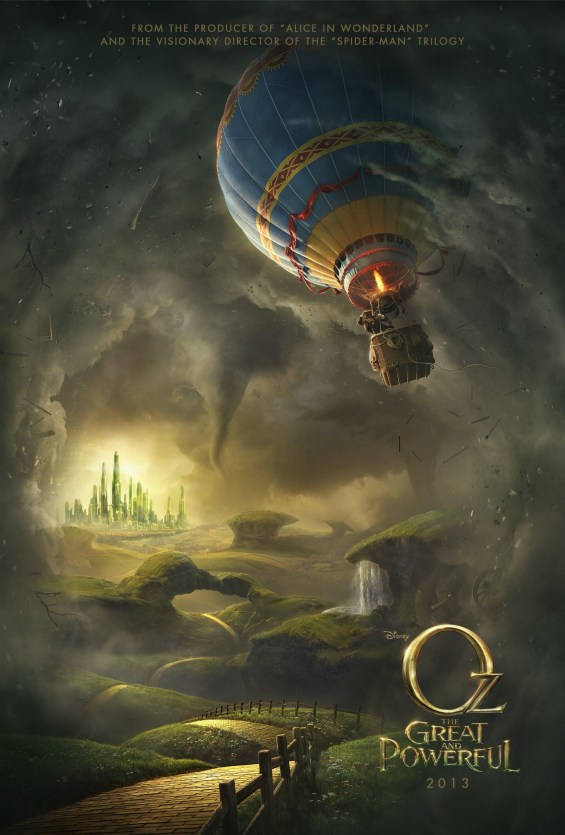
Oz the Great and Powerful (2013) – Film Review

“I Don’t Want to Be a Good Man, I Want to Be a Great One.” – Oscar ‘Oz’ Diggs

Since its release in 1939, the illustrious fantasy-musical; The Wizard of Oz, an adaptation of L. Frank Baum’s beloved children’s novel; The Wonderful Wizard of Oz, has been engraining itself into the memories of adults and youngsters alike through its catchy melodies, imaginative world-building and groundbreaking practical effects. In 2013, Walt Disney Pictures sought to return to the Land of Oz with Oz the Great and Powerful, a prequel to the novel and, in a way, its silver screen counterpart (despite ownership of the harmonious classic belonging to Warner Bros. Pictures), with celebrated director Sam Raimi (The Evil DeadSpider-ManDoctor Strange in the Multiverse of Madness) attached to helm the project, ascertaining its potential as an enchanted prequel. Shortly after its release, however, most seem to forget about the film, which is unfortunate given that Oz the Great and Powerful is a largely enjoyable fantasy adventure that pays homage to the iconography and timeless sense of wonder present in the original musical while avoiding an absence of its own, unique ideas.

Plot Summary: After Oscar ‘Oz’ Diggs, a small-time circus magician with dubious ethics, is hurled away from his dusty abode in Kansas to the vibrant Land of Oz, he believes he’s hit the jackpot as he’s told to assume his rightful place as monarch of Emerald City. But, when Oscar meets the sisters of Theodora and Evanora, who aren’t entirely convinced that he is the great wizard their prophecy has spoken of, Oscar is summoned on a quest to slay the Wicked Witch that threatens Oz and prove his worth…

Whilst Oz the Great and Powerful may seem like just another cinematic interpretation of the whimsical Land of Oz, Walt Disney Pictures actually had to be very cautious with what aspects of the story they utilised, on account of Warner Bros. Pictures owning the rights to specific elements of The Wizard of Oz, as previously mentioned, including the ruby slippers Dorothy Gale dons throughout the runtime. These restrictions even extended to the particular shade of green used for the Wicked Witch’s skin, for which Disney employed what its legal department considered a sufficiently different shade dubbed; “Theostein,” a portmanteau of Theodora and Frankenstein, yet Disney could not use the signature chin mole from Margaret Hamilton’s renowned portrayal of the Wicked Witch of the West.

In terms of the actual narrative, Oz the Great and Powerful tells the origin of the titular Wizard of Oz, whom we all know from previous iterations to be a fraud. Before he was viewed as a mythical wizard, Oscar Diggs was merely a talented illusionist and an egotistical, womanising con man performing at a travelling circus in Kansas. ‘Oz’ (as his friends call him) underpays his assistant and recruits many beautiful women to appear in his performances, manipulating them with lies and empty romantic gestures. However, while Oscar receives an abundance of characterisation during the story and is evidently a gifted magician, James Franco’s performance is primarily to blame for the character’s shortcomings, as Oscar suffers from an underbaked character arc and a lack of empathy in certain scenes, suggesting that Franco lacks the charisma necessary to win over the audience amid Oscar’s immense arrogance. Dissimilarly, the supporting cast of Mila Kunis, Rachel Weisz, Michelle Williams, Zach Braff and Joey King are all sufficient in their varied roles, human and otherwise.

Recreating imagery like the Yellow Brick Road and the Emerald City in addition to introducing a handful of never-before-seen locations, such as a miniature village compromised of larger-than-life crockery and ceramic residents, known as China Town. Oz the Great and Powerful impressively brings the Land of Oz to life via a combination of expansive sets and green screens. Similar to the original musical, Oz the Great and Powerful also opens in a colourless, tight aspect ratio for the Kansas sequences before widening out and blossoming into colour once Oscar enters the Land of Oz, making for an unforgettable visual juncture. Moreover, the cinematography by Peter Deming is frequently effective in implementing Sam Rami’s familiar style of camerawork, as the camera is repeatedly rocketing towards characters’ faces, particularly when they’re reacting to the surprising number of jump-scares.

Although the original score for Oz the Great and Powerful by Danny Elfman isn’t one of the composer’s finest, nor is it exceedingly memorable, tracks, like Main TitlesA Strange World and The Bubble Voyage are all remarkably uplifting, whereas the orchestral tracks; Bad Witch and Witch Fight, are much more ominous in tone, allowing Elfman to exhibit his grand, gothically melodic roots.

On a separate note, all of the CG effects throughout Oz the Great and Powerful hold up well for their age, aside from a few wide shots where the environment surrounding the characters appears excessively distant and overly bright. And, whenever physical sets are employed instead of green screens, they are magnificently multicoloured and extensive.

In summary, while Oz the Great and Powerful suffers from some tonal inconsistency and an underdeveloped character arc for its protagonist, the film retains enough spectacle, wit and creativity to be entertaining in its own right as a bewitched prequel. Faithfully reproducing iconic imagery like flying primates, a golden-bricked road and a cackling, broom-riding Wicked Witch, I feel nearly every fanatic of The Wizard of Oz (and/or its source material) will find amusement in this non-musical, fantasy blockbuster. Rating: low 7/10.

oz_the_great_and_powerful-p680832

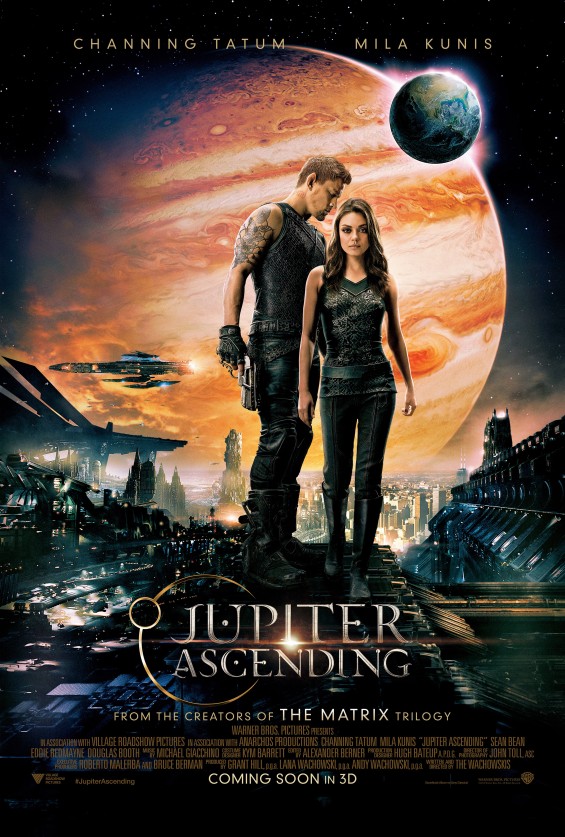
Jupiter Ascending (2015) – Film Review

“I Will Harvest That Planet Tomorrow Before I Let Her Take It From Me.” – Balem Abrasax

A sci-fi blockbuster from the writer-directors behind; Cloud AtlasV for Vendetta and The Matrix trilogy, Lana Wachowski and Lilly Wachowski, a.k.a. the Wachowskis. 2015’s Jupiter Ascending is a rarely exciting, often laughable science fiction flick that attempts to explore a number of interesting concepts yet frequently fails on almost every other front. Unquestionably the singular work of the Wachowskis, Jupiter Ascending exhibits many of the filmmakers’ worst tendencies, recounting a campy, overblown spectacle of a story that retains barely any of the visionary leadership that drove some of their earlier filmographies to be held in such high regard.

Plot Summary: Born under a night sky, with signs predicting she was destined for great things, Jupiter Jones dreams of the stars but awakens to the cold reality of a dead-end cleaning job in Chicago. But, when Caine Wise, a genetically engineered ex-military bounty hunter, arrives on Earth to track her down, Jupiter begins to realise what the universe has in store for her as she is marked next in line for a royal inheritance that could alter the balance of the cosmos…

Originally slated to release on July 25th, 2014, before the production slipped over six months to provide more time for the visual effect team to complete the elaborate effects. Jupiter Ascending possesses many attributes that commonly make for an entertaining sci-fi epic, with large-scale set pieces, thrilling action sequences and moments of world-building all appearing throughout its runtime. However, similar to The Matrix sequels, where the sheer scale of the storytelling seemed to overwhelm the Wachowskis, Jupiter Ascending frequently appears unfocused and carries little dramatic weight as it places all of its attention on exploring its vast universe, with the plot itself resembling planet-hopping stories like Dune and the Star Wars prequel trilogy, revolving around various factions grasping for power. It’s a serviceable story, to be sure, but it usually feels secondary to the world-building which, as previously mentioned, comes across as cluttered and forces countless characters to serve as exposition dumps for Jupiter, even if there are some interesting ideas at play, such as humans not originating from Earth and being sighted as cattle to species that consider themselves superior.

On a screenplay level, Jupiter Ascending is hardly revolutionary, depicting the protagonist, Jupiter Jones, as a young, seemingly insignificant woman who discovers she actually holds the key to extraordinary power. Yet, the screenplay rarely treats Jupiter as anything more than a damsel in distress, constantly needing to be protected by the fearless soldier turned bounty hunter, Caine Wise. As a result, the central duo of Mila Kunis and Channing Tatum deliver rather bland performances, occasionally wisecracking as they travel from location to location, continually in danger and continually underdeveloped, especially when they develop feelings for one another. In keeping with their surroundings, the supporting cast of Sean Bean, Eddie Redmayne, Douglas Booth and Tuppence Middleton turn in similarly lacklustre performances, with Redmayne’s performance as the antagonist, Balem Abrasax, being the true standout (unintentionally so), whispering some lines and shrieking others.

The visuals of Jupiter Ascending are one of the film’s best aspects, as the cinematography by John Toll captures the majesty of outer space in several creative ways, presenting the universe with much more colour and lavishness than many other sci-fi blockbusters. Speaking of other science fiction franchises, unlike Stark Trek or Battlestar Galactica, all of the spaceship designs throughout the film are pristine and elegant, almost comparable to floating cathedrals, as they maintain a golden colour scheme to play into the idea of the proprietors of said ships (and accompanying opulent costumes) belonging to a royal bloodline. Many of the interiors of the spaceships even appear inspired by European architecture, specifically Renaissance architecture, massively deviating from the grey, metallic interiors seen in most of the sci-fi genre. Sadly, however, it’s difficult to fully concentrate on the myriad of beautiful visuals due to the abysmal dialogue, which ranges from dull and overly expositional to unconsciously hilarious.

On another cynical note, the original score by Michael Giacchino is regrettably one of the composer’s weakest scores to date. Moving from thunderous, brassy statements to a deeply menacing voice choir that evokes memories of The Emperor’s Theme from Star Wars: Episode VI – Return of the Jedi, released in 1983, the soundtrack for Jupiter Ascending certainly fits within the science fiction genre, yet never feels distinguishable or greatly adds to the emotion/excitement playing out on-screen.

In terms of action, Jupiter Ascending makes the most of its few action sequences by having Caine Wise and the assorted adversaries he goes against cleverly utilise a selection of futuristic weapons and gadgets. In particular, one early sequence of Jupiter and Caine escaping an extraterrestrial attack squad in a chase above the twilight streets of Chicago is both eye-catching and exhilarating.

In summary, at its heart, Jupiter Ascending is a jumbled wish-fulfilment narrative whereby a despondent cleaner turns out to be the secret proprietor of Earth. And with so many heroes’ journey-type franchises existing nowadays, it is a bold stroke to make the ‘chosen one’ a respected monarch. But, on account of the sheer magnitude of the story and world-building, Jupiter Ascending quickly crumbles under its only weight, only being saved from total collapse by its impressive visual effects and stimulating action set pieces, subsequently failing to start what would have been yet another big-budget science fiction franchise. Rating: low 4/10.

jupiter_ascending-p914589