Hellraiser (1987) – Film Review

“Oh, No Tears, Please. It’s a Waste of Good Suffering!” – Pinhead

Written, directed and based on the novella; The Hellbound Heart by Clive Barker (NightbreedLord of Illusions), 1987’s Hellraiser is truly a fiendishly unique vision. Offering a discomfiting and sadistically smart alternative to mindless gore, this classic horror rarely has a tiresome moment, utilising its outstanding practical effects and an onslaught of intriguing ideas to great effect, to the point where the film sequentially became a victim of its own success, becoming so influential that it not only spawned a decades’ worth of poor imitations, but even its own series of continuously disappointing sequels. Nevertheless, it can’t be denied that the original Hellraiser is an unforgettable excursion into a netherworld of monsters, murder and disloyalty.

Plot Summary: When Kirsty’s father, Larry, and stepmother, Julia, move into Larry’s childhood home, Julia discovers the newly resurrected, partially-formed body of her brother-in-law, Frank, a sexual deviant who lost his physical form after solving a supernatural puzzle box which summons a group of multi-dimensional demon sadists known as the Cenobites. Now, to reclaim his body, Frank convinces Julia, his one-time lover, to lure unsuspecting men back to the house so he can use their blood to revitalise himself and escape the clutches of the demonic beings pursuing him…

One of the central concepts of the Hellraiser franchise; a seemingly innocuous puzzle box that is, in reality, a gateway to Hell, has its basis in the urban legend of The Devil’s Toy Box, which concerns a six-sided cube constructed of inward-facing mirrors. According to the legend, individuals who enter the structure will undergo disturbing phenomena that will simultaneously grant them a revelatory experience while permanently warping their minds. This story has heavy ties to the idea of insanity, which is certainly prevalent throughout Hellraiser, as the film, similar to the rest of Clive Barker’s work, is very surreal in nature. However, unlike the rest of Barker’s work, the budget for Hellraiser was astonishingly low at around £730,000. Whilst this was most likely due to Barker’s lack of filmmaking experience (only having directed two short films at the time), Hellraiser quickly earned over £14 million, immediately cementing Barker as a promising writer and director in addition to establishing Hellraiser as a series we’d still see years down the line.

The superb cast of Andrew Robinson, Clare Higgins, Sean Chapman and Ashley Laurence all effectively serve their purpose within the narrative, as Hellraiser admirably values its characters more than many other horror films, developing each of the family members, so they feel both genuine and distinct from one another, ensuring the pivotal plot threads of adultery and Julia’s subsequent guilt remain riveting. Then, of course, there is Doug Bradley as the film’s icon, Pinhead, who, despite being kept in the background for a majority of the runtime, gives a solid performance, especially considering Pinhead, like the rest of the Cenobites, has very limited dialogue and screen-time.

Speaking of iconography, while Hellraiser no doubt has its fair share of recognisable shots, much of this iconic imagery isn’t due to the cinematography by Robin Vidgeon, but more so because of the film’s masterful creature, costume and prop design. As the camerawork itself, although dynamic, often just falls back on conventional close-ups and mid-shots, with the occasional zoom or tilt thrown in to further magnify the effects on-screen.

For the original score, Clive Barker originally wanted the experimental electronic music group, Coil, to compose music for the film. But, when that notion was rejected, the film’s editor Tony Randel, suggested composer Christopher Young as a replacement. And truthfully, I feel this was for the better, as Young’s score perfectly lends itself to the dreamlike, otherworldly tone of the film, with the opening theme; Hellraiser, standing as a grand orchestral piece with a dark, fairytale-like undertone, whilst tracks like Resurrection and The Lament Configuration have an unnerving, almost gothic quality to them.

Yet, it’s undoubtedly the artful designs of Hellraiser that make the film so unique, with the grotesque and somewhat fetishistic designs of Pinhead and the other Cenobites being particularly striking as Barker drew inspiration for their diverse looks from punk fashion, catholicism and visits he took to S&M clubs in New York and Amsterdam. Interestingly, in spite of the character’s reputation, in the novella, Pinhead is present but is not the lead Cenobite. The Female Cenobite, the Chatterer and the Engineer, all have more prominent roles, but as a result of the visually impressive yet extremely restrictive prosthetic make-up for the respective characters, Pinhead took point on account of Doug Bradley’s prosthetics allowing for the most facial movement, promptly resulting in Pinhead becoming the face of the horror franchise.

In summary, Hellraiser is truly one of the most gruesome, captivating and indelible horror films of the 1980s, even though it’ll no longer leave audiences chilled to the bone, just as it did way back when. Despite rarely receiving the attention it deserves, Hellraiser is not only an exceptionally eerie slice of ’80s pop culture, but an important entry in the history of cinema, as not only did the film force ostentatious critics to accept that the horror genre could have artistic weight, but it also pushed the boundaries of practical effects, with many of its costumes, animatronics and prosthetic make-up effects even outshining today’s CG efforts. Rating: 8/10.

hellraiser_xxlg

The Wretched (2019) – Film Review

“I Like This House…” – Sara

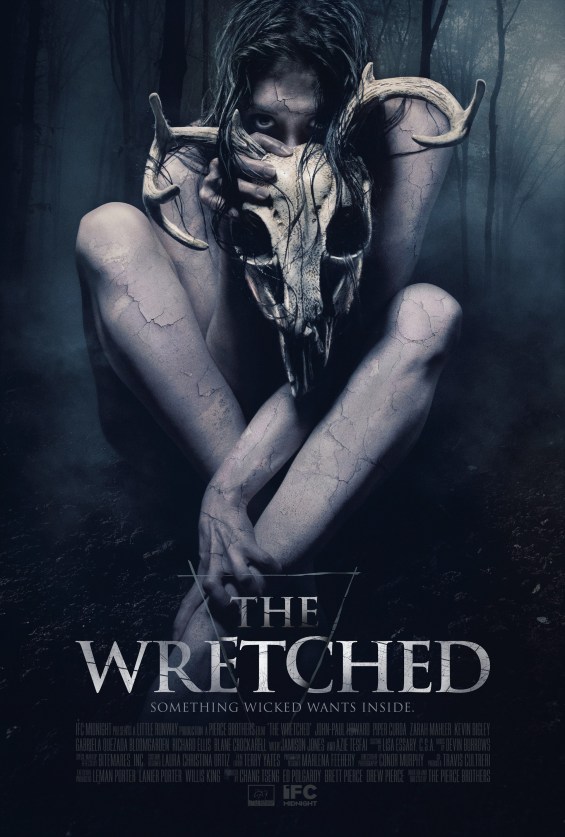
When it comes to the horror genre, sometimes you don’t desire a film that sets out to rewrite the rules of spine-tingling storytelling. Instead, you occasionally find yourself simply wanting to dim the lights and ensconce with a low-budget popcorn flick, and 2019’s The Wretched is firmly one of those films. With appealingly modest ambitions, The Wretched utilises its cast of unknowns, unique creature design and admirable emphasis on body horror as effectively as its thin budget will allow. And, even though the film is far from a game-changer for the realm of supernatural horror, The Wretched still manages to overcome most of its flaws to serve as an engaging, if fairly foreseeable, tale of witchcraft and body-snatching.

Plot Summary: After being sent to live with his father for the summer on account of his parents’ imminent divorce, defiant teenager Ben begins to suspect there is something wrong with his father’s next-door neighbour, eventually discovering that there is an execrable entity lurking beneath her skin…

Originally titled; Hag, before being changed following negative feedback from test audiences. The Wretched was certainly a departure for writer-director duo Brett Pierce and Drew T. Pierce, as the pair’s prior film, Deadheads, released in 2011, was a zombie road-trip comedy. Even so, this leap in tone and genre rarely seems to impair The Wretched from a directorial standpoint, as the film leaps headfirst into its grim tone and horrifying visuals right from the opening scene. And, whilst the film struggles to balance its plot threads from time to time, it quickly becomes clear that the central source of inspiration for the story was the low-budget creature-features of the 1980s, tied together with a desire to create a newfangled interpretation of witchcraft and revitalise hags into terrifying antagonists.

Acting out since his parents’ separation, seventeen-year-old Ben, competently portrayed by John-Paul Howard, is the protagonist. And, while it’s always challenging to portray an angsty teenager, due to the concern of said character becoming incredibly abrasive, Howard pulls it off successfully, portraying Ben as a frustrated and confused adolescent struggling to come to terms with his altered life. Furthermore, The Wretched even aims to justify the common horror trope of parents not believing their children once the supernatural occurrences begin, as when Ben attempts to explain the situation to his father, Ben’s past transgressions of trespassing and stealing medicine come to light, prompting his father to dismiss his claims as either lies or delusions. The supporting cast, including Piper Curda, Jamison Jones, Azie Tesfai and Zarah Mahler, is also serviceable in their minor roles as members of the lakeside community where his father resides.

Shot near Omena and Northport, Michigan, close to the Pierce brothers’ hometown, the cinematography for The Wretched by Conor Murphy often ranges in quality as some scenes are beautifully shot, with a strong emphasis on close-ups, whereas others (usually during conversations between characters) merely rely on dull, hand-held shots. With that said, when working in synch with each other, the camerawork and lighting do a remarkable job of masking the creature early on in the story, only giving the audience brief glimpses of the witch in her contorted, feral state before later displaying the film’s full range of prosthetic make-up and practical effects.

Excluding the ominous theme for the titular witch heard in the tracks; Woods and The Wretched Appears, both of which feature avant-garde strings led by a manipulated sarangi, the original score by Devin Burrows admittedly has some room for improvement as tracks, like Don’t Let Her In, Honey… Beer? and Broken Window repeatedly overuse strings and brass horns to the point where the tracks become too disruptive to the narrative, often mismatching with whatever shot is on-screen.

Of course, the witch herself is unquestionably the film’s primary draw, and The Wretched presents its titular creature with pride, making sure to include all of the most off-putting aspects of the creature’s devilish design and malicious nature. And, whilst the witch isn’t grounded in any specific mythology, with the screenplay only providing minor hints towards its origins, the witch’s carved symbols, salt fragility and quasi-religious shrines all give the creature an element of personality when outside of its human disguise. Speaking of which, the way the creature is presented when inside a body is just as disturbing as we, the audience, along with Ben, observe how the witch practically lives the life of the person whose skin she now inhabits, caring for her decaying body the best she can as the Wretched attempts to act human, each day climbing closer to feasting on the unfortunate children of the mother she is impersonating.

In summary, although The Wretched isn’t as polished as it could be in certain areas, I feel this well-paced horror flick will please most genre fanatics, even in spite of its occasional visual continuity errors, corny dialogue and lack of focus regarding the dual plot lines. The Wretched still delivers on its promise of a skin-crawling creature-feature reminiscent of ’80s cult classics. The film is also one of the few horror films I’d personally like to see a sequel or prequel to someday, as I feel the concept of a witch that feeds on the forgotten is an intriguing idea that doesn’t reach its full potential here, but undoubtedly could in a more refined film. Rating: 6/10.

wretched_ver2_xxlg

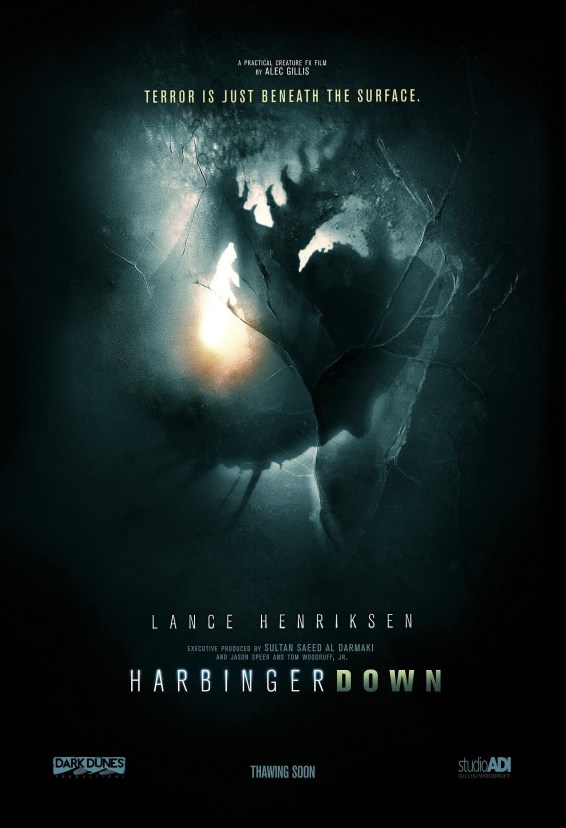
Harbinger Down (2015) – Film Review

In 2010, practical effects company Amalgamated Dynamics (ADI for short) was hired by Universal Pictures to create effects for their upcoming prequel to the 1984 classic; ‘The Thing,’ but just before the film was released, the majority of ADI’s work was digitally replaced by CGI. This decision greatly upset the Amalgamated Dynamics team, especially since ‘The Thing’ wasn’t the first film they had worked on only to later discover their effects had been replaced. So, in response to queries about what became of their effects, the founders of Amalgamated Dynamics uploaded a behind-the-scenes video to YouTube which showcased their original effects, and the overwhelmingly positive response they received began a new phase for the company, as soon after, ADI began a Kickstarter with the intention of creating their own sci-fi-horror, titled; ‘Harbinger Down,’ a film that would exclusively employ practical techniques.

Plot Summary: While studying the effects of global warming on a pod of belugas in the Bering Sea, grad students on a crabbing vessel fortuitously uncover a Soviet space shuttle buried within layers of ice. But, when the ship’s crew bring the Soviet wreckage aboard, they unintentionally release a long-dormant extraterrestrial parasite that relies on the warmth of the human body to survive…

Commonly known by its alternate title; ‘Inanimate,’ ‘Harbinger Down’ was written, directed and produced by Amalgamated Dynamics co-founder Alec Gillis. And although I have a huge admiration for Gillis and his partner Tom Woodruff, Jr. as the duo courageously opposed the mammoth production companies that no longer respected the art of practical effects, ‘Harbinger Down’ frequently suffers as a result of the pairs’ lack of experience when it comes to filmmaking, as is it’s not uncommon to see exaggerated performances, cliché dialogue and messy editing. Furthermore, ‘Harbinger Down’ (like many sci-fi-horrors) takes plenty of inspiration from 1982’s ‘The Thing,’ though in this case, this inspiration is a little too evident in the final film, as many story-beats are either extremely similar or a stark contrast in an attempt to avoid comparisons, such as the creature being maimed by liquid nitrogen rather than fire.

Eminent ‘Aliens’ and ‘Pumpkinhead’ actor Lance Henriksen headlines the film, being by far the most prominent performer present, and suitably gives a stand out performance due to his raspy authority and effortless professionalism. Just like the rest of the cast of forgettable stock characters, however, Henriksen is given very little to work with, only being able to portray his character, ‘Graff,’ as an adept ship captain who cares deeply for his astute granddaughter; ‘Sadie,’ sufficiently portrayed by Camille Balsamo.

The film’s cinematography by Benjamin L. Brown does allow for one or two attractive shots, yet because of its overreliance on hand-held techniques often feels frantic, again playing into the idea of Gillis’ deficiency of filmmaking experience, as whilst Alec Gillis may know how to fabricate outstanding effects, he doesn’t seem sure how to capture them on film or hide them when necessary. As such, the effects on-screen soon become gluttonous, holding on certain shots until the point when the effects begin to appear fake and rubbery. That being said, the film’s setting and production design are brilliant without fault, as the film manages to craft the convincing illusion that the characters are all confined to ‘The Harbinger,’ a vessel that has indeed been set adrift on frigid waters.

Nowhere close to memorable, Christopher Drake’s intense original score does at least add to the film’s atmosphere, but where the score succeeds, the sound design utterly fails. As, in addition to numerous areas of the ship utilising time-worn sound effects, the story’s shapeshifting creature rarely makes any sound beyond generic grunts and growls, none of which are menacing nor daunting, and considering the film had a budget of over £250.000, refining the sound design couldn’t have been that arduous of a task.

Needless to say, all the traction that ‘Harbinger Down’ gained was likely on account of its practical effects, which make use of everything from animatronics to prosthetic make-up to stop-motion and even miniatures, all of which are marvellous to see, particularly for those who enjoy films with little reliance on CGI, as the film’s creature relies on no digital animation whatsoever outside of rod/rig removal. However, as mentioned previously, the way some of these effects are presented occasionally takes away their impact. Another issue arises with the creature design itself, as every form the creature takes is entirely different from its prior appearance, so the creature never has the chance to fully borrow into the audience’s mind as a recognisable extraterrestrial antagonist.

In summary, ‘Harbinger Down’ ultimately falls somewhere between a cheesy SyFy Channel flick and a better-than-average direct-to-video product, which is unfortunate. As for myself, a fan of ’80s creature-features, I truly wanted this low-budget claustrophobic horror to triumph, but as a result of its long list of flaws, many of the film’s practical effects (and the scenes in which they are employed) tend to just be echoes of well-known moments in better films. Be that as it may, ‘Harbinger Down’ does have a captivating backstory when it comes to its creation and the passionate team behind it. Final Rating: low 3/10.

harbinger_down-p999965

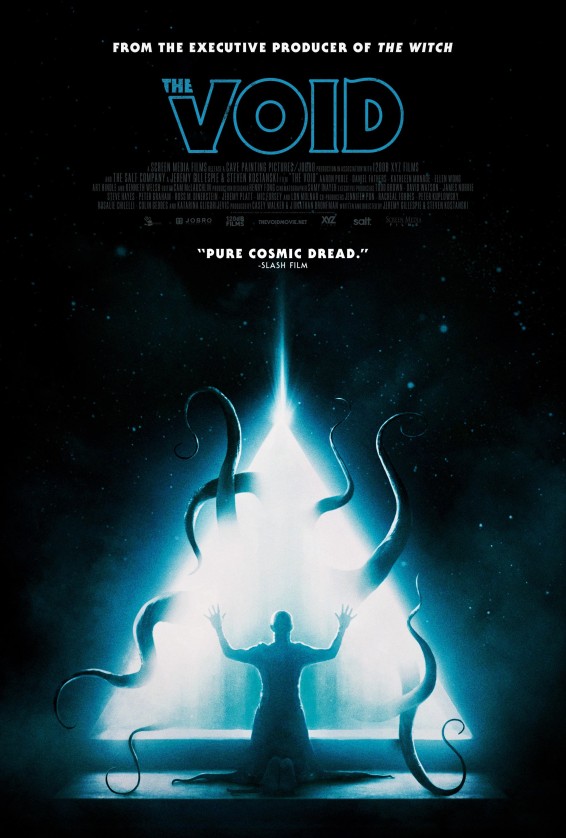
The Void (2016) – Film Review

An excellent throwback to 1980s sci-fi and horror; ‘The Void,’ released in 2016 and directed by duo Jeremy Gillespie and Steven Kostanski, first began its life as a simple idea with two passionate minds behind it, as this surprisingly crowdfunded project makes remarkable use out of its thin budget, especially when considering the film’s many expensive-looking set pieces, displaying its huge array of fantastic creature designs and effects, colourful lighting and creative cinematography with enough confidence and innovation to keep any genre enthusiast enthralled.

Plot Summary: After ‘Sheriff Deputy Carter’ stumbles across a blood-soaked man limping down a deserted road, he quickly rushes him to a local hospital with a barebones, night shift staff. But, when a series of strange events occur within the hospital, seemingly linked to a group of cloaked figures standing just outside the building, ‘Carter’ decides to lead a mission into the hospital’s basement to find an exit, only to discover something far more concerning…

Even though ‘The Void’ did have a handful of producers on board more familiar with the horror genre, as mentioned previously, the film was primarily a crowdfunded project, earning most of its budget in addition to a limited theatrical release in 2017 as a result of its online community of donors and fans. And, it’s not exactly difficult to understand why many fanatics of sci-fi and horror alike were so interested in supporting the film, as immediately from the stylised intro any fan of 1980s cinema can tell ‘The Void’ is truly a love letter to everything ’80s, with the film’s narrative clearly taking heavy inspiration from classics, like ‘From Beyond,’ ‘Re-Animator,’ and, of course, virtually all of John Carpenter’s filmography. Yet, despite all of these influences, ‘The Void’ also manages to never feel overly derivative, even with the film’s plot sharing many similarities to the cult horror; ‘Prince of Darkness,’ from 1987.

The cast of ‘The Void’ is primarily comprised of unknown actors, which is by no means a bad thing, as the cast give solid performances across the board, even in spite of their fairly one-note characters, with Aaron Poole, Kathleen Munroe, Daniel Fathers, Mik Byskov, Evan Stern and Ellen Wong portraying the main group of staff and survivors trapped within the hospital’s walls quite well. But, the real stand out of the film has to be Kenneth Welsh as ‘Dr. Richard Powell,’ easily the compelling character of the story, who undergoes some enormous changes over the course of the runtime.

Samy Inayeh handles the film’s cinematography and handles it well, as whilst there are plenty of moments where the camerawork is far too reliant on hand-held shots, the film manages to even itself out over time with plenty of visually appealing ones. However, it’s the lighting and colour palette that are certainly the most visually impressive elements of the film, as ‘The Void’ jumps from harsh reds to cold blues almost from scene-to-scene, not only to add to the film’s unearthly atmosphere of dread, but also to help hide some of the film’s budgetary shortcomings. Furthermore, the story’s signature location of an empty hospital is a very distinct setting for a horror such as this, as the building seemingly becomes more unnatural and dilapidated the further the characters explore it.

For its original score ‘The Void’ actually had quite a large group of composers (five in total), who expertly crafted a classic 1980s synth score with undertones of dark horror, which greatly adds to both the film’s style and atmosphere. And, although the film’s soundtrack is usually more atmospheric than cinematic, tracks such as ‘Starless Night’ and ‘A Hole in the World,’ prove the score does have some memorability amongst its many foreboding tracks.

Partly due to the film’s budget and partly due to Gillespie and Kostanski wanting to use as little CGI as possible, ‘The Void’ is a science fiction flick that delights in its practical effects. Ensuring every creature design and the costumes and/or prosthetics that bring them to life are nothing but flawless, from their skin to their teeth to their various tentacles (of which the film seems to relish in), nearly every aspect of each creature looks truly spectacular, and its these otherworldly designs alongside the film’s over-the-top gore and buckets of blood that help create some genuinely disturbing moments.

In summary, I feel ‘The Void’ succeeds in being an enjoyable throwback to many people’s favourite decade for sci-fi and horror, with its astounding filmmaking and many impressive practical effects all resulting in plenty of thrills and chills. And, although some may argue the film lacks much in the way of originality, I’d argue otherwise, as I feel ‘The Void’ is less of a capsule for nostalgia and references for all things ’80s, and more of a tribute to what came before it, never quite matching up to many of the films from the time-period its referencing, but still raising the bar for indie filmmaking and crowdfunded projects in its best moments. Final Rating: 7/10.

the_void-p1096924

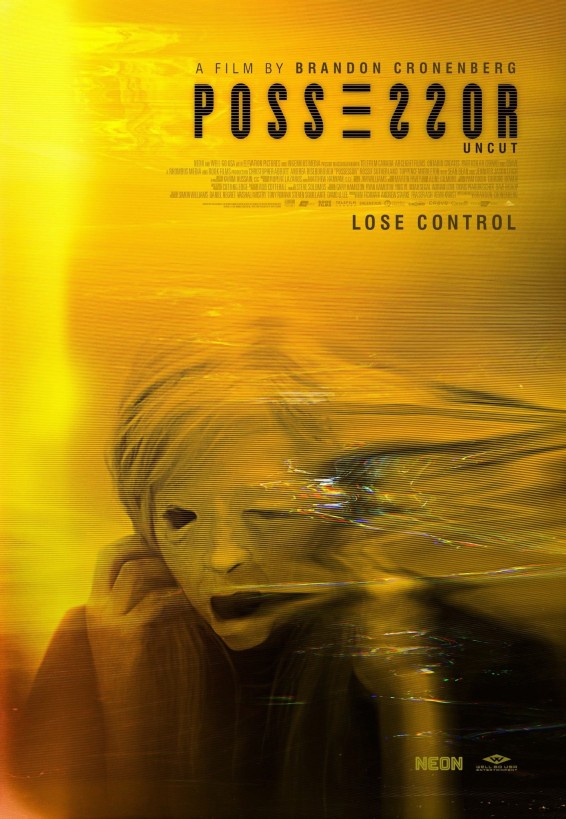
Possessor (2020) – Film Review

Following his 2012 directorial debut with ‘Antiviral,’ Brandon Cronenberg, son of legendary sci-fi-horror director David Cronenberg, crafts a captivating sci-fi thriller with 2020’s ‘Possessor,’ a film that deals with heavy underlying themes of identity loss and sexual discomfort, all whilst displaying its story through some truly spectacular cinematography and lighting. And, even though Brandon’s second sci-fi/arthouse outing doesn’t quite reach the high bar set by his father’s work, ‘Possessor’ is still more than successful as a surreal and layered science fiction flick with outbursts of strong, bloody violence.

Plot Summary: After many years of working as a corporate agent utilising brain-implanted technology to inhabit other people’s bodies and force them to commit assassinations for the benefit of the company. ‘Tasya Vos’ struggles to suppress her violent memories and urges, soon causing her to completely lose control when taking over the mind of a new subject, whose identity now threatens to destroy her own…

Debuting at Sundance Film Festival in early 2020, ‘Possessor’ has quickly gone down as one of the best low-budget releases of that year. Or, at least, this version of the film has, as according to writer-director Brandon Cronenberg, there was an alternate screenplay for ‘Possessor’ which drastically differed from the version that was released. So much so, that Brandon stated it could possibly become a second film later down the line, encompassing all of the material that didn’t quite make it into the first, which was primarily inspired by two pieces of media, the first being the 1971 novel; ‘Physical Control of the Mind: Toward a Psycho-Civilised Society’ by José Delgado, and the second being the short film; ‘Please Speak Continuously and Describe Your Experiences as They Come to You,’ written and directed by David Cronenberg.

Andrea Riseborough gives a fantastically cold performance throughout the film as ‘Tasya Vos,’ making it clear within only a few minutes that ‘Tasya’ is deeply suffering from the effects of her job, as each time she steps into the life of a new subject, she remerges different, finding it harder and harder to untangle her true identity from the one she just inhabited. And, it probably goes without saying that as a sci-fi focused on entering other people’s bodies, the story does explore sexual desire/sexual discomfort, never shying away from scenes of ‘Tasya’ being entranced with her new body after taking over the mind of ‘Colin Tate,’ portrayed by Christopher Abbott. Who, also gives a superb performance as the unfortunate host chosen to execute the company’s assassination, continuously switching between two personalities before eventually becoming devoid of all emotion as minds conflict.

‘Possessor’s cinematography by Karim Hussain also rarely ceases to impress, as nearly every shot is both attractive and memorable, with many shots leaning into the narrative’s themes in addition to providing a closer look at the heavily detailed gore effects through an array of extreme close-ups. The innovative camerawork is also enhanced by the film’s terrific use of colour, as the lighting and colour palette swiftly alters from bright yellows to dark blues to eye-piercing reds. But, this isn’t where ‘Possessor’s filmmaking peaks, as it can’t be denied that the film is at its best whenever it visualises ‘Tasya’ and ‘Colin’ mentally battling for control of ‘Colin’s body, as the film visually displays this interesting concept of a psychic battle on the astral plane through a range of editing techniques and creative yet strange practical effects. The scene in which ‘Tasya’ first enters ‘Colin’s mind is particularly astounding, as the film displays the fake bodies of the two main cast members, which then melt entirely into liquid flesh.

Many of the film’s bizarre visuals are also elevated to a great extent by Jim Williams’ original score, as ‘Possessor’s synth-esque soundtrack keeps the film’s eerie atmosphere present throughout the runtime, capturing the story’s surreal tone and constantly building tension through its atmospheric feel until we arrive at the story’s thrilling climax. My two personal favourite tracks; ‘Reborn in the Mind of Another’ and ‘A False Reputation,’ aren’t exactly distinctive, but both tracks do help tremendously in this regard.

The leading issue ‘Possessor’ suffers from is its lack of world-building, as supposedly the film takes place in an alternate version of the year 2008, but aside from one short scene where we see ‘Colin’s day-to-day job as a data miner, which does at least serve as a comment on the paranoia of corporate overlords and their nefarious activities, the world of ‘Possessor’ receives very little development and can often feel inconsistent when it comes to its technological advances.

In summary, ‘Possessor’ is the perfect hybrid of sci-fi, character study and body horror, as whilst its lack of world-building and compelling side characters do stop the film from reaching its true potential, ‘Possessor’ (along with Brandon’s previous film), definitely prove that Cronenberg’s son has a talent for telling harrowing and violent stories, all the while never forgetting to integrate intriguing concepts and ideas. And, with Brandon pushing for most of ‘Possessor’s effects to be completed in-camera rather than with CGI, the two directors may be even more alike than I first thought. Final Rating: low 8/10.

possessor_ver3_xxlg

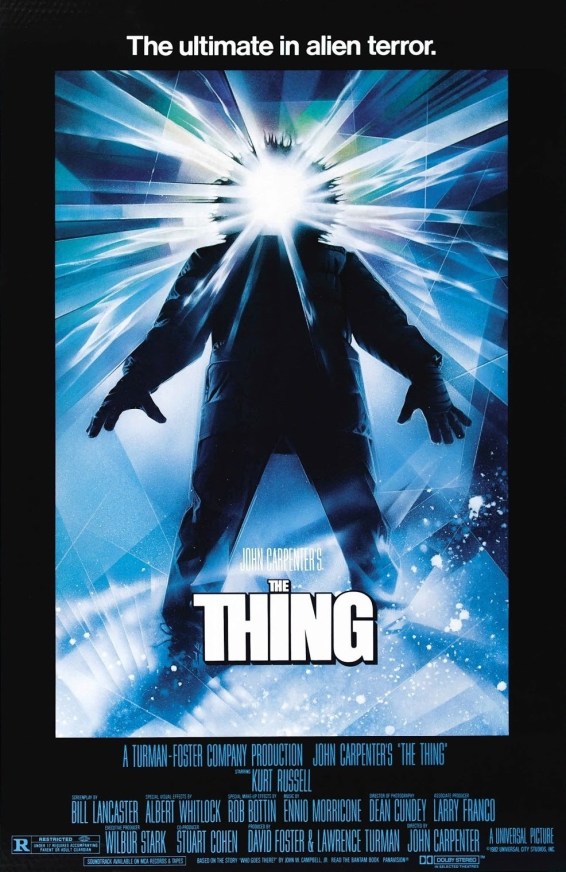
The Thing (1982) – Film Review

One of John Carpenter’s many horror classics, and one of my all-time favourites, ‘The Thing’ is a violent, eerie and creative sci-fi/body horror icon, as I personally adore this film and believe it’s one of Carpenter’s best, as the film always uses isolation and paranoia to its best extent, never failing to keep you on edge and invested throughout the entirety of its narrative and runtime.

Plot Summary: Members of an American research outpost in Antarctica find themselves battling a parasitic alien organism capable of perfectly imitating its victims. As time passes, they realise that killing the creature will be harder than they initially thought, as paranoia begins to sink in as to who has already been assimilated by the shape-shifting entity…

Although ‘The Thing’ is actually a remake of the classic; ‘The Thing from Another World,’ from 1957, I would say this is one of the rare times that a remake is better than the original as it’s constant tension building alongside the outstanding practical creature effects, make the film an incredible experience. Similar to films, such as ‘Alien’ or ‘The Fly,’ ‘The Thing’ also has a very slow opening, using its introduction to build tension and give the audience a great view of the location before the film descends into the gory, suspenseful chaos.

Kurt Russell, Keith David, Wilford Brimley, David Clennon and the rest of the cast are all decent, while Kurt Russell’s character, ‘MacReady,’ is easily my favourite simply due to his charisma, but none of the cast are terrible, by any means. However, I do feel there are too many characters within the story, as it can get confusing at many points as to which character is wrapped up within their large fluffy coats. And while I understand the need for a high body count for a film like this (which is the reason for the lack of development for many of the characters), I simply find it a little too easy to get lost at points.

Dean Cundey handles the cinematography within the film, which is decent throughout but nothing amazing, placing more of an emphasis on the practical effects within the shots, rather than the shots themselves. The cinematography, however, does still help to build tension effectivity through its many still shots and dark colour palette. Furthermore, all of the creature effects throughout the film are completely practical, giving the amazing creature designs true life by many of them being puppets or costumes rather than CGI, like most modern-day horror or sci-fi flicks. These effects truly create some very memorable scenes, as make-up effects artist, Rob Bottin, known for his work on ‘RoboCop’ and ‘Total Recall,’ truly did some of his best work on ‘The Thing.’

The original score (surprisingly not composed by John Carpenter himself) is by Ennio Morricone, but suitably does feel like a traditional Carpenter soundtrack and helps towards the eerie atmosphere as soon as the opening begins, as while maybe not as iconic as some of Carpenter’s other scores, such as ‘Halloween’ or ‘The Fog,’ etc. The original score is still brilliant in its own right and truly sets the tone for the film.

As the film takes place in an extremely isolated location and features a creature that can morph into any character, the film also never fails to keep the viewer on constant edge, as one of the best elements of the film is the paranoia the runtime continues, as any of the characters could be infected with the extraterrestrial creature. So, we never know who is going to be the next unfortunate victim, and who is their killer. Interestingly, during filming, John Carpenter didn’t even tell the actors who was the creature on set, only adding to the mystery.

In summary, ‘The Thing’ is a phenomenal entry into the genres of science fiction and horror, truly being an iconic staple of what to expect from an extraterrestrial film from then on. From its building of tension to the outstanding phenomenal practical effects as well as the constant threat, we feel whilst watching, almost placing us into the shoes of the characters themselves. Soon going on to be a true sci-fi/horror classic and becoming one of the best remakes to ever grace the silver screen. Final Rating: 9/10.

The Thing (1982) Original