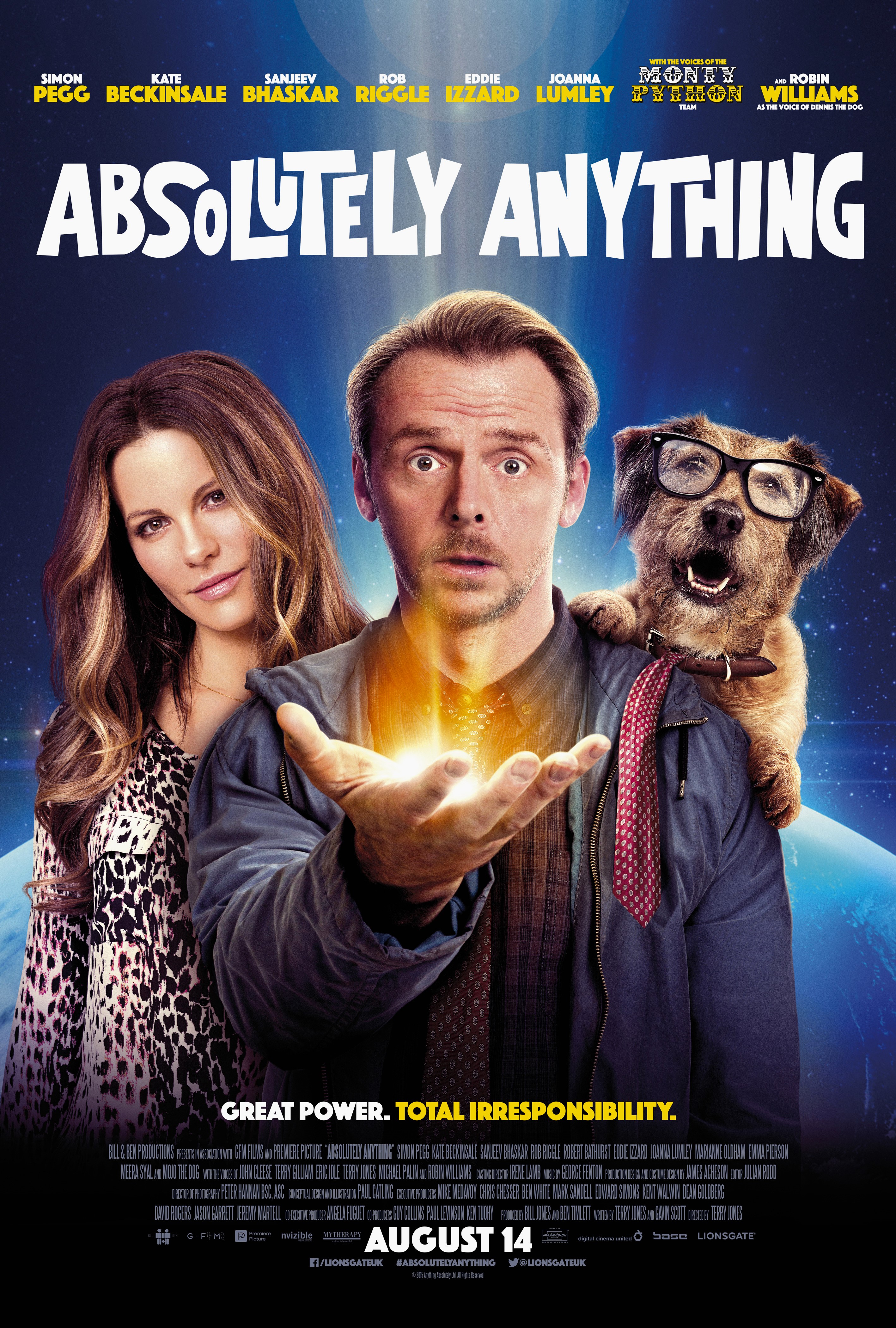
Absolutely Anything (2015) – Film Review

“Absolute Power Doesn’t Corrupt, It Just Drives You Bloody Mad!” – Neil Clarke

Released in 2015, Absolutely Anything is a zany sci-fi-comedy that explores the age-old fantasy of unlimited wish fulfillment, a concept historically associated with gods, genies and mythical beings. In this instance, however, the power rests in the hands of omnipotent extraterrestrials, who, believing in their superiority, bestow their boundless ability upon a single unsuspecting human. Alas, aside from this inventive alternative, Absolutely Anything misuses its limitless premise and affable lead, Simon Pegg, for a typical rom-com setup, offering mild, light-hearted entertainment over consistent gags, creative visuals or lasting impact.

Plot Summary: As part of an interplanetary experiment, an extraterrestrial council traverse the universe in search of intelligent life. Upon reaching Earth, they initiate their usual test of granting one randomly selected inhabitant the ability to do anything to determine whether humanity is worthy of joining their intergalactic community or should be annihilated. A test that likely spells doom for humanity as the council haphazardly selects Neil Clarke, a washout British school teacher, as their subject…

Co-written and directed by the late Terry Jones (Monty Python and the Holy Grail, Personal Services, The Wind in the Willows), Absolutely Anything draws inspiration from the 1898 short story; The Man Who Could Work Miracles, by H.G. Wells, as both stories centre on an ordinary man suddenly granted reality-altering abilities. However, the leading discrepancy between the two is how Absolutely Anything leans heavily into comedy, delivering a string of farcical scenarios that allow Pegg’s energetic performance to shine. As such, the tone throughout the film remains consistently blithe as the screenplay shies away from any deep philosophical exploration of its central concept or even any long-term consequences to Neil’s actions, as when a situation veers into chaos, Neil merely waves his hand to undo the damage, undercutting any disorder his newfound power might trigger.

As the leading man, Simon Pegg infuses Neil Clarke with an endearing blend of immaturity and dopey charm, rendering the character’s misguided desires and naïve missteps more forgivable. Still, the film undoubtedly misses the opportunity to examine how absolute power might affect the average person, for better or worse. Instead, Neil uses his ability almost entirely for petty or farcical purposes, with one of his more amusing decisions granting his loyal dog, Dennis, the capacity to speak, leading the canine to be energetically voiced by the late Robin Williams. The result is a delightfully giddy sidekick, whose witticisms often relate to the amusing traits of his species. Less enjoyable is the romantic subplot between Neil and his downstairs neighbour Catherine, portrayed by Kate Beckinsale, as despite Neil’s fascination with Catherine being at the core of the story, her character is underwritten and uninteresting, making their relationship (and her inclusion) feel obligatory rather than organic, a criticism that applies to many of the side characters.

Visually, Absolutely Anything is an odd mix of British realism and low-budget science fiction, with the majority of the film shot in and around an abandoned building that was formerly a school, cleverly repurposed to serve as Neil’s flat and the secondary school where he teaches. While these Earthbound settings help ground the otherwise outlandish story in a familiar, everyday backdrop, many of the sets throughout the runtime appear cheap and flavourless, especially when combined with the American sitcom-esque lighting and cinematography by Peter Hannan. The most jarring disparity in the film’s visuals, however, comes with the subpar CG effects, from the splicing of Simon Pegg’s head onto different bodies to the space-bound sequences of the extraterrestrial council debating; the CGI is noticeably lacking, even if the aliens’ designs exhibit visual variety.

Contrarily, the original score by George Fenton brings a whimsical energy to the film, as his compositions underscore the comedic beats with light piano melodies, lively orchestration and plucky strings that reflect Neil’s bemused reactions to his newfangled ability. For example, during the scene where Neil begins experimenting with his powers, commanding a bottle of whiskey to exchange itself only to witness it bouncing down the stairs towards the front door, the accompanying track is fittingly bouncy and eccentric.

Upon its initial release, Absolutely Anything was frequently compared to Bruce Almighty (2003), another male-led comedy about divine empowerment. But, their distinctions are actually quite significant, as Bruce Nolan, the titular character, cannot override free will, whereas Neil can. Moreover, Bruce Almighty centres on a theological framework with God as an active character, whereas Neil’s powers come from extraterrestrials he never encounters, exuberantly voiced by the surviving members of the Monty Python series. In fact, Absolutely Anything notably marks the first on-screen reunion of the Monty Python cast since The Meaning of Life (1983), and, according to Terry Jones, might be their last collaborative outing. There’s also a nod to their comedic legacy during the opening sequence, as the camera pans across space to an orbital scrapyard of discarded spaceships, one of which is from 1979’s Life of Brian.

In summary, Absolutely Anything is a comedy buoyed by its bewitching premise and the charisma of its lead. Yet, it is frustratingly superficial, opting for a low-stakes story, cartoonish gags and rom-com tropes rather than exploring the satirical or existential dimensions its narrative invites. Whilst the film does contain some moments of wit, Absolutely Anything never lives up to the potential promised by its title or the strong comedic talent it harbours. Rating: 4/10.
Cocaine Bear (2023) – Film Review

“What the Fuck Is Wrong With That Bear?!” – Beth

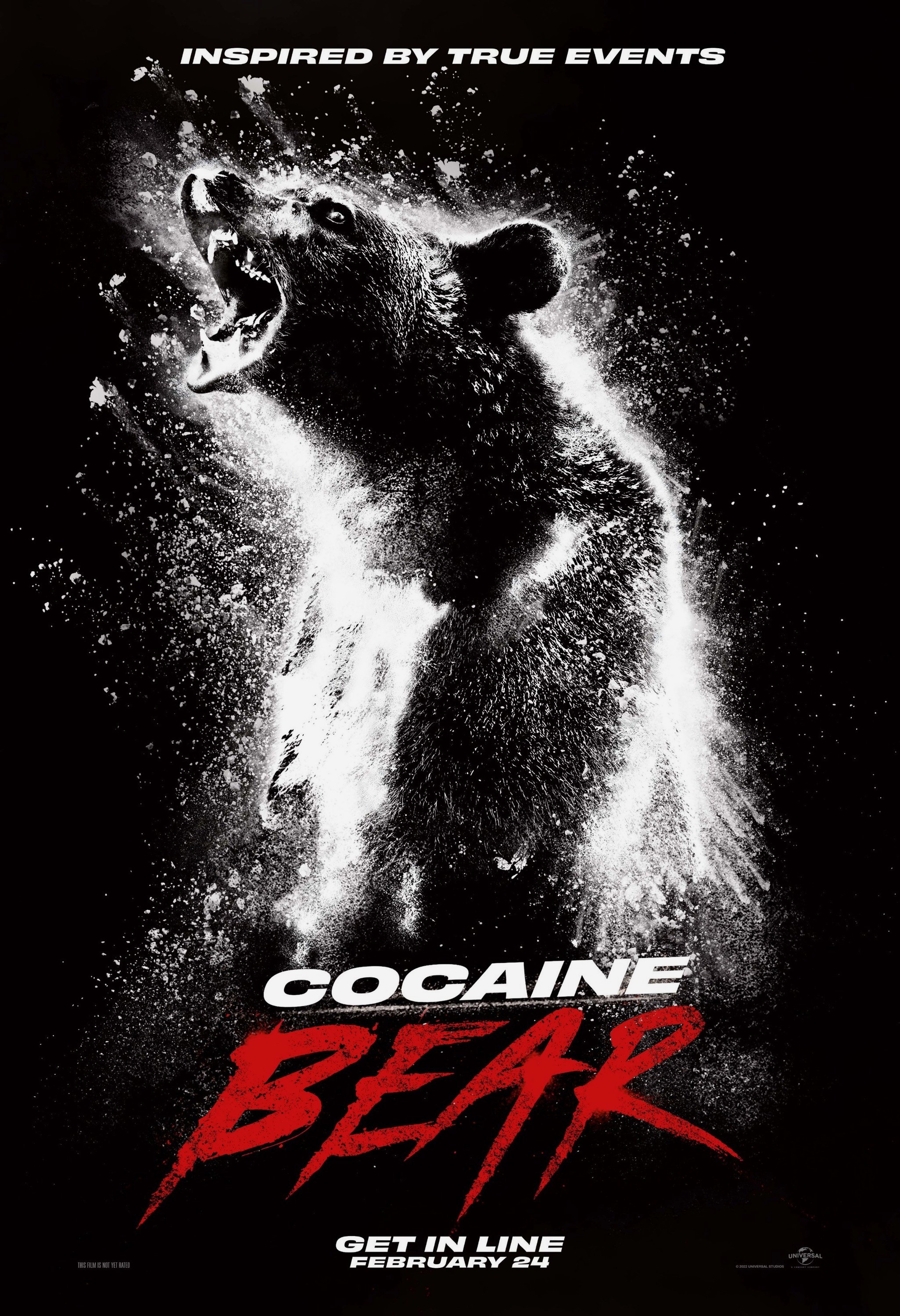
Partially inspired by an incident that took place in 1985, where lawyer-turned-drug smuggler Andrew Thornton took to the skies to drop blocks of cocaine over Knoxville, Tennessee, before leaping out of his aircraft carrying a duffel bag containing roughly £11 million worth, ultimately falling to his death when his parachute malfunctioned. A regional black bear was believed to have stumbled upon some of his stash, as two months later, a Georgia hunter discovered a bear carcass surrounded by the remains of a bag investigators later deemed to be Thornton’s. Although no deaths were reported as a result of the intoxicated animal, with a medical examiner concluding that the two-hundred-pound beast likely overdosed within minutes, dying from cerebral haemorrhaging and respiratory heart failure, the notorious story of the amusingly nicknamed; “Pablo Escobear,” was ripe for a cinematic adaptation given its utter absurdity, and the bluntly titled; Cocaine Bear, released in 2023, aimed (yet failed) to fill that void.

Plot Summary: When a duffel bag stuffed with around $14 million in cocaine falls from the sky in the aftermath of a 1980s drug smuggling excursion, a colossal, national park-roaming American black bear unconsciously devours much of the white powder, steering the animal on a bloody path of destruction as it becomes the most dangerous apex predator on the planet for the next few hours…

Directed by Elizabeth Banks (Movie 43 – Segment: Middleschool Date, Pitch Perfect 2, Charlie’s Angels), the title of Cocaine Bear was originally intended to be a temporary working title, but the producers eventually decided to release the film under that moniker as they couldn’t think of a title more fitting. To some extent, this bit of trivia serves as a representation of the film itself, as Cocaine Bear is exactly what it sounds like; a ludicrous, violent and corny comedic thriller that adapts a story almost too outlandish to believe. Of course, to create a more marketable flick, the filmmakers do make a string of alterations to the real story as, in reality, when the animal’s carcass was found, it had already been dead for around a month, in contrast to the rampage depicted in the film, which occurs shortly after the smuggler’s death. Moreover, investigators never reported any threatening or destructive behaviour ahead of its death, nor did the bear eat the entirety of the supply Thornton was thought to have smuggled, as officials deduced that an unknown individual had fled with a portion of the stash. Still, it is an amusing tale to bring to the silver screen, especially since animal experts have always been somewhat uncertain as to whether animals experience the same type of high that humans do from substances like alcohol or marijuana, despite some animals seemingly ingesting substances like catnip and hallucinogenic mushrooms for their recreational effects.

Featuring one of the last-ever performances from famed actor Ray Liotta, as the actor sadly passed away on May 26th, 2022, a mere week after he re-recorded some of his lines during the film’s post-production phase. The central cast of Keri Russell, Alden Ehrenreich, O’Shea Jackson Jr., Isiah Whitlock Jr. and Liotta himself are all serviceable in their various roles. While some of the cast portray relatively likeable yet significantly underdeveloped, hapless residents, others lend their acting skills to portraying scummy drug peddlers who ultimately earn their comeuppance when confronting the ravenous, cocaine-plugged beast. However, whilst much of the cast is well-versed in the comedy genre, one of Cocaine Bear‘s most significant shortcomings is undoubtedly its inconsistent, overly cartoonish humour throughout.

Aside from the CG effects of the titular bear, which adequately convey its size, strength and weight, the visuals of Cocaine Bear are rather bland, rarely employing distinctive shots or creative set design as the cinematography by John Guleserian predominantly largely relies on generic mid-shots, with much of the editing harbouring little rhythm and the bloodthirsty beast’s killings possessing minimal creativity, often having a severed limb merely dumped in front of the camera.

In terms of the original score, talented composer Mark Mothersbaugh’s soundtrack is sufficient yet rather sterile in the grand scheme, with the poorly-anointed tracks of Bear Attack, Bathroom Fight and Bear Dance being the only high points as Mothersbaugh attempts to integrate a selection of instruments from the ’80s to lend authenticity to the 1980s setting.

Bizarrely, although set in an unnamed national park in Knoxville, Tennessee, Cocaine Bear was truthfully shot in Ireland, with the crooked forest trails of the Irish outdoors appearing largely indistinguishable from that of the U.S. Very few Irish actors were cast, however, excluding extras, presumably to play into this implied American setting.

In summary, Cocaine Bear stumbles even as the lowbrow flick many (myself included) expected it to be, lacking entertainment value and a strong sense of satire in spite of the film leaving a peculiar cinematic legacy, with a slew of low-budget rip-offs emerging shortly after its release, each more absurd than the last, such as Cocaine Shark (2023) and Attack of the Meth Gator (2023). Thus, I’d suggest bypassing Cocaine Bear and simply scouring for a documentary on the event. Conversely, if you are ever passing through Lexington, Kentucky, perhaps consider visiting the Kentucky for Kentucky Mall, where the bear’s preserved body is actually on display, further corroborating the animal’s enchantingly strange legacy. Rating: 4/10.

cocaine_bear_xxlg

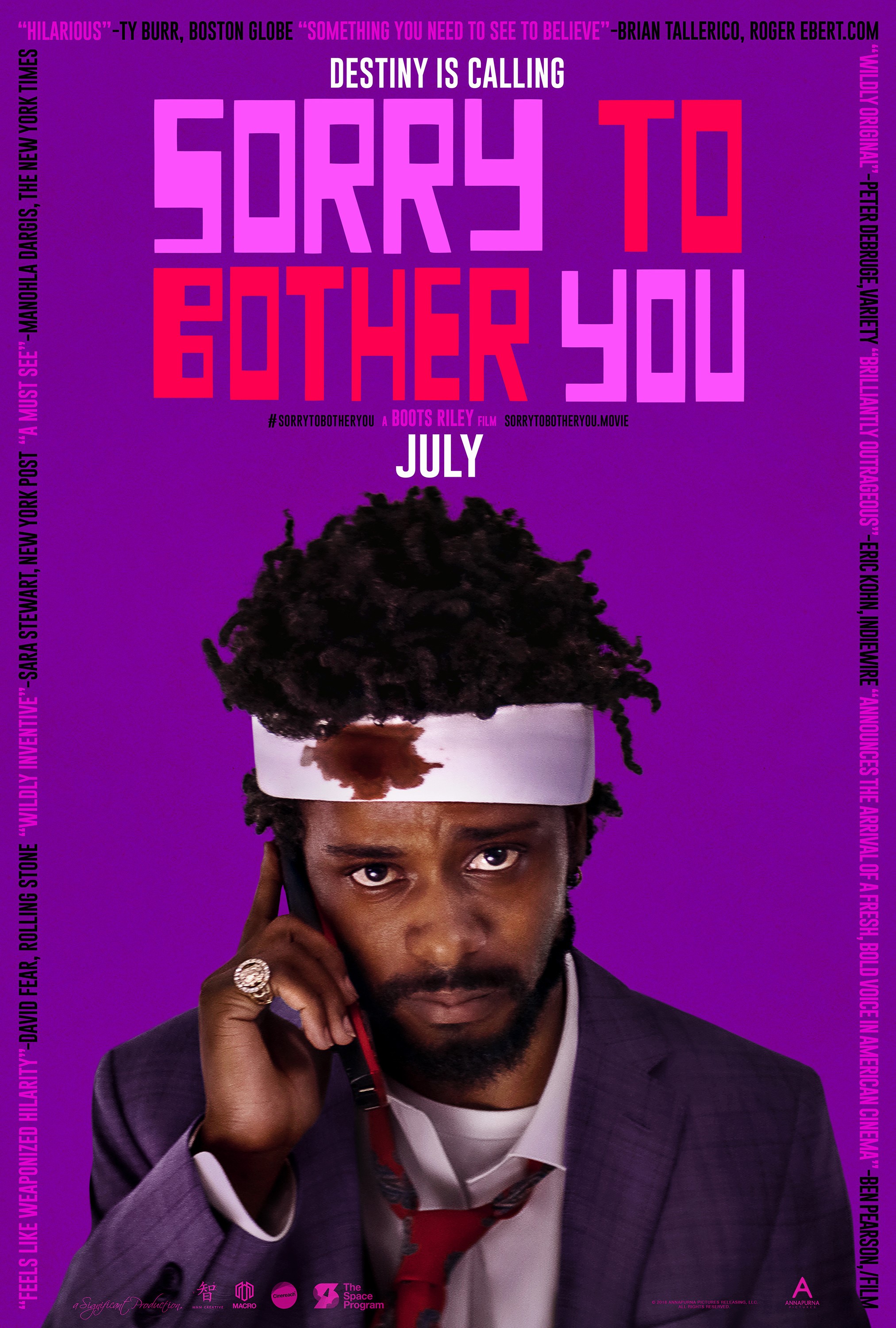
Sorry to Bother You (2018) – Film Review

“This Is Telemarketing. We’re Not Mapping the Fucking Human Genome Here. I Don’t Care if You Have Experience for This… I’ll Hire Damn Near Anyone.” – Anderson

Full of surprises and thoroughly embracing its weirdness at every turn, the 2018 social satire Sorry to Bother You serves as a fantastically refreshing flick that announces writer-director Boots Riley as a radical upcoming voice in the realm of cinema. Harbouring a captivating premise, memorable characters (both benign and despicable) and dialogue that is both snappy and humourous, Sorry to Bother You is a stylish indictment of capitalism, consumerism and cultural appropriation, all executed in a rather unconventional fashion that will likely cause some audience members to lose interest.

Plot Summary: In an alternate, present-day version of Oakland, bumbling jobseeker Cassius Green acquires a low-level position at a telemarketing firm, only to find it a dispiriting struggle as a Black man selling to predominately White customers. But, when a telemarketing veteran advises him to use his “White Voice” to make himself more appealing to potential buyers, that all changes. Now, with his newfound talent, Cassius thrives in his profession, soon being promoted to a “Power Caller,” peddling morally abhorrent yet incredibly lucrative services as he further climbs the corporate ladder…

As you might expect from its introduction, there are a lot of big ideas in Sorry to Bother You, from the power of influence ravenous corporations possess to the dehumanisation of human labour and how they are both inextricably tied to everyday racism, Sorry to Bother You juggles an assortment of relevant, weighty and thought-provoking themes. Still, the film is far from your standard social commentary, but rather a raucous, surreal mockery that remains outlandish until its last few minutes, especially regarding one particular aspect of its narrative, which could be considered a step too far into absurdity for some.

Originally, famed actor and musician Donald Glover was penned for the lead role of Cassius Green, but was ultimately unable to assume the role due to scheduling conflicts with 2018’s Solo: A Star Wars Story. Instead, Glove recommended his co-star LaKeith Stanfield from the comedy-drama television series; Atlanta, for the role. Thankfully, Stanfield holds his own as Cassius, portraying a goofy klutz who lives in his uncle’s garage, lacks conviction and often suffers from existential anxiety, frequently fretting about the sun exploding and his life bearing no significance, much to the displeasure of his activist and performance artist girlfriend, Detroit, equally well-portrayed by Tessa Thompson. Moreover, despite Cassius’ many sordid acts throughout the runtime, you never stop rooting for him on account of Stanfield’s charm, even when he’s led into making vile choices purely on his desire for more money and success, making for an entertaining character arc aided by repeatedly witty dialogue.

Aesthetically, Sorry to Bother You is just as crazed as its zany tone, with visual diversions regularly transpiring from an early sequence where Cassius converses with potential buyers over the phone before he quite literally (and creatively) crashes into their lives with his desk. Occasionally, however, these off-the-wall stylistic choices can become a little too much and hard to keep up with, with even the lustrous colour palette and cinematography by Doug Emmett being constantly vibrant and energised.

Composed by the indie art pop band, Tune-Yards, Sorry to Bother You‘s original score largely consists of bouncy techno tracks that effectively lend themselves to the film’s peculiar style, namely via tracks like Transformative Experience. On top of the original score, the film also features a variety of songs from Boots Riley himself, as Riley was previously the lead vocalist of the hip-hop group, The Coup, during which time the band produced the identically-named album; Sorry to Bother You, which he then implemented into the film, presumably for its shared title.

Spoilers ahead in this section for those who wish to go in blind, but near the end of the runtime, Cassius’ conscience arises anew as he finds himself amid his boss’ morally bankrupt world of condescending decadence and his sinister plan to create a subservient, mutated workforce, these oddball, horse-like creatures, known as the “Equisapiens,” are impressively brought to life via practical effects, with the suit and animatronic headpieces being built and designed by Amalgamated Dynamics (ADI), well-known for creating effects for sci-fi blockbusters, such as Tremors (1990), Evolution (2001) and Alien vs. Predator (2004), among many others. Interestingly, while numerous headpieces, hair patches and tattoos were employed to visually differentiate the myriad of Equisapiens, only a single suit was utilised and modified across scenes as puppeteers operated the headpieces, including one operator solely for the eyes. Whilst some may find this plot deviation ludicrous, truthfully, I feel it works in the film’s favour, given it comically plays into the notion of money-hungry higher-ups employing any method they can to increase profits and reduce labour costs.

In summary, Sorry to Bother You is a bonkers film that handles its many underlying themes with great care in spite of its lasting strangeness and general lack of subtlety. Thanks to its endless inventiveness and impressive lead performance from LaKeith Stanfield, lending his acting dexterities to a well-defined character that is equal parts endearing and loathsome, Sorry to Bother You is a distinctive flick that not only succeeds in what it’s trying to do, but also functions as a flag being unapologetically planted by its filmmaker, not only in the film industry, but in all of the industries its screenplay repeatedly ridicules and scrutinises. Rating: low 8/10.

sorry_to_bother_you_ver9_xxlg

Love and Monsters (2020) – Film Review

“I Didn’t Really Have Your Typical Upbringing. I Mean, I Did at First… but Then the World Ended.” – Joel Dawson

Originally titled; Monster Problems, the Netflix Original, Love and Monsters, released in 2020, is a comedic, post-apocalyptic romance filled with plenty of heart, humour, clever world-building and, as its title suggests, gigantic monsters. Despite housing a few blemishes here and there, Love and Monsters covers an abundance of emotional ground throughout its story, standing as an entertaining, monster-filled adventure, the sort of film that delivers wit, excitement and creativity all in generous portions, making for an amusing time during ‘the end of times,’ as it were.

Plot Summary: Seven years after the world-ending event known as the “Monsterpocalypse,” twenty-three-year-old Joel Dawson, along with the rest of humanity, is wearily living underground in a hidden bunker since colossal mutated monsters took control of the surface. But, after reconnecting over the radio with his high school girlfriend, Aimee, who is now eighty miles away at a coastal colony, Joel courageously decides to venture out into the monstrous open-air to find her…

Demonstrating his storytelling capability almost immediately, director Michael Matthews (Five Fingers for Marseilles) artfully lays out the film’s premise during the opening sequence, employing a voiceover from Joel and a variety of animated illustrations made to appear as if they were pencil-sketched by Joel in his notebook. Through this opening, we learn that several years ago, the human race fired a series of rockets into space to destroy an impending asteroid nicknamed; “Agatha 616,” which successfully blew the rock to smithereens. However, this action had consequences, as the chemical compounds used to launch the missiles rained back down to Earth and transformed the cold-blooded wodge of the animal kingdom into mutated monstrosities, forcing the human race to flee underground. From this point on, Love and Monsters continually explores its unique world, building upon the notion of the “Monsterpocalypse” in several ways whilst also taking cues from 2009’s Zombieland by not taking itself too seriously, avoiding the common concern of its post-apocalyptic setting feeling ‘played out.’ Of course, this does mean that Love and Monsters includes a number of tonal shifts, some of which occur rather suddenly, similar to how many of the film’s gags vary in quality.

In terms of characters, the timid, self-deprecating protagonist of Joel Dawson is perfectly cast with Dylan O’Brien, as the screenplay allows the young actor to flex every acting muscle he possesses, toeing the line between weighty and light-hearted scenes through his myriad of interactions with the other survivors of his monster-infested world. For Joel, the world-ending cataclysm was particularly bad timing as he was on a date with his girlfriend Aimee when the pair were separated and shipped to different colonies. While terrified of almost everything at first, Joel eventually pushes himself out of love, serving as a likeable yet dimwitted guide through a world of horrors and devastation, discovering more about himself along the way. In addition to O’Brien, the cast is studded with some great talent, from Jessica Henwick, who manages to make Aimee seem capable and sympathetic in spite of her limited screen-time, to the unlikely pairing of Michael Rooker and Ariana Greenblatt as Clyde and Minnow, two world-weary survivors travelling together after their respective families were killed by undisclosed creatures. Moreover, whilst on his journey, Joel encounters the grieving, intelligent canine, Boy, who is remarkably well-portrayed on-screen by the two Australian kelpies, Hero and Dodge.

Given that much of the film is a voyage across post-apocalyptic America, Love and Monsters is almost episodic in its visual presentation, following Joel as he treks past devastated, overgrown suburbs, corroded fairgrounds and expansive meadows, all of which are wrapped in impressive details like spider-like webbing enfolding the rooftops and trickling egg sacks sprouting on trees. Lachlan Milne’s cinematography and the film’s wonderful production design (considering its modest budget for a premise of this scale) lend themselves brilliantly to this concept with an ample amount of wide shots, thoroughly embracing the strange beauty and vibrant colours of the “Monsterpocalypse.”

Drawing inspiration from the scores of larger-than-life science fiction classics from the 1950s and 1960s, composers Marco Beltrami and Marcus Trumpp provide Love and Monsters with a grand, stimulating and highly vigorous orchestral score. Through tracks such as; Bunker Breach, Wisdom of the Wild, Amiee’s Colony and End Credits, the original score works in tandem with practically all the scenes it can be heard, whether they are stirring or unsettling.

As you’d hope for a monster-centric flick, the titular creatures of Love and Monsters are widely imaginative, with oversized centipedes, frogs, snails and crabs all featured throughout the runtime, all outlandish and intimidating in design, yet still recognisable to their real-world counterparts, brought to life via exquisite practical and CG effects, ultimately leading the film to become an Oscar nominee in 2021’s Best Visual Effects category, alongside Tenet (2021) and The Midnight Sky (2021).

In summary, Love and Monsters is an enjoyable, earnest and comforting flick, packed with splendid creature designs, charming characters and a delightful cast. In many ways, the film is a high school rom-com that just so happens to be set in a post-apocalyptic world, serving as a terrific template for crafting a leaner, less bloated summer flick that virtually all can enjoy. And, for once, with the film leaving things open-ended enough for a sequel, this is the rare scenario where, I’d say, another instalment would actually be welcome. Rating: low 8/10.

love_and_monsters_xlg

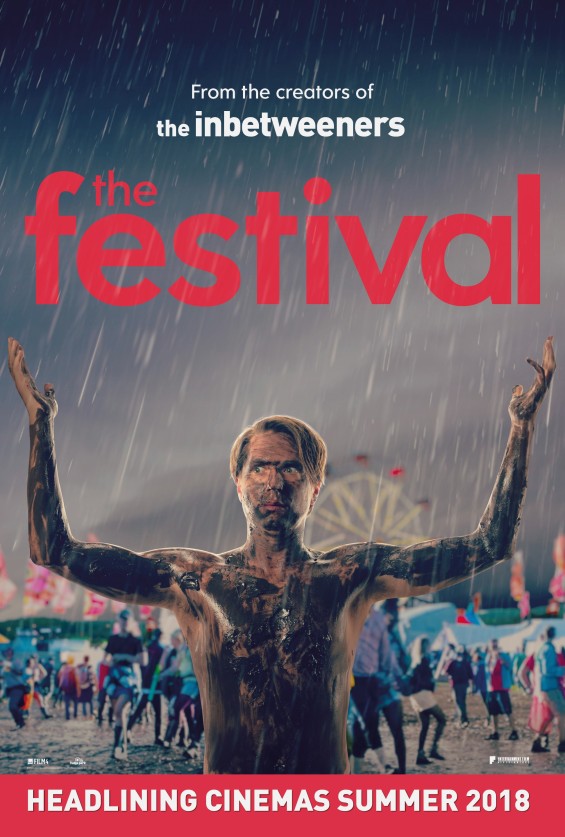
The Festival (2018) – Film Review

“There Are a Hundred Thousand People There. The Chances of Bumping into Her Are a Million to One…” – Shane Stubbs

Having conquered British television with three series of the quintessential adult sitcom; The Inbetweeners, the comic duo of Damon Beesley and Iain Morris turned their attention to producing cinematic comedies in a similar vain, following that series’ two follow-up films with The Inbetweeners Movie (2011) and The Inbetweeners 2 (2014). Their next attempt at a humorous hit was 2018’s The Festival, a British comedy centring around the re-formative experience of attending a music festival for the first time, complete with the return of The Inbetweeners‘ starJoe Thomas, and director Iain Morris (The Inbetweeners 2). However, while the film does have its share of absurd misadventures and self-abasing nudity, The Festival doesn’t quite manage to capture the three-day lunacy of an actual festival experience, failing to live up to the comedic reputation of the iconic sitcom that preceded it.

Plot Summary: When Nick’s girlfriend, Caitlin, breaks up with him on the day of their university graduation, Nick’s best friend, Shane, persuades him to attend a monumental music festival to get over her, eager to meet his favourite masked DJ, Hammerhead. But, after running into Caitlin and her friends at the festival, the pair’s weekend quickly begins to descend into one of misery and madness…

Written by Keith Akushie and Joe Parham, The Festival is a comedy about friendship, maturing and enjoying the brief time we get in life. Of course, being a comedy, these underlying themes are largely pushed back to focus on its humour rather than its narrative or more intimate character moments, leading to scenes like Nick getting his nipple pierced, spending a drug-fuelled night with a girl outfitted as a Smurf and being chased through the festival grounds by security, sporting only his boxers. And, although some of these comedic set pieces are amusing, other gags feel as if they needed a bit more screen-time to wring out all of their comedic potential. That is, excluding the many gross-out moments, which consistently come across as lazy and unwarranted.  

Following this routine ‘getting-over-the-girl’ storyline, protagonist Nick Taylor, portrayed by Joe Thomas, is remarkably similar to Thomas’ character in The Inbetweeners series, Simon Cooper, a selfish, uptight teenager whose sorrows narrowly outweigh his unlikeable traits as he tries anything and everything to win back his ex-girlfriend, Caitlin, portrayed by Hannah Tointon. Meanwhile, Nick’s best friend, Shane, and festival aficionado/certified oddball, Amy, admirably portrayed by Hammed Animashaun and Claudia O’Doherty, respectively, attempt to get Nick to embrace the music and the mud, getting into a few bizarre situations themselves. Additionally, The Festival lends some pizzazz to the often overused ’embarrassing stepdad’ archetype character via the casting of New Zealand actor and comedian, Jemaine Clement, lending the well-meaning father figure a genuine sense of care for his stepson as well as delightful line delivery. Interestingly, the previously mentioned Joe Thomas and Hannah Tointon are, in actuality, engaged and have been in a relationship since 2010.

Partially shot at Bestival and Leeds Festival, with actual festival goers being used as extras for the scenes requiring enormous crowds, the film’s cinematography, handled by Simon Tindall, allows for a number of visually pleasing and colourful shots. The film, however, does little to visually differentiate itself from other modern comedies, aside from its opening titles, which creatively appear on an array of vibrant, crinkled title cards inspired by stylistic festival line-up posters, fittingly backed by a surplus of authentic footage of festival goers dancing, socialising, drinking and face painting.

Hardly ever present for the bulk of the runtime, the original score by Rael Jones is an element of the film that I cannot even review, in its entirety, as the score simply isn’t utilised enough. Instead, the film suitably employs a variety of songs that wouldn’t seem out of place at an actual music festival, ranging from swinging indie classics to contemporary dance anthems, such as Do You Know Me? and Blaze Up the Fire.

In the tradition of comedy franchises like the American Pie series, The Festival also serves as somewhat of a modern satire of adolescent angst and foolishness, appearing actually rather saccharine beneath its scatological surface, gently mocking yet ultimately painting a buoyant portrait of its target audience, teenagers, with much of the humour deriving from awkward juvenile situations, like peer group shaming, discomfiting parental over-sharing and clashes with adult authority figures. Still, there is a good quantity of jokes aimed towards a slightly older audience, including a sly homage to The Elephant Man (1980) and a running gag regarding Jemaine Clement’s fellow cultural icons, Crowded House, a New Zealand/Australian rock band.

In summary, upon watching, its apparent that The Festival is trying to capture the immature charm of The Inbetweeners series, but the writing just isn’t strong enough to grasp its crude essence, particularly in relation to its characters, none of which are anywhere near as memorable as Will, Simon, Jay or Neil. And, if truth be told, with the film sharing many tonal similarities and Joe Thomas’ performance feeling so reminiscent of his portrayal of Simon Cooper, I honestly don’t see why The Festival couldn’t have simply been a spin-off of The Inbetweeners series, functioning as a stand-alone story set after the events of the previous instalments. Nevertheless, if you occasionally desire a lower-budget British comedy with constant witticisms regarding sex, drugs and overflowing toilets, then The Festival might suffice, despite its faults. Rating: 5/10.

MV5BOTczZjJhMzktYmEwYi00YWE0LWI4ZDEtODVjYjZiOTQ5MTJmXkEyXkFqcGdeQXVyNjI0NjE1MjM@._V1_

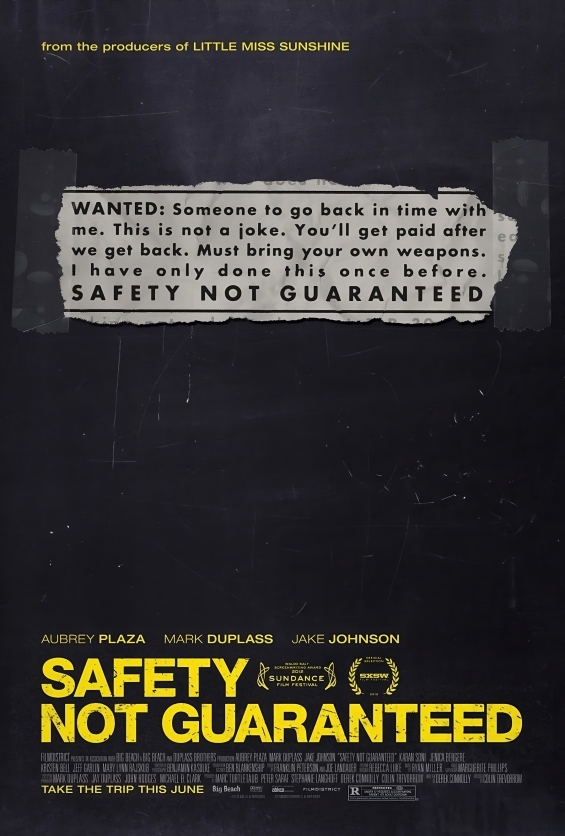
Safety Not Guaranteed (2012) – Film Review

“Stormtroopers Don’t Know Anything About Lasers or Time Travel. They’re Blue-Collar Workers.” – Arnau

Inspired by the infamous “Time Travel Companion” advert printed in a 1997 issue of Backwoods Home Magazine and written as a joke/last-minute slot filler by John Silveira, an employee of the magazine, who is actually credited in the film as a “Time Travel Consultant.” 2012’s Safety Not Guaranteed is a beguiling, low-budget comedy-drama with a minimal sci-fi twist, utilising its mirthful real-world inspiration to compose an austere story with relatively modest ambitions and a shortage of memorability that is, thankfully, enriched by its strong performances, quirky charm and heartfelt underlying themes of love, loss and altering the past.

Plot Summary: When an opportunity arises to turn an outrageous magazine advert into an investigative journalism opportunity, pessimistic intern, Darius Britt, jumps at the prospect, joining her superior, Jeff, and fellow intern, Arnau, as they set out to uncover whether the advert’s proprietor, Kenneth, is a deranged misfit or has truly discovered the secret to time travel…

Based on the previously mentioned printed magazine advert, which was even featured on The Tonight Show With Jay Leno in 1992 during the “Headlines” segment before transforming into an internet meme, Safety Not Guaranteed harbours a straightforward yet well-paced narrative, combining its subplots, twists and turns effectively as director Colin Trevorrow (Jurassic WorldThe Book of HenryJurassic World: Dominion) and writer Derek Connolly, waste little time. That’s not to say that the film has no deeper meaning(s), however, as despite the foundation of the story being a question of thought-to-be impossible technology vs. the drab confines of reality, Safety Not Guaranteed features many relevant themes of love in all its forms, as the various characters each have their own outlooks on intimacy and heartache, many of which are preconceived notions, similar to how the characters initially perceive Kenneth to be a delusional, sci-fi-obsessed oddball before becoming acquainted with him.

In regard to the central cast, each actor, whether that be Aubrey Plaza, Mark Duplass, Jake Johnson or Karan Soni, consistently remains within the realm of their character’s traits, emotionally developing whilst remaining true to the heart of their character. As such, Plaza and Duplass are immensely enjoyable to watch as there’s a sweet sadness in the characters’ focus on lost dreams, missed chances and the truism that we all long for a time machine every once in a while, which is best seen in Darius’ backstory as she has become cynical about life since the death of her mother, causing her to flounder, burdened with sorrow and self-blame. Yet, upon her arrival in Ocean View, Washington, she is met with more than meets the eye in Kenneth, a paranoid and suspicious yet affable man. Believing himself to be followed by government agents, Kenneth manoeuvres around town with his interpretation of covert ops, stealing lasers from local laboratories and immersing himself in technical calculations and physical training, all in pursuit of his time-travelling mission. Immediately drawn to each other as divergent outcasts, Kenneth gradually takes Darius into his circle of trust. Interestingly, the role of Darius was actually written with Aubrey Plaza in mind, as Derek Connolly wanted to work with her. Likewise, Jake Johnson was Colin Trevorrow’s first choice for the role of Jeff.

Visually, Safety Not Guaranteed is passable but not all that impressive, as cinematographer Ben Kasulke predominantly relies on hand-held shots in an attempt to personalise the viewing experience, providing the story with a pleasant layer of intimacy. Nevertheless, the film’s use of the drizzling, forest-shrouded location of Ocean Shores (along with a handful of other areas within thirty minutes of Seattle) is terrific, appearing visually interesting yet never overwhelming, specifically whenever a scene takes place at sunrise or sunset.

For a story revolving around time travel, Safety Not Guaranteed has a surprisingly emotional core for what could have easily been a corny low-budget flick. It’s no surprise, then, that its soundtrack, composed by Ryan Miller, helps to capture that same emotional palette, not only accentuating the themes of the film, but adding an aura of reflection and hopefulness that helps to make the film’s eccentric protagonist someone to root for rather than feel sorry for, such as in the foremost track; Opening. Aside from Miller’s original tracks, Safety Not Guaranteed also features songs from numerous indie bands, including Summer Fiction and Guster, making for an all-in-all well-rounded soundtrack.

On the topic of the humour throughout Safety Not Guaranteed, some gags land, others do not, with some scenes also seeming rather bare comedy-wise. However, I applaud the film’s decision to avoid turning Kenneth into a cartoonishly strange character just for the sake of a few cheap laughs, as well as how natural the cast’s witty improvisation feels, particularly in the scene where Jeff advises Arnau to raise his collar and sport sunglasses to look like a “Pilot That Drives Jets.”

In summary, Safety Not Guaranteed is an endearingly zany indie flick. While the film is obviously low-budget and not exceedingly memorable when placed alongside many other light-hearted comedy-dramas, Safety Not Guaranteed possesses a clever screenplay, earnest moments and a genuine sense of sentiment for those who would like to turn back the clock. Not to mention the film’s plethora of excellent performances from its cast (primarily its three leads), ensuring the film will hold up in the future. Rating: 6/10.

safety_not_guaranteed_ver2_xlg-transformed Continue reading

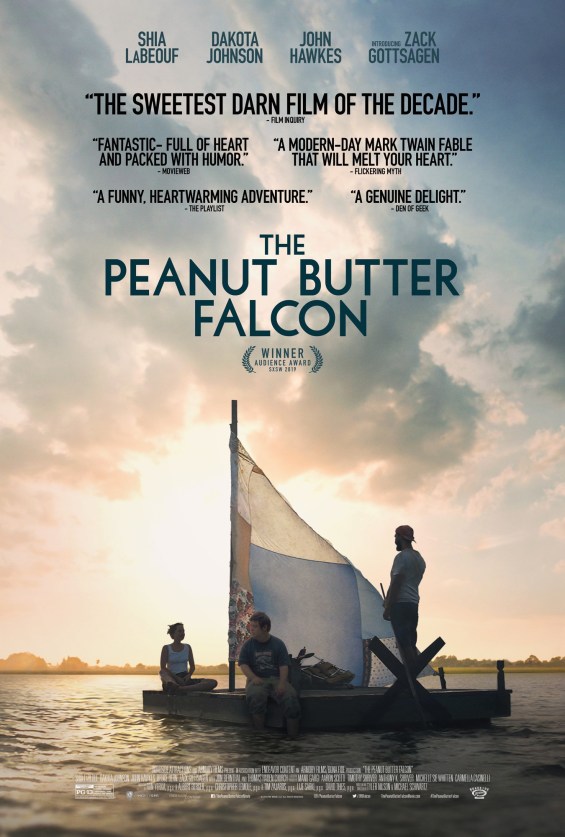
The Peanut Butter Falcon (2019) – Film Review

“Friends Are the Family You Choose.” – Carl

Warm-spirited, humorous and well-acted, 2019’s The Peanut Butter Falcon is a feel-good, modern-day comedy-drama inspired by the celebrated literature of author Samuel Langhorne Clemens, best known by his pen name Mark Twain, who challenged many of the fundamental issues of his time, including racism, evolving landscapes, class barriers and access to education, through notable publications like his renowned novel; The Adventures of Tom Sawyer, and his 1883 memoir; Life on the MississippiThe Peanut Butter Falcon specifically elicits Twain’s 1884 book; Adventures of Huckleberry Finn, finding modern resonance in the classic piece of American literature by incorporating a raft, assorted riverine ventures and luscious swampy landscapes into its entertaining (if occasionally meandering) story, which is frequently elevated by the film’s admirable camerawork and plethora of superb performances.

Plot Summary: When Zak, a twenty-two-year-old orphan with Down Syndrome, escapes the state-run care facility where he resides to pursue his dream of becoming a professional wrestler by attending a wrestling school headed by his favourite grappler, the Salt Water Redneck, he incidentally runs into Tyler, a fisherman turned delinquent fleeing to Florida. Together, the pair embark on a journey of camaraderie as they evade capture, slowly morphing Tyler into an unexpected ally and coach…

The concept for The Peanut Butter Falcon first came about when writer-directors Tyler Nilson and Michael Schwartz, who before this film’s release had only written/directed short films, such as The Moped Diaries (2014), Alex Honnold’s Urban Ascents (2014) and Alex Honnold: At Home Off the Wall (2015), met its forthcoming lead actor, Zack Gottsagen, at a camp for disabled and non-disabled individuals, where he expressed his yearning to be a “Movie Star,” this prompted Nilson and Schwartz to write a screenplay around him, knowing many locals would allow them to film for free, without permits. Given that the story is set within Southern America and features a protagonist with Down Syndrome as a result of this, The Peanut Butter Falcon plays it relatively safe with its judgmental setting to maintain an upbeat tone, only harbouring a few brief moments where Zak is lightly mocked for his disability. Moreover, many of these abusive characters are counterbalanced by jovial individuals who aid Zak and Tyler in their journey, like Blind Jasper John, portrayed by Wayne Dehart, a blind and Black evangelical preacher, who could be seen as somewhat cartoonish and stereotypical, depending on your background.

The remarkable central cast of Shia LaBeouf, Dakota Johnson and Thomas Haden Church (along with a surprise appearance from Jon Bernthal) are all exceptional in their assorted roles, conforming to their surroundings without appearing excessive in their Southern characteristics. However, Zack Gottsagen is understandably the stand out of the cast, as in spite of having only a handful of acting credits to his name, Gottsagen portrays Zak with a cordial, childlike innocent, providing his lonesome character with moments of goofiness and naivety without ever making him seem mindless. Zak is also pivotal to the film’s narrative, as his role in the story is ultimately to redeem Tyler, a flawed yet affable delinquent, who learns to be a better person thanks to Zak’s modest influence. Eventually, Tyler strikes up a serviceable romantic subplot with Zak’s pursuing, kind-hearted carer, Eleanor, but this never detracts from the prominent bond between Tyler and Zak, which remains meaningful and gratifying throughout the runtime.

Beautifully flaunting the rural Georgia landscape (which stands in for the Outer Banks of North Carolin), the cinematography by Nigel Bluck expertly captures the essence of the murky, backwater creeks, decrepit shacks, over-priced gas stations and sludgy shores with grounded boats that serve as the story’s setting, constructing an appealing visual aesthetic that feels naturalistic in its details, but also celebrates the American region for its prominent natural beauty and devil-may-care lifestyle.

Much of the score throughout The Peanut Butter Falcon bears a stripped-down approach to its arrangements, as composers Zachary Dawes, Noam Pikelny, Jonathan Sadoff and Gabe Witcher utilise acoustic instruments and minimal orchestration to provoke the audience with the calming sensation of standing in the open countryside. This is especially true of the tracks; Cold OpenTravelling Theme and Love Me in Kind, which possess simplistic yet breezy banjo-led melodies that correspond with the soothing, swampy visuals.

Interestingly, although The Peanut Butter Falcon received no Academy Award nominations in the face of its positive reception from critics and audiences alike, Gottsagen actually became the first-ever individual with Down Syndrome to present an Academy Award when he and LaBeouf announced the Best Live-Action Short Film on February 9th, 2020, which is an accomplishment in itself.

In summary, The Peanut Butter Falcon‘s triumph as a sleeper hit, becoming the highest-grossing independent film of 2019, was, in my opinion, rightfully deserved, as this low-budget comedy-drama is, above all else, charming, despite its sometimes corny and overly optimistic storyline. And whilst the film is admittedly far from a precise, poignant representation of a community that is rarely represented on-screen, The Peanut Butter Falcon is a step forward with its casting of an unknown lead actor with Down Syndrome, as opposed to acquiring a ‘bigger name’ to boast the film’s notoriety. Nevertheless, if you’d like to see an authentic, cinematic portrait of a life with Down Syndrome, I’d recommend seeking out the 2016 low-budget British drama; My Feral Heart, or the Irish drama; Sanctuary, also released in 2016. Rating: 7/10.

peanut_butter_falcon_xxlg

Jumanji: Welcome to the Jungle (2017) – Film Review

“A Game for Those Who Seek to Find… a Way to Leave Their World Behind…” – Spencer

Seeking to modernise the premise of the 1995 fantasy-adventure classic; Jumanji, a striking premise first presented in the children’s picture book of the same name, written and illustrated by Chris Van Allsburg. 2017’s Jumanji: Welcome to the Jungle switches the concept of an enchanted, four-piece board game for a ’90s-style video game cartridge, rooting itself in well-known video game tropes. And while not quite as enjoyable as the original flick, in my opinion, Jumanji: Welcome to the Jungle is still an entertaining yet undemanding soft reboot that manages to stand on its own two feet as a jungle-set adventure, utilising its charming cast and humorous moments effectively under the capable direction of Jake Kasdan (Zero EffectOrange CountrySex Tape).

Plot Summary: After Jumanji, the bewitched jungle-themed board game, receives a mysterious modification, converting the wooden parlour game into a 1990s video game cartridge, the game is stumbled upon by high school students; Spencer, Martha, Fridge and Bethany, who are promptly pulled into its perilous world. Now, in order to return home, the group must inhabit their chosen avatars, survive the cadaverous creatures and complete the game…

Despite the original Jumanji receiving fairly mixed-to-positive reviews both when it was initially released and in the years since, recounting the simple yet captivating story of Alan Parrish, a troubled boy who comes across a cursed board game that releases lions, elephants, giant spiders and carnivorous plants into the real world to pursue its unsuspecting players. Jumanji: Welcome to the Jungle remains in the same continuity, continuing on from Alan, Sarah, Judy and Peter’s adventure by having a separate group of characters unwillingly play the game. To keep the franchise feeling fresh, however, Jumanji: Welcome to the Jungle cleverly inverts the premise of the original, transporting the characters (and, by extension, the audience) into the treacherous world of Jumanji, where many references to the original flick can be seen, including a cluster of overgrown statues modelled after the iconic board game pieces and a handcrafted hut that Alan resided inside when he was trapped in Jumanji, serving as a sweet yet modest tribute to the late Robin Williams, who portrayed the older iteration of the character.

This time around, the protagonists consist of four high schoolers serving detention together before they are transported into Jumanji following their discovery of the video game’s cartridge in their school’s storage room. Spencer, a skinny, awkward gamer becomes Dr. Smolder Braveston, portrayed by Dwayne “The Rock” Johnson, the introverted, Martha, becomes Ruby Roundhouse, portrayed by Karen Gillan, the tall and muscular jock, Fridge, becomes Franklin “Moose” Finbar, portrayed by Kevin Hart, and the would-be popular girl, Bethany, becomes Professor Shelly Oberon, portrayed by Jack Black. As can be expected with an all-star cast such as this, everyone possesses terrific chemistry with each other and embodies their real-world counterparts sufficiently whilst playing into the obvious humour in each of the teens altering into entirely different individuals, particularly in the case of Bethany, who transforms from an Instagram-obsessed teenage girl to an overweight, middle-aged cartography professor. Unfortunately, the film’s power-hungry antagonist, Van Pelt, doesn’t fare as well, lacking depth, fearfulness and presence in spite of Bobby Cannavale’s serviceable performance.

Taking advantage of the naturally beautiful scenery of Honolulu, Hawaii, specifically within the Kualoa Ranch nature reserve, Jumanji: Welcome to the Jungle makes exceptional use of its true-to-life locations and vibrant sets to immerse the audience in the precarious world of Jumanji, exhibiting the immense jungles, massive waterfalls and vast pastures that are only hinted towards in the original flick, even if the actual cinematography by Gyula Pados is somewhat flavourless.

Through tracks such as Brantford High and A Test of FriendshipJumanji: Welcome to the Jungle‘s original score by Henry Jackman constructs a clear contrast between Jumanji and the real world, as the formerly-mentioned tracks are contemporary and uplifting in nature, while tracks like Digging Up the PastThe Legend of the Jewel and The Power of Bravestone, are much more exhilarating and adventure-esque, going so far as to bring back the “Jumanji Drums,” a staple of the original Jumanji soundtrack.

When it comes to action sequences, Jumanji: Welcome To The Jungle isn’t likely to impress anyone, leaning more on the amusing moments between its cast than its scenes of hand-to-hand combat or hippopotamus ambushes. Nevertheless, most of the action throughout the runtime is passable, with one fight sequence featuring Dr. Braveston even playing into the video game truism of fighting off multiple enemies at once as the playable character. Additionally, although almost all of the CGI in the film is convincing, it’s regrettable that Jumanji: Welcome to the Jungle harbours very few practical effects, given how heavily praised the physical elements of renowned adventure flicks like The Goonies (1985) and the first three instalments of the Indiana Jones franchise are today.

In summary, whilst it’s doubtful that Jumanji: Welcome to the Jungle will be recognised for years to come as a groundbreaking 2010s blockbuster, it is a comical flick with defects, functioning as a superficial yet enjoyable soft reboot/stand-alone sequel that innovatively expands on the ideas introduced in the original Jumanji. In a bizarre way, Jumanji: Welcome to the Jungle almost feels like a self-actualisation teen flick set against the unusual backdrop of an adventurous video game due to its infrequent high school setting and marginal character growth. Rating: 6/10.

JMNJ_INTL_FNL_1SHT_LK4_04.indd

Men in Black: International (2019) – Film Review

“Always Remember: The Universe Has a Way of Leading You to Where You’re Supposed to Be at the Moment You’re Supposed to Be There.” – Agent High T

Emerging several years after the entertaining yet faulty; Men in Black 3Men in Black: International, released in 2019, serves as a soft reboot of the series, aiming to bring the undisclosed extraterrestrial defenders back for another similarly amusing, alien-blasting adventure. However, predominantly due to its outlandish story, trite humour and absurdly horrendous dialogue, Men in Black: International rarely reaches the heights of the 1997 sci-fi-comedy classic, nor the later, lesser entries in the well-known franchise, even with its noteworthy stars of Chris Hemsworth and Tessa Thompson carrying over much of their on-screen chemistry from 2017’s Thor: Ragnarok.

Plot Summary: After sharing an eye-opening encounter with an extraterrestrial as a child, Agent M, the M.I.B.’s newest probationary recruit, finds herself under the wing of Agent H, a past-his-prime hero of the closemouthed organisation, operating at the London branch. Meanwhile, a duo of shape-shifting alien assassins arrive on Earth, seeking a devastating super-weapon that could place the entire galaxy at risk…

Based on The Men in Black comic book series, created and written by Lowell Cunningham, Men in Black: International is the first film in the franchise not directed by Barry Sonnenfeld. Instead, the film was directed by F. Gary Gray (FridayThe NegotiatorStraight Outta Compton), making Men in Black: International the second Gray-directed sequel to a Sonnenfeld flick, the first being; Be Cool in 2005, a sequel to 1995’s Get Shorty. Needless to say, this change in leadership (and screenwriters) could be seen as more of a negative than a positive, as the film lacks much of the disturbing violence and revolting practical effects present in the original trilogy as extensively as the satire. Furthermore, Men in Black: International‘s narrative leaves much to be desired, appearing overly simplistic and somehow equally convoluted, barring a couple of interesting concepts, such as a portal for transporting alien refugees or a mole within the M.I.B. organisation. The film is dragged down further by its ever-present cringey dialogue, which is near vomit-inducing in its many attempts to seem relevant. To its credit, Men in Black: International does, at least, manage to expand the universe of the films by introducing various international branches of the covert organisation, as its title suggests.

With Will Smith and Tommy Lee Jones openly stating they would not return to the franchise for Men in Black: International, new leading actors/actresses had to be chosen. Still, they do appear in the film briefly, having long passed into legend as agents in a dramatised painting in the M.I.B. London head office. Regrettably, however, the revamped cast of Chris Hemsworth, Tessa Thompson, Liam Neeson, Rafe Spall and Rebecca Ferguson are continually overblown in their performances, bouncing from scene to scene with ample energy regardless of tone. This issue is only made worse by the characterisation, which frequently forgets to provide the characters with motivations for their actions or any semblance of depth beyond the basics we learn of them, with Agent H being the foolish, once-hotshot agent of M.I.B. having previously saved Earth from an extraterrestrial invasion, whilst Agent M has desired to be an agent of the organisation since she was young.

Immaculate and radiant yet unimaginative, the cinematography by Stuart Dryburgh shares more of a visual resemblance to superhero blockbusters from the Marvel Cinematic Universe than any previous Men in Black instalment. Likewise, dissimilar to earlier entries in the franchise, Men in Black: International‘s plethora of extraterrestrial designs are dreadfully cartoonish in appearance, lacking the individuality and repulsive naturality of the series’ previous designs, all of which are unfortunately brought to life exclusively via CGI, with very few costumes/prosthetic make-up pieces employed. Having said that, there is one exception to this defect; the designs of the primary antagonists, the Hive, who retain a visually striking design, taking on the appearance of luminous, orange star clusters in a human physique.

In keeping with the rest of the Men in Black series, the original score is composed by Danny Elfman and newby Chris Bacon, who strive to capture the same musical spirit as previous franchise instalments through tracks like Job InterviewHere Comes Trouble and End Credits. And, for the most part, the composers are successful in this goal as the score sounds reminiscent of the original trilogy’s soundtracks while thankfully avoiding any lousy endeavours to modernise the series’ iconic theme.

When it comes to the humour, it’s apparent that there is a hefty deficiency of wit and surprise within the screenplay. As a result, most of the jokes throughout the runtime are either sluggish, irritating or immature. Additionally, during one particular scene, set within a hidden, extraterrestrial-filled nightclub, there is a weirdly out-of-place gag where Agent H attempts to spitefully manipulate Agent M into pleasuring Vungus, a party-hungry alien visiting Earth, which will surely make some audience members feel uncomfortable.

In summary, the mere notion of a Men in Black revival without the presence of Smith or Jones seems like an unmistakably terrible idea, comparable to how another swashbuckling Pirates of the Caribbean sequel without Johnny Depp’s inclusion would seem incomplete, stand-alone story or not. Even with its original cast in attendance, however, Men in Black: International likely still would’ve failed on account of its many other shortcomings, grinding its cast’s chemistry through the gears of a sci-fi franchise running low on reasons to persist. Rating: 3/10.

men_in_black_international-p1107879

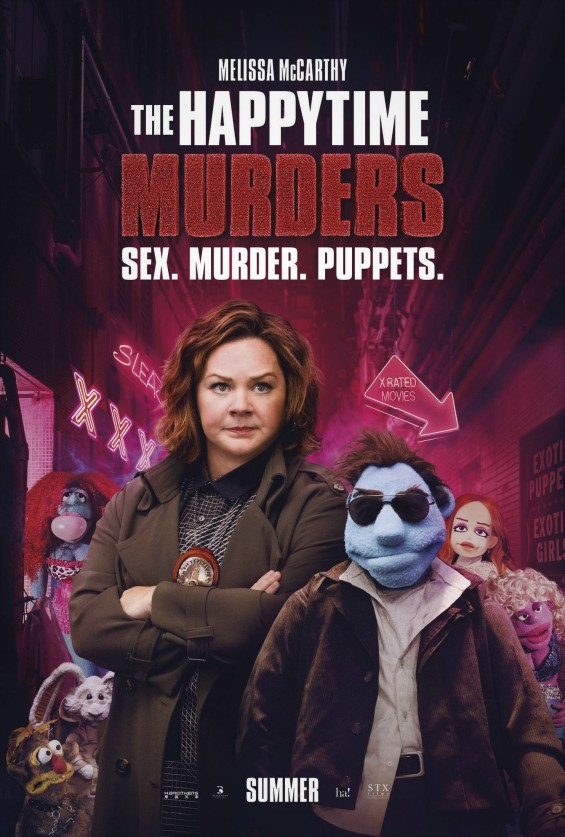
The Happytime Murders (2018) – Film Review

“Do You Have the Latest Issue of Puppet Pussy Party?” – Phil Philips

Released in 2018, The Happytime Murders was a long-in-development project from the adult-geared alternative arm of the Jim Henson Company, the famed production company behind The Muppet ShowFraggle RockDinosaurs and many other beloved, family-friendly projects. Yet, unlike those projects, The Happytime Murders squanders its imaginative premise on a witless and raunchy crime-comedy that blindly pushes buttons instead of attempting to tell an entertaining story, to the extent that even under the proficient direction of Brian Henson (The Muppet Christmas CarolMuppet Treasure Island), son of the late Jim Henson, the film never manages to escape its dreadfully lethargic humour or its foreseeable buddy-cop storyline.

Plot Summary: When the cast of a 1990s sitcom is murdered one by one at the hands of a mysterious figure, Phil Philips, once the Los Angeles Police Department’s first puppet police officer, now a weary private investigator, finds himself dragged into the case. But, as the investigation becomes more and more bewildering, Phil is forced to bury the hatchet with his former human partner, Detective Connie Edwards, in order to prevent more past-their-prime puppets from meeting a grisly end…

Curiously, before the film was released, Sesame Workshop, the non-profit organisation behind the cherished children’s television series; Sesame Street, actually tried to sue The Happytime Murders‘ marketing team on account of one of the film’s taglines; “No Sesame. All Street.” Claiming the film tarnished their child-friendly reputation. However, the suit was ultimately rejected. In many ways, this amusing piece of behind-the-scenes drama is more interesting than the actual narrative of The Happytime Murders, which primarily serves as a witty yet predictable detective mystery where Phil and his partner, Connie, are driven to scour for clues across the sunlit, puppet-populated metropolis of Los Angeles, in the hope of exposing the unbeknownst serial killer. Through this investigation, the film makes many attempts at humour, 90% of which falls short as most of the comedy lazily stems from adorable puppets merely cursing or enjoying more adult activities, such as smoking, sex or drinking alcohol. On a more positive note, the film does, at least, feature a few fragments of absorbing world-building, most notably with how puppets are considered second-class citizens compared to humans, hence why so many puppets eventually become addicts, numbing themselves to the misery of their lives, a detail that is clearly intended as underlying (and underdeveloped) social commentary.

As mentioned previously, The Happytime Murders is, at its core, a parody of classic buddy-cop crime-thrillers, with the alcoholic, blue-felt gumshoe, Phil Philips, skillfully portrayed by Bill Barretta, reluctantly pairing up with his abrasive former partner, Detective Connie Edwards, clumsily portrayed by Melissa McCarthy, after his thespian brother gets inexplicably murdered by an individual intent on wiping out the entire cast of the Happytime Gang, a prevalent ’90s sitcom. All of whom were puppets, aside from the token human cast member, Jenny, portrayed by Elizabeth Banks. And thanks to the spectacular puppetry on display, you quickly forget that Phil, one-half of this investigative tandem, is a glorified hand in a sock. Alas, the characterisation isn’t nearly as impressive as beyond some basic character traits and chucklesome one-liners, both members of the central duo lack depth and frequently come across as obnoxious, especially McCarthy. Regrettably, this issue also extends to the under-utilised supporting cast of Maya Rudolph, Leslie David Baker and Joel McHale.

Akin to many other puppeteering projects, all of the elevated sets utilised during production were built so that the puppeteers could stand on the ground and operate the puppets as if they were standing with straight arms. Yet, even with this information in mind, every set that appears on-screen feels like a real, lived-in location. Unfortunately, the rest of the visuals aren’t as remarkable, as the cinematography by Mitchell Amundsen is immensely bland, over-relying on over-lit close-ups and mid-shots that barely enrich the satire or mystery of the narrative.

Relatively tedious and generic, the bass-heavy original score by Christopher Lennert tries to reflect the jazzy scores of ’70s crime-thrillers yet rarely succeeds in forming any truly memorable tracks of its own. Similarly, songs like Sexy and I Know It and Low Rider seem almost arbitrary in their placements within the runtime, usually throwing off the tone of whatever scenes where they are featured.

In regard to the puppets themselves, it’s intriguing to note that a grand total of one hundred and twenty-five puppets were used during the film’s production, with around forty of those puppets being created specifically for the film. As a result, every puppet that emerges from scene to scene is visually unique, retaining its own colour, fabric, style, and personality. Once again, it’s just a shame that the gags and dialogue that emit from each felt character’s mouth are so sluggish, continuously giving off the impression that the film is trying far too hard to be risqué.

In summary, The Happytime Murders is a crime-comedy harbouring far too many lousy jokes, with the genuinely clever gags being few and far between. As such, the only thing that can be declared for certain when it comes to The Happytime Murders is the fact that with its countless scenes of drug-snorting and depraved puppet sex (not to mention an extremely drawn-out ejaculation sequence), it’s worth emphasising that this puppet-led comedy is not one for youngsters. Still, it’s not as if they’re missing out on much. Rating: low 4/10.

happytime_murders_ver2_xxlg