Jack and Jill (2011) – Film Review

“It’s Not You, It’s the Chimichangas!” – Jill Sadelstein

After releasing a handful of lethargic comedies near the end of the 2000s, Adam Sandler and his production company, Happy Madison Productions, reached their lowest point in 2011, as Sandler was offered over £14 million to co-write and star in Jack and Jill. A rarely amusing, oddly boring, and so gratingly sophomoric comedy that much of it plays with the same level of enjoyment as a high-pitched vocalist screeching into your ear. Packed with cringe-worthy jokes and overt product placement, in many ways, Jack and Jill feels like the result of Adam Sandler using an entire film to express just how cynical and contemptuous he has now become towards his famed comedy persona.

Plot Summary: Living his perfect life in Los Angeles with a beautiful wife and children, successful advertising executive, Jack Sadelstein, dreads only one thing each and every year; the Thanksgiving visit of his passive-aggressive twin sister, Jill. But, as Jack eagerly awaits for his sister to depart, renowned actor, Al Pacino, whom Jack desperately needs to star in a project, takes a shine to Jill, forcing Jack to reluctantly extend his sister’s visit…

Co-written by Steve Koren and Adam Sandler and directed by Dennis Dugan (Happy GilmoreBig DaddyI Now Pronounce You Chuck & Larry). The screenplay for Jack and Jill is often so leaden and formulaic that nearly any audience member will be able to predict where the story goes next as the film follows the typical plot of a dysfunctional family coming together with a sprinkling of pop culture references and numerous offensive gags parodying Indians, Mexicans and Jews, for good measure. Going off the film’s title, it’s also understandable that many would assume Jack and Jill has some sort of relation to the 18th-century nursery rhyme of the same name, which follows brother and sister, Jack and Jill, as they embark on a journey up a hill to collect a pale of water. Yet, in actuality, the film has no relation to the nursery rhyme beyond its protagonists’ names, which begs the question; why does the film even share this title aside from the simple use of alliteration?

In regard to the cast, Adam Sandler portrays Jack Sadelstein similar to how he portrays many of his characters, being a hassled family man whose needy, obnoxious twin sister, Jill, has come to stay for Thanksgiving and subsequently ruin his peaceful existence, once again portrayed by Sandler in profoundly unhilarious drag. What makes this worse, however, is that Sandler is at his most irritating when portraying Jill, raising his voice to be as annoying as possible and further fitting with her incredibly unlikeable characterisation, being idiotic and self-absorbed to an unbelievable degree. As such, Jill is an entirely overbearing character completely oblivious to social cues and seemingly has unresolved incestuous feelings for her brother, which is frequently played for laughs yet is an exceptionally strange choice on behalf of the screenwriters. Then there is Katie Holmes as Jack’s wholesome, good-natured wife, whose performance is dull and generic much like her character. And, lastly, there is, of course, Al Pacino, who gives a shockingly committed performance, continually mocking himself and his lengthy, esteemed career for the sake of a cheap gag.

Sadly, even legendary cinematographer Dean Cundey, who has worked on many iconic films from Back to the Future (1985), to Jurassic Park (1993) and Apollo 13 (1993), among many others, isn’t at his best here, as the camerawork throughout Jack and Jill is relentlessly uninteresting, being nothing but mid-shot after mid-shot. Moreover, poor editing choices and terrible CG effects (of which there are a startling amount) are immensely frequent, distracting from much of the ‘comedy’ on-screen.

Placing most of the auditory emphasis on well-known, upbeat songs, such as I Got You Babe, Vacation and I’m a Believer, it’s easy to predict that the original score for Jack and Jill by Rupert Gregson-Williams and Waddy Wachtel isn’t very memorable. In fact, the score is barely even noticeable in the majority of the scenes it’s featured.

If all of this wasn’t enough, Jack and Jill was actually the first film in Razzie history to win in every category in a single year, this included; Worst Picture, Worst Director, Worst Screenplay, Worst Actor, Worst Actress, Worst Supporting Actor, Worst Supporting Actress, Worst Screen Couple, Worst Screen Ensemble and even Worst Prequel, Remake, Rip-Off or Sequel, as many believe that Jack and Jill is a rip-off of the exploitation-drama; Glen or Glenda from 1953. This record was previously held by the psychological horror; I Know Who Killed Me, which won eight awards, including one for the Worst Picture of 2007.

In summary, Jack and Jill is a truly unbearable comedy. With the exception of a few humorous moments and the genuinely charming interviews with real-life twins that bookend the film, this modern comedy has so little to offer it’s frankly impossible to recommend on any level. Still, undoubtedly the most disappointing part of Jack and Jill is that only two years before its release, Adam Sandler headlined the delightful 2009 comedy-drama; Funny People, a film that actively poked fun at Sandler’s long list of appalling comedies. This led many to believe that Sandler was finished with these slothful releases once and for all, but evidently, this was far from the case. Rating: 2/10.

jack_and_jill_xxlg

Last Christmas (2019) – Film Review

“There’s No Such Thing as Normal. It’s a Stupid Word.” – Tom

While on paper, 2019’s Last Christmas might have seemed like a recipe for success, with two charismatic leads in Emilia Clarke and Henry Golding alongside a soundtrack consisting of innumerable George Michael songs, all wrapped up in a festive London setting under the watchful eye of proficient comedy director Paul Feig (SpyBridesmaidsA Simply Favor). In execution, Last Christmas is never as humorous or affectionate as it thinks it is, with many scenes coming across as incredibly dull and derivative as the film lacks originality to such an extent that audiences will frequently be reminded of romantic-comedy classics like Love Actually (2003) and The Holiday (2006), as they sit through its poorly conceived story and underbaked subplots.

Plot Summary: While working at a year-round Christmas store and sofa-surfing instead of facing her overbearing mother, aspiring singer and frustrated Londoner, Kate, meets Tom, an alluring young man who charms her with his unusual observations, challenging Kate’s cynical outlook on the world as a result of her dysfunctional relationships and continuously unsuccessful auditions…

Written by actress Emma Thompson, who also appears in the film as Kate’s mother, Petra. Last Christmas evidently takes a lot of inspiration from well-known Christmas rom-coms, such as the previously mentioned; Love Actually. Only, in this case, it becomes difficult to tell the two apart after a while, as Last Christmas has very few distinctions in terms of both story and visuals, only being set apart by its pivotal plot twist, which some may find absurdly over-the-top and frustrating. Sadly, for a romantic-comedy, Last Christmas also falls short when it comes to humour, with many of the film’s gags seeming either immature or foreseeable, as the film rapidly cuts between the characters trying to make it appear as if their quips are transpiring non-stop.

The characters themselves, however, are one of the better aspects of the film, with Kate’s journey from being a self-hating, narcissistic borderline alcoholic, to a content woman savouring every second of her life is enjoyable to watch even in spite of its predictability. And Clarke portrays the character well, leaning more into her actual personality off-camera as a witty, self-effacing and expressive individual. Henry Golding also breaks away from his usual roles for his performance as Tom, behaving like a handsome goofball as he and Kate wander through the streets of London, never caring what those around him may think. With that said, the main issue with the characters is their absence of backstory, as whilst we are told many things about Kate and her sombre past, including when she was severely unwell the previous Christmas, eventually leading her to have a heart transplant. We never see a flashback of this event or anything similar beyond a brief mention, which is a problem that also applies to Kate’s desire to become a West End star as well as the many friends of hers she supposedly screwed over in the past while temporarily living with them.

When it comes to the visuals, the cinematography by John Schwartzman conveys the narrative effectively enough, yet barely experiments outside of standard mid shots or the occasional wide shot/close-up. A tremendous missed opportunity considering the many brightly light and architecturally captivating streets the characters walk down, which are regularly littered with enchanting Christmas decorations and lights, even if they are primarily white, silver or gold as opposed to multicoloured.

In addition to the music of George Michael and Wham!, which is, of course, weaved into the film in almost every scene. The original score by Theodore Shapiro fills in the gaps in-between, with tracks like Secret Garden, Self-Pity Party and Take Care, serving as relaxing breaks from the film’s relentless use of beloved Christmas songs. Yet, this score is worthy of praise in itself, retaining many tracks that are beautiful and melancholic pieces that encapsulate the festive setting without exaggerating it through the use of chime bells.

Peculiarly, Last Christmas also features a subplot revolving around post-Brexit xenophobia as Kate and her family first came into the United Kingdom as refugees from former Yugoslavia. Now, her mother cowers in her home, watching news reports of right-wing demonstrations. A bizarre choice for a Christmas film to be sure, but even more bizarre considering this idea never goes anywhere and isn’t brought up until the second act. Still, at least one good thing comes out of these moments, as we find out Kate’s full name is Katarina, yet she refuses to be called by it, spending much of the film reasserting her own Britishness. A compelling idea that once again, goes nowhere and only feels as if it was put into the screenplay for the sake of political relevance as opposed to emotional weight or social commentary.

In summary, even though the combination of iconic Christmas music, a cosy, festive aesthetic and picturesque London scenery should outweigh what flaws Last Christmas has, they don’t quite achieve their goal by the runtime’s end as the film’s constant use of clichés, exposition-heavy dialogue and feeble gags soon become far too overbearing. Ultimately leaving Last Christmas a digestible film at best and an irritating one at worst, even if its climactic plot twist is very much in line with the story’s wistful yuletide spirit. Rating: high 4/10.

last_christmas-p1056071

The Final Girls (2015) – Film Review

“I Can’t Believe We’re Just Gonna Casually Watch Someone Get Murdered. What Is This, Detroit?” – Vicki Summers

An affectionate nod and occasional parody of 1980s slashers and their associated tropes, The Final Girls, released in 2015, may not be as inspired or as tonally consistent as the similarly self-mocking likes of The Cabin in the Woods (2011), Behind the Mask: The Rise of Leslie Vernon (2006) or the iconic 1996 slasher; Scream. But, with plenty of humorous moments, some stellar visuals, and a surprisingly strong layer of emotion tying together all of the film’s meta amusement, The Final Girls is sure to delight any admirer of the gruesome subgenre, even if the film focuses far more effort towards being a comedy than a nostalgic horror.

Plot Summary: When Max Cartwright and her friends reluctantly attend a tribute screening of the notorious 1980s slasher Camp Bloodbath, a film that starred Max’s late mother, the group are transported into the cult horror flick. Now reunited with an on-screen version of her mother, Max and her friends must join forces with the ill-fated camp counsellors to confront the film’s machete-wielding killer and survive the ninety-two-minute runtime…

Directed by Todd Strauss-Schulson (Drunks vs. Highs, Zombies and Cheerleaders, Isn’t It Romantic) and co-written by M.A. Fortin and Joshua John Miller, The Final Girls does a fantastic job of capturing all the aspects of ’80s slashers in a way that highlights the hilarity of their predictability, whilst still respecting the subgenre, from one character losing her virginity and thus, instantly condemning herself to a violent death, to each of the camp counsellors fitting into one of several slasher stereotypes, e.g. the Jock and the Harlot, etc. The screenplay gets plenty of mileage out of playing with the clichés we all know from the slasher flicks of old. Still, it’s undeniable that the influence for The Final Girls is the Friday the 13th series, as the films share many, many similarities in everything from structure to sound design.

The cast for The Final Girls is extensive, as the screenplay balances the characters from the real world and the over-the-top personalities from Camp Bloodbath, who are intentionally written as walking clichés, with the film placing most of its attention toward developing Max and her mother, Amanda, portrayed by Taissa Farmiga and Malin Akerman, respectively. And, their relationship is where the majority of the story’s poignant scenes come from, as after losing her mother in a tragic car crash three years earlier, Max finally sees her chance to save her, or at least, the on-screen version of her, through saving the fictional character of Nancy from her grim fate, a sweet-souled, unaware shadow of actress Amanda Cartwright. However, while the pairs’ performances are superb, along with the rest of the cast of Alexander Ludwig, Alia Shawkat, Nina Dobrev, Thomas Middleditch, Angela Trimbur (and more), Adam Devine is horribly miscast as Kurt, the sportsman-type character, as, instead of being an athletic, perverted jock, Devine comes across as far more pathetic and obnoxious than he should, almost as if he isn’t fully aware of what slasher archetype he is supposed to be portraying.

Other than some briefly utilised CGI, which has noticeably aged very poorly. A large portion of the visuals throughout The Final Girls are impressive yet not always authentic to the ’80s time-period, as the cinematography by Elie Smolkin allows the camera to swerve, zoom and spin around the characters, all the while, the film’s colour palette is either immensely vibrant or exclusively black and white for whenever a flashback to the killer’s origin story is called for. Moreover, the film features several creative sequences, including a tooling-up montage and a slow-motion chase, both of which not only add to the film’s style but are also terrifically edited.

Though lacking a central theme like many iconic slashers from the 1980s, the original score by Gregory James Jenkins and Eddy Zak is like a musical time-capsule of sounds that are no longer used within the horror genre, as tracks like The Diaphragm Van and Puttin’ It Together are easy-on-the-ears synth tracks that whilst competent and reminiscent of ’80s horror scores, never quite manage to surpass any of their inspirations.

Unfortunately, despite all these positives, The Final Girls isn’t an impeccable horror-comedy, as even with its brief runtime, the film does lose a bit of steam during its last third or so, as the story begins to fall into less inventive territory as the body count rises. Still, the screenwriters find ways to integrate a clever surprise or two, such as the cliffhanger ending, which alludes to the prospect of a money-grubbing sequel, titled; Camp Bloodbath 2: Cruel Summer. The second primary issue The Final Girls suffers from is its almost complete absence of violence/gore, as aside from one or two shots of dripping blood, for a slasher, Camp Bloodbath seems somewhat family-friendly, which, in my opinion, is a huge misstep in light of the slasher subgenre being well-known for its excessive amounts of blood and guts.

In summary, with much of The Final Girls essentially being a film-within-a-film, it’s entirely plausible that this horror-comedy could’ve declined into nothing but constant fourth-wall-breaking jokes and pop culture references. Yet, through its engaging story and facetious writing, The Final Girls successfully deconstructs the slasher subgenre without the cynicism that could render a comedy into an unsurprising, humourless snore. Rating: 7/10.

the_final_girls-p1011432

Adult Life Skills (2016) – Film Review

“I Think We Should Get Badges for Adult Life Skills; Changing a Car Tyre, Sewing, Sending Something Back at a Restaurant, Knitting…” – Brendan

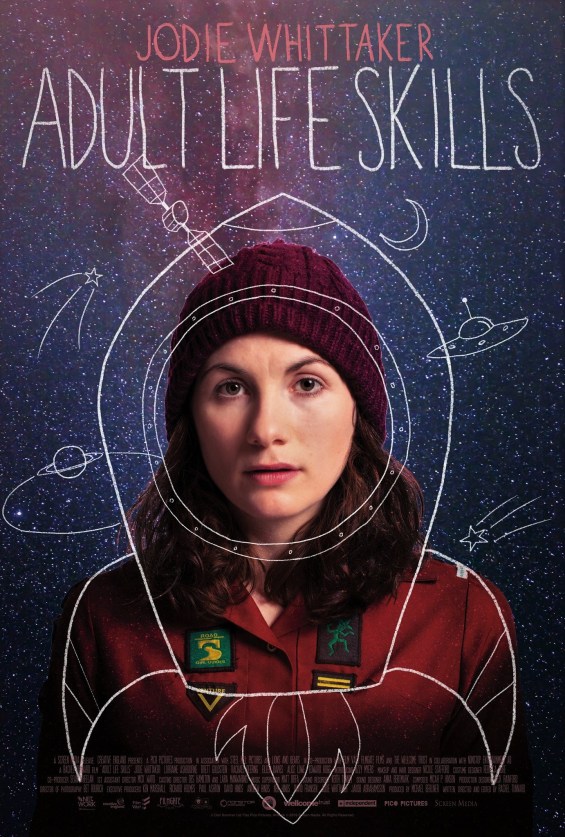
Based on the BAFTA-nominated short; Emotional Fusebox, which premiered at the London Film Festival in 2014. 2016’s Adult Life Skills is the directorial debut of writer and director Rachel Tunnard, who was primarily an editor before writing and directing the original short film. And, while Tunnard’s lack of experience in these dual roles is evident, this low-budget coming-of-age comedy-drama hardly breaks new ground in its respective genres. The endearingly quirky story, distinct British charm, and tremendous performance from Jodie Whittaker all make Adult Life Skills well worth a watch.

Plot Summary: Deeply grieving from the death of her twin brother, twenty-nine-year-old Anna spends her days living in her mother’s shed, retreating into herself as she makes videos using homemade props and her thumbs as actors. But, on the eve of her 30th birthday, Anna meets a troubled little boy going through the same life-altering experience she did, a boy who may be the answer to getting her out of her year-long slump…

Originally titled; How to Live Yours (which has a reference in the film via the name of Anna’s website), Adult Life Skills first appeared at a film festival, just as its predecessor did. Only this time around, it was the 2016 Tribeca Film Festival, where Rachel Tunnard quickly won one of the top awards, the Nora Ephron Prize for Best Female Director. Yet, in my opinion, much of the allure of Adult Life Skills comes from its screenplay rather than Tunnard’s direction, as the dialogue is continuously both witty and dramatic, balancing moments of laughs and tears without ever feeling disjointed or unnatural, amplifying the film’s feeling of solace and upbeat tone thanks to its homespun, playful aesthetic.

Jodie Whittaker, who reprises her role from Emotional Fusebox, portrays Anna magnificently, rapidly jumping from one emotion to another as Anna’s method of grieving often manifests in her hiding away from her own life, locking herself inside her mother’s shed as she cherishes her brother’s old clothes and watches videos the pair made together during their younger days. Essentially, Anna is a character whose growth has been stunted by grief, and the story explores this concept of a person growing into adulthood with a piece of their identity personified in a lost sibling. This brilliant idea is only enhanced by Whittaker’s sublime performance. Needless to say, it takes her mother’s grumbling, her grandmother’s wisdom, and her best friend’s guidance to help bring her back into the real world, restoring her life to what it once was, and the supporting cast of Lorraine Ashbourne, Eileen Davies and Rachael Deering all do a great job of bringing these characters to life, despite some of the side characters being woefully underdeveloped.

One advantage Adult Life Skills has over many other British stories is its setting, as the film truly feels as if it couldn’t be set anywhere else. Breaking away from the typical locations where stories within the United Kingdom tend to be set, such as London, or less commonly, Manchester or Birmingham, in exchange for the remote Yorkshire countryside, a unique location that even helps to redeem the film’s overreliance on hand-held techniques when it comes to the cinematography by Bet Rourich, as Yorkshire has more than its fair share of natural beauty, even when the weather is rather gloomy.

Although there is no original score for the film (most likely due to budgetary restrictions), Adult Life Skills features several songs, both well-known and obscure. From Jesus Came to My Birthday Party to You Lost Sight of Me, Champions of the River Nile and Here I Go Again, every song that can be heard throughout the runtime fits the tone remarkably well, never once feeling inappropriate or unsuitable to the specific scene they are featured within.

In addition to being a comedy-drama, Adult Life Skills makes a few (unsuccessful) attempts towards being a romantic-comedy, as one of Anna’s close friends, the soft-spoken estate agent, Brendan, portrayed by Brett Goldstein, persistently speaks to Anna, trying to impress her with his comforting charm and handmade gifts. His efforts are ultimately pointless, however, as Anna’s jaded reactions to his kind gestures are due to Anna believing Brendan is homosexual. And, whilst this misunderstanding does result in a winsome relationship, this subplot suffers due to not being given enough attention, as the story instead places far more emphasis on Anna’s relationship with her mother and the young boy, Clint, who is surprisingly well-portrayed by the then-eight-year-old Ozzy Myers.

In summary, Adult Life Skills is a film that wears its oddball eccentricities on its sleeve, tackling weighty themes of grief, loneliness, and dealing with one’s emotions, while simultaneously maintaining its optimistic outlook. In many ways, Adult Life Skills is an undemanding film for those in need of something ‘comforting’ to watch. An easily watchable comedy-drama that is sure to put a smile on most viewers’ faces, despite its overly familiar ideas. Still, there’s no denying that Jodie Whittaker is the best thing about Adult Life Skills, as whenever the screenplay is lacking, Whittaker appears on-screen with confidence, fleshing out Anna as a sympathetic character and ensuring the audience remains emotionally invested in what is occurring narratively. Rating: low 7/10.

adult_life_skills_ver2_xxlg

Please Stand By (2017) – Film Review

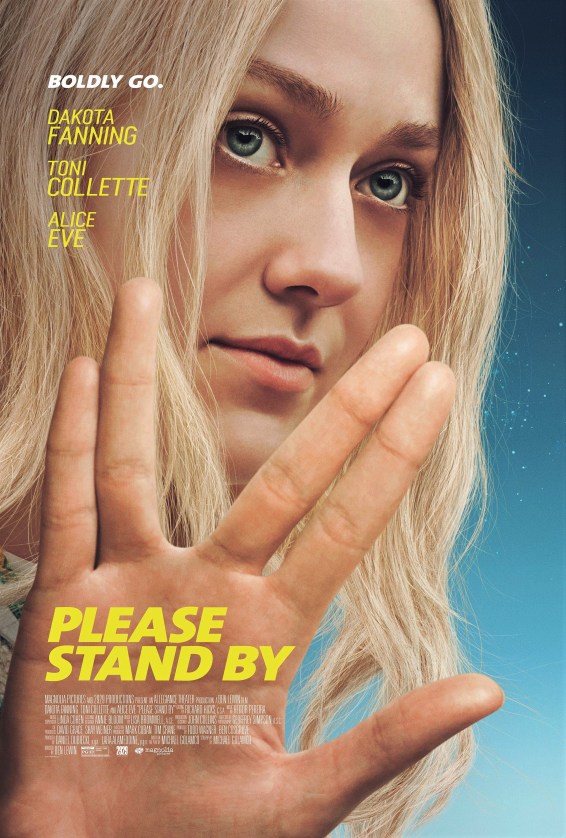
While in years gone by many films surrounding the subject of autism have been seen as overly simplistic or even offensive, with Hollywood often treating characters with ASD like an immeasurable burden upon their entire family, every now and then we receive a film, which presents its autistic character (or characters) with respect and authenticity, 2017’s ‘Please Stand By,’ being one such example. Directed by Ben Lewin (Georgia, The Sessions, Falling for Figaro) and based on the 2008 play of the same name by Michael Golamco, ‘Please Stand By’ may hit many familiar beats for a coming-of-age comedy-drama, but with an excellent cast and a subtle sci-fi twist, thanks to its focus around all things ‘Star Trek,’ ‘Please Stand By’ manages to keep its story diverting throughout its brief runtime.

Plot Summary: When ‘Wendy Welcott,’ a young autistic woman with a gift for writing, learns that Paramount Pictures is holding a screenwriting competition to celebrate ‘Star Trek’s 50th anniversary, she swiftly writes her own screenplay for submission. But, on account of her condition and a great deal of ignorance from those around her, ‘Wendy’ is unable to submit her screenplay in time. So, seeing no other option, ‘Wendy’ decides to leave her group home in Oakland and travel to Los Angeles to deliver her screenplay in person…

Although the film’s screenplay (which is actually written by Michael Golamco) rarely breaks the mould of your typical coming-of-age narrative, ‘Please Stand By’ still has more than its fair share of heartwarming moments. And, whilst some may argue that the film’s continuously upbeat tone robs the story of any real stakes, ‘Please Stand By’ isn’t really a film that aims to paint an incredibly dramatic tale of self-realisation, family and belonging, but instead a film that effectively balances all of those themes through a charming and light-hearted story of a woman embarking on a journey across California in dedication of her favourite science fiction franchise.

In what would’ve been the film’s most criticised performance should it have been executed poorly, Dakota Fanning’s performance as ‘Wendy’ is one of the more thoughtful and accurate portrayals of on-screen autism in quite some time. From her social awkwardness to her flailing arm movements and stiff dialogue readings, Fanning successfully captures the functional spectrum of autism in a delightful and intriguing expression of independence and passion, as due to ‘Wendy’ having few experiences outside of her sheltered routine, the road-trip she embarks upon makes her feel truly unconstrained for the first time in her entire life, both for better and for worse. Meanwhile, her caregiver and older sister wonderfully portrayed by Toni Collette and Alice Eve, respectively, attempt to track her down and bring her home, fearing for her safety and greatly doubting her abilities.

When it comes to visuals, despite the ceaselessly vibrant colour palette, the cinematography by Geoffrey Simpson hardly ever veers away from immobile close-ups and/or mid-shots. But, where the camerawork truly shines is during the scenes where the film attempts to recreate shots from classic ‘Star Trek’ episodes, as the Mediterranean climate of Los Angeles is quickly swapped out for the strange alien worlds of ‘Wendy’s imagination, all the while we hear ‘Wendy’ as she reads excerpts from her ‘Star Trek’ screenplay through calming voice-over.

In a similar sense to the visuals, the original score by Heitor Pereira rarely does anything exceedingly innovative as far as soundtracks go, with the majority of the runtime relying more on the use of lesser-known indie songs, such as ‘Take Me as I Am,’ ‘All or Nothing’ and ‘Waves.’ Yet, the score once again becomes much more interesting once we are transported into ‘Wendy’s screenplay, as the original score morphs into something that wouldn’t seem out-of-place in an actual ‘Star Trek’ episode.

Along with recreating shots, ‘Please Stand By’ also pays homage to ‘Star Trek’ history in nearly every aspect of its production. Firstly, the name tags of ‘Wendy’s work colleagues use the same font as the opening titles of ‘Star Trek: The Original Series.’ Secondly, the mountain ranges seen in the background of the screenplay sequence are the Vasquez Rocks located in Agua Dulce, California, this area has been an extensively used location for many ‘Star Trek’ films and series, but, most notably, for the 1966 episode; ‘Arena.’ Lastly, the suits worn by ‘Captain Kirk’ and ‘Spock’ during this same sequence are similar to suits worn by the characters in the 1968 episode; ‘The Tholian Web,’ visibly proving that the filmmakers did their research when it came to the franchise and its ardent followers.

In summary, whilst Golamco’s admittedly predictable screenplay does place the film more in the mid-range of coming-of-age comedy-dramas, by letting the talented actors simply do what they do best, director Ben Lewin does make ‘Please Stand By’ palatable, even in its most commonplace moments. And, although I obviously can’t speak for everyone in regard to how well the film truly portrays autism, given my position, in my eyes, this low-budget flick handles the potentially challenging concept adroitly, displaying the challenges of a life with ASD without ever devolving into a exaggerated collection of tics and quirks, insulting those who may be on the spectrum. Final Rating: 7/10.

please_stand_by_xxlg

Guns Akimbo (2019) – Film Review

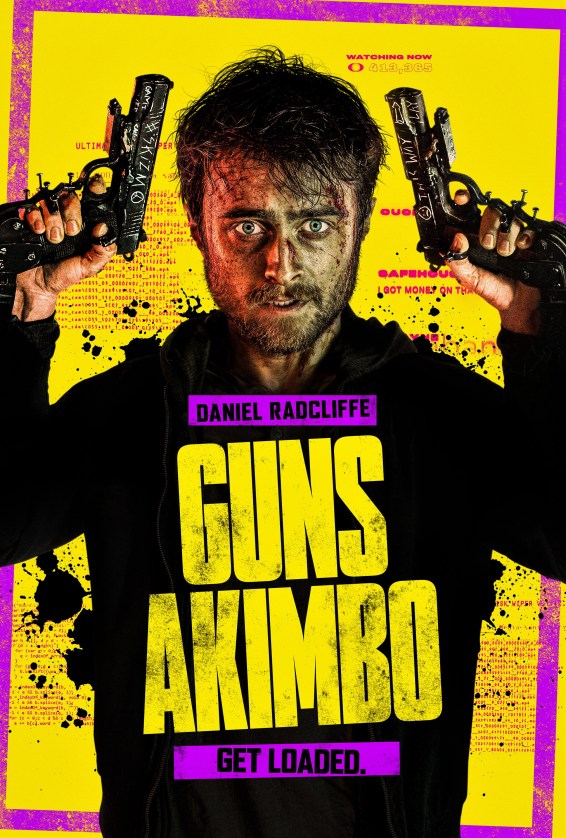
Frenetic to a fault, 2019’s ‘Guns Akimbo’ relishes in its video game-like violence, utilising its fluid editing, fast pacing and wild visuals to construct a thrilling action-comedy inspired by riveting 1980s blockbusters, like ‘The Terminator’ and ‘The Running Man.’ Yet, with all this insanity, it’s inevitable that ‘Guns Akimbo’ will alienate some viewers, especially those hoping for plenty of engrossing commentary concerning televised violence and online culture, but for many others, the film’s super-charged, energetic action sequences along with Daniel Radcliffe’s committed performance will surely hit the spot as an explosive jaunt.

Plot Summary: When ‘Miles Lee Harris,’ a spineless video game programmer, awakens one morning to discover that his hands have been bloodily bolted to a pair of pistols, ‘Miles’ is forced to use the fused-firearms to his advantage to save his ex-girlfriend from a group of kidnappers working for a criminal organisation, named; ‘Skizm,’ which pits maniacal criminals against each other in live-streamed deathmatches…

Written and directed by Jason Lei Howden (Deathgasm), ‘Guns Akimbo’ is, in many ways, trying to be a satire of the digital age we currently live in, displaying how apps like Instagram and YouTube have made us cynical, and in some instances, even dehumanised us. The problem here being that the film soon becomes exactly what it’s satirising, constantly mocking the online community of ‘Skizm’ for watching the grisly live streams, even though the film itself is taking just as much pleasure in displaying them to its audience, but considering ‘Guns Akimbo’ is primarily an action flick over anything else, I feel this muddled message is far from the film’s central focus. An issue the film does actually suffer from, however, is its screenplay, as by the time it’s third act arrives, the film is clearly beginning to run out of steam, devolving into essentially just non-stop action with little charm when compared to the first half of the film.

By far one of the film’s best aspects, Daniel Radcliffe’s performance as asthmatic protagonist; ‘Miles Lee Harris,’ is both hilarious and manic, as ‘Miles’ is forced to leave his boring life as a programmer for a company whose games are designed to exploit children for micro-transactions, to undertake a whole new identity after unwillingly entering ‘Skizm’ and their city-wide game of death. And, whilst ‘Miles’ continuous moments of cowardice and constant wheedling over his ex-girlfriend could’ve been annoying if they were over-played, Radcliffe portrays the character in such a way where it’s easy for the audience to root for him similar to how ‘Skizm’s online audience do. On the flip side of this matchup there is ‘Nix,’ a cocaine-fuelled killer, who relishes in profane one-liners and is brilliantly, portrayed by Samara Weaving, being the current reigning champion of ‘Skizm,’ ‘Nix’ serves her purpose as a baleful adversary to ‘Miles,’ in addition to harbouring a surprisingly dramatic backstory.

An utterly merciless blend of ‘Crank,’ ‘Shoot ‘Em Up’ and ‘Scott Pilgrim vs. The World,’ the cinematography throughout ‘Guns Akimbo’ never fails to be visually dynamic, as cinematographer Stefan Ciupek aims to make the camera feel completely unrestricted, having it flow freely through a variety of techniques including making superb use of body-rigs and car-mounts alike, which does help to redeem some of the uninspired firefight choreography. Moreover, as ‘Guns Akimbo’ frequently has the appeal of a vibrant graphic novel, the on-screen graphics and highly saturated lighting lend themselves remarkably well, with many of the lighting rigs used also being controlled via an iPad, so they could easily be adjusted to fit with the mood and colour of any scene.

Enis Rotthoff’s original score is just as hyperactive as the rest of the film, as any scenes that aren’t filled with iconic songs, such as ‘We’ll Be Good Friends,’ ‘Super Freak’ or ‘You Spin Me Round,’ are amplified by Rotthoff’s thumping techno soundtrack, with tracks like ‘Neon Grey’ and ‘Playcare,’ being perfectly in tune with whatever moment of the story they are a part of.

However, even when keeping all these elements in mind, whether you enjoy ‘Guns Akimbo’ or not will ultimately have to do with whether you find the distinctively zany concept endearing, as the film greatly leans into the comedy of its premise, imagining what it would be like to try and use the bathroom or attempt to call someone when you literally have pistols for hands, which has always been the film’s most notable distinction. In fact, during the film’s pre-production, an image of Daniel Radcliffe panicking and holding a pair of pistols whilst wearing a robe went viral as soon as it surfaced online, creating an aura of awareness for the film before it even had an official trailer.

In summary, ‘Guns Akimbo’ is bloody, brutal and ballistic, colourful and stylish yet admittedly fairly empty-minded. But, for a film like this, I don’t think that’s such a bad thing, as while some may argue the film starts to lose its desirability once you realise it doesn’t have much to offer beyond its high-octane action sequences, ‘Guns Akimbo’ never lies to you about what it is, as the action is every bit as ludicrously over-the-top as it would be in the fictional reality of violent video games, like ‘Grand Theft Auto’ or ‘Doom.’ Final Rating: 7/10.

guns_akimbo_xxlg

Zookeeper (2011) – Film Review

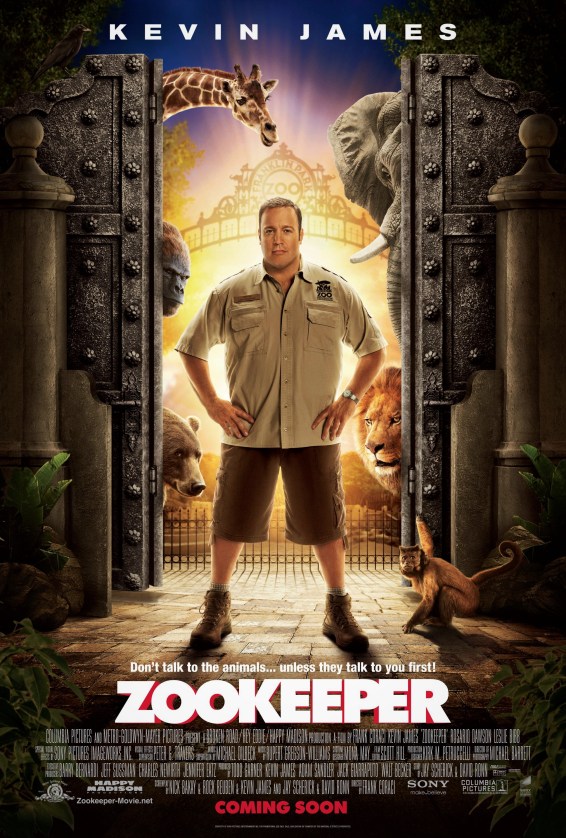
Another lacklustre comedy from the ill-famed Happy Madison Productions, ‘Zookeeper,’ released in 2011, serves as nothing more than a Adam Sandler-perpetrated ego project for Kevin James, as director Frank Coraci (The Wedding Singer, Click, Here Comes the Boom) adds little flair to a sodden screenplay riddled with clichés, overly long scenes and gags inappropriate for the young viewers that would be intrigued by its juvenile storyline. Essentially leaving ‘Zookeeper’ a film that feels as if it was made for no one, despite the film supposedly being a family-comedy with wide appeal.

Plot Summary: When kind-hearted; ‘Griffin Keyes,’ the head zookeeper at the Franklin Park Zoo, considers leaving his profession for a more glamorous career to impress his ex-girlfriend, the animals within the zoo begin to panic at the thought of their favourite zookeeper departing. So, to keep him from leaving, the animals decide to break their code of silence, revealing to ‘Griffin’ their ability to speak before offering to teach him the rules of courtship…

Shockingly, the screenplay for ‘Zookeeper’ has five credited writers (Kevin James being one of them) and yet the story/dialogue is neither interesting nor memorable, stealing many of its ideas from other live-action animal flicks, such as ‘Dr. Dolittle’ and ‘Marmaduke.’ However, this wouldn’t be so much of an issue if ‘Zookeeper’ was amusing or heartwarming, but, unfortunately, the film falls flat in both of these areas, as instead of exploring the life of an animal born in captivity for comedic and sentimental purposes alike, the film lazily relies on montages to establish a tone and suggest a friendship between ‘Griffin’ and the various zoo animals, when he isn’t taking a pounding with pratfalls and bicycle spills, of course, a.k.a. Kevin James’ usual form of comedy.

Speaking of Kevin James, he is truly one of the most notable ‘love him or hate him’ actors in film, having been in a number of roles as the supposedly loveable all-American hero who relies just as much on his weight as he does his comedic timing to get a laugh out of his audience, it’s not difficult to see why many don’t enjoy his on-screen presence, myself included. But, in ‘Zookeeper,’ James is surprisingly bearable, portraying ‘Griffin’ as a likeable guy who feels more comfortable around animals than people after being dumped by his girlfriend when he proposed to her five years prior, Rosario Dawson as ‘Kate,’ however, is given very little to work with as ‘Griffin’s work colleague and obvious love interest. The numerous animals within the zoo are also voiced by a star-studded yet ultimately squandered cast, with Nick Nolte, Sylvester Stallone, Cher, Maya Rudolph, Judd Apatow, Jon Favreau, Faizon Love and even Adam Sandler as ‘Donald’ the monkey (whose over-the-top voice is the vocal equivalent of fingernails on a chalkboard), all being heard at one point or another.

Bland and uninspired all around, the cinematography by Michael Barrett rarely attempts anything beyond a simple close-up or mid-shot, with even the film’s wide shots being few and far between almost as if the production couldn’t afford to feature any sizeable sets, or something of that description. The only visual aspect of the film that is in anyway beguiling is its colour palette, as all of the evening scenes within the zoo are displayed through dark blacks and blues, a dramatic shift in terms of colour from the bright yellows and oranges that represent midday.

Although composer Rupert Gregson-Williams at least strives to make the score for ‘Zookeeper’ a little more unique through the use of tropical instruments, like bongo drums and maracas, the original score is almost unnoticeable throughout most of the runtime. Alternatively, the film relies on well-known songs for the sake of humour, throwing in musical hits, such as ‘I’ll Supply the Love,’ ‘Low,’ ‘Easy’ and ‘More Than a Feeling,’ in a desperate attempt to make the story feel more emotionally investing than it actually is.

Whilst the film’s CG effects have begun to show their age here and there, the majority of the film’s visual effects are serviceable, this is primarily due to the majority of the animals being real with just one or two CG enchantments including mouth movements or being digitally relocated, as opposed to be represented entirely through CGI. Needless to say, this approach still has its issues, as there are many, many shots of animals standing completely alone where were supposed to believe that ‘Griffin’ is standing just out of frame. But, when it came to the film’s gorilla; ‘Bernie,’ the filmmakers actually decided to take an old-school approach, placing an actor inside of ape suit, which sadly doesn’t look very convincing, especially when the camera moves closer towards his face, placing full emphasis on the suit’s unnatural movements.

In summary, ‘Zookeeper’ isn’t offensive or convoluted, it’s quite the contrary, its immature and simplistic, far too simplistic, in fact. While some children may enjoy the slapstick humour that Kevin James excels at, the film’s mass of adult-centric jokes and typical romantic-comedy structure are likely to turn children off. And, although ‘Zookeeper’ is far from the worst Happy Madison-penned film, it’s still significantly less enjoyable than many of the other talking animal escapades you could be watching instead. Final Rating: 3/10.

zookeeper-p543178

Pixels (2015) – Film Review

Despite its undeniably promising story and talented supporting cast, 2015’s ‘Pixels’ is sure to greatly disappoint any viewer hoping for a hilarious and nostalgic throwback to 1980s arcade classics, as due to heavy involvement from Adam Sandler and his production company, Happy Madison Productions, both on and off screen, ‘Pixels’ massively stumbles in its transition from the low-budget short film it’s originally based on into an explosive blockbuster, losing all of its charm and creative ideas to simply become another Adam Sandler comedy with some inspired visual effects.

Plot Summary: When aliens misinterpret a satellite video feed of 1980s arcade games as a declaration of war, they begin a full-scale invasion of Earth using video games, like ‘PAC-MAN,’ ‘Donkey Kong,’ ‘Centipede,’ and ‘Space Invaders,’ as models for their various assaults. Eventually leading U.S. President; ‘Will Cooper,’ to call on his childhood best friend, ’80s video game champion; ‘Sam Brenner,’ to lead a team of old-school arcaders to help defeat the invaders and save the planet…

As mentioned previously, ‘Pixels’ is actually based on a 2011 short film of the same name by French director Patrick Jean, which since being uploaded to YouTube has raked in well over two million views. And, whilst I personally believe the short film’s story of video game characters invading Earth is a superb setup for sci-fi-comedy, ‘Pixels’ unique plot is quickly butchered by screenwriter Tim Herlihy’s continuous writing fallbacks, as the film is content to stick with the usual Sandler template, using its inventive premise as simply framework to focus on a tired romantic hook-up storyline. Not even talented director Chris Columbus (Home Alone, Mrs. Doubtfire, Harry Potter and the Philosopher’s Stone) manages to elevate the film’s story when the eight-bit antagonists aren’t on-screen, which is all quite frustrating when considering the film’s enormous budget of over £64 million.

Even though the supporting cast of Peter Dinklage, Brian Cox and Sean Bean feel as if they are trying their best, considering the mélange of underwritten characters and awful dialogue they have to work with. Adam Sandler, Kevin James, Josh Gad, and surprisingly, even Michelle Monaghan, are all immensely irritating throughout the film, playing into their standard goofball personas without even a single attempt to lean outside of their comfort zones as actors. Josh Gad certainly suffers the worst in this regard, however, as his character; ‘Ludlow Lamonsoff,’ serves as the cliché for video game enthusiasts, portraying ‘Ludlow’ as a loud yet awkward loner, who spends all of his time playing video games in his room rather than socialising, a gag which gets old after about a minute.

The cinematography by Amir Mokri does allow for a few pleasant shots here and there, but whenever the film focuses more on dialogue than action, the camerawork seemingly takes a swift dive into drabness. Luckily, this is where ‘Pixels’ many, many visual effects shots come into play, adding a great level of colour and 1980s authenticity into the film just as the many arcade cabinets littering the sets do, even if games, such as ‘Asteroids,’ ‘Battle Zone,’ and ‘Gravitar,’ caused issues on set, due to them being vector-class games, meaning the camera couldn’t pick up their gameplay from certain angles without the use of a special monitor.

When it comes to the original score by Henry Jackman, ‘Pixels’ doesn’t improve much here either as tracks, like ‘The Invasion,’ ‘To the White House,’ and ‘Sweet Spot,’ only continue to empathise the true extent of the soundtrack’s bland and forgettable nature, and similar to Jackman’s score for ‘Wreck-It Ralph,’ I couldn’t help but wonder as to why Jackman didn’t strive for a more traditional eight-bit approach.

Whilst we never actually see the invader’s true form at any point during the film, ‘Pixel’s CG effects are consistent and by far the film’s finest attribute, as each iconic video game character is represented exactly as they were in their original game(s), just as colourful and robotic as when they first appeared to gamers during the ’80s. And, just like the original short film, when destroyed the various characters also explode, bursting into pixels (glowing multi-coloured cubes) before then configuring themselves back together to transform into another instantly recognisable hieroglyph from video game history, which never fails to look enticing.

In summary, while I, like many others am not a Sandler fanatic, ‘Pixels’ is a film that truly baffles me as to just how far it is from its original inspiration, as even in spite of its annoying cast, childish characters and forced romantic subplot, there could still be a fairly enjoyable throwback to alien invasion flicks and 1980s gaming hidden somewhere within this mess. But, when looking at the film head on, I now think it’s just too hard to ignore all its problems, and while most had the common sense to stay clear of this abysmal sci-fi-comedy, I’m still amazed ‘Pixels’ managed to ruin all of its fleeting moments of eight-bit invaders wreaking havoc just to fall into Adam Sandler’s long list of detestable comedies. Final Rating: 3/10.

pixels_2015_movie_posters_05

Spree (2020) – Film Review

The world of social media influencers vying for clicks, likes, views and retweets all to achieve viral fandom is a twisted one, and ‘Spree’ is far from the first film to delve into this subject matter with a satirical lens. What makes the film different is its secondary inspiration, being based on the true story of an Uber driver who went on a killing spree in early 2016, ‘Spree’ has plenty of comically violent scenes to accompany its social media commentary. Yet, even in spite of Joe Keery’s magnetic screen presence, ‘Spree’ is a film that always feels as if it’s on the verge of being something exceptional, but its reach far exceeds its grasp.

Plot Summary: Desperate for an online following, twenty-three-year-old wannabe influencer and rideshare driver; ‘Kurt Kunkle,’ devises a malicious scheme to go viral, installing a series of cameras inside his rideshare car in order to film his unsuspecting victims as they meet a gruesome end…

Co-written and directed by Eugene Kotlyarenko (A Wonderful Cloud, Wobble Palace, We Are), ‘Spree’ was initially envisioned as a claustrophobic horror based around the story of the previously mentioned serial killing Uber driver, who claimed a “Devil Figure” inside of the rideshare app was controlling his actions. And, although this terrifying true story would have certainly provided enough inspiration for an indie horror flick, Kotlyarenko and co-writer Gene McHugh soon began to swerve more into dark comedy after giving the killer an intense craving for attention. This eventually evolved into the film’s central theme of social media obsession, which while often used to great effect to mock online influencers, does frequently feel underdeveloped and retracts from the film’s tension, pushing ‘Kurt’s killing spree into the background in exchange for awkward character moments, which will inevitably disappoint those hoping to see plenty of grisly kills.

Joe Keery portrays the film’s psychotic protagonist; ‘Kurt Kunkle,’ who is suitably just as upbeat and inappropriate as many real-world influencers. This realism is most likely a result of Eugene Kotlyarenko and Joe Keery’s research, as the pair watched many cringe compilations of people online without a big following to help create the character, and this comes across through Keery’s body movements and relentless optimism, making for an occasionally irritating yet charismatic protagonist as ‘Kurt’ always remains hopeful his night of murder will increase his follower count after trying (and failing) for the past decade. It’s just unfortunate that ‘Kurt’ doesn’t receive much development over the course of the runtime aside from one or two scenes, with much of ‘Kurt’s life outside of the internet being left a mystery.

The cinematography by Jeff Leeds Cohn is obviously in the style of found-footage, but rather than simply having ‘Kurt’ film his every move similar to most found-footage flicks, the camera itself takes on numerous forms as the story is seemingly spliced together through iPhone cameras/screens, dash-cams, body-cams and even CCTV footage. Yet, despite this ever-changing camerawork ensuring ‘Spree’s visuals stay varied, there does come a point when it begins to feel as if the film is simply piling on footage, even sometimes having three shots displayed at once through a split-screen effect which does become slightly overwhelming, especially when combined with the film’s rapid editing.

Whilst there are a few found-footage films that have successfully integrated an original score without taking away the sense of realism the subgenre provides, ‘Spree’ is most definitely not one of those films, as although the pulsing electronic score composed by James Ferraro does help to build excitement, the film’s soundtrack repeatedly plays over scenes with no clear in-world source, which greatly dampens the illusion of the film being found-footage.

Of course, with ‘Spree’ having a heavy focus on all things social media, it would be crucial that the film stays truthful to what the internet is actually like (even through its cynical view). And, while the film does have many scenarios that feel as though they lack realism, whether that’s due to incredibly forced dialogue or ‘Kurt’s beyond moronic actions when trying to avoid the Los Angeles police force, anytime the film displays a phone screen there is a certainty that every app/website will be a real brand and will be overflowing with detail. For example, ‘Kurt’s constant live streaming never shies away from reality, meaning his stream’s comments are always rapidly unfurling with insults, jokes, and questions all from distinct usernames, which according to Eugene Kotlyarenko, took him over forty nights to type out.

In summary, Joe Keery’s entertaining performance can’t distract from ‘Spree’s shallow critique of social media, as whilst some may argue the story’s lack of depth is precisely the point as the film feels as if it’s unsure as to what to do with its concept, which is greatly disappointing. As, I personally think a dark comedy revolving around the obsessive culture of social media is ingenious, and films, like ‘Ingrid Goes West’ prove this idea can be executed well. ‘Spree,’ however, fails to deliver on this or its even promise of a violent and comedic thrill ride. So, while I do still believe the film will have a niche appeal, ‘Spree’s apparent flaws are likely to stop most from hitting the subscribe button. Final Rating: 4/10.

spree-p1102551

Easy A (2010) – Film Review

Taking inspiration from romantic coming-of-age comedies, like ‘Sixteen Candles,’ ‘Clueless,’ and ‘Mean Girls,’ ‘Easy A’ released in 2010, certainly has its ups and downs, as despite Emma Stone leading the film with an extremely lively and charismatic performance, it’s hard to ignore the film’s immensely corny tone and many, many moments of humour that fall completely flat. Still, for those looking for a light-hearted morality tale about how a small lie can ramify out of control, ‘Easy A’ should suffice.

Plot Summary: After being prompted by her best friend to spill details of her boring weekend, ‘Olive Penderghast,’ a clean-cut seventeen-year-old high-schooler, decides to spice things up by telling a little white lie about losing her virginity. But, when the high school busybody overhears their conversation and spreads it all over campus, ‘Olive’ suddenly becomes popular for all the wrong reasons…

Written by Bert V. Royal and directed by Will Gluck (Friends with Benefits, Annie, Peter Rabbit), ‘Easy A’ doesn’t strive too far from what we usually expect to see in our teenage romantic-comedies, taking place primarily in high school and focusing on the rippling effects of ‘Olive’s constant lies and her growing popularity after she fully embraces her new persona as the school tart. And, while I wouldn’t call ‘Easy A’s portrayal of an American high school realistic per se, many of the teenage characters we meet throughout the story are purposely represented as over-the-top stereotypes or even just one-note jokes through the film’s witty writing, which does vary from being hilarious to tiresome, depending on the scene.

Possibly being the biggest role of her career at the time of the film’s release, Emma Stone’s performance is undoubtedly the film’s finest aspect, as Stone truly brings her all to the role, portraying ‘Olive’ with such self-assurance that she elevates the game of every actor/actress around her. Harbouring perfect comic timing and a strong yet not irritating playful attitude that ensures ‘Olive’ will remain a likeable and intelligent character for audience members to follow. Then there is the supporting cast of Amanda Bynes, Penn Badgley, Stanley Tucci, Patricia Clarkson, Thomas Haden Church and Lisa Kudrow, who all attain at least one or two amusing moments even if many of their characters serve little-to-no purpose within the actual narrative.

With its story being set in California, ‘Easy A’ does utilise it’s West Coast setting for a handful of attractive wide shots. But, aside from these few shots, nearly all of the film’s cinematography by Michael Grady fails to display anything overly interesting or creative. However, with that said, the film does flaunt its opening titles in a pretty imaginative fashion, having every cast/crew credit placed inside the shots themselves, whether that’s on the ground where characters are walking or placed on signs above the character’s heads, which is a fairly inventive way to avoid having each piece of text simply appear at the bottom of the screen.

Although the original score by Brad Segal is barely noticeable, ‘Easy A’ fills a large majority of its short runtime with a huge assortment of various pop songs, from ‘Change of Seasons’ to ‘Cupid Shoot Me,’ ‘Trouble Is a Friend,’ ‘Bad Reputation,’ and, of course, ‘Pocketful of Sunshine’ by Natasha Bedingfield, which essentially becomes a running joke within the film as a result of the song’s catchy nature. Yet, regardless of how widespread or beloved many of these songs may be, the sheer amount of licensed music that appears in the film is almost overwhelming, and when combined with the film’s editing, soon begins to feel quite choppy when rushing from song to song.

While the plot of ‘Easy A’ does parallel the romantic novel; ‘The Scarlet Letter,’ in more ways than one, ‘Easy A’ isn’t exactly a film that’s subtle about its influences. So, just as the film embraces its similarities to that story with ‘Olive’ continuously mentioning both the novel and film in addition to wearing the scarlet letter; ‘A,’ on her clothes, ‘Easy A’ also takes clips from many of the films it is directly inspired by. In particular, when it comes to John Hughes’ iconic filmography, as everything from ‘The Breakfast Club’ to ‘Ferris Bueller’s Day Off,’ to the previously mentioned; ‘Sixteen Candles,’ is not only referenced but eventually, even sampled into the film during a clip montage, which, while unique, I couldn’t but think is a just a clever tactic of escaping criticisms regarding the film’s lack of originality in some areas.

In summary, whilst ‘Easy A’ owes an enormous debt to older (and in all honesty, better) teenage romantic-comedies, it is enjoyable in bit-size chunks, particularly for those who are fond of Emma Stone. As, in many ways, ‘Easy A’ was unknowingly a showcase for the actress, alluding to her future career in Oscar-winning films, such as ‘La La Land’ and ‘The Favourite.’ And, even though I’m certain it’s underlying cheesiness and subplots that feel like afterthoughts will annoy some, in my opinion, ‘Easy A’ has its moments, but it’s unlikely to leave a strong impression. Final Rating: low 6/10.

easy_a_xxlg