Double Indemnity (1944) – Film Review

“How Could I Have Known That Murder Could Sometimes Smell Like Honeysuckle?” – Walter Neff

Widely regarded as one of the greatest films released during the Golden Age of Hollywood, Double Indemnity is a 1944 crime-thriller that combines suspense and sharp wit, conveying its captivating story of murder and romance through stylish, achromatic visuals and scintillating dialogue. Despite the technical limitations of its time and the occasional dragging scene, Double Indemnity‘s favourable qualities easily outweigh its shortcomings, setting the standard for almost every noir that followed, to the point that the American Film Institute actually ranked the film as their “29th Greatest Movie of All Time” in 2007.

Plot Summary: Living a life largely devoid of excitement, the smooth-talking insurance salesman Walter Neff finds his thirst for more quenched when he encounters the seductive Phyllis Dietrichson, the weary wife of a callous husband whom she plans to murder and cash out on his ‘accidental’ death claim, eventually convincing Walter to join her devious scheme. But, when his quick-witted supervisor, Barton Keyes, becomes suspicious of the claim, Walter’s paranoia gets the better of him as the pair’s fiendish ploy begins to fall apart

Based on the novella of the same name by James M. Cain, supposedly inspired by a 1927 murder case perpetrated by a married woman and her lover, whose trial he attended whilst working as a journalist in New York. During this, Ruth Snyder persuaded her boyfriend, Judd Gray, to kill her husband, Albert, after having him take out an insurance policy with a double-indemnity clause before the couple were ultimately identified, arrested and convicted. Although the novella was well-adapted to the silver screen by screenwriters Billy Wilder and Raymond Chandler, the pair did not get along while penning the screenplay, a process loaded with arguments and behind-the-scenes drama. Nevertheless, the two writers’ squabbles may have been worthwhile as the dialogue exchanges between characters perfectly exemplify the noir genre, being both snappy and comical. So much so that the scene where Walter and Phyllis meet for the first time could be seen as the template for what virtually all notable noir films sound like.

Despite several cast members initially being apprehensive about signing on to the project, with the late lead Fred MacMurray even on the verge of turning down the role because he feared his career would be ruined by playing such a despicable character, every cast member in Double Indemnity is performing to their highest ability. From MacMurray and the late Barbara Stanwyck as murderous lovers, Walter Neff and Phyllis Dietrichson, flaunting their palpable on-screen chemistry, to the late Edward G. Robinson as Walter’s astute, snarky office manager, Barton Keyes, exhibiting a perfect balance of tenacity and humour, smelling something rotten about Mr. Dietrichson’s untimely demise, all of the performances are worthy of the screenplay’s well-crafted verbal exchanges.

Owing much of its visual brilliance to the late cinematographer John F. Seitz, an influential figure in camerawork with a career spanning several decades, Seitz’s work on Double Indemnity is often deemed a masterclass in stylish visuals. Well-known for his ability to use light and shadows to evoke mood, Seitz was instrumental in establishing the visual language of the noir genre via this film and many others, with the chiaroscuro lighting, tight framing and innovative use of darkness heightening the tension and moral ambiguity that pervade the narrative, his collaboration with the late director Billy Wilder (Sabrina, Some Like It Hot, The Apartment) only elevating Double Indemnity into a film that visually communicates its underlying themes of greed, betrayal and moral corruption as much as the dialogue. Additionally, light filtering in through blinds (a staple of the noir genre) is frequently used to visually depict Walter being ‘behind bars.’

The late Miklos Rózsa’s stagey original score is your traditional orchestral soundtrack, with the opening piece; Prelude, being a standout track, dramatically enriching the opening credit sequence where a mysterious silhouette of a man stepping toward the camera on crutches soon engulfs the screen. Following this, Rózsa adds emotional depth to the film with the track; Murder Theme, a suspenseful piece in which the striking of a timpani forms a grim rhythm, accompanied by violins that deliver a numbing pulse, alluding to the characters’ dark intentions.

Outside of the crime elements, Double Indemnity also harbours a hefty amount of romance within its narrative, largely thanks to the previously mentioned chemistry between MacMurray and Stanwyck, but also as a result of the film’s sensual moments and even moderately suggestive visuals for the time. For example, when Walter first meets Phyllis, the camera is drawn to a bracelet (or anklet) on her right ankle, with an urban legend stating that a married woman wearing a right-sided anklet indicates she is married yet available to other men. One of the many details that not only adds to the characterisation of Phyllis, but also serves as a humorous time capsule of the 1940s, when merely showing a woman’s ankle was considered scandalous.

In summary, if there is one Golden Age Hollywood classic that defines the very essence of the genre it’s a part of, it’s Double Indemnity, standing as a tremendous example of how to craft an engaging crime-thriller, building tension by employing intimate close-ups and honed dialogue. For a film from this era, you can’t do much better than Double Indemnity, a famed noir that stands the test of time after seventy years and will likely stand for seventy more, given its venerable reputation. Rating: 8/10.

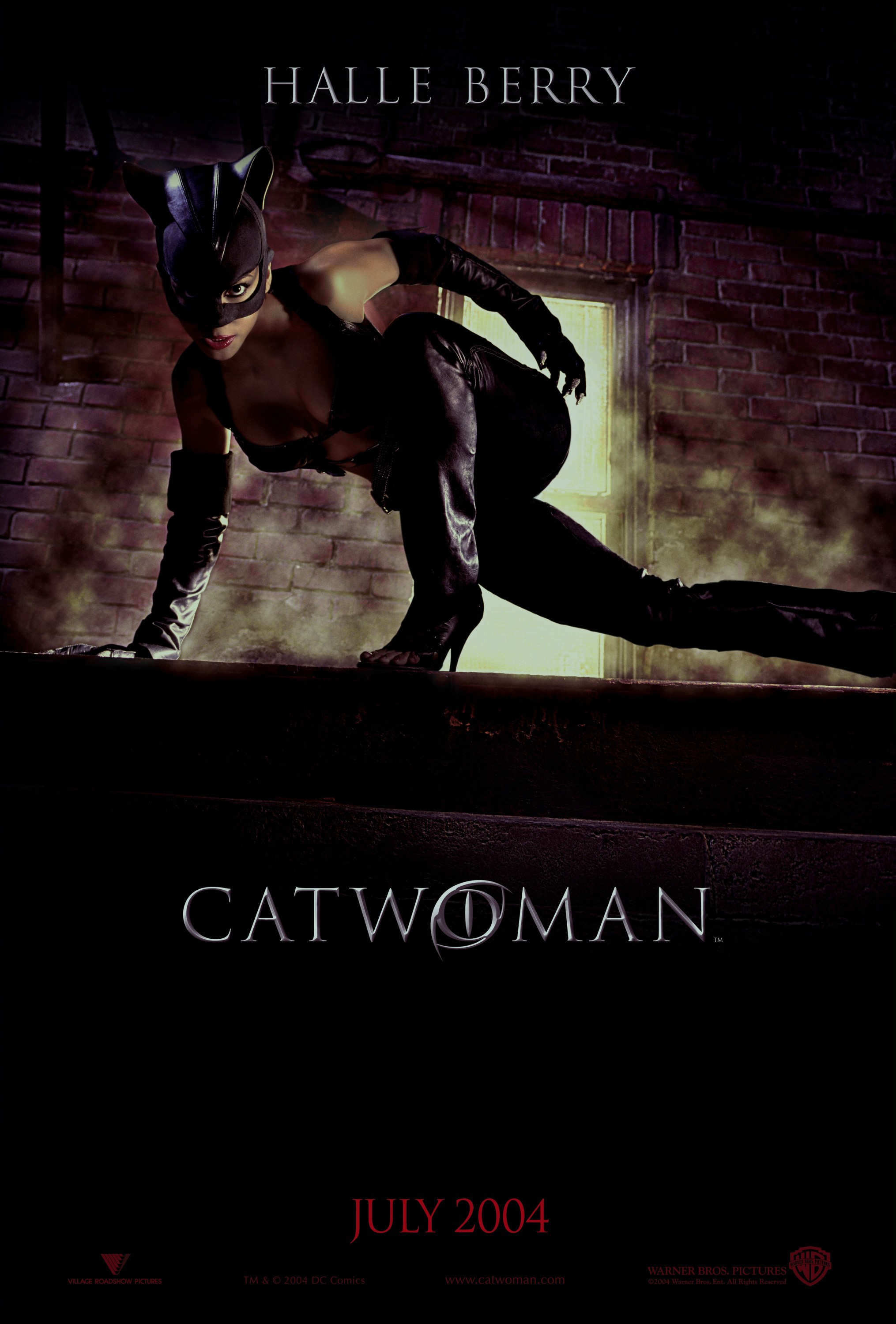
Catwoman (2004) – Film Review

“White Russian… No Ice, No Vodka, Hold the Kahlua.” – Catwoman

Widely considered one of the worst superhero blockbusters of all time, the notorious Catwoman from 2004 is a horrendous combination of an edgy 2000s music video and all of the worst aspects of a modern superhero flick. Harbouring immensely cringey, pun-based dialogue, terrible CG effects and a forced romantic subplot, among many other issues, Catwoman is a nosedive in quality from many of the beloved comic book stories featuring the famed cat burglar of the DC Universe. Still, for those who are fans of the character, there is little concern of character assassination here, as the protagonist of Catwoman is so distant from the feline that debuted in 1940 that she is virtually unrecognisable outside of the signature ears, whip and black leather outfit. As such, this seedy superhero flick is only worth seeing if you can tolerate a thrown-together story and hideous visuals merely for an ironic laugh.

Plot Summary: While toiling as a graphic designer for the cosmetics company Hedare Beauty, a mammoth corporation on the verge of releasing a revolutionary anti-ageing lotion, the shy and sensitive Patience Philips inadvertently happens upon a dark secret regarding the ointment, soon finding herself in the middle of a corporate conspiracy that eventually takes her life. But, after mysteriously reawakening with the newfound abilities of immense speed, strength, agility and ultra-keen senses, Patience transforms into Catwoman, a skilled and stealthy vigilante determined to foil her former employer’s devilish ploy…

Aside from the central (and rather superficial) underlying theme of the film, which relates to the harmful side of the cosmetics industry, naturally depicted in an over-the-top fashion with inhumane suits eager to make a profit, regardless of consumer harm, the plot of Catwoman is a formulaic yet underdeveloped superhero origin story, with most of the film revolving around the corny sequences of Patience (renamed from Selena Kyle in this iteration) discovering her numerous abilities. Similar to the unwarranted rename, this iteration of the character also possesses unexplained, supernatural abilities, unlike the original version of the character, who shared many similarities to her occasional associate, occasional foe, Batman, sporting an imposing outfit, a secret identity and exceptional fighting capabilities, yet no actual superpowers.

Becoming one of only six actors in history to own both an Oscar and a Razzie after her ‘win’ for her infamous performance in the film, Halle Berry also became the first actress to accept her Razzie in person, stepping out on stage proudly holding both Oscar and Razzie aloft, delivering the brief acceptance speech of; “I’d Like to Thank Warner Brothers for Making Me Do this Godawful, Piece of Shit Movie.” With this in mind, it’s likely not a surprise that Berry portrays Catwoman with all of the comic book cheesiness as other superhero performances of the era, from Ben Affleck’s Daredevil to Wesley Snipes’ Blade, over-delivering every line of dialogue and showcasing the cinematic sexualisation (and animalisation) of the titular character to an absurd degree, despite Catwoman’s sexually provocative side being a key part of her character in most media she appears. That said, Halle Berry does commit to her performance, and commendably so, considering that Patience spends most of her time wide-eyed and humiliatingly unhinged with a profound love of tuna. The supporting cast of Benjamin Bratt, Sharon Stone and Lambert Wilson don’t fare much better, with their performances frequently coming across as either lifeless or cartoonish.

Previously set in Catwoman’s usual home of Gotham City, with Michelle Pfeiffer reprising her role from the blockbuster sequel Batman Returns (1992) before this concept was scrapped when Pfeiffer refused to sign on, Catwoman takes place in an anonymous, grimy city that greatly resembles Gotham, yet is never confirmed to be so. Nevertheless, this iconic, fictional city’s aesthetic barely enhances the film’s visuals in the grand scheme, as the cinematography by Thierry Arbogast is continuously cluttered and visually displeasing, a flaw only exacerbated by the equally unpleasant viridescent colour palette. Moreover, the CG effects throughout the runtime are beyond appalling, appearing weightless and unconvincing, namely during scenes where Patience leaps up walls and across rooftops or when a cat is depicted via uncanny CGI, even though forty-three cats were actually trained and used for the film, seemingly removing the need for CG effects in this respect.

On another note, the soundtrack for Catwoman, primarily relying on not-so-timely songs such as Scandalous, Outrageous and Crazy in Love, is just as nostalgic as it is corny and excessively distracting. Likewise, the original score by Klaus Badelt is loud and overbearing, often unintentionally emphasising the film’s poor sound mixing, like with the clamorous track; Felineious Assault.

With Catwoman, it’s clear that the strangely mononymous French director Pitof (Vidocq, Fire & Ice: The Dragon Chronicles) set out to make a film as stylish and sensual as possible within the boundaries of its rating. And, while much of the film’s style is evidently influenced by Pitof’s background in outlandish, sultry music videos, blockbusters generally don’t rely on constant hyperactive shots, and Catwoman is a testament to why.

In summary, Catwoman is a baffling, dated mess of a superhero-led blockbuster, which is unfortunate, given how significant of a character Catwoman is, repeatedly playing a pivotal role in stories across the DC Universe, both featuring the Caped Crusader and otherwise. Thus, it’s not an exaggeration to say that Catwoman is a ‘cat-astrophe’ in practically every aspect, but definitely as an adaptation. Rating: 1/10.

catwoman_ver2_xxlg

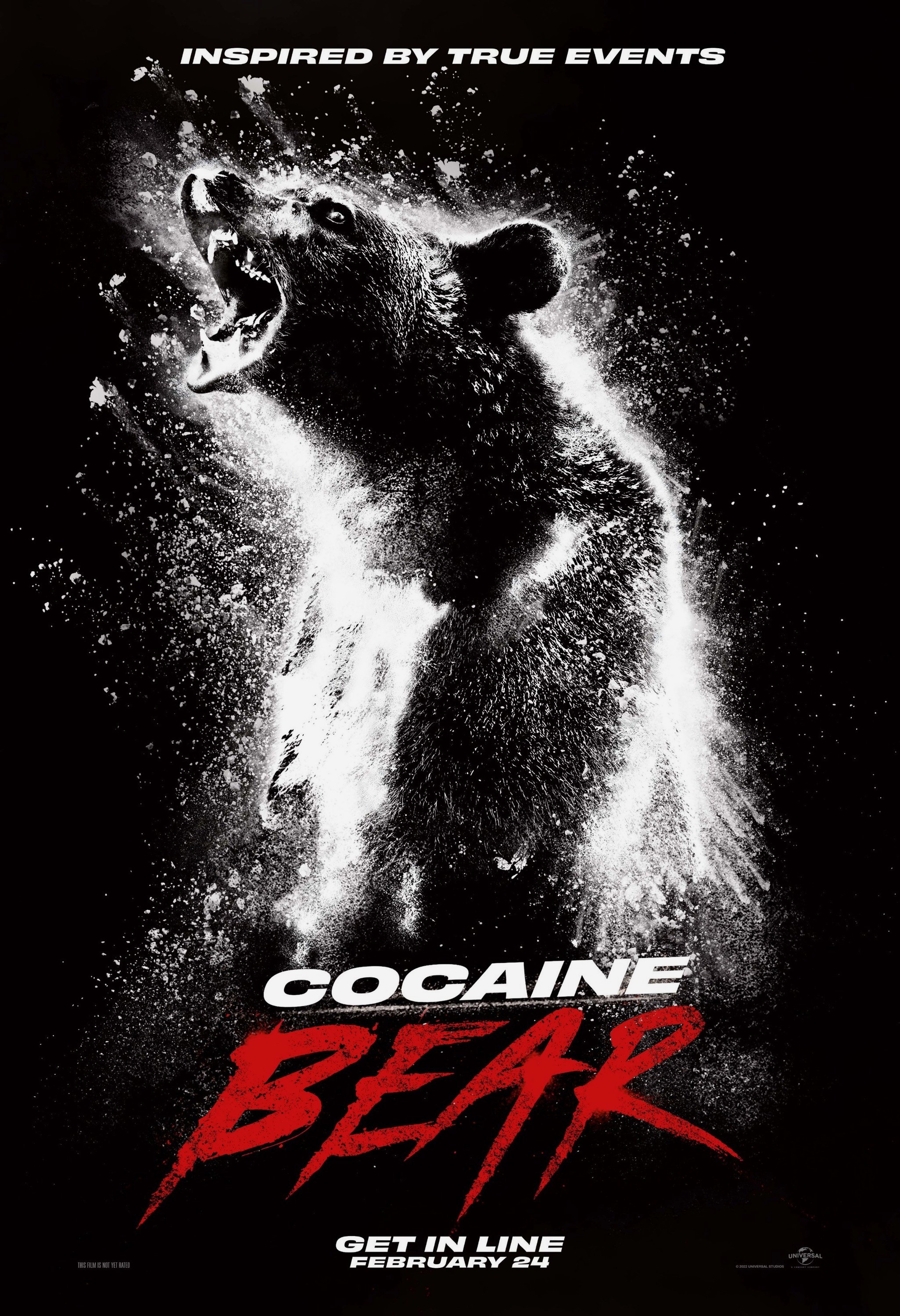
Cocaine Bear (2023) – Film Review

“What the Fuck Is Wrong With That Bear?!” – Beth

Partially inspired by an incident that took place in 1985, where lawyer-turned-drug smuggler Andrew Thornton took to the skies to drop blocks of cocaine over Knoxville, Tennessee, before leaping out of his aircraft carrying a duffel bag containing roughly £11 million worth, ultimately falling to his death when his parachute malfunctioned. A regional black bear was believed to have stumbled upon some of his stash, as two months later, a Georgia hunter discovered a bear carcass surrounded by the remains of a bag investigators later deemed to be Thornton’s. Although no deaths were reported as a result of the intoxicated animal, with a medical examiner concluding that the two-hundred-pound beast likely overdosed within minutes, dying from cerebral haemorrhaging and respiratory heart failure, the notorious story of the amusingly nicknamed; “Pablo Escobear,” was ripe for a cinematic adaptation given its utter absurdity, and the bluntly titled; Cocaine Bear, released in 2023, aimed (yet failed) to fill that void.

Plot Summary: When a duffel bag stuffed with around $14 million in cocaine falls from the sky in the aftermath of a 1980s drug smuggling excursion, a colossal, national park-roaming American black bear unconsciously devours much of the white powder, steering the animal on a bloody path of destruction as it becomes the most dangerous apex predator on the planet for the next few hours…

Directed by Elizabeth Banks (Movie 43 – Segment: Middleschool Date, Pitch Perfect 2, Charlie’s Angels), the title of Cocaine Bear was originally intended to be a temporary working title, but the producers eventually decided to release the film under that moniker as they couldn’t think of a title more fitting. To some extent, this bit of trivia serves as a representation of the film itself, as Cocaine Bear is exactly what it sounds like; a ludicrous, violent and corny comedic thriller that adapts a story almost too outlandish to believe. Of course, to create a more marketable flick, the filmmakers do make a string of alterations to the real story as, in reality, when the animal’s carcass was found, it had already been dead for around a month, in contrast to the rampage depicted in the film, which occurs shortly after the smuggler’s death. Moreover, investigators never reported any threatening or destructive behaviour ahead of its death, nor did the bear eat the entirety of the supply Thornton was thought to have smuggled, as officials deduced that an unknown individual had fled with a portion of the stash. Still, it is an amusing tale to bring to the silver screen, especially since animal experts have always been somewhat uncertain as to whether animals experience the same type of high that humans do from substances like alcohol or marijuana, despite some animals seemingly ingesting substances like catnip and hallucinogenic mushrooms for their recreational effects.

Featuring one of the last-ever performances from famed actor Ray Liotta, as the actor sadly passed away on May 26th, 2022, a mere week after he re-recorded some of his lines during the film’s post-production phase. The central cast of Keri Russell, Alden Ehrenreich, O’Shea Jackson Jr., Isiah Whitlock Jr. and Liotta himself are all serviceable in their various roles. While some of the cast portray relatively likeable yet significantly underdeveloped, hapless residents, others lend their acting skills to portraying scummy drug peddlers who ultimately earn their comeuppance when confronting the ravenous, cocaine-plugged beast. However, whilst much of the cast is well-versed in the comedy genre, one of Cocaine Bear‘s most significant shortcomings is undoubtedly its inconsistent, overly cartoonish humour throughout.

Aside from the CG effects of the titular bear, which adequately convey its size, strength and weight, the visuals of Cocaine Bear are rather bland, rarely employing distinctive shots or creative set design as the cinematography by John Guleserian predominantly largely relies on generic mid-shots, with much of the editing harbouring little rhythm and the bloodthirsty beast’s killings possessing minimal creativity, often having a severed limb merely dumped in front of the camera.

In terms of the original score, talented composer Mark Mothersbaugh’s soundtrack is sufficient yet rather sterile in the grand scheme, with the poorly-anointed tracks of Bear Attack, Bathroom Fight and Bear Dance being the only high points as Mothersbaugh attempts to integrate a selection of instruments from the ’80s to lend authenticity to the 1980s setting.

Bizarrely, although set in an unnamed national park in Knoxville, Tennessee, Cocaine Bear was truthfully shot in Ireland, with the crooked forest trails of the Irish outdoors appearing largely indistinguishable from that of the U.S. Very few Irish actors were cast, however, excluding extras, presumably to play into this implied American setting.

In summary, Cocaine Bear stumbles even as the lowbrow flick many (myself included) expected it to be, lacking entertainment value and a strong sense of satire in spite of the film leaving a peculiar cinematic legacy, with a slew of low-budget rip-offs emerging shortly after its release, each more absurd than the last, such as Cocaine Shark (2023) and Attack of the Meth Gator (2023). Thus, I’d suggest bypassing Cocaine Bear and simply scouring for a documentary on the event. Conversely, if you are ever passing through Lexington, Kentucky, perhaps consider visiting the Kentucky for Kentucky Mall, where the bear’s preserved body is actually on display, further corroborating the animal’s enchantingly strange legacy. Rating: 4/10.

cocaine_bear_xxlg

The Place Beyond the Pines (2012) – Film Review

“If You Ride Like Lightning, You’re Going to Crash Like Thunder.” – Robin

Successively suspenseful and dramatic, The Place Beyond the Pines, released in 2012, is a thrilling crime-drama recounting a tale of fatherly sins visited by their descendants. Efficiently co-written and directed by Derek Cianfrance (Blue ValentineThe Light Between OceansSound of Metal), The Place Beyond the Pines utilises its decade-spanning story and outstanding performances from its extensive cast to construct a film that succeeds both as a high-stakes crime-thriller, and a far quieter, more empathetic character study of enraged, solitary men, ascertaining Cianfrance’s penchant for bold storytelling and eye for sighting the cast members to carry his stories through to their climax.

Plot Summary: When Luke, a high-wire motorcycle stuntman, passes through Schenectady, New York, as part of a travelling carnival, he reconnects with his former lover, Romina, discovering that, in his absence, she has given birth to their son, Jason. Determined to give his son the upbringing he never had, Luke renounces his life on the road to provide for his new family, taking an underpaid job as a car mechanic before committing a series of bank robberies aided by his exceptional motorcycle skills, eventually placing him on a collision course with the ambitious police officer, Avery Cross…

Unfolding over fifteen years, the actual narrative of The Place Beyond the Pines is undoubtedly one of the film’s finest aspects, disclosing an engaging and dreary tale, all within the confines of Schenectady and its surrounding woodland. The first two acts of the story, which almost feel like distinct ‘chapters,’ are consistently compelling and narratively unpredictable. Unfortunately, however, the strengths of the first two acts are diluted in the somewhat meandering third act, which is admittedly weaker than those that precede it, concluding the story with something of an anticlimax. Nevertheless, it is a uniquely structured plot, conforming to the notion of generational sins.

In the first act, the story revolves around the travails of Luke, portrayed by Ryan Gosling, a heavily-tattooed motorcycle stuntman living a freeing life on the road before he learns his former lover, Romina, portrayed by Eva Mendes, has given birth to their son. Given something to care about in his life, Luke decides to abandon his trivial lifestyle to become a suitable father figure, plunging into a dead-end job before taking a friend’s suggestion to rob banks. From here, Luke rides the line between logical and immoral, performing vile acts in the hope of earning money to fuel better ones, making for an instantly compelling character as Gosling suitably delivers a nuanced, moody performance riddled with pathos. Likewise, Avery Cross, excellently portrayed by Bradley Cooper, is a captivating protagonist in the second act. Serving as one of the police officers tasked with finding Luke, Avery is a well-educated officer keen to prove himself and move up the ranks of law enforcement. But, as his time in the force grows, Avery begins to see the deep level of corruption within his department, conveying underlying social commentary that is even more relevant today. Lastly, in the third act, the narrative switches focus to the sons of Luke and Avery, Jason and AJ, portrayed by Dane DeHaan and Emory Cohen, respectively, fifteen years after the previous acts. And despite DeHaan and Cohen delivering admirable performances as both characters inherit some of their father’s traits, this act and its protagonists are less gripping than the previous two, as previously mentioned.

When it comes to the visuals, the cinematography of The Place Beyond the Pines is largely dominated by hand-held shots. Fortunately, these shots are considerably less distracting (and motion sickness-inducing) than many other flicks where this style of camerawork is employed. However, Sean Bobbitt’s cinematography is undoubtedly at its most effective in one particularly exhilarating chase sequence, seemingly accomplished in one unbroken take as it’s shot entirely through the window screen of a police car pursuing Luke on his motorcycle.

In spite of the many moments of violence and tension, the original score by Mike Patton is unexpectedly soothing. Patton, who is most known as the lead singer of the alternative metal band, Faith No More, made his debut composing for film with the action sequel; Crank: High Voltage, in 2009, The Place Beyond the Pines being his third score, and easily his most impressive to date. A combination of electronic tones, electric and acoustic guitar accents and a sampled choir, the soundtrack retains many beautiful tracks, the most notable being; The Snow Angel, a lonesome piano-led motif that is only heard once during the runtime yet is exceptionally memorable, even appearing in one of the film’s trailers.

Intriguingly, Derek Cianfrance claims that his financier would only provide him with the budget he desired if he reduced the one hundred-and-fifty-eight-page screenplay to one hundred and ninety pages. Without removing anything, Cianfrance sneakily used a smaller font and extended the margins, which I’m thankful for as, in my opinion, virtually every scene throughout The Place Beyond the Pines is important.

In summary, in trying to convey such a monumental amount of story, The Place Beyond the Pines does sometimes spread itself too thin and leave some strands incomplete, but when the film is at its best, it is an enthralling and well-written piece of storytelling. And while its underlying themes are weighty, Derek Cianfrance’s strong direction and surprisingly effective use of hand-held camerawork result in a disquieting style that snappily underplays the drama and uncertainty. Rating: low 8/10.

place_beyond_the_pines_xxlg (1)

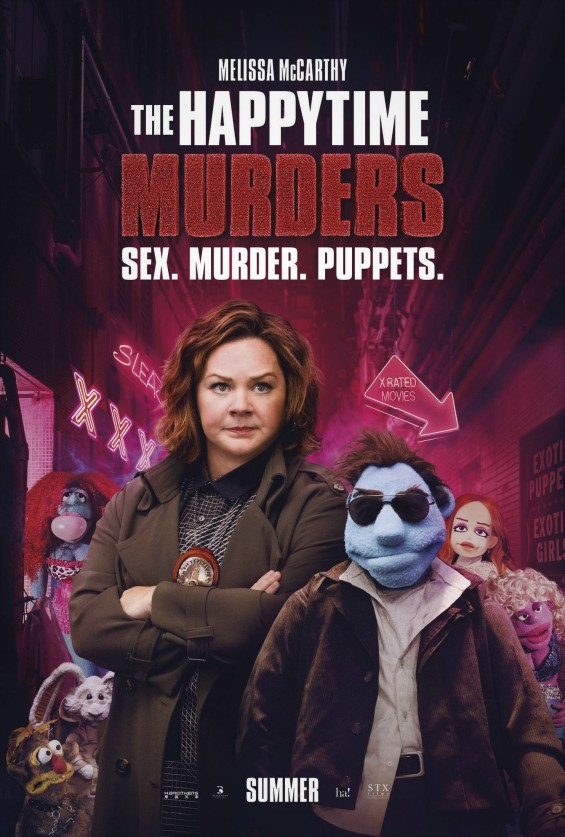
The Happytime Murders (2018) – Film Review

“Do You Have the Latest Issue of Puppet Pussy Party?” – Phil Philips

Released in 2018, The Happytime Murders was a long-in-development project from the adult-geared alternative arm of the Jim Henson Company, the famed production company behind The Muppet ShowFraggle RockDinosaurs and many other beloved, family-friendly projects. Yet, unlike those projects, The Happytime Murders squanders its imaginative premise on a witless and raunchy crime-comedy that blindly pushes buttons instead of attempting to tell an entertaining story, to the extent that even under the proficient direction of Brian Henson (The Muppet Christmas CarolMuppet Treasure Island), son of the late Jim Henson, the film never manages to escape its dreadfully lethargic humour or its foreseeable buddy-cop storyline.

Plot Summary: When the cast of a 1990s sitcom is murdered one by one at the hands of a mysterious figure, Phil Philips, once the Los Angeles Police Department’s first puppet police officer, now a weary private investigator, finds himself dragged into the case. But, as the investigation becomes more and more bewildering, Phil is forced to bury the hatchet with his former human partner, Detective Connie Edwards, in order to prevent more past-their-prime puppets from meeting a grisly end…

Curiously, before the film was released, Sesame Workshop, the non-profit organisation behind the cherished children’s television series; Sesame Street, actually tried to sue The Happytime Murders‘ marketing team on account of one of the film’s taglines; “No Sesame. All Street.” Claiming the film tarnished their child-friendly reputation. However, the suit was ultimately rejected. In many ways, this amusing piece of behind-the-scenes drama is more interesting than the actual narrative of The Happytime Murders, which primarily serves as a witty yet predictable detective mystery where Phil and his partner, Connie, are driven to scour for clues across the sunlit, puppet-populated metropolis of Los Angeles, in the hope of exposing the unbeknownst serial killer. Through this investigation, the film makes many attempts at humour, 90% of which falls short as most of the comedy lazily stems from adorable puppets merely cursing or enjoying more adult activities, such as smoking, sex or drinking alcohol. On a more positive note, the film does, at least, feature a few fragments of absorbing world-building, most notably with how puppets are considered second-class citizens compared to humans, hence why so many puppets eventually become addicts, numbing themselves to the misery of their lives, a detail that is clearly intended as underlying (and underdeveloped) social commentary.

As mentioned previously, The Happytime Murders is, at its core, a parody of classic buddy-cop crime-thrillers, with the alcoholic, blue-felt gumshoe, Phil Philips, skillfully portrayed by Bill Barretta, reluctantly pairing up with his abrasive former partner, Detective Connie Edwards, clumsily portrayed by Melissa McCarthy, after his thespian brother gets inexplicably murdered by an individual intent on wiping out the entire cast of the Happytime Gang, a prevalent ’90s sitcom. All of whom were puppets, aside from the token human cast member, Jenny, portrayed by Elizabeth Banks. And thanks to the spectacular puppetry on display, you quickly forget that Phil, one-half of this investigative tandem, is a glorified hand in a sock. Alas, the characterisation isn’t nearly as impressive as beyond some basic character traits and chucklesome one-liners, both members of the central duo lack depth and frequently come across as obnoxious, especially McCarthy. Regrettably, this issue also extends to the under-utilised supporting cast of Maya Rudolph, Leslie David Baker and Joel McHale.

Akin to many other puppeteering projects, all of the elevated sets utilised during production were built so that the puppeteers could stand on the ground and operate the puppets as if they were standing with straight arms. Yet, even with this information in mind, every set that appears on-screen feels like a real, lived-in location. Unfortunately, the rest of the visuals aren’t as remarkable, as the cinematography by Mitchell Amundsen is immensely bland, over-relying on over-lit close-ups and mid-shots that barely enrich the satire or mystery of the narrative.

Relatively tedious and generic, the bass-heavy original score by Christopher Lennert tries to reflect the jazzy scores of ’70s crime-thrillers yet rarely succeeds in forming any truly memorable tracks of its own. Similarly, songs like Sexy and I Know It and Low Rider seem almost arbitrary in their placements within the runtime, usually throwing off the tone of whatever scenes where they are featured.

In regard to the puppets themselves, it’s intriguing to note that a grand total of one hundred and twenty-five puppets were used during the film’s production, with around forty of those puppets being created specifically for the film. As a result, every puppet that emerges from scene to scene is visually unique, retaining its own colour, fabric, style, and personality. Once again, it’s just a shame that the gags and dialogue that emit from each felt character’s mouth are so sluggish, continuously giving off the impression that the film is trying far too hard to be risqué.

In summary, The Happytime Murders is a crime-comedy harbouring far too many lousy jokes, with the genuinely clever gags being few and far between. As such, the only thing that can be declared for certain when it comes to The Happytime Murders is the fact that with its countless scenes of drug-snorting and depraved puppet sex (not to mention an extremely drawn-out ejaculation sequence), it’s worth emphasising that this puppet-led comedy is not one for youngsters. Still, it’s not as if they’re missing out on much. Rating: low 4/10.

happytime_murders_ver2_xxlg

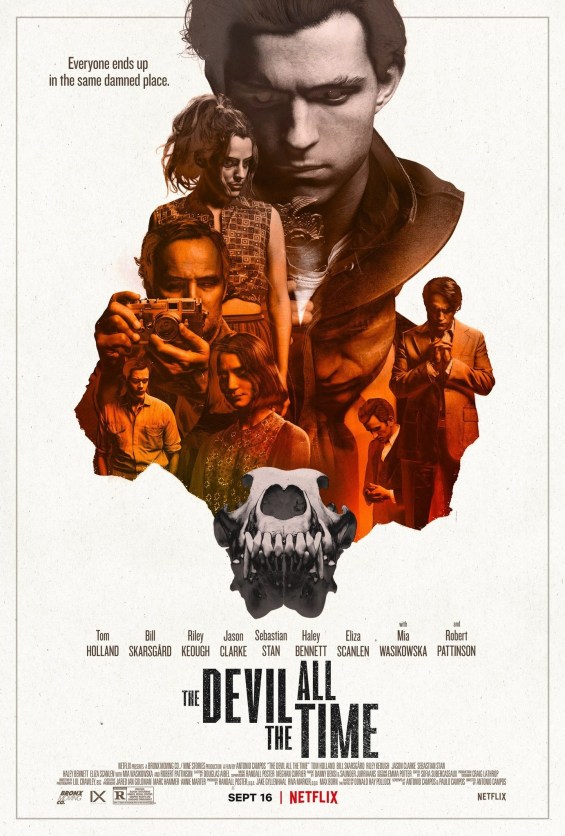
The Devil All the Time (2020) – Film Review

“Blessed Are Those That Hunger and Thirst for Righteousness.” – Reverend Preston Teagardin

A gripping yet troubling exposé of a period in history that frequently appears overly sanitised, 2020’s The Devil All the Time is a superb Netflix Original that utilises its relentlessly grim narrative, stellar all-star cast and period-accurate song choices to explore an underused setting in cinema; Southern Ohio in the 1950s. And, as a result, the film crafts an engaging and thought-provoking tale of backwoods preachers, religious zealots and broken, weathered souls witnessing the atrocities of a post-war world, replenished with sins that even faith is unable to wash away.

Plot Summary: In 1950s-era rural Southern Ohio, an assortment of crooked and sinister individuals intersect paths in the Midwestern town of Knockemstiff, a rustic, sparsely-populated cesspool teeming with corruption and brutality…

Co-written and directed by Antonio Campos (Buy It NowSimon KillerChristine), the screenplay for The Devil All the Time was adapted from the novel of the same name by Donald Ray Pollock, who, interestingly, actually performed the narration for the film, making the role his first-ever narrating position as he avoided performing the voiceover work for his own audiobooks. Similar to the original novel, a large majority of the story revolves around the real-life town of Knockemstiff, Ohio. Here, the non-linear narrative, which examines the violent vestiges of religious iconography, thrusts an array of devilish characters to encounter one another through differing scenarios, often resulting in horrific outcomes. In particular, the opening three arcs produce a distressing first act where death is seemingly always lurking around the corner. However, while most of the characters and their individual storylines are captivating, certain characters (and their continually fiendish actions) can appear somewhat underdeveloped due to a lack of screen-time, along with a few narrative details, namely, the subplot of Deputy Lee Bodecker accepting payments as a corrupt officer, not falling into place.

Regarding one of the finest aspects of the film, the central cast of Tom Holland, Robert Pattinson, Harry Melling, Bill Skarsgård and Sebastian Stan (among many others) are all exceptional in their various roles, with most of the cast’s accents seeming flawless, barring Holland and Pattinson’s accents, which come across as inconsistent and wildly over-the-top, respectively. The cast’s performances are only enriched by their usually well-written characters, however, as their unanswered prayers seem to eventually lead each of them to turmoil as they exist at a bleak point in history where treatments for diseases were scarce and a devastating World War had just wiped out millions, rendering religion to serve as the only recourse for most. What makes the characters more intriguing is that The Devil All the Time is also a multigenerational tale, beginning with the semi-protagonist, Arvin Russell, as a youngster before concluding the story with Arvin as an adult in his early twenties, all the while propelling Arvin and his step-sister, Lenora, to reckon with the ghosts of their parents’ past. That is not to say that any character is represented as exemplary, though, as during the final act, the primarily benevolent Arvin exercises his father’s vengeful tactics for a satisfyingly violent payoff.

In a rather bothersome decision, The Devil All the Time repeatedly feels compelled to remind the audience of earlier sequences in the story that mirror later moments. Yet, most of the time, these flickers of earlier scenes in the film are thoroughly unnecessary and quickly begin to grate on the audience. Aside from this annoyance, the editing and cinematography by Lol Crawley are serviceable, continually being enhanced by the terrific set design and set dressing, which makes every inch of the rundown town of Knockemstiff appear worn and ripe with religious imagery.

Alongside the original score by Danny Bensi and Saunder Jurriaans, which remains nuanced and unpretentious whilst still adding to the cruelty and suspense on-screen at many points, The Devil All the Time employs an extensive selection of traditional gospel tunes and ’50s-era songs, such as Washed in the BloodThe Three Bells and Honeycomb, all beneficially playing into the setting and underlying religious themes of the story with some of the more upbeat songs even prompting certain scenes to develop a moderately satirical tone.

Returning to the visuals, momentarily, crucifixion is a recurring image throughout the runtime, relating to the film’s central underlying theme of the conflict between belief and the horrors of the real world. For example, in the first act, Willard Russell discovers a bloodied, fly-infested serviceman crucified during his deployment on the Solomon Islands during World War II. This image changes the once godly soldier to a religiously apathetic, but more importantly, makes it apparent how closely savagery and sacrifice are exemplified through the image of Jesus Christ tortured on the cross. Later in the film, there is also a painting of Jesus Christ on the cross hanging on the wall in Arvin’s room, reminding the audience of this subtext.

In summary, whilst The Devil All the Time‘s ruthlessly pessimistic narrative can occasionally be harrowing to the point of punishment, much of the dour storytelling is offset by the strong work from the outstanding cast, whose performances are often so compelling they even redeem the rather conventional style of filmmaking the film adopts, which is unlikely to leave any audience member in awe. Still, The Devil All the Time is an effective, religion-centred thriller. Rating: 7/10.

devil_all_the_time_ver2_xxlg

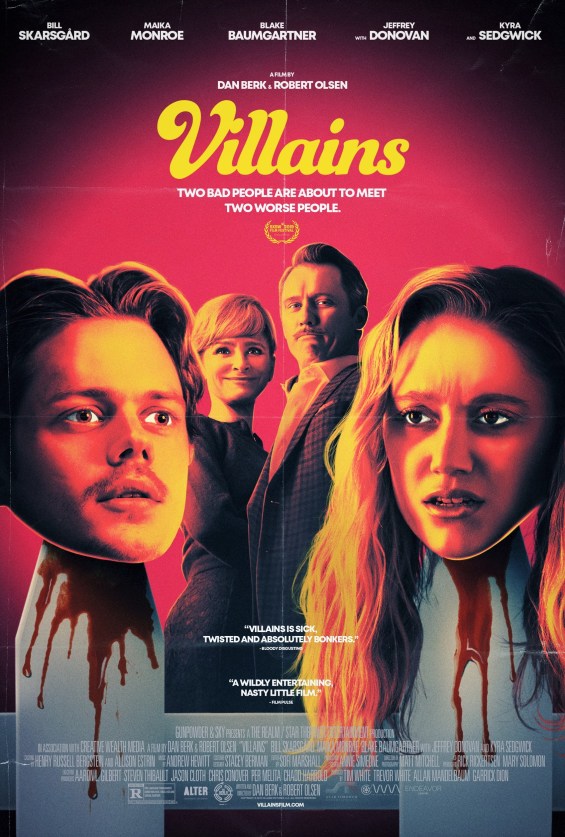
Villains (2019) – Film Review

“Son, I’d Blow Your Brains Out if I Thought You Had Any.” – George

Engrossing, suspenseful and darkly humorous, Villains, released in 2019, is a fast-paced crime-thriller with a sharp comedic edge. Led by a quartet of strong performances, including the likes of Bill Skarsgård and Maika Monroe as the leading pair of romantically-entangled criminals, Villains has more than a few noteworthy elements. Alongside its many qualities, however, Villains also suffers from several shortcomings, mainly in regard to the lack of style in its visuals, despite what the film’s flamboyant promotional posters would lead you to believe.

Plot Summary: On the run after robbing a local gas station, amateur lovebird criminals, Mickey and Jules, find themselves breaking into a secluded house in search of a new set of wheels. But, upon entering the quaint abode, the pair discover that the home they have stumbled into is actually the residency of a sadistic couple with more than a few dark secrets…

While never outright frightening, Villains does have a surplus of tense sequences and bloody violence to quench one’s thirst for excitement. However, these stirring moments don’t persist into the third act, as Villains‘ story actually reaches its peak absurdity during the second act, and then opts for a quieter, more emotionally resonant third act to conclude its narrative. Admittedly, this is a rather jarring decision, and the film’s pacing does suffer as a result, but it undeniably works in the characters’ favour. Furthermore, whilst not filled to the brim with plot twists and narrative subversions, the first act of Villains features enough twists and turns that I would advise those going in to go in blind as possible to get the full impact of the reveals.

Headed southbound for a fresh start in the sunshine state of Florida, the central couple of Mickey and Jules, portrayed by Bill Skarsgård and Maika Monroe, are surprisingly likeable characters in spite of being wanted criminals. Monroe is the most charismatic she’s ever been in her role as Jules, whilst Skarsgård portrays Mickey as a goofy yet considerate partner, delivering some of the film’s most amusing lines of dialogue. The pair could have easily been depicted as despicable, but Monroe and Skarsgård imbue them with such warmth and earnestness that you can’t help but root for them. As for the demented homeowners, George and Gloria, portrayed by Jeffrey Donovan and Kyra Minturn, are charismatic yet equally intimidating, portraying their characters with a subdued sense of lunacy as opposed to being overly insane to an almost comical degree. On top of the terrific performances, all of the characters receive an adequate amount of development. I’d even go so far as to say it’s unfortunate that the runtime isn’t a little longer to further flesh out the characters, as the hints of backstory we receive for some of them (particularly Gloria) are both tragic and fascinating.

Visually, Villains is somewhat flat, as the cinematography by Matt Mitchell largely relies on unremarkable close-up and mid-shots without much innovation or implementation of style. Excluding the end credits, that is, which are vibrant and chaotic, emulating a skater-like art style through its animation and font choices. Luckily, the production design fares better than the camerawork, as George and Gloria’s house is uniquely coated in 1960s decor, complete with radiant colours and a vintage television. All of the outfits that the psychotic couple sport also play into this ’60s aesthetic. Moreover, writers-directors Dan Berk and Robert Olsen (BodyThe Stakelander) effectively utilise the setting of George and Gloria’s home, establishing the geography of their house scene by scene so the audience has a clear understanding of where each character is in relation to one another during the many cat-and-mouse chase sequences.

The original score by Andrew Hewitt is regrettably rather generic, boasting several tracks that sound as if they were lifted from various scores from a selection of genres, from mysteries to horrors. But, on a more positive note, Villains does make sufficient use of a number of soothing instrumental pieces, such as The Free LifeTime for Romance and Looking Back on Love, which all serve as excellent contrasts to the on-screen violence and grim setup of the narrative.

Upon first viewing, it quickly becomes apparent that Villains takes a lot of influence from other crime flicks. Most notably for its protagonists, Mickey and Jules, as the pair share many similarities to the couple; Pumpkin and Honey Bunny from the opening and closing scenes of the quintessential crime flick; Pulp Fiction, released in 1994. The film even pays tribute to this specific influence through a small Easter egg, as if you look closely, you can see that Mickey has a tattoo on his wrist of Stuntman Mike’s car from 2007’s Death Proof, another flick directed by Quentin Tarantino.

In summary, Villains is an entertaining crime-thriller, but it’s also a film that continuously feels as if it’s on the cusp of something extraordinary, yet it never quite reaches whatever that may be. While the performances are solid and the plot is engaging, the almost total absence of style and flair is exceedingly difficult to ignore. Still, Villains has enough of its own offbeat energy to avoid merely coming across as an assemblage of two young filmmakers’ cinematic influences, which is more than can be said for many modern releases. Rating: 6/10.

villains-movie-poster

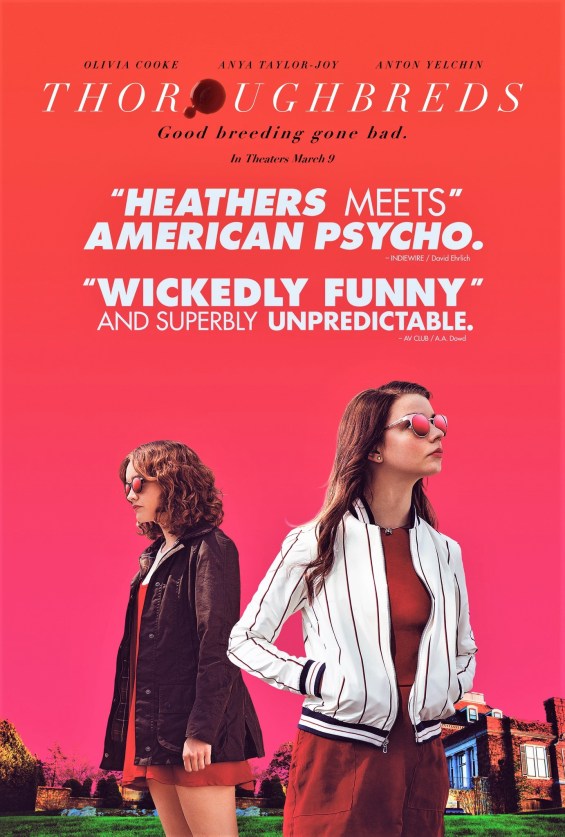
Thoroughbreds (2017) – Film Review

“The Only Thing Worse Than Being Incompetent, or Being Unkind, or Being Evil… Is Being Indecisive.” – Amanda

Originally written for the stage, 2017’s Thoroughbreds juggles many conflicting tones, but does so with such panache and charm that it’s rare to find deficiencies within its tonal shifts. With a straightforward yet deeply engrossing plot, elegant visuals and a pair of top-notch performances from Olivia Cooke and Anya Taylor-Joy, Thoroughbreds delivers a sharply written and refreshingly unpredictable entry into the black comedy genre. Placing far more emphasis on its characters and their internal issues than anything other black comedy in recent memory.

Plot Summary: In suburban Connecticut, a pair of childhood friends reconnect after many years when the sharply-witted sociopath, Amanda, arrives at the residence of the wealthy and academically inclined, Lily, for a private tutoring session. After rekindling their friendship, however, Lily soon learns of Amanda’s peculiar philosophy, prompting the pair to hatch a plan to solve both their problems, a plan that begins with the murder of Lily’s detestable stepfather…

Stuck in limbo for almost two years, the production of Thoroughbreds technically ceased in mid-2016, yet the film wasn’t released into cinemas until March 9th, 2018. This was due to several factors, but most notably, this was a result of the film’s lengthy and extensive festival circuit in 2017. During this festival run, Thoroughbreds received many positive reactions, which in a way, surprises me, as even though the plot of Thoroughbreds may sound like a setup for a compelling thriller, the plot twists and suspenseful moments are never the main attributes of the film. Instead, Thoroughbreds is far more focused on having its characters use their words to eke the darkness out of one another, which ultimately, leads to an outcome that, in its theatricality, may feel anticlimactic to some. But, for others, will feel like a unique take on what could’ve been a poorly executed sequence for a lower-budget crime-thriller.

The two central characters of Amanda and Lily, expertly portrayed by Olivia Cooke and Anya Taylor-Joy, are unquestionably the primary focus of Thoroughbreds, with much of the runtime being spent developing the pair and depicting many of the similarities and differences between their respective personalities. For instance, since their early days of horseback riding, Lily has turned into a polished, upper-class teenager with outstanding grades and a coveted internship on her resume. Meanwhile, Amanda has developed a strong sense of perception and a stern attitude, all in the process of becoming a social outcast and unregistered sociopath, which is flawlessly depicted through Cooke’s impassive performance. Sadly, Thoroughbreds was also the final project to feature a terrific performance from actor, Anton Yelchin, as the small-time drug dealer, Tim, before his tragic death on June 19th, 2016, at the age of twenty-seven. As such, the film is dedicated to him.

Despite writer-director Cory Finley (Bad Education) bearing a more extensive background in theatre than filmmaking, Finley displays a natural cinematic instinct right from the opening scene. Depicting the baroque, marble-lined mansion where Lily, her mother and her stepfather reside as more of a prison than a utopia, as the cinematography by Lyle Vincent stalks through the location in lengthy, restless takes. Lingering on specific elements, such as an SUV driving up the gravel driveway or two characters staring at each other from adjacent rooms. Furthermore, the visuals retain a surprisingly vibrant colour palette when considering the grim nature of the story, utilising luminous whites, greens and greys for the majority of the runtime.

For the original score, composer, Erik Friedlander, manipulated various instruments to achieve a number of atonal sounds, like boinks and sproings, which all serve as disconcerting counterpoints to the refined visuals. And while there are many excellent tracks throughout the seemingly unstructured score as a result of these unusual sounds, the final track; Win Win, is undoubtedly the best track of the original score, concluding the black comedy on a bittersweet note thanks in part to the optimistic piece.

Bleak yet direct in its underlying commentary on the turmoil of being a teenager in the modern world, Thoroughbreds takes the problems of the young and privileged and explores them through the narrative. With many teenagers (particularly teenage girls) often being told to act or react in specific ways, this story of two girls who are both removed yet acutely aware of their emotions is something to be appreciated in modern character studies. Still, as a consequence of this gradual exploration of the two central characters, I believe many audience members will be turned off by the film on account of its slow pacing and total lack of on-screen violence. However, that’s not to say that I agree with these conceivable criticisms, as even with Thoroughbreds‘ slow pacing, I actually feel that the runtime could’ve been slightly extended, providing more time for characterisation in the first act before the girls reunite.

In summary, Thoroughbreds is a quirky, darkly comedic and entertaining crime-thriller anchored by some exceptional performances and praiseworthy filmmaking. Although the film may not be for everyone given its harsh perspective on teenage life, shortage of blood/gore and frequently slow pacing, Thoroughbreds lavish presentation and snappy dialogue are immensely effective. To the point that the screenplay even manages to make the audience empathise with a character that is completely incapable of empathy, which is a rather impressive feat. Rating: 8/10.

thoroughbreds-p1037063

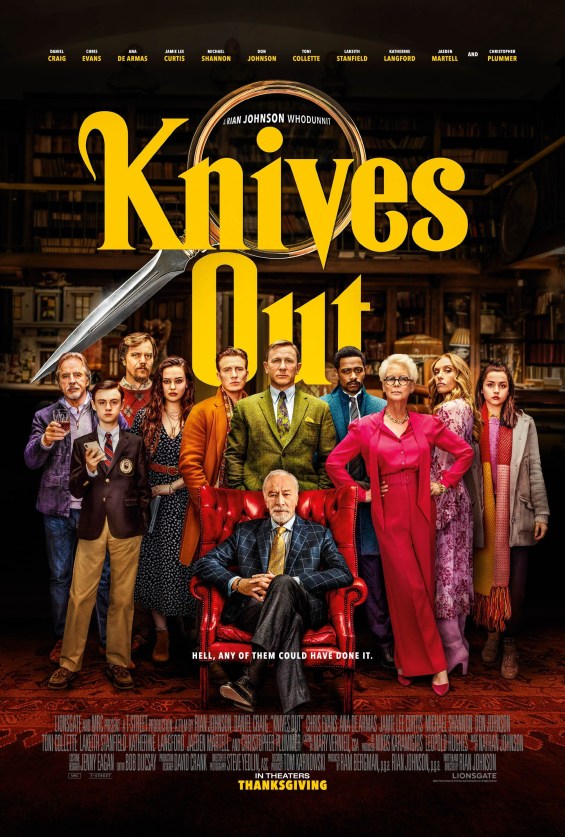
Knives Out (2019) – Film Review

“It’s a Weird Case From the Start. A Case With a Hole in the Center… A Doughnut.” – Detective Benoit Blanc

A brilliant spin on the well-worn formula of kindred murder mysteries, 2019’s Knives Out is a charming, captivating and hilarious film from beginning to end. Functioning as both a subversive whodunit as well as a modernised homage to the prominent works of crime-fiction author, Agatha Christie, Knives Out offers the kind of classy entertainment we could use more of on the silver screen as the film, through its all-around marvellous cast, excellent direction and witty dialogue, quickly overcomes the one or two minor flaws it has to thoroughly immerse its audience in a delectable delicacy of a mystery and its affiliated suspects.

Plot Summary: When renowned crime novelist, Harlan Thrombey, is found dead in his study on the night of his eighty-fifth birthday, the inquisitive and debonair, Detective Benoit Blanc, is enlisted to investigate his passing. Now, in a mansion full of potential suspects, from Harlan’s dysfunctional family to his devoted staff, Detective Blanc must sift through a tangled web of red herrings and self-serving lies to uncover the truth behind Harlan’s untimely death…

Written and directed by Rian Johnson (BrickLooperStar Wars: Episode VIII – The Last Jedi), the plot of Knives Out follows one of the most timeworn formats in the whodunit playbook; as family members and associates gather after a rich patriarch dies under mysterious circumstances. And although many of them may act like they want to uncover who’s responsible for the premature death of their loved one, in reality, they’re far more interested in knowing how much they stand to gain monetarily from said loved one’s death. However, at many points, Knives Out actually acknowledges its audience’s familiarity with this formula, battling against it by integrating a series of compelling twists and turns into its story. So, even if you’ve already guessed who isn’t responsible, it won’t be easy to deduce who is. Furthermore, it soon becomes clear that Rian Johnson has more than just murder and mysteries on his mind, as Knives Out quietly threads political commentary into its narrative through the family’s conversations concerning immigration and the many shades of venality, exposing an entirely different side to the ignorance and pride of the Thrombey family.

With an enormous ensemble cast featuring Daniel Craig, Ana de Armas, Chris Evans, Jamie Lee Curtis, Don Johnson, Michael Shannon, Toni Collette, Katherine Langford, LaKeith Stanfield, Riki Lindhome and Christopher Plummer, it’s understandable that a few of the actors and/or characters would be misspent. And this is most apparent with the character, Jacob Thrombey, portrayed by Jaeden Martell as beyond serving a single plot point and a handful of jokes, Jacob, and by default, Martell, has little screen-time, very few lines and the least development of any member of the family, making his inclusion seem rather pointless. Detective Blanc also brings two police underlings with him to solve the case, neither of whom makes much of an impression. Still, every member of the cast somehow manages to make their character feel distinguishable when placed alongside the others, from the bohemian Instagram influencer, Joni Thrombey, to the foul-mouthed freeloader, Ransom Drysdale, Harlan’s entire family is relentlessly amusing as they continuously squabble with each other despite pretending they are on the same side.

The gothic abode in which Detective Blanc’s suspects are confined is an interesting location for a murder mystery, to say the least, as Harlan Thrombey’s gigantic mansion is not only unique exterior-wise, but inside, is decorated with antique furniture and an assortment of ghoulish accoutrements, including crystal skulls, oil paintings, artwork that resembles giant eyeballs and, of course, a large metallic spiral of knives and other sharp implements. All of this elegant set design greatly adds to the already pleasing visuals of Steve Yedlin’s cinematography, but there’s no denying that characters and humour are certainly the biggest draws of Knives Out as a whole.

By that same token, the original score by Nathan Johnson (Rian Johnson’s cousin) never overshadows the comedy or drama unfolding on-screen, but instead enhances it. Matching the highbrow, old-fashioned style of Harlan’s grand mansion, the symphonic score plays more like a concerto for strings than a traditional film soundtrack. With tracks like Knives Out! (String Quartet in G Minor), Like Father, Like Son and The Thrombey Family Theme, all being wonderful pieces of classical pastiche dripping with a rich, gothic atmosphere.

Interestingly, Nathan was not the only member of Rian Johnson’s extended family to assist in the production of Knives Out, as Rian also brought on board two further cousins of his; Mark Johnson, who assembled the film’s opening titles and designed a font based on a series of Agatha Christie paperbacks, and Zack Johnson, who painted the cast portraits seen in the end credits. Further adding to the film’s high-class stylings and inadvertently tieing into the story’s focus on familial relations.

In summary, Knives Out is a sly, wry and stylish throwback to the murder mysteries of yesteryear, with a splashing of self-aware humour to boot. Updating the genre for modern audiences whilst simultaneously satisfying fans of the classic whodunits, Knives Out demonstrates (in a similar sense to many contemporary westerns), that some of the genres we may perceive as defunct are, in actuality, still far from gone, and that we could potentially see more from these less prevalent, but immensely enjoyable genres, in the future. Rating: 8/10.

knives_out_ver13_xxlg

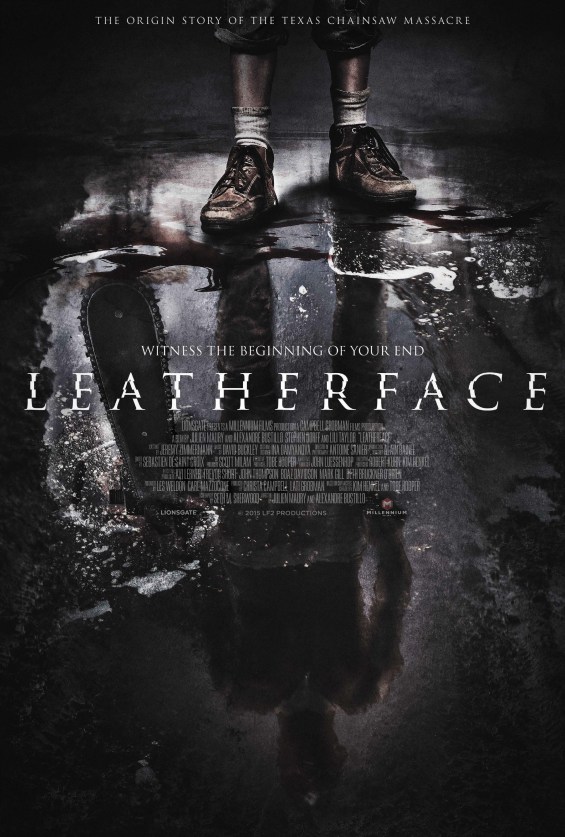
Leatherface (2017) – Film Review

“You Messed With the Wrong Family…” – Verna Sawyer

Considering the monumental impact of the original Texas Chainsaw Massacre in the annals of horror cinema, it’s peculiar that the film’s ensuing franchise has had such an erratic history, bouncing from excessively jokey entries, like The Texas Chainsaw Massacre 2 in 1986, to absolutely bonkers ones, such as Texas Chainsaw: The Next Generation in 1995. 2017’s Leatherface continues this trend by once again attempting something different; aiming to be a prequel that explores the origins of the face-wearing menace himself. Unfortunately, however, even though the film has good intentions, Leatherface only succeeds in replicating the skin of a Texas Chainsaw Massacre flick and non of the guts within as the journey its titular character embarks upon ultimately doesn’t feel worth the eighty-seven-minute runtime.

Plot Summary: In 1955, the young, Jedediah Sawyer, is assigned the task of luring an unsuspecting traveller into his family’s decrepit barn for the sake of blood. But, when it turns out that this unfortunate victim was actually the lone daughter of Texas ranger, Hal Hartman, Jedediah is forcibly separated from his family and placed in a mental institution. Ten years later, the now near-adult, Jedediah, along with a handful of criminally insane inmates, manage to escape the asylum during a riot, beginning a journey of murder and turmoil as the group trudges across rural Texas, evading the vengeful ranger pursuing them…

Directed by Alexandre Bustillo and Julien Maury (Inside, Among the Living, The Deep House), Leatherface is, for all its flaws, at least an earnest attempt at franchise course correction, avoiding another reboot of the series to instead tell a story that tries to connect a few dots in the very tangled web of this horror franchise. Needless to say, being a prequel, Leatherface still suffers from the usual problem most prequels do: explaining things that don’t need explanation. As in the original film, Leatherface stands out because he is a complete enigma, even in a family of cannibalistic lunatics. We never receive answers to any of the questions we have about him as Leatherface simply exists, which is what makes him so terrifying. So, naturally, exploring his backstory diminishes that aspect. Furthermore, with Leatherface being just one member of a homicidal family, a prequel would be a great opportunity to develop some of the lesser-explored members of the Sawyer family, such as the Proprietor, the Hitchhiker and Grandpa Sawyer, yet none of their backstories are even hinted towards.

Despite their frequently flat dialogue, the film’s main cast of Sam Strike, Vanessa Grasse, Sam Coleman Jessica Madsen, James Bloor and Stephen Dorff all throw themselves into their respective characters with confidence as once Jedediah finds himself inside the mental institution, he encounters several intriguing patients. From the silent brute, Bud, to the callous couple, Ike and Clarice, all of whom make members of the Sawyer family look sane by comparison. Then there is the idealistic nurse, Lizzy, who essentially serves as the story’s final girl, yet due to a severe lack of development similar to many of the other characters, it does become increasingly difficult to empathise with her outside of just acknowledging her horrific situation. However, the highlight of the cast is undoubtedly Lili Taylor as Verna Sawyer, the family matriarch who is bursting with pride for her boys, but devoted to the point where every outsider is seen as an adversary.

When it comes to the visuals, even though Leatherface wasn’t actually shot in Texas, but instead, in Bulgaria for budgetary reasons. The film does utilise its varied colour palette along with natural lighting to create an effective and convincing backdrop of back-country Texas, giving cinematographer Antoine Sanier plenty of opportunities to integrate creative shots, including a shot that references the recognised extreme low-angle dolly shot from the original flick.

Regrettably, the original score by John Frizzell isn’t quite as remarkable as the soundtrack rarely breaks the mould of a typical horror soundscape, being rather forgettable outside of the score’s occasional use of a chainsaw-like rumble. Numerous songs from the 1960s can also be heard throughout the runtime, such as Leave Me Alone, Working on the Line and Don’t Take Me for Granted, which help further ground the story in the ’60s time period alongside the lavish costume and production design.

On another note, for those who desire graphic violence, there is a commendable amount of gore in Leatherface, even if the film is more plot-driven than kill-driven. Still, I will always prefer minimal gore over a constant bombardment of blood when it comes to The Texas Chainsaw Massacre franchise, as whilst no sequel, prequel or spin-off will ever be able to recapture the ominous tone and documentary-like feel of the 1974 classic, depicting minimal violence does, at least, make any later entry in the series seem closer to the original’s deceptive absence of on-screen brutality.

In summary, Leatherface is repulsive and disturbing much like the original film. The only difference is that The Texas Chainsaw Massacre also relied on intrigue and an eerie atmosphere to back up many of its horrifying concepts, whereas Leatherface does not. And while the film does admittedly deserve some credit for doing something different with the franchise, being the eighth instalment in this ongoing series, it’s apparent that Leatherface and his chainsaw slayings are starting to wear thin, becoming less and less enthralling each time they return to the silver screen. Rating: high 3/10.

leatherface-p1002138