Hotel Artemis (2018) – Film Review

Easily one of the most overlooked and commercially underwhelming films of 2018, ‘Hotel Artemis’ is one of those rare releases that feels very unsuited to the genre it’s actually a part of, as whilst this enclosed story set within the walls of an illegal hospital is certainly interesting, ‘Hotel Artemis’ also bizarrely serves as a science fiction flick. Boasting plenty of futuristic technology alongside its snappy dialogue, charismatic performances and gorgeously designed central location, it’s just a shame that this neo-noir thriller doesn’t always know what to do with the above.

Plot Summary: In the riot-torn, near future of Los Angeles, 2028. Disgruntled thieves and criminals make their way to ‘Hotel Artemis,’ a secret members-only hospital operated by ‘The Nurse,’ a no-nonsense doctor who tends to their injuries under the condition that anyone who enters the hotel sticks to the set rules. But, after ‘The Nurse’ receives word the notorious crime lord; ‘The Wolf King,’ is in bound with a gunshot wound, ‘The Nurse’ is forced to break her own rules as the hotel is thrown into violent chaos…

Written and directed by Drew Pearce, ‘Hotel Artemis’ is actually Pearce’s directorial debut, as before this film Pearce had exclusively worked as a screenwriter, writing blockbusters, such as ‘Iron Man 3’ and ‘Mission Impossible: Rogue Nation,’ as well as the ‘Fast and Furious’ spin-off; ‘Hobbs & Shaw,’ later down the line. This might explain why ‘Hotel Artemis’ is as compellingly written as it is, as in spite of its quick pacing and very limited number of locations, the film manages to squeeze a fair amount into its extremely tight runtime, exploring some of the world outside of the hotel in addition to developing many of the hotel’s criminal inhabitants, all the while, the film remains tense as a result of the interactions between the characters and the impending arrival of ‘The Wolf King.’

Jodie Foster leads the cast as ‘The Nurse,’ her first acting role since the sci-fi film; ‘Elysium’ in 2013, and her all too rare screen presence is a pleasure to see again, as she gives a convincingly mournful performance, portraying ‘The Nurse’ as an elderly women refined to the sanctuary of her work following the tragic death of her son. Then there are also the criminals, assassins and thieves (and hotel security), portrayed by Sterling K. Brown, Sofia Boutella, Dave Bautista, Charlie Day, Zachary Quinto and Jeff Goldblum, who are all enjoyable to watch as the various scum of the futuristic Los Angeles, and all receive a fair amount of development although many characters don’t receive a payoff.

The film’s greatest strength is without a doubt its setting, as the penthouse floor of ‘The Artemis’ is rich with atmosphere as the hotel’s set design and set dressing is reminiscent of the art deco style of hotels of the 1930s, almost giving the impression its a building from day’s past. From the velvet cushions to the green slightly teared wallpaper, ‘Hotel Artemis’ is a very memorable location, it’s just unfortunate the film attempts to weave in sci-fi wires and screens, etc. The cinematography by Chung-hoon Chung also greatly adds to the film’s visuals, as the film keeps its shots and colourful lighting as diverse as possible and avoids utilising too much hand-held camerawork.

Cliff Martinez’s original score is another superb element of the film, as the soundtrack features plenty of noteworthy tracks, like ‘It Smells Like Somebody Died in Here,’ ‘Hands Off the Gooch,’ ‘I Only Kill Important People’ and ‘Don’t Cross My Line,’ all of which elevate both the tension and style of the film. ‘Hotel Artemis’ also integrates a few songs from the 1970s, such as ‘California Dreamin’ and ‘Helpless,’ which whilst catchy, further adds to the idea of the film seeming out-of-place as a science fiction flick, but then I suppose without the link to that genre we wouldn’t have the rest of this fantastically computerised score.

As mentioned many times before, the biggest flaw of ‘Hotel Artemis’ for me is its near future setting, as due to many of the film’s characters feeling like modern-day criminals in their actions and personalities, it soon becomes clear that with just a few small alterations the entire narrative could really be switched to fit within a modern time-period, making the sci-fi aspects ultimately pointless. However, with the idea of a hotel for criminals already being explored with the ‘Continental Hotel’ in the ‘John Wick’ series, it’s possible that these characteristics were introduced as a way of avoiding too many similarities with that franchise.

In summary, whilst some characters may not quite get the resolution they deserve and a number of concepts do feel undercooked, ‘Hotel Artemis’ is still a tense and engaging story with many exciting moments of action in-between. Although I personally would only recommend the film to viewers who specifically enjoy intense sci-fi-thrillers, it is a pity that ‘Hotel Artemis’ mostly received lukewarm reviews and was an utter box-office failure, because there is clearly a level of effort put into the film, and I do feel it’s worth a watch should it seem appealing. Final Rating: low 7/10.

hotel_artemis_xxlg

Now You See Me (2013) – Film Review

Quite a unique film within the crime genre, ‘Now You See Me’ is seemingly a magician’s rendition of ‘Ocean’s Eleven,’ as director Louis Leterrier crafts an entertaining film following the story of a group of four illusionists, all with different skill sets, robbing establishments across the globe before then vanishing without a trace. And although some viewers may have to suspend their disbelief for a few elements regarding the film’s plot, the film still manages to remain a mostly enjoyable affair throughout its two-hour runtime.

Plot Summary: After four small-time magicians are anonymously invited to attend a meeting in a run-down apartment. They reappear one year later as ‘The Four Horsemen,’ performing a live-show in Las Vegas in which they claim they are going to rob a bank in Paris from the stage and distribute the money to the audience. But after the French bank is found empty following the show, F.B.I. Agent, ‘Dylan Rhodes,’ is assigned to the case with his partner, ‘Alma Day,’ where the two begin to suspect that the heist was just a distraction for a bigger scheme…

Even though ‘Now You See Me’ prioritises its story over anything else, the film does still feature a couple of exciting action sequences including a car chase and a fistfight, respectively. Both of which stick with the idea of the magicians performing magic tricks, utilising many of the age-old illusions we know in creative ways, yet this shouldn’t be too surprising, considering director Louis Leterrier has worked on action flicks, like ‘The Transporter,’ in the past. However, ‘Now You See Me’ does miss a big opportunity to say anything interesting about the actual profession of magic, as with very few films focusing on characters with this skill set, it would make sense to delve further into figures with this expertise.

‘The Four Horseman,’ portrayed by Jesse Eisenberg, Woody Harrelson, Isla Fisher and Dave Franco are all splendid in their roles as the signature group of magicians. As despite Dave Franco’s ‘Jack Wilder’ feeling a little neglected at points as the fourth member of the group, all of the cast give very charismatic performances to where you could believe they perform live-shows most evenings. The group also spends most of the film being hunted by a F.B.I. detective duo portrayed by Mark Ruffalo and Mélanie Laurent, and although both actors are great within their roles, the film does attempt to build-up a romantic relationship between the two, which honestly comes across as forced and underdeveloped.

Mitchell Amundsen and Larry Fong’s cinematography is competent even if the film does have quite the overreliance on mid-shots to focus on the actors’ performances, first and foremost. But, when taking into account the film’s constant emphasis on eye-contact and slight of hand, I did feel the camerawork wasn’t used very effectively to display that trickery, which would’ve surely placed the film’s audience in the same position as ‘The Four Horsemen’s live-audience. The cinematography does still allow for plenty of stunning wide-shots during each live-show, however, as the camera glides over the huge crowd giving an impressive view of the massive audiences that attend each night.

The original score by Brian Tyler is a jazz-style soundtrack in the same vein as other crime/heist films such as the previously mentioned ‘Ocean’s Eleven.’ In particular, the tracks; ‘Now You See Me,’ ‘The Four Horseman’ and ‘Welcome to the Eye,’ are all deeply rooted in jazz, fitting a familiar tone to many real illusionist shows. So much so, that it soon becomes quite evident that Tyler has done his research as his score fully embraces its funky percussion and snappy brass motifs.

Throughout the film, there are also a number of magnificent effects, CG and practical alike. In fact, near the beginning of the film when ‘Daniel Atlas’ is performing an extraordinary card trick, we see the hands of Dan or Dave Buck digitally composited with Jesse Eisenberg’s face. These twin brothers are actually acclaimed sleight of hand artists, as well as pioneers in the art of cardistry, their skills have also been seen in the action flick; ‘Smokin’ Aces,’ from 2006, performing tricks for Jeremy Piven. Cardistry is an open display of skill with cards, similar to juggling, and the sequence of moves performed in ‘Now You See Me’ is called a ‘Pandora,’ which at the time of filming, was considered one of the hardest moves to perform in cardistry.

In summary, I feel ‘Now You See Me’ serves its purpose as a crime/mystery, telling an engaging and mostly well-written story that doesn’t take itself all too seriously. While the film does disguise many of its obvious flaws through smoke and mirrors, I believe the vast majority of viewers will enjoy this film for what it is. And, if you have already seen this flick and relished it, then I’d strongly recommend you watch ‘The Prestige,’ another magician-related film which I personally think surpasses ‘Now You See Me’ (and its uninspired sequel) in many ways. Final Rating: low 7/10.

NowYouSeeMePoster2

Seven Psychopaths (2012) – Film Review

This slick self-aware crime-comedy from writer and director Martin McDonagh (In Bruges, Three Billboards Outside Ebbing, Missouri) may not appeal to everyone as a result of its over-the-top violence and occasionally absurdist tone. Yet, for me, due to its great cast, fantastic writing, and endless list of quotable lines, ‘Seven Psychopaths’ is certainly worth its runtime, and then some, as the film always remains just as entertaining as it is unconventional, even if ‘Seven Psychopaths’ isn’t quite as pristinely crafted as the rest of McDonagh’s work.

Plot Summary: Struggling alcoholic screenwriter, Marty, in the process of writing a screenplay based around seven separate psychopaths, soon becomes inadvertently entangled in the Los Angeles criminal underworld after his oddball friends accidently kidnap a psychopathic gangster’s beloved Shih Tzu…

Filled with plenty of sly, witty, and memorable dialogue throughout, ‘Seven Psychopaths’ constantly uses its clever writing to create an array of stories within the main narrative, as the screenplay writing protagonist; ‘Marty,’ reels off many of his early ideas for different psychos to get his friend’s opinions on them before implementing them into his latest screenplay. The film also uses this structure to engage in plenty of meta humour, as the characters continuously list off various tropes and clichés of similar action and crime flicks, which the film itself actively avoids, resulting in a well-written film. In fact, the screenplay for ‘Seven Psychopaths’ was actually featured in a 2006 blacklist of the ‘most liked’ unmade screenplays of that year, before it was greenlit many years later.

One of the best elements of the film is undeniably its cast, as Colin Farrell, Sam Rockwell and Christopher Walken as ‘Marty,’ ‘Billy,’ and ‘Hans,’ never fail to be hilarious together, as all three of them share some excellent chemistry, portraying their characters as if they’ve been friends for many years before the current story begins. Woody Harrelson and musician Tom Waits both also make an appearance within the film as the mostly intimidating criminal; ‘Charlie,’ and ‘Zachariah,’ one of the psychopaths that inspires ‘Marty’s screenplay, who is constantly creepy and bizarre whenever he is on-screen. Yet, despite the film’s admirable performances and writing, the female characters within the film are noticeably quite poor, as while the main cast do point this out through some sarcastic dialogue, the few female characters that do appear receive barley any development and feel mostly pointless in the long run.

Although ‘Seven Psychopaths’ cinematography is nowhere near as impressive as the camerawork throughout ‘Three Billboards Outside Ebbing, Missouri,’ for example. The cinematography by Ben Davis is serviceable, with the occasional pleasing shot in between many of the more average ones. However, this is where another one of my criticisms comes into play, this being the story’s setting, as whilst I understand the film’s protagonist is a screenplay writer so it links to the idea of building a career in Hollywood. McDonagh’s other films both manage to make exceptional use of their beautiful and distinct locations, which makes the city of Los Angeles, where ‘Seven Psychopaths’ takes place, feel fairly dull in comparison.

The original score by Carter Burwell isn’t overly memorable yet does suitably fit the film, adding tension to scenes where necessary in addition to feeling quite subtle when in contrast to the film’s outrageous self-aware humour, as according to composer Carter Burwell, his intent with the soundtrack revolved more around wanting to create an emphatic ambience for the film rather than just being your standard, generic action score, this is most obvious in the tracks; ‘Zachariah’ and ‘Billy’s Diary,’ my personal favourite tracks.

Personally, although the story works fine without, I would have desired a little more style when it comes to the film’s visual presentation, in particular, in the editing and title graphics, as with the exception of the typewriter text that is utilised to inform the audience of each psychopath from one through to seven, the filmmaking actually displays barley any style throughout. That being said, ‘Seven Psychopaths’ does still feature a number of dark comedic moments similar to the rest of McDonagh’s filmography, displaying a couple of dramatic scenes alongside plenty of extremely graphic deaths.

In summary, ‘Seven Psychopaths’ definitely isn’t the best director Martin McDonagh has to offer, with both ‘In Bruges’ and ‘Three Billboards Outside Ebbing, Missouri’ being far superior films, in my opinion. ‘Seven Psychopaths’ still delivers on a creative plot and some tremendous writing and performances, even in spite of its lack of style and weak female characters. If you’re a fan of this director’s other films, I’d say ‘Seven Psychopaths’ is worth a watch, just don’t have your expectations too high when going in for the first time. Final Rating: 7/10.

seven_psychopaths_xxlg

Prisoners (2013) – Film Review

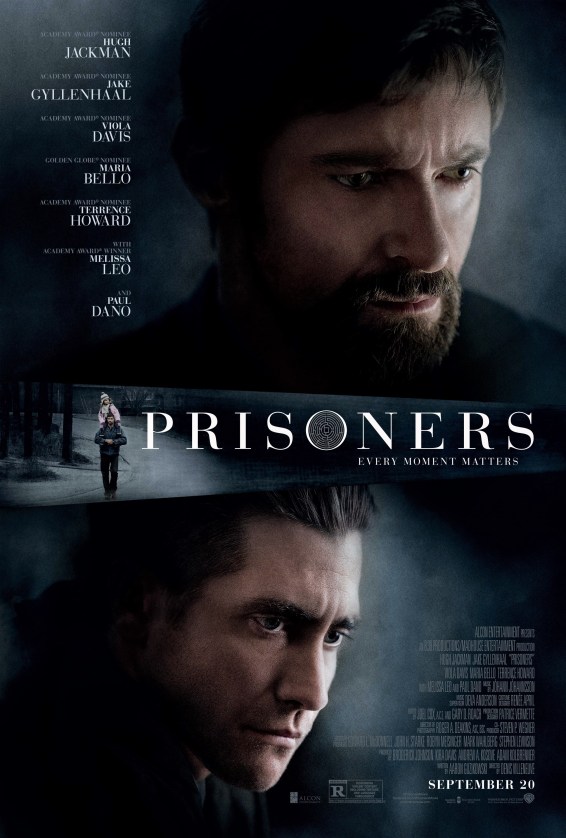
Combining some incredible performances from Hugh Jackman and Jake Gyllenhaal with some phenomenal cinematography by the legendary Rodger Deakins alongside an effective original score by the late Jóhann Jóhannsson. ‘Prisoners’ is truly a masterclass in both filmmaking and storytelling. Although some audience members may be turned-off by the film’s depressing subject matter and few graphic scenes, this story of two family’s lives being turned upside-down is nevertheless an enthralling thriller/drama throughout.

Plot Summary: Shortly after their Thanksgiving dinner, parents: ‘Keller’ and ‘Grace Dover’ discover their six-year-old daughter and her best friend are missing. So after contacting the authorities, the driven: ‘Detective Loki’ is assigned to lead the case. But as hours turn into days, knowing his daughter’s life is at stake, frantic father: ‘Keller’ considers taking matters into his own hands…

Directed by Denis Villeneuve (Sicario, Arrival, Blade Runner: 2049), Villeneuve further proves here that he is one of the best filmmakers currently working. As every one of his films are always engaging and visually-breathtaking, with ‘Prisoners’ being no exception. As throughout the entirety of its lengthy runtime, ‘Prisoners’ manages to be a compelling, tense and emotional experience that will leave most viewers on the edge of their seats. Making the viewer long for the truth just as much as the film’s characters do, with the film’s main theme of parenthood even exploring the idea of how far a parent would truly go to protect their child, most notably through ‘Keller’s questionable actions later within the story.

The film’s main pairing of Hugh Jackman as ‘Keller Dover’ and Jake Gyllenhaal as ‘Detective Loki’ is the perfect combination of two talented actors, as both give brilliant performances as their respective characters with Hugh Jackman in particular, giving one of the best performances of his entire career. Especially in the scene: ‘The Interrogation’. In which, ‘Keller’ repeatedly tortures the potential kidnapper of his daughter, resulting in the scene soon becoming one of the film’s best moments mostly through Jackman’s incredibly intense performance. In addition to the two leads, the supporting cast of Terrence Howard, Viola Davis, Maria Bello, Dylan Minnette, Paul Dano and Melissa Leo are all excellent, with each member of the main cast adding to the film’s realistic portrayal of two concerned families, going days without rest as their thoughts dwell purely on their missing children.

From the opening shot through to the very last, the cinematography by Roger Deakins is nothing short of phenomenal. As ‘Prisoners’ elevates its already gripping narrative through its many stunning shots, alongside the film’s absolutely superb lighting, which makes fantastic use of darkness and silhouettes wherever possible (a staple of Roger Deakins’ cinematography) which only backs-up the film’s grim tone and tense atmosphere further. Another element of the film that also adds to its visual aesthetic is its use of weather. Being set in a small town in Pennsylvania, ‘Prisoners’ makes great use of the state’s dreary weather for a number of scenes, meaning many shots are enhanced due to the constant barrage of rain and snow within them.

The late Jóhann Jóhannsson handles the original score for the film, most known for his work on ‘The Theory of Everything’ along with plenty of other films from director Denis Villeneuve. The film’s score really adds to many of its dramatic moments, as the soundtrack mostly focuses on the story’s more emotional and tragic aspects, and while not overly memorable, the tracks: ‘I Can’t Find Them’ and ‘Through Falling Snow’ both fit the bleak tone of the film flawlessly. While the track: ‘The Keeper’ is also worth a quick mention simply due to its impactful feel.

Although it isn’t a major problem, my only real issue with the film is the lack of depth for some of its characters, as ‘Detective Loki’ and ‘Alex Jones’ both have many interesting traits, with ‘Detective Loki’ having a variety of tattoos, rings and facial ticks (many of which were actually Jake Gyllenhaal’s ideas). Whilst ‘Alex’ has the I.Q. of a ten-year-old due to his learning difficulties. Yet even with these unique traits, I never felt like either of these two characters were explored enough, even with the film’s many attempts at subtle characterisation through visual storytelling.

In short, ‘Prisoners’ is not only one of my favourite films from 2013, but one of all my all-time favourite thrillers in general. Through its spectacular cinematography, tense atmosphere and compelling plot among many, many other elements, ‘Prisoners’ is honestly unmissable. Being just another piece of the beyond-excellent filmography of director Denis Villeneuve, this thriller is certainly one I’d recommend to anyone in need of a memorising mystery. If you’ve never seen a film by Villeneuve, I’d say ‘Prisoners’ is a tremendous place to begin, despite the film not quite beating-out my personal favourite film of his, that being: ‘Blade Runner: 2049.’ Final Rating: 9/10.

prisoners_ver3_xxlg

Joker (2019) – Film Review

Since even the first day of its release, ‘Joker’ has seemingly split audiences straight down the middle, being hit with numerous reviews all with varied ratings. Everything from the film’s violence to its intricate themes to especially its Oscar-nominations, have all been brought up in recent conversation, as this film’s character-driven narrative focuses on the origins of ‘The Joker,’ arch-nemesis of the ‘Caped Crusader,’ ‘Batman.’ Yet, ultimately, becomes far more of an affecting and compelling drama/thriller rather than your standard superhero affair.

Plot Summary: In ‘Gotham City’ during the 1980s, mentally troubled comedian ‘Arthur Fleck,’ is disregarded and mistreated by society. Over time, this leads him to embark on a downward spiral of revolution and bloody crime, eventually bringing him face-to-face with his chaotic alter-ego; ‘The Joker.’

Being directed by Todd Phillips (Old School, The Hangover, War Dogs), throughout ‘Joker’ you really get the sense that Phillips truly puts his all into it, pretty much leaving behind the realm of comedy flicks entirely to craft a film which puts more of an emphasis on character and filmmaking. As every aspect of the film from its performances to it’s writing, cinematography and even original score, all feel as if they’ve been thought over profusely. ‘Joker’ also attempts to back-up its story with plenty of thought-provoking themes of mental health and the cruel nature of modern-day society, which I feel are represented very well throughout the film, giving Phillip’s version of this iconic character more depth beyond him being a mysterious and lawless antagonist.

From ‘Joker’s laugh to his broken mental state, Joaquin Phoenix gives a true powerhouse performance as the classic comic book villain. Making the character sadistic and dangerous yet also sympathetic wherever possible, as even though ‘Arthur’ commits many horrible acts as the runtime continues on. You can’t help but feel sorry for him, being beaten relentlessly by the world he lives within. In my opinion, Joaquin Phoenix’s portrayal of this iconic character truly elevates the film as a whole, and I’d even argue is up there with Heath Ledger’s beloved performance in ‘The Dark Knight’ many years earlier. The supporting cast of Robert De Niro, Zazie Beetz, Frances Conroy and Brett Cullen are all also great within the film, with Robert De Niro’s character, ‘Murray Franklin,’ being an obvious throwback to his character from the classic Martin Scorsese film; ‘The King of Comedy,’ from 1982.

All of the cinematography by Lawrence Sher throughout the film is very impressive, which is actually quite surprising considering ‘Joker’ is shot by the same cinematographer as the rest of Phillip’s work (which all contain mostly bland shots due to their focus on comedic writing). Featuring a variety of both stunning and memorable shots throughout, ‘Joker’s cinematography does serve its narrative and dark tone very well, with the now-iconic scene; ‘Staircase Dance,’ since becoming one of the most recognised and celebrated moments of 2019 pop culture. Additionally, ‘Joker’ continues to steer away from becoming an average superhero flick through its implementation of bloody violence, never shining away from displaying scenes of visceral murder.

Despite feeling a little unfitting during some scenes, the original score by Hildur Guðnadóttir is both very beautiful and also quite tragic, as the score really enhances the audience’s journey into ‘Arthur’s depressing and broken state of mind. However, that being said, some of the tracks can begin to feel a little too similar over time, with the signature track; ‘Bathroom Dance,’ almost beginning to feel replicated later within the film, despite the soundtrack’s many attempts to do otherwise.

The main criticism ‘Joker’ has faced since its release has been its overreliance on borrowing elements from other films, most notably classic Martin Scorsese films, such as ‘Taxi Driver’ and the previously mentioned ‘The King of Comedy.’ As, ‘Joker’ utilises a style very reminiscent of ‘Taxi Driver’ whilst also featuring a protagonist not too dissimilar to the protagonist from ‘The King of Comedy,’ and while I definitely understand these complaints, I also feel many films throughout history have always borrowed elements from others, and in addition to having Martin Scorsese himself on board as an executive producer, ‘Joker’ does include some aspects of its own making to help it stand out.

In summary, ‘Joker’ isn’t perfect, but I do feel the film is successful enough, as while its occasional cheesy dialogue and derivative aspects may drag the film down, its stunning cinematography and haunting original score really lend themselves effectively to the already gripping story. Not to mention Joaquin Phoenix’s captivating performance, all of which leave ‘Joker’ an impactful and refreshing origin story for this cherished comic book character. So, if you’re a huge fan of this iconic antagonist or just have a fondness for character studies/intense dramas, I’d recommend you give ‘Joker’ a watch in spite of its mixed reception. Final Rating: low 8/10.

joker_ver2_xxlg

Lucy (2014) – Film Review

Luc Besson, the iconic director behind ‘Léon: The Professional,’ ‘The Fifth Element’ and ‘Valerian and the City of a Thousand Planets,’ returns to the sci-fi genre with ‘Lucy,’ a very strange and original science fiction thriller focusing on a young woman whose intellect begins to evolve after being kidnapped, eventually transforming her into something more than human. Although this interesting plot does feel like a departure from what we usually expect within this genre, I personally feel this doesn’t always work within the film’s favour.

Plot Summary: After a young woman (Lucy) gets accidentally caught in a drug deal, she is captured and taken to the feet of a powerful drug lord. Before long, she finds herself a victim of illegal drug trafficking, in which an experimental synthetic drug is implanted inside her lower abdomen to transport it into Europe. But, when the blue chemical leaks into her bloodstream, she turns the tables on her captors and transforms into a merciless creature that has evolved beyond human logic…

Even though the narrative of ‘Lucy’ is definitely a unique one, I personally feel the film doesn’t explore its various ideas and concepts as effectively as it could, as ‘Lucy’ introduces a number of interesting elements when it comes to human evolution, usually without ever fully releasing them. The film does still manage to contain plenty of astonishing and colourful visuals as well as a few memorable scenes throughout its runtime, yet it simply isn’t enough to save the film from the issues that litter its story, despite the film’s screenplay being in development for over nine years.

The film’s protagonist ‘Lucy’ is portrayed fairly well by Scarlett Johansson, as she gives a very robotic and cold performance throughout the film the more intelligent her character becomes. However, the character of ‘Lucy’ is actually one of the film’s biggest missteps, as throughout the narrative, ‘Lucy’ always feels incredibly underdeveloped, as we barely spend any time with her before she begins to evolve after being contaminated with the chemical. Meaning she quickly turns into a calculating killing machine without emotion, as a result of this, it’s extremely difficult to connect with her, or even like her, as we are given very little characterisation before her change. The supporting cast of Morgan Freeman, Amr Waked, and Pilou Asbæk are all decent, with the exception of Min-sik Choi as the film’s antagonist, ‘Mr. Jang,’ who actually gives the brutal drug lord a very intimidating presence despite his limited screen-time.

Thierry Arbogast’s cinematography unfortunately, doesn’t really reflect the film’s many creative CG effects, as although the film does contain the occasional pleasing shot, they are simply too few and far between, with an strong overreliance on shot-reverse-shot during many scenes. ‘Lucy’ also contains some fairly unusual editing, as the film constantly cuts away to symbolic images of animals, the environment, populated cities and cells materialising, etc. And, even though this does give the film some style, it also makes some scenes come across as unintentionally comedic.

The original score by Eric Serra, plays very well into the film’s story, as this fitting techno score alters over the course of the film, with tracks such as ‘First Cells’ and ‘Taipei Airport,’ feeling very unique, not too different from the film’s story itself. My personal favourite track has to be ‘Flickering Through Time,’ however, as this beautiful yet haunting piece plays over one of the film’s most memorable and effective scenes as ‘Lucy’ soars through time.

Although the CG effects do range in quality throughout the film, ‘Lucy’ does get very inventive with its visuals when it comes to its CGI, as the film features an array of colourful and trippy CG effects the further ‘Lucy’ evolves, which does help redeem ‘Lucy’s lack of scientific accuracy (which the film has actually been heavily criticised for since its release). As whilst I personally don’t feel being less-accurate to real-world science is a problem when it comes to science fiction. ‘Lucy’ rests a large amount of its story on the idea that humans only use 10% of their brains, which has actually been debunked by neurological scientists many times over, as humans typically use about 10%-12% of their brains at a time.

In summary, whilst I’m sure ‘Lucy’ had the potential to be an eccentric and original sci-fi flick at one point in time, the film’s cons simply outweigh its pros, in my opinion. From its cheesy dialogue through to its poor editing choices and flawed story, ‘Lucy’ feels almost as if it gets bogged-down by itself, almost becoming a little too pretentious for its own good. While I do appreciate the film’s more ‘out there’ story and great original score, I’d recommend you stick to ‘The Fifth Element’ for your fill of a Luc Besson sci-fi. Final Rating: 4/10.

lucy_xxlg

Nocturnal Animals (2016) – Film Review

Part thriller, part drama and part literature fever dream, 2016’s ‘Nocturnal Animals’ may not appeal to every viewer, but those it will, it will certainly leave an impression, as this extremely underrated thriller led by some sublime performances from Amy Adams and Jake Gyllenhaal is incredibly dark and compelling from start-to-finish. Directed by former fashion designer turned director Tom Ford (A Single Man) and based on the novel; ‘Tony and Susan’ by Austin Wright, ‘Nocturnal Animals’ may not be flawless in its execution, but it is definitely worth a watch.

Plot Summary: An unhappy and lamenting art curator (Susan Morrow) begins to imagine herself within the pages of a novel manuscript sent to her by her former husband, whose negative associations of their relationship take on a fictionalised violent direction in a symbolic tale of revenge…

Split between two different storylines, one set in the real world and one set within the pages of the fictional crime novel. ‘Nocturnal Animals’ definitely has some changes in tone, as every scene with ‘Susan’ usually focuses on her broken marriage and current lifestyle, which feels very different when compared to the tense revenge story of the novel, and yet, neither of these stories ever feel dull, as they both are engaging for different reasons. Tom Ford also makes brilliant use of this structure, as for those more keen-eyed viewers, there are a variety of visual links between the two narratives, the most obvious of which being how ‘Susan’ imagines her ex-husband; ‘Edward,’ as the father character within the novel, meaning Jake Gyllenhaal takes on two separate roles.

The central cast of Amy Adams, Jake Gyllenhaal, Michael Shannon, Aaron Taylor-Johnson, Isla Fisher, Ellie Bamber and Armie Hammer, are all brilliant throughout the film as everyone one of the film’s characters gets plenty of development, usually all playing a crucial role within the film regardless of whichever storyline they are in. Although Jake Gyllenhaal does a pretty great job taking on two separate roles, the plot of the novel primarily takes place within the Texas desert, meaning the father character, ‘Tony Hastings,’ possesses a Texas accent, and whilst not terrible, it is a little inconsistent. This is quickly redeemed by the stand out performance from Aaron Taylor-Johnson as ‘Ray Marcus,’ however, as this usually vapid actor gives an amazing performance as a redneck delinquent, who is just as intimidating as he is erratic.

Although the cinematography by Seamus McGarvey is nothing extraordinary, there are still plenty of attractive shots throughout the runtime as the film uses its cinematography fairly effectively to create a contrast between the two stories, using an array of wide shots when focusing on the story within the novel adding too many of its tense moments, whereas the majority of the scenes within the real world mostly use a large number of close-ups and mid-shots to add to the film’s drama.

Without a doubt, however, my personal favourite aspect of the film is the original score by Abel Korzeniowski. Utilising an ensemble of violins, the score for ‘Nocturnal Animals’ is very memorable and excellently builds tension throughout the runtime as the soundtrack always remains very beautiful despite also feeling quite haunting. The original score even manages to capture the feeling of loneliness and sadness from ‘Susan’s storyline, with the tracks; ‘A Solitary Women’ and ‘City Lights,’ fitting this idea perfectly, yet neither of these two tracks beat out my personal favourite; ‘Revenge,’ referred to by most as the film’s signature track.

Throughout either of the two plots, the film is also filled with plenty of themes and underlying messages, many of which relate to the idea of expression through art, which does help distract slightly from the main issue I have with ‘Nocturnal Animals,’ this being the editing, although it may be intentional. At points, the editing throughout the film is rather fast-paced, cutting between shots rapidly, sometimes even using jump-cuts during some of the more drawn-out shots. If this style of editing was present continuously throughout the film, then perhaps it wouldn’t have been as noticeable, but as it was only occasionally, I personally found it quite distracting.

In summary, while ‘Nocturnal Animals’ may not be a shining masterpiece, but I do believe this film is very overlooked when it comes to thrillers, as the outstanding performances from the cast mixed in with the array of very tense moments and wonderful original score make for a genuinely gripping and interesting experience. So, whilst some audience members may not completely understand the themes and messages behind the story, I do feel this film will leave an impact on those it does appeal to. Final Rating: 8/10.

nocturnal_animals_ver5_xlg

The Snowman (2017) – Film Review

Despite being directed by Tomas Alfredson, head of some great films in the past, such as ‘Let the Right One In’ and ‘Tinker Tailor Soldier Spy,’ ‘The Snowman’ is a complete mess of a thriller from start-to-finish. Mostly as a result of the variety of issues it faced during its production, from a rushed filming schedule to plenty of scenes and story elements being left on the cutting-room floor. Although the film’s isolated location alongside the visually pleasing cinematography by Dion Beebe may be very effective at points, they simply aren’t enough to save the film from its weak writing and boring/confusing narrative, even with the film’s decent source material.

Plot Summary: As rough detective, Harry Hole, investigates the disappearance of a woman whose scarf is found wrapped around an ominous-looking snowman, he begins to fear an elusive serial killer may be active again. So, with the help of a brilliant recruit, ‘Harry’ must now connect decades-old cold cases in the hopes of outwitting this threat before the next snowfall…

‘The Snowman’ is based on the novel of the same name by Jo Nesbø, also known as: ‘Snømannen’ in Norwegian. However, although this is the first time audiences are seeing the character of: ‘Harry Hole’ portrayed on-screen, ‘The Snowman’ is actually the seventh entry in the character’s novel series. Making the narrative itself feel very underdeveloped and even a little out-of-place, almost as if the viewer hasn’t been informed of any of the film’s in-world events before the current story begins (this may also be why the film is brimming with overly long flashbacks).

Michael Fassbender portrays the protagonist; ‘Harry Hole,’ which is, unfortunately, one of his weakest performances to date, not only due to his poorly-written character (who is incredibly cliché as an uncaring alcoholic detective) but also as a result of his fairly bland line delivery. The rest of the cast featuring Rebecca Ferguson, Charlotte Gainsbourg, Jonas Karlsson and even a short appearance from J.K. Simmons, are all decent with what they are given, although they also suffer from similar poorly-written characters. Many of the characters throughout the film also never seem to react very realistically to situations, as characters usually just shrug off horrific sights with ease, never delving into how traumatic these experiences would actually be for a person to witness.

The cinematography by Dion Beebe is undoubtedly the best aspect of the film, however, as the beautiful yet isolated locations of the story really add to the film’s enormous array of wide shots and uncomfortable close-ups. Needlessly to say, this doesn’t really help with the lack of tension within the film, as although the film makes more than a few attempts at crafting tension-filled moments when ‘Harry’ investigates various crime scenes, the film never quite manages it, usually failing to build-up much of an eerie atmosphere.

Marco Beltrami handles the original score for the film, and although this composer usually does terrific work, his score for ‘The Snowman’ is mostly very dull. As with the exception of the tracks; ‘Main Titles’ and ‘Down the Harry Hole,’ the entire soundtrack feels as of it could’ve been taken from almost any other generic thriller, which is a huge shame, as I personally feel a more impactful score could’ve really helped with the film’s total lack of tension.

The film’s location probably intrigued a large number of viewers just on itself, clearly taking inspiration from films, such as ‘Deadfall’ and the dark comedy classic; ‘Fargo,’ from 1996, the film’s snowy Norway setting really gives the film a distinct look, with the bright red blood from many of the killer’s victims standing-out immensely amongst the white snow. These visuals also help to distract from the film’s slow pacing, as the film’s main mystery usually feels like quite a drag, with clues only being revealed very slowly over the course of the film.

In summary, ‘The Snowman’ definitely fails in more categories than one, as despite its interesting location and pretty fantastic cinematography, the film’s messy story and bland performances make the film pretty unappealing when considering it’s over two-hour runtime. Whilst I’m sure ‘The Snowman’ had the potential to be a great semi-Noir thriller at some-point in time, especially considering it was initially going to be directed by the legendary Martin Scorsese, who, eventually left the film to pursue other projects. ‘The Snowman’ is still far from the chilling crime tale it attempted to be and is a complete disappointment. Final Rating: 3/10.

snowman_ver3_xlg

The Nice Guys (2016) – Film Review

This ’70s throwback to classic buddy-cop comedy films hits all the right marks, as the fantastic chemistry between Russell Crowe and Ryan Gosling alongside the film’s great visuals and hilarious comedic moments, all make ‘The Nice Guys’ certainly worth a watch, whether you are incredibly fond of action-comedies or not, as I feel this humorous flick definitely deserves more attention.

Plot Summary: In 1970s Los Angeles, bumbling private eye; ‘Holland March,’ and muscle-for-hire; ‘Jackson Healy,’ become unlikely partners when they find themselves both looking for a missing woman, named; ‘Amelia,’ following the death of a high-profile porn star. ‘Amelia’s ties to the deceased actress are unclear, but as other members of the porn industry turn up dead, ‘March’ and ‘Healy’s investigation reveals a much bigger conspiracy than the duo could have ever anticipated…

Heavily inspired by action/comedy classics, such as ‘Lethal Weapon’ and ‘Rush Hour,’ ‘The Nice Guys’ is directed by Shane Black (Kiss Kiss Bang Bang, Iron Man 3, The Predator), who clearly brings all his love for this genre to the forefront. As, despite the film doing quite poorly in cinemas upon its initial release, the film is clearly a true passion project for Shane Black, being filled with the director’s usual style and classic witty dialogue from start-to-finish.

Russell Crowe and Ryan Gosling make an excellent pairing as ‘Jackson Healy’ and ‘Holland March’ throughout the film’s story, as both actors have an enormous amount of chemistry with each other and add plenty of humour into the plot through their interactions with their opposite, as well as ‘Holland’s daughter; ‘Holly March,’ portrayed by Angourie Rice, who is very sarcastic and angsty towards many of the other characters (which can become a little irritating after a while). Matthew Bomer, Margaret Qualley, Yaya DaCosta and Keith David also have small roles within the film, and are all decent, despite not being given much screen-time.

Philippe Rousselot handles the cinematography throughout ‘The Nice Guys,’ and although attractive throughout most of the runtime, the variety of shots is probably the weakest aspect of the film just down to elimination. Still, the cinematography does back-up the story very effectively, never taking the audience’s attention away from the mystery unravelling throughout the narrative. I also feel the film’s colour palette could’ve really added to the film’s visual flair more, as the colour palette doesn’t really delve much into the 1970s style aside from the occasional vibrant shot. However, the film does integrate ’70s style in its opening titles which I appreciated, as the Warner Brothers’ logo seen in the beginning of the film is the actual graphic Warner Bros. Pictures used during the 1970s for their films.

The original score by John Ottman and David Buckley fits the film’s style and time-period perfectly, as the soundtrack attempts to replicate the music of the time through its use of trumpets and a drum kit to add to many of the comedic moments and establishing shots, with the tracks; ‘Cars That Drive Themselves’ and ‘P.I. Life,’ being my two personal favourites (in addition to the film’s main theme). Many of the film’s action scenes do slightly weaken the score, however, as anytime the screen is filled with bullets and fist fights, the original score suddenly becomes a lot more generic.

The majority of the jokes throughout the film do land very successfully, in my opinion, as ‘The Nice Guys’ has a pretty wide range of comedy throughout its runtime. From the hilarious and quippy dialogue between the two main protagonists to the parodying of classic action tropes and even a little bit of slapstick thrown in for good measure, all of the comedy throughout the film is pretty inventive and ensures that the film is filled with humour for every kind of viewer.

Despite the film’s main focus being its humour, however, the action throughout the film is actually very well-executed, from a high-speed car chase through to chaotic shoot outs and bare-fist scuffles. ‘The Nice Guys’ nails it’s action scenes just as well as it’s jokes, as each action set piece is always exciting and brilliantly choreographed. My only real criticism of the film is probably it’s length, as I feel the film does go on for slightly too long nearing end of its story.

In summary, it’s a real shame many that audiences had no interest in ‘The Nice Guys,’ as although many would consider buddy-cop action flicks a dead genre similar to westerns. I personally feel we need more films like this, as bringing back these old kinds of stories really makes the film stand out amongst the complete onslaught of modern superhero blockbusters and generic horror scare-fests. So, although I feel a sequel to ‘The Nice Guys’ is very unlikely to ever be made, the mere mention of one as even a possibility still gets me excited to this day, as I would love to see these characters return to the silver screen. Final Rating: 8/10.

nice_guys_ver2_xlg

Game Night (2018) – Film Review

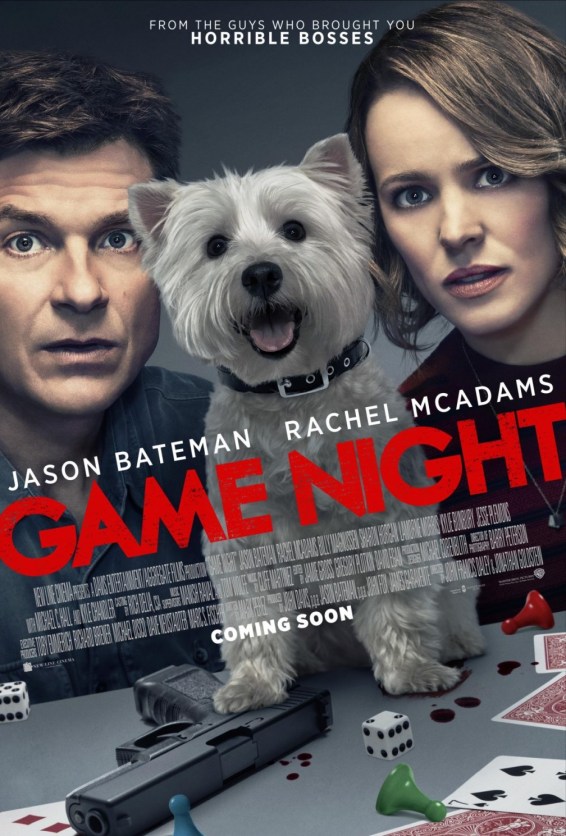
Going in initially, I had very little expectations for ‘Game Night,’ as although I mostly enjoyed ‘Horrible Bosses’ (which was written by this film’s directors), I’ve always found most modern comedies to be very hit-or-miss. However, as the runtime continued on, I soon realised ‘Game Night’ was far more than just your disposable comedy flick, as the great cinematography by Barry Peterson and the excellent original score by Cliff Martinez made the film just as stylish as it was entertaining.

Plot Summary: A group of friends who meet regularly for game nights soon find themselves entangled in a real-life mystery when the shady brother of one of them is kidnapped by a group of dangerous criminals…

Right from the opening titles, which are displayed through various falling board game pieces, through to the end credits, which entirely cover a pinboard with names of both the cast and crew (as well as an array of jokes). ‘Game Night’ is constantly brimming with style throughout its story, despite first appearing as nothing more than a straightforward comedy as the film uses its terrific editing to add to the humour at many different points, giving the impression that no corners were cut by the filmmakers when it comes to the filmmaking itself.

Jason Bateman, Rachel McAdams, Kyle Chandler as well as the large supporting cast are all fantastic within their roles, with each member of the cast having decent chemistry with each other and plenty of great comedic moments between them (which is most likely a result of the cast actually taking-part in their own game night prior to filming). Jesse Plemons has without a doubt the film’s best character, in my opinion, as he portrays the game night-obsessed police officer; ‘Gary,’ who is just as creepy as he is hilarious every time he is on-screen. Unlike most modern comedies, the characters throughout the film also get a surprising amount of characterisation, as there are plenty of scenes throughout the story in which the pacing slows down to develop each one of the characters individually, which makes the film more engaging, and is a complete breath of fresh air after so many bland comedies with over-acted goofballs as their protagonists.

The cinematography by Barry Peterson is very creative throughout the film, as in addition to a variety of visually appealing shots, ‘Game Night’ also frames many of its locations as if they are pieces on a game board, almost as if every time the characters arrive at a building, it’s as if they are arriving at a stop whilst playing ‘The Game of Life,’ which is exceedingly inventive. As well as this, the film features a variety of interesting transitions between scenes and even a moment which is filmed entirely within a single-take, both of which I felt really added to the film’s overall visual presentation and enjoyable flow.

Although it doesn’t quite fit every scene, the original score by Cliff Martez is both unique and memorable, as the soundtrack uses a minimalist techno feel to mesh-well alongside the film’s stylistic editing and cinematography. Whether a light-hearted comedic scene or even one of the more tense moments nearing the end of the film, the score itself is brilliant. I’m too surprised by this, however, as this composer has done some phenomenal scores in his past, such as ‘Drive,’ ‘Contagion’ and ‘The Neon Demon,’ to name a few. So, ‘Game Night’ is simply just another great soundtrack to add to his sublime catalogue of work.

The film really only has one major issue for me, which it’s the song choice, as although I understand the film is mostly light-hearted fun, the use of iconic songs, such as ‘Don’t Stop Me Now’ and ‘Quando, Quando, Quando,’ don’t really fit with the film’s tone, and can make the film feel a little cheesy at points. Of course, as the film is a comedy, there is also plenty of jokes that don’t quite hit the mark, but I’d say there are definitely far more that do than don’t in this case, as the film avoids the lazily written gross-out jokes and shock humour that infests a large number of modern comedies.

In summary, it’s fair to say that ‘Game Night’ was definitely a pleasant surprise for me on my initial watch, as I never expected this comedy to be as memorable or as well-crafted as it actually is. Although it’s not perfect due to its unusual song choices and a couple of overly long jokes, ‘Game Night’ is possibly one of the best comedies of the last few years, and while there are better displays of great filmmaking out there, I do feel this film should be higher on many cinephile’s watchlists. Final Rating: 8/10.

game_night_ver4_xlg