Monster Trucks (2016) – Film Review

“I Don’t Know Who’s Driving, Him or Me…” – Tripp

Spawned from the mind of the four-year-old son of Adam Goodman, the then-president of the production company behind the film, Paramount, Monster Trucks is a 2016 family flick harbouring flashes of inspiration yet ultimately lacking in execution. Frequently demonstrating that a wacky storyline and a mashup of creatures and clamorous vehicles don’t necessarily yield a rollicking family film, Monster Trucks goes about its narrative with all the grace of an off-road vehicle steamrolling a row of discarded automobiles, even when it faintly echoes the beloved 1982 sci-fi classic; E.T. the Extra-Terrestrial.

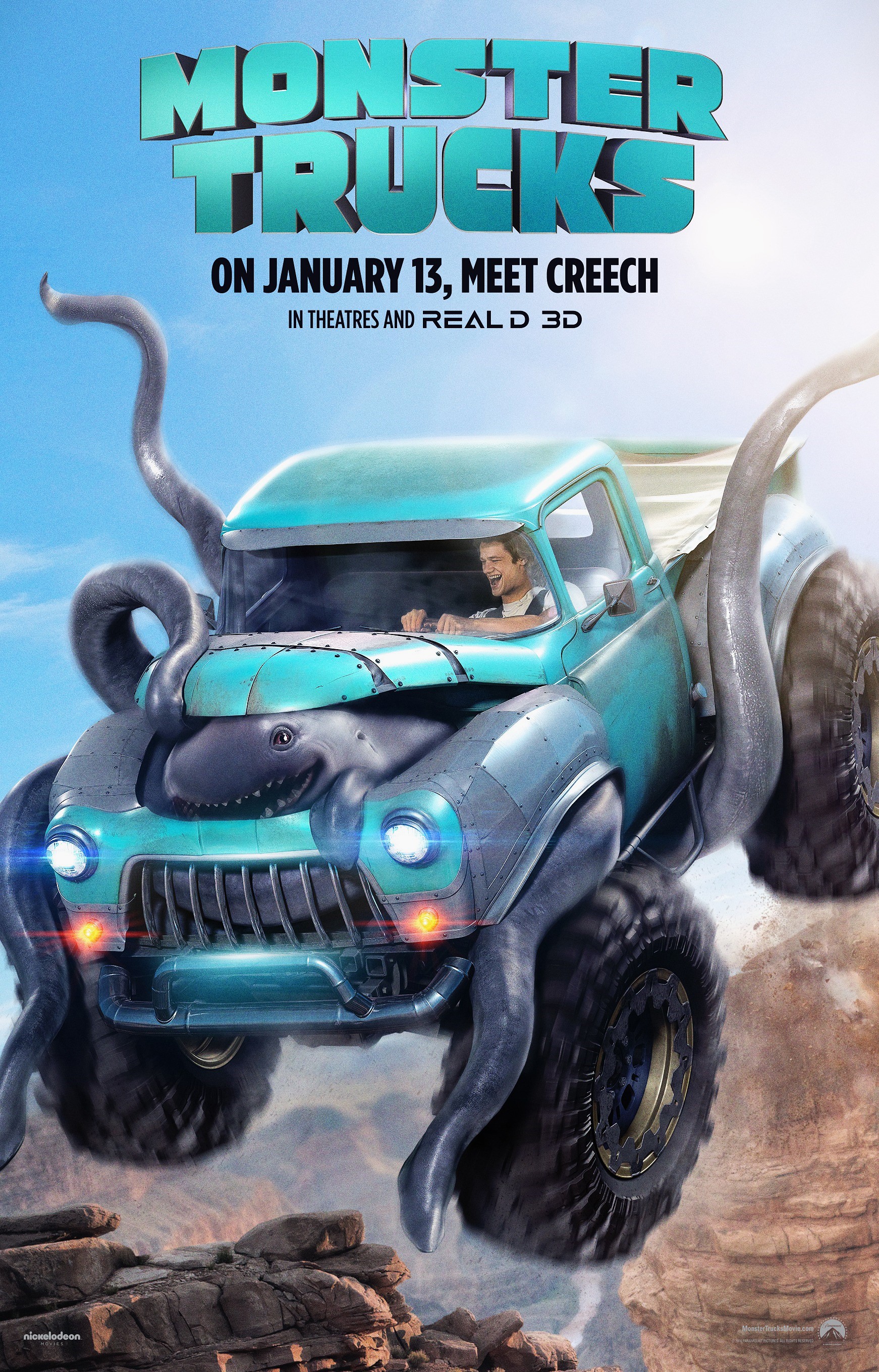
Plot Summary: Looking for a way to escape the mundane town he was born into, high school senior Tripp circumvents the discomfort of his home life by toying away in his local scrapyard, gradually assembling a truck of his own from bits and pieces of scrapped vehicles. But, when an accident at a nearby oil-drilling site displaces strange, subterranean creatures with immense strength and a liking for oil, Tripp believes he’s found his key to getting out of town, unaware that his slimy, tentacled friend is actively being pursued…

Initially set for release on May 29th, 2015, before the date was moved to December 25th, then March 18th, 2016, and finally, January 13th, 2017, after several setbacks. Monster Trucks received middling reviews and poor box office numbers upon its eventual release, with Viacom blaming unspecified failures in its motion picture division for the losses the company suffered in the 3rd quarter of 2016, with reporters later piecing together details in their statement, leading them to believe this film was blamed for the loss. While not strictly underserved as Monster Trucks does possess an abundance of flaws across both its screenplay and filmmaking, director Chris Wedge (Ice Age, Robots, Epic) manages to implement some humorous moments and exciting set pieces here and there, primarily whenever the film fully commits to its bonkers title, having the signature creature, nicknamed; Creech, squeeze himself into Tripp’s turquoise-coloured truck, using his multiple tentacles to propel the vehicle along and even leap over hazards across town.

Although the central cast of Lucas Till, Jane Levy, Rob Lowe, Danny Glover and Holt McCallany deliver adequate performances, their characters are either caricatured or underdeveloped, barring the antagonists, who sufficiently serve their purpose as vile, money-hungry suits eager to profit from the newly discovered creatures through whatever means necessary. This character issue is only made worse by the dialogue, the majority of which is cheesy and blatant, lacking any semblance of subtlety or originality, especially concerning the sour relationship between Tripp and Sheriff Rick, his new stepfather, who continually conveys his unjustified distaste for Tripp.

Whether by design or not, the small, pallid town in North Dakota where Monster Trucks takes place is remarkably dull, meaning the visuals suffer as a result, aside from the odd alluring shot of natural scenery. On a more positive note concerning the visuals, the designs of the many luminescent creatures that appear throughout the runtime are simplistic yet effectively cute and cuddly, resembling various aquatic animals, namely whales and octopi. However, it’s important to mention that one of the reasons the film’s release date was pushed back so drastically was the need to redesign the creatures and thus redo most effects shots, as originally, the creatures appeared more monstrous and less cartoonish. But, after a disastrous test screening, which reportedly frightened a large portion of the juvenile audience (despite the creatures’ friendly demeanour), their appearance was altered to the design seen in the final film. With this setback in mind, the CG effects are well-detailed, if imperfect.

Boasting a handful of decent tracks, if you’re searching for a more bass-friendly soundtrack, Monster Trucks‘ original score is weighty yet occasionally a tad overbearing, in addition to a couple of the song choices, like Home by Phillip Phillips, only adding to the corniness of the film due to their unwavering positivity. The sound design is also filled with much of what you’d expect from a story revolving around large vehicles, with booming engines and scrapyard ambience providing many scenes with an audible thump.

Returning to the faults of the screenplay, much of the humour throughout the runtime is immature, often relying on goofy audio effects and continuous slime gags to obtain a cheap laugh from younger audience members. Older audience members, however, may find something to admire in the film’s handful of truck-centric practical effects, such as the implementation of the five 1950s-era Dodge trucks which were built for the film, including one with its engine in the pickup bed so it could be driven from under the hood, similar to how Creech manoeuvres the vehicle.

In summary, Monster Trucks is an underwhelming film in several ways, making me think it might have been better served should it have been a stylistic animated release rather than a costly live-action one, allowing the film to further play into the central, ludicrous concept of subterranean creatures slithering their way into vehicles to experience the high-octane rush of driving across open fields and country roads, especially when considering Chris Wedge’s prior directing experience in that field. Still, I’m obviously not in the target demographic for this flick, and those who are (e.g. young boys with an affinity for monsters and mayhem) might enjoy this one in the face of its many shortcomings. Rating: 3/10.
Puss in Boots (2011) – Film Review

“Fear Me, if You Dare!” – Puss in Boots

Released in 2011, one year after the highly-praised Shrek series supposedly concluded with Shrek Forever After (2010), Puss in Boots acts as a spin-off and prequel to the endearing ogre’s renowned franchise, retaining its emphasis on parodying fairy tales whilst supplying the titular heroic feline with an amusing, stand-alone adventure that frequently pays tribute to Spanish cinema. While not profound in terms of storytelling nor revolutionary in terms of animation, for what it lacks in depth, Puss in Boots, directed by Chris Miller (Shrek the Third), makes up for with an abundance of family-friendly wit and excitement, in spite of the initial plan to turn the film into a mere direct-to-DVD spin-off.

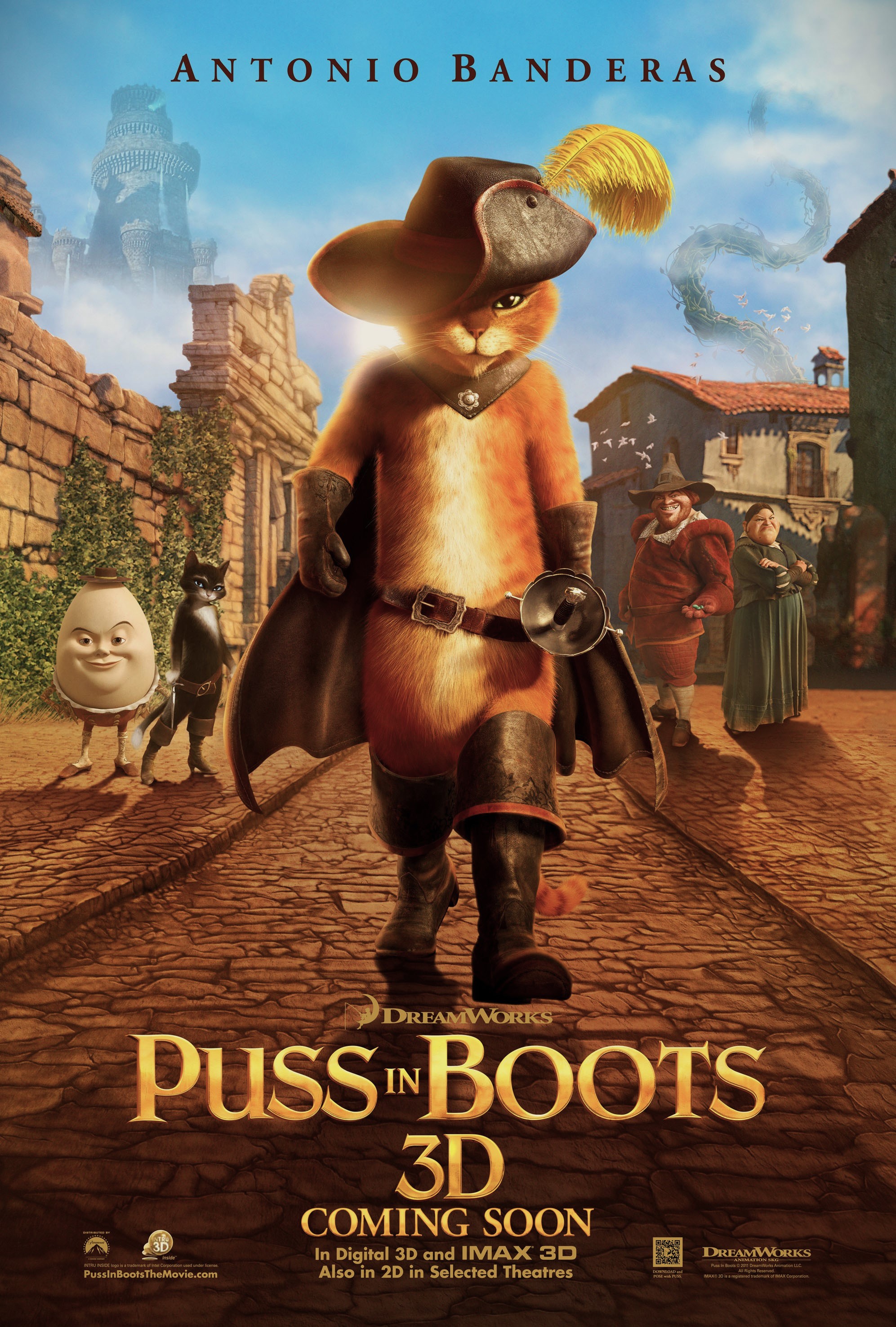
Plot Summary: Long before meeting Shrek and Donkey, the adorable yet cunning vigilante Puss in Boots aimed to clear his name, striving to escape his notoriety as the suspected thief of his hometown, San Ricardo. Then, one faithful night, after overhearing that the murderous outlaws Jack and Jill have come into possession of magic beans, Puss senses a window of opportunity, setting out to steal the beans in pursuit of the treasure they lead to, eventually crossing paths with an old friend

In contrast to the Shrek films, which were in production for around three years (except for the first, which was in production for almost five), Puss in Boots took over seven years to produce, entering development just after the release of Shrek 2 (2004). The film also differs from the Shrek series in other ways, most notably in its inspirations. Where the Shrek franchise became recognised for its parodying of classic fairy tales and modern pop culture, Puss in Boots is more reminiscent of Spanish cinema, namely, Spanish action and adventure flicks, harbouring references to well-known flicks, like The Mask of Zorro (1998), a film which interestingly, also featured Antonio Banderas as the lead, and Desperado (1995), another release featuring Banderas as well as his co-star Salma Hayek. As such, Puss in Boots operates as a successful mish-mash of ideas, blending elements of fairy tale fantasy with solid action sequences reminiscent of traditional vigilante flicks. The majority of the story, though, is a riff on the famed fable of Jack and the Beanstalk, a fairy tale adapted time and again. Thankfully, the writers were aware of this, implementing a handful of original ideas to form their own take on the well-worn story.

The central cast of Antonio Banderas, Salma Hayek, Zach Galifianakis, Billy Bob Thornton and Amy Sedaris are superb in their vocal performances, with the newly-introduced characters being well-defined and entertaining, from Humpty Dumpty, Puss’ intelligent yet untrustworthy ally, to Jack and Jill, an amusingly fiendish pair of villains, and the skilled thief Kitty Softpaws, who bears a fairly moving backstory. Truly, the only character that lacks interesting characterisation is Puss himself, who is essentially the same character he was in 2004, with little difference in his personality despite being younger, less experienced and more independent, harbouring no major distinctions or a compelling character arc.

For this film, an admirable decision was made to make the world of Puss in Boots appear very different from that depicted in the Shrek series. In the latter, the environments were similar to classic fairy tale illustrations, often featuring extravagant kingdoms and vibrant forests, with even the earliest appearance of Puss in Boots himself being depicted in clean, pencilled illustrations in a vast woodland environment amidst the book; Histories or Tales of Past Times, Told By Mother Goose, written by Italian author Giovanni Francesco Straparola in 1551. However, the film has a distinctly Spanish feel, with most of the runtime being set in deserts and rural towns sporting Colonial architecture, in addition to a warmer, more terracotta colour palette. The animated cinematography and the animation itself also go a long way in enhancing the film’s many action sequences and visual gags, including one set piece with a gigantic creature wreaking havoc, undoubtedly inspired by the Godzilla series.

Capturing the spirit of adventure much like the film at large, the original score by Henry Jackman is rousing, occasionally even harbouring a slight western feel. Furthermore, tracks such as Chasing Tail and Farewell San Ricardo convey Puss’ heroism and vigilante persona flawlessly, whilst Jack and Jill are granted a monstrously malicious melodic cue with the plainly-named track; Jack and Jill. The end credits song; Americano by Lady Gaga, seems rather out-of-place among the rest of the soundtrack, however, given that Puss in Boots never employed contemporary songs in its fantastical setting before this moment, unlike the Shrek franchise.

Humorously, the animators behind Puss in Boots didn’t bring any cats into the studio to study their movements for the various felines that appear throughout the runtime. Instead, they simply watched some of the millions of widespread cat videos on YouTube to make each cat’s movements as lifelike as possible and take inspiration for some of the film’s cat-related antics.

In summary, Puss in Boots is a delightful adventure with enough entertainment value to keep both younger and older audience members engaged, even if the film isn’t as memorable as some of the entries from the series its protagonist originated. Still, it likely goes without saying the film’s late-to-the-party sequel; Puss in Boots: The Last Wish (2022), was an improvement over its predecessor in almost every way. Rating: 6/10.

Spy Kids: All the Time in the World (2011) – Film Review

“No One Ever Notices Time, Until It’s Gone…” – Tick Tock

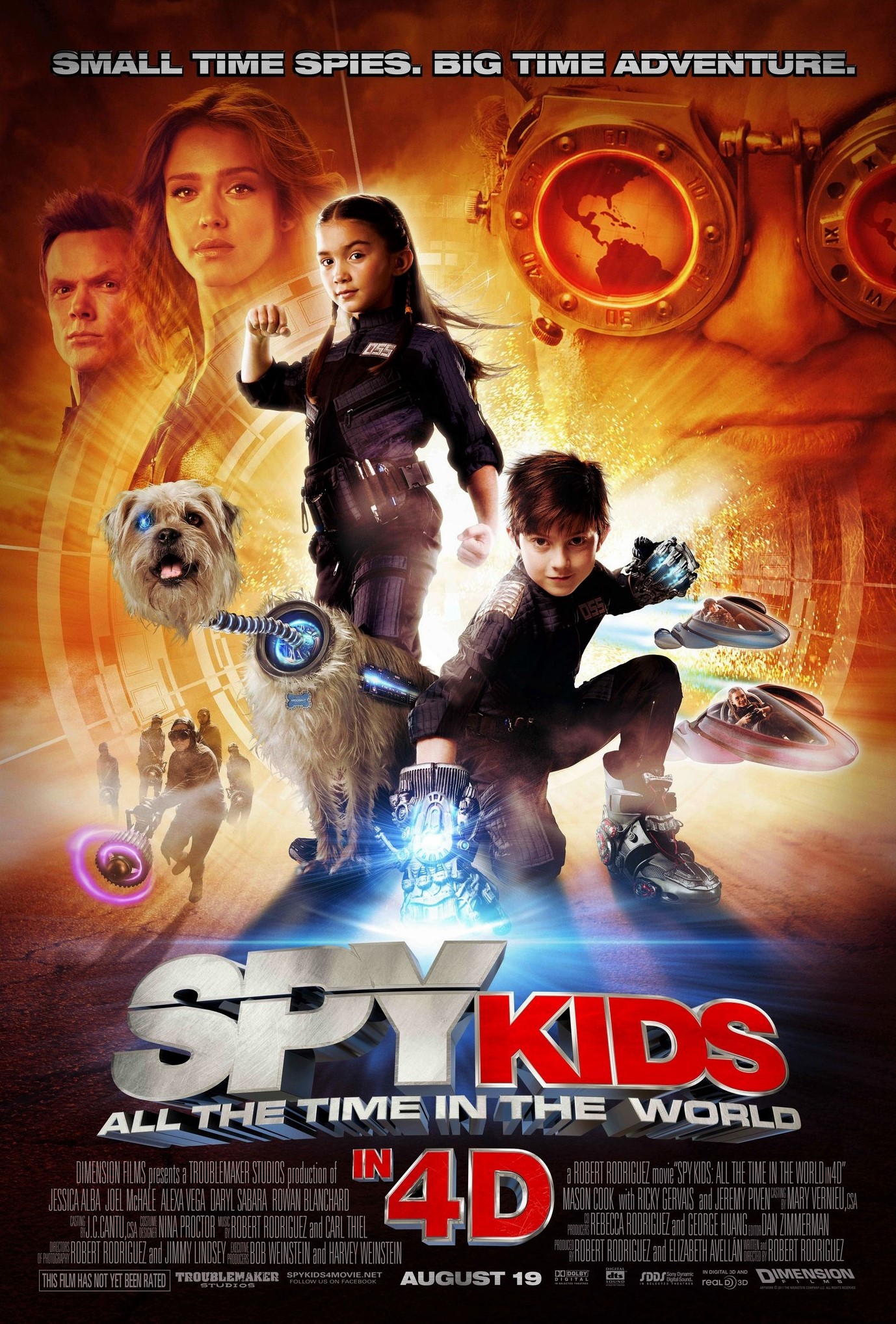
One of the rare releases to incorporate scents into the cinema experience, 2011’s Spy Kids: All the Time in the World is the fourth instalment of the Spy Kids franchise, the well-known family-oriented espionage series created, written and directed by Robert Rodriguez (El MariachiPlanet TerrorAlita: Battle Angel). Once again produced by Double R Productions (then-Troublemaker Studios), Spy Kids: All the Time in the World serves as somewhat of a soft reboot, attempting to appeal to a new generation of aspiring juvenile spies. Unlike the original Spy Kids trilogy, however, Spy Kids: All the Time in the World falls short in nearly every regard as the less-prevalent issues of previous franchise instalments are intensified, plaguing the film with a misbegotten screenplay, awful visual effects and a barrage of scatological humour that suggests the Spy Kids series has truly run its course.

Plot Summary: On the surface, Marissa Wilson is your typical suburban mother, caring for her newborn daughter and step-children, Rebecca and Cecil Wilson, whilst supporting their father, Wilbur Wilson, in his career as a spy-hunting television star. But, in reality, Marissa is a retired spy whose life is turned upside-down when the maniacal Timekeeper threatens to take over the world, thrusting her back into action. Meanwhile, after discovering that their stepmother was once a top agent of the O.S.S., Rebecca and Cecil put their bickering aside to assist her in thwarting the Timekeeper’s sinister scheme…

The conception of Spy Kids: All the Time in the World, unfortunately, did not arise from a place of creativity but, instead, was contractual. As, in truth, Rodriguez didn’t want to make another entry in the Spy Kids franchise, partially because he still blamed producer Harvey Weinstein for the failure of his collaboratively-directed 2007 project; Grindhouse. Nevertheless, Rodriguez contractually owed Weinstein one more film. Unsurprisingly, this lack of ambition for the project can be felt throughout the runtime, as the film largely boils down to an endless string of inferior visuals and potty jokes that sap the charm out of almost every scene. However, that is not to say that the film doesn’t carry any positives, as the film does feature a handful of minor, amusing gags and a few fragments of endearing fan service for those who grew up with the Spy Kids series, including appearances from Carmen and Juni Cortez.

In terms of the cast, Rowan Blanchard, Mason Cook, Jessica Alba, Joel McHale, Jeremy Piven and Ricky Gervais all deliver rather overblown performances, playing up many of their actions/movements to ‘add’ to the humour or aggressively pry for an emotional moment. Regrettably, the characters themselves don’t fare much better, as Marissa and Wilbur Wilson barely make it past their basic traits, while the latest generation of youthful agents, Rebecca and Cecil Wilson, are effectively just duplicates of Carmen and Juni with little individuality. Lastly, there is the mysterious miscreant, the Timekeeper, who, despite his shoddily-designed costume, receives more development than many would expect during the final act. Yet, this growth is somewhat spoilt by his associate, Tick Tock, who is immensely grating as he speaks in a high-pitched voice, uttering time puns to an outrageous extent, like “Time Flies When You’re Having Fun.”

Visually, Spy Kids: All the Time in the World occasionally demonstrates its knack for vibrant, imaginative production design with the facilities and weaponry of the Timekeeper, which seem inspired by the illustrious steampunk aesthetic and the innards of antique clocks. The remainder of the visuals, however, such as the cinematography by Jimmy Lindsey and Robert Rodriguez, are low-grade, with a substantial amount of the CG effects being of matching quality.

Similar to previous instalments in the franchise, the original score by Carl Thiel and Robert Rodriguez is playful and electric guitar-led, integrating the classic Spy Kids theme where it can through tracks like Carmen Cortez and Spy Kids 2.0. As such, the film’s soundscape remains colourful, even if it sometimes becomes too skewed and cartoonish for its own good.

Peculiarly, one of the aspects that Spy Kids: All the Time in the World marketed itself upon was being in “Aroma-Scope,” a gimmick that allowed the film to contain a “4D” in some iterations of its title. In 2011, when audiences watched the film in cinemas, they were provided scratch-and-sniff cards and prompted to scratch them throughout their screening. These cards featured circles numbered one to eight, and at various points, a number would appear in the corner of the screen, indicating it was time to scratch off the corresponding circle. When scratched, the intention was that the card would release a smell related to what was on-screen, like vomit or confectionaries, etc. Yet, whilst this was a fascinating idea, these cards rarely worked as they were made from a similar material to lottery tickets, ensuring little grit and thus no smell.

In summary, while Spy Kids: All the Time in the World falters as a family flick, the film falters even more as a Spy Kids soft reboot/stand-alone sequel. Retaining hardly any of the allure or creativity of earlier entries in the franchise, Spy Kids: All the Time in the World may, at the very least, entertain toddlers through its numerous scenes of vomiting, farting and nose-picking. But, any other audience member will likely sit in frustration, wishing for a well-crafted animated flick instead. Rating: low 3/10.

spy_kids_4_all_the_time_in_the_world-p547361

Oz the Great and Powerful (2013) – Film Review

“I Don’t Want to Be a Good Man, I Want to Be a Great One.” – Oscar ‘Oz’ Diggs

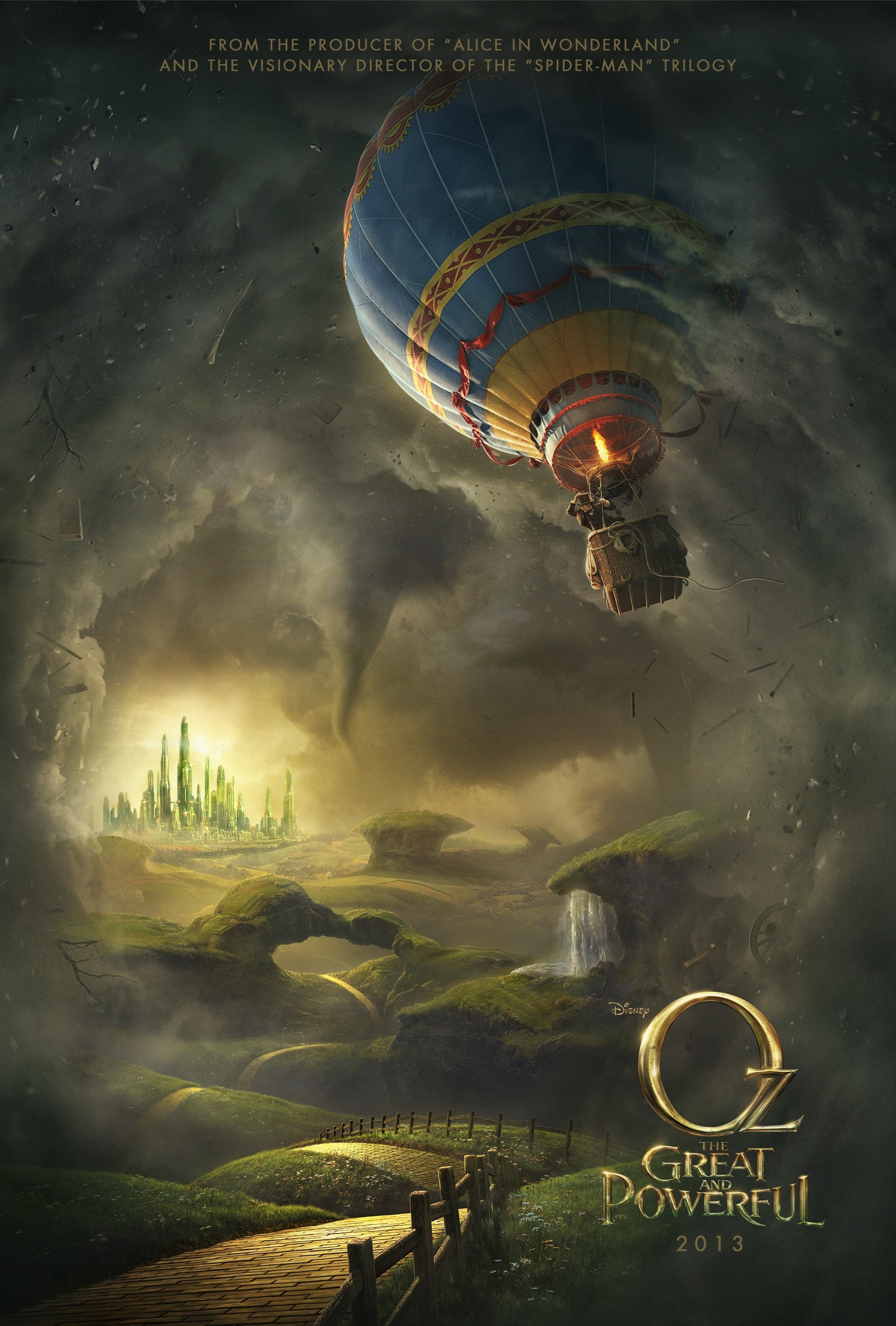
Since its release in 1939, the illustrious fantasy-musical; The Wizard of Oz, an adaptation of L. Frank Baum’s beloved children’s novel; The Wonderful Wizard of Oz, has been engraining itself into the memories of adults and youngsters alike through its catchy melodies, imaginative world-building and groundbreaking practical effects. In 2013, Walt Disney Pictures sought to return to the Land of Oz with Oz the Great and Powerful, a prequel to the novel and, in a way, its silver screen counterpart (despite ownership of the harmonious classic belonging to Warner Bros. Pictures), with celebrated director Sam Raimi (The Evil DeadSpider-ManDoctor Strange in the Multiverse of Madness) attached to helm the project, ascertaining its potential as an enchanted prequel. Shortly after its release, however, most seem to forget about the film, which is unfortunate given that Oz the Great and Powerful is a largely enjoyable fantasy adventure that pays homage to the iconography and timeless sense of wonder present in the original musical while avoiding an absence of its own, unique ideas.

Plot Summary: After Oscar ‘Oz’ Diggs, a small-time circus magician with dubious ethics, is hurled away from his dusty abode in Kansas to the vibrant Land of Oz, he believes he’s hit the jackpot as he’s told to assume his rightful place as monarch of Emerald City. But, when Oscar meets the sisters of Theodora and Evanora, who aren’t entirely convinced that he is the great wizard their prophecy has spoken of, Oscar is summoned on a quest to slay the Wicked Witch that threatens Oz and prove his worth…

Whilst Oz the Great and Powerful may seem like just another cinematic interpretation of the whimsical Land of Oz, Walt Disney Pictures actually had to be very cautious with what aspects of the story they utilised, on account of Warner Bros. Pictures owning the rights to specific elements of The Wizard of Oz, as previously mentioned, including the ruby slippers Dorothy Gale dons throughout the runtime. These restrictions even extended to the particular shade of green used for the Wicked Witch’s skin, for which Disney employed what its legal department considered a sufficiently different shade dubbed; “Theostein,” a portmanteau of Theodora and Frankenstein, yet Disney could not use the signature chin mole from Margaret Hamilton’s renowned portrayal of the Wicked Witch of the West.

In terms of the actual narrative, Oz the Great and Powerful tells the origin of the titular Wizard of Oz, whom we all know from previous iterations to be a fraud. Before he was viewed as a mythical wizard, Oscar Diggs was merely a talented illusionist and an egotistical, womanising con man performing at a travelling circus in Kansas. ‘Oz’ (as his friends call him) underpays his assistant and recruits many beautiful women to appear in his performances, manipulating them with lies and empty romantic gestures. However, while Oscar receives an abundance of characterisation during the story and is evidently a gifted magician, James Franco’s performance is primarily to blame for the character’s shortcomings, as Oscar suffers from an underbaked character arc and a lack of empathy in certain scenes, suggesting that Franco lacks the charisma necessary to win over the audience amid Oscar’s immense arrogance. Dissimilarly, the supporting cast of Mila Kunis, Rachel Weisz, Michelle Williams, Zach Braff and Joey King are all sufficient in their varied roles, human and otherwise.

Recreating imagery like the Yellow Brick Road and the Emerald City in addition to introducing a handful of never-before-seen locations, such as a miniature village compromised of larger-than-life crockery and ceramic residents, known as China Town. Oz the Great and Powerful impressively brings the Land of Oz to life via a combination of expansive sets and green screens. Similar to the original musical, Oz the Great and Powerful also opens in a colourless, tight aspect ratio for the Kansas sequences before widening out and blossoming into colour once Oscar enters the Land of Oz, making for an unforgettable visual juncture. Moreover, the cinematography by Peter Deming is frequently effective in implementing Sam Rami’s familiar style of camerawork, as the camera is repeatedly rocketing towards characters’ faces, particularly when they’re reacting to the surprising number of jump-scares.

Although the original score for Oz the Great and Powerful by Danny Elfman isn’t one of the composer’s finest, nor is it exceedingly memorable, tracks, like Main TitlesA Strange World and The Bubble Voyage are all remarkably uplifting, whereas the orchestral tracks; Bad Witch and Witch Fight, are much more ominous in tone, allowing Elfman to exhibit his grand, gothically melodic roots.

On a separate note, all of the CG effects throughout Oz the Great and Powerful hold up well for their age, aside from a few wide shots where the environment surrounding the characters appears excessively distant and overly bright. And, whenever physical sets are employed instead of green screens, they are magnificently multicoloured and extensive.

In summary, while Oz the Great and Powerful suffers from some tonal inconsistency and an underdeveloped character arc for its protagonist, the film retains enough spectacle, wit and creativity to be entertaining in its own right as a bewitched prequel. Faithfully reproducing iconic imagery like flying primates, a golden-bricked road and a cackling, broom-riding Wicked Witch, I feel nearly every fanatic of The Wizard of Oz (and/or its source material) will find amusement in this non-musical, fantasy blockbuster. Rating: low 7/10.

oz_the_great_and_powerful-p680832

The Iron Giant (1999) – Film Review

“It’s Bad to Kill. Guns Kill. And You Don’t Have to Be a Gun. You Are What You Choose to Be…” – Hogarth Hughes

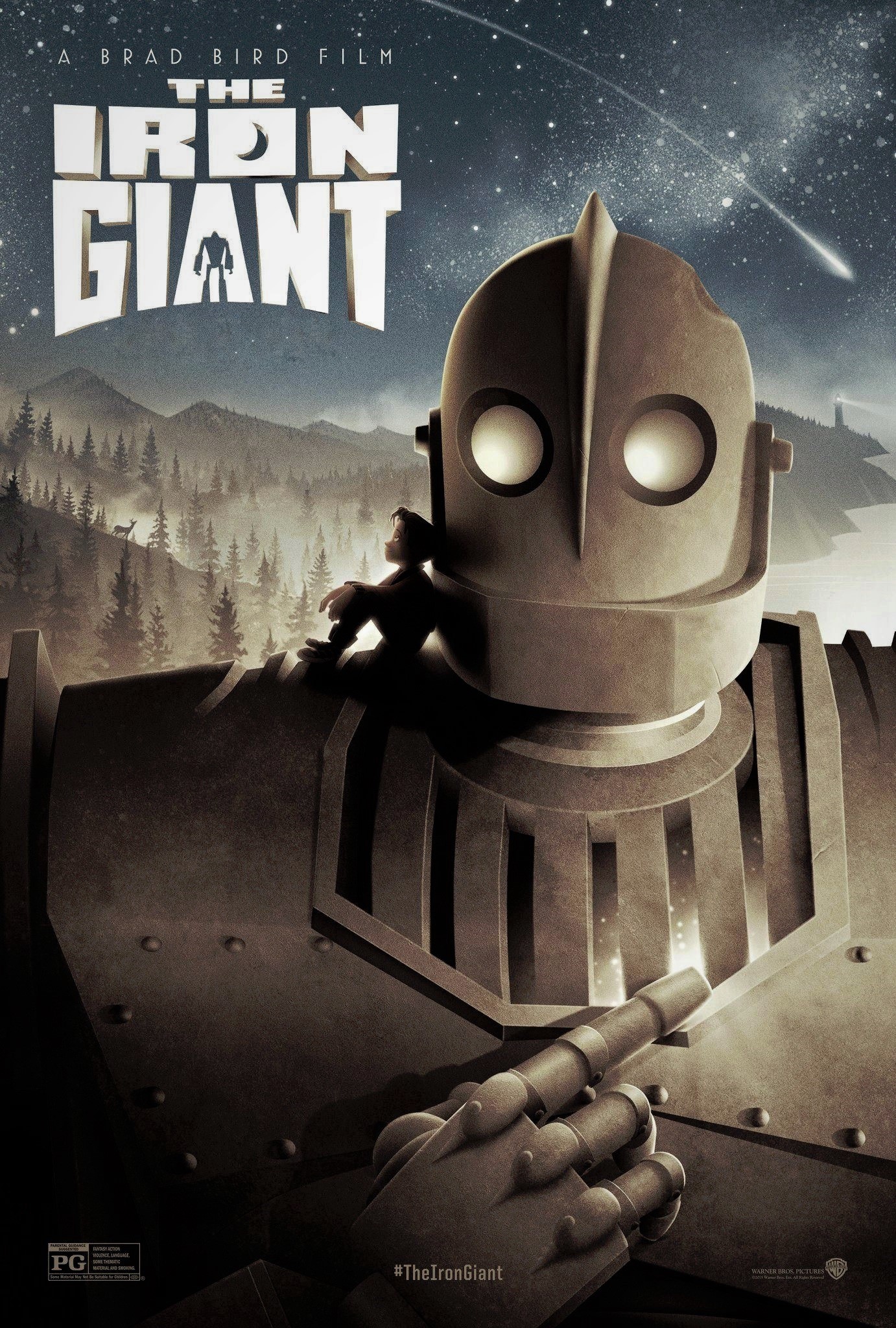
Partially based on the novel; The Iron Man by Ted Hughes, 1999’s The Iron Giant is an incredible achievement in both storytelling and animation. Tackling ambitious themes and complex animation techniques for the time through its near-seamless blend of hand-drawn and CG animation, The Iron Giant is a captivating and uplifting animated sci-fi adventure with plenty of humour and heart entrenched in its story. And while perhaps not the peak of director Brad Bird’s filmography, with The IncrediblesRatatouille and Mission: Impossible – Ghost Protocol all serving as stiff competition. As far as directorial debuts go, The Iron Giant was undoubtedly a curtain-raiser for Bird and his team.

Plot Summary: When a massive metal automaton, sent from somewhere in the black void of outer space, crash-lands on Earth just outside the small town of Rockwell, Maine. Eleven-year-old, Hogarth Hughes, stumbles across the android and quickly strikes up a friendship with the giant. But, unbeknownst to Hogarth, U.S. government agent, Kent Mansley, has his sights set on finding the extraterrestrial visitor and will stop at nothing to ensure its destruction…

Whilst The Iron Giant bears little resemblance to the novel it’s based upon, the stories behind both the novel and the film’s creation are tragic yet fascinating. As originally, the author of the novel, Ted Hughes, wrote the story as a way of comforting his children after the suicide of their mother, Sylvia Plath. Similarly, Brad Bird was in part inspired to adapt the novel as a memorial to his sister, Susan Bird, emphasising the anti-gun message of the story as she was shot by her estranged husband in a murder-suicide in 1989. His initial pitch was this; “What if a Gun Had a Soul and Didn’t Want to be a Gun?” And even if the title of the adaptation (and subsequently the titular character’s name), was later changed to The Iron Giant to avoid confusion with the renowned comic book character, Iron Man. This underlying theme has always been associated with the character and is weaved into the narrative exceptionally.

The main voice cast of Eli Marienthal, Jennifer Aniston, Harry Connick Jr., and Christopher McDonald all do a fantastic job as the central clump of well-defined characters, portraying them as surprisingly grounded personalities for an animated flick. However, the most significant member of the cast has to be Vin Diesel as the Iron Giant himself. Sharing similarities with his later role as Groot/Baby Groot in the Marvel Cinematic Universe, Diesel only speaks a total of fifty-three words throughout the entire runtime, excluding yells and groans. Yet, even with these limited lines, Diesel provides the enormous android with a suitably weighty voice and plenty of amusing/endearing moments.

On account of The Iron Giant being the first traditionally animated film to feature a principal character that is entirely computer-generated, there are a few scenes where cracks have begun to form in the animation and the animated cinematography. However, for the most part, the visuals on display throughout The Iron Giant are magnificent as the film contains an extensive amount of vibrant and alluring shots that meld both animation techniques. Many of these shots also make superb use of the remote, coastal setting of Rockwell, as well as the 1950s time period.

The original score by the late Michael Kamen is largely superior to a number of other orchestral scores for animated family flicks, with the acclaimed track; No Following, standing as a beautiful yet heart-rending composition that considerably enriches the final act. Further tracks, such as The Eye of the Storm and Souls Don’t Die, are pleasant to listen to and serve their purpose within the story, despite not being particularly memorable.

Another noteworthy aspect of The Iron Giant is how the film takes inspiration from classic sci-fi films of the 1950s. Intentionally playing into many of the staples of the science fiction genre around that time, including the widespread fears of nuclear war and Earth being invaded by creatures from another world. This ’50s inspiration even extends to the character designs with the appearance of the Iron Giant himself, who is instantly recognisable as a result of his atomic-age headpiece. Furthermore, the tentacles that emerge from the Iron Giant’s back during the final act are an unmistakable visual homage to one of the most well-known extraterrestrial films in cinematic history; The War of the Worlds, released in 1953.

In summary, whilst it still saddens me that The Iron Giant was such a box office failure upon its initial release, only grossing around £19 million on an estimated budget of £58 million. I am delighted that the film has gone on to become such a cult classic, predominately through positive word-of-mouth, no less. Releasing on August 6th, 1999, the same day as The Sixth SenseThe Iron Giant was commercially overshadowed immediately out of the gate. Moreover, following the success of Toy Story in 1995, The Iron Giant was released at a time when hand-drawn animation was being superseded by CGI. So much so, that Warner Bros. Pictures was in the process of shutting down its traditional animation division during the film’s production. And yet, The Iron Giant still flourished in spite of all these obstacles, which, in my opinion, is a testament to the efforts of Brad Bird and his masterful team of animators and creatives. Rating: low 8/10.

iron_giant_ver4_xxlg

Enola Holmes (2020) – Film Review

“The Choice Is Always Yours. Whatever Society May Claim, It Can’t Control You.” – Sherlock Holmes

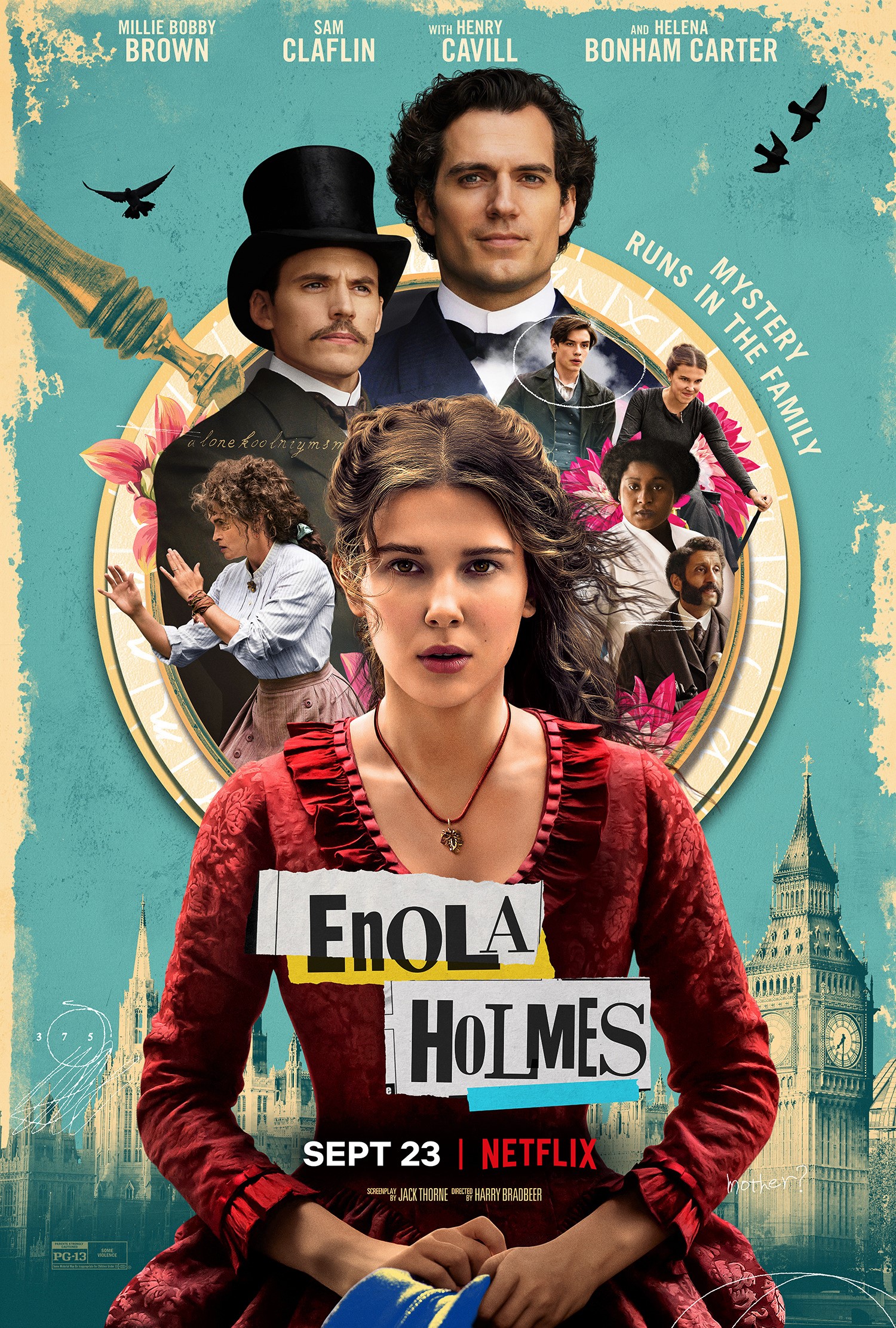
Based on the book series; The Enola Holmes Mysteries by Nancy Springer, a string of books centralising on Sherlock and Mycroft Holmes’ younger sister, Enola. 2020’s Enola Holmes serves as an alternate take on the Sherlock Holmes mythology, aiming itself towards preteens (specifically preteen girls) and injecting the world of the renowned detective with both colour and humour. Unfortunately, however, on account of the film’s poor pacing, overly long runtime and comedic sequences that frequently fall flat, Enola Holmes struggles to attain much appeal outside its preteen demographic, even with a terrific performance from Millie Bobby Brown as the titular character.

Plot Summary: When Enola Holmes, Sherlock Holmes’ teenage sister, discovers that her mother has gone missing, she embarks on a daring mission to the city of London to find her. Swiftly becoming a proficient detective in her own right as she outwits her older brothers and unravels a treacherous conspiracy surrounding a young, runaway Lord…

Adapting the first entry of the book series into an origin story, of sorts. The plot of Enola Holmes revolves around a mystery, similar to many adaptations of Sherlock Holmes literature. However, unlike many other adaptations of the world’s greatest detective, Enola Holmes repeatedly breaks the fourth wall throughout its narrative, having Enola turns towards the camera and speaks directly to the audience, delivering exposition and sharing her thoughts on her current situation. Yet, this isn’t too surprising as director Harry Bradbeer (As the Beast Sleeps, The Brides in the Bath, Perfect Day: The Millennium) is predominantly a television director, directing episodes on several well-known series, including Fleabag, which also features a number of fourth-wall-breaking moments. Furthermore, with a female protagonist at the centre of the story, Enola Holmes attempts to weave themes of feminism and the sexist nature of the 1800s into its narrative, which is an admirable goal, yet often comes across as preachy in its delivery as the female characters continuously outperform and belittle the male characters, including Sherlock Holmes himself.

Best known for her role as Eleven in the smash-hit sci-fi television series; Stranger Things, Millie Bobby Brown portrays the youthful detective, Enola Holmes, with plenty of wit and confidence. And, although the screenplay doesn’t give Enola much complexity beyond occasionally being too headstrong for her own good, she is a fine protagonist, especially for impressionable young girls. The supporting cast also does well in their respective roles, with Henry Cavill, in particular, portraying a remarkable iteration of Sherlock Holmes in a more traditional portrayal of the character following the rather wild and scattered portrayals from Robert Downey Jr. and Benedict Cumberbatch. Cavill is calm and collected as the stark image of his older brother, Mycroft Holmes, portrayed by Sam Claflin, who is far more rigid. Mycroft also makes an excellent foil to Enola as he demands she conform to the standards of 18th-century women. Then there is Helena Bonham Carter, who doesn’t have much to do as the Holmes matriarch, Eudoria Holmes, but makes the most of her screen-time through her monologues, bouncing from various tones with her eccentric behaviour and sage advice.

For added freedom and flexibility when it comes to camera movement, Enola Holmes was shot almost exclusively using a Steadicam system. This allowed cinematographer Giles Nuttgens to obtain many of the energetic shots seen throughout the film. Yet, despite this persistent sense of movement, many of the shots in Enola Holmes aren’t anything overly inventive, and instead, a large portion of the camerawork simply presents the detailed costumes and sets with pride. All of which feel period-accurate, if a little excessively vibrant.

Whilst not as memorable or as distinct as many of his other scores, composer Daniel Pemberton does a passable job with the soundtrack for Enola Homes. Crafting an orchestra-led score brimming with bouncy rhythms and sassy melodies, all united by guitar. Effectively, it’s a modern score that makes no real attempt to convey the time period of the story. Instead, the original score concentrates on Enola as a protagonist, accentuating her personality through tracks like Gifts from MotherCracking the Chrysanthemums Cypher and The Game is Afoot.

According to the novel; A Study in Scarlet, by Sir Arthur Conan Doyle. Sherlock Holmes first met his assistant, Dr. Watson, in 1881. But, in Enola Holmes, which is set in 1884, Lestrade states that Sherlock always works alone, indicating that the pair have not yet met. As such, it’s a safe assumption that Enola Holmes is set outside of the series’ usual continuity, further playing into the idea that Enola Holmes is an entirely new interpretation of the series. This assumption is inadvertently also a pleasant distraction from the film’s countless cringe-worthy quips and one-liners.

In summary, Enola Holmes is the type of film that preteens will delight in; a charming, family-friendly adventure with an intriguing mystery at its core. For others, however, this family flick is unlikely to impress as a result of its notable flaws and restrictive appeal, not to mention its constant attempts to plant seeds for the inevitable sequels that will be coming to Netflix later down the line. Having said that, I feel Millie Bobby Brown will certainly advance her career with this project as she was actually one of the primary reasons Enola Holmes was greenlit, approaching author, Nancy Springer, with the intention of starring in and producing an adaptation of her work. Rating: 5/10.

Enola Holmes • Poster

Peter Rabbit (2018) – Film Review

“This Is Our Ancestor’s Land, It’s Time to Get Our Garden Back…” – Peter Rabbit

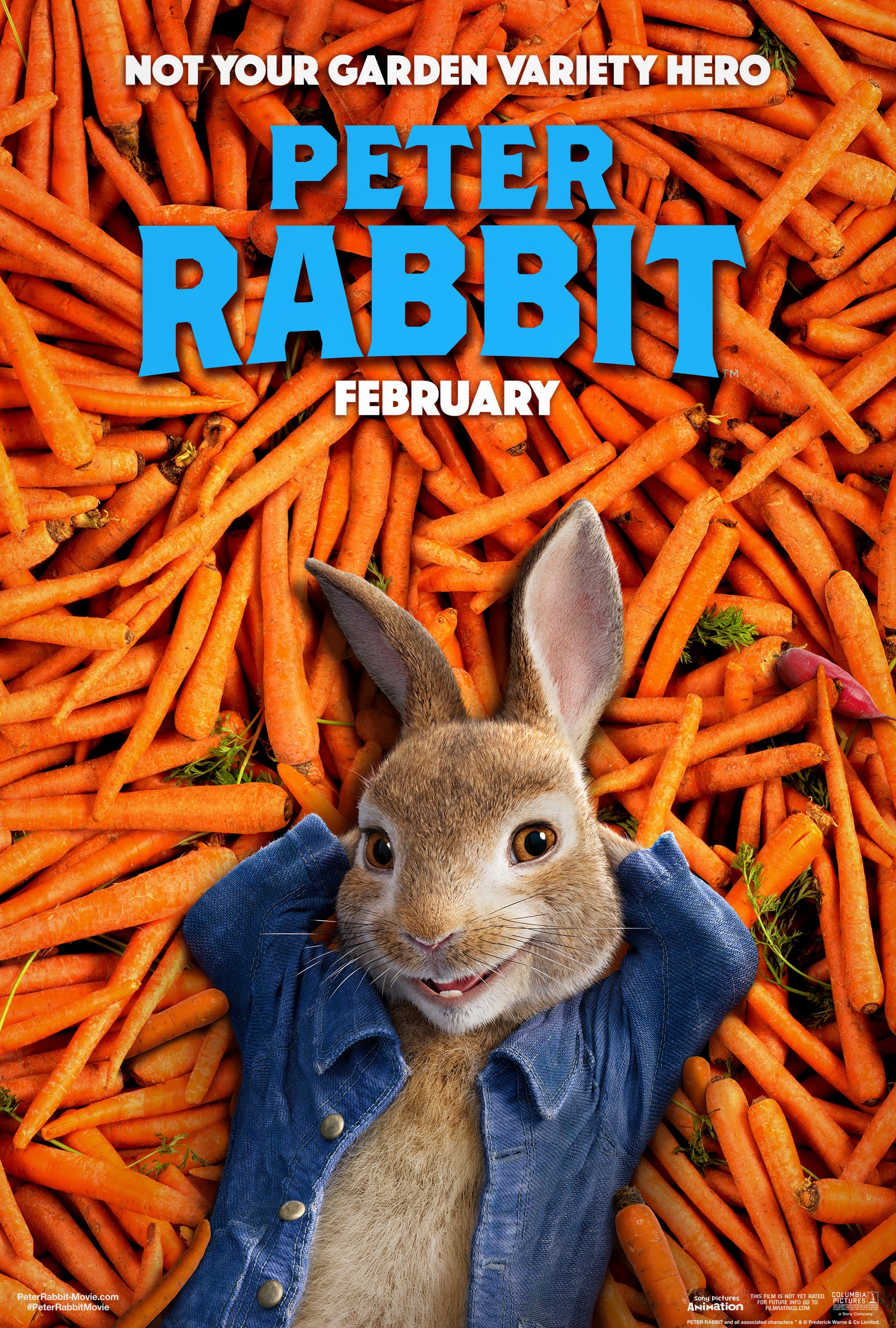
Based on the children’s book; The Tales of Peter Rabbit, written and illustrated by Beatrix Potter, 2018’s Peter Rabbit is the first live-action adaptation of the mischievous, jacket-wearing bunny. And although Potter herself would’ve more than likely not enjoyed the film as the condemnatory author was well-known for her continuous criticisms of how her characters were utilised (to the extent that she even oversaw much of the characters’ merchandise). Over a century on, it’s understandable that Peter’s garden high-jinx would pale in comparison to many modern family flicks. Thus, Peter Rabbit unsurprisingly attempts to update the character, resulting in a mixed bag of a film brimming with over-the-top antics and wild animal house parties.

Plot Summary: After spending years in the countryside toying and tormenting the old, crotchety gardener, Mr. McGregor, as they steal from his luscious vegetable patch. Peter Rabbit and his twin sisters find themselves up against a real challenge when Mr. McGregor dies of a heart attack, prompting his young, compulsive great-nephew, Thomas McGregor, to inherit his property and all that comes with it…

While screenwriters Rob Lieber and Will Gluck (who also directs) do a serviceable job at crafting a family adventure, one of Peter Rabbit‘s biggest issues is that its story is often told from an American perspective, in which the picturesque British countryside is exclusively filled with cosy cottages and well-meaning residents. This frequently results in quite the disconnect whenever the story becomes more chaotic as garden rakes begin to fly, explosives go off and electric fences impart a never-ending stream of injuries to both humans and animals, all played with flippant humour that’s somewhat at odds with the emotional fallout of Peter’s parents’ death many years earlier.

The voices of James Cordon, Colin Moody, Daisy Ridley, Margot Robbie, Elizabeth Debicki and Sia lead the cast, lending their star-studded vocals to the various animals ripped straight from the source material in terms of both their designs and personalities. On the human side of things, however, many of the characters have been significantly reworked from their original appearances, primarily in an attempt to modernise them, which is pretty clear from Mr. McGregor being swapped out for his younger nephew in an admittedly bleak fashion. And even though Donald Gleeson is incredibly exaggerated in his performance as Thomas McGregor, the character does serve his purpose well as not only a foil for Peter, but also a reasonably likeable man thrown into an understandably aggravating conflict with a troublesome rabbit. Rose Byrne equally elevates her role as the friendly next-door neighbour who is fond of both Thomas and Peter, often leaving the two boys to fight over her affection.

On a technical level, Peter Rabbit is a fairly polished film as the blend of actors and CG characters is well-done and feels natural, while the cinematography by Peter Menzies Jr. ensures the film stays visually appealing even during the story’s more outlandish moments, often having the camera head-level with Peter and his relatives to give the animals more intimate scenes. Moreover, the film frequently integrates animated sequences which are remarkably reminiscent of the source material, having many flashbacks appear as water-coloured paintings similar to the book’s endearing artwork.

With the exception of the uplifting track; Rascal Rebel Rabbit, the original score by Dominic Lewis isn’t overly memorable. But, thankfully, Lewis still manages to compose a score that has a youthful bounce to it as the soundtrack’s melodies all have great energy to them. Furthermore, the way the score is structured means the audience gets to experience the slapstick fun of the film’s first and second acts, but as the third act arrives, some real emotional weight creeps in. Also worth noting is the brilliant use of garden tools in the fabric of the score, the most notable of which is the use of the garden shears as percussion throughout several tracks.

Curiously, many of the live-action scenes for Peter Rabbit were actually filmed in Australia, not the United Kingdom as Sydney was chosen as the primary filming location as the city is home to Animal Logic, the company that produced much of the film’s advanced animation. However, this did cause a problem for the filmmakers as rabbits have been regarded as pests in the country since the 1800s as the country was once overrun with them. And, at its illegal to bring living rabbits into the country, the actors had to work opposite CG characters for the entirety of the production, with even their closet of interactions being achieved through the use of CGI, which luckily does hold up.

In summary, Peter Rabbit is bitterly average as it’s a film you can sit through, but not much else beyond that. In many ways, it almost feels as if Will Gluck was bored with the source material and was concerned that audiences would be too, leading him to implement as many disorderly action sequences and childish, fourth-wall-breaking gags as he possibly can. Unfortunately, making the film more frenetic only adds to its sense of desperation. Still, with Peter Rabbit racking in over £229 million at the global box office, I’m convinced we’ll be seeing many, many sequels (and potentially spin-offs) to this family adventure in the near future. Rating: 5/10.

peter_rabbit_ver2_xxlg

Strange Magic (2015) – Film Review

“Send More Goblins to Cut Down Every Primrose! No Primroses, No Potion. No Potion, No Love. Because Love Is Dangerous. It Weakens… It Rots.” – The Bog King

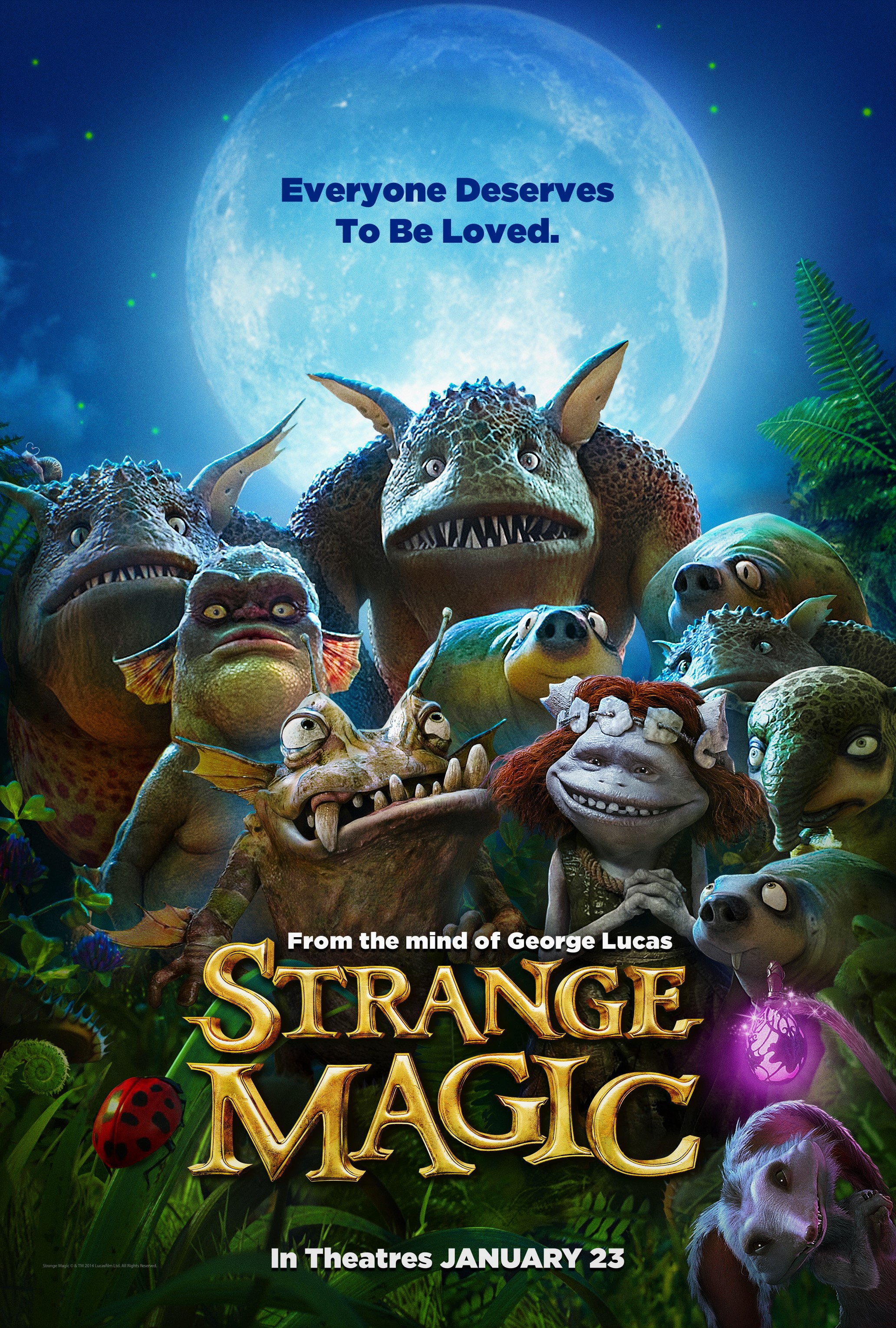
After selling Lucasfilm to the Walt Disney Company in late 2012, well-established writer-director George Lucas (THX 1138American GraffitiStar Wars: Episode IV – A New Hope) turned his attention away from the mega franchises of Star Wars and Indiana Jones to produce many of his long-gestating passion projects. This ambitious new turn began with the war epic; Red Tails in 2012 and shortly after Strange Magic in 2015, an animated fantasy musical that Lucas had long wanted to produce for his three daughters, having written an early draft of the story fifteen years earlier. Upon its eventual release, however, Strange Magic was deemed a colossal failure, earning only £9 million at the box office on a budget of approximately £74 million, along with receiving largely negative reviews from critics and audiences alike due to its predictable story, dreadful humour and bizarre song choices. All of which, I feel, are valid criticisms.

Plot Summary: In a mystical woodland realm where primrose flowers mark the border between two regions; the Fairy Kingdom and the Dark Forest. The undesirable, Bog King, rules over his gloomy domain without love, going so far as to imprison the Sugar Plum Fairy, who is capable of mixing love potions through the use of primroses, in a bid to permanently cease adoration across his domain…

Technically the first Lucasfilm production to be distributed by the Walt Disney Company following its acquisition. The story of Strange Magic is predominantly based on William Shakespeare’s A Midsummer Night’s Dream, as both narratives are romantic-comedies that involve misunderstandings and cross-purposes between different races or, in this case, species. The film also takes inspiration from many well-known fairy tales, including The Ugly Duckling and Beauty and the Beast for its central underlying theme, which concentrates on the belief that beauty is only skin deep and internal beauty is far more meaningful. An important message for children, to be sure. But, as a result of this subtext being delivered with zero charm or subtlety, the message itself comes across as incredibly forced and even somewhat contradictory, thanks to some of the screenplay’s ill-timed gags.

The central voice cast of Alan Cumming, Evan Rachel Wood, Elijah Kelley, Sam Palladio and Meredith Anne Bull all do a sufficient job of lending some personality to their respective characters. Especially since Strange Magic supplies very little in the way of characterisation, with a majority of the animated characters only being set apart from one another by what species they are, e.g. a fairy, elf or goblin, etc. Quite unfortunate, as for many characters, there is a solid foundation alluding to what they could’ve been should they have been further developed. For example, Marianne (the closet thing the story has to a protagonist) becomes distrustful of men once she witnesses her fiancée, Roland, cheating on her on the day of their wedding, quickly vowing to never love again and instead dedicate her life to protecting her family, specifically her sister, Dawn, who supposedly falls in love with every man she meets.

Aside from the flavourless designs of the fairies, which appear as if they’ve been yanked from any generic fantasy flick of the early 2000s, the visuals of Strange Magic are by far the film’s finest component, with nearly every shot retaining plenty of colour and ingenuity on account of the animated cinematography and the animation itself, which exhibits even the smallest of details right down to the threads on a characters’ clothing or patches of watery moss on tree branches. Yet, this isn’t too surprising, considering that Strange Magic was animated by famed visual effects company, Industrial Light & Magic, standing as their first fully animated feature since Rango in 2011.

Moving from the visuals to the music, Strange Magic is what’s known as a jukebox musical. This means that rather than creating original songs for the film, all of the songs heard throughout Strange Magic are popular songs from past decades. From Can’t Help Falling in Love to Love is Strange and I Can’t Help Myself (Sugar Pie Honey Bunch), the film’s continuous use of on-the-nose songs is undoubtedly what will make or break Strange Magic for most, as older audiences will feel as if they are being pandered to whilst younger audiences will simply be confused as to why none of the songs directly relate to any of the characters/locations within the film. Furthermore, the original score by Marius De Vries is barely distinguishable from any other fantasy score.

On a separate note, although the first entry in the Star Wars saga rarely lacked in world-building when it first introduced audiences to a galaxy far, far away. Strange Magic seems to actively avoid developing its world beyond one or two throwaway lines, establishing the two unimaginatively named regions that reside side-by-side and not much else as to how this fantastical world functions.

In summary, Strange Magic is a film that feels far too familiar to sing its own tune, with its derivative story coming across as a hodgepodge of well-worn elements from other animated and fantasy films. Most evidently, 2013’s Epic and the everlasting series of animated Tinker Bell flicks. As such, there’s virtually nothing about this fractured fairy tale that feels remotely fresh aside from some of its attractive visuals. There are enjoyable moments, of course, but, for the most part, Strange Magic is simply half-hearted and creatively lazy. Rating: high 3/10.

strange_magic-p940629

Paddington (2014) – Film Review

“Mrs. Brown Says That in London Everyone Is Different and That Means Anyone Can Fit in. I Think She Must Be Right Because Although I Don’t Look Like Anyone Else, I Really Do Feel at Home…” – Paddington

Inspired by a lone teddy bear author, Michael Bond, noticed on a store shelf near Paddington Station on Christmas Eve 1956. The literature debut of the loveable little bear known as Paddington came in the children’s book; A Bear Called Paddington, in 1958. And has since been featured in more than twenty books written by Bond and illustrated by Peggy Fortnum, among other artists. In 2014, writer-director Paul King (Under One RoofBunny and the BullPaddington 2) brought the darling bear to the silver screen in a film that affectionately honours its source material while simultaneously delivering a family-friendly fable that is just as heart-warming and amusing as its marmalade-munching protagonist.

Plot Summary: After a devastating earthquake destroys his home in the Peruvian rainforest, a young bear with an affection for all things British travels to London in search of a new home. Finding himself lost and alone at Paddington Station, he begins to realise that city life is not all he had imagined it to be until he encounters the Brown family, who after reading the label around his neck, offer him a temporary haven. But, just as things seem to be looking up for the Peruvian bear, he soon catches the eye of a fiendish museum taxidermist…

As it happens, the story of Paddington actually shares many similarities to the creation of the character; as the idea of a lonely bear sitting in Paddington Station can be linked back to old newsreels depicting child evacuees leaving London during World War II with labels around their necks and their possessions packed in small suitcases. Indicating that King understands the importance of this character in British pop culture, yet the film can’t be criticised for playing things too safe with this narrative as it does update the Peruvian bear where it can to stay relevant within modern times. Additionally, as a family comedy, Paddington hits all the right notes as the film’s gags range from laugh-out-loud observations regarding the transformative effects of fatherhood to slapstick bathroom antics, satisfying any audience member regardless of their age or affiliation with the character.

The voice of Paddington is provided by Ben Whishaw, who it turns out is the perfect voice for the beloved bear as his line delivery is naive yet charming, portraying Paddington as an innocent character who always sees the positive in any given situation. Moreover, the supporting cast of Hugh Bonneville, Sally Hawkins and Nicole Kidman are all delightful and are given an unexpected amount of characterisation, with Henry Brown being an uptight, risk analyst who is reluctant to take Paddington in, whilst his kind, artistic wife, Mary Brown, treats Paddington almost as if he is their own child. But, it’s Kidman who truly steals the show as the film’s antagonist, Millicent, riding the line between sinister and playfully over-the-top in her portrayal of a museum taxidermist who catches and stuffs exotic animals in her spare time.

Continuously imaginative and vibrant, the cinematography by Erik Wilson is ceaselessly innovative, assembling many visually pleasing shots with equally pleasant bursts of colour, especially when snow begins to fall over London during the final act. It also becomes apparent when examining the camerawork that Paddington is just as much a love letter to the city of London as it is an adaptation of a classic child-friendly character. So, of course, there’s the usual display of postcard locations, from the London Eye to Buckingham Palace, along with a stream of light-hearted wisecracks surrounding taxis, the underground and the mundanity of modern life in the British capital.

On a separate note, the original score for the film is by no means a work of art, but composer, Nick Urata, does manage to craft a score that remains both diverse and playful through tracks like Arrival in LondonThis Will Do Nicely, Millicent’s Lab and Theif Chase. While the more tender tracks, such as Journey from Peru and The Letter Home, blend austere piano melodies with subtle strings, making for an altogether cheerful if slightly prosaic score.

When it comes to Paddington himself, the film brings the character to life via the use of CGI. And whilst this information may worry a few fans of the character, the CG effects used throughout the film are almost faultless, as Paddington expresses a range of emotions and seamlessly interacts with the environments/objects around him. Furthermore, Paddington’s outfit is an exact replica of what he wears in the book series, including his iconic blue duffel coat and red Peruvian hat. However, producer David Heyman dismissed his well-known red Wellington boots as they weren’t actually part of the character’s original design, but were added over the years by toy manufacturers to ensure that the real-life Paddington bears were able to stand on their feet.

In summary, even though Paddington follows a formula seen in numerous other family flicks, the film is understandably more concerned with making its audience laugh and cry than it is reinventing the genre (something it achieves with aplomb). And with a heart as big as its protagonist’s appetite for marmalade, I feel Paddington deserved the successful franchise it later received, with its superb humour, pitch-perfect performances and incidental details proudly cementing the film as an adaption that could go hand-to-hand with some of the finest adaptions of children’s literature. Rating: 8/10.

paddington-p901792

Zookeeper (2011) – Film Review

Another lacklustre comedy from the ill-famed Happy Madison Productions, ‘Zookeeper,’ released in 2011, serves as nothing more than a Adam Sandler-perpetrated ego project for Kevin James, as director Frank Coraci (The Wedding Singer, Click, Here Comes the Boom) adds little flair to a sodden screenplay riddled with clichés, overly long scenes and gags inappropriate for the young viewers that would be intrigued by its juvenile storyline. Essentially leaving ‘Zookeeper’ a film that feels as if it was made for no one, despite the film supposedly being a family-comedy with wide appeal.

Plot Summary: When kind-hearted; ‘Griffin Keyes,’ the head zookeeper at the Franklin Park Zoo, considers leaving his profession for a more glamorous career to impress his ex-girlfriend, the animals within the zoo begin to panic at the thought of their favourite zookeeper departing. So, to keep him from leaving, the animals decide to break their code of silence, revealing to ‘Griffin’ their ability to speak before offering to teach him the rules of courtship…

Shockingly, the screenplay for ‘Zookeeper’ has five credited writers (Kevin James being one of them) and yet the story/dialogue is neither interesting nor memorable, stealing many of its ideas from other live-action animal flicks, such as ‘Dr. Dolittle’ and ‘Marmaduke.’ However, this wouldn’t be so much of an issue if ‘Zookeeper’ was amusing or heartwarming, but, unfortunately, the film falls flat in both of these areas, as instead of exploring the life of an animal born in captivity for comedic and sentimental purposes alike, the film lazily relies on montages to establish a tone and suggest a friendship between ‘Griffin’ and the various zoo animals, when he isn’t taking a pounding with pratfalls and bicycle spills, of course, a.k.a. Kevin James’ usual form of comedy.

Speaking of Kevin James, he is truly one of the most notable ‘love him or hate him’ actors in film, having been in a number of roles as the supposedly loveable all-American hero who relies just as much on his weight as he does his comedic timing to get a laugh out of his audience, it’s not difficult to see why many don’t enjoy his on-screen presence, myself included. But, in ‘Zookeeper,’ James is surprisingly bearable, portraying ‘Griffin’ as a likeable guy who feels more comfortable around animals than people after being dumped by his girlfriend when he proposed to her five years prior, Rosario Dawson as ‘Kate,’ however, is given very little to work with as ‘Griffin’s work colleague and obvious love interest. The numerous animals within the zoo are also voiced by a star-studded yet ultimately squandered cast, with Nick Nolte, Sylvester Stallone, Cher, Maya Rudolph, Judd Apatow, Jon Favreau, Faizon Love and even Adam Sandler as ‘Donald’ the monkey (whose over-the-top voice is the vocal equivalent of fingernails on a chalkboard), all being heard at one point or another.

Bland and uninspired all around, the cinematography by Michael Barrett rarely attempts anything beyond a simple close-up or mid-shot, with even the film’s wide shots being few and far between almost as if the production couldn’t afford to feature any sizeable sets, or something of that description. The only visual aspect of the film that is in anyway beguiling is its colour palette, as all of the evening scenes within the zoo are displayed through dark blacks and blues, a dramatic shift in terms of colour from the bright yellows and oranges that represent midday.

Although composer Rupert Gregson-Williams at least strives to make the score for ‘Zookeeper’ a little more unique through the use of tropical instruments, like bongo drums and maracas, the original score is almost unnoticeable throughout most of the runtime. Alternatively, the film relies on well-known songs for the sake of humour, throwing in musical hits, such as ‘I’ll Supply the Love,’ ‘Low,’ ‘Easy’ and ‘More Than a Feeling,’ in a desperate attempt to make the story feel more emotionally investing than it actually is.

Whilst the film’s CG effects have begun to show their age here and there, the majority of the film’s visual effects are serviceable, this is primarily due to the majority of the animals being real with just one or two CG enchantments including mouth movements or being digitally relocated, as opposed to be represented entirely through CGI. Needless to say, this approach still has its issues, as there are many, many shots of animals standing completely alone where were supposed to believe that ‘Griffin’ is standing just out of frame. But, when it came to the film’s gorilla; ‘Bernie,’ the filmmakers actually decided to take an old-school approach, placing an actor inside of ape suit, which sadly doesn’t look very convincing, especially when the camera moves closer towards his face, placing full emphasis on the suit’s unnatural movements.

In summary, ‘Zookeeper’ isn’t offensive or convoluted, it’s quite the contrary, its immature and simplistic, far too simplistic, in fact. While some children may enjoy the slapstick humour that Kevin James excels at, the film’s mass of adult-centric jokes and typical romantic-comedy structure are likely to turn children off. And, although ‘Zookeeper’ is far from the worst Happy Madison-penned film, it’s still significantly less enjoyable than many of the other talking animal escapades you could be watching instead. Final Rating: 3/10.

zookeeper-p543178