Selfie From Hell (2018) – Film Review

“Something Evil Has Already Set Its Eyes on You…” – Hannah

In the horror genre, mystery plays a pivotal role in stories where the characters strive to uncover the cause behind the terrifying events they face, engaging the audience beyond scares via an instinctive desire for answers/explanations. However, in the case of 2018’s hilariously titled, low-budget horror; Selfie From Hell (or Selfieman in some regions), the central mystery frequently works to its detriment, yielding further questions and nonsensical moments rather than deepening the narrative or its underlying themes. Still, that’s not to say that a compelling mystery would’ve salvaged Selfie From Hell, as this social media-focused horror is an utter failure on every front, generally evoking boredom rather than fear.

Plot Summary: When influencer Julia falls mysteriously ill while visiting her cousin Hannah in Oregon, Hannah turns to Julia’s online content in search of an explanation for her unusual ailment. But, as she digs ever deeper, her cousin’s online activity reveals connections to the dark web, a twisted internet challenge and a malevolent, otherworldly force bleeding into reality…

Selfie From Hell, written and directed by Erdal Ceylan (Demon’s Dawn), was expanded from his earlier short film of the same name, also featuring Meelah Adams. The two-minute short consists of Adams’ character taking selfies in her home before noticing a dark figure behind her in the images, which then consumes her. As a concept for a short film, the idea is serviceable, if a little cheesy, yet doesn’t retain nearly enough depth for a feature-length undertaking, even if Ceylan makes a feeble attempt to incorporate an underlying theme of social media addiction and the dangers of careless internet usage, similar to other gimcrack social media-centric horrors, such as Smiley (2012), #Horror (2015) and Friend Request (2016). Furthermore, the previously mentioned ‘mystery’ at the centre of the film is neither intriguing nor well-constructed, presenting conundrums to the audience with little allure or clarity.

The small cast of Alyson Walker, Tony Giroux, Meelah Adams and Ian Butcher delivers fairly lacklustre performances across the board, in part due to the shoddy dialogue and characterisation, which lack depth, intrigue and any semblance of intentional humour. Regarding the characters’ relation to the plot, Hannah’s investigation into her cousin’s ailment leads her down a rabbit hole linked to a secretive website on the dark web. Here, she meets an enigmatic, patently untrustworthy individual, who gives the Selfieman (the titular creature of the film) a run for his money in the absurd name department with the online handle, F34R3473R, or “FearEater,” a character so cartoonishly malicious that his handful of appearances are rarely taken seriously. Outside of her investigation, there is a dreary romantic subplot between Hannah and her tech-savvy friend Trevor, who aids her in her exploration while secretly harbouring a crush on her, which is as predictable as it is vapid.

Visually, the cinematography by Jeremy Walter Cox is somewhat amateurish, seldom allowing for appealing shots. Other elements of the production, such as the lighting and audio, however, are adequate, which is worth noting as this isn’t always the case with low-budget flicks, especially when they place such strong emphasis on the sights and sounds surrounding their characters. What’s more, the design of the supernatural entity, the Selfieman, is rather generic, appearing only a handful of times as a towering, spindly figure with skeletal features, whilst his abilities, motivation, and the rules he abides by never receive any explanation amidst the fleeting runtime.

Being a low-budget project, Selfie From Hell didn’t have an original score composed for it, despite Peter Allen getting credited as the film’s composer. Instead, the Selfie From Hell employs an assortment of stock music, all of which are hackneyed horror tracks. In many instances, the score also telegraphs each character’s actions, often unnecessarily so, with every moment intended to be frightening or impactful, retaining a bothersome sound cue, whether that be a message arising on a laptop screen or catching a glimpse of a figure in the background of an image, which consistently fails to make these instances startling.

Even with a runtime of only seventy-three minutes, Selfie From Hell feels dragged out and overstuffed with too many ideas, all of them poorly illustrated and vying for attention, mainly because the film would rather focus on pushing a vareity of cheap, bombastic jump-scares instead of making the effort to earn its frights, some of which appear even worse as a result of the inclusion of janky, low-grade CGI to depict the Selfieman and several other supernatural elements. While some of these issues could be attributed to the film’s low budget, others certainly cannot.

In summary, clearly hoping to follow in the footsteps of Lights Out, a 2013 short film later expanded into a feature-length horror release, Selfie From Hell was, in actuality, released to little fanfare, and deservedly so. Candidly low-budget and struggling to sustain its runtime, Selfie From Hell was flawed from its very inception, being based on a short film with a rather tacky concept that only functions as a cheap thrill for horror fans. A one-trick pony with dreadful dialogue, bland performances, and a monumental overreliance on jump-scares, leading me to believe that the filmmakers didn’t give much thought to how a short film building up to a single scare could develop into a feature-length project. Rating: 1/10.

The Mouse Trap (2024) – Film Review

“I Can See You… Do You Wanna See Me?” – Mickey Mouse

Announced on January 1st, 2024, the same day Steamboat Willie (1928) entered the public domain, the animated short directed by Walt Disney and Ub Iwerks, considered by many to be Mickey and Minnie Mouse’s public debut, despite both characters actually premiering a few months prior in a test screening of Plane Crazy (1928) and the then-unreleased; The Gallopin’ Gaucho (1928). Mickey’s Mouse Trap, later renamed; The Mouse Trap, due to the Walt Disney Company still retaining the commercial rights to the character’s name, is a tedious and derivative low-budget slasher that merely takes the iconic rodent and distorts him into a thundering serial killer without any semblance of wit, dread or depth, to agonisingly painful results.

Plot Summary: On the evening of her 21st birthday, teenager Alex is surprised with a birthday party by her friends at the arcade where she works. But, not long into their night of celebration, a deranged killer dressed as Mickey Mouse interrupts their get-together, forcing Alex and her friends to use their quick thinking to survive the night…

Writer and actor, Simon Phillips, the man behind the mouse mask, is a self-described; “1980s Baby,” who loved the bloody slasher flicks of the time, explaining in an interview; “So, Mouse Trap, to Me, Was Like the Cheesy, Clichéd 1980s and 1990s Horror Movies. I Was Like, Let’s Do This. Let’s Make Mickey Mouse a Slasher Killer. Let’s Trap These Kids in an Amusement Park or an Arcade. And, Like a 1990s Movie, Don’t Think About It Too Much. Just Have Fun!” While this ambition is admirable, The Mouse Trap undoubtedly fails in the aspect of ‘fun,’ harbouring flat, irritating characters, a needlessly complicated setup and a series of vapid kills, with the obligatory, uninteresting drama of assorted jocks, nerds, goths and popular girls scattered in between. And, with quotes like “How Did I Get Stuck With You?! I’m Too Pretty for This!” the dialogue swiftly announces itself for all the wrong reasons.

The central cast of Sophie McIntosh, Alex Fen, Madeline Kelman, Ben Harris, Callum Sywyk and Mireille Gagné do their best with the weak material they are given, with McIntosh retaining at least some semblance of screen-presence in the leading role as Alex, but that’s about it, as their characters are simply cardboard cutouts, neither entertaining nor likeable, with the shoddy dialogue and scarcity of character development rarely helping in this regard. While Simon Phillips’ physical performance as the titular killer is somewhat eerie, his vocal performance is certainly not, as he utters hokey, intended-to-be-intimidating lines via a ghastly Mickey Mouse impression. Perhaps the worst part of The Mouse Trap, however, is the arbitrary cutaways to a police station where one of the survivors cryptically recounts the night’s events (including moments they weren’t even present for) merely as an excuse to pad out the runtime.

If you enjoy watching monotonous, drawn-out shots of teenagers playing air hockey or drinking seemingly nothing out of plastic party cups, then The Mouse Trap is for you. As, despite being branded as a throwback to 1980s/1990s slashers, the first on-screen kill doesn’t actually occur until almost an hour into the runtime, with each victim getting dispatched in ways that lack both memorability and solid blood/gore effects, in addition to being presented in a visually flat manner as a result of the cinematography by multitasking director Jamie Bailey (Deinfluencer, What Lurks Beneath, The Omor Heist).

On another pessimistic note, the original score by Darren Morze is a rather forgettable horror soundtrack that doesn’t justify its numerous tracks, in spite of their tongue-in-cheek titles, such as The Miracle Survivor, Cat and Mouse, Birthday Wish and Total Serial Killer Vibes. The film also implements an aggravating jump-scare-like audio cue every time Mickey appears on-screen, in what I assume is a lacklustre attempt to startle its audience.

Regarding the titular killer, The Mouse Trap does little to differentiate Mickey from any other slasher, solely depicting him as a large man in a mask with murderous intent. That said, the film does at least attempt to explain the origin of Mickey Mouse as a killer in utterly bizzare fashion, as Tim Collins, the manager of the arcade Alex works at, is soon revealed to be ‘possessed’ by a malvolent entity after watching a film reel of Steamboat Willie while sipping a glass of vodka beside film memorabilia, in a moment that is just as nonsensical as it is ridiculous. Outside of this moment, though, The Mouse Trap could just as well be a slasher headlined by Deadmau5 or any number of other mouse-related characters, as none of the traits associated with the anthropomorphic mouse are here, whether accurate or parodied, with Mickey even harbouring an unexplained ability to teleport, which has an equally unexplained weakness to strobing lights.

In summary, in typical ‘horror parody’ fashion, The Mouse Trap is neither amusing nor high-brow, nor does it make effective use of the character/franchise it is mimicking. Instead, the film struggles to justify its existence as a man in a cheap-looking mouse mask slaughters annoying teens with little personality or charm. Perhaps a trenchant satire of Disney and its squeaky-clean image as a family-friendly entertainment giant is too much to ask for, or too legally treacherous. Either way, the only merriment on offer in The Mouse Trap is the occasional piece of unintentional humour that comes from the killer’s bi-sphere silhouette. Rating: 1/10.

Grave Encounters (2011) – Film Review

“This Place Is About as Haunted as a Sock Drawer…” – Lance Preston

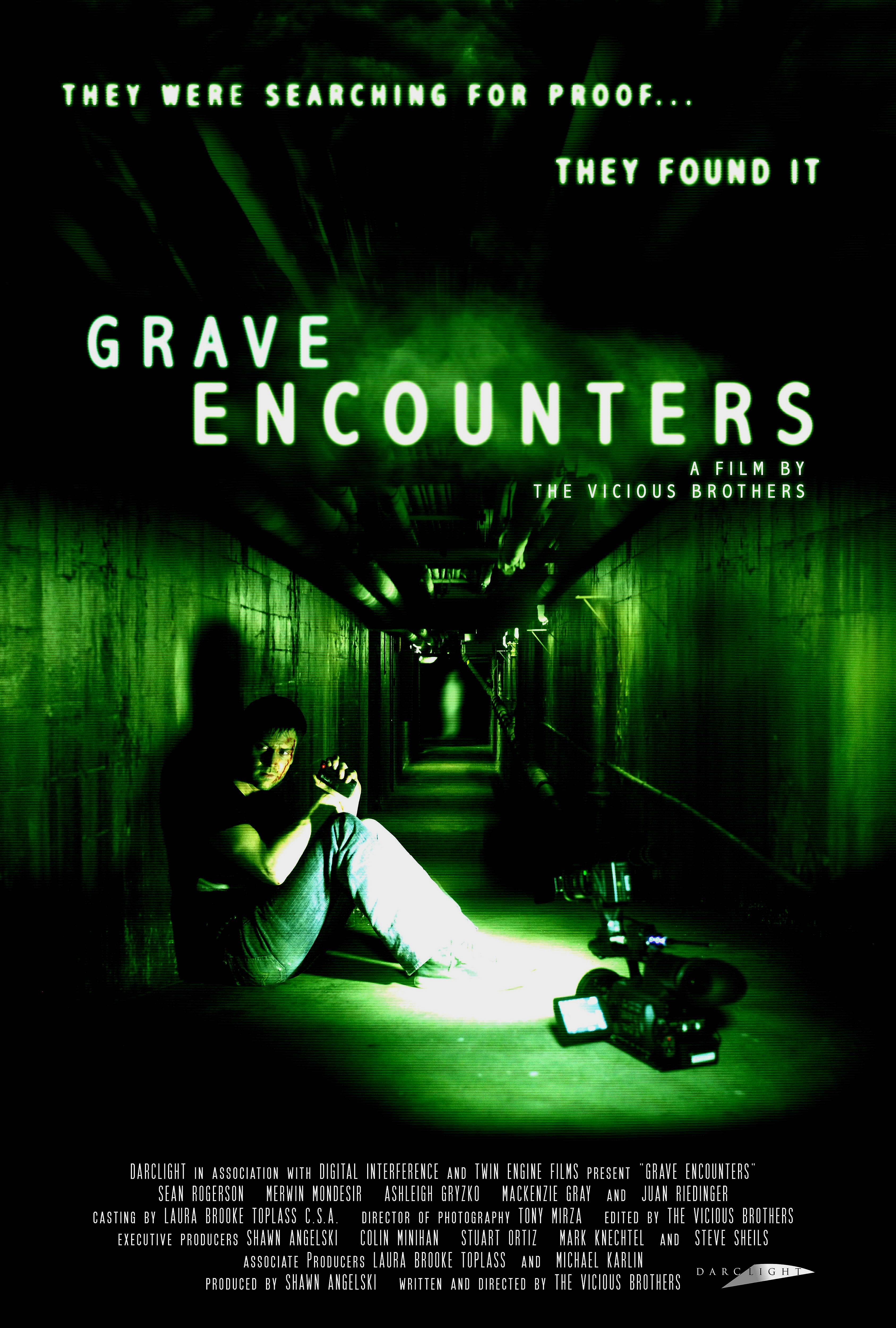
Impressively produced on a budget of around £89,000, the 2011 found-footage flick; Grave Encounters, is an effective, if rarely groundbreaking, contemporary horror. Whilst not as down-to-earth or as painfully slow-paced as several other found-footage releases, such as Paranormal Activity (2007) or Mr. Jones (2013), Grave Encounters wastes little time getting into the monstrosities that lie within the walls of its central setting of an abandoned psychiatric hospital, utilising its dark corridors and rusted medical equipment to deliver memorably creepy moments and a fairly unnerving atmosphere, despite its many faults.

Plot Summary: Voluntarily locking themselves inside the infamous, abandoned Collingwood Psychiatric Hospital, to increase the stakes of their ghost-hunting reality show, Grave Encounters, host Lance Preston and the rest of his team prepare to capture every minute of their overnight paranormal investigation on camera. But, as the hospital’s walls begin to shift into a labyrinth of endless corridors, each inhabited by the spirits of former staff and patients, the group soon realise they may be filming their last episode…

Written and directed by Colin Minihan and Stuart Ortiz, also known as the “Vicious Brothers,” the format and host of the fictional Grave Encounters reality show takes influence from the real-world series; Ghost Adventures, and its host, Zak Bagans, known for his black muscle t-shirts and technique of attempting to invoke paranormal activity by cursing at the supposed spectres, inviting aggression. This inspiration is evident from the outset, as Grave Encounters humorously mocks the ghost-hunting reality shows of the late 2000s, dissecting the manufactured appeal behind the format and its many tricks of the trade. For example, early on in the film, Lance pays a groundskeeper to provide a false statement during an interview that he witnessed paranormal activity on the grounds of the hospital, a known practice in supernatural reality television, as over the years, hundreds of interviewees have publicly admitted to being paid to “Just Make Something Up for the Camera.”

The central cast of Sean Rogerson, Ashleigh Gryzko, T.C. Gibson, Mackenzie Gray and Juan Riedinger provide the occasional moment of levity early in the runtime as a means to break up the flurry of distress and torment their characters later endure. During many of these moments, the characters also make offhand comments regarding their situation, referencing filmmaking conventions and well-known horror tropes that add a level of realism to the dialogue. This doesn’t mean that all of the Grave Encounters crew are strictly likeable, however, as T.J., the truculent cameraman, does far too much complaining and arguing whilst the host, Lance Preston, and the supposed psychic, James Houston, are suitably sleazy for success-hungry individuals who fabricate hauntings for a living, having never witnessed evidence of the supernatural previously. Still, the cast accurately portrays every character’s sense of unease, which is what matters most.

Shot over ten nights and two days, the majority of the cinematography for Grave Encounters by Tony Mirza fittingly matches the style of stationary and hand-held shots seen in traditional ghost-hunting reality shows, with the fictitious Collingwood Psychiatric Hospital portrayed through the real-world Riverview Hospital, an abandoned mental institution in Coquitlam, British Columbia, built at the turn of the 20th century and closed down in 2012, formerly hosting films such as Watchmen (2009). Grave Encounters utilises this ominous setting remarkably well, presenting the building as a dark, momentous presence to the point where it becomes a character in its own right. The opaque hallways of the abandoned building also greatly lend themselves to the film’s phosphorescently green colour palette as a result of the characters’ dependence on night vision to find their way around.

Similar to other found-footage flicks, Grave Encounters doesn’t possess much of a soundtrack, with the original score by Quynne Craddock only being employed for the deliberately dated, excessively edgy theme for the Grave Encounters intro and the atmospheric track that plays over the end credits, which is suitably bleak and unsettling. In an effort to differentiate itself from those other releases, however, Minihan and Ortiz wanted their spirits to be far less subtle and more forcefully frightening, desiring the various apparitions to “Visibly Run” at the audience as opposed to barely materialising or gradually moving objects.

Outside of its real-world influences, Grave Encounters follows The Blair Witch Project (1999) formula of letting its initially brash characters mentally break down before the incursion of the unnatural, embracing some found-footage clichés, such as slamming doors and slowly opening windows, whilst avoiding others in exchange for more eerie concepts, like when the group learn about the hospital’s disturbing history of lobotomies and medical experimentation. In terms of the spirits’ appearance, each harbours a serviceably sinister, if somewhat generic design, often sprinting towards the camera with a cheesy CG effect that distorts their eyes and mouth, spoiling the horror, much like the film’s frustrating overreliance on camera glitches whenever supernatural frights occur.

In summary, although Grave Encounters starts rather slowly, once the first crew member disappears, the pacing picks up nicely, with plenty of twists, turns and creepy surprises to keep the film rolling along. While hardly original or downright terrifying, Grave Encounters gets almost every beat of its found-footage premise right, succeeding in its attempt to critique the many ghost-hunting reality shows that inspired it, even surpassing its higher-budget, candidly titled 2012 sequel; Grave Encounters 2, a largely forgettable, strangely self-referential expansion to the ghostly frights and low-budget storytelling of the first. Rating: 6/10.

Malcolm & Marie (2021) – Film Review

“Cinema Doesn’t Need to Have a Message. It Needs to Have a Heart!” – Malcolm Elliott

A contained and regaling monochrome drama, 2021’s Malcolm & Marie was one of the first feature-length films produced amidst the COVID-19 global pandemic. Written and directed by Sam Levinson (Another Happy Day, Assassination Nation), best known as the creator and lead writer of the hit teen-drama series; Euphoria, Malcolm & Marie was shot during the U.S. COVID-19 lockdown between June and July of 2020, with the approval of the Writers’ Guild of America, Directors’ Guild of America, Screen Actors’ Guild of America, and the American Federation of Television and Radio Artists, as the production followed strict safety protocols to ensure the cast and crew could work safely. With this in mind, Malcolm & Marie makes the best of challenging circumstances, utilising a singular location, minimal cast and sleek visuals to craft a captivating flick that examines how volatile personalities can clash, especially when tangled in a long-standing relationship.

Plot Summary: After returning home from the premiere of his debut project, filmmaker Malcolm Elliott and his girlfriend, Marie Jones, await what is sure to be an imminent critical and financial success. But, as the evening transpires, their celebratory night takes a turn for the worse as revelations begin to surface, testing the strength of their devotion to one another…

Between Marcel Rév’s scrumptious black-and-white cinematography and the no-holds-barred verbal brawl delivered by the central duo of Washington and Zendaya, it’s impossible to discuss Malcolm & Marie without drawing comparisons to the cinematic adaptation of Who’s Afraid of Virginia Woolf? (1966). Like the stage play the film is based upon, first staged in 1962, Who’s Afraid of Virginia Woolf? explores the complexities of the marriage of middle-aged couple Martha and George, where, late one evening, after a university faculty party, they receive an unwitting younger couple, Nick and Honey, as guests and are drawn into their bitter and frustrated relationship. Although Malcolm & Marie only focus on the two titular characters, both stories have more than a few similarities. One element of Malcolm & Marie that is unique to the film, however, is its underlying theme of the essence of cinema, examining this concept through the eyes of Malcolm as a passionate Black filmmaker who loathes the politics surrounding Black filmmakers. In fact, Malcolm’s intense dislike of an anonymous female critic from the L.A. Times is believed to be a reference to L.A. Times writer Katie Walsh, who once wrote an unfavourable review of one of Levinson’s prior directorial outings.

As the sole cast members, John David Washington and Zendaya hold the entire weight of the film on their shoulders. Thankfully, both share amazing chemistry and receive countless chances to let their talent shine as they each deliver lengthy monologues exploding with emotion. Through these monologues and the sharp dialogue, it quickly becomes apparent that the titular, well-defined couple exist in different rhythms, with Malcolm exuberantly (and obnoxiously) extolling the delights of premiering his first film as a writer and director, which pushes him to the cusp of newfound power and prestige, while Marie appears sullen, bored and utterly over Malcolm and his prickly, delicate ego that repeatedly puts strain on the pair’s relationship, often failing to acknowledge Marie’s support. However, this constant back-and-forth does come at a cost, as both characters can come across as somewhat unlikable through their many imperfections being blatantly illustrated on-screen at all times.

One of the few Netflix Originals shot to be on 35mm, the cinematography by Marcell Rév is elegant and sheeny. Yet, what makes these visuals even more impressive is that for the entirety of the runtime, the titular couple never once leave the house, as previously mentioned, merely strolling to different rooms or into the garden with a cigarette in hand as their bickering continues. Some may think this sounds dull, but I feel this approach ensnares much of the tension between the two characters and the heavy air that flows through their temporary, luxurious home. Furthermore, with both characters being chic and sophisticated, as well as returning from the premiere in their formal evening wear, there is a suave feel to the visuals of Malcolm & Marie, making the film seem like a romance from the 1930s, with tight camerawork to intensify the drama.

Likewise, the film’s original score, helmed by British musician Labrinth, reunited with Sam Levinson after composing much of the score for Euphoria, retains a similar tone to that of a 1930s drama, with the delicate, jazzy score meshing flawlessly with cleverly selected needle drops. Famed songs, like I Forgot to Be Your Lover and Get Rid of Him, are also baked into the runtime, doing much of the talking when the characters aren’t.

Interestingly, because Malcolm & Marie was produced during the COVID-19 pandemic, none of the cast or crew associated with the film received any kind of payment or entered into any agreement with the depiction of tobacco products, which is certainly admirable given the current state of cinema, where many films are greenlit purely for the sake of profit.

In summary, due to its entire runtime taking place in one location with a heavy reliance on dialogue, Malcolm & Marie will likely be a divisive flick that won’t please everyone. But, for those it will, I feel it’s more than entertaining, even if the film isn’t as layered or as tightly-knit as it thinks it is. Rating: 7/10.

Sorry to Bother You (2018) – Film Review

“This Is Telemarketing. We’re Not Mapping the Fucking Human Genome Here. I Don’t Care if You Have Experience for This… I’ll Hire Damn Near Anyone.” – Anderson

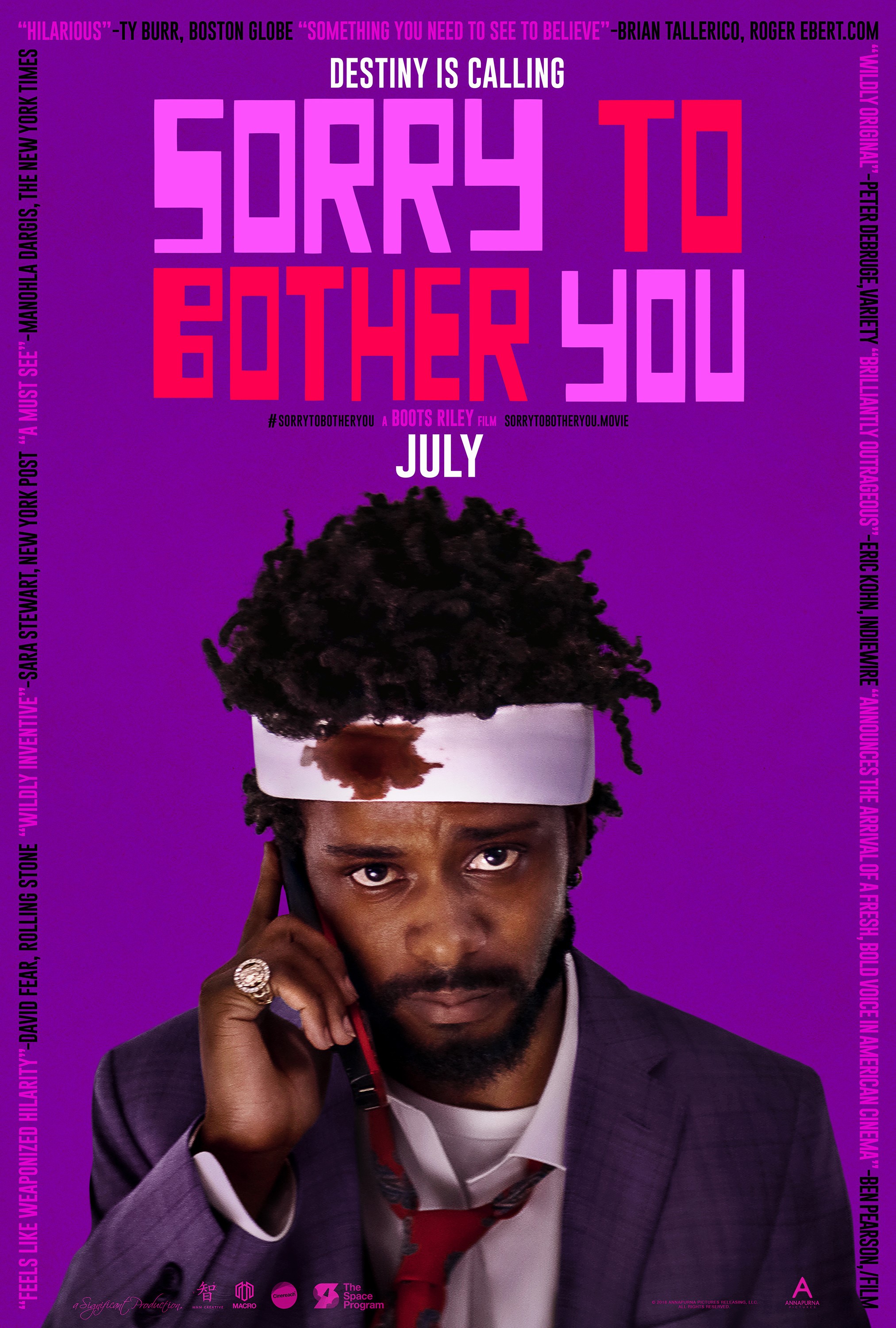
Full of surprises and thoroughly embracing its weirdness at every turn, the 2018 social satire Sorry to Bother You serves as a fantastically refreshing flick that announces writer-director Boots Riley as a radical upcoming voice in the realm of cinema. Harbouring a captivating premise, memorable characters (both benign and despicable) and dialogue that is both snappy and humourous, Sorry to Bother You is a stylish indictment of capitalism, consumerism and cultural appropriation, all executed in a rather unconventional fashion that will likely cause some audience members to lose interest.

Plot Summary: In an alternate, present-day version of Oakland, bumbling jobseeker Cassius Green acquires a low-level position at a telemarketing firm, only to find it a dispiriting struggle as a Black man selling to predominately White customers. But, when a telemarketing veteran advises him to use his “White Voice” to make himself more appealing to potential buyers, that all changes. Now, with his newfound talent, Cassius thrives in his profession, soon being promoted to a “Power Caller,” peddling morally abhorrent yet incredibly lucrative services as he further climbs the corporate ladder…

As you might expect from its introduction, there are a lot of big ideas in Sorry to Bother You, from the power of influence ravenous corporations possess to the dehumanisation of human labour and how they are both inextricably tied to everyday racism, Sorry to Bother You juggles an assortment of relevant, weighty and thought-provoking themes. Still, the film is far from your standard social commentary, but rather a raucous, surreal mockery that remains outlandish until its last few minutes, especially regarding one particular aspect of its narrative, which could be considered a step too far into absurdity for some.

Originally, famed actor and musician Donald Glover was penned for the lead role of Cassius Green, but was ultimately unable to assume the role due to scheduling conflicts with 2018’s Solo: A Star Wars Story. Instead, Glove recommended his co-star LaKeith Stanfield from the comedy-drama television series; Atlanta, for the role. Thankfully, Stanfield holds his own as Cassius, portraying a goofy klutz who lives in his uncle’s garage, lacks conviction and often suffers from existential anxiety, frequently fretting about the sun exploding and his life bearing no significance, much to the displeasure of his activist and performance artist girlfriend, Detroit, equally well-portrayed by Tessa Thompson. Moreover, despite Cassius’ many sordid acts throughout the runtime, you never stop rooting for him on account of Stanfield’s charm, even when he’s led into making vile choices purely on his desire for more money and success, making for an entertaining character arc aided by repeatedly witty dialogue.

Aesthetically, Sorry to Bother You is just as crazed as its zany tone, with visual diversions regularly transpiring from an early sequence where Cassius converses with potential buyers over the phone before he quite literally (and creatively) crashes into their lives with his desk. Occasionally, however, these off-the-wall stylistic choices can become a little too much and hard to keep up with, with even the lustrous colour palette and cinematography by Doug Emmett being constantly vibrant and energised.

Composed by the indie art pop band, Tune-Yards, Sorry to Bother You‘s original score largely consists of bouncy techno tracks that effectively lend themselves to the film’s peculiar style, namely via tracks like Transformative Experience. On top of the original score, the film also features a variety of songs from Boots Riley himself, as Riley was previously the lead vocalist of the hip-hop group, The Coup, during which time the band produced the identically-named album; Sorry to Bother You, which he then implemented into the film, presumably for its shared title.

Spoilers ahead in this section for those who wish to go in blind, but near the end of the runtime, Cassius’ conscience arises anew as he finds himself amid his boss’ morally bankrupt world of condescending decadence and his sinister plan to create a subservient, mutated workforce, these oddball, horse-like creatures, known as the “Equisapiens,” are impressively brought to life via practical effects, with the suit and animatronic headpieces being built and designed by Amalgamated Dynamics (ADI), well-known for creating effects for sci-fi blockbusters, such as Tremors (1990), Evolution (2001) and Alien vs. Predator (2004), among many others. Interestingly, while numerous headpieces, hair patches and tattoos were employed to visually differentiate the myriad of Equisapiens, only a single suit was utilised and modified across scenes as puppeteers operated the headpieces, including one operator solely for the eyes. Whilst some may find this plot deviation ludicrous, truthfully, I feel it works in the film’s favour, given it comically plays into the notion of money-hungry higher-ups employing any method they can to increase profits and reduce labour costs.

In summary, Sorry to Bother You is a bonkers film that handles its many underlying themes with great care in spite of its lasting strangeness and general lack of subtlety. Thanks to its endless inventiveness and impressive lead performance from LaKeith Stanfield, lending his acting dexterities to a well-defined character that is equal parts endearing and loathsome, Sorry to Bother You is a distinctive flick that not only succeeds in what it’s trying to do, but also functions as a flag being unapologetically planted by its filmmaker, not only in the film industry, but in all of the industries its screenplay repeatedly ridicules and scrutinises. Rating: low 8/10.

sorry_to_bother_you_ver9_xxlg

The Hole in the Ground (2019) – Film Review

“Something’s Not Right With Him…” – Sarah O’Neill

Ominous and moderately compelling, The Hole in the Ground is a 2019 Irish horror flick that, whilst well-crafted, is overly reliant on many of the conventional aspects of similar horror outings, most notably within thesinister childsubgenre. Still, with the film drawing from notions of Irish folklore, such as the concept of Changelings (children being replaced by fairy folk) and Fairy Forts (the ruins of neolithic tombs scattered across Ireland, thought to be portals to the Otherworld), co-writer and director Lee Cronin (Minutes Past Midnight – Segment: Ghost Train, Evil Dead Rise) does a sufficient enough job with the tools he is provided, even if The Hole in the Ground generally lacks ingenuity.

Plot Summary: To escape her crooked past, single mother Sarah O’Neill travels to the fringes of a rural town in the Irish countryside with her young son, Chris, to start a new life. But, after a disturbing encounter with a local resident, Sarah begins to question things, attempting to uncover if the troubling changes in her little boy are somehow connected to a mysterious crater hidden within the forest that borders their new home

According to Cronin, in addition to Irish folklore, The Hole in the Ground takes inspiration from a news story he once overheard, stating;There Was a Particular News Story I Saw About a Man in Florida Watching TV in His Armchair and a Small Sinkhole Opened Up Beneath Him. He Was Unable to Be Rescued. He Fell Down Into the Earthand I Thought That Was Horrific.Due to this inspiration, The Hole in the Ground, in execution, is less of the spiritual and bloody interpretation of the ‘malevolent child‘ concept as seen in 1976’s The Omen and more of a cross between the 2014 cinematic interpretation of maternal grief, The Babadook, and another Irish horror of changelings and woodland spirits, 2015’s The Hallow, taking a more minimalistic and character-driven approach to much of its horror and violence.

The largely unknown cast of Seána Kerslake, James Quinn Markey, Simone Kirby and Kati Outinen all portray their respective characters with devotion and authenticity, which is particularly impressive in the case of Quinn Markey, given that child acting can often make or break a piece of cinema. Thankfully, although this role requires a lot from the young actor, Quinn Markey delivers, portraying Chris with a menacing aura of otherworldliness. Likewise, Kerslake provides an anchoring performance, portraying Sarah as a struggling mother beginning to question her parental instincts following her implied escape from Chris’ abusive father. An idea that also plays into the underlying themes of the story, as I’m sure Sarah’s uncertainty regarding her parental abilities is surprisingly close to reality for some, with many mothers/fathers sometimes looking at their children only to no longer recognise them as they develop, naturally evolving into a wide-reaching inner fear and scab for the horror genre to pick at. Of course, in this case, Sarah’s suspicions surrounding her son arise from a supernatural mystery that lingers throughout the runtime. Yet, this subtext never threatens to overthrow the story, instead feeding much of the dread that permeates almost every scene.

Alongside the suitably gloomy colour palette, the cinematography by Tom Comerford retains a visually pleasant, gothic-adjacent look, avoiding hand-held shots for the bulk of the runtime. Much of this visual aesthetic can be attributed to the photographs and filmography of American photographer Gregory Crewdson, which served as a primary influence for the camerawork, with Crewdson’s work being known for staging scenes of suburbia for dramatic effect, his surreal images frequently appearing melancholic, offering ambiguous narrative suggestions and blurring the boundaries between fiction and reality, a tremendous creative choice. However, the same cannot be said for the lighting, which, in some scenes, is so dim it becomes difficult to tell what is occurring.

Opening with the sound of a singular piano note and concluding with that same note, which is then repeated to correlate with the story’s motif of something beingduplicated,the original score by Stephen McKeon is fairly audibly engaging, coming across as eerie and dramatic yet never overbearing via tracks, like Main Titles, Run Into the Woods and Mental Health.

Intriguingly, The Hole in the Ground also features several nods to The Shining (1980), including a wallpaper pattern that resembles the famed hexagonal design of the Overlook Hotel’s carpet. Regrettably, however, dissimilar to that iconic flick and many other horrors, the creature design of The Hole in the Ground is rather lacklustre in spite of the detailed costumes that bring the creatures to life, failing to share much likeness with the fascinating folkloric critters that inspired them. Conversely, despite the film’s rather humble budget of roughly £1.5 million, the rarely employed visual effects are surprisingly convincing, like the titular crater, which is presented as foreboding, even though it is merely a muddy, root-laden pit.

In summary, The Hole in the Ground is not an astonishing indie horror, but it is a passable, non-controversial one, a reasonably unnerving, by-the-book horror flick crammed with an array of familiar flavours for those well-acquainted with the genre. Exploiting parental fears where it can and exhibiting splendid filmmaking for the most part, The Hole in the Ground redeems its considerable shortage of originality through its sheer craftsmanship and narrative safety net of Irish folklore, which has previously proven to be a safe bet within the horror genre. Rating: 6/10.

hole_in_the_ground_xxlg

The Festival (2018) – Film Review

“There Are a Hundred Thousand People There. The Chances of Bumping into Her Are a Million to One…” – Shane Stubbs

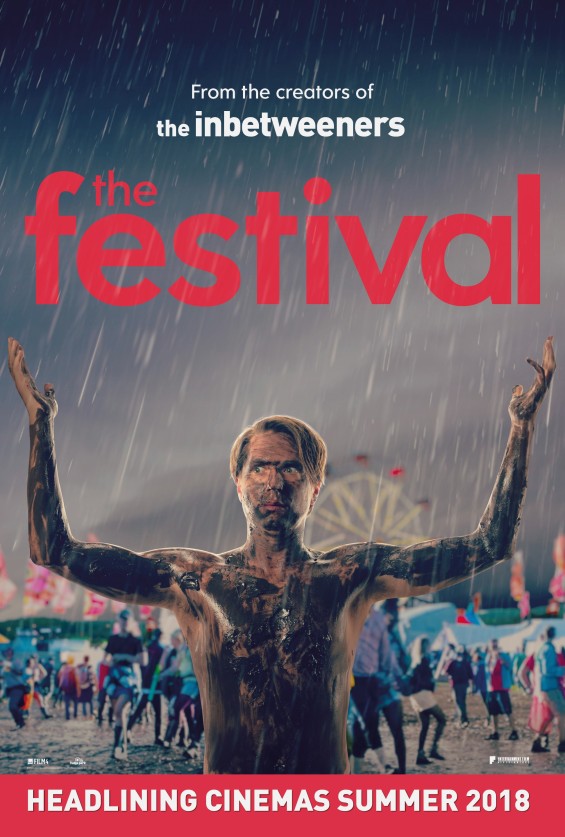
Having conquered British television with three series of the quintessential adult sitcom; The Inbetweeners, the comic duo of Damon Beesley and Iain Morris turned their attention to producing cinematic comedies in a similar vain, following that series’ two follow-up films with The Inbetweeners Movie (2011) and The Inbetweeners 2 (2014). Their next attempt at a humorous hit was 2018’s The Festival, a British comedy centring around the re-formative experience of attending a music festival for the first time, complete with the return of The Inbetweeners‘ starJoe Thomas, and director Iain Morris (The Inbetweeners 2). However, while the film does have its share of absurd misadventures and self-abasing nudity, The Festival doesn’t quite manage to capture the three-day lunacy of an actual festival experience, failing to live up to the comedic reputation of the iconic sitcom that preceded it.

Plot Summary: When Nick’s girlfriend, Caitlin, breaks up with him on the day of their university graduation, Nick’s best friend, Shane, persuades him to attend a monumental music festival to get over her, eager to meet his favourite masked DJ, Hammerhead. But, after running into Caitlin and her friends at the festival, the pair’s weekend quickly begins to descend into one of misery and madness…

Written by Keith Akushie and Joe Parham, The Festival is a comedy about friendship, maturing and enjoying the brief time we get in life. Of course, being a comedy, these underlying themes are largely pushed back to focus on its humour rather than its narrative or more intimate character moments, leading to scenes like Nick getting his nipple pierced, spending a drug-fuelled night with a girl outfitted as a Smurf and being chased through the festival grounds by security, sporting only his boxers. And, although some of these comedic set pieces are amusing, other gags feel as if they needed a bit more screen-time to wring out all of their comedic potential. That is, excluding the many gross-out moments, which consistently come across as lazy and unwarranted.  

Following this routine ‘getting-over-the-girl’ storyline, protagonist Nick Taylor, portrayed by Joe Thomas, is remarkably similar to Thomas’ character in The Inbetweeners series, Simon Cooper, a selfish, uptight teenager whose sorrows narrowly outweigh his unlikeable traits as he tries anything and everything to win back his ex-girlfriend, Caitlin, portrayed by Hannah Tointon. Meanwhile, Nick’s best friend, Shane, and festival aficionado/certified oddball, Amy, admirably portrayed by Hammed Animashaun and Claudia O’Doherty, respectively, attempt to get Nick to embrace the music and the mud, getting into a few bizarre situations themselves. Additionally, The Festival lends some pizzazz to the often overused ’embarrassing stepdad’ archetype character via the casting of New Zealand actor and comedian, Jemaine Clement, lending the well-meaning father figure a genuine sense of care for his stepson as well as delightful line delivery. Interestingly, the previously mentioned Joe Thomas and Hannah Tointon are, in actuality, engaged and have been in a relationship since 2010.

Partially shot at Bestival and Leeds Festival, with actual festival goers being used as extras for the scenes requiring enormous crowds, the film’s cinematography, handled by Simon Tindall, allows for a number of visually pleasing and colourful shots. The film, however, does little to visually differentiate itself from other modern comedies, aside from its opening titles, which creatively appear on an array of vibrant, crinkled title cards inspired by stylistic festival line-up posters, fittingly backed by a surplus of authentic footage of festival goers dancing, socialising, drinking and face painting.

Hardly ever present for the bulk of the runtime, the original score by Rael Jones is an element of the film that I cannot even review, in its entirety, as the score simply isn’t utilised enough. Instead, the film suitably employs a variety of songs that wouldn’t seem out of place at an actual music festival, ranging from swinging indie classics to contemporary dance anthems, such as Do You Know Me? and Blaze Up the Fire.

In the tradition of comedy franchises like the American Pie series, The Festival also serves as somewhat of a modern satire of adolescent angst and foolishness, appearing actually rather saccharine beneath its scatological surface, gently mocking yet ultimately painting a buoyant portrait of its target audience, teenagers, with much of the humour deriving from awkward juvenile situations, like peer group shaming, discomfiting parental over-sharing and clashes with adult authority figures. Still, there is a good quantity of jokes aimed towards a slightly older audience, including a sly homage to The Elephant Man (1980) and a running gag regarding Jemaine Clement’s fellow cultural icons, Crowded House, a New Zealand/Australian rock band.

In summary, upon watching, its apparent that The Festival is trying to capture the immature charm of The Inbetweeners series, but the writing just isn’t strong enough to grasp its crude essence, particularly in relation to its characters, none of which are anywhere near as memorable as Will, Simon, Jay or Neil. And, if truth be told, with the film sharing many tonal similarities and Joe Thomas’ performance feeling so reminiscent of his portrayal of Simon Cooper, I honestly don’t see why The Festival couldn’t have simply been a spin-off of The Inbetweeners series, functioning as a stand-alone story set after the events of the previous instalments. Nevertheless, if you occasionally desire a lower-budget British comedy with constant witticisms regarding sex, drugs and overflowing toilets, then The Festival might suffice, despite its faults. Rating: 5/10.

MV5BOTczZjJhMzktYmEwYi00YWE0LWI4ZDEtODVjYjZiOTQ5MTJmXkEyXkFqcGdeQXVyNjI0NjE1MjM@._V1_

Safety Not Guaranteed (2012) – Film Review

“Stormtroopers Don’t Know Anything About Lasers or Time Travel. They’re Blue-Collar Workers.” – Arnau

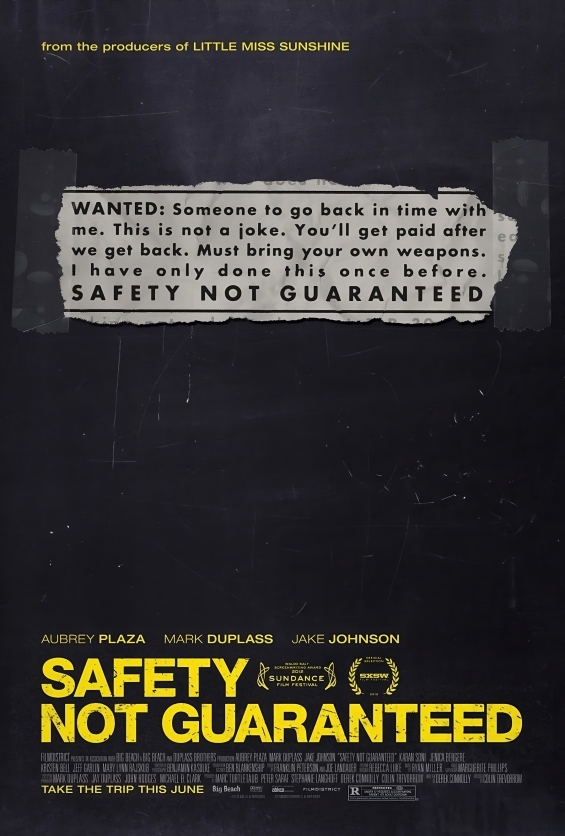
Inspired by the infamous “Time Travel Companion” advert printed in a 1997 issue of Backwoods Home Magazine and written as a joke/last-minute slot filler by John Silveira, an employee of the magazine, who is actually credited in the film as a “Time Travel Consultant.” 2012’s Safety Not Guaranteed is a beguiling, low-budget comedy-drama with a minimal sci-fi twist, utilising its mirthful real-world inspiration to compose an austere story with relatively modest ambitions and a shortage of memorability that is, thankfully, enriched by its strong performances, quirky charm and heartfelt underlying themes of love, loss and altering the past.

Plot Summary: When an opportunity arises to turn an outrageous magazine advert into an investigative journalism opportunity, pessimistic intern, Darius Britt, jumps at the prospect, joining her superior, Jeff, and fellow intern, Arnau, as they set out to uncover whether the advert’s proprietor, Kenneth, is a deranged misfit or has truly discovered the secret to time travel…

Based on the previously mentioned printed magazine advert, which was even featured on The Tonight Show With Jay Leno in 1992 during the “Headlines” segment before transforming into an internet meme, Safety Not Guaranteed harbours a straightforward yet well-paced narrative, combining its subplots, twists and turns effectively as director Colin Trevorrow (Jurassic WorldThe Book of HenryJurassic World: Dominion) and writer Derek Connolly, waste little time. That’s not to say that the film has no deeper meaning(s), however, as despite the foundation of the story being a question of thought-to-be impossible technology vs. the drab confines of reality, Safety Not Guaranteed features many relevant themes of love in all its forms, as the various characters each have their own outlooks on intimacy and heartache, many of which are preconceived notions, similar to how the characters initially perceive Kenneth to be a delusional, sci-fi-obsessed oddball before becoming acquainted with him.

In regard to the central cast, each actor, whether that be Aubrey Plaza, Mark Duplass, Jake Johnson or Karan Soni, consistently remains within the realm of their character’s traits, emotionally developing whilst remaining true to the heart of their character. As such, Plaza and Duplass are immensely enjoyable to watch as there’s a sweet sadness in the characters’ focus on lost dreams, missed chances and the truism that we all long for a time machine every once in a while, which is best seen in Darius’ backstory as she has become cynical about life since the death of her mother, causing her to flounder, burdened with sorrow and self-blame. Yet, upon her arrival in Ocean View, Washington, she is met with more than meets the eye in Kenneth, a paranoid and suspicious yet affable man. Believing himself to be followed by government agents, Kenneth manoeuvres around town with his interpretation of covert ops, stealing lasers from local laboratories and immersing himself in technical calculations and physical training, all in pursuit of his time-travelling mission. Immediately drawn to each other as divergent outcasts, Kenneth gradually takes Darius into his circle of trust. Interestingly, the role of Darius was actually written with Aubrey Plaza in mind, as Derek Connolly wanted to work with her. Likewise, Jake Johnson was Colin Trevorrow’s first choice for the role of Jeff.

Visually, Safety Not Guaranteed is passable but not all that impressive, as cinematographer Ben Kasulke predominantly relies on hand-held shots in an attempt to personalise the viewing experience, providing the story with a pleasant layer of intimacy. Nevertheless, the film’s use of the drizzling, forest-shrouded location of Ocean Shores (along with a handful of other areas within thirty minutes of Seattle) is terrific, appearing visually interesting yet never overwhelming, specifically whenever a scene takes place at sunrise or sunset.

For a story revolving around time travel, Safety Not Guaranteed has a surprisingly emotional core for what could have easily been a corny low-budget flick. It’s no surprise, then, that its soundtrack, composed by Ryan Miller, helps to capture that same emotional palette, not only accentuating the themes of the film, but adding an aura of reflection and hopefulness that helps to make the film’s eccentric protagonist someone to root for rather than feel sorry for, such as in the foremost track; Opening. Aside from Miller’s original tracks, Safety Not Guaranteed also features songs from numerous indie bands, including Summer Fiction and Guster, making for an all-in-all well-rounded soundtrack.

On the topic of the humour throughout Safety Not Guaranteed, some gags land, others do not, with some scenes also seeming rather bare comedy-wise. However, I applaud the film’s decision to avoid turning Kenneth into a cartoonishly strange character just for the sake of a few cheap laughs, as well as how natural the cast’s witty improvisation feels, particularly in the scene where Jeff advises Arnau to raise his collar and sport sunglasses to look like a “Pilot That Drives Jets.”

In summary, Safety Not Guaranteed is an endearingly zany indie flick. While the film is obviously low-budget and not exceedingly memorable when placed alongside many other light-hearted comedy-dramas, Safety Not Guaranteed possesses a clever screenplay, earnest moments and a genuine sense of sentiment for those who would like to turn back the clock. Not to mention the film’s plethora of excellent performances from its cast (primarily its three leads), ensuring the film will hold up in the future. Rating: 6/10.

safety_not_guaranteed_ver2_xlg-transformed Continue reading

Escape From Tomorrow (2013) – Film Review

“I’m Afraid if I Come With You, Something Bad Is Going to Happen…” – Jim

Written and directed by relatively unknown filmmaker Randy Moore, Escape From Tomorrow, released in 2013, serves as a genre-defying, experimental arthouse flick, which, whilst flawed, has to be admired for both its ambition and ingenuity. Produced on a budget of around £502,000 and illicitly shot at the Walt Disney World Resort in Orlando, Florida, and Disneyland in Anaheim, California, without permission or permits from the Walt Disney Company, Escape From Tomorrow attempts to criticise today’s fascination with “Disney Culture” by mocking the company’s rose-tinted reputation (particularly its string of immersive theme parks) to deliver a conceptually audacious, darkly surreal roller-coaster of a film that morphs a miserable father’s seemingly straightforward excursion to Walt Disney World into an other-worldly tale of paranoia, conspiracy, sex and violence, interspersed between visits to iconic attractions, like Space Mountain, Dumbo the Flying Elephant and It’s a Small World.

Plot Summary: While his family frolics, taking in the sights and sounds of the Walt Disney World Resort, discontented and recently discharged father, Jim, finds himself curiously obsessed with a pair of beautiful teenage girls, subsequently leading him to unveil fiendish forces behind the Happiest Place on Earth…

As a result of Disney’s reputation for being immensely protective of its intellectual property, the cast and crew behind Escape From Tomorrow employed a variety of guerrilla filmmaking techniques to avoid attracting attention within the theme parks, such as saving their screenplays on their smartphones and filming on hand-held cameras similar to those used by visitors. After production wrapped, Randy Moore was so determined to keep the film a secret from Disney (and their lawyers) that he decided to edit the project in South Korea. Rather than suppressing the film, however, the Walt Disney Company merely chose to ignore it, with the 2013 Sundance Film Festival likewise declining to discuss Escape From Tomorrow in detail before it premiered. Those who saw the film expressed strong doubts it would ever be widely released, due to the legal issues involved and its negative depiction of Disney’s theme parks, dubbing it; “The Ultimate Guerrilla Film.” This unfavourable portrayal is most evident during the first act, as the film takes a less ‘magical’ glimpse at the Magic Kingdom, focusing on the strain and exertion of the parents taking their children to the consistently clangorous, overcrowded theme park.

As far as characters go, the film’s protagonist, Jim, portrayed by Roy Abramsohn, is rather unpleasant, heading to the Walt Disney World Resort with his family for a sunlit getaway, only to have his trip tarnished by a call informing him he has lost his job, leading him to drink, neglect his children and even make public advances on his wife, whilst there. These traits are later enhanced when Jim begins to undergo increasingly peculiar hallucinations and perverted sexual daydreams following his spotting of two French teenagers. Still, while the character is unquestionably unlikeable, credit must be given to Abramsohn, whose charismatic performance makes Jim an oddly amiable protagonist (one that you even feel some sympathy for), despite his repeatedly deplorable actions. The supporting cast of Elena Schuber, Katelynn Rodriguez and Jack Dalton aren’t quite as stirring as Jim’s sheepish wife and energetic children, though this could be forgiven, given their limited screen-time and experience.

Utilising a greyscale colour palette to disguise cinematographer Lucas Lee Graham’s occasionally amateurish camerawork and provide the film with an aura of visual cynicism and dream-like surrealism, Escape From Tomorrow, though primarily set in the Magic Kingdom, was partially shot at Disneyland on account of production issues, with the resultant theme park seen on-screen being an amalgamation of the two. These production tribulations are sometimes very noticeable, as it’s especially apparent during the second act that the filmmakers had to use shoddy visual effects, green screen composition and digital stabilisation to rescue some of the sloppier (and potentially improvised) monochrome shots.

Fortunately, the fantastical original score by Abel Korzeniowski flawlessly matches the film’s pessimistic outlook, as tracks like Gates of Tomorrow and Fantasy Girl mimic the cheerful, wonderous tone of the actual melodies employed at the Walt Disney World Resort before the score becomes more unearthly and ominous with somewhat futuristic, 1960s-inspired tracks, like Mystery Man and Lost in Caves.

Playing into many of the urban legends surrounding Disney’s illustrious theme parks, Escape From Tomorrow features many references to online conspiracy theories related to the House of Mouse, one being the mention of a location known as “Base 21,” which refers to a real, little-known V.I.P. lounge located inside the Spaceship Earth attraction at Epcot. This fixation on urban legends again ties into the film’s underlying themes, twisting Disney’s adorable, family-friendly brand into a disturbing, perverse satire that finds macabre in the ordinary, comparable to David Lynch’s uncanny style of filmmaking.

In summary, while Escape From Tomorrow retains an undeniably bold vision, the film is only intermittently successful in execution, lacking well-developed characters or consistently striking visuals in spite of its many thoughtful or freakish moments. Nevertheless, I’d be lying if I said I detest Escape From Tomorrow, as I certainly hold a soft spot for the film. And whilst I know it will not be to all tastes, if you’re willing to look beyond the gimmick of its production, Escape From Tomorrow is a fascinating yet largely forgotten cinematic scrutiny of the Walt Disney Company that ultimately became another urban legend encircling their theme parks. Rating: low 5/10.

escape_from_tomorrow_ver2_xlg-transformed

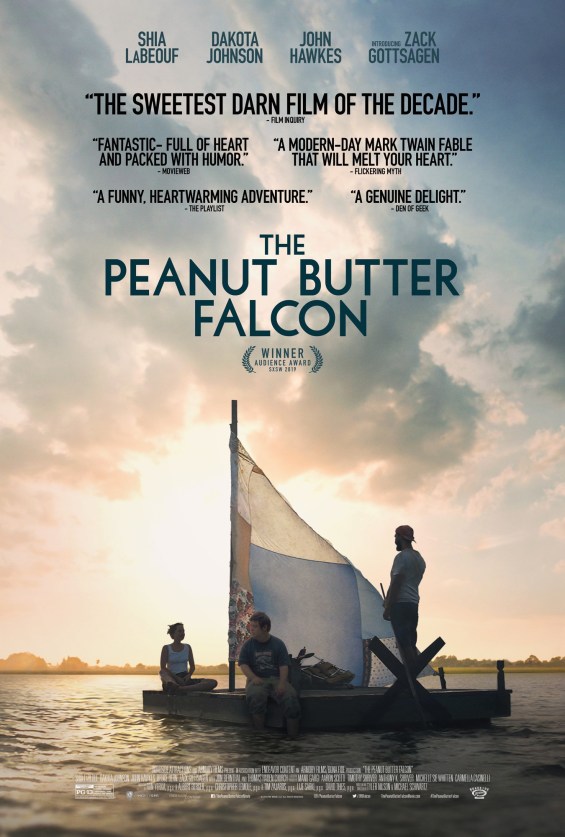
The Peanut Butter Falcon (2019) – Film Review

“Friends Are the Family You Choose.” – Carl

Warm-spirited, humorous and well-acted, 2019’s The Peanut Butter Falcon is a feel-good, modern-day comedy-drama inspired by the celebrated literature of author Samuel Langhorne Clemens, best known by his pen name Mark Twain, who challenged many of the fundamental issues of his time, including racism, evolving landscapes, class barriers and access to education, through notable publications like his renowned novel; The Adventures of Tom Sawyer, and his 1883 memoir; Life on the MississippiThe Peanut Butter Falcon specifically elicits Twain’s 1884 book; Adventures of Huckleberry Finn, finding modern resonance in the classic piece of American literature by incorporating a raft, assorted riverine ventures and luscious swampy landscapes into its entertaining (if occasionally meandering) story, which is frequently elevated by the film’s admirable camerawork and plethora of superb performances.

Plot Summary: When Zak, a twenty-two-year-old orphan with Down Syndrome, escapes the state-run care facility where he resides to pursue his dream of becoming a professional wrestler by attending a wrestling school headed by his favourite grappler, the Salt Water Redneck, he incidentally runs into Tyler, a fisherman turned delinquent fleeing to Florida. Together, the pair embark on a journey of camaraderie as they evade capture, slowly morphing Tyler into an unexpected ally and coach…

The concept for The Peanut Butter Falcon first came about when writer-directors Tyler Nilson and Michael Schwartz, who before this film’s release had only written/directed short films, such as The Moped Diaries (2014), Alex Honnold’s Urban Ascents (2014) and Alex Honnold: At Home Off the Wall (2015), met its forthcoming lead actor, Zack Gottsagen, at a camp for disabled and non-disabled individuals, where he expressed his yearning to be a “Movie Star,” this prompted Nilson and Schwartz to write a screenplay around him, knowing many locals would allow them to film for free, without permits. Given that the story is set within Southern America and features a protagonist with Down Syndrome as a result of this, The Peanut Butter Falcon plays it relatively safe with its judgmental setting to maintain an upbeat tone, only harbouring a few brief moments where Zak is lightly mocked for his disability. Moreover, many of these abusive characters are counterbalanced by jovial individuals who aid Zak and Tyler in their journey, like Blind Jasper John, portrayed by Wayne Dehart, a blind and Black evangelical preacher, who could be seen as somewhat cartoonish and stereotypical, depending on your background.

The remarkable central cast of Shia LaBeouf, Dakota Johnson and Thomas Haden Church (along with a surprise appearance from Jon Bernthal) are all exceptional in their assorted roles, conforming to their surroundings without appearing excessive in their Southern characteristics. However, Zack Gottsagen is understandably the stand out of the cast, as in spite of having only a handful of acting credits to his name, Gottsagen portrays Zak with a cordial, childlike innocent, providing his lonesome character with moments of goofiness and naivety without ever making him seem mindless. Zak is also pivotal to the film’s narrative, as his role in the story is ultimately to redeem Tyler, a flawed yet affable delinquent, who learns to be a better person thanks to Zak’s modest influence. Eventually, Tyler strikes up a serviceable romantic subplot with Zak’s pursuing, kind-hearted carer, Eleanor, but this never detracts from the prominent bond between Tyler and Zak, which remains meaningful and gratifying throughout the runtime.

Beautifully flaunting the rural Georgia landscape (which stands in for the Outer Banks of North Carolin), the cinematography by Nigel Bluck expertly captures the essence of the murky, backwater creeks, decrepit shacks, over-priced gas stations and sludgy shores with grounded boats that serve as the story’s setting, constructing an appealing visual aesthetic that feels naturalistic in its details, but also celebrates the American region for its prominent natural beauty and devil-may-care lifestyle.

Much of the score throughout The Peanut Butter Falcon bears a stripped-down approach to its arrangements, as composers Zachary Dawes, Noam Pikelny, Jonathan Sadoff and Gabe Witcher utilise acoustic instruments and minimal orchestration to provoke the audience with the calming sensation of standing in the open countryside. This is especially true of the tracks; Cold OpenTravelling Theme and Love Me in Kind, which possess simplistic yet breezy banjo-led melodies that correspond with the soothing, swampy visuals.

Interestingly, although The Peanut Butter Falcon received no Academy Award nominations in the face of its positive reception from critics and audiences alike, Gottsagen actually became the first-ever individual with Down Syndrome to present an Academy Award when he and LaBeouf announced the Best Live-Action Short Film on February 9th, 2020, which is an accomplishment in itself.

In summary, The Peanut Butter Falcon‘s triumph as a sleeper hit, becoming the highest-grossing independent film of 2019, was, in my opinion, rightfully deserved, as this low-budget comedy-drama is, above all else, charming, despite its sometimes corny and overly optimistic storyline. And whilst the film is admittedly far from a precise, poignant representation of a community that is rarely represented on-screen, The Peanut Butter Falcon is a step forward with its casting of an unknown lead actor with Down Syndrome, as opposed to acquiring a ‘bigger name’ to boast the film’s notoriety. Nevertheless, if you’d like to see an authentic, cinematic portrait of a life with Down Syndrome, I’d recommend seeking out the 2016 low-budget British drama; My Feral Heart, or the Irish drama; Sanctuary, also released in 2016. Rating: 7/10.

peanut_butter_falcon_xxlg