Absolutely Anything (2015) – Film Review

“Absolute Power Doesn’t Corrupt, It Just Drives You Bloody Mad!” – Neil Clarke

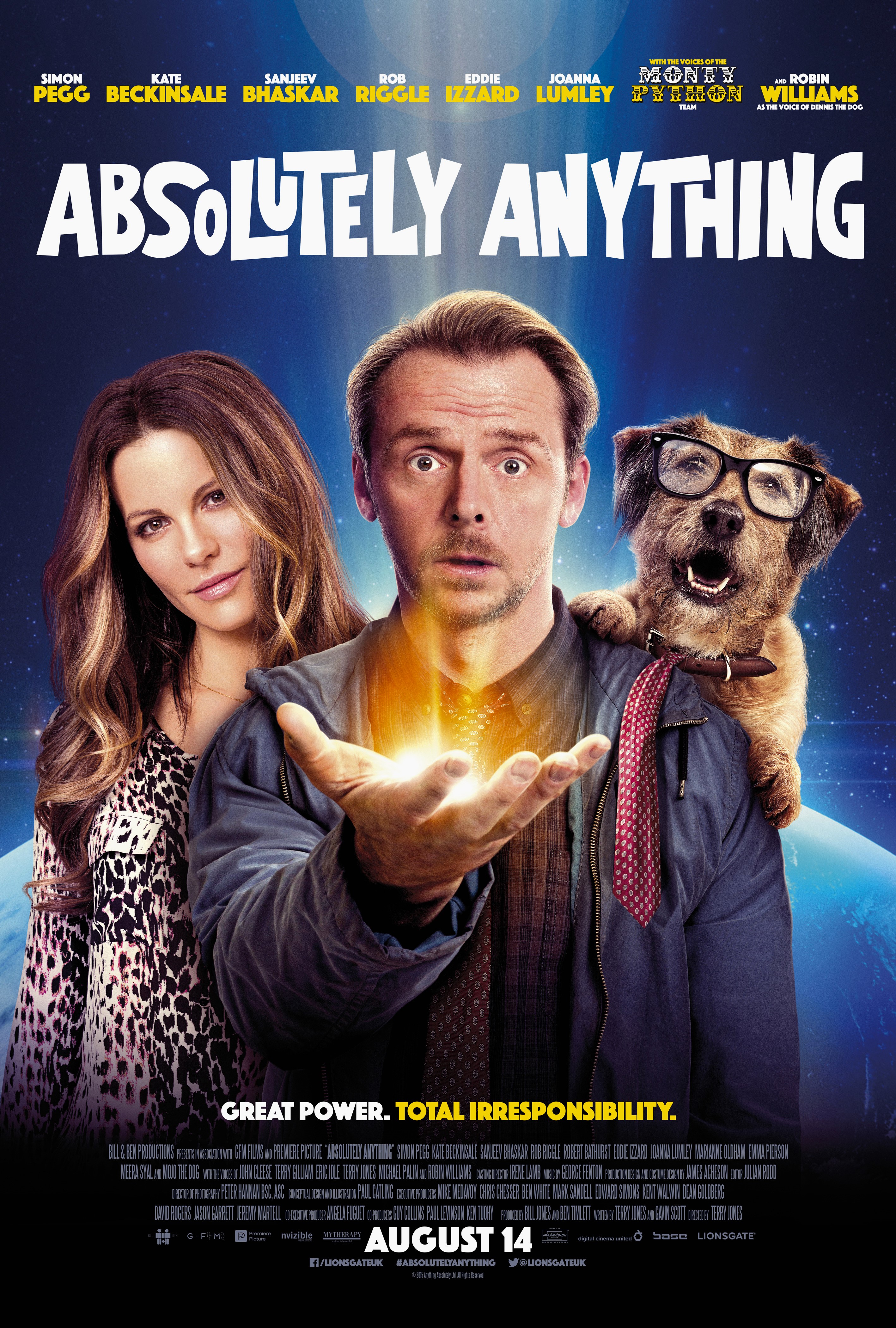
Released in 2015, Absolutely Anything is a zany sci-fi-comedy that explores the age-old fantasy of unlimited wish fulfillment, a concept historically associated with gods, genies and mythical beings. In this instance, however, the power rests in the hands of omnipotent extraterrestrials, who, believing in their superiority, bestow their boundless ability upon a single unsuspecting human. Alas, aside from this inventive alternative, Absolutely Anything misuses its limitless premise and affable lead, Simon Pegg, for a typical rom-com setup, offering mild, light-hearted entertainment over consistent gags, creative visuals or lasting impact.

Plot Summary: As part of an interplanetary experiment, an extraterrestrial council traverse the universe in search of intelligent life. Upon reaching Earth, they initiate their usual test of granting one randomly selected inhabitant the ability to do anything to determine whether humanity is worthy of joining their intergalactic community or should be annihilated. A test that likely spells doom for humanity as the council haphazardly selects Neil Clarke, a washout British school teacher, as their subject…

Co-written and directed by the late Terry Jones (Monty Python and the Holy Grail, Personal Services, The Wind in the Willows), Absolutely Anything draws inspiration from the 1898 short story; The Man Who Could Work Miracles, by H.G. Wells, as both stories centre on an ordinary man suddenly granted reality-altering abilities. However, the leading discrepancy between the two is how Absolutely Anything leans heavily into comedy, delivering a string of farcical scenarios that allow Pegg’s energetic performance to shine. As such, the tone throughout the film remains consistently blithe as the screenplay shies away from any deep philosophical exploration of its central concept or even any long-term consequences to Neil’s actions, as when a situation veers into chaos, Neil merely waves his hand to undo the damage, undercutting any disorder his newfound power might trigger.

As the leading man, Simon Pegg infuses Neil Clarke with an endearing blend of immaturity and dopey charm, rendering the character’s misguided desires and naïve missteps more forgivable. Still, the film undoubtedly misses the opportunity to examine how absolute power might affect the average person, for better or worse. Instead, Neil uses his ability almost entirely for petty or farcical purposes, with one of his more amusing decisions granting his loyal dog, Dennis, the capacity to speak, leading the canine to be energetically voiced by the late Robin Williams. The result is a delightfully giddy sidekick, whose witticisms often relate to the amusing traits of his species. Less enjoyable is the romantic subplot between Neil and his downstairs neighbour Catherine, portrayed by Kate Beckinsale, as despite Neil’s fascination with Catherine being at the core of the story, her character is underwritten and uninteresting, making their relationship (and her inclusion) feel obligatory rather than organic, a criticism that applies to many of the side characters.

Visually, Absolutely Anything is an odd mix of British realism and low-budget science fiction, with the majority of the film shot in and around an abandoned building that was formerly a school, cleverly repurposed to serve as Neil’s flat and the secondary school where he teaches. While these Earthbound settings help ground the otherwise outlandish story in a familiar, everyday backdrop, many of the sets throughout the runtime appear cheap and flavourless, especially when combined with the American sitcom-esque lighting and cinematography by Peter Hannan. The most jarring disparity in the film’s visuals, however, comes with the subpar CG effects, from the splicing of Simon Pegg’s head onto different bodies to the space-bound sequences of the extraterrestrial council debating; the CGI is noticeably lacking, even if the aliens’ designs exhibit visual variety.

Contrarily, the original score by George Fenton brings a whimsical energy to the film, as his compositions underscore the comedic beats with light piano melodies, lively orchestration and plucky strings that reflect Neil’s bemused reactions to his newfangled ability. For example, during the scene where Neil begins experimenting with his powers, commanding a bottle of whiskey to exchange itself only to witness it bouncing down the stairs towards the front door, the accompanying track is fittingly bouncy and eccentric.

Upon its initial release, Absolutely Anything was frequently compared to Bruce Almighty (2003), another male-led comedy about divine empowerment. But, their distinctions are actually quite significant, as Bruce Nolan, the titular character, cannot override free will, whereas Neil can. Moreover, Bruce Almighty centres on a theological framework with God as an active character, whereas Neil’s powers come from extraterrestrials he never encounters, exuberantly voiced by the surviving members of the Monty Python series. In fact, Absolutely Anything notably marks the first on-screen reunion of the Monty Python cast since The Meaning of Life (1983), and, according to Terry Jones, might be their last collaborative outing. There’s also a nod to their comedic legacy during the opening sequence, as the camera pans across space to an orbital scrapyard of discarded spaceships, one of which is from 1979’s Life of Brian.

In summary, Absolutely Anything is a comedy buoyed by its bewitching premise and the charisma of its lead. Yet, it is frustratingly superficial, opting for a low-stakes story, cartoonish gags and rom-com tropes rather than exploring the satirical or existential dimensions its narrative invites. Whilst the film does contain some moments of wit, Absolutely Anything never lives up to the potential promised by its title or the strong comedic talent it harbours. Rating: 4/10.
Double Indemnity (1944) – Film Review

“How Could I Have Known That Murder Could Sometimes Smell Like Honeysuckle?” – Walter Neff

Widely regarded as one of the greatest films released during the Golden Age of Hollywood, Double Indemnity is a 1944 crime-thriller that combines suspense and sharp wit, conveying its captivating story of murder and romance through stylish, achromatic visuals and scintillating dialogue. Despite the technical limitations of its time and the occasional dragging scene, Double Indemnity‘s favourable qualities easily outweigh its shortcomings, setting the standard for almost every noir that followed, to the point that the American Film Institute actually ranked the film as their “29th Greatest Movie of All Time” in 2007.

Plot Summary: Living a life largely devoid of excitement, the smooth-talking insurance salesman Walter Neff finds his thirst for more quenched when he encounters the seductive Phyllis Dietrichson, the weary wife of a callous husband whom she plans to murder and cash out on his ‘accidental’ death claim, eventually convincing Walter to join her devious scheme. But, when his quick-witted supervisor, Barton Keyes, becomes suspicious of the claim, Walter’s paranoia gets the better of him as the pair’s fiendish ploy begins to fall apart

Based on the novella of the same name by James M. Cain, supposedly inspired by a 1927 murder case perpetrated by a married woman and her lover, whose trial he attended whilst working as a journalist in New York. During this, Ruth Snyder persuaded her boyfriend, Judd Gray, to kill her husband, Albert, after having him take out an insurance policy with a double-indemnity clause before the couple were ultimately identified, arrested and convicted. Although the novella was well-adapted to the silver screen by screenwriters Billy Wilder and Raymond Chandler, the pair did not get along while penning the screenplay, a process loaded with arguments and behind-the-scenes drama. Nevertheless, the two writers’ squabbles may have been worthwhile as the dialogue exchanges between characters perfectly exemplify the noir genre, being both snappy and comical. So much so that the scene where Walter and Phyllis meet for the first time could be seen as the template for what virtually all notable noir films sound like.

Despite several cast members initially being apprehensive about signing on to the project, with the late lead Fred MacMurray even on the verge of turning down the role because he feared his career would be ruined by playing such a despicable character, every cast member in Double Indemnity is performing to their highest ability. From MacMurray and the late Barbara Stanwyck as murderous lovers, Walter Neff and Phyllis Dietrichson, flaunting their palpable on-screen chemistry, to the late Edward G. Robinson as Walter’s astute, snarky office manager, Barton Keyes, exhibiting a perfect balance of tenacity and humour, smelling something rotten about Mr. Dietrichson’s untimely demise, all of the performances are worthy of the screenplay’s well-crafted verbal exchanges.

Owing much of its visual brilliance to the late cinematographer John F. Seitz, an influential figure in camerawork with a career spanning several decades, Seitz’s work on Double Indemnity is often deemed a masterclass in stylish visuals. Well-known for his ability to use light and shadows to evoke mood, Seitz was instrumental in establishing the visual language of the noir genre via this film and many others, with the chiaroscuro lighting, tight framing and innovative use of darkness heightening the tension and moral ambiguity that pervade the narrative, his collaboration with the late director Billy Wilder (Sabrina, Some Like It Hot, The Apartment) only elevating Double Indemnity into a film that visually communicates its underlying themes of greed, betrayal and moral corruption as much as the dialogue. Additionally, light filtering in through blinds (a staple of the noir genre) is frequently used to visually depict Walter being ‘behind bars.’

The late Miklos Rózsa’s stagey original score is your traditional orchestral soundtrack, with the opening piece; Prelude, being a standout track, dramatically enriching the opening credit sequence where a mysterious silhouette of a man stepping toward the camera on crutches soon engulfs the screen. Following this, Rózsa adds emotional depth to the film with the track; Murder Theme, a suspenseful piece in which the striking of a timpani forms a grim rhythm, accompanied by violins that deliver a numbing pulse, alluding to the characters’ dark intentions.

Outside of the crime elements, Double Indemnity also harbours a hefty amount of romance within its narrative, largely thanks to the previously mentioned chemistry between MacMurray and Stanwyck, but also as a result of the film’s sensual moments and even moderately suggestive visuals for the time. For example, when Walter first meets Phyllis, the camera is drawn to a bracelet (or anklet) on her right ankle, with an urban legend stating that a married woman wearing a right-sided anklet indicates she is married yet available to other men. One of the many details that not only adds to the characterisation of Phyllis, but also serves as a humorous time capsule of the 1940s, when merely showing a woman’s ankle was considered scandalous.

In summary, if there is one Golden Age Hollywood classic that defines the very essence of the genre it’s a part of, it’s Double Indemnity, standing as a tremendous example of how to craft an engaging crime-thriller, building tension by employing intimate close-ups and honed dialogue. For a film from this era, you can’t do much better than Double Indemnity, a famed noir that stands the test of time after seventy years and will likely stand for seventy more, given its venerable reputation. Rating: 8/10.

Malcolm & Marie (2021) – Film Review

“Cinema Doesn’t Need to Have a Message. It Needs to Have a Heart!” – Malcolm Elliott

A contained and regaling monochrome drama, 2021’s Malcolm & Marie was one of the first feature-length films produced amidst the COVID-19 global pandemic. Written and directed by Sam Levinson (Another Happy Day, Assassination Nation), best known as the creator and lead writer of the hit teen-drama series; Euphoria, Malcolm & Marie was shot during the U.S. COVID-19 lockdown between June and July of 2020, with the approval of the Writers’ Guild of America, Directors’ Guild of America, Screen Actors’ Guild of America, and the American Federation of Television and Radio Artists, as the production followed strict safety protocols to ensure the cast and crew could work safely. With this in mind, Malcolm & Marie makes the best of challenging circumstances, utilising a singular location, minimal cast and sleek visuals to craft a captivating flick that examines how volatile personalities can clash, especially when tangled in a long-standing relationship.

Plot Summary: After returning home from the premiere of his debut project, filmmaker Malcolm Elliott and his girlfriend, Marie Jones, await what is sure to be an imminent critical and financial success. But, as the evening transpires, their celebratory night takes a turn for the worse as revelations begin to surface, testing the strength of their devotion to one another…

Between Marcel Rév’s scrumptious black-and-white cinematography and the no-holds-barred verbal brawl delivered by the central duo of Washington and Zendaya, it’s impossible to discuss Malcolm & Marie without drawing comparisons to the cinematic adaptation of Who’s Afraid of Virginia Woolf? (1966). Like the stage play the film is based upon, first staged in 1962, Who’s Afraid of Virginia Woolf? explores the complexities of the marriage of middle-aged couple Martha and George, where, late one evening, after a university faculty party, they receive an unwitting younger couple, Nick and Honey, as guests and are drawn into their bitter and frustrated relationship. Although Malcolm & Marie only focus on the two titular characters, both stories have more than a few similarities. One element of Malcolm & Marie that is unique to the film, however, is its underlying theme of the essence of cinema, examining this concept through the eyes of Malcolm as a passionate Black filmmaker who loathes the politics surrounding Black filmmakers. In fact, Malcolm’s intense dislike of an anonymous female critic from the L.A. Times is believed to be a reference to L.A. Times writer Katie Walsh, who once wrote an unfavourable review of one of Levinson’s prior directorial outings.

As the sole cast members, John David Washington and Zendaya hold the entire weight of the film on their shoulders. Thankfully, both share amazing chemistry and receive countless chances to let their talent shine as they each deliver lengthy monologues exploding with emotion. Through these monologues and the sharp dialogue, it quickly becomes apparent that the titular, well-defined couple exist in different rhythms, with Malcolm exuberantly (and obnoxiously) extolling the delights of premiering his first film as a writer and director, which pushes him to the cusp of newfound power and prestige, while Marie appears sullen, bored and utterly over Malcolm and his prickly, delicate ego that repeatedly puts strain on the pair’s relationship, often failing to acknowledge Marie’s support. However, this constant back-and-forth does come at a cost, as both characters can come across as somewhat unlikable through their many imperfections being blatantly illustrated on-screen at all times.

One of the few Netflix Originals shot to be on 35mm, the cinematography by Marcell Rév is elegant and sheeny. Yet, what makes these visuals even more impressive is that for the entirety of the runtime, the titular couple never once leave the house, as previously mentioned, merely strolling to different rooms or into the garden with a cigarette in hand as their bickering continues. Some may think this sounds dull, but I feel this approach ensnares much of the tension between the two characters and the heavy air that flows through their temporary, luxurious home. Furthermore, with both characters being chic and sophisticated, as well as returning from the premiere in their formal evening wear, there is a suave feel to the visuals of Malcolm & Marie, making the film seem like a romance from the 1930s, with tight camerawork to intensify the drama.

Likewise, the film’s original score, helmed by British musician Labrinth, reunited with Sam Levinson after composing much of the score for Euphoria, retains a similar tone to that of a 1930s drama, with the delicate, jazzy score meshing flawlessly with cleverly selected needle drops. Famed songs, like I Forgot to Be Your Lover and Get Rid of Him, are also baked into the runtime, doing much of the talking when the characters aren’t.

Interestingly, because Malcolm & Marie was produced during the COVID-19 pandemic, none of the cast or crew associated with the film received any kind of payment or entered into any agreement with the depiction of tobacco products, which is certainly admirable given the current state of cinema, where many films are greenlit purely for the sake of profit.

In summary, due to its entire runtime taking place in one location with a heavy reliance on dialogue, Malcolm & Marie will likely be a divisive flick that won’t please everyone. But, for those it will, I feel it’s more than entertaining, even if the film isn’t as layered or as tightly-knit as it thinks it is. Rating: 7/10.

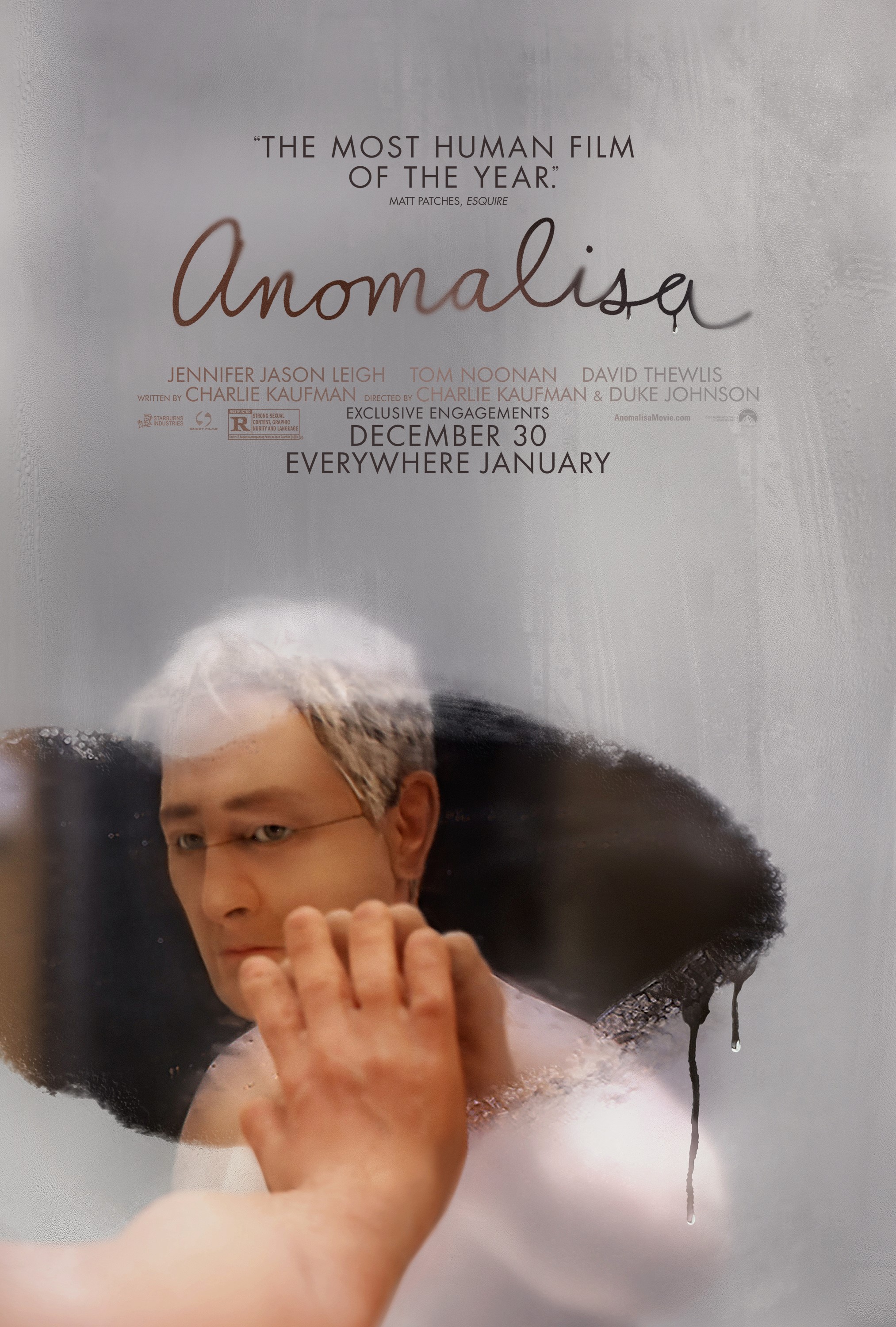
Anomalisa (2015) – Film Review

“Sometimes There’s No Lesson. That’s a Lesson in Itself.” – Michael Stone

Originally planned to be a short film, roughly forty minutes in length, with the large sum of funds later gathered from a crowd-funder on Kickstarter pivoting the project to become feature-length, 2015’s Anomalisa is a technically impressive and exceptionally humane stop-motion drama that marks another distinctive highlight in writer and co-director Charlie Kaufman’s filmography. Serving as a thought-provoking treat for fans of introspective cinema, Anomalisa is a quirky and mesmerising exploration of mental illness seen through the eyes of a middle-aged author trapped beneath the weight of his mundane life, integrating memorable characters and dry wisecracks wherever possible to craft a story that is just as captivating as it is interpretive.

Plot Summary: After travelling to Cincinnati, Ohio, to deliver a speech at the Fregoli Hotel, motivational writer and customer service expert Michael Stone encounters Lisa, a seemingly unremarkable woman who immediately enchants him, shaking up his mundane existence after many years of feeling disconnected from his family and those around him…

Directed by Duke Johnson and Charlie Kaufman, the latter also being the screenwriter, Anomalisa is one of those films that will click with some audience members sometime after the credits roll, dwelling on many of the concepts the film focuses on through its relatively simple, yet accessible and melancholic story, a narrative made more interesting by how it’s told. Blending Kaufman’s caustic sense of humour with genuine moments of human connection, Anomalisa is stuffed with true-to-life, awkward interactions, naturalistic dialogue and numerous subtle touches, similar to many of his previous written works, such as Being John Malkovich (1999) and Eternal Sunshine of the Spotless Mind (2004). Moreover, Anomalisa acts as a direct challenge to the notion that many still seem to hold; that animated films are solely for children, combating this belief by conveying a mature story via charming stop-motion, never shying away from harsh language, nudity or even a graphic scene in which two of the lifelike, puppeteered characters engage in lovemaking.

On the topic of characters, the robust central duo of David Thewlis and Jennifer Jason Leigh are terrific, delivering superb vocal performances that (along with the dialogue) deliver characterisation to the audience, quickly making it apparent that Michael has mental baggage related to Cincinnati, bearing the scars of a love life he left behind. Right from the opening scene, it also becomes apparent that Michael is one of the only uniquely designed puppets, as every other character he encounters seems to have an identical facial structure and a similar voice with a comically flat tone, continually voiced by Tom Noonan. All of these analogous characters (male or female, adult or child) illustrate how Michael, despite his career, struggles to interact with those around him, desiring to do anything but talk to others, including his wife and son, with certain details regarding his behaviour suggesting the character is going through a mid-life crisis and/or implying he may have serious mental issues. Yet, both are merely theories, as nothing is ever confirmed.

Visually, the film’s stop-motion animation is stunning, with the felt-faced puppets lending personality to every scene. Each character lives and breathes on-screen in a way that I feel visual effects couldn’t achieve, making the fact that every character was brought to life via thousands of tiny adjustments all the more extraordinary. The animation is utilised to spectacular effect during one nightmarish dream sequence, where Michael is confronted by his seemingly deteriorating mental state, even drawing attention to his puppet’s prominent facial slit in a bizarrely humorous fourth-wall-breaking moment. On top of the animation, the cinematography by Joe Passarelli is visually striking, frequently appearing as if it has been carried over from a live-action drama.

Often coming across as a forty-minute audible representation of the film itself, the original score by Carter Burwell is a slow-paced and downcast soundtrack that occasionally features snippets of dialogue from the film’s various characters, an eccentricity that is sometimes effective and sometimes irritating, with the score’s finest track; Overture, thankfully being dialogue-free, allowing its nuanced sweetness to flourish.

Further playing into the previously mentioned theories surrounding the film, it’s interesting to note that the hotel Michael stays at, the Fregoli Hotel, is actually named after “The Fregoli Delusion,” also known as “The Delusion of Doubles,” a rare disorder in which a person holds the misconception that those around them are a single person who changes appearance or is in disguise. While Kaufman has confirmed in the past that Michael doesn’t suffer from this exact disorder, the Fregoli Delusion did serve as an inspiration for the film and functions as a reasonable explanation for some of Michael’s peculiar visions, but still doesn’t answer every inquiry an audience member may have about his mental state.

In summary, although the exquisite sop-motion animation automatically makes the film worth a viewing for anyone with even the slightest interest in stop-motion storytelling, Anomalisa will likely have its naysayers, given the film is a rather cyclical drama featuring a cynical protagonist, with perhaps too few gags mixed-in to oppose the constant cynicism. Nevertheless, the film is a well-conceived character study exploring loneliness and mental illness, impressively interpreted through a painstaking style of animation, painting a different shade of drama, a drama that I personally believe wouldn’t work as well should it have been produced with CGI or in live-action. Rating: 8/10.

Love and Monsters (2020) – Film Review

“I Didn’t Really Have Your Typical Upbringing. I Mean, I Did at First… but Then the World Ended.” – Joel Dawson

Originally titled; Monster Problems, the Netflix Original, Love and Monsters, released in 2020, is a comedic, post-apocalyptic romance filled with plenty of heart, humour, clever world-building and, as its title suggests, gigantic monsters. Despite housing a few blemishes here and there, Love and Monsters covers an abundance of emotional ground throughout its story, standing as an entertaining, monster-filled adventure, the sort of film that delivers wit, excitement and creativity all in generous portions, making for an amusing time during ‘the end of times,’ as it were.

Plot Summary: Seven years after the world-ending event known as the “Monsterpocalypse,” twenty-three-year-old Joel Dawson, along with the rest of humanity, is wearily living underground in a hidden bunker since colossal mutated monsters took control of the surface. But, after reconnecting over the radio with his high school girlfriend, Aimee, who is now eighty miles away at a coastal colony, Joel courageously decides to venture out into the monstrous open-air to find her…

Demonstrating his storytelling capability almost immediately, director Michael Matthews (Five Fingers for Marseilles) artfully lays out the film’s premise during the opening sequence, employing a voiceover from Joel and a variety of animated illustrations made to appear as if they were pencil-sketched by Joel in his notebook. Through this opening, we learn that several years ago, the human race fired a series of rockets into space to destroy an impending asteroid nicknamed; “Agatha 616,” which successfully blew the rock to smithereens. However, this action had consequences, as the chemical compounds used to launch the missiles rained back down to Earth and transformed the cold-blooded wodge of the animal kingdom into mutated monstrosities, forcing the human race to flee underground. From this point on, Love and Monsters continually explores its unique world, building upon the notion of the “Monsterpocalypse” in several ways whilst also taking cues from 2009’s Zombieland by not taking itself too seriously, avoiding the common concern of its post-apocalyptic setting feeling ‘played out.’ Of course, this does mean that Love and Monsters includes a number of tonal shifts, some of which occur rather suddenly, similar to how many of the film’s gags vary in quality.

In terms of characters, the timid, self-deprecating protagonist of Joel Dawson is perfectly cast with Dylan O’Brien, as the screenplay allows the young actor to flex every acting muscle he possesses, toeing the line between weighty and light-hearted scenes through his myriad of interactions with the other survivors of his monster-infested world. For Joel, the world-ending cataclysm was particularly bad timing as he was on a date with his girlfriend Aimee when the pair were separated and shipped to different colonies. While terrified of almost everything at first, Joel eventually pushes himself out of love, serving as a likeable yet dimwitted guide through a world of horrors and devastation, discovering more about himself along the way. In addition to O’Brien, the cast is studded with some great talent, from Jessica Henwick, who manages to make Aimee seem capable and sympathetic in spite of her limited screen-time, to the unlikely pairing of Michael Rooker and Ariana Greenblatt as Clyde and Minnow, two world-weary survivors travelling together after their respective families were killed by undisclosed creatures. Moreover, whilst on his journey, Joel encounters the grieving, intelligent canine, Boy, who is remarkably well-portrayed on-screen by the two Australian kelpies, Hero and Dodge.

Given that much of the film is a voyage across post-apocalyptic America, Love and Monsters is almost episodic in its visual presentation, following Joel as he treks past devastated, overgrown suburbs, corroded fairgrounds and expansive meadows, all of which are wrapped in impressive details like spider-like webbing enfolding the rooftops and trickling egg sacks sprouting on trees. Lachlan Milne’s cinematography and the film’s wonderful production design (considering its modest budget for a premise of this scale) lend themselves brilliantly to this concept with an ample amount of wide shots, thoroughly embracing the strange beauty and vibrant colours of the “Monsterpocalypse.”

Drawing inspiration from the scores of larger-than-life science fiction classics from the 1950s and 1960s, composers Marco Beltrami and Marcus Trumpp provide Love and Monsters with a grand, stimulating and highly vigorous orchestral score. Through tracks such as; Bunker Breach, Wisdom of the Wild, Amiee’s Colony and End Credits, the original score works in tandem with practically all the scenes it can be heard, whether they are stirring or unsettling.

As you’d hope for a monster-centric flick, the titular creatures of Love and Monsters are widely imaginative, with oversized centipedes, frogs, snails and crabs all featured throughout the runtime, all outlandish and intimidating in design, yet still recognisable to their real-world counterparts, brought to life via exquisite practical and CG effects, ultimately leading the film to become an Oscar nominee in 2021’s Best Visual Effects category, alongside Tenet (2021) and The Midnight Sky (2021).

In summary, Love and Monsters is an enjoyable, earnest and comforting flick, packed with splendid creature designs, charming characters and a delightful cast. In many ways, the film is a high school rom-com that just so happens to be set in a post-apocalyptic world, serving as a terrific template for crafting a leaner, less bloated summer flick that virtually all can enjoy. And, for once, with the film leaving things open-ended enough for a sequel, this is the rare scenario where, I’d say, another instalment would actually be welcome. Rating: low 8/10.

love_and_monsters_xlg

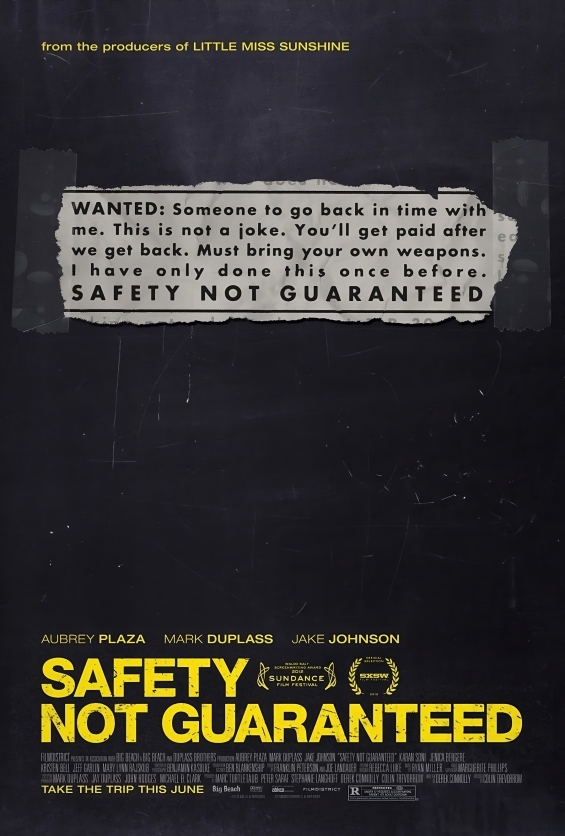
Safety Not Guaranteed (2012) – Film Review

“Stormtroopers Don’t Know Anything About Lasers or Time Travel. They’re Blue-Collar Workers.” – Arnau

Inspired by the infamous “Time Travel Companion” advert printed in a 1997 issue of Backwoods Home Magazine and written as a joke/last-minute slot filler by John Silveira, an employee of the magazine, who is actually credited in the film as a “Time Travel Consultant.” 2012’s Safety Not Guaranteed is a beguiling, low-budget comedy-drama with a minimal sci-fi twist, utilising its mirthful real-world inspiration to compose an austere story with relatively modest ambitions and a shortage of memorability that is, thankfully, enriched by its strong performances, quirky charm and heartfelt underlying themes of love, loss and altering the past.

Plot Summary: When an opportunity arises to turn an outrageous magazine advert into an investigative journalism opportunity, pessimistic intern, Darius Britt, jumps at the prospect, joining her superior, Jeff, and fellow intern, Arnau, as they set out to uncover whether the advert’s proprietor, Kenneth, is a deranged misfit or has truly discovered the secret to time travel…

Based on the previously mentioned printed magazine advert, which was even featured on The Tonight Show With Jay Leno in 1992 during the “Headlines” segment before transforming into an internet meme, Safety Not Guaranteed harbours a straightforward yet well-paced narrative, combining its subplots, twists and turns effectively as director Colin Trevorrow (Jurassic WorldThe Book of HenryJurassic World: Dominion) and writer Derek Connolly, waste little time. That’s not to say that the film has no deeper meaning(s), however, as despite the foundation of the story being a question of thought-to-be impossible technology vs. the drab confines of reality, Safety Not Guaranteed features many relevant themes of love in all its forms, as the various characters each have their own outlooks on intimacy and heartache, many of which are preconceived notions, similar to how the characters initially perceive Kenneth to be a delusional, sci-fi-obsessed oddball before becoming acquainted with him.

In regard to the central cast, each actor, whether that be Aubrey Plaza, Mark Duplass, Jake Johnson or Karan Soni, consistently remains within the realm of their character’s traits, emotionally developing whilst remaining true to the heart of their character. As such, Plaza and Duplass are immensely enjoyable to watch as there’s a sweet sadness in the characters’ focus on lost dreams, missed chances and the truism that we all long for a time machine every once in a while, which is best seen in Darius’ backstory as she has become cynical about life since the death of her mother, causing her to flounder, burdened with sorrow and self-blame. Yet, upon her arrival in Ocean View, Washington, she is met with more than meets the eye in Kenneth, a paranoid and suspicious yet affable man. Believing himself to be followed by government agents, Kenneth manoeuvres around town with his interpretation of covert ops, stealing lasers from local laboratories and immersing himself in technical calculations and physical training, all in pursuit of his time-travelling mission. Immediately drawn to each other as divergent outcasts, Kenneth gradually takes Darius into his circle of trust. Interestingly, the role of Darius was actually written with Aubrey Plaza in mind, as Derek Connolly wanted to work with her. Likewise, Jake Johnson was Colin Trevorrow’s first choice for the role of Jeff.

Visually, Safety Not Guaranteed is passable but not all that impressive, as cinematographer Ben Kasulke predominantly relies on hand-held shots in an attempt to personalise the viewing experience, providing the story with a pleasant layer of intimacy. Nevertheless, the film’s use of the drizzling, forest-shrouded location of Ocean Shores (along with a handful of other areas within thirty minutes of Seattle) is terrific, appearing visually interesting yet never overwhelming, specifically whenever a scene takes place at sunrise or sunset.

For a story revolving around time travel, Safety Not Guaranteed has a surprisingly emotional core for what could have easily been a corny low-budget flick. It’s no surprise, then, that its soundtrack, composed by Ryan Miller, helps to capture that same emotional palette, not only accentuating the themes of the film, but adding an aura of reflection and hopefulness that helps to make the film’s eccentric protagonist someone to root for rather than feel sorry for, such as in the foremost track; Opening. Aside from Miller’s original tracks, Safety Not Guaranteed also features songs from numerous indie bands, including Summer Fiction and Guster, making for an all-in-all well-rounded soundtrack.

On the topic of the humour throughout Safety Not Guaranteed, some gags land, others do not, with some scenes also seeming rather bare comedy-wise. However, I applaud the film’s decision to avoid turning Kenneth into a cartoonishly strange character just for the sake of a few cheap laughs, as well as how natural the cast’s witty improvisation feels, particularly in the scene where Jeff advises Arnau to raise his collar and sport sunglasses to look like a “Pilot That Drives Jets.”

In summary, Safety Not Guaranteed is an endearingly zany indie flick. While the film is obviously low-budget and not exceedingly memorable when placed alongside many other light-hearted comedy-dramas, Safety Not Guaranteed possesses a clever screenplay, earnest moments and a genuine sense of sentiment for those who would like to turn back the clock. Not to mention the film’s plethora of excellent performances from its cast (primarily its three leads), ensuring the film will hold up in the future. Rating: 6/10.

safety_not_guaranteed_ver2_xlg-transformed Continue reading

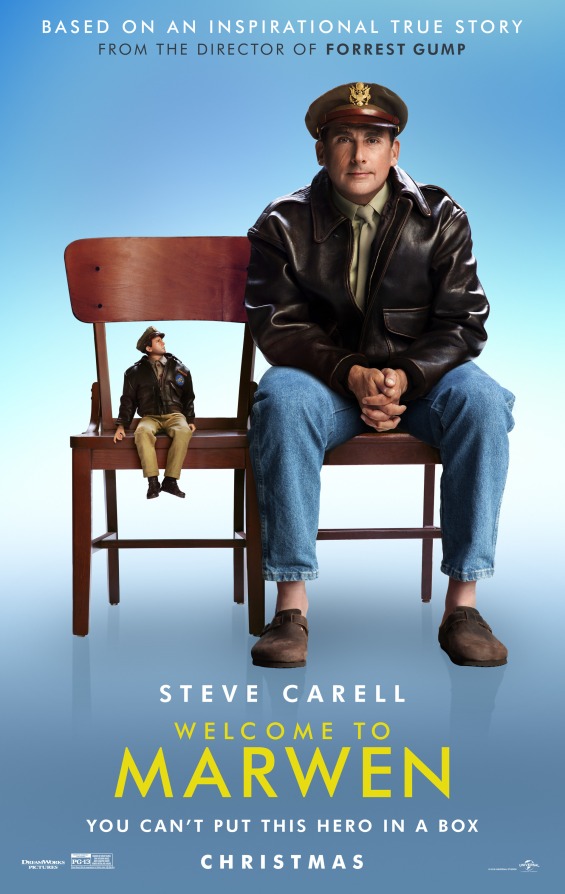
Welcome to Marwen (2018) – Film Review

“I Was a Hell of a Good Artist, an Illustrator. I Loved to Draw, and Now, I Can Barely Write My Name…” – Mark Hogancamp

Co-written and directed by Robert Zemeckis (Back to the FutureForrest GumpCast Away), Welcome to Marwen, released in 2018, is a dramatisation of the 2010 documentary; Marwencol, which recounted the true story of Mark Hogancamp, who, on April 8th, 2000, was brutally assaulted by five men who beat him almost to death, thrusting Mark into a nine-day coma and a forty-day hospitalisation period before he was discharged, woefully bearing severe brain damage that left him with little memory of his past life. Welcome to Marwen takes the tragic story of Mark Hogancamp and aims to provide it with a tint of optimism, romance and fantasy through its unique storytelling approach and dazzling visual effects. Yet, the film ultimately falls flat due to its confused tone and graceless screenplay, making Zemeckis’ invitation to enter the village of Marwen a leisurely one to decline.

Plot Summary: After being ruthlessly assaulted by five men who left him for dead outside a bar in Kingston, New York State, yielding severe memory loss and trauma. Aspiring artist, Mark Hogancamp, constructs a remarkable therapeutic outlet on his property known as Marwen, a miniature World War II-era Belgium village compromised of period-dressed dolls. But, when Mark is requested to attend the court hearing of the men who mutilated him, his anguish returns to torment him…

Mark Hogancamp, the real individual upon whom the film is based, suffered injuries on every part of his body following the assault, subsequently placing him into a coma for nine straight days. As a result, most of the memories of his life before the assault were virtually extinguished, and the limitations of his health insurance prevented his continued rehabilitation. Sadly, only three of his assailants ever went to prison, with all three getting released within two years. Welcome to Marwen ignores many of these bleak details and outcomes, however, instead attempting to lace the story with more sanguinity and merriment as the film plays out over two planes; Mark’s plane of existence (our own) and that of the dolls, who, are enlivened via CGI in a fashion that could be described, as a more photo-realistic version of Toy Story (1995). It’s an admirable method of trying to infuse Mark’s despairing reflection of his assault with a dash of imagination and humour, but it’s predominantly an unsuccessful one, as this approach renders the film immensely inconsistent in terms of its pacing, tone and authenticity to the actual account of Mark’s horrific assault.

In a somewhat bizarre casting choice, Mark Hogancamp is portrayed by Steve Carell, who, whilst not awful, by any means, feels as if he lacks the acting aptitude required to depict Mark’s agonising trauma and isolation. But, Carrell does (of course) prevail with the more comedic moments, even if the gags themselves generally flop as Capt. Hogie (Mark’s gallant, plastic alter-ego) has a plethora of oddly placed witticisms. The supporting cast of Merritt Wever, Diane Kruger, Janelle Monáe, Eiza González and Gwendoline Christie all deliver passable performances (barring Christie’s overbearing Russian accent) yet possess little characterisation as the so-called; Women of Marwen, dolls that populate the tiny, make-believe village of Marwen, inspired by the powerful women Mark knows in his real life. Leslie Mann also makes an appearance in the film as Mark’s friendly, inexplicably curious neighbour, Nicol, who eventually becomes an object of affection for Mark in both his worlds, which occasionally comes across as rather uncomfortable as Mark lives out some of his romantic fantasies with Nicol through his dolls.

Despite spending almost half of the runtime in the imaginary village of Marwen, Mark’s fantasies of himself and his female companions as heroes of the Second World War are often short on memorable shots. Lacking stimulating action sequences or grand set pieces to truly justify how much screen-time is spent in the village of Marwen, the rarely inventive cinematography by C. Kim Miles makes the scenes of the dolls socialising or firing at Nazis relatively visually flat, that is, barring the well-rendered visual effects.

On the more positive side of things, the original score by Alan Silvestri is equally adventurous and diverse, with tracks such as MagicYou Got ThisBeautiful Moon and Marwencol, all harmoniously balancing sorrow, yearning and genuine tension while featuring a snare drum to further play into the World War II setting of Marwen. The score also includes some auditory references to Zemeckis’ earlier filmography, including a callback to the signature motif of the Back to the Future trilogy.

Nevertheless, the finest aspect of Welcome to Marwen is, by far, its CG effects, which brilliantly utilise motion capture to employ the faces and body movements of its cast onto plastic figurines clothed in World War II-era outfits/uniforms. As such, every scene within Mark’s fantasy world oozes with detail and toy-related visual gags, even if the animation of the dolls periodically appears overly fluid compared to the somewhat rigid reality of poseable figurines.

In summary, the current stage of Zemeckis’ career has long been repressed by his obsession with visual effects, repeatedly concentrating on style over substance. Welcome to Marwen is no exception to this rule, with the numerous sequences set within Mark’s fictitious world being the film’s most enjoyable moments. Thus, Welcome to Marwen fails to flourish as a wonderous, period-set adventure or a rumination of violent hate crimes and personal trauma, merely existing as a creatively ambitious misfire. Rating: low 5/10.

welcome_to_marwen_ver10_xxlg

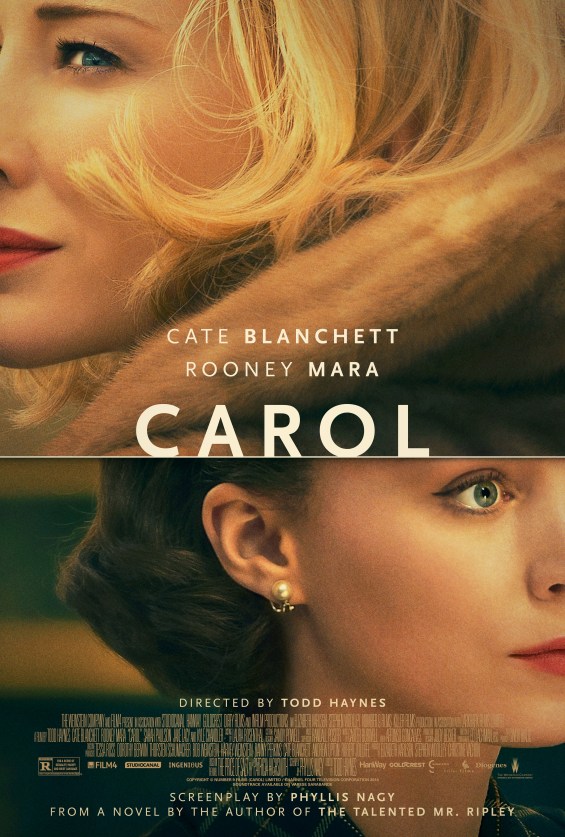
Carol (2015) – Film Review

“You Seek Resolutions Because You Are Young. But, You Will Understand This One Day.” – Carol Aird

A period-set romantic drama with a pleasant festive aesthetic in the former half of its runtime, 2015’s Carol is based on the novel; The Price of Salt by Patricia Highsmith. Powered by the fantastic performances of Cate Blanchett and Rooney Mara in the lead roles, Carol is a well-told and engrossing tale of forbidden love between two women that lives up to its cherished source material. Thanks in part to its elegant production design and magnificent original score by Carter Burwell.

Plot Summary: During the Christmas season of 1952, aspiring photographer, Therese Belivet, meets Carol Aird whilst working at a boutique store in Manhattan. Semi-divorced and entrapped in a loveless relationship with her former husband, Carol quickly sparks a connection with Therese over their shared romantic hardships. Yet, amidst the strict social norms of their time, their undisguised interest in one another soon turns into profound affection…

The original novel the film is based upon was actually inspired by a blonde woman in a mink coat who ordered a doll from Patricia Highsmith when she was working as a temporary salesgirl at Bloomingdale’s in New York City during the 1948 Christmas season. Highsmith recalled feeling; “Odd and Swimmy in the Head, Near to Fainting. Yet, at the Same Time, Uplifted.” Highsmith completed the outline for the story in about two hours that same night. Moreover, the character of Carol Aird was inspired by Virginia Kent Catherwood, a Philadelphia socialite six years older than Patricia Highsmith, with whom the author had a love affair in the 1940s. Catherwood subsequently lost custody of her daughter after her homosexuality was used against her with a taped recording of a lesbian liaison she had in a hotel room. Director Todd Haynes (Velvet GoldmineFar from HeavenI’m Not There) sufficiently employs all these ideas into a grander narrative in his adaptation, primarily concentrating on the senseless consequences of a lesbian relationship in a time when they were strongly frowned upon.

When it comes to the cast, the pairing of Cate Blanchett and Rooney Mara is superb, with Blanchett portraying the thirty-two-year-old, Carol Aird, as a woman chafing against the constraints of her role as an upper-class wife and mother, continually expressing her sexual desires for women as a method of rebelling against her husband and her conformist world. While Mara’s performance as nineteen-year-old, Therese Belivet, is more suppressed, depicting the quiet young woman as a self-deprecating, novice photographer who prefers to hide behind her camera than engage with others. Softly spoken and sweet-natured, Therese is as single-minded in her relationship with her boyfriend as she is in her pursued career. As such, it’s easy to see why the pair bond, given that they provide a sense of escapism for each other, and upon their first meeting, the sexual tension between them is palpable.

Although the cinematography by Edward Lachman is doubtful to blow any audience member away with its framing or use of colour, Carol still features a number of visually interesting shots that occasionally even illustrate what the characters are feeling. For instance, in the opening shot, we see an iron floor grille from which the camera slowly pulls out, visually representing the entrapment that Carol and Therese feel at the beginning of the narrative. Another intriguing attribute in regard to the visuals is that Carol was shot on Super-16 millimetre film to better resemble the look of photographic film from the late 1940s/early 1950s. Many of the shots are also directly influenced by the photojournalism of Vivian Maier, Ruth Orkin, Helen Levitt and Esther Bubley, respectively.

Moving onto the original score, through orchestral tracks like OpeningDatebookChristmas Trees and Waterloo, the score by Carter Burwell consistently sounds wrapped in a gauze of wistful minimalism, with the leading duo being audibly identified by two instrumental markers; Carol by piano and Therese by woodwinds. In addition to the wonderful original score, Carol makes terrific use of songs from the time period. In fact, prior to the start of production, Todd Haynes compiled a playlist of seventy-nine songs that were popular during the era the story is set within to further understand the period. A few of the songs that were ultimately chosen for the film include; One Mint JulepEasy Living and Smoke Rings.

From start to finish, the production design of Carol is also outstanding, capturing the polished and aristocratic essence of the ’50s without seeming excessive. This praise can be applied to all parts of the production, but, most notably, the costume design. What makes the costume design even more spectacular is that excluding the suit Therese wears in her first and last scene(s), all of Rooney Mara’s costumes were actually well-worn, vintage clothing pieces.

In summary, whilst Carol isn’t one of the finest romantic dramas ever made, it is still a tremendous flick in more ways than one. While the pacing is sometimes too slow for its own good, and the original score occasionally does a lot of the heavy lifting during the more emotionally impactful moments, Carol is an indelible and captivating story, all the same. On top of that, even though many may see Carol as a rather strange choice for a Christmas viewing, I feel the joyous, snowy aesthetic that the film presents during its first half is enough to make the flick a reliable, less whimsical pick for the festive season. Rating: low 7/10.

carol-p1023477

What If (2013) – Film Review

“In Fairy Tales, Love Inspires You to Be Noble and Courageous, but in Real Life, Love Is Just an All-Purpose Excuse for Selfish Behavior. You Can Lie and Cheat and Hurt People and It’s All Okay Because You’re in Love.” – Wallace

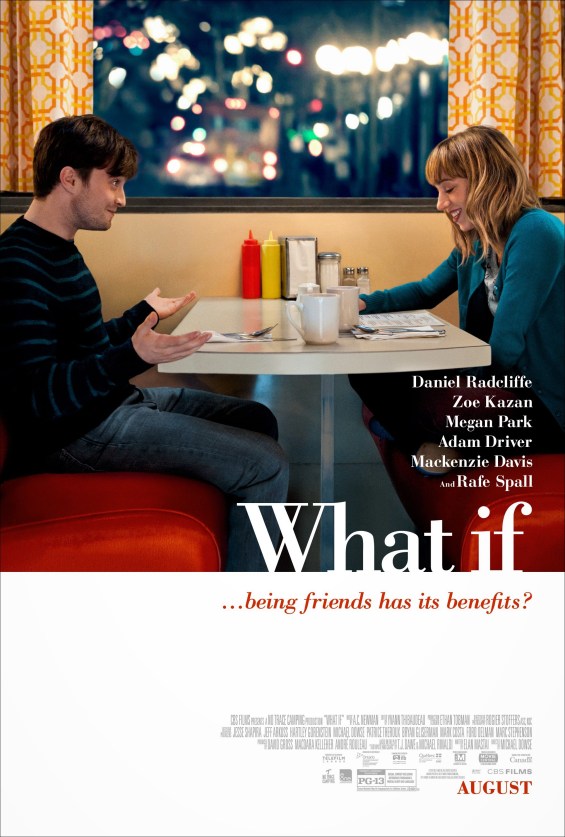
Based on the novel and later stage play; Toothpaste & Cigars by T.J. Dawe and Michael Rinaldi, 2013’s What If (alternatively titled; The F Word), is a light-hearted romantic-comedy that largely overcomes its familiar framework and few derivative elements. Continuously mindful of the many clichés associated with rom-coms, What If employs an abundance of witty dialogue, subversive story decisions and the effervescent chemistry of its leads: Daniel Radcliffe and Zoe Kazan, to deliver a charming, self-aware romantic-comedy that will appeal to those well-acquainted with the genre (and its typical shortcomings), as well as those who prefer the ‘com’ to the ‘rom’ portions of a rom-com.

Plot Summary: After being repeatedly burned by bad relationships, medical school dropout, Wallace, decides to put his love life on hold while everyone around him seems to be finding the perfect partner. But, when Wallace meets Chantry at a house party, an endearing animator who lives with her long-time boyfriend, Ben. The pair form an instant connection, striking up a close friendship and leaving Wallace to contemplate whether his newly-found friend could also be the love of his life…

Directed by Michael Dowse (It’s All Gone Pete TongGoonStuber) and written by Elan Mastai. In many ways, the screenplay for What If feels as if it was conceived as an unabashed tribute to the exemplary romantic-comedy; When Harry Met Sally from 1989. Primarily due to its underlying theme/question of whether a man and a woman can truly just be friends. However, unlike that renowned rom-com, What If places a heavy emphasis on its characters and their relationships, alongside its hilarious gags. As a result, many of the cringe-inducing comedic moments feel very natural and in-character, as opposed to feeling like embarrassing scenarios the screenwriter conjured up on the spot. As previously mentioned, What If is also continually conscious of the numerous painful clichés that plague the rom-com genre, attempting to avoid them at every turn. As such, the film crafts many of its amusing yet romantically uncomfortable situations in unpredictable ways, rather than what the audience would typically expect, which works remarkably well.

Portrayed by Daniel Radcliffe, the story’s polite and self-effacing protagonist, Wallace, is close enough to Radcliffe’s actual personality that the actor rarely feels as if he is portraying a fictional character, yet he is immensely entertaining to watch, nonetheless. And when paired with the charismatic and equally likeable Zoe Kazan, whose character, Chantry, is luminously quirky, the pair’s excellent chemistry quickly bubbles to the surface. In addition to the leading duo, Wallace’s outlandish best friend, Allan, portrayed by Adam Driver, provides a considerable amount of the film’s most amusing moments, as his wild personality is a fantastic foil to Wallace’s often pessimistic view of the world. Then there is Rafe Spall as Chantry’s long-lasting boyfriend, Rob, who, thankfully isn’t written as a simplistic, cheating miscreant designed to simply push his girlfriend into the arms of the protagonist. If truth be told, the only character the film squanders is Wallace’s sister, Ellie, portrayed by Jemima Rooper, as she is incredibly underutilised, only appearing in two (inconsequential) scenes.

When it comes to visuals, the cinematography by Rogier Stoffers maintains a light touch throughout the runtime, allowing the photogenic city of Toronto to function as a vibrant setting without ever seeming overly romanticised, which is a satisfying contrast to many other city-set romantic-comedies. Additionally, to correspond with Chantry working at an animation studio, What If seizes the opportunity to add some flair to its visuals by having many of its characters sporadically daydream. These mental fabrications are represented by Chantry’s cartoonish sketches coming to life and appearing alongside the characters, usually in a projection-like form via their surroundings.

Despite What If presenting its song choices as the focal point of its audio instead of its acoustic-led original score, many of the tracks by composer A.C. Newman, including Beach Bummer and Packing with Dalia, are cordial and possess a delightful little motif. Still, the licensed songs are naturally the most memorable part of the soundtrack, with upbeat tunes like Best of FriendsBig Bird in a Small Cage and Let’s Get High, sufficiently supporting the story and its central underlying theme.

Sticking with the notion of avoiding romantic-comedy tropes, the ending of What If is a rather restrained piece of storytelling that merely gets across what details it needs to before cutting to black. The ending is a terrific throwback to a line of dialogue from earlier in the film, bringing the story to completion. That is essentially why I prefer that original ending to the extended ending that was shot eighteen months later, as where the original climax is drawn-back and concise, the extended ending feels unnecessarily long and even falls into a couple of the stale plot points What If was trying to sidestep throughout its narrative.

In summary, What If is a feel-good flick that frequently flirts with rom-com clichés yet skillfully evades the worst of them, all while traversing into unexpected territory, both comedically and dramatically. Whilst I’d argue the film has widespread appeal, those who enjoyed Michael Dowse’s previous outings are especially likely to appreciate What If, as it similarly blends a warm, earnest attitude with shocking, irreverent jokes. Repeatedly pointing out how much better romantic-comedies can be when you have fully-formed characters and exceptional performances, in addition to side-splitting wisecracks. Rating: low 8/10.

what_if_xxlg

Red Riding Hood (2011) – Film Review

“Full Moon. Lock up Tonight. Better the Wolf Takes the Pig Than You…” – The Reeve

A reinterpretation/modernisation of the centuries-old fairy tale; Little Red Riding Hood; a children’s story centering on a young girl as she encounters the Big Bad Wolf on a journey to visit her grandma. Red Riding Hood, released in 2011, retains the framework of the original story, but not much else, as this reinterpretation aims to be a dark fantasy with elements of romance and gothic horror thrown in. Yet, in almost all of these genres, the film falls flat as a result of its subpar screenplay and direction. That’s not to say that Red Riding Hood doesn’t have any positives, however, as this fantasy flick undoubtedly deserves praise for its outstanding production design and dreary fantasy aesthetic.

Plot Summary: For years, the residents of a remote mountain village have maintained an uneasy truce with a fearsome werewolf by offering the bloodthirsty beast a monthly animal sacrifice. But, when the wolf violates their trust by taking a human life, the village falls into hysteria, prompting the arrival of the famed werewolf hunter, Father Solomon, to assist in their hunt. Meanwhile, Valerie, a beautiful young woman torn between two viable fiancés, begins to suspect that the beast may be someone she knows…

Similar to most European fairy tales, the origins of Little Red Riding Hood lie within the folk tradition of oral storytelling. So, no singular author can be credited for the story’s creation. However, the two most prominent renditions of the fairy tale are proclaimed to have been written by Charles Perrault and the Brothers Grimm in the 17th century. Despite this history, Red Riding Hood seems to largely disregard the various iterations of the fairy tale, to instead take influence from the first instalment of the infamous Twilight series, as the two films share a number of similarities. For example, the opening title sequence where the camera majestically glides over vast snowy landscapes closely resembles the opening title sequence of Twilight. Furthermore, Taylor Lautner, who previously appeared in Twilight, was considered for the role of Peter early in pre-production. Still, these similarities shouldn’t be that surprising, considering that director Catherine Hardwicke (ThirteenLords of DogtownMiss You Already) helmed the first entry in the series in 2008.

In regard to the cast, Amanda Seyfried portrays the titular character of Valerie/Red Riding Hood sufficiently, but her performance is somewhat hindered on account of her placement between Shiloh Fernandez and Max Irons as her love interests, Peter and Henry, whose performances leave a lot to be desired coming across as drab and rather wooden for the majority of their screen-time. As per usual, the highlight of the cast is undoubtedly Gary Oldman as the morally-grey werewolf hunter, Father Solomon. Though Oldman doesn’t get to exhibit immense amounts of emotion (despite his character having a tragic backstory), the veteran actor does stay committed to his detestable character.

Aside from some outlandish CGI and a handful of moments where cast members/props that should seemingly be in focus are not, the cinematography by Mandy Walker is one of the finest components of Red Riding Hood. From the glowing red of Valerie’s hood contrasting against the white snow to the blood-red moon gradually emerging over the village rooftops, Red Riding Hood is a visually stunning fantasy at points. What’s more is that the set, costume and prop design are all exceptional, as every location feels rustic yet fantastical, whilst every costume/prop appears worn and functional. From a design standpoint, even the trees that appear throughout the runtime are visually unique as they harbour cadaverous spikey branches, giving the impression that merely wandering through any of the dense forests surrounding the village could result in a wound and subsequently a trail of blood.

Unsuitable yet well-crafted, the original score by Alex Heffes and Brian Reitzell begins rather promisingly with the track; Towers of the Void, which Reitzell co-wrote with musician, Anthony Gonzalez, of the electronic band; M83. As such, the ominous track contains waves of strings and industrial-sounding electronics, these instruments then persist onto the second track; Kids, where they are accompanied by ghostly vocals and moody synth. Essentially, while not a bad soundtrack, by any means, the score for Red Riding Hood is simply so unfit for a story set in this time period and genre, that it’s difficult to overlook when reviewing the score.

For a significant portion of the runtime, the story of Red Riding Hood unfolds like a mystery, with the human identity of the werewolf being kept a secret to keep the audience guessing. And whilst many suspects are immediately dismissed, the screenplay does a serviceable job of introducing red herrings without seeming overly conspicuous. When the truth is finally revealed, however, the answer as to who is behind the beastly slayings is rather disappointing, especially since the reveal is quickly followed up by an equally disappointing climax and epilogue.

In summary, as far as gloomy retellings of classic fairy tales go, Red Riding Hood is certainly one of them. While Amanda Seyfried and Gary Oldman are magnetic in their respective roles, the unremarkable leading men along with the painfully formulaic screenplay, continuously devalue the beautiful production design and often spectacular visuals. So, whilst it’s possible that the Twilight crowd will find a specific appeal in Red Riding Hood, outside of that devoted fanbase, I doubt many others will. Rating: low 5/10.

red_riding_hood-p509441