Corpse Bride (2005) – Film Review

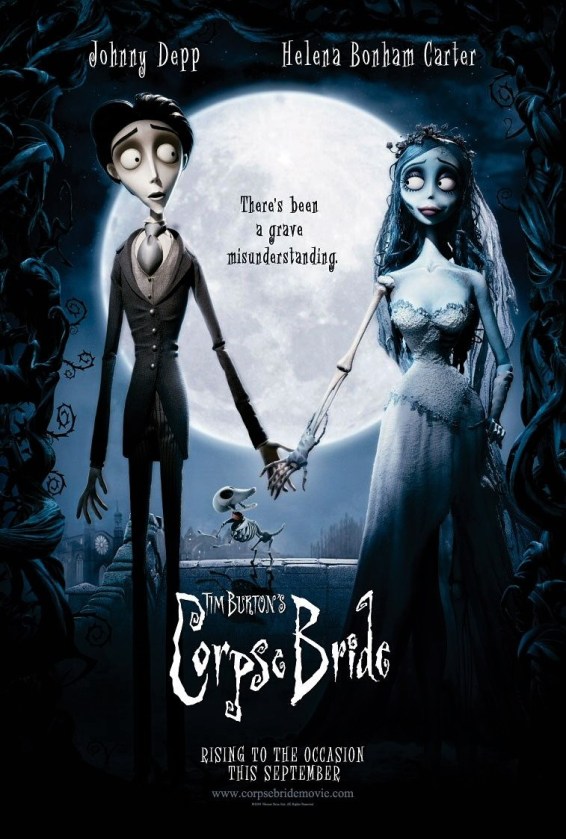
Tim Burton’s twisted story of a man accidentally marrying a deceased bride could certainly be seen as too dark for an animated family adventure by some, but the film actually blends many of its dark scenes with plenty of gothic charm, heart and humour throughout. Making this stop-motion flick not quite one of the director’s best, but definitely a must-watch for fans of the unique director.

Plot Summary: When shy groom, Victor Van Dort, practices his wedding vows in the inadvertent presence of a deceased young woman, she rises from her grave assuming he has married her. Before he knows it, ‘Victor’ soon finds himself in the land of the dead, and now must find a way to return to the land of the living before he loses his still-living wife forever…

Alongside the entertaining narrative, throughout the film there are various different musical sequences, which were surprisingly entertaining considering I’m usually not a huge fan of musical numbers in film. But, I actually found many of the songs throughout the film actually added to the plot and gave the film another creative element which worked really well when combined with the brilliant original score by Danny Elfman.

Johnny Depp and Helena Bonham Carter portray ‘Victor’ and his accidental ‘Corpse Bride,’ alongside the supporting cast of Emily Watson and Paul Whitehouse. Who, are all terrific, with the two leads in particular having pretty some great chemistry with each other, which really added to some of the romantic scenes throughout runtime (especially when it comes to an animated film). The cast also features Richard E. Grant, who portrays the villainous, ‘Barkis Bittern,’ perfectly, coming across as very sly, rude and intelligent from start-to-finish.

The cinematography by Pete Kozachik is pretty effective considering his previous work is usually far from the realm of stop-motion animation, as although there is definitely room for improvement, the cinematography is interesting enough to keep the viewer engaged throughout the film’s story.

Without a doubt, the original score by Danny Elfman is definitely one of the best elements of the film, as well as being one of my favourites for a Tim Burton flick, as while not quite on the level of the original ‘Batman’ or ‘Edward Scissorhands,’ for example, the entire soundtrack still perfectly captures the creepy tone of the film, as well as many of it’s more emotional moments, all adding to both an extremely memorable and beautiful score. Especially the tracks; ‘Main Titles’ and ‘End Credits Pt. 1,’ which are my two personal favourites from the film.

The stop-motion animation throughout the film is simply outstanding, as each character’s unique design influences their movements, with many of the characters having very interesting and over-the-top designs which perfectly fit within the world of a Tim Burton story. The film also has an unexpectedly ranged colour palette, as in addition to the usual dark Burton-esque colours. The film surprisingly also uses a large range of bright greens, purples and reds in a few scenes, which all really help the film stand out, and give a little more light to many of the miniature sets and various characters.

In summary, while I didn’t expect to enjoy ‘Corpse Bride’ as much as I did, the film’s fantastic stop-motion animation, great humour and emotional scenes all topped with the unique Tim Burton style, I’d say the film is a pretty solid watch aside from the occasional cheesy joke or scene. Final Rating: 8/10.
corpse_bride_xlg

Fifty Shades of Grey (2015) – Film Review

Based on the romantic novels by E. L. James, ‘Fifty Shades of Grey’ was the first instalment of the now-enormous franchise, as despite myself definitely not being the film’s target audience, the film itself is a near-complete disaster in regards to both it’s writing, acting and general filmmaking, as unless you’re looking for a weak romantic story with bland performances, uninteresting characters and one of Danny Elfman’s weakest original scores to date, this is not the film for you.

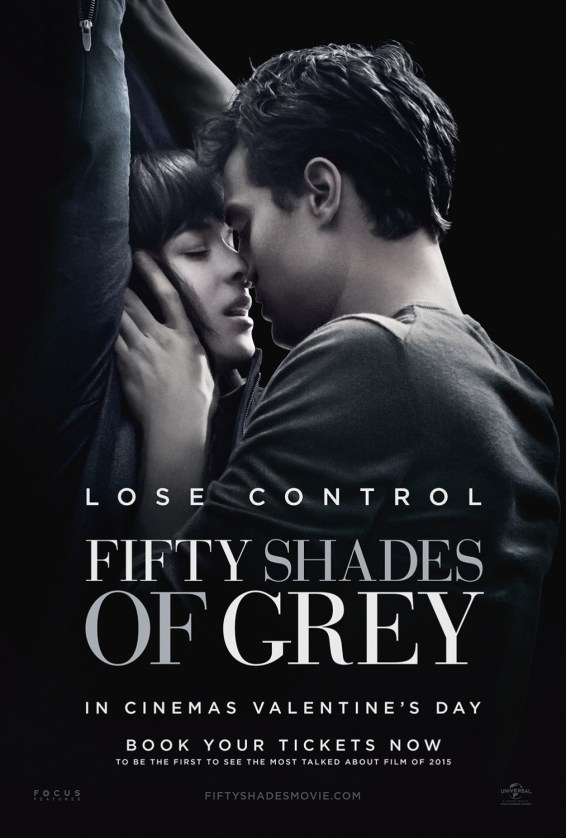
Plot Summary: When literature student ‘Anastasia Steele’ goes to interview billionaire ‘Christian Grey,’ she discovers an attractive yet troubled man, soon leading her to reveal more of herself, as she later desires to be with him, despite his stalker-like tendencies…

‘Fifty Shades of Grey’ is one of those few films that turned itself into a successful series purely though pulling in its specific type of audience, as the film doesn’t really have has nothing to offer besides the occasional sex scene or mundane romantic moment, which really left me pondering what many viewers actually got out of the overall experience, as take those elements away, and the film truly has very little left, and I can’t really say I feel compelled in any way to continue on with the series after watching the first instalment.

Dakota Johnson and Jamie Dornan portray the main couple; ‘Anastasia Steele’ and ‘Christian Grey,’ with the supporting cast of Eloise Mumford, Jennifer Ehle and Victor Rasuk. All of which give very dull performances throughout, especially with the lack of characterisation between them other than ‘Christian’s overly dramatic backstory. This is also where one of my biggest issues with the film comes into play, as Jamie Dornan as ‘Christian Grey’ could easily be seen as a dangerous psychopath throughout the film, as his performance genuinely gave me a feeling of unease whenever he is on-screen. Unfortunately, however, I don’t feel this is what the filmmakers intended, and I couldn’t help but think of the huge shift in tone if ‘Christian Grey’ was older and less attractive.

Seamus McGarvey handles the cinematography throughout the film, which despite not being anything incredibly impressive, the film does have the occasional pleasing shot throughout its runtime, this also applies to the lighting throughout the film. However, this doesn’t improve the film much overall, as the writing within ‘Fifty Shades of Grey’ is without a doubt one of its worst aspects. Resulting in many scenes becoming unintentionally hilarious or extremely cheesy, especially when the film is attempting to catch the viewer off-guard with its dialogue. Interestingly, during the filming of the film’s various sex scenes, remote-controlled were utilised so that the set could be more private for the actors, which is actually quite a creative way around the problem of the cast feeling incredibly awkward due to the huge number of film crew watching nearby.

Despite being a composer I usually adore, the original score by Danny Elfman is also very bland, as the score throughout the film always feels out-of-place and isn’t memorable in the slightest. The film also uses a variety of songs throughout its story, many of which being remixes of modern pop songs, which again, usually don’t fit the tone of the film even remotely. Yet, this could also be due to the film’s minimal direction, as director Sam Taylor-Johnson (Nowhere Boy, Districted – Segment: Death Valley, A Million Little Pieces) hasn’t directed anything extraordinary of note either before or since ‘Fifty Shades of Grey’s release.

Although only a small element, one slightly redeeming aspect of the film I actually did enjoy is the film’s colour palette, as throughout the narrative a variety of locations are given grey walls and floors, with ‘Christian Grey’ also wearing grey clothes alongside some other grey-coloured furniture within his apartment. All of which plays into the theme of ‘Christian Grey’ being in constant control of ‘Anastasia’ whenever she is in his apartment. But given the rest of the film, this was more than likely accidental.

In summary, ‘Fifty Shades of Grey’ is a film that will only appeal to the audience that has most likely already seen the entire trilogy, as the direful performances, awful writing and forgettable original score all leave the film with very little to offer, as the constant sex scenes and sufficient cinematography and lighting simply aren’t enough to carry the story through, resulting in a film that soon doesn’t even understand what its purpose was to begin with. So, I suggest you definitely give this one a miss, as this boring experience simply isn’t worth its your time. Final Rating: 2/10.

fifty_shades_of_grey_ver5_xlg

Scott Pilgrim vs. The World (2010) – Film Review

One of my all-time favourite films, my favourite Edgar Wright flick, and a film I’d always recommend to any film fan. ‘Scott Pilgrim vs. The World’ is a super stylised, incredibly fun action-comedy, utilising some great CG effects along with brilliant editing and writing, I honestly can’t see anyone not enjoying this well-crafted piece of filmmaking.

Plot Summary: ‘Scott Pilgrim,’ an unemployed twenty-three-year-old gamer in a going nowhere garage rock band, while dating an underage seventeen-year-old high school girl; ‘Knives Chau,’ he comes across the girl of his dreams. That is, until he discovers that he must defeat her seven evil exes in order to win her heart…

This over-the-top concept for a narrative is taken from the comic book series of the same name, and provides an insanely fun, hilarious and surprisingly emotional story. Edgar Wright truly directs the film with all his creativity and charm, using the ‘comic book nature’ of the story to its full advantage, with every scene usually containing many visual jokes or comic book like effects, mostly inspired by ‘Scott’s eternal love for video games, music and comic books.

Speaking of ‘Scott Pilgrim,’ he is portrayed expertly here by Michael Cera, coming across as awkward, funny and charismatic from beginning to end. The rest of the cast are also fantastic, however, with Mary Elizabeth Winstead, Kieran Kyle Culkin, Ellen Wong and Jason Schwartzman all being great within their roles. Truly giving life to their characters, and bringing Edgar Wright’s dialogue to another level. I also personally enjoyed Chris Evans as ‘Lucas Lee’ (the second evil ex), as he always manages to get an enormous laugh out of me every watch, but this isn’t to say all of the evil exes aren’t given their own distinct personalities and fighting styles.

The cinematography by Bill Pope is very well done throughout the film’s runtime and greatly adds to the already impressive editing style. Once again similar to the CG effects, the cinematography and editing are also used for comedy many times throughout the film. Many techniques like these really help the film feel fresh and really fit with the tone, ‘Scott Pilgrim vs. The World’ also has the usual bright colour palette to be expected from this director, this also backs up the tone very well and feels reminiscent of the comic book series in a few shots.

Although the original score by Nigel Godrich is heavily overshadowed by a great choice of songs, very similar to Edgar Wright’s other film; ‘Baby Driver,’ every piece of music whether created by the band within the story or not, always seems to fit the scene very well and fits with ‘Scott’s passion for music.

The action scenes are also extremely well-executed throughout the film, utilising stunts very well mixed in with some nice effects. All alongside the interesting locations used throughout the story, as the film also does a great job of combining music with visuals, both in and out of the various action sequences during the runtime.

If I had to give any criticism of this film it would most likely be the reincorporation throughout the story, as some characters/ideas do sometimes appear and then never appear again within the story, can make the film feel a little jolted at times, this along with the pretty quick pacing, the film can sometimes feel a little overwhelming. However, as the story is based on multiple different comic book issues with a similar story structure, I wouldn’t say it’s an enormous problem and can be overlooked.

In summary, ‘Scott Pilgrim vs. The World’ is the pinnacle of a stylised film, in my opinion, making great use of all elements of filmmaking to create a truly incredible experience, along with the enjoyable story and likeable developed characters, there really isn’t much to dislike about ‘Scott Pilgrim.’ Personally, I adore this film to pieces and would always recommend giving it a watch. Final Rating: 9/10.

scott_pilgrim_vs_the_world_teaser_poster_01

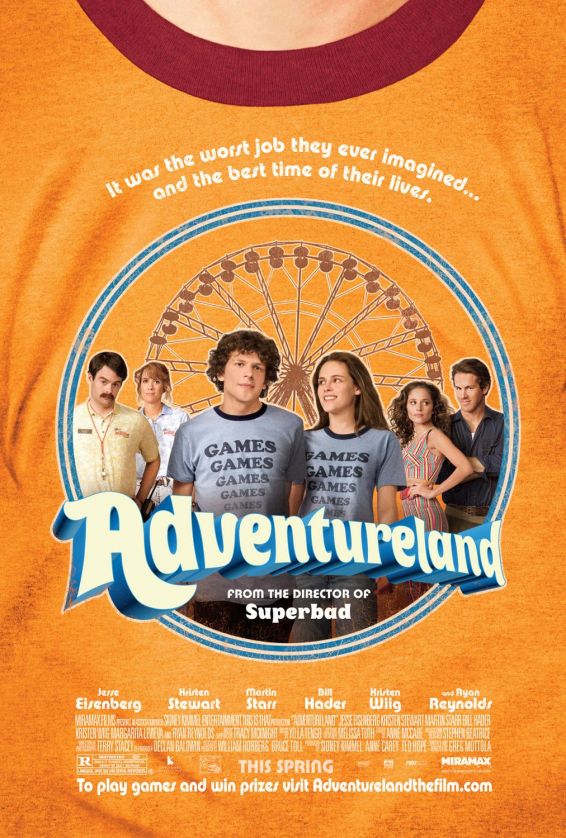
Adventureland (2009) – Film Review

This comedy-drama from 2009 is an underrated classic, in my opinion, as director Greg Mottola (Superbad, Paul, Keeping Up with the Joneses) brings us a simple yet effective story of two young people from different worlds meeting over one memorable summer, and while it may not be as hilarious as some of his other films. I do feel Mottola has brought us a much more emotional story this time around, with the comedy not too far behind.

Plot Summary: In the summer of 1987, teenage college graduate, James Brennan, takes a ‘nowhere’ job at his local theme park as he awaits to leave his hometown. Only for him to soon find it’s the perfect course to get him prepared for the real world, meeting new friends and sending him down a different life path…

For a film like this, it’s crucial that the characters are likeable and are given plenty of development as, in my opinion, drama really only works within film if the characters are developed enough to be invested in. Luckily, the film does succeed here, crafting some very funny and (mostly) realistic characters within only a short amount of time, as the film doesn’t waste screen-time setting up its narrative and characters, but always does so in a way that doesn’t feel too fast-paced.

All of the cast are also pretty great here, as Jesse Eisenberg, Kristen Stewart, Kristen Wiig and Ryan Reynolds all have decent chemistry with each other, and don’t simply treat their characters as joke machines. Despite Bill Hader as the park manager, ‘Bobby,’ definitely being my personal favourite, however, purely through his hilarious dialogue leading to many brilliant moments throughout the runtime.

Being set in a theme park local to the home of the protagonist, this is where the cinematography by Terry Stacey really shines, as the film really uses the different rides, games and attractions as well as the colourful lighting as a beautiful backdrop for many great scenes, as the film is always very inventive with the different locations of the park, exploring new areas in each scene, with some locations even being used to reflect a character’s personality. The film also uses a bright orange, yellow and blue colour palette throughout the story, which really helps to enhance the film’s visuals, and meshes perfectly with the film’s more light-hearted tone.

The original score by Yo La Tengo also helps add to the 1980s atmosphere, being mostly subtle yet still effective in many scenes in spite of its general lack of memorability. Various songs from the ’80s are also used throughout the film, everything from iconic classics to more unknown songs get a short appearance, with all of it eventually adding up to a pretty fantastic soundtrack, as well as another link back to the time period.

The main issue with the film for me is its comedy, as already mentioned. Although the film does have plenty of comedic moments throughout. I simply feel the film has far more in regard to drama than comedy, as the majority of its memorable moments are for more emotional purposes. There was also a subplot between two characters which I personally felt was a little rushed over, but as this was near the end of the film, this may have been done to avoid a lack of focus and conclusion.

In summary, even though ‘Adventureland’ is nothing incredible in relation to its filmmaking, I personally really enjoy the film, as I’ll always find myself turning back to it when in need of a more upbeat comedy-drama, as with a unique location and a great cast of characters, there isn’t really much to dislike here. Although some of the film’s comedy could be improved, I wouldn’t say this drags the entire film down. Check this one out, if you can, as I feel it really deserves more attention from audiences. Final Rating: low 8/10.

adventureland_xlg

The Shape of Water (2017) – Film Review

Without question one of my favourite films from director Guillermo del Toro (Hellboy, Pacific Rim, Crimson Peak), ‘The Shape of Water’ is for sure not a film that everyone will enjoy, but for those who do, this strange story of a woman falling in love with an otherworldly fish creature inspired by the horror classic; ‘Creature from the Black Lagoon,’ will truly push visuals and storytelling to their limits. Combining some outstanding cinematography with stunning make-up effects and plenty of absorbing performances from Sally Hawkins, Doug Jones and Michael Shannon, all equalling to one truly incredible cinematic experience.

Plot Summary: In the midst of the 1960s, inside a high-security government facility, lonely cleaner, ‘Elisa,’ is trapped in a life of silence and isolation, stuck in a familiar and mundane routine. But, when the facility she works within captures a mysterious fish creature in order to study its unique physiology, ‘Elisa’s life changes forever as she becomes more and more attached to the creature…

‘The Shape of Water’ is undoubtedly a Guillermo del Toro film through and through, as with another director at the helm, I could definitely see this film not working, as the completely bazaar plot is no doubt an instant turn-off for some viewers. But, del Toro truly brings his ‘A’ game here, bringing every inch of his creativity and passion to the film. And, as such, the film is an absolute pleasure to watch from beginning-to-end, which is even more impressive considering both of the film’s protagonists, a.k.a. ‘Elisa’ and ‘The Amphibian Man,’ are completely mute for the entirety of the runtime. In fact, one of Octavia Spencer’s favourite things about the film was that by the main couple being mute, most of the dialogue comes from a black woman and a closeted gay man, who would’ve both experienced real oppression during the 1960s setting of the film.

Despite actor Doug Jones being in heavy make-up prosthetics to portray ‘The Amphibian Man’ for all his screen-time, he actually is able to invoke a variety of emotions, and shares plenty of chemistry with his co-star Sally Hawkins as ‘Elisa,’ with the supporting cast of Michael Shannon, Richard Jenkins, Octavia Spencer and Lauren Lee Smith also being surprisingly excellent given their character’s limited time on-screen. As well as the marvellous cast, the writing throughout the film is also fantastic, as del Toro writes the screenplay almost like poetry. Forming a romantic bond between the two main protagonists as the film progresses, all the while integrating plenty of social commentary on the time-period, backing-up the film’s main theme of what makes us different, whether that be because we are deaf, blind or possibly, not even human, which I personally found very compelling.

The phenomenal cinematography by Dan Laustsen elevates ‘The Shape of Water’ drastically, which contains an unbelievable amount of beautiful shots throughout the narrative, with the film’s dark blue/green colour palette only helping to add to the film’s visuals. Furthermore, many shots within the film play into aspects of various characters, most notably, ‘Elisa’s isolated life, displaying the facility where she works as a cold, dirty and segregating place.

Additionally, ‘The Shape of Water’ adds another remarkable score to composer Alexandre Desplat’s already-overflowing catalogue of work, as this unusually-beautiful romantic score with an almost French-esque feel, is very impactful in many moments throughout the film. Particularly with the opening scene however, as the opening shot glides slowly through a flooded room set to the my personal favourite track of the film; ‘The Shape of Water,’ preparing the viewer for the strange story that lies ahead. Desplat also provided recordings of his own whistling to be featured in the soundtrack, as del Toro wanted the score to feature whistling so it could contrast with the film’s many scenes that feature water.

One of my personal favourite elements of the film is definitely the make-up and prosthetics, as every second of screen-time we get with ‘The Amphibian Man’ the make-up effects look completely flawless, with many aspects of the strange and original design being inspired by real animals. Which is nothing new to this director however, as del Toro has always been known for creating incredible creatures of dark fantasy, such as in ‘Pan’s Labyrinth’ and the ‘Hellboy’ series. Although used less than what many may initially think, the CGI throughout the film is also very effective, amplifying many of the small effects around the creature rather than distracting from (or overpowering) them.

In summary, I honestly believe ‘The Shape of Water’ may be one of my all-time favourite films, and certainly one of favourite films of 2017, as the relationship between the two protagonists and the journey their relationship represents is truly memorising from start-to-finish. Backed-up by some amazing cinematography, a great original score as well as the make-up and CG effects, whilst perhaps not a film for every cinephile, it is an extremely well-made film regardless, and one that I would surely recommend. Final Rating: 9/10.

shape_of_water_ver3_xxlg