Terrifier (2016) – Film Review

“What? Did You Think He Was Gonna Hack Me up Into Little Pieces or Something?” – Dawn

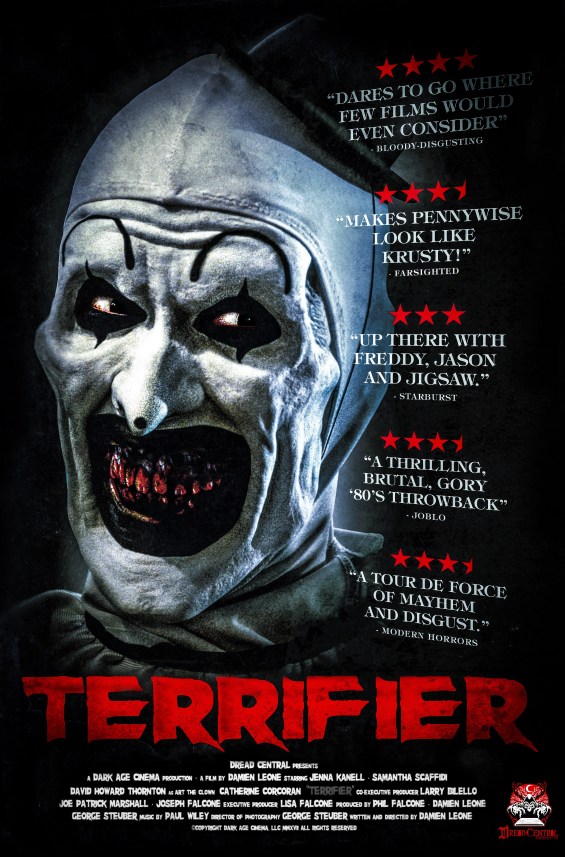
Grisly, taut and seasonally atmospheric, Terrifier, released in 2016, aims to pay homage to the inexpensive slasher flicks of the 1980s, relishing in the same simplistic approach and over-the-top gore that classic horrors like Friday the 13th and Blood Harvest specialised in. And while the film does admittedly fall prey to many of the usual limitations low-budget horrors tend to have, Terrifier is preserved through a genuinely terrifying performance from David Howard Thornton as Art the Clown, in addition to plenty of fantastically gruesome effects and a willingness from writer-director Damien Leone (All Hallows’ EveFrankenstein vs. The Mummy) to push on-screen violence to its limit.

Plot Summary: On Halloween night, Tara Heyes and her best friend, Dawn, find themselves in the wrong place at the wrong time as they become the unfortunate marks of Art the Clown, a demented serial killer with a morbid sense of humour…

With coulrophobia (the name allocated to the fear of clowns) being one of the most common phobias in the world, it makes sense that the horror genre would try to capitalise on this widespread fear of individuals with white face paint, comical horns and oversized shoes. And if there’s one area Terrifier more than thrives in, it’s fully realising this common phobia as Art the Clown is consistently frightening. The film jumps from moments of complete silence as Art stares down his victims to Art violently murdering the poor souls, showering the sadistic clown’s black and white costume with blood. Terrifier isn’t actually Art the Clown’s first appearance, however, as Damien Leone first introduced the character in his second short film, which not only shared the Terrifier title, but is practically the same storyline just condensed into a brief twenty-minute runtime.

Regarding the characters, the conceited Dawn, somewhat sensible Tara Heyes, and loyal sister, Victoria Heyes, portrayed by Catherine Corcoran, Jenna Kanell and Samantha Scaffidi, respectively, all serve an important purpose within the narrative. Yet, the characters themselves never attain a status beyond generic slasher victim, and although each of the actress’ screams of terror sound as suitably realistic as a director could hope for, the delivery of some lines (specifically from the supporting cast) feels rather clunky. But, the true star of the film is undoubtedly David Howard Thornton as Art the Clown, as Thornton ceaselessly stays in character as the psychotic, clown-dressed murderer, portraying Art as a fun-loving mime whose killings involve a combination of predatory sadism and joyful glee. So much so, that Art will make many audience members nervous purely due to his unpredictability, as the character’s manic actions make it almost impossible to predict what he’ll do next.

On a technical level, Terrifier is top-notch considering its thin budget, as whilst the cinematography by George Steuber is far from groundbreaking, the film has a reasonable amount of creative shots, the majority of which are enhanced by the film’s highly saturated colour palette, thin layer of granularity and scenes primarily lit by natural light, providing the film with an authentic low-budget ’80s appeal. And, as previously mentioned, Terrifier does not hold back when it comes to brutality and depravity, certifying the film as one not for the faint of heart as the gore effects are gut-churning and grotesque, with the amount of labour and detail that has gone into each effect being more than deserving of applause, especially when once again acknowledging the film’s budget, which is estimated to have been around £73,000.

The original score by Paul Wiley is a triumphant blend of 2010 and 1980s horror scores, with tracks such as In Pieces and Clown Car standing as daunting and metallic-sounding pieces similar to many modern horror scores, whereas tracks like Kill Horn and the film’s central theme, simply titled; Terrifier Theme, are reminiscent of the original Halloween score in more ways than one, which by no means a poor comparison when it comes to unnerving horror soundtracks.

These connections to past genre films continue further into the film’s visuals as Damien Leone inserts many explicit nods and visual tributes to everything from Psycho (1960) to Hostel (2005) to everything in-between. And, whilst some may not like when a film relies so heavily on pastiche, it never feels overdone in Terrifier, as the film strikes a satisfying balance between throwbacks and unique ideas, occasionally playing with the conventions of slashers by adding some twists to the killer and final girl dynamic, which will most definitely catch some audience members off-guard.

In summary, Terrifier has plenty of entertainment value should you fit into the film’s principal audience as this modern slasher is an unabashed reminder of the bloodthirsty horror films that populated the 1980s, a.k.a. the kind of nasty flicks that were banned during the video-nasty era. The film has its issue, undeniably, most notably with its shortage of interesting characters and often oversimplified story. But, Terrifier does make the most of its foreboding atmosphere and unsettling killer. While watching, it also quickly becomes clear that Damien Leone wants Art the Clown to join the ranks of Jason Voorhees and Michael Myers as a horror icon in the future, which I think is more than feasible given his appearance in Terrifier, so I’d say it really depends on how the horror community feel about the film years down the line. Rating: high 6/10.
terrifier-p1080489

Hellraiser (1987) – Film Review

“Oh, No Tears, Please. It’s a Waste of Good Suffering!” – Pinhead

Written, directed and based on the novella; The Hellbound Heart by Clive Barker (NightbreedLord of Illusions), 1987’s Hellraiser is truly a fiendishly unique vision. Offering a discomfiting and sadistically smart alternative to mindless gore, this classic horror rarely has a tiresome moment, utilising its outstanding practical effects and an onslaught of intriguing ideas to great effect, to the point where the film sequentially became a victim of its own success, becoming so influential that it not only spawned a decades’ worth of poor imitations, but even its own series of continuously disappointing sequels. Nevertheless, it can’t be denied that the original Hellraiser is an unforgettable excursion into a netherworld of monsters, murder and disloyalty.

Plot Summary: When Kirsty’s father, Larry, and stepmother, Julia, move into Larry’s childhood home, Julia discovers the newly resurrected, partially-formed body of her brother-in-law, Frank, a sexual deviant who lost his physical form after solving a supernatural puzzle box which summons a group of multi-dimensional demon sadists known as the Cenobites. Now, to reclaim his body, Frank convinces Julia, his one-time lover, to lure unsuspecting men back to the house so he can use their blood to revitalise himself and escape the clutches of the demonic beings pursuing him…

One of the central concepts of the Hellraiser franchise; a seemingly innocuous puzzle box that is, in reality, a gateway to Hell, has its basis in the urban legend of The Devil’s Toy Box, which concerns a six-sided cube constructed of inward-facing mirrors. According to the legend, individuals who enter the structure will undergo disturbing phenomena that will simultaneously grant them a revelatory experience while permanently warping their minds. This story has heavy ties to the idea of insanity, which is certainly prevalent throughout Hellraiser, as the film, similar to the rest of Clive Barker’s work, is very surreal in nature. However, unlike the rest of Barker’s work, the budget for Hellraiser was astonishingly low at around £730,000. Whilst this was most likely due to Barker’s lack of filmmaking experience (only having directed two short films at the time), Hellraiser quickly earned over £14 million, immediately cementing Barker as a promising writer and director in addition to establishing Hellraiser as a series we’d still see years down the line.

The superb cast of Andrew Robinson, Clare Higgins, Sean Chapman and Ashley Laurence all effectively serve their purpose within the narrative, as Hellraiser admirably values its characters more than many other horror films, developing each of the family members, so they feel both genuine and distinct from one another, ensuring the pivotal plot threads of adultery and Julia’s subsequent guilt remain riveting. Then, of course, there is Doug Bradley as the film’s icon, Pinhead, who, despite being kept in the background for a majority of the runtime, gives a solid performance, especially considering Pinhead, like the rest of the Cenobites, has very limited dialogue and screen-time.

Speaking of iconography, while Hellraiser no doubt has its fair share of recognisable shots, much of this iconic imagery isn’t due to the cinematography by Robin Vidgeon, but more so because of the film’s masterful creature, costume and prop design. As the camerawork itself, although dynamic, often just falls back on conventional close-ups and mid-shots, with the occasional zoom or tilt thrown in to further magnify the effects on-screen.

For the original score, Clive Barker originally wanted the experimental electronic music group, Coil, to compose music for the film. But, when that notion was rejected, the film’s editor Tony Randel, suggested composer Christopher Young as a replacement. And truthfully, I feel this was for the better, as Young’s score perfectly lends itself to the dreamlike, otherworldly tone of the film, with the opening theme; Hellraiser, standing as a grand orchestral piece with a dark, fairytale-like undertone, whilst tracks like Resurrection and The Lament Configuration have an unnerving, almost gothic quality to them.

Yet, it’s undoubtedly the artful designs of Hellraiser that make the film so unique, with the grotesque and somewhat fetishistic designs of Pinhead and the other Cenobites being particularly striking as Barker drew inspiration for their diverse looks from punk fashion, catholicism and visits he took to S&M clubs in New York and Amsterdam. Interestingly, in spite of the character’s reputation, in the novella, Pinhead is present but is not the lead Cenobite. The Female Cenobite, the Chatterer and the Engineer, all have more prominent roles, but as a result of the visually impressive yet extremely restrictive prosthetic make-up for the respective characters, Pinhead took point on account of Doug Bradley’s prosthetics allowing for the most facial movement, promptly resulting in Pinhead becoming the face of the horror franchise.

In summary, Hellraiser is truly one of the most gruesome, captivating and indelible horror films of the 1980s, even though it’ll no longer leave audiences chilled to the bone, just as it did way back when. Despite rarely receiving the attention it deserves, Hellraiser is not only an exceptionally eerie slice of ’80s pop culture, but an important entry in the history of cinema, as not only did the film force ostentatious critics to accept that the horror genre could have artistic weight, but it also pushed the boundaries of practical effects, with many of its costumes, animatronics and prosthetic make-up effects even outshining today’s CG efforts. Rating: 8/10.

hellraiser_xxlg

Brightburn (2019) – Film Review

“Maybe There Is Something Wrong With Brandon. He May Look Like Us, but He’s Not Like Us!” – Kyle Breyer

An inversion of the illustrious Superman origin story, Brightburn, released in 2019, is a film with an aggressively simple pitch, essentially boiling down to; “What if the Man of Steel was Humanity’s Oppressor Rather Than its Saviour?” And, even though the film doesn’t fully follow through on that enthralling premise, predominantly due to its sketchy screenplay and an often botched sense of dread, Brightburn crossbreeds horror tropes with superhero staples in an effective enough fashion to at least offer something unique for enthusiasts of both genres in the face of its many defects.

Plot Summary: After a difficult struggle with fertility, Tori Breyer’s dreams of motherhood become a reality when a child from another world crash-lands on her farm, later naming the boy; Brandon Breyer. But, years later, as Brandon nears puberty, a darkness begins to manifest within him, leading Tori, and her husband, Kyle, to become overwhelmed with terrible doubts concerning their son, doubts that soon put them in grave danger…

Directed by David Yarovesky (The HiveNightbooks) and written by James Gunn’s brother and cousin, Brian Gunn and Mark Gunn, respectively. Brightburn certainly succeeds in its primary goal: setting up an almost identical scenario to Superman’s origin story before taking the narrative in a far darker direction. And the film clearly has no pretences with what it’s drawing from, as Brightburn actually shares many similarities to Superman’s comic book run beyond just its story. From Brandon Breyer’s name following the comic book convention of superheroes with alliterative first and last names, such as Clark Kent, Peter Parker and Bruce Banner, to the story being set in Kansas, the same state where Kal-El first touched down and later grew up to become Superman. The film’s connections to the Caped Wonder are ever-present, even extending to the costume design in certain scenes as Brandon wears combinations of blue, red and yellow, the principal colours of Superman’s iconic outfit. Still, all this association doesn’t fix what is Brightburn‘s most substantial problem; its runtime. With the plot being squeezed into a very brief ninety-one minutes, the film is unable to waste any time, jumping straight into Brandon discovering his abilities and embracing his detrimental side. Thus, the story allows for little emotional investment, with much of the first act being nothing but scene after scene of what seems like trailer-made moments.

When it comes to the cast, Elizabeth Banks and David Denman share most of the film’s character-related scenes as the pair portray concerned parents starting to suspect that their blessing from the stars might, in actuality, be a scourge. However, whilst this is an acceptable start for writing your central characters, Tori and Kyle have little nuance and barely any development outside of the love (and eventual doubt) they share for their son. Then there is Brandon Breyer himself, portrayed by the young actor Jackson A. Dunn, who does a great job not only considering his age but also a similar lack of characterisation, as once Brandon’s twelfth birthday arrives, his sociopathic behaviour suddenly arises, morphing him from an innocent child to a homicidal supervillain so swiftly it appears absurdly forced, even if Dunn’s performance does help to make the transition feel slightly more believable through his complete absence of emotion during the latter half of the film.

Aside from some pleasant visual nods to further associate itself with the character of Superman, including a sweeping rural setting and accompanying farmhouse, interchangeable with that of Clark Kent’s humble abode. The cinematography by Michael Dallatorre is fairly unremarkable, usually just displaying shots without much thought or creativity put into them. With that said, many of the film’s CG effects are solid, especially when taking into account the film’s budget, which was considerably smaller than most modern superhero blockbusters.

Despite being described as a merging of superhero and horror soundtracks, make no mistake that the bulk of the original score for Brightburn, composed by Tim Williams, is firmly entrenched in the horror genre, with tracks usually starting out slow and composed before warping into something far more nightmarish, likely symbolising Brandon’s gradual corruption from the evil that dwells within him. This idea is further illustrated by the unnerving sound design as the more Brandon falls into the abyss of immorality, the more distorted voices he begins to hear, each speaking an uncanny extraterrestrial language.

Unfortunately, between the two previously mentioned genres that Brightburn attempts to represent, the film undoubtedly appears underbaked on the horror side of things as Brightburn lazily relies on clichéd horror concepts like flickering lights and jolting curtains. Meaning that it’s a rarity the film actually tries to build tension or have any frightening occurrences outside of loud jump-scares or the admittedly gruesome ways Brandon disposes of his victims.

In summary, between the red cape and blazing heat-vision, Brightburn is a film that knows exactly what it is; an immoral retelling of an established superhero’s beginnings, complete with plenty of violence and an abundance of horror trickery. Yet, all of the film’s spectacle ultimately feels meaningless when compared to its deficiency of strong characterisation and emotional depth. As such, a majority of the film’s most entertaining moments come at the expense of understanding any of the characters on a deeper level, consequently leaving Brightburn a film that never manages to strive past the subversive elevator pitch it was originally conceived as. Rating: high 5/10.

brightburn-p1056052

Slender Man (2018) – Film Review

“He Gets in Your Head Like a Virus…” – Wren

Releasing years after the internet icon had long since passed his prime popularity, the first mainstream film for the supernatural entity, Slender Man, was released to little praise from critics and audiences alike in 2018, not only due to the film’s abysmal quality, but also as a result of the negative publicity surrounding the Creepypasta creation following the attempted murder of a twelve-year-old Wisconsin girl in 2014, which was supposedly catalysed by the urban legend. The hostile reception to the character got so severe that production companies, Sony and Screen Gems, were reportedly nervous about releasing the film, subsequently leading the companies to release the occult horror with hardly any promotion and no early critic screenings. And yet, in spite of all those difficulties, the actual film is nothing but forgettable as Slender Man sands away virtually all of the mystery, dread and subtlety that made the character so intriguing, to begin with.

Plot Summary: In a small town in Massachusetts, a group of teenage friends fascinated by the internet lore of the Slender Man attempt to disprove his existence by summoning him with an online ritual. But, one week later, after a member of their group mysteriously disappears, the teens begin to realise that the urban legend of the Slender Man is all too real…

Directed by Sylvain White (Stomp the YardThe LosersThe Mark of the Angels – Miserere). The character of Slender Man first appeared on the Something Awful forums in 2009, emerging in a series of photographs edited to depict a tall, humanoid entity unnoticed by others but almost always surrounded by, or near, children. Since then, many have speculated regarding the origins of the internet icon, the earliest reference to a similar creature being in Der Großmann, a German folk tale written in 1702. But, of course, none of this was used for the film. Instead, Slender Man simply ignores all of the character’s rich history and origin, founded through the Marble Hornets web series, the fan-made video games and the bottomless trove of fan fiction, in favour of telling a formulaic and derivative story surrounding a group of teens watching an ‘ominous’ video online before then vanishing into the nearby forest one-by-one.

Naturally, this issue could’ve been concealed with a strong cast and well-written characters, but while Julia Goldani Telles, Joey King, Jaz Sinclair and Annalise Basso try to make their presence felt, especially King as Wren, a soulful waif sporting a punk choker, and Sinclair as Chloe, who beams with energy until she watches in unflinching horror as Slender Man records himself entering her house. The teens are so poorly defined that they are practically interchangeable, so when Slender Man starts abducting the teens, who eventually begin to form a plan and intend to protect each other, it essentially means nothing to the audience as they are entirely disposable protagonists.

The film’s cinematography by Luca Del Puppo, fortunately, fairs a little better, as the camerawork allows for a reasonable amount of attractive shots, particularly in the first act. Nevertheless, this is soon spoilt by the film’s atrocious colour palette, as there isn’t a single shot throughout the runtime not drenched in aggressively drab blues and greys. By that same token, even though I strongly subscribe to the belief that darkness effectively lends itself to building suspense within the horror genre, shots in Slender Man are often layered with so many coats of black that it becomes almost impossible to tell what’s occurring in some scenes, an annoyance that is only made worse by the film’s pitiful CG effects, repeatedly uninteresting set pieces and collection of deafening jump-scares.

Surprisingly composed by Brandon Campbell and the acclaimed Ramin Djawadi, the original score for Slender Man manages to be slightly eerier than the visuals through its heavy use of string instruments, creating as daunting of an atmosphere as it possibly can through tracks like Him and Library. The sound design also adds to the film’s soundscape through the use of thundering cicada buzzing and menacing woodland ambience, both of which are efficacious, even if repetitive.

Considering that the Slender Man character is infamous for tragically invoking an attempted murder in real life (in addition to being blamed for many underaged suicides). It’s almost inconceivable that a high-risk film such as this could also be so inaccurate when it comes to the character it’s based upon, as the mythology for this incarnation of the mysterious, otherworldly entity almost seems to be fabricated on the fly as Slender Man possesses multiple abilities he was never known to have had previously, including mind control, reality/technology manipulation and more.

In summary, the inherent creepiness of Slender Man never comes across in this cinematic interpretation, which despite having a runtime of only ninety-one minutes, feels as if it lingers on for over three hours. That being said, it’s not as if more resources would’ve improved the film, as the main fault of Slender Man lies within its depiction of the titular character, with the filmmakers completely losing sight of what made the internet icon so unnerving in the first place; the trepidation in what you don’t see him do. And, as a result, the film gives you plenty of reasons to put your hands over your eyes, but almost no incentive to peek through your fingers. Rating: 2/10.

slender_man-p1102523

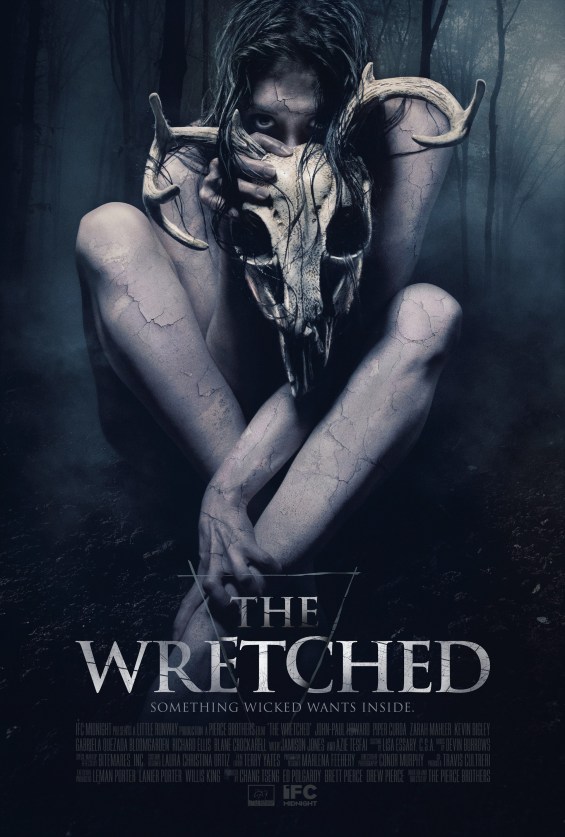
The Wretched (2019) – Film Review

“I Like This House…” – Sara

When it comes to the horror genre, sometimes you don’t desire a film that sets out to rewrite the rules of spine-tingling storytelling. Instead, you occasionally find yourself simply wanting to dim the lights and ensconce with a low-budget popcorn flick, and 2019’s The Wretched is firmly one of those films. With appealingly modest ambitions, The Wretched utilises its cast of unknowns, unique creature design and admirable emphasis on body horror as effectively as its thin budget will allow. And, even though the film is far from a game-changer for the realm of supernatural horror, The Wretched still manages to overcome most of its flaws to serve as an engaging, if fairly foreseeable, tale of witchcraft and body-snatching.

Plot Summary: After being sent to live with his father for the summer on account of his parents’ imminent divorce, defiant teenager Ben begins to suspect there is something wrong with his father’s next-door neighbour, eventually discovering that there is an execrable entity lurking beneath her skin…

Originally titled; Hag, before being changed following negative feedback from test audiences. The Wretched was certainly a departure for writer-director duo Brett Pierce and Drew T. Pierce, as the pair’s prior film, Deadheads, released in 2011, was a zombie road-trip comedy. Even so, this leap in tone and genre rarely seems to impair The Wretched from a directorial standpoint, as the film leaps headfirst into its grim tone and horrifying visuals right from the opening scene. And, whilst the film struggles to balance its plot threads from time to time, it quickly becomes clear that the central source of inspiration for the story was the low-budget creature-features of the 1980s, tied together with a desire to create a newfangled interpretation of witchcraft and revitalise hags into terrifying antagonists.

Acting out since his parents’ separation, seventeen-year-old Ben, competently portrayed by John-Paul Howard, is the protagonist. And, while it’s always challenging to portray an angsty teenager, due to the concern of said character becoming incredibly abrasive, Howard pulls it off successfully, portraying Ben as a frustrated and confused adolescent struggling to come to terms with his altered life. Furthermore, The Wretched even aims to justify the common horror trope of parents not believing their children once the supernatural occurrences begin, as when Ben attempts to explain the situation to his father, Ben’s past transgressions of trespassing and stealing medicine come to light, prompting his father to dismiss his claims as either lies or delusions. The supporting cast, including Piper Curda, Jamison Jones, Azie Tesfai and Zarah Mahler, is also serviceable in their minor roles as members of the lakeside community where his father resides.

Shot near Omena and Northport, Michigan, close to the Pierce brothers’ hometown, the cinematography for The Wretched by Conor Murphy often ranges in quality as some scenes are beautifully shot, with a strong emphasis on close-ups, whereas others (usually during conversations between characters) merely rely on dull, hand-held shots. With that said, when working in synch with each other, the camerawork and lighting do a remarkable job of masking the creature early on in the story, only giving the audience brief glimpses of the witch in her contorted, feral state before later displaying the film’s full range of prosthetic make-up and practical effects.

Excluding the ominous theme for the titular witch heard in the tracks; Woods and The Wretched Appears, both of which feature avant-garde strings led by a manipulated sarangi, the original score by Devin Burrows admittedly has some room for improvement as tracks, like Don’t Let Her In, Honey… Beer? and Broken Window repeatedly overuse strings and brass horns to the point where the tracks become too disruptive to the narrative, often mismatching with whatever shot is on-screen.

Of course, the witch herself is unquestionably the film’s primary draw, and The Wretched presents its titular creature with pride, making sure to include all of the most off-putting aspects of the creature’s devilish design and malicious nature. And, whilst the witch isn’t grounded in any specific mythology, with the screenplay only providing minor hints towards its origins, the witch’s carved symbols, salt fragility and quasi-religious shrines all give the creature an element of personality when outside of its human disguise. Speaking of which, the way the creature is presented when inside a body is just as disturbing as we, the audience, along with Ben, observe how the witch practically lives the life of the person whose skin she now inhabits, caring for her decaying body the best she can as the Wretched attempts to act human, each day climbing closer to feasting on the unfortunate children of the mother she is impersonating.

In summary, although The Wretched isn’t as polished as it could be in certain areas, I feel this well-paced horror flick will please most genre fanatics, even in spite of its occasional visual continuity errors, corny dialogue and lack of focus regarding the dual plot lines. The Wretched still delivers on its promise of a skin-crawling creature-feature reminiscent of ’80s cult classics. The film is also one of the few horror films I’d personally like to see a sequel or prequel to someday, as I feel the concept of a witch that feeds on the forgotten is an intriguing idea that doesn’t reach its full potential here, but undoubtedly could in a more refined film. Rating: 6/10.

wretched_ver2_xxlg

Captain Phillips (2013) – Film Review

The story of Captain Richard Phillips, the Massachusetts seafarer who was kidnapped by four Somali pirates during a routine cargo ship excursion, took the world by storm in 2009, as the then fifty-four-year-old captain was taken hostage, threatened and beaten for over five days before being rescued by Navy SEALS. So, it was inevitable that a film adaptation would soon be in the works once Phillips returned home, and who better to direct the film than Paul Greengrass (The Bourne Supremacy, United 93, News of the World), a director well-known for turning real-life catastrophes into gripping yet still emotionally investing thrillers.

Plot Summary: Assigned the dangerous task of navigating the unarmed cargo ship: Maersk Alabama, from Oman to Mombasa, Kenya. Captain Richard Phillips and his crew soon see their worst fears become reality when an opportunistic gang of armed Somali pirates seize the American vessel, threatening the crew and demanding a ransom of millions…

Based on the book; ‘A Captain’s Duty: Somali Pirates, Navy SEALS and Dangerous Days at Sea,’ which was written by Richard Phillips shortly after he returned home. Greengrass’ fast-paced and true-to-life treatment of the story fully realises the tense scenario that Richard and his crew once found themselves within, with constant shouting, overlapping dialogue and threats of violence, no one aboard the Maersk Alabama ever truly feels safe, not too dissimilar to the director’s other delves into real-world tragedies with ‘Bloody Sunday’ and ‘United 93.’ Yet, interestingly, Greengrass wasn’t actually the first choice to direct, as Ron Howard was originally supposed to direct the film before he eventually left the project to peruse another 2013 biopic; ‘Rush,’ leaving Greengrass to head ‘Captain Phillips.’

Leading the cast through his resilient performance as Captain Richard Phillips, Tom Hanks does a phenomenal job throughout the film, quickly ensuring the audience emphasises with Richard’s struggle as he internally confronts the idea of never seeing his family again. Upcoming actor Barkhad Abdi is equally remarkable in his role as Abduwali Muse, the captain of the Somali pirates, as despite the actor’s small physique, Abdi is immensely menacing, asserting dominance over the crew in nearly every scene he is in, with even the iconic line; “Look at Me! I’m the Captain Now,” being an ad-lib by Barkhad Abdi. Abdi’s performance is also helped by Paul Greengrass’ strong direction, as Greengrass represents the Somali pirates more as common criminals rather than terrorists, presenting each of them with an element of desperation behind their actions, as if they taking part in illegal and violent schemes in the hope of having a better life in Somalia.

Shot in an almost documentary-like fashion, the cinematography by Barry Ackroyd is both chaotic and fluid, constantly switching focus from one actor to another without hesitation, truly emphasising the panic and tension we see unfolding on-screen. However, whilst this approach is extremely effective when it comes to sequences of the pirates/crew negotiating or being held at gunpoint, the relentless persistence of the hand-held shots does start to become tiresome the further the runtime continues, and especially during the story’s quieter moments, such as the film’s opening scene where Richard and his wife Andrea drive to the airport. Nevertheless, this style of camerawork is in-character with much of Greengrass’ other work, as there’s no denying the director has a fixation with shaky, intimate close-ups.

Furthermore, the original score by Henry Jackman greatly adds to the film in more ways than one, as tracks, like ‘Second Attack,’ ‘End This Peacefully’ and ‘Two in the Water,’ are both foreboding and fast-paced, utilising an endless stream of percussion, sampled strings, occasional ethnic wind solos, and synthetic horn pads that fade in and out, while the film’s final track; ‘Safe Now,’ sounds considerably hopeful in comparison. Yet, this positive outcome is quite surprising, as, during the film’s production, the soundtrack was a fairly problematic area, with legendary composer Hans Zimmer initially being attached before backing down from the project after Greengrass continuously bombarded him with demands for rewrites of the score.

Another impressive aspect of ‘Captain Phillips’ is its set design and set dressing, as although a large portion of the film was shot aboard a real cargo ship, all of the interior lifeboat scenes were filmed inside a replica that was on water at all times, which, according to Tom Hanks, resulted in him being vomited on by numerous crew members while inside the cramped space. But, as disgusting as that may be, it may have been worthwhile, as this enclosed set is where a majority of the film’s third and final act takes place, as the hostage drama transfers to the claustrophobic confines of a hijacked lifeboat floundering toward the Somali coastline, where the story somehow becomes even more nail-biting.

In summary, ‘Captain Phillips’ serves as not only a well-executed, edge-of-your-seat thriller, but also a terrifying reminder of the real-world horrors that lie just outside our front door. With a pair of astounding performances, an intricately crafted original score and a plethora of tense moments, ‘Captain Phillips’ prolonged final act and occasionally ill-suited camerawork hardly diminish what is one of the strongest entries into Greengrass’ filmography, in addition to an excellent biopic for Captain Richard Phillips and his courageous crew. Final Rating: low 8/10.

captain_phillips-p821611

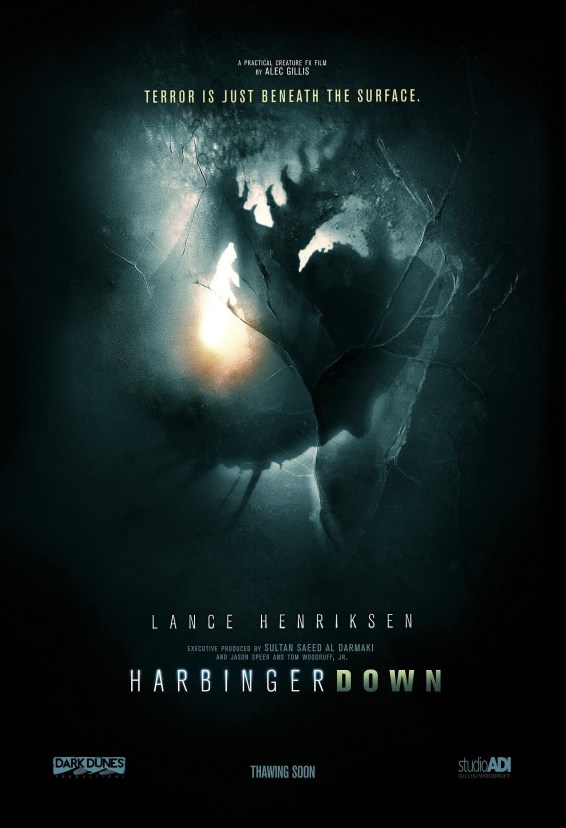
Harbinger Down (2015) – Film Review

In 2010, practical effects company Amalgamated Dynamics (ADI for short) was hired by Universal Pictures to create effects for their upcoming prequel to the 1984 classic; ‘The Thing,’ but just before the film was released, the majority of ADI’s work was digitally replaced by CGI. This decision greatly upset the Amalgamated Dynamics team, especially since ‘The Thing’ wasn’t the first film they had worked on only to later discover their effects had been replaced. So, in response to queries about what became of their effects, the founders of Amalgamated Dynamics uploaded a behind-the-scenes video to YouTube which showcased their original effects, and the overwhelmingly positive response they received began a new phase for the company, as soon after, ADI began a Kickstarter with the intention of creating their own sci-fi-horror, titled; ‘Harbinger Down,’ a film that would exclusively employ practical techniques.

Plot Summary: While studying the effects of global warming on a pod of belugas in the Bering Sea, grad students on a crabbing vessel fortuitously uncover a Soviet space shuttle buried within layers of ice. But, when the ship’s crew bring the Soviet wreckage aboard, they unintentionally release a long-dormant extraterrestrial parasite that relies on the warmth of the human body to survive…

Commonly known by its alternate title; ‘Inanimate,’ ‘Harbinger Down’ was written, directed and produced by Amalgamated Dynamics co-founder Alec Gillis. And although I have a huge admiration for Gillis and his partner Tom Woodruff, Jr. as the duo courageously opposed the mammoth production companies that no longer respected the art of practical effects, ‘Harbinger Down’ frequently suffers as a result of the pairs’ lack of experience when it comes to filmmaking, as is it’s not uncommon to see exaggerated performances, cliché dialogue and messy editing. Furthermore, ‘Harbinger Down’ (like many sci-fi-horrors) takes plenty of inspiration from 1982’s ‘The Thing,’ though in this case, this inspiration is a little too evident in the final film, as many story-beats are either extremely similar or a stark contrast in an attempt to avoid comparisons, such as the creature being maimed by liquid nitrogen rather than fire.

Eminent ‘Aliens’ and ‘Pumpkinhead’ actor Lance Henriksen headlines the film, being by far the most prominent performer present, and suitably gives a stand out performance due to his raspy authority and effortless professionalism. Just like the rest of the cast of forgettable stock characters, however, Henriksen is given very little to work with, only being able to portray his character, ‘Graff,’ as an adept ship captain who cares deeply for his astute granddaughter; ‘Sadie,’ sufficiently portrayed by Camille Balsamo.

The film’s cinematography by Benjamin L. Brown does allow for one or two attractive shots, yet because of its overreliance on hand-held techniques often feels frantic, again playing into the idea of Gillis’ deficiency of filmmaking experience, as whilst Alec Gillis may know how to fabricate outstanding effects, he doesn’t seem sure how to capture them on film or hide them when necessary. As such, the effects on-screen soon become gluttonous, holding on certain shots until the point when the effects begin to appear fake and rubbery. That being said, the film’s setting and production design are brilliant without fault, as the film manages to craft the convincing illusion that the characters are all confined to ‘The Harbinger,’ a vessel that has indeed been set adrift on frigid waters.

Nowhere close to memorable, Christopher Drake’s intense original score does at least add to the film’s atmosphere, but where the score succeeds, the sound design utterly fails. As, in addition to numerous areas of the ship utilising time-worn sound effects, the story’s shapeshifting creature rarely makes any sound beyond generic grunts and growls, none of which are menacing nor daunting, and considering the film had a budget of over £250.000, refining the sound design couldn’t have been that arduous of a task.

Needless to say, all the traction that ‘Harbinger Down’ gained was likely on account of its practical effects, which make use of everything from animatronics to prosthetic make-up to stop-motion and even miniatures, all of which are marvellous to see, particularly for those who enjoy films with little reliance on CGI, as the film’s creature relies on no digital animation whatsoever outside of rod/rig removal. However, as mentioned previously, the way some of these effects are presented occasionally takes away their impact. Another issue arises with the creature design itself, as every form the creature takes is entirely different from its prior appearance, so the creature never has the chance to fully borrow into the audience’s mind as a recognisable extraterrestrial antagonist.

In summary, ‘Harbinger Down’ ultimately falls somewhere between a cheesy SyFy Channel flick and a better-than-average direct-to-video product, which is unfortunate. As for myself, a fan of ’80s creature-features, I truly wanted this low-budget claustrophobic horror to triumph, but as a result of its long list of flaws, many of the film’s practical effects (and the scenes in which they are employed) tend to just be echoes of well-known moments in better films. Be that as it may, ‘Harbinger Down’ does have a captivating backstory when it comes to its creation and the passionate team behind it. Final Rating: low 3/10.

harbinger_down-p999965

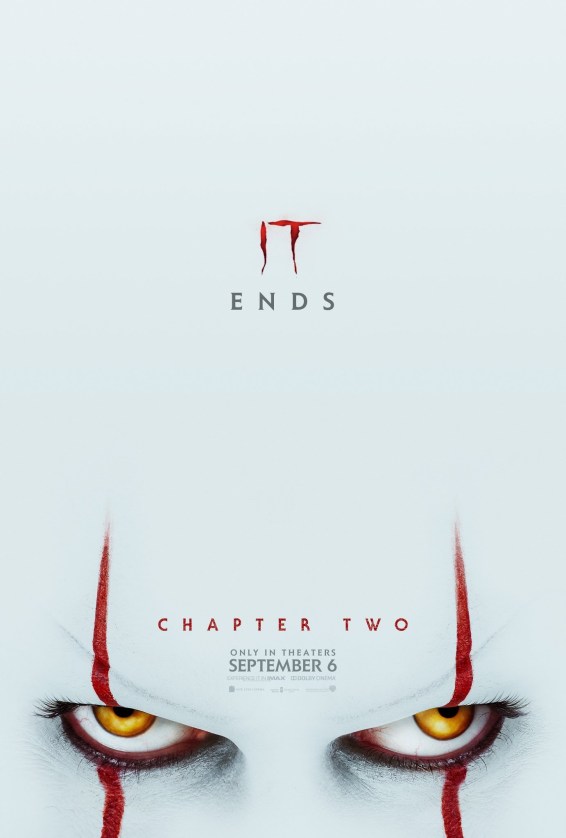
It: Chapter Two (2019) – Film Review

Once again directed by Andy Muschietti, and once again based on the iconic novel by Stephen King (only this time, the adult portions of the story). ‘It: Chapter Two’ is, unfortunately, somewhat of a downgrade from chapter one, as in spite of its excellent cast and continuously impressive visuals, ‘It: Chapter Two’ proves that bigger doesn’t always mean better when it comes to sequels, as the film’s overreliance on giant CG monsters along with its inconsistent tone and unreasonably long runtime of two hours and fifty minutes demonstrate how this spine-chilling follow-up frequently overindulges in its source material.

Plot Summary: After being defeated by ‘The Losers Club’ many years ago, the demonic clown, ‘Pennywise,’ returns twenty-seven years later to terrorise the town of ‘Derry’ once again. And, with the childhood friends who have long since gone their separate ways, ‘Mike Hanlon,’ the only member of the group to remain in ‘Derry,’ calls his friends home for one final stand…

Jumping from character to character, location to location, many of ‘It: Chapter Two’s biggest faults appear within its screenplay, as rather than focusing on a straightforward narrative like the original film, this time around the film revolves most of its plot around a bootless errand of a story where ‘The Losers’ search all over ‘Derry’ to acquire various artefacts from their youth to perform ‘The Ritual of Chud,’ which will supposedly destroy ‘Pennywise.’ The problem is that much of this setup is, ultimately, meaningless, as almost every character receives their own segment in which they simply recall moments from their childhood, which often just recap scenes from the first film or leave the audience bloated as a result of the huge amount of exposition they have to digest.

Yet, it has to be said that James McAvoy, Jessica Chastain, Bill Hader, Isaiah Mustafa, Jay Ryan, James Ranson and Andy Bean all portray the older versions of their characters remarkably, as despite the characters now being much older, each actor/actress recreates the younger actors’ body moments and manner of speaking flawlessly. ‘It: Chapter Two’ also never forgets to reinforce the characters’ trauma, as even though ‘Bill’ is a successful writer and ‘Ben’ has remodelled himself into a muscular architect, etc. Each member of the group is still haunted by their past, or at least, what they can remember from it. Of course, Bill Skarsgård also returns as ‘Pennywise.’ While his performance does occasionally venture into goofy territory due to how over-the-top he becomes, Skarsgård is still endlessly entertaining as the malevolent clown.

This time around, the cinematography is handled by Checco Varese. Still, you’d be forgiven for not knowing that ‘It: Chapter Two’ had a different cinematographer, as the film is just as visually pleasing as its predecessor, with some elegantly orchestrated transitions between the characters’ incarnations thrown in for good measure. The huge increase in the budget also comes across through the film’s visuals, as ‘It: Chapter Two’ feels much grander in scale and presentation alike. However, where the sequel stumbles is with its scares, as instead of utilising ‘Pennywise’s mimicking ability to transform into every character’s greatest fear, the film lazily depends on towering CG creatures, which usually have little relation to the characters or the story at large, and although a number of the monsters are interesting design-wise, it doesn’t stop them from feeling out of place.

Benjamin Wallfisch’s original score effectively continues on from that of the first film, as tracks, such as ‘Losers Reunited,’ ‘Nothing Lasts Forever,’ and ‘Stan’s Letter,’ are calming and beautiful, whereas tracks, like ‘Hall of Mirrors’ and ‘Very Scary,’ are loud and intense to add to the film’s horror. The main issue with the soundtrack is in its lack of distinction from the first film’s score, and while I understand ‘It: Chapter Two’ is essentially just the second part of a larger story, the original score does little to set itself apart, with some tracks sounding near-identical to others.

Even though ‘It: Chapter Two’ is trying to accomplish a great deal within its lengthy runtime, spending a large portion of its story in flashbacks and dream sequences as it attempts to adapt everything not already covered in the first film. The sequel is saddled with an even bigger obstacle; constructing a suitable climax for the story, as although its well-known by this point that Stephen King often has difficulty writing satisfying endings for his novels (a criticism that the film repeatedly mocks), ‘It: Chapter Two’ is faced with this exact task, and even if the story doesn’t completely collapse under the weight of its disappointing finale, its admittedly still lacklustre, especially when the final act veers into metaphysical surrealism.

In summary, ‘It: Chapter Two’ is unquestionably an ambitious horror sequel, with a renowned cast, spectacular set pieces and numerous exciting moments; the film truly goes all out. But, does it work? Well, not entirely, but it’s a diverting horror blockbuster, nonetheless. And, whilst I feel that by splitting the story of ‘It’ into two films, Muschietti has done a gratifying job of commanding the massive blimp that is King’s extensive novel, most of the issues with ‘It: Chapter Two’ boil down to its story and structure, which end up leaving the film a mere pleasurable romp rather than the ghoulish denouement it could have been. Final Rating: 6/10.

it_chapter_two_ver3_xxlg

Into the Storm (2014) – Film Review

Clumsily written and populated with forgettable characters, ‘Into the Storm,’ released in 2014, has little to offer beyond its admittedly prodigious CG effects. Taking heavy inspiration from the exemplary tornado blockbuster; ‘Twister,’ from 1996, ‘Into the Storm’ plays it fast and loose with its story, jumping from scene-to-scene without much thought as to how well everything connects or even functions, this is especially clear when looking at the film’s visuals, which rarely stick to the found-footage style its camerawork is trying to emulate.

Plot Summary: In the span of a single day, the small town of Silverton, Oklahoma is ravaged by an unprecedented onslaught of tornadoes, forcing residents to abandon their daily duties and seek shelter as fast as they possibly can. But, as the entire town is at the mercy of the destructive cyclones, one group of storm-chasers ride directly into the storm, risking their lives to study the phenomenon and procure that perfect shot…

Directed by Steven Quale (Starfire, Final Destination 5, American Renegades), ‘Into the Storm’ not only takes (perhaps a little too much) inspiration from ‘Twister’ for its plot, but also many real-world events. Specifically, a catastrophe that occurred in Dallas County in 1986, where there were several reported occurrences of multiple tornadoes striking the same county over a roughly one hour time-period. And, whilst the image of a tornado of fire may sound like a creation ripped straight out of a campy ’80s action flick, the cyclone of flames is, in reality, just one of the many seemingly absurd moments in the film that were actually based on real-life events, at least, according to screenwriter John Swetnam.

While disaster films have always valued spectacle over character, ‘Into the Storm’ is on another level, as the entire cast of Richard Armitage, Sarah Wayne Callies, Max Deacon, Nathan Kress, Arlen Escarpeta and Alycia Jasmin Debnam-Carey, are all immensely dull to watch, not necessarily because of their performances, but because of the screenplay. As, aside from the single-minded storm-chaser; ‘Pete,’ portrayed by Matt Walsh, who has at least something resembling a personality, most of the characters feel as if they are made out of wood, exclaiming cringey jokes and unnatural lines of dialogue that come across as nothing but forced. It seems many of the actors even tried to make their characters more interesting where they could, as supposedly there was a fair amount of improvisation on set.

Despite ‘Into the Storm’ apparently also being a found-footage flick, it’s rare that the cinematography by Brian Pearson actually appears like one, from vast wide shots to intimate close-ups, many shots are completely devoid of harsh movements and always retain flawless quality regardless of which character is filming or what device they are filming on. Moreover, with much of the film’s narrative relying on the idea of the film itself being a documentary, various interviews are featured near the beginning and end of the runtime, yet this potentially stimulating concept is soon spoilt as a result of the film’s structure, which is fairly disorganised. The only aspect of this found-footage approach that comes across effectivity is in the final scene, as the film utilises archive footage from news stations that covered a real EF5 tornado that hit Oklahoma in 2013.

Although the original score by Brian Tyler is expectedly quite bland, there are still a few tracks, such as ‘Into the Storm,’ ‘Fate’ and ‘We Stay Together,’ that back up many of the film’s exciting moments successfully. But, the issue here isn’t within the score itself, it’s the fact that there is a score to begin with, as every second ‘Into the Storm’ attempts to be an intense and realistic disaster epic, its simultaneously sabotaging itself by bombarding the audience with a loud, non-diegetic soundtrack, often distracting from the destructive chaos on-screen with its whirling violins and blaring brass horns.

When it comes to realism, some film buffs have questioned whether certain events within the story could occur in real life, such as whether a tornado could actually lift an aircraft off the ground as depicted in one scene. Nevertheless, there’s no denying that the CG effects during these scenes are certainly the finest element of ‘Into the Storm,’ as along with its voluminous set design, which perfectly displays the incredible force of nature that a tornado is with cars, trees, and billboards thrown in every direction, are magnificent in their sheer scale alone. Even if the film would’ve benefited from the use of a few more practical effects to even out its enormous use of CGI, harkening back in a way to the classic disaster films of the ’70s, like ‘Airport’ and ‘Earthquake.’

In summary, ‘Into the Storm’ is essentially just a visual effects showreel lasting over ninety-minutes, as although the film boats some exhilarating yet feasible moments of peril as director Steven Quale crafts plenty of riveting set pieces ranging from crashing trucks to golf ball-sized hail storms. Due to the film’s lack of compelling characters, inconsistent filmmaking, and truly awful lines of dialogue, such thrills soon become monotonous, and by the end of its runtime, ‘Into the Storm’ winds up as either an unimaginative disaster flick or a near-remake of ‘Twister,’ depending on your perspective. Final Rating: 3/10.

into_the_storm-p890380 (1)

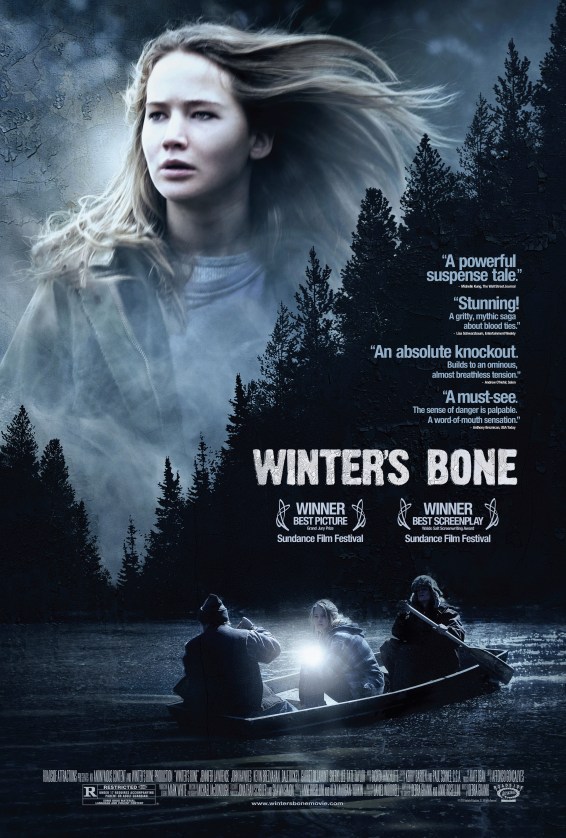
Winter’s Bone (2010) – Film Review

Based on the novel of the same name by Daniel Woodrell, ‘Winter’s Bone’ is a bleak, haunting and yet still somehow hopeful story set in rural America, acting as both a captivating drama and a suspenseful crime-thriller. The film is an intense and uncompromising look at the Missouri underclass through the eyes of a diligent teenager, blending its star-making performance from Jennifer Lawrence with skilfully shot sequences and incredible set-dressing to create a stunning and authentic portrait of Missouri life, all under the capable hand of writer and director Debra Granik (Down to the Bone, Leave No Trace).

Plot Summary: With an absent father and a mute, mentally ill mother, seventeen-year-old; ‘Ree Dolly,’ acts as the primary guardian for her household, caring for her younger siblings with minimal funds. But, when the local Sheriff appears at her door, informing her that their house has been put up as collateral bail by her missing father, ‘Ree’ is forced to use what little knowledge she has of her father’s nefarious activities to find him before it’s too late, soon discovering that many locals don’t appreciate her poking her nose into their business…

Despite her many previous successes, Debra Granik still had a great deal of difficulty finding funding for ‘Winter’s Bone,’ as after the screenplay had been written, Granik and her co-writer Anne Rosellini budgeted the film at around £3 million, but every potential group of financiers they approached all said the same thing; “Cast the Film, and Then We’ll Talk.” Thus, casting directors Paul Schnee and Kerry Barden began approaching various actresses and eventually settled on the then unknown eighteen-year-old actress, Jennifer Lawrence, as although she had never carried a film before, only having taken small roles in the past, both Schnee and Barden felt Lawrence had the perfect tomboyish demeanour for the character, in addition to having strong roots in Kentucky.

Winning an Oscar for her performance in 2011, ‘Winter’s Bone’ greatly benefits from ‘Ree Dolly’ as a character and Jennifer Lawrence’s portrayal of her. This is mostly due to ‘Ree’ being such a rare female protagonist for a film such as this, as with her errant father’s only bankable skill being his ability to cook methamphetamine, ‘Ree’ is left to care for her family, teaching her younger siblings survival skills to prepare them for when they are older (for which Jennifer Lawrence had to learn how to correctly skin squirrels and chop wood). And, after she is informed of the limited time she and her family still have within their house, ‘Ree’ becomes relentlessly determined to save her home, occasionally even risking her life all in pursuit of caring for her loved ones and ensuring her siblings have a future.

Michael McDonough’s stark cinematography captures the essence of what life in the brutal and sparsely populated Ozark, Missouri (a.k.a. the Ozark Mountains) is like, as the camerawork allows for many delectable shots, from the camera peeking around corners to lurking over character’s shoulders, the cinematography constantly lends itself to the film’s frostbitten colour palette and beautiful bitterness of the story’s setting, which is all enhanced by the entire film being shot on-location.

Furthermore, the original score by Dickon Hinchliffe utilises instruments common to the Ozark region, making use of violins, guitars, mandolins and banjos, in a way that is unique to the film. For example, the way banjos are used throughout the soundtrack, particularly in the tracks; ‘I’ll Find Him,’ ‘Hardscrabble Elegy,’ ‘Down the Road’ and ‘The Trees,’ deviates from the instrument’s stereotypical image of being associated with hillbillies and rednecks. One of the film’s final tracks; ‘The Lake,’ is also worth a quick mention, purely for how unnerving and incredibly atmospheric it is.

For authenticity purposes, most of the supporting cast of ‘Winter’s Bone’ weren’t actual actors/actresses, but locals from the surrounding area. ‘Ree’s sister for instance, was one of these actresses, and the exterior of her home we see in the film is actually her house in real life. Sticking to this idea of authenticity, nearly all of clothes that the characters wear are clothes provided by the locals, as the production crew gave locals brand new clothes in exchange for their old, frayed items. If I had to guess, I’d also assume many of the houses we set foot within belonged to these same locals, as every room we enter appears genuine, with no area ever seeming as if it was set-dressed with thought as to how many items are in one space at one time.

Im summary, ‘Winter’s Bone’ is spectacular in its efforts as a drama and a crime-thriller alike, as it’s intelligent, well-written and entirely non-patronising story is as tense and as entertaining as these respective genres come. And, whilst many Oscar-winning films can often be disappointing beyond whatever aspect is their main talking point, ‘Winter’s Bone’ is also beautifully shot and well-paced, with Jennifer Lawrence’s career-defining performance simply being the icing on top of the cake. So, even if the first act of ‘Winter’s Bone’ is slightly slow and repetitive, after that initial hump, the film thrives as a rewarding and richly detailed exploration of the strength required when being confronted with unpleasant truths. Final Rating: low 8/10.

WINTERS BONE 1SHT.indd