Monster Trucks (2016) – Film Review

“I Don’t Know Who’s Driving, Him or Me…” – Tripp

Spawned from the mind of the four-year-old son of Adam Goodman, the then-president of the production company behind the film, Paramount, Monster Trucks is a 2016 family flick harbouring flashes of inspiration yet ultimately lacking in execution. Frequently demonstrating that a wacky storyline and a mashup of creatures and clamorous vehicles don’t necessarily yield a rollicking family film, Monster Trucks goes about its narrative with all the grace of an off-road vehicle steamrolling a row of discarded automobiles, even when it faintly echoes the beloved 1982 sci-fi classic; E.T. the Extra-Terrestrial.

Plot Summary: Looking for a way to escape the mundane town he was born into, high school senior Tripp circumvents the discomfort of his home life by toying away in his local scrapyard, gradually assembling a truck of his own from bits and pieces of scrapped vehicles. But, when an accident at a nearby oil-drilling site displaces strange, subterranean creatures with immense strength and a liking for oil, Tripp believes he’s found his key to getting out of town, unaware that his slimy, tentacled friend is actively being pursued…

Initially set for release on May 29th, 2015, before the date was moved to December 25th, then March 18th, 2016, and finally, January 13th, 2017, after several setbacks. Monster Trucks received middling reviews and poor box office numbers upon its eventual release, with Viacom blaming unspecified failures in its motion picture division for the losses the company suffered in the 3rd quarter of 2016, with reporters later piecing together details in their statement, leading them to believe this film was blamed for the loss. While not strictly underserved as Monster Trucks does possess an abundance of flaws across both its screenplay and filmmaking, director Chris Wedge (Ice Age, Robots, Epic) manages to implement some humorous moments and exciting set pieces here and there, primarily whenever the film fully commits to its bonkers title, having the signature creature, nicknamed; Creech, squeeze himself into Tripp’s turquoise-coloured truck, using his multiple tentacles to propel the vehicle along and even leap over hazards across town.

Although the central cast of Lucas Till, Jane Levy, Rob Lowe, Danny Glover and Holt McCallany deliver adequate performances, their characters are either caricatured or underdeveloped, barring the antagonists, who sufficiently serve their purpose as vile, money-hungry suits eager to profit from the newly discovered creatures through whatever means necessary. This character issue is only made worse by the dialogue, the majority of which is cheesy and blatant, lacking any semblance of subtlety or originality, especially concerning the sour relationship between Tripp and Sheriff Rick, his new stepfather, who continually conveys his unjustified distaste for Tripp.

Whether by design or not, the small, pallid town in North Dakota where Monster Trucks takes place is remarkably dull, meaning the visuals suffer as a result, aside from the odd alluring shot of natural scenery. On a more positive note concerning the visuals, the designs of the many luminescent creatures that appear throughout the runtime are simplistic yet effectively cute and cuddly, resembling various aquatic animals, namely whales and octopi. However, it’s important to mention that one of the reasons the film’s release date was pushed back so drastically was the need to redesign the creatures and thus redo most effects shots, as originally, the creatures appeared more monstrous and less cartoonish. But, after a disastrous test screening, which reportedly frightened a large portion of the juvenile audience (despite the creatures’ friendly demeanour), their appearance was altered to the design seen in the final film. With this setback in mind, the CG effects are well-detailed, if imperfect.

Boasting a handful of decent tracks, if you’re searching for a more bass-friendly soundtrack, Monster Trucks‘ original score is weighty yet occasionally a tad overbearing, in addition to a couple of the song choices, like Home by Phillip Phillips, only adding to the corniness of the film due to their unwavering positivity. The sound design is also filled with much of what you’d expect from a story revolving around large vehicles, with booming engines and scrapyard ambience providing many scenes with an audible thump.

Returning to the faults of the screenplay, much of the humour throughout the runtime is immature, often relying on goofy audio effects and continuous slime gags to obtain a cheap laugh from younger audience members. Older audience members, however, may find something to admire in the film’s handful of truck-centric practical effects, such as the implementation of the five 1950s-era Dodge trucks which were built for the film, including one with its engine in the pickup bed so it could be driven from under the hood, similar to how Creech manoeuvres the vehicle.

In summary, Monster Trucks is an underwhelming film in several ways, making me think it might have been better served should it have been a stylistic animated release rather than a costly live-action one, allowing the film to further play into the central, ludicrous concept of subterranean creatures slithering their way into vehicles to experience the high-octane rush of driving across open fields and country roads, especially when considering Chris Wedge’s prior directing experience in that field. Still, I’m obviously not in the target demographic for this flick, and those who are (e.g. young boys with an affinity for monsters and mayhem) might enjoy this one in the face of its many shortcomings. Rating: 3/10.

The Darkest Hour (2011) – Film Review

“What’s the Dress Code for the End of the World? Jacket, No Tie?” – Sean

Initially intriguing yet ultimately vacuous, 2011’s The Darkest Hour is an apocalyptic blockbuster that will seem like familiar territory for most with its relatively straightforward premise of a group of survivors escaping a hostile, extraterrestrial foe, its only genuinely innovative ideas appearing in the form of its setting; Moscow, and the unique, electricity-based abilities/appearance of its unworldly invaders. Rammed with immensely corny dialogue, uninteresting characters and cheap-looking set design, The Darkest Hour fails on most fronts, leaving its title to ironically reference the fact that the film’s initial release may have been the ‘darkest hour’ for all the careers of those involved in its production.

Plot Summary: When American software developers Sean and Ben travel to Moscow to sell their latest program to investors, their Swedish associate Skyler double-crosses them, forcing them out of the deal. In an attempt to drown their sorrows, the duo head to a nightclub. Until, out of the blue, the Russian population is startled by the appearance of mysterious rays in the sky, soon discovering that the lights are, in actuality, an extraterrestrial force invading Earth and utilising our power supply to eradicate all mankind…

The inclusion of the Russian setting and, by proxy, Russian crew/extras can be attributed to producer Timur Bekmambetov, who after becoming involved in the project, allowed the production to use Moscow as a backdrop instead of the typical U.S. locations, predominantly due to Bekmambetov owning his own production company in the city, known as Bazelevs, where the majority of the film was shot, with the crew consisting of roughly 30% Americans and 70% Russians. In conjunction with director Chris Gorak (Right at Your Door), who ordinarily serves as an art director/production designer on sets, harbouring minimal experience as a director, the duo aimed to make a film that would thrill audiences and feel distinct via its foremost setting, but evidently, they did not achieve this.

The central cast of Emile Hirsch, Max Minghella, Olivia Thirlby, Rachael Taylor and Joel Kinnaman are strong names, but unfortunately, all portray rather simplistic and indistinguishable characters. Fortunately, the audience is provided with a few leads that hint towards the impending extraterrestrial invasion as protagonists Sean and Ben prepare to close the deal for a party-spot program they’ve created, only to find that their alleged business associate, Skyler, has ripped them off, stealing their idea and pushing them out. Supposedly, after putting much time and effort into their project, the pair idiotically did nothing to protect their intellectual property, merely moping around a nightclub until they encounter American traveller, Natalie, her Australian friend Anne, as well as Skyler, whom they shepherd into their group during the initial raid in spite of his earlier betrayal with next-to-no drama.

Shot in 3D as opposed to going through post-conversion. The Darkest Hour‘s production was originally fifty-eight days, with a further eight to nine days being added onto the production schedule once it was decided the film would be shot in 3D. Yet, throughout the runtime, these 3D effects barely register due to so much of the film taking place in dimly-lit environments (frequently depicted by shabby sets), the only real highlight of the 3D effects being the eye-catching opening title sequence. Furthermore, despite The Darkest Hour‘s constant attempts to bombard the audience with disintegrating civilians, handcrafted weapons and adrenalin-fulled chases across deserted, dust-covered streets, many of the film’s action sequences are fairly lacklustre, with the cinematography by Scott Kevan doing little to enhance the cinematic ennui.

From tracks like Northern Lights to Here’s Our Mission and Man Overboard, the film’s orginal score by Tyler Bates is occasionally effective but not all that memorable, often feeling just as gaudy yet creatively uninspired as the visuals, barring the score’s recurring use of bellowing electronic rhythms and propulsive synthesised experiments, serving, in a way, as an audible extension of the eerie, electrical sound design that accompanies the belligerent extraterrestrials.

As mentioned many times, the film’s unusual alien species only ever appear in some form of electrolocation, sensing the electricity in living beings by generating electrical fields. A downside of this ability, however, is that the extraterrestrials cannot see through any type of glass, as the transparent material is a poor conductor of electricity. This fascinating concept is what makes the aliens stand out when compared to invaders from other sci-fi blockbusters, especially since they are protected by electrical shields and can vaporise their victims instantaneously. As such, this imperceptible, seemingly unstoppable force draws the audience in through mystery and uncertainty, eliminating much of the population of Moscow overnight. That said, the extraterrestrial’s unpredictable, electrical abilities do begin to break down the longer the central group of survivors outwit them, given the group should lack any of the skills or knowledge needed to find a way out of their precarious situation. Of course, another minor issue arises in their colour as the aliens take on a glowing golden appearance, whereas electricity, in reality, is colourless.

In summary, The Darkest Hour is a sci-fi blockbuster that falters in its many attempts to propel its audience past their inevitable plot-related questions, the occasional wobbly acting and the easily foreseeable climax. While the film does include a handful of intriguing ideas and excellent electricity-affiliated visuals (alongside a periodic usage of real-world science), The Darkest Hour is obviously not the ‘electrifying’ experience the filmmakers intended it to be. Rating: 3/10.

darkest_hour_ver3_xxlg-transformed

Terminator: Dark Fate (2019) – Film Review

“Come With Me or You’ll Be Dead in Thirty Seconds…” – Grace

After bringing the titular, wise-cracking anti-hero to the silver screen with his 2016 directorial debut; Deadpool, filmmaker Tim Miller lept onto a series with evenly iconic characters, the Terminator franchise. Kicking off with the original sci-fi-action classic in 1984, Miller’s entry in the series; Terminator: Dark Fate, released in 2019, functions as both a sequel to the first two installments and a reboot of the franchise, aiming to breathe new life into this ageing sci-fi saga. Unfortunately, however, Terminator: Dark Fate is an unremarkable, mean-spirited and overly familiar affair, lacking thrilling, fast-paced action sequences and imaginative concepts, all whilst occasionally spitting in the face of the series’ most dedicated fans through its handful of baffling creative decisions.

Plot Summary: Twenty-five years after the elimination of Cyberdyne, the company that would one day create the world-ending network of supercomputers known as Skynet, another seemingly unimportant human, this time car assembly worker, Dani Ramos, is inexplicably targeted by a Terminator from the future as the shapeshifting, nearly indestructible, REV-9, is sent to eliminate her in present-day Mexico City. Luckily for Dani, a fearless protector also arrives from the future, the bionically-enhanced Resistance solider, Grace, along with a custodian from the past, a bitter, armed-to-the-teeth Sarah Connor…

Disappointed and uninvolved with Terminator 3: Rise of the Machines (2003), Terminator Salvation (2009) and Terminator Genisys (2015), producer James Cameron considers Terminator: Dark Fate to be a direct sequel to his projects; The Terminator (1984) and Terminator 2: Judgment Day (1991), remarking that while he was generally supportive of those films due to his close friendship with actor Arnold Schwarzenegger, he jumped at the offer to produce Terminator: Dark Fate, seeing it as an opportunity to oversee his franchise’s future. However, Cameron’s inherently controlling attitude did come with drawbacks as he claimed that, although he was involved in the writing process, he didn’t interfere with Miller’s oversight and never visited the set. Yet, Miller recalls things differently, claiming Cameron stepped in for some uncredited editing, finding his cut somewhat rough and prolonged. Cameron also admitted that he and Miller had their share of disagreements, ultimately leading Miller to state it’s unlikely he would work with Cameron again. These creative differences are noticeable in the final product as there is a shortage of polish in some areas, primarily in the subpar CGI and conversational dialogue, which is often corny and crass.

Blending the original’s cast with fresh faces, the central cast of Linda Hamilton, Arnold Schwarzenegger, Mackenzie Davis and Gabriel Luna all do a serviceable job of portraying their respective characters, regardless of whether they are humans or machines, newcomers or returning legends. That is, excluding Natalia Reyes as Dani Ramos, who frequently fails to believably portray Dani as a fearless and firm figure due to her short stature and rather weak line delivery.

Standing as the only Terminator film where none of the action takes place in Los Angeles, Ken Seng’s cinematography is one of the few positive aspects of Terminator: Dark Fate, as the camerawork is dynamic and favourably supports the numerous action sequences, making extensive use of the latest setting for the sci-fi saga; Mexico City. Alas, the action set pieces aren’t as arresting, lacking the physicality and grittiness of the series’ first two entries, despite the admirable inclusion of their bloody brutality.

The original score by Tom Holkenborg (a.k.a. Junkie XL) is habitually loud and imposing, initiating with the track; Terminated, and continuing with tracks like My Name Is Dani, The Wall and Screaming Turbines, the foremost of which softens the score up via Mexican-style guitars, lending a lighter tone to some scenes. Still, it likely goes without saying that, although adequate, the soundtrack doesn’t hold a candle to the original Terminator score, even if the film attempts to earn nostalgia points by implementing its well-known mix of synth, drums and electronics whenever possible, including the audible motif; “Dun Dun Dun Dun Dun.”

Spoilers ahead in this section for those who wish to go into their viewing blind, but I’m sure many are wondering where the significant character, John Conner, is in all of this. Well, in the opening scene of the film, young John is actually shot dead by a Terminator. Whilst shocking, this moment not only deprives the audience of any screen-time with the fan-favourite character, but also renders the conclusion of the second entry meaningless. Moreover, with Skynet no longer existing, thanks to the events of that film, the screenplay conjures up a ‘new’ antagonist with Legion. This almost indistinguishable, equally hostile A.I. force is just far too similar to what the series has attempted previously to appear innovative, alongside its use of an already comparable narrative structure.

In summary, Terminator: Dark Fate is just as uninspired as its bland sub-title suggests, often feeling like a sequel/reboot made out of obligation than anything else. And, with the franchise’s previous restart attempts in Terminator Salvation and Terminator Genisys, each written to be the first of a trilogy before that idea was scrapped due to a lack of critical and commercial success. Terminator: Dark Fate is yet another series revamp succumbing to a disappointing box office gross and lacklustre reviews, the rough outline written for its two sequels being discarded, leaving the future of the franchise uncertain and, in my opinion, indicating that the Terminator franchise needs to be ‘terminated’ itself, evidently running low on ingenuity and relevance. Rating: 3/10.

terminator_dark_fate_xxlg

Gods of Egypt (2016) – Film Review

“Every Night the Battle Between Chaos and Creation Must Go On. Otherwise, the World Will Be Destroyed…” – Ra

Based on the Egyptian myth; The Contendings of Horus and Set, a mythological tale from the Twentieth Dynasty of Egypt found in the pages of a biblical text, recounting a battle between Horus, a god who takes the form of a falcon, and Set, a sky god, lord of the desert and master of storms, disorder and warfare, Gods of Egypt, released in 2016, is a visually overblown, poorly plotted and needlessly CGI-heavy fantasy blockbuster. Playing fast and loose with its world-building and the Egyptian mythology it’s based upon, Gods of Egypt squanders much of its talented cast and admirable visual effects in exchange for shallow, action-lead spectacle. As a result, the film has largely (and unsurprisingly) been lost to the sands of time, similar to many other lustreless blockbusters of the 2010s.

Plot Summary: In an alternate Ancient Egypt where the world is flat and Egyptian gods live amongst humans, differing from mortals by their tremendous height, golden blood and ability to transform into their animalistic forms, a young thief, Bek, and his beloved girlfriend, Zaya, are attending the coronation of Horus. But, during the ceremony, Horus’ father, Osiris, is murdered by his envious brother, Set, who seizes the throne and declares a new, brutal regime…

Directed by Alex Proyas (The Crow, Dark City, I, Robot), Gods of Egypt is, as of now, Proyas’ most recent directorial effort, as the critical and commercial failure of the film (along with its casting controversy, as the film was criticised for casting predominantly caucasian actors), seriously hindered his reputation. Consequently, he has only directed a couple of short films since. While this is a cruel turn of fate for Proyas, who has demonstrated in the past that he can helm entertaining blockbusters, Gods of Egypt is evidently desultorily directed, frequently lacking polish, dramatic weight, comedic timing and vital fragments of exposition, especially when considering the film’s immense budget of over £110 million.

Ranging from uninspired to cringe-worthy, the performances throughout Gods of Egypt are inconsistent, to say the least, as Nikolaj Coster-Waldau’s valiant Horus lacks the balance of arrogance and self-pity many of his previous performances retain, whilst the performances of Brenton Thwaites, Elodie Yung, Rufus Sewell and the late Chadwick Boseman come across as superficial and exaggerated, further facilitated by their half-baked characterisation. Moreover, as the detestable Set, Gerard Butler struts, growls and bellows like an enraged grizzly bear, possessing none of the self-awareness that could have made such an over-the-top performance more enjoyable.

Primarily shot in the Australian desert, as filming in the Sahara Desert was considered too dangerous, the cinematography by Peter Menzies Jr. occasionally allows for pleasant shots of the desert landscapes and their imposing Egyptian structures. However, many of these shots are often spoilt by the enormous barrage of CGI, making every frame appear glossy and oddly sterile, even during scenes where gigantic crowds are present. Additionally, while terrifyingly indelible creatures are not as frequent in Egyptian mythology as they are in, say, Greek or Norse mythology, Gods of Egypt still features a handful of stately creature designs, namely, the massive, serpentine creature known as Apophis, an Egyptian deity of chaos that is commonly depicted as a snake in Egyptian hieroglyphs.

On another note, it’s fascinating how, despite having no evidence as to what music in Ancient Egypt sounded like, composers have adopted a specific style to depict that location and era, likely beginning with 1954’s The Egyptian, before enduring through dozens of other scores over the years, including Land of the Pharaohs (1955), The Prince of Egypt (1998) and The Mummy (1999). In regard to the orginal score for Gods of Egypt, composer Marco Beltrami weaves several Egyptian-esque themes in and around each other, as the two central deities, Horus and Set, harbour their own motifs, with Horus’ motif sounding valiant, conveying him as the more sympathetic of the two, whilst Set’s motif is far darker and shares many similarities to your more typical ‘villain themes,’ built around intense, descending brass lines. The problem, however, is that all of these tracks aren’t that memorable or unique in spite of their functionality, with most of the score just consisting of staggeringly generic action pieces. 

Due to nearly all of the film heavily utilising visual effects, it’s not surprising that the considerable CG effects implemented throughout the runtime are one of the few shining aspects of Gods of Egypt. Aside from a handful of shots which have aged questionably, most of the visual effects are impressive. In fact, one of the more unusual challenges the visual effects team faced during post-production was placing the cast inside an array of virtual environments, as most of the scenes were shot against a bluescreen. An added complexity came in the form of the size differences between gods and mortals, as the gods stand around nine feet tall, so the visual effects team had to constantly consider these size variations.

In summary, Gods of Egypt is an insipid blockbuster lacking originality, excitement and entertainment value. The film merely meanders through waves of corny dialogue, mind-numbing, CGI-reliant action sequences and a monotonous, drawn-out story brimming with contrivances and the odd interesting concept. Once again proving, alongside other poorly-received blockbusters, such as Justice League (2017), Independence Day: Resurgence (2016) and Transformers: The Last Knight (2017), that an enormous budget doesn’t necessarily yield enormous success. Rating: low 3/10.

gods_of_egypt-p1025720

Spy Kids: All the Time in the World (2011) – Film Review

“No One Ever Notices Time, Until It’s Gone…” – Tick Tock

One of the rare releases to incorporate scents into the cinema experience, 2011’s Spy Kids: All the Time in the World is the fourth instalment of the Spy Kids franchise, the well-known family-oriented espionage series created, written and directed by Robert Rodriguez (El MariachiPlanet TerrorAlita: Battle Angel). Once again produced by Double R Productions (then-Troublemaker Studios), Spy Kids: All the Time in the World serves as somewhat of a soft reboot, attempting to appeal to a new generation of aspiring juvenile spies. Unlike the original Spy Kids trilogy, however, Spy Kids: All the Time in the World falls short in nearly every regard as the less-prevalent issues of previous franchise instalments are intensified, plaguing the film with a misbegotten screenplay, awful visual effects and a barrage of scatological humour that suggests the Spy Kids series has truly run its course.

Plot Summary: On the surface, Marissa Wilson is your typical suburban mother, caring for her newborn daughter and step-children, Rebecca and Cecil Wilson, whilst supporting their father, Wilbur Wilson, in his career as a spy-hunting television star. But, in reality, Marissa is a retired spy whose life is turned upside-down when the maniacal Timekeeper threatens to take over the world, thrusting her back into action. Meanwhile, after discovering that their stepmother was once a top agent of the O.S.S., Rebecca and Cecil put their bickering aside to assist her in thwarting the Timekeeper’s sinister scheme…

The conception of Spy Kids: All the Time in the World, unfortunately, did not arise from a place of creativity but, instead, was contractual. As, in truth, Rodriguez didn’t want to make another entry in the Spy Kids franchise, partially because he still blamed producer Harvey Weinstein for the failure of his collaboratively-directed 2007 project; Grindhouse. Nevertheless, Rodriguez contractually owed Weinstein one more film. Unsurprisingly, this lack of ambition for the project can be felt throughout the runtime, as the film largely boils down to an endless string of inferior visuals and potty jokes that sap the charm out of almost every scene. However, that is not to say that the film doesn’t carry any positives, as the film does feature a handful of minor, amusing gags and a few fragments of endearing fan service for those who grew up with the Spy Kids series, including appearances from Carmen and Juni Cortez.

In terms of the cast, Rowan Blanchard, Mason Cook, Jessica Alba, Joel McHale, Jeremy Piven and Ricky Gervais all deliver rather overblown performances, playing up many of their actions/movements to ‘add’ to the humour or aggressively pry for an emotional moment. Regrettably, the characters themselves don’t fare much better, as Marissa and Wilbur Wilson barely make it past their basic traits, while the latest generation of youthful agents, Rebecca and Cecil Wilson, are effectively just duplicates of Carmen and Juni with little individuality. Lastly, there is the mysterious miscreant, the Timekeeper, who, despite his shoddily-designed costume, receives more development than many would expect during the final act. Yet, this growth is somewhat spoilt by his associate, Tick Tock, who is immensely grating as he speaks in a high-pitched voice, uttering time puns to an outrageous extent, like “Time Flies When You’re Having Fun.”

Visually, Spy Kids: All the Time in the World occasionally demonstrates its knack for vibrant, imaginative production design with the facilities and weaponry of the Timekeeper, which seem inspired by the illustrious steampunk aesthetic and the innards of antique clocks. The remainder of the visuals, however, such as the cinematography by Jimmy Lindsey and Robert Rodriguez, are low-grade, with a substantial amount of the CG effects being of matching quality.

Similar to previous instalments in the franchise, the original score by Carl Thiel and Robert Rodriguez is playful and electric guitar-led, integrating the classic Spy Kids theme where it can through tracks like Carmen Cortez and Spy Kids 2.0. As such, the film’s soundscape remains colourful, even if it sometimes becomes too skewed and cartoonish for its own good.

Peculiarly, one of the aspects that Spy Kids: All the Time in the World marketed itself upon was being in “Aroma-Scope,” a gimmick that allowed the film to contain a “4D” in some iterations of its title. In 2011, when audiences watched the film in cinemas, they were provided scratch-and-sniff cards and prompted to scratch them throughout their screening. These cards featured circles numbered one to eight, and at various points, a number would appear in the corner of the screen, indicating it was time to scratch off the corresponding circle. When scratched, the intention was that the card would release a smell related to what was on-screen, like vomit or confectionaries, etc. Yet, whilst this was a fascinating idea, these cards rarely worked as they were made from a similar material to lottery tickets, ensuring little grit and thus no smell.

In summary, while Spy Kids: All the Time in the World falters as a family flick, the film falters even more as a Spy Kids soft reboot/stand-alone sequel. Retaining hardly any of the allure or creativity of earlier entries in the franchise, Spy Kids: All the Time in the World may, at the very least, entertain toddlers through its numerous scenes of vomiting, farting and nose-picking. But, any other audience member will likely sit in frustration, wishing for a well-crafted animated flick instead. Rating: low 3/10.

spy_kids_4_all_the_time_in_the_world-p547361

Men in Black: International (2019) – Film Review

“Always Remember: The Universe Has a Way of Leading You to Where You’re Supposed to Be at the Moment You’re Supposed to Be There.” – Agent High T

Emerging several years after the entertaining yet faulty; Men in Black 3Men in Black: International, released in 2019, serves as a soft reboot of the series, aiming to bring the undisclosed extraterrestrial defenders back for another similarly amusing, alien-blasting adventure. However, predominantly due to its outlandish story, trite humour and absurdly horrendous dialogue, Men in Black: International rarely reaches the heights of the 1997 sci-fi-comedy classic, nor the later, lesser entries in the well-known franchise, even with its noteworthy stars of Chris Hemsworth and Tessa Thompson carrying over much of their on-screen chemistry from 2017’s Thor: Ragnarok.

Plot Summary: After sharing an eye-opening encounter with an extraterrestrial as a child, Agent M, the M.I.B.’s newest probationary recruit, finds herself under the wing of Agent H, a past-his-prime hero of the closemouthed organisation, operating at the London branch. Meanwhile, a duo of shape-shifting alien assassins arrive on Earth, seeking a devastating super-weapon that could place the entire galaxy at risk…

Based on The Men in Black comic book series, created and written by Lowell Cunningham, Men in Black: International is the first film in the franchise not directed by Barry Sonnenfeld. Instead, the film was directed by F. Gary Gray (FridayThe NegotiatorStraight Outta Compton), making Men in Black: International the second Gray-directed sequel to a Sonnenfeld flick, the first being; Be Cool in 2005, a sequel to 1995’s Get Shorty. Needless to say, this change in leadership (and screenwriters) could be seen as more of a negative than a positive, as the film lacks much of the disturbing violence and revolting practical effects present in the original trilogy as extensively as the satire. Furthermore, Men in Black: International‘s narrative leaves much to be desired, appearing overly simplistic and somehow equally convoluted, barring a couple of interesting concepts, such as a portal for transporting alien refugees or a mole within the M.I.B. organisation. The film is dragged down further by its ever-present cringey dialogue, which is near vomit-inducing in its many attempts to seem relevant. To its credit, Men in Black: International does, at least, manage to expand the universe of the films by introducing various international branches of the covert organisation, as its title suggests.

With Will Smith and Tommy Lee Jones openly stating they would not return to the franchise for Men in Black: International, new leading actors/actresses had to be chosen. Still, they do appear in the film briefly, having long passed into legend as agents in a dramatised painting in the M.I.B. London head office. Regrettably, however, the revamped cast of Chris Hemsworth, Tessa Thompson, Liam Neeson, Rafe Spall and Rebecca Ferguson are continually overblown in their performances, bouncing from scene to scene with ample energy regardless of tone. This issue is only made worse by the characterisation, which frequently forgets to provide the characters with motivations for their actions or any semblance of depth beyond the basics we learn of them, with Agent H being the foolish, once-hotshot agent of M.I.B. having previously saved Earth from an extraterrestrial invasion, whilst Agent M has desired to be an agent of the organisation since she was young.

Immaculate and radiant yet unimaginative, the cinematography by Stuart Dryburgh shares more of a visual resemblance to superhero blockbusters from the Marvel Cinematic Universe than any previous Men in Black instalment. Likewise, dissimilar to earlier entries in the franchise, Men in Black: International‘s plethora of extraterrestrial designs are dreadfully cartoonish in appearance, lacking the individuality and repulsive naturality of the series’ previous designs, all of which are unfortunately brought to life exclusively via CGI, with very few costumes/prosthetic make-up pieces employed. Having said that, there is one exception to this defect; the designs of the primary antagonists, the Hive, who retain a visually striking design, taking on the appearance of luminous, orange star clusters in a human physique.

In keeping with the rest of the Men in Black series, the original score is composed by Danny Elfman and newby Chris Bacon, who strive to capture the same musical spirit as previous franchise instalments through tracks like Job InterviewHere Comes Trouble and End Credits. And, for the most part, the composers are successful in this goal as the score sounds reminiscent of the original trilogy’s soundtracks while thankfully avoiding any lousy endeavours to modernise the series’ iconic theme.

When it comes to the humour, it’s apparent that there is a hefty deficiency of wit and surprise within the screenplay. As a result, most of the jokes throughout the runtime are either sluggish, irritating or immature. Additionally, during one particular scene, set within a hidden, extraterrestrial-filled nightclub, there is a weirdly out-of-place gag where Agent H attempts to spitefully manipulate Agent M into pleasuring Vungus, a party-hungry alien visiting Earth, which will surely make some audience members feel uncomfortable.

In summary, the mere notion of a Men in Black revival without the presence of Smith or Jones seems like an unmistakably terrible idea, comparable to how another swashbuckling Pirates of the Caribbean sequel without Johnny Depp’s inclusion would seem incomplete, stand-alone story or not. Even with its original cast in attendance, however, Men in Black: International likely still would’ve failed on account of its many other shortcomings, grinding its cast’s chemistry through the gears of a sci-fi franchise running low on reasons to persist. Rating: 3/10.

men_in_black_international-p1107879

The Pyramid (2014) – Film Review

“This Pyramid, Unlike Any Structure Other I’ve Ever Encountered, Seems to Have Been Built With the Express Purpose of Keeping Whatever Is Inside From Escaping…” – Holden

Poorly lit, inconsistently shot and lazily written, The Pyramid, released in 2014, is a horror flick that perfectly demonstrates the notion that giving a large budget to a project doesn’t necessarily make it a success. In the case of The Pyramid, this claustrophobic (predominantly) found-footage horror was given a budget of almost £6 million, a rather substantial amount of funding for a modern horror. Yet, even with a budget of this size, the film squanders almost every penny as its potentially captivating delve into Egyptian history/mythology is tainted by repeatedly clunky dialogue and countless lacklustre jump-scares.

Plot Summary: When a team of U.S. archaeologists unearth an ancient pyramid buried beneath the desert just outside Cario, they yearn to explore the interior of the structure despite extensive pushback from locals. Ignoring the residents’ objections, the group decide to head into the depths of the pyramid, soon becoming hopelessly lost in its endless passageways, eventually coming to realise that they aren’t just trapped, they are being hunted…

Directed by Grégory Levasseur, a frequent collaborator of producer Alexandre Aja. The Pyramid was Levasseur’s first and only directorial credit to date, and upon a first watch, it quickly becomes apparent as to why that is as The Pyramid is a horror ripe with imperfections that nearly any critic or casual audience member could spot. However, many of these issues are a result of Levasseur continuously brawling with the constraints of the found-footage subgenre, which might explain why the film makes so many baffling choices when it comes to its cinematography. Moreover, many of the scares throughout are telegraphed well in advance, so if you watch plenty of horror flicks, you’ve likely already seen everything the film has to offer.

When it comes to the story, the first act rushes through a string of contrivances, such as threats of air poisoning following the opening of the pyramid’s entrance, a military-ordered evacuation, and a NASA rover being mysteriously destroyed inside the pyramid, all of which were plainly written into the screenplay in order to get the central group of characters into the foreboding burial site as swiftly as possible. Yet, through this entire act, the screenplay rarely tries to develop any of the characters beyond a few traits, whether that be Dr. Nora Holden; a prodigious prehistorian and graduate of the Christmas Jones Academy of Scientist Couture, portrayed by Ashley Hinshaw, or the dim-witted British cameraman, Fitzie, portrayed by James Buckley. Every one of the characters are remarkably unoriginal and uninteresting. And even though certain supporting cast members, such as Denis O’Hare and Christa Nicola, deliver respectable performances, they ultimately add up to very little as most of the dialogue consists of excessive exposition or generic lines like “This Is the Find of a Century.”

As mentioned previously, The Pyramid bizarrely utilises both a first-person and a third-person perspective. So, despite many of the characters wearing or carrying cameras to present the film as recovered footage, the cinematography by Laurent Tangy frequently reverts to well-presented shots that none of the characters could have realistically obtained. This illogical decision pretty much ensures that the audience will be taken out of the spine-chilling, claustrophobic scenarios the screenplay is trying to craft, in addition to breaking the illusion that what the audience is watching is recovered footage. That being said, The Pyramid does harbour some impressive set design, as from the moment the group enter the pyramid, they are ensnared in narrow chambers and passageways, each retaining sand-littered bases and detailed Egyptian wall hieroglyphics.

Similar to the cinematography, the original score by Nima Fakhrara is rather inconsistent. Although the score clearly takes admirable influences from Egyptian culture and includes a commendable array of effective tracks. In actuality, The Pyramid shouldn’t have an original score, given the film is supposedly a found-footage flick. The end credits sequence is also accompanied by the rock song; 5173 by Kevin Hastings, which only adds to the utter strangeness of the soundtrack.

Perhaps The Pyramid‘s greatest flaw, however, is that even those with a strong interest in Egyptian history/mythology are unlikely to enjoy the story, as many of its ideas are barely explored and there are numerous instances where the Egyptian mythology that the story does integrate is incorrect. For example, near the end of the runtime (spoilers ahead in this section for those who wish to go in blind), the evil entity behind the pyramid’s existence is revealed to be Anubis, an ancient Egyptian deity. In the film, Anubis is composed of terrible CGI and presented as a ferocious beast. Yet, in Egyptian mythology, Anubis was quite benevolent towards humans, treating them with respect as they embarked on their voyage into the afterlife. Hence, his characterisation in The Pyramid is a far cry from how Ancient Egyptians actually viewed him.

In summary, very little of The Pyramid is especially engaging or particularly frightening as many of the characters are portrayed as cardboard cutouts, simply meandering their way through an exceedingly tiresome plot. So, aside from some convincing set design and supporting performances, I feel The Pyramid is undoubtedly a horror worth skipping. Considering that the production company behind the project, 20th Century Fox, decided not to release The Pyramid on physical formats in many territories due to its dismal box office performance, it seems that most have already forgotten this found-footage catastrophe. Rating: low 3/10.

the_pyramid-p905947 (1)

Sausage Party (2016) – Film Review

“Sausages and Buns, Let’s Party!” – Frank

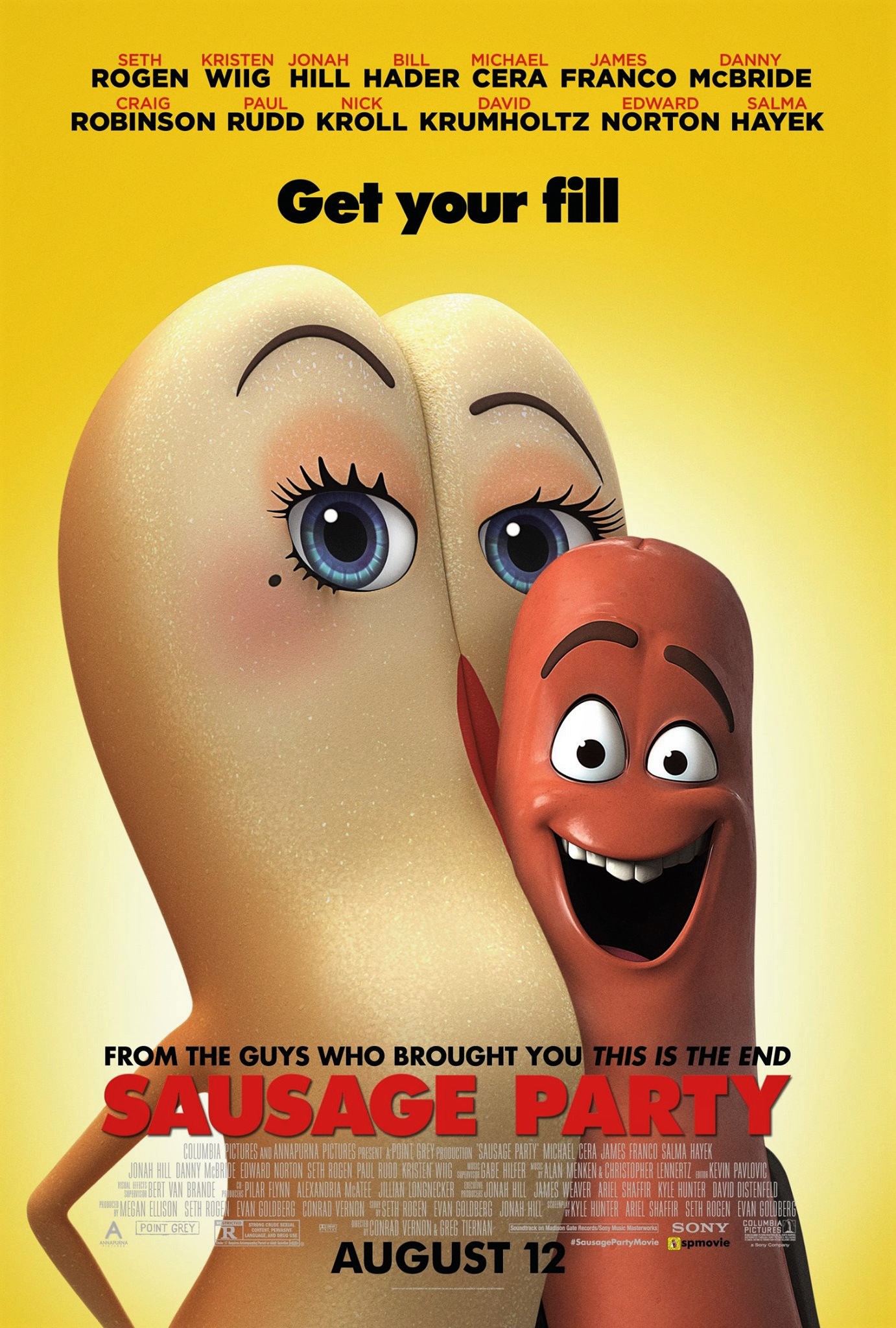
Directed by Greg Tiernan and Conrad Vernon (The Addams Family, The Addams Family 2) and co-written/produced by Seth Rogen and Evan Goldberg, Sausage Party, released in 2016, is an animated adult comedy with a very specific brand of humour, a brand that I have a strong distaste for. Lazily relying on copious amounts of foul language, sexual imagery and offensive jokes, the potential hilarity of Sausage Party‘s concept is ultimately squandered due to its dreadful execution, giving the impression that this adult-centric animation was written by a group of angsty teenagers.

Plot Summary: Eagerly awaiting the day they will be taken to the Great Beyond by their human deities, Frank the sausage, Brenda the hot dog bun, Sammy Bagel Jr. and the rest of the food items that occupy the shelves of the local supermarket, believe a code that allows them to live blissfully ignorant lives until it’s time to depart their aisle. But, when Frank learns the terrible truth that they will eventually become a human’s dinner, their shared fantasy comes crashing down, forcing the panicked perishables to devise a plan and fight back against their human foes…

An obvious parody of Disney, Pixar and DreamWorks’ animated classics. Co-writer and producer, Seth Rogen, first developed the idea for Sausage Party in 2007 while promoting Superbad and Knocked Up, as interviewers would ask Rogen what his next project would be, to which he jokingly replied; “It’s Called Sausage Party.” Rogen frequently described Sausage Party as a dreary take on family-friendly animated films, stating: “People Like to Project Their Emotions Onto the Things Around Them; Their Toys, Their Cars, Their Pets… So We Thought; ‘What Would It Be Like if Our Food Had Feelings?’ We Very Quickly Realised, That It Would Be Fucked Up.” An ingenious idea, to be sure, even if its execution leaves a lot to be desired.

Featuring the likes of Seth Rogan, Kristen Wiig, Michael Cera, Salma Hayek, Edward Norton, Jonah Hill, Bill Hader, Danny McBride, Paul Rudd and Craig Robinson, among others. Sausage Party possesses an all-star cast to voice its extensive and diverse line of animated characters. As such, the voice acting quickly becomes one of the best aspects of the film as every member of the cast puts their all into the project, despite the repeatedly low-grade dialogue. And whilst none of the characters could be described as well-developed, Brenda does make for an appropriately uptight love interest for Frank, while characters like Teresa Del Taco and Sammy Bagel Jr. are at least memorable for their cartoonish qualities.

The animated cinematography on display throughout Sausage Party is continuously frantic and often difficult to keep track of as a result of its constant movements. The animation itself also isn’t the most visually appealing as many of the characters’ designs (both human and anthropomorphitic food) are overly cartoonish, oddly sensual and repeatedly disproportionate. Still, there is a handful of amusing visual gags throughout the film. For instance, during the scene where Honey Mustard’s outburst causes two shopping trolleys to collide, hurling multiple food items toward the ground. The resulting carnage is a shot-for-shot homage to the opening sequence of 1998’s Saving Private Ryan, with all of the scene’s graphic violence being represented through burst flour bags, squished tomatoes and crumbled biscuits.

When it comes to the original score by Christopher Lennertz and Alan Menken, the soundtrack is serviceable, for the most part, with tracks like ChosenFood Massacre and Magical Sausage all serving their purpose of reinforcing scenes of both horror and humour within the story. However, where the film really shines in terms of music is the opening song; The Great Beyond, composed by Alan Menken, a composer predominantly known for scoring a number of classic animated musicals, including The Little Mermaid (1989) and Beauty and the Beast (1991). Thus, The Great Beyond is very reminiscent of the scores for those films, only with a more satirical edge, thanks to its comical lyrics and profanity.

In addition to the inconsistent quality of the humour, Sausage Party also attempts to integrate the notion of organised religion into its story, as Frank tries to convince his blissed-out companions that they might be heading not for a glorious afterlife, but rather knife-assisted oblivion. Even the Israel/Palestine conflict is riffed upon through the pairing of a lavash and a bagel. Yet, both of these underlying themes are significantly overshadowed by the constant wisecracks and needlessly shocking lines of dialogue. Moreover, the rules of Sausage Party‘s world oftentimes make no sense as many objects that aren’t food come to life, while others seemingly do not. Admittedly, this is more of a nit-pick than a true criticism for an absurdist comedy such as this, but I feel it’s always important for a story and its world to have consistency.

In summary, although Seth Rogen has expressed interest in making a sequel to Sausage Party, along with a number of other animated projects aimed toward older audiences, I have no desire to see any other projects of this nature. Lacking the abundance of laugh-out-loud moments that Rogen and Goldberg have delivered with their better efforts in the comedy genre, such as Pineapple Express (2008) and The Interview (2014), Sausage Party simply exists as a twenty-minute gag that was somehow stretched into a feature-length film, complete with shoddy writing, unpleasant animation and largely lethargic storytelling. Rating: high 3/10.

sausage_party_ver2_xxlg

Leatherface (2017) – Film Review

“You Messed With the Wrong Family…” – Verna Sawyer

Considering the monumental impact of the original Texas Chainsaw Massacre in the annals of horror cinema, it’s peculiar that the film’s ensuing franchise has had such an erratic history, bouncing from excessively jokey entries, like The Texas Chainsaw Massacre 2 in 1986, to absolutely bonkers ones, such as Texas Chainsaw: The Next Generation in 1995. 2017’s Leatherface continues this trend by once again attempting something different; aiming to be a prequel that explores the origins of the face-wearing menace himself. Unfortunately, however, even though the film has good intentions, Leatherface only succeeds in replicating the skin of a Texas Chainsaw Massacre flick and non of the guts within as the journey its titular character embarks upon ultimately doesn’t feel worth the eighty-seven-minute runtime.

Plot Summary: In 1955, the young, Jedediah Sawyer, is assigned the task of luring an unsuspecting traveller into his family’s decrepit barn for the sake of blood. But, when it turns out that this unfortunate victim was actually the lone daughter of Texas ranger, Hal Hartman, Jedediah is forcibly separated from his family and placed in a mental institution. Ten years later, the now near-adult, Jedediah, along with a handful of criminally insane inmates, manage to escape the asylum during a riot, beginning a journey of murder and turmoil as the group trudges across rural Texas, evading the vengeful ranger pursuing them…

Directed by Alexandre Bustillo and Julien Maury (Inside, Among the Living, The Deep House), Leatherface is, for all its flaws, at least an earnest attempt at franchise course correction, avoiding another reboot of the series to instead tell a story that tries to connect a few dots in the very tangled web of this horror franchise. Needless to say, being a prequel, Leatherface still suffers from the usual problem most prequels do: explaining things that don’t need explanation. As in the original film, Leatherface stands out because he is a complete enigma, even in a family of cannibalistic lunatics. We never receive answers to any of the questions we have about him as Leatherface simply exists, which is what makes him so terrifying. So, naturally, exploring his backstory diminishes that aspect. Furthermore, with Leatherface being just one member of a homicidal family, a prequel would be a great opportunity to develop some of the lesser-explored members of the Sawyer family, such as the Proprietor, the Hitchhiker and Grandpa Sawyer, yet none of their backstories are even hinted towards.

Despite their frequently flat dialogue, the film’s main cast of Sam Strike, Vanessa Grasse, Sam Coleman Jessica Madsen, James Bloor and Stephen Dorff all throw themselves into their respective characters with confidence as once Jedediah finds himself inside the mental institution, he encounters several intriguing patients. From the silent brute, Bud, to the callous couple, Ike and Clarice, all of whom make members of the Sawyer family look sane by comparison. Then there is the idealistic nurse, Lizzy, who essentially serves as the story’s final girl, yet due to a severe lack of development similar to many of the other characters, it does become increasingly difficult to empathise with her outside of just acknowledging her horrific situation. However, the highlight of the cast is undoubtedly Lili Taylor as Verna Sawyer, the family matriarch who is bursting with pride for her boys, but devoted to the point where every outsider is seen as an adversary.

When it comes to the visuals, even though Leatherface wasn’t actually shot in Texas, but instead, in Bulgaria for budgetary reasons. The film does utilise its varied colour palette along with natural lighting to create an effective and convincing backdrop of back-country Texas, giving cinematographer Antoine Sanier plenty of opportunities to integrate creative shots, including a shot that references the recognised extreme low-angle dolly shot from the original flick.

Regrettably, the original score by John Frizzell isn’t quite as remarkable as the soundtrack rarely breaks the mould of a typical horror soundscape, being rather forgettable outside of the score’s occasional use of a chainsaw-like rumble. Numerous songs from the 1960s can also be heard throughout the runtime, such as Leave Me Alone, Working on the Line and Don’t Take Me for Granted, which help further ground the story in the ’60s time period alongside the lavish costume and production design.

On another note, for those who desire graphic violence, there is a commendable amount of gore in Leatherface, even if the film is more plot-driven than kill-driven. Still, I will always prefer minimal gore over a constant bombardment of blood when it comes to The Texas Chainsaw Massacre franchise, as whilst no sequel, prequel or spin-off will ever be able to recapture the ominous tone and documentary-like feel of the 1974 classic, depicting minimal violence does, at least, make any later entry in the series seem closer to the original’s deceptive absence of on-screen brutality.

In summary, Leatherface is repulsive and disturbing much like the original film. The only difference is that The Texas Chainsaw Massacre also relied on intrigue and an eerie atmosphere to back up many of its horrifying concepts, whereas Leatherface does not. And while the film does admittedly deserve some credit for doing something different with the franchise, being the eighth instalment in this ongoing series, it’s apparent that Leatherface and his chainsaw slayings are starting to wear thin, becoming less and less enthralling each time they return to the silver screen. Rating: high 3/10.

leatherface-p1002138

Strange Magic (2015) – Film Review

“Send More Goblins to Cut Down Every Primrose! No Primroses, No Potion. No Potion, No Love. Because Love Is Dangerous. It Weakens… It Rots.” – The Bog King

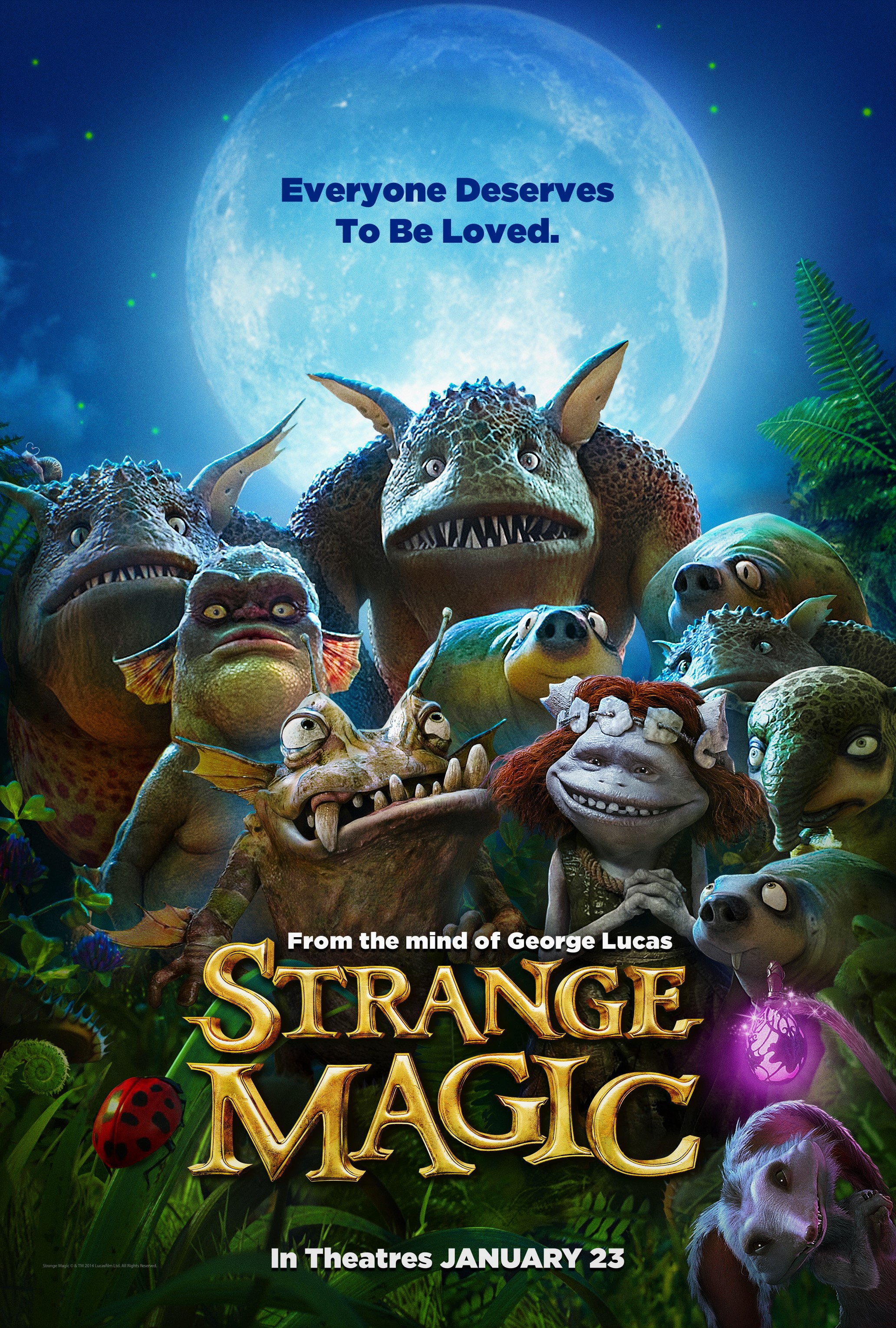
After selling Lucasfilm to the Walt Disney Company in late 2012, well-established writer-director George Lucas (THX 1138American GraffitiStar Wars: Episode IV – A New Hope) turned his attention away from the mega franchises of Star Wars and Indiana Jones to produce many of his long-gestating passion projects. This ambitious new turn began with the war epic; Red Tails in 2012 and shortly after Strange Magic in 2015, an animated fantasy musical that Lucas had long wanted to produce for his three daughters, having written an early draft of the story fifteen years earlier. Upon its eventual release, however, Strange Magic was deemed a colossal failure, earning only £9 million at the box office on a budget of approximately £74 million, along with receiving largely negative reviews from critics and audiences alike due to its predictable story, dreadful humour and bizarre song choices. All of which, I feel, are valid criticisms.

Plot Summary: In a mystical woodland realm where primrose flowers mark the border between two regions; the Fairy Kingdom and the Dark Forest. The undesirable, Bog King, rules over his gloomy domain without love, going so far as to imprison the Sugar Plum Fairy, who is capable of mixing love potions through the use of primroses, in a bid to permanently cease adoration across his domain…

Technically the first Lucasfilm production to be distributed by the Walt Disney Company following its acquisition. The story of Strange Magic is predominantly based on William Shakespeare’s A Midsummer Night’s Dream, as both narratives are romantic-comedies that involve misunderstandings and cross-purposes between different races or, in this case, species. The film also takes inspiration from many well-known fairy tales, including The Ugly Duckling and Beauty and the Beast for its central underlying theme, which concentrates on the belief that beauty is only skin deep and internal beauty is far more meaningful. An important message for children, to be sure. But, as a result of this subtext being delivered with zero charm or subtlety, the message itself comes across as incredibly forced and even somewhat contradictory, thanks to some of the screenplay’s ill-timed gags.

The central voice cast of Alan Cumming, Evan Rachel Wood, Elijah Kelley, Sam Palladio and Meredith Anne Bull all do a sufficient job of lending some personality to their respective characters. Especially since Strange Magic supplies very little in the way of characterisation, with a majority of the animated characters only being set apart from one another by what species they are, e.g. a fairy, elf or goblin, etc. Quite unfortunate, as for many characters, there is a solid foundation alluding to what they could’ve been should they have been further developed. For example, Marianne (the closet thing the story has to a protagonist) becomes distrustful of men once she witnesses her fiancée, Roland, cheating on her on the day of their wedding, quickly vowing to never love again and instead dedicate her life to protecting her family, specifically her sister, Dawn, who supposedly falls in love with every man she meets.

Aside from the flavourless designs of the fairies, which appear as if they’ve been yanked from any generic fantasy flick of the early 2000s, the visuals of Strange Magic are by far the film’s finest component, with nearly every shot retaining plenty of colour and ingenuity on account of the animated cinematography and the animation itself, which exhibits even the smallest of details right down to the threads on a characters’ clothing or patches of watery moss on tree branches. Yet, this isn’t too surprising, considering that Strange Magic was animated by famed visual effects company, Industrial Light & Magic, standing as their first fully animated feature since Rango in 2011.

Moving from the visuals to the music, Strange Magic is what’s known as a jukebox musical. This means that rather than creating original songs for the film, all of the songs heard throughout Strange Magic are popular songs from past decades. From Can’t Help Falling in Love to Love is Strange and I Can’t Help Myself (Sugar Pie Honey Bunch), the film’s continuous use of on-the-nose songs is undoubtedly what will make or break Strange Magic for most, as older audiences will feel as if they are being pandered to whilst younger audiences will simply be confused as to why none of the songs directly relate to any of the characters/locations within the film. Furthermore, the original score by Marius De Vries is barely distinguishable from any other fantasy score.

On a separate note, although the first entry in the Star Wars saga rarely lacked in world-building when it first introduced audiences to a galaxy far, far away. Strange Magic seems to actively avoid developing its world beyond one or two throwaway lines, establishing the two unimaginatively named regions that reside side-by-side and not much else as to how this fantastical world functions.

In summary, Strange Magic is a film that feels far too familiar to sing its own tune, with its derivative story coming across as a hodgepodge of well-worn elements from other animated and fantasy films. Most evidently, 2013’s Epic and the everlasting series of animated Tinker Bell flicks. As such, there’s virtually nothing about this fractured fairy tale that feels remotely fresh aside from some of its attractive visuals. There are enjoyable moments, of course, but, for the most part, Strange Magic is simply half-hearted and creatively lazy. Rating: high 3/10.

strange_magic-p940629