Project X (2012) – Film Review

“I’m Gonna Go Have a Long Cry… and Then Start Calling Some Lawyers.” – Costa

Partially based on a real house party that occurred in Melbourne in 2008, where the then-sixteen-year-old Australian teenager, Corey Worthington, posted his home address on MySpace, attracting around five-hundred people to his home and subsequently causing over $20,000 in property damage. 2012’s Project X undeniably has its flaws, yet through its efficacious use of the found-footage format and fantastically over-the-top narrative, this teen comedy is a surprisingly engaging watch. Standing as one of the rare entries in the found-footage genre to feature no horror content whatsoever, Project X will no doubt repel some older audience members on account of its typically teenage characters and near-constant use of foul language. Yet, for the younger generation, this comedic flick will maintain its appeal thanks to its terrific utilisation of its central concept and real-world inspirations.

Plot Summary: As their tenure as high school seniors draws to a close, two friends, Costa and JB, attempt to finally make a name for themselves by throwing a life-changing birthday party for their friend, Thomas. But, as word of their prodigious house party spreads online, the situation quickly begins to spiral out of control as the guest list rises rapidly…

Directed by Nima Nourizadeh (American Ultra) and produced by Todd Philips, director of many renowned comedies, including The HangoverOld School and War DogsProject X mines the depths of the teen comedy and found-footage genres to deliver eighty-seven minutes of enjoyable debauchery, with its runtime largely consisting of music video-type sequences that fully indulge in the colourful chaos of a neighbourhood-spanning party. And while some moments, such as a scene where a dwarf makes his way through Thomas’ house punching various partygoers in their crotches, could be seen as rather far-fetched, other moments are unexpectedly hilarious thanks to their increasing absurdity. That being so, I would encourage first-time viewers to blindly go into Project X so they can experience many of the film’s surprises first-hand.

The comradery between the central three friends desperately tries to recall those in quintessential teen comedies like Superbad and American Pie, but unlike those earlier films, the leading trio of Thomas, Costa and JB can occasionally come across as somewhat repugnant, despite being sufficiently portrayed by Thomas Mann, Oliver Cooper and Jonathan Daniel Brown, respectively. This is primarily due to the characters being written as authentic teenagers, depicting them as immature, foul-mouthed, impassioned youths who are clearly lacking in favour at their local high school. And whilst none of the characters receive much development beyond this basic level of characterisation, I feel that unlikeability in some scenes is just a repercussion of making the trio seem like genuine teenagers bearing teenage traits. That’s not to say, however, that you don’t feel sorry for Thomas once he starts to panic at the sight of his house being defiled, evidently suffering the consequences of submitting to his friends’ grand scheme.

Shot on a set instead of a real neighbourhood to minimise local disruption, a decision that proved to be a wise one as the set was essentially trashed during production. The cinematography by Ken Seng is realistically shaky and boisterous similar to many other found-footage films, yet still manages to be clear enough to impressively place the audience in the middle of Thomas’ larger-than-life birthday extravaganza. Moreover, to add to the realism, some pieces of footage were shot by the supporting cast with handed-out phones, which all varied in quality or retained visual distinctions to stand out. Another reason Project X looks as captivating as it does is a product of the film’s excellent use of colour, which steadily grows in variation as the party grows in size, making great use of the dynamic lighting setups Costa hires out for the party.

Lacking an original score as a result of its found-footage format, Project X places much of its auditory focus on its remarkable soundtrack, as dance songs like Pursuit of HappinessHeads Will Roll and Le Disko, perfectly match the upbeat, stimulating atmosphere of a congested house party. And although the film places some of its songs over sequences where non-diegetic music shouldn’t really be present, such as a tumultuous moment in which a riot ensues and the rock song; Battery by Melltaica, is heard. I am willing to ignore that irritation on the basis that the songs chosen for each scene feel more than suitable, adding to the underlying sensation of each sequence, whether that be chaotic or cordial.

Interestingly, many of the minor antics throughout Project X were improvised by the supporting cast, including a scene where a female partygoer gets caught urinating behind a car. Many of these moments add to the pandemonium of the story, appearing inspired by scenarios the filmmakers found themselves in at actual house parties. These short, humourous shots also help redeem the screenplay’s handful of on-the-nose dialogue, especially from minor characters like Thomas’ parents before they leave for the weekend.

In summary, even though the mere notion of Project X will almost certainly turn off any audience members over the age of twenty-five, considering that the plot revolves around dancing and consuming various substances until 05:00 am. I am keen to encourage those on the fence to give the film a chance, as I believe Project X thrives as a teen comedy and will leave many feeling as if they’ve just attended the most epic house party in existence. Rating: 7/10.

project_x-p630878

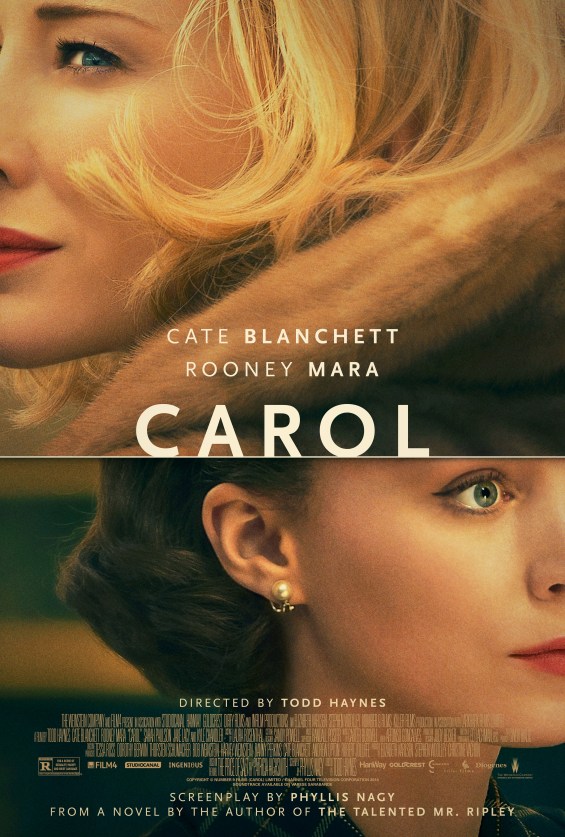
Carol (2015) – Film Review

“You Seek Resolutions Because You Are Young. But, You Will Understand This One Day.” – Carol Aird

A period-set romantic drama with a pleasant festive aesthetic in the former half of its runtime, 2015’s Carol is based on the novel; The Price of Salt by Patricia Highsmith. Powered by the fantastic performances of Cate Blanchett and Rooney Mara in the lead roles, Carol is a well-told and engrossing tale of forbidden love between two women that lives up to its cherished source material. Thanks in part to its elegant production design and magnificent original score by Carter Burwell.

Plot Summary: During the Christmas season of 1952, aspiring photographer, Therese Belivet, meets Carol Aird whilst working at a boutique store in Manhattan. Semi-divorced and entrapped in a loveless relationship with her former husband, Carol quickly sparks a connection with Therese over their shared romantic hardships. Yet, amidst the strict social norms of their time, their undisguised interest in one another soon turns into profound affection…

The original novel the film is based upon was actually inspired by a blonde woman in a mink coat who ordered a doll from Patricia Highsmith when she was working as a temporary salesgirl at Bloomingdale’s in New York City during the 1948 Christmas season. Highsmith recalled feeling; “Odd and Swimmy in the Head, Near to Fainting. Yet, at the Same Time, Uplifted.” Highsmith completed the outline for the story in about two hours that same night. Moreover, the character of Carol Aird was inspired by Virginia Kent Catherwood, a Philadelphia socialite six years older than Patricia Highsmith, with whom the author had a love affair in the 1940s. Catherwood subsequently lost custody of her daughter after her homosexuality was used against her with a taped recording of a lesbian liaison she had in a hotel room. Director Todd Haynes (Velvet GoldmineFar from HeavenI’m Not There) sufficiently employs all these ideas into a grander narrative in his adaptation, primarily concentrating on the senseless consequences of a lesbian relationship in a time when they were strongly frowned upon.

When it comes to the cast, the pairing of Cate Blanchett and Rooney Mara is superb, with Blanchett portraying the thirty-two-year-old, Carol Aird, as a woman chafing against the constraints of her role as an upper-class wife and mother, continually expressing her sexual desires for women as a method of rebelling against her husband and her conformist world. While Mara’s performance as nineteen-year-old, Therese Belivet, is more suppressed, depicting the quiet young woman as a self-deprecating, novice photographer who prefers to hide behind her camera than engage with others. Softly spoken and sweet-natured, Therese is as single-minded in her relationship with her boyfriend as she is in her pursued career. As such, it’s easy to see why the pair bond, given that they provide a sense of escapism for each other, and upon their first meeting, the sexual tension between them is palpable.

Although the cinematography by Edward Lachman is doubtful to blow any audience member away with its framing or use of colour, Carol still features a number of visually interesting shots that occasionally even illustrate what the characters are feeling. For instance, in the opening shot, we see an iron floor grille from which the camera slowly pulls out, visually representing the entrapment that Carol and Therese feel at the beginning of the narrative. Another intriguing attribute in regard to the visuals is that Carol was shot on Super-16 millimetre film to better resemble the look of photographic film from the late 1940s/early 1950s. Many of the shots are also directly influenced by the photojournalism of Vivian Maier, Ruth Orkin, Helen Levitt and Esther Bubley, respectively.

Moving onto the original score, through orchestral tracks like OpeningDatebookChristmas Trees and Waterloo, the score by Carter Burwell consistently sounds wrapped in a gauze of wistful minimalism, with the leading duo being audibly identified by two instrumental markers; Carol by piano and Therese by woodwinds. In addition to the wonderful original score, Carol makes terrific use of songs from the time period. In fact, prior to the start of production, Todd Haynes compiled a playlist of seventy-nine songs that were popular during the era the story is set within to further understand the period. A few of the songs that were ultimately chosen for the film include; One Mint JulepEasy Living and Smoke Rings.

From start to finish, the production design of Carol is also outstanding, capturing the polished and aristocratic essence of the ’50s without seeming excessive. This praise can be applied to all parts of the production, but, most notably, the costume design. What makes the costume design even more spectacular is that excluding the suit Therese wears in her first and last scene(s), all of Rooney Mara’s costumes were actually well-worn, vintage clothing pieces.

In summary, whilst Carol isn’t one of the finest romantic dramas ever made, it is still a tremendous flick in more ways than one. While the pacing is sometimes too slow for its own good, and the original score occasionally does a lot of the heavy lifting during the more emotionally impactful moments, Carol is an indelible and captivating story, all the same. On top of that, even though many may see Carol as a rather strange choice for a Christmas viewing, I feel the joyous, snowy aesthetic that the film presents during its first half is enough to make the flick a reliable, less whimsical pick for the festive season. Rating: low 7/10.

carol-p1023477

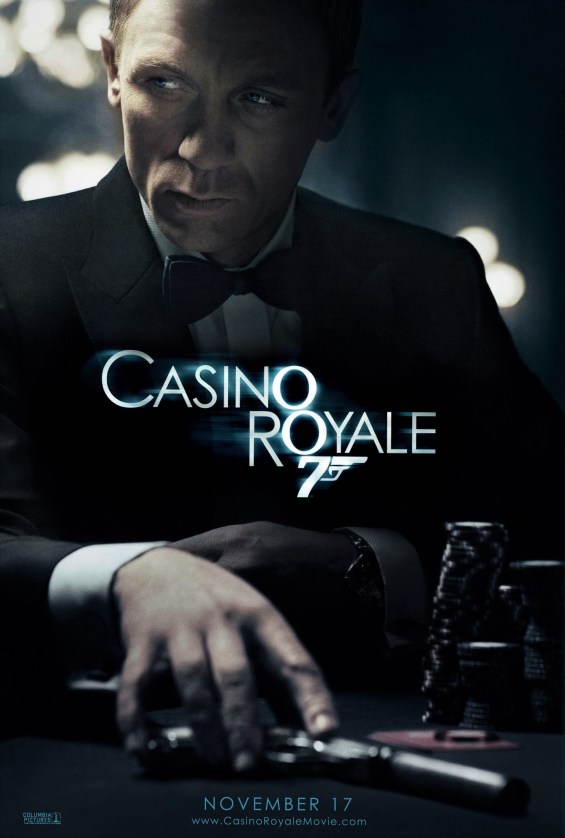
Casino Royale (2006) – Film Review

“I’m Sorry, That Last Hand… Nearly Killed Me.” – James Bond

Much like the sci-fi television series; Doctor Who, or any franchise that reboots itself after a certain amount of time. The biggest hurdle the 007 franchise has to overcome with every incarnation is getting die-hard fans of the long-established espionage franchise on board. Luckily, the 2006 reboot of the series; Casino Royale, succeeded in this regard, with Daniel Craig taking on the iconic role of James Bond in a slick and thrilling mission. Doing away with much of the absurdity present in previous instalments, in exchange for pulse-pounding action sequences and an unexpectedly engaging romantic subplot.

Plot Summary: After receiving his license to kill, British Secret Service agent, James Bond, sets out on his first mission as 007, travelling to Madagascar, where he uncovers a link to Le Chiffre, a private banker financing terrorist organisations. Learning that Le Chiffre plans to raise funds through a high-stakes poker game at Casino Royale, Montenegro, Bond is instructed to play against him and thwart his plans…

Holding familiarity with the franchise after directing the Pierce Brosnan-era instalment; GoldenEye, in 1995. Director Martin Campbell (The Mask of ZorroVertical LimitThe Foreigner), along with the series’ producers, decided to take the franchise in a more grounded direction following the bombastic action sequences of the later Brosnan entries. So, there are no high-tech gadgets or tumultuous helicopter chases in Casino Royale. Instead, the poker game at the centre of the story is what holds most of the film’s suspense, occupying the majority of the second act and harbouring some of Bond’s best lines. Moreover, Casino Royale is one of the most faithful adaptations of the 007 source material, adapted from the novel of the same name by Ian Fleming, the first piece of media to feature the character of James Bond.

Despite the casting of Daniel Craig initially sparking outrage amongst the 007 fanbase due to Craig’s blue eyes and blonde hair, the online annoyance didn’t last long as once Casino Royale was released, critics and fans alike instantly fell for Craig’s rendition of the character. This was partially because, unlike the other cinematic portrayals of James Bond, whose kills held no more weight than the cheeky one-liners that accompanied them, Craig’s tussles tend to be intimate, bloody and devoid of glamour. Craig’s brooding persona, dry humour and excellent line delivery also find a close match in Eva Green’s take on the “Bond Girl,” Vesper Lynd, whose intelligence and assertive attitude puts aside any negative traits associated with the supporting role. And while Mads Mikkelsen is merely serviceable as the antagonist, Le Chiffre, with his menacing performance leaving little impact, Judi Dench makes the most of her brief screen-time as M, the head of MI6, exuding both confidence and power.

In terms of visuals, Casino Royale makes one subtle change that results in the instalment looking quite different from the ones that precede it. For most of the 007 entries before Casino Royale, the visuals almost seem to have been an afterthought as the lighting is flat, the composition is dull, and the cinematography never does anything to advance the characters or the story. Yet, with Casino Royale, it’s evident that the main principle that guides the camerawork is to always keep the camera moving. Thus, the cinematography by Phil Meheux repeatedly makes effective use of hand-held close-ups and mid-shots. Furthermore, when it comes to filmmaking, the first ten minutes of screen-time are crucial in establishing the tone, mood and style of a project. Casino Royale clearly understands this, as the opening scene employs canted camera angles and intercuts between past and present, all dosed in a fierce, greyscale colour palette for a striking introduction.

Surprisingly, the classic 007 theme, composed by Monty Norman, appears very rarely in the film’s original score. Supposedly, this is because the filmmakers wanted to emphasise Bond’s inexperience, essentially having 007 earn the theme by the time the end credits roll. However, that’s not to say that the rest of the score is terrible, as composer David Arnold steers the soundtrack away from over-the-top action cues and towards more nuanced tracks like Vesper and Blunt Instrument. And, of course, no 007 entry would be complete without a memorable song to pair with the stylish opening title sequence. In this case, it’s You Know My Name, by Chris Cornell, an alternative rock piece that fits the tone of Casino Royale flawlessly.

The action sequences are where Casino Royale delivers some of its most jaw-dropping moments. Almost every set piece could easily be the climactic action sequence of any typical action flick, which truly demonstrates the impressive stunt work and remarkable fight choreography on display throughout Casino Royale. The action-heavy first act, in particular, boasts one of the finest parkour sequences seen in this franchise to date as Bond chases a terrorist through the streets of a Madagascan village, culminating in an exhilarating hand-to-hand scuffle atop a towering construction crane.

In summary, Casino Royale disposes of the goofiness and gadgetry that plagued older James Bond outings as Daniel Craig delivers what critics and fans have been waiting for; a brutal, haunted and intense reinvention of 007. With rousing action sequences, a compelling narrative and a conclusion filled with plenty of potential. Casino Royale functions as a terrific example of how to reboot a well-known franchise, even if it isn’t particularly distinct when placed alongside other espionage flicks. Rating: high 7/10.

casino_royale-p379801

Cargo (2017) – Film Review

“You Can’t Lose Hope.” – Etta

Based on the short film of the same name, which went on to be an online sensation following its release in 2013, garnering over thirteen million views on YouTube alone. Cargo takes a refreshingly character-driven approach to the post-apocalyptic genre differentiating itself from other films featuring flesh-devouring monstrosities through its secluded setting and Martin Freeman’s terrific lead performance. A combination that will surely satisfy most zombie fanatics, even if the genre’s more mainstream crowd could potentially be disappointed at the exclusion of decaying hordes of the undead, a true sense of dread and a lack of extravagant gore.

Plot Summary: After an epidemic spreads across Australia morphing humanity into flesh-eating monsters, Andy, along with his wife, Kay, and their infant daughter, Rosie, attempt to escape the Outback via the river, making their way to a presumably secure military base. But, when the trio stumble upon an abandoned yacht, Kay is bitten while searching the vessel for supplies, soon passing the virus onto her husband. Now, with his time running short, Andy has one mission; find a new home for his daughter…

Directed by Ben Howling and Yolanda Ramke, Cargo is not only Howling and Ramke’s first feature-length film, but is also Australia’s first-ever production spotlighted as a Netflix Original, released globally on the streaming service in 2017. And although Netflix has ventured into the post-apocalyptic genre before, with films like Ravenous (2017) and the television series; Z Nation, both Howling and Ramke wanted Cargo to be more than just a straightforward story of survival. Subsequently, this led the pair to intertwine an abundance of social commentary into their zombie-centric story, covering a range of topics from environmental fracking to the exploitation of Australia’s aboriginal peoples. However, in my opinion, the best element of Cargo is its central concept, as the idea of a father having only forty-eight hours to find a new life for his child is a plot enriched with dramatic potential. Moreover, the nocuous outbreak Andy finds himself within serves as the perfect backdrop to juxtapose the qualities one would look for in a capable (and devoted) guardian.

Speaking of the protagonist, Martin Freeman leads the cast brilliantly as Andy, portraying an affectionate father and husband who is determined to protect his family at all costs, an intention which, whilst honourable, often lands him and his loved ones in an even more treacherous spot as Andy refuses to accept when he is out of time. Freeman’s youthful co-star, Simone Landers, unfortunately, doesn’t fare quite as well, as her frail performance frequently results in poignant scenes feeling less sincere. Nevertheless, Thoomi is still an intriguing character, with her subplot concentrating on the demise of her father and the survival of a nearby native tribe, providing a vastly different perspective on the epidemic compared to Andy’s point of view.

Utilising the vegetation-splotched, sun-parched rural land of the Australian Outback flawlessly, the cinematography by Geoffrey Simpson is both varied and visually interesting, even if, in reality, the Australian wilderness where Cargo was shot threw everything it had at the production crew, with South Australia experiencing what was supposedly its worst weather in a century, with floods, power blackouts, torrential downpours and even a miniature cyclone all occurring during the five weeks of production. Yet, miraculously, the crew didn’t lose even a single day of filming, which was extremely fortunate for the filmmakers, given how the remote setting of the narrative is a crucial player in the film’s identity, its harsh and unforgiving nature hurling countless obstacles at our characters whilst, at the same time, offering them the means to survive.

Managed by four distinct composers, including Michael Hohnen, Daniel Rankine, Geoffrey Gurrumul Yunupingu and Johnathon Mangarri Yunupingu, the original score for Cargo substantially strengthens each scene’s emotional significance, almost as if the score is applying a proverbial highlighter to certain moments with sombre, tenuous tracks, such as The Grave and Goodbye, flourishingly pulling at the audience’s heartstrings more times than one.

Taking an alternate route to avoid comparisons to zombie designs of the 1960s and 1970s, most notably in classic horror flicks like Rabid (1977) and Night of the Living Dead (1968). Cargo strays away from many of the usual clichés associated with the undead, centring its zombie design around an orange pus-like substance that oozes from the infected’s facial orifices rather than the bleeding open wounds the living dead are commonly known for. This distinction is further emphasised through what we see of their behaviour, as the infected are presented as mindless animals more than they are man-eating monsters, requiring dark and damp areas to incubate during the daytime before feasting on whatever wildlife they can find once night falls. Quickly reminding the audience that what they are witnessing is a viral infection, hence why the infected are nicknamed; “Virals.”

In summary, even if Cargo‘s story could have been executed better with a motley of improvements, I feel Cargo is still a creditable entry into the realm of post-apocalyptic storytelling. Standing as a zombie flick with soul and pathos, which, in turn, makes the living dead formidable once again, not because of jump-scares or excessive bloodshed, but because of the film’s biggest drawcard; its sheer humanity. Recounting a story that largely revolves around the notion of human determination, witnessing just how far an individual will go to protect another in the bleakest of circumstances. Rating: 7/10.

cargo-poster-1

Hush (2016) – Film Review

“I Can Come in Any Time I Want, and I Can Get You Anytime I Want. But, I’m Not Going To. Not Until It’s Time.” – The Masked Man

Exceptionally gripping in the face of its simplicity, Hush, released in 2016, navigates the bloody waters of the home invasion subgenre to tremendous results. With only five characters and a single location to speak of, the performances and sound design of Hush are both key components in the film’s goal of establishing a disquieting tone, captivating its audience while simultaneously making them dread that the story they are witnessing on-screen could realistically transpire in the most peaceful of surroundings. Certifying Hush as a concise and well-executed horror/thriller, despite the film’s continuous cat-and-mouse pursuits growing a little tiresome by the third act.

Plot Summary: When Maddie, a deaf and mute author, moves to a secluded woodland house in the hope of living a peaceful, solitary life as she writes her second novel, she soon finds her isolated home the target of a deranged, masked killer…

Co-written, directed and edited by Mike Flanagan, this talented director has been the face of modern horror for many years, crafting chilling and original genre pieces, such as Oculus (2013), Before I Wake (2016) and the horror/drama mini-series; The Haunting of Hill House in 2018, in addition to adapting much of Stephen King’s iconic catalogue of horror literature, with 2017’s Gerald’s Game and 2019’s Doctor SleepHush, however, was one of the director’s earlier projects, with Flanagan conceiving the storyline whilst on a dinner date with his co-writer/leading actress Kate Siegel in 2014, not long before the pair married in 2016. To get a better understanding of the film, Siegel and Flanagan even role-played each scene in their house before writing them into the screenplay, enabling them to envision how the characters would react in the face of danger, a method that I feel ultimately paid off.

Although the lead role of Hush seems tailor-made for a hearing-impaired actress, Kate Siegel portrays Maddie divinely as a quick-witted heroine who keeps the audience on her side at all times. Continuously thinking on her feet, overcoming some of the obstacles associated with her disability, and using her hearing impairment to her advantage whenever possible, it’s easy to root for Maddie to triumph over her assailant. John Gallagher Jr. is also stellar as the mysteriously motivated antagonist, a character only ever referred to as the “Masked Man,” who, throughout the runtime, enjoys playing mind games with his victims, receiving some kind of fetishistic pleasure from toying with those he’s about to slaughter. In many ways, the Masked Man shares similarities to the horror icon, Michael Myers, with his motivation for killing never being stated and his costume consisting primarily of an unadorned white mask, which only adds to the character’s intrigue.

Whilst a substantial portion of the cinematography by James Kniest is hand-held, removing the possibility of Hush standing as one of Mike Flanagan’s most visually impressive films. The fluidity of Hush‘s camerawork does allow the audience to follow Maddie as she wanders through her contemporary home, the camera tracking her every movement as she enters and exits various rooms on impulse. However, a major shortcoming of the film’s visuals is certainly it’s lighting, as due to all of the narrative taking place at night, it makes sense that Hush would be quite gloomy lighting-wise. Yet, most shots are seemingly over-lit, considering the characters are supposed to be in a dense woodland area in the dead of night.

At times peaceful, at times aggressive, the original score for Hush, composed by The Newton Brothers, greatly enhances the story at many points as tracks, like MaddieIntruderAgainst the Glass and Crossbow, are all incredibly atmospheric. And, even if the score lacks a predominant track that could be regarded as the film’s theme in years to come, Hush‘s soundtrack still more than serves its purpose, especially when taking into account the film’s reliance on sound as opposed to a non-diegetic score.

Since the protagonist of Hush is both deaf and mute, the film contains less than fifteen minutes of dialogue. Therefore, with a runtime of around eighty-two minutes, Hush harbours more than seventy minutes of screen-time without a single word spoken. This setup provides Mike Flanagan with a perfect opportunity to play with sound in creative ways, removing the audio entirely (except for an ultrasound machine) in some scenes to put the audience into Maddie’s position and deliver a sudden jolt when appropriate, thus, avoiding the common horror cliché of having nonsensical, ear-piercing jump-scares for no apparent reason. Through the sound design, we also learn more regarding Maddie’s character, as she hears the echoing voice of her deceased mother whispering to her. Her voice usually aids Maddie in conjuring up endings for her novels, but, in this case, her mother’s ghostly voice lays out her options on how to approach her current, precarious situation.

In summary, Hush is a sharp, violent and finely-tuned horror/thriller that goes down familiar paths yet with flair and skill, never reinventing the wheel, but proving that the genres it’s drawing from still have firm legs. From the Masked Man toying with Maddie, as he steals her phone and sends pictures to her laptop to Maddie rapidly locking all of her windows and doors before the killer can enter, Hush is undoubtedly a compelling story with an excess of suspenseful moments, its superb sound design only adding to its appeal as the film regularly comes close to being a sensory-deprivation experience. Rating: 7/10.

hush_xxlg

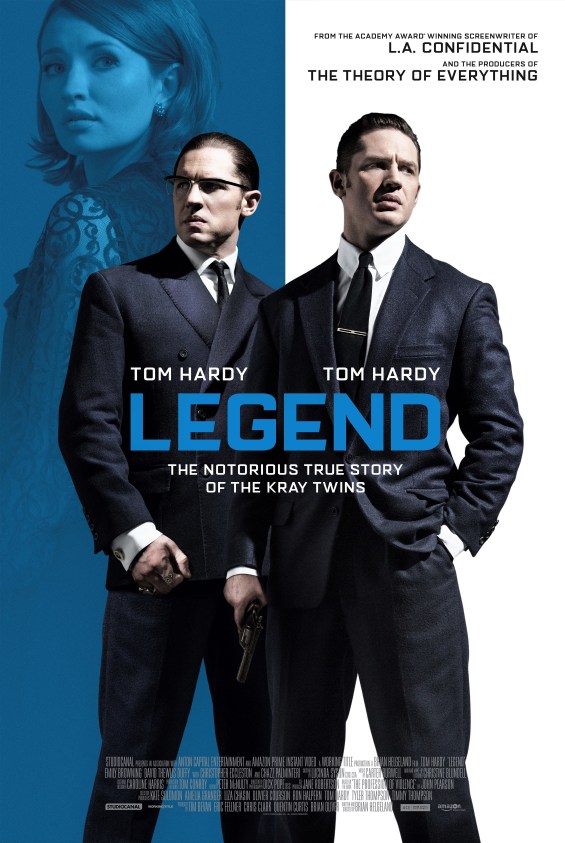
Legend (2015) – Film Review

“Me and My Brother, We’re Gonna Rule London!” – Ronald ‘Ronnie’ Kray

Recognised as some of the most notorious gangsters in British history, Ronald ‘Ronnie’ Kray and Reginald ‘Reggie’ Kray were identical twin brothers and the foremost perpetrators of organised crime in the East End of London during the 1960s. With the help of their gang, known as the Firm, the Krays were involved in numerous murders, armed robberies, protection rackets, arsons and assaults. And, in 1965, as West End nightclub owners, the Krays even mingled with politicians and prominent entertainers, subsequently becoming ’60s icons themselves before both brothers were ultimately arrested and sentenced to life imprisonment in 1967. Therefore, even if the twin crimelords were convicted murderers, their rise to power was ripe for a cinematic interpretation, and 2015’s Legend more than succeeds in converting the brothers’ riotous downfall into an enthralling biopic, thanks largely to Tom Hardy’s mesmerising dual performance.

Plot Summary: Identical twins, Ronald ‘Ronnie’ Kray and Reginald ‘Reggie’ Kray, have risen through the ranks of the criminal underworld in 1960s London, with Ronnie advancing the family business through violence and intimidation, while Reggie struggles to go legitimate with his girlfriend, Frances Shea. But, with Detective Superintendent Leonard Read hot on their heels, Ronnie’s unpredictable tendencies along with the slow disintegration of Reggie’s relationship, threaten to bring the brothers’ criminal empire tumbling to the ground…

Written and directed by Brian Helgeland (PaybackA Knight’s TaleMan on Fire), Legend is partially an adaptation of the true-crime book; The Profession of Violence: The Rise and Fall of the Krays Twins by John Pearson. I say ‘partly’ as the film (unlike the book) begins well into the Kray’s criminal career, steering clear of the twins’ East End childhood, their early days as boxers or their time spent behind bars during National Service. Even the pair’s beloved mother, Violet Lee Kray, is barely glimpsed outside of one or two scenes, seemingly unaware of her boys’ violent actions. And whilst this could be seen as a positive, as Legend doesn’t waste any of its runtime on frivolous flashbacks to the twins’ adolescence, it could also be seen as a negative, as I feel that witnessing the Kray’s childhood would’ve provided a clear view of their personalities before their rampant path of butchery began.

Taking on dual roles for the film, Tom Hardy had thirty-five filming days in which he had to portray both brothers, meaning Hardy would have to film scenes as the twin who had the most dialogue first, then return to hair and make-up to be transformed into the opposing twin. Originally, Hardy was only offered the role of Reggie, but Brian Helgeland was persuaded to let Hardy tackle the role of Ronnie, as well. I’d say this was for the best, as Tom Hardy taking on both roles not only adheres to the idea of the Krays being identical twins, but truly allows him to display his full acting range, continually upstaging himself as he switches from brother to brother on a dime. The rest of the cast, including Emily Browning, Taron Egerton, Paul Anderson, David Thewlis and Christopher Eccleston, is also marvellous in their supporting roles, whether they are in pursuit or service of the Krays.

Exceedingly lavish in its presentation, Legend often possesses the tone of an American gangster epic like Goodfellas and Casino, despite being so distinctly British, contrasting its bloodletting and depravity with elegant shots from cinematographer Dick Pope, in addition to plenty of wonderful set-dressing as the film was shot almost entirely on location, with very few sets used. The camerawork also allows for a few long takes, with Reggie and Frances’ first evening out together being one continuous five-minute and forty-second shot.

When it comes to the original score by Carter Burwell, tracks such as LegendElegy for Frances and Your Race is Run, serve their purpose effectively as part of the narrative. The main focus of Legend‘s soundtrack, however, is the film’s long list of recognisable songs, which further help cement the story within the 1960s time period. And whoever compiled this soundtrack clearly has a great deal of expertise in that area, not only in selecting songs that one would hope to hear from a film set in the swinging sixties like Green Onions and Cissy Strut, but also in selecting long-forgotten gems.

From costumes to vehicles to props, the production design throughout Legend is again nothing short of exceptional. To the extent that even Ronnie and Reggie’s tailored suits are almost indistinguishable from the suits the twins wore in real life. Additionally, the utilisation of digital compositing and body doubles for whenever two versions of Tom Hardy are required on-screen at one time rarely has a faulty moment, auspiciously tricking the audience at multiple points.

In summary, while most will agree that any glorification of real-world criminals is questionable, with Legend often having a mythologist and, at times, even romanticised approach to its low-life protagonists, the film is a well-crafted biopic, nonetheless. Through its retro style, brilliant production design and copious comedic moments, Legend is a solid crime-drama even in spite of its occasionally overblown scenes or on-the-nose song choices, such as Chapel of Love for Reggie and Frances’ wedding. But, the main reason to watch Legend is unquestionably the spectacular dual performance from Tom Hardy, who confidently steals every scene he appears in. Rating: 7/10.

legend-p1006732

The Final Girls (2015) – Film Review

“I Can’t Believe We’re Just Gonna Casually Watch Someone Get Murdered. What Is This, Detroit?” – Vicki Summers

An affectionate nod and occasional parody of 1980s slashers and their associated tropes, The Final Girls, released in 2015, may not be as inspired or as tonally consistent as the similarly self-mocking likes of The Cabin in the Woods (2011), Behind the Mask: The Rise of Leslie Vernon (2006) or the iconic 1996 slasher; Scream. But, with plenty of humorous moments, some stellar visuals, and a surprisingly strong layer of emotion tying together all of the film’s meta amusement, The Final Girls is sure to delight any admirer of the gruesome subgenre, even if the film focuses far more effort towards being a comedy than a nostalgic horror.

Plot Summary: When Max Cartwright and her friends reluctantly attend a tribute screening of the notorious 1980s slasher Camp Bloodbath, a film that starred Max’s late mother, the group are transported into the cult horror flick. Now reunited with an on-screen version of her mother, Max and her friends must join forces with the ill-fated camp counsellors to confront the film’s machete-wielding killer and survive the ninety-two-minute runtime…

Directed by Todd Strauss-Schulson (Drunks vs. Highs, Zombies and Cheerleaders, Isn’t It Romantic) and co-written by M.A. Fortin and Joshua John Miller, The Final Girls does a fantastic job of capturing all the aspects of ’80s slashers in a way that highlights the hilarity of their predictability, whilst still respecting the subgenre, from one character losing her virginity and thus, instantly condemning herself to a violent death, to each of the camp counsellors fitting into one of several slasher stereotypes, e.g. the Jock and the Harlot, etc. The screenplay gets plenty of mileage out of playing with the clichés we all know from the slasher flicks of old. Still, it’s undeniable that the influence for The Final Girls is the Friday the 13th series, as the films share many, many similarities in everything from structure to sound design.

The cast for The Final Girls is extensive, as the screenplay balances the characters from the real world and the over-the-top personalities from Camp Bloodbath, who are intentionally written as walking clichés, with the film placing most of its attention toward developing Max and her mother, Amanda, portrayed by Taissa Farmiga and Malin Akerman, respectively. And, their relationship is where the majority of the story’s poignant scenes come from, as after losing her mother in a tragic car crash three years earlier, Max finally sees her chance to save her, or at least, the on-screen version of her, through saving the fictional character of Nancy from her grim fate, a sweet-souled, unaware shadow of actress Amanda Cartwright. However, while the pairs’ performances are superb, along with the rest of the cast of Alexander Ludwig, Alia Shawkat, Nina Dobrev, Thomas Middleditch, Angela Trimbur (and more), Adam Devine is horribly miscast as Kurt, the sportsman-type character, as, instead of being an athletic, perverted jock, Devine comes across as far more pathetic and obnoxious than he should, almost as if he isn’t fully aware of what slasher archetype he is supposed to be portraying.

Other than some briefly utilised CGI, which has noticeably aged very poorly. A large portion of the visuals throughout The Final Girls are impressive yet not always authentic to the ’80s time-period, as the cinematography by Elie Smolkin allows the camera to swerve, zoom and spin around the characters, all the while, the film’s colour palette is either immensely vibrant or exclusively black and white for whenever a flashback to the killer’s origin story is called for. Moreover, the film features several creative sequences, including a tooling-up montage and a slow-motion chase, both of which not only add to the film’s style but are also terrifically edited.

Though lacking a central theme like many iconic slashers from the 1980s, the original score by Gregory James Jenkins and Eddy Zak is like a musical time-capsule of sounds that are no longer used within the horror genre, as tracks like The Diaphragm Van and Puttin’ It Together are easy-on-the-ears synth tracks that whilst competent and reminiscent of ’80s horror scores, never quite manage to surpass any of their inspirations.

Unfortunately, despite all these positives, The Final Girls isn’t an impeccable horror-comedy, as even with its brief runtime, the film does lose a bit of steam during its last third or so, as the story begins to fall into less inventive territory as the body count rises. Still, the screenwriters find ways to integrate a clever surprise or two, such as the cliffhanger ending, which alludes to the prospect of a money-grubbing sequel, titled; Camp Bloodbath 2: Cruel Summer. The second primary issue The Final Girls suffers from is its almost complete absence of violence/gore, as aside from one or two shots of dripping blood, for a slasher, Camp Bloodbath seems somewhat family-friendly, which, in my opinion, is a huge misstep in light of the slasher subgenre being well-known for its excessive amounts of blood and guts.

In summary, with much of The Final Girls essentially being a film-within-a-film, it’s entirely plausible that this horror-comedy could’ve declined into nothing but constant fourth-wall-breaking jokes and pop culture references. Yet, through its engaging story and facetious writing, The Final Girls successfully deconstructs the slasher subgenre without the cynicism that could render a comedy into an unsurprising, humourless snore. Rating: 7/10.

the_final_girls-p1011432

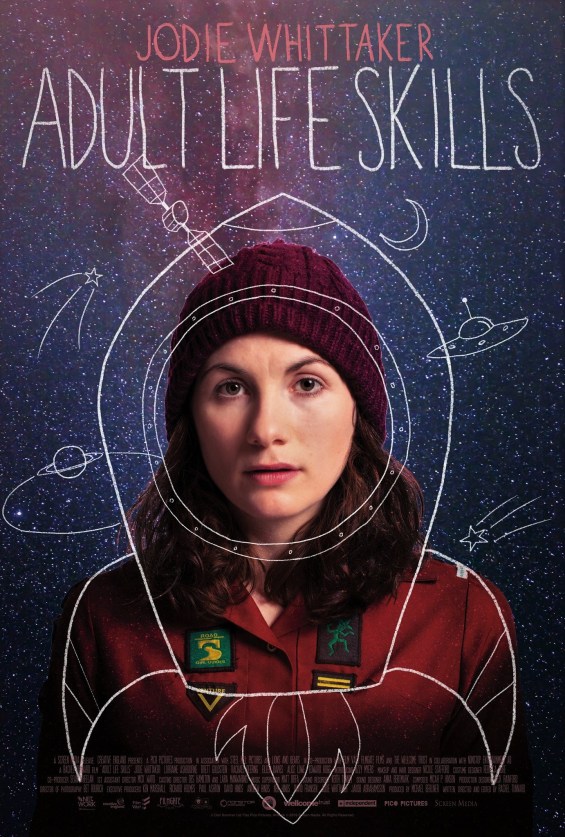
Adult Life Skills (2016) – Film Review

“I Think We Should Get Badges for Adult Life Skills; Changing a Car Tyre, Sewing, Sending Something Back at a Restaurant, Knitting…” – Brendan

Based on the BAFTA-nominated short; Emotional Fusebox, which premiered at the London Film Festival in 2014. 2016’s Adult Life Skills is the directorial debut of writer and director Rachel Tunnard, who was primarily an editor before writing and directing the original short film. And, while Tunnard’s lack of experience in these dual roles is evident, this low-budget coming-of-age comedy-drama hardly breaks new ground in its respective genres. The endearingly quirky story, distinct British charm, and tremendous performance from Jodie Whittaker all make Adult Life Skills well worth a watch.

Plot Summary: Deeply grieving from the death of her twin brother, twenty-nine-year-old Anna spends her days living in her mother’s shed, retreating into herself as she makes videos using homemade props and her thumbs as actors. But, on the eve of her 30th birthday, Anna meets a troubled little boy going through the same life-altering experience she did, a boy who may be the answer to getting her out of her year-long slump…

Originally titled; How to Live Yours (which has a reference in the film via the name of Anna’s website), Adult Life Skills first appeared at a film festival, just as its predecessor did. Only this time around, it was the 2016 Tribeca Film Festival, where Rachel Tunnard quickly won one of the top awards, the Nora Ephron Prize for Best Female Director. Yet, in my opinion, much of the allure of Adult Life Skills comes from its screenplay rather than Tunnard’s direction, as the dialogue is continuously both witty and dramatic, balancing moments of laughs and tears without ever feeling disjointed or unnatural, amplifying the film’s feeling of solace and upbeat tone thanks to its homespun, playful aesthetic.

Jodie Whittaker, who reprises her role from Emotional Fusebox, portrays Anna magnificently, rapidly jumping from one emotion to another as Anna’s method of grieving often manifests in her hiding away from her own life, locking herself inside her mother’s shed as she cherishes her brother’s old clothes and watches videos the pair made together during their younger days. Essentially, Anna is a character whose growth has been stunted by grief, and the story explores this concept of a person growing into adulthood with a piece of their identity personified in a lost sibling. This brilliant idea is only enhanced by Whittaker’s sublime performance. Needless to say, it takes her mother’s grumbling, her grandmother’s wisdom, and her best friend’s guidance to help bring her back into the real world, restoring her life to what it once was, and the supporting cast of Lorraine Ashbourne, Eileen Davies and Rachael Deering all do a great job of bringing these characters to life, despite some of the side characters being woefully underdeveloped.

One advantage Adult Life Skills has over many other British stories is its setting, as the film truly feels as if it couldn’t be set anywhere else. Breaking away from the typical locations where stories within the United Kingdom tend to be set, such as London, or less commonly, Manchester or Birmingham, in exchange for the remote Yorkshire countryside, a unique location that even helps to redeem the film’s overreliance on hand-held techniques when it comes to the cinematography by Bet Rourich, as Yorkshire has more than its fair share of natural beauty, even when the weather is rather gloomy.

Although there is no original score for the film (most likely due to budgetary restrictions), Adult Life Skills features several songs, both well-known and obscure. From Jesus Came to My Birthday Party to You Lost Sight of Me, Champions of the River Nile and Here I Go Again, every song that can be heard throughout the runtime fits the tone remarkably well, never once feeling inappropriate or unsuitable to the specific scene they are featured within.

In addition to being a comedy-drama, Adult Life Skills makes a few (unsuccessful) attempts towards being a romantic-comedy, as one of Anna’s close friends, the soft-spoken estate agent, Brendan, portrayed by Brett Goldstein, persistently speaks to Anna, trying to impress her with his comforting charm and handmade gifts. His efforts are ultimately pointless, however, as Anna’s jaded reactions to his kind gestures are due to Anna believing Brendan is homosexual. And, whilst this misunderstanding does result in a winsome relationship, this subplot suffers due to not being given enough attention, as the story instead places far more emphasis on Anna’s relationship with her mother and the young boy, Clint, who is surprisingly well-portrayed by the then-eight-year-old Ozzy Myers.

In summary, Adult Life Skills is a film that wears its oddball eccentricities on its sleeve, tackling weighty themes of grief, loneliness, and dealing with one’s emotions, while simultaneously maintaining its optimistic outlook. In many ways, Adult Life Skills is an undemanding film for those in need of something ‘comforting’ to watch. An easily watchable comedy-drama that is sure to put a smile on most viewers’ faces, despite its overly familiar ideas. Still, there’s no denying that Jodie Whittaker is the best thing about Adult Life Skills, as whenever the screenplay is lacking, Whittaker appears on-screen with confidence, fleshing out Anna as a sympathetic character and ensuring the audience remains emotionally invested in what is occurring narratively. Rating: low 7/10.

adult_life_skills_ver2_xxlg

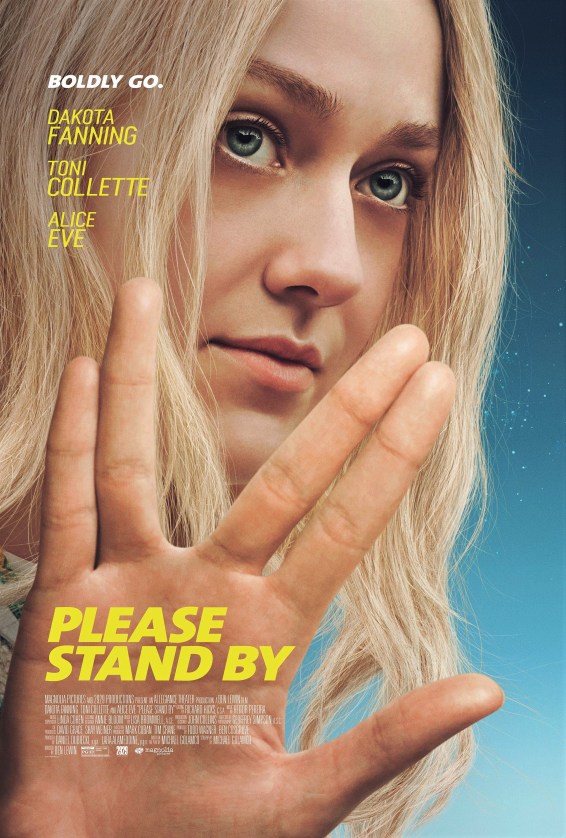
Please Stand By (2017) – Film Review

While in years gone by many films surrounding the subject of autism have been seen as overly simplistic or even offensive, with Hollywood often treating characters with ASD like an immeasurable burden upon their entire family, every now and then we receive a film, which presents its autistic character (or characters) with respect and authenticity, 2017’s ‘Please Stand By,’ being one such example. Directed by Ben Lewin (Georgia, The Sessions, Falling for Figaro) and based on the 2008 play of the same name by Michael Golamco, ‘Please Stand By’ may hit many familiar beats for a coming-of-age comedy-drama, but with an excellent cast and a subtle sci-fi twist, thanks to its focus around all things ‘Star Trek,’ ‘Please Stand By’ manages to keep its story diverting throughout its brief runtime.

Plot Summary: When ‘Wendy Welcott,’ a young autistic woman with a gift for writing, learns that Paramount Pictures is holding a screenwriting competition to celebrate ‘Star Trek’s 50th anniversary, she swiftly writes her own screenplay for submission. But, on account of her condition and a great deal of ignorance from those around her, ‘Wendy’ is unable to submit her screenplay in time. So, seeing no other option, ‘Wendy’ decides to leave her group home in Oakland and travel to Los Angeles to deliver her screenplay in person…

Although the film’s screenplay (which is actually written by Michael Golamco) rarely breaks the mould of your typical coming-of-age narrative, ‘Please Stand By’ still has more than its fair share of heartwarming moments. And, whilst some may argue that the film’s continuously upbeat tone robs the story of any real stakes, ‘Please Stand By’ isn’t really a film that aims to paint an incredibly dramatic tale of self-realisation, family and belonging, but instead a film that effectively balances all of those themes through a charming and light-hearted story of a woman embarking on a journey across California in dedication of her favourite science fiction franchise.

In what would’ve been the film’s most criticised performance should it have been executed poorly, Dakota Fanning’s performance as ‘Wendy’ is one of the more thoughtful and accurate portrayals of on-screen autism in quite some time. From her social awkwardness to her flailing arm movements and stiff dialogue readings, Fanning successfully captures the functional spectrum of autism in a delightful and intriguing expression of independence and passion, as due to ‘Wendy’ having few experiences outside of her sheltered routine, the road-trip she embarks upon makes her feel truly unconstrained for the first time in her entire life, both for better and for worse. Meanwhile, her caregiver and older sister wonderfully portrayed by Toni Collette and Alice Eve, respectively, attempt to track her down and bring her home, fearing for her safety and greatly doubting her abilities.

When it comes to visuals, despite the ceaselessly vibrant colour palette, the cinematography by Geoffrey Simpson hardly ever veers away from immobile close-ups and/or mid-shots. But, where the camerawork truly shines is during the scenes where the film attempts to recreate shots from classic ‘Star Trek’ episodes, as the Mediterranean climate of Los Angeles is quickly swapped out for the strange alien worlds of ‘Wendy’s imagination, all the while we hear ‘Wendy’ as she reads excerpts from her ‘Star Trek’ screenplay through calming voice-over.

In a similar sense to the visuals, the original score by Heitor Pereira rarely does anything exceedingly innovative as far as soundtracks go, with the majority of the runtime relying more on the use of lesser-known indie songs, such as ‘Take Me as I Am,’ ‘All or Nothing’ and ‘Waves.’ Yet, the score once again becomes much more interesting once we are transported into ‘Wendy’s screenplay, as the original score morphs into something that wouldn’t seem out-of-place in an actual ‘Star Trek’ episode.

Along with recreating shots, ‘Please Stand By’ also pays homage to ‘Star Trek’ history in nearly every aspect of its production. Firstly, the name tags of ‘Wendy’s work colleagues use the same font as the opening titles of ‘Star Trek: The Original Series.’ Secondly, the mountain ranges seen in the background of the screenplay sequence are the Vasquez Rocks located in Agua Dulce, California, this area has been an extensively used location for many ‘Star Trek’ films and series, but, most notably, for the 1966 episode; ‘Arena.’ Lastly, the suits worn by ‘Captain Kirk’ and ‘Spock’ during this same sequence are similar to suits worn by the characters in the 1968 episode; ‘The Tholian Web,’ visibly proving that the filmmakers did their research when it came to the franchise and its ardent followers.

In summary, whilst Golamco’s admittedly predictable screenplay does place the film more in the mid-range of coming-of-age comedy-dramas, by letting the talented actors simply do what they do best, director Ben Lewin does make ‘Please Stand By’ palatable, even in its most commonplace moments. And, although I obviously can’t speak for everyone in regard to how well the film truly portrays autism, given my position, in my eyes, this low-budget flick handles the potentially challenging concept adroitly, displaying the challenges of a life with ASD without ever devolving into a exaggerated collection of tics and quirks, insulting those who may be on the spectrum. Final Rating: 7/10.

please_stand_by_xxlg

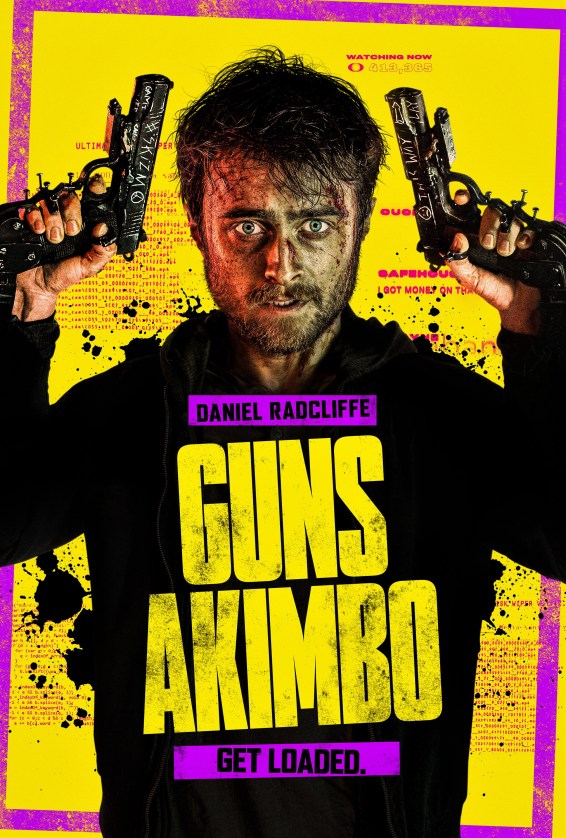
Guns Akimbo (2019) – Film Review

Frenetic to a fault, 2019’s ‘Guns Akimbo’ relishes in its video game-like violence, utilising its fluid editing, fast pacing and wild visuals to construct a thrilling action-comedy inspired by riveting 1980s blockbusters, like ‘The Terminator’ and ‘The Running Man.’ Yet, with all this insanity, it’s inevitable that ‘Guns Akimbo’ will alienate some viewers, especially those hoping for plenty of engrossing commentary concerning televised violence and online culture, but for many others, the film’s super-charged, energetic action sequences along with Daniel Radcliffe’s committed performance will surely hit the spot as an explosive jaunt.

Plot Summary: When ‘Miles Lee Harris,’ a spineless video game programmer, awakens one morning to discover that his hands have been bloodily bolted to a pair of pistols, ‘Miles’ is forced to use the fused-firearms to his advantage to save his ex-girlfriend from a group of kidnappers working for a criminal organisation, named; ‘Skizm,’ which pits maniacal criminals against each other in live-streamed deathmatches…

Written and directed by Jason Lei Howden (Deathgasm), ‘Guns Akimbo’ is, in many ways, trying to be a satire of the digital age we currently live in, displaying how apps like Instagram and YouTube have made us cynical, and in some instances, even dehumanised us. The problem here being that the film soon becomes exactly what it’s satirising, constantly mocking the online community of ‘Skizm’ for watching the grisly live streams, even though the film itself is taking just as much pleasure in displaying them to its audience, but considering ‘Guns Akimbo’ is primarily an action flick over anything else, I feel this muddled message is far from the film’s central focus. An issue the film does actually suffer from, however, is its screenplay, as by the time it’s third act arrives, the film is clearly beginning to run out of steam, devolving into essentially just non-stop action with little charm when compared to the first half of the film.

By far one of the film’s best aspects, Daniel Radcliffe’s performance as asthmatic protagonist; ‘Miles Lee Harris,’ is both hilarious and manic, as ‘Miles’ is forced to leave his boring life as a programmer for a company whose games are designed to exploit children for micro-transactions, to undertake a whole new identity after unwillingly entering ‘Skizm’ and their city-wide game of death. And, whilst ‘Miles’ continuous moments of cowardice and constant wheedling over his ex-girlfriend could’ve been annoying if they were over-played, Radcliffe portrays the character in such a way where it’s easy for the audience to root for him similar to how ‘Skizm’s online audience do. On the flip side of this matchup there is ‘Nix,’ a cocaine-fuelled killer, who relishes in profane one-liners and is brilliantly, portrayed by Samara Weaving, being the current reigning champion of ‘Skizm,’ ‘Nix’ serves her purpose as a baleful adversary to ‘Miles,’ in addition to harbouring a surprisingly dramatic backstory.

An utterly merciless blend of ‘Crank,’ ‘Shoot ‘Em Up’ and ‘Scott Pilgrim vs. The World,’ the cinematography throughout ‘Guns Akimbo’ never fails to be visually dynamic, as cinematographer Stefan Ciupek aims to make the camera feel completely unrestricted, having it flow freely through a variety of techniques including making superb use of body-rigs and car-mounts alike, which does help to redeem some of the uninspired firefight choreography. Moreover, as ‘Guns Akimbo’ frequently has the appeal of a vibrant graphic novel, the on-screen graphics and highly saturated lighting lend themselves remarkably well, with many of the lighting rigs used also being controlled via an iPad, so they could easily be adjusted to fit with the mood and colour of any scene.

Enis Rotthoff’s original score is just as hyperactive as the rest of the film, as any scenes that aren’t filled with iconic songs, such as ‘We’ll Be Good Friends,’ ‘Super Freak’ or ‘You Spin Me Round,’ are amplified by Rotthoff’s thumping techno soundtrack, with tracks like ‘Neon Grey’ and ‘Playcare,’ being perfectly in tune with whatever moment of the story they are a part of.

However, even when keeping all these elements in mind, whether you enjoy ‘Guns Akimbo’ or not will ultimately have to do with whether you find the distinctively zany concept endearing, as the film greatly leans into the comedy of its premise, imagining what it would be like to try and use the bathroom or attempt to call someone when you literally have pistols for hands, which has always been the film’s most notable distinction. In fact, during the film’s pre-production, an image of Daniel Radcliffe panicking and holding a pair of pistols whilst wearing a robe went viral as soon as it surfaced online, creating an aura of awareness for the film before it even had an official trailer.

In summary, ‘Guns Akimbo’ is bloody, brutal and ballistic, colourful and stylish yet admittedly fairly empty-minded. But, for a film like this, I don’t think that’s such a bad thing, as while some may argue the film starts to lose its desirability once you realise it doesn’t have much to offer beyond its high-octane action sequences, ‘Guns Akimbo’ never lies to you about what it is, as the action is every bit as ludicrously over-the-top as it would be in the fictional reality of violent video games, like ‘Grand Theft Auto’ or ‘Doom.’ Final Rating: 7/10.

guns_akimbo_xxlg