Casino Royale (2006) – Film Review

“I’m Sorry, That Last Hand… Nearly Killed Me.” – James Bond

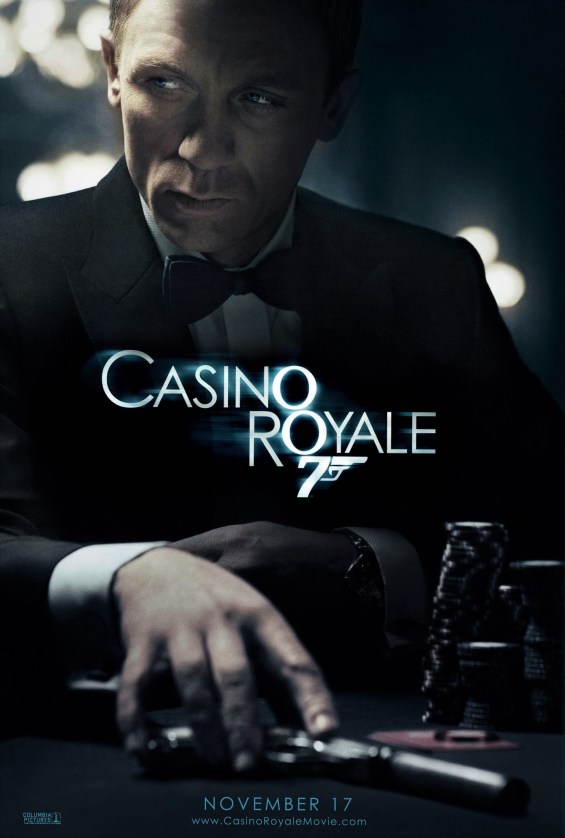
Much like the sci-fi television series; Doctor Who, or any franchise that reboots itself after a certain amount of time. The biggest hurdle the 007 franchise has to overcome with every incarnation is getting die-hard fans of the long-established espionage franchise on board. Luckily, the 2006 reboot of the series; Casino Royale, succeeded in this regard, with Daniel Craig taking on the iconic role of James Bond in a slick and thrilling mission. Doing away with much of the absurdity present in previous instalments, in exchange for pulse-pounding action sequences and an unexpectedly engaging romantic subplot.

Plot Summary: After receiving his license to kill, British Secret Service agent, James Bond, sets out on his first mission as 007, travelling to Madagascar, where he uncovers a link to Le Chiffre, a private banker financing terrorist organisations. Learning that Le Chiffre plans to raise funds through a high-stakes poker game at Casino Royale, Montenegro, Bond is instructed to play against him and thwart his plans…

Holding familiarity with the franchise after directing the Pierce Brosnan-era instalment; GoldenEye, in 1995. Director Martin Campbell (The Mask of ZorroVertical LimitThe Foreigner), along with the series’ producers, decided to take the franchise in a more grounded direction following the bombastic action sequences of the later Brosnan entries. So, there are no high-tech gadgets or tumultuous helicopter chases in Casino Royale. Instead, the poker game at the centre of the story is what holds most of the film’s suspense, occupying the majority of the second act and harbouring some of Bond’s best lines. Moreover, Casino Royale is one of the most faithful adaptations of the 007 source material, adapted from the novel of the same name by Ian Fleming, the first piece of media to feature the character of James Bond.

Despite the casting of Daniel Craig initially sparking outrage amongst the 007 fanbase due to Craig’s blue eyes and blonde hair, the online annoyance didn’t last long as once Casino Royale was released, critics and fans alike instantly fell for Craig’s rendition of the character. This was partially because, unlike the other cinematic portrayals of James Bond, whose kills held no more weight than the cheeky one-liners that accompanied them, Craig’s tussles tend to be intimate, bloody and devoid of glamour. Craig’s brooding persona, dry humour and excellent line delivery also find a close match in Eva Green’s take on the “Bond Girl,” Vesper Lynd, whose intelligence and assertive attitude puts aside any negative traits associated with the supporting role. And while Mads Mikkelsen is merely serviceable as the antagonist, Le Chiffre, with his menacing performance leaving little impact, Judi Dench makes the most of her brief screen-time as M, the head of MI6, exuding both confidence and power.

In terms of visuals, Casino Royale makes one subtle change that results in the instalment looking quite different from the ones that precede it. For most of the 007 entries before Casino Royale, the visuals almost seem to have been an afterthought as the lighting is flat, the composition is dull, and the cinematography never does anything to advance the characters or the story. Yet, with Casino Royale, it’s evident that the main principle that guides the camerawork is to always keep the camera moving. Thus, the cinematography by Phil Meheux repeatedly makes effective use of hand-held close-ups and mid-shots. Furthermore, when it comes to filmmaking, the first ten minutes of screen-time are crucial in establishing the tone, mood and style of a project. Casino Royale clearly understands this, as the opening scene employs canted camera angles and intercuts between past and present, all dosed in a fierce, greyscale colour palette for a striking introduction.

Surprisingly, the classic 007 theme, composed by Monty Norman, appears very rarely in the film’s original score. Supposedly, this is because the filmmakers wanted to emphasise Bond’s inexperience, essentially having 007 earn the theme by the time the end credits roll. However, that’s not to say that the rest of the score is terrible, as composer David Arnold steers the soundtrack away from over-the-top action cues and towards more nuanced tracks like Vesper and Blunt Instrument. And, of course, no 007 entry would be complete without a memorable song to pair with the stylish opening title sequence. In this case, it’s You Know My Name, by Chris Cornell, an alternative rock piece that fits the tone of Casino Royale flawlessly.

The action sequences are where Casino Royale delivers some of its most jaw-dropping moments. Almost every set piece could easily be the climactic action sequence of any typical action flick, which truly demonstrates the impressive stunt work and remarkable fight choreography on display throughout Casino Royale. The action-heavy first act, in particular, boasts one of the finest parkour sequences seen in this franchise to date as Bond chases a terrorist through the streets of a Madagascan village, culminating in an exhilarating hand-to-hand scuffle atop a towering construction crane.

In summary, Casino Royale disposes of the goofiness and gadgetry that plagued older James Bond outings as Daniel Craig delivers what critics and fans have been waiting for; a brutal, haunted and intense reinvention of 007. With rousing action sequences, a compelling narrative and a conclusion filled with plenty of potential. Casino Royale functions as a terrific example of how to reboot a well-known franchise, even if it isn’t particularly distinct when placed alongside other espionage flicks. Rating: high 7/10.
casino_royale-p379801

Monster House (2006) – Film Review

A personal childhood classic for me, ‘Monster House’ is one of those rare kids films that isn’t afraid to explore darker themes of death, grief and childhood fears. Whilst still managing to be a solid piece of entertainment for any family urging for a creepy adventure, as producers Robert Zemeckis and Steven Spielberg jump on board alongside Gil Kenan, director of the ‘Poltergeist’ remake from 2015, as his directorial debut, this animated adventure is always a joy to return to for me.

Plot Summary: After his cranky, elderly neighbour suffers a heart attack and is taken to hospital, suspicious teenager; ‘DJ,’ invites his clumsy best friend; ‘Chowder,’ over, only to discover that his creepy neighbour’s house is, in fact, a living, breathing monster. Now, with the help of the quick-witted student; ‘Jenny,’ the trio hatch to destroy the house before it can claim victims on Halloween night…

This simple, yet extremely strange plot is one of the best aspects of the film, as the director makes as much use out of this concept as possible. Usually getting extremely creative and even catching the audience by surprise at a few points, no matter their age. Having a great blend of both comedy and tame horror, the film has a mostly light-hearted tone, aside from the occasional dark scene, of course, which actually works quite well for the film’s story. The jokes throughout the film are also pretty decent, as despite some gags being a little too cheesy or immature at points. For the most part, the comedy throughout the film can get a laugh out of me.

The three main characters within the film are portrayed by Mitchel Musso, Sam Lerner and Spencer Locke, who all provide likeable and varied personalities to each of their respective characters, while Steve Buscemi lends his voice to the creepy ‘Old Man Nebbercracker,’ who actually turns out to a very interesting and even sympathetic character by the end of the film’s swift runtime.

The animated cinematography is overall nothing outstanding, but does lend itself well to creating some attractive shots and eerie visuals throughout the film. I also personally enjoyed how the film utilised more hand-held like camera movements during the more chaotic scenes of action or terror throughout the story. The film even blends its bright animation colour palette with a more dark/pale horror-esque palette, only a little detail, but I appreciated it regardless. The original score by Douglas Pipes is also another wonderful element of the film, combing the feel of a classic animated film with undertones of horror.

Although the animation can sometimes range in quality, the visual look of the almost stop-motion-like animation does give the film an eerie appeal. However, due to the film’s age, the film has definitely begun to show some cracks here and there, as various points in the narrative characters can begin to look a little clunky or unnatural with their movements. This is mostly due to the motion capture technology that was used very heavily throughout the film, long before films such as ‘Avatar’ or ‘Rise of the Planet of the Apes’ truly pushed the technology to its limits.

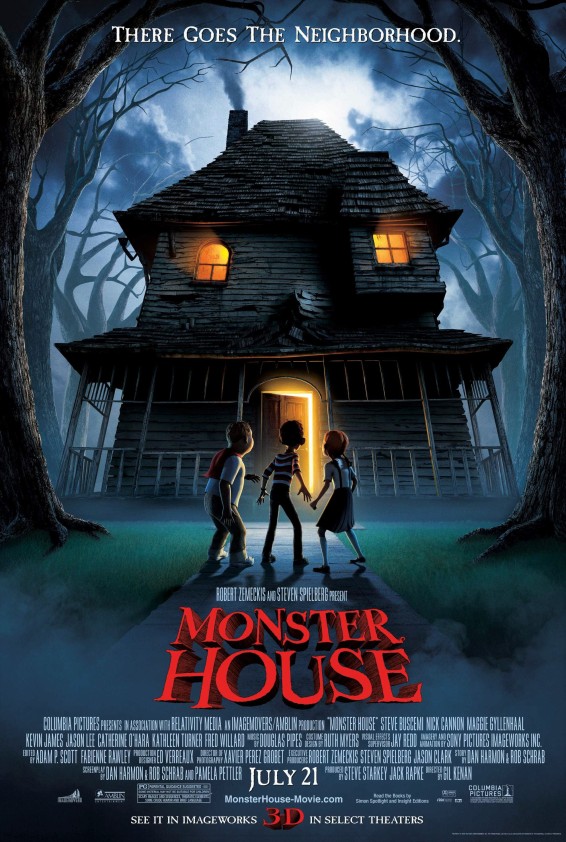
Many of the character designs throughout the film are also quite memorable, especially with the character, ‘Bones,’ in particular, who always comes to mind for me when thinking of this film. I also personally adore the design of the ‘Monster House’ itself, as the design is incredibly menacing and really feels like a true horror antagonist.

In summary, ‘Monster House’ never fails to be entertaining for me, every time I revisit it, as the film truly provides a creepy experience which most other family/animated films simply can’t, as films such as ‘Hotel Transylvania’ or ‘Goosebumps’ always try to capture this tone, but usually fall short. It’s here ‘Monster House’ succeeds, as despite some clunky animation and cheesy dialogue at points, the film succeeds in being an spooky adventure with a fantastic cast, and effective original score that the entire family could enjoy. Maybe it’s nostalgia for me, but I personally believe the film is honestly a great choice when it comes to a Halloween night, or maybe just a rainy evening. Final Rating: 7/10.

monsterhouse_poster

Children of Men (2006) – Film Review

An intelligent, dark, and grounded sci-fi film, with ‘Children of Men’ director Alfonso Cuaron (Harry Potter and the Prisoner of Azkaban, Gravity, Roma) crafts a truly memorable experience, as the film’s fresh take on the science fiction genre combines some great performances, alongside decent writing and some absolutely incredible cinematography by Emmanuel Lubezki, alongside many scenes throughout the film being done within a single take.

Plot Summary: In a world in which women have somehow become infertile, former activist; ‘Theo Faron,’ agrees to help transport a miraculously pregnant woman across a war-ridden country out to a sanctuary at sea in order to save the human race…

Based on the acclaimed novel; ‘The Children of Men’ by P. D. James, the film adaptation begins its narrative in a similar fashion to its source material, as the story kicks off with a quick peek into the grim world of the film, as the protagonist; ‘Theo,’ makes his way into a small café to grab a coffee. This soon leading onto a very shocking moment, which instantly establishes the tone of the film, and really helps give the audience a clear understanding of how these characters are coping with this reality. This soon leads onto the opening becoming very iconic in its own right (as well as my personal favourite scene of the film) and still feels effective, even today.

When it comes to the characters, all the performances throughout the film are pretty great, as every actor is really giving their all here regardless of the importance of their roles within the story as Clive Owen, Clare-Hope Ashitey, Chiwetel Ejiofor and Michael Caine are all terrific. Julianne Moore as ‘Julian,’ in particular, was a stand out for me, however, having some very memorable moments within only a short amount of screen-time. This is also one of the few films where I must really praise the extras, as many of the continuous takes are done using enormous amounts of extras, and from the foreground through to the background, there isn’t one out-of-place extra.

Every piece of the cinematography by Emmanuel Lubezki throughout the film is nothing short of phenomenal, using hand-held shots to the best of their advantage. Many scenes are filmed from the perspective of the characters, placing the audience in their own tense scenarios. Furthermore, the dark grey colour palette of the film also lends itself well to the war-ridden country setting, as every location always feels rustic, dirty, and lived-in. The original score by John Tavener is also effective, despite being used sparingly throughout the film to further add to the bleak atmosphere.

My only real criticisms with the film are related to the lack of character depth and the film’s overall pacing, as the pacing throughout the film is extremely slow, leading to many scenes feeling a little drawn out at points. Despite this slow pace sometimes adding to the building of tension, it feels mostly unnecessary for most of the film’s runtime. The lack of characterisation throughout the film is also a problem, as although a few characters do get some development, it’s usually few and far between, as I found myself finding more information about the characters online than within the film itself, luckily, however, the decent writing does save this from being a huge issue.

In summary, ‘Children of Men’ is an exceptional piece of the sci-fi genre. Coming across as a very different approach than what you’d usually expect from a film such as this one, the film almost feels like more of an apocalyptic drama at points. But, with a thought-provoking narrative, some amazing cinematography, and a fantastic cast, ‘Children of Men’ truly is a very captivating (if not a very bleak) piece of entertainment, which never fails to impress me every time I revisit it. Final Rating: 8/10.

kinopoisk.ru

What Happened to Pixar Animation? – Film Discussion

Whatever happened to the beloved animation studio, Pixar Animation?

Pixar Animation used to create some phenomenal animated adventures that the entire family could enjoy, regardless of their age. Mixing brilliant storytelling with beautiful animation and incredibly memorable characters, each film never failed to stand out amongst the rest. Some of the films, like ‘Monsters, Inc.’ or ‘WALL-E,’ for example (two of my personal favourite Pixar films), really got creative with their own narratives and fleshed out their individual worlds. However, in recent years, I’ve noticed a severe downgrade in the quality of their films, as it seems ever since the release of ‘Toy Story 3’ back in 2010, Pixar has had a real reliance on sequels, prequels and spin-offs over original films. While still mostly enjoyable, I have noticed the storytelling, character arcs and world-building all seem to be lacking when compared to their earlier films.

In recent years, films such as ‘The Good Dinosaur,’ ‘Monsters University,’ ‘Brave,’ ‘Finding Dory,’ the ‘Cars’ sequels/spin-offs and, of course, the upcoming ‘Toy Story 4.’ Have all ranged from sub-par through to simply awful, the ‘Cars’ series, of course, being the best example of this as this series has always been Pixar’s black sheep. Never truly having the magic that makes Pixar special, always feeling like more of a cash-grab than anything else. ‘Cars 2’ being the most prominent example of this, as this film is one of Pixar’s only poorly reviewed films to date. The ‘Cars’ series has always felt very immature to me, although I didn’t hate the original film, it’s definitely no one’s favourite. In regard to Pixar’s other sequels; ‘Finding Dory’ and ‘Toy Story 4,’ ‘Finding Dory’ is nothing more than a reskinned ‘Finding Nemo,’ except for a few amusing characters; the film has nothing more really to offer. Despite having fantastic reviews from critics for some reason, the film was never anything other than a massive nostalgia slap for me. As, of now, ‘Toy Story 4’ hasn’t yet been released, but I feel when it does it’ll be another film with great reviews, but with nothing truly memorable about it, as I personally believe the ‘Toy Story’ trilogy concluded so satisfactorily, I don’t truly don’t understand why they feel the need to continue that story other than profit.

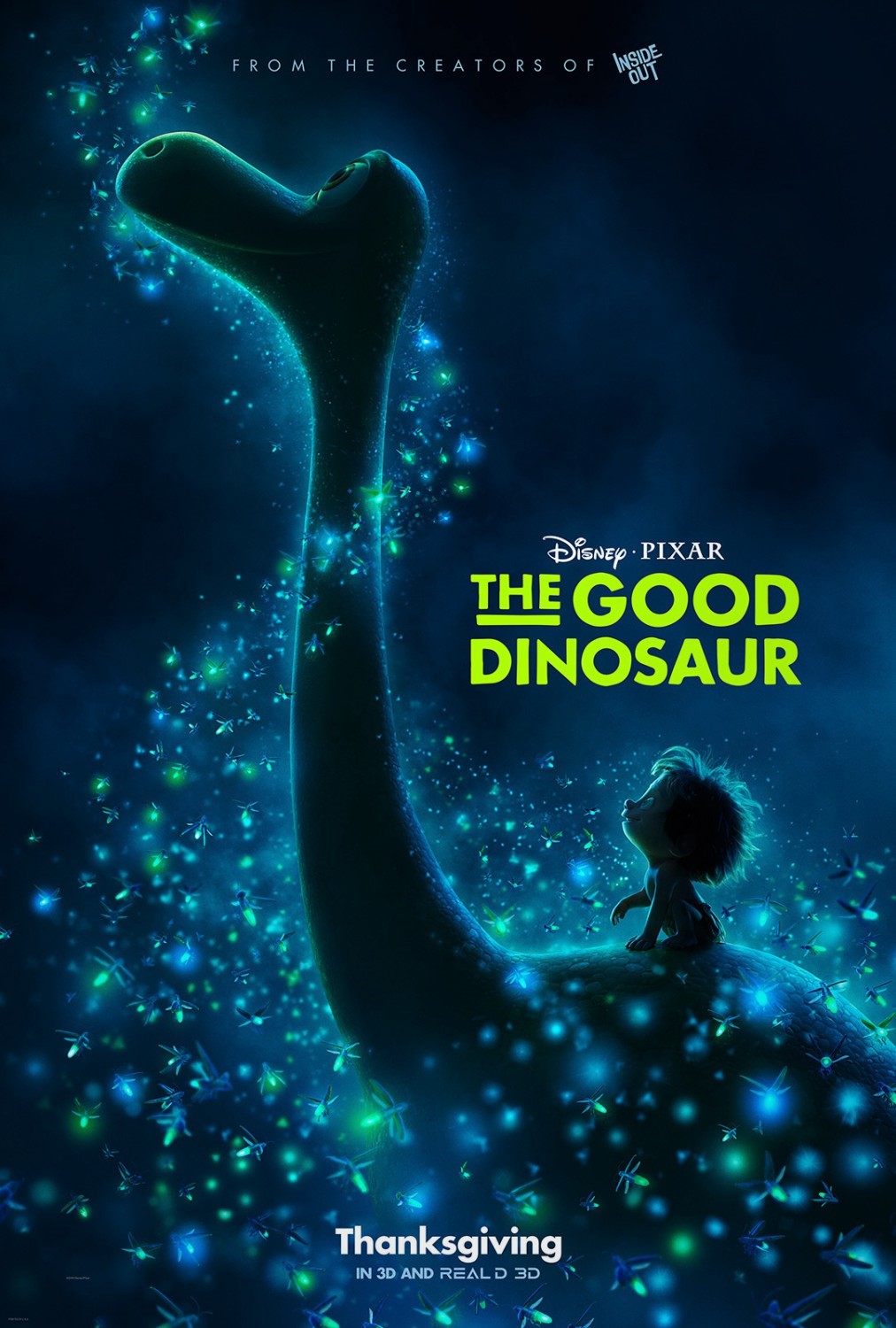
‘Monsters University’ is probably my favourite of Pixar’s recent continuations of their old stories, although I don’t think the film reaches the heights of ‘Monsters, Inc.’ due to less originality and a lack of adult themes. I do still think the film is very witty, and it does explore the monster world further. It’s one of the few films I can say where it feels there was true thought put into it, as it doesn’t just lean on the legacy of the previous film. Finally, we come to Pixar’s original films. This being ‘The Good Dinosaur’ and ‘Brave,’ now whilst I don’t think these films are awful per se. They simply just aren’t that memorable. ‘Brave’ has a few amusing moments and an interesting setting, but falls more into classic 2D animated stories at points. As for ‘The Good Dinosaur,’ it’s simply a ‘returning home’ story, with nothing of note at all other than the nice animation. It seems most people agree with me on this one, too, considering it’s very low box office return.

Now, of course, there are some recent exceptions, Pixar’s ‘Inside Out,’ ‘Coco’ and last year’s ‘Incredibles 2,’ which I did enjoy very much. These films proved to me that Pixar still has some great stories in them, although these films aren’t perfect and I wouldn’t rank them as high as the classic Pixar films personally, they definitely show potential. I would love to see more original animated films like this from Pixar. Considering how much money ‘Coco’ made when it was released, it’s clear they still make money just from the Pixar name alone. So, why do they feel the need to rely on sequels? Many people would point to Disney pulling their leg, and although I could believe that. I also think it’s due to Pixar simply becoming uninterested; they now think of themselves as the animation giants the audience believes they are. This means they no longer take risks and are comfortable simply gaining profit from their previous franchises.

This could also be due to a lack of original ideas; of course, Pixar simply feels more comfortable returning to their previous stories. But, considering some of their big competitors such as DreamWorks Animation, Blue Sky Animation, Warner Bros. Animation and Illumination Animation are all still pumping out original films (granted, not all quite to the usual Pixar standard). Films, such as ‘Captain Underpants: The First Epic Movie,’ ‘Ferdinand,’ ‘The Lego Movie’ and ‘Despicable Me’ are all still very enjoyable to watch. Some of these films even made a pretty big box office return, with the ‘Despicable Me’ spin-off; ‘Minions,’ becoming one of the highest-grossing animated films ever, earning over £900 million. Even the company that teamed up with them (that being Disney) are beating them recently when it comes to original animated flicks, with Walt Disney Animation Studios’ ‘Zootopia,’ being one of my favourite films of 2016.

In summary, what happened to Pixar Animation is very clear to me. They simply got lazy, focusing far more on wanting to make a large profit rather than giving their audience new, exciting stories. The company isn’t completely dead; films like ‘Coco’ and ‘Inside Out’ clearly prove there is still talent there. But, with the older writers, directors and animators now backing down from the company so newer faces can arise. I’m concerned that Disney and Pixar executives may continue to push for more sequels, prequels and spin-offs with the knowledge that the films will always make money regardless of their quality. This is mostly why I fear for ‘Toy Story 4,’ as even though I really hope the film is great, I currently have a lot of doubts in my mind about it. Pixar, however, has also recently brought out a trailer for their next film following on from ‘Toy Story 4,’ titled; ‘Onward,’ which does appear to be a completely original story focusing on elements of fantasy and adventure. So, perhaps not all is lost for the iconic animation company just yet, but only time will tell, I suppose.

good_dinosaur_ver3_xlg