Underwater (2020) – Film Review

“There’s a Comfort in Cynicism. There Is a Lot Less to Lose.” – Norah Price

Substituting deep space for the deep sea, Underwater is a 2020 sci-fi thriller that takes a hefty amount of inspiration from the illustrious Alien franchise, namely the original 1979 sci-fi-horror classic, with its story centring on a group of survivors navigating a dim, claustrophobic facility submerged deep beneath the ocean’s surface, all while a terrifying, otherworldly force stalks them, picking them off one by one. It’s a familiar format, to be sure, and whilst some will find this type of narrative worn out by this point, I have always enjoyed these sorts of unnerving stories, especially when filmmakers, like director William Eubank (The Signal, Paranormal Activity: Next of Kin, Land of Bad), repeatedly strive to integrate stylish visuals and elements of Lovecraftian horror to suppress the strong sense of déjà vu.

Plot Summary: Operating in the murky depths of the Mariana Trench, the Kepler 822, a research and drilling installation, slowly pushes its way towards the centre of the Earth. But, when a mysterious earthquake extensively damages much of the deep-water facility, mechanical engineer Norah Price, along with a handful of other survivors, band together and take action, faced with the immense task of suiting up and trekking across the ocean floor to safety as something sinister lurks among the facility’s scattered debris…

As a result of the Walt Disney Company’s takeover of 20th Century Fox as part of their acquisition of 21st Century Fox in 2019, Underwater‘s initial release date was drastically pushed back, with production occurring in early 2017. Due to this prolonged release and its skimpy marketing, Underwater was a financial failure, which is unfortunate, as while the film is nothing extraordinary, it is an entertaining flick that keeps up a relentless pace, clocking in at an agreeable nighty-six minutes. Still, it’s indisputable that Underwater wears its inspirations on its sleeve, both to its detriment and otherwise, sometimes appearing overly familiar, primarily through its numerous parallels to the previously mentioned Alien series, beginning straight from the opening scene as the camera slowly pans around the foreboding corridors of the Kepler Station with no dialogue spoken, similar to the opening scene of Alien (1979), where there is likewise no dialogue as the camera pans around the Nostromo, the spacecraft the central characters are aboard.

Evidently inspired by Ellen Ripley through her quick thinking and authority in the face of an unknown threat, Kristen Stewart portrays protagonist Norah Price, who, whilst not incredibly memorable or extensively developed, is given enough characterisation to make her an honourable lead, with Stewart appropriately conveying dread or courage whenever required. Furthermore, the supporting cast of Vincent Cassel, Mamoudou Athie, T.J. Miller, John Gallagher Jr. and Jessica Henwick are terrific, despite many of their characters being archetypes at best and paper-thin cutouts at worst. Yet, in all honesty, in a film such as this, I feel that is all you really need, given that most of the characters serve their purpose in merely portraying walking appetisers for the creatures that are stalking them, showcasing their fearsome capabilities. Additionally, Underwater does a splendid job whenever it delivers exposition, particularly during an early sequence between Norah and her colleague Rodrigo, where the audience is swiftly supplied with everything they need to know.

Presenting the ocean as just as frightening as the vast darkness of space, the cinematography by Bojan Bazelli is stellar for the most part, as Bazelli captures the claustrophobic atmosphere of the Kepler beautifully, supplying every moment with suspense, not only because of the creatures, but the unease induced by the opaque water and crushing pressure attempting to breach the ravaged walls of the facility, a notion amplified by the aquatic colour palette of blues, greys and greens. On top of the camerawork, the design of the creatures is meritorious, clearly taking visual influence from much of H.P. Lovecraft’s work, as well as well-known ocean-dwelling wildlife, such as anglerfish. Regrettably, however, these unsettling creature designs are partially spoilt by the second-rate CGI that perpetually represents them.

For its part, Marco Beltrami and Brandon Roberts’ original score is adept at provoking the asphyxiating claustrophobia one would feel being trapped in an underwater facility via tracks like The Bends, Sprung a Leak and Squid Market, again in a similar vein to the Alien franchise. Furthermore, the sound design throughout the runtime lends itself to the ominous atmosphere, as the submerged facility ceaselessly creaks from the damage it has endured. But, the sound design is undoubtedly at its most effective when heard during the point-of-view sequences from inside Norah’s diving suit.

Intriguingly, for the many underwater sequences, the cast sported heavy, airtight suits, each weighing around 63kg, they were then filmed on dimly lit soundstages utilising volumetric scanning. An interesting bit of trivia that, in my opinion, highlights how much effort was put into this flick outside of its undeniably poor marketing.

In summary, although Underwater is occasionally overly reminiscent (or reliant if you prefer) on renowned films across its primary genres, I don’t believe that means Underwater can’t be admired for what it is, as personally, I’d much rather see an original narrative heavily inspired by a beloved piece of cinema, than a remake or unwarranted sequel of/to one. As such, Underwater is a film that I feel will find a second life on streaming services, as this sci-fi-thriller is a pleasant watch for anyone looking to immerse themselves in some deep-sea storytelling. Rating: 6/10.

underwater_xxlg

Love and Monsters (2020) – Film Review

“I Didn’t Really Have Your Typical Upbringing. I Mean, I Did at First… but Then the World Ended.” – Joel Dawson

Originally titled; Monster Problems, the Netflix Original, Love and Monsters, released in 2020, is a comedic, post-apocalyptic romance filled with plenty of heart, humour, clever world-building and, as its title suggests, gigantic monsters. Despite housing a few blemishes here and there, Love and Monsters covers an abundance of emotional ground throughout its story, standing as an entertaining, monster-filled adventure, the sort of film that delivers wit, excitement and creativity all in generous portions, making for an amusing time during ‘the end of times,’ as it were.

Plot Summary: Seven years after the world-ending event known as the “Monsterpocalypse,” twenty-three-year-old Joel Dawson, along with the rest of humanity, is wearily living underground in a hidden bunker since colossal mutated monsters took control of the surface. But, after reconnecting over the radio with his high school girlfriend, Aimee, who is now eighty miles away at a coastal colony, Joel courageously decides to venture out into the monstrous open-air to find her…

Demonstrating his storytelling capability almost immediately, director Michael Matthews (Five Fingers for Marseilles) artfully lays out the film’s premise during the opening sequence, employing a voiceover from Joel and a variety of animated illustrations made to appear as if they were pencil-sketched by Joel in his notebook. Through this opening, we learn that several years ago, the human race fired a series of rockets into space to destroy an impending asteroid nicknamed; “Agatha 616,” which successfully blew the rock to smithereens. However, this action had consequences, as the chemical compounds used to launch the missiles rained back down to Earth and transformed the cold-blooded wodge of the animal kingdom into mutated monstrosities, forcing the human race to flee underground. From this point on, Love and Monsters continually explores its unique world, building upon the notion of the “Monsterpocalypse” in several ways whilst also taking cues from 2009’s Zombieland by not taking itself too seriously, avoiding the common concern of its post-apocalyptic setting feeling ‘played out.’ Of course, this does mean that Love and Monsters includes a number of tonal shifts, some of which occur rather suddenly, similar to how many of the film’s gags vary in quality.

In terms of characters, the timid, self-deprecating protagonist of Joel Dawson is perfectly cast with Dylan O’Brien, as the screenplay allows the young actor to flex every acting muscle he possesses, toeing the line between weighty and light-hearted scenes through his myriad of interactions with the other survivors of his monster-infested world. For Joel, the world-ending cataclysm was particularly bad timing as he was on a date with his girlfriend Aimee when the pair were separated and shipped to different colonies. While terrified of almost everything at first, Joel eventually pushes himself out of love, serving as a likeable yet dimwitted guide through a world of horrors and devastation, discovering more about himself along the way. In addition to O’Brien, the cast is studded with some great talent, from Jessica Henwick, who manages to make Aimee seem capable and sympathetic in spite of her limited screen-time, to the unlikely pairing of Michael Rooker and Ariana Greenblatt as Clyde and Minnow, two world-weary survivors travelling together after their respective families were killed by undisclosed creatures. Moreover, whilst on his journey, Joel encounters the grieving, intelligent canine, Boy, who is remarkably well-portrayed on-screen by the two Australian kelpies, Hero and Dodge.

Given that much of the film is a voyage across post-apocalyptic America, Love and Monsters is almost episodic in its visual presentation, following Joel as he treks past devastated, overgrown suburbs, corroded fairgrounds and expansive meadows, all of which are wrapped in impressive details like spider-like webbing enfolding the rooftops and trickling egg sacks sprouting on trees. Lachlan Milne’s cinematography and the film’s wonderful production design (considering its modest budget for a premise of this scale) lend themselves brilliantly to this concept with an ample amount of wide shots, thoroughly embracing the strange beauty and vibrant colours of the “Monsterpocalypse.”

Drawing inspiration from the scores of larger-than-life science fiction classics from the 1950s and 1960s, composers Marco Beltrami and Marcus Trumpp provide Love and Monsters with a grand, stimulating and highly vigorous orchestral score. Through tracks such as; Bunker Breach, Wisdom of the Wild, Amiee’s Colony and End Credits, the original score works in tandem with practically all the scenes it can be heard, whether they are stirring or unsettling.

As you’d hope for a monster-centric flick, the titular creatures of Love and Monsters are widely imaginative, with oversized centipedes, frogs, snails and crabs all featured throughout the runtime, all outlandish and intimidating in design, yet still recognisable to their real-world counterparts, brought to life via exquisite practical and CG effects, ultimately leading the film to become an Oscar nominee in 2021’s Best Visual Effects category, alongside Tenet (2021) and The Midnight Sky (2021).

In summary, Love and Monsters is an enjoyable, earnest and comforting flick, packed with splendid creature designs, charming characters and a delightful cast. In many ways, the film is a high school rom-com that just so happens to be set in a post-apocalyptic world, serving as a terrific template for crafting a leaner, less bloated summer flick that virtually all can enjoy. And, for once, with the film leaving things open-ended enough for a sequel, this is the rare scenario where, I’d say, another instalment would actually be welcome. Rating: low 8/10.

love_and_monsters_xlg

Shadow in the Cloud (2020) – Film Review

“I Saw… I Saw Something Move on the Right Wing…” – Maude Garrett

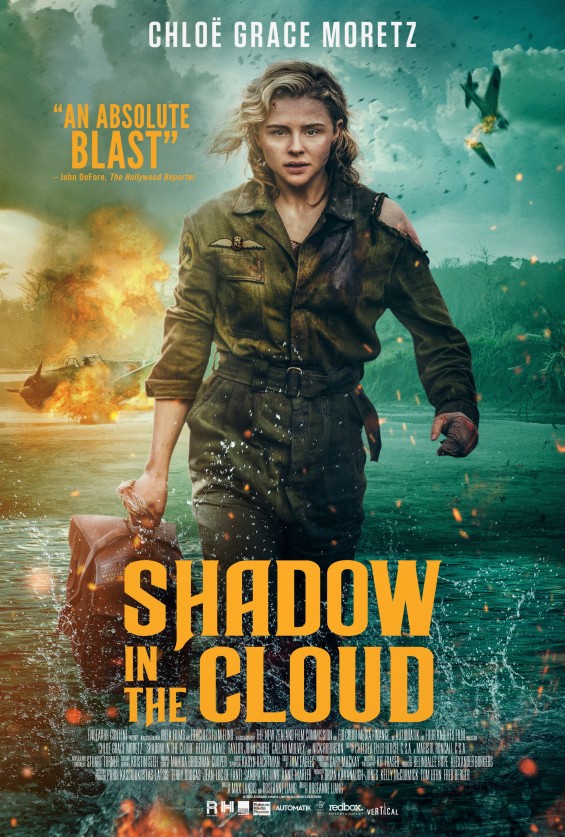
Shadow in the Cloud, released in 2020, is an action-thriller with a remarkably intriguing premise, playing into the fables of the mischievously dangerous creature known as the “Gremlin,’ a folkloric rodent that originated in the 20th century to explain malfunctions with aircraft operations, primarily during World War II. Depictions of these creatures have varied widely over the years, with their most well-known incarnation being in the 1984 horror-comedy classic; Gremlins. Before that film’s release, however, stories regarding the creatures often referenced them as the cause of the inexplicable technical and psychological tribulations many pilots faced during the Second World War, Shadow in the Cloud being one of those stories. Yet, despite this potential, aside from some impressive set design and the earnest attempt by its leading actress, Chloë Grace Moretz, to schlep the film as a ‘one-woman show,’ it’s largely a chore to make it through the entire runtime of Shadow in the Cloud, fleeting though it may be.

Plot Summary: In the throes of World War II, pilot officer, Maude Garrett, joins the all-male crew of the B-17 bomber, the Fool’s Errand, with a top-secret package. Caught off-guard by the presence of a woman on their military flight, the crew tests Maude’s every move. But, before they can enquire further about her assignment, Maude notices something sinister clinging onto the underside of their aircraft…

Co-written and directed by Roseanne Liang (Banana in a NutshellMy Wedding and Other Secrets), the somewhat clunky screenplay for Shadow in the Cloud was originally penned by Max Landis, but was later heavily rewritten during pre-production by Liang due to sexual harassment allegations made against Landis at the time. Liang and Moretz claim that Landis was distanced from the production, with his screenplay being rewritten several times before filming began. But, after watching the film, Landis argued that about 90-95% of the screenplay is still his.

Chloë Grace Moretz undertakes the role of the film’s protagonist, adept pilot, Maude Garrett, or at least, that’s how she introduces herself, as Maude’s true identity and the nature of her assignment is actually a mystery for much of the runtime. Nevertheless, Moretz does a great job carrying the acting load, while Maude receives a serviceable amount of characterisation. The rest of the crew, portrayed by Taylor John Smith, Callan Mulvey, Nick Robinson, Beulah Koale, Byron Coll, Joe Witkowski and Benedict Wall, are well-acted yet lack any real depth or distinct character traits, only serving to hammer home the film’s underlying feminist themes as masculine caricatures. So much so, that as soon as Maude steps aboard the aircraft, she’s immediately met with sexist wisecracks and condescending nicknames.

Given that the majority of the film takes place aboard an aircraft amidst the clouds, it’s understandable that much of Shadow in the Cloud‘s visuals are confined to Maude and the camera crammed into the ball turret on the underside of the aircraft after the crew shove her down there to keep her out of their way during take off. From that point on, almost every shot maintains a steady level of motion to match the constant turbulence of the aircraft in the thick of the vicious storms and enemy fighters that surround it. Simply put, whilst the cinematography by Kit Fraser isn’t anything unprecedented, it is exceptionally accurate to the film’s wavering setting.

However, the same cannot be said for the original score by Mahuia Bridgman Cooper, which is bewilderingly inappropriate for both the narrative and its time period, beginning as a melodious yet out-of-place synthetic score before transitioning into something far more chaotic and tumultuous by the third act, draining away much of the suspense through tracks, like True Stories and Dangerous Feelings. Similarly, the film’s stylistic choice of occasionally cutting away from Maude in the ball turret to see the other crew mates in a blackened space with kaleidoscopic lighting feels at odds with the remainder of the visuals, especially since it obscures much of the aircraft’s detailed set design.

On a more positive note, the film’s opening does feature a nifty animated sequence based on the cartoon shorts of Private Snafu, a series of 1940s adult-oriented instructional videos meant to educate enlisted personnel on army discretion, hygiene, combat readiness and daily life. While the designs of the gremlins in these shorts might appear playful, the design of the actual creature in Shadow in the Cloud leans into a more lifelike approach, admirably constructing a creature that possesses a grey-haired, monkey-like body structure with minor traits of bats and rats. Unfortunately, the visual effects for the creature often do the film more harm than good, as although certain shots of the gremlin are passable, almost all of the shots of Maude on the exterior of the aircraft via green screen look dreadful, likely suffering as a result of a stretched-thin effects budget.

In summary, whilst Shadow in the Cloud bears a fantastic premise, it’s continuously so poorly executed that it becomes difficult to appreciate it, forcing its audience to significantly suspend their disbelief even more than you’d expect for an action-centric creature-feature, frequently coming across as pulpy and overly dramatic. Thus, by the time Shadow in the Cloud trots out historical footage of real servicewomen alongside an inspiring pop song during the end credits, the film has essentially veered into self-parody in spite of the tremendous conviction Moretz conveys in her performance. Rating: 4/10.

shadow_in_the_cloud_ver2_xxlg

The Devil All the Time (2020) – Film Review

“Blessed Are Those That Hunger and Thirst for Righteousness.” – Reverend Preston Teagardin

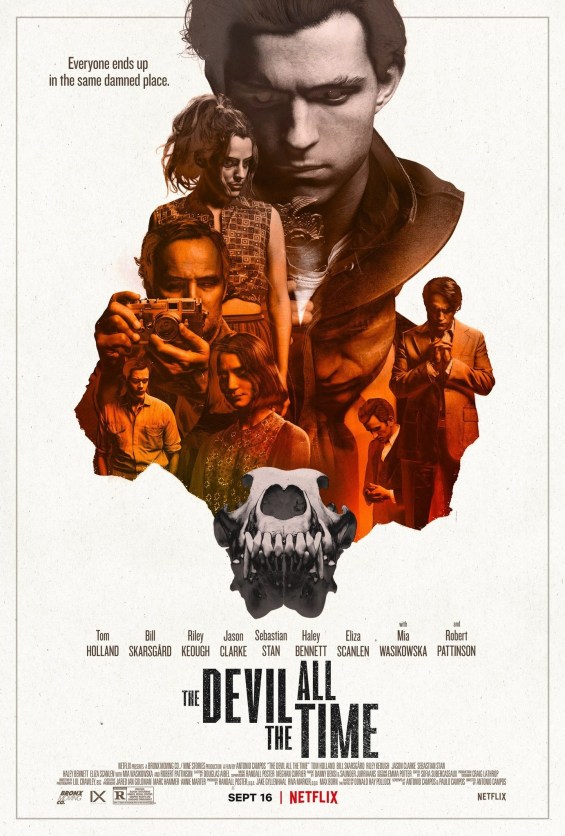
A gripping yet troubling exposé of a period in history that frequently appears overly sanitised, 2020’s The Devil All the Time is a superb Netflix Original that utilises its relentlessly grim narrative, stellar all-star cast and period-accurate song choices to explore an underused setting in cinema; Southern Ohio in the 1950s. And, as a result, the film crafts an engaging and thought-provoking tale of backwoods preachers, religious zealots and broken, weathered souls witnessing the atrocities of a post-war world, replenished with sins that even faith is unable to wash away.

Plot Summary: In 1950s-era rural Southern Ohio, an assortment of crooked and sinister individuals intersect paths in the Midwestern town of Knockemstiff, a rustic, sparsely-populated cesspool teeming with corruption and brutality…

Co-written and directed by Antonio Campos (Buy It NowSimon KillerChristine), the screenplay for The Devil All the Time was adapted from the novel of the same name by Donald Ray Pollock, who, interestingly, actually performed the narration for the film, making the role his first-ever narrating position as he avoided performing the voiceover work for his own audiobooks. Similar to the original novel, a large majority of the story revolves around the real-life town of Knockemstiff, Ohio. Here, the non-linear narrative, which examines the violent vestiges of religious iconography, thrusts an array of devilish characters to encounter one another through differing scenarios, often resulting in horrific outcomes. In particular, the opening three arcs produce a distressing first act where death is seemingly always lurking around the corner. However, while most of the characters and their individual storylines are captivating, certain characters (and their continually fiendish actions) can appear somewhat underdeveloped due to a lack of screen-time, along with a few narrative details, namely, the subplot of Deputy Lee Bodecker accepting payments as a corrupt officer, not falling into place.

Regarding one of the finest aspects of the film, the central cast of Tom Holland, Robert Pattinson, Harry Melling, Bill Skarsgård and Sebastian Stan (among many others) are all exceptional in their various roles, with most of the cast’s accents seeming flawless, barring Holland and Pattinson’s accents, which come across as inconsistent and wildly over-the-top, respectively. The cast’s performances are only enriched by their usually well-written characters, however, as their unanswered prayers seem to eventually lead each of them to turmoil as they exist at a bleak point in history where treatments for diseases were scarce and a devastating World War had just wiped out millions, rendering religion to serve as the only recourse for most. What makes the characters more intriguing is that The Devil All the Time is also a multigenerational tale, beginning with the semi-protagonist, Arvin Russell, as a youngster before concluding the story with Arvin as an adult in his early twenties, all the while propelling Arvin and his step-sister, Lenora, to reckon with the ghosts of their parents’ past. That is not to say that any character is represented as exemplary, though, as during the final act, the primarily benevolent Arvin exercises his father’s vengeful tactics for a satisfyingly violent payoff.

In a rather bothersome decision, The Devil All the Time repeatedly feels compelled to remind the audience of earlier sequences in the story that mirror later moments. Yet, most of the time, these flickers of earlier scenes in the film are thoroughly unnecessary and quickly begin to grate on the audience. Aside from this annoyance, the editing and cinematography by Lol Crawley are serviceable, continually being enhanced by the terrific set design and set dressing, which makes every inch of the rundown town of Knockemstiff appear worn and ripe with religious imagery.

Alongside the original score by Danny Bensi and Saunder Jurriaans, which remains nuanced and unpretentious whilst still adding to the cruelty and suspense on-screen at many points, The Devil All the Time employs an extensive selection of traditional gospel tunes and ’50s-era songs, such as Washed in the BloodThe Three Bells and Honeycomb, all beneficially playing into the setting and underlying religious themes of the story with some of the more upbeat songs even prompting certain scenes to develop a moderately satirical tone.

Returning to the visuals, momentarily, crucifixion is a recurring image throughout the runtime, relating to the film’s central underlying theme of the conflict between belief and the horrors of the real world. For example, in the first act, Willard Russell discovers a bloodied, fly-infested serviceman crucified during his deployment on the Solomon Islands during World War II. This image changes the once godly soldier to a religiously apathetic, but more importantly, makes it apparent how closely savagery and sacrifice are exemplified through the image of Jesus Christ tortured on the cross. Later in the film, there is also a painting of Jesus Christ on the cross hanging on the wall in Arvin’s room, reminding the audience of this subtext.

In summary, whilst The Devil All the Time‘s ruthlessly pessimistic narrative can occasionally be harrowing to the point of punishment, much of the dour storytelling is offset by the strong work from the outstanding cast, whose performances are often so compelling they even redeem the rather conventional style of filmmaking the film adopts, which is unlikely to leave any audience member in awe. Still, The Devil All the Time is an effective, religion-centred thriller. Rating: 7/10.

devil_all_the_time_ver2_xxlg

Enola Holmes (2020) – Film Review

“The Choice Is Always Yours. Whatever Society May Claim, It Can’t Control You.” – Sherlock Holmes

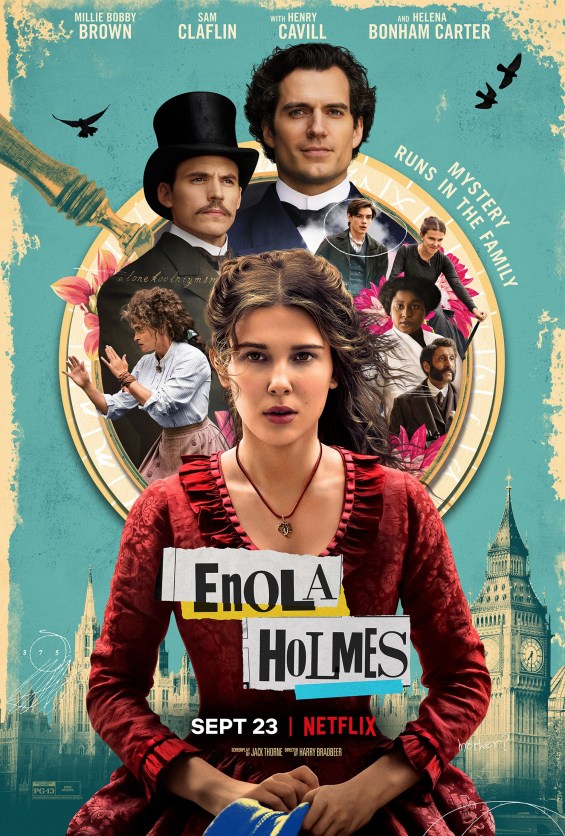
Based on the book series; The Enola Holmes Mysteries by Nancy Springer, a string of books centralising on Sherlock and Mycroft Holmes’ younger sister, Enola. 2020’s Enola Holmes serves as an alternate take on the Sherlock Holmes mythology, aiming itself towards preteens (specifically preteen girls) and injecting the world of the renowned detective with both colour and humour. Unfortunately, however, on account of the film’s poor pacing, overly long runtime and comedic sequences that frequently fall flat, Enola Holmes struggles to attain much appeal outside its preteen demographic, even with a terrific performance from Millie Bobby Brown as the titular character.

Plot Summary: When Enola Holmes, Sherlock Holmes’ teenage sister, discovers that her mother has gone missing, she embarks on a daring mission to the city of London to find her. Swiftly becoming a proficient detective in her own right as she outwits her older brothers and unravels a treacherous conspiracy surrounding a young, runaway Lord…

Adapting the first entry of the book series into an origin story, of sorts. The plot of Enola Holmes revolves around a mystery, similar to many adaptations of Sherlock Holmes literature. However, unlike many other adaptations of the world’s greatest detective, Enola Holmes repeatedly breaks the fourth wall throughout its narrative, having Enola turns towards the camera and speaks directly to the audience, delivering exposition and sharing her thoughts on her current situation. Yet, this isn’t too surprising as director Harry Bradbeer (As the Beast Sleeps, The Brides in the Bath, Perfect Day: The Millennium) is predominantly a television director, directing episodes on several well-known series, including Fleabag, which also features a number of fourth-wall-breaking moments. Furthermore, with a female protagonist at the centre of the story, Enola Holmes attempts to weave themes of feminism and the sexist nature of the 1800s into its narrative, which is an admirable goal, yet often comes across as preachy in its delivery as the female characters continuously outperform and belittle the male characters, including Sherlock Holmes himself.

Best known for her role as Eleven in the smash-hit sci-fi television series; Stranger Things, Millie Bobby Brown portrays the youthful detective, Enola Holmes, with plenty of wit and confidence. And, although the screenplay doesn’t give Enola much complexity beyond occasionally being too headstrong for her own good, she is a fine protagonist, especially for impressionable young girls. The supporting cast also does well in their respective roles, with Henry Cavill, in particular, portraying a remarkable iteration of Sherlock Holmes in a more traditional portrayal of the character following the rather wild and scattered portrayals from Robert Downey Jr. and Benedict Cumberbatch. Cavill is calm and collected as the stark image of his older brother, Mycroft Holmes, portrayed by Sam Claflin, who is far more rigid. Mycroft also makes an excellent foil to Enola as he demands she conform to the standards of 18th-century women. Then there is Helena Bonham Carter, who doesn’t have much to do as the Holmes matriarch, Eudoria Holmes, but makes the most of her screen-time through her monologues, bouncing from various tones with her eccentric behaviour and sage advice.

For added freedom and flexibility when it comes to camera movement, Enola Holmes was shot almost exclusively using a Steadicam system. This allowed cinematographer Giles Nuttgens to obtain many of the energetic shots seen throughout the film. Yet, despite this persistent sense of movement, many of the shots in Enola Holmes aren’t anything overly inventive, and instead, a large portion of the camerawork simply presents the detailed costumes and sets with pride. All of which feel period-accurate, if a little excessively vibrant.

Whilst not as memorable or as distinct as many of his other scores, composer Daniel Pemberton does a passable job with the soundtrack for Enola Homes. Crafting an orchestra-led score brimming with bouncy rhythms and sassy melodies, all united by guitar. Effectively, it’s a modern score that makes no real attempt to convey the time period of the story. Instead, the original score concentrates on Enola as a protagonist, accentuating her personality through tracks like Gifts from MotherCracking the Chrysanthemums Cypher and The Game is Afoot.

According to the novel; A Study in Scarlet, by Sir Arthur Conan Doyle. Sherlock Holmes first met his assistant, Dr. Watson, in 1881. But, in Enola Holmes, which is set in 1884, Lestrade states that Sherlock always works alone, indicating that the pair have not yet met. As such, it’s a safe assumption that Enola Holmes is set outside of the series’ usual continuity, further playing into the idea that Enola Holmes is an entirely new interpretation of the series. This assumption is inadvertently also a pleasant distraction from the film’s countless cringe-worthy quips and one-liners.

In summary, Enola Holmes is the type of film that preteens will delight in; a charming, family-friendly adventure with an intriguing mystery at its core. For others, however, this family flick is unlikely to impress as a result of its notable flaws and restrictive appeal, not to mention its constant attempts to plant seeds for the inevitable sequels that will be coming to Netflix later down the line. Having said that, I feel Millie Bobby Brown will certainly advance her career with this project as she was actually one of the primary reasons Enola Holmes was greenlit, approaching author, Nancy Springer, with the intention of starring in and producing an adaptation of her work. Rating: 5/10.

Enola Holmes • Poster

Resistance (2020) – Film Review

“We Have to Save the Children.” – Emma

During the German occupation of France in 1940, a young Jewish man named, Marcel Mangel, fled with his family to Limoges where his cousin, Georges Loinger, a member of the French Resistance, urged him to join the cause. Eventually, both Marcel and his older brother, Alain, would join the French Resistance, adopting the last name, Marceau, and helping rescue countless Jewish children from race laws and concentration camps. Throughout his time in the Resistance, Marcel frequently used his skills as a mime artist to keep the children quiet and entertained as he helped them escape to Switzerland. With all that in mind, it’s difficult to imagine how a filmmaker could possibly disappoint when creating a cinematic interpretation of Marcel’s extraordinary story, but 2020’s Resistance is just that; a disappointment. Serving as a flawed yet honourable biopic that somewhat pushes past its varying performances and peculiar execution to function as an earnest tribute to its real-life protagonist.

Plot Summary: Before he became a world-famous mime, aspiring Jewish actor and artist, Marcel Marceau, joined the French Resistance alongside his brother, Alain, in an effort to save thousands of orphaned Jewish children from the impending threat of the Third Reich…

Written and directed by Jonathan Jakubowicz (Secuestro Express, Hands of Stone). The screenplay for Resistance continuously appears distracted, creating a scattershot portrait of Marcel Marceau’s life when it could’ve easily been a straightforward celebratory biopic documenting his valiant actions and incredible feats throughout the Second World War. The perfect example of the film’s unconventional approach can be seen in the structure as Resistance bizarrely chooses to tell Marceau’s story through the means of a flashback, narrated by General Patten (portrayed by Ed Harris) as he addresses the serried ranks of the U.S. troops who have just liberated France. This flashback structure adds nothing of value to the plot and ultimately only serves as a distraction. However, the film does partially redeem this issue during its epilogue as the filmmakers pay respect to the real-life events they’re documenting, inserting text that states that the Nazis killed over a million children during World War II and that this film is dedicated to them.

When it comes to the cast, the supporting actors of Clémence Poésy, Félix Moati, Vica Kerekes, Bella Ramsey and Matthias Schweighöfer all give serviceable performances as various members of the French Resistance and those who oppose them. The standout, however, is, of course, Jesse Eisenberg, who portrays Marcel Marceau himself. And even though Marcel’s personality is only explored in bullet-point tropes, swiftly moving from one trait to the next, Eisenberg portrays the war hero with complete serenity, his performance only being hindered by his inconsistent French accent. Still, there are plenty of undeniably tense moments that showcase Eisenberg’s ability to jump from comedic to dramatic acting on the fly.

Visually, Resistance is more than competent as the cinematography by Miguel Ioann Littin-Menz has its fair share of attractive shots, often utilising the story’s diverse mix of locations to great effect with symmetrical lines. And for all its unusual choices in terms of structure, it can never be stated that Resistance leans too hard on certain moments to drain them of maximum emotion. Take the opening scene, for example, in which a little girl’s house is raided by Nazis who subsequently kill her parents. A brief scene, during which, we see no on-screen violence whatsoever. With that said, the colour palette of Resistance never tries to be anything but gloomy and grey. Whilst I understand that this was likely done to further establish the story’s World War II setting, even in more cheerful moments where Marcel makes the children laugh, Resistance rarely employs vibrant colours in its visuals.

Similarly, the film’s music is a rather mixed bag, as while the original score by Angelo Milli features a handful of memorable tracks, such as You Are Not Alone and Adagio for a Silent Performance, both of which help add dramatic weight to the scenes they are featured within. There are also plenty of moments where the film is lazily manipulative with its audio as the sound of an angelic children’s choir is contrasted with scenes of brutal executions.

Another problem Resistance suffers from is its overabundance of subplots, an issue that frequently results in a complete lack of narrative focus. From Marcel’s somewhat strained relationship with his father, who after seeing one of his performances as Charlie Chaplin calls him; “A Clown Dressed Like Hitler in a Whore House,” to a similar kind of resentment toward his brother, as well as a romantic fling with fellow Resistance member, Emma. Nearly every subplot in Resistance goes nowhere and practically fades into thin air by the time the end credits roll. Proving that when it comes to biopics, more story doesn’t necessarily mean a better story.

In summary, Resistance is neither a fully drawn biopic nor a thrilling war epic despite its largely convincing performance from Jesse Eisenberg as the mime artist-turned-war hero. The main reason for this is that Resistance constantly feels as if it isn’t sufficiently delving into Marcel’s numerous talents or his brave endeavours within the French Resistance. Nevertheless, I do believe this was a film worth making as its mere existence helps in celebrating Marcel Marceau’s remarkable life. A life that many may not have even been aware of before this film’s release. Rating: low 6/10.

resistance_ver3_xxlg

Extraction (2020) – Film Review

“If You Want to Survive, You Will Do Exactly as I Say…” – Tyler Rake

Based on the graphic novel; Ciudad by Ande Parks, which in itself was based on an unproduced screenplay written by Joe Russo in 2014. 2020’s Extraction transfers the story it’s adapting from the Paraguayan city of Ciudad Del Este to Dhaka in Bangladesh whilst still indulging in all of the same barbaric violence and exciting action set pieces. Yet, despite its spectacular stunt work, impressive long takes and electric performance from Chris Hemsworth, Extraction isn’t entirely saved from its generic complexion, as the film frequently falls back on many of the usual tropes we tend to see in modern action flicks.

Plot Summary: In an underworld of weapons dealers and traffickers, Ovi Mahajan, the son of a notorious drug lord, becomes the pawn in a war between two criminal syndicates. Now, held hostage by a group of kidnappers in one of the world’s most impenetrable cities, his rescue beckons the unparalleled skill of black-market mercenary, Tyler Rake, a broken man with nothing to lose, harbouring a death wish that makes an already dangerous mission near impossible…

Extraction marks the feature-length directorial debut of the stunt coordinator/second unit director for 2019’s Avengers: Endgame, Sam Hargrave, who, producers Joe and Anthony Russo, hand-picked to helm the project following their collaboration on the superhero blockbuster. Meaning, of course, that Hargrave’s profession as a stunt coordinator (and stunt double) repeatedly comes into focus as each of the film’s action sequences are relentlessly thrilling and well-orchestrated. If truth be told, however, most of Extraction‘s faults come not from its directing, but rather its screenplay. As, in many ways, Extraction‘s screenplay is structured much like a video game, continuously introducing new ‘boss levels’ that Tyler must complete before advancing, such as a corrupt general who also happens to be the country’s best sniper. Quickly equalling to tiring formula, especially when the film introduces the odd interesting idea, like a subplot focusing on a troubled teenager taking his first, uneasy steps into the world of organised crime.

Although Chris Hemsworth gives an admirable performance as the film’s protagonist, Tyler Rake, a fearless mercenary and former SASR operator, discreetly mourning the loss of his son who died from lymphoma. The character’s promising (if a little cliché) setup is soon spoilt by the complete lack of development from that point onwards, as Tyler essentially goes nowhere after the groundwork for his character is laid, cementing him as a by-the-book action hero and nothing more. Surprising, considering that Extraction was effectively conceived as a ‘star vehicle’ for Hemsworth, a remarkable actor who has struggled to obtain a signature role outside of the God of Thunder, Thor Odinson. On the flip of this, there is the school-age son of a Mumbai drug lord, Ovi Mahajan, portrayed by Rudhraksh Jaiswal, who, serves his purpose as an innocent child caught in the crossfire between two gangs. It’s just unfortunate that the film tries to build a parental relationship between the two, merely reminding the audience how paper-thin its characters are.

When overlooking the murky, displeasing colour palette, a majority of the visuals throughout Extraction are spellbinding as the film uses its dynamic, hand-held cinematography by Newton Thomas Sigel to place the audience alongside the characters in the busy streets of Dhaka, having Tyler grapple with corrupt police officers while tuk-tuks and scooters disorderly rush past, a feeling that is only amplified by the film’s multiple one-takes. One of these takes, which clocks in at around eleven minutes and twenty-nine seconds, is, in actuality, comprised of thirty-six stitched sequences, some of which took over twenty-five takes to line up correctly, according to Sam Hargrave.

Regrettably, the original score by Henry Jackman and Alex Belcher isn’t as innovative as the soundtrack almost solely consists of indistinguishable ostinato-driven action tracks, such as Police Search and Checkpoint, all of which have a heavy emphasis on percussion, with only the occasional pause for breath. And, whilst there isn’t a standout theme as such, Extraction does have an effective little motif that runs through some of the tracks to give the score a bit of personality.

Naturally, the action sequences of Extraction are what the majority of the film hinders. And, luckily, they deliver, being brutal, bloody and fast-paced as, dissimilar to highly-skilled characters, like John Wick, whose fighting style is inherently tactical and calculated, Tyler Rake engages in combat far more spontaneously, improvising weapons and thinking on his feet whenever he is thrown into a dangerous scenario. As previously mentioned, the film’s camerawork also amplifies many of these exhilarating moments, particularly one car chase sequence, during which, Hargrave actually manned the camera himself whilst he was strapped to the hood of the vehicle pursuing Tyler and Ovi.

In summary, Extraction is slightly contrived and sporadically over-the-top, and there’s no question that the film’s characters are essentially just cardboard cutouts delivering line after line of uninspired dialogue. In fact, for most of its runtime, Extraction almost feels as if you’re watching someone play a video game, which as I’m sure any video game enthusiast will tell you, is only amusing for a short time. But, purely in terms of action, Hargrave and the Russo Brothers bring the noise with a film fueled by the charisma and physicality of its leading actor, suggesting that Hemsworth has found his go-to genre once he retires his iconic superhero. Rating: 6/10.

extraction_netflix_xxlg

Spree (2020) – Film Review

The world of social media influencers vying for clicks, likes, views and retweets all to achieve viral fandom is a twisted one, and ‘Spree’ is far from the first film to delve into this subject matter with a satirical lens. What makes the film different is its secondary inspiration, being based on the true story of an Uber driver who went on a killing spree in early 2016, ‘Spree’ has plenty of comically violent scenes to accompany its social media commentary. Yet, even in spite of Joe Keery’s magnetic screen presence, ‘Spree’ is a film that always feels as if it’s on the verge of being something exceptional, but its reach far exceeds its grasp.

Plot Summary: Desperate for an online following, twenty-three-year-old wannabe influencer and rideshare driver; ‘Kurt Kunkle,’ devises a malicious scheme to go viral, installing a series of cameras inside his rideshare car in order to film his unsuspecting victims as they meet a gruesome end…

Co-written and directed by Eugene Kotlyarenko (A Wonderful Cloud, Wobble Palace, We Are), ‘Spree’ was initially envisioned as a claustrophobic horror based around the story of the previously mentioned serial killing Uber driver, who claimed a “Devil Figure” inside of the rideshare app was controlling his actions. And, although this terrifying true story would have certainly provided enough inspiration for an indie horror flick, Kotlyarenko and co-writer Gene McHugh soon began to swerve more into dark comedy after giving the killer an intense craving for attention. This eventually evolved into the film’s central theme of social media obsession, which while often used to great effect to mock online influencers, does frequently feel underdeveloped and retracts from the film’s tension, pushing ‘Kurt’s killing spree into the background in exchange for awkward character moments, which will inevitably disappoint those hoping to see plenty of grisly kills.

Joe Keery portrays the film’s psychotic protagonist; ‘Kurt Kunkle,’ who is suitably just as upbeat and inappropriate as many real-world influencers. This realism is most likely a result of Eugene Kotlyarenko and Joe Keery’s research, as the pair watched many cringe compilations of people online without a big following to help create the character, and this comes across through Keery’s body movements and relentless optimism, making for an occasionally irritating yet charismatic protagonist as ‘Kurt’ always remains hopeful his night of murder will increase his follower count after trying (and failing) for the past decade. It’s just unfortunate that ‘Kurt’ doesn’t receive much development over the course of the runtime aside from one or two scenes, with much of ‘Kurt’s life outside of the internet being left a mystery.

The cinematography by Jeff Leeds Cohn is obviously in the style of found-footage, but rather than simply having ‘Kurt’ film his every move similar to most found-footage flicks, the camera itself takes on numerous forms as the story is seemingly spliced together through iPhone cameras/screens, dash-cams, body-cams and even CCTV footage. Yet, despite this ever-changing camerawork ensuring ‘Spree’s visuals stay varied, there does come a point when it begins to feel as if the film is simply piling on footage, even sometimes having three shots displayed at once through a split-screen effect which does become slightly overwhelming, especially when combined with the film’s rapid editing.

Whilst there are a few found-footage films that have successfully integrated an original score without taking away the sense of realism the subgenre provides, ‘Spree’ is most definitely not one of those films, as although the pulsing electronic score composed by James Ferraro does help to build excitement, the film’s soundtrack repeatedly plays over scenes with no clear in-world source, which greatly dampens the illusion of the film being found-footage.

Of course, with ‘Spree’ having a heavy focus on all things social media, it would be crucial that the film stays truthful to what the internet is actually like (even through its cynical view). And, while the film does have many scenarios that feel as though they lack realism, whether that’s due to incredibly forced dialogue or ‘Kurt’s beyond moronic actions when trying to avoid the Los Angeles police force, anytime the film displays a phone screen there is a certainty that every app/website will be a real brand and will be overflowing with detail. For example, ‘Kurt’s constant live streaming never shies away from reality, meaning his stream’s comments are always rapidly unfurling with insults, jokes, and questions all from distinct usernames, which according to Eugene Kotlyarenko, took him over forty nights to type out.

In summary, Joe Keery’s entertaining performance can’t distract from ‘Spree’s shallow critique of social media, as whilst some may argue the story’s lack of depth is precisely the point as the film feels as if it’s unsure as to what to do with its concept, which is greatly disappointing. As, I personally think a dark comedy revolving around the obsessive culture of social media is ingenious, and films, like ‘Ingrid Goes West’ prove this idea can be executed well. ‘Spree,’ however, fails to deliver on this or its even promise of a violent and comedic thrill ride. So, while I do still believe the film will have a niche appeal, ‘Spree’s apparent flaws are likely to stop most from hitting the subscribe button. Final Rating: 4/10.

spree-p1102551

Possessor (2020) – Film Review

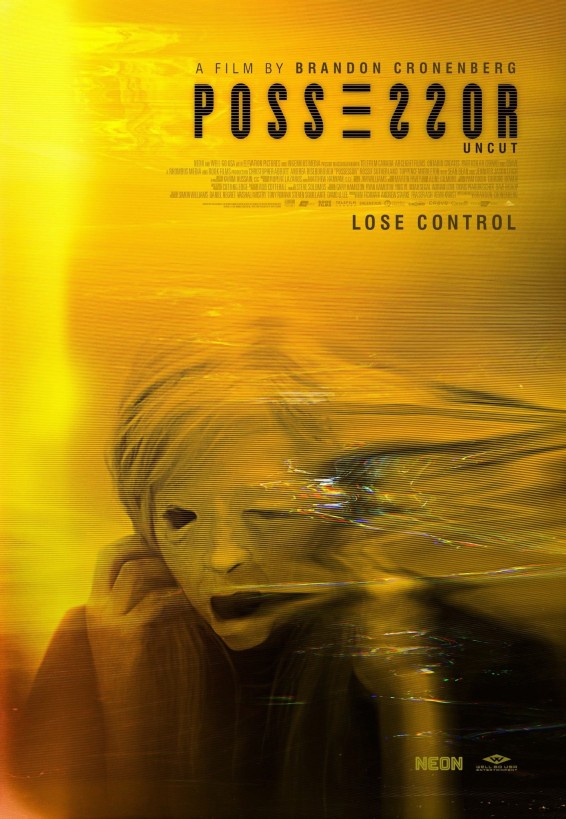
Following his 2012 directorial debut with ‘Antiviral,’ Brandon Cronenberg, son of legendary sci-fi-horror director David Cronenberg, crafts a captivating sci-fi thriller with 2020’s ‘Possessor,’ a film that deals with heavy underlying themes of identity loss and sexual discomfort, all whilst displaying its story through some truly spectacular cinematography and lighting. And, even though Brandon’s second sci-fi/arthouse outing doesn’t quite reach the high bar set by his father’s work, ‘Possessor’ is still more than successful as a surreal and layered science fiction flick with outbursts of strong, bloody violence.

Plot Summary: After many years of working as a corporate agent utilising brain-implanted technology to inhabit other people’s bodies and force them to commit assassinations for the benefit of the company. ‘Tasya Vos’ struggles to suppress her violent memories and urges, soon causing her to completely lose control when taking over the mind of a new subject, whose identity now threatens to destroy her own…

Debuting at Sundance Film Festival in early 2020, ‘Possessor’ has quickly gone down as one of the best low-budget releases of that year. Or, at least, this version of the film has, as according to writer-director Brandon Cronenberg, there was an alternate screenplay for ‘Possessor’ which drastically differed from the version that was released. So much so, that Brandon stated it could possibly become a second film later down the line, encompassing all of the material that didn’t quite make it into the first, which was primarily inspired by two pieces of media, the first being the 1971 novel; ‘Physical Control of the Mind: Toward a Psycho-Civilised Society’ by José Delgado, and the second being the short film; ‘Please Speak Continuously and Describe Your Experiences as They Come to You,’ written and directed by David Cronenberg.

Andrea Riseborough gives a fantastically cold performance throughout the film as ‘Tasya Vos,’ making it clear within only a few minutes that ‘Tasya’ is deeply suffering from the effects of her job, as each time she steps into the life of a new subject, she remerges different, finding it harder and harder to untangle her true identity from the one she just inhabited. And, it probably goes without saying that as a sci-fi focused on entering other people’s bodies, the story does explore sexual desire/sexual discomfort, never shying away from scenes of ‘Tasya’ being entranced with her new body after taking over the mind of ‘Colin Tate,’ portrayed by Christopher Abbott. Who, also gives a superb performance as the unfortunate host chosen to execute the company’s assassination, continuously switching between two personalities before eventually becoming devoid of all emotion as minds conflict.

‘Possessor’s cinematography by Karim Hussain also rarely ceases to impress, as nearly every shot is both attractive and memorable, with many shots leaning into the narrative’s themes in addition to providing a closer look at the heavily detailed gore effects through an array of extreme close-ups. The innovative camerawork is also enhanced by the film’s terrific use of colour, as the lighting and colour palette swiftly alters from bright yellows to dark blues to eye-piercing reds. But, this isn’t where ‘Possessor’s filmmaking peaks, as it can’t be denied that the film is at its best whenever it visualises ‘Tasya’ and ‘Colin’ mentally battling for control of ‘Colin’s body, as the film visually displays this interesting concept of a psychic battle on the astral plane through a range of editing techniques and creative yet strange practical effects. The scene in which ‘Tasya’ first enters ‘Colin’s mind is particularly astounding, as the film displays the fake bodies of the two main cast members, which then melt entirely into liquid flesh.

Many of the film’s bizarre visuals are also elevated to a great extent by Jim Williams’ original score, as ‘Possessor’s synth-esque soundtrack keeps the film’s eerie atmosphere present throughout the runtime, capturing the story’s surreal tone and constantly building tension through its atmospheric feel until we arrive at the story’s thrilling climax. My two personal favourite tracks; ‘Reborn in the Mind of Another’ and ‘A False Reputation,’ aren’t exactly distinctive, but both tracks do help tremendously in this regard.

The leading issue ‘Possessor’ suffers from is its lack of world-building, as supposedly the film takes place in an alternate version of the year 2008, but aside from one short scene where we see ‘Colin’s day-to-day job as a data miner, which does at least serve as a comment on the paranoia of corporate overlords and their nefarious activities, the world of ‘Possessor’ receives very little development and can often feel inconsistent when it comes to its technological advances.

In summary, ‘Possessor’ is the perfect hybrid of sci-fi, character study and body horror, as whilst its lack of world-building and compelling side characters do stop the film from reaching its true potential, ‘Possessor’ (along with Brandon’s previous film), definitely prove that Cronenberg’s son has a talent for telling harrowing and violent stories, all the while never forgetting to integrate intriguing concepts and ideas. And, with Brandon pushing for most of ‘Possessor’s effects to be completed in-camera rather than with CGI, the two directors may be even more alike than I first thought. Final Rating: low 8/10.

possessor_ver3_xxlg

The Problem with Live-Action Disney Remakes – Film Discussion

In years recent years, Disney has noticeably been taking quite an aggressive approach to reimagining many of the company’s classic animated adventures into live-action blockbusters, which I personally feel is having a bad influence on the rest of the film industry in more ways than one…

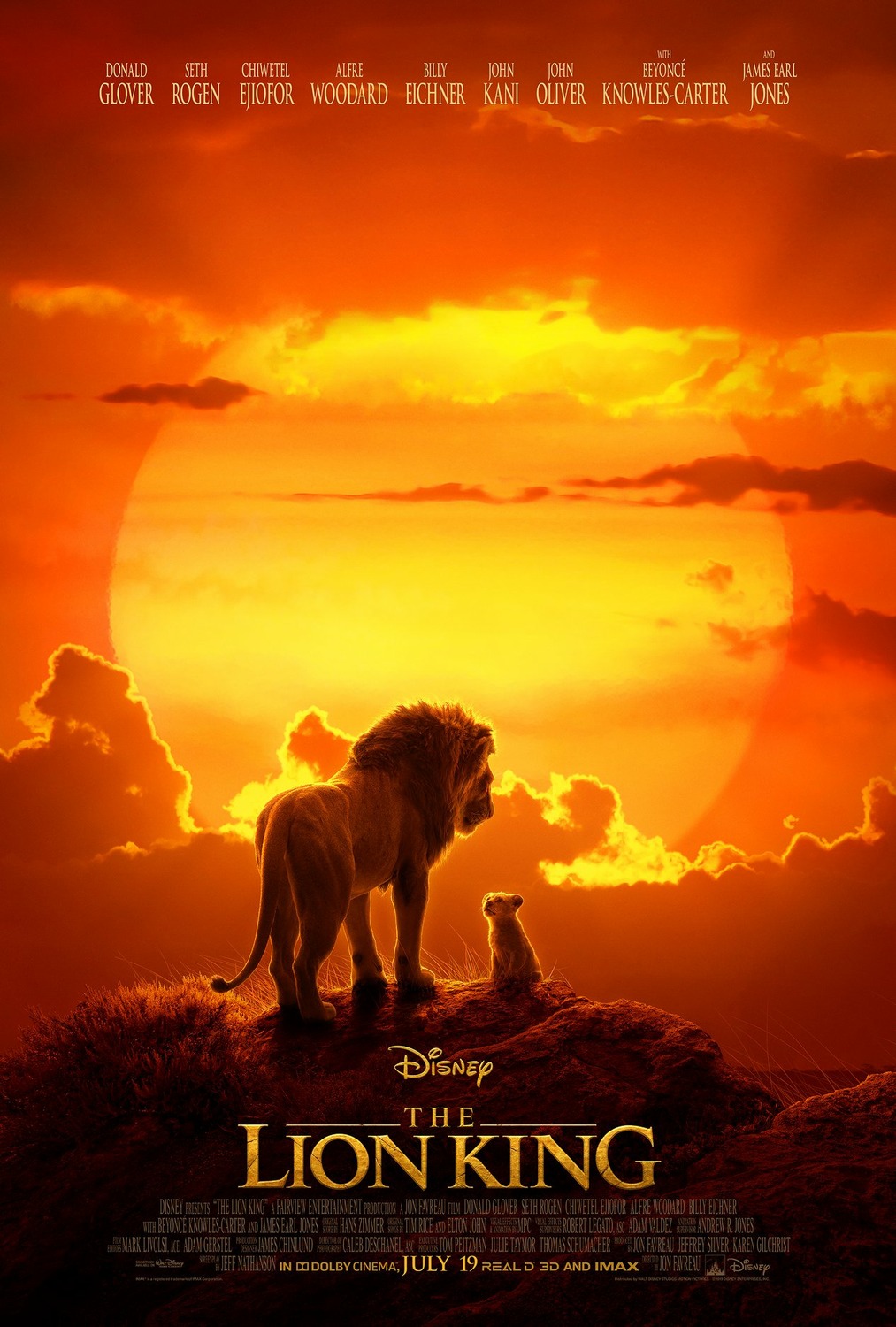
Despite Disney actually began the trend of remaking their classic films all the way back in 2010 with the semi-sequel/remake of ‘Alice in Wonderland,’ directed by Tim Burton. Disney didn’t begin to get truly rampant with its approach until the later successes of ‘Cinderella’ and ‘The Jungle Book’ in 2015 and 2016, respectively, with ‘Beauty and the Beast,’ ‘Dumbo’ and ‘Aladdin’ following not far behind, eventually leading to their most recent releases, that being ‘The Lion King’ and ‘Lady and the Tramp.’ Yet, whilst all of these films did receive mostly positive reviews from both critics and audiences upon their initial release, I personally have never understood why. As, for me, none of these remakes ever manage to really justify their existence, with each new film simply feeling like nothing more than a product, a money machine disguised as a film created purely to rinse profit out of Disney fans who desire to see their childhood classics recreated in a new light and, by this point, I just find it irritating.

Of course, remaking iconic films is nothing new for the film industry, with dreadful remakes, such as ‘RoboCop,’ ‘Ghostbusters’ and ‘Robin Hood,’ all being great examples of how taking a classic film and giving it a sleek modern aesthetic doesn’t automatically make it superior to the original. However, it’s the way Disney goes about executing their remakes that makes them even more frustrating, as even though most reimaginings may not differ too much from the original story, the majority of Disney remakes feel almost identical to their animated counterparts, featuring nearly all of the same scenes and dialogue, now just dragged down by much weaker visuals, vocal performances, and songs. This, in turn, also allows directors and writers to simply borrow material from previous filmmakers without having to innovate much themselves. Another issue I have with Disney converting their animated classics into live-action is that many of the original stories were always envisioned to be animated as they were being written, meaning when transferred into a different style of filmmaking, they usually are forced to rely on enormous amounts of CGI.

Although most audiences seemingly don’t take issue with Disney’s constant remakes, there are still some Disney fans who have spoken out about losing interest in Disney’s future live-action endeavours. In particular, I personally recall many weren’t looking forward to watching the ‘Aladdin’ remake around the time of its release, which I feel is understandable, as just from its trailer alone, it was clear that not only would the film intensely mirror the original, but it was obvious just from a glance that its visuals were also far, far duller, as the remake was lacking in both colour and style. Focusing more on being semi-realistic rather than fully engaging in its elements of fantasy (which, for a narrative revolving around a powerful genie who grants three magical wishes, feels like a huge mistake to me). Whilst the original ‘Aladdin’ may not be the most visually enthralling of Disney’s catalogue of family flicks, the classic style of 2D hand-drawn animation is still very pleasing to look at, even by today’s standards for CG animated films.

It may even surprise some to know that many of these bland remakes were actually directed by talented filmmakers like Jon Favreau and the previously mentioned Tim Burton. Yet, with each new film, every director’s unique style always seems to be stripped away or completely absent, as not only does each remake barely utilise any creative cinematography or editing, relying nearly entirely on CG effects to impress the audience. But usually inventive directors such as Guy Ritchie, who has made phenomenal use of his unique style of editing and humour in the past within his films, like ‘Snatch’ and ‘The Gentlemen,’ suffers as a result of how simply generic and even somewhat boring his reimagining of ‘Aladdin’ is, and while Disney may not be entirely to blame for this, I do believe the company would prefer to keep each remake fairly easy to digest in order to appeal to a wider audience.

In addition to both the visuals and directing, however, the cast of the original animated flicks were also a huge contributing factor to them becoming as beloved as they now are, with not only actors like Robin Williams as the original ‘Genie,’ of course, but also lesser-known actors such as Nathan Lane and Ernie Sabella as ‘Timon’ and ‘Pumbaa,’ to Jodi Benson and Pat Carroll as ‘Ariel’ and ‘Ursula,’ as all these voices not only gave the characters great comedic timing and a distinct tone, but they soon even became an extension of the characters themselves, making them recognisable purely through their voice. Whereas Disney’s newer remakes prefer to just take the much easier approach of simply casting the most relevant actors at the time and throwing them into an iconic role, and whilst actors, like Donald Glover and Chiwetel Ejiofor, will always be superb at their craft, forcing these performers into roles within ‘The Lion King’ simply due to their popularity will always make their vocal performance feel very out-of-place when in comparison with the original film.

The final area I find Disney remakes to be most lacking is the tampering of classic Disney songs, as although I’m personally not an enormous fan of musicals within the realm of live-action, I’ve always enjoyed many of the songs in Disney animated classics. As, not only do I feel these songs add to the characters and the story of each film immensely, but many classic Disney songs also manage to become iconic amongst themselves, with nearly any fan of animation more than likely know all the words to ‘Be Our Guest,’ ‘The Circle of Life,’ and ‘Under the Sea’ (just to name a few). But, when it comes to the remakes, once again, both the original score and songs feel far duller, even in spite of the legendary Hans Zimmer returning for ‘The Lion King’ remake to recreate many of his classic tracks. Still, a few of the reimaginings do at least attempt to throw in some original songs, which unfortunately end up being mostly forgotten due to them being overshadowed by the classic songs audiences are more familiar with.

In summary, it seems the influx of live-action Disney remakes won’t be stopping anytime soon, with ‘The Lion King’ racking in over £1 billion worldwide, Disney will most likely continue this remaking trend until their audience completely loses interest, as reimaginings of ‘Mulan,’ ‘Peter Pan,’ ‘The Little Mermaid,’ ‘Pinocchio,’ The Sword in the Stone’ and ‘Lilo and Stitch,’ as well as many, many more, are already set for release. Whilst the House of Mouse does still have a few original films on the horizon, Disney seems to be heading down a similar path to their paired animation company Pixar, that being one of laziness, relying mostly on their previous stories and franchises for profit rather than creating something new which, in turn, is also encouraging other production companies to do the same. So, if you share my opinion, perhaps sit out Disney’s next live-action release, stay at home, and just relive many of the beautifully animated stories from the past, as I honestly believe many of these films are timeless.

lion_king_ver2_xlg