Ten Film Facts You Should Know (Part One) – Film List

Cinema has always been full of surprises, particularly when it comes to the creation of certain projects, as fascinating stories often occur during the pre-production, production and post-production stages of iconic films (some intentional, others happy accidents), with many of these happenings eventually making it onto the silver screen or the furthest reaches of the internet, remaining a sheltered piece of film history. So, here are ten film facts you should know to expand your cinephile knowledge and triumph over your family and friends at your next trivia night.

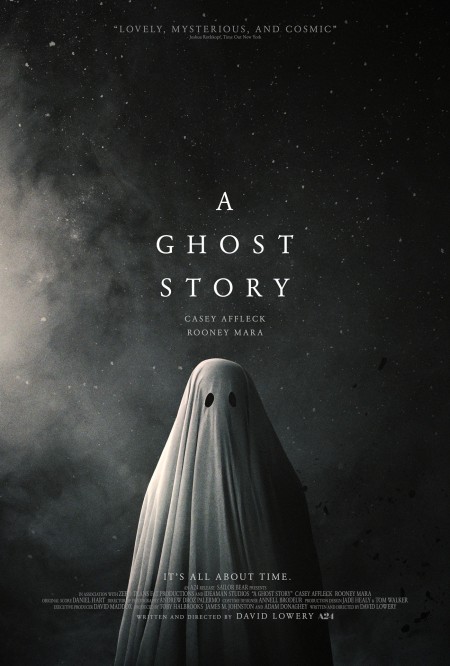
A Ghost Story (2017)

During the production of the indie drama; A Ghost Story, for the prolonged shot in which her character eats a pie, several variations of pies were baked and tested in preparation for the scene. Actress Rooney Mara, a self-confessed picky eater, ultimately opted for a reduced-sugar, gluten-free vegan chocolate pie. Writer-director David Lowery claimed it was delicious, but Mara disagreed, declaring it tasted vile.
ghost_story_xxlg

Jurassic Park (1993)

Following the end of production on the iconic blockbuster; Jurassic Park, all the cast were given a Velociraptor model, signed by director Steven Spielberg, as a gift. The model looked rather frightening, so actress Ariana Richards positioned her model in her house to startle arriving guests. Actress Laura Dern, however, placed her model in her son’s room near his crib. But, when her son was older and witnessed it looking over him, he grew terrified of the model, forcing Dern to put the Velociraptor model into storage.

jurassic_park_ver2_xxlg

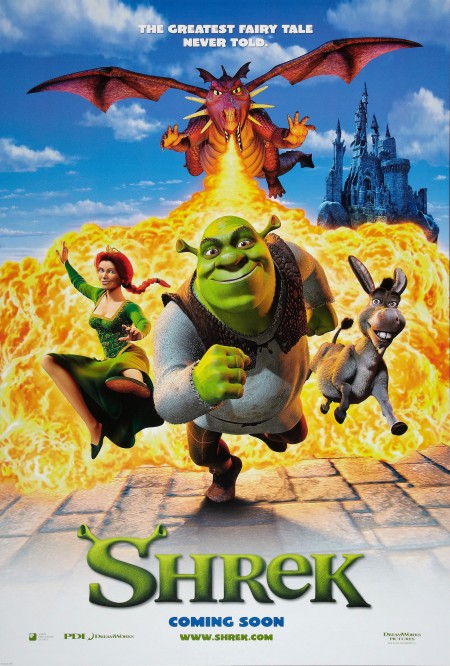
Shrek (2001)

Originally, comedian Chris Farley was cast as the voice of the titular character in the animated smash-hit; Shrek, recording almost all of the character’s dialogue. However, after his sudden death in 1997, the role was given to his then-fellow Saturday Night Live performer, Mike Myers. As such, Shrek’s air quotes in the film are a homage to one of Farley’s most well-known characters, Bennett Brauer, who commonly used air quotes. A story reel featuring a sample of Farley’s recorded dialogue was eventually leaked to the public in 2015.
shrek-p603939

Toy Story 2 (1999)

Whilst working on the sequel to the cherished animated flick; Toy Story, released in 1995, one of the animators accidentally entered the code; “rm *,” which, when entered, deletes everything on the computer as fast as possible. As a result, the team behind Toy Story 2 lost roughly 90% of the film. Fortunately, supervising technical director, Galyn Susman, had recently had a child, so she took a copy of the film home with her so she could work from home, allowing the team to cover the extra copy in blankets and drive it back to Pixar Animation Studios, where they were able to recover the majority of the film.

toy_story_2-p784308

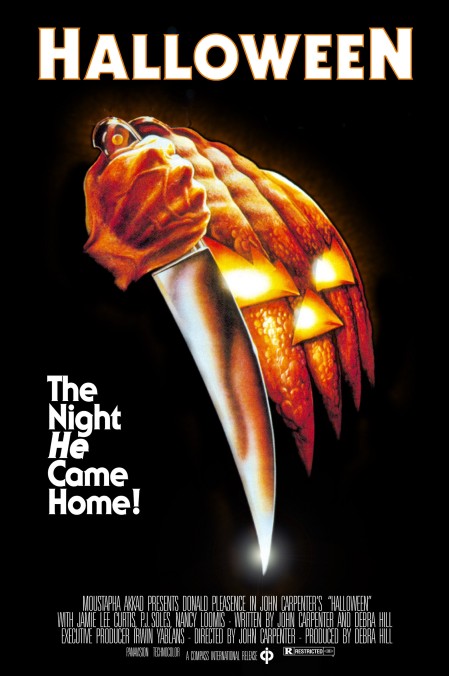
Halloween (1978)

In the original screenplay for the horror classic; Halloween, then-titled; The Babysitter Murders, the events of the story took place over several days. Due to the filmmakers only possessing a budget of around £260,000, however, it was ultimately a budgetary decision to change the screenplay to have everything occur on the same day, reducing the number of costume changes and locations required. Furthermore, it was decided that Halloween, the scariest night of the year, was the perfect night for Michael Myer’s teenage massacre, hence the title change.
halloween-p118793

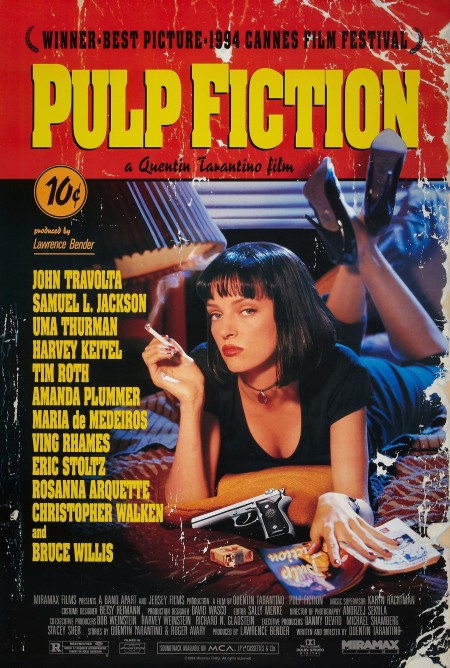
Pulp Fiction (1994)

Forming an interesting link between two quintessential crime-thrillers, Mr. Blonde, a.k.a. Vic Vega, portrayed by Michael Madsen in 1992’s Reservoir Dogs, is actually the brother of Vincent Vega, portrayed by John Travolta, from Pulp Fiction. At one point, the director of both films, Quentin Tarantino, even had a spin-off in development titled; Double V Vega, which would’ve served as a prequel to both films. However, the film was eventually scrapped because both actors were too old to portray younger versions of themselves.
pulp_fiction_ver2_xxlg

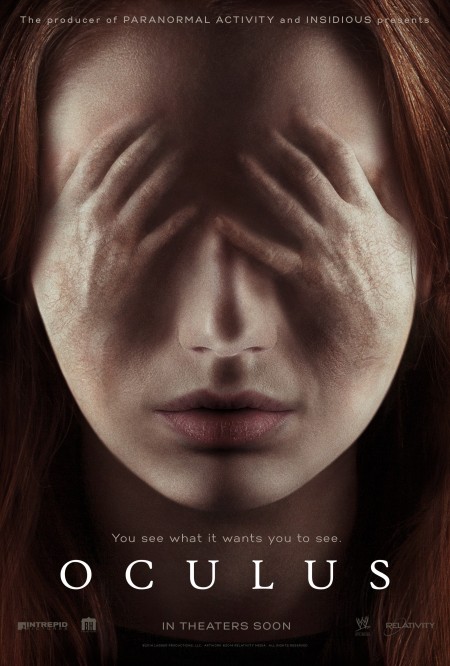
Oculus (2013)

Although the film wasn’t released until 2013, had co-writer and director Mike Flanagan agreed to develop his supernatural horror flick; Oculus, in a found-footage style similar to Paranormal Activity, released in 2007, the film would’ve been released much earlier as a number of production companies were interested in the project, even preparing to back the film as early as 2006. Flanagan, however, refused to do so.
oculus_xxlg

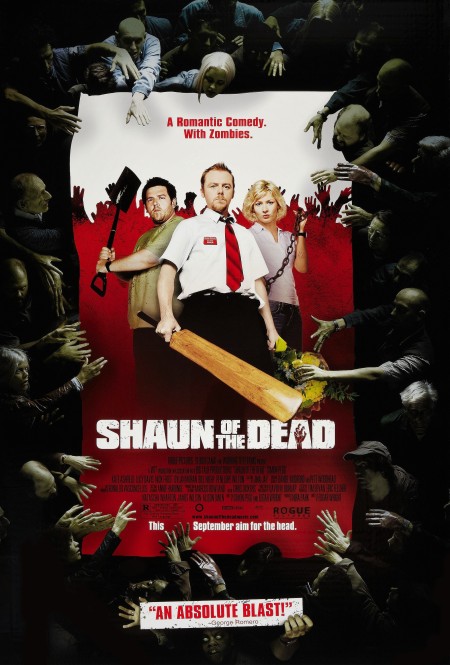
Shaun of the Dead (2004)

After the release of the treasured British horror-comedy; Shaun of the Dead, in 2004, duo Simon Pegg and Edgar Wright considered writing a sequel to the film that would’ve replaced zombies with another monster. But, they ultimately decided against it, as they thought too many characters perished in the original to continue the narrative. The proposed title for this sequel was; From Dusk Till Shaun. Humorously, a mocked-up poster can be seen for the film in Spider-Man: Into the Spider-Verse, released in 2018, a film that takes place in an alternate reality.
shaun_of_the_dead_ver2_xxlg

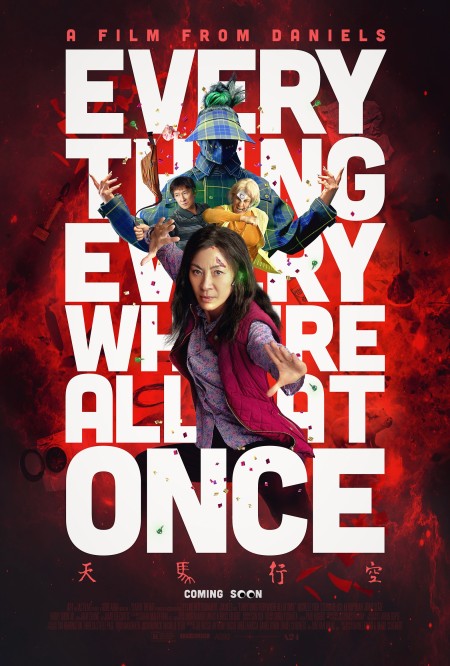
Everything Everywhere All at Once (2022)

All of the visual effects throughout the critically acclaimed, universe-hopping comedy-drama; Everything Everywhere All at Once, were completed by nine people (including the two directors), with most of the visual effects accomplished by a core group of only five individuals. Moreover, none of the visual effects team academically learnt visual effects, they were all friends who simply taught themselves how to create convincing effects with tutorials they found online for free.
everything_everywhere_all_at_once_ver3_xxlg

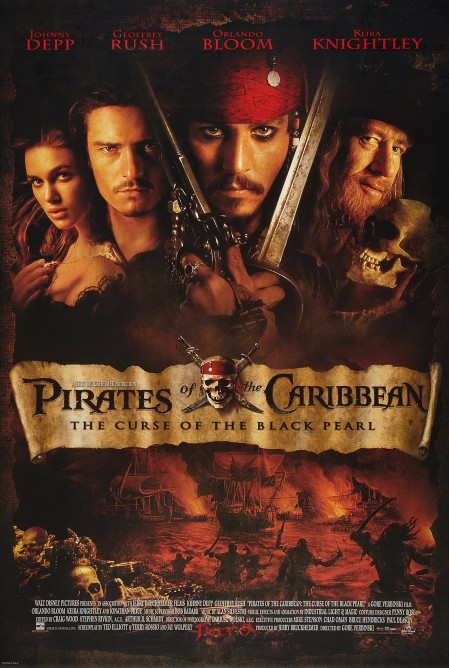
Pirates of the Caribbean: The Curse of the Black Pearl (2003)

In the swashbuckling blockbuster; Pirates of the Caribbean: The Curse of the Black Pearl, Johnny Depp’s beloved character, Captain Jack Sparrow, is shown to have gold teeth, these gold teeth were actually Depp’s idea. However, Depp predicted that the film’s executives would desire fewer gold teeth, so he instructed his dentist to implant more gold teeth in his mouth as a bargaining tool. Jack’s final number of gold teeth in the film was what Depp had envisioned all along for the money-hungry pirate.
pirates_of_the_caribbean_the_curse_of_the_black_pearl-p392846 (1)

Thirteen Lives (2022) – Film Review

“We Do Nothing, We’ll Be Bringing Them Out Dead for Sure. But, if They Die While We’re Bringing Them Out, at Least We Will Have Tried.” – Rick Stanton

Suspenseful, meticulous and gripping, Thirteen Lives is a diverting, claustrophobic drama/thriller and a hidden gem of the straight-to-streaming releases of 2022. Offering an incomplete yet engrossing dramatisation of an incredible true-to-life tale, Thirteen Lives succeeds in recounting the real story of a global effort to rescue a Thai soccer team who became entrapped in a flooding cave system in 2018. And while some aspects of the film appear rather drab, thanks to director Ron Howard (Apollo 13A Beautiful MindSolo: A Star Wars Story) and his somewhat ‘vanilla’ manner of filmmaking, it’s an immersive and engaging recount, nonetheless.

Plot Summary: Faced with insurmountable odds, a team of the world’s most proficient divers navigate a treacherous maze of flooded, narrow cave tunnels in an attempt to rescue a Thai soccer team of twelve children and their coach after they become trapped in the Tham Luang cave in Thailand following an unexpected rainstorm…

Even though the real story behind Thirteen Lives has been recounted before, most notably in the National Geographic documentary, The Rescue, released in 2021. Thirteen Lives is a similarly fact-based account that holds true to what really occurred, rarely playing with the details to manipulate the audience’s emotions or adhere to a more conventional story structure. The film even retains the involvement of numerous countries in the almost three-week-long rescue as, in reality, multiple nations took part alongside Thailand, such as Australia, Denmark, Japan, China, Laos, Myanmar (Burma), Great Britain and the United States. In fact, around ten thousand people contributed to the rescue effort, including more than one hundred divers, nine hundred police officers, two thousand soldiers and numerous volunteers.

Viggo Mortensen, Colin Farrell, Joel Edgerton, Tom Bateman and Paul Gleeson portray written interpretations of the actual heroes who ventured into Tham Luang cave, portraying them as modest and down-to-Earth and never representing them as hero-like archetypes, despite their unquestionably brave actions. Unfortunately, however, the screenplay doesn’t do so well at detailing who the individuals are outside of their adept diving skills, which is inexcusable given the film’s rather excessive runtime. The only specific trait any of the divers exhibit is their distinctly British obsession with Custard Creams, which I’m assuming was written into the screenplay to make the divers seem more relatable.

Similar to the rest of Ron Howard’s filmography, the cinematography throughout the film is rather bland, as cinematographer Sayombhu Mukdeeprom largely falls back on hand-held close-ups and mid-shots. Yet, in spite of that, the film usually thrives visually due to its enveloping set design and dim lighting, which make the submerged cave tunnels appear tight, precarious and dingy. For many of these scenes, Mukdeeprom actually used the actors themselves as a lighting source, requesting them to lift their heads and look around after delivering a line to throw some light into the cave. This technique (and others) helped with lighting the sets, which were built in an enormous hangar-sized studio using double Olympic-size water tanks. The film also employs an array of on-screen schematics to visually inform the audience of what segment of the cave the children/divers are currently in, as well as text to notify the audience of how much time has passed between certain scenes on account of the film covering most of the three-week-long rescue.

Through tracks like Tham LuangRainDive and Oxygen, the original score by Benjamin Wallfisch predominantly defies musical norms as the filmmakers sought to avoid overly sentimental or manipulative pieces when it came to the soundtrack, concentrating instead on using the score as a tool of abstraction and disorientation. Interestingly, Ron Howard initially sought to work with his collaborator of many years, Hans Zimmer, who subsequently recommended Wallfisch for the project as he was preoccupied. Together Howard and Wallfisch hashed through strategic approaches to the score over several months, seeking ways to incorporate Thai influences and experimental electronic suspense techniques. All to the score’s benefit, I might add. With that said, a few scenes do suffer due to the original score’s presence, where I feel atmospheric sound design would’ve been far more effective.

In regard to realism, professional diver, Rick Stanton, praised the film’s accuracy, stating that one of the only cinematic changes was that the cave water was muddy. In reality, the divers had zero visibility, but “That Would Be Impossible to Demonstrate Because Then the Viewers Would Not See Anything.” Furthermore, the young actors portraying the trapped Thai soccer team were all cast from Northern Thailand, so if they wound up improvising any dialogue the unique dialect and accent would be authentic. This emphasis on accuracy is always something I admire when it comes to adapting true stories, and Thirteen Lives is no exception.

In summary, Thirteen Lives is a predominantly compelling drama/thriller with its own unique selection of minor flaws. While the first half of the film feels like it’s simply treading water, waiting for its tense final act. The second half is a riveting depiction of a daring, foolhardy rescue, capturing much of the same fear, confusion and determination the actual divers must have felt during those fateful few weeks in 2018. As such, even if you already know how the story ends, Thirteen Lives largely prevails in plunging its audience into a submerged rescue scenario. Rating: 7/10.

thirteen_lives-p1174327