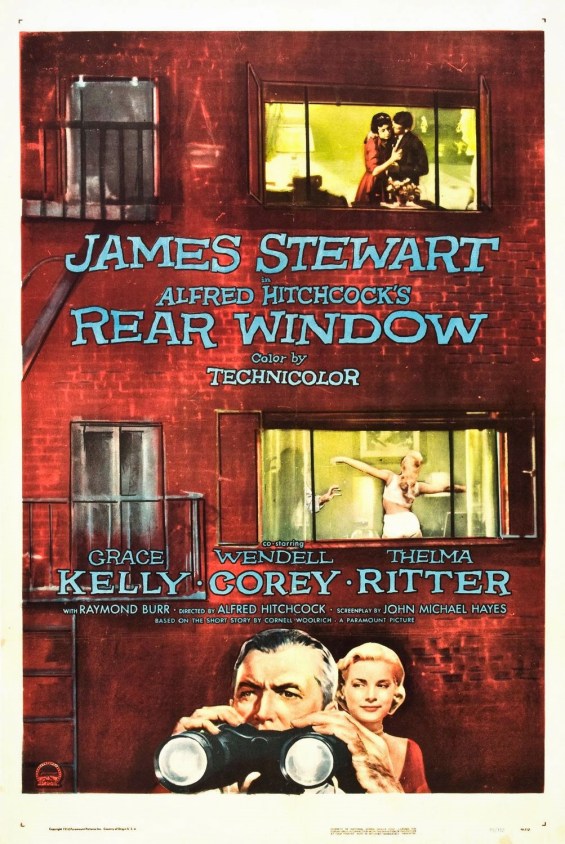
Rear Window (1954) – Film Review

“We’ve Become a Race of Peeping Toms. What People Ought to Do Is Get Outside Their Own House and Look in for a Change.” – Stella

A refined combination of acting, cinematography, editing, blocking and set design, Rear Window, released in 1954, is a mystery-thriller with a terrific premise that brims with suspense and intrigue. Supposedly based (very loosely so) on the short story of the same name by Cornell Woolrich, as well as the details of two grisly real-world murder cases, Rear Window provides a compelling narrative with an extensive amount of visual storytelling, exuding tension throughout its runtime alongside a handful of well-written, amusing characters who are easy to understand and get behind.

Plot Summary: When professional photographer, L.B. ‘Jeff‘ Jefferies, breaks his leg while obtaining a shot at an auto race, he finds himself confined to his New York apartment during a discomfiting heatwave, spending his time peering out of his rear window observing his neighbours. But, when Jefferies begins to suspect that a man across the courtyard may have murdered his wife, he enlists the help of his fashion model girlfriend, Lisa Fremont, to investigate

Helmed by one of cinema’s greatest and most recognisable filmmakers, the late Sir Alfred Hitchcock (VertigoPsychoThe Birds), Rear Window stands as one of Hitchcock’s lesser-known films, despite its still overly positive reception from critics and audiences alike, which I feel is unfair, as the film contains much of the same cultivated and innovative directing Hitchcock was known for. For example, every cast member in the apartments facing Jefferies’ window wore an earpiece through which they could receive directions, allowing for lengthy extracts where Jefferies observes others as their gestures and body language reveal what is occurring in their lives behind closed doors. Furthermore, Hitchcock cleverly uses cuts to imply things about Jefferies’ neighbours and himself. For instance, when Jefferies is discussing his potential future with Lisa, specifically if he should propose to her, we follow his perspective as he observes a newlywed couple before his eyes turn to another apartment where another couple’s marriage has become distant and lifeless. Equivalent to much of Hitchcock’s filmography, Rear Window also possesses underlying themes of voyeurism, repeatedly questioning Jefferies’ actions as he snoops on the private affairs of those around him, valiant intentions or not.

The late central cast of James Stewart, Grace Kelly, Thelma Ritter, Wendell Corey and Raymond Burr are all fantastic. The protagonist, L.B. ‘Jeff‘ Jefferies, is portrayed with such snark and conviction by Stewart, relishing his life of risk, reward and travel with no plans to settle down anytime soon. Equally, Kelly as Lisa Fremont perfectly embodies beauty and elegance in contrast to Jefferies’ ruggedness, yet is still capable in her own right, eager to disprove Jefferies’ assumption that she could never fit into his world, hoping he will someday propose to her. After taking notice of Jefferies’ obsessive behaviour with his neighbour across the courtyard, however, Lisa agrees to put aside their relationship issues to assist in his investigation, along with Jefferies’ transient nurse, Stella, whom Ritter lends an excellent sense of intellect and dry wit via her performance.

Shot entirely on one set, which required months of planning and construction, the apartment courtyard set measured ninety-eight feet wide, one hundred eighty-five feet long and forty feet high, consisting of thirty-one apartments, eight of which were completely furnished. As a result, the cinematography by the late Robert Burks permits an array of creative and distance-spanning shots that move from apartment to apartment with ease, noticeably in the film’s rightly celebrated opening shot, a prolonged and sinuous tracking shot that sweeps across the whole courtyard, spending a moment in each of the six featured apartments before pulling back into Jefferies’ apartment to find him dozing in his wheelchair. Additionally, the lighting throughout Rear Window is remarkable for a film shot in a soundstage, with around one thousand arc lights being used to simulate sunlight. And, thanks to the extensive pre-lighting of the set, the crew could impressively change the lighting from day to night in under forty-five minutes.

Moving from the visuals to the audio, all of the sound in Rear Window is diegetic, meaning that all of the music, speech and other noises come from within the world of the film, excluding the non-diegetic original score heard in the opening scene by the late Franz Waxman, the most prominent piece of which is the orchestral track; Prelude, a jazzy, relatively lively track with a subtle aura of mystery.

On a more cynical note, whilst the foremost characters are well-defined and even have clear character arcs, not all of Jefferies’ neighbours are written equal, with some members of the apartment courtyard, such as the “Hearing Aid Lady” (a nickname given by Jefferies as he doesn’t know her real name), residing in one of the ground-floor apartments, receiving little to no development and only a single prominent action.

In summary, Rear Window is a captivating flick that, while perhaps not as iconic as some of Hitchcock’s other work, is just as delightful. Meticulous, gripping and surprisingly humorous, Rear Window is just one of the many films that hit that mark with Hitchcock at the wheel, employing elements that couldn’t be carried out in any art form other than film. And, true to his eclectic form, Hitchcock switched gears drastically for his next release, the 1955 romantic mystery; To Catch a Thief, proving he could lend his hand to almost any genre in cinema. Rating: 8/10.
rear_window_ver2_xlg

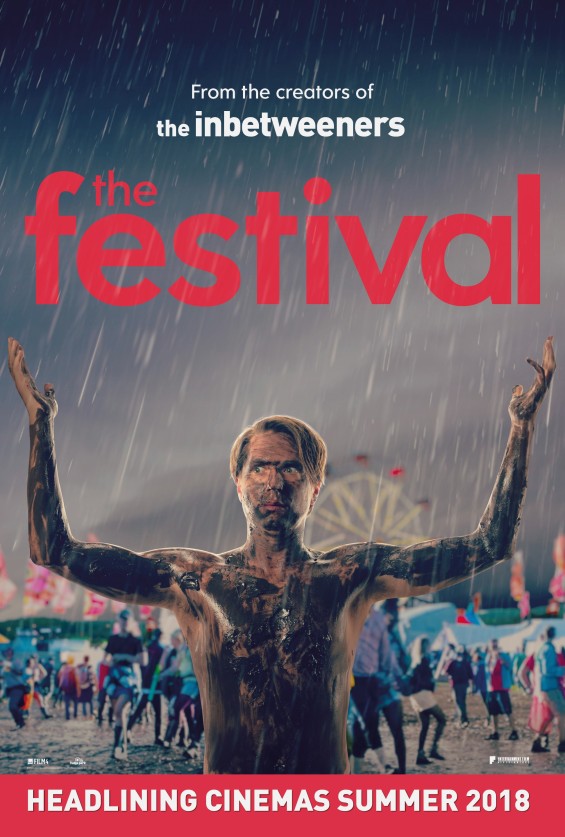
The Festival (2018) – Film Review

“There Are a Hundred Thousand People There. The Chances of Bumping into Her Are a Million to One…” – Shane Stubbs

Having conquered British television with three series of the quintessential adult sitcom; The Inbetweeners, the comic duo of Damon Beesley and Iain Morris turned their attention to producing cinematic comedies in a similar vain, following that series’ two follow-up films with The Inbetweeners Movie (2011) and The Inbetweeners 2 (2014). Their next attempt at a humorous hit was 2018’s The Festival, a British comedy centring around the re-formative experience of attending a music festival for the first time, complete with the return of The Inbetweeners‘ starJoe Thomas, and director Iain Morris (The Inbetweeners 2). However, while the film does have its share of absurd misadventures and self-abasing nudity, The Festival doesn’t quite manage to capture the three-day lunacy of an actual festival experience, failing to live up to the comedic reputation of the iconic sitcom that preceded it.

Plot Summary: When Nick’s girlfriend, Caitlin, breaks up with him on the day of their university graduation, Nick’s best friend, Shane, persuades him to attend a monumental music festival to get over her, eager to meet his favourite masked DJ, Hammerhead. But, after running into Caitlin and her friends at the festival, the pair’s weekend quickly begins to descend into one of misery and madness…

Written by Keith Akushie and Joe Parham, The Festival is a comedy about friendship, maturing and enjoying the brief time we get in life. Of course, being a comedy, these underlying themes are largely pushed back to focus on its humour rather than its narrative or more intimate character moments, leading to scenes like Nick getting his nipple pierced, spending a drug-fuelled night with a girl outfitted as a Smurf and being chased through the festival grounds by security, sporting only his boxers. And, although some of these comedic set pieces are amusing, other gags feel as if they needed a bit more screen-time to wring out all of their comedic potential. That is, excluding the many gross-out moments, which consistently come across as lazy and unwarranted.  

Following this routine ‘getting-over-the-girl’ storyline, protagonist Nick Taylor, portrayed by Joe Thomas, is remarkably similar to Thomas’ character in The Inbetweeners series, Simon Cooper, a selfish, uptight teenager whose sorrows narrowly outweigh his unlikeable traits as he tries anything and everything to win back his ex-girlfriend, Caitlin, portrayed by Hannah Tointon. Meanwhile, Nick’s best friend, Shane, and festival aficionado/certified oddball, Amy, admirably portrayed by Hammed Animashaun and Claudia O’Doherty, respectively, attempt to get Nick to embrace the music and the mud, getting into a few bizarre situations themselves. Additionally, The Festival lends some pizzazz to the often overused ’embarrassing stepdad’ archetype character via the casting of New Zealand actor and comedian, Jemaine Clement, lending the well-meaning father figure a genuine sense of care for his stepson as well as delightful line delivery. Interestingly, the previously mentioned Joe Thomas and Hannah Tointon are, in actuality, engaged and have been in a relationship since 2010.

Partially shot at Bestival and Leeds Festival, with actual festival goers being used as extras for the scenes requiring enormous crowds, the film’s cinematography, handled by Simon Tindall, allows for a number of visually pleasing and colourful shots. The film, however, does little to visually differentiate itself from other modern comedies, aside from its opening titles, which creatively appear on an array of vibrant, crinkled title cards inspired by stylistic festival line-up posters, fittingly backed by a surplus of authentic footage of festival goers dancing, socialising, drinking and face painting.

Hardly ever present for the bulk of the runtime, the original score by Rael Jones is an element of the film that I cannot even review, in its entirety, as the score simply isn’t utilised enough. Instead, the film suitably employs a variety of songs that wouldn’t seem out of place at an actual music festival, ranging from swinging indie classics to contemporary dance anthems, such as Do You Know Me? and Blaze Up the Fire.

In the tradition of comedy franchises like the American Pie series, The Festival also serves as somewhat of a modern satire of adolescent angst and foolishness, appearing actually rather saccharine beneath its scatological surface, gently mocking yet ultimately painting a buoyant portrait of its target audience, teenagers, with much of the humour deriving from awkward juvenile situations, like peer group shaming, discomfiting parental over-sharing and clashes with adult authority figures. Still, there is a good quantity of jokes aimed towards a slightly older audience, including a sly homage to The Elephant Man (1980) and a running gag regarding Jemaine Clement’s fellow cultural icons, Crowded House, a New Zealand/Australian rock band.

In summary, upon watching, its apparent that The Festival is trying to capture the immature charm of The Inbetweeners series, but the writing just isn’t strong enough to grasp its crude essence, particularly in relation to its characters, none of which are anywhere near as memorable as Will, Simon, Jay or Neil. And, if truth be told, with the film sharing many tonal similarities and Joe Thomas’ performance feeling so reminiscent of his portrayal of Simon Cooper, I honestly don’t see why The Festival couldn’t have simply been a spin-off of The Inbetweeners series, functioning as a stand-alone story set after the events of the previous instalments. Nevertheless, if you occasionally desire a lower-budget British comedy with constant witticisms regarding sex, drugs and overflowing toilets, then The Festival might suffice, despite its faults. Rating: 5/10.

MV5BOTczZjJhMzktYmEwYi00YWE0LWI4ZDEtODVjYjZiOTQ5MTJmXkEyXkFqcGdeQXVyNjI0NjE1MjM@._V1_

Gods of Egypt (2016) – Film Review

“Every Night the Battle Between Chaos and Creation Must Go On. Otherwise, the World Will Be Destroyed…” – Ra

Based on the Egyptian myth; The Contendings of Horus and Set, a mythological tale from the Twentieth Dynasty of Egypt found in the pages of a biblical text, recounting a battle between Horus, a god who takes the form of a falcon, and Set, a sky god, lord of the desert and master of storms, disorder and warfare, Gods of Egypt, released in 2016, is a visually overblown, poorly plotted and needlessly CGI-heavy fantasy blockbuster. Playing fast and loose with its world-building and the Egyptian mythology it’s based upon, Gods of Egypt squanders much of its talented cast and admirable visual effects in exchange for shallow, action-lead spectacle. As a result, the film has largely (and unsurprisingly) been lost to the sands of time, similar to many other lustreless blockbusters of the 2010s.

Plot Summary: In an alternate Ancient Egypt where the world is flat and Egyptian gods live amongst humans, differing from mortals by their tremendous height, golden blood and ability to transform into their animalistic forms, a young thief, Bek, and his beloved girlfriend, Zaya, are attending the coronation of Horus. But, during the ceremony, Horus’ father, Osiris, is murdered by his envious brother, Set, who seizes the throne and declares a new, brutal regime…

Directed by Alex Proyas (The Crow, Dark City, I, Robot), Gods of Egypt is, as of now, Proyas’ most recent directorial effort, as the critical and commercial failure of the film (along with its casting controversy, as the film was criticised for casting predominantly caucasian actors), seriously hindered his reputation. Consequently, he has only directed a couple of short films since. While this is a cruel turn of fate for Proyas, who has demonstrated in the past that he can helm entertaining blockbusters, Gods of Egypt is evidently desultorily directed, frequently lacking polish, dramatic weight, comedic timing and vital fragments of exposition, especially when considering the film’s immense budget of over £110 million.

Ranging from uninspired to cringe-worthy, the performances throughout Gods of Egypt are inconsistent, to say the least, as Nikolaj Coster-Waldau’s valiant Horus lacks the balance of arrogance and self-pity many of his previous performances retain, whilst the performances of Brenton Thwaites, Elodie Yung, Rufus Sewell and the late Chadwick Boseman come across as superficial and exaggerated, further facilitated by their half-baked characterisation. Moreover, as the detestable Set, Gerard Butler struts, growls and bellows like an enraged grizzly bear, possessing none of the self-awareness that could have made such an over-the-top performance more enjoyable.

Primarily shot in the Australian desert, as filming in the Sahara Desert was considered too dangerous, the cinematography by Peter Menzies Jr. occasionally allows for pleasant shots of the desert landscapes and their imposing Egyptian structures. However, many of these shots are often spoilt by the enormous barrage of CGI, making every frame appear glossy and oddly sterile, even during scenes where gigantic crowds are present. Additionally, while terrifyingly indelible creatures are not as frequent in Egyptian mythology as they are in, say, Greek or Norse mythology, Gods of Egypt still features a handful of stately creature designs, namely, the massive, serpentine creature known as Apophis, an Egyptian deity of chaos that is commonly depicted as a snake in Egyptian hieroglyphs.

On another note, it’s fascinating how, despite having no evidence as to what music in Ancient Egypt sounded like, composers have adopted a specific style to depict that location and era, likely beginning with 1954’s The Egyptian, before enduring through dozens of other scores over the years, including Land of the Pharaohs (1955), The Prince of Egypt (1998) and The Mummy (1999). In regard to the orginal score for Gods of Egypt, composer Marco Beltrami weaves several Egyptian-esque themes in and around each other, as the two central deities, Horus and Set, harbour their own motifs, with Horus’ motif sounding valiant, conveying him as the more sympathetic of the two, whilst Set’s motif is far darker and shares many similarities to your more typical ‘villain themes,’ built around intense, descending brass lines. The problem, however, is that all of these tracks aren’t that memorable or unique in spite of their functionality, with most of the score just consisting of staggeringly generic action pieces. 

Due to nearly all of the film heavily utilising visual effects, it’s not surprising that the considerable CG effects implemented throughout the runtime are one of the few shining aspects of Gods of Egypt. Aside from a handful of shots which have aged questionably, most of the visual effects are impressive. In fact, one of the more unusual challenges the visual effects team faced during post-production was placing the cast inside an array of virtual environments, as most of the scenes were shot against a bluescreen. An added complexity came in the form of the size differences between gods and mortals, as the gods stand around nine feet tall, so the visual effects team had to constantly consider these size variations.

In summary, Gods of Egypt is an insipid blockbuster lacking originality, excitement and entertainment value. The film merely meanders through waves of corny dialogue, mind-numbing, CGI-reliant action sequences and a monotonous, drawn-out story brimming with contrivances and the odd interesting concept. Once again proving, alongside other poorly-received blockbusters, such as Justice League (2017), Independence Day: Resurgence (2016) and Transformers: The Last Knight (2017), that an enormous budget doesn’t necessarily yield enormous success. Rating: low 3/10.

gods_of_egypt-p1025720

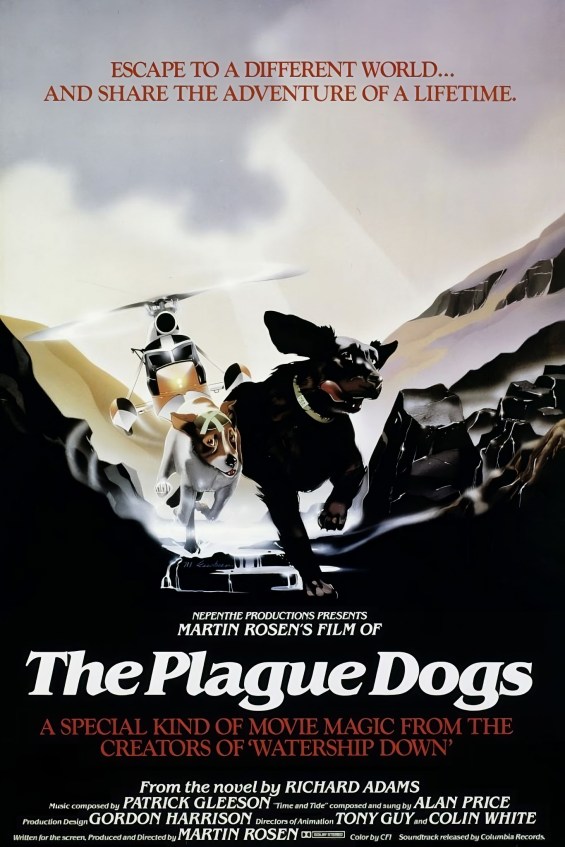
The Plague Dogs (1982) – Film Review

“They’re Not Masters. I Had a Master Once and I Know. Whatever the White Coats Are, They’re Not Masters…” – Snitter

One of the longest British animated films ever released, 1982’s The Plague Dogs is an extraordinarily bleak yet emotionally resonant film that tackles the uncomfortable subject matter of animal testing, particularly in the case of canines. A beautifully melancholy and poignant story about hope, companionship and scientific boundaries, many will undoubtedly find The Plague Dogs a long-winded and generally unpleasant experience. Whereas, for those who can stomach its harrowing storytelling, The Plague Dogs will be as captivating as it is heart-rending, standing as an underappreciated, well-crafted piece of hand-drawn ’80s animation.

Plot Summary: When Snitter and Rowf, a pair of tormented dogs, manage to escape from a remote animal testing facility in Northwestern England, the facility director attempts to keep their escape quiet. But, as an increasing amount of local livestock are found dead, word soon leaks out, along with rumours that the dogs may be potential carriers of the bubonic plague…

The second animated film to be based on a novel by Richard Adam and written/directed by Martin Rosen, following the release of Watership Down in 1978, The Plague Dogs is similarly aimed at an adult audience despite its charming animal protagonists. In fact, alongside The Last Unicorn (1982) and The Secret of Nimh (1982), The Plague Dogs is amongst the darkest and most violent animated films of the late twentieth century. As such, if, like me, you’re a dog lover, many scenes throughout The Plague Dogs will be supremely challenging to watch as the canines suffer at many points, both mentally and physically, to thrust the underlying themes of the film onto the audience. And, as the film’s title would suggest, the protagonists’ daring journey is not as morally straightforward as it first may seem, as via a series of conversations between scientists, journalists and government officials, it’s suggested that Snitter and Rowf may carry a variant of the bubonic plague, thanks to the facility “White Coats,” but this is never entirely confirmed, leaving the rumours (as well as the ambiguous ending) up for interpretation.

The central voice cast of the late Sir John Hurt, Christopher Benjamin and James Bolam are all terrific in their assorted roles, delivering vocal performances that are empathic yet never too intense for the steady pacing. Moreover, the foremost duo of Snitter and Rowf are swiftly established and supplied with plenty of characterisation, as Rowf, a labrador retriever mix breed, begrudgingly follows the lead of Snitter, a determined and optimistic fox terrier, frequently acting as a foil for his mystical sanguinity, combating it with world-weary nihilism. Rowf’s pessimism is hardly irrational, however, as the pair’s horrific experiences in the facility have left them scarred, striving to use their escape as a chance to heal from those hellish experiences, with the survival guidance of a cunning fox known only as the “Tod.” Snitter is seemingly the heart of the film, though, formerly belonging to an affectionate owner who tragically died in an accident. Snitter underwent surgery of some kind during his time in the facility, resulting in a crown of bloodstained bandages around his head, ghostly hallucinations and persistent moments of distress due to a clamouring noise that only he can hear.

To match the relentlessly sombre tone, The Plague Dogs retains a shady colour palette throughout its runtime for both its stunning, watercoloured backgrounds and astonishingly realistic animation for the dogs, continuously prompting frames to resemble aged landscape paintings, complete with expansive fields, derelict farmhouses and cloud-covered peaks, which is even more impressive when considering no rotoscoping was utilised during production. Furthermore, the animated cinematography is dynamic and visually engaging as the camera glides around the dogs and their environment(s), often passing through windows and over stone walls, inadvertently helping to redeem the irksome amount of fade-to-black transitions in between.

Influenced by the techniques of American minimalism as well as the scores of Polish composer, Witold Lutosławski, Patrick Gleeson’s orginal score for The Plague Dogs conforms to the style of Rosen’s uncompromising filmmaking for the most part, as tracks, such as FreedomWondering and In the Pens, are suitably dour and fine-drawn, rarely flaring up to create room for the atmospheric sound design.

Unfortunately, regarding its reception, The Plague Dogs performed incredibly poorly critically and commercially upon its initial release, failing to live up to expectations as a follow-up to Martin Rosen’s last feature. Shortly after its UK premiere, the film’s distributor, Embassy Pictures, decided not to pursue any further theatrical releases, meaning many American animators never saw the result of their hard work, one of whom was actually a young Brad Bird, eventual writer-director of The Incredibles (2004), before he was fired during production.

In summary, the entire duration of The Plague Dogs is undeniably oozing with despair and dread. So much so, it wouldn’t be misleading to say the film is a “Prolonged Howl of Helplessness.” Still, in my opinion, the film and Rosen as a writer/director are unfairly unrecognised in the realm of animation, as while Rosen may have only orchestrated two films throughout his career, finding any animated flicks that can be compared to his filmography is virtually impossible. Rosen was a pioneer in animation, taking bold risks in his narratives and imagery alike to delve into topics the medium of animation is usually afraid to tackle, something The Plague Dogs does favourably and uncompromisingly. Rating: low 8/10.

MV5BNDA1ZDU3M2ItNTdmZC00NjlkLWJhN2UtYjY3YWI3Y2FhMThhXkEyXkFqcGdeQXVyMTQxNzMzNDI_._V1_-transformed

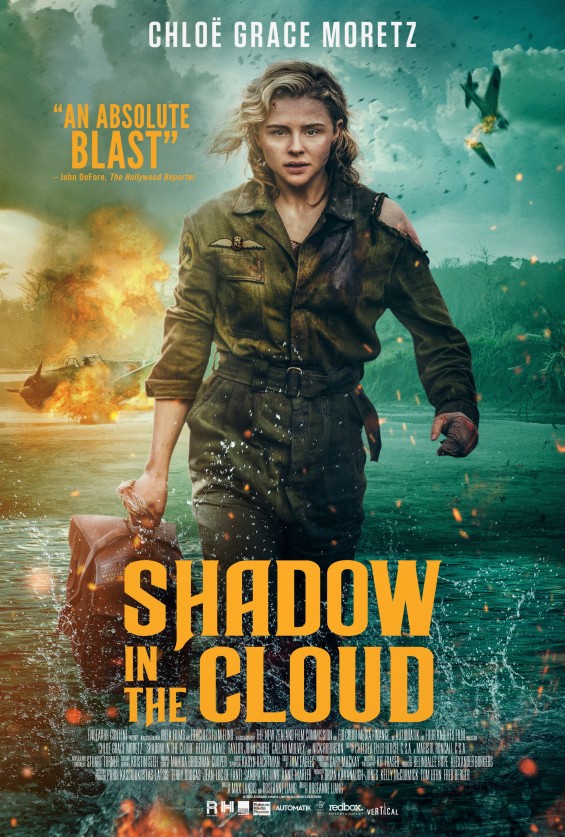
Shadow in the Cloud (2020) – Film Review

“I Saw… I Saw Something Move on the Right Wing…” – Maude Garrett

Shadow in the Cloud, released in 2020, is an action-thriller with a remarkably intriguing premise, playing into the fables of the mischievously dangerous creature known as the “Gremlin,’ a folkloric rodent that originated in the 20th century to explain malfunctions with aircraft operations, primarily during World War II. Depictions of these creatures have varied widely over the years, with their most well-known incarnation being in the 1984 horror-comedy classic; Gremlins. Before that film’s release, however, stories regarding the creatures often referenced them as the cause of the inexplicable technical and psychological tribulations many pilots faced during the Second World War, Shadow in the Cloud being one of those stories. Yet, despite this potential, aside from some impressive set design and the earnest attempt by its leading actress, Chloë Grace Moretz, to schlep the film as a ‘one-woman show,’ it’s largely a chore to make it through the entire runtime of Shadow in the Cloud, fleeting though it may be.

Plot Summary: In the throes of World War II, pilot officer, Maude Garrett, joins the all-male crew of the B-17 bomber, the Fool’s Errand, with a top-secret package. Caught off-guard by the presence of a woman on their military flight, the crew tests Maude’s every move. But, before they can enquire further about her assignment, Maude notices something sinister clinging onto the underside of their aircraft…

Co-written and directed by Roseanne Liang (Banana in a NutshellMy Wedding and Other Secrets), the somewhat clunky screenplay for Shadow in the Cloud was originally penned by Max Landis, but was later heavily rewritten during pre-production by Liang due to sexual harassment allegations made against Landis at the time. Liang and Moretz claim that Landis was distanced from the production, with his screenplay being rewritten several times before filming began. But, after watching the film, Landis argued that about 90-95% of the screenplay is still his.

Chloë Grace Moretz undertakes the role of the film’s protagonist, adept pilot, Maude Garrett, or at least, that’s how she introduces herself, as Maude’s true identity and the nature of her assignment is actually a mystery for much of the runtime. Nevertheless, Moretz does a great job carrying the acting load, while Maude receives a serviceable amount of characterisation. The rest of the crew, portrayed by Taylor John Smith, Callan Mulvey, Nick Robinson, Beulah Koale, Byron Coll, Joe Witkowski and Benedict Wall, are well-acted yet lack any real depth or distinct character traits, only serving to hammer home the film’s underlying feminist themes as masculine caricatures. So much so, that as soon as Maude steps aboard the aircraft, she’s immediately met with sexist wisecracks and condescending nicknames.

Given that the majority of the film takes place aboard an aircraft amidst the clouds, it’s understandable that much of Shadow in the Cloud‘s visuals are confined to Maude and the camera crammed into the ball turret on the underside of the aircraft after the crew shove her down there to keep her out of their way during take off. From that point on, almost every shot maintains a steady level of motion to match the constant turbulence of the aircraft in the thick of the vicious storms and enemy fighters that surround it. Simply put, whilst the cinematography by Kit Fraser isn’t anything unprecedented, it is exceptionally accurate to the film’s wavering setting.

However, the same cannot be said for the original score by Mahuia Bridgman Cooper, which is bewilderingly inappropriate for both the narrative and its time period, beginning as a melodious yet out-of-place synthetic score before transitioning into something far more chaotic and tumultuous by the third act, draining away much of the suspense through tracks, like True Stories and Dangerous Feelings. Similarly, the film’s stylistic choice of occasionally cutting away from Maude in the ball turret to see the other crew mates in a blackened space with kaleidoscopic lighting feels at odds with the remainder of the visuals, especially since it obscures much of the aircraft’s detailed set design.

On a more positive note, the film’s opening does feature a nifty animated sequence based on the cartoon shorts of Private Snafu, a series of 1940s adult-oriented instructional videos meant to educate enlisted personnel on army discretion, hygiene, combat readiness and daily life. While the designs of the gremlins in these shorts might appear playful, the design of the actual creature in Shadow in the Cloud leans into a more lifelike approach, admirably constructing a creature that possesses a grey-haired, monkey-like body structure with minor traits of bats and rats. Unfortunately, the visual effects for the creature often do the film more harm than good, as although certain shots of the gremlin are passable, almost all of the shots of Maude on the exterior of the aircraft via green screen look dreadful, likely suffering as a result of a stretched-thin effects budget.

In summary, whilst Shadow in the Cloud bears a fantastic premise, it’s continuously so poorly executed that it becomes difficult to appreciate it, forcing its audience to significantly suspend their disbelief even more than you’d expect for an action-centric creature-feature, frequently coming across as pulpy and overly dramatic. Thus, by the time Shadow in the Cloud trots out historical footage of real servicewomen alongside an inspiring pop song during the end credits, the film has essentially veered into self-parody in spite of the tremendous conviction Moretz conveys in her performance. Rating: 4/10.

shadow_in_the_cloud_ver2_xxlg

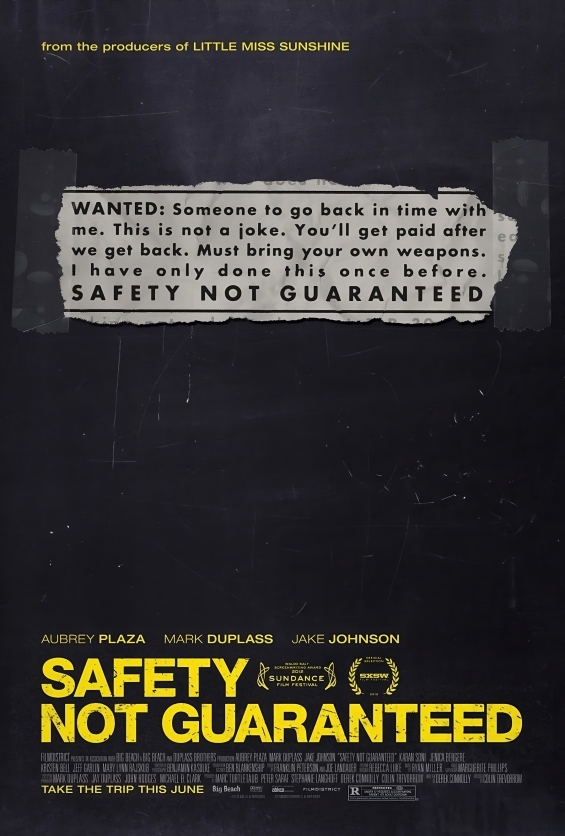
Safety Not Guaranteed (2012) – Film Review

“Stormtroopers Don’t Know Anything About Lasers or Time Travel. They’re Blue-Collar Workers.” – Arnau

Inspired by the infamous “Time Travel Companion” advert printed in a 1997 issue of Backwoods Home Magazine and written as a joke/last-minute slot filler by John Silveira, an employee of the magazine, who is actually credited in the film as a “Time Travel Consultant.” 2012’s Safety Not Guaranteed is a beguiling, low-budget comedy-drama with a minimal sci-fi twist, utilising its mirthful real-world inspiration to compose an austere story with relatively modest ambitions and a shortage of memorability that is, thankfully, enriched by its strong performances, quirky charm and heartfelt underlying themes of love, loss and altering the past.

Plot Summary: When an opportunity arises to turn an outrageous magazine advert into an investigative journalism opportunity, pessimistic intern, Darius Britt, jumps at the prospect, joining her superior, Jeff, and fellow intern, Arnau, as they set out to uncover whether the advert’s proprietor, Kenneth, is a deranged misfit or has truly discovered the secret to time travel…

Based on the previously mentioned printed magazine advert, which was even featured on The Tonight Show With Jay Leno in 1992 during the “Headlines” segment before transforming into an internet meme, Safety Not Guaranteed harbours a straightforward yet well-paced narrative, combining its subplots, twists and turns effectively as director Colin Trevorrow (Jurassic WorldThe Book of HenryJurassic World: Dominion) and writer Derek Connolly, waste little time. That’s not to say that the film has no deeper meaning(s), however, as despite the foundation of the story being a question of thought-to-be impossible technology vs. the drab confines of reality, Safety Not Guaranteed features many relevant themes of love in all its forms, as the various characters each have their own outlooks on intimacy and heartache, many of which are preconceived notions, similar to how the characters initially perceive Kenneth to be a delusional, sci-fi-obsessed oddball before becoming acquainted with him.

In regard to the central cast, each actor, whether that be Aubrey Plaza, Mark Duplass, Jake Johnson or Karan Soni, consistently remains within the realm of their character’s traits, emotionally developing whilst remaining true to the heart of their character. As such, Plaza and Duplass are immensely enjoyable to watch as there’s a sweet sadness in the characters’ focus on lost dreams, missed chances and the truism that we all long for a time machine every once in a while, which is best seen in Darius’ backstory as she has become cynical about life since the death of her mother, causing her to flounder, burdened with sorrow and self-blame. Yet, upon her arrival in Ocean View, Washington, she is met with more than meets the eye in Kenneth, a paranoid and suspicious yet affable man. Believing himself to be followed by government agents, Kenneth manoeuvres around town with his interpretation of covert ops, stealing lasers from local laboratories and immersing himself in technical calculations and physical training, all in pursuit of his time-travelling mission. Immediately drawn to each other as divergent outcasts, Kenneth gradually takes Darius into his circle of trust. Interestingly, the role of Darius was actually written with Aubrey Plaza in mind, as Derek Connolly wanted to work with her. Likewise, Jake Johnson was Colin Trevorrow’s first choice for the role of Jeff.

Visually, Safety Not Guaranteed is passable but not all that impressive, as cinematographer Ben Kasulke predominantly relies on hand-held shots in an attempt to personalise the viewing experience, providing the story with a pleasant layer of intimacy. Nevertheless, the film’s use of the drizzling, forest-shrouded location of Ocean Shores (along with a handful of other areas within thirty minutes of Seattle) is terrific, appearing visually interesting yet never overwhelming, specifically whenever a scene takes place at sunrise or sunset.

For a story revolving around time travel, Safety Not Guaranteed has a surprisingly emotional core for what could have easily been a corny low-budget flick. It’s no surprise, then, that its soundtrack, composed by Ryan Miller, helps to capture that same emotional palette, not only accentuating the themes of the film, but adding an aura of reflection and hopefulness that helps to make the film’s eccentric protagonist someone to root for rather than feel sorry for, such as in the foremost track; Opening. Aside from Miller’s original tracks, Safety Not Guaranteed also features songs from numerous indie bands, including Summer Fiction and Guster, making for an all-in-all well-rounded soundtrack.

On the topic of the humour throughout Safety Not Guaranteed, some gags land, others do not, with some scenes also seeming rather bare comedy-wise. However, I applaud the film’s decision to avoid turning Kenneth into a cartoonishly strange character just for the sake of a few cheap laughs, as well as how natural the cast’s witty improvisation feels, particularly in the scene where Jeff advises Arnau to raise his collar and sport sunglasses to look like a “Pilot That Drives Jets.”

In summary, Safety Not Guaranteed is an endearingly zany indie flick. While the film is obviously low-budget and not exceedingly memorable when placed alongside many other light-hearted comedy-dramas, Safety Not Guaranteed possesses a clever screenplay, earnest moments and a genuine sense of sentiment for those who would like to turn back the clock. Not to mention the film’s plethora of excellent performances from its cast (primarily its three leads), ensuring the film will hold up in the future. Rating: 6/10.

safety_not_guaranteed_ver2_xlg-transformed Continue reading

Escape From Tomorrow (2013) – Film Review

“I’m Afraid if I Come With You, Something Bad Is Going to Happen…” – Jim

Written and directed by relatively unknown filmmaker Randy Moore, Escape From Tomorrow, released in 2013, serves as a genre-defying, experimental arthouse flick, which, whilst flawed, has to be admired for both its ambition and ingenuity. Produced on a budget of around £502,000 and illicitly shot at the Walt Disney World Resort in Orlando, Florida, and Disneyland in Anaheim, California, without permission or permits from the Walt Disney Company, Escape From Tomorrow attempts to criticise today’s fascination with “Disney Culture” by mocking the company’s rose-tinted reputation (particularly its string of immersive theme parks) to deliver a conceptually audacious, darkly surreal roller-coaster of a film that morphs a miserable father’s seemingly straightforward excursion to Walt Disney World into an other-worldly tale of paranoia, conspiracy, sex and violence, interspersed between visits to iconic attractions, like Space Mountain, Dumbo the Flying Elephant and It’s a Small World.

Plot Summary: While his family frolics, taking in the sights and sounds of the Walt Disney World Resort, discontented and recently discharged father, Jim, finds himself curiously obsessed with a pair of beautiful teenage girls, subsequently leading him to unveil fiendish forces behind the Happiest Place on Earth…

As a result of Disney’s reputation for being immensely protective of its intellectual property, the cast and crew behind Escape From Tomorrow employed a variety of guerrilla filmmaking techniques to avoid attracting attention within the theme parks, such as saving their screenplays on their smartphones and filming on hand-held cameras similar to those used by visitors. After production wrapped, Randy Moore was so determined to keep the film a secret from Disney (and their lawyers) that he decided to edit the project in South Korea. Rather than suppressing the film, however, the Walt Disney Company merely chose to ignore it, with the 2013 Sundance Film Festival likewise declining to discuss Escape From Tomorrow in detail before it premiered. Those who saw the film expressed strong doubts it would ever be widely released, due to the legal issues involved and its negative depiction of Disney’s theme parks, dubbing it; “The Ultimate Guerrilla Film.” This unfavourable portrayal is most evident during the first act, as the film takes a less ‘magical’ glimpse at the Magic Kingdom, focusing on the strain and exertion of the parents taking their children to the consistently clangorous, overcrowded theme park.

As far as characters go, the film’s protagonist, Jim, portrayed by Roy Abramsohn, is rather unpleasant, heading to the Walt Disney World Resort with his family for a sunlit getaway, only to have his trip tarnished by a call informing him he has lost his job, leading him to drink, neglect his children and even make public advances on his wife, whilst there. These traits are later enhanced when Jim begins to undergo increasingly peculiar hallucinations and perverted sexual daydreams following his spotting of two French teenagers. Still, while the character is unquestionably unlikeable, credit must be given to Abramsohn, whose charismatic performance makes Jim an oddly amiable protagonist (one that you even feel some sympathy for), despite his repeatedly deplorable actions. The supporting cast of Elena Schuber, Katelynn Rodriguez and Jack Dalton aren’t quite as stirring as Jim’s sheepish wife and energetic children, though this could be forgiven, given their limited screen-time and experience.

Utilising a greyscale colour palette to disguise cinematographer Lucas Lee Graham’s occasionally amateurish camerawork and provide the film with an aura of visual cynicism and dream-like surrealism, Escape From Tomorrow, though primarily set in the Magic Kingdom, was partially shot at Disneyland on account of production issues, with the resultant theme park seen on-screen being an amalgamation of the two. These production tribulations are sometimes very noticeable, as it’s especially apparent during the second act that the filmmakers had to use shoddy visual effects, green screen composition and digital stabilisation to rescue some of the sloppier (and potentially improvised) monochrome shots.

Fortunately, the fantastical original score by Abel Korzeniowski flawlessly matches the film’s pessimistic outlook, as tracks like Gates of Tomorrow and Fantasy Girl mimic the cheerful, wonderous tone of the actual melodies employed at the Walt Disney World Resort before the score becomes more unearthly and ominous with somewhat futuristic, 1960s-inspired tracks, like Mystery Man and Lost in Caves.

Playing into many of the urban legends surrounding Disney’s illustrious theme parks, Escape From Tomorrow features many references to online conspiracy theories related to the House of Mouse, one being the mention of a location known as “Base 21,” which refers to a real, little-known V.I.P. lounge located inside the Spaceship Earth attraction at Epcot. This fixation on urban legends again ties into the film’s underlying themes, twisting Disney’s adorable, family-friendly brand into a disturbing, perverse satire that finds macabre in the ordinary, comparable to David Lynch’s uncanny style of filmmaking.

In summary, while Escape From Tomorrow retains an undeniably bold vision, the film is only intermittently successful in execution, lacking well-developed characters or consistently striking visuals in spite of its many thoughtful or freakish moments. Nevertheless, I’d be lying if I said I detest Escape From Tomorrow, as I certainly hold a soft spot for the film. And whilst I know it will not be to all tastes, if you’re willing to look beyond the gimmick of its production, Escape From Tomorrow is a fascinating yet largely forgotten cinematic scrutiny of the Walt Disney Company that ultimately became another urban legend encircling their theme parks. Rating: low 5/10.

escape_from_tomorrow_ver2_xlg-transformed

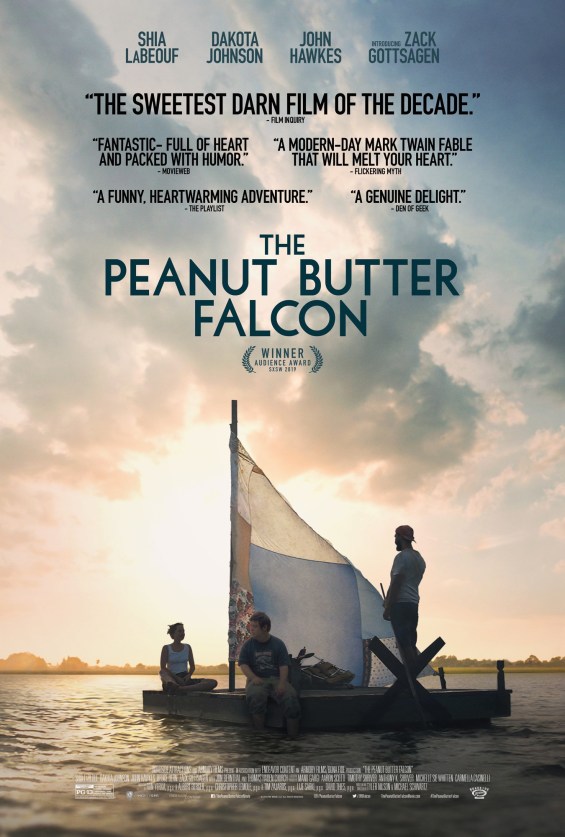
The Peanut Butter Falcon (2019) – Film Review

“Friends Are the Family You Choose.” – Carl

Warm-spirited, humorous and well-acted, 2019’s The Peanut Butter Falcon is a feel-good, modern-day comedy-drama inspired by the celebrated literature of author Samuel Langhorne Clemens, best known by his pen name Mark Twain, who challenged many of the fundamental issues of his time, including racism, evolving landscapes, class barriers and access to education, through notable publications like his renowned novel; The Adventures of Tom Sawyer, and his 1883 memoir; Life on the MississippiThe Peanut Butter Falcon specifically elicits Twain’s 1884 book; Adventures of Huckleberry Finn, finding modern resonance in the classic piece of American literature by incorporating a raft, assorted riverine ventures and luscious swampy landscapes into its entertaining (if occasionally meandering) story, which is frequently elevated by the film’s admirable camerawork and plethora of superb performances.

Plot Summary: When Zak, a twenty-two-year-old orphan with Down Syndrome, escapes the state-run care facility where he resides to pursue his dream of becoming a professional wrestler by attending a wrestling school headed by his favourite grappler, the Salt Water Redneck, he incidentally runs into Tyler, a fisherman turned delinquent fleeing to Florida. Together, the pair embark on a journey of camaraderie as they evade capture, slowly morphing Tyler into an unexpected ally and coach…

The concept for The Peanut Butter Falcon first came about when writer-directors Tyler Nilson and Michael Schwartz, who before this film’s release had only written/directed short films, such as The Moped Diaries (2014), Alex Honnold’s Urban Ascents (2014) and Alex Honnold: At Home Off the Wall (2015), met its forthcoming lead actor, Zack Gottsagen, at a camp for disabled and non-disabled individuals, where he expressed his yearning to be a “Movie Star,” this prompted Nilson and Schwartz to write a screenplay around him, knowing many locals would allow them to film for free, without permits. Given that the story is set within Southern America and features a protagonist with Down Syndrome as a result of this, The Peanut Butter Falcon plays it relatively safe with its judgmental setting to maintain an upbeat tone, only harbouring a few brief moments where Zak is lightly mocked for his disability. Moreover, many of these abusive characters are counterbalanced by jovial individuals who aid Zak and Tyler in their journey, like Blind Jasper John, portrayed by Wayne Dehart, a blind and Black evangelical preacher, who could be seen as somewhat cartoonish and stereotypical, depending on your background.

The remarkable central cast of Shia LaBeouf, Dakota Johnson and Thomas Haden Church (along with a surprise appearance from Jon Bernthal) are all exceptional in their assorted roles, conforming to their surroundings without appearing excessive in their Southern characteristics. However, Zack Gottsagen is understandably the stand out of the cast, as in spite of having only a handful of acting credits to his name, Gottsagen portrays Zak with a cordial, childlike innocent, providing his lonesome character with moments of goofiness and naivety without ever making him seem mindless. Zak is also pivotal to the film’s narrative, as his role in the story is ultimately to redeem Tyler, a flawed yet affable delinquent, who learns to be a better person thanks to Zak’s modest influence. Eventually, Tyler strikes up a serviceable romantic subplot with Zak’s pursuing, kind-hearted carer, Eleanor, but this never detracts from the prominent bond between Tyler and Zak, which remains meaningful and gratifying throughout the runtime.

Beautifully flaunting the rural Georgia landscape (which stands in for the Outer Banks of North Carolin), the cinematography by Nigel Bluck expertly captures the essence of the murky, backwater creeks, decrepit shacks, over-priced gas stations and sludgy shores with grounded boats that serve as the story’s setting, constructing an appealing visual aesthetic that feels naturalistic in its details, but also celebrates the American region for its prominent natural beauty and devil-may-care lifestyle.

Much of the score throughout The Peanut Butter Falcon bears a stripped-down approach to its arrangements, as composers Zachary Dawes, Noam Pikelny, Jonathan Sadoff and Gabe Witcher utilise acoustic instruments and minimal orchestration to provoke the audience with the calming sensation of standing in the open countryside. This is especially true of the tracks; Cold OpenTravelling Theme and Love Me in Kind, which possess simplistic yet breezy banjo-led melodies that correspond with the soothing, swampy visuals.

Interestingly, although The Peanut Butter Falcon received no Academy Award nominations in the face of its positive reception from critics and audiences alike, Gottsagen actually became the first-ever individual with Down Syndrome to present an Academy Award when he and LaBeouf announced the Best Live-Action Short Film on February 9th, 2020, which is an accomplishment in itself.

In summary, The Peanut Butter Falcon‘s triumph as a sleeper hit, becoming the highest-grossing independent film of 2019, was, in my opinion, rightfully deserved, as this low-budget comedy-drama is, above all else, charming, despite its sometimes corny and overly optimistic storyline. And whilst the film is admittedly far from a precise, poignant representation of a community that is rarely represented on-screen, The Peanut Butter Falcon is a step forward with its casting of an unknown lead actor with Down Syndrome, as opposed to acquiring a ‘bigger name’ to boast the film’s notoriety. Nevertheless, if you’d like to see an authentic, cinematic portrait of a life with Down Syndrome, I’d recommend seeking out the 2016 low-budget British drama; My Feral Heart, or the Irish drama; Sanctuary, also released in 2016. Rating: 7/10.

peanut_butter_falcon_xxlg

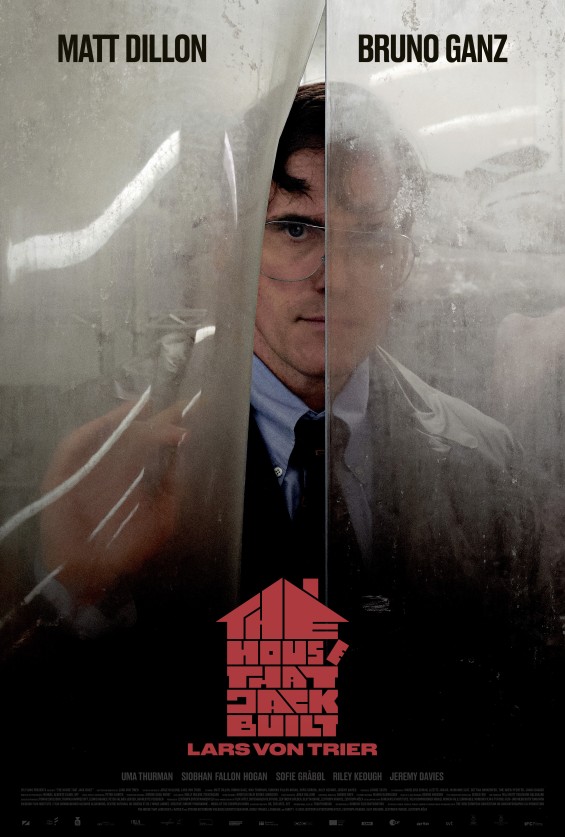
The House That Jack Built (2018) – Film Review

“The Old Cathedrals Often Have Sublime Artworks Hidden Away in the Darkest Corners for Only God to See. The Same Goes for Murder.” – Jack

Whether writing screenplays that contain scenes of self-administered clitorectomies or expressing Nazi sympathy at press conferences, the controversial yet distinguished writer-director Lars von Trier (DogvilleAntichristMelancholia) loves to cause headlines, with shock value frequently being employed as one of his greatest tools, often accentuating the underlying themes of his filmography. The House That Jack Built, released in 2018, is perhaps von Trier’s most distressing film to date, however, presenting the filmmaker at his most unfiltered and uncompromising. As such, for some, the film will serve as a captivating arthouse piece that delves into the layers of a serial killer’s mind, while for others, The House That Jack Built will seem like nothing more than an insensitive, tasteless horror flick brimming with disturbing moments, all in service of a lumpen statement that has been better cinematically expressed elsewhere.

Plot Summary: Reflecting on his existence, Jack, a failed architect and sadistic serial killer, describes his twelve-year reign of terror to Verge, his unseen, enigmatic companion, illuminating the significance of his systematic atrocities by recounting five randomly chosen incidents from his blood-spattered past…

Premiering at the Cannes International Film Festival on May 14th, 2018, The House That Jack Built was reported to have more than a hundred audience members (including some critics) walk out during its premiere, despite a six-minute standing ovation following the screening. Furthermore, some of the resentful audience members condemned the film afterwards on social media for its relentless violence and nihilistic tone. Although I’m usually not one to get offended by media, The House That Jack Built is a film where I can, at least, understand why some take issue with the flick, as the film effectively promotes the idea that life is cruel and soulless, whilst simultaneously playing upon many ‘hot topic’ political assertions, primarily around the American politician, media personality and 45th president of the United States, Donald Trump. This persistent fatalistic outlook, along with its excessive runtime and unsettling violence, ensures that The House That Jack Built harbours minimal appeal for general audiences, even if much of the potentially contentious commentary gets buried beneath the film’s many other aspects.

Boasting about his achievements to an unseen, accented man known as Verge, the titular, obsessive-compulsive engineer, Jack, portrayed by Matt Dillion, appears unhinged yet astute straight from the opening scene, as he circumstantially describes five haphazardly chosen events from his life, all of which involve gruesome murders. From there, the film spends little time on Jack’s upbringing or the circumstances that led him to such a depraved place, but instead concentrates purely on the unconnected series of incidents where Jack slaughters his victims. Through these scenes, you can see Dillon slowly losing himself in the role as he spectacularly portrays Jack as an authentic, twisted psychopath who possesses no redeeming qualities or childhood trauma in an attempt to connect with the audience. Additionally, the supporting cast of Bruno Ganz, Uma Thurman, Siobhan Fallon Hogan and Sofie Gråbøl are all adequate in their various roles, usually as screaming, hapless victims.

A hefty portion of the cinematography by Manuel Alberto Claro, unfortunately, leaves much to be desired as the film is shot in an almost documentary-like fashion, predominantly relying on hand-held close-ups and mid-shots, where characters repeatedly pass in front of the frame, obscuring the audience’s view. As a result, The House That Jack Built has a noticeable deficiency of attractive shots and is continuously dimly lit, causing many scenes to blend together. That being said, the film does include a handful of brief animated sequences that are invariably visually interesting, in addition to an intriguing assemblage of archival footage/images for whenever Jack refers to fortes like architecture or winemaking.

Exceedingly unremarkable, the original score by Víctor Reyes is barely discernable for most of the scenes it’s featured within. Thankfully, the song choices throughout the runtime manage to audibly enhance the film somewhat, as songs like Fame by David Bowie support the story’s implied 1970s time period while classic French overture pieces, such as Partita No. 2 in C Minor, BWV 826 and The Four Seasons – Concerto No. 3 in F Minor, RV 293, heavily contrast with the ghastly violence on-screen, making a few of Jack’s killings seem darkly comedic.

Regarding the film’s graphic violence, I would argue that it could be excused in this case, given the narrative revolves around an unfeeling mass murder, an inherently frightening yet compelling subject matter that has been covered many times before in cinema with a comparable level of violence, most notably in the horror/black comedy classic; American Psycho (2000).

In summary, unlike a few other horror flicks that attempt to dive into the headspace of a serial killer, The House That Jack Built truly pulls no punches, depicting a self-examining, metaphor-heavy story of a man disguising his shortage of worthwhile contribution with violent self-interest. Throughout the film, Lars von Trier essentially grabs the audience’s head and shoves it into a vortex of anguish, unconcerned about whether it will appeal to the masses. For that reason, the film is not one I would recommend lightly, as if not swept up in the interpretative storytelling of The House That Jack Built, this sickening arthouse flick will likely carry the allure of a lengthy therapy session as it lacks the magnetism of some of von Trier’s other work. Rating: 6/10.

the_house_that_jack_built-p1046485

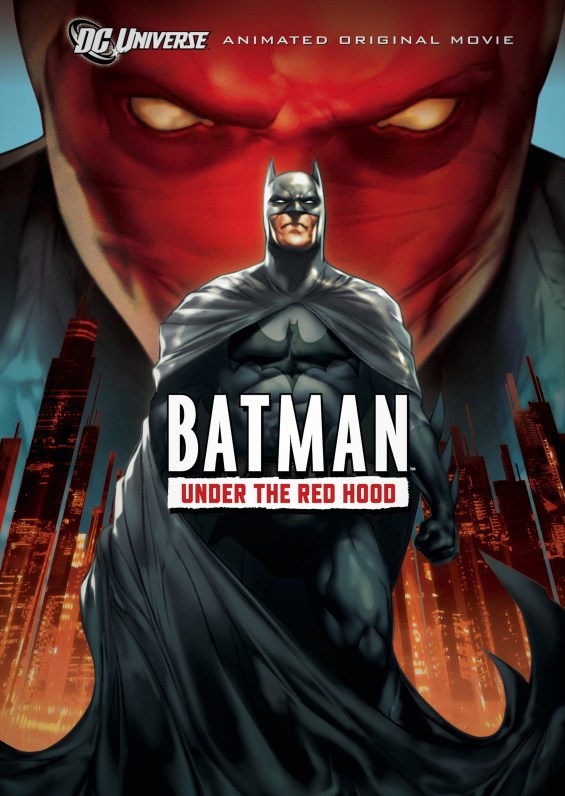
Batman: Under the Red Hood (2010) – Film Review

“Those Are the Heads of All of Your Lieutenants, That Took Me Two Hours. You Wanna See What I Get Done in a Whole Evening?” – The Red Hood

In 1988, the iconic DC Comics storyline; Batman: A Death in the Family, written by Jim Starlin and illustrated by Jim Aparo, was released to a mixture of acclaim and controversy, later becoming the bestselling comic of that year. This particular comic was unique, as readers were encouraged to vote for an ending to the narrative via a pay-per-call service number, deciding to either save or kill Batman’s youthful sidekick, Jason Todd, the second Robin. In the end, over ten thousand votes were cast, with a seventy-two-vote majority choosing to kill Jason, leading to one of the most recognisable comic book panels in literary history. Eventually, however, Jason Todd was brought back as part of a 2005 storyline entitled; Batman: Under the Red Hood, with an animated adaptation following in 2010, employing elements from both storylines to formulate a gripping, swarthy and exhilarating animated flick that examines the Dark Knight’s abiding moral code and its many drawbacks.

Plot Summary: When the mysterious vigilante, Red Hood, emerges in Gotham City, taking the streets by storm with the efficiency and aptitude of Batman without obeying the same moral code of never taking life, the Caped Crusader is forced to go toe-to-toe with the illusive outsider, reopening old wounds as once-buried memories resurface…

For those who haven’t read the source material, I won’t spoil any major plot points of Batman: Under the Red Hood, all I’ll say is that most of the story’s twists and turns won’t come as a shock to those paying attention. Fortunately, this level of predictability doesn’t matter much in the grand scheme, as Batman: Under the Red Hood is at its most compelling when it isn’t focusing on its revelations, but on how the characters endure them, as Red Hood takes Batman’s concept of vigilante justice and pushes it further toward the line between exemplary and immoral, despite his goal of ridding Gotham City of criminal filth being remarkably similar to that of the Cowled One. In fact, compared to many of Batman’s other adversaries, the Red Hood’s objectives are understandable and even somewhat valid, his crooked logic making sense as he asks Batman the formidable questions, forcing him to ask them of himself. Director Brandon Vietti (Superman: DoomsdayScooby-Doo! WrestleMania MysteryBatman: Death in the Family) and writer Judd Winick also seem to understand this, as it’s where the majority of their fixation goes, even if the fleeting runtime is too short to explore some of the film’s underlying themes in greater detail.

For the most part, the central voice cast of Bruce Greenwood, Jensen Ackles, Neil Patrick Harris, Jason Isaacs and Wade Williams portray their characters skillfully, delivering weighty yet not excessively intense vocal performances that embody their esteemed comic book characters, whether heroic or corrupt. For me, the cast has only one weak link, John DiMaggio as the Joker, who, aside from the character’s prominent laugh, doesn’t feel suited to the role, seeming somewhat miscast as he lacks the unvaryingly threatening, psychotic persona of the Clown Prince of Crime.

Visually, while still in line with the typical animation style of the DC Animated Original Movies assemblage, the animation/animated cinematography for Batman: Under the Red Hood is striking and distinctive. From the sharp angles of Batman to the meaty, menacing smile of the Joker, to the gloomy atmosphere of Gotham City with its shady warehouses and towering skyscrapers, usually depicted through enchanting wide shots that exhibit the illuminance of Gotham’s dominating skyline. In many ways, Batman: Under the Red Hood harbours the appearance of a literal animated comic book, rarely exhibiting its age or its undersized animation team.

Perceived as a powerhouse in the realms of both animation and video games, Christopher Drake, the composer for Batman: Under the Red Hood, has previously composed for many DC projects as Warner Bros. Animation frequently entrusts Drake to bolster many of their animated superhero flicks, most notably with projects like the adaptation of the seminal graphic novel; Batman: Year One (2011), as well as Batman: Gotham Knight (2008), Superman/Batman: Public Enemies (2009) and Green Lantern: Emerald Knights (2011). As such, it’s no surprise that Drake also does a terrific job with the original score for Batman: Under the Red Hood, starting the soundtrack off strong with the brooding opening track; Main Title, before supplying the film with further dramatic tracks, all of which seamlessly blend with the crime-ridden metropolis of Gotham City and its shadowy defender.

Intriguingly, Batman: Under the Red Hood was originally intended to be geared towards older audiences, bearing more violence. However, due to the low sales of DC projects in 2009, Warner Bros. Animation ordered the team behind the film to make edits to reduce its brutality and thus, its age rating. Yet, even with these cuts, the myriad of well-executed, easy-to-follow action sequences are thrilling, swift and surprisingly bloody.

In summary, more so than most animated DC projects, Batman: Under the Red Hood truly aims for cinematic storytelling over shallow spectacle and/or vibrance. With its stimulating action sequences, intricate animation and emotional underpinnings, Batman: Under the Red Hood is one of the finest entries in the DC Animated Original Movies catalogue. So much so, that in spite of Warner Bros. Animation continuously overusing the Dark Knight over their many other superheroes and villains, Batman: Under the Red Hood still manages to reveal a largely unexplored side of the celebrated character. Rating: high 7/10.

batman_under_the_red_hood-p527654