How to Train Your Dragon (2010) – Film Review

One of the highest-regarded films from DreamWorks Animation, 2010’s ‘How to Train Your Dragon’ is successful in nearly every regard as an animated feature, making many changes to its original source material (all of which for the better), to excel as a brilliant piece of family-focused storytelling. With plenty of memorable characters, exhilarating action sequences and an outstanding original score by John Powell, ‘How to Train Your Dragon’ would soon go on to become one of DreamWorks’ most recognisable and profitable franchises for good reason.

Plot Summary: On the island of ‘Berk,’ ‘Hiccup,’ the frail son of the Viking Chief, aspires to hunt dragons and keep his home safe like the rest of his clan, earning the respect of his fellow Vikings. But, after injuring a ‘Night Fury,’ one of the rarest and most powerful dragons known to exist, ‘Hiccup’ forms an unlikely friendship with the creature, soon realising that dragons aren’t at all what Vikings believe them to be…

The first film to be directed by duo Chris Sanders and Dean DeBlois since the Disney animated classic; ‘Lilo and Stitch,’ in 2002. The film adaptation of ‘How to Train Your Dragon’ makes many alterations to the story seen in the original children’s book. As, firstly, ‘Hiccup’ does not have a love interest, and the now-iconic DreamWorks character; ‘Toothless,’ is about the size of the ‘Terrible Terror’ dragon breed, his skin is also green and red, not black. Furthermore, ‘Toothless’ gets his name when ‘Hiccup’ first finds him with no teeth. But, the film’s producers decided, with the approval of author Cressida Cowell, that it would be more cinematic to make ‘Toothless’ large enough to be ridden as a flying mount. As such, ‘Toothless’ was completely redesigned as a rare ‘Night Fury,’ a highly intelligent breed of dragon evolved for speed and stealth with teeth that retract into their jaw when shooting a fiery pulse.

Protagonist; ‘Hiccup,’ is portrayed by Jay Baruchel, a fairly under-the-radar actor. But, similar to his character in ‘The Sorcerer’s Apprentice’ from 2011, Baruchel suits a nervous character, like ‘Hiccup,’ extremely well due to his naturally anxious voice, making for a likeable yet never vexatious protagonist. Gerard Butler as ‘Hiccup’s father; ‘Stoick,’ is another member of the cast who naturally fits his character, as Butler’s rough Scottish accent melds with the hefty Viking’s design perfectly. The film also features a great ensemble cast for the other young dragon recruits through America Ferrera, Jonah Hill, Christopher Mintz-Plasse, T.J. Miller and Kristen Wiig, who together provide many of the film’s comedic moments.

The animated cinematography throughout ‘How to Train Your Dragon’ is superior to a number of other animated flicks when put in comparison, as the film continuously features beautiful visuals. The most obvious being within the scene; ‘First Flight,’ in which, ‘Hiccup’ hops aboard ‘Toothless’ for the first-time as they soar across the stunning land of ‘Berk,’ breezing over acres of forest and past/through cliffs, all while being tracked by the camera. Interestingly, many of these dragon-flying moments are also inspired by combat and aerobatic aircrafts, as ‘Toothless’ performs many aerobatic maneuvers and combinations, such as a ‘Loop and Snap.’

Nominated for an Oscar at one point-in-time, the original score by John Powell is truly sensational, a majestic score that occasionally even utilises bagpipes in order to further fit with the film’s Scottish setting (which is alluded to by the many Scottish accents). And, while Powell has always been known for creating phenomenal scores for animated flicks, with ‘Ice Age,’ ‘Kung Fu Panda’ and ‘Horton Hears a Who!,’ being just some of his sublime work, the soundtrack for:’How to Train Your Dragon’ is by far some of his best, with the tracks; ‘This is Berk’ and ‘Forbidden Friendship,’ becoming some of the most notable tracks in all animation.

The animation itself has begun to show its age in a handful of shots since the film’s initial release, but as a result of the film’s many wonderful designs, usually in relation to its dragons, which display different abilities, colours, horns and skin-tones for each breed, the film manages to redeem any shot that feels at all dated. These pleasant designs also help distract from the film’s overly fast pacing, as whilst I understand that younger viewers may have shorter attention spans, the film can sometimes feel as if its rushing through one scene to quickly get to the next.

In summary, although I possess the quite controversial opinion of disliking the sequels to ‘How to Train Your Dragon,’ as I personally find them much more generic and by-the-numbers in terms of their storylines, especially when compared to the original, the first of the series is still one of DreamWorks’ best efforts, and I’d even argue is on the level of beating out their previous fantasy franchise; ‘Shrek,’ in regard to its characters, creatures and world-building. So, even if you don’t enjoy animated/family films, perhaps ‘How to Train Your Dragon’ will sway you into the genre just as it does with its wondrous story. Final Rating: 8/10.

how-to-train-dragon-poster1

The Perks of Being a Wallflower (2012) – Film Review

Dealing with heavy themes of loneliness, mental health and suicide, ‘The Perks of Being a Wallflower’ may not astonish when it comes to its visuals. Yet, through its strong performances, heartfelt story and well-written screenplay (aside from one or two cliché lines), the film soon becomes a very sincere and captivating adaptation of the acclaimed coming-of-age novel many grew up with when it released in 1999, now being seen as one of the best teenage dramas in recent years.

Plot Summary: Fifteen-year-old; ‘Charlie,’ a socially awkward teenager heading into his first year of high school, used to watching life from the sidelines, ‘Charlie’ soon discovers the joys of friendship, love and music as the free-spirited; ‘Sam,’ and her stepbrother; ‘Patrick,’ open his eyes to the real world. But, when his friends prepare to leave for college after graduating high school, ‘Charlie’s inner sadness threatens to shatter his newly-found confidence…

In a rare scenario, the film adaptation of ‘The Perks of Being a Wallflower’ is not only based on the novel of the same name by Stephen Chbosky, but is actually written and directed by Chbosky himself. As, originally, beloved writer-director John Hughes, the comic genius behind; ‘The Breakfast Club’ and ‘Sixteen Candles,’ amongst many other ’80s teen flicks, was intended to direct the adaptation, initially wanting to make the film into more of a dark comedy with Shia LaBeouf set to play ‘Charlie,’ Kirsten Dunst as ‘Sam,’ and Patrick Fugit as ‘Patrick.’ But, with Hughes sudden death in 2009 stalling the project, his screenplay was eventually scrapped as he’d not completed it before his passing, leaving Chbosky to take the reins.

Throughout the entirety of the film, the central trio of friends are portrayed wonderfully by Logan Lerman, Ezra Miller and Emma Watson, in one of her first roles following the end of the ‘Harry Potter’ series, as each member of the young cast display plenty of range with their respective characters receiving an almost absurd amount of characterisation alongside, resulting in all three of the central protagonists soon forming a real bond with the audience through their lovable yet realistic portrayals of high school teenagers. Well-known comedy actor Paul Rudd also appears within the film as ‘Mr. Anderson,’ using his natural charisma to portray a genuinely kind-hearted teacher, guiding ‘Charlie’ to what he believes is his future career as a writer.

The film’s cinematography by Andrew Dunn is noticeably where the filmmaking dips in quality, as despite the camerawork occasionally allowing for some interesting framing, such as when ‘Charlie’ is framed alone with only bare walls surrounding him, visually presenting him as an outcast due to his anxiety when interacting with others. Most of the film’s cinematography feels fairly mundane, with the colour palette, in particular, seeming very confined, always utilising quite warm/calming colours regardless of what’s happening within the narrative. With that said, near the end of the runtime, the film does manage to impress with its editing as ‘Charlie’ begins to suffer from a panic-attack, represented through the film cutting rapidly between an array of previous scenes, ensuring a feeling of being overwhelmed within any viewer whilst watching. 

From iconic songs, such as: ‘Heroes’ and ‘Come on Eileen,’ to the beautifully somber original score by Michael Brook. The entire soundtrack for ‘The Perks of Being a Wallflower’ is both graceful and immensely underappreciated, capturing the film’s many alternating tones, whether that’s its unrelenting isolation, or its upbeat bliss. But, my personal two favourite tracks have to be ‘Charlie’s First Kiss’ and ‘Shard,’ a pair of tracks that are both truly touching pieces of music, evoking emotion in any listener in spite of their simplicity.

Another aspect of the film I adore is how it represents high school, as while many coming-of-age flicks usually lean into the idea of high school being an often chaotic, but satisfying experience, ‘The Perks of Being a Wallflower’ never glorifies school, refusing to represent it as either a positive or negative place. This all backed up, of course, by the story’s interesting themes which the film handles with care, never overemphasising it’s concepts in a similar fashion to the source material. Also, in line with the original novel is the film’s nostalgic 1990s setting. Yet, with the exception of the numerous mix-tapes the characters listen to, you’d be forgiven for being unaware that the film even takes place within this time-period, as it’s never mentioned nor plays into the film’s style.

In summary, ‘The Perks of Being a Wallflower’ is deserving of the praise it receives, as while the film’s uninspired cinematography does leave some room for improvement, for a directorial debut, Stephen Chbosky really knocks it out of the park here, with some brilliant performances and very underrated original score, the film is truly an adaptation to be admired. And, regardless of whatever time-period its story is set within, many of its themes/messages are timeless, and I personally believe this is what any other films focusing on troubled teenage characters should strive to be. Final Rating: 8/10.

perks_of_being_a_wallflower_xxlg

Scary Stories to Tell in the Dark (2019) – Film Review

Based on the controversial 1980s children’s book series of the same name, written by Alvin Schwartz and nightmarishly illustrated by Stephen Gammell. The film adaptation of ‘Scary Stories to Tell in the Dark’ directed by André Øvredal and co-written/produced by Guillermo del Toro, takes a very different approach than what many may expect when considering its source material, as the film ditches the book’s original anthology structure in favour of a more interconnected story to mixed results.

Plot Summary: On Halloween night, 1968, a group of childhood friends daringly enter the abandoned home of ‘The Bellows’ family, whose shadow has loomed over the small town of Mill Valley for generations as a result of the notorious murder of ‘Sarah Bellows,’ who turned her tortured life into a book of scary stories many years ago. But, these terrifying tales soon have a way of becoming all too real when the reclusive ‘Stella’ decides to take ‘Sarah’s story-filled journal home…

Clearly inspired by Stephen King’s classic novel; ‘It,’ ‘Scary Stories to Tell in the Dark’ takes the now-popular route of focusing on a younger cast, capturing that classic spirit of childhood adventure mixed with plenty of light-horror, but rather than setting the film in the hackneyed time-period of the 1980s, the film actually chooses to set it’s story near the end of the 1960s, which I feel helped the film stand out amongst the ‘It’ remake and it’s many similar incarnations. However, since its release, ‘Scary Stories’ has received plenty of criticism for its underwhelming horror, despite this being a completely intentional decision on behalf of the filmmakers, ensuring the film as a first step into the horror genre for younger audiences, never displaying too much violence or overly intense scares, not too dissimilar to the book series itself.

Zoe Margaret Colletti, Michael Garza, Austin Zajur, Natalie Ganzhorn, Gabriel Rush, and Austin Abrams portray the main group of friends and all do a decent job, as while their individual characters don’t exactly break new ground, they are likeable enough and have their inklings of both personality and humour. Contortionist Troy James, who once appeared on ‘America’s Got Talent,’ also appears in the film as one of the monsters, known as ‘The Jangly Man.’ Who, aside from having some CGI-enhanced facial expressions, actually performed all of his impressively unnatural body movements himself, including walking backwards, twisting his torso and crawling upside-down.

Roman Osin’s cinematography does remain visually interesting for the majority of the runtime, having plenty of creative shots with an effective implementation of colour alongside. But, it’s the film’s monsters that are unquestionably the best aspect of this adaptation, as the film takes the horrifying and abstract illustrations of Stephen Gammell and melds them into live-action flawlessly. So much so, that even in spite of each creature’s very limited screen-time, every monster manages to be quite memorable in its own right, from ‘The Pale Lady’ to ‘The Big Toe’ to the dilapidated poster-child scarecrow; ‘Harold,’ all of which were brought to life through prosthetic make-up and convincing practical costumes, rather than just CGI.

The original score by Marco Beltrami and Anna Drubich is a fairly average horror score, yet does still serve the story well for what it has too, even if most of the tracks aren’t worth looking-up afterwards. But, it’s also within the main score that there a small nod towards the original book series, as one of the tracks that plays throughout the film is titled; ‘The Hearse Song,’ which is actually a short song from the book series’ first entry.

As previously mentioned, the main creative decision that seems very peculiar to me is that the film adaptation of ‘Scary Stories to Tell in the Dark’ is not an anthology film, despite the books the film is based on focusing entirely on different characters/monsters with each new story. Instead, the writers chose to create an original story based-around the depraved spirit of ‘Sarah Bellows’ bringing the stories within her book to life, which was apparently done in order to stop one of the stories from overshadowing the rest, according to Guillermo del Toro. Yet, I personally feel that this makes the film less entertaining, as many of the story’s concepts and creatures feel underutilised, due to this overarching (and occasionally corny) narrative, even if the main story does borrow some of its ideas from other unused tales within the books series.

In summary, ‘Scary Stories to Tell in the Dark’ does triumph in its goal of crafting a horror more accessible for younger audiences, as I could see this film appealing to many young audience members in search of a gateway into the horror genre. If you are already a veteran within the genre, however, then I feel ‘Scary Stories’ will more than likely disappoint, as the film’s many cliché story-beats and lack of any gore or truly tense moments does result in this adaptation becoming a mostly forgettable horror flick with the exception of its many unique creature designs. Final Rating: 5/10.

scary_stories_to_tell_in_the_dark_xxlg

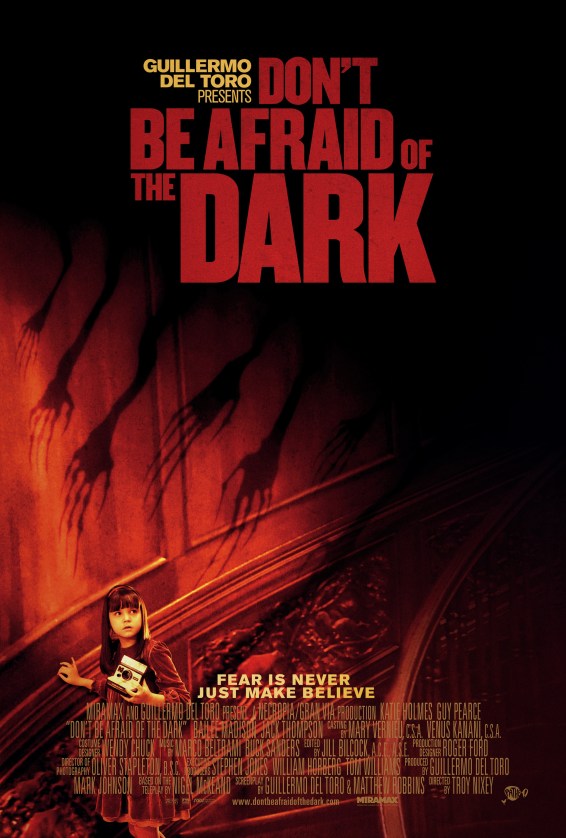
Don’t Be Afraid of the Dark (2010) – Film Review

Co-written/produced by Guillermo del Toro and directed by Troy Nixey, ‘Don’t Be Afraid of the Dark’ embraces many of the same elements as del Toro’s other films, crafting a narrative which combines both traditional gothic horror and childlike fantasy. But sadly, unlike a usual del Toro project, there is a noticeable absence in everything from captivating characters to memorising practical effects/creatures, resulting in a film that feels like a mostly copy-and-paste effort beyond one or two interesting ideas.

Plot Summary: After being sent to live with her father and his new girlfriend at their recently renovated manor, the previous home of the long-missing painter: ‘Emerson Blackwood’. Young ‘Sally’ begins to hear ominous voices emanating from the basement’s ash-pit, soon leading her to discover the cause of the painter’s disappearance…

Taking heavy inspiration from the classic H.P. Lovecraft short story: ‘The Rats in the Walls.’ ‘Don’t Be Afraid of the Dark’ is actually a remake of a low-budget 1973 TV film, as the now-iconic director Guillermo del Toro has stated in the past that he was terrified of the film when he first watched it as a child, later inspiring him to reimagine the mostly-unknown horror flick. Yet even with a much larger-budget and a more well-known cast, the film is still quite underwhelming when it comes to both its scares and story, as the film’s narrative follows a formula almost identical to many other modern horrors.

All of the performances throughout the film aren’t anything overly impressive, as whilst Katie Holmes does try her best to portray a young girl witnessing sights that no one else believes. Her character: ‘Sally’ (similar to the rest of the film’s characters) receives very limited characterisation, which does make many of the scenes revolving around the family-dynamic far less entertaining. Then there is also ‘Sally’s father and his girlfriend: ‘Kim’ portrayed by Guy Pearce and Bailee Madison respectively, and although Madison gives a serviceable performance, Pearce may give one of the weakest performances of his career here. As ‘Sally’s father: ‘Alex,’ always shows little concern or remorse when it comes to his daughter, making the character immensely difficult to resonate with.

The cinematography by Oliver Stapleton is very grand in its execution, allowing for a large number of wide-shots, some of which even flow smootly-around the various rooms of the manor. But it’s the film’s colour palette which is most worth noting, as the film utilises much more red and yellow than many other modern horrors, which is a pleasant change in terms of visuals as the more vibrant colours reflect the manor’s elegant design, which is probably one of the most visually striking ‘haunted houses’ in recent memory, with even the manor’s front entrance having a beautiful carving of an old oak tree merged into the multi-coloured glass.

Marco Beltrami and Buck Sanders provide the original score for the film, which similar to the film’s cinematography, gives the story a much more epic feel. As the heavy orchestral score could’ve easily been taken from any classic gothic horror, lending itself effectively to many scenes aside from a couple of generic tracks. The film often also features some fantastically creepy sound design, as the film’s creatures continuously speak to ‘Sally’ using their ghostly whispering voices, which seemingly echo throughout the usually empty corridors of the manor.

Although many of del Toro’s other outings do provide plenty of wonderful practical effects to gaze at, usually creating an array of unsettling and memorable creatures, ‘Don’t Be Afraid of the Dark’ takes another (less appealing) route to its monsters. As the film’s creatures are brought to life almost entirely though CG effects, which not only makes some shots appear slightly dated, but also manages to take away from nearly all of the film’s tense moments. Additionally, the film’s creature designs aren’t all that menacing, as despite the idea of evil fairytale monsters being quite unique (as the creatures are later revealed to be a sinister incarnation of tooth-fairies). The creature’s extremely small-size does make them feel very unthreatening even if it is a nice change-of-pace over having one large entity, as the film never does enough with its miniature antagonists regardless of what knives/tools they arm themselves with.

All in all, ‘Don’t Be Afraid of the Dark’ is a film that is regrettably just not worth its short runtime. As while I admire the effort to combine famed fairytale stories with a chilling atmosphere, the predominantly poor performances and numerous unexplored concepts leave the film simply another bland horror flick with a surprisingly weak screenplay by del Toro to-boot, especially when compared to much of his other work. Still, with all that said, I feel that Troy Nixey does deserve another shot in the director’s chair someday, as since this film’s initial release, he actually hasn’t worked on any other projects, which is unfortunate, as I do believe he does have some talent as a filmmaker when looking at this film’s merits. Final Rating: high 3/10.

Layout 1

The Blair Witch Project (1999) – Film Review

Upon its initial release, the original ‘Blair Witch Project’ blew many audiences away with its realistic depiction of found-footage horror, subsequently leading many audience members to believe that the events they were watching on-screen actually took place, making for a truly terrifying experience. However, now, many years after its first appearance, the film’s reputation has significantly altered with both critics and audiences alike, as ‘The Blair Witch Project’ is definitely a film that lies outside of the usual horror clichés.

Plot Summary: When three student filmmakers travel to Burkittsville, Maryland, in attempt to produce a documentary based around the local urban legend of ‘The Blair Witch,’ they mysteriously disappear after traveling into the nearby Black Hills Forest, leaving only their footage behind to be discovered one year later…

Whilst ‘The Blair Witch Project’ wasn’t the original found-footage horror film, with the infamous exploitation flick; ‘Cannibal Holocaust,’ first introducing the horror subgenre in 1980. ‘The Blair Witch Project’ was the first film to popularise the found-footage concept, as this film was at one point in time in the ‘Guinness Book of World Records’ for the largest box-office ratio, as the low-budget film only had a budget of around £45,000 and made back over £189 million, quickly spawning an inconsistent horror franchise despite the film’s only partially complete backstory for its creature and setting.

The three main cast members of Heather Donahue, Joshua Leonard, and Michael C. Williams (who all share their real names with their characters), are all tremendous throughout the film, as while their character’s don’t receive nowhere near as much development as they should considering how much screen-time we spend with them, each one of the actors do give the impression they are becoming more tormented and frustrated the longer they remain in the Black Hills Forest. The main reason the film’s protagonists don’t receive much characterisation, however, is actually due to the film’s production itself, as with the film not focusing very heavily on story, the actors were given no more than a thirty-five page outline of plot points rather than a full screenplay. So, as filming continued, the cast just played out various scenes, only having little knowledge of the mythology behind ‘The Blair Witch’ and improvising the vast majority of their lines.

Practically the entirety of the cinematography by Neal L. Fredericks is exactly what you’d expect from a found-footage horror, featuring an abundance of both shaky and out-of-focus shots, further adding to the idea that just behind the lens is a group of amateur student filmmakers (with some scenes even being shot by the cast themselves). In addition to the hand-held camerawork, the film’s visuals are also quite distinctive when it comes to its visual quality, as throughout the duration of the film, many shots remain incredibly grainy and occasionally even switch to a completely greyscale colour palette, which again, whilst adding to the realism of the film being a no-budget student documentary, does ensure the absence of any genuinely attractive shots.

Although it’s only heard during the film’s atmospheric end credits, ‘The Blair Witch Project’ does actually have an original score composed by Antonio Cora, but obviously being a found-footage horror, the film mostly aims to please with its sound design, as the sounds of crackling leaves and chirping birds are heard continuously. Interestingly, many of the eerie branch-cracking sounds heard at night even being made by the director and his friends simply walking up to the cast’s camp-perimeter and then tossing around twigs, rocks, and branches in various directions.

The main aspect that many will either admire or despise about ‘The Blair Witch Project,’ is its previously mentioned focus on realism and minimalist storytelling, as while the film does utilise its forest setting very effectively throughout the runtime, many who may be expecting a thrilling final act or possibly even a glimpse at ‘The Blair Witch’ herself will be greatly disappointed, as due to the story’s constant emphasis on realism, the film never actually provides any genuine evidence of the supernatural, with many of the film’s tense moments mostly relying on the darkness of the woods or the belligerent quarreling between the characters.

In summary, ‘The Blair Witch Project’ is certainly a fascinating horror film even if it isn’t always a successful one. As, to this day, this found-footage indie flick is a very divisive film for horror fans, with a 86% score on Rotten Tomatoes, the film has the highest-rating of any film that was also nominated for a Razzie Award for Worst Picture. So, even with the cast’s impactful performances and ‘The Blair Witch’ herself being an intriguing urban legend, this is one horror that really depends on your personal taste. For myself, while I find the film far from perfect and considerably less compelling than many other iconic horrors, I can appreciate what this experimental piece of filmmaking (and its marketing) was trying to accomplish, and for that, I feel it’s worth at least one viewing for any fan of the genre. Final Rating: 6/10.

blair_witch_project_ver3_xxlg

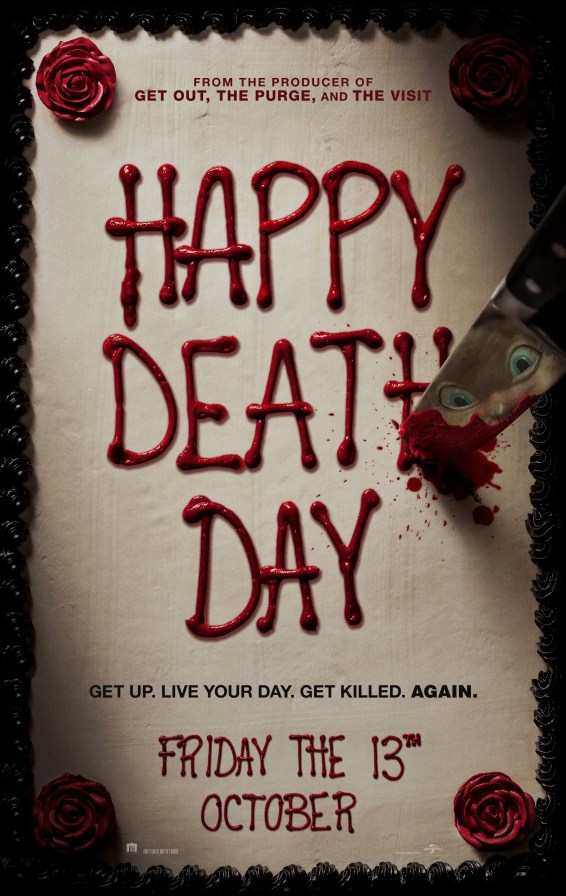
Happy Death Day (2017) – Film Review

Another horror flick from production company Blumhouse Pictures, ‘Happy Death Day,’ released in 2017, does at least extend out of the usual range of Blumhouse horrors to become more of a horror-comedy than just a straightforward teen slasher. But, similar to the rest of their associated franchises, e.g. ‘Insidious,’ ‘The Purge’ and ‘Paranormal Activity,’ both ‘Happy Death Day’ and it’s sequel, have their fair share of issues, with some being far more severe than others.

Plot Summary: Waking up in the dorm room of a boy whose name she can’t remember after a night of heavy drinking, self-centered college student; ‘Tree Gelbman,’ intends to continue her trend of avoiding her birthday, but little does she know that later that night on her way to another party, someone is waiting to murder her. Only after being killed, ‘Tree’ awakens in the same dorm room, soon realising she is being forced to relive her brutal night of murder over-and-over again until she discovers her killer’s identity…

‘Happy Death Day’ similar to many other day-repeating stories in the past, takes most of its inspiration from the comedy classic; ‘Groundhog Day,’ from 1993. Yet, unlike many of the other films that are inspired by this beloved comedy flick, it becomes clear over time that ‘Happy Death Day’ is quite derivative of ‘Groundhog Day,’ as the film’s story not only utilises the comedy’s plot without much innovation (only throwing a killer into the mix). But, the film even steals the main point of the narrative, that being its main character and their correlating character arc, using the time-looping concept to in a way punish the protagonist for their cruel behaviour towards others.

In spite of this, however, the protagonist; ‘Tree,’ portrayed by Jessica Rothe, is by far the best element of the film, as while ‘Tree’ does go through a character arc that is all-too-familiar as previously mentioned, Rothe makes a fantastic first outing as an actress through her very enjoyable performance. Then, of course, there is the killer, whose identity remains a mystery throughout most of the runtime, known as ‘The Babyface Killer,’ the killer’s outfit is actually the mascot of ‘Bayfield University,’ where the film takes place, and although the costume itself is far more goofy then intimidating, the mask/costume was actually designed by Tony Gardner. The costume designer behind the now-iconic; ‘Ghostface,’ costume from the ‘Scream’ series, which does help redeem to the killer’s undoubtedly petty motivation.

The film’s cinematography by Toby Oliver isn’t anything amazing, but does back up the story effectively in a variety of scenes. Whether that’s through its use of wide sweeping shots when the characters are in an intense chase, or when more shaky hand-held camerawork is used to reflect ‘Tree’s breakdown when she first realises she is stuck in her current crisis. Yet, similar to much of its story, the film never leans enough into a more outlandish/experimental nature when considering what the film could accomplish with its cinematography.

Talented composer Bear McCreary handles the film’s original score, which isn’t very distinctive from most of his other work within the horror genre. But, despite the score’s lack of memorability, it still does feel as if there is a decent amount of effort put into it, as the soundtrack actually has quite a lot of range even if some of the tracks don’t always fit with the tone of the film. This also goes for many of the songs used throughout ‘Happy Death Day,’ as nearly all of the film’s song choices massively differ in both genre and general popularity.

Still, the biggest problem ‘Happy Death Day’ suffers from is the inconsistency of its tone, as although the film does attempt to have scenes featuring both scares and humour, alike, many of the film’s jump-scares and jokes range in quality, and occasionally even cancel each other out. Additionally, the film also takes an unusual approach to its violence, as while ‘Tree’ dies countless times throughout the film in a number of different ways. The film never allows for any creative or darkly amusing deaths, due to its lack of any blood or gore. Yet, this wasn’t always the case, as the original screenplay for the film did actually include more violence, so much so, in fact, that it would have gained the film a higher age rating, with plenty of scenes having much grislier deaths that were later altered by director Christopher Landon (Paranormal Activity: The Marked Ones, Scouts Guide to the Zombie Apocalypse) during pre-production.

In summary, whilst the signature performance from Jessica Rothe does help to make ‘Happy Death Day’ a far more enjoyable viewing, in addition to the film’s idea of a protagonist being repeatedly murdered having plenty of potential for a horror-comedy. The film just doesn’t do enough with its story, feeling almost as if its a little restrictive on itself, never delving enough into being either funny or freighting respectively. So, if you desire an amusing horror-comedy to stick on one evening, maybe just go back to your more accustomed choices over this mediocre slasher. Final Rating: 5/10.

happy_death_day_xxlg

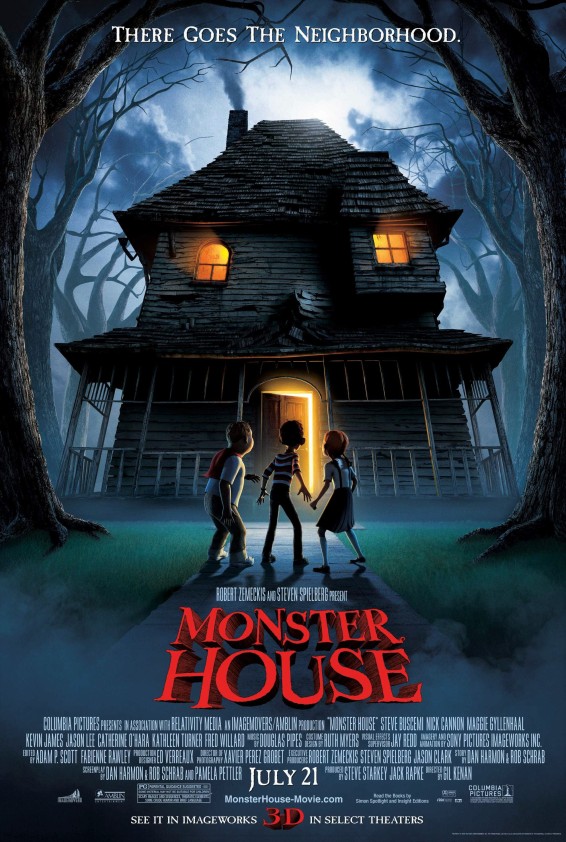
Monster House (2006) – Film Review

A personal childhood classic for me, ‘Monster House’ is one of those rare kids films that isn’t afraid to explore darker themes of death, grief and childhood fears. Whilst still managing to be a solid piece of entertainment for any family urging for a creepy adventure, as producers Robert Zemeckis and Steven Spielberg jump on board alongside Gil Kenan, director of the ‘Poltergeist’ remake from 2015, as his directorial debut, this animated adventure is always a joy to return to for me.

Plot Summary: After his cranky, elderly neighbour suffers a heart attack and is taken to hospital, suspicious teenager; ‘DJ,’ invites his clumsy best friend; ‘Chowder,’ over, only to discover that his creepy neighbour’s house is, in fact, a living, breathing monster. Now, with the help of the quick-witted student; ‘Jenny,’ the trio hatch to destroy the house before it can claim victims on Halloween night…

This simple, yet extremely strange plot is one of the best aspects of the film, as the director makes as much use out of this concept as possible. Usually getting extremely creative and even catching the audience by surprise at a few points, no matter their age. Having a great blend of both comedy and tame horror, the film has a mostly light-hearted tone, aside from the occasional dark scene, of course, which actually works quite well for the film’s story. The jokes throughout the film are also pretty decent, as despite some gags being a little too cheesy or immature at points. For the most part, the comedy throughout the film can get a laugh out of me.

The three main characters within the film are portrayed by Mitchel Musso, Sam Lerner and Spencer Locke, who all provide likeable and varied personalities to each of their respective characters, while Steve Buscemi lends his voice to the creepy ‘Old Man Nebbercracker,’ who actually turns out to a very interesting and even sympathetic character by the end of the film’s swift runtime.

The animated cinematography is overall nothing outstanding, but does lend itself well to creating some attractive shots and eerie visuals throughout the film. I also personally enjoyed how the film utilised more hand-held like camera movements during the more chaotic scenes of action or terror throughout the story. The film even blends its bright animation colour palette with a more dark/pale horror-esque palette, only a little detail, but I appreciated it regardless. The original score by Douglas Pipes is also another wonderful element of the film, combing the feel of a classic animated film with undertones of horror.

Although the animation can sometimes range in quality, the visual look of the almost stop-motion-like animation does give the film an eerie appeal. However, due to the film’s age, the film has definitely begun to show some cracks here and there, as various points in the narrative characters can begin to look a little clunky or unnatural with their movements. This is mostly due to the motion capture technology that was used very heavily throughout the film, long before films such as ‘Avatar’ or ‘Rise of the Planet of the Apes’ truly pushed the technology to its limits.

Many of the character designs throughout the film are also quite memorable, especially with the character, ‘Bones,’ in particular, who always comes to mind for me when thinking of this film. I also personally adore the design of the ‘Monster House’ itself, as the design is incredibly menacing and really feels like a true horror antagonist.

In summary, ‘Monster House’ never fails to be entertaining for me, every time I revisit it, as the film truly provides a creepy experience which most other family/animated films simply can’t, as films such as ‘Hotel Transylvania’ or ‘Goosebumps’ always try to capture this tone, but usually fall short. It’s here ‘Monster House’ succeeds, as despite some clunky animation and cheesy dialogue at points, the film succeeds in being an spooky adventure with a fantastic cast, and effective original score that the entire family could enjoy. Maybe it’s nostalgia for me, but I personally believe the film is honestly a great choice when it comes to a Halloween night, or maybe just a rainy evening. Final Rating: 7/10.

monsterhouse_poster

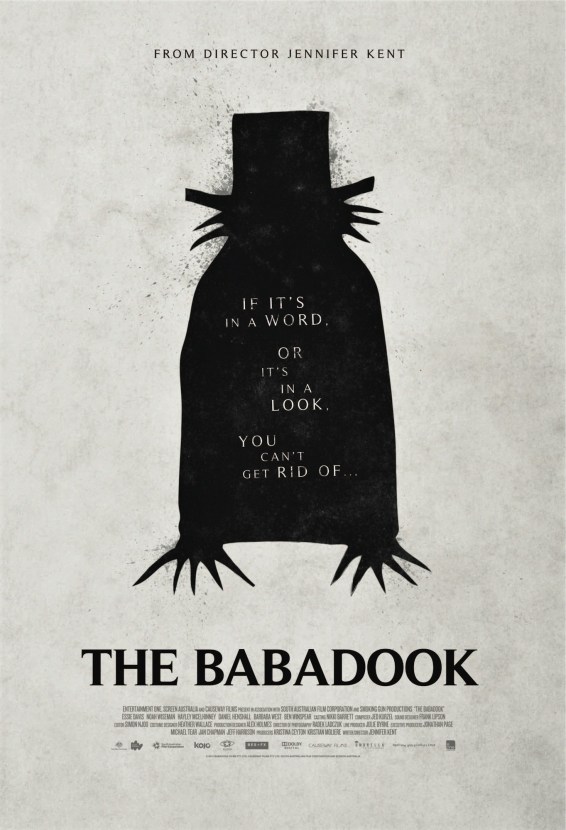
The Babadook (2014) – Film Review

Surreal, engrossing and truly terrifying during some scenes, ‘The Babadook’ is, in my opinion, one of the best modern horrors released in quite some time. Through its excellent filmmaking, astounding performances and horrifying yet also intriguing creature, ‘The Babadook’ attempts to do something different with its horror, going about its story with far more depth than many other films within its genre, soon becoming an experience that’s just as immersive as it is disturbing for anyone who stumbles upon it.

Plot Summary: Following the sudden death of her husband in a car crash, the now-widow; ‘Amelia,’ struggles to cope as a single mother, as her son’s chaotic behaviour and constant paranoia of monsters makes her friends become distant and even her sanity begin to fade. Until, one night, after the pair read a mysterious pop-up book, titled; ‘Mister Babadook,’ they soon discover a malevolent creature has manifested itself into the dark corners of their home…

Directed by Jennifer Kent (The Nightingale), ‘The Babadook’ is a horror film that has much more to offer beneath its surface, with themes of family, grief and trauma throughout. Based on the short film; ‘Monster,’ also directed by Jennifer Kent, ‘The Babadook’ actually takes much of its inspiration from one of Kent’s real-world friends, a single mother whose son was traumatised by a monstrous figure he thought he saw everywhere in the house. So, Kent imagined a scenario in which this creature was real, eventually leading her to create her short film, before then wanting to expand on the idea further.

The main area ‘The Babadook’ excels where most modern horrors fail is the characters. Only featuring a main cast of two terrific actors, Essie Davis and Noah Wiseman, with Wiseman only being six-years-old at the time of filming. The mother and son of the film are both compelling characters for very different reasons, as the mother ‘Amelia’ struggles to cope as a single parent. Alienating her friends/colleagues and becoming more lonely and sexually frustrated as time passes, mostly due to her son; ‘Samuel,’ who continuously struggles with anxiety and the absence of a real father, which makes it challenging for him to mix with other children. This all adding up to making the film just as effective as a family drama as it is a supernatural horror.

Although Radek Ladczuk’s cinematography isn’t quite as impressive as the film’s magnificent editing, which allows for plenty of quick visual storytelling and gives the film a level of style that I didn’t expect. ‘The Babadook’ does still feature a number of stunning shots, which are enormously enhanced by the film’s dread-inducing lighting. As, not too dissimilar to the horror flick; ‘Lights Out,’ from 2016, ‘The Babadook’ himself only appears within the shadows. So, with nearly the entire runtime being set within a dark run-down house (usually also at night), the creature could be lurking within any shot, and occasionally, even is…

Slightly fairytale-esque in parts, the original score by Jed Kurzel may not be a stand out horror score up there with the likes of ‘Halloween’ or the original ‘Psycho.’ But, the score is still a fair amount more creative than many other modern horror scores, with tracks, such as ‘Trippy Television’ and ‘It’s Only a Story,’ giving the film a very dream-like quality, sounding almost as if they were composed for a Tim Burton-penned project at points. That is before the soundtrack becomes a little more of the standard horror affair with tracks, like ‘The Playground’ and ‘Re-Writing the Story,’ despite these tracks still helping to build tension throughout.

Immensely creepy throughout the film, ‘The Babadook’ himself is a very memorable and frightening presence in spite of his somewhat goofy moniker, as every one of his appearances is always elevated by his bone-chilling sound design, which is very uncanny in a similar fashion to the original score. The only major issue I take with the film is the lack of encounters the characters actually have with the creature, as while many of his scenes are extremely well-executed, ‘Mister Babadook’ just doesn’t have quite enough screen-time for me. However, this problem also extends to nearly all of the film’s side characters, as ‘Claire,’ ‘Robbie’ and ‘Mrs. Roach,’ all feel underutilised within the narrative, even though the story’s main focus is very clearly the mother and son relationship.

In summary, ‘The Babadook’ is a brilliantly crafted horror, mostly as a result of its atmospheric cinematography/lighting and masterful editing, alongside its great performances and array of tension-filled moments. Whilst perhaps not for every horror addict, due to its sparse amount of jump-scares and very low body count. Jennifer Kent’s directorial debut is certainly a horror flick I’d recommend to most, and considering Kent has stated that the film will never receive a sequel, it’s clear the film was a true passion project that won’t fall into the trap that many successful horrors do of milking themselves into an over-blown franchise. Final Rating: 8/10.

babadook_xxlg

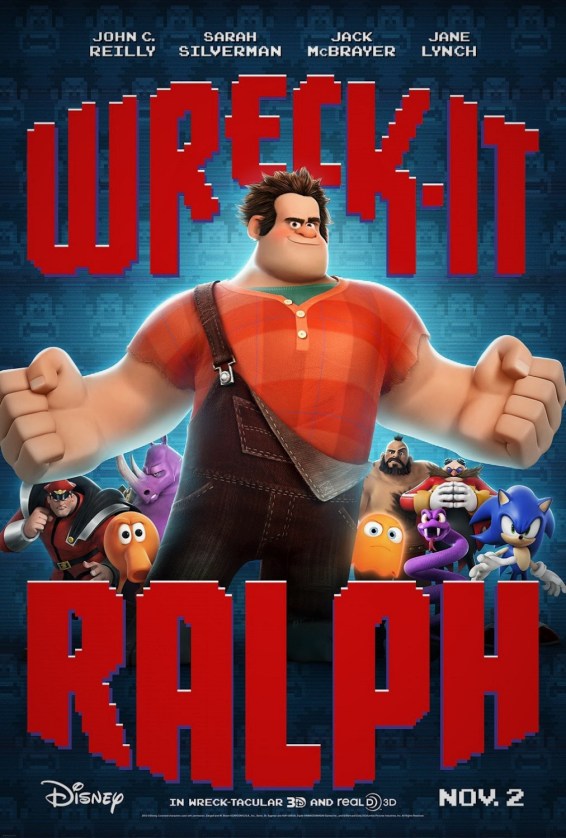
Wreck-It Ralph (2012) – Film Review

Equally entertaining for both children and parents who will catch the many references to classic arcade games, ‘Wreck-It Ralph’ is a funny, colourful, and exciting adventure from Walt Disney Animation Studios. Directed by Rich Moore, most known for his work on ‘The Simpsons,’ in addition to some other recent Disney flicks. This eight-bit odyssey may not quite match-up to some of the other iconic films Disney has released in its many years of crafting animated stories, yet is still sure to please any video game-enthusiasts in search of a new favourite.

Plot Summary: After many years of being the bad guy and being defeated in his own game day-after-day, ‘Wreck-It Ralph’ longs to be as beloved as his game’s perfect protagonist; ‘Fix-It Felix.’ So, when a modern, first-person sci-fi shooter arrives in his arcade, ‘Ralph’ sees his opportunity for heroism and happiness. But, now, with his game at risk of being put out-of-order due to his disappearance, ‘Ralph’ must quickly return home before it’s game over for everyone…

From the get-go, one of the best elements of ‘Wreck-It Ralph’ has to be its initial concept, as the film portrays the idea of video game characters coming to life in a similar fashion to the ‘Toy Story’ series, but also adds a living virtual world alongside. Interestingly, Disney first began developing an animated film based around a world of video game characters in the 1980s. At that time, the project was titled; ‘High Score,’ it was then changed to ‘Joe Jump’ in the 1990s. Until, in the late 2000s, when the film was finally pushed forward, the first two months of story development focused on ‘Fix-It Felix Jr.’ as the protagonist, which eventually evolved to the film we received in 2012.

John C. Riley and Sarah Silverman lead the cast as the titular character; ‘Wreck-It Ralph,’ and candy-coated racer; ‘Vanellope Von Schweetz,’ superbly, as unlike most animated films, the main group of actors regularly recorded their sessions together in the same room, a situation which led to large amounts of improvising and gave the cast a real sense of chemistry. But, regardless of how much of his dialogue was improvised, ‘Ralph’ still remains, in my opinion, one of the most memorable and likeable characters Disney has created in their more modern animations, mostly due to his design and understandable motivation of wanting to be seen as a hero rather than a villain. Jack McBrayer, Jane Lynch, and Alan Tudyk make up the remainder of the cast, who are all also wonderful within their roles as ‘Fix-It Felix,’ ‘Sergeant Calhoun,’ and ‘King Candy,’ respectively, as each actor plays into whichever type of game they originate from, e.g. intense sci-fi soldier with a overly dramatic backstory or a quirky kart-racer.

An area ‘Wreck-It Ralph’ is lacking, however, it’s on the promise of exploring the many different video game worlds its story implies, as while the film does explore its two signature worlds of ‘Hero’s Duty’ and ‘Sugar Rush’ effectively, ensuring each location feels vastly different in terms of both its design, animated cinematography, and colour palette. The film is limited in how many video games its characters actually explore, which is a shame when considering the many possible adventures it’s different arcade worlds could contain, especially when taking into account the huge number of cameos from video game icons, like ‘Pac-Man,’ ‘Q’bert,’ and ‘Sonic the Hedgehog.’

Although the original score by Henry Jackman is a huge missed opportunity to have a classic eight-bit score to further fit with the video game narrative, the film’s soundtrack still features plenty of great tracks, which just like the film’s visuals, alter depending on which video game world the characters are currently inside, as outside of the generally enjoyable tracks; ‘Wreck-It Ralph’ ‘Life in the Arcade,’ and ‘Messing with the Program,’ the score occasionally gets quite creative, even having an original theme created for the kart-racing game; ‘Sugar Rush’ by J-pop band; ‘AKB48,’ as the fictional video game is supposedly manufactured in Japan.

Whilst the animation itself is visually stunning and brimming with small details as with nearly every animated Disney film, the main flaw ‘Wreck-It Ralph’ suffers from its without a doubt its story structure, as what may throw many viewers off is that the film begins focused entirely on ‘Ralph’ and his journey, before then quickly and drastically changing direction to focus more on ‘Vanellope’ and her desire to become a playable ‘Sugar Rush’ racer, which can be a little jolting when recalling the film’s first act.

In summary, ‘Wreck-It Ralph’ may not always use its signature concept to its best extent, and can often go too far when it comes to some of its immature or video game-related humour. Yet, the film’s delightful characters, gorgeous and distinctive locations and beautiful animation all manage to save the film from its faults. So, despite ‘Wreck-It Ralph’ not going down with audiences as successfully as some other animated Disney flicks, like ‘Frozen’ or ‘Zootropolis,’ for example, I still feel the film is worth grabbing a joystick for, should you get the chance. Final Rating: 7/10.

wreckit_ralph_ver6_xlg

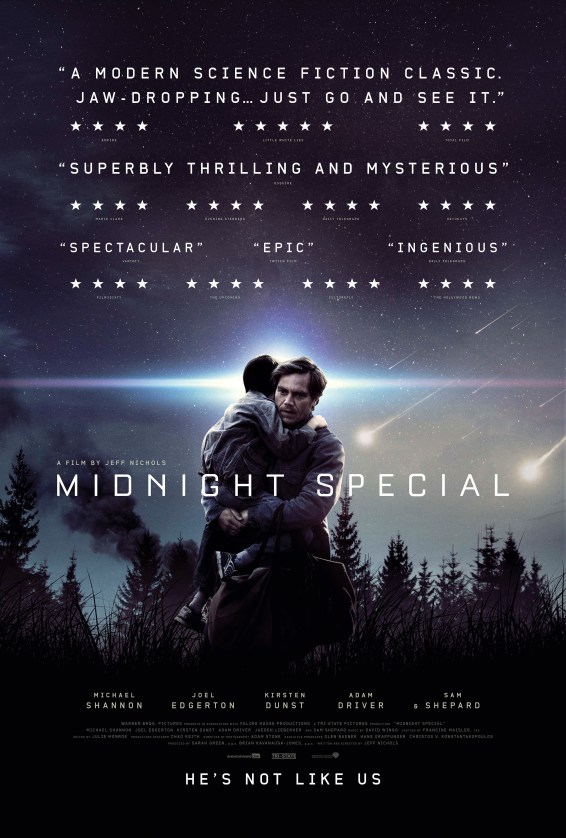
Midnight Special (2016) – Film Review

Written and directed by Jeff Nichols (Take Shelter, Mud, Loving), ‘Midnight Special’ may not be one of the most original or imaginative science fiction films to be released in recent years. Yet, regardless of its many recycled story elements and unexplored ideas, this low-budget sci-fi drama/thriller still manages to retain a sufficient amount of entertaining scenes, impressive CG effects and terrific performances to boot. All equalling to a fairly enjoyable experience, even if the film never quite reaches its full potential.

Plot Summary: ‘Alton Meyer’ is a boy unlike any other, a child with powerful abilities and strange weaknesses, alike. But, after ‘Alton’s abilities attract the attention of both an isolated cult and the U.S. government, ‘Alton’s father; ‘Roy,’ vows to protect his son as the two rival forces pursue the pair across the country…

Although ‘Midnight Special’ was Nichols’ first film made in conjunction with a large production company, Nichols wanted to ensure he had full creative control over the project just as he had previously with his low-budget indie films. So, despite Nichols originally considering making the film with an independent film studio rather than with Warner Bros. Pictures during his last meeting with the company, the producers actually agreed to all his demands, due to the small budget needed for the film. Meaning Nichols got his complete control, and the film was more successful at the box-office as a result of its wider release. This did, however, mean many audience members were left a little dissatisfied with the film, as ‘Midnight Special’ doesn’t follow the usual sci-fi clichés many would expect.

Michael Shannon leads the film as the concerned father; ‘Roy Meyer,’ and as per usual, excels in his role as this simple yet engaging character, wanting to protect his son at any cost, occasionally even at the expense of others. Playing into the age-old theme of doing anything to protect your child. Then there is also Jaeden Martell as ‘Alton’ himself, who considering his young age of twelve at the time of filming, delivers a competent performance, as even though ‘Alton’ may look like a normal child, he acts in a very robotic and eccentric manner. And, whilst this is completely intentional, this type of performance does sometimes make it quite difficult to resonate with ‘Alton’ as effectively as his father. The supporting cast of Joel Edgerton, Kirsten Dunst and Adam Driver, are all also great additions to the film, even though their characters don’t add much to the narrative.

Well-shot throughout, Adam Stone’s cinematography for ‘Midnight Special’ may not be some of the most astounding camerawork ever seen within the sci-fi genre, but due to the film mostly being set at night, the film does manage to enhance many of its already attractive shots through its dim lighting. In addition to the cinematography, the film also makes fantastic use of its many CG effects, with the majority of them being used quite sparsely to ensure they all appear as detailed as possible without going over budget.

The original score by David Wingo also isn’t too memorable when compared to some other scores composed for science fiction flicks, but it still greatly adds to the film. Alternating from slow piano-focused tracks to more electronic pulse-pounding tracks when necessary, the entire soundtrack is both atmospheric and suitably sci-fi, with my two personal favourite tracks; ‘Doak and Levi’ and ‘New World,’ being the perfect two examples of this change in tone when it comes to the score. The film also features a new rendition of the classic folk song; ‘Midnight Special,’ during its end credits, which is actually where the film gets its title.

Yet, in spite of its appealing cinematography and remarkable original score, the area where ‘Midnight Special’ falls flat is its story, as whilst many stories similar to this have been executed well in film before, most notably the sci-fi classic; ‘Starman,’ from 1984. ‘Midnight Special’ revels in not providing its audience with much information, keeping many aspects of ‘Alton’s character, his abilities, and the world the story takes place within a mystery. This is most evident when it comes to the (presumably) sinister cult known as ‘The Ranch,’ as while the cult does play a small role in the story, they remain mostly underdeveloped throughout the film, and as the runtime approaches its end, soon disappear entirely.

In summary, ‘Midnight Special’ is a sci-fi film that will appeal to a far more niche audience, as whilst a simple pitch of the plot may sound both familiar and interesting to many fans of the genre, it’s the way ‘Midnight Special’ goes about its story that will divide many viewers. If the film was to provide a little more backstory/exposition here and there, perhaps the story would’ve felt more fleshed out and matched with the brilliant efforts of its filmmaking. But, as it is, ‘Midnight Special’ feels like a bit of a wasted opportunity, as it remains a decent film that could’ve been so, so much more. Final Rating: high 6/10.

MIDNIGHT-SPECIAL-ONE-SHEET