The Problem with Live-Action Disney Remakes – Film Discussion

In years recent years, Disney has noticeably been taking quite an aggressive approach to reimagining many of the company’s classic animated adventures into live-action blockbusters, which I personally feel is having a bad influence on the rest of the film industry in more ways than one…

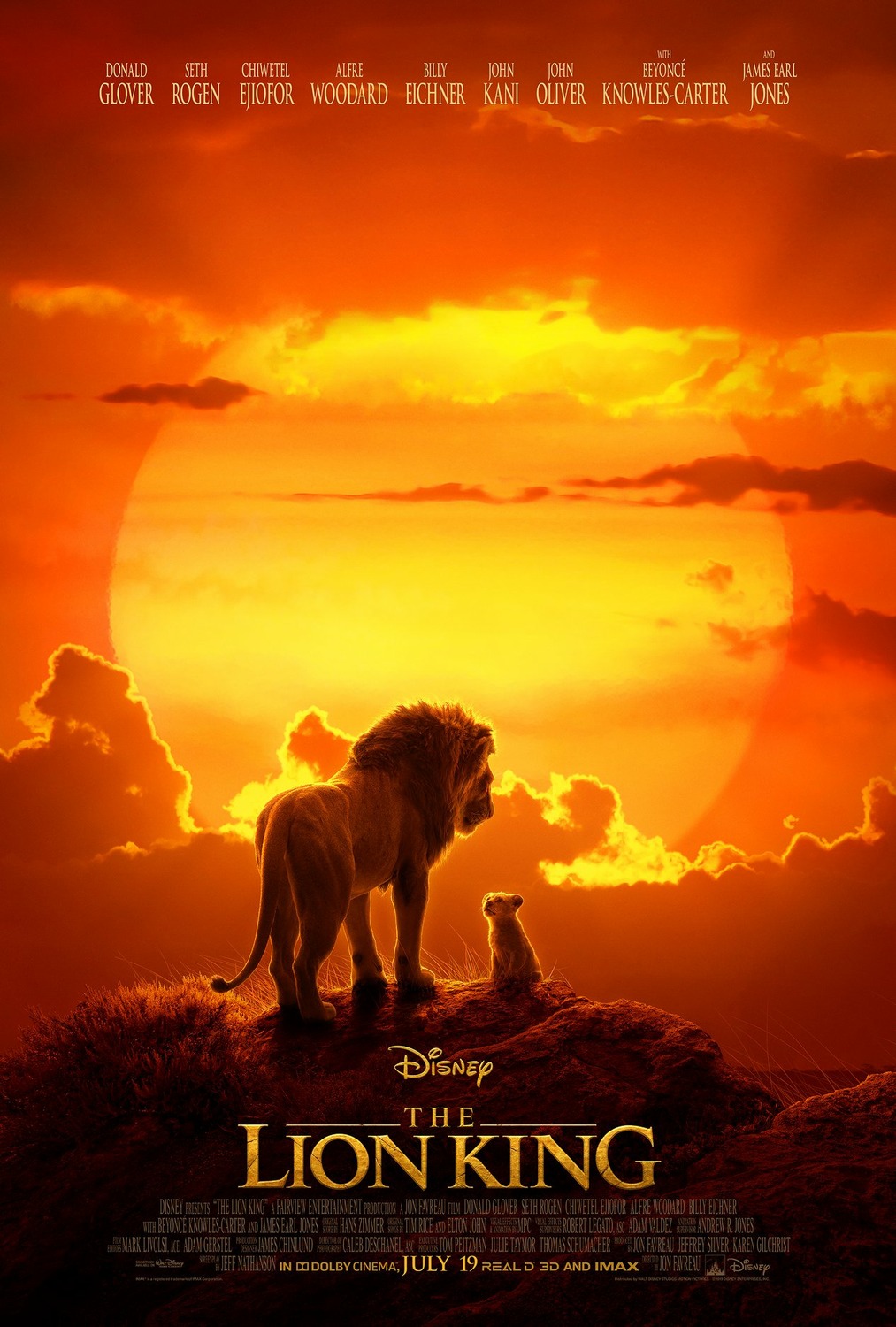
Despite Disney actually began the trend of remaking their classic films all the way back in 2010 with the semi-sequel/remake of ‘Alice in Wonderland,’ directed by Tim Burton. Disney didn’t begin to get truly rampant with its approach until the later successes of ‘Cinderella’ and ‘The Jungle Book’ in 2015 and 2016, respectively, with ‘Beauty and the Beast,’ ‘Dumbo’ and ‘Aladdin’ following not far behind, eventually leading to their most recent releases, that being ‘The Lion King’ and ‘Lady and the Tramp.’ Yet, whilst all of these films did receive mostly positive reviews from both critics and audiences upon their initial release, I personally have never understood why. As, for me, none of these remakes ever manage to really justify their existence, with each new film simply feeling like nothing more than a product, a money machine disguised as a film created purely to rinse profit out of Disney fans who desire to see their childhood classics recreated in a new light and, by this point, I just find it irritating.

Of course, remaking iconic films is nothing new for the film industry, with dreadful remakes, such as ‘RoboCop,’ ‘Ghostbusters’ and ‘Robin Hood,’ all being great examples of how taking a classic film and giving it a sleek modern aesthetic doesn’t automatically make it superior to the original. However, it’s the way Disney goes about executing their remakes that makes them even more frustrating, as even though most reimaginings may not differ too much from the original story, the majority of Disney remakes feel almost identical to their animated counterparts, featuring nearly all of the same scenes and dialogue, now just dragged down by much weaker visuals, vocal performances, and songs. This, in turn, also allows directors and writers to simply borrow material from previous filmmakers without having to innovate much themselves. Another issue I have with Disney converting their animated classics into live-action is that many of the original stories were always envisioned to be animated as they were being written, meaning when transferred into a different style of filmmaking, they usually are forced to rely on enormous amounts of CGI.

Although most audiences seemingly don’t take issue with Disney’s constant remakes, there are still some Disney fans who have spoken out about losing interest in Disney’s future live-action endeavours. In particular, I personally recall many weren’t looking forward to watching the ‘Aladdin’ remake around the time of its release, which I feel is understandable, as just from its trailer alone, it was clear that not only would the film intensely mirror the original, but it was obvious just from a glance that its visuals were also far, far duller, as the remake was lacking in both colour and style. Focusing more on being semi-realistic rather than fully engaging in its elements of fantasy (which, for a narrative revolving around a powerful genie who grants three magical wishes, feels like a huge mistake to me). Whilst the original ‘Aladdin’ may not be the most visually enthralling of Disney’s catalogue of family flicks, the classic style of 2D hand-drawn animation is still very pleasing to look at, even by today’s standards for CG animated films.

It may even surprise some to know that many of these bland remakes were actually directed by talented filmmakers like Jon Favreau and the previously mentioned Tim Burton. Yet, with each new film, every director’s unique style always seems to be stripped away or completely absent, as not only does each remake barely utilise any creative cinematography or editing, relying nearly entirely on CG effects to impress the audience. But usually inventive directors such as Guy Ritchie, who has made phenomenal use of his unique style of editing and humour in the past within his films, like ‘Snatch’ and ‘The Gentlemen,’ suffers as a result of how simply generic and even somewhat boring his reimagining of ‘Aladdin’ is, and while Disney may not be entirely to blame for this, I do believe the company would prefer to keep each remake fairly easy to digest in order to appeal to a wider audience.

In addition to both the visuals and directing, however, the cast of the original animated flicks were also a huge contributing factor to them becoming as beloved as they now are, with not only actors like Robin Williams as the original ‘Genie,’ of course, but also lesser-known actors such as Nathan Lane and Ernie Sabella as ‘Timon’ and ‘Pumbaa,’ to Jodi Benson and Pat Carroll as ‘Ariel’ and ‘Ursula,’ as all these voices not only gave the characters great comedic timing and a distinct tone, but they soon even became an extension of the characters themselves, making them recognisable purely through their voice. Whereas Disney’s newer remakes prefer to just take the much easier approach of simply casting the most relevant actors at the time and throwing them into an iconic role, and whilst actors, like Donald Glover and Chiwetel Ejiofor, will always be superb at their craft, forcing these performers into roles within ‘The Lion King’ simply due to their popularity will always make their vocal performance feel very out-of-place when in comparison with the original film.

The final area I find Disney remakes to be most lacking is the tampering of classic Disney songs, as although I’m personally not an enormous fan of musicals within the realm of live-action, I’ve always enjoyed many of the songs in Disney animated classics. As, not only do I feel these songs add to the characters and the story of each film immensely, but many classic Disney songs also manage to become iconic amongst themselves, with nearly any fan of animation more than likely know all the words to ‘Be Our Guest,’ ‘The Circle of Life,’ and ‘Under the Sea’ (just to name a few). But, when it comes to the remakes, once again, both the original score and songs feel far duller, even in spite of the legendary Hans Zimmer returning for ‘The Lion King’ remake to recreate many of his classic tracks. Still, a few of the reimaginings do at least attempt to throw in some original songs, which unfortunately end up being mostly forgotten due to them being overshadowed by the classic songs audiences are more familiar with.

In summary, it seems the influx of live-action Disney remakes won’t be stopping anytime soon, with ‘The Lion King’ racking in over £1 billion worldwide, Disney will most likely continue this remaking trend until their audience completely loses interest, as reimaginings of ‘Mulan,’ ‘Peter Pan,’ ‘The Little Mermaid,’ ‘Pinocchio,’ The Sword in the Stone’ and ‘Lilo and Stitch,’ as well as many, many more, are already set for release. Whilst the House of Mouse does still have a few original films on the horizon, Disney seems to be heading down a similar path to their paired animation company Pixar, that being one of laziness, relying mostly on their previous stories and franchises for profit rather than creating something new which, in turn, is also encouraging other production companies to do the same. So, if you share my opinion, perhaps sit out Disney’s next live-action release, stay at home, and just relive many of the beautifully animated stories from the past, as I honestly believe many of these films are timeless.
lion_king_ver2_xlg

Kingsman: The Secret Service (2015) – Film Review

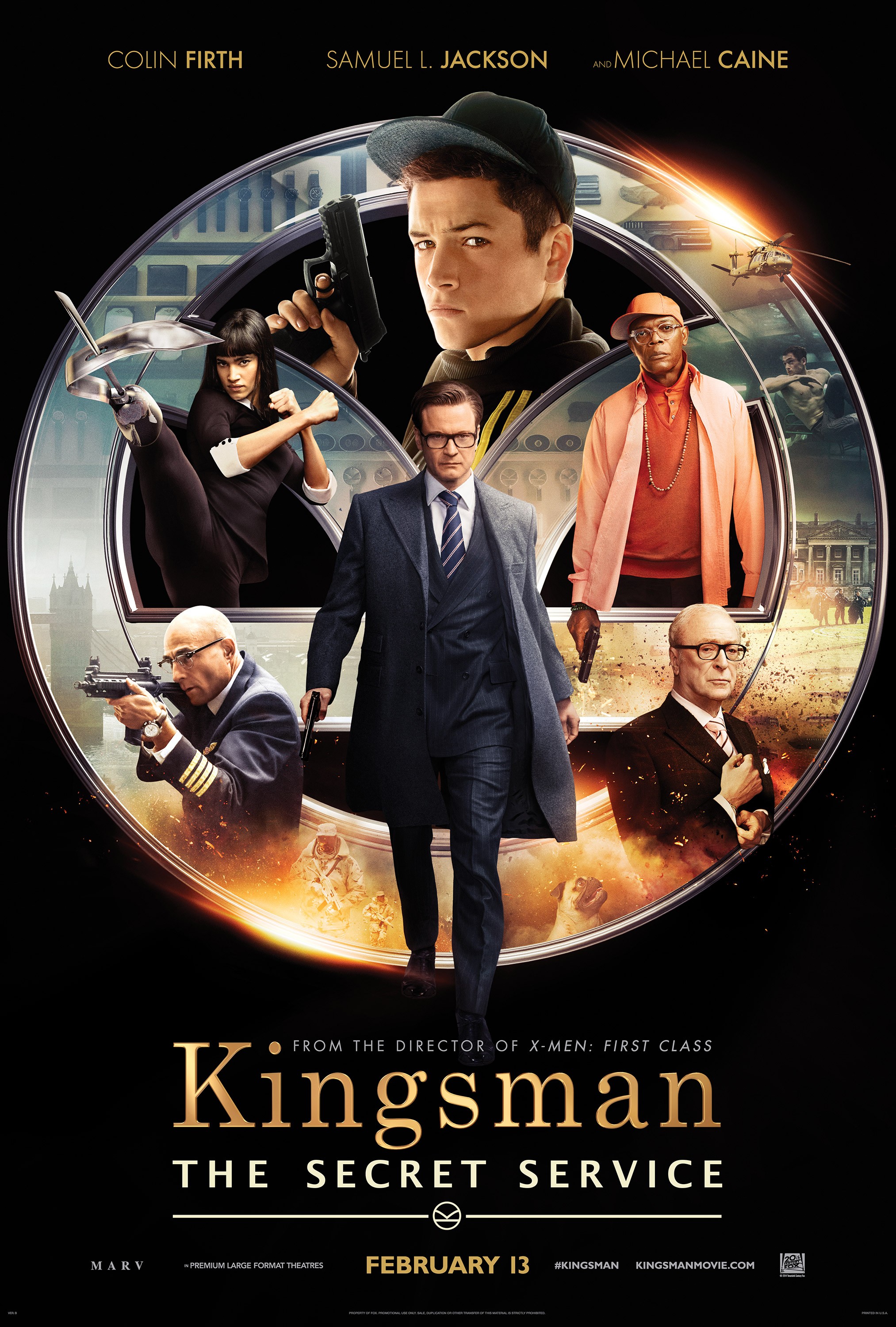
Matthew Vaughn, critically acclaimed director of ‘Layer Cake,’ ‘Kick-Ass’ and ‘X-Men: First Class,’ tries his hand at another comic book adaptation with ‘Kingsman: The Secret Service.’ Based on the comic book series of the same name by Mark Millar, and serving as a throwback to (and often parody of) classic spy/espionage films, such as the ‘James Bond’ series and ‘The Bourne Saga,’ ‘Kingsman’ very quickly became a beloved franchise after just its first instalment, mostly as a result of its hilarious self-aware moments of humour and exhilarating action set pieces.

Plot Summary: When the British spy organisation; ‘Kingsman,’ recruits an unrefined, but promising London street teen into the agency’s ultra-competitive training program. ‘Eggsy’ begins to follow in his father’s footsteps as he takes part in the organisation’s many dangerous training exercises. All the while, the twisted tech genius; ‘Valentine,’ begins to execute a master plan, which will potentially put the entire world at risk…

Violent, thrilling and fun, the first ‘Kingsman’ film was actually made partly in conjunction with the comic book itself, as director Matthew Vaughn and comic book writer Mark Millar have been good friends for many years since they collaborated previously on ‘Kick-Ass’ in 2010 to great success, prompting them to reunite for ‘Kingsman: The Secret Service.’ Which, aside from a few minor changes, is actually a mostly faithful adaptation of the first entry in the comic book series, alongside also being a superb gateway into the world for any non-fans of the comic series as the film establishes who the ‘Kingsman’ are and what they do, in little time.

Protagonist; ‘Gary Unwin,’ usually going by his nickname; ‘Eggsy,’ is portrayed by Taron Egerton in one of his earliest film roles, who portrays a reckless British teenager very well, becoming an instantly likeable character within only a short amount of screen-time. Its Colin Firth and Samuel L. Jackson, who, both steal the film with their fantastic characters, however, as both actors play completely against their usual type here, with Firth taking on the deadly spy; ‘Harry Hart,’ who rarely even smiles (creating quite a contrast from his usual romantic-comedies), and according to second unit director Bradley James Allan, even did 80% of his own stunts during filming. Whilst Jackson also gives one of his most memorable performances to date as the film’s antagonist; ‘Valentine,’ who, throughout the runtime, retains an aggressive lisp and occasionally childish demeanour, a big leap from much of his previous work.

Although not as outrageously creative as it could’ve been, in my opinion, the film’s cinematography by George Richmond does serve the story very effectively, as many of the film’s over-the-top and exciting action sequences are displayed proudly and clearly without too much use of hand-held camera or excessive editing. During a few scenes, the camera even begins to spin around the characters as they fight, providing the film with a real sense of movement.

The original score by both Henry Jackman and Matthew Margeson has quickly become very beloved, similar to the film itself, and it’s easy to see why, as the film utilises its trumpet-heavy orchestral score to create a soundtrack, which would fit perfectly within a classic espionage series, like ‘The Avengers,’ ‘The Ipcress File’ or ‘The Man From U.N.C.L.E.’ From ‘Manners Maketh Man’ and ‘To Become a Kingsman,’ to especially, ‘Valentine’s theme, which is noticeably more electronic to fit with the tech-savvy character. Nearly every track featured in the original score is both memorable, and usually, also cut in sync with the film’s stylish editing to great effect. 

Needless to say, the aspect that ‘Kingsman’ is most known for is certainly its variety of impressive action sequences, which as already mentioned, do away with the usual overly shaky and chaotic execution of most modern action flicks in favour of more fast-paced and exaggerated fight choreography with plenty of graphic violence to boot. Resulting in many entertaining action sequences, even if they aren’t completely flawless, as the majority of these scenes do, unfortunately, still suffer from their overly heavy usage of CG effects (usually for blood and severed limbs), which I feel does somewhat take away from many of these thrilling moments, even if they are still sure to impress most on their initial viewing.

In summary, while many spy films may be far more focused on delivering more grounded and gritty missions for their audiences these days, ‘Kingsman: The Secret Service’ truly revels in its absurdity. As, in spite of the problems this stirring espionage film faces, it still manages to remain an amusing and exciting experience throughout its runtime, combing its array of phenomenal action set pieces with some outstanding stunts and a now-iconic original score, the first instalment in ‘The Kingsman’ series may have now launched a blockbuster franchise, but for many, I feel it will always remain their favourite part of this continuing story. Final Rating: low 8/10.

kingsman_the_secret_service_ver7_xxlg

The Amazing Spider-Man 2 (2014) – Film Review

Overstuffed with plot lines, characters, and ideas alike, this sequel to the ‘Spider-Man’ reboot from 2012 lacks much of anything to truly get invested in. As, this time around, returning director Marc Webb alongside the long list of Sony producers seem to be far more focused on setting up future sequels and spin-offs for the franchise rather than the current story, resulting in a superhero flick that’s just as muddled and inconsistent as it is forgettable. And, while the film did receive fairly average reviews upon its initial release, I’ve personally always felt ‘The Amazing Spider-Man 2’ is anything but ‘Amazing.’

Plot Summary: Continuing the adventures of the wall-crawler, New York City’s hero is thrown into action once again as he faces his newest threat; ‘Electro,’ whilst also balancing his normal day-to-day life as ‘Peter Parker’ with that of being ‘Spider-Man.’

It’s easy to see that throughout its production, ‘The Amazing Spider-Man 2’ faced the problem of having far too many creative minds involved, as director Mark Webb fought against producers constantly as to what would be featured and explored within the superhero sequel. This is why the film eventually ended up having three separate antagonists, in addition to also focusing on ‘Peter’s various relationships and the surrounding mystery of his parents, which when all combined, make the film feel completely directionless, as the audience is given very little time to become invested in any specific aspect of the story before quickly moving on.

Andrew Garfield and Emma Stone return to their roles of ‘Peter Parker’ and ‘Gwen Stacey’ for the sequel, whos romantic chemistry is still one of the film’s best elements similar to the previous instalment. New to the cast this time, however, is Jamie Foxx, Dane DeHaan and Paul Giamatti, who, all take on various roles as villains from ‘Spider-Man’s iconic rogues’ gallery, with the three portraying ‘Electro,’ ‘Green Goblin’ and ‘The Rhino,’ respectively. Yet, despite all these actors giving some fantastic performances in the past, most of the cast give extremely over-the-top and sometimes even strange performances here, which is only made worse as a result of the film’s large amount of cringey dialogue and absence of a consistent tone.

The film’s decent yet not overly inventive cinematography by Dan Mindel is, unfortunately, also hurt by the erratic editing throughout the film, as whilst not always present, occasionally, the editing does result in quite rapid cuts, with some shots that utilise slow-motion even being cut to when the ones before/afterwards did not, stopping the film from ever obtaining a smooth flow. Of course, although it’s usually a no-brainer when it comes to modern superhero flicks, the film’s CG effects are one of its most impressive and visually pleasing aspects, with many of ‘Electro’s shocking abilities being visualised as if they were ripped straight from the source material.

One of the most bizarre original scores in Zimmer’s catalogue of work, the original score by both him and Pharrell Williams gives the impression it’s made up of a number of different tracks from other unrelated films. As, aside from the signature track; ‘I’m Spider-Man,’ which does suitably feel like a heroic and upbeat theme for the beloved superhero. Many of the other tracks simply don’t mesh together well when they manage to stray away from being generic. However, it’s the infamous track; ‘I’m Electro,’ which certainly feels the most out-of-place, as the track employs electronic dubstep with vocals underneath by Pharrell himself that give voice to ‘Electro’s compulsive thoughts.

‘The Amazing Spider-Man 2’ is even surprisingly poor when it comes to its action, as whilst the film does attempt to be very ‘large-scale’ with its action set pieces, having many of them take place within the centre of New York City (where nearly all of the sequel was actually filmed). Much of the action also heavily relies on slow-motion, cheesy quips/jokes, and CG effects, all of which give the film’s action scenes an insufficiency of tension due to their over-extravagance.

In summary, after ‘The Amazing Spider-Man 2’s release, it’s fair to say that Sony was put into a tough situation. As in spite of the film doing fairly well at the box-office, it was clear that fans had no further interest in seeing Sony’s many planned franchise instalments, eventually leading them to strike a deal with Disney to bring ‘Spider-Man’ into the Marvel Cinematic Universe, now portrayed by actor Tom Holland. Although some may be saddened this version of the iconic web-head will more than likely never return to our screens, other than the comic-accurate suit and great chemistry between Garfield and Stone, I feel this sequel (and rebooted series in general) had very little to offer to begin with, and I’m thankful Marvel is now taking the character in a different direction rather than just regurgitating the same narrative we’ve seen many times before. Final Rating: low 3/10.

amazing_spiderman_two_ver11_xxlg

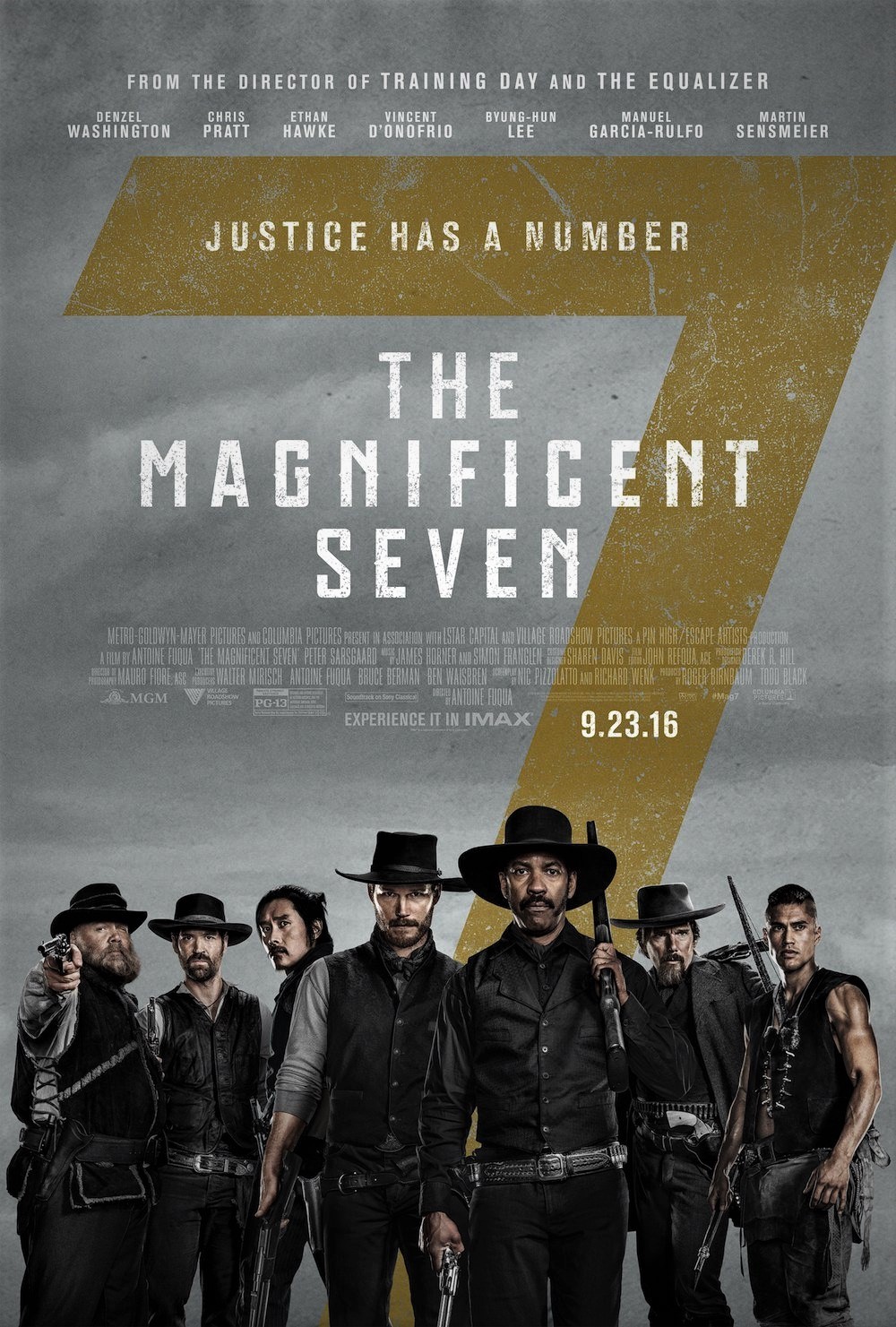
The Magnificent Seven (2016) – Film Review

After taking on a number of successful action flicks in recent years, such as ‘Training Day,’ ‘Olympus Has Fallen’ and ‘The Equalizer,’ director Antonie Fuqua brings this remake of the original 1960s ensemble western to the silver screen. Combining a superb cast with some explosive moments of action and plenty of highly detailed costumes and sets, ‘The Magnificent Seven’ manages to remain an entertaining remake of the beloved western classic despite its few faults.

Plot Summary: In 1897, seven gunmen from a variety of different backgrounds are brought together by a vengeful young widow in an attempt to protect her hometown of ‘Rose Creek’ from the private army of the destructive industrialist, ‘Bartholomew Bogue,’ and his men…

Other than a few changes to the names of its characters, the remake of ‘The Magnificent Seven’ follows a very similar storyline to the original film, which was essentially just a retelling of the iconic Japanese drama; ‘Seven Samurai,’ only now set in the Wild West. As, the remake avoids making any definite changes to the narrative in favour of simply just updating the story for a more modern audience, meaning the film has much faster pacing and more of a focus on creating thrilling action set pieces than the original, which is both a good and a bad thing, as whilst the film does still pay homage to many classic westerns, the film occasionally also adopts many of the issues that plague plenty of modern blockbusters today, the most notable of which being the film’s overabundance of cheesy and predictable dialogue.

Denzel Washington, Chris Pratt, Ethan Hawk, Vincent D’Onofrio, Byung-hun Lee, Manuel Garcia-Rulfo and Martin Sensmeier all give splendid performances as the line-up of ‘The Seven,’ each portraying a different personality and skill set between them. But, of course, similar to many other films lead by a group of characters rather than just a single protagonist. ‘The Magnificent Seven’ suffers from a lack of equal development for its cast as a result of Denzel Washington and Chris Pratt as ‘Chisolm’ and ‘Josh Faraday’ hogging most of the screen-time, with the film’s antagonist; ‘Bartholomew Bogue,’ portrayed by Peter Sarsgaard, also having a deficient intimidating presence when on-screen due to this.

Whilst the film’s cinematography never falls into the category of being exceedingly bland, the cinematography by Mauro Fiore is only above-average, as although the film does feature an array of attractive close-ups and wide shots alongside its many suitably barren locations, the film also has quite a heavy overreliance on shot-reverse-shot for the many conversations between characters. However, a smaller detail that I felt added to the film’s visual appeal (and realism) is definitely its use of nature surrounding/within its various locations, as the film’s main setting of ‘Rose Creek’ is littered with trees and tall grass rather than just continuous desert similar to many other westerns, with some areas of Baton Rouge, Louisiana, where filming took place, even having to be relandscaped to further resemble the Old West.

Being the last film composer James Horner contributed towards before he sadly passed away in an accident in 2015, the original score by him and Simon Franglen does suitably feel like the score of a traditional western for the majority of the film’s runtime. Although there are still a few tracks that feel fairly generic, the soundtrack redeems itself through the great tracks; ‘Rose Creek Oppression’ and ‘Seven Riders,’ in addition to also bringing back the original film’s theme composed by the late Elmer Bernstein for its end credits.

As the remake of ‘The Magnificent Seven’ focuses more on action over anything else (with the entire final act of the film essentially being one long action sequence) a lot of pressure lies on the film to live-up to this intent, which thankfully, it does, as all of the stirring moments throughout the story make fantastic use of their impressive stunt work and subtle CG effects. That being said, nearly all of the action scenes are also distinctly missing an element of both grittiness and violence, which can be fairly distracting. As despite many of ‘Bartholomew Bogue’s guns-for-hire being shot, stabbed and blown-up, blood is barely ever seen, and whilst I understand classic westerns also didn’t really revel in violence, I’ve always seen that as more of a restriction of the time-period rather than just a skimp to lower the film’s age-rating.

In summary, while ‘The Magnificent Seven’ may not fully deliver on the ‘Magnificent’ part of its title, the film is still is an enjoyable throwback to the westerns of old with plenty of exhilarating action set pieces to boot, as even when taking into account all of the remake’s issues and general lack of memorability, I’d still say the film is on the better side of reimagined classics in recent memory and is worth a watch if you’re a true western enthusiast or perhaps just desire to see a remake that doesn’t attempt to simply recreate the original shot-for-shot. Final Rating: 7/10.

magnificent_seven_ver5_xlg

Film Quiz – Test Your Knowledge of Cinema

Do you believe yourself to be a certified cinephile? Test your knowledge of cinema with eighty multiple-choice questions from a number of iconic films, all with varying degrees of difficulty. Available now via this link to Kahoot!

Be sure to challenge your family and friends for the best experience possible.

Link: https://create.kahoot.it/share/joe-baker-reviews-film-quiz/b59322c6-64a1-4bbc-ac79-db83cf6ab3b0

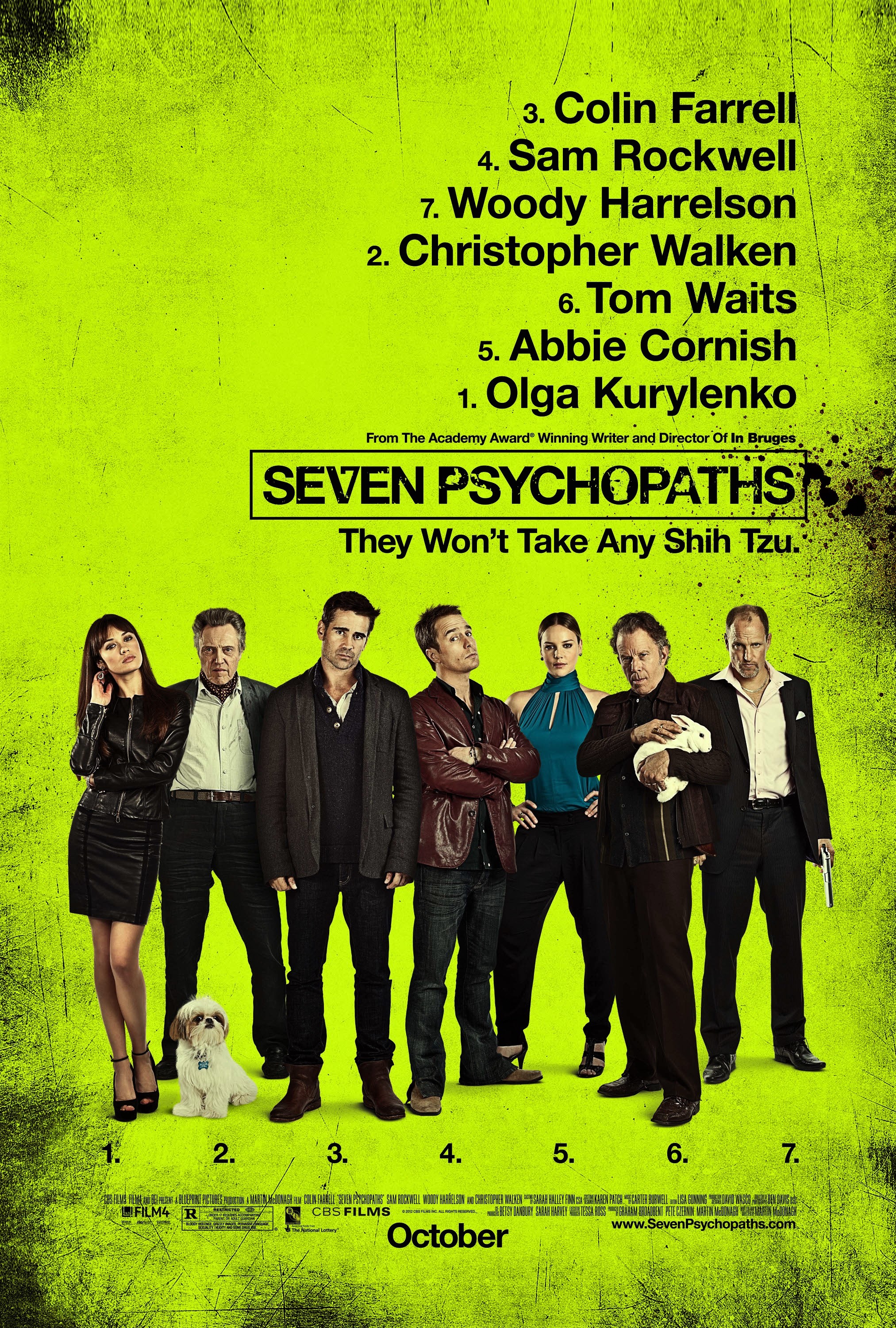
Seven Psychopaths (2012) – Film Review

This slick self-aware crime-comedy from writer and director Martin McDonagh (In Bruges, Three Billboards Outside Ebbing, Missouri) may not appeal to everyone as a result of its over-the-top violence and occasionally absurdist tone. Yet, for me, due to its great cast, fantastic writing, and endless list of quotable lines, ‘Seven Psychopaths’ is certainly worth its runtime, and then some, as the film always remains just as entertaining as it is unconventional, even if ‘Seven Psychopaths’ isn’t quite as pristinely crafted as the rest of McDonagh’s work.

Plot Summary: Struggling alcoholic screenwriter, Marty, in the process of writing a screenplay based around seven separate psychopaths, soon becomes inadvertently entangled in the Los Angeles criminal underworld after his oddball friends accidently kidnap a psychopathic gangster’s beloved Shih Tzu…

Filled with plenty of sly, witty, and memorable dialogue throughout, ‘Seven Psychopaths’ constantly uses its clever writing to create an array of stories within the main narrative, as the screenplay writing protagonist; ‘Marty,’ reels off many of his early ideas for different psychos to get his friend’s opinions on them before implementing them into his latest screenplay. The film also uses this structure to engage in plenty of meta humour, as the characters continuously list off various tropes and clichés of similar action and crime flicks, which the film itself actively avoids, resulting in a well-written film. In fact, the screenplay for ‘Seven Psychopaths’ was actually featured in a 2006 blacklist of the ‘most liked’ unmade screenplays of that year, before it was greenlit many years later.

One of the best elements of the film is undeniably its cast, as Colin Farrell, Sam Rockwell and Christopher Walken as ‘Marty,’ ‘Billy,’ and ‘Hans,’ never fail to be hilarious together, as all three of them share some excellent chemistry, portraying their characters as if they’ve been friends for many years before the current story begins. Woody Harrelson and musician Tom Waits both also make an appearance within the film as the mostly intimidating criminal; ‘Charlie,’ and ‘Zachariah,’ one of the psychopaths that inspires ‘Marty’s screenplay, who is constantly creepy and bizarre whenever he is on-screen. Yet, despite the film’s admirable performances and writing, the female characters within the film are noticeably quite poor, as while the main cast do point this out through some sarcastic dialogue, the few female characters that do appear receive barley any development and feel mostly pointless in the long run.

Although ‘Seven Psychopaths’ cinematography is nowhere near as impressive as the camerawork throughout ‘Three Billboards Outside Ebbing, Missouri,’ for example. The cinematography by Ben Davis is serviceable, with the occasional pleasing shot in between many of the more average ones. However, this is where another one of my criticisms comes into play, this being the story’s setting, as whilst I understand the film’s protagonist is a screenplay writer so it links to the idea of building a career in Hollywood. McDonagh’s other films both manage to make exceptional use of their beautiful and distinct locations, which makes the city of Los Angeles, where ‘Seven Psychopaths’ takes place, feel fairly dull in comparison.

The original score by Carter Burwell isn’t overly memorable yet does suitably fit the film, adding tension to scenes where necessary in addition to feeling quite subtle when in contrast to the film’s outrageous self-aware humour, as according to composer Carter Burwell, his intent with the soundtrack revolved more around wanting to create an emphatic ambience for the film rather than just being your standard, generic action score, this is most obvious in the tracks; ‘Zachariah’ and ‘Billy’s Diary,’ my personal favourite tracks.

Personally, although the story works fine without, I would have desired a little more style when it comes to the film’s visual presentation, in particular, in the editing and title graphics, as with the exception of the typewriter text that is utilised to inform the audience of each psychopath from one through to seven, the filmmaking actually displays barley any style throughout. That being said, ‘Seven Psychopaths’ does still feature a number of dark comedic moments similar to the rest of McDonagh’s filmography, displaying a couple of dramatic scenes alongside plenty of extremely graphic deaths.

In summary, ‘Seven Psychopaths’ definitely isn’t the best director Martin McDonagh has to offer, with both ‘In Bruges’ and ‘Three Billboards Outside Ebbing, Missouri’ being far superior films, in my opinion. ‘Seven Psychopaths’ still delivers on a creative plot and some tremendous writing and performances, even in spite of its lack of style and weak female characters. If you’re a fan of this director’s other films, I’d say ‘Seven Psychopaths’ is worth a watch, just don’t have your expectations too high when going in for the first time. Final Rating: 7/10.

seven_psychopaths_xxlg

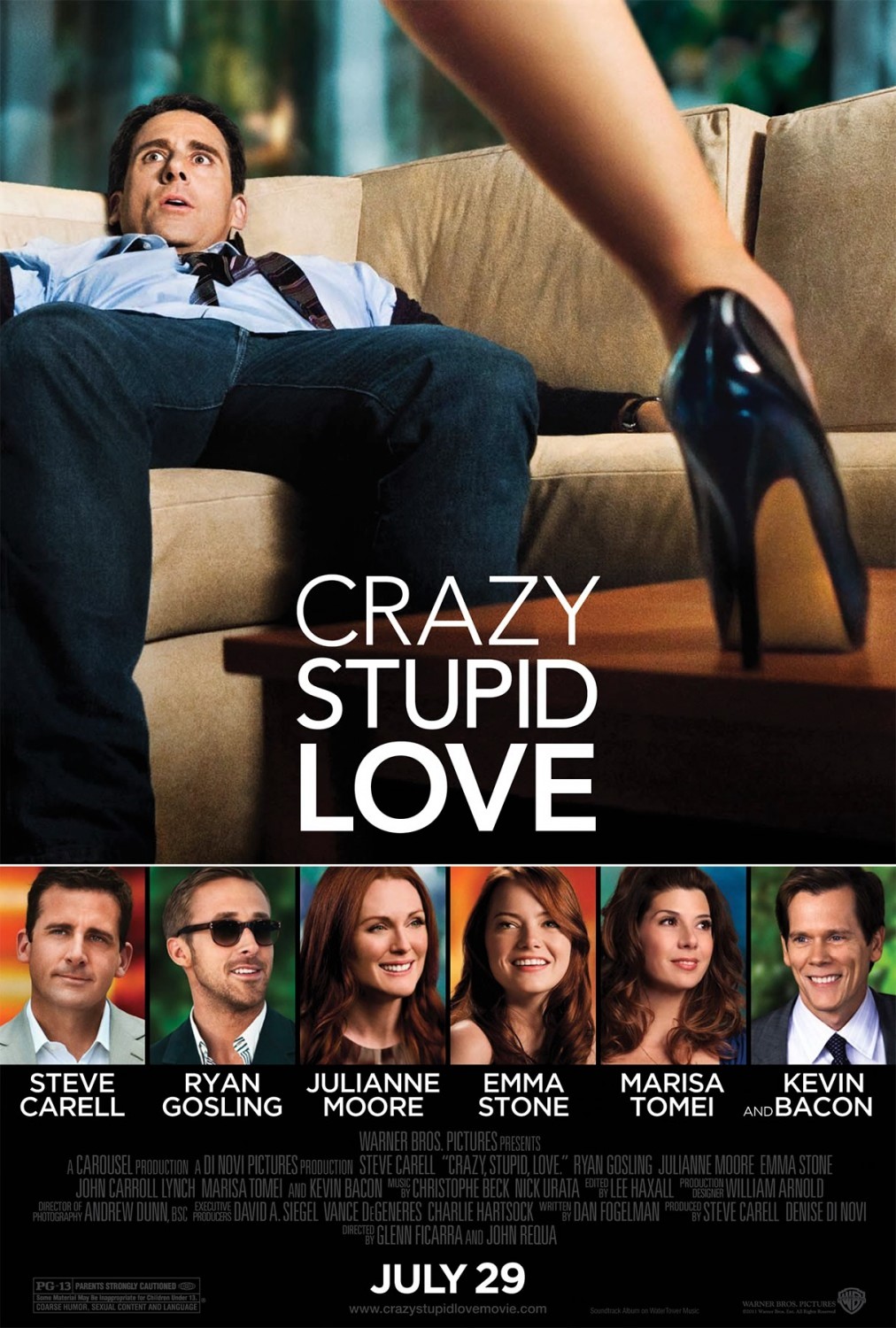
Crazy, Stupid, Love (2011) – Film Review

An unexpectedly memorable romantic-comedy from 2011, ‘Crazy, Stupid, Love’ tells an engaging and touching story of a selection of good-hearted people finding love in their lives and experiencing the many hardships that come along with it, and although romance has always been one of the lesser-interesting genres of film for me personally, ‘Crazy, Stupid, Love’ almost acknowledges what kind of film it is. Always taking a simple yet effective approach to its filmmaking and placing its well-written characters and narrative before anything else.

Plot Summary: When middle-aged husband; ‘Cal Weaver,’ discovers that his wife has had an affair with one of her co-workers, his perfect life quickly begins to unravel. But, after encountering the handsome womaniser; ‘Jacob,’ in a bar, ‘Cal’ is soon taken on as his wingman and protégé as he opens ‘Cal’s eyes to the many opportunities that lie before him…

Directed by Glenn Ficarra and John Requa (I Love You Phillip Morris, Focus, Whiskey Tango Foxtrot) and written by Dan Fogelman, ‘Crazy, Stupid, Love’ actually has a fairly strong screenplay for a rom-com, and although this shouldn’t be too surprising considering Fogelman has written a number of superb animated Disney/Pixar flicks in the past, such as ‘Bolt,’ ‘Cars’ and ‘Tangled,’ before later moving on to more adult-focused comedies with ‘Last Vegas’ and ‘The Guilt Trip.’ ‘Crazy, Stupid, Love’ only features a handful of characters, with everyone of them receiving a decent amount of characterisation and becoming quite likeable over the course of the runtime. The film even manages to feature a couple of unexpected reveals later on within the story, which only further elevates the film’s screenplay.

The all-star cast of Ryan Gosling, Julianne Moore, Emma Stone and Marisa Tomei are all brilliant in their respective roles, but of course, with three Oscar-winners as well as two Oscar-nominees among them, this isn’t much of a shock. It’s the film’s protagonist; ‘Cal,’ portrayed by Steve Carell that is the obvious stand out though, as ‘Crazy, Stupid, Love’ was actually one of the first films that Carell put aside his usual goofball schtick in exchange for a more grounded character, as he portrays a miserable divorcee now with little direction in his life, before his eventual transformation into an ego-driven womaniser similar to ‘Jason’ himself. However, on the opposite side of this, Kevin Bacon as ‘David Lindhagen’ (a.k.a. The romantic rival) is the obvious weak link of the cast, as aside from only two shorts scenes, his character and the threat that he poses to ‘Cal’s ruptured marriage is barely utilised, making his inclusion in the story feel quite pointless.

The cinematography by Andrew Dunn never displays anything that will leave the viewer in awe, yet does still feel like a slight step-up from the usual bland camera work of many other romantic-comedies. The cinematography truly reaches its peak in the scene: ‘Great Dress,’ however, in which, ‘Cal’ (now with his newly found manhood) flirts with various different women on a number of different nights, all the while the camera gently glides through the bar displaying the passage of time through ‘Cal’s large wardrobe of stylish outfits.

Christophe Beck and Nick Urata take on the original score for the film, which, for the most part, does suitably back up the film’s story and displays a large amount of range in regards to instruments that are used, despite the score overall being far from astonishing. Yet, bizarrely, the film’s soundtrack was never officially released by production company Warner Bros. Pictures, resulting in many fans of the film having to create their own playlists on Spotify/Apple Music, etc., to bring together the film’s many recognisable songs once again.

Although ‘Crazy, Stupid, Love’ does primarily focus on its aspects of romance and comedy, the film also handles its drama fairly well. Never interrupting any of its more serious moments with scenes of over-the-top humour, most of which usually coming from the film’s main subplot which focuses on ‘Cal’s son; ‘Robbie,’ as he lusts after his older babysitter. Occasionally, the film also indulges in a variety of more self-aware jokes, as the film references some of the many overdone clichés that infest films, like ‘Notting Hill’ and ‘Love Actually,’ through its dialogue, e.g. an immediate rainstorm after a heartbreaking argument/break up.

In summary, ‘Crazy, Stupid, Love’ is more than successful in its attempt to craft an emotional and amusing story even in spite of the little innovation the film displays when it comes to its cinematography or original score, as the film’s upbeat approach to its tight plot leaves it an enjoyable flick that fully embraces what genre it’s only a small piece of, serving as somewhat of a homage alongside remaining quite a leisurely watch itself. So, whether you usually drift towards this genre or not, I feel most viewers would struggle to dislike ‘Crazy, Stupid, Love’, as simply put, the film is just a delightful experience to sit through. Final Rating: 8/10.

crazy_stupid_love_xlg

The Dark Crystal (1982) – Film Review

Despite the success of the recent prequel series; ‘The Dark Crystal: Age of Resistance,’ on Netflix, most audiences still seem relatively unaware of the original ‘Dark Crystal’s existence, which, unfortunately, received mostly lukewarm reviews and massively underperformed at the box-office upon its initial release. Yet, regardless of its age, ‘The Dark Crystal’ is still, in my opinion, an extraordinary family adventure. Creating an intriguing and developed fantasy world brimming with plenty of memorable characters, spectacular locations, and terrifying creatures, all flawlessly brought to life by the film’s enormous array of brilliant practical effects and detailed puppets.

Plot Summary: Centuries ago on the world of ‘Thra,’ the mysterious ‘Dark Crystal’ was cracked and brought forth two races. One, the villainous bird-like creatures known as the ‘Skeksis,’ who now rule over the planet with an iron-fist, and the other, a peaceful of wizards race known as the ‘Mystics.’ But, after a young ‘Gelfling’s ‘Mystic’ master passes on, ‘Jen’ is sent on a quest to locate the missing shard of ‘The Dark Crystal’ and save his homeworld…

Directed by legendary puppeteers Jim Henson and Frank Oz, most known for their creation of the beloved ‘Muppets’ franchise. ‘The Dark Crystal’ is known by many for being rather frightening for younger viewers, as the film always explores its fantasy world without ever shying away from any of its darker elements. Resulting in many who experienced the film at a young age only recalling it due to being ‘traumatised’ by the film’s menacing antagonists, the ‘Skeksis.’ However, despite ‘The Dark Crystal’ giving this ghastly depth to the world it’s narrative takes place within, the film still suffers from the occasional story cliché, as while I’m sure these ideas were less-familiar in the early 1980s, the concept of ‘Jen’ being the last of his kind and having to undertake an epic journey does feel fairly overdone by today’s standards.

Stephen Garlick and Lisa Maxwell lend their voices well to the two protagonists; ‘Jen’ and ‘Kira,’ alongside the voice of Billie Whitelaw and the late Jim Henson and Frank Oz themselves as puppeteers, and while Jim Henson and Frank Oz both do a fantastic job as usual when it comes to their work with puppeteered characters. It’s the late Barry Dennen as the most devious of the ‘Skeksis,’ ‘The Chamberlain,’ who is truly superb, as ‘The Chamberlain’ soon becomes a very memorable antagonist, heavily in part because of his intentionally obnoxious high-pitched voice and now-iconic whimper.

Whilst the cinematography by the late Oswald Morris does serve the film’s story effectively, many shots throughout ‘The Dark Crystal’ are a little restricted due to the focus primarily being placed on the puppets themselves (especially when there is a large number of characters on-screen). That being said, the cinematography does still manage to provide plenty of beautiful wide shots to establish the story’s various locations, the majority of which are elevated through some incredibly impressive matte paintings and miniature sculptures.

Although I do prefer the original score by Daniel Pemberton for the Netflix prequel series, the score for the original film by Trevor Jones is still terrific, feeling like a mixture between a classic fantasy score along with some sinister undertones to help build tension. From the film’s signature track; ‘The Dark Crystal Overture,’ through the track that plays over one of the film’s final moments; ‘The Great Conjunction,’ the film’s original score is still an enjoyable piece to hear, even if it seems most audiences prefer the soundtrack of Jim Henson’s other ’80s fantasy flick; ‘Labyrinth.’

Of course, the main draw of ‘The Dark Crystal’ is (and will always be) the puppets themselves, as while the idea of not a single human appearing within a live-action film may sound daunting to some, the film’s huge variety of practical effects, from the different creatures that prowl the forests and swamps to each one of the detailed and intricate sets for ‘The Castle of the Crystal,’ every single creative aspect of the film in regards to its designs constantly feels as if great talent and effort has been put into each of them, with much of the film’s visuals actually being inspired by the illustrations of Brian Froud, who would eventually join the production as a conceptual designer.

In summary, ‘The Dark Crystal’ was truly a film ahead of its time, as despite the new prequel series helping the unique fantasy series reach a wider audience, I’m not too surprised this ambitious film has been largely forgotten in modern pop culture, as the film’s fascinating and fleshed-out world alongside its entertaining story and huge number of amazing practical effects sadly weren’t enough to save it from its eventual neglected fate. Still, even if this fantastical family adventure didn’t receive the praise it deserved when it was released in 1982, I feel it certainly can now from modern audiences, if just for its painstaking puppeteering work and great character designs alone. Final Rating: 8/10.

dark_crystal_xlg

Hidden Figures (2016) – Film Review

Based on the book of the same name by Margot Lee Shetterly, the film adaptation of ‘Hidden Figures’ serves as a compelling and entertaining delve into the past as it tells the true story of the mostly unknown women who helped push forward the space program. Through its brilliant performances from Taraji P. Henson and Kevin Costner (among the rest of the cast) alongside its magnificent writing, the film manages to keep its audience constantly invested in spite of its occasionally bland filmmaking.

Plot Summary: Katherine G. Johnson, Dorothy Vaughan, and Mary Jackson, three brilliant African-American women working at NASA during the 1960s cross all race and gender barriers within their workplace to follow their dreams and inspire generations, serving as the brain force to help send astronaut; John Glenn, into Earth’s orbit…

Despite focusing on three separate stories of three independent women, ‘Hidden Figures’ never feels unfocused, as each of the three protagonists receive a decent amount of development as well as at least one or more memorable scenes between them, as the film displays its main theme of female and Black empowerment proudly, without ever becoming overly cliché as it avoids many of the over-done tropes that other films built around the racist barriers of the ’60s can begin to rely on. For example, the film’s opening scene in which the trio of women are confronted by a white police officer, as this moment could’ve easily felt like overly familiar ground should it have been handled poorly, yet aside from some inappropriate stereotyping at first, the scene actually results in the three of them heading to NASA without any horrific racial ridiculing.

The three protagonists, portrayed by Taraji P. Henson, Octavia Spencer and Janelle Monáe, are all excellent throughout the film, as each of them remains determined and outgoing, despite the world’s many attempts to drag them down, always fighting against the unfair judgement of them simply for the way they look, repeatedly with a lack of preachy dialogue. Alongside them, the supporting cast of Kevin Costner, Jim Parsons, Kirsten Dunst, and Mahershala Ali are all great even if some of their characters are a little underutilised within the narrative. One of the reasons the performances within the film are as accurate as they are is, due to some of the cast actually being given the opportunity to meet with the story’s icons before production began. Most notably, Taraji P. Henson met with the real Katherine Johnson (who was ninety-eight years old at the time) after she signed onto the project.

The cinematography by Mandy Walker is serviceable overall, as while the film features a good number of attractive shots, they are dragged down by its many mundane ones. However, ‘Hidden Figures’ does actually make effective yet subtle use of colour throughout its runtime, as the film’s colour palette constantly reflects the mood within each scene, with many of the sets at NASA where calculations and preparations take place utilising mostly pure whites, greys, and silvers, which creates a sharp contrast to the warm/inviting colours of the ladies’ homes.

Hans Zimmer and Benjamin Wallfisch handle the original score for the film, which is an incredibly mixed bag. As, whilst the score does feature some decent tracks. such as ‘Katherine,’ ‘Mission Control,’ and ‘Hidden Figures,’ the soundtrack also features a number of pop songs by Pharrell Williams, which don’t fit the tone of the film or the story’s time-period. Usually resulting in it feeling very forced and sometimes even taking away from the film’s dramatic moments. This is most likely a result of Pharrell Williams overseeing all aspects of the film’s soundtrack, which I personally feel is a huge misstep as his style of music truly isn’t at all suited for a drama such as this.

In addition to portraying the female heroes of the real-life story as accurately as possible, the film also makes substantial use of its time period, as to keep the audience up-to-date with what knowledge the American public had at the time, ‘Hidden Figures’ occasionally cuts away to archive footage of rocket testings or then-president John F. Kennedy making public announcements, both of which are surprisingly effective despite not being used continuously. Personally, however, I still would’ve preferred a bigger presence of songs from the 1960s rather than the constant barrage of pop songs the film contains, as mentioned previously.

In summary, I feel ‘Hidden Figures’ is an important film many should experience, as whilst there has been an array of films based around the misogynistic/racist nature of the 1950s/1960s, ‘Hidden Figures’ is for sure a stand out through its engaging and thought-provoking narrative. Although films, like ‘Do the Right Thing’ and ‘BlacKkKlansman’ may be slightly more powerful with their message(s), I feel ‘Hidden Figures’ is fairly underrated when it comes to historical dramas, as the film is simultaneously both informing and touching. Final Rating: 7/10.

hidden_figures_ver2_xxlg

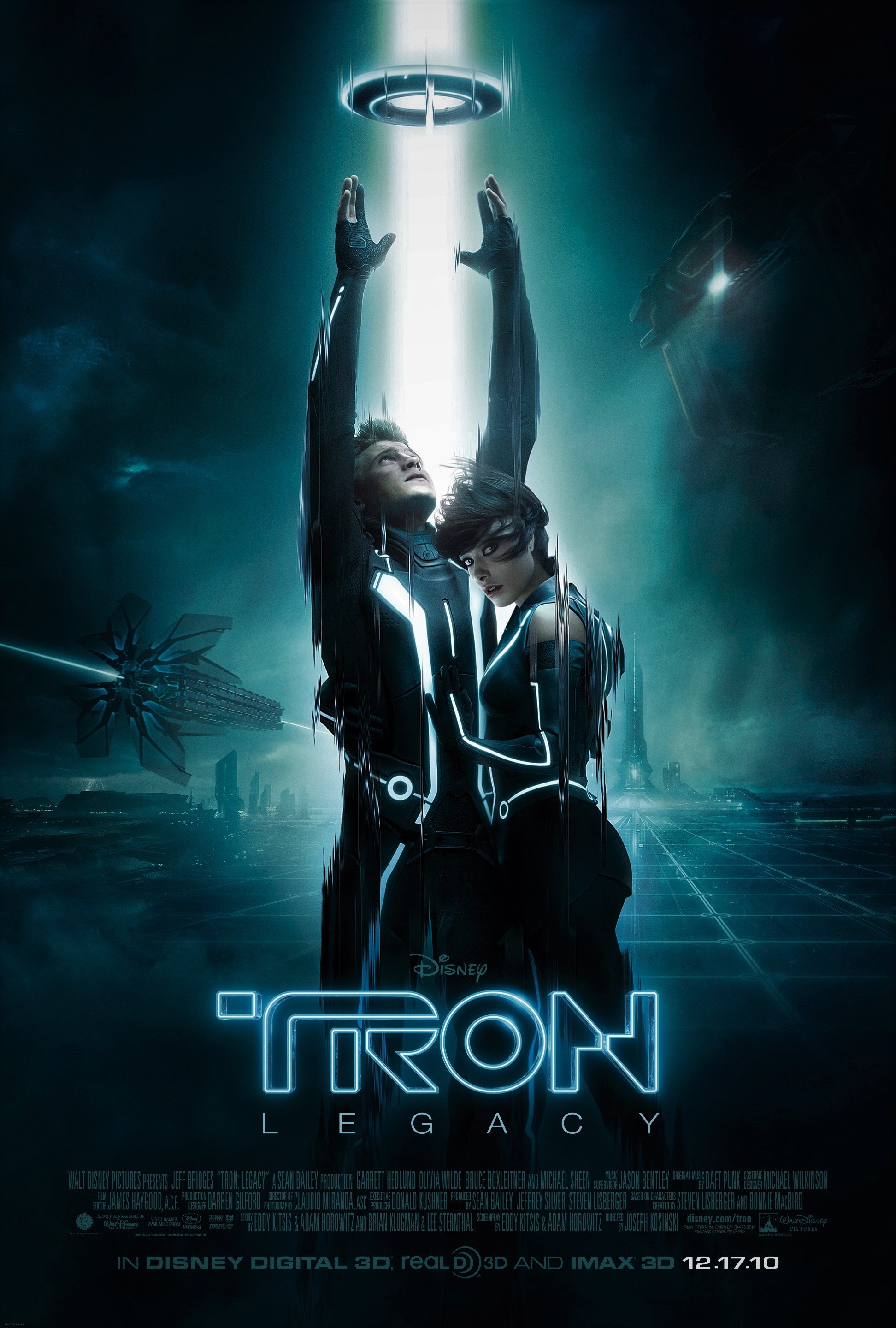
Tron: Legacy (2010) – Film Review

Although Disney has had more than enough success when it comes to its animated filmography, the iconic production company has seemingly always struggled with its live-action endeavours, as aside from the ‘Pirates of the Caribbean’ franchise, many of Disney’s attempts to kick off a live-action film series, such as ‘John Carter,’ ‘The Sorcerer’s Apprentice’ and ‘Tomorrowland,’ have all been relative flops (with the exception of their remakes of animated classics). ‘Tron: Legacy,’ the action-packed sequel to the groundbreaking cult sci-fi hit; ‘Tron,’ from 1982, is a slight improvement in this area, yet still results in a film more focused on style-over-substance.

Plot Summary: After the tech-savvy and rebellious; ‘Sam Flynn,’ begins looking into his father’s disappearance, he soon finds himself pulled into the digital world of ‘The Grid,’ where he discovers his father has been trapped for over twenty years. All the while, his father’s malevolent program; ‘CLU,’ who rules ‘The Grid,’ plans to prevent the pair’s escape and take the real world for himself…

Being set in a virtual world, nearly every scene within ‘Tron: Legacy’ takes place in fully CG locations, and although most of the film’s CG effects do hold up well and are visually appealing. The digital world of ‘The Grid’ does begin to feel quite unvaried after a point, as whilst it may look unique at first glance, the illuminated buildings and vehicles throughout the city of ‘Tron’ feel fairly repetitive, despite the film’s variety of different locations. In fact, it’s the film’s CG visuals that actually made ‘Tron: Legacy’ the most expensive film ever made by a first-time director at the time of its release, with the costume budget alone costing over £10 million.

Garrett Hudlund portrays the film’s protagonist; ‘Sam,’ alongside the supporting cast of Jeff Bridges, Olivia Wilde, and even Michael Sheen in a small role. They all give decent performances despite their dull characters, as ‘Tron: Legacy’s story and characters follow many of the same story beats as any other sci-fi adventure. However, easily the worst element of the film when it comes to its characters is the film’s antagonist. Known only as ‘CLU,’ a corrupt program created by Jeff Bridges’ character; ‘Kevin Flynn,’ as a digital copy of himself, this villain not only suffers from a barely developed motivation, but due to him being a program which doesn’t age, the film utilises CGI to make Jeff Bridges appear a similar age to that of his in the original film, which is one of the few CG effects that hasn’t aged well, appearing almost laughably bad at points.

Claudio Miranda handles the cinematography throughout ‘Tron: Legacy,’ and although the film definitely puts far more of an emphasis on its CG effects than its cinematography, there are still a fair amount of interesting shots including plenty of stunning wide shots to display the true scale of the digital world. The cinematography also makes great use of the film’s few sleek futuristic sets despite their very limited screen-time, most notably, ‘Flynn’s Safehouse,’ located on the edge of ‘The Grid.’

The original score for the film is actually composed by the techno band, ‘Daft Punk,’ whose type of music does suitably fit the sci-fi genre, and whilst some tracks do feel a little too similar to an actual techno album, in my opinion. For the most part, the soundtrack does back up the film’s narrative and adventurous tone very effectively. ‘Daft Punk’ themselves even make a short cameo within the film as a pair of DJs in the ‘End of Line’ nightclub, wearing their iconic helmets as they play one of the film’s most memorable tracks, which share the same title as the club itself.

Another great aspect of ‘Tron: Legacy’ is certainly its action set pieces, as although many of the action scenes throughout the film aren’t anything incredibly inventive. The original ‘Tron’ did introduce the creative concepts of ‘Identity/Light Disks’ and ‘Light Cycles,’ both of which return in the sequel and result in plenty of thrilling and fast-paced action sequences as ‘Sam’ is thrown into an array of gladiator-esque challenges near the beginning of the film. The various costumes worn by the characters who live within ‘The Grid’ are also worth a quick mention, as most of the characters wear a ‘Light Suit,’ which usually features fluorescent-like glowing strips that illuminate each suit in a range of colours, which never fails to be visually striking.

In summary, ‘Tron: Legacy’ is by no means a terrible film, and when it comes to Disney’s other ventures into live-action, ‘Tron: Legacy’ could even be seen as a success by some. But, with its fairly paint-by-numbers story, bland characters and an onslaught of over-done clichés, this sci-fi sequel ends up becoming more of a display for its impressive CG visuals and electronic original score rather than an exhilarating sci-fi odyssey. If you’re a fan of the original ‘Tron’ I feel you will surely enjoy this follow-up. If not, maybe look elsewhere for your fill of original science fiction. Final Rating: 6/10.

tron_legacy_ver11_xxlg