Unicorn Store (2019) – Film Review

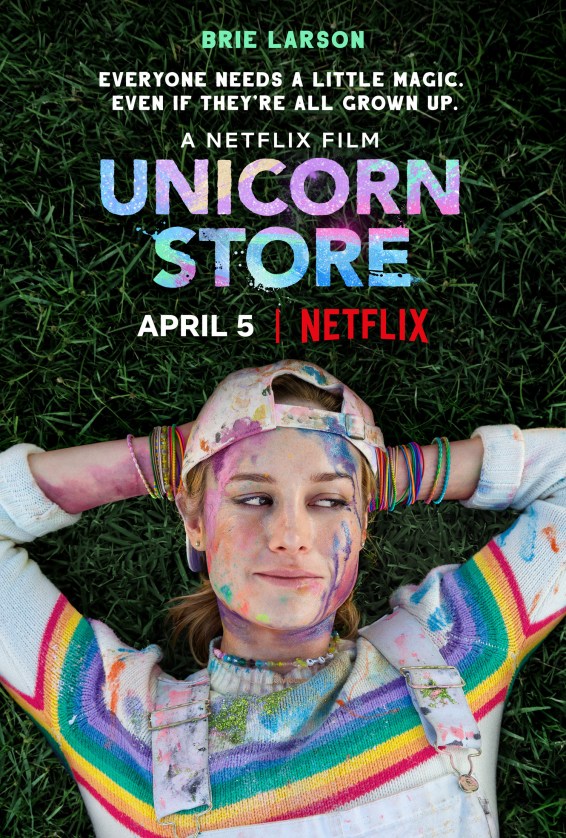
Both starring and directed by Oscar-winner Brie Larson, ‘Unicorn Store’ is a light-hearted comedy-drama which attempts to delve into those childhood dreams many people have, but seems to fall very short in more aspects than one. As, aside from a pretty great original score by Alex Greenwald, the film is mostly very bland and forgettable, usually flopping most of the emotional moments and attempts at humour within its fantastical story.

Plot Summary: When ‘Kit’ is forced to move back in with her parents after being kicked out of art school, she takes on a boring office job in an attempt to finally grow up. But, when a mysterious stranger sends her an invitation, she is welcomed into a magical store with the promise of owning her own pet unicorn, her greatest desire as a child…

Personally, I do feel this is one of those films where the lack of experience from the director is a big part in what makes it fail, as although the writing throughout the film is fairly decent. The film’s visuals as well as the weak performances from the cast, leave the film feeling almost as if it’s presentation doesn’t match with the story itself, and whilst I’m definitely not this film’s main target audience, I don’t imagine even young girls could get much out of this less-than-imaginative experience.

Although Brie Larson has given a variety of excellent performances throughout her career, with ‘Room’ and ‘Scott Pilgrim vs. The World’ being the first two that come to mind. Her performance is extremely mixed throughout ‘Unicorn Store,’ as in some scenes she fairly decent, whilst in others, she is quite bland. This could also be due to her character, however, as ‘Kit’ is very irritating throughout the majority of the film, portraying the character as childish and loud in all the wrong ways. The supporting cast of Mamoudou Athie, Samuel L. Jackson, Bradley Whitford and Joan Cusack are serviceable, yet do have their weak moments similar to Larson.

Aside from the bright colour palette which does somewhat help to improve the film’s visuals despite not being as overly colourful as I initially expected. The cinematography by Brett Pawlak is mostly very dull, as the film is overflowing with a variety of boring shots, all displayed through soft hand-held camera techniques, which I actually found quite distracting throughout. This is also the case when it comes to the lighting, as aside from one visually pleasing scene with the unicorn itself nearing the end of the runtime, every scene is usually very white and pale, which is essentially the complete opposite of the story’s underlying theme(s).

Alex Greenwald handles the original score for the film, as already mentioned, and although not an incredible soundtrack by any means, the score is probably the best element of the film for me, as the original score succeeds where the film’s visuals fail, as the soundtrack embraces the more magical childlike tone of the film, utilising what almost sounds like wind chimes and harps to fit effectively alongside the film’s narrative.

Despite the story not quite reaching the heights it could in terms of humour and emotion, I do really like many of the film’s ideas, as the film’s themes of letting go of your childhood and growing up are interesting, and have been explored well before in a variety of Pixar and DreamWorks animated classics. However, ‘Unicorn Store’ seems to not place much emphasis on these ideas aside from a few lines of dialogue from ‘Kit’ herself. Initially, ‘Unicorn Store’ was supposed to be directed by Miguel Arteta, best known for his romantic drama; ‘The Good Girl,’ from 2002, and although I don’t think this director would’ve done an exceptional job with the film. I do feel he could’ve explored these themes better, and possibly even made the film more engaging when it comes to its characters, as this was always one of the stronger aspects of his previous works.

In summary, ‘Unicorn Store’ was pretty much what I expected it to be, whilst I could be a little biased due to my distaste of Brie Larson (mostly as a person rather than as an actress). The film simply isn’t that entertaining throughout, with its bland cinematography and lighting, in addition to some of its irritating characters and mediocre story. ‘Unicorn Store’ just isn’t worth it’s time when there’s plenty of other fantastic films currently available to watch on Netflix. Final Rating: low 4/10.
unicorn_store_xxlg

Hacksaw Ridge (2016) – Film Review

Serving as both an intense war film as well as the real-life biography of Desmond T. Doss, ‘Hacksaw Ridge’ is a respected Oscar-nominated film which deserves much of the praise it receives, as through the stand out performance by Andrew Garfield alongside the attractive cinematography by Simon Duggan and array of tense moments, ‘Hacksaw Ridge’ soon becomes a very emotional and memorable experience for any viewer, whether overly familiar with the war genre or not.

Plot Summary: After volunteering to enlist in the U.S. Army during World War II, American Army Medic Desmond T. Doss, who served during the Battle of Okinawa, refused to kill anyone, despite push-back from his superiors. Soon becoming the first man in American history to receive a Medal of Honor without firing a single shot on the battlefield…

Directed by Mel Gibson (Braveheart, The Passion of the Christ, Apocalypto), ‘Hacksaw Ridge’ is most effective when displaying war at its most brutal, never turning away from displaying the graphic violence and horrific destruction World War II inflicted on many people’s lives, and while the film can sometimes go a little too far when it comes to its gore (feeling a little tasteless and over-the-top at points). I did find ‘Hacksaw Ridge’ more engaging than many similar films within the war genre, and the grim atmosphere the film presents is sure to keep any audience member constantly on the edge-of-their-seat.

The main cast of Andrew Garfield, Teresa Palmer, Hugo Weaving, Rachel Griffiths and Luke Bracey are all phenomenal, with Garfield, in particular, delivering a fantastic performance as Desmond T. Doss. Never failing to portray him as a likeable and brave man thrown into the dark world of war, despite a huge amount of scenes being left on the cutting-room floor as a result of time, which I feel is a shame, as the film isn’t overly long and could’ve benefitted from a few more moments of characterisation. However, ‘Hacksaw Ridge’ also features some extremely peculiar choices when it comes to the supporting cast, as Vince Vaughn and Sam Worthington both portray strict war camp generals early on in the story, which in spite of them both giving fairly decent performances within their roles, I couldn’t help but feel their characters could’ve been better cast.

Although the cinematography by Simon Duggan isn’t anything overly incredible throughout the runtime, the film does have a number of visually pleasing shots, in addition to the film utilising an array of hand-held shots to further the film’s presentation of the uncontrollable chaos of war. Unfortunately, despite not being used heavily throughout the film, the shots involving CGI that we do see could definitely do with some improvement, as the CG effects for the film’s enormous battleships and fiery explosions do look a little unusual when compared to the film’s time-period-accurate battlefront.

The original score by Rupert Gregson-Williams is one of the stronger elements of the film, however, as the soundtrack helps to build tension throughout the story, in addition to being surprisingly memorable. Although, in my opinion, I always felt the score never quite managed to build tension as well as the score for ‘Dunkirk,’ or had the huge emotional impact as the original score from one of the definitive war films; ‘Saving Private Ryan,’ which stopped the soundtrack from reaching the heights it truly could. That being said, the late James Horner was initially attached to the film after being the composer for much of Gibson’s other work. But, after Horner’s untimely death, another composer was brought on before Rupert Gregson-Williams was eventually finalised on, so the film’s soundtrack has been through a very rough-road of development.

One area of the film I feel is fairly underappreciated is the make-up and costume design, as every horrific injury seen throughout the film always appears realistic and looks extremely painful, whilst every costume also feels very accurate to the film’s time-period, almost making the film appear as if the production actually took place during World War II itself. These elements also help make-up for some of the weak writing early on in the film, as whilst the film’s writing isn’t awful by any means, a large amount of the dialogue could be seen as a little cheesy/cliché when it comes to developing the film’s characters.

In summary, ‘Hacksaw Ridge’ is one of those rare films that is both entertaining and distressing, whilst it isn’t quite perfect in its execution, mostly due to its few small issues in regards to its writing, excessive violence and supporting cast. I still feel all of these problems are mostly minor when compared to the remainder of the film, as ‘Hacksaw Ridge’s brilliant war-torn visuals and tense atmosphere on top of the memorable and charismatic performance by Andrew Garfield, leave ‘Hacksaw Ridge’ a captivating biopic I feel many should see at least once. Final Rating: low 8/10.

hacksaw_ridge_xxlg

Kong: Skull Island (2017) – Film Review

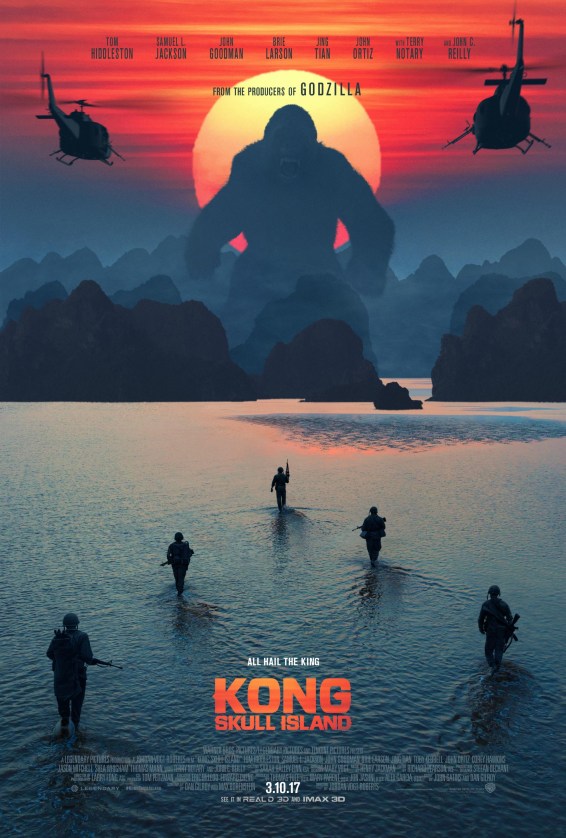
Jordan Vogt-Roberts directs his first major film with ‘Kong: Skull Island,’ another reboot of the iconic monster this time set within a different time-period and featuring plenty of vibrant visuals. Resulting in ‘Kong: Skull Island’ being a relatively entertaining monster flick, despite the film still being plagued with a range of issues throughout its two-hour runtime.

Plot Summary: Shortly after the Vietnam war in 1973, a team of scientists explore an uncharted, tropical island in the Pacific, without knowing it, they soon venture into the domain of the mighty ‘Kong,’ and must fight their way through an onslaught of dangerous creatures to escape the deadly island…

Just from a quick glance at the film, it’s obvious that the film takes heavy inspiration from the war epic; ‘Apocalypse Now,’ when it comes to its visuals, which is by no means a bad thing as ‘Kong: Skull Island’ truly embraces its 1970s time-period. Making every set, costume, and piece of military equipment fit well within the world the film builds on, which really gives some style to what could’ve just been your standard action blockbuster.

The all-star cast of Thomas Hiddleston, Brie Larson, Samuel L. Jackson, John Goodman, Corey Hawkins, Tian Jing, Thomas Mann, Toby Kebbell and my personal favourite, John C. Reilly, are all decent in their respective roles despite their characters not being given much depth beyond a few short scenes, as due to the enormous size of the cast, many characters end up becoming nothing more than clichés through their rushed introductions. Aside from Samuel L. Jackson and John C. Reilly as ‘Preston Packard’ and ‘Hank Marlow,’ however, as both of their characters receive the most development and play into the film’s main theme of the damage war can have on the mind, which I personally found very interesting and wish the film explored further, rather than focusing so much on many of the awful comedic moments the film crams into the story, which aside from a few improvised lines from John C. Reilly, fall mostly flat.

The cinematography by Larry Fong is fairly creative throughout the runtime as, in addition the film’s ranged colour palette, ‘Kong: Skull Island’ does have an array of visually interesting shots, many of which contain plenty of movement and give the audience some stunning views of the titular island. The cinematography also lacks many of the shots that made the ‘Godzilla’ remake from 2014 so impressive as a creature-feature, that being shots that display the true scale of ‘Kong,’ yet the lack of these shots may also be due to the ‘Kong’s ever-changing size, which did begin to irritate me after a while, despite ‘Kong’ still managing to feel pretty imposing and powerful throughout the film.

The original score by Henry Jackman does help to make up for this, however, it being of his better scores, in my opinion. As, throughout the narrative, the soundtrack always adds to the adventurous tone of the film, utilising large tribal drums to give each character’s confrontation with ‘Kong’ genuine weight. The film also uses a number of classic songs from the ’70s to further push the film’s time-period, and whilst this does sometimes work effectively, with an early helicopter scene featuring the iconic; ‘Fortunate Son,’ being the most memorable. It can also feel very forced at points, mostly due to the sheer amount of songs featured within the film.

One of the best aspects of ‘Kong: Skull Island’ is its action scenes as, throughout the story, the film constantly throws its characters into plenty of intense encounters with the terrifying (and equalling unique) creatures of the island, and whilst the film does have a few too many scenes which feel overly cheesy due to an overreliance on slow-motion. Each action set piece is entertaining in its own way, usually making effective use of each monster’s various abilities and their surrounding locations, with my personal favourites being the sinister and brilliantly designed; ‘Skullcrawlers,’ ‘Kong’s main adversaries. All of these creatures are obviously displayed through the film’s CG effects, which are decent enough throughout the runtime, yet certainly aren’t flawless.

In summary, ‘Kong: Skull Island’ is enjoyable, as whilst the film is undeniably filled with a number of problems, mainly in regards to the film’s weak characterisation and fairly simplistic story, the film still manages to be exciting through its fantastic use of CG effects and thrilling action scenes, all backed up by a great original score and a constructive use of the 1970s time-period. So, although its in need of some improvements, I feel you can still get something out of this big-budget creature-feature. Final Rating: high 6/10.

kong_skull_island_ver2_xxlg

Fifty Shades of Grey (2015) – Film Review

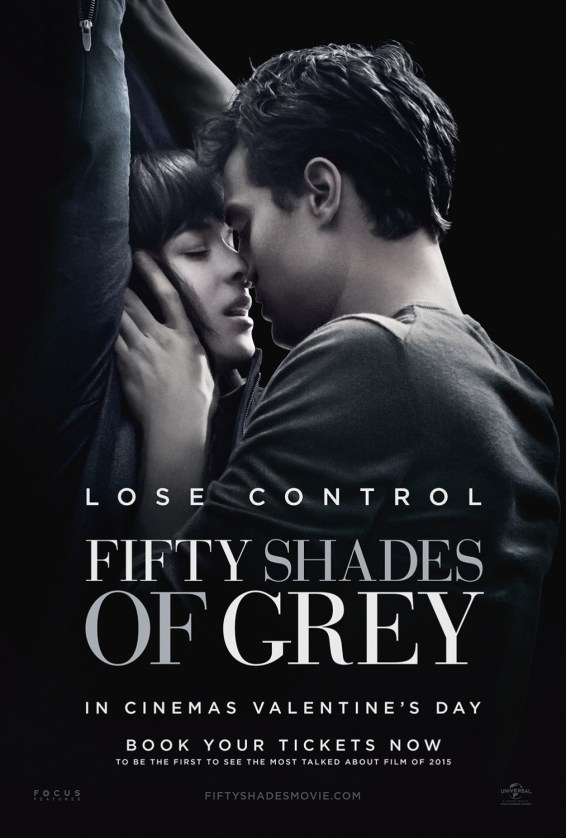
Based on the romantic novels by E. L. James, ‘Fifty Shades of Grey’ was the first instalment of the now-enormous franchise, as despite myself definitely not being the film’s target audience, the film itself is a near-complete disaster in regards to both it’s writing, acting and general filmmaking, as unless you’re looking for a weak romantic story with bland performances, uninteresting characters and one of Danny Elfman’s weakest original scores to date, this is not the film for you.

Plot Summary: When literature student ‘Anastasia Steele’ goes to interview billionaire ‘Christian Grey,’ she discovers an attractive yet troubled man, soon leading her to reveal more of herself, as she later desires to be with him, despite his stalker-like tendencies…

‘Fifty Shades of Grey’ is one of those few films that turned itself into a successful series purely though pulling in its specific type of audience, as the film doesn’t really have has nothing to offer besides the occasional sex scene or mundane romantic moment, which really left me pondering what many viewers actually got out of the overall experience, as take those elements away, and the film truly has very little left, and I can’t really say I feel compelled in any way to continue on with the series after watching the first instalment.

Dakota Johnson and Jamie Dornan portray the main couple; ‘Anastasia Steele’ and ‘Christian Grey,’ with the supporting cast of Eloise Mumford, Jennifer Ehle and Victor Rasuk. All of which give very dull performances throughout, especially with the lack of characterisation between them other than ‘Christian’s overly dramatic backstory. This is also where one of my biggest issues with the film comes into play, as Jamie Dornan as ‘Christian Grey’ could easily be seen as a dangerous psychopath throughout the film, as his performance genuinely gave me a feeling of unease whenever he is on-screen. Unfortunately, however, I don’t feel this is what the filmmakers intended, and I couldn’t help but think of the huge shift in tone if ‘Christian Grey’ was older and less attractive.

Seamus McGarvey handles the cinematography throughout the film, which despite not being anything incredibly impressive, the film does have the occasional pleasing shot throughout its runtime, this also applies to the lighting throughout the film. However, this doesn’t improve the film much overall, as the writing within ‘Fifty Shades of Grey’ is without a doubt one of its worst aspects. Resulting in many scenes becoming unintentionally hilarious or extremely cheesy, especially when the film is attempting to catch the viewer off-guard with its dialogue. Interestingly, during the filming of the film’s various sex scenes, remote-controlled were utilised so that the set could be more private for the actors, which is actually quite a creative way around the problem of the cast feeling incredibly awkward due to the huge number of film crew watching nearby.

Despite being a composer I usually adore, the original score by Danny Elfman is also very bland, as the score throughout the film always feels out-of-place and isn’t memorable in the slightest. The film also uses a variety of songs throughout its story, many of which being remixes of modern pop songs, which again, usually don’t fit the tone of the film even remotely. Yet, this could also be due to the film’s minimal direction, as director Sam Taylor-Johnson (Nowhere Boy, Districted – Segment: Death Valley, A Million Little Pieces) hasn’t directed anything extraordinary of note either before or since ‘Fifty Shades of Grey’s release.

Although only a small element, one slightly redeeming aspect of the film I actually did enjoy is the film’s colour palette, as throughout the narrative a variety of locations are given grey walls and floors, with ‘Christian Grey’ also wearing grey clothes alongside some other grey-coloured furniture within his apartment. All of which plays into the theme of ‘Christian Grey’ being in constant control of ‘Anastasia’ whenever she is in his apartment. But given the rest of the film, this was more than likely accidental.

In summary, ‘Fifty Shades of Grey’ is a film that will only appeal to the audience that has most likely already seen the entire trilogy, as the direful performances, awful writing and forgettable original score all leave the film with very little to offer, as the constant sex scenes and sufficient cinematography and lighting simply aren’t enough to carry the story through, resulting in a film that soon doesn’t even understand what its purpose was to begin with. So, I suggest you definitely give this one a miss, as this boring experience simply isn’t worth its your time. Final Rating: 2/10.

fifty_shades_of_grey_ver5_xlg

A Clockwork Orange (1972) – Film Review

Despite being very unusual and even somewhat disturbing throughout, legendary director Stanley Kubrick (2001: A Space Odyssey, The Shining, Full Metal Jacket) brings to life one of the best films of his career, as ‘A Clockwork Orange’ explores an original story with some impressive cinematography and set design, all leading the film to become very iconic and memorable within its own right. Even surpassing the novel it’s originally based on by Anthony Burgess, with Kubrick crafting one of his most faithful adaptations to date.

Plot Summary: In the near future, the young sadistic gang leader; Alex, is imprisoned after a violent event goes public, forcing him to serve time. But, with the promise of an early release, ‘Alex’ is eventually lead to volunteer for a conduct-aversion experiment, which doesn’t go as he anticipated…

Although the narrative throughout ‘A Clockwork Orange’ never fails to be engaging, usually focusing heavily on dark themes of insanity, violence and morals. I do feel the film could definitely be seen as too intense for some viewers, as although the large amount of nudity and torture does serve the film’s story, it could also be seen as tasteless for some, regardless of the film’s overall lack of blood and gore during many of the violent scenes.

Ignoring the unbelievable performance from Malcolm McDowell as the psychotic protagonist; ‘Alex,’ Warren Clarke, Aubrey Morris, James Marcus, Michael Bates and Carl Duering are all excellent in their respective roles, despite their very limited screen-time and development, and although the over-the-top British accents many of the characters have may put some viewers off, I do feel it fits well within the interesting sci-fi world the film sets up. However, we do get another appearance near the end of the film from a character, known as ‘Mr. Alexander,’ portrayed by the late Patrick Magee. Who, despite being an important character within the plot, gives a performance a little too ridiculous, in my opinion, as his facial expressions end up coming across as more comedic than emotional during his dramatic scene nearing the end of the runtime.

The cinematography by the late John Alcott definitely adds another level to the film, as the enormous amount of movement and uncomfortable close-ups throughout the film really add to the story itself, including the now-iconic; ‘Kubrick Stare,’ which can be seen in many of his films. In addition to the fantastic cinematography, however, is also the brilliant editing, which perfectly fits the film’s style, almost as if ‘Alex’ himself is taking the audience through the story within his erratic mind. This also links back to his narration, which is present throughout the film and is brimming with plenty of well-written and memorable dialogue.

The original score by Wendy Carlos is another element of the film I really enjoy, utilising an electronic soundtrack to further push the weird tone of the film, as the score recreates many of ‘Alex’s favourite classic songs in an interesting way, resulting in a soundtrack that’s both memorable and unique. The film also uses a variety of iconic songs very effectively, perfectly capturing the insanity within the main group of misfits. One of the most memorable moments of the film even comes from this, as ‘Alex’ brutally beats a couple whilst singing the classic song; ‘Singin’ in the Rain.’

As previously mentioned, ‘A Clockwork Orange’ is also one of the few films where the sets are incredibly iconic by themselves, as each location the characters visit is always colourful and visually appealing. From the ‘Korova Milk Bar’ through to the London apartment ‘Alex’ and his parents call home, every set has plenty of 1970s style mixed-in with some science fiction aspects (this also applies to the many wonderful costumes on display throughout the film). There were also a number of interesting scenes that were left on the cutting-room floor, including more scenes set within the ‘Korova Milk Bar,’ among plenty of other scenes focusing on the characters committing more horrible acts.

In summary, ‘A Clockwork Orange’ is an extremely bizarre yet incredible experience, as the film is just as interesting to discuss as it is to watch among many film fans. Containing plenty of hidden messages and underlying themes alongside its phenomenal filmmaking and brilliant story, I feel the film is truly one of Kubrick’s best, despite not beating out my personal favourite; ‘The Shining.’ So, although ‘A Clockwork Orange’ isn’t without its flaws, I would still highly recommend this one for anyone seeking something a little more out there, and of course, also due to its huge impact on pop culture and the film industry, alike. Final Rating: 8/10.

clockwork_orange_xxlg

The Christmas Chronicles (2018) – Film Review

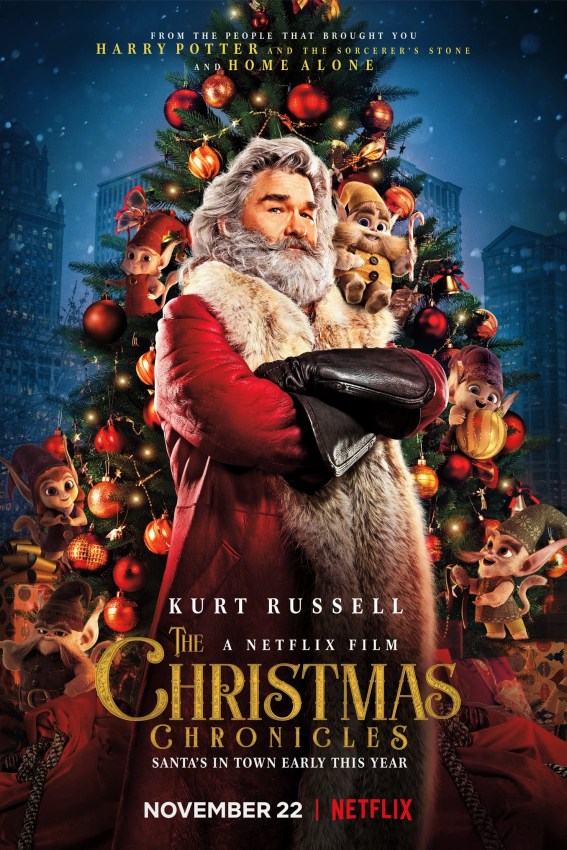
From director Clay Kaytis (The Angry Birds Movie) and producer Chris Columbus comes another Christmas family adventure with ‘The Christmas Chronicles,’ and while the film may be nowhere near as memorable as many other festive classics. I can still see the film being a mostly entertaining ride for families and younger viewers alike.

Plot Summary: When brother and sister; ‘Teddy’ and ‘Kate Pierce,’ are left alone on Christmas Eve, they devise a plan to catch ‘Santa Claus’ on camera, which soon turns into an unexpected journey that most children could only dream of, as they manage to hop aboard ‘Santa’s sleigh and join him on his task of delivering presents all over the world…

Although the two films do differ from each other in many ways, I couldn’t help but notice the similarities between this film and ‘The Santa Clause’ from 1994. As both Christmas flicks focus on characters going on a magical adventure with ‘Santa Claus,’ with them usually having strong themes of family and belief throughout. However, ‘The Christmas Chronicles’ also seems to focus more on exciting set pieces.

Whilst Judah Lewis and Darby Camp portray the siblings decently well throughout the film (aside from the occasional line of dialogue) Kurt Russell is without a doubt the stand out of the cast, as he brings his usual charisma and talent to create a fresh and memorable portrayal of ‘Saint Nick’ himself. This is dragged down by the film’s characterisation, however, as both of the siblings are pretty bland and dull from start-to-finish, as a pleasant little detail, ‘Santa’s list even includes several of Kurt Russell’s real-life grandchildren.

The cinematography by Don Burgess is also mostly generic throughout the film, usually serving its purpose without drawing the audience’s attention away from the action on-screen. Speaking of which, the action sequences throughout the film are handled surprisingly well, from the fast car chase through the streets of Chicago, to ‘Santa’s sleigh soaring through the night sky. The weak CGI throughout the film can detract from some these scenes, however, with ‘Santa’s elves in particular having some very distracting CG effects at points.

The original score by Christophe Beck is decent overall, as while not incredibly memorable, and many could see it as slightly weaker when compared to many of his other soundtracks, such as ‘The Muppets,’ ‘Frozen’ or ‘Ant-Man,’ the score does have a festive and pretty upbeat tone throughout the film’s runtime. ‘The Christmas Chronicles’ even gives us a new spin on the classic song; ‘Santa Claus is Coming to Town,’ as ‘Santa’ shows off some of his style as he sings; ‘Santa Claus is Back in Town,’ in an attempt to add some cheer to those around him.

My main issue with the film is the story’s general cheesiness, as although the film does avoid the occasional Christmas film cliché, the film is still brimming with cheesy lines and scenes throughout the film’s narrative. However, I found this to be a problem mostly around ‘Santa’s elves, as not only did these characters have an awful new redesign, but they seemed to be purely used for the sake of being cute. I also couldn’t help but think the film could’ve been improved if directed by Chris Columbus, as although director Clay Kaytis doesn’t do a terrible job by any means, I feel the director of ‘Home Alone’ (a true Christmas classic for many) could’ve definitely made the film better for what it was.

In summary, ‘The Christmas Chronicles’ is a mostly fun adventure for a film night on Christmas Eve, as while the story isn’t anything we haven’t seen before. Kurt Russell’s memorable performance mixed with some entertaining action scenes and a very festive atmosphere all result in the film being a decent watch. So, maybe check this one out one year if you’re in the need for a festive fantasy adventure, just don’t have your expectations too high. Final Rating: 6/10.

3xGoeE32Dk3KlDADbb8DkYDx1Y7

Rise of the Planet of the Apes (2011) – Film Review

Many years after the original ‘Planet of the Apes’ franchise ended, the series was rebooted in its entirety with a new ‘Planet of the Apes’ trilogy, with these films almost serving as prequels to the original films, as well as being set within their own timeline. ‘Rise of the Planet of the Apes’ was the first of this new series, and surprised many people upon its initial release in 2011.

Plot Summary: When a substance designed to help the brain repair itself and cure Alzheimer’s gives advanced intelligence to a chimpanzee, named; ‘Caesar,’ he soon begins to enhance other apes in order to lead an ape uprising through the city of San Francisco…

Although I was never overly invested in the original ‘Planet of the Apes’ film from 1968, as I was always familiar with the sci-fi classic purely through its iconic plot twist near the end of its narrative, I personally feel that director Rupert Wyatt (The Escapist, The Gambler, Captive State) did a pretty great job revamping the science fiction series, as despite the film having plenty of sci-fi elements throughout its story, the film is mostly grounded in reality, focusing more on being a tense thriller with small elements of science fiction scattered throughout the runtime.

Andy Serkis takes on the difficult role of portraying the completely CG protagonist; ‘Caesar,’ and does a superb job of it, as he manages to capture the movements and mannerisms of an ape perfectly through motion capture (which is even more impressive when considering that the film was one of the earliest to use a motion capture setup on location), all whilst ensuring the audience sympathises with ‘Caesar.’ In addition to Andy Serkis, the rest of the cast of James Franco, Freida Pinto, John Lithgow and Brian Cox, are all decent in their roles, despite the film having the occasional cliché line of dialogue for most characters.

The cinematography by Andrew Lesnie is visually pleasing for the most part, having a variety of attractive shots as well as having plenty of movement especially when following the apes sprinting or climbing. The way many of the shots are also framed further feeds into the theme of man controlling nature (which is present throughout the film). Many of the scenes set within the ape sanctuary also link back to this theme, including my personal favourite scene of the film; ‘Caesar Speaks,’ which is executed perfectly.

Despite the later films in the trilogy being composed by the fantastic Michael Giacchino, the original score by Patrick Doyle is decent throughout the film, as while it definitely doesn’t have a variety of memorable tracks, the soundtrack does back up many of the action scenes and more emotional moments quite well. I also felt the sound design throughout the film helped add to the film’s realism, mostly through the enormous amount of ape roars, squeals and grunts, whenever the animals interacted with humans or each other.

The CG effects throughout the film still hold up surprisingly well, as although the visual effects have definitely aged since the film’s release in 2011, and the CG visuals are for sure the weakest when it comes to the entire trilogy. The visuals effects are still heavily detailed and feel very real when placed into their locations, which is lucky, as if not, I do feel the weak CG effects could’ve possibly derailed some of the excellent performances from the cast. Aside from the flaws already mentioned with the visual effects, however, the action scenes throughout the film are handled pretty well, as many would probably know this film mostly for its huge action set piece on San Francisco’s iconic Golden Gate Bridge.

In summary, ‘Rise of the Planet of the Apes’ may not be the best film within the new trilogy, but it definitely is a very strong start, as although the visual effects may be lacking at points, the great cinematography, decent original score, and brilliant motion capture all backing up Andy Serkis’ outstanding performance, all leads this initial entry to have plenty of entertainment value throughout its runtime, and I’d be very surprised if this first film doesn’t make many viewers want to continue on with this sci-fi series. Final Rating: 8/10.

rise_of_the_planet_of_the_apes-p595307

Rise of the Guardians (2012) – Film Review

Truly a very underrated DreamWorks flick, in my opinion, ‘Rise of the Guardians’ is a comedic and action-packed animated adventure. Feeling almost like an ‘Avengers’ blockbuster aimed towards a younger audience at points, filled with plenty of heart, emotion and a wonderful original score by Alexandre Desplat, the film is a genuinely an animated hidden gem.

Plot Summary: When an evil spirit known as ‘Pitch’ lays-down the gauntlet to take over the world, the immortal ‘Guardians,’ a.k.a. ‘Santa Claus,’ the ‘Easter Bunny,’ the ‘Tooth Fairy,’ ‘Sandman’ and ‘Jack Frost’ must join forces for the first-time in millennia to protect the hopes, beliefs, and imagination of children all over the world…

‘Rise of the Guardians’ takes a lot of inspiration from the children’s book series; ‘The Guardians of Childhood’ by William Joyce, as the film has a lot of fun with its plot, playing into the over-the-top ideas of its story resulting in many interesting/unique locations and plenty of little jokes between the characters.

The entire cast of Chris Pine, Alec Baldwin, Hugh Jackman and Isla Fisher, are all fantastic as their various characters. Each giving their character a likeable and amusing but not overly irritating personality, I particularly enjoy Hugh Jackman and Alec Baldwin as the ‘Easter Bunny’ and ‘Santa Claus,’ as I feel these characters were definitely given many of the best jokes and moments throughout the film’s runtime, with the actors behind their voices clearly having a lot of fun of portraying them.

Throughout the film, the animated cinematography is fairly decent, as while by no means anything exceptional. The film does make use of many different moving shots, usually having the camera tracking or spinning around the characters/locations to make the film feel like a true spectacle. The original score by Alexandre Desplat is easily one of my favourite elements of the film however, as while this composer has worked on many other brilliant soundtracks in his past, such as ‘The Imitation Game,’ ‘Harry Potter and the Deathly Hallows’ (Part I and II) and ‘The Shape of Water’ just to name a few. I feel this has to be one of his most underrated scores similar to the film itself, as the tone captures all the elements of wonder, amazement and excitement perfectly.

The animation within the film is stunning throughout, everything from the hairs on top of the character’s heads, to the many sand effects for ‘Sandman’s abilities, alongside ‘Jack Frost’s snow/ice effects all look phenomenal. The film is always very beautiful to look at and has a very diverse colour palette, ranging from light blues, to pale greens and dark blacks, making every scene look appealing and always different from the last.

My main issues with the film mostly revolves around its cheesiness, as while the film isn’t only aimed at children and does manage to reach an adult audience most of the time, the film never quite catches the older audience like a Pixar film would for example. There is also a small group of child characters in the film who play a role in the narrative helping the guardians, unfortunately I found these characters quite irritating, as I felt the film played into their ‘childlike nature’ a little too much, luckily, these characters don’t receive too much screen-time.

In summary, ‘Rise of the Guardians’ is one of those great family films that can entertain most children and a fair few adults, while by no means is it one of the best animated films. It’s certainly up there with some of DreamWorks’ other classics, such as ‘Shrek,’ ‘Kung Fu Panda,’ ‘Megamind’ or ‘How to Train Your Dragon,’ for me, as although the film may not be winning an Oscar for best-animated film anytime soon, I still feel it’s still a great watch around Christmas, Easter, or maybe just your standard family film night. Final Rating: 7/10.

rise_of_the_guardians_ver8_xxlg

Clash of the Titans (2010) – Film Review

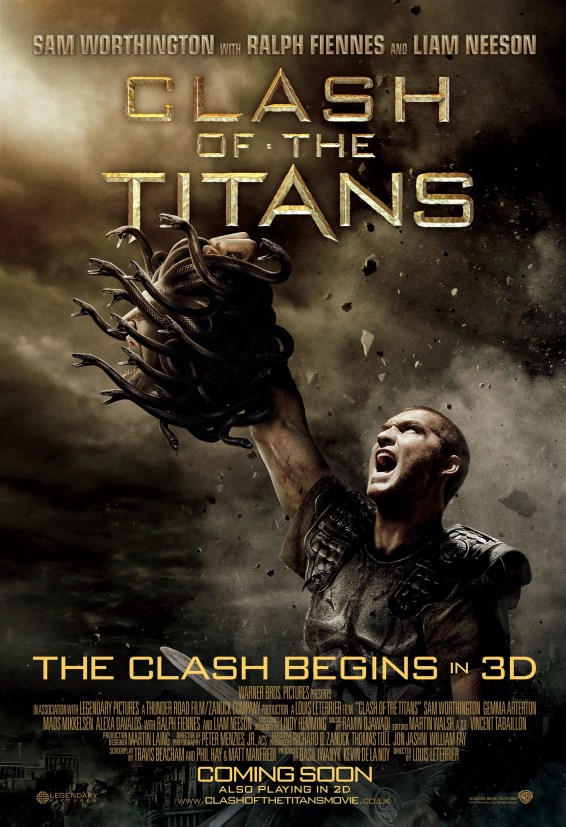
In this modern remake of the 1981 classic, ‘Perseus’ takes on a variety of gods and monsters in this somewhat fun, yet still very generic and sometimes even over-the-top reimagining of the original story. As, this time around, director Louis Leterrier (The Transporter, The Incredible Hulk, Now You See Me) focuses more on action set pieces and enormous CG spectacle than ever before.

Plot Summary: When ‘Perseus,’ the demigod son of ‘Zeus,’ finds himself caught in the middle of a war between gods and mortals, in which, his mortal family are killed, he gathers a war band to help him conquer the mighty ‘Kraken,’ ‘Medusa,’ and ‘Hades,’ malevolent God of the underworld…

Going off of the negative reviews from both critics and audiences, I wasn’t expecting much from ‘Clash of the Titans’ on my initial watch. However, I was surprised to find the film is mostly entertaining, as although there isn’t much substance to this remake, I still find it to be a somewhat exciting action flick, having plenty of creatures and adventure throughout its runtime, despite its various flaws. But, this may also be due to my fondness for Greek mythology, as I’ve had an interest in this area of fantastical legends/history since I was very young.

Although there aren’t any particular stand outs when it comes to the cast, Gemma Arterton, Liam Neeson, Ralph Fiennes, Mads Mikkelsen, and Jason Flemyng all do a decent job throughout the film. Sam Worthington, who, portrays the protagonist ‘Perseus,’ I personally found to be one of the weakest elements of the film, however, as despite him having a number of large roles in huge blockbusters, such as ‘Avatar’ and ‘Terminator: Salvation,’ in the past, he has always seemed extremely bland to me, never really coming across as anything other than a generic action hero with minimal charisma, and ‘Clash of the Titans’ is, unfortunately, no exception to this. 

The cinematography by Peter Menzies Jr. is also quite bland, as although I do appreciate the lack of incredibly shaky hand-held shots during many of the action scenes. Many of the shots throughout the film are usually very standard, as the cinematography never really attempts to enhance the visuals or make use of the story’s impressive and unique locations (aside from the occasional wide shot).

One very bizarre element of the film is definitely the original score by Ramin Djawadi, as although some tracks sound perfect for a fantasy epic such as this one. Other tracks almost sound as if they’ve been performed by a rock band, making them feel incredibly out-of-place within the film’s time-period. Yet, the film’s soundtrack actually does work quite well in my personal favourite scene of the film, as the scene set within ‘Medusa’s lair uses the score to build tension and atmosphere surprisingly well.

The CG effects throughout ‘Clash of the Titans’ are definitely one of the film’s better aspects, as regardless of whether it’s being used for creatures, Gods or locations, the visual effects always look great. However, this is also partially due to the designs of many of the creatures within the film, as the designs manage to perfectly blend the appearance of modern-day monsters mixed with classic Greek mythology. This also lends itself effectively to many of the various action scenes throughout the film (this obviously being the film’s main draw) as the action throughout the narrative is mostly pretty solid, making great use of the various different creatures abilities and always placing ‘Perseus’ in different dangerous scenarios.

In summary, I personally found ‘Clash of the Titans’ fairly entertaining for what it was, which is essentially is nothing more than your usual action blockbuster with some Greek mythology thrown in for good measure, as while the film is successful for what it sets out to do, the film does fall flat in many other areas, from Sam Worthington’s rather dull performance, to some of the weak writing and occasionally unusual original score, I feel only people truly interested in Greek mythology could get something out of this one. But, with all that in mind, ‘Clash of the Titans’ still isn’t the worst remake I’ve ever seen. Final Rating: 5/10.

clash_of_the_titans_ver4_xxlg

We’re the Millers (2013) – Film Review

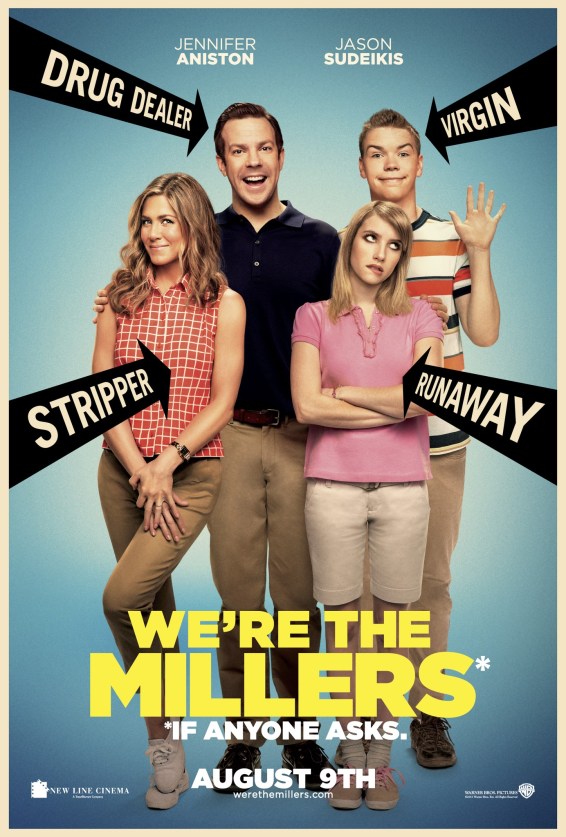
Even with a mostly standard plot for a comedy flick, I ended up enjoying ‘We’re the Millers’ more than I initially expected, as the entire cast (especially Jason Sudeikis and Jennifer Aniston) have excellent chemistry with each other, resulting in the majority of the humour throughout the story working quite well, despite the film having a few noticeable flaws throughout its runtime.

Plot Summary: When a middle-aged pot dealer is tasked with moving a huge shipment of weed into the United States from Mexico for a large pay packet, he puts together a fake family of various people he knows from his flat in an attempt to make it over the border…

Comedy as a genre has always been subjective, as everyone obviously has their own taste when it comes to what they find amusing. But, for the most part, I would say enjoyed the humour throughout the runtime, as aside from a few moments where the joke was simply one character saying something disgusting or incredibly stupid out loud to another group of characters (as I personally find this kind of comedy a little lazy), I think most of the jokes land. However, I also feel a few more jokes hidden within the background of shots would’ve also added to the film in more ways than one.

Jennifer Aniston, Jason Sudeikis, Emma Roberts and Will Poulter all portray random people thrown together in the hope of creating this false family, and I would say they work well together throughout the film. Always coming across as a very dysfunctional yet still likeable group, with all of the cast portraying very different personalities without losing any comedic timing. Interestingly, ‘We’re the Millers’ is actually the second film in which Jennifer Aniston plays a character who is recruited to create a fake family, the first being the comedy flick; ‘Just Go With It,’ in 2011.

Whilst the film does have the occasional appealing shot, the cinematography by Barry Peterson isn’t anything spectacular, as the film has mostly generic cinematography for a comedy. However, the original score by Ludwig Göransson and Theodore Shapiro is definitely one of the better elements of the film, as the soundtrack fits the tone of the film perfectly, utilising an acoustic guitar which always manages to make the film feel interesting enough to be somewhat memorable. Considering the first composer has worked on films, such as ‘Creed’ and ‘Black Panther,’ however, this shouldn’t be that much of a surprise.

My main criticism of the film is the overall lack of jokes or comedy set pieces based around the idea of the characters being a fake family, as although there are a few jokes throughout the narrative based around this idea, I never quite felt the film made full use of this concept, and usually just fell back onto your usual comedy writing. I also personally felt the film’s pacing is far too quick, as the film almost rushes through scenes within the story in order to quickly get to another gag, rather than having them happen alongside each other. In addition to this, I also felt more focus on some of the more emotional or serious scenes could’ve really helped build up tension and make the story more engaging.

In summary, ‘We’re the Millers’ is a serviceable comedy, as while I don’t think the film is fantastic by any means. I enjoyed myself with this simple comedy for what it attempted to be, as although I still think the cinematography and some of the humour could be improved, I found the film to be a mostly entertaining ride and a pretty easy watch due to its fun story and brilliant cast. Final Rating: low 6/10.

were_the_millers_xxlg