Jaws (1975) – Anniversary Retrospective

“Here’s to Swimmin’ With Bow-Legged Women…” – Captain Quint

In the summer of 1975, a ferocious great white shark swam into cinemas and, by extension, cinematic history, as Jaws, directed by a then-relatively unknown Steven Spielberg, didn’t just terrify cinemagoers; it changed the film industry forever in more ways than one.

Now, decades on, amid its 50th anniversary, it’s hard to imagine a world without it, not simply because of John Williams’ iconic original score or the unforgettable characters, but because Jaws was essentially the first summer blockbuster. Before the film’s release, summer wasn’t considered prime time for big-budget releases, but rather a dumping ground for lower-tier films. Nevertheless, Universal Pictures took a gamble with Spielberg’s shark-centric cliffhanger. This gamble paid off in a big way when Jaws hit cinemas on June 20th, 1975, instantly becoming a box office phenomenon, grossing over $470 million worldwide, equivalent to around £1.8 billion today when adjusted for inflation. It became, for a time, the highest-grossing film ever made until the then-titled sci-fi blockbuster Star Wars arrived in 1977. Still, half a century on, Jaws certainly hasn’t lost its bite.

Beginning life as a relatively short yet commercially successful novel, written by the late American writer Peter Benchley and published by Doubleday in 1974, Jaws recounts the story of an enormous great white shark preying upon the fictional coastal town of Amity, a tourist hotspot located on the south shore of Long Island, halfway between Bridgehampton and East Hampton, prompting a local police chief, a marine biologist, and a crusty fisherman to track it down. The novel grew out of Benchley’s increasing interest in shark attacks after he read about the exploits of Frank Mundus, an author and shark angler-turned-conservationist from Montauk, New York, thought to be the inspiration for the character of Captain Quint.

Although the adaptation wasn’t particularly faithful to his best-selling novel, as it streamlines the plot, focuses more on the hunt for the shark, and significantly alters some characters and subplots, Benchley’s mixed feelings towards the film were not a result of this. Instead, while he acknowledged the film’s success and massive influence on pop culture, he also expressed some regret for the portrayal of sharks his work had brought about, specifically the exaggerated depiction of them as purely murderous beasts, as Benchley was, in actuality, a passionate advocate for shark conservation and ocean preservation, co-founding the Peter Benchley Ocean Awards, which honours individuals and organisations making substantial contributions to marine conservation.

While the premise of Jaws is simple yet compelling, what truly turned the story into something extraordinary was Spielberg’s guidance. Ironically, one of the most influential choices he made during production came out of pure necessity, as the animatronic shark, nicknamed; “Bruce,” after Spielberg’s attorney, continually malfunctioned on set, leading the aquatic killer to be absent from many scenes. As a result, rather than relying on the animatronic, Spielberg employed suggestion, sound design, and innovative cinematography to build tension, often placing the audience in the position of the shark through filmmaking techniques, such as submerged P.O.V. shots. However, Jaws is, of course, best known for its brilliant two-note theme by legendary composer John Williams, a nerve-wracking piece now etched into pop culture and instantly recognisable to most. Much like the shark itself, Williams’ score functions as an ominous, underlying presence for the majority of the film’s runtime, audibly characterising the ocean as a place of dread where any ripple could spell doom, serving as a stark contrast to Amity’s amiable summer spirit. Through these aspects and others, Jaws demonstrated the power of suggestion over spectacle, a quality that even modern blockbusters haven’t quite recaptured despite their access to contemporary visual effects.

What gives Jaws its staying power isn’t just its clever filmmaking; it’s also its characters, as the late Roy Scheider portrays Police Chief Brody as the perfect everyman, caught between his fear of the ocean and his responsibility to protect his town and its residents, whilst Richard Dreyfuss brings humour and intelligence to the film as the marine biologist and oceanographer Matt Hooper. However, the late Robert Shaw’s Captain Quint is perhaps the most widely admired of the trio, harbouring many memorable moments, including the celebrated scene where he chillingly recounts his ventures during World War II and the sinking of the U.S.S. Indianapolis, the ship he was aboard. Together, the three form a triad that grounds the story in real, human stakes, their boat-bound journey to pursue the shark forcing the characters to face their fears, confront their trauma, and earn each other’s respect. That is, before the film shifts back to nail-biting suspense for its final explosive moments, where the shark is blown to bits in spectacular fashion, thanks to the oxygen tank lodged in its teeth.

In the decades since its release, Jaws has left an enormous wake, with the film frequently being cited for reshaping the public perception of sharks (for better and for worse), causing shark phobia to rise amongst the general populace as U.S. beach attendance rapidly declined. Then, there’s the pop culture impact, where it’s difficult to overstate just how deeply Jaws burrowed into the cultural imagination, with the previously mentioned score by John Williams becoming a musical shorthand for looming danger in almost all media, getting utilised, spoofed and referenced in everything from The Simpsons to Finding Nemo (2003). Moreover, in addition to spawning multiple sequels (of varying quality), revolutionising how films were marketed, and turning Steven Spielberg into one of the most influential filmmakers of all time, Jaws bears one of the most well-known posters in cinematic history, with the image of the shark ominously approaching a swimming woman becoming almost iconic as the film itself, likely peddling countless copies to avid cinephiles, alongside the rest of the film’s varied merchandise, i.e. t-shirts, comic books, toys, video games, records, mugs and even inflatable sharks.

This legacy even led to a handful of real-world experiences, as Universal Pictures took it upon themselves to let fans step into the world of Jaws, bringing the film to life via attractions at many of their renowned theme parks worldwide, starting with an attraction at Universal Studios Florida in 1990. This attraction allowed guests to board a tour boat through Amity, only to be ‘attacked’ by a massive, animatronic shark rising from the water, complete with fire effects, water splashes and close calls. Although the attraction did close in 2012 to make space for The Wizarding World of Harry Potter: Diagon Alley, an immersive area based on the Harry Potter franchise, the Jaws attraction was immensely popular and beloved even after its many years of operation.

In summary, it’s incredibly impressive that exactly fifty years later, Jaws still thrives, not only as a film, but as a piece of widespread pop culture, with even those who haven’t watched the classic blockbuster being well aware of its existence. Jaws remains unnerving, thrilling, and strangely beautiful in its pacing and simplicity, standing as an iconic flick you can watch today and feel that same sense of creeping dread audiences felt in 1975, declaring the film a strong testament to storytelling, craftsmanship and the belief that sometimes, what you don’t see is what stays with you the longest. Consequently, however, all these years later, the water doesn’t feel all that safe…

Double Indemnity (1944) – Film Review

“How Could I Have Known That Murder Could Sometimes Smell Like Honeysuckle?” – Walter Neff

Widely regarded as one of the greatest films released during the Golden Age of Hollywood, Double Indemnity is a 1944 crime-thriller that combines suspense and sharp wit, conveying its captivating story of murder and romance through stylish, achromatic visuals and scintillating dialogue. Despite the technical limitations of its time and the occasional dragging scene, Double Indemnity‘s favourable qualities easily outweigh its shortcomings, setting the standard for almost every noir that followed, to the point that the American Film Institute actually ranked the film as their “29th Greatest Movie of All Time” in 2007.

Plot Summary: Living a life largely devoid of excitement, the smooth-talking insurance salesman Walter Neff finds his thirst for more quenched when he encounters the seductive Phyllis Dietrichson, the weary wife of a callous husband whom she plans to murder and cash out on his ‘accidental’ death claim, eventually convincing Walter to join her devious scheme. But, when his quick-witted supervisor, Barton Keyes, becomes suspicious of the claim, Walter’s paranoia gets the better of him as the pair’s fiendish ploy begins to fall apart…

Based on the novella of the same name by James M. Cain, supposedly inspired by a 1927 murder case perpetrated by a married woman and her lover, whose trial he attended whilst working as a journalist in New York. During this, Ruth Snyder persuaded her boyfriend, Judd Gray, to kill her husband, Albert, after having him take out an insurance policy with a double-indemnity clause before the couple were ultimately identified, arrested and convicted. Although the novella was well-adapted to the silver screen by screenwriters Billy Wilder and Raymond Chandler, the pair did not get along while penning the screenplay, a process loaded with arguments and behind-the-scenes drama. Nevertheless, the two writers’ squabbles may have been worthwhile as the dialogue exchanges between characters perfectly exemplify the noir genre, being both snappy and comical. So much so that the scene where Walter and Phyllis meet for the first time could be seen as the template for what virtually all notable noir films sound like.

Despite several cast members initially being apprehensive about signing on to the project, with the late lead Fred MacMurray even on the verge of turning down the role because he feared his career would be ruined by playing such a despicable character, every cast member in Double Indemnity is performing to their highest ability. From MacMurray and the late Barbara Stanwyck as murderous lovers, Walter Neff and Phyllis Dietrichson, flaunting their palpable on-screen chemistry, to the late Edward G. Robinson as Walter’s astute, snarky office manager, Barton Keyes, exhibiting a perfect balance of tenacity and humour, smelling something rotten about Mr. Dietrichson’s untimely demise, all of the performances are worthy of the screenplay’s well-crafted verbal exchanges.

Owing much of its visual brilliance to the late cinematographer John F. Seitz, an influential figure in camerawork with a career spanning several decades, Seitz’s work on Double Indemnity is often deemed a masterclass in stylish visuals. Well-known for his ability to use light and shadows to evoke mood, Seitz was instrumental in establishing the visual language of the noir genre via this film and many others, with the chiaroscuro lighting, tight framing and innovative use of darkness heightening the tension and moral ambiguity that pervade the narrative, his collaboration with the late director Billy Wilder (Sabrina, Some Like It Hot, The Apartment) only elevating Double Indemnity into a film that visually communicates its underlying themes of greed, betrayal and moral corruption as much as the dialogue. Additionally, light filtering in through blinds (a staple of the noir genre) is frequently used to visually depict Walter being ‘behind bars.’

The late Miklos Rózsa’s stagey original score is your traditional orchestral soundtrack, with the opening piece; Prelude, being a standout track, dramatically enriching the opening credit sequence where a mysterious silhouette of a man stepping toward the camera on crutches soon engulfs the screen. Following this, Rózsa adds emotional depth to the film with the track; Murder Theme, a suspenseful piece in which the striking of a timpani forms a grim rhythm, accompanied by violins that deliver a numbing pulse, alluding to the characters’ dark intentions.

Outside of the crime elements, Double Indemnity also harbours a hefty amount of romance within its narrative, largely thanks to the previously mentioned chemistry between MacMurray and Stanwyck, but also as a result of the film’s sensual moments and even moderately suggestive visuals for the time. For example, when Walter first meets Phyllis, the camera is drawn to a bracelet (or anklet) on her right ankle, with an urban legend stating that a married woman wearing a right-sided anklet indicates she is married yet available to other men. One of the many details that not only adds to the characterisation of Phyllis, but also serves as a humorous time capsule of the 1940s, when merely showing a woman’s ankle was considered scandalous.

In summary, if there is one Golden Age Hollywood classic that defines the very essence of the genre it’s a part of, it’s Double Indemnity, standing as a tremendous example of how to craft an engaging crime-thriller, building tension by employing intimate close-ups and honed dialogue. For a film from this era, you can’t do much better than Double Indemnity, a famed noir that stands the test of time after seventy years and will likely stand for seventy more, given its venerable reputation. Rating: 8/10.

Malcolm & Marie (2021) – Film Review

“Cinema Doesn’t Need to Have a Message. It Needs to Have a Heart!” – Malcolm Elliott

A contained and regaling monochrome drama, 2021’s Malcolm & Marie was one of the first feature-length films produced amidst the COVID-19 global pandemic. Written and directed by Sam Levinson (Another Happy Day, Assassination Nation), best known as the creator and lead writer of the hit teen-drama series; Euphoria, Malcolm & Marie was shot during the U.S. COVID-19 lockdown between June and July of 2020, with the approval of the Writers’ Guild of America, Directors’ Guild of America, Screen Actors’ Guild of America, and the American Federation of Television and Radio Artists, as the production followed strict safety protocols to ensure the cast and crew could work safely. With this in mind, Malcolm & Marie makes the best of challenging circumstances, utilising a singular location, minimal cast and sleek visuals to craft a captivating flick that examines how volatile personalities can clash, especially when tangled in a long-standing relationship.

Plot Summary: After returning home from the premiere of his debut project, filmmaker Malcolm Elliott and his girlfriend, Marie Jones, await what is sure to be an imminent critical and financial success. But, as the evening transpires, their celebratory night takes a turn for the worse as revelations begin to surface, testing the strength of their devotion to one another…

Between Marcel Rév’s scrumptious black-and-white cinematography and the no-holds-barred verbal brawl delivered by the central duo of Washington and Zendaya, it’s impossible to discuss Malcolm & Marie without drawing comparisons to the cinematic adaptation of Who’s Afraid of Virginia Woolf? (1966). Like the stage play the film is based upon, first staged in 1962, Who’s Afraid of Virginia Woolf? explores the complexities of the marriage of middle-aged couple Martha and George, where, late one evening, after a university faculty party, they receive an unwitting younger couple, Nick and Honey, as guests and are drawn into their bitter and frustrated relationship. Although Malcolm & Marie only focus on the two titular characters, both stories have more than a few similarities. One element of Malcolm & Marie that is unique to the film, however, is its underlying theme of the essence of cinema, examining this concept through the eyes of Malcolm as a passionate Black filmmaker who loathes the politics surrounding Black filmmakers. In fact, Malcolm’s intense dislike of an anonymous female critic from the L.A. Times is believed to be a reference to L.A. Times writer Katie Walsh, who once wrote an unfavourable review of one of Levinson’s prior directorial outings.

As the sole cast members, John David Washington and Zendaya hold the entire weight of the film on their shoulders. Thankfully, both share amazing chemistry and receive countless chances to let their talent shine as they each deliver lengthy monologues exploding with emotion. Through these monologues and the sharp dialogue, it quickly becomes apparent that the titular, well-defined couple exist in different rhythms, with Malcolm exuberantly (and obnoxiously) extolling the delights of premiering his first film as a writer and director, which pushes him to the cusp of newfound power and prestige, while Marie appears sullen, bored and utterly over Malcolm and his prickly, delicate ego that repeatedly puts strain on the pair’s relationship, often failing to acknowledge Marie’s support. However, this constant back-and-forth does come at a cost, as both characters can come across as somewhat unlikable through their many imperfections being blatantly illustrated on-screen at all times.

One of the few Netflix Originals shot to be on 35mm, the cinematography by Marcell Rév is elegant and sheeny. Yet, what makes these visuals even more impressive is that for the entirety of the runtime, the titular couple never once leave the house, as previously mentioned, merely strolling to different rooms or into the garden with a cigarette in hand as their bickering continues. Some may think this sounds dull, but I feel this approach ensnares much of the tension between the two characters and the heavy air that flows through their temporary, luxurious home. Furthermore, with both characters being chic and sophisticated, as well as returning from the premiere in their formal evening wear, there is a suave feel to the visuals of Malcolm & Marie, making the film seem like a romance from the 1930s, with tight camerawork to intensify the drama.

Likewise, the film’s original score, helmed by British musician Labrinth, reunited with Sam Levinson after composing much of the score for Euphoria, retains a similar tone to that of a 1930s drama, with the delicate, jazzy score meshing flawlessly with cleverly selected needle drops. Famed songs, like I Forgot to Be Your Lover and Get Rid of Him, are also baked into the runtime, doing much of the talking when the characters aren’t.

Interestingly, because Malcolm & Marie was produced during the COVID-19 pandemic, none of the cast or crew associated with the film received any kind of payment or entered into any agreement with the depiction of tobacco products, which is certainly admirable given the current state of cinema, where many films are greenlit purely for the sake of profit.

In summary, due to its entire runtime taking place in one location with a heavy reliance on dialogue, Malcolm & Marie will likely be a divisive flick that won’t please everyone. But, for those it will, I feel it’s more than entertaining, even if the film isn’t as layered or as tightly-knit as it thinks it is. Rating: 7/10.

Jurassic Park IV (2005) – Lost Projects

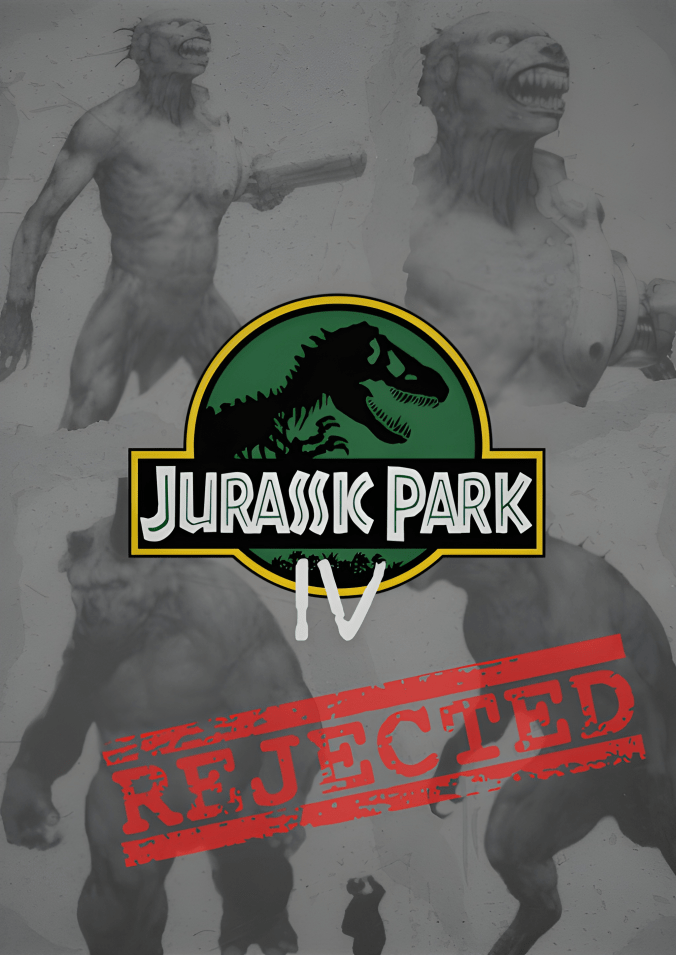
Before 2015’s Jurassic World brought dinosaurs back to the silver screen in the form of a glossy soft reboot, an earlier, radically different concept was drawn up for the fourth instalment of the franchise, with the aptly titled; Jurassic Park IV, set for release in mid-2005. This scrapped, now-long-forgotten sequel would’ve taken the series in a bold and contentious direction, concentrating its narrative on a crazed storyline revolving around genetically engineered dinosaur-human hybrids being deployed worldwide as weaponised combatants by a sinister organisation. While this ludicrous idea did reach the concept art and early scripting stages, the project was ultimately discarded, with executives fearing it would undermine the cinematic legacy and relatively grounded tone of the franchise’s earlier instalments, relegating the unproduced film to become an obscure yet fascinating piece of the franchise’s history, following the success of the 1993 classic that began its journey.

From the information currently available, this hybrid storyline seemingly first came about as a result of esteemed director and the series’ executive producer Steven Spielberg’s supposed dissatisfaction with the prior entry in the franchise; Jurassic Park III (2001), wanting the subsequent sequel to be more daring and worthy of being part of the renowned franchise, hence the jump towards more outrageous concepts. The previously mentioned hybrids were to be intelligent, humanoid, combat-capable creatures that blended human and dinosaur physiology. Among the early illustrations was a Triceratops hybrid, a fully upright, green-skinned creature with humanoid proportions, three toes on each foot and one prominent horn atop its head, the other broken. A Tyrannosaurus Rex hybrid, which stood upright like a human and bore reddish-brown and charcoal-black skin, retaining the creature’s stubby, two-fingered hands, now with more muscular, human-like arms. And, lastly, a Velociraptor hybrid, which went through numerous iterations, with concept artist Carlos Huante, who developed many of the designs, once referring to the creature as the “Raptor-Man” in a since-deleted post on Instagram. Depicting the creature as agile and lean with a humanoid frame augmented by raptor-like features, the Velociraptor hybrid was perhaps the most unsettling of the early designs, blurring the line between futuristic horror and evolutionary fantasy, with one design even bearing a high-tech weapon on its left arm.

Carlos Huante later claimed that the concept of the dinosaur-human hybrids was shut down almost immediately after Steven Spielberg and executives at Amblin Entertainment reviewed the artwork, as they believed the idea strayed too far from the franchise’s core identity, shifting its focus from scientific plausibility and natural wonder to over-the-top, militarised science fiction. Nevertheless, whether intentional or not, the first public hint of this odd creative decision came in October 2003, when palaeontologist and longtime franchise dinosaur consultant Jack Horner appeared on Minnesota Public Radio. In response to a caller’s question regarding the speculative “Dinosauroid,” a hypothetical, intelligent descendant of the omnivore Troodon, a relatively small, bird-like theropod, Horner cryptically answered that the caller should; “Keep Thinking About That for a Couple of Years,” adding; “Go See Jurassic Park IV,” suggesting the franchise would explore the notion of dinosaur evolution.

Interestingly, despite this concept of dinosaur-human hybrids eventually being axed along with this iteration of the series’ fourth instalment, a similar idea had actually appeared during Universal Studios’ Halloween Horror Nights in 2002, an annual scare event often featuring well-known franchises from the horror and sci-fi genres, within the attraction; Project Evilution. In the story of the tropical jungle-themed scare maze, Dr. Burton, a deranged InGen scientist, had conducted twisted experiments, mixing human and dinosaur DNA to create dinosaur-human hybrids that would terrorise visitors, which may have influenced or prefigured many of the illustrations that emerged during the development of Jurassic Park IV.

Outside of the central dinosaur-human hybrid concept, the story of Jurassic Park IV would have focused on ex-Navy Seal Nick Harris, as he is covertly enlisted by John Hammond to travel to the now-restricted island of Isla Nublar to locate Dennis Nedry’s missing canister of dinosaur embryos, lost during the events of Jurassic Park (1993). After landing on the island, avoiding threats and recovering the canister, however, Nick would be captured and taken to an archaic castle in the Swiss Alps. There, Baron Herman Von Drax, the CEO of the corrupt organisation, the Grendel Corporation, would reveal they had created dinosaur hybrids that partially shared DNA with both humans and domestic dogs, which Von Drax had supposedly found a way to control utilising radio signals. From there, the rest of the story follows Nick as he is forced to train the dinosaur-human hybrids to obey Von Drax further, concluding with Nick obtaining complete control of the hybrids, leading to a gigantic action sequence where the carnivorous creatures chase down Von Drax, some even sporting bulletproof armour.

In summary, though shelved, this sequel and, by extension, the notion of dinosaur-human hybrids, remain one of the most absurd yet intriguing ‘what-if’ chapters in the franchise’s history. And, whilst this rendition of Jurassic Park IV never came to fruition, many of its concepts actually did via the eventual, aforementioned soft-reboot; Jurassic World, converting the idea of dinosaur-human hybrids to Jurassic World scientists combining various strands of dinosaur/animal DNA in an attempt to manufacture a formidable, marketable beast, inadvertently resulting in blood-thirsty creatures like the Indominus Rex and the Indoraptor, the latter of which even maintaining the idea of being used as a weapon, but in a manner that felt more grounded in the world established by earlier franchise installments. Additionally, protagonist Nick Harris shares several similarities with Chris Pratt’s ensuing character, Owen Grady, with the two not only sharing the same military background, but also serving as trainers to a squad of carnivorous dinosaurs. Still, in my opinion, discarding this original storyline for the franchise’s fourth instalment was definitely a wise move, narrowly avoiding a creative decision that could have morphed the series into something laughably ludicrous and utterly unrecognisable from what it once was. 

Monster Trucks (2016) – Film Review

“I Don’t Know Who’s Driving, Him or Me…” – Tripp

Spawned from the mind of the four-year-old son of Adam Goodman, the then-president of the production company behind the film, Paramount, Monster Trucks is a 2016 family flick harbouring flashes of inspiration yet ultimately lacking in execution. Frequently demonstrating that a wacky storyline and a mashup of creatures and clamorous vehicles don’t necessarily yield a rollicking family film, Monster Trucks goes about its narrative with all the grace of an off-road vehicle steamrolling a row of discarded automobiles, even when it faintly echoes the beloved 1982 sci-fi classic; E.T. the Extra-Terrestrial.

Plot Summary: Looking for a way to escape the mundane town he was born into, high school senior Tripp circumvents the discomfort of his home life by toying away in his local scrapyard, gradually assembling a truck of his own from bits and pieces of scrapped vehicles. But, when an accident at a nearby oil-drilling site displaces strange, subterranean creatures with immense strength and a liking for oil, Tripp believes he’s found his key to getting out of town, unaware that his slimy, tentacled friend is actively being pursued…

Initially set for release on May 29th, 2015, before the date was moved to December 25th, then March 18th, 2016, and finally, January 13th, 2017, after several setbacks. Monster Trucks received middling reviews and poor box office numbers upon its eventual release, with Viacom blaming unspecified failures in its motion picture division for the losses the company suffered in the 3rd quarter of 2016, with reporters later piecing together details in their statement, leading them to believe this film was blamed for the loss. While not strictly underserved as Monster Trucks does possess an abundance of flaws across both its screenplay and filmmaking, director Chris Wedge (Ice Age, Robots, Epic) manages to implement some humorous moments and exciting set pieces here and there, primarily whenever the film fully commits to its bonkers title, having the signature creature, nicknamed; Creech, squeeze himself into Tripp’s turquoise-coloured truck, using his multiple tentacles to propel the vehicle along and even leap over hazards across town.

Although the central cast of Lucas Till, Jane Levy, Rob Lowe, Danny Glover and Holt McCallany deliver adequate performances, their characters are either caricatured or underdeveloped, barring the antagonists, who sufficiently serve their purpose as vile, money-hungry suits eager to profit from the newly discovered creatures through whatever means necessary. This character issue is only made worse by the dialogue, the majority of which is cheesy and blatant, lacking any semblance of subtlety or originality, especially concerning the sour relationship between Tripp and Sheriff Rick, his new stepfather, who continually conveys his unjustified distaste for Tripp.

Whether by design or not, the small, pallid town in North Dakota where Monster Trucks takes place is remarkably dull, meaning the visuals suffer as a result, aside from the odd alluring shot of natural scenery. On a more positive note concerning the visuals, the designs of the many luminescent creatures that appear throughout the runtime are simplistic yet effectively cute and cuddly, resembling various aquatic animals, namely whales and octopi. However, it’s important to mention that one of the reasons the film’s release date was pushed back so drastically was the need to redesign the creatures and thus redo most effects shots, as originally, the creatures appeared more monstrous and less cartoonish. But, after a disastrous test screening, which reportedly frightened a large portion of the juvenile audience (despite the creatures’ friendly demeanour), their appearance was altered to the design seen in the final film. With this setback in mind, the CG effects are well-detailed, if imperfect.

Boasting a handful of decent tracks, if you’re searching for a more bass-friendly soundtrack, Monster Trucks‘ original score is weighty yet occasionally a tad overbearing, in addition to a couple of the song choices, like Home by Phillip Phillips, only adding to the corniness of the film due to their unwavering positivity. The sound design is also filled with much of what you’d expect from a story revolving around large vehicles, with booming engines and scrapyard ambience providing many scenes with an audible thump.

Returning to the faults of the screenplay, much of the humour throughout the runtime is immature, often relying on goofy audio effects and continuous slime gags to obtain a cheap laugh from younger audience members. Older audience members, however, may find something to admire in the film’s handful of truck-centric practical effects, such as the implementation of the five 1950s-era Dodge trucks which were built for the film, including one with its engine in the pickup bed so it could be driven from under the hood, similar to how Creech manoeuvres the vehicle.

In summary, Monster Trucks is an underwhelming film in several ways, making me think it might have been better served should it have been a stylistic animated release rather than a costly live-action one, allowing the film to further play into the central, ludicrous concept of subterranean creatures slithering their way into vehicles to experience the high-octane rush of driving across open fields and country roads, especially when considering Chris Wedge’s prior directing experience in that field. Still, I’m obviously not in the target demographic for this flick, and those who are (e.g. young boys with an affinity for monsters and mayhem) might enjoy this one in the face of its many shortcomings. Rating: 3/10.

Puss in Boots (2011) – Film Review

“Fear Me, if You Dare!” – Puss in Boots

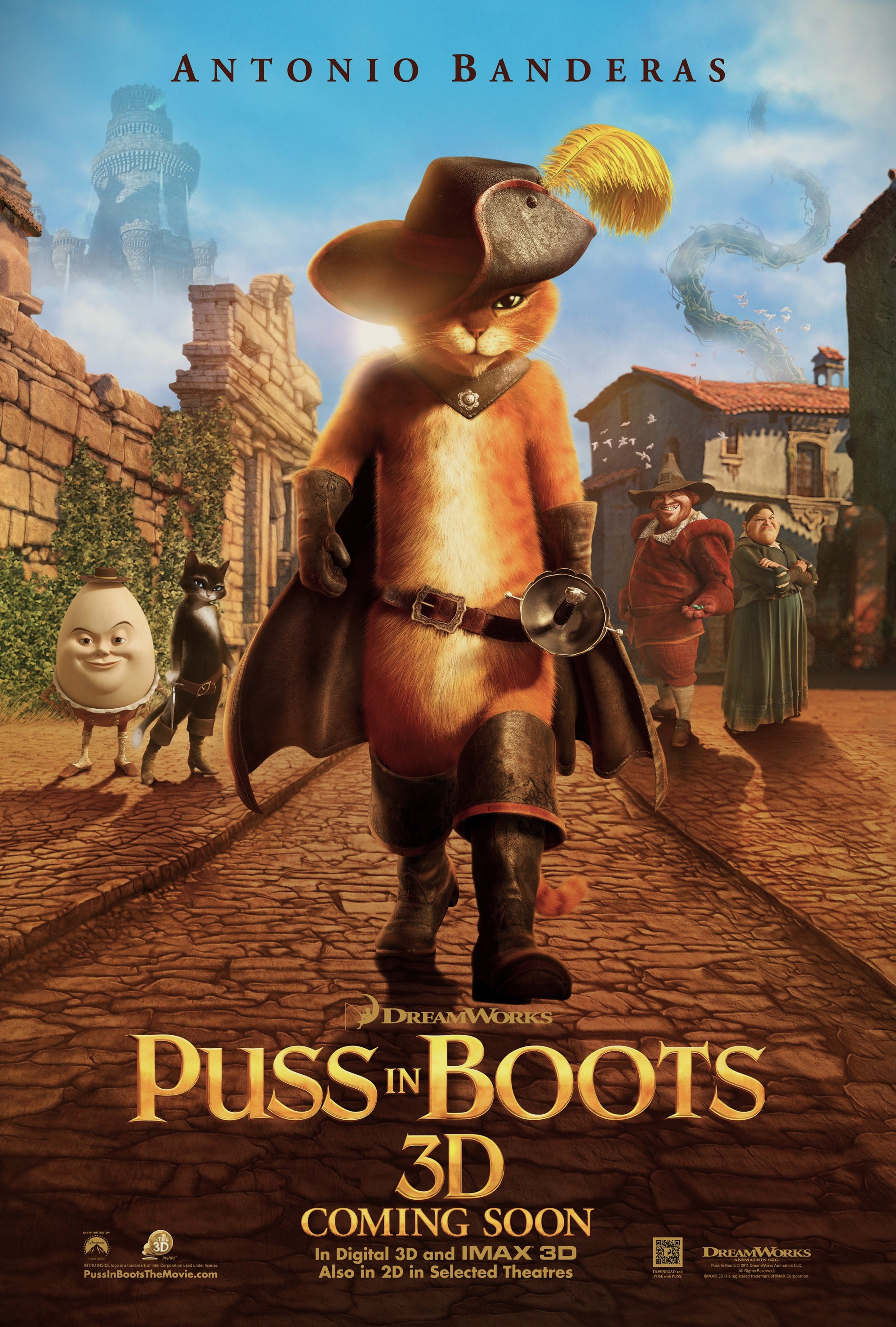
Released in 2011, one year after the highly-praised Shrek series supposedly concluded with Shrek Forever After (2010), Puss in Boots acts as a spin-off and prequel to the endearing ogre’s renowned franchise, retaining its emphasis on parodying fairy tales whilst supplying the titular heroic feline with an amusing, stand-alone adventure that frequently pays tribute to Spanish cinema. While not profound in terms of storytelling nor revolutionary in terms of animation, for what it lacks in depth, Puss in Boots, directed by Chris Miller (Shrek the Third), makes up for with an abundance of family-friendly wit and excitement, in spite of the initial plan to turn the film into a mere direct-to-DVD spin-off.

Plot Summary: Long before meeting Shrek and Donkey, the adorable yet cunning vigilante Puss in Boots aimed to clear his name, striving to escape his notoriety as the suspected thief of his hometown, San Ricardo. Then, one faithful night, after overhearing that the murderous outlaws Jack and Jill have come into possession of magic beans, Puss senses a window of opportunity, setting out to steal the beans in pursuit of the treasure they lead to, eventually crossing paths with an old friend…

In contrast to the Shrek films, which were in production for around three years (except for the first, which was in production for almost five), Puss in Boots took over seven years to produce, entering development just after the release of Shrek 2 (2004). The film also differs from the Shrek series in other ways, most notably in its inspirations. Where the Shrek franchise became recognised for its parodying of classic fairy tales and modern pop culture, Puss in Boots is more reminiscent of Spanish cinema, namely, Spanish action and adventure flicks, harbouring references to well-known flicks, like The Mask of Zorro (1998), a film which interestingly, also featured Antonio Banderas as the lead, and Desperado (1995), another release featuring Banderas as well as his co-star Salma Hayek. As such, Puss in Boots operates as a successful mish-mash of ideas, blending elements of fairy tale fantasy with solid action sequences reminiscent of traditional vigilante flicks. The majority of the story, though, is a riff on the famed fable of Jack and the Beanstalk, a fairy tale adapted time and again. Thankfully, the writers were aware of this, implementing a handful of original ideas to form their own take on the well-worn story.

The central cast of Antonio Banderas, Salma Hayek, Zach Galifianakis, Billy Bob Thornton and Amy Sedaris are superb in their vocal performances, with the newly-introduced characters being well-defined and entertaining, from Humpty Dumpty, Puss’ intelligent yet untrustworthy ally, to Jack and Jill, an amusingly fiendish pair of villains, and the skilled thief Kitty Softpaws, who bears a fairly moving backstory. Truly, the only character that lacks interesting characterisation is Puss himself, who is essentially the same character he was in 2004, with little difference in his personality despite being younger, less experienced and more independent, harbouring no major distinctions or a compelling character arc.

For this film, an admirable decision was made to make the world of Puss in Boots appear very different from that depicted in the Shrek series. In the latter, the environments were similar to classic fairy tale illustrations, often featuring extravagant kingdoms and vibrant forests, with even the earliest appearance of Puss in Boots himself being depicted in clean, pencilled illustrations in a vast woodland environment amidst the book; Histories or Tales of Past Times, Told By Mother Goose, written by Italian author Giovanni Francesco Straparola in 1551. However, the film has a distinctly Spanish feel, with most of the runtime being set in deserts and rural towns sporting Colonial architecture, in addition to a warmer, more terracotta colour palette. The animated cinematography and the animation itself also go a long way in enhancing the film’s many action sequences and visual gags, including one set piece with a gigantic creature wreaking havoc, undoubtedly inspired by the Godzilla series.

Capturing the spirit of adventure much like the film at large, the original score by Henry Jackman is rousing, occasionally even harbouring a slight western feel. Furthermore, tracks such as Chasing Tail and Farewell San Ricardo convey Puss’ heroism and vigilante persona flawlessly, whilst Jack and Jill are granted a monstrously malicious melodic cue with the plainly-named track; Jack and Jill. The end credits song; Americano by Lady Gaga, seems rather out-of-place among the rest of the soundtrack, however, given that Puss in Boots never employed contemporary songs in its fantastical setting before this moment, unlike the Shrek franchise.

Humorously, the animators behind Puss in Boots didn’t bring any cats into the studio to study their movements for the various felines that appear throughout the runtime. Instead, they simply watched some of the millions of widespread cat videos on YouTube to make each cat’s movements as lifelike as possible and take inspiration for some of the film’s cat-related antics.

In summary, Puss in Boots is a delightful adventure with enough entertainment value to keep both younger and older audience members engaged, even if the film isn’t as memorable as some of the entries from the series its protagonist originated. Still, it likely goes without saying the film’s late-to-the-party sequel; Puss in Boots: The Last Wish (2022), was an improvement over its predecessor in almost every way. Rating: 6/10.

Anomalisa (2015) – Film Review

“Sometimes There’s No Lesson. That’s a Lesson in Itself.” – Michael Stone

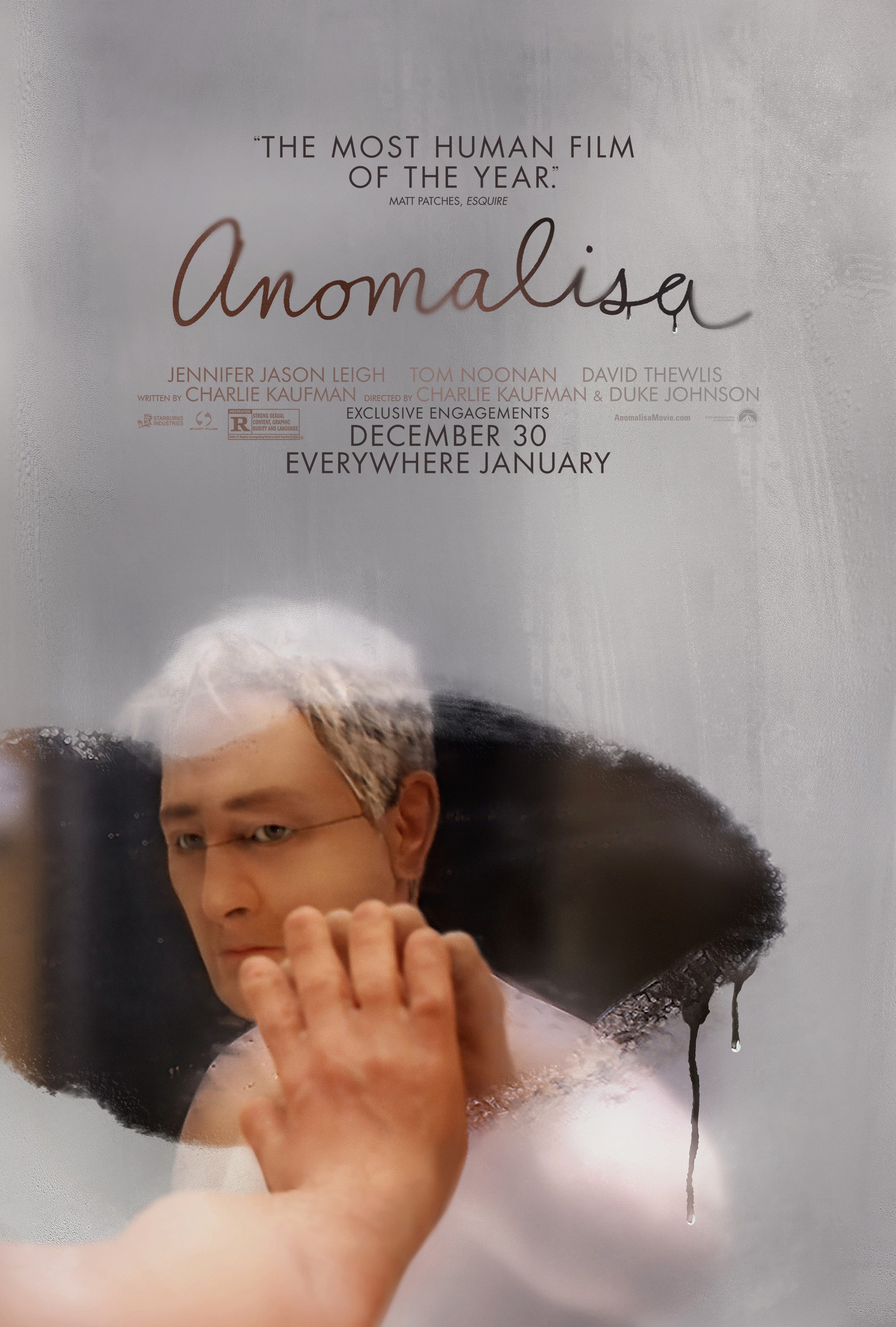
Originally planned to be a short film, roughly forty minutes in length, with the large sum of funds later gathered from a crowd-funder on Kickstarter pivoting the project to become feature-length, 2015’s Anomalisa is a technically impressive and exceptionally humane stop-motion drama that marks another distinctive highlight in writer and co-director Charlie Kaufman’s filmography. Serving as a thought-provoking treat for fans of introspective cinema, Anomalisa is a quirky and mesmerising exploration of mental illness seen through the eyes of a middle-aged author trapped beneath the weight of his mundane life, integrating memorable characters and dry wisecracks wherever possible to craft a story that is just as captivating as it is interpretive.

Plot Summary: After travelling to Cincinnati, Ohio, to deliver a speech at the Fregoli Hotel, motivational writer and customer service expert Michael Stone encounters Lisa, a seemingly unremarkable woman who immediately enchants him, shaking up his mundane existence after many years of feeling disconnected from his family and those around him…

Directed by Duke Johnson and Charlie Kaufman, the latter also being the screenwriter, Anomalisa is one of those films that will click with some audience members sometime after the credits roll, dwelling on many of the concepts the film focuses on through its relatively simple, yet accessible and melancholic story, a narrative made more interesting by how it’s told. Blending Kaufman’s caustic sense of humour with genuine moments of human connection, Anomalisa is stuffed with true-to-life, awkward interactions, naturalistic dialogue and numerous subtle touches, similar to many of his previous written works, such as Being John Malkovich (1999) and Eternal Sunshine of the Spotless Mind (2004). Moreover, Anomalisa acts as a direct challenge to the notion that many still seem to hold; that animated films are solely for children, combating this belief by conveying a mature story via charming stop-motion, never shying away from harsh language, nudity or even a graphic scene in which two of the lifelike, puppeteered characters engage in lovemaking.

On the topic of characters, the robust central duo of David Thewlis and Jennifer Jason Leigh are terrific, delivering superb vocal performances that (along with the dialogue) deliver characterisation to the audience, quickly making it apparent that Michael has mental baggage related to Cincinnati, bearing the scars of a love life he left behind. Right from the opening scene, it also becomes apparent that Michael is one of the only uniquely designed puppets, as every other character he encounters seems to have an identical facial structure and a similar voice with a comically flat tone, continually voiced by Tom Noonan. All of these analogous characters (male or female, adult or child) illustrate how Michael, despite his career, struggles to interact with those around him, desiring to do anything but talk to others, including his wife and son, with certain details regarding his behaviour suggesting the character is going through a mid-life crisis and/or implying he may have serious mental issues. Yet, both are merely theories, as nothing is ever confirmed.

Visually, the film’s stop-motion animation is stunning, with the felt-faced puppets lending personality to every scene. Each character lives and breathes on-screen in a way that I feel visual effects couldn’t achieve, making the fact that every character was brought to life via thousands of tiny adjustments all the more extraordinary. The animation is utilised to spectacular effect during one nightmarish dream sequence, where Michael is confronted by his seemingly deteriorating mental state, even drawing attention to his puppet’s prominent facial slit in a bizarrely humorous fourth-wall-breaking moment. On top of the animation, the cinematography by Joe Passarelli is visually striking, frequently appearing as if it has been carried over from a live-action drama.

Often coming across as a forty-minute audible representation of the film itself, the original score by Carter Burwell is a slow-paced and downcast soundtrack that occasionally features snippets of dialogue from the film’s various characters, an eccentricity that is sometimes effective and sometimes irritating, with the score’s finest track; Overture, thankfully being dialogue-free, allowing its nuanced sweetness to flourish.

Further playing into the previously mentioned theories surrounding the film, it’s interesting to note that the hotel Michael stays at, the Fregoli Hotel, is actually named after “The Fregoli Delusion,” also known as “The Delusion of Doubles,” a rare disorder in which a person holds the misconception that those around them are a single person who changes appearance or is in disguise. While Kaufman has confirmed in the past that Michael doesn’t suffer from this exact disorder, the Fregoli Delusion did serve as an inspiration for the film and functions as a reasonable explanation for some of Michael’s peculiar visions, but still doesn’t answer every inquiry an audience member may have about his mental state.

In summary, although the exquisite sop-motion animation automatically makes the film worth a viewing for anyone with even the slightest interest in stop-motion storytelling, Anomalisa will likely have its naysayers, given the film is a rather cyclical drama featuring a cynical protagonist, with perhaps too few gags mixed-in to oppose the constant cynicism. Nevertheless, the film is a well-conceived character study exploring loneliness and mental illness, impressively interpreted through a painstaking style of animation, painting a different shade of drama, a drama that I personally believe wouldn’t work as well should it have been produced with CGI or in live-action. Rating: 8/10.

Catwoman (2004) – Film Review

“White Russian… No Ice, No Vodka, Hold the Kahlua.” – Catwoman

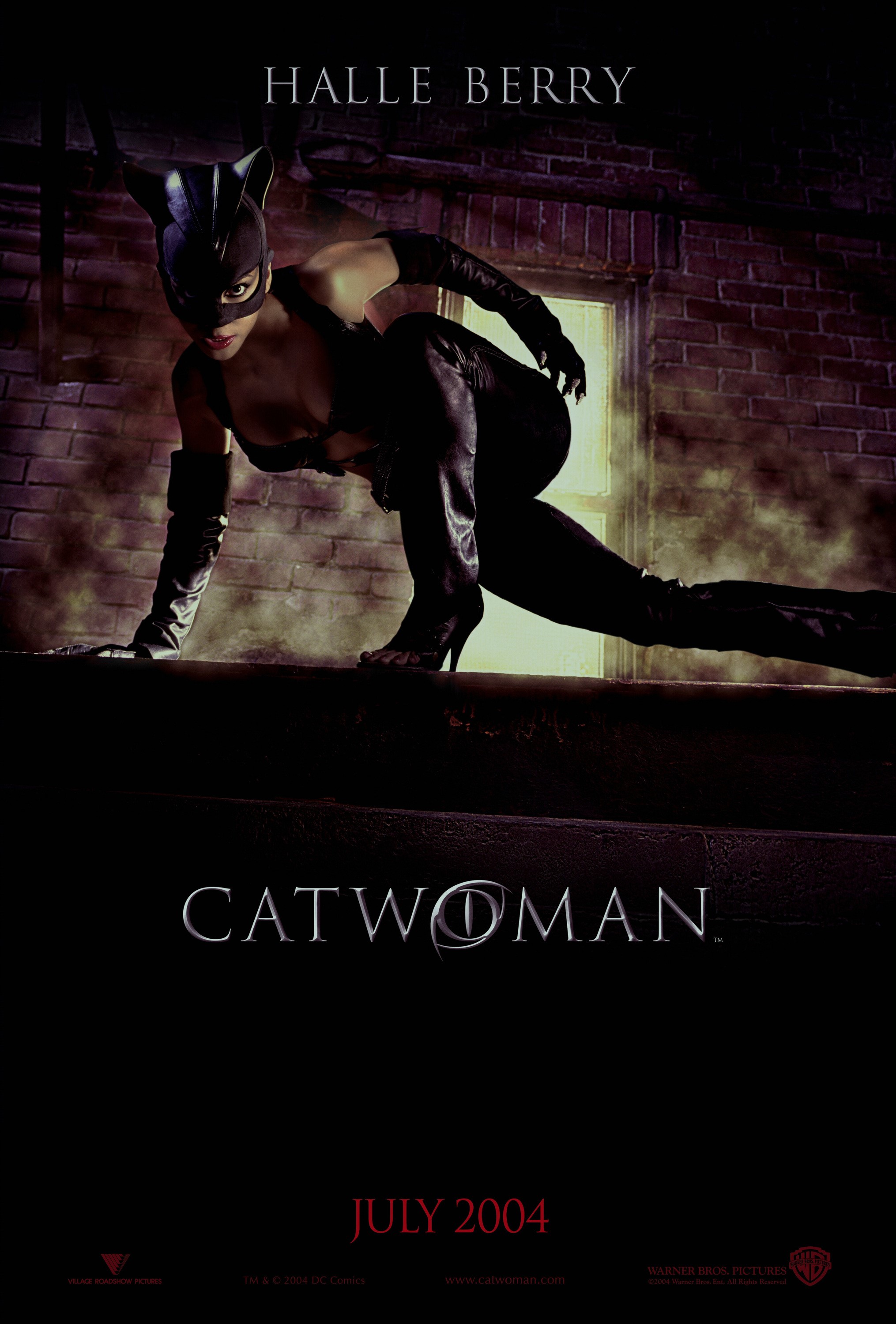
Widely considered one of the worst superhero blockbusters of all time, the notorious Catwoman from 2004 is a horrendous combination of an edgy 2000s music video and all of the worst aspects of a modern superhero flick. Harbouring immensely cringey, pun-based dialogue, terrible CG effects and a forced romantic subplot, among many other issues, Catwoman is a nosedive in quality from many of the beloved comic book stories featuring the famed cat burglar of the DC Universe. Still, for those who are fans of the character, there is little concern of character assassination here, as the protagonist of Catwoman is so distant from the feline that debuted in 1940 that she is virtually unrecognisable outside of the signature ears, whip and black leather outfit. As such, this seedy superhero flick is only worth seeing if you can tolerate a thrown-together story and hideous visuals merely for an ironic laugh.

Plot Summary: While toiling as a graphic designer for the cosmetics company Hedare Beauty, a mammoth corporation on the verge of releasing a revolutionary anti-ageing lotion, the shy and sensitive Patience Philips inadvertently happens upon a dark secret regarding the ointment, soon finding herself in the middle of a corporate conspiracy that eventually takes her life. But, after mysteriously reawakening with the newfound abilities of immense speed, strength, agility and ultra-keen senses, Patience transforms into Catwoman, a skilled and stealthy vigilante determined to foil her former employer’s devilish ploy…

Aside from the central (and rather superficial) underlying theme of the film, which relates to the harmful side of the cosmetics industry, naturally depicted in an over-the-top fashion with inhumane suits eager to make a profit, regardless of consumer harm, the plot of Catwoman is a formulaic yet underdeveloped superhero origin story, with most of the film revolving around the corny sequences of Patience (renamed from Selena Kyle in this iteration) discovering her numerous abilities. Similar to the unwarranted rename, this iteration of the character also possesses unexplained, supernatural abilities, unlike the original version of the character, who shared many similarities to her occasional associate, occasional foe, Batman, sporting an imposing outfit, a secret identity and exceptional fighting capabilities, yet no actual superpowers.

Becoming one of only six actors in history to own both an Oscar and a Razzie after her ‘win’ for her infamous performance in the film, Halle Berry also became the first actress to accept her Razzie in person, stepping out on stage proudly holding both Oscar and Razzie aloft, delivering the brief acceptance speech of; “I’d Like to Thank Warner Brothers for Making Me Do this Godawful, Piece of Shit Movie.” With this in mind, it’s likely not a surprise that Berry portrays Catwoman with all of the comic book cheesiness as other superhero performances of the era, from Ben Affleck’s Daredevil to Wesley Snipes’ Blade, over-delivering every line of dialogue and showcasing the cinematic sexualisation (and animalisation) of the titular character to an absurd degree, despite Catwoman’s sexually provocative side being a key part of her character in most media she appears. That said, Halle Berry does commit to her performance, and commendably so, considering that Patience spends most of her time wide-eyed and humiliatingly unhinged with a profound love of tuna. The supporting cast of Benjamin Bratt, Sharon Stone and Lambert Wilson don’t fare much better, with their performances frequently coming across as either lifeless or cartoonish.

Previously set in Catwoman’s usual home of Gotham City, with Michelle Pfeiffer reprising her role from the blockbuster sequel Batman Returns (1992) before this concept was scrapped when Pfeiffer refused to sign on, Catwoman takes place in an anonymous, grimy city that greatly resembles Gotham, yet is never confirmed to be so. Nevertheless, this iconic, fictional city’s aesthetic barely enhances the film’s visuals in the grand scheme, as the cinematography by Thierry Arbogast is continuously cluttered and visually displeasing, a flaw only exacerbated by the equally unpleasant viridescent colour palette. Moreover, the CG effects throughout the runtime are beyond appalling, appearing weightless and unconvincing, namely during scenes where Patience leaps up walls and across rooftops or when a cat is depicted via uncanny CGI, even though forty-three cats were actually trained and used for the film, seemingly removing the need for CG effects in this respect.

On another note, the soundtrack for Catwoman, primarily relying on not-so-timely songs such as Scandalous, Outrageous and Crazy in Love, is just as nostalgic as it is corny and excessively distracting. Likewise, the original score by Klaus Badelt is loud and overbearing, often unintentionally emphasising the film’s poor sound mixing, like with the clamorous track; Felineious Assault.

With Catwoman, it’s clear that the strangely mononymous French director Pitof (Vidocq, Fire & Ice: The Dragon Chronicles) set out to make a film as stylish and sensual as possible within the boundaries of its rating. And, while much of the film’s style is evidently influenced by Pitof’s background in outlandish, sultry music videos, blockbusters generally don’t rely on constant hyperactive shots, and Catwoman is a testament to why.

In summary, Catwoman is a baffling, dated mess of a superhero-led blockbuster, which is unfortunate, given how significant of a character Catwoman is, repeatedly playing a pivotal role in stories across the DC Universe, both featuring the Caped Crusader and otherwise. Thus, it’s not an exaggeration to say that Catwoman is a ‘cat-astrophe’ in practically every aspect, but definitely as an adaptation. Rating: 1/10.

catwoman_ver2_xxlg

Underwater (2020) – Film Review

“There’s a Comfort in Cynicism. There Is a Lot Less to Lose.” – Norah Price

Substituting deep space for the deep sea, Underwater is a 2020 sci-fi thriller that takes a hefty amount of inspiration from the illustrious Alien franchise, namely the original 1979 sci-fi-horror classic, with its story centring on a group of survivors navigating a dim, claustrophobic facility submerged deep beneath the ocean’s surface, all while a terrifying, otherworldly force stalks them, picking them off one by one. It’s a familiar format, to be sure, and whilst some will find this type of narrative worn out by this point, I have always enjoyed these sorts of unnerving stories, especially when filmmakers, like director William Eubank (The Signal, Paranormal Activity: Next of Kin, Land of Bad), repeatedly strive to integrate stylish visuals and elements of Lovecraftian horror to suppress the strong sense of déjà vu.

Plot Summary: Operating in the murky depths of the Mariana Trench, the Kepler 822, a research and drilling installation, slowly pushes its way towards the centre of the Earth. But, when a mysterious earthquake extensively damages much of the deep-water facility, mechanical engineer Norah Price, along with a handful of other survivors, band together and take action, faced with the immense task of suiting up and trekking across the ocean floor to safety as something sinister lurks among the facility’s scattered debris…

As a result of the Walt Disney Company’s takeover of 20th Century Fox as part of their acquisition of 21st Century Fox in 2019, Underwater‘s initial release date was drastically pushed back, with production occurring in early 2017. Due to this prolonged release and its skimpy marketing, Underwater was a financial failure, which is unfortunate, as while the film is nothing extraordinary, it is an entertaining flick that keeps up a relentless pace, clocking in at an agreeable nighty-six minutes. Still, it’s indisputable that Underwater wears its inspirations on its sleeve, both to its detriment and otherwise, sometimes appearing overly familiar, primarily through its numerous parallels to the previously mentioned Alien series, beginning straight from the opening scene as the camera slowly pans around the foreboding corridors of the Kepler Station with no dialogue spoken, similar to the opening scene of Alien (1979), where there is likewise no dialogue as the camera pans around the Nostromo, the spacecraft the central characters are aboard.

Evidently inspired by Ellen Ripley through her quick thinking and authority in the face of an unknown threat, Kristen Stewart portrays protagonist Norah Price, who, whilst not incredibly memorable or extensively developed, is given enough characterisation to make her an honourable lead, with Stewart appropriately conveying dread or courage whenever required. Furthermore, the supporting cast of Vincent Cassel, Mamoudou Athie, T.J. Miller, John Gallagher Jr. and Jessica Henwick are terrific, despite many of their characters being archetypes at best and paper-thin cutouts at worst. Yet, in all honesty, in a film such as this, I feel that is all you really need, given that most of the characters serve their purpose in merely portraying walking appetisers for the creatures that are stalking them, showcasing their fearsome capabilities. Additionally, Underwater does a splendid job whenever it delivers exposition, particularly during an early sequence between Norah and her colleague Rodrigo, where the audience is swiftly supplied with everything they need to know.

Presenting the ocean as just as frightening as the vast darkness of space, the cinematography by Bojan Bazelli is stellar for the most part, as Bazelli captures the claustrophobic atmosphere of the Kepler beautifully, supplying every moment with suspense, not only because of the creatures, but the unease induced by the opaque water and crushing pressure attempting to breach the ravaged walls of the facility, a notion amplified by the aquatic colour palette of blues, greys and greens. On top of the camerawork, the design of the creatures is meritorious, clearly taking visual influence from much of H.P. Lovecraft’s work, as well as well-known ocean-dwelling wildlife, such as anglerfish. Regrettably, however, these unsettling creature designs are partially spoilt by the second-rate CGI that perpetually represents them.

For its part, Marco Beltrami and Brandon Roberts’ original score is adept at provoking the asphyxiating claustrophobia one would feel being trapped in an underwater facility via tracks like The Bends, Sprung a Leak and Squid Market, again in a similar vein to the Alien franchise. Furthermore, the sound design throughout the runtime lends itself to the ominous atmosphere, as the submerged facility ceaselessly creaks from the damage it has endured. But, the sound design is undoubtedly at its most effective when heard during the point-of-view sequences from inside Norah’s diving suit.

Intriguingly, for the many underwater sequences, the cast sported heavy, airtight suits, each weighing around 63kg, they were then filmed on dimly lit soundstages utilising volumetric scanning. An interesting bit of trivia that, in my opinion, highlights how much effort was put into this flick outside of its undeniably poor marketing.

In summary, although Underwater is occasionally overly reminiscent (or reliant if you prefer) on renowned films across its primary genres, I don’t believe that means Underwater can’t be admired for what it is, as personally, I’d much rather see an original narrative heavily inspired by a beloved piece of cinema, than a remake or unwarranted sequel of/to one. As such, Underwater is a film that I feel will find a second life on streaming services, as this sci-fi-thriller is a pleasant watch for anyone looking to immerse themselves in some deep-sea storytelling. Rating: 6/10.

underwater_xxlg

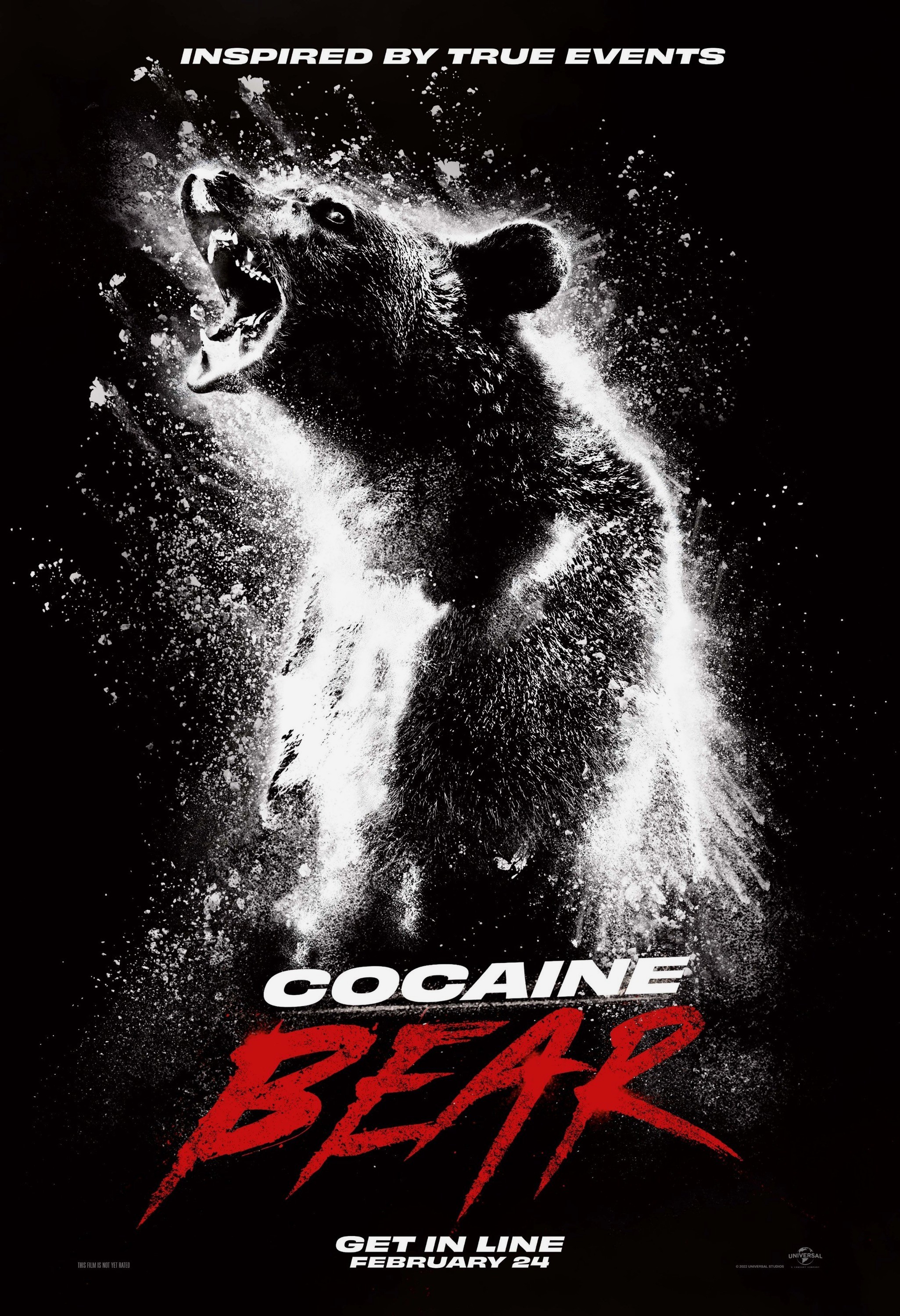
Cocaine Bear (2023) – Film Review

“What the Fuck Is Wrong With That Bear?!” – Beth

Partially inspired by an incident that took place in 1985, where lawyer-turned-drug smuggler Andrew Thornton took to the skies to drop blocks of cocaine over Knoxville, Tennessee, before leaping out of his aircraft carrying a duffel bag containing roughly £11 million worth, ultimately falling to his death when his parachute malfunctioned. A regional black bear was believed to have stumbled upon some of his stash, as two months later, a Georgia hunter discovered a bear carcass surrounded by the remains of a bag investigators later deemed to be Thornton’s. Although no deaths were reported as a result of the intoxicated animal, with a medical examiner concluding that the two-hundred-pound beast likely overdosed within minutes, dying from cerebral haemorrhaging and respiratory heart failure, the notorious story of the amusingly nicknamed; “Pablo Escobear,” was ripe for a cinematic adaptation given its utter absurdity, and the bluntly titled; Cocaine Bear, released in 2023, aimed (yet failed) to fill that void.

Plot Summary: When a duffel bag stuffed with around $14 million in cocaine falls from the sky in the aftermath of a 1980s drug smuggling excursion, a colossal, national park-roaming American black bear unconsciously devours much of the white powder, steering the animal on a bloody path of destruction as it becomes the most dangerous apex predator on the planet for the next few hours…

Directed by Elizabeth Banks (Movie 43 – Segment: Middleschool Date, Pitch Perfect 2, Charlie’s Angels), the title of Cocaine Bear was originally intended to be a temporary working title, but the producers eventually decided to release the film under that moniker as they couldn’t think of a title more fitting. To some extent, this bit of trivia serves as a representation of the film itself, as Cocaine Bear is exactly what it sounds like; a ludicrous, violent and corny comedic thriller that adapts a story almost too outlandish to believe. Of course, to create a more marketable flick, the filmmakers do make a string of alterations to the real story as, in reality, when the animal’s carcass was found, it had already been dead for around a month, in contrast to the rampage depicted in the film, which occurs shortly after the smuggler’s death. Moreover, investigators never reported any threatening or destructive behaviour ahead of its death, nor did the bear eat the entirety of the supply Thornton was thought to have smuggled, as officials deduced that an unknown individual had fled with a portion of the stash. Still, it is an amusing tale to bring to the silver screen, especially since animal experts have always been somewhat uncertain as to whether animals experience the same type of high that humans do from substances like alcohol or marijuana, despite some animals seemingly ingesting substances like catnip and hallucinogenic mushrooms for their recreational effects.

Featuring one of the last-ever performances from famed actor Ray Liotta, as the actor sadly passed away on May 26th, 2022, a mere week after he re-recorded some of his lines during the film’s post-production phase. The central cast of Keri Russell, Alden Ehrenreich, O’Shea Jackson Jr., Isiah Whitlock Jr. and Liotta himself are all serviceable in their various roles. While some of the cast portray relatively likeable yet significantly underdeveloped, hapless residents, others lend their acting skills to portraying scummy drug peddlers who ultimately earn their comeuppance when confronting the ravenous, cocaine-plugged beast. However, whilst much of the cast is well-versed in the comedy genre, one of Cocaine Bear‘s most significant shortcomings is undoubtedly its inconsistent, overly cartoonish humour throughout.

Aside from the CG effects of the titular bear, which adequately convey its size, strength and weight, the visuals of Cocaine Bear are rather bland, rarely employing distinctive shots or creative set design as the cinematography by John Guleserian predominantly largely relies on generic mid-shots, with much of the editing harbouring little rhythm and the bloodthirsty beast’s killings possessing minimal creativity, often having a severed limb merely dumped in front of the camera.

In terms of the original score, talented composer Mark Mothersbaugh’s soundtrack is sufficient yet rather sterile in the grand scheme, with the poorly-anointed tracks of Bear Attack, Bathroom Fight and Bear Dance being the only high points as Mothersbaugh attempts to integrate a selection of instruments from the ’80s to lend authenticity to the 1980s setting.

Bizarrely, although set in an unnamed national park in Knoxville, Tennessee, Cocaine Bear was truthfully shot in Ireland, with the crooked forest trails of the Irish outdoors appearing largely indistinguishable from that of the U.S. Very few Irish actors were cast, however, excluding extras, presumably to play into this implied American setting.

In summary, Cocaine Bear stumbles even as the lowbrow flick many (myself included) expected it to be, lacking entertainment value and a strong sense of satire in spite of the film leaving a peculiar cinematic legacy, with a slew of low-budget rip-offs emerging shortly after its release, each more absurd than the last, such as Cocaine Shark (2023) and Attack of the Meth Gator (2023). Thus, I’d suggest bypassing Cocaine Bear and simply scouring for a documentary on the event. Conversely, if you are ever passing through Lexington, Kentucky, perhaps consider visiting the Kentucky for Kentucky Mall, where the bear’s preserved body is actually on display, further corroborating the animal’s enchantingly strange legacy. Rating: 4/10.

cocaine_bear_xxlg