Logan (2017) – Film Review

Even though many comic book fans weren’t delighted when it was first announced that the then-unknown Australian actor Hugh Jackman, would be taking on the pivotal role of ‘Wolverine’ for the first live-action ‘X-Men’ film, nowadays, it’s hard to imagine anyone else in the role, with Jackman appearing in multiple films as the regenerative superhero. Nevertheless, when it finally came time for Jackman to sheathe his claws in 2017 with ‘Logan,’ the foreboding task of bringing this beloved character’s cinematic story to a close fell to director James Mangold (Walk the Line, The Wolverine, Le Mans ’66), who suitably crafted a brutal, bloody and surprisingly thoughtful final outing for the iconic hero.

Plot Summary: In a bleak future where mutants are nearly extinct, a weary ‘Logan’ leads a quiet life as an undercover limo driver, caring for an ailing ‘Charles Xavier’ at a remote outpost on the Mexican border as he awaits his inevitable death, slowly being poisoned by his adamantium skeleton. But, ‘Logan’s plans to hide himself away from the outside world are swiftly upended when he meets ‘Laura,’ a mutant child on the run from a sinister organisation…

Very loosely based on the ‘Old Man Logan’ comic book series, ‘Logan’ is a film free of the baggage that comes with being a part of the ‘X-Men’ franchise, as beyond a couple of nods/references the film essentially ignores much of ‘Logan’s past, which is definitely a decision made for the better, in my opinion, as the now-discontinued franchise was only ever consistent in its lack of consistency, jumping from entertaining entries, such as ‘X-Men: First Class’ and ‘X-Men: Days of Future Past,’ to greatly disappointing ones, like ‘X-Men: The Last Stand’ and ‘X-Men: Apocalypse.’ ‘Logan,’ however, takes a very different route, focusing on a straightforward road-trip narrative that explores ‘Logan’s struggle between his human compassion and animalistic killer instinct.

These ideas all massively benefit from the film’s performances, as ‘Logan’ is without a doubt Jackman’s finest performance as the titular character, when placed alongside Patrick Stewart, who returns as ‘Charles Xavier/Professor X,’ the pair of actors portray far more broken versions of their respective characters, as ‘Logan’ grapples with alcoholism and the immense guilt for all those he has hurt, while ‘Charles’ is now a delusional shell of the man he once was, battling dementia with all the pharmaceuticals that ‘Logan’ can afford. Boyd Holbrook also delivers a praiseworthy performance as ‘Donald Pierce,’ the leader of the merciless security team tasked with capturing ‘Laura’ (portrayed brilliantly by Dafne Keen). And, whilst it’s no easy task to stand toe-to-toe with Jackman’s ‘Wolverine’ and seem like a sincere threat, Holbrook does exactly that. For me, the only out-of-place casting choice is Stephen Merchant as ‘Caliban,’ as although Merchant isn’t awful by any means, I never felt his performance quite matched up to those around him. Though this is somewhat redeemed by the parental relationship between ‘Logan’ and ‘Laura,’ which in many ways, is the true heart of the film.

Taking heavy inspiration from a number of classic westerns, the cinematography for ‘Logan’ handled by John Mathieson gives the film a vastly different appeal than any of the films the character has previously appeared in as James Mangold keeps the film grounded in reality as much as possible, having the story take place primarily in remote towns, barren deserts and wide-reaching woodlands, in addition to filming on-location and utilising a large number of practical effects to avoid becoming too CGI-heavy similar to some of the other entries in the ‘X-Men’ series.

The film’s original score by Marco Beltrami is also incredibly effective at building tension and evoking emotion, as the score combines almost horror-esque tracks with far more dramatic pieces to deliver a varied yet still fitting soundtrack, with tracks, such as ‘The Reavers,’ ‘X-24’ and ‘Farm Aid,’ being almost uncomfortable to listen to, while the score’s final track; ‘Don’t Be What They Made You,’ is a beautifully sombre piece that will undoubtedly bring a tear to any listener’s eye.

Yet, the highlight of Logan’ for most viewers will surely be its thrilling action sequences, as due to ‘Logan’ being the second ‘X-Men’ film to have a higher age rating than 2016’s ‘Deadpool,’ the film never shies away from displaying graphic violence, having scene-upon-scene of criminals and security alike being slashed and torn apart by ‘Logan’ and ‘Laura.’ Finally giving in to comic book enthusiasts’ demands and allowing ‘Wolverine’ to exhibit his animalistic nature and fully unleash his berserker rage, resulting in innumerable moments of blood-spattering, barbarous fight choreography.

In summary, I feel ‘Logan’ earns the gut-wrenching reactions it initially received from ‘Wolverine’ fanatics, as despite the ‘X-Men’ franchise as a whole being extremely inconsistent, ‘Logan’ is a film that proves blockbuster franchises should save their best film for last, as Hugh Jackman’s long-running portrayal of the character will no doubt go down in cinematic history. And, I truly have pity for whichever Marvel executive will be tasked with recasting ‘Wolverine’ when the day eventually arrives for a reboot of the character/franchise, as finding another actor to fill Jackman’s shoes will be no easy task, but for whoever does, I’m sure most fans will need an adjustment period. Final Rating: 8/10.

logan_ver3_xxlg

Cats (2019) – Film Review

Despite ‘Cats’ being well-known as one of the longest-running stage shows in West End/Broadway history, it is also widely acknowledged that the cat-centric musical is empty spectacle and not much else. This along with many other reasons, may explain why the adaptation of the musical we received in late 2019 has since gone on to be regarded as one of the worst musicals ever put to film, as director Tom Hooper (The King’s Speech, Les Misérables, The Danish Girl) utterly squanders an enormous budget and a talented cast in exchange for a paper-thin plot, a constant bombardment of irritating songs, and some truly horrendous CG effects that will leave most audience members begging to be put out of their misery.

Plot Summary: A tribe of cats known as ‘The Jellicles’ yearly meet for a ‘Jellicle Ball,’ in which, they decide which of their group will ascend to the ‘Heaviside Layer’ and return to a new life. But, on this year, the mysterious napoleon of crime; ‘Macavity,’ has other, more sinister plans…

Ever since it was first announced that Oscar-winning director Tom Hooper would be adapting the iconic feline-focused musical, the film has become such joke-fodder that it’s hard to see past the countless number of memes mocking the film’s dreadful visuals or comedic moments, which is a shame. Not because the film we received is even remotely entertaining, of course, but because the adaptation we almost received could’ve been fantastic, as originally, animation house, Amblimation, planned to adapt the musical into an animated film before the project was shelved following the company’s closure. This idea of translating ‘Cats’ into a traditionally animated film remained all the way to Hooper coming on board to direct, and, in my opinion, also makes considerably more sense considering the original musical is based on the 1939 poetry collection; ‘Old Possum’s Book of Practical Cats’ by T. S. Eliot, a book brimming with whimsical sketches of various cats from a variety of backgrounds.

Newcomer Francesca Hayward, stands-out as one of the film’s few redeeming aspects, as her character; ‘Victoria,’ serves as an audience surrogate, her empathy occasionally shining through as she is rapidly introduced to character after character, until we uncover which ‘Jellicle’ cat will be chosen to ascend. The rest of the film’s prominent cast, however, including Jennifer Hudson, Taylor Swift, James Corden, Jason Derulo, Idris Elba, Judi Dench, Rebel Wilson, Ian McKellen, and many more, range from extraordinarily cringe-worthy to subpar, although their performances are further hindered by the screenplay’s lack of characterisation and dramatic moments.

Whilst the film’s cinematography by Christopher Ross does a successful job of upgrading the beige setting of the stage show into a vibrant, neon-lit approximation of old London, allowing for a handful of visually pleasing shots, it’s impossible for ‘Cats’ to claw itself away from the rest of its distracting visuals. That not only includes the obvious, but also much of the film’s set design, as several of the locations the cats enter are supposed to appear as if they are far larger than the characters in order to display each cast member as cat-sized, the drawback here being that there is usually no consistency with these scaled-up sets between shots.

Moving onto the music, Andrew Lloyd Webber, creator of the original musical, actually handled the film’s original score in addition to writing a couple of songs exclusively for the film. And, while songs, like ‘Jellicle Songs for Jellicle Cats,’ ‘The Old Gumbie Cat,’ ‘The Rum Tum Tugger’ and ‘Skimbleshanks: The Railway Cat,’ may bring a smile to fanatics of the stage show, in the film, these songs only come across as infuriating as they are so frequent, barely making time for anything else, aside from one or two atrocious cat puns.

Lastly, there is the appearance of the cats themselves, by far the most discussed/mocked element of the entire film, and for good reason, as the uncanny part-human, part-CG appearances of the furred critters appear extremely unnatural and very under-polished. So much so, that a mere two days after the film’s initial release, Universal Pictures announced that they would be releasing an updated version of: ‘Cats’ with enhanced CGI. Whilst this is partly a result of Tom Hooper’s broad direction, an article published the following year by The Daily Beast featured multiple visual effects artists who worked on the film, each claiming they had little-to-no time to finish the film’s huge array of effects, with some artists even having to sleep under their desks to get the film completed on time, at least, if said article is truthful.

In summary, even though I’m personally not an admirer of Tom Hooper’s filmography, Hooper is not a wholly incompetent director, but ‘Cats’ is undeniably, an absolute catastrophe of a fantasy-musical from beginning-to-end. Quickly being placed amongst the one hundred worst films of all-time on IMDb and forcing the plans for its sequel (and spin-off television series) to be immediately scrapped, ‘Cats’ is possibly one of the biggest cinematic failures of the past decade, as its copious number of flaws massively overshadow what few, if any, redeeming factors the film had left, resulting in an insufferable viewing experience that’ll make most film buffs feel remorse for everyone involved in this embarrassing production. Final Rating: high 1/10.

cats_xxlg

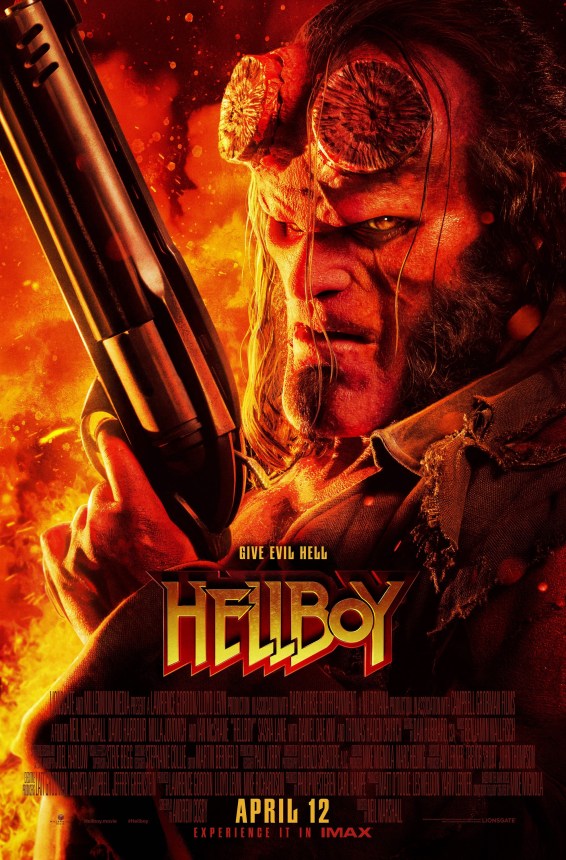
Hellboy (2019) – Film Review

In mid 2012, actor Ron Perlman once again endured the four hour make-up routine required to transform him into his iconic character: ‘Hellboy’ and fulfil the Make-A-Wish request of a six-year-old boy with leukaemia. Director Guillermo del Toro was so touched by this event that it inspired him to start production on a third ‘Hellboy’ instalment. But, following a dispute between del Toro and producer Mike Mignola, the project was soon cancelled, and instead, Mignola and his team began work on a reboot of the franchise, which finally released in 2019, to truly abysmal results.

Plot Summary: Whilst working side-by-side with his adopted father for the ‘Bureau for Paranormal Research and Defence,’ ‘Hellboy,’ a supernatural creature who came into our world in 1944 as a result of a demonic Nazi ritual, struggles to accept which world he belongs to, that being one of monsters, or one of men. All the while, an evil sorceress known as ‘The Blood Queen,’ returns to the modern world, eager to take her revenge on humanity for imprisoning her centuries ago…

According to producer Mike Mignola, the intention with this reboot was to replicant a style and tone closer to that of the original source material, as despite del Toro’s version of ‘Hellboy’ often being light-hearted aside from one or two disturbing moments, the original comic series created by Mike Mignola is, in reality, far darker and more gruesome. And, whilst this goal of wanting to make a ‘Hellboy’ film more horror/fantasy-oriented rather than just a typical superhero blockbuster is commendable, this reboot of the series continuously stumbles due to this tonal shift, even with talented director Neil Marshall (Dog Soldiers, The Descent, Doomsday) overseeing the project. Yet, this is only one of the film’s many problems, as it’s hard to sit through even a single viewing of ‘Hellboy’ without noticing the film’s incredibly fast pacing, awful comedic moments, and beyond messy plot, which for some reason draws, from four separate storylines from the ‘Hellboy’ comics.

‘Hellboy,’ or particularly, David Harbour’s performance as the titular character, is possibly the film’s finest aspect, as rather than just lazily mimicking Perlman’s beloved version of the character, Harbour displays a less mature interpretation of the superhero. Portraying the horned hero as a conflicted character, younger and stronger than Perlman’s version, but unsure as to if he is a real hero, which is an interesting internal conflict to explore and about the only element of the film that is consistent. Then there is Ian McShane as ‘Hellboy’s father figure, who is serviceable in his role alongside Milla Jovovich as the villainous; ‘Blood Queen,’ who, unfortunately, delivers one of the most over-the-top performances of her entire career.

Aside from the small detail of the filmmakers ensuring the colour red is never present in the same scenes as ‘Hellboy’ himself (excluding scenes where blood is shed, of course), the cinematography by Lorenzo Senatore is your usual affair for a superhero flick, having a handful of pleasant shots scattered amongst the plethora of bland hand-held camerawork utilised for action scenes and grand moments of destruction. But, regardless of how impressive the cinematography may or may not be, there is no distracting from the film’s unappealing CG effects, as in spite of the creature department clearly trying their best with the detailed costumes and prosthetic make-up on display, nearly all of the CG effects throughout ‘Hellboy’ appear instantly dated.

The original score by Benjamin Wallfisch is a peculiar concoction, being an odd mish-mash of orchestral and electronic tracks which only succeed in making the soundtrack feel quite dull when it’s not overly loud and irritating. Or at least, that’s the score before mentioning its use of electric guitars, which try desperately to present the soundtrack as something ‘awesome,’ but only emerges as annoying at best, with the film’s signature track; ‘Big Red,’ being the biggest offender for this.

However, an aspect of the film that is more in line with del Toro’s previous ‘Hellboy’ adaptation is its creatures, as although the effects that bring them to life aren’t impeccable, the actual creature designs are truly something be admired, with the ‘Hellboy’ comics clearly providing the filmmakers with plenty of visual influence. Even ‘Hellboy’s redesign was inspired by David Harbour’s own features, with the effects team adding a larger jaw and a heavier brow to further fit with Harbour’s facial structure.

In summary, while I can appreciate the effort that went into ‘Hellboy’ in some areas, the film’s flaws are just so evident it’s nearly impossible to ignore them. From its convoluted and overstuffed story to its dreadful CG effects, ‘Hellboy’s thrilling moments of action or amusing dark humour are minor when compared to its faults. Yet, by far the most frustrating part of this reboot is that it stripped away our final chance of seeing a third entry in the original ‘Hellboy’ series, an instalment myself and many other fans of this beloved character had been wanting to see for quite some time. Instead, we’re now stuck with this disappointing reboot, which failed miserably to reignite the spark of excitement in this superhero franchise. Final Rating: low 3/10.

hellboy_ver6_xxlg

Steve Jobs (2015) – Film Review

The third film to be based on the real-life story of tech-designer Steve Jobs, following ‘Pirates of Silicon Valley’ in 1999 and ‘Jobs’ in 2013, ‘Steve Jobs’ is a gripping drama which interestingly chooses to take place over the time-span of three iconic product launches, focusing on much of the backstage drama of Jobs’ life as he attempts to revolutionise the world of technology and eventually become the C.E.O. of Apple Inc. Making for the best cinematic interpretation of Steve Jobs’ life story as of yet, despite the film lacking in memorability in a few key areas.

Plot Summary: Steven Paul Jobs has always been known a major player in the digital revolution of the 1980s and 1990s, his passion and ingenuity being the driving force behind the digital age we currently inhabit. But, whilst his commitment to revolutionise the technological landscape was more than commendable, it was also sacrificial, as Jobs’ work often took a toll on his family life…

Directed by Danny Boyle (Trainspotting, 28 Days Later, Slumdog Millionaire), ‘Steve Jobs’ was actually considered a box-office failure upon its initial release, with the film being pulled from over two-thousand cinemas after just two weeks. And, while I can’t say this is too surprising, as a biopic focused around the story of a computer designer does sound dull at a first mention. In execution, ‘Steve Jobs’ is anything but boring, as the film’s sharply written screenplay makes for a very captivating watch, and draws many parallels to ‘The Social Network’ from 2010, which is no coincidence, as both films were written by Aaron Sorkin. Furthermore, David Fincher was once attached to direct the film following his previous collaboration with Sorkin on ‘The Social Network,’ but Fincher was eventually dropped in favour of Boyle after he demanded a higher salary.

First and foremost, ‘Steve Jobs’ is definitely an actor’s film, as the performances outweigh nearly every other aspect of the film aside from perhaps the writing, with Kate Winslet, Seth Rogen, Michael Stuhlbarg, and Jeff Daniels all delivering tremendous portrayals of these real-life figures. With Michael Fassbender portraying the titular man himself, and although Fassbender is quite far physically from Jobs’ appearance (with Fassbender going the extra mile to wear brown eye-contacts to achieve a closer look), Fassbender impresses as usual, presenting Steve Jobs as a brilliant success when it comes to his products, but a significant failure when he tries to communicate with the people in his life. And, refreshingly, the film is never afraid to delve into Jobs’ many personality flaws.

Due to the film playing out over the course of three different product launches, beginning with the Macintosh in 1984 and ending with the unveiling of the iMac in 1998, the three time-periods are cleverly represented through the cinematography by Alwin H. Küchler, with each segment being shot on 16mm, 35mm, and digital to illustrate the advancement in Apple’s technology across the sixteen years of Jobs’ depicted life. And, with the camera constantly tracking the actors as they walk through ever-changing locations, the camerawork really helps to make the film more engaging. Director Danny Boyle even integrates some of his signature ‘Trainspotting’ style with the film’s editing, displaying flashbacks through snappy quick cuts and projection-like images which appear stretched over the walls behind those in frame.

From ‘It’s Not Working’ to ‘Child (Father),’ ‘Russian Roulette,’ and ‘1998. The New Mac,’ the original score by Daniel Pemberton is a perfect mixture of minimalist electronic and grand orchestral tracks, encapsulating both the technological achievements of Jobs’ career as well as the spectacle of each one of unveilings. Unfortunately, the one moment the film’s soundtrack falters is an important one, as the film’s very last scene is sadly spoilt by the use of the pop song; ‘Grew Up at Midnight,’ which feels immensely out-of-place when compared to the remainder of the film’s score.

Whilst ‘Steve Jobs’ is well-written on all regards, with much of the film’s dialogue being continuously witty and humorous in addition to playing into Jobs’ God complex and smug nature. However, with that said, a large amount of the film’s writing also relies on tech-specific dialogue, with everything from circuit boards to graphical interfaces and binary code all being casually mentioned in conversations, which, I imagine, could be fairly confusing for some viewers depending on how familiar they may be with that terminology.

In summary, ‘Steve Jobs’ is certainly one of the better biographies in recent years. Although I’m sure many will still be disinterested in the film purely for its main focus, the film does have a lot to offer and, in my opinion, not only excels past the previous films based on the story the late tech-designer, but also the novel; ‘Pirates of Silicon Valley,’ which the screenplay actually takes heavy inspiration from. And, even in spite of several of Jobs’ associates claiming the film doesn’t represent the man they knew, just like Mark Zuckerberg in ‘The Social Network,’ this version of Jobs is very much a creation of its writer, and what a sensational creation it is. Final Rating: 8/10.

steve_jobs_xxlg

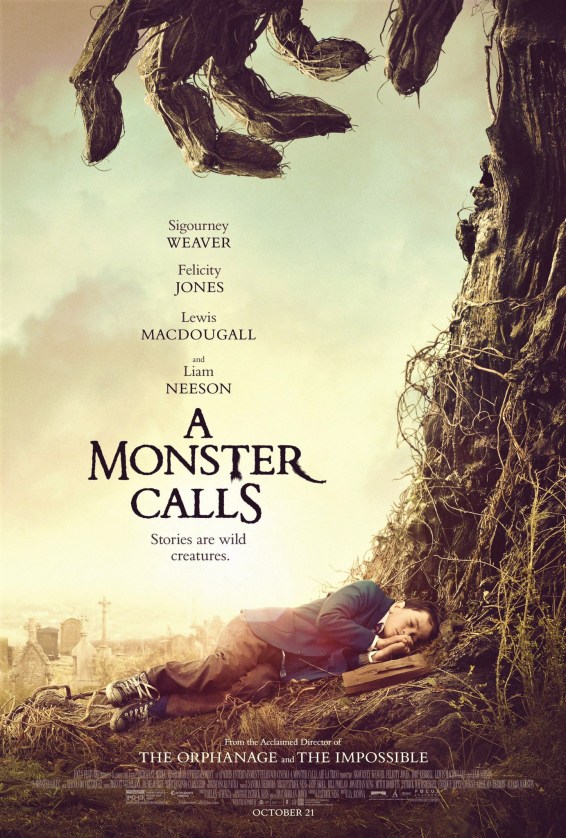
A Monster Calls (2016) – Film Review

Based on the novel of the same name by Patrick Ness and directed by J. A. Bayona (The Orphanage, The Impossible, Jurassic World: Fallen Kingdom), 2016’s ‘A Monster Calls’ is far from being the simplistic creature-feature its title may imply. Instead, this imaginative and soul-stirring drama balances its mature themes and fairytale-esque elements to deliver an engrossing and incredibly moving story, which despite its many positive reviews, has mostly gone unmentioned by many film fanatics since its initial release.

Plot Summary: After realising his mother is dying from terminal cancer, twelve-year-old ‘Conor O’Malley’ struggles to accept that he soon may have to live in a world without his caring mum. Until, later that night, when ‘Conor’ is visited by a tree-like monster in what he believes to be a dream, ‘Conor’ sees an opportunity to save his mother as the creature tells the boy he will heal her after he listens to his three stories…

Focusing on heavy themes of family and loss, the film adaptation of ‘A Monster Calls’ follows its source material very closely, with only a few small differences. One of these alterations being some additional scenes that were written exclusively for the film, including one scene that takes place immediately after the ending of the novel. But, with the original author Patrick Ness writing the film’s screenplay, this accuracy shouldn’t be too surprising. However, interestingly, it wasn’t Ness who originated the story, as the novel was actually started by Siobhan Dowd, who, sadly left it unfinished after her death, leaving Ness to complete the novel in 2011, yet Dowd is still credited as the creator of the original idea during the film’s end credits.

While the film’s supporting cast of Felicity Jones, Sigourney Weaver, Toby Kebbell, and Liam Neeson as the voice of ‘The Monster,’ are all superb in their various roles, its Lewis MacDougall who takes on the lead role as ‘Conor’, which is by no means an easy feat considering his age, as ‘Conor’ is a fairly complex character, being a young boy dealing with a very difficult situation he doesn’t fully understand, unwilling to accept that is mother is in constant pain, and more than likely, won’t be able to recover from her sickness. ‘Conor’s young age also makes his outbursts of rage and sorrow more understandable, as nearly every viewer can probably recall the difficulty of attempting to control their emotions when they themselves were a child. The now-sought-after actor Tom Holland also has a small role in the film, as Holland actually served as the stand in for ‘The Monster’ on set, following his previous collaboration with Bayona on ‘The Impossible’ in 2012.

The film’s cinematography by Oscar Faura not only manages to capture the true scale of ‘The Monster’ at many points, but also allows for a large array of visually appealing shots, effectively utilising everything from extreme close-ups to aerial wide shots to increase the film’s spectacle. The film’s CG effects aren’t quite as impeccable, however, as there are a noticeable amount of CGI-heavy moments which have suffered (if only slightly) from the film’s age.

Although the story of ‘A Monster Calls’ is very powerful on itself, there is no denying it is greatly elevated by Fernando Velázquez’s original score, as many of the film’s accompanying tracks, such as ‘Dad Arrives’, ‘Big Dreams’, ‘The Truth,’ and certainly the film’s final track; ‘End Credits’, all massively help to evoke emotion in the viewer, inevitably adding up to the film’s gut-wrenching conclusion. Any fans of Bayona’s early filmography are also sure to enjoy the film’s quick throwback to the director’s horror roots, as the score becomes quite dread-inducing during the first scene with ‘The Monster,’ as ‘Conor’ is unsure of the creature’s intentions.

But, without a doubt the most impressive aspect of this adaptation has to be ‘The Monster’s stories, as every time ‘The Monster’ tells ‘Conor’ these fantastical tales, the film takes a dramatic shift from live-action into animation, bringing its stories to life through water-coloured drawings and sketches, which not only plays into ‘Conor’ and his mother’s flair for artistry, but these sequences are also when the film is at its most creative, having the camera fly through splurges of paint and water, engulfing the viewer in an array of magnificent colours and locations alike.

In summary, ‘A Monster Calls’ is truly a touching and prodigious film. Whilst perhaps not completely flawless in its execution, mostly due to its unexplored side characters and occasional piece of hand-held camerawork, I feel most would find it impossible to not relate to the story in someway, as it’s sublime performances, enchanting visuals, and beautiful original score all serve their purpose of complimenting the film’s narrative, which is just as captivating as it’s novel counterpart. And, for me, ‘A Monster Calls’ still reigns as my personal favourite film from J. A. Bayona, and I’m positive the film became (and will continue to be) a showcase for Patrick Ness as a talented screenwriter. Final Rating: 8/10.

monster_calls_xxlg

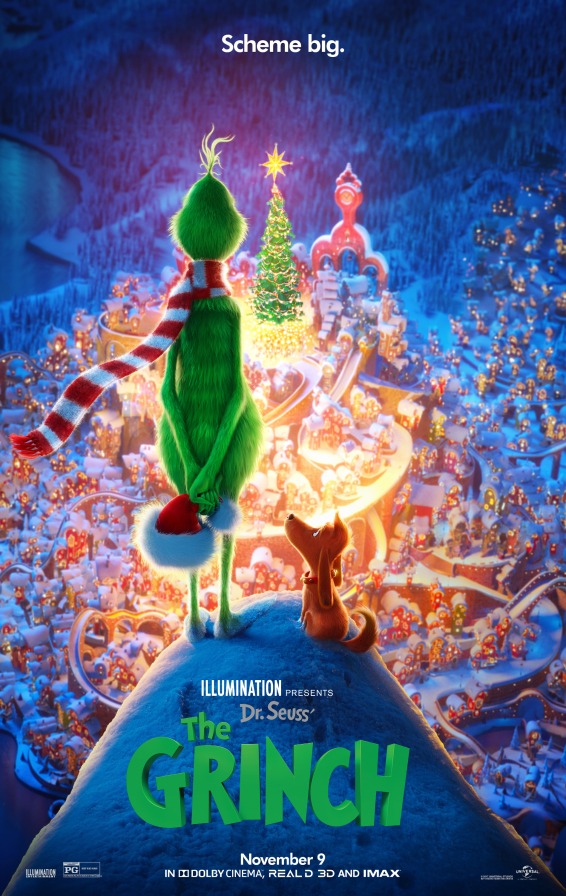
The Grinch (2018) – Film Review

Theodor Seuss Geisel, better known as his pen-name; ‘Dr. Seuss,’ is recognised today as one of the best authors in children’s literature. Through his whimsical writing, memorable characters and surreal illustrations, many of Geisel’s stories have become truly timeless as a result of how original they were compared to other children’s books released around the same period. So, of course, it would only be a matter of time till Geisel’s various characters began making their way to the silver screen, with one of his most villainous characters; ‘The Grinch,’ receiving many adaptations, the most recent of which possibly being the worst to date.

Plot Summary: In the town of ‘Whoville,’ the residents, known as the ‘Whos,’ excitedly await the arrival of Christmas Day. But, just north of ‘Whoville,’ on the top of ‘Mount Crumpit,’ the cantankerous and green-furred; ‘Grinch,’ begins to hatch a plan with his loyal dog; ‘Max,’ crafting a scheme to steal Christmas from the ‘Whos’ in an attempt to silence their irritating holiday cheer once and for all…

This 2018 readaptation of ‘How the Grinch Stole Christmas!’ is animated by Illumination Animation, the animation company behind modern family flicks, like ‘Despicable Me,’ ‘Sing’ and ‘The Secret Life of Pets,’ in addition to a previous ‘Dr. Seuss’ adaptation; ‘The Lorax,’ in 2012. This isn’t surprising of course, as Illumination Animation have truly exploded in popularity since 2010, mostly due to their creation of ‘The Minions.’ And, whilst I personally don’t despise the company as a whole, as I feel many of their films are entertaining enough for younger viewers, it’s fair to say their film catalogue is spotty at best, with many of their films boasting extremely predictable humour and generic animation/character designs, and ‘The Grinch’ is, unfortunately, no exception.

Benedict Cumberbatch portrays the title character, and although Cumberbatch is usually an actor I adore, having given an array of brilliant performances throughout his career. ‘The Grinch’ is without a doubt one of his weakest, as his performance somehow manages to feel both minimum effort and also far too cartoonish. Resulting in this version of the nefarious characters becoming instantly forgettable, especially when put in comparison with Jim Carrey’s beloved performance. Then there is also Cameron Seely and Rashida Jones, who portray ‘Cindy-Lou Who’ and her mother; ‘Donna,’ who this time around have their own subplot mostly unrelated to ‘The Grinch’s scheme, which serves little purpose aside from one particular scene. And, finally, there is Pharrell Williams as the story’s narrator, which is some of the most bizarre casting I’ve ever seen, as his Southern American dialect doesn’t at all fit the role of a traditional Christmas storyteller.

Similar to the rest of Illumination Animation’s releases, ‘The Grinch’ is visually impressive at a first glance, as the film’s animated cinematography and extremely vibrant colour palette is likely to catch any viewer’s eye. Yet, also in line with their other films, Illumination Animation’s style does feel very repetitive after so long, as each character/location does little to make itself stand out. A perfect example of this is ‘The Grinch’ himself, as while ‘The Grinch’ is implied to have very poor hygiene similar to other adaptations of the story, neither ‘The Grinch’ nor his home within ‘Mount Crumpit’ are ever displayed as unpleasant, even though ‘The Grinch’s home being dark and filthy serves as an extension of his vile personality.

Aside from ‘Tyler the Creator’s abysmal new rendition of ‘You’re a Mean One, Mr. Grinch,’ the original score by Danny Elfman is completely unremarkable. From ‘A Wonderful Awful Idea’ to ‘Stealing Christmas,’ all of the film’s tracks lack both memorability and charm, barley embracing the fantastical nature of ‘Dr. Seuss’ stories or the festive season itself, with the rest of the film’s soundtrack just relying on other modern renditions of classic Christmas songs.

Undoubtedly, the most disappointing aspect of this readaptation, however, is the actual animation style as one obvious benefit that this new adaptation has over the live-action adaptation of ‘How the Grinch Stole Christmas!’ is simply being animated, as this allows the film’s designs to greatly lean into the wonderful illustrations of ‘Dr. Seuss,’ as his sketches are incredibly difficult to recreate in real life as result of their harsh curves and gravity-defying architecture. But, strangely, the film doesn’t take advantage of this, with many designs only having a slight ‘Seuss’ influence in spite of the clearly inspired rhyming dialogue.

In summary, ‘The Grinch’ is a worst-case scenario for a readaptation, as I feel this animated film falls flat in most areas, never reaching the emotional or comedic heights of ‘How the Grinch Stole Christmas’ from 2000, or even matching up to the delightful hand-drawn animation seen in the original 1966 short. So, whilst its visuals may appear pleasant at first, it quickly becomes apparent something is missing, as this new adaptation gives the impression it was made by a team of producers rather than just one director, and as a result, fails to breathe new life into this age-old Christmas tale. Final Rating: 3/10.

grinch_ver5_xxlg

Moonlight (2016) – Film Review

Directed by Barry Jenkins (Medicine for Melancholy, If Beale Street Could Talk) and based on the unproduced stage play; ‘In Moonlight Black Boys Look Blue’ by Tarell Alvin McCraney. ‘Moonlight’ has been heavily praised since its initial release in 2016, being just one of the films from adored production company A24, who also brought us modern indie classics, like ‘Hereditary,’ ‘Waves,’ ‘Eighth Grade,’ ‘The Witch’ and ‘A Ghost Story,’ just to name a few. And, although ‘Moonlight’ may not be the company’s greatest film to date, it is certainly one of the finest examples of visual storytelling and subtle characterisation in recent memory.

Plot Summary: Through three different time periods, young adolescence, mid-teen and young adult, African-American; Chiron, grapples with his identity and sexuality as he grows up in Miami, his journey to manhood being guided by the kindness, support and love of the community that helped raise him…

In addition to receiving almost universally positive reviews, ‘Moonlight’ also won three Oscars for Best Picture, Best Screenplay and Best Supporting Actor in 2017. And, with the film only having a budget of around £1.1 million, ‘Moonlight’ has the lowest budget of any Best Picture winner since ‘Rocky’ in 1976, which cost only £820,000. However, even with this smaller budget, director Barry Jenkins and writer Tarell Alvin McCraney always had a clear vision as to what the film would be, as both men had similar childhood experiences living in Miami, with mothers who had both struggled with drug addiction. So, it was decided early on to replicate those experiences, with roughly 80% of the film being shot in the same neighbourhood the pair originally grew up.

Alex R. Hibbert, Ashton Sanders and Trevante Rhodes portray ‘Chiron’ across the three different time periods of his life, and all do a great job in spite of them not sharing many of the same mannerisms outside of ‘Chiron’s manner of speaking, yet this doesn’t stop the trio from still making ‘Chiron’s quiet and sheepish personality shine. The supporting cast of Mahershala Ali, Naomie Harris, Janelle Monáe and André Holland, are all also fantastic, but with all four being such skilled actors who have given few bad performances throughout their careers, it was unlikely this indie drama would ever be an exception, it’s just a shame their characters aren’t featured more within the narrative.

Despite a large amount of James Laxton’s cinematography consisting of shaky hand-held shots, the film’s camerawork does allow for plenty of movement, as the camera rarely remains still during conversations between characters, making many of the story’s dramatic moments far more visually interesting and giving each scene a consistent flow through the many revolving shots. Additionally, the film also utilises its cinematography to reflect ‘Chiron’s emotional state at many points, combining with the film’s original score for some very impactful story beats. All of this working in synch with the film’s bright colour palette and smooth editing, which both make superb use of the beautiful setting of Miami.

Another masterful and memorable aspect of ‘Moonlight’ is its original score by Nicholas Britell, as the film has a very diverse yet gentle score with tracks ranging from orchestral to more piano-focused, as Britell decided to ‘Chop and Screw’ the orchestra to create a new kind of sound, this technique can be seen throughout the tracks; ‘The Middle of the World,’ ‘Chiron’s Theme’ and ‘Chef’s Special,’ with director Barry Jenkins stating that he always wanted the film’s score to be distinctive, as he actively tried to avoid the cliché of Black-lead films featuring exclusively hip-hop soundtracks.

Much of ‘Moonlight’s story was also inspired by Barry Jenkins’ own childhood in Miami, where he was surrounded by lush green grass and stunning golden sunsets, yet also lived in a neighbourhood where some tragic events took place, declaring his childhood; “A Beautiful Struggle.” And, whilst the film’s slow pacing allows this story to be fully explored, this shouldn’t put viewers off, as the narrative doesn’t move along at a brutally slow pace, only slow enough to fully immerse its events/characters in realism. Then, of course, there is the film’s visual/minimalist storytelling, which is some of the best executed I’ve seen in a long-time, as the film hides many small visual/audio details for those paying close attention, presenting its themes of embracing yourself, addiction and masculinity in such a fashion that I feel different audience members will interpret the story in their own way.

In summary, ‘Moonlight’ is a prepossessing coming-of-age story, even if it isn’t one of the best films A24 has to offer, as while the film is still an incredibly entertaining and well-written drama with an equally well-crafted original score and some creative cinematography to boot. A24 simply has such a vast and exceptional range of indie films to choose from, as the production company is never hindered by genre, style or tone for projects they green-light. But, if you enjoy dramas or are a lover of Barry Jenkins’ other work, then ‘Moonlight’ will surely be a captivating watch followed by a fascinating discussion, just be sure to give the film your full attention. Rating: 8/10.

moonlight_ver2_xxlg

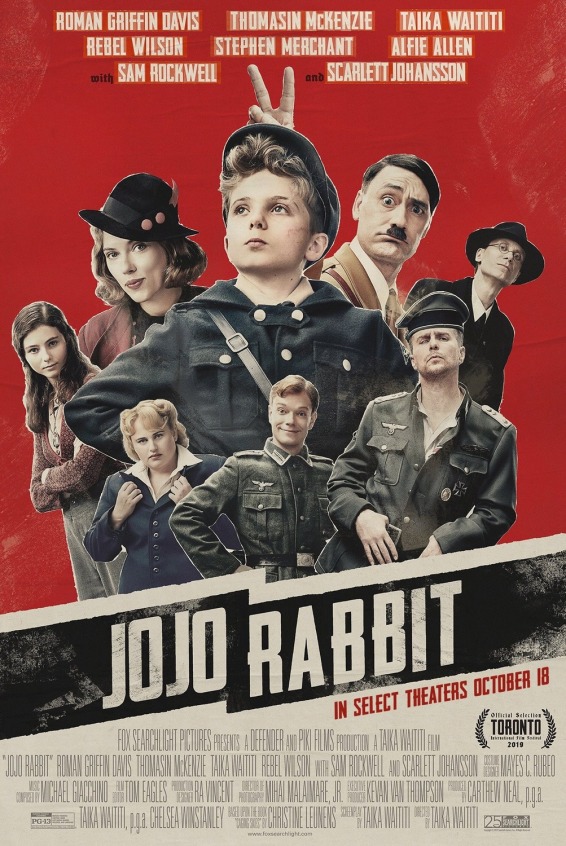
Jojo Rabbit (2019) – Film Review

From Taika Waititi, the now-esteemed comedy director behind modern comedy classics, like ‘What We Do in the Shadows,’ ‘Hunt for the Wilderpeople,’ and ‘Thor: Ragnarok,’ comes a beautifully crafted war film with a strangely pleasant sense of humour, as ‘Jojo Rabbit’ really stands out within the war genre for being one of the first films set during World War II to be an anti-hate satire, telling it’s heartwarming and optimistic story in an amusing yet respectful fashion. Soon cementing itself as one of the most noteworthy releases of 2019.

Plot Summary: Nearing the end of the Second World War, a lonely German boy named: ‘Jojo’ aspires to be a Nazi, hoping to one day fight on the frontline. But, ‘Jojo’ soon finds his worldview turned upside-down when he discovers his mother is hiding a young Jewish girl in their attic. Aided only by his idiotic imaginary friend, who takes the form of ‘Adolf Hitler,’ ‘Jojo’ must confront the unexpected guest in his home, and in doing so, confront his blind nationalism…

Partly based on the novel; ‘Caging Skies’ by Christine Leunens, the screenplay for ‘Jojo Rabbit’ was actually written back in 2011, putting it in-between ‘Boy,’ released in 2010, and ‘What We Do in the Shadows,’ released in 2014, in the chronology of Taika Waititi-penned films. And, while ‘Jojo Rabbit’ is certainly one of Waititi’s finest films to-date, it is also one of his most controversial, as whilst I personally feel the film goes about its comedy in a tasteful manner, never undercutting the story’s message and mostly just poking-fun at ridiculous Nazi protocols and beliefs. ‘Jojo Rabbit’ did receive plenty of flack from critics as soon as it was even announced the film would contain any kind of humour, which I find quite unfair on behalf of the film, as it’s clear to me that the humour is crucial in what the story is trying to accomplish.

The young and impressive Roman Griffin Davis leads the cast excellently as ‘Jojo,’ portraying the young boy as simply a regular kid who has a fascination with this ideology the Nazis are fighting for, even though he has little understanding of it nor its horrific consequences. Then there is Thomasin McKenzie, who portrays the opposite side of this, as her character; ‘Elsa,’ is a resourceful and intelligent Jewish girl who attempts to open ‘Jojo’s eyes to the real-world, rather than the warped-reality his fellow Nazis have burned into him. Scarlett Johansson is also fantastic in the film as ‘Jojo’s mother, ‘Rosie,’ having the most consistent German accent of the cast by far. But, it’s the director himself, Taika Waititi, who takes the short straw portraying the infamous Adolf Hitler, or at least ‘Jojo’s imaginary interpretation of him, as ‘Hitler’ is always presented in a very discriminating way, with Waititi portraying the dictator like a complete tool, only ever having as much information and maturity as ‘Jojo’ does, and occasionally, even less so.

Oppose to many other war films, ‘Jojo Rabbit’ features a very vibrant colour palette, as Waititi actually discovered through much of his research that Germany during World War II was both colourful and fashionable, and was interested in shying away from war films only ever displaying World War II as dark and dreary. So, through this, as well as the fairly creative cinematography by Mihai Malaimare, ‘Jojo’s small town is presented as a seemingly celebratory place with stylishly dressed citizens. Almost as if the town is trying to ignore the impending threat, only semi-aware that the Third Reich is crumbling beneath them.

The film’s original score by Michael Giacchino is another wonderful effort from the composer, as the score features a number of memorable tracks, from ‘Jojo’s Theme’ to ‘A Butterfly’s Wings,’ and ‘Rosie’s Nocturne.’ In many ways, the score for ‘Jojo Rabbit’ almost sounds as if it’s a military march composed by a group of children, which works perfectly considering the film’s story is told through a child’s perspective. Furthermore, the original score also utilises German vocals to more accurately fit with the story’s setting.

Although the supporting cast of Archie Yates, Rebel Wilson, Stephen Merchant, and Alfie Allen are all brilliant within the film, I really do wish their characters were featured more throughout the narrative. As, aside from Sam Rockwell’s ‘Captain Klenzendorf,’ who receives a respectable amount of screen-time, many of the story’s side characters are seemingly only in the film for the sake of a couple of humorous scenes, which is unfortunate, as every member of the cast portrays their Nazi characters as hilariously over-the-top as possible.

In summary, ‘Jojo Rabbit’ isn’t only another extraordinary entry into Taika Waititi’s catalogue of comedy flicks. But, I’d argue it’s his best project thus far, a daring and charming film that simultaneously explores the horrors of war, yet also the compassion in people. And, while the film may not be for everyone, with many reviews clearly indicating how divisive the film is with its implementation of comedy, I feel the film juggles its humour and emotional moments immensely well, with its remarkable original score and bright colour palette only helping the film stand further out from the crowd. Final Rating: 8/10.

jojo_rabbit_ver2_xlg

The Man From U.N.C.L.E. (2015) – Film Review

Both a stylish Guy Ritchie comedy as well as a reimagining of the classic 1960s espionage show of the same name, ‘The Man From U.N.C.L.E.’ is a mostly successful modern take on the classic spy-caper. Capturing a familiar tone in spite of its unremarkable story, which the film tries to distract from through its charismatic cast and many exciting set pieces, equalling to a decently entertaining ’60s action/comedy even if it may be on the lower side of Ritchie’s filmography, with ‘Snatch’ and ‘The Gentlemen’ still being far superior films, in my opinion.

Plot Summary: In the early 1960s, CIA agent; ‘Napoleon Solo,’ successfully helps ‘Gaby Teller’ escape East Berlin despite the intimidating opposition of KGB agent, ‘Illya Kuryakin.’ Later, all three unexpectedly find themselves working together on a globe-trotting mission to stop a private criminal organisation that is working to proliferate nuclear weapons…

Being co-written and directed by Guy Ritchie (Snatch, Sherlock Holmes, The Gentlemen), ‘The Man From U.N.C.L.E.’ takes in much of the director’s usual style/humour, having an abundance of witty and amusing dialogue (much of which is brimming with innuendos), in addition to plenty of editing flair. But, ‘The Man From U.N.C.L.E.’ also serves as the first film interpretation of the ’60s espionage show, which Warner Bros. Pictures had actually been trying to adapt for over a decade, director Steven Soderbergh was once even attached to the project with George Clooney, Channing Tatum and Emily Blunt all set to play the three leading characters. The film’s story isn’t just a recreation of a specific episode from the show, however, as Ritchie and his story team actually decided to create an original narrative based around the origin of ‘U.N.C.L.E.’ A backstory that was only hinted at in the show.

Henry Cavill and Armie Hammer portray the film’s protagonist duo, and while neither of their characters are exactly memorable, they do both give great performances, sharing many comedic moments together and bouncing off each other very well, the film even gives its characters a sufficient amount of development early on in the story, though it is delivered through mission briefings and expositional dialogue. Yet, it’s the third member of the cast where some issues begin to arise, as Alicia Vikander as ‘Gaby’ is supposed to be the emotional centre of the story, as her father is being forced to make nuclear weapons, but the film makes it quite hard to resonate with her due to her lack of characterisation and inconsistent German accent, which seemingly disappears at random. Elizabeth Debicki also appears in the film as antagonist, ‘Victoria,’ but similar to Hugh Grant’s character, ‘Waverly,’ she has little impact on the viewer as a result of her very limited screen-time.

Aside from the occasional CGI-enhanced shot, the cinematography by John Mathieson is pretty creative throughout the film, having many unique shots alongside plenty of shots which feel like throwbacks to classic espionage flicks. The film also makes excellent use of Ritchie’s signature editing style, cutting between scenes in a variety of visually interesting ways as well as colourfully implementing the film’s Russian/German subtitles, all of which are displayed in a bright yellow text almost as if they are taken from a 1960s spy poster, not too dissimilar to the film’s opening and ending credits, which are reminiscent of the original show’s intro whilst also feeling fresh.

Daniel Pemberton’s original score is in keeping with the film’s tonal integrity, as Pemberton sought to capture a sound that combined the crispness and sophistication of today with a distinctly 1960s flavour. The first step of which was the venue, as ‘The Man From U.N.C.L.E.’s score was actually recorded in Studio 2 at Abbey Road, where even the most casual music fan likely knows that this is where ‘The Beatles’ recorded many of their iconic albums. Yet, apart from the tracks; ‘His Name is Napoleon Solo’ and ‘Escape from East Berlin,’ the soundtrack feels well-crafted but still falls short, being fairly forgettable in the long run.

However, the world of ‘The Man From U.N.C.L.E.’ isn’t as forgettable, as the film’s 1960s time period mixes together the elegant class of the era with more futuristic spy technology/gadgets. One of the reasons the film stayed in the ’60s time period was to allow the film to have its own reality, setting it apart from films like ‘The Bourne’ franchise and other recent spy thrillers, according to director Guy Ritchie. Obviously, this means that the film constantly revels in its period-accurate vehicles, set design and costumes, a few pieces of which were actually vintage.

In summary, ‘The Man From U.N.C.L.E.’ isn’t a film that will surpass expectations as the film delivers on what it sets out to, for the most part, displaying some fantastic action scenes and enjoyable gags. It’s hard to ignore the film’s uninteresting story, which simultaneously feels drawn out and dull, even branching into convoluted at points with the sheer amount of characters and locations mentioned. But, for myself, and any other classic espionage enthusiasts, ‘The Man From U.N.C.L.E.’ will suffice, even though it could’ve done with some refinement in certain areas. Final Rating: 6/10.

the-man-from-uncle-poster

How to Train Your Dragon (2010) – Film Review

One of the highest-regarded films from DreamWorks Animation, 2010’s ‘How to Train Your Dragon’ is successful in nearly every regard as an animated feature, making many changes to its original source material (all of which for the better), to excel as a brilliant piece of family-focused storytelling. With plenty of memorable characters, exhilarating action sequences and an outstanding original score by John Powell, ‘How to Train Your Dragon’ would soon go on to become one of DreamWorks’ most recognisable and profitable franchises for good reason.

Plot Summary: On the island of ‘Berk,’ ‘Hiccup,’ the frail son of the Viking Chief, aspires to hunt dragons and keep his home safe like the rest of his clan, earning the respect of his fellow Vikings. But, after injuring a ‘Night Fury,’ one of the rarest and most powerful dragons known to exist, ‘Hiccup’ forms an unlikely friendship with the creature, soon realising that dragons aren’t at all what Vikings believe them to be…

The first film to be directed by duo Chris Sanders and Dean DeBlois since the Disney animated classic; ‘Lilo and Stitch,’ in 2002. The film adaptation of ‘How to Train Your Dragon’ makes many alterations to the story seen in the original children’s book. As, firstly, ‘Hiccup’ does not have a love interest, and the now-iconic DreamWorks character; ‘Toothless,’ is about the size of the ‘Terrible Terror’ dragon breed, his skin is also green and red, not black. Furthermore, ‘Toothless’ gets his name when ‘Hiccup’ first finds him with no teeth. But, the film’s producers decided, with the approval of author Cressida Cowell, that it would be more cinematic to make ‘Toothless’ large enough to be ridden as a flying mount. As such, ‘Toothless’ was completely redesigned as a rare ‘Night Fury,’ a highly intelligent breed of dragon evolved for speed and stealth with teeth that retract into their jaw when shooting a fiery pulse.

Protagonist; ‘Hiccup,’ is portrayed by Jay Baruchel, a fairly under-the-radar actor. But, similar to his character in ‘The Sorcerer’s Apprentice’ from 2011, Baruchel suits a nervous character, like ‘Hiccup,’ extremely well due to his naturally anxious voice, making for a likeable yet never vexatious protagonist. Gerard Butler as ‘Hiccup’s father; ‘Stoick,’ is another member of the cast who naturally fits his character, as Butler’s rough Scottish accent melds with the hefty Viking’s design perfectly. The film also features a great ensemble cast for the other young dragon recruits through America Ferrera, Jonah Hill, Christopher Mintz-Plasse, T.J. Miller and Kristen Wiig, who together provide many of the film’s comedic moments.

The animated cinematography throughout ‘How to Train Your Dragon’ is superior to a number of other animated flicks when put in comparison, as the film continuously features beautiful visuals. The most obvious being within the scene; ‘First Flight,’ in which, ‘Hiccup’ hops aboard ‘Toothless’ for the first-time as they soar across the stunning land of ‘Berk,’ breezing over acres of forest and past/through cliffs, all while being tracked by the camera. Interestingly, many of these dragon-flying moments are also inspired by combat and aerobatic aircrafts, as ‘Toothless’ performs many aerobatic maneuvers and combinations, such as a ‘Loop and Snap.’

Nominated for an Oscar at one point-in-time, the original score by John Powell is truly sensational, a majestic score that occasionally even utilises bagpipes in order to further fit with the film’s Scottish setting (which is alluded to by the many Scottish accents). And, while Powell has always been known for creating phenomenal scores for animated flicks, with ‘Ice Age,’ ‘Kung Fu Panda’ and ‘Horton Hears a Who!,’ being just some of his sublime work, the soundtrack for:’How to Train Your Dragon’ is by far some of his best, with the tracks; ‘This is Berk’ and ‘Forbidden Friendship,’ becoming some of the most notable tracks in all animation.

The animation itself has begun to show its age in a handful of shots since the film’s initial release, but as a result of the film’s many wonderful designs, usually in relation to its dragons, which display different abilities, colours, horns and skin-tones for each breed, the film manages to redeem any shot that feels at all dated. These pleasant designs also help distract from the film’s overly fast pacing, as whilst I understand that younger viewers may have shorter attention spans, the film can sometimes feel as if its rushing through one scene to quickly get to the next.

In summary, although I possess the quite controversial opinion of disliking the sequels to ‘How to Train Your Dragon,’ as I personally find them much more generic and by-the-numbers in terms of their storylines, especially when compared to the original, the first of the series is still one of DreamWorks’ best efforts, and I’d even argue is on the level of beating out their previous fantasy franchise; ‘Shrek,’ in regard to its characters, creatures and world-building. So, even if you don’t enjoy animated/family films, perhaps ‘How to Train Your Dragon’ will sway you into the genre just as it does with its wondrous story. Final Rating: 8/10.

how-to-train-dragon-poster1