The Voices (2014) – Film Review

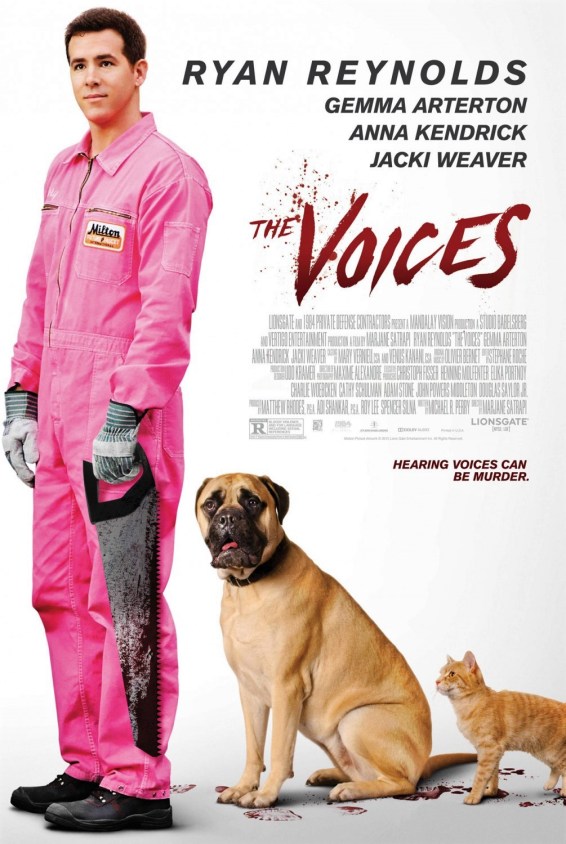
This obscure horror-comedy released in late 2014 will certainly make for a divisive viewing, as while ‘The Voices’ does feature an inspired use of colour and set design alongside a stand out performance from Ryan Reynolds, the film is also far more disturbing than much of its marketing would lead you to believe, swerving from absurd moments of humour to visceral moments of gore in a heartbeat. The resulting film essentially becoming a parody/throwback of/to classic horrors, like ‘American Psycho,’ and is a far-cry from a realistic study of psychosis for better, and for worse.

Plot Summary: After working a nine-to-five job at his local bathtub factory, the mentally ill; ‘Jerry,’ finds comfort in returning home to his beloved pets; ‘Bosco’ and ‘Mr. Whiskers.’ Until one day, with the help of his psychiatrist, ‘Jerry’ decides to pursue his office crush; ‘Fiona.’ But, when their relationship takes a sudden, murderous turn leaving ‘Jerry’ with the corpse of his co-worker, he tries desperately to strive for normalcy, only to fall deeper into instability…

Early in the pre-production of ‘The Voices,’ director Mark Romanek, best known for the 2002 drama/thriller; ‘One Hour Photo,’ was attached as the film’s director, before Marjane Satrapi (Persepolis, Chicken With Plums, Radioactive), later took over as the head of the project. And, whilst ‘The Voices’ does feel like quite a large shift from Satrapi’s usual work, it’s hard to know exactly which director would’ve excelled with a screenplay as original as this one is, as while ‘The Voices’ does share some similarities to other serial killer flicks, many of the film’s ideas are just brimming with personality, as everything from ‘Jerry’ showing symptoms of OCD when slicing up the bodies of his victims, to ‘Jerry’ living above an abandoned bowling alley, the film just has such a unique appeal.

Ryan Reynolds really gets a chance to shine portraying the film’s mentally ill protagonist, as whilst ‘Jerry’ does commit many horrible acts over the course of the runtime, Reynolds manages to capture the idea of ‘Jerry’ being a man forced down a road of violence. He is a distinct serial killer in the sense that he desires companionship and happiness, and doesn’t receive any pleasure from killing. So, when it’s eventually revealed what happened to him as a child, you can’t help but sympathise with him, evoking a level of emotion that many murderous characters struggle to achieve. But, unfortunately, the film’s side characters, portrayed by Gemma Arterton, Anna Kendrick, and Jacki Weaver, all feel quite thin as a result of them only being in the story to serve as ‘Jerry’s potential victims.

Maxime Alexandre handles the film’s cinematography well, as the camerawork throughout ‘The Voices’ remains fairly creative. The film’s visuals are most impressive most, however, when it comes to the film’s colour palette, set design, and set dressing, as with nearly the entirety of the story being seen through ‘Jerry’s perspective, the film displays the true extent of ‘Jerry’s delusions through its use of colour/sets. For example, when not on his prescribed medication, ‘Jerry’ views his apartment as very clean and organised, giving the location a much more comfortable feel, whereas when ‘Jerry’ does take his medication, he sees the grim reality of his soiled home.

The original score by Olivier Bernet is similar, never reaching into full on horror, but being a mixture of cartoonish, dream-like tracks, such as ‘In the Woods’ and ‘Jesus Dad,’ before then moving onto more upbeat tracks, like ‘Don’t Mess with Milton.’ A seemingly ironic track focused around the fictional woodland town of ‘Milton,’ where the story takes place, comically claiming the town to be nothing but a friendly and welcoming place.

The main aspect of ‘The Voices’ that I feel could make or break the film for many is likely to be its comedy, as whilst it is revealed fairly early on that many of the film’s bizarre moments, such as ‘Jerry’s pets speaking to him or ‘Jesus’ appearing on a forklift are all taking place within his mind, much of this strange humour is very hit-or-miss. However, an interesting yet small detail regarding the talking pets is that Ryan Reynolds actually voices each one of the animals himself, with each pet having a different accent, furthering ‘Jerry’s delusions. In fact, Reynolds actually modelled the voice of ‘Mr. Whiskers,’ a.k.a. ‘Jerry’s cat, after a Scottish friend he knew for over twenty years.

In summary, while ‘The Voices’ is overflowing with both charm and wit, it also has many issues. From its quickly altering tone and many jokes that fall flat, the film is far from a perfect horror-comedy. But, it does redeem many of its faults through its great performances and eccentric style, all playing into the film’s quirky personality. And, it’s due to all of this that the film feels as if its made for a very niche audience, yet for those ‘The Voices’ does appeal to, there is a fair amount to enjoy here. Final Rating: low 7/10.
voices_ver2_xlg

About Time (2013) – Film Review

Written and directed by Richard Curtis (Love Actually, Pirate Radio), ‘About Time’ would go on to be the final outing for Curtis as a director, as after this time-travelling drama’s release in 2013, Curtis would return to exclusively being a screenwriter, which I feel is probably for the best. As, whilst ‘About Time’ does manage to keep itself afloat thanks to its captivating writing and wonderful performances, the film is often let down by its fairly bland presentation and apparent disinterest in exploring its unique time-travelling concept, ensuring the film’s eventual confusion with many of the other romantic-dramas seen in recent years.

Plot Summary: At the age of twenty-one, the timid; ‘Tim Lake,’ is informed by his father that men in their family have the unique ability to travel through time. Although this ability is restricted to the window of their own lives, it can be used to undo any past mistakes, so ‘Tim’ decides to use his newly found ability to escape his current lonely existence, visiting all of his past loves to find the one who could be his future…

Due to Richard Curtis writing a number of iconic rom-coms from ‘Love Actually’ to ‘Four Weddings and a Funeral’ and ‘Bridget Jones’ Diary,’ in the past, it comes as no surprise that ‘About Time’s screenplay is certainly its finest aspect. As, in many scenes, the film chooses to push ‘Tim’s time-travelling ability aside in favour of delivering sincere character moments, playing into the story’s theme of life itself being the greatest experience. Yet, while I do like both of these ideas, it’s a shame that the film barely touches upon the great deal of consequence time-travelling can have, as scenes focusing on time paradoxes and the butterfly effect could’ve made for some of the film’s most impactful story beats. Sadly, they are incredibly sparse and only appear when the story necessitates them.

The main couple of ‘Tim’ and ‘Mary’ portrayed by Domhnall Gleeson and Rachel McAdams do share a good amount of chemistry and have plenty of charming moments together, as ‘Tim’ tries desperately to impress ‘Mary’ by recalling everything he remembers about her from his past encounters. The supporting cast of Lydia Wilson, Lindsay Duncan, Tom Hollander, and Margot Robbie, are also great, as each member of the cast serves an important purpose within the narrative whether big or small. But, it’s Tim’s father, portrayed by Bill Nighy, who is the true emotional core of the film outside of ‘Tim’s love life, with Nighy doing a fantastic job as usual.

Despite visuals never being the main focus of rom-coms, the cinematography by John Guleserian is the film’s worst element, as even somewhat creative shots are rarely seen throughout the runtime, with the film usually just relying on mid-shots or close-ups to enhance the drama. The film’s colour palette doesn’t help in this regard either, as the pale colours almost present the film as if each scene is an extension of a photo framed in the family’s home, which is ingenious if that was the filmmakers’ attention, yet I’m not entirely sure it was. ‘Tim’s time-travelling ability, however, is a little more visually interesting in spite of its simplicity, as the film makes use of rapid editing to cut between many different events during ‘Tim’s life, a straightforward but understandable method of displaying how ‘Tim’ is flicking through his memories.

Although ‘About Time’s cinematography is lacking, the original score by Nick Laird-Clowes is far more enthralling, as the film’s soundtrack utilises ticking clocks and heart beating sound effects to relate to the story’s aspect of time travel. And, when focusing more on the story’s characters, the score switches things up to be piano-focused, depicting a variety of experiences of life such as joy, heartbreak, reflection and confusion. ‘About Time’ also features a number of recognisable songs similar to much of Richard Curtis’ other work, all of which, luckily, never distract from the story.

While ‘About Time’ does eventually continue on to cover a fair number of years throughout the character’s lives, much of the early portion of the film leans on ‘Tim’ trying to ignite the spark with ‘Mary,’ and with Rachel McAdams,’ previously portraying the titular character in ‘The Time Traveler’s Wife’ from 2009, this should seem like familiar ground. However, unlike McAdams’ character in that romantic sci-fi flick, ‘Mary’ is never made aware of ‘Tim’s time-bending secret, which might make some viewers a little uncomfortable regarding the absence of honesty in their relationship.

In summary, ‘About Time’ is enjoyable, it just doesn’t quite live up to its interesting ideas or nearly two-hour runtime. Unfortunately, whilst the film’s many humorous and heartwarming moments do excel, the story’s huge missed opportunities are always ever-present, and the mostly dull cinematography and colour palette simply can’t be ignored, and even though I would personally only recommend ‘About Time’ to those who have a sweet-tooth for light-hearted romantic-dramas, I can’t deny that the film is heartfelt, with a fragile sort of sincerity at its centre. Final Rating: 6/10.

about_time_xlg

Krampus (2015) – Film Review

Whilst most Christmas films get across their message about how family is the true meaning of the holiday in a wholesome and light-hearted fashion, ‘Krampus’ takes quite a different approach as director Michael Dougherty (Trick ‘r Treat, Godzilla: King of the Monsters) crafts a cynical and amusing horror-comedy based around ‘Krampus,’ a creature from European folklore with origins stretching back to the days before Christianity, serving as essentially the sinister twin of jolly ‘Saint Nicholas,’ punishing those who misbehave in various odious ways. And, while the film is far from perfect, ‘Krampus’ creative ideas and impressive practical effects make the film worth its runtime.

Plot Summary: When his dysfunctional family clash over the holidays, young ‘Max’ finally decides to turn his back on Christmas, tearing up his letter to ‘Santa Claus’ in a fit of rage. Little does he know, his lack of Christmas spirit has unleashed the wrath of ‘Krampus,’ an ancient demon who punishes those who don’t celebrate the festive season. Forcing ‘Max’ and the rest of his family to fight for one another if they hope to survive…

Although there are plenty of enjoyable films out there to watch over the festive season, I usually always find myself craving something new around the Christmas period, as the cliché narrative of children helping ‘Santa Claus’ save Christmas gets very old quick. ‘Krampus’, however, does certainly attempt something new, even if it isn’t always successful. While the original outline for the film was closer to a straightforward horror, focusing mostly on ‘Krampus’ picking people off throughout ‘Max’s town, it was eventually decided to make it more of a dark retelling of a traditional Christmas film. This is why the plot is kicked off with a letter to ‘Santa,’ and why the film’s first act begins much like a family film would before then having a drastic turn towards horror and dark fantasy.

The film’s large cast of Adam Scott, Toni Collette, Emjay Anthony, David Koechner, Allison Tolman, Stefania LaVie Owen, Conchata Ferrell and Krista Stadler are all serviceable in their roles, even though many of their characters aren’t developed nowhere near enough. Additionally, ‘Tom Engel,’ a.k.a. ‘Max’s father, also has many moments where he doesn’t seem to take their life-threatening situation that seriously, almost as if he is acknowledging how bizarre the story is, which diminishes the film’s tension at points. But, with ‘Krampus’ featuring moments of humour and fright alike, the film obviously has many shifts in tone between scenes.

Jules O’Loughlin’s cinematography is nothing amazing altogether, as in spite of the film having quite a few memorable and attractive shots, there are also a large number of bland shots whenever the camera is focusing on the actors themselves. What is far more admirable though is how the camerawork enhances the film’s set design, making the audience believe that the film was shot inside a real house and outside on a real wintry street. When, in reality, over 95% of the film was shot on a soundstage, with the snow covering the ground being made from a material that’s commonly used for making nappies.

Composer Douglas Pipes handles the film’s original score, and he described his soundtrack as “A Collection of Twisted Christmas Carols With Pagan Thrown in,” as the score incorporates everything from the sounds of chains, bells, bones and animal-skin drums in addition to having choirs chant and whisper in different tongues, making for a foreboding but suitably Christmassy score. The track; ‘A Cold Wind,’ also does a phenomenal job of reiterating ‘Krampus’ as the ominous shadow of ‘Santa Claus’ through its use of sleigh bells. However, the film’s actual sound design features some incredibly strange choices for horror, as many cartoonish sound effects can be heard within the film, feeling immensely out of place every time they are.

One of the finest aspects of ‘Krampus’ as a film has to be its effects, as rather than having an overreliance on CG visuals, ‘Krampus’ brings all of its uniquely creepy creatures to life through detailed costumes and animatronics, harkening back to classic ’80s horror-comedies, like ‘Gremlins’ and ‘Fright Night.’ Many of the film’s terrifying monsters also share wonderfully horrific designs, with the final design for ‘Krampus’ and his elves being distilled from various postcards and illustrations seen over time. Or, in the case of the malevolent toys, taking inspiration from the 1992 low-budget horror, ‘Demonic Toys,’ with the angel ornament, teddy bear, robot and Jack-in-a-box that attack the family sharing many similarities to the toys seen in that obscure horror flick.

In summary, ‘Krampus’ is a rollicking ride of a Christmas film even if it isn’t quite as polished as Dougherty’s Halloween flick; ‘Trick ‘r Treat,’ as the film’s excellent practical effects, menacing creature designs and great original score all lend themselves very well to the distinctive story, despite the narrative itself often feeling like wasted potential considering ‘Krampus’ doesn’t full appear until near the end of the runtime. Regardless, this horror-comedy is still, in my opinion, the best on-screen interpretation of ‘Krampus’ and his devilish minions as of yet. Final Rating: 7/10.

krampus_ver3_xxlg

Jojo Rabbit (2019) – Film Review

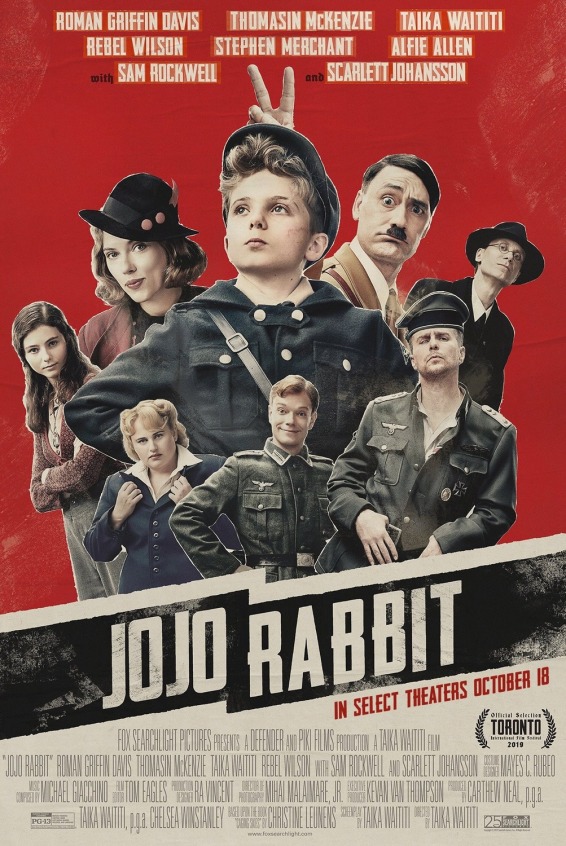
From Taika Waititi, the now-esteemed comedy director behind modern comedy classics, like ‘What We Do in the Shadows,’ ‘Hunt for the Wilderpeople,’ and ‘Thor: Ragnarok,’ comes a beautifully crafted war film with a strangely pleasant sense of humour, as ‘Jojo Rabbit’ really stands out within the war genre for being one of the first films set during World War II to be an anti-hate satire, telling it’s heartwarming and optimistic story in an amusing yet respectful fashion. Soon cementing itself as one of the most noteworthy releases of 2019.

Plot Summary: Nearing the end of the Second World War, a lonely German boy named: ‘Jojo’ aspires to be a Nazi, hoping to one day fight on the frontline. But, ‘Jojo’ soon finds his worldview turned upside-down when he discovers his mother is hiding a young Jewish girl in their attic. Aided only by his idiotic imaginary friend, who takes the form of ‘Adolf Hitler,’ ‘Jojo’ must confront the unexpected guest in his home, and in doing so, confront his blind nationalism…

Partly based on the novel; ‘Caging Skies’ by Christine Leunens, the screenplay for ‘Jojo Rabbit’ was actually written back in 2011, putting it in-between ‘Boy,’ released in 2010, and ‘What We Do in the Shadows,’ released in 2014, in the chronology of Taika Waititi-penned films. And, while ‘Jojo Rabbit’ is certainly one of Waititi’s finest films to-date, it is also one of his most controversial, as whilst I personally feel the film goes about its comedy in a tasteful manner, never undercutting the story’s message and mostly just poking-fun at ridiculous Nazi protocols and beliefs. ‘Jojo Rabbit’ did receive plenty of flack from critics as soon as it was even announced the film would contain any kind of humour, which I find quite unfair on behalf of the film, as it’s clear to me that the humour is crucial in what the story is trying to accomplish.

The young and impressive Roman Griffin Davis leads the cast excellently as ‘Jojo,’ portraying the young boy as simply a regular kid who has a fascination with this ideology the Nazis are fighting for, even though he has little understanding of it nor its horrific consequences. Then there is Thomasin McKenzie, who portrays the opposite side of this, as her character; ‘Elsa,’ is a resourceful and intelligent Jewish girl who attempts to open ‘Jojo’s eyes to the real-world, rather than the warped-reality his fellow Nazis have burned into him. Scarlett Johansson is also fantastic in the film as ‘Jojo’s mother, ‘Rosie,’ having the most consistent German accent of the cast by far. But, it’s the director himself, Taika Waititi, who takes the short straw portraying the infamous Adolf Hitler, or at least ‘Jojo’s imaginary interpretation of him, as ‘Hitler’ is always presented in a very discriminating way, with Waititi portraying the dictator like a complete tool, only ever having as much information and maturity as ‘Jojo’ does, and occasionally, even less so.

Oppose to many other war films, ‘Jojo Rabbit’ features a very vibrant colour palette, as Waititi actually discovered through much of his research that Germany during World War II was both colourful and fashionable, and was interested in shying away from war films only ever displaying World War II as dark and dreary. So, through this, as well as the fairly creative cinematography by Mihai Malaimare, ‘Jojo’s small town is presented as a seemingly celebratory place with stylishly dressed citizens. Almost as if the town is trying to ignore the impending threat, only semi-aware that the Third Reich is crumbling beneath them.

The film’s original score by Michael Giacchino is another wonderful effort from the composer, as the score features a number of memorable tracks, from ‘Jojo’s Theme’ to ‘A Butterfly’s Wings,’ and ‘Rosie’s Nocturne.’ In many ways, the score for ‘Jojo Rabbit’ almost sounds as if it’s a military march composed by a group of children, which works perfectly considering the film’s story is told through a child’s perspective. Furthermore, the original score also utilises German vocals to more accurately fit with the story’s setting.

Although the supporting cast of Archie Yates, Rebel Wilson, Stephen Merchant, and Alfie Allen are all brilliant within the film, I really do wish their characters were featured more throughout the narrative. As, aside from Sam Rockwell’s ‘Captain Klenzendorf,’ who receives a respectable amount of screen-time, many of the story’s side characters are seemingly only in the film for the sake of a couple of humorous scenes, which is unfortunate, as every member of the cast portrays their Nazi characters as hilariously over-the-top as possible.

In summary, ‘Jojo Rabbit’ isn’t only another extraordinary entry into Taika Waititi’s catalogue of comedy flicks. But, I’d argue it’s his best project thus far, a daring and charming film that simultaneously explores the horrors of war, yet also the compassion in people. And, while the film may not be for everyone, with many reviews clearly indicating how divisive the film is with its implementation of comedy, I feel the film juggles its humour and emotional moments immensely well, with its remarkable original score and bright colour palette only helping the film stand further out from the crowd. Final Rating: 8/10.

jojo_rabbit_ver2_xlg

The Babysitter (2017) – Film Review

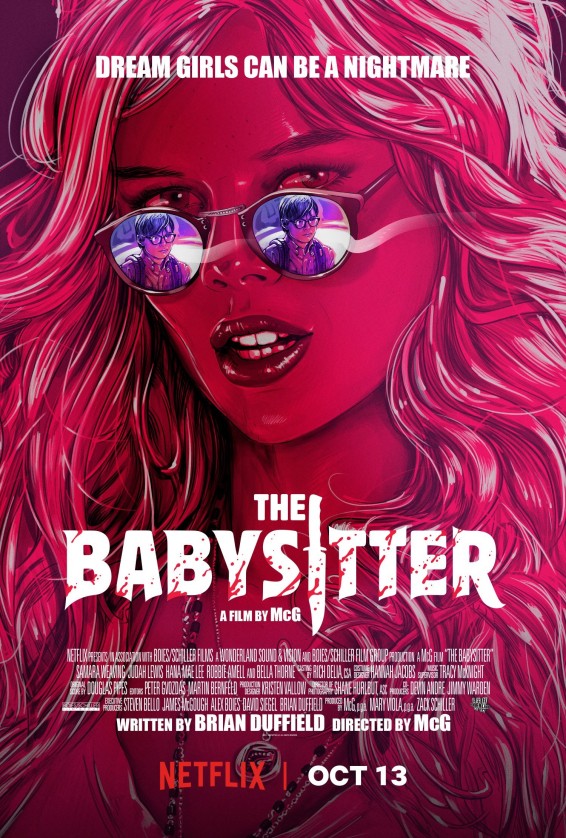
Originally filmed in 2015 with the intention of playing in cinemas, the horror-comedy; ‘The Babysitter,’ wasn’t seen by any horror fanatics until it released late 2017 after Netflix acquired the rights to the film for streaming. And, although ‘The Babysitter’ doesn’t exactly break any of the rules we’ve come to expect within the horror genre, this horror-comedy with splatterings of style must’ve been entertaining enough for those who decided to watch it, as the film would eventually spawn a Netflix-exclusive franchise with a later sequel.

Plot Summary: Riddled with anxiety, twelve-year-old; ‘Cole,’ has always been bullied and picked on due to his constant panicking, only finding comfort around the one person who understands him, his attractive babysitter, ‘Bee.’ That is, until one night, after ‘Cole’ secretly stays up past his bedtime to discover she’s actually part of a satanic cult, forcing ‘Cole’ to spend the rest of his evening evading ‘Bee’s band of killers who will stop at nothing to prevent him from spilling their dark secret…

Directed by Joseph McGinty Nichol (Charlie’s Angels, Terminator: Salvation, This Means War) or ‘McG’ as he more commonly goes by, ‘The Babysitter’ is a film that has received a number of alterations (both big and small) since even the early stages of its pre-production. For example, in the original screenplay for the film, ‘Sonya’ was actually a cheerleader, ‘Allison’ was a journalist for her high school newspaper, and ‘Max’ had dreadlocks, but eventually it was decided that ‘Bee’s cult followers should be reimagined to more closely reflect the stereotypical characters seen in classic slasher flicks, only in this film, they’re the antagonists. And, this idea is one of the film’s best aspects in terms of its writing, as it gives the film a real sense of self-awareness in addition paying respect to what came before it. Most notably, the ‘Friday the 13th’ series, which ‘Max’ references directly at one point when he chants; “Ch-Ch-Ch-Ah-Ah-Ah,” whilst chasing ‘Cole.’

Judah Lewis does manage to leave an impression in his first film role, portraying protagonist ‘Cole’ as an innocent twelve-year-old with few friends aside from ‘Bee,’ even if a large portion of his anxious characterisation feels far too over-the-top. Then there is also Samara Weaving as the titular babysitter; ‘Bee,’ and her cult followers; ‘Max,’ ‘Allison,’ ‘Sonya’ and ‘John,’ portrayed by Robbie Amell, Bella Thorne, Hana Mae Lee, and Andrew Bachelor, respectively. Who, are all wonderfully devilish throughout the film, having plenty of dark comedic moments between them making their deaths quite unfortunate, as while I’m sure most could’ve guessed their characters do die at some point within the narrative, we don’t get to spend enough time with any of them to get a strong grasp on their exaggerated personalities or any understanding of their malevolent cult.

In spite of the usually dull cinematography by Shane Hurlbut, ‘The Babysitter’ still manages to be one of the more visually interesting Netflix Originals through its unique style, as the film continuously implements different text, graphics and colours to give it a distinct stylistic appeal, not too dissimilar from (although nowhere near impressive as) ‘Scott Pilgrim vs. The World’ from 2010. Many of these editing decisions also help to redeem the film’s humour, which is extremely inconsistent, bouncing from hilarious cutaways and meta horror jokes to embarrassing lines of dialogue which try far too hard.

Whilst composer Douglas Pipes has crafted some great scores in the past, like ‘Monster House’ and ‘Trick ‘r Treat,’ ‘The Babysitter’ is certainly not one of them, as even with the film having many serviceable tracks. The soundtrack in general just lacks anything distinctive, and I believe that if it was ever compared to any other score from Pipes, or even just a handful of random horror scores, I doubt most would be able to tell it apart. The film also throws in the iconic Queen song; ‘We Are the Champions,’ nearing the runtime’s end, which feels immensely out-of-place and comes out of nowhere.

For a large duration of its tight runtime (which the film breezes through as a result of its unrelentingly fast pacing), ‘The Babysitter’s story is predominantly just one long chase sequence, and whilst occasionally tense, I couldn’t help but feel that the film’s screenplay could’ve taken better advantage of its evil babysitter concept or its few supernatural elements, despite the series second entry; ‘The Babysitter: Killer Queen,’ delving much further into the latter. Yet, the film doesn’t disappoint when it comes to its violence, having plenty of fantastically gruesome gore effects which are all successfully played for comedy.

In summary, I could see ‘The Babysitter’ being an enjoyable experience for some and possibly just a boring viewing for others, as when ignoring the film’s graphic gore and fun stylistic choices, the story leaves a lot to be desired, and can often feel derivative of horror classics even if this was the film’s intention to an extent with its focus on horror tropes/clichés. For me, although I do admire the film’s ridiculous tone and dark humour, the disappointing story can often feel sluggish, diminishing the film’s memorability and rewatchability. Final Rating: 5/10.

babysitter_xxlg

The Man From U.N.C.L.E. (2015) – Film Review

Both a stylish Guy Ritchie comedy as well as a reimagining of the classic 1960s espionage show of the same name, ‘The Man From U.N.C.L.E.’ is a mostly successful modern take on the classic spy-caper. Capturing a familiar tone in spite of its unremarkable story, which the film tries to distract from through its charismatic cast and many exciting set pieces, equalling to a decently entertaining ’60s action/comedy even if it may be on the lower side of Ritchie’s filmography, with ‘Snatch’ and ‘The Gentlemen’ still being far superior films, in my opinion.

Plot Summary: In the early 1960s, CIA agent; ‘Napoleon Solo,’ successfully helps ‘Gaby Teller’ escape East Berlin despite the intimidating opposition of KGB agent, ‘Illya Kuryakin.’ Later, all three unexpectedly find themselves working together on a globe-trotting mission to stop a private criminal organisation that is working to proliferate nuclear weapons…

Being co-written and directed by Guy Ritchie (Snatch, Sherlock Holmes, The Gentlemen), ‘The Man From U.N.C.L.E.’ takes in much of the director’s usual style/humour, having an abundance of witty and amusing dialogue (much of which is brimming with innuendos), in addition to plenty of editing flair. But, ‘The Man From U.N.C.L.E.’ also serves as the first film interpretation of the ’60s espionage show, which Warner Bros. Pictures had actually been trying to adapt for over a decade, director Steven Soderbergh was once even attached to the project with George Clooney, Channing Tatum and Emily Blunt all set to play the three leading characters. The film’s story isn’t just a recreation of a specific episode from the show, however, as Ritchie and his story team actually decided to create an original narrative based around the origin of ‘U.N.C.L.E.’ A backstory that was only hinted at in the show.

Henry Cavill and Armie Hammer portray the film’s protagonist duo, and while neither of their characters are exactly memorable, they do both give great performances, sharing many comedic moments together and bouncing off each other very well, the film even gives its characters a sufficient amount of development early on in the story, though it is delivered through mission briefings and expositional dialogue. Yet, it’s the third member of the cast where some issues begin to arise, as Alicia Vikander as ‘Gaby’ is supposed to be the emotional centre of the story, as her father is being forced to make nuclear weapons, but the film makes it quite hard to resonate with her due to her lack of characterisation and inconsistent German accent, which seemingly disappears at random. Elizabeth Debicki also appears in the film as antagonist, ‘Victoria,’ but similar to Hugh Grant’s character, ‘Waverly,’ she has little impact on the viewer as a result of her very limited screen-time.

Aside from the occasional CGI-enhanced shot, the cinematography by John Mathieson is pretty creative throughout the film, having many unique shots alongside plenty of shots which feel like throwbacks to classic espionage flicks. The film also makes excellent use of Ritchie’s signature editing style, cutting between scenes in a variety of visually interesting ways as well as colourfully implementing the film’s Russian/German subtitles, all of which are displayed in a bright yellow text almost as if they are taken from a 1960s spy poster, not too dissimilar to the film’s opening and ending credits, which are reminiscent of the original show’s intro whilst also feeling fresh.

Daniel Pemberton’s original score is in keeping with the film’s tonal integrity, as Pemberton sought to capture a sound that combined the crispness and sophistication of today with a distinctly 1960s flavour. The first step of which was the venue, as ‘The Man From U.N.C.L.E.’s score was actually recorded in Studio 2 at Abbey Road, where even the most casual music fan likely knows that this is where ‘The Beatles’ recorded many of their iconic albums. Yet, apart from the tracks; ‘His Name is Napoleon Solo’ and ‘Escape from East Berlin,’ the soundtrack feels well-crafted but still falls short, being fairly forgettable in the long run.

However, the world of ‘The Man From U.N.C.L.E.’ isn’t as forgettable, as the film’s 1960s time period mixes together the elegant class of the era with more futuristic spy technology/gadgets. One of the reasons the film stayed in the ’60s time period was to allow the film to have its own reality, setting it apart from films like ‘The Bourne’ franchise and other recent spy thrillers, according to director Guy Ritchie. Obviously, this means that the film constantly revels in its period-accurate vehicles, set design and costumes, a few pieces of which were actually vintage.

In summary, ‘The Man From U.N.C.L.E.’ isn’t a film that will surpass expectations as the film delivers on what it sets out to, for the most part, displaying some fantastic action scenes and enjoyable gags. It’s hard to ignore the film’s uninteresting story, which simultaneously feels drawn out and dull, even branching into convoluted at points with the sheer amount of characters and locations mentioned. But, for myself, and any other classic espionage enthusiasts, ‘The Man From U.N.C.L.E.’ will suffice, even though it could’ve done with some refinement in certain areas. Final Rating: 6/10.

the-man-from-uncle-poster

Happy Death Day (2017) – Film Review

Another horror flick from production company Blumhouse Pictures, ‘Happy Death Day,’ released in 2017, does at least extend out of the usual range of Blumhouse horrors to become more of a horror-comedy than just a straightforward teen slasher. But, similar to the rest of their associated franchises, e.g. ‘Insidious,’ ‘The Purge’ and ‘Paranormal Activity,’ both ‘Happy Death Day’ and it’s sequel, have their fair share of issues, with some being far more severe than others.

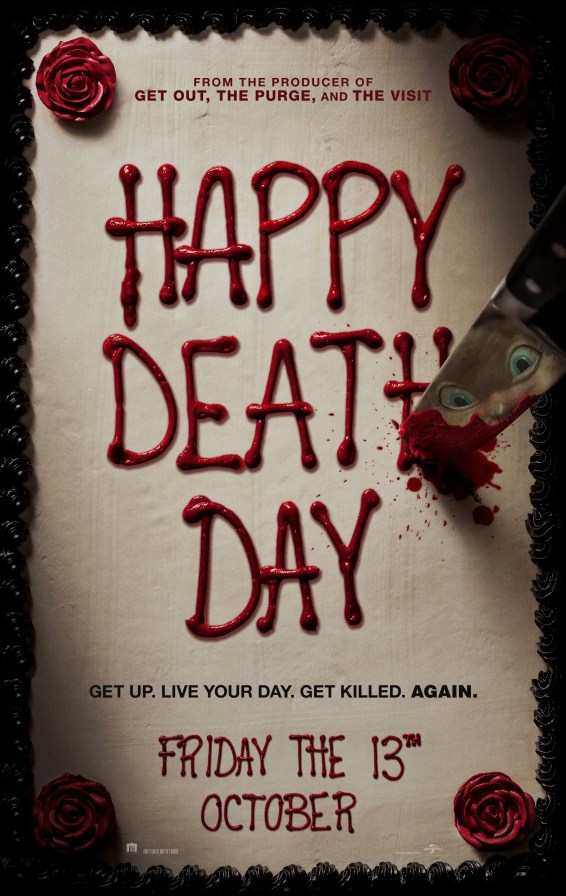
Plot Summary: Waking up in the dorm room of a boy whose name she can’t remember after a night of heavy drinking, self-centered college student; ‘Tree Gelbman,’ intends to continue her trend of avoiding her birthday, but little does she know that later that night on her way to another party, someone is waiting to murder her. Only after being killed, ‘Tree’ awakens in the same dorm room, soon realising she is being forced to relive her brutal night of murder over-and-over again until she discovers her killer’s identity…

‘Happy Death Day’ similar to many other day-repeating stories in the past, takes most of its inspiration from the comedy classic; ‘Groundhog Day,’ from 1993. Yet, unlike many of the other films that are inspired by this beloved comedy flick, it becomes clear over time that ‘Happy Death Day’ is quite derivative of ‘Groundhog Day,’ as the film’s story not only utilises the comedy’s plot without much innovation (only throwing a killer into the mix). But, the film even steals the main point of the narrative, that being its main character and their correlating character arc, using the time-looping concept to in a way punish the protagonist for their cruel behaviour towards others.

In spite of this, however, the protagonist; ‘Tree,’ portrayed by Jessica Rothe, is by far the best element of the film, as while ‘Tree’ does go through a character arc that is all-too-familiar as previously mentioned, Rothe makes a fantastic first outing as an actress through her very enjoyable performance. Then, of course, there is the killer, whose identity remains a mystery throughout most of the runtime, known as ‘The Babyface Killer,’ the killer’s outfit is actually the mascot of ‘Bayfield University,’ where the film takes place, and although the costume itself is far more goofy then intimidating, the mask/costume was actually designed by Tony Gardner. The costume designer behind the now-iconic; ‘Ghostface,’ costume from the ‘Scream’ series, which does help redeem to the killer’s undoubtedly petty motivation.

The film’s cinematography by Toby Oliver isn’t anything amazing, but does back up the story effectively in a variety of scenes. Whether that’s through its use of wide sweeping shots when the characters are in an intense chase, or when more shaky hand-held camerawork is used to reflect ‘Tree’s breakdown when she first realises she is stuck in her current crisis. Yet, similar to much of its story, the film never leans enough into a more outlandish/experimental nature when considering what the film could accomplish with its cinematography.

Talented composer Bear McCreary handles the film’s original score, which isn’t very distinctive from most of his other work within the horror genre. But, despite the score’s lack of memorability, it still does feel as if there is a decent amount of effort put into it, as the soundtrack actually has quite a lot of range even if some of the tracks don’t always fit with the tone of the film. This also goes for many of the songs used throughout ‘Happy Death Day,’ as nearly all of the film’s song choices massively differ in both genre and general popularity.

Still, the biggest problem ‘Happy Death Day’ suffers from is the inconsistency of its tone, as although the film does attempt to have scenes featuring both scares and humour, alike, many of the film’s jump-scares and jokes range in quality, and occasionally even cancel each other out. Additionally, the film also takes an unusual approach to its violence, as while ‘Tree’ dies countless times throughout the film in a number of different ways. The film never allows for any creative or darkly amusing deaths, due to its lack of any blood or gore. Yet, this wasn’t always the case, as the original screenplay for the film did actually include more violence, so much so, in fact, that it would have gained the film a higher age rating, with plenty of scenes having much grislier deaths that were later altered by director Christopher Landon (Paranormal Activity: The Marked Ones, Scouts Guide to the Zombie Apocalypse) during pre-production.

In summary, whilst the signature performance from Jessica Rothe does help to make ‘Happy Death Day’ a far more enjoyable viewing, in addition to the film’s idea of a protagonist being repeatedly murdered having plenty of potential for a horror-comedy. The film just doesn’t do enough with its story, feeling almost as if its a little restrictive on itself, never delving enough into being either funny or freighting respectively. So, if you desire an amusing horror-comedy to stick on one evening, maybe just go back to your more accustomed choices over this mediocre slasher. Final Rating: 5/10.

happy_death_day_xxlg

Hot Tub Time Machine (2010) – Film Review

Taking heavy inspiration from the smash-hit comedy: ‘The Hangover’ released a year prior, this 2010 comedy revels in its absurdist tone and nonsensical plot right from its earliest scenes, as despite featuring some very dull cinematography and a completely forgettable original score to boot, ‘Hot Tub Time Machine’ does manage to escape some of its flaws due to the unique story and amusing moments it’s ludicrous title would imply.

Plot Summary: When a group of friends impulsively decide to take their low-life pal; ‘Lou,’ back to the ‘Kodiak Valley Ski Resort’ after a potential suicide attempt, a place that was once their hotspot for thriving party-filled weekends. The group soon find themselves being sent back in time to 1986 after a drunken dip into their malfunctioning hot tub, allowing them to relive one of the best weekends of their entire lives…

Although comedy as a genre has always been quite divisive, ‘Hot Tub Time Machine’ is a film that values its comedy over anything else, as the film continuously throws in as many jokes and references as it possibly can throughout its runtime. Most of which do come at the expense of messing with the film’s structure and pacing (regardless of how comical some of them actually are), as the film goes about its narrative mostly by jumping from comedic scene to comedic scene with most of the character’s different shenanigans having minuscule impact on the others, resulting in the film feeling mostly like a collection of individual comedy skits, with little connection between them aside from their numerous riffs on ’80s pop culture.

At a first mention, John Cusack seems like a slightly odd choice for a straight comedy, in my opinion, as the actor while talented (and even quite amusing at points during the film) usually specialises more in dramas, thrillers and occasionally, even romance over comedies. Whereas the rest of the cast of Rob Corddry, Craig Robinson, Clark Duke, Chevy Chase, are all very experienced within the realm of comedy, which is most likely why many of the film’s funniest moments belong to their characters. The film even features a short appearance from a young Sebastian Stan as the angsty teenager; ‘Blaine,’ many years before his breakout role as ‘Bucky Barnes/The Winter Soldier’ in the Marvel Cinematic Universe.

Similar to many other modern comedies, ‘Hot Tub Time Machine’ nearly always places far more of an emphasis on its comedic writing rather than its cinematography, usually resulting in a large majority of the film’s camerawork being fairly bland. In the case of ‘Hot Tub Time Machine’s cinematography by Jack N. Green, this means having a variety of scenes shot through hand-held camera, in addition to a few moments where shots can make some of the rooms within the ski resort feel far more like sets than they should, usually leave a lot to be desired in terms of visuals.

The original score by Christophe Beck is immensely generic (even in spite of it barely being utilised throughout the film). But, while the score’s lack of memorability is a missed opportunity, it certainly isn’t its biggest; as with the film being set within the 1980s, I felt it was a pretty obvious choice to have a synth/rock soundtrack which would meld perfectly with the long list of famed ’80s songs that also populate the film, the most notable of which definitely being; ‘Safety Dance,’ when the group first realise they have arrived in the past.

However, even if ‘Hot Tub Time Machine’ doesn’t always make the most of its time-period, the film does at least have an interesting location, as the ‘Kodiak Valley Ski Resort,’ the temporary home of the music festival; ‘Winterfest ’86,’ allows for plenty of visually pleasing locations when covered in the snow, ice and vibrant coloured lights alike. Yet, sadly, this still doesn’t manage to make up for what is easily the film’s biggest misstep, as whilst I would say ‘Hot Tub Time Machine’ lands more jokes than it misses, the film does overly rely on gross-out humour for sure, having a number of scenes where simply having a character getting covered in urine/faeces (or something even worse) is the entirety of the joke, which obviously fails to do anything other than disgust its audience through its pathetic idea of comedy.

In summary, even though I personally feel that ‘Hot Tub Time Machine’ is far more problematic than many other modern comedies, I appreciate the film’s effort to scale-up the preposterous nature of many other comedies, taking its ridiculous story concept and managing to make it work better then many would initially think. But, just like many other films within this genre, the bland filmmaking on display and simply unnecessary amounts of gross-out humour leave it a very mixed bag for me, with that said, I could still see the film being enjoyable for anyone in search of a raunchy comedy for a Saturday night with friends. Final Rating: 5/10.

hot_tub_time_machine_xlg

To All the Boys I’ve Loved Before (2018) – Film Review

Based on the novel of the same name by Jenny Han and releasing around the same time-frame as many other Netflix teen rom-coms, such as ‘The Kissing Booth,’ ‘Tall Girl’ and ‘Sarah Burgess is a Loser.’ ‘To All the Boys I’ve Loved Before’ may have a fairly formulaic structure in addition to feeling a little cliché at points as it closely follows its source material, but mostly through its charm and great cast, this light-hearted teenage romantic-comedy manages to retain some entertainment value for any admirers of the genre.

Plot Summary: Since she was young, ‘Lara Jean’ has always lacked the confidence to tell any of the boys she liked her true feelings, choosing instead to write them down within individual letters for her eyes only. Until, one day, the letters meant for her alone are publicly released, throwing her life into chaos as her foregoing loves confront her one-by-one…

Although definitely not a must-see for Netflix subscribers, ‘To All the Boys I’ve Loved Before’ does feel like a slight improvement over the other previously mentioned attempts Netflix has made within the realm of romantic flicks. As, while the story is far from original, the film’s basic concept of a teenage girl locking away her thoughts and feelings only for them to eventually be released, is at the very least, a plot that entices some interest into how things will turn out for her in the end, and interestingly, all of the letters seen throughout the film were physically written by Lana Condor herself whilst on set, with the actress writing a total of seven copies for each letter, as ‘Lara’ later tears them up.

This leads into the best aspect of the film for me, Lana Condor’s portrayal of the film’s protagonist; ‘Lara Jean,’ as much of the film’s overall charm is really owed to Condor’s lead performance, as the actress excellently balances ‘Lara’s timidity with her likability without much issue. Noah Centineo also shares quite a large role within the film as ‘Peter,’ one of ‘Lara’s earliest loves, and while Centineo does give a decent performance throughout the film, he does ultimately play the same character he has portrayed countless times before in other rom-coms both before and after, the same also goes for Israel Broussard as another of the ‘Lara’s past love interests.

The cinematography by Michael Fimognari is serviceable, with the film’s thought out editing usually making up for the large number of bland shots through its clever cutting from past to present. The film also tries to implement a little style into its filmmaking by having text and emojis appear on-screen whenever ‘Lara’ is texting, which, unfortunately, is executed sloppily, as whilst I understand what the filmmakers were going for, the final design they chose is quite odd, as rather than having ‘Lara’s phone screen appear beside her, or have text bubbles appear above her head, the text is simply displayed in the same font as the film’s opening titles, which I feel is both distracting and confusing. Bizarrely, the film also contains a few shots of Subway product placement, which are very distracting even if they are fairly minimal.

Expectedly, the original score by Jon Wong is quite forgettable, but does still serve the film’s narrative well. It’s the huge variety of modern pop songs that rule over most of the soundtrack, however, with next to nearly every scene featuring at least one or two different songs, and whilst some scenes do benefit from this, a large majority of the time it does feel as if there is an overabundance of songs thrown into a singular scene.

Yet, the most obvious flaw the film suffers from is the way it utilises its supporting characters, as although the film does remain focused on the life of ‘Lara Jean,’ for the most part, the film also places emphasis on many of ‘Lara’s friends and family, and even though the film tries its best to convince its audience otherwise, many of the supporting characters serve very little purpose to the story, and by the end of the film, are virtually forgotten as most are given no conclusive scene with ‘Lara.’ But, its ‘Lara’s sister and father who I personally found the most obnoxious, as these two characters deliver a large portion of the film’s occasionally cheesy dialogue and cringey humour, as sadly the film does feature plenty of awkward comedic moments in-between its few successful jokes.

In summary, while certainly not as diverting or as original as many other reviews may lead you to believe, ‘To All the Boys I’ve Loved Before’ does still have some value, as the film retains many of the novel’s faults as well as its merits, and in spite of many of its problems, I imagine most fans of upbeat romantic-comedies will be satisfied with the film by its end. If you don’t usually drift towards rom-coms, however, I’d probably suggest you check-out some of the other original films Netflix has to offer. Final Rating: 5/10.

to_all_the_boys_ive_loved_before_xxlg

Kingsman: The Secret Service (2015) – Film Review

Matthew Vaughn, critically acclaimed director of ‘Layer Cake,’ ‘Kick-Ass’ and ‘X-Men: First Class,’ tries his hand at another comic book adaptation with ‘Kingsman: The Secret Service.’ Based on the comic book series of the same name by Mark Millar, and serving as a throwback to (and often parody of) classic spy/espionage films, such as the ‘James Bond’ series and ‘The Bourne Saga,’ ‘Kingsman’ very quickly became a beloved franchise after just its first instalment, mostly as a result of its hilarious self-aware moments of humour and exhilarating action set pieces.

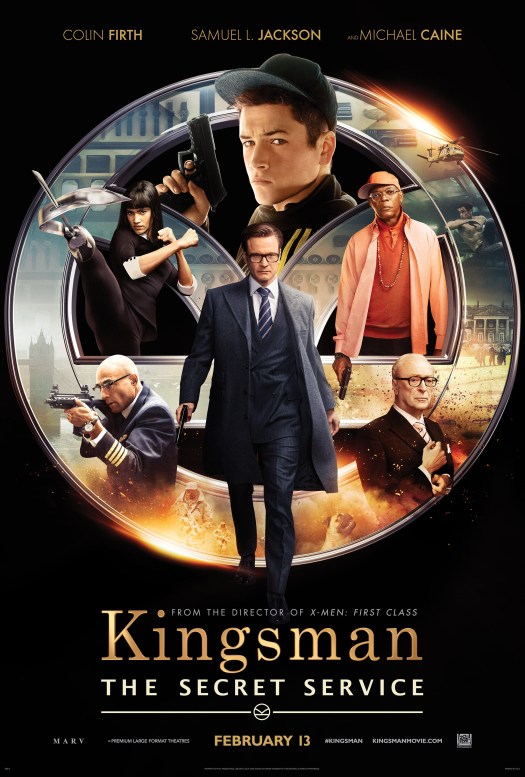
Plot Summary: When the British spy organisation; ‘Kingsman,’ recruits an unrefined, but promising London street teen into the agency’s ultra-competitive training program. ‘Eggsy’ begins to follow in his father’s footsteps as he takes part in the organisation’s many dangerous training exercises. All the while, the twisted tech genius; ‘Valentine,’ begins to execute a master plan, which will potentially put the entire world at risk…

Violent, thrilling and fun, the first ‘Kingsman’ film was actually made partly in conjunction with the comic book itself, as director Matthew Vaughn and comic book writer Mark Millar have been good friends for many years since they collaborated previously on ‘Kick-Ass’ in 2010 to great success, prompting them to reunite for ‘Kingsman: The Secret Service.’ Which, aside from a few minor changes, is actually a mostly faithful adaptation of the first entry in the comic book series, alongside also being a superb gateway into the world for any non-fans of the comic series as the film establishes who the ‘Kingsman’ are and what they do, in little time.

Protagonist; ‘Gary Unwin,’ usually going by his nickname; ‘Eggsy,’ is portrayed by Taron Egerton in one of his earliest film roles, who portrays a reckless British teenager very well, becoming an instantly likeable character within only a short amount of screen-time. Its Colin Firth and Samuel L. Jackson, who, both steal the film with their fantastic characters, however, as both actors play completely against their usual type here, with Firth taking on the deadly spy; ‘Harry Hart,’ who rarely even smiles (creating quite a contrast from his usual romantic-comedies), and according to second unit director Bradley James Allan, even did 80% of his own stunts during filming. Whilst Jackson also gives one of his most memorable performances to date as the film’s antagonist; ‘Valentine,’ who, throughout the runtime, retains an aggressive lisp and occasionally childish demeanour, a big leap from much of his previous work.

Although not as outrageously creative as it could’ve been, in my opinion, the film’s cinematography by George Richmond does serve the story very effectively, as many of the film’s over-the-top and exciting action sequences are displayed proudly and clearly without too much use of hand-held camera or excessive editing. During a few scenes, the camera even begins to spin around the characters as they fight, providing the film with a real sense of movement.

The original score by both Henry Jackman and Matthew Margeson has quickly become very beloved, similar to the film itself, and it’s easy to see why, as the film utilises its trumpet-heavy orchestral score to create a soundtrack, which would fit perfectly within a classic espionage series, like ‘The Avengers,’ ‘The Ipcress File’ or ‘The Man From U.N.C.L.E.’ From ‘Manners Maketh Man’ and ‘To Become a Kingsman,’ to especially, ‘Valentine’s theme, which is noticeably more electronic to fit with the tech-savvy character. Nearly every track featured in the original score is both memorable, and usually, also cut in sync with the film’s stylish editing to great effect. 

Needless to say, the aspect that ‘Kingsman’ is most known for is certainly its variety of impressive action sequences, which as already mentioned, do away with the usual overly shaky and chaotic execution of most modern action flicks in favour of more fast-paced and exaggerated fight choreography with plenty of graphic violence to boot. Resulting in many entertaining action sequences, even if they aren’t completely flawless, as the majority of these scenes do, unfortunately, still suffer from their overly heavy usage of CG effects (usually for blood and severed limbs), which I feel does somewhat take away from many of these thrilling moments, even if they are still sure to impress most on their initial viewing.

In summary, while many spy films may be far more focused on delivering more grounded and gritty missions for their audiences these days, ‘Kingsman: The Secret Service’ truly revels in its absurdity. As, in spite of the problems this stirring espionage film faces, it still manages to remain an amusing and exciting experience throughout its runtime, combing its array of phenomenal action set pieces with some outstanding stunts and a now-iconic original score, the first instalment in ‘The Kingsman’ series may have now launched a blockbuster franchise, but for many, I feel it will always remain their favourite part of this continuing story. Final Rating: low 8/10.

kingsman_the_secret_service_ver7_xxlg