A Clockwork Orange (1972) – Film Review

Despite being very unusual and even somewhat disturbing throughout, legendary director Stanley Kubrick (2001: A Space Odyssey, The Shining, Full Metal Jacket) brings to life one of the best films of his career, as ‘A Clockwork Orange’ explores an original story with some impressive cinematography and set design, all leading the film to become very iconic and memorable within its own right. Even surpassing the novel it’s originally based on by Anthony Burgess, with Kubrick crafting one of his most faithful adaptations to date.

Plot Summary: In the near future, the young sadistic gang leader; Alex, is imprisoned after a violent event goes public, forcing him to serve time. But, with the promise of an early release, ‘Alex’ is eventually lead to volunteer for a conduct-aversion experiment, which doesn’t go as he anticipated…

Although the narrative throughout ‘A Clockwork Orange’ never fails to be engaging, usually focusing heavily on dark themes of insanity, violence and morals. I do feel the film could definitely be seen as too intense for some viewers, as although the large amount of nudity and torture does serve the film’s story, it could also be seen as tasteless for some, regardless of the film’s overall lack of blood and gore during many of the violent scenes.

Ignoring the unbelievable performance from Malcolm McDowell as the psychotic protagonist; ‘Alex,’ Warren Clarke, Aubrey Morris, James Marcus, Michael Bates and Carl Duering are all excellent in their respective roles, despite their very limited screen-time and development, and although the over-the-top British accents many of the characters have may put some viewers off, I do feel it fits well within the interesting sci-fi world the film sets up. However, we do get another appearance near the end of the film from a character, known as ‘Mr. Alexander,’ portrayed by the late Patrick Magee. Who, despite being an important character within the plot, gives a performance a little too ridiculous, in my opinion, as his facial expressions end up coming across as more comedic than emotional during his dramatic scene nearing the end of the runtime.

The cinematography by the late John Alcott definitely adds another level to the film, as the enormous amount of movement and uncomfortable close-ups throughout the film really add to the story itself, including the now-iconic; ‘Kubrick Stare,’ which can be seen in many of his films. In addition to the fantastic cinematography, however, is also the brilliant editing, which perfectly fits the film’s style, almost as if ‘Alex’ himself is taking the audience through the story within his erratic mind. This also links back to his narration, which is present throughout the film and is brimming with plenty of well-written and memorable dialogue.

The original score by Wendy Carlos is another element of the film I really enjoy, utilising an electronic soundtrack to further push the weird tone of the film, as the score recreates many of ‘Alex’s favourite classic songs in an interesting way, resulting in a soundtrack that’s both memorable and unique. The film also uses a variety of iconic songs very effectively, perfectly capturing the insanity within the main group of misfits. One of the most memorable moments of the film even comes from this, as ‘Alex’ brutally beats a couple whilst singing the classic song; ‘Singin’ in the Rain.’

As previously mentioned, ‘A Clockwork Orange’ is also one of the few films where the sets are incredibly iconic by themselves, as each location the characters visit is always colourful and visually appealing. From the ‘Korova Milk Bar’ through to the London apartment ‘Alex’ and his parents call home, every set has plenty of 1970s style mixed-in with some science fiction aspects (this also applies to the many wonderful costumes on display throughout the film). There were also a number of interesting scenes that were left on the cutting-room floor, including more scenes set within the ‘Korova Milk Bar,’ among plenty of other scenes focusing on the characters committing more horrible acts.

In summary, ‘A Clockwork Orange’ is an extremely bizarre yet incredible experience, as the film is just as interesting to discuss as it is to watch among many film fans. Containing plenty of hidden messages and underlying themes alongside its phenomenal filmmaking and brilliant story, I feel the film is truly one of Kubrick’s best, despite not beating out my personal favourite; ‘The Shining.’ So, although ‘A Clockwork Orange’ isn’t without its flaws, I would still highly recommend this one for anyone seeking something a little more out there, and of course, also due to its huge impact on pop culture and the film industry, alike. Final Rating: 8/10.

clockwork_orange_xxlg

We’re the Millers (2013) – Film Review

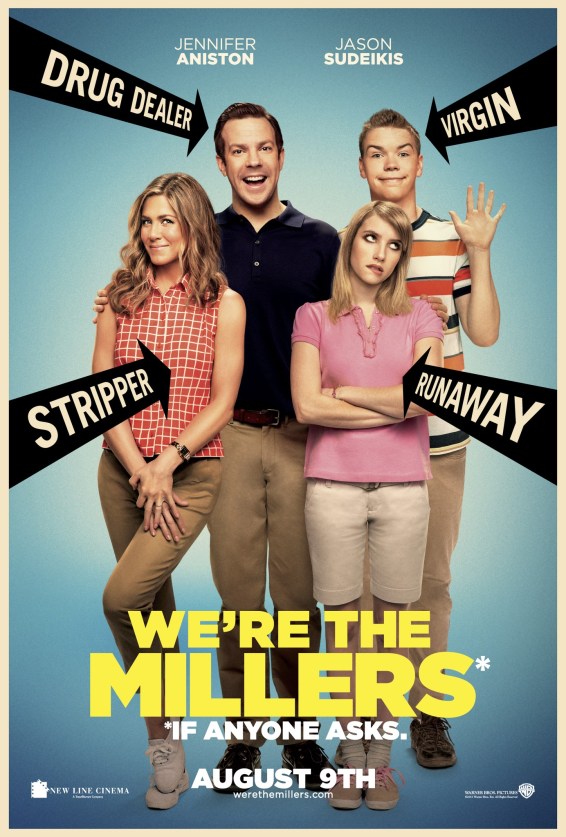
Even with a mostly standard plot for a comedy flick, I ended up enjoying ‘We’re the Millers’ more than I initially expected, as the entire cast (especially Jason Sudeikis and Jennifer Aniston) have excellent chemistry with each other, resulting in the majority of the humour throughout the story working quite well, despite the film having a few noticeable flaws throughout its runtime.

Plot Summary: When a middle-aged pot dealer is tasked with moving a huge shipment of weed into the United States from Mexico for a large pay packet, he puts together a fake family of various people he knows from his flat in an attempt to make it over the border…

Comedy as a genre has always been subjective, as everyone obviously has their own taste when it comes to what they find amusing. But, for the most part, I would say enjoyed the humour throughout the runtime, as aside from a few moments where the joke was simply one character saying something disgusting or incredibly stupid out loud to another group of characters (as I personally find this kind of comedy a little lazy), I think most of the jokes land. However, I also feel a few more jokes hidden within the background of shots would’ve also added to the film in more ways than one.

Jennifer Aniston, Jason Sudeikis, Emma Roberts and Will Poulter all portray random people thrown together in the hope of creating this false family, and I would say they work well together throughout the film. Always coming across as a very dysfunctional yet still likeable group, with all of the cast portraying very different personalities without losing any comedic timing. Interestingly, ‘We’re the Millers’ is actually the second film in which Jennifer Aniston plays a character who is recruited to create a fake family, the first being the comedy flick; ‘Just Go With It,’ in 2011.

Whilst the film does have the occasional appealing shot, the cinematography by Barry Peterson isn’t anything spectacular, as the film has mostly generic cinematography for a comedy. However, the original score by Ludwig Göransson and Theodore Shapiro is definitely one of the better elements of the film, as the soundtrack fits the tone of the film perfectly, utilising an acoustic guitar which always manages to make the film feel interesting enough to be somewhat memorable. Considering the first composer has worked on films, such as ‘Creed’ and ‘Black Panther,’ however, this shouldn’t be that much of a surprise.

My main criticism of the film is the overall lack of jokes or comedy set pieces based around the idea of the characters being a fake family, as although there are a few jokes throughout the narrative based around this idea, I never quite felt the film made full use of this concept, and usually just fell back onto your usual comedy writing. I also personally felt the film’s pacing is far too quick, as the film almost rushes through scenes within the story in order to quickly get to another gag, rather than having them happen alongside each other. In addition to this, I also felt more focus on some of the more emotional or serious scenes could’ve really helped build up tension and make the story more engaging.

In summary, ‘We’re the Millers’ is a serviceable comedy, as while I don’t think the film is fantastic by any means. I enjoyed myself with this simple comedy for what it attempted to be, as although I still think the cinematography and some of the humour could be improved, I found the film to be a mostly entertaining ride and a pretty easy watch due to its fun story and brilliant cast. Final Rating: low 6/10.

were_the_millers_xxlg

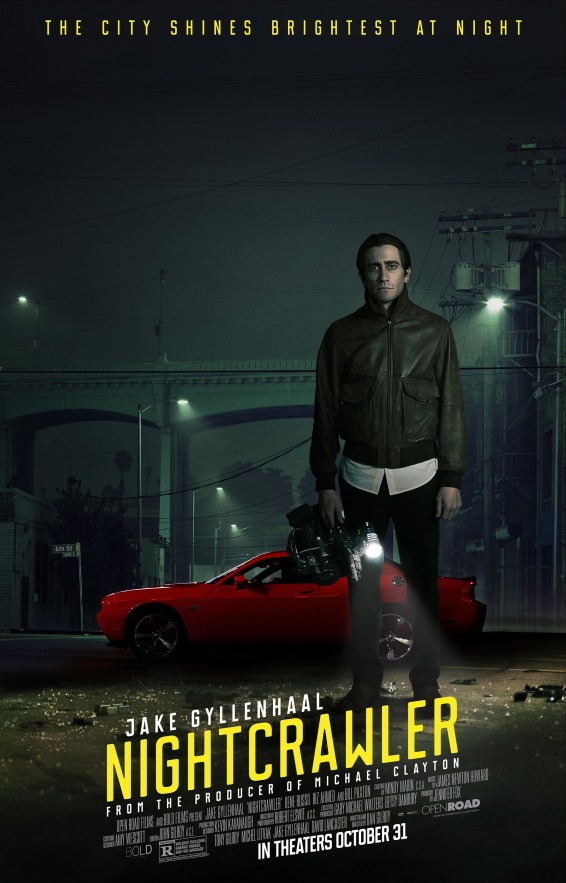
Nightcrawler (2014) – Film Review

Held up by an incredible performance from Jake Gyllenhaal, ‘Nightcrawler’ is a visually beautiful and very tense thriller from director Dan Gilroy (Roman J. Israel Esq, Velvet Buzzsaw), focusing on the dangerous life of a freelance journalist who ends up falling deeper and deeper into a world of greed and accomplishment. Gripping from start-to-finish (as well as being one of my personal all-time favourite films), ‘Nightcrawler’ is truly an amazing experience any film fan is sure to enjoy.

Plot Summary: When ‘Louis Bloom,’ a con-man desperate for work, muscles his way into the world of Los Angeles crime journalism, he blurs the line between observer and participant to become the star of his own story, determined to rise to the top regardless of competition, or even morals…

Being shot over the course of twenty-eight nights, the film does a brilliant job of blending a narrative of what the life for a freelance journalist is actually like, as well as focusing on the more personal story of ‘Louis’ at the same time, with both of them fitting the dark tone of the film extremely well. This alongside the exploration of the city of Los Angeles gives the film a great personality, as the film explores every seedy corner of the city, always using real locations over any visual effects, unlike many other films nowadays.

Jake Gyllenhaal also gives one of the best performances of his career here, portraying ‘Louis Bloom’ as a creepy, sly and selfish character who excels at his work, yet despite being mostly unlikeable. He still manages to be an engaging protagonist mostly through his charisma and intelligence, even as he descends further and further down the line. Gyllenhaal even went to the extent of losing over twenty-pounds for the role, which was actually Gyllenhaal’s own idea, as he visualised ‘Louis’ as a hungry coyote. Riz Ahmed also appears in the film as ‘Rick,’ ‘Louis’ underpaid and underappreciated partner who serves as almost his complete opposite in many different ways. These two alongside the supporting cast of Rene Russolate and the late Bill Paxton are all brilliant throughout the film, never failing to impress within their respective roles.

The cinematography by Robert Elswit is some of the best cinematography I’ve seen in a film in a long time, utilising an enormous amount of varied shots, including a large amount of wide and mid-shots, which are always a joy to see, with the film always using its cinematography to increase the amount of tension or drama that’s on-screen. The film also makes great use of it’s dark blue and orange colour palette as well as large amounts of street lighting, which both definitely help give the film a distinct visual flair and make many of the bright colours stand out amongst the darkness of Los Angeles late at night.

This is also backed up by the calming and yet also eerie original score by James Newton Howard, and while perhaps not incredibly memorable on itself, I do like this composer for much of his previous work (The Sixth Sense, King Kong, I Am Legend) and the soundtrack here does back up the film pretty well for the majority of its runtime, aside from the occasional track which can come across as slightly cliché.

Another element of the film I really enjoy is it’s grasp on realism, as although I’m no expert in regards to the world of crime journalism. The film never really seems to go beyond believability within its story, even when the story begins to enter more dangerous territory for its characters. One element of the film that didn’t really exceed my expectations, however, was the film’s editing, as although the editing throughout the film is decent, I was never overly impressed by it, as I always felt it was one of the few areas of the film which could’ve been slightly improved.

In summary, ‘Nightcrawler’ still retains it’s spot on my list of favourites, with its outstanding cinematography in addition to the pretty fantastic original score and performances throughout. The film has a lot to offer, and I’m still thrilled the film came out as well as I did, due to both its filmmaking and it’s appeal, I’d absolutely recommend anyone give ‘Nightcrawler’ a watch. Final Rating: 9/10.

nightcrawler_ver4_xxlg

Free Fire (2017) – Film Review

An interesting film for sure, ‘Free Fire’ directed by Ben Wheatley (Kill List, Sightseers, High-Rise), thrusts it’s audience straight into a world of blood, bullets, and amusing quips. Setting the entire story in one single location, which truly helps the film in setting itself apart from other films within its genre, and I really do appreciate the effort that went into this film in order for it to be as entertaining as it is, and whilst not perfect, the film is still mostly entertaining and amusing throughout.

Plot Summary: In an abandoned Boston warehouse in 1978, a small-scale arms deal goes awry, turning the warehouse into a chaotic fight for survival with bullets flying in every direction…

As the film is set in the 1970s, the film is littered with ’70s style. Everything from the costumes, to the original score, to even the colour palette gives fit extremely well with the film’s tone. It’s clear from the style of the film and the witty dialogue that director Ben Wheatley was obviously inspired by early Quentin Tarantino and Martin Scorsese films, which makes complete sense as crime seems to be his go-to genre for the most part.

The entire cast here are all doing a great job of fitting film’s tone, as although there are a few comedically dark moments, the film is mostly light-hearted, as the cast’s performances back up this tone very well, giving the film an over-the-top and comedic outlook on the situation. I also enjoyed the sound design for the weapons in this picture, as I felt like each gunshot actually had an impact, not just that the actors were playing with props. I would say Armie Hammer as ‘Ord’ as well as Cillian Murphy as ‘Chris’ were easily my personal favourites of the cast, as I always found myself enjoying their very charismatic and cocky personas throughout the runtime.

Despite it being nothing amazing, the cinematography by Laurie Rose is decent enough throughout the majority of the film. Although I do believe there is a bit too much of a reliance of a hand-held camera at points, as I feel a still shot would be welcome more than a few times and as already mentioned, the original score by Geoff Barrow backs up that time-period very well. However, the soundtrack itself is pretty forgettable outside the rest of the film.

The best compliment I can give this film is without a doubt the writing, as even though the characters get barely any development throughout the narrative (relying mostly on the actor’s charismatic performances) the writing never fails to implement humour, or extremely tense scenarios nearing the end of the film. This is a shame, however, as I do feel a character arc would have worked very effectively for one of the greedy, egotistical characters on display.

In summary, I would say I enjoyed ‘Free Fire.’ The film definitely isn’t perfect due to its weak characterisation, overreliance on hand-held shots and maybe a few missed jokes here and there. But, still an enjoyable watch, and a nice 1970s throwback, nevertheless, plus the original concept of the narrative always intrigued me, and must be appreciated for its creativity alone. Final Rating: 6/10.

free_fire_ver18_xlg

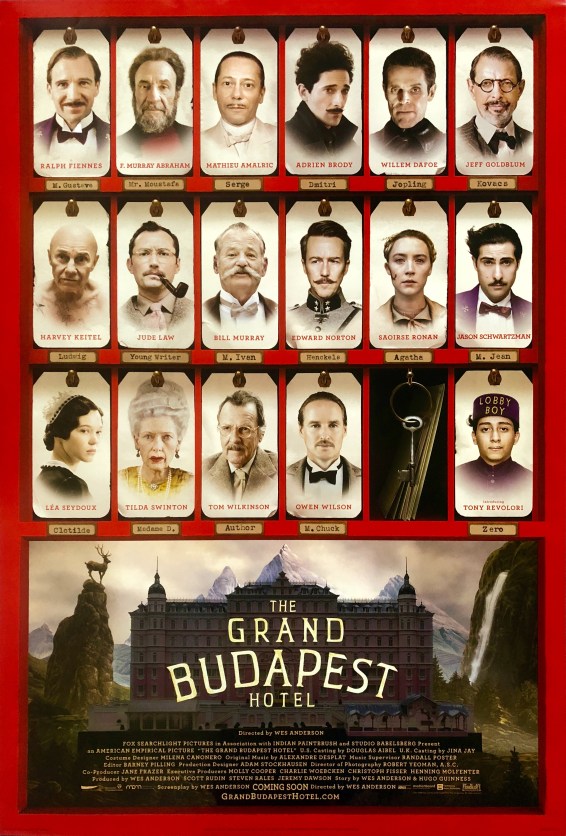
The Grand Budapest Hotel (2014) – Film Review

Wes Anderson’s visually spectacular tale of murder, elegance and crime is far more light-hearted than I was initially expecting. Utilising a bright colour palette, unique cinematography and a wonderful score by Alexandre Desplat, the film brings all the usual elements of Wes Anderson’s style that I adore, especially coming straight off the back of Anderson’s animated flicks.

Plot Summary: ‘Gustave H,’ a concierge of the legendary ‘Grand Budapest Hotel,’ alongside his new lobby boy, ‘Zero.’ Embark on a dangerous journey following a mysterious murder and the disappearance of a priceless Renaissance painting, soon leading them into the middle of a feud over an enormous family fortune…

The film definitely does have a particular artistic flair which his animated flicks do not carry, as in nearly every wide shot in the film we are greeted with what almost looks like a painting. These paintings are almost used as backdrops throughout the film, and blend seamlessly with the bright pale colour palette of the film. Even with this colour palette and mostly upbeat tone, however, the film is not afraid to dive into darker territory if needed in order to serve the story.

In addition to his style, Anderson also does a brilliant job when it comes to the writing, as the film is gushing with hilarious and memorable lines throughout. Many of the comedic lines caught me completely off-guard, with some of the humour being extremely dark. But, with a cast this large and talented, you’re almost guaranteed to get comedic gold. In particular, I really enjoyed the performances by Ralph Fiennes, Bill Murray and Willem Dafoe, who you could really tell they enjoyed their time on-set.

Robert D. Yeoman handles the cinematography within the film, which is, of course, brilliant, as not only does it contain the usual style expected from Anderson, but the cinematography even backs-up the narrative of the film, as many characters within the story feel isolated, and as a result are framed completely alone. But, pretty much all the cinematography throughout the runtime is fantastic. The original score by Alexandre Desplat is also a great aspect of the film, as he creates a very memorable soundtrack here which fits the tone of the film perfectly and really backs up many of the comedic scenes, with the tracks; ‘Mr. Moustafa’ and ‘The Cold-Blooded Murder of Deputy Vilmos Kovacs,’ being my personal favourites.

For the most part, the protagonists of the film are well-written, we understand who they are within the early stages of the story. Yet, as the story continues along, we continue to learn more about them. However, if I had to point out a flaw in the film it’s definitely the antagonists of the film, Willem Dafoe does an excellent job as the deadly hitman, whilst Adrien Brody also does a decent job as his boss. Beyond that, however, the characters are very flat and are given little to no development throughout the film.

Wes Anderson once again also pays serious attention to detail, as in many shots there’s always small hidden gags or visual references hidden away to spot. The filmmaking itself is also used for a lot of visual storytelling, e.g. the lonely characters and their framing within the shots, as already mentioned.

In summary, I was very impressed with ‘The Grand Budapest Hotel,’ as aside from the issue I have with the antagonists of the narrative, the film succeeds in nearly every category for me, and was a very enjoyable watch throughout. Combining Wes Anderson’s great visual style with a brilliant main and supporting cast as well as many comedic moments, the film is certainly worth a watch, and it’s fair to say that Wes Anderson will always have a viewer in me going forward in his career. Final Rating: 9/10.

IMG_3176

Hell or High Water (2016) – Film Review

From the writer of ‘Sicario’ and the director of ‘Starred Up,’ ‘Hell or High Water’ is a tense crime film which feels like more a traditional western on first watch, mostly through its great use of its cast, fantastic original score and classic setting. The film is a heavy slow-burn for the most part, as the story builds up for most of its runtime, eventually leading to its intense climax, which despite being short, does feel satisfying to watch, the entire film overall is truly a brilliant example of a modern-day western.

Plot Summary: A divorced father and his ex-con older brother resort to a desperate scheme in order to save their family’s ranch in West Texas. Robbing as many banks as they can all across the county while remaining one step ahead of the authorities that are hunting them down…

On my first viewing, the film felt very similar to the Coen Brothers’ ‘No Country for Old Men’ (which the film seems heavily inspired by), as the story is very engaging and surprisingly also has a nice blend of dark comedy mixed in with a lot of drama and tension. Not really focusing on action, the film spends more time building up tension and atmosphere. Near the end of the runtime, however, we do see some action, which is relativity well done and does feel very grounded.

Chris Pine, Ben Foster, Jeff Bridges and Gill Birmingham all give fantastic performances here and keep the audience engaged throughout the runtime, which is even more impressive when you look further into their characters, as I personally feel their characters could’ve done with a little more development, as they do get bits and pieces but nothing really major, and the lack of any kind of character arc for Chris Pine’s character; ‘Toby Howard,’ really irritated me. However, the rest of the writing here is pretty great for the majority of the film.

The cinematography by Giles Nuttgens is one of the film’s better aspects, truly utilising the location of Texas for its isolation and beauty. Usually then switching to more chaotic hand-held camera movement during the few action scenes, which I think works effectively. However, I do feel the cinematography could be improved, as there weren’t a large number of shots I was incredibly impressed by throughout the film. Interestingly, even though the story is set in Texas, not a single scene was actually filmed there, aa due to State Legislature removing tax incentives, the film was actually shot in New Mexico.

Nick Cave and Warren Ellis are responsible for the original score, which is possibly my favourite element of the film, really adding to the modern western feel the film is going for, as well as backing up many of the more emotional or tense scenes. The soundtrack here is definitely one of my favourite elements of the film, the film however also makes great use of various songs. Having a variety of country songs play over different scenes throughout the film, quickly setting the tone and establishing the story’s setting early on.

In summary, ‘Hell or High Water’ is a compelling crime thriller and neo-western, for any classic western fan I would say this is a definite watch. As for more casual viewers, I could see the slow-burning pace being a bit of a turn-off, despite it being used to build tension effectively. Backed-up by its great cinematography and original score, the film makes up for its lack of character depth and exciting action in the long run. Final Rating: 8/10.

hell-or-high-water-poster

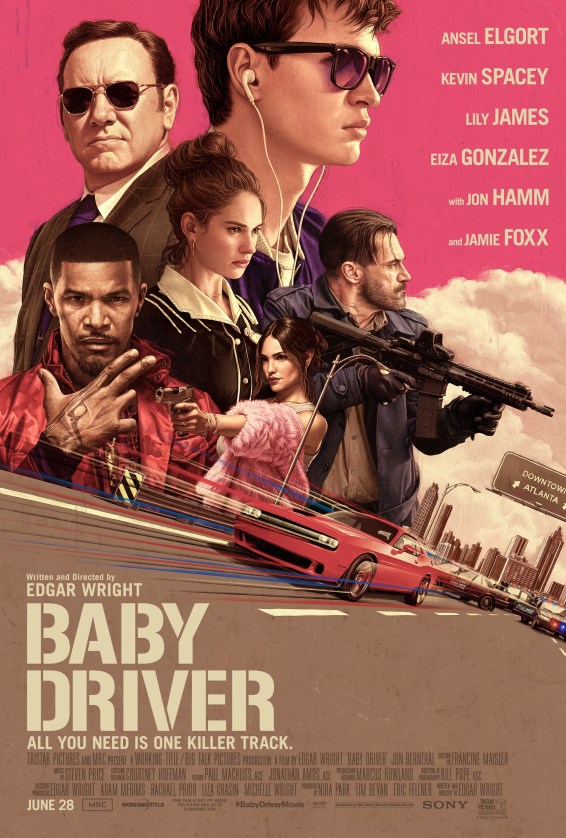
Baby Driver (2017) – Film Review

Beloved British action-comedy writer-director Edgar Wright (Shaun of the Dead, Hot Fuzz, Scott Pilgrim vs. The World) returns to the silver screen for another colourful and exciting masterpiece of filmmaking. As one of my all-time favourite directors, writes and directs another wonderfully crafted story, in this fast-paced and pretty thrilling crime flick.

Plot Summary: A talented young getaway driver (Baby), who uses music to drown-out the criminal world around him. Soon meets the girl of his dreams at a local diner, seeing it as his opportunity to ditch his criminal life and make a clean getaway. But, he must face the music when a doomed heist threatens his life, his love and his freedom…

As the story would imply, we spend a large portion of the film listening to our protagonist’s playlist just as he does, as nearly every scene with the playlist is timed exactly to the music, every tap, bang and screech. Whatever the location or character, the film never fails to make use of the catchy songs within the narrative, this is also where I have to mention the outstanding editing, as the film is always in sync with the songs, even through it’s cuts to other shots or scenes. The editing is always fast, fluid and perfectly on time, every time.

The film never really fails at being engaging for the audience due to the combination of the brilliant writing and acting, with the main cast portrayed well by Ansel Elgort and Kevin Spacey. However, my personal favourite of the cast has to be John Hamm as ‘Buddy,’ who is funny, charming and menacing throughout. This is unfortunately where my one criticisms of the film comes in, however, as Lily James’ character; ‘Debora,’ although likeable, is given little-to-no development throughout the story, and by the end of the film is nothing more than a bland love interest.

Feeling like a classic Edgar Wright project throughout the runtime, the film always uses a bright colour palette alongside the effective cinematography by Bill Pop, allowing the film to really leap-off the screen. This is also in credit to the brilliant stunts within the film however, as most of the driving in the film was done completely practically, with the main protagonist of the film; ‘Baby,’ even listening to the songs we as the audience hear during many of the scenes for the majority of his time on set.

As perfected as the editing felt whilst watching, the sound design was also extremely on-point. Nothing in regards to audio editing ever felt jolted or out-of-place, as each cut matches up perfectly with the last and works extremely well with the chosen songs, each audio effect always fitting into the scene no matter the location. Usually not a thing of note in these reviews, but this film did it so well I had to mention it. In addition to this, despite not using an original score for the majority of the film due to the huge list of iconic songs chosen, the original score by Steven Price is decent, despite not being very memorable.

In usual Edgar Wright fashion, the film is also crammed with various little hidden visual cues and jokes, many of these are just small things such as having the lyrics of the song ‘Baby’ is listening to spray-painted on the walls behind him. This may not seem like much, but the little details throughout clearly display that the director clearly has a deep passion for the film and has a keen-eye for attention to detail.

In summary, while ‘Baby Driver’ has always hit me as a more upbeat version of ‘Drive’ from 2011, Wright’s fast-paced crime flick is still an extremely well-executed film, having the usual creative flair we’ve come to expect from this director, in addition to an engaging story, fantastic editing and some brilliant songs chosen throughout. And with such high-fueled fun on display, how could you not love ‘Baby Driver?’ Final Rating: high 8/10.

baby_driver_ver2_xxlg

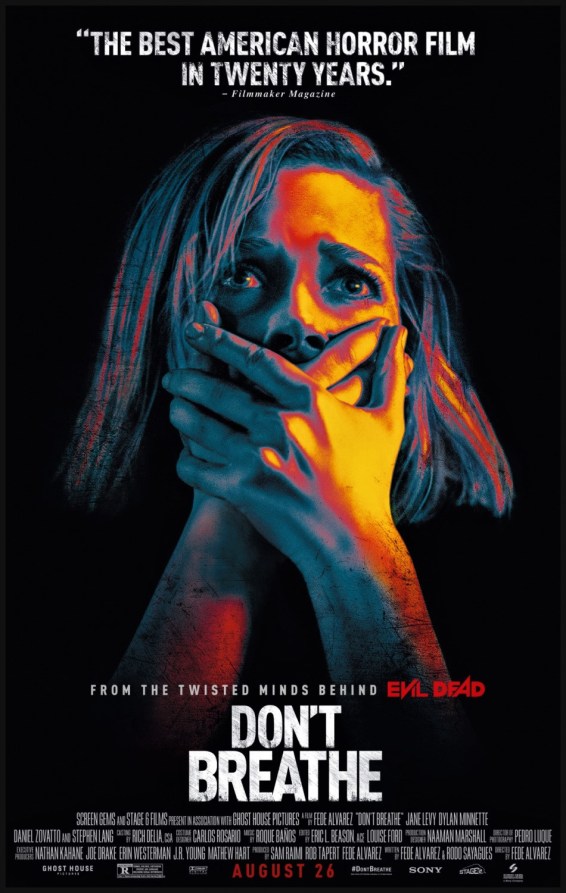
Don’t Breathe (2016) – Film Review

Truly a visual treat when it comes to the film’s lighting and attractive colour palette, ‘Don’t Breathe’ is the second big-screen outing for director Fede Alvarez after he took on the extremely gory ‘Evil Dead’ remake a few years prior. Through its original story, incredibly tense atmosphere, brilliant cast as well as iconic horror director Sam Raimi on board as a producer, ‘Don’t Breathe’ manages to constantly remain both entertaining and thrilling in spite of nearly all its runtime taking place within a single location.

Plot Summary: When a trio of thieves break into an elderly blind man’s home in an attempt to steal the loan given to him as a settlement for his daughter’s death. They soon begin to realise that the old man isn’t as helpless as first seems, leaving the group to find a way out before it’s too late…

This simple yet unique plot is truly ripe for creating tense moments, as the film utilises its main location of the ‘Blind Man’s house to the best of its advantage. Having the trio of characters make their way through the house’s tight corridors and dark rooms with plenty of extremely close encounters with the blind old man. Even having to hold their breath at points so he can’t hear them breathe (as the title of the film implies). Alongside this, ‘The Blind Man’ also has a pet Rottweiler, which lends itself to creating even more intense scenes as the characters get pursed by the vicious canine. Who was actually portrayed by three different dog actors, named; Athos, Astor, and Nomad, respectively.

Stephen Lang, best known for his role as ‘Colonel Miles Quaritch’ in 2009’s ‘Avatar,’ portrays the film’s antagonist only ever known as ‘The Blind Man,’ and does a phenomenal job of it. Giving the audience an almost sympathetic view of the character through his innocent performance early on before then quickly becoming far more unhinged and incredibly intimidating every-time he is on-screen. The rest of the cast of Jane Levy, Dylan Minnette and Daniel Zovatto also give remarkable performances as the young group of thieves, despite their characters only receiving a small amount of characterisation near the beginning of the film.

The cinematography by Pedro Luque is surprisingly inventive throughout, as in addition to the film’s array of visually-pleasing shots. ‘Don’t Breathe’ actually uses its cinematography to allude to moments that come later within the narrative. In particular, in the scene where the trio first break into ‘The Blind Man’s house, as the camera glides through the various different rooms focusing on key objects or areas for reasons that are revealed later down the line. However, the real visual flair of the film is definitely the stunning lighting and colour palette as already mentioned, from dirty blues and greens to overly bright oranges. Each location (whether inside or out) is always given its own distinct appeal, sometimes even replicating what the audience should be feeling at that point, whether that is fear or relief.

Roque Baños, the same composer who previously worked with director Fede Alvarez on the ‘Evil Dead’ remake, returns to work alongside him once again. This time around crafting an original score which is both eerie and memorable, as the score uses metallic bangs and crashes to fit with the story’s location, giving the soundtrack a real personality similar to the film itself. ‘Don’t Breathe’ also uses its score very effectively, only placing it within more fast-paced moments after the tension has already risen, rather than overusing the original score in scenes where silence is mostly required.

When it comes to its runtime, ‘Don’t Breathe’ is actually quite short, as due to the film wanting to keep its viewer on edge throughout nearly the entirety of its narrative, ‘Don’t Breathe’ is cautious not to overstay its welcome, an issue that many horror flicks have suffered from as many horrors in the past have overplayed their concepts, eventually making them far less frightening/interesting by the time the credits roll. That being said, I couldn’t help but feel a few more scenes with our protagonists wouldn’t have gone amiss, as there were actually a number of more character-focused scenes shot for the film before inevitably being cut.

In summary, I deeply enjoy ‘Don’t Breathe,’ as this horror/thriller is, in my opinion, a genuine pleasure to watch every time. As, aside from desiring a little more characterisation for the protagonists, I have very few issues with this one, as Stephen Lang’s sensational performance, in addition to the film’s great visuals and large number of tension-filled moments, leave ‘Don’t Breathe’ one of the most memorable lower-budget horrors made in quite some time, and I personally am really looking forward to seeing what other stories director Fede Alvarez has up his sleeve, horror or not. Final Rating: high 8/10.

dont_breathe_ver4_xlg