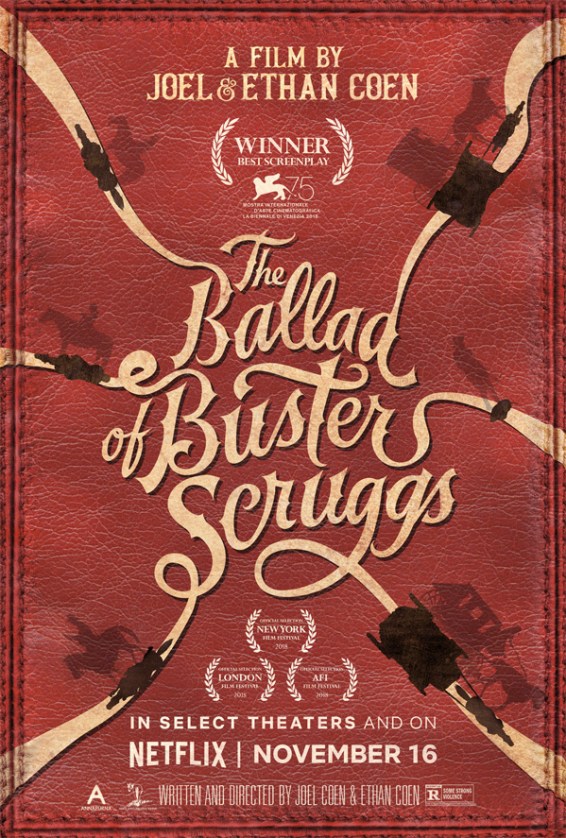
The Ballad of Buster Scruggs (2018) – Film Review

The western genre used to be extremely popular back in the golden age of Hollywood, but in recent years the western genre has mostly died off, as aside from a few honourable mentions, such as ‘True Grit,’ ‘The Sisters Brothers,’ and ‘Django Unchained.’ The western genre as a whole has run mostly dry, until now that is, as iconic directors Joel Coen and Ethan Coen (The Big Lebowski, Fargo, No Country for Old Men) return to the silver screen for this brilliant western anthology.

Plot Summary: Consisting of six different stories of life and violence in the Old West, including the tales of a singing gunslinger, a bank robber, a travelling impresario, an elderly prospector, a wagon train and a perverse pair of bounty hunters…

This diverse set of stories and characters really keep the film engaging from start-to-finish, as the film constantly jumps between characters and locations, all whilst ensuring that it keeps its decent pacing and usual Coen Brothers’ dark sense of humour intact. Resulting in the film feeling extremely refreshing, as superhero blockbusters and jump-scare filled horrors have really taken over the film industry in recent years. So, revisiting an old yet classic genre (especially with this modern spin and the Coen Brothers’ brilliant direction) is truly a breath of fresh air.

The performances by every member of the enormous cast are pretty excellent all around, as Tim Blake Nelson, James Franco, Liam Neeson, Thomas Waits, Zoe Kazan, Jonjo O’Neill and Brendan Gleeson (just to name a few) are all brilliant when portraying their varied and interesting characters, with Tim Blake Nelson definitely being the clear stand out for me with his extremely funny and charming portrayal of the title character; ‘Buster Scruggs.’

Throughout the runtime, the cinematography by Bruno Delbonnel is almost flawless, as the film utilises a variety of beautiful shots which perfectly capture the visual appeal of classic westerns. The original score by Carter Burwell is also great, as the soundtrack uses slow guitar strings and an enormous list of classic country songs to build up atmosphere, with the best of these definitely being ‘When a Cowboy Trades His Spurs for Wings.’

One aspect of the film I absolutely adore is the Coen’s usual style of writing, as every character throughout the film is given plenty of comedic moments and memorable lines, which really helped make many of the characters with slightly less development more likeable. Another element that also really drew my attention during my first viewing was the incredible sets and costumes the film had on full display, as considering the locations/costumes are some of the main factors of engaging the audience into the story and it’s time-period. It was clear they were pulling out all the stops, as every location always feels real and lived in, with the character’s costumes being no different.

My personal favourite narrative of the six would most likely be the opening story, sharing the same name as the title of the film; ‘The Ballad of Buster Scruggs.’ This opening was just such as joy to watch, balancing dark humour with a classic western setup brilliantly, in addition to the fantastic performance from Tim Blake Nelson as already mentioned. However, this is also where my biggest criticism of the film comes in, as although they definitely aren’t awful, the last two stories are easily the weakest of the film, as although we do get some great character moments and fun scenes within these stories, I couldn’t help but feel they simply weren’t as memorable or as charming as the others leading up to them. Perhaps if these two stories we’re placed earlier in the film it wouldn’t be such an issue, but it simply leaves the viewer with a bad taste in their mouth afterwards.

In summary, ‘The Ballad of Buster Scruggs’ proves once again that westerns are far from gone when it comes to film, as the Coen brothers once again take the audience for a trip into the wild west with complete success, as this anthology is just as hilarious as it is visually impressive and well-acted, regardless of whether or not the stories are quite on the same level. Final Rating: low 8/10.
busterscruggsredfinalposterbig59902

The Woman in Black (2012) – Film Review

Fresh off the success of the final ‘Harry Potter’ instalment, Daniel Radcliffe now takes on a paranormal horror story in this adaptation of the classic British gothic horror novel; ‘The Woman in Black,’ by Susan Hill. Yet, sadly, the film ends up being a pretty lacklustre (and even somewhat boring) experience overall.

Plot Summary: In 1906, a young solicitor travels to a remote village where he discovers the vengeful ghost of a scorned woman is terrorising the locals and stealing their children. But, as he begins to investigate further, he soon uncovers a darker history than he initially thought possible…

Although this type of plot is nothing new for the horror genre, the film does attempt to experiment slightly to engage its audience more through mystery and tension. This is especially clear in the eerie opening stinger, which is probably my favourite scene within the film, but I still personally feel the film doesn’t have quite enough experimentation to stand out that much, as I initially hoped due to its distinct British roots and story based on a successful novel, the film would be somewhat memorable. Unfortunately, the film is mostly quite bland, having a few eerie visuals, but nothing overly exceptional in terms of filmmaking.

Daniel Radcliffe portrays the protagonist of the story, ‘Arthur Kipps,’ very similar to how he has portrayed many of his other characters in the past. Coming across as a mostly likeable character with a little bit of development but nothing extremely major, this is an issue with the majority of the characters, however, which leads me onto the fairly dreadful writing throughout the film, as the film always talks directly to the audience, usually leaving no room for subtlety and coming as mostly cliché and cheesy throughout. Despite the rest of the cast of Ciarán Hinds, Janet McTeer and Liz White, also doing a decent job with what little they are given.

The cinematography by Tim Maurice-Jones is mostly fine throughout the film, having the occasional attractive shot, but never really anything overly interesting. Although I was actually impressed with a variety of the transitions throughout the films, as many of them really utilised the location they were set in very well. Interestingly, many of the music boxes and mechanical toys in the nursery scenes weren’t created for the film, but were genuine antique toys from the time-period, loaned to the production by a collector, which I feel really enhances the film’s set design. However, the film’s original score by Marco Beltrami is sadly also very mediocre, never really becoming very memorable or unique other than the occasional scene where the soundtrack is overly loud and extremely irritating.

Being a modern-day horror film, it’s also probably not much of a surprise that ‘The Women in Black’ is littered with jump-scares, with many of them even being false scares, such as birds appearing out of nowhere, slamming doors and loud screams without a source. All of this adding to the mostly weak atmosphere and many slow scenes, leaving the film with not much to offer beyond its pretty average filmmaking.

One element of the film I did enjoy is the production design, as despite the film definitely not delivering on an eerie atmosphere or well-developed characters, the film does truly feel like it is set in the twentieth century, as every location/set, prop and costume all feel used/lived-in and are very accurate to the story’s time-period. However, I’m personally not an enormous fan of the design of the title character herself, ‘The Woman in Black,’ as even although this may be more of an issue with the novel rather than the film, I find her design simply lacks in many aspects, as every-time she is on-screen she feels very generic and bland for what is attempting to be a tense paranormal horror story.

In summary, ‘The Woman in Black’ didn’t really impress me all that much, as while not completely awful, it felt very similar to 2018’s ‘Winchester,’ to me, as the film does have some great elements, yet gets completely bogged down by its overreliance on jump-scares rather than a creepy atmosphere, alongside a fairly uninteresting story and characters, and is, by the end of its runtime, a lot of wasted potential for a classic British horror. Final Rating: low 4/10.

woman_in_black_ver9_xxlg

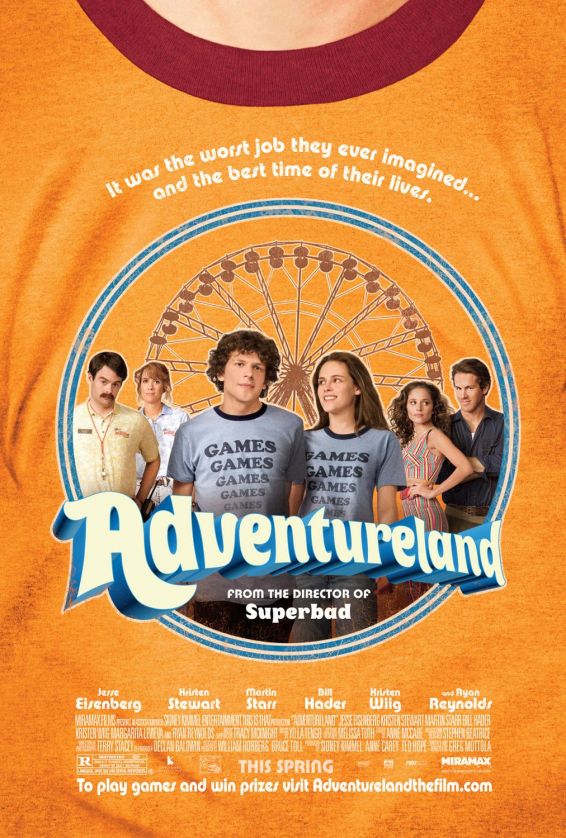
Adventureland (2009) – Film Review

This comedy-drama from 2009 is an underrated classic, in my opinion, as director Greg Mottola (Superbad, Paul, Keeping Up with the Joneses) brings us a simple yet effective story of two young people from different worlds meeting over one memorable summer, and while it may not be as hilarious as some of his other films. I do feel Mottola has brought us a much more emotional story this time around, with the comedy not too far behind.

Plot Summary: In the summer of 1987, teenage college graduate, James Brennan, takes a ‘nowhere’ job at his local theme park as he awaits to leave his hometown. Only for him to soon find it’s the perfect course to get him prepared for the real world, meeting new friends and sending him down a different life path…

For a film like this, it’s crucial that the characters are likeable and are given plenty of development as, in my opinion, drama really only works within film if the characters are developed enough to be invested in. Luckily, the film does succeed here, crafting some very funny and (mostly) realistic characters within only a short amount of time, as the film doesn’t waste screen-time setting up its narrative and characters, but always does so in a way that doesn’t feel too fast-paced.

All of the cast are also pretty great here, as Jesse Eisenberg, Kristen Stewart, Kristen Wiig and Ryan Reynolds all have decent chemistry with each other, and don’t simply treat their characters as joke machines. Despite Bill Hader as the park manager, ‘Bobby,’ definitely being my personal favourite, however, purely through his hilarious dialogue leading to many brilliant moments throughout the runtime.

Being set in a theme park local to the home of the protagonist, this is where the cinematography by Terry Stacey really shines, as the film really uses the different rides, games and attractions as well as the colourful lighting as a beautiful backdrop for many great scenes, as the film is always very inventive with the different locations of the park, exploring new areas in each scene, with some locations even being used to reflect a character’s personality. The film also uses a bright orange, yellow and blue colour palette throughout the story, which really helps to enhance the film’s visuals, and meshes perfectly with the film’s more light-hearted tone.

The original score by Yo La Tengo also helps add to the 1980s atmosphere, being mostly subtle yet still effective in many scenes in spite of its general lack of memorability. Various songs from the ’80s are also used throughout the film, everything from iconic classics to more unknown songs get a short appearance, with all of it eventually adding up to a pretty fantastic soundtrack, as well as another link back to the time period.

The main issue with the film for me is its comedy, as already mentioned. Although the film does have plenty of comedic moments throughout. I simply feel the film has far more in regard to drama than comedy, as the majority of its memorable moments are for more emotional purposes. There was also a subplot between two characters which I personally felt was a little rushed over, but as this was near the end of the film, this may have been done to avoid a lack of focus and conclusion.

In summary, even though ‘Adventureland’ is nothing incredible in relation to its filmmaking, I personally really enjoy the film, as I’ll always find myself turning back to it when in need of a more upbeat comedy-drama, as with a unique location and a great cast of characters, there isn’t really much to dislike here. Although some of the film’s comedy could be improved, I wouldn’t say this drags the entire film down. Check this one out, if you can, as I feel it really deserves more attention from audiences. Final Rating: low 8/10.

adventureland_xlg

Pyewacket (2018) – Film Review

From director Adam MacDonald (Backcountry, Out Come the Wolves, This Is Not a Test) ‘Pyewacket’ is a Canadian, character-focused indie horror. The film mostly being a small-scale narrative, having a very refreshing look and feel for a modern horror, complete with an eerie location and a brilliantly tense atmosphere. Containing very little jump-scares, CG effects or gore, in favour of eerie silence and well-written dialogue.

Plot Summary: After Leah, a grieving, occult-obsessed teen, performs a ritual in the woods to summon a demon to kill her estranged, newly widowed mother in a fit of rage, she immediately regrets her impulsive act, attempting to undo the curse as strange, terrifying events escalate around her…

Although I’m personally not a huge fan of jump-scares, and I do very much appreciate the film’s draw towards creating an eerie atmosphere. I do feel one or two scattered throughout the film wouldn’t have done any harm, as I feel they would’ve done a great job of scaring the audience when they least expect it and would’ve broken-up some scenes of tension nicely. The film does succeed in creating tension in other ways, however, as MacDonald manages to incorporate darkness extremely well throughout the film, using dark lighting and colour palette to focus on the audience’s paranoia of what lurks in the dark corners of the screen. However, the scenes are never overly dark to the point of obscuring the audience’s view, and this works very effectively.

Nicole Muñoz portrays the protagonist; ‘Leah,’ as a mostly unknown actress, Nicole does a fantastic job of playing an angry teenager dealing with a broken family. Laurie Holden from AMC’s ‘The Walking Dead’ is also surprisingly great as her mother, which I definitely wasn’t expecting as I never really cared much for her character in the TV show, believing her to be very annoying and unlikeable. But, it’s clear to me now that this was mostly an issue with the writing on the show, and not with her performance, as here she really does a well with her character.

Alongside the use of darkness and great performances, the film also has amazing cinematography by Christian Bielz, as the film always uses the camera to the best of its advantage to create fear and tension. One shot in particular was a fast-paced P.O.V. shot, which reminded me very heavily of the classic; ‘Evil Dead’ trilogy, and really sent a shiver down my spine when it first encounters one of the characters. The original score by Lee Malia is, unfortunately, nothing too memorable, however, coming across as a mostly cliché horror soundtrack with the odd emotional tone mixed in. 

My main issue with the film is the pacing, as the film is a rather slow build, it can sometimes drag. The film mostly does a good job at keeping the audience invested with that brilliant horror atmosphere and great character drama. But, some of the scenes set at ‘Leah’s’ high school can really feel somewhat bland and drawn out, especially when you compare these scenes to the scenes in the forest surrounding ‘Leah’ and her mother’s home, as these are always brimming with tension and are incredibly fun to experience at any point during the film’s runtime.

In addition to this, without spoiling anything, the ending of the film is also very memorable, as the film truly leaves the audience on a dark and shocking note, which is sure to stick with you long after the credits have rolled, and genuinely helps the film become far more of a standout when compared to similar film’s in its genre. The film also has many small details, one being the title of the film itself, as the name ‘Pyewacket’ comes from the 1647 British pamphlet; ‘The Discovery of Witches,’ in which author Matthew Hopkins claims to have interrogated witches in Essex County. One witch names many familiars, including the spirit; ‘Pyewacket,’ which appeared to her as some sort of animal.

In summary, although ‘Pyewacket’ probably isn’t one of my favourite all-time horror flicks, it is one I would recommend to most. Although the slow pace and lack of jump-scares may frustrate some viewers, the film does build up an amazing atmosphere, with great performances from the small cast and some decent dialogue to back it up. The film isn’t perfect but it does mostly contain what I personally desire from a modern horror film, and I think ‘Pyewacket’ can be a great watch for a ‘different’ kind of horror fan. Final Rating: 6/10.

pyewacket_xxlg

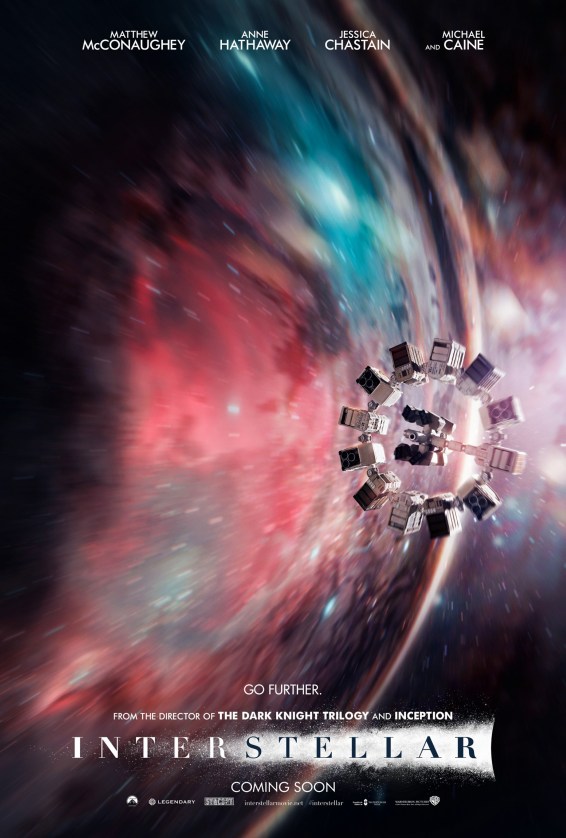
Interstellar (2014) – Film Review

Critically-acclaimed director Christopher Nolan (Inception, Memento, The Dark Knight) tries his hand at the sci-fi genre for the first time with ‘Interstellar,’ as the beautiful cinematography by Hoyte Van Hoytema and an incredible score by Hans Zimmer all lend themselves to this story of mankind venturing to another galaxy in search of a new world for our species, and although not perfect, the film is pretty entertaining overall.

Plot Summary: When Earth’s future is being riddled with disasters, famines, and droughts. There is only one way to ensure mankind’s survival, interstellar travel, as a newly discovered wormhole in the far reaches of our solar system allows a small crew to venture where no one has gone before…

Nearly every visual throughout the film is stunning, as along with the gorgeous cinematography, lighting and CG effects. The film really nails the shots within space perfectly, making many scenes look as if a majority of their shots had been taken straight from a NASA satellite, even integrating a great blend of colour and darkness. Many of the planets the crew visit throughout the narrative, however, although very cinematic, never really looked ‘otherworldly.’ Usually looking more like an attractive screen-saver, and although colours are used, it’s definitely a very contained colour palette when it comes to the planets. Many of the interior spaceship sets are also very striking in their appearance, hitting a great mix of modern-day and futuristic/high-tech technology.

Matthew McConaughey portrays ‘Cooper,’ the protagonist of the film, and as per usual, he does a great job within the film as a father who wants nothing but a great future for his children, and although none of the characters get much development throughout the story, Anne Hathaway, Jessica Chastain, Michael Caine (and even Matt Damon with his short appearance) all raise the bar high for the level of acting on display.

As already mentioned, the cinematography by Hoyte Van Hoytema is fantastic throughout, having slow-panning shots along with a variety of still shots for character scenes. All of this is being backed up by the unbelievable score by Hans Zimmer, legendary composer for films, such as ‘Pirates of the Caribbean,’ ‘Gladiator’ and ‘The Lion King,’ as well as a few other Christopher Nolan films alongside this one, his calming, unique and very science fiction-like soundtrack really lend themselves to many of the impressive shots within space. In particular, the track; ‘Cornfield Chase,’ a wonderful track which has since become one of the composer’s most beloved pieces of work.

Easily the best scene of the film for me was near the ending, as it’s around the conclusion of the film that we get some of the most amazing visuals combined with an extremely emotional moment, as a character undergoes a realisation and the film goes full circle, connecting itself back to some of the film’s early scenes. This climax really gives us some payoff for everything we’ve watched, it doesn’t quite make up for the long runtime, in my opinion, but it’s still somewhat satisfying.

One of my biggest issues with the story and the film in general really, is the extremely slow pacing, as although it’s not boring to watch it by any means. The film does move along at a very slow pace, as I found in particular the first thirty minutes of the film can really drag on a first watch, as the story gets development only in small pieces. This is when the writing by Christopher Nolan and his brother is put to great display, however, as we learn many small details about the characters and world of the film which come back into relevance later.

In summary, I wasn’t massively impressed with Christopher Nolan’s first sci-fi outing, although I was entertained for the most part whilst watching, and the visuals and music were a joy to experience. The long runtime and slow build-up stops the film from being super rewatchable for me, as it never becomes as memorable as ‘Inception,’ ‘The Prestige’ or ‘Dunkirk’ through its story and characters. The film was still very well made, and I do feel Nolan would benefit from a stronger story in the future should he chose to return to the sci-fi genre. Final Rating: low 7/10.

interstellar_ver4_xxlg

Hell or High Water (2016) – Film Review

From the writer of ‘Sicario’ and the director of ‘Starred Up,’ ‘Hell or High Water’ is a tense crime film which feels like more a traditional western on first watch, mostly through its great use of its cast, fantastic original score and classic setting. The film is a heavy slow-burn for the most part, as the story builds up for most of its runtime, eventually leading to its intense climax, which despite being short, does feel satisfying to watch, the entire film overall is truly a brilliant example of a modern-day western.

Plot Summary: A divorced father and his ex-con older brother resort to a desperate scheme in order to save their family’s ranch in West Texas. Robbing as many banks as they can all across the county while remaining one step ahead of the authorities that are hunting them down…

On my first viewing, the film felt very similar to the Coen Brothers’ ‘No Country for Old Men’ (which the film seems heavily inspired by), as the story is very engaging and surprisingly also has a nice blend of dark comedy mixed in with a lot of drama and tension. Not really focusing on action, the film spends more time building up tension and atmosphere. Near the end of the runtime, however, we do see some action, which is relativity well done and does feel very grounded.

Chris Pine, Ben Foster, Jeff Bridges and Gill Birmingham all give fantastic performances here and keep the audience engaged throughout the runtime, which is even more impressive when you look further into their characters, as I personally feel their characters could’ve done with a little more development, as they do get bits and pieces but nothing really major, and the lack of any kind of character arc for Chris Pine’s character; ‘Toby Howard,’ really irritated me. However, the rest of the writing here is pretty great for the majority of the film.

The cinematography by Giles Nuttgens is one of the film’s better aspects, truly utilising the location of Texas for its isolation and beauty. Usually then switching to more chaotic hand-held camera movement during the few action scenes, which I think works effectively. However, I do feel the cinematography could be improved, as there weren’t a large number of shots I was incredibly impressed by throughout the film. Interestingly, even though the story is set in Texas, not a single scene was actually filmed there, aa due to State Legislature removing tax incentives, the film was actually shot in New Mexico.

Nick Cave and Warren Ellis are responsible for the original score, which is possibly my favourite element of the film, really adding to the modern western feel the film is going for, as well as backing up many of the more emotional or tense scenes. The soundtrack here is definitely one of my favourite elements of the film, the film however also makes great use of various songs. Having a variety of country songs play over different scenes throughout the film, quickly setting the tone and establishing the story’s setting early on.

In summary, ‘Hell or High Water’ is a compelling crime thriller and neo-western, for any classic western fan I would say this is a definite watch. As for more casual viewers, I could see the slow-burning pace being a bit of a turn-off, despite it being used to build tension effectively. Backed-up by its great cinematography and original score, the film makes up for its lack of character depth and exciting action in the long run. Final Rating: 8/10.

hell-or-high-water-poster

Looper (2012) – Film Review

The first major-hit for director Rian Johnson, a filmmaker who would later go on to direct ‘Star Wars: Episode VIII – The Last Jedi’ in 2017, one of the most divisive instalments in the entire ‘Star Wars’ saga. ‘Looper’ is a unique time-travelling thriller blending some brilliant performances with exciting action and plenty of interesting ideas, and whilst I don’t think the film will become one of the most iconic sci-fi films ever made in the next few years, the film is certainly worth a watch or two.

Plot Summary: In 2074, when the mob wants to get rid of someone, the target is sent into the past where a hired gun awaits them. However, when the mob wants to ‘close the loop’ on the hired gun, they then send an older version of themselves back for assassination…

Any plot involving time travel always has the risk of a potentially messy story. However, Rian Johnson actually manages to avoid many of these issues by having time travel simply be the framework of the story, with the characters and their actions really being the main focus. Focusing mostly on the tense chase throughout the film, the film’s quick pace gives the audience an easy to digest thriller with plenty of substance still underneath its surface, although not completely free of small plot holes in regards to the time travel aspects, the film definitely makes use of some of the ways criminals could abuse the power it gives them.

The protagonist; ‘Joe,’ portrayed by the underrated Joseph Gordon-Levitt, delivers a great performance as a man going through life with little direction, as we see a standard day through his eyes before the story truly begins, giving us a clear understanding of how the future functions and his job as a hired gun within it. Bruce Willis and Emily Blunt also have large roles in the film, as Bruce Willis takes on the role of an older version of ‘Joe,’ whilst Emily Blunt takes on the role of: ‘Sara,’ a farmer who soon becomes wrapped-up in ‘Joe’s business. Jeff Daniels also appears in the film as a surprisingly intimidating villain, this is also helped by the writing, however, as we explore each character piece-by-piece alongside the film’s version of the future.

The decent cinematography by Steve Yedlin and great editing by Bob Ducsay both help give the film a great visual appeal, as many of the beautiful shots back-up the film’s memorable scenes very well. Composer Nathan Johnson also lends to the atmosphere of the film through his brilliant original score, which combines the soundtrack of traditional action flick with a unique science fiction vibe, resulting in a score that’s both indelible and dramatic. What’s interesting, however, is that Nathan Johnson isn’t just any composer, but is actually Rian Johnson’s cousin, having penned scores for all of his films, excluding the previously mentioned ‘Star Wars: Episode VIII – The Last Jedi,’ for which legendary composer, John Williams, returned.

Many of the action scenes throughout the film are also quite well done, as the film truly puts Bruce Willis’ action skills to the test in one particular scene set within a warehouse, which was an absolute joy to watch for me. However, this is actually where one of my criticisms of the film comes in, as sometimes in the film the balance between futuristic and modern-day can become a little unbalanced, especially in one action scene on ‘Sara’s farm. Another issue I have with the film is the element of telekinesis in the story, despite its small relevance near the end of the film’s runtime. I simply felt it doesn’t fit into the world being explored, and was definitely an element that could’ve been cut.

In summary, ‘Looper’ has always been a personal sci-fi favourite for me, as the film really is a brilliant time-travel story juggling a large number of genres that somehow manages not be cluttered. Giving the audience more of a simple narrative with interesting characters, all with a well-crafted sci-fi world backing it up. The attractive cinematography and editing alongside the fantastic score make the film a very pleasant watch. Final Rating: 8/10.

looper_official_movie_poster_joseph_gordon_levitt_bruce_wills

Colossal (2017) – Film Review

Nowadays, it’s common to hear complaints about the lack of originality in cinema, and when you’re staring-up at a marquee filled with countless sequels, prequels, spin-offs and reboots, it’s hard to argue otherwise. But, that originality hasn’t gone away entirely; you just have to know where to look. Case in point‘Colossal’ from 2017. An unusual film that I can say with confidence isn’t for everyone, ‘Colossal’ is a charming comedy-drama from director Nacho Vigalondo (Time Crimes, V/H/S: Viral – Segment: Parallel Monsters, Pooka!) that combines some phenomenal performances from Anne Hathaway and Jason Sudeikis with a superb visual flair. All coming together to create a memorable and very amusing indie flick.

Plot Summary: When ‘Gloria,’ an out-of-work party girl, is forced to leave her life in New York City and move back to her small hometown to continue her directionless drinking streak. Meanwhile, reports surface of a giant creature destroying the city of Seoul in South Korea at the other side of the world, with ‘Gloria’ gradually coming to the realisation that she is somehow connected to this strange phenomenon…

Although the narrative of the film leans heavily on the mystery of how the monster and ‘Gloria’ are connected. An element of the writing I really enjoyed is that none of the characters are treated like a fool, it doesn’t take our protagonist long to figure out the truth nor does it take her long to convince other people of it. Every decision made by the characters is understandable and realistic within reason. Despite also being an unlikeable character for a large majority of the film, Anne Hathaway manages to keep her character interesting and likeable enough for the audience.

As previously mentioned, the performances here are outstanding, both from Anne Hathaway and Jason Sudeikis, and although he doesn’t appear much throughout the film Dan Stevens is also decent. All the cast have great comedic timing and genuinely excellent chemistry, and along with the film’s well-balanced tone can quickly change to very dramatic. Tim Blake Nelson and Austin Stowell also have small roles in the film, and despite also not having too much screen-time, they are very memorable as ‘Oscar’s close friends.

The cinematography by Eric Kress gives the film a nice visual appeal. Alongside the colour palette consisting mostly of dark blues, greens and purples, in addition to a few brighter blues and yellows. The film really just has a nice look overall, without being too colourful or obnoxious. Any scene containing the giant monster are obviously scenes which use large amounts of CGI, and despite not having a huge budget. Every one of these scenes is fantastic, truly showing off the enormous scale of the creature and it’s trail of destruction to the fullest extent.

The weakest element of the film for me is the original score by Bear McCreary, although I usually enjoy this composer’s soundtracks, creating memorable scores, such as ’10 Cloverfield Lane’ and AMC’s ‘The Walking Dead’ (including the now-iconic opening theme). This score just feels somewhat lacking in comparison, while not particularly bad, the soundtrack simply lacks any character or originality. Aside from sounding somewhat similar to a classic monster score at points similar to ‘Godzilla,’ for example.

In summary, ‘Colossal’ is the perfect comedy-drama, in my opinion, balancing great performances with an original story and some brilliantly executed emotional/funny scenes. The film is extremely enjoyable all the way through, keeps us a decent pace and doesn’t overstay its welcome, yet still leaves the audience satisfied. The film really just has a great personality to it, and is filled with plenty of memorable scenes throughout its tight runtime. So, I’d say definitely check this one out if it sounds like something you’d be interested in. Final Rating: 8/10.

colossal-2017-movie-poster

The Girl With All the Gifts (2016) – Film Review

‘The Girl With All the Gifts’ released in 2016 and based on the novel of the same name by M. R. Carey, is another zombie story, this time attempting to focus more on young children and how they would cope with an infection wiping out all of humanity, as well as leaning more towards the ‘fungus’ side of infections when it comes to some of the film’s visuals and ideas, and while I appreciate the attempt to turn this narrative into a film. I don’t think it was incredibly successful in the long-run.

Plot Summary: In a dystopian future where humanity has been ravaged by a mysterious fungal disease, humanity’s only hope is a small group of hybrid children who crave human flesh while still retaining the ability to think and feel. But when their base is later attacked, a teacher, a scientist and a group of soldiers must embark on a journey of survival with a special young girl…

Directed by Colm McCarthy, the idea of a group of characters going on a dangerous journey is a pretty standard outline for an apocalyptic story, sadly however, ‘The Girl With All the Gifts’ doesn’t manage to improve much on this structure as many of the decisions throughout the film were pretty strange, to say the least, as the film flips back and forward between horror and drama rapidly within some scenes (sometimes even implementing comedy as well). As a result of this, the film’s tone is very inconsistent, and can really take the viewer out of the story at points. Even the name given to the zombie-like creatures within the film; ‘The Hungries,’ I personally found a little too-ridiculous.

Sennia Nanua portrays the main character of the film; ‘Melanie,’ a young girl with the abilities of ‘The Hungries’ that still retains her human mind, and while I think her character is definitely interesting, I don’t feel her performance is up-to-par here. As she was only thirteen during filming, many of the emotional scenes with her feel very unbelievable. Alongside this, there are a variety of scenes with her character acting like a wild animal as her hunger continues to grow, most of which I found unintentionally hilarious. Perhaps if she was a little older when filming began this could’ve been avoided, although the weak writing also doesn’t help. The supporting cast do redeem this somewhat, however, as Gemma Arterton, Paddy Considine and Glenn Close are all fairly excellent within their roles.

The cinematography by Simon Dennis is easily my favourite element of the film, as there are many stunning shots throughout the runtime, as every shot really lends itself to many of the film’s more impactful or beautiful scenes, with the brilliant make-up effects and great set design also adding toward this, which is especially surprising considering the film’s budget, which was actually a lot smaller than many other zombie flicks. This does, unfortunately, affect the CG effects throughout the film, however, as a variety of shots throughout the story have some very out-of-place looking CG visuals.

The wonderful original score by Cristobal Tapia de Veer is another element of the film I also really enjoyed, as the soundtrack is very atmospheric and really adds to many of the tense scenes throughout the film, very similar to the composer’s other scores, with Channel 4’s ‘Utopia’ and Netflix’s ‘Dirk Gently’s Holistic Detective Agency’ being some great examples, with the tracks; ‘Gifted’ and ‘Pandora,’ being my personal favourites purely for how unique they sound. 

In summary, ‘The Girl With All the Gifts’ isn’t the worst zombie film I’ve ever seen, as the story does have some interesting elements and the cinematography and original score are pretty on point throughout the film, but sadly, the poor writing and laughable main performance combined really drag the film down for me. Final Rating: high 5/10

girl_with_all_the_gifts_xxlg

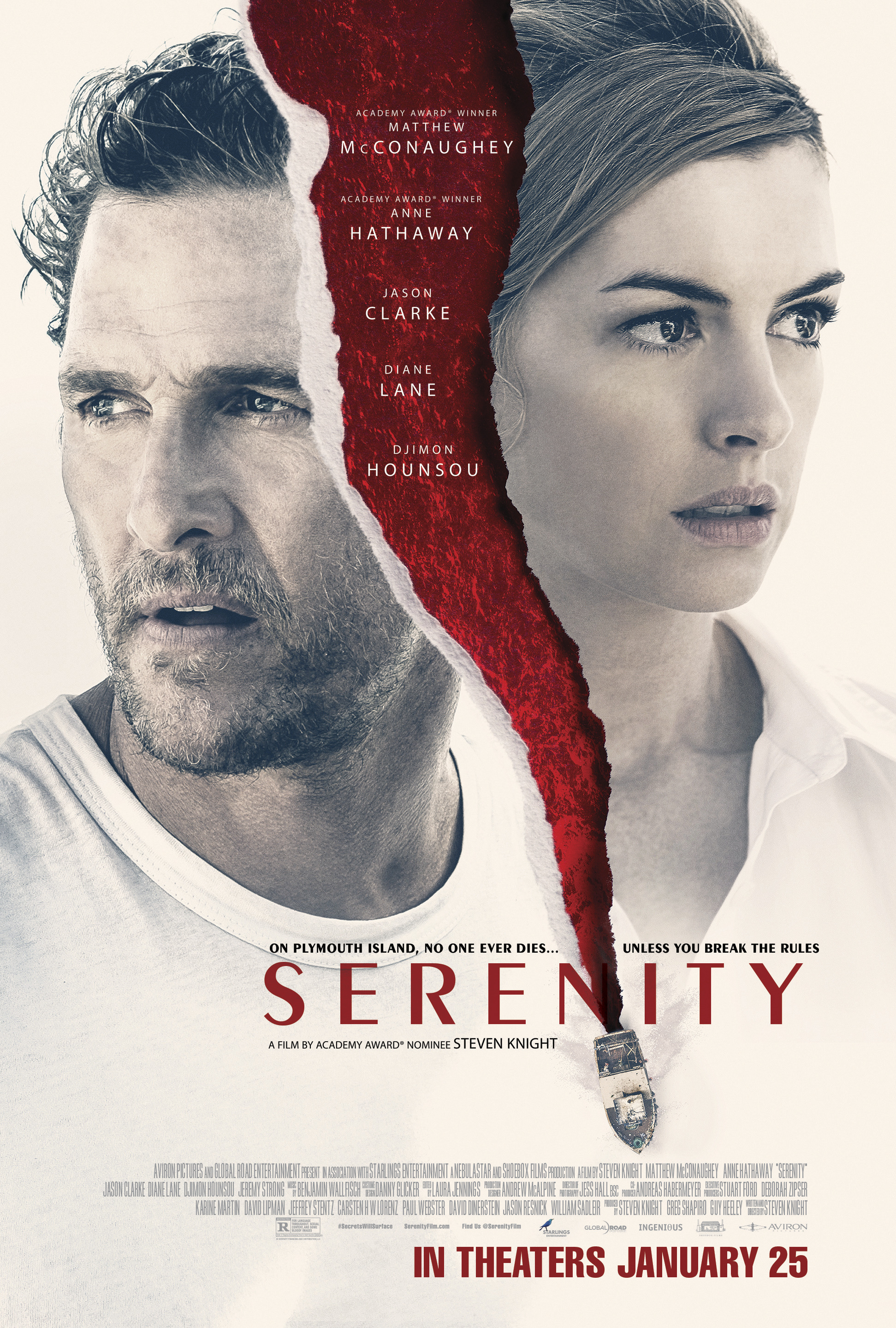
Serenity (2019) – Film Review

A film I only heard about very recently, ‘Serenity’ is a sci-fi mystery written and directed by Steven Knight, best known for his work on the smash-hit television series; ‘Peaky Blinders.’ Although I thought the film looked interesting initially, it has received a lot of bad reviews since it’s release from both critics and audiences alike, so I decided I’d give it a watch and decide for myself.

Plot Summary: When ‘Baker Dill,’ a lone fisherman who escaped from his past to a remote island, meets with his ex-girlfriend; ‘Karen.’ She begs ‘Dill’ to save her and their young son from her new, violent husband by taking them out to sea on a fishing excursion, where, when the time is right, they can throw him to the sharks and leave him for dead…

The story and setting of the film definitely feel very fresh for this genre, mostly due to the film seeming like more of a straight drama at first before changing drastically later down the line. ‘Serenity’ also delivers its narrative in a very unusual fashion, editing between scenes at a very quick pace. Keeping the story always in constant motion and placing small seeds leads to bigger reveals later in the runtime. Some of which only get small appearances for viewers paying close attention. Sadly, for these same viewers, the CGI on display here isn’t the most impressive.

Matthew McConaughey, Anne Hathaway and Jason Clarke all give decent performances here, at points, however, they do feel a little ‘off.’ Whilst I’m sure this is intentional, as it fits with the film’s atmosphere, it can sometimes be distracting from the story itself. Particularly, I deeply enjoyed Jason Clarke’s performance as ‘Karen’s abusive husband: ‘Frank Zariakas,’ as here, Clarke portrays a completely different character than the ones we are used to seeing him take on.

The cinematography by Jess Hall is most certainly one of the highlights of the film for me, resulting in many beautiful and interesting shots. The film also uses the panoramic pivot point camera movement technique (spinning the camera around the actor) for many shots, similar to how the ‘Saw’ franchise does. Personally, though I’m not a huge fan of this technique, as it makes the film feel a little cheap. The cinematography also helps with many of the more emotional or tension-filled moments throughout the narrative of the film.

The original score by Benjamin Wallfisch really lends itself to the strange atmosphere of the film for the most part, aside from when the tension rises in a few scenes, as then I felt the soundtrack begin to feel a little generic and action-heavy. However, when you consider the twist at the end of the film, I feel the score could’ve taken some ideas from it into account, which would’ve perhaps made it a little more memorable.

When it comes to the editing, it can definitely vary, as in some scenes the editing can be a little messy or overly quick, for the most part, the editing is decent and the transitions between scenes are very effective. Even with the quick editing, however, the runtime is still overly long and could easily be cut down to at least an hour and a half. In addition to this, when the editing is combined with some unintentionally amusing writing, it can lead to some oddly comedic moments.

In summary, ‘Serenity’ is a very different kind of film, it begins as almost a character drama before completely spiralling into its science fiction mystery elements. I can see that if you weren’t prepared for the change in direction, it may come across as very sudden and out-of-place. Soon becoming a film not intended for everyone, but with some great cinematography and some occasional impressive editing alongside an incredibly strange atmosphere. I personally found some entertainment value in this film, but not much. Final Rating: 4/10.

serenity_xxlg