Selfie From Hell (2018) – Film Review

“Something Evil Has Already Set Its Eyes on You…” – Hannah

In the horror genre, mystery plays a pivotal role in stories where the characters strive to uncover the cause behind the terrifying events they face, engaging the audience beyond scares via an instinctive desire for answers/explanations. However, in the case of 2018’s hilariously titled, low-budget horror; Selfie From Hell (or Selfieman in some regions), the central mystery frequently works to its detriment, yielding further questions and nonsensical moments rather than deepening the narrative or its underlying themes. Still, that’s not to say that a compelling mystery would’ve salvaged Selfie From Hell, as this social media-focused horror is an utter failure on every front, generally evoking boredom rather than fear.

Plot Summary: When influencer Julia falls mysteriously ill while visiting her cousin Hannah in Oregon, Hannah turns to Julia’s online content in search of an explanation for her unusual ailment. But, as she digs ever deeper, her cousin’s online activity reveals connections to the dark web, a twisted internet challenge and a malevolent, otherworldly force bleeding into reality…

Selfie From Hell, written and directed by Erdal Ceylan (Demon’s Dawn), was expanded from his earlier short film of the same name, also featuring Meelah Adams. The two-minute short consists of Adams’ character taking selfies in her home before noticing a dark figure behind her in the images, which then consumes her. As a concept for a short film, the idea is serviceable, if a little cheesy, yet doesn’t retain nearly enough depth for a feature-length undertaking, even if Ceylan makes a feeble attempt to incorporate an underlying theme of social media addiction and the dangers of careless internet usage, similar to other gimcrack social media-centric horrors, such as Smiley (2012), #Horror (2015) and Friend Request (2016). Furthermore, the previously mentioned ‘mystery’ at the centre of the film is neither intriguing nor well-constructed, presenting conundrums to the audience with little allure or clarity.

The small cast of Alyson Walker, Tony Giroux, Meelah Adams and Ian Butcher delivers fairly lacklustre performances across the board, in part due to the shoddy dialogue and characterisation, which lack depth, intrigue and any semblance of intentional humour. Regarding the characters’ relation to the plot, Hannah’s investigation into her cousin’s ailment leads her down a rabbit hole linked to a secretive website on the dark web. Here, she meets an enigmatic, patently untrustworthy individual, who gives the Selfieman (the titular creature of the film) a run for his money in the absurd name department with the online handle, F34R3473R, or “FearEater,” a character so cartoonishly malicious that his handful of appearances are rarely taken seriously. Outside of her investigation, there is a dreary romantic subplot between Hannah and her tech-savvy friend Trevor, who aids her in her exploration while secretly harbouring a crush on her, which is as predictable as it is vapid.

Visually, the cinematography by Jeremy Walter Cox is somewhat amateurish, seldom allowing for appealing shots. Other elements of the production, such as the lighting and audio, however, are adequate, which is worth noting as this isn’t always the case with low-budget flicks, especially when they place such strong emphasis on the sights and sounds surrounding their characters. What’s more, the design of the supernatural entity, the Selfieman, is rather generic, appearing only a handful of times as a towering, spindly figure with skeletal features, whilst his abilities, motivation, and the rules he abides by never receive any explanation amidst the fleeting runtime.

Being a low-budget project, Selfie From Hell didn’t have an original score composed for it, despite Peter Allen getting credited as the film’s composer. Instead, the Selfie From Hell employs an assortment of stock music, all of which are hackneyed horror tracks. In many instances, the score also telegraphs each character’s actions, often unnecessarily so, with every moment intended to be frightening or impactful, retaining a bothersome sound cue, whether that be a message arising on a laptop screen or catching a glimpse of a figure in the background of an image, which consistently fails to make these instances startling.

Even with a runtime of only seventy-three minutes, Selfie From Hell feels dragged out and overstuffed with too many ideas, all of them poorly illustrated and vying for attention, mainly because the film would rather focus on pushing a vareity of cheap, bombastic jump-scares instead of making the effort to earn its frights, some of which appear even worse as a result of the inclusion of janky, low-grade CGI to depict the Selfieman and several other supernatural elements. While some of these issues could be attributed to the film’s low budget, others certainly cannot.

In summary, clearly hoping to follow in the footsteps of Lights Out, a 2013 short film later expanded into a feature-length horror release, Selfie From Hell was, in actuality, released to little fanfare, and deservedly so. Candidly low-budget and struggling to sustain its runtime, Selfie From Hell was flawed from its very inception, being based on a short film with a rather tacky concept that only functions as a cheap thrill for horror fans. A one-trick pony with dreadful dialogue, bland performances, and a monumental overreliance on jump-scares, leading me to believe that the filmmakers didn’t give much thought to how a short film building up to a single scare could develop into a feature-length project. Rating: 1/10.

The Mouse Trap (2024) – Film Review

“I Can See You… Do You Wanna See Me?” – Mickey Mouse

Announced on January 1st, 2024, the same day Steamboat Willie (1928) entered the public domain, the animated short directed by Walt Disney and Ub Iwerks, considered by many to be Mickey and Minnie Mouse’s public debut, despite both characters actually premiering a few months prior in a test screening of Plane Crazy (1928) and the then-unreleased; The Gallopin’ Gaucho (1928). Mickey’s Mouse Trap, later renamed; The Mouse Trap, due to the Walt Disney Company still retaining the commercial rights to the character’s name, is a tedious and derivative low-budget slasher that merely takes the iconic rodent and distorts him into a thundering serial killer without any semblance of wit, dread or depth, to agonisingly painful results.

Plot Summary: On the evening of her 21st birthday, teenager Alex is surprised with a birthday party by her friends at the arcade where she works. But, not long into their night of celebration, a deranged killer dressed as Mickey Mouse interrupts their get-together, forcing Alex and her friends to use their quick thinking to survive the night…

Writer and actor, Simon Phillips, the man behind the mouse mask, is a self-described; “1980s Baby,” who loved the bloody slasher flicks of the time, explaining in an interview; “So, Mouse Trap, to Me, Was Like the Cheesy, Clichéd 1980s and 1990s Horror Movies. I Was Like, Let’s Do This. Let’s Make Mickey Mouse a Slasher Killer. Let’s Trap These Kids in an Amusement Park or an Arcade. And, Like a 1990s Movie, Don’t Think About It Too Much. Just Have Fun!” While this ambition is admirable, The Mouse Trap undoubtedly fails in the aspect of ‘fun,’ harbouring flat, irritating characters, a needlessly complicated setup and a series of vapid kills, with the obligatory, uninteresting drama of assorted jocks, nerds, goths and popular girls scattered in between. And, with quotes like “How Did I Get Stuck With You?! I’m Too Pretty for This!” the dialogue swiftly announces itself for all the wrong reasons.

The central cast of Sophie McIntosh, Alex Fen, Madeline Kelman, Ben Harris, Callum Sywyk and Mireille Gagné do their best with the weak material they are given, with McIntosh retaining at least some semblance of screen-presence in the leading role as Alex, but that’s about it, as their characters are simply cardboard cutouts, neither entertaining nor likeable, with the shoddy dialogue and scarcity of character development rarely helping in this regard. While Simon Phillips’ physical performance as the titular killer is somewhat eerie, his vocal performance is certainly not, as he utters hokey, intended-to-be-intimidating lines via a ghastly Mickey Mouse impression. Perhaps the worst part of The Mouse Trap, however, is the arbitrary cutaways to a police station where one of the survivors cryptically recounts the night’s events (including moments they weren’t even present for) merely as an excuse to pad out the runtime.

If you enjoy watching monotonous, drawn-out shots of teenagers playing air hockey or drinking seemingly nothing out of plastic party cups, then The Mouse Trap is for you. As, despite being branded as a throwback to 1980s/1990s slashers, the first on-screen kill doesn’t actually occur until almost an hour into the runtime, with each victim getting dispatched in ways that lack both memorability and solid blood/gore effects, in addition to being presented in a visually flat manner as a result of the cinematography by multitasking director Jamie Bailey (Deinfluencer, What Lurks Beneath, The Omor Heist).

On another pessimistic note, the original score by Darren Morze is a rather forgettable horror soundtrack that doesn’t justify its numerous tracks, in spite of their tongue-in-cheek titles, such as The Miracle Survivor, Cat and Mouse, Birthday Wish and Total Serial Killer Vibes. The film also implements an aggravating jump-scare-like audio cue every time Mickey appears on-screen, in what I assume is a lacklustre attempt to startle its audience.

Regarding the titular killer, The Mouse Trap does little to differentiate Mickey from any other slasher, solely depicting him as a large man in a mask with murderous intent. That said, the film does at least attempt to explain the origin of Mickey Mouse as a killer in utterly bizzare fashion, as Tim Collins, the manager of the arcade Alex works at, is soon revealed to be ‘possessed’ by a malvolent entity after watching a film reel of Steamboat Willie while sipping a glass of vodka beside film memorabilia, in a moment that is just as nonsensical as it is ridiculous. Outside of this moment, though, The Mouse Trap could just as well be a slasher headlined by Deadmau5 or any number of other mouse-related characters, as none of the traits associated with the anthropomorphic mouse are here, whether accurate or parodied, with Mickey even harbouring an unexplained ability to teleport, which has an equally unexplained weakness to strobing lights.

In summary, in typical ‘horror parody’ fashion, The Mouse Trap is neither amusing nor high-brow, nor does it make effective use of the character/franchise it is mimicking. Instead, the film struggles to justify its existence as a man in a cheap-looking mouse mask slaughters annoying teens with little personality or charm. Perhaps a trenchant satire of Disney and its squeaky-clean image as a family-friendly entertainment giant is too much to ask for, or too legally treacherous. Either way, the only merriment on offer in The Mouse Trap is the occasional piece of unintentional humour that comes from the killer’s bi-sphere silhouette. Rating: 1/10.

Grave Encounters (2011) – Film Review

“This Place Is About as Haunted as a Sock Drawer…” – Lance Preston

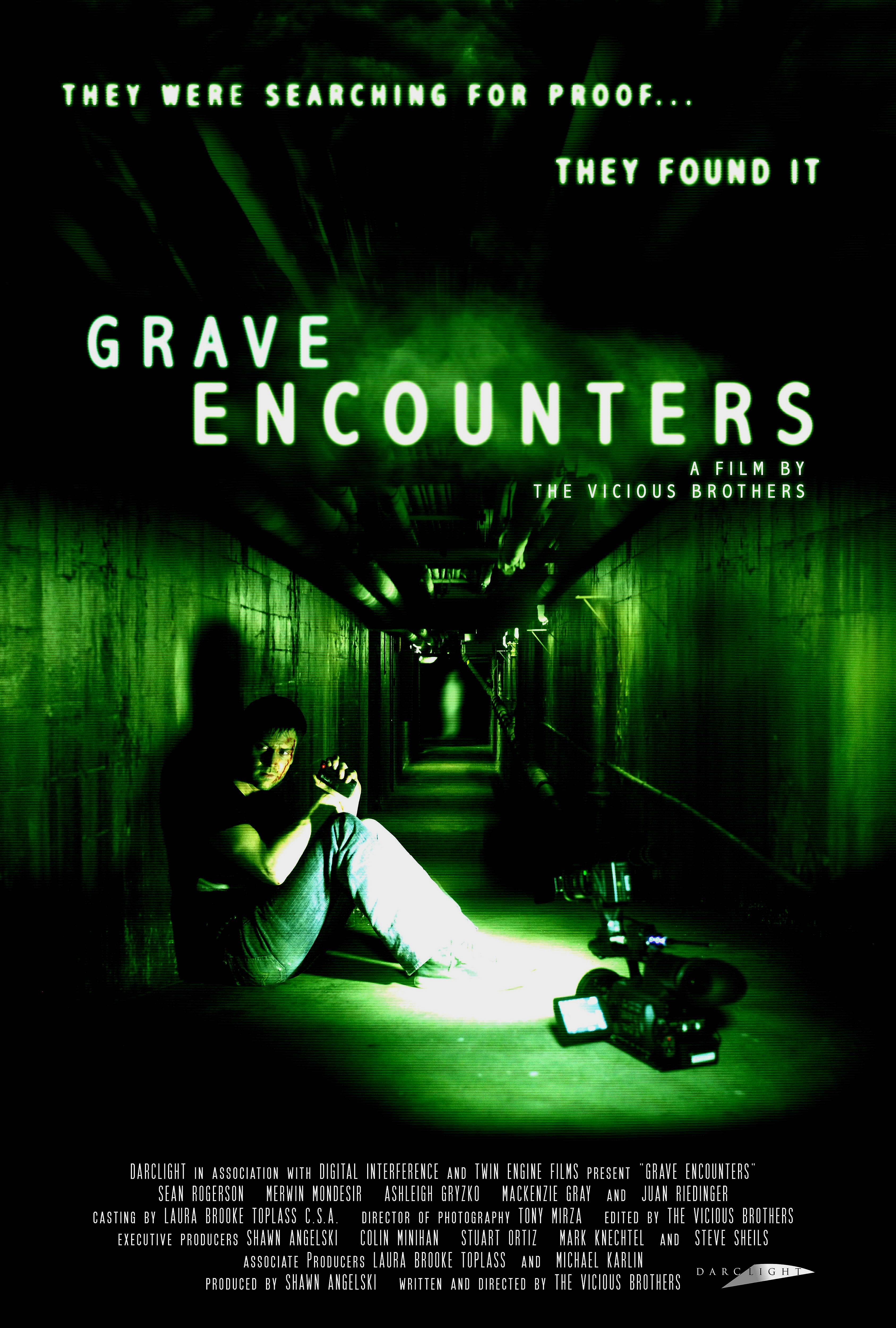
Impressively produced on a budget of around £89,000, the 2011 found-footage flick; Grave Encounters, is an effective, if rarely groundbreaking, contemporary horror. Whilst not as down-to-earth or as painfully slow-paced as several other found-footage releases, such as Paranormal Activity (2007) or Mr. Jones (2013), Grave Encounters wastes little time getting into the monstrosities that lie within the walls of its central setting of an abandoned psychiatric hospital, utilising its dark corridors and rusted medical equipment to deliver memorably creepy moments and a fairly unnerving atmosphere, despite its many faults.

Plot Summary: Voluntarily locking themselves inside the infamous, abandoned Collingwood Psychiatric Hospital, to increase the stakes of their ghost-hunting reality show, Grave Encounters, host Lance Preston and the rest of his team prepare to capture every minute of their overnight paranormal investigation on camera. But, as the hospital’s walls begin to shift into a labyrinth of endless corridors, each inhabited by the spirits of former staff and patients, the group soon realise they may be filming their last episode…

Written and directed by Colin Minihan and Stuart Ortiz, also known as the “Vicious Brothers,” the format and host of the fictional Grave Encounters reality show takes influence from the real-world series; Ghost Adventures, and its host, Zak Bagans, known for his black muscle t-shirts and technique of attempting to invoke paranormal activity by cursing at the supposed spectres, inviting aggression. This inspiration is evident from the outset, as Grave Encounters humorously mocks the ghost-hunting reality shows of the late 2000s, dissecting the manufactured appeal behind the format and its many tricks of the trade. For example, early on in the film, Lance pays a groundskeeper to provide a false statement during an interview that he witnessed paranormal activity on the grounds of the hospital, a known practice in supernatural reality television, as over the years, hundreds of interviewees have publicly admitted to being paid to “Just Make Something Up for the Camera.”

The central cast of Sean Rogerson, Ashleigh Gryzko, T.C. Gibson, Mackenzie Gray and Juan Riedinger provide the occasional moment of levity early in the runtime as a means to break up the flurry of distress and torment their characters later endure. During many of these moments, the characters also make offhand comments regarding their situation, referencing filmmaking conventions and well-known horror tropes that add a level of realism to the dialogue. This doesn’t mean that all of the Grave Encounters crew are strictly likeable, however, as T.J., the truculent cameraman, does far too much complaining and arguing whilst the host, Lance Preston, and the supposed psychic, James Houston, are suitably sleazy for success-hungry individuals who fabricate hauntings for a living, having never witnessed evidence of the supernatural previously. Still, the cast accurately portrays every character’s sense of unease, which is what matters most.

Shot over ten nights and two days, the majority of the cinematography for Grave Encounters by Tony Mirza fittingly matches the style of stationary and hand-held shots seen in traditional ghost-hunting reality shows, with the fictitious Collingwood Psychiatric Hospital portrayed through the real-world Riverview Hospital, an abandoned mental institution in Coquitlam, British Columbia, built at the turn of the 20th century and closed down in 2012, formerly hosting films such as Watchmen (2009). Grave Encounters utilises this ominous setting remarkably well, presenting the building as a dark, momentous presence to the point where it becomes a character in its own right. The opaque hallways of the abandoned building also greatly lend themselves to the film’s phosphorescently green colour palette as a result of the characters’ dependence on night vision to find their way around.

Similar to other found-footage flicks, Grave Encounters doesn’t possess much of a soundtrack, with the original score by Quynne Craddock only being employed for the deliberately dated, excessively edgy theme for the Grave Encounters intro and the atmospheric track that plays over the end credits, which is suitably bleak and unsettling. In an effort to differentiate itself from those other releases, however, Minihan and Ortiz wanted their spirits to be far less subtle and more forcefully frightening, desiring the various apparitions to “Visibly Run” at the audience as opposed to barely materialising or gradually moving objects.

Outside of its real-world influences, Grave Encounters follows The Blair Witch Project (1999) formula of letting its initially brash characters mentally break down before the incursion of the unnatural, embracing some found-footage clichés, such as slamming doors and slowly opening windows, whilst avoiding others in exchange for more eerie concepts, like when the group learn about the hospital’s disturbing history of lobotomies and medical experimentation. In terms of the spirits’ appearance, each harbours a serviceably sinister, if somewhat generic design, often sprinting towards the camera with a cheesy CG effect that distorts their eyes and mouth, spoiling the horror, much like the film’s frustrating overreliance on camera glitches whenever supernatural frights occur.

In summary, although Grave Encounters starts rather slowly, once the first crew member disappears, the pacing picks up nicely, with plenty of twists, turns and creepy surprises to keep the film rolling along. While hardly original or downright terrifying, Grave Encounters gets almost every beat of its found-footage premise right, succeeding in its attempt to critique the many ghost-hunting reality shows that inspired it, even surpassing its higher-budget, candidly titled 2012 sequel; Grave Encounters 2, a largely forgettable, strangely self-referential expansion to the ghostly frights and low-budget storytelling of the first. Rating: 6/10.

Underwater (2020) – Film Review

“There’s a Comfort in Cynicism. There Is a Lot Less to Lose.” – Norah Price

Substituting deep space for the deep sea, Underwater is a 2020 sci-fi thriller that takes a hefty amount of inspiration from the illustrious Alien franchise, namely the original 1979 sci-fi-horror classic, with its story centring on a group of survivors navigating a dim, claustrophobic facility submerged deep beneath the ocean’s surface, all while a terrifying, otherworldly force stalks them, picking them off one by one. It’s a familiar format, to be sure, and whilst some will find this type of narrative worn out by this point, I have always enjoyed these sorts of unnerving stories, especially when filmmakers, like director William Eubank (The Signal, Paranormal Activity: Next of Kin, Land of Bad), repeatedly strive to integrate stylish visuals and elements of Lovecraftian horror to suppress the strong sense of déjà vu.

Plot Summary: Operating in the murky depths of the Mariana Trench, the Kepler 822, a research and drilling installation, slowly pushes its way towards the centre of the Earth. But, when a mysterious earthquake extensively damages much of the deep-water facility, mechanical engineer Norah Price, along with a handful of other survivors, band together and take action, faced with the immense task of suiting up and trekking across the ocean floor to safety as something sinister lurks among the facility’s scattered debris…

As a result of the Walt Disney Company’s takeover of 20th Century Fox as part of their acquisition of 21st Century Fox in 2019, Underwater‘s initial release date was drastically pushed back, with production occurring in early 2017. Due to this prolonged release and its skimpy marketing, Underwater was a financial failure, which is unfortunate, as while the film is nothing extraordinary, it is an entertaining flick that keeps up a relentless pace, clocking in at an agreeable nighty-six minutes. Still, it’s indisputable that Underwater wears its inspirations on its sleeve, both to its detriment and otherwise, sometimes appearing overly familiar, primarily through its numerous parallels to the previously mentioned Alien series, beginning straight from the opening scene as the camera slowly pans around the foreboding corridors of the Kepler Station with no dialogue spoken, similar to the opening scene of Alien (1979), where there is likewise no dialogue as the camera pans around the Nostromo, the spacecraft the central characters are aboard.

Evidently inspired by Ellen Ripley through her quick thinking and authority in the face of an unknown threat, Kristen Stewart portrays protagonist Norah Price, who, whilst not incredibly memorable or extensively developed, is given enough characterisation to make her an honourable lead, with Stewart appropriately conveying dread or courage whenever required. Furthermore, the supporting cast of Vincent Cassel, Mamoudou Athie, T.J. Miller, John Gallagher Jr. and Jessica Henwick are terrific, despite many of their characters being archetypes at best and paper-thin cutouts at worst. Yet, in all honesty, in a film such as this, I feel that is all you really need, given that most of the characters serve their purpose in merely portraying walking appetisers for the creatures that are stalking them, showcasing their fearsome capabilities. Additionally, Underwater does a splendid job whenever it delivers exposition, particularly during an early sequence between Norah and her colleague Rodrigo, where the audience is swiftly supplied with everything they need to know.

Presenting the ocean as just as frightening as the vast darkness of space, the cinematography by Bojan Bazelli is stellar for the most part, as Bazelli captures the claustrophobic atmosphere of the Kepler beautifully, supplying every moment with suspense, not only because of the creatures, but the unease induced by the opaque water and crushing pressure attempting to breach the ravaged walls of the facility, a notion amplified by the aquatic colour palette of blues, greys and greens. On top of the camerawork, the design of the creatures is meritorious, clearly taking visual influence from much of H.P. Lovecraft’s work, as well as well-known ocean-dwelling wildlife, such as anglerfish. Regrettably, however, these unsettling creature designs are partially spoilt by the second-rate CGI that perpetually represents them.

For its part, Marco Beltrami and Brandon Roberts’ original score is adept at provoking the asphyxiating claustrophobia one would feel being trapped in an underwater facility via tracks like The Bends, Sprung a Leak and Squid Market, again in a similar vein to the Alien franchise. Furthermore, the sound design throughout the runtime lends itself to the ominous atmosphere, as the submerged facility ceaselessly creaks from the damage it has endured. But, the sound design is undoubtedly at its most effective when heard during the point-of-view sequences from inside Norah’s diving suit.

Intriguingly, for the many underwater sequences, the cast sported heavy, airtight suits, each weighing around 63kg, they were then filmed on dimly lit soundstages utilising volumetric scanning. An interesting bit of trivia that, in my opinion, highlights how much effort was put into this flick outside of its undeniably poor marketing.

In summary, although Underwater is occasionally overly reminiscent (or reliant if you prefer) on renowned films across its primary genres, I don’t believe that means Underwater can’t be admired for what it is, as personally, I’d much rather see an original narrative heavily inspired by a beloved piece of cinema, than a remake or unwarranted sequel of/to one. As such, Underwater is a film that I feel will find a second life on streaming services, as this sci-fi-thriller is a pleasant watch for anyone looking to immerse themselves in some deep-sea storytelling. Rating: 6/10.

underwater_xxlg

The Quiet Ones (2014) – Film Review

“What if You Could Prove That the Supernatural Was Merely a Manifestation of What Alreadly Exists in the Mind; the Subconscious?” – Professor Joepsh Coupland

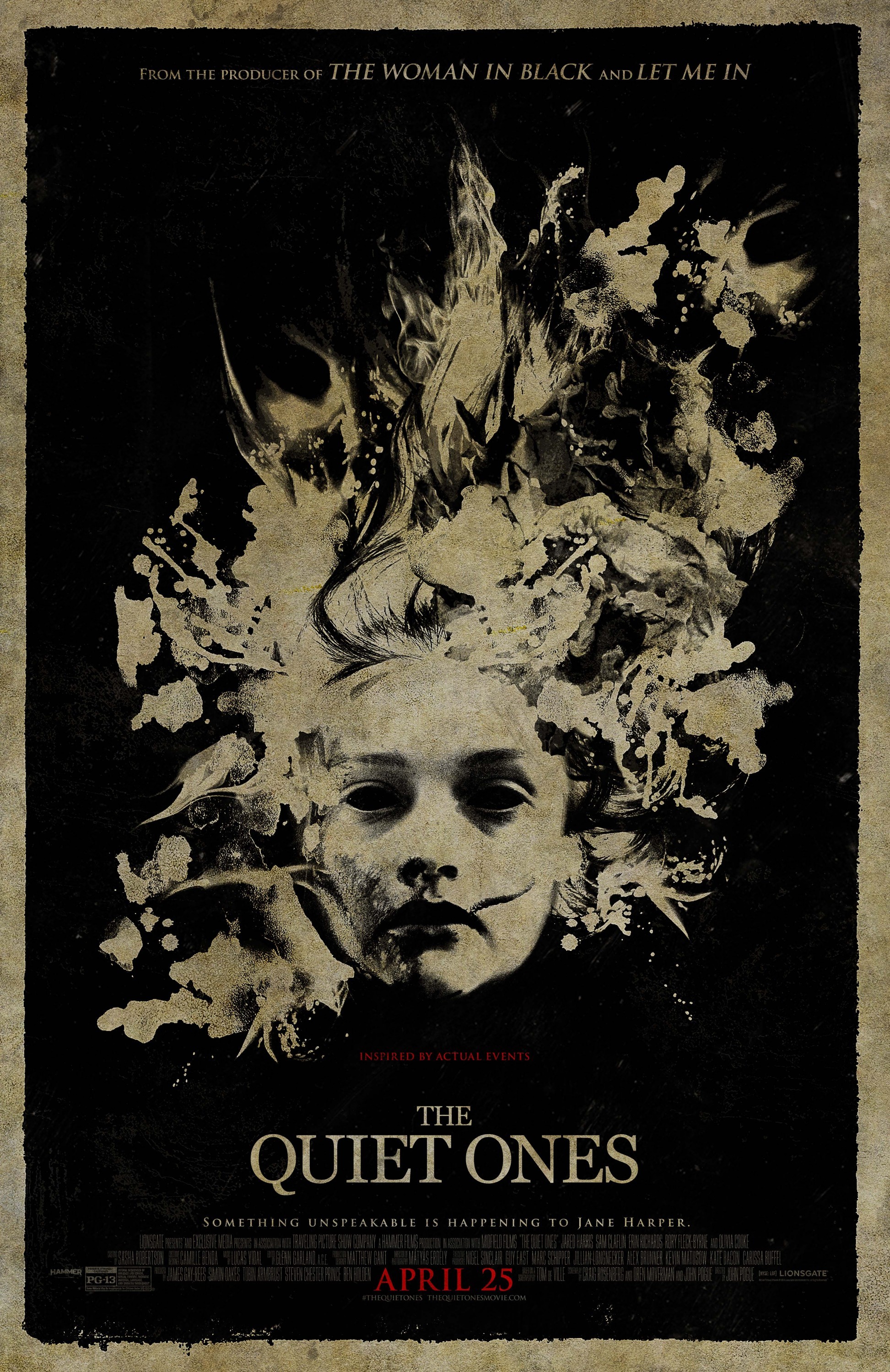
Shot in 2012 yet not released until 2014, The Quiet Ones is a 1970s-set, melancholic horror loosely based on the Philip Experiment, a 1972 parapsychology experiment conducted in Toronto, Ontario, made to determine whether living subjects can communicate with fictionalised ghosts through expectations of human will. Led by mathematical geneticist Dr. A.R. George Owen and overseen by psychologist Dr. Joel Whitton, their goal was to create a fictional character through a purposeful methodology and then ‘attempt’ to communicate with it through a séance. The created character was anointed; “Philip Aylesford,” referred to as “Philip” during the test. Although participants did report feeling a ghostly presence, table vibrations, breezes, unexplained echoes and eerie noises, matching responses to questions about Philip’s life, an apparition ultimately never appeared. Nevertheless, director John Pogue (Quarantine 2: The Terminal, Blood Brother, Deep Blue Sea 3) set out to take this real-world trial and twist it into an unnerving horror flick to, regrettably, minimal success.

Plot Summary: Summoning his top students to a secluded estate on the outskirts of Oxford in 1974, the unorthodox Professor Joseph Coupland proposes to the deeply troubled orphan Jane Harper that they perform a risky experiment to manifest the darkness within her. Operating under the theory that paranormal activity is triggered by negative human energy, Joseph and his team employ a series of tests to push the young woman to the brink of sanity. But, as the morally questionable experiment continues, the professor and his ambitious students soon realise they may have unwillingly released an unrelenting horror…

Heavily rewritten during production for budgetary reasons, The Quiet Ones does have a captivating piece of inspiration at its core, with the Philip Experiment being historically regarded as one of the most promiscuous and unsettling experiments of the 1970s, often playing into the configuration of conventional séances as Dr. A.R. George Owen sat his participants around a table, dimming the lights and requesting no communication between the group, even if the experiment has been criticised in recent years for lacking systematic management and clear results due to the unreliability of séances. Similar tests were conducted in the years following creating further make-believe characters, known as “Lilith” and “Humphrey,” producing near-identical results that were eventually deemed inconclusive. Regardless, it’s a bewitching real-world event for a horror flick, mashing up elements of science and the supernatural as frightening occurrences get underway, leading the researchers to admit their understanding of life and death isn’t as accurate as they once thought.

Portraying the zealous research team, Jared Harris, Sam Claflin, Olivia Cooke, Erin Richards and Rory Fleck Byrne are on all their A-game, with Harris being a particular highlight as the intelligent and self-assured Professor Joseph Coupland, portraying the character as equal parts unpredictable and oddly calming, it’s just a shame the character’s emotional backstory isn’t utilised to its full effect. In one of her first major roles, the then-upcoming actress, Olivia Cooke, is also a stand out, portraying Jane as an immensely tragic woman who has suffered from mental illness and uncanny events almost all of her life, being sent in and out of foster homes as a result of the malevolence enveloping her like a storm.

Continuously made to appear as if portions of the film were shot on ’70s-era cameras, The Quiet Ones is one of those horror flicks that feels as if it could have very easily been conceived as an entirely found-footage endeavour, but instead, the film uses the found-footage format sparingly, only employing the visual aesthetic at pivotal moments in the narrative. Most notably, during the scene with the Kirlian photography experiment (as seen through the lens of Brian’s 16mm camera), which was actually filmed by Sam Claflin himself, although not with an authentic 1970s camera, but with the contemporary camera of cinematographer Mátyás Erdély.

Comparable to how many of the film’s frights are your typical, lethargic jump-scares, such as windows slamming, doors knocking, beds breaking and chandeliers falling (each time, the deafening scare being preceded by an elongated silence), the orginal score by Lucas Vidal features the usual assortment of rackety, blaring tracks, like Not Scientific Proof and Bathtub Attack. Perhaps some of this audible bombardment was meant to conceal that there isn’t much depth to the story beyond the underlying theme of science and its relation to the supernatural.

In addition to The Quiet Ones, the infamous Philip Experiment also inspired the horror flick; The Apparition, released a few years prior in 2012, but that isn’t too surprising, given that a 2019 poll concluded that nearly half of the American populace believes that spirits and/or demons exist, despite overwhelming evidence that belief that life persists after death is declining.

In summary, The Quiet Ones is a horror flick that, in my opinion, is deserving of its largely overlooked status in the horror genre, as most of the film relies on cheap frights and visual trickery more than genuine dread to unnerve its audience. Though the film possesses an honourable cast, an appealing setting and an intriguing real-world influence, its rather lifeless execution holds it back. In essence, The Quiet Ones is much like the experiment in its narrative, throwing ideas into a beaker and praying it works as intended, yet it doesn’t achieve the desired outcome. Rating: low 5/10.

quiet_ones_xxlg

The Hole in the Ground (2019) – Film Review

“Something’s Not Right With Him…” – Sarah O’Neill

Ominous and moderately compelling, The Hole in the Ground is a 2019 Irish horror flick that, whilst well-crafted, is overly reliant on many of the conventional aspects of similar horror outings, most notably within thesinister childsubgenre. Still, with the film drawing from notions of Irish folklore, such as the concept of Changelings (children being replaced by fairy folk) and Fairy Forts (the ruins of neolithic tombs scattered across Ireland, thought to be portals to the Otherworld), co-writer and director Lee Cronin (Minutes Past Midnight – Segment: Ghost Train, Evil Dead Rise) does a sufficient enough job with the tools he is provided, even if The Hole in the Ground generally lacks ingenuity.

Plot Summary: To escape her crooked past, single mother Sarah O’Neill travels to the fringes of a rural town in the Irish countryside with her young son, Chris, to start a new life. But, after a disturbing encounter with a local resident, Sarah begins to question things, attempting to uncover if the troubling changes in her little boy are somehow connected to a mysterious crater hidden within the forest that borders their new home

According to Cronin, in addition to Irish folklore, The Hole in the Ground takes inspiration from a news story he once overheard, stating;There Was a Particular News Story I Saw About a Man in Florida Watching TV in His Armchair and a Small Sinkhole Opened Up Beneath Him. He Was Unable to Be Rescued. He Fell Down Into the Earthand I Thought That Was Horrific.Due to this inspiration, The Hole in the Ground, in execution, is less of the spiritual and bloody interpretation of the ‘malevolent child‘ concept as seen in 1976’s The Omen and more of a cross between the 2014 cinematic interpretation of maternal grief, The Babadook, and another Irish horror of changelings and woodland spirits, 2015’s The Hallow, taking a more minimalistic and character-driven approach to much of its horror and violence.

The largely unknown cast of Seána Kerslake, James Quinn Markey, Simone Kirby and Kati Outinen all portray their respective characters with devotion and authenticity, which is particularly impressive in the case of Quinn Markey, given that child acting can often make or break a piece of cinema. Thankfully, although this role requires a lot from the young actor, Quinn Markey delivers, portraying Chris with a menacing aura of otherworldliness. Likewise, Kerslake provides an anchoring performance, portraying Sarah as a struggling mother beginning to question her parental instincts following her implied escape from Chris’ abusive father. An idea that also plays into the underlying themes of the story, as I’m sure Sarah’s uncertainty regarding her parental abilities is surprisingly close to reality for some, with many mothers/fathers sometimes looking at their children only to no longer recognise them as they develop, naturally evolving into a wide-reaching inner fear and scab for the horror genre to pick at. Of course, in this case, Sarah’s suspicions surrounding her son arise from a supernatural mystery that lingers throughout the runtime. Yet, this subtext never threatens to overthrow the story, instead feeding much of the dread that permeates almost every scene.

Alongside the suitably gloomy colour palette, the cinematography by Tom Comerford retains a visually pleasant, gothic-adjacent look, avoiding hand-held shots for the bulk of the runtime. Much of this visual aesthetic can be attributed to the photographs and filmography of American photographer Gregory Crewdson, which served as a primary influence for the camerawork, with Crewdson’s work being known for staging scenes of suburbia for dramatic effect, his surreal images frequently appearing melancholic, offering ambiguous narrative suggestions and blurring the boundaries between fiction and reality, a tremendous creative choice. However, the same cannot be said for the lighting, which, in some scenes, is so dim it becomes difficult to tell what is occurring.

Opening with the sound of a singular piano note and concluding with that same note, which is then repeated to correlate with the story’s motif of something beingduplicated,the original score by Stephen McKeon is fairly audibly engaging, coming across as eerie and dramatic yet never overbearing via tracks, like Main Titles, Run Into the Woods and Mental Health.

Intriguingly, The Hole in the Ground also features several nods to The Shining (1980), including a wallpaper pattern that resembles the famed hexagonal design of the Overlook Hotel’s carpet. Regrettably, however, dissimilar to that iconic flick and many other horrors, the creature design of The Hole in the Ground is rather lacklustre in spite of the detailed costumes that bring the creatures to life, failing to share much likeness with the fascinating folkloric critters that inspired them. Conversely, despite the film’s rather humble budget of roughly £1.5 million, the rarely employed visual effects are surprisingly convincing, like the titular crater, which is presented as foreboding, even though it is merely a muddy, root-laden pit.

In summary, The Hole in the Ground is not an astonishing indie horror, but it is a passable, non-controversial one, a reasonably unnerving, by-the-book horror flick crammed with an array of familiar flavours for those well-acquainted with the genre. Exploiting parental fears where it can and exhibiting splendid filmmaking for the most part, The Hole in the Ground redeems its considerable shortage of originality through its sheer craftsmanship and narrative safety net of Irish folklore, which has previously proven to be a safe bet within the horror genre. Rating: 6/10.

hole_in_the_ground_xxlg

Escape From Tomorrow (2013) – Film Review

“I’m Afraid if I Come With You, Something Bad Is Going to Happen…” – Jim

Written and directed by relatively unknown filmmaker Randy Moore, Escape From Tomorrow, released in 2013, serves as a genre-defying, experimental arthouse flick, which, whilst flawed, has to be admired for both its ambition and ingenuity. Produced on a budget of around £502,000 and illicitly shot at the Walt Disney World Resort in Orlando, Florida, and Disneyland in Anaheim, California, without permission or permits from the Walt Disney Company, Escape From Tomorrow attempts to criticise today’s fascination with “Disney Culture” by mocking the company’s rose-tinted reputation (particularly its string of immersive theme parks) to deliver a conceptually audacious, darkly surreal roller-coaster of a film that morphs a miserable father’s seemingly straightforward excursion to Walt Disney World into an other-worldly tale of paranoia, conspiracy, sex and violence, interspersed between visits to iconic attractions, like Space Mountain, Dumbo the Flying Elephant and It’s a Small World.

Plot Summary: While his family frolics, taking in the sights and sounds of the Walt Disney World Resort, discontented and recently discharged father, Jim, finds himself curiously obsessed with a pair of beautiful teenage girls, subsequently leading him to unveil fiendish forces behind the Happiest Place on Earth…

As a result of Disney’s reputation for being immensely protective of its intellectual property, the cast and crew behind Escape From Tomorrow employed a variety of guerrilla filmmaking techniques to avoid attracting attention within the theme parks, such as saving their screenplays on their smartphones and filming on hand-held cameras similar to those used by visitors. After production wrapped, Randy Moore was so determined to keep the film a secret from Disney (and their lawyers) that he decided to edit the project in South Korea. Rather than suppressing the film, however, the Walt Disney Company merely chose to ignore it, with the 2013 Sundance Film Festival likewise declining to discuss Escape From Tomorrow in detail before it premiered. Those who saw the film expressed strong doubts it would ever be widely released, due to the legal issues involved and its negative depiction of Disney’s theme parks, dubbing it; “The Ultimate Guerrilla Film.” This unfavourable portrayal is most evident during the first act, as the film takes a less ‘magical’ glimpse at the Magic Kingdom, focusing on the strain and exertion of the parents taking their children to the consistently clangorous, overcrowded theme park.

As far as characters go, the film’s protagonist, Jim, portrayed by Roy Abramsohn, is rather unpleasant, heading to the Walt Disney World Resort with his family for a sunlit getaway, only to have his trip tarnished by a call informing him he has lost his job, leading him to drink, neglect his children and even make public advances on his wife, whilst there. These traits are later enhanced when Jim begins to undergo increasingly peculiar hallucinations and perverted sexual daydreams following his spotting of two French teenagers. Still, while the character is unquestionably unlikeable, credit must be given to Abramsohn, whose charismatic performance makes Jim an oddly amiable protagonist (one that you even feel some sympathy for), despite his repeatedly deplorable actions. The supporting cast of Elena Schuber, Katelynn Rodriguez and Jack Dalton aren’t quite as stirring as Jim’s sheepish wife and energetic children, though this could be forgiven, given their limited screen-time and experience.

Utilising a greyscale colour palette to disguise cinematographer Lucas Lee Graham’s occasionally amateurish camerawork and provide the film with an aura of visual cynicism and dream-like surrealism, Escape From Tomorrow, though primarily set in the Magic Kingdom, was partially shot at Disneyland on account of production issues, with the resultant theme park seen on-screen being an amalgamation of the two. These production tribulations are sometimes very noticeable, as it’s especially apparent during the second act that the filmmakers had to use shoddy visual effects, green screen composition and digital stabilisation to rescue some of the sloppier (and potentially improvised) monochrome shots.

Fortunately, the fantastical original score by Abel Korzeniowski flawlessly matches the film’s pessimistic outlook, as tracks like Gates of Tomorrow and Fantasy Girl mimic the cheerful, wonderous tone of the actual melodies employed at the Walt Disney World Resort before the score becomes more unearthly and ominous with somewhat futuristic, 1960s-inspired tracks, like Mystery Man and Lost in Caves.

Playing into many of the urban legends surrounding Disney’s illustrious theme parks, Escape From Tomorrow features many references to online conspiracy theories related to the House of Mouse, one being the mention of a location known as “Base 21,” which refers to a real, little-known V.I.P. lounge located inside the Spaceship Earth attraction at Epcot. This fixation on urban legends again ties into the film’s underlying themes, twisting Disney’s adorable, family-friendly brand into a disturbing, perverse satire that finds macabre in the ordinary, comparable to David Lynch’s uncanny style of filmmaking.

In summary, while Escape From Tomorrow retains an undeniably bold vision, the film is only intermittently successful in execution, lacking well-developed characters or consistently striking visuals in spite of its many thoughtful or freakish moments. Nevertheless, I’d be lying if I said I detest Escape From Tomorrow, as I certainly hold a soft spot for the film. And whilst I know it will not be to all tastes, if you’re willing to look beyond the gimmick of its production, Escape From Tomorrow is a fascinating yet largely forgotten cinematic scrutiny of the Walt Disney Company that ultimately became another urban legend encircling their theme parks. Rating: low 5/10.

escape_from_tomorrow_ver2_xlg-transformed

The House That Jack Built (2018) – Film Review

“The Old Cathedrals Often Have Sublime Artworks Hidden Away in the Darkest Corners for Only God to See. The Same Goes for Murder.” – Jack

Whether writing screenplays that contain scenes of self-administered clitorectomies or expressing Nazi sympathy at press conferences, the controversial yet distinguished writer-director Lars von Trier (DogvilleAntichristMelancholia) loves to cause headlines, with shock value frequently being employed as one of his greatest tools, often accentuating the underlying themes of his filmography. The House That Jack Built, released in 2018, is perhaps von Trier’s most distressing film to date, however, presenting the filmmaker at his most unfiltered and uncompromising. As such, for some, the film will serve as a captivating arthouse piece that delves into the layers of a serial killer’s mind, while for others, The House That Jack Built will seem like nothing more than an insensitive, tasteless horror flick brimming with disturbing moments, all in service of a lumpen statement that has been better cinematically expressed elsewhere.

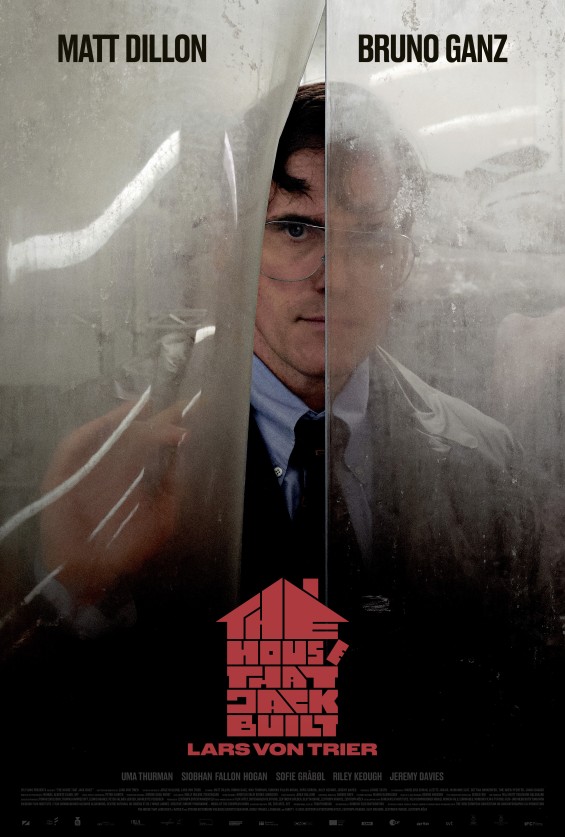
Plot Summary: Reflecting on his existence, Jack, a failed architect and sadistic serial killer, describes his twelve-year reign of terror to Verge, his unseen, enigmatic companion, illuminating the significance of his systematic atrocities by recounting five randomly chosen incidents from his blood-spattered past…

Premiering at the Cannes International Film Festival on May 14th, 2018, The House That Jack Built was reported to have more than a hundred audience members (including some critics) walk out during its premiere, despite a six-minute standing ovation following the screening. Furthermore, some of the resentful audience members condemned the film afterwards on social media for its relentless violence and nihilistic tone. Although I’m usually not one to get offended by media, The House That Jack Built is a film where I can, at least, understand why some take issue with the flick, as the film effectively promotes the idea that life is cruel and soulless, whilst simultaneously playing upon many ‘hot topic’ political assertions, primarily around the American politician, media personality and 45th president of the United States, Donald Trump. This persistent fatalistic outlook, along with its excessive runtime and unsettling violence, ensures that The House That Jack Built harbours minimal appeal for general audiences, even if much of the potentially contentious commentary gets buried beneath the film’s many other aspects.

Boasting about his achievements to an unseen, accented man known as Verge, the titular, obsessive-compulsive engineer, Jack, portrayed by Matt Dillion, appears unhinged yet astute straight from the opening scene, as he circumstantially describes five haphazardly chosen events from his life, all of which involve gruesome murders. From there, the film spends little time on Jack’s upbringing or the circumstances that led him to such a depraved place, but instead concentrates purely on the unconnected series of incidents where Jack slaughters his victims. Through these scenes, you can see Dillon slowly losing himself in the role as he spectacularly portrays Jack as an authentic, twisted psychopath who possesses no redeeming qualities or childhood trauma in an attempt to connect with the audience. Additionally, the supporting cast of Bruno Ganz, Uma Thurman, Siobhan Fallon Hogan and Sofie Gråbøl are all adequate in their various roles, usually as screaming, hapless victims.

A hefty portion of the cinematography by Manuel Alberto Claro, unfortunately, leaves much to be desired as the film is shot in an almost documentary-like fashion, predominantly relying on hand-held close-ups and mid-shots, where characters repeatedly pass in front of the frame, obscuring the audience’s view. As a result, The House That Jack Built has a noticeable deficiency of attractive shots and is continuously dimly lit, causing many scenes to blend together. That being said, the film does include a handful of brief animated sequences that are invariably visually interesting, in addition to an intriguing assemblage of archival footage/images for whenever Jack refers to fortes like architecture or winemaking.

Exceedingly unremarkable, the original score by Víctor Reyes is barely discernable for most of the scenes it’s featured within. Thankfully, the song choices throughout the runtime manage to audibly enhance the film somewhat, as songs like Fame by David Bowie support the story’s implied 1970s time period while classic French overture pieces, such as Partita No. 2 in C Minor, BWV 826 and The Four Seasons – Concerto No. 3 in F Minor, RV 293, heavily contrast with the ghastly violence on-screen, making a few of Jack’s killings seem darkly comedic.

Regarding the film’s graphic violence, I would argue that it could be excused in this case, given the narrative revolves around an unfeeling mass murder, an inherently frightening yet compelling subject matter that has been covered many times before in cinema with a comparable level of violence, most notably in the horror/black comedy classic; American Psycho (2000).

In summary, unlike a few other horror flicks that attempt to dive into the headspace of a serial killer, The House That Jack Built truly pulls no punches, depicting a self-examining, metaphor-heavy story of a man disguising his shortage of worthwhile contribution with violent self-interest. Throughout the film, Lars von Trier essentially grabs the audience’s head and shoves it into a vortex of anguish, unconcerned about whether it will appeal to the masses. For that reason, the film is not one I would recommend lightly, as if not swept up in the interpretative storytelling of The House That Jack Built, this sickening arthouse flick will likely carry the allure of a lengthy therapy session as it lacks the magnetism of some of von Trier’s other work. Rating: 6/10.

the_house_that_jack_built-p1046485

Winnie-the-Pooh: Blood and Honey (2023) – Film Review

“Pooh, You’ve Got to Help Me! Something’s Wrong With Piglet, He Killed My Wife!” – Christopher Robin

Shot in a mere ten days, Winnie-the-Pooh: Blood and Honey, released in 2023, is a British-American-produced micro-budget slasher that takes a more despicable approach to the beloved characters of Winnie-the-Pooh, Piglet and the other inhabitants of the Hundred Acre Wood, morphing the convivial critters into bloodthirsty, savage killers. Unsurprisingly, due to its laughable concept, terrible screenplay, amateurish filmmaking and general lack of any genuine horror or satire, Winnie-the-Pooh: Blood and Honey serves as nothing more than a bargain-basement slasher that fails to exhibit even a passing interest in the source material it’s adapting. As such, the film is only really notable for its title, simply existing as a bizarre, mismatched amalgamation of the horror genre and classic children’s literature.

Plot Summary: When Christopher Robin, now a young man, departs the Hundred Acre Wood to attend university, leaving Winnie-the-Pooh and his furred friends to fend for themselves, their days of merriment and adventure quickly come to an end as they become feral and enraged, soon acquiring a taste for flesh that steers them on a bloody rampage…

The creation of Winnie-the-Pooh: Blood and Honey became feasible at the start of 2022 after the 1926 children’s book; Winnie-the-Pooh by A. A. Milne, entered the public domain in the United States, voiding its copyright, and therefore Disney’s media exclusivity over the titular character. This meant that the filmmakers behind Winnie-the-Pooh: Blood and Honey were free to use characters like Pooh, Piglet and Eeyore, as long as they did not resemble their animated, Disney-owned counterparts, which were still actively protected by copyright. Nevertheless, I feel that most would agree that a malicious interpretation of Milne’s cuddly animal characters is undoubtedly a poorly-conceived concept from the get-go, with the film doing little to prove its critics wrong in this respect throughout the exceptionally brief runtime, even if it is commendable that this is the first live-action adaptation of Winnie-the-Pooh not produced by the Walt Disney Company, as well as the first adaptation geared towards mature audiences.

Regarding the film’s surplus of shortcomings, Winnie-the-Pooh: Blood and Honey‘s most significant issues lie within its screenplay, as the film crams several unwarranted scenes and overly dramatic subplots into a formulaic slasher framework, like having the underwritten protagonist Maria, portrayed by Maria Taylor, be suffering from serve PTSD, following a night where an anonymous sexual deviant broke into her home. These details add little to the narrative and generally come across as screen-time wasters. The rest of the characters, including Christopher Robin, Jessica, Alice, Zoe and Lara, portrayed by Nikolai Leon, Natasha Rose Mills, Amber Doig-Thorne, Danielle Ronald and Natasha Tosini, respectively, are all tremendously underdeveloped, delivering tedious exposition dumps that lead nowhere through performances that frequently present the cast as if they are uncomfortable in their various roles, underselling or overselling their reactions at every turn.

With the exception of the creative opening sequence, which sets the stage for this darker rendition of the honey-hungry yellow bear via pencil-doodled animation, Winnie-the-Pooh: Blood and Honey is a rather shoddy horror flick that lazily relies on its handful of admirable practical effects to avoid attempting anything visually or audibly impressive, as the cinematography by Vince Knight is relatively dull when it isn’t chaotically unstable during chase sequences, whilst the editing haphazardly slaps scenes together without any consideration for continuity or pacing. Furthermore, the film utilises plenty of editing trickery to get around its poor direction, namely, a ludicrous quantity of fade-to-black transitions and an assortment of abysmal CG blood effects.

One of the more mildly charming aspects of Winnie-the-Pooh: Blood and Honey, however, is its original score by Andrew Scott Bell, as tracks like In Which We Are Introduced to Winnie-the-PoohTogether Forever and Silly Old Bear, while generic, are, at least, of a relatively high-quality thanks to Bell’s innovative approach to the whimsical yet eerie score, employing a variety of instruments in the composition of the soundtrack, such as a “Beehiveolin,” a combination of a beehive and a violin.

Interestingly, writer-director Rhys Frake-Waterfield (The Area 51 IncidentThe Killing TreeFirenado) originally wanted Tigger to appear in the film, but the character ultimately didn’t on account of copyright. Some may say this was a favourable outcome, as Winnie-the-Pooh: Blood and Honey evidently doesn’t strive for faithful recreations of the cherished characters of the Hundred Acre Wood. Instead, the film opportunistically coasts on the novelty of placing the loveable critters in a macabre context, bringing the characters to live-action through rubbery, full-face masks that display no hair or visible mouths, allowing for minimal expressions, meaning Pooh and Piglet may as well be murderous individuals sporting animal-themed masks.

In summary, Winnie-the-Pooh: Blood and Honey is exactly what many anticipated it to be following the release of its viral trailer in mid-2022; an atrocious slasher, an appalling adaptation, and an all-around execrable piece of cinema. Still, that’s not to say that Winnie-the-Pooh: Blood and Honey was a commercial failure, as the film actually grossed over £4 million on a budget of around £79,000, despite its near-universally negative reviews. Consequently, this suggests that with many other children’s literary works soon making their way into the public domain, we will regrettably be receiving far more lousy, horror-centric renditions of long-established characters in the near future, with Winnie-the-Pooh: Blood and Honey 2Bambi: The Reckoning and Peter Pan’s Neverland Nightmare, being just some of the projects already announced. Rating: 2/10.

winniethepooh_blood_and_honey_xxlg

The Lighthouse (2019) – Film Review

“Why’d Ya Spill Yer Beans?” – Thomas Wake

A psychological horror only in the vaguest sense, 2019’s The Lighthouse is a strange yet wondrous cinematic venture, incomparable to many other modern releases due to its distinct visual aesthetic and often genre-defying narrative. Led by an outstanding pair of performances from Robert Pattinson and Willem Dafoe, The Lighthouse is the type of film that relentlessly sears itself into its audience’s memory, employing striking visuals, Lovecraftian influences and ominous, atmospheric sound design to craft an unnerving flick that closely resembles the fever-induced night terrors many actual lighthouse keepers endured during their lonesome, off-shore excursions tending to a beacon.

Plot Summary: Off the coast of late 19th-century New England, two lighthouse keepers, the taciturn former lumberjack, Ephraim Winslow, and the elderly lighthouse caretaker, Thomas Wake, set foot on a remote island to begin their monthly duties. But, as the tight-lipped men spend more and more time in each other’s company, a mutual resentment begins to arise as their collective sanity unravels…

Co-written and directed by Robert Eggers (The Witch, The Northman), the story of The Lighthouse is loosely based on a real-life affair that occurred in 1801 known as the Smalls Lighthouse Tragedy, during which two Welsh lighthouse keepers, sharing the name Thomas, became trapped at their station during a storm. When one of the men died, it is said to have driven the other insane. The story also takes some influence from the seafaring literature of renowned authors, including Herman Melville, Robert Louis Stevenson and H.P. Lovecraft, all of which lends the film a sense of historical accuracy and unseen oceanic horror. According to Eggers, earlier versions of the screenplay were more coherent, however, this was later changed as Eggers’ felt the best way to approach the film was to make the audience feel like they were losing their minds alongside the characters. As a result, The Lighthouse can occasionally be quite difficult to follow, yet this ultimately works in the narrative’s favour as the audience, much like the characters, struggle to tell reality from delusion. Even the very concept of time gets thrown out the window by the end of the second act, as it becomes almost impossible to tell how much time has passed between certain scenes, forcing the characters (and the audience) to question exactly how long they have been on the secluded island.

As the only two cast members, Robert Pattinson and Willem Dafoe are superb throughout the runtime as fellow lighthouse keepers, Ephraim Winslow and Thomas Wake. Simultaneously appearing layered and accurate to the time period, both characters flourish on-screen thanks to Pattinson and Dafoe’s electric performances, which are only enhanced when combined with the continuously compelling dialogue. This period-accurate dialogue bleeds through every scene, with the screenplay’s emphasis on 19th-century terminology and expressions instantly transporting the audience to the time and setting of the story, enriching Ephraim and Thomas’ persistent back-and-forths as they become increasingly infuriated at their situation. What makes the characters even more interesting is that neither one can be sighted as a reliable point-of-view, no matter how much they claim the other to be untrustworthy or deranged under their boozy breath.

Shot on Double-X stock, which requires much more light to get exposure. So much so, that the crew had to use about fifteen to twenty times more lights on set when filming at night or indoors to successfully capture footage. The cinematography by Jarin Blaschke is imposing and hypnotic, exhaustively utilising the isolated location of the treeless, storm-susceptible island along with its adjoining greyscale colour palette to create an array of hauntingly beautiful shots. Many of the visuals almost seem like depictions of a sailor’s nightmare, with the dense black-and-white grain of 35mm capturing every shadow and contour, lending the visuals a sensation of 19th-century expressionist horror, where even the tight aspect ratio proves to be claustrophobic. Furthermore, The Lighthouse employs several exceptional practical effects to depict the story’s more fantastical elements, such as its visual references to Greek mythology and seafarer folklore, like mermaids, sirens and the mighty Kraken.

Moving onto the original score, composer Mark Korven adds to the film’s foreboding atmosphere through doomy tracks, like ArrivalCurse Your Name and Stranded. However, much of the unsettling atmosphere could also be attributed to the immersive sound design, central to which is a bellowing foghorn, which sound designer, Damian Volpe, turned to J.J. Jamieson to create; a craftsman in Shetland, Scotland, who makes YouTube tutorials on operating and maintaining foghorns. Using Jamieson’s samples, Volpe manipulated the sound to create a period-accurate foghorn that was suitably startling and memorable.

Another favourable aspect of The Lighthouse is its authenticity, not merely in relation to its time period, but in regard to its restraint to filming on-location, which allows the film to retain a consistent level of practicality throughout, similar to its sense of dread, both of which are only broken up by the handful of well-timed, darkly comedic moments.

In summary, disorientation is clearly the primary intent of The Lighthouse as Eggers offers hints towards a grander narrative, but never fully commits to a sweeping, readable story, even avoiding an easily discernible conclusion. As such, instead of being a straightforward psychological horror or a disturbing historic folk tale, The Lighthouse is more of a surreal exploration of masculinity, guilt and seclusion, in addition to standing as another impressive showcase of Robert Eggers’ screenwriting and filmmaking abilities. Rating: 9/10.

lighthouse_ver2_xxlg