Loving Vincent (2017) – Film Review

“You Want to Know So Much About His Death, but What Do You Know of His Life?” – Marguerite Gachet

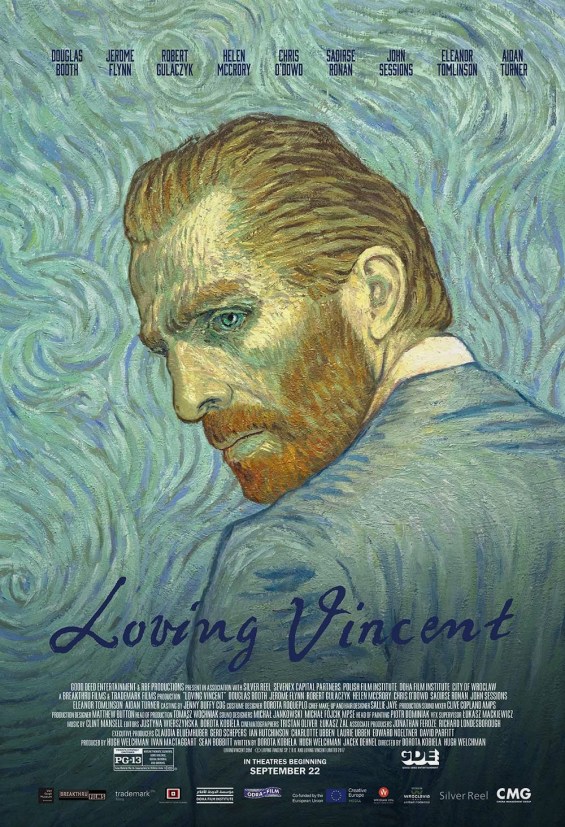
An arduous labour of love by a team of over one hundred professional artists, Loving Vincent, released in 2017, turns the renowned artwork and tragic life story of the celebrated post-impressionist artist, Vincent van Gogh, into an extraordinary biopic. Originally filmed in live-action before every frame was hand-painted over in the distinct style of van Gogh’s artwork, Loving Vincent impressively employs hundreds upon hundreds of oil paintings and transforms them into a hypnotic and ambitious animated biography, even if its story and characters are less effectively crafted than its dazzling visuals.

Plot Summary: In the summer of 1891, one year after the presumed suicide of unwonted artist, Vincent van Gogh. Postman, Joseph Roulin, tasks his reluctant son, Armand Roulin, with delivering one of the artist’s final letters to his brother, Theo van Gogh, in Paris. But, when Armand arrives in the French capital, learning that Theo has, too, met his demise, he pledges to investigate van Gogh’s untimely death by venturing to the scenic town of Auvers-sur-Oise…

Obtaining a large amount of attention after its nomination for an Academy Award for Best Animated Picture in 2018. Loving Vincent is one of the most unique films to emerge from the animation genre in recent years, as immediately from the hand-painted opening title sequence, preceded by van Gogh’s quote; “We Cannot Speak Other Than by Our Paintings.” The audience is pulled into van Gogh’s hyper-sensual worldview through the film’s striking aesthetic. Aside from the astonishing visuals, directors Dorota Kobiela and Hugh Welchman also provide an alternative take on the historic biopic by having the life of Vincent van Gogh viewed from the perspective of a young man, via the stories he is told by those who knew him. And even though this investigative storyline doesn’t quite match up to the amazing visuals on display, it’s an engaging story, nonetheless.

While the main cast of Douglas Booth, Eleanor Tomlinson, Saoirse Ronan, Robert Gulaczyk, Jerome Flynn, the late Helen McCrory and Chris O’Dowd, are all terrific in their performances, none of the characters possess a French accent. And considering that the story takes place in 1800s France, I feel the immersion of the time period/setting could’ve been greatly increased should the filmmakers have chosen to cast English-speaking French actors/actresses. Moreover, similar to the narrative, the characters of Loving Vincent are one of the film’s lesser impressive aspects. Whilst Armand Roulin is serviceable as a headstrong protagonist, eager to fight and drink before he is pulled out of his slump and instructed to deliver van Gogh’s final letter, subsequently becoming more and more invested in the alleged suicide of the gifted yet largely detested artist. The majority of the characters are given little characterisation and merely serve as plot devices to edge Armand towards his next acquaintance and/or eyewitness.

Moving onto the visuals, Loving Vincent was predominantly animated through the rotoscope technique; an animation process that consists of tracing over live-action footage frame-by-frame. This technique allowed the filmmakers to implement the characters into a number of visually stunning environments, along with numerous recreations of Vincent van Gogh’s paintings. However, only the sequences set in 1891 are animated in the style of van Gogh’s artwork, as flashback sequences are animated in the style of black and white photographs of the time period, providing a clear visual distinction. Additionally, details such as cigarette smoke, clouds or flowing rivers make for fantastic transitions between scenes. On the whole, the visuals of Loving Vincent almost appear like purified echoes of Vincent van Gogh’s artwork, as the cinematography by Tristan Oliver and Lukasz Zal, combined with the vibrant colour palette and beguiling art style, results in countless enchanting shots.

From the outset, the original score by Clint Mansell backs up the stylistic visuals with a sombre and atmospheric soundscape. Through tracks like The Night CaféThe Yellow HouseMarguerite Gachet at the Piano and Five Sunflowers in a Vase, the score creates a sense of sadness that parallels the difficult life Vincent van Gogh led. Furthermore, despite having a noticeable lack of movement in the background of certain scenes, the sound design goes a long way in fleshing out the environment around the characters, whether that be the bustling streets of Paris or a quaint farm in Auvers-sur-Oise.

According to Loving Vincent‘s official website, the collective effort of the many talented artists that worked on the project resulted in a total of eight hundred and fifty-three oil paintings, as each art piece was utilised multiple times, with succeeding frames being painted on top of the original paintings. In the final film, there are around fifty thousand hand-painted frames, which is truly an incredible feat of artsy when taking into account how much time went into just a single scene.

In summary, Loving Vincent is an outstanding achievement, not only in the genre of animation, but also in the world of filmmaking. While the story and characters do leave room for improvement, these minor issues hardly detract from Loving Vincent‘s main attribute; its ravishing visuals. From the phenomenal use of colour to the detailed backdrops and innumerable visual references to van Gogh’s most recognised artwork, Loving Vincent is a captivating tribute to one of history’s most influential artists. And, as such, I’d say Loving Vincent is a biopic well worth seeking out, even if it’s merely for the experience of witnessing the craftsmanship of hundreds of animated oil paintings on-screen. Rating: low 9/10.
loving_vincent_xlg

Enola Holmes (2020) – Film Review

“The Choice Is Always Yours. Whatever Society May Claim, It Can’t Control You.” – Sherlock Holmes

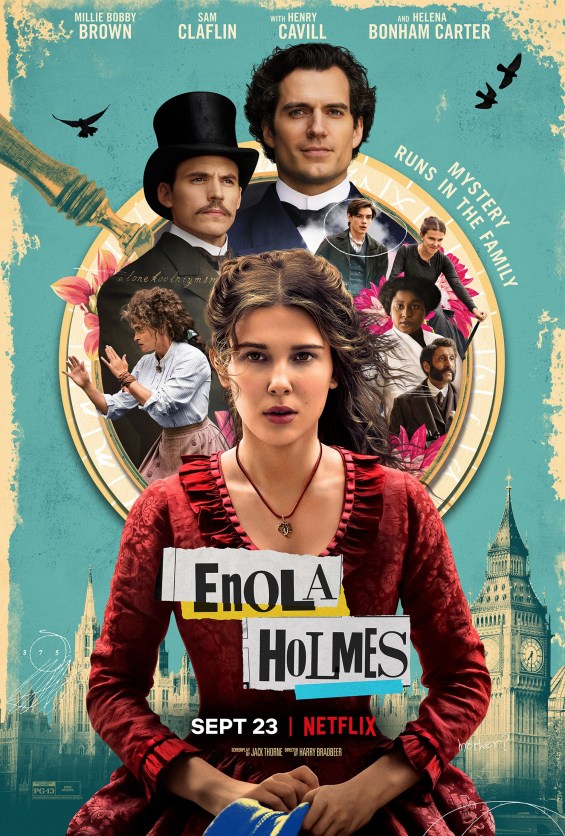
Based on the book series; The Enola Holmes Mysteries by Nancy Springer, a string of books centralising on Sherlock and Mycroft Holmes’ younger sister, Enola. 2020’s Enola Holmes serves as an alternate take on the Sherlock Holmes mythology, aiming itself towards preteens (specifically preteen girls) and injecting the world of the renowned detective with both colour and humour. Unfortunately, however, on account of the film’s poor pacing, overly long runtime and comedic sequences that frequently fall flat, Enola Holmes struggles to attain much appeal outside its preteen demographic, even with a terrific performance from Millie Bobby Brown as the titular character.

Plot Summary: When Enola Holmes, Sherlock Holmes’ teenage sister, discovers that her mother has gone missing, she embarks on a daring mission to the city of London to find her. Swiftly becoming a proficient detective in her own right as she outwits her older brothers and unravels a treacherous conspiracy surrounding a young, runaway Lord…

Adapting the first entry of the book series into an origin story, of sorts. The plot of Enola Holmes revolves around a mystery, similar to many adaptations of Sherlock Holmes literature. However, unlike many other adaptations of the world’s greatest detective, Enola Holmes repeatedly breaks the fourth wall throughout its narrative, having Enola turns towards the camera and speaks directly to the audience, delivering exposition and sharing her thoughts on her current situation. Yet, this isn’t too surprising as director Harry Bradbeer (As the Beast Sleeps, The Brides in the Bath, Perfect Day: The Millennium) is predominantly a television director, directing episodes on several well-known series, including Fleabag, which also features a number of fourth-wall-breaking moments. Furthermore, with a female protagonist at the centre of the story, Enola Holmes attempts to weave themes of feminism and the sexist nature of the 1800s into its narrative, which is an admirable goal, yet often comes across as preachy in its delivery as the female characters continuously outperform and belittle the male characters, including Sherlock Holmes himself.

Best known for her role as Eleven in the smash-hit sci-fi television series; Stranger Things, Millie Bobby Brown portrays the youthful detective, Enola Holmes, with plenty of wit and confidence. And, although the screenplay doesn’t give Enola much complexity beyond occasionally being too headstrong for her own good, she is a fine protagonist, especially for impressionable young girls. The supporting cast also does well in their respective roles, with Henry Cavill, in particular, portraying a remarkable iteration of Sherlock Holmes in a more traditional portrayal of the character following the rather wild and scattered portrayals from Robert Downey Jr. and Benedict Cumberbatch. Cavill is calm and collected as the stark image of his older brother, Mycroft Holmes, portrayed by Sam Claflin, who is far more rigid. Mycroft also makes an excellent foil to Enola as he demands she conform to the standards of 18th-century women. Then there is Helena Bonham Carter, who doesn’t have much to do as the Holmes matriarch, Eudoria Holmes, but makes the most of her screen-time through her monologues, bouncing from various tones with her eccentric behaviour and sage advice.

For added freedom and flexibility when it comes to camera movement, Enola Holmes was shot almost exclusively using a Steadicam system. This allowed cinematographer Giles Nuttgens to obtain many of the energetic shots seen throughout the film. Yet, despite this persistent sense of movement, many of the shots in Enola Holmes aren’t anything overly inventive, and instead, a large portion of the camerawork simply presents the detailed costumes and sets with pride. All of which feel period-accurate, if a little excessively vibrant.

Whilst not as memorable or as distinct as many of his other scores, composer Daniel Pemberton does a passable job with the soundtrack for Enola Homes. Crafting an orchestra-led score brimming with bouncy rhythms and sassy melodies, all united by guitar. Effectively, it’s a modern score that makes no real attempt to convey the time period of the story. Instead, the original score concentrates on Enola as a protagonist, accentuating her personality through tracks like Gifts from MotherCracking the Chrysanthemums Cypher and The Game is Afoot.

According to the novel; A Study in Scarlet, by Sir Arthur Conan Doyle. Sherlock Holmes first met his assistant, Dr. Watson, in 1881. But, in Enola Holmes, which is set in 1884, Lestrade states that Sherlock always works alone, indicating that the pair have not yet met. As such, it’s a safe assumption that Enola Holmes is set outside of the series’ usual continuity, further playing into the idea that Enola Holmes is an entirely new interpretation of the series. This assumption is inadvertently also a pleasant distraction from the film’s countless cringe-worthy quips and one-liners.

In summary, Enola Holmes is the type of film that preteens will delight in; a charming, family-friendly adventure with an intriguing mystery at its core. For others, however, this family flick is unlikely to impress as a result of its notable flaws and restrictive appeal, not to mention its constant attempts to plant seeds for the inevitable sequels that will be coming to Netflix later down the line. Having said that, I feel Millie Bobby Brown will certainly advance her career with this project as she was actually one of the primary reasons Enola Holmes was greenlit, approaching author, Nancy Springer, with the intention of starring in and producing an adaptation of her work. Rating: 5/10.

Enola Holmes • Poster

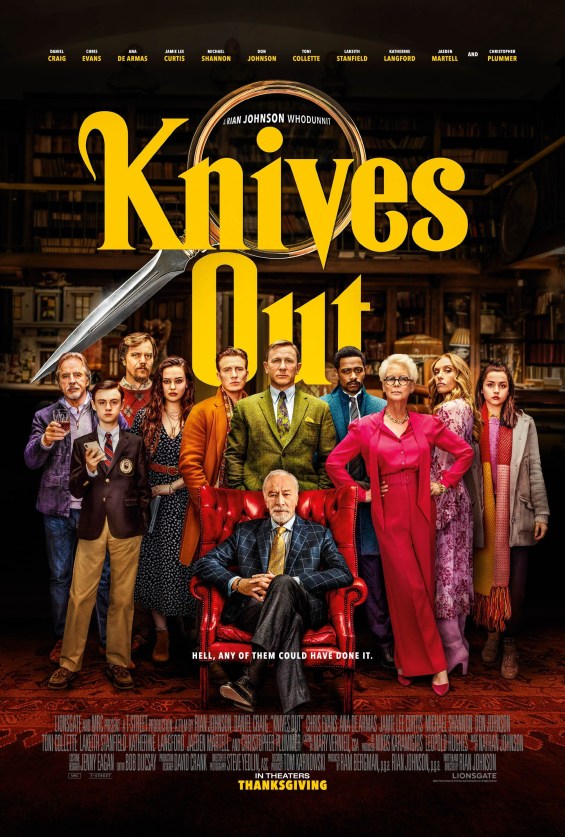
Knives Out (2019) – Film Review

“It’s a Weird Case From the Start. A Case With a Hole in the Center… A Doughnut.” – Detective Benoit Blanc

A brilliant spin on the well-worn formula of kindred murder mysteries, 2019’s Knives Out is a charming, captivating and hilarious film from beginning to end. Functioning as both a subversive whodunit as well as a modernised homage to the prominent works of crime-fiction author, Agatha Christie, Knives Out offers the kind of classy entertainment we could use more of on the silver screen as the film, through its all-around marvellous cast, excellent direction and witty dialogue, quickly overcomes the one or two minor flaws it has to thoroughly immerse its audience in a delectable delicacy of a mystery and its affiliated suspects.

Plot Summary: When renowned crime novelist, Harlan Thrombey, is found dead in his study on the night of his eighty-fifth birthday, the inquisitive and debonair, Detective Benoit Blanc, is enlisted to investigate his passing. Now, in a mansion full of potential suspects, from Harlan’s dysfunctional family to his devoted staff, Detective Blanc must sift through a tangled web of red herrings and self-serving lies to uncover the truth behind Harlan’s untimely death…

Written and directed by Rian Johnson (BrickLooperStar Wars: Episode VIII – The Last Jedi), the plot of Knives Out follows one of the most timeworn formats in the whodunit playbook; as family members and associates gather after a rich patriarch dies under mysterious circumstances. And although many of them may act like they want to uncover who’s responsible for the premature death of their loved one, in reality, they’re far more interested in knowing how much they stand to gain monetarily from said loved one’s death. However, at many points, Knives Out actually acknowledges its audience’s familiarity with this formula, battling against it by integrating a series of compelling twists and turns into its story. So, even if you’ve already guessed who isn’t responsible, it won’t be easy to deduce who is. Furthermore, it soon becomes clear that Rian Johnson has more than just murder and mysteries on his mind, as Knives Out quietly threads political commentary into its narrative through the family’s conversations concerning immigration and the many shades of venality, exposing an entirely different side to the ignorance and pride of the Thrombey family.

With an enormous ensemble cast featuring Daniel Craig, Ana de Armas, Chris Evans, Jamie Lee Curtis, Don Johnson, Michael Shannon, Toni Collette, Katherine Langford, LaKeith Stanfield, Riki Lindhome and Christopher Plummer, it’s understandable that a few of the actors and/or characters would be misspent. And this is most apparent with the character, Jacob Thrombey, portrayed by Jaeden Martell as beyond serving a single plot point and a handful of jokes, Jacob, and by default, Martell, has little screen-time, very few lines and the least development of any member of the family, making his inclusion seem rather pointless. Detective Blanc also brings two police underlings with him to solve the case, neither of whom makes much of an impression. Still, every member of the cast somehow manages to make their character feel distinguishable when placed alongside the others, from the bohemian Instagram influencer, Joni Thrombey, to the foul-mouthed freeloader, Ransom Drysdale, Harlan’s entire family is relentlessly amusing as they continuously squabble with each other despite pretending they are on the same side.

The gothic abode in which Detective Blanc’s suspects are confined is an interesting location for a murder mystery, to say the least, as Harlan Thrombey’s gigantic mansion is not only unique exterior-wise, but inside, is decorated with antique furniture and an assortment of ghoulish accoutrements, including crystal skulls, oil paintings, artwork that resembles giant eyeballs and, of course, a large metallic spiral of knives and other sharp implements. All of this elegant set design greatly adds to the already pleasing visuals of Steve Yedlin’s cinematography, but there’s no denying that characters and humour are certainly the biggest draws of Knives Out as a whole.

By that same token, the original score by Nathan Johnson (Rian Johnson’s cousin) never overshadows the comedy or drama unfolding on-screen, but instead enhances it. Matching the highbrow, old-fashioned style of Harlan’s grand mansion, the symphonic score plays more like a concerto for strings than a traditional film soundtrack. With tracks like Knives Out! (String Quartet in G Minor), Like Father, Like Son and The Thrombey Family Theme, all being wonderful pieces of classical pastiche dripping with a rich, gothic atmosphere.

Interestingly, Nathan was not the only member of Rian Johnson’s extended family to assist in the production of Knives Out, as Rian also brought on board two further cousins of his; Mark Johnson, who assembled the film’s opening titles and designed a font based on a series of Agatha Christie paperbacks, and Zack Johnson, who painted the cast portraits seen in the end credits. Further adding to the film’s high-class stylings and inadvertently tieing into the story’s focus on familial relations.

In summary, Knives Out is a sly, wry and stylish throwback to the murder mysteries of yesteryear, with a splashing of self-aware humour to boot. Updating the genre for modern audiences whilst simultaneously satisfying fans of the classic whodunits, Knives Out demonstrates (in a similar sense to many contemporary westerns), that some of the genres we may perceive as defunct are, in actuality, still far from gone, and that we could potentially see more from these less prevalent, but immensely enjoyable genres, in the future. Rating: 8/10.

knives_out_ver13_xxlg

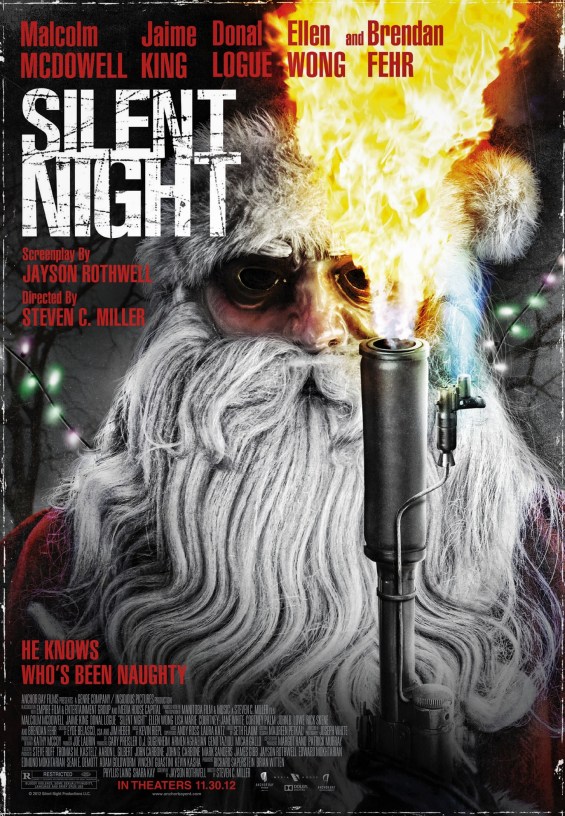
Silent Night (2012) – Film Review

“I’m on His Tail Now. There’s Nowhere Safe…” – Sheriff Cooper

One of the most controversial films of the 1980s, primarily due to its promotional material, which featured a killer Santa Claus brandishing an axe as he emerged from a chimney. Silent Night, Deadly Night, released in 1984, is well-known amongst horror fans for its bizarre legacy, spawning a franchise consisting of four extremely low-budget sequels that had barely any relation to each other, yet still gained a cult following, thanks to their bewildering stories and unintentionally hilarious moments. Years later, in 2012, we received Silent Night, a remake of the original film that reimagines the concept of a murderous Father Christmas for modern audiences, utilising its attractive visuals and creative kills to provide slasher fanatics with their fill of ho-ho-horror, even if Silent Night is filled with many of its own unique issues.

Plot Summary: When a sadistic serial killer dressed as Santa Claus embarks on a Christmas Eve rampage through a remote Midwestern town, the local police force must follow the killer’s trail of victims in the hope of uncovering his identity and averting the rest of his festive bloodbath…

Partially inspired by the 2008 Covina Holiday Massacre, during which forty-five-year-old, Bruce Jeffrey Pardo, killed nine people at a Christmas party whilst wearing a Santa Claus suit. Silent Night isn’t the first voyage director Steven C. Miller (The Aggression ScaleMaraudersThe Line of Duty) has taken into the horror genre, though, it may be his goriest as Miller, along with screenwriter Jayson Rothwell, up the ante from the original film by jumping straight into the violence, having the kills drive the story forward as they occur one after another. However, the screenplay certainly falls short when it comes to some other aspects, like developing the characters or building intrigue regarding the true identity of the masked killer, as the characters are insipid and the mystery uninteresting, making the film’s climactic plot twist feel less than galvanising, which is only made worse by the overcompensating dialogue.

The central cast of Jaime King, Malcolm McDowell, Donal Logue and Ellen Wong all try their hardest at providing their fairly lifeless characters with a personality and a reason for the audience to empathise with them, but it’s a largely wasted effort as King and Logue merely go through the motions as small-town police officers with a few glimmers of characterisation. While McDowell truly steals the spotlight as a dimwitted and pompous sheriff, frequently coming across as if his performance was taken from another film entirely. Then there is veteran stuntman, Rick Skene, who fulfils the demanding physical requirements of the killer Santa without saying a word, using his immense stature and threatening demeanour to great effect.

Contrasting the horrific bloodshed of the story with a candy-coated aesthetic of stereotypical Christmas traditions, the cinematography by Joseph White allows for a number of visually interesting shots throughout the runtime, nearly all of which are enhanced by the festive colour palette, which employs an abundance of bright red, green and blue lights to make potentially bland locations, such as the police station or a motel, more visually appealing. And despite the moments of barbaric murder frequently falling back on hand-held shakiness in a feeble attempt to increase the brutality of said murders, Silent Night does redeem itself during its flashback sequences as these scenes are entirely coated in black and white, aside from the killer Santa’s suit, which remains a glowing red.

Contrarily, the original score by Kevin Riepl is a blaring and often tedious horror soundtrack, as outside of the track; Sheriff Cooper, which strangely contains a guitar riff that sounds as if it’s been taken from a ’70s crime-thriller. The majority of the score, including the tracks; The Chipper and Rack Mounted, are simply loud and unexceptional. Of course, being a film set at Christmas, the film also features a handful of renowned Christmas songs, such as Up on the Housetop and Deck the Halls, which thankfully aren’t overused.

Although Silent Night, Deadly Night had its fair share of gore, Silent Night takes its gruesome violence to another level, as the bloodthirsty Santa make use of a range of tools, including an axe, a cattle prod, a scythe and even a flamethrower, in addition to constantly exploiting the environment around him, such as a scene where he impales a teenager onto a mounted set of deer antlers in a clear reference to the original film. What’s more, all of the practical effects used throughout these moments are magnificent, rarely relying on CG enhancements for further shock factor.

In summary, Silent Night is a modern slasher with its heart firmly in the ’80s, and I say that as a positive thing, as rather than being dull and quickly forgettable, it maintains the same level of cheese, dark humour and seduction as Silent Night, Deadly Night, but as a result of its modern techniques, looks far better than most horror remakes/reimaginings. So, it’s truly a shame that the screenplay and original score continuously let the film down, as with a few improvements, Silent Night could’ve gone down as a certified Christmas horror classic. But, as it stands, while the film is far from a masterpiece, Silent Night will please fans of the series as well as those seeking a festive slasher. Rating: high 5/10.

silent_night_xxlg

Gone Girl (2014) – Film Review

“Want to Test Your Marriage for Weak Spots? Add One Recession, Subtract Two Jobs. It’s Surprisingly Effective.” – Amy Dunne

An intricate and satisfying adaptation of the novel of the same name by Gillian Flynn, which went on to be a New York Times bestseller following its release in 2012, being hailed by many publications as a “Literary Masterpiece.” Gone Girl, released in 2014, flawlessly combines its maze-like plot with the distinct style of director David Fincher (SevenFight ClubThe Social Network) and a duet of astonishing performances from Ben Affleck and Rosamund Pike. Promptly resulting in an unmissable mystery-thriller that represents an exceptional pairing of filmmaker and source material, fully expressing Fincher’s cynicism regarding the current age of televised media and the darkness lurking just beneath the surface of contemporary life.

Plot Summary: On the occasion of his fifth wedding anniversary, former New York-based writer, Nick Dunne, returns home to find that his wife, Amy, has vanished. After reporting her disappearance to the authorities, the couple’s public portrait of a blissful marriage soon begins to crumble as the cases’ ever-growing media attention places Nick as the prime suspect, ultimately leading everyone to ask the same question; did Nick Dunne murder his wife?

Making her screenwriting debut, Gillian Flynn does an extraordinarily efficient job of streamlining her four-hundred-and-thirty-two-page novel, retaining its bifurcated structure and elaborate twists without significantly altering the story as a whole. Certainly, not an easy task as the very nature of Gone Girl‘s story requires the film to be constantly jumping through time, depicting the entire timeline of Nick and Amy’s marriage from their first encounter through to the total collapse of their love life, giving the audience a clear understanding of their individual personalities and relationship. And, through it all, Amy remains a consistent screen presence, continually popping up in flashbacks to her earlier, happier days living in New York City, where she led a life of luxury as a thriving children’s author. That is, until her relationship with Nick, a working-class Midwesterner, comes into focus, gradually draining Amy of her individuality, which is only worsened by the pair’s eventual layoffs and relocation to Nick’s hometown. Quickly spawning whispers of spousal neglect, infidelity and domestic violence, all of which are condensed for the sake of the film’s runtime yet never feel rushed.

Both Ben Affleck and Rosamund Pike are phenomenal throughout the film with not a single weak moment between them as Affleck, who has never been more ideally cast, delivers a captivating balancing act of a performance, fostering sympathy and the suspicion that his true self lies somewhere between shallow husband and heartless murderer. While Pike, who has actually had very few lead roles despite her extensive filmography, is continuously emphatic and commanding. What’s more, is that Gone Girl is a film that doesn’t aim to paint either of these two characters in a purely positive or negative light. Instead, Flynn frequently leaves it to the audience to decide which character (if any) they should be rooting for as the couple copes with the rapid decline of their marriage in dissimilar ways. The outstanding leads aside, Gone Girl also features a terrific supporting cast of Carrie Coon, Kim Dickens, Tyler Perry and Neil Patrick Harris, all of whom serve crucial roles within the story.

As ever, Fincher’s regular collaborators turn in work of an exceedingly high standard, with Jeff Cronenweth’s cinematography being unerringly well-placed in nearly every scene, bringing a drab, underlit look to Nick and Amy’s home, the police station and other North Carthage locations. And although Gone Girl does admittedly have quite the overreliance on mid-shots, Cronenweth’s intentionally controlled approach does lend itself well to creating many memorable shots, speaking less to visual flair and more to Fincher’s adroit style.

Along these same lines, the original score by Trent Reznor and Atticus Ross is a gloomy composition, invoking feelings of anxiety in the audience with subtle electronic pulses. Allegedly, Fincher’s musical brief to Reznor and Ross was based on a visit he took to a spa in which the accompanying melody was supposed to be relaxing, yet Fincher perceived it as unsettling. And, this undoubtedly comes across in Gone Girl‘s score, with tracks like What Have We Done to Each Other?With Suspicion and Technically, Missing, perfectly encapsulating this idea of a supposedly comforting soundtrack which, in truth, instills a sense of dread.

Similar to the novel it’s based upon, Gone Girl‘s story is also teeming with compelling underlying themes and social commentary covering a range of topics. On a broader level, however, the story is really about public perception and how televised media builds fabulations that quickly get subsumed as truth, as the American populace is willing to swallow whatever narrative is sold to them without question, a thought-provoking theme that the film never forgets to explore and build upon.

In summary, Gone Girl is a shining example of an adaptation that stays faithful to the source material whilst simultaneously injecting the narrative with its own style, not once letting the story drag or the suspense settle in its pursuit of transferring an acclaimed novel to the silver screen. Still, with a plethora of attractive visuals and tremendous performances (along with a handful of darkly comedic moments), I feel Gone Girl would’ve been a memorising film even in the absence of its engrossing central mystery. Rating: low 9/10.

gone_girl-p932779

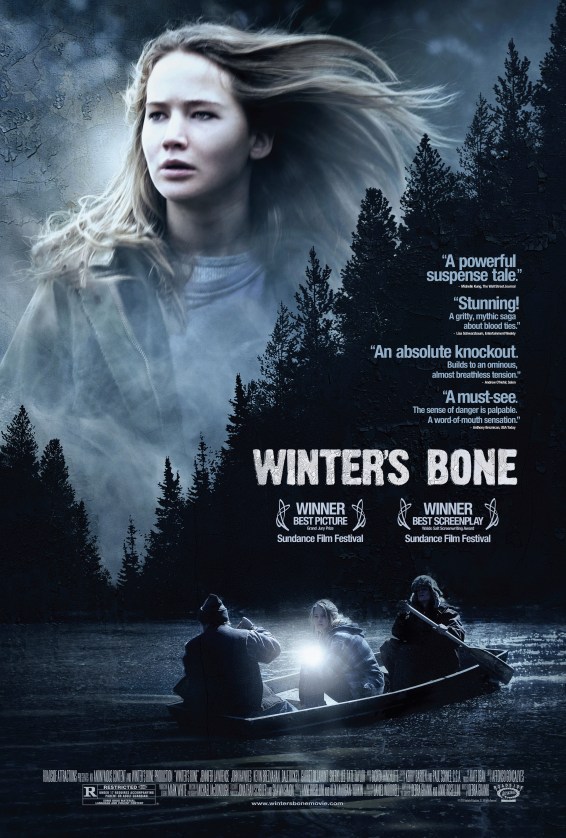
Winter’s Bone (2010) – Film Review

Based on the novel of the same name by Daniel Woodrell, ‘Winter’s Bone’ is a bleak, haunting and yet still somehow hopeful story set in rural America, acting as both a captivating drama and a suspenseful crime-thriller. The film is an intense and uncompromising look at the Missouri underclass through the eyes of a diligent teenager, blending its star-making performance from Jennifer Lawrence with skilfully shot sequences and incredible set-dressing to create a stunning and authentic portrait of Missouri life, all under the capable hand of writer and director Debra Granik (Down to the Bone, Leave No Trace).

Plot Summary: With an absent father and a mute, mentally ill mother, seventeen-year-old; ‘Ree Dolly,’ acts as the primary guardian for her household, caring for her younger siblings with minimal funds. But, when the local Sheriff appears at her door, informing her that their house has been put up as collateral bail by her missing father, ‘Ree’ is forced to use what little knowledge she has of her father’s nefarious activities to find him before it’s too late, soon discovering that many locals don’t appreciate her poking her nose into their business…

Despite her many previous successes, Debra Granik still had a great deal of difficulty finding funding for ‘Winter’s Bone,’ as after the screenplay had been written, Granik and her co-writer Anne Rosellini budgeted the film at around £3 million, but every potential group of financiers they approached all said the same thing; “Cast the Film, and Then We’ll Talk.” Thus, casting directors Paul Schnee and Kerry Barden began approaching various actresses and eventually settled on the then unknown eighteen-year-old actress, Jennifer Lawrence, as although she had never carried a film before, only having taken small roles in the past, both Schnee and Barden felt Lawrence had the perfect tomboyish demeanour for the character, in addition to having strong roots in Kentucky.

Winning an Oscar for her performance in 2011, ‘Winter’s Bone’ greatly benefits from ‘Ree Dolly’ as a character and Jennifer Lawrence’s portrayal of her. This is mostly due to ‘Ree’ being such a rare female protagonist for a film such as this, as with her errant father’s only bankable skill being his ability to cook methamphetamine, ‘Ree’ is left to care for her family, teaching her younger siblings survival skills to prepare them for when they are older (for which Jennifer Lawrence had to learn how to correctly skin squirrels and chop wood). And, after she is informed of the limited time she and her family still have within their house, ‘Ree’ becomes relentlessly determined to save her home, occasionally even risking her life all in pursuit of caring for her loved ones and ensuring her siblings have a future.

Michael McDonough’s stark cinematography captures the essence of what life in the brutal and sparsely populated Ozark, Missouri (a.k.a. the Ozark Mountains) is like, as the camerawork allows for many delectable shots, from the camera peeking around corners to lurking over character’s shoulders, the cinematography constantly lends itself to the film’s frostbitten colour palette and beautiful bitterness of the story’s setting, which is all enhanced by the entire film being shot on-location.

Furthermore, the original score by Dickon Hinchliffe utilises instruments common to the Ozark region, making use of violins, guitars, mandolins and banjos, in a way that is unique to the film. For example, the way banjos are used throughout the soundtrack, particularly in the tracks; ‘I’ll Find Him,’ ‘Hardscrabble Elegy,’ ‘Down the Road’ and ‘The Trees,’ deviates from the instrument’s stereotypical image of being associated with hillbillies and rednecks. One of the film’s final tracks; ‘The Lake,’ is also worth a quick mention, purely for how unnerving and incredibly atmospheric it is.

For authenticity purposes, most of the supporting cast of ‘Winter’s Bone’ weren’t actual actors/actresses, but locals from the surrounding area. ‘Ree’s sister for instance, was one of these actresses, and the exterior of her home we see in the film is actually her house in real life. Sticking to this idea of authenticity, nearly all of clothes that the characters wear are clothes provided by the locals, as the production crew gave locals brand new clothes in exchange for their old, frayed items. If I had to guess, I’d also assume many of the houses we set foot within belonged to these same locals, as every room we enter appears genuine, with no area ever seeming as if it was set-dressed with thought as to how many items are in one space at one time.

Im summary, ‘Winter’s Bone’ is spectacular in its efforts as a drama and a crime-thriller alike, as it’s intelligent, well-written and entirely non-patronising story is as tense and as entertaining as these respective genres come. And, whilst many Oscar-winning films can often be disappointing beyond whatever aspect is their main talking point, ‘Winter’s Bone’ is also beautifully shot and well-paced, with Jennifer Lawrence’s career-defining performance simply being the icing on top of the cake. So, even if the first act of ‘Winter’s Bone’ is slightly slow and repetitive, after that initial hump, the film thrives as a rewarding and richly detailed exploration of the strength required when being confronted with unpleasant truths. Final Rating: low 8/10.

WINTERS BONE 1SHT.indd

Coherence (2013) – Film Review

A case study in less-is-more filmmaking, 2013’s ‘Coherence’ is a taut puzzle box of a film, brimming with scenes of both existential terror and multidimensional weirdness as its reality-bending story unravels further and further. And, even though this sci-fi/drama is by no means a masterpiece, ‘Coherence’ does demonstrate a willingness to embrace the unknown, the implied and the mysterious, in addition to serving as a strong calling card for debuting writer and director James Ward Byrkit, a long-time storyboard artist for Oscar-winning director Gore Verbinski.

Plot Summary: On the night of an astronomical anomaly, eight friends meeting for a dinner party in Northern California, experience a series of troubling events following a street-wide blackout. But, when the group venture outside to investigate a lone house that seemingly still has power, they soon find themselves in an alternate reality where identical versions of themselves exist…

Shot over five nights on an extremely low budget of around £36,000, ‘Coherence’ is a true indie film, treating every shred of its thin-budget, short production schedule and a small crew of only two sound operators, a cinematographer, a producer and writer-director James Ward Byrkit as a virtue. This is best seen in Byrkit’s unorthodox directing style, with Byrkit only giving each of his actors a note (that only they would see) as their goals for the day instead of the full screenplay, this approach allows the story to naturally unfold and implies that many of the reactions from the actors are genuine, as they were unaware of what their co-stars would say/do. Yet, this method does have one major flaw, as due to a large amount of the film’s dialogue being improvised, a good portion of lines end up sinking into audio muck as a result of the sheer number of characters present, even if most of the overlapping dialogue is comprehensible.

Primarily being a drama despite its initial sci-fi setup, it was essential that ‘Coherence’ feature as many strong performances as possible and, luckily, this is the case, as the entire cast of Emily Baldoni, Maury Sterling, Nicholas Brendon, Lorene Scafaria, Elizabeth Gracen and Hugo Armstrong (among others) are solid, balancing their fear, confusion and frustration regarding their bizarre situation without ever seeming too outlandish. And, while certain characters do receive far more characterisation than others, the central conflict within the group focusing on ‘Em’ and the issues she is currently facing with her boyfriend, ‘Kevin,’ is interesting, though, it is ultimately there for the sake of the climax, which leaves plenty of room for speculation.

Shot chronologically to further fit with the film’s largely improvised production, ‘Coherence’ is shot almost entirely through hand-held claustrophobic close-ups, and even though this was a stylistic choice as Byrkit wanted to give his actors the freedom to move anywhere they wanted during filming, I feel it works both for and against the film, as this idea of making use of the film’s limited resources through shaky and focus-blurring shots draws thin by the end of the runtime, especially when the film has no reason to be shot in hand-held when it comes to the story’s quieter moments. However, whilst the cinematography by Arlene Muller and Nic Sadler leaves much to be desired, I did enjoy how ‘Coherence’ uses shadows, as the many alternate realities that lie just outside the house are only hinted at, with anything outside of the property being shrouded in near-total darkness.

Kristin Ohrn Dyrud’s minimal yet atmospheric original score makes excellent use of eerie drones and moans, amplifying the film’s sense of creeping dread, which is present even from early on with tracks, like ‘The Box,’ ‘Lights Out’ and ‘Schroedinger’s Cat.’ What’s more impressive, however, is that ‘Coherence’ is one of the few films Dyrud has actually composed for, with most of her career revolving around producing electronic music. But, if this score is anything to go by, then I personally can’t wait to see more from her as a composer.

When ignoring its science fiction elements, ‘Coherence’ is predominantly a film about the choices we make in life and the idea that making a specific choice won’t necessarily lead to happiness. This underlying theme is most evident in the film’s opening conversation, as the various characters discuss their successful careers while simultaneously ignoring their inner struggles, which could also be seen as a sly dig towards the vapid state of American privilege. It’s also during this first act that ‘Coherence’ attempts to utilise editing to display a passage of time, but rather than achieving this in a creative fashion, the film merely cuts to black before then cutting to a scene later in the evening, which is continuously jarring.

In summary, considering how much of the film consists of a group of friends becoming increasingly unhinged as they pace around a residential living room, it’s impressive how effectively Byrkit manages to suggest multiple realities and ominous threats, even if it’s trembling camerawork, odd editing choices and occasionally untapped potential cause the film to stumble now and then. Yet, whatever its imperfections, ‘Coherence’ is still a thought-provoking and well-crafted experiment in micro-budget sci-fi working best as a cautionary tale about the paths we choose in life and the alternate selves we sometimes dream of becoming. Final Rating: low 7/10.

coherence-p882722

Sinister (2012) – Film Review

One of the more authentically frightening horrors to be released by production company Blumhouse Pictures, 2012’s ‘Sinister’ steps carefully through familiar horror territory as it crafts a compelling yet chilling narrative, repeatedly see-sawing between drama, mystery and traditional horror, all whilst delivering on plenty of scares through its assorted bag of both old-school and contemporary horror tricks. Making for a well-acted, reasonably paced and continuously intriguing horror, even when taking into account its various issues.

Plot Summary: Desperately searching for a case that can be used to repeat the early success of his career, washed-up true-crime writer; ‘Ellison Oswalt,’ uproots his family into a seemingly innocuous house where a married couple and two of their children met a terrible fate while their third child mysteriously vanished. Whilst living there, ‘Ellison’ stumbles across an old box of Super-8 film reels, with each reel he watches further suggesting that the killings he’s currently investigating may be the work of a single serial killer whose work dates back decades…

Co-written and directed by Scott Derrickson (The Exorcism of Emily Rose, Deliver Us from Evil, Doctor Strange), the initial idea for ‘Sinister’ originated through a nightmare co-writer C. Robert Cargill had after watching the 2002 horror classic; ‘The Ring.’ And, immediately from the outset, that iconic horror’s influence is fairly evident, as a large majority of ‘Sinister’s story revolves around the idea of footage that shouldn’t be seen by human eyes. However, although ‘Sinister,’ much like ‘The Ring,’ is centred around a mystery, the film’s structure is far from flawless, which is one of its biggest missteps, as rather than having the plot slowly unfold over the course of the runtime, the film sticks to a particular rhythm, having each ten-minute block of careful investigation or familial drama punctuated by a moment of shrieking fright. Almost implying that the film’s story/characters aren’t engrossing enough to stand on their own, yet I actually feel it’s the opposite, as ‘Sinister’ is at its worst when it devolves into ‘Ellison’ wandering through his house purely for the sake of a weak jump-scare.

In addition to its engaging story, the main advantage ‘Sinister’ has over many other modern horrors is its central character, as even though a horror film focusing on an American family moving into a new house is anything but original, ‘Ellison Oswalt’ is a captivating protagonist, as his motivations for uprooting his family are far more selfish than your usual father figure, as ‘Ellison’ always places his career over his family, anxious to repeat the success of his bestseller; ‘Kentucky Blood,’ and avoid returning to writing school textbooks. And, of course, Ethan Hawke displays this brilliantly though his performance, elevating the struggling writer character-type we’ve seen many times before.

For many, I feel the most harrowing moments within ‘Sinister’ will surely be each piece of grainy Super-8 footage we see, as every scene executed in this fashion is deeply uncomfortable to watch. In some cases, the film even redeems some of its clunky dialogue through its sheer horrific imagery and atmosphere, the clearest example of this being the film’s disturbing opening shot, in which, a masked family are slowly hung from a tree. It also helps that all of these scenes were actually shot on a real Super-8 film camera by cinematographer Christopher Norr, creating a visual contrast between the outdated Super-8 footage and the remainder of the film’s camerawork, which, unfortunately, is overly dark and fairly dull aside from a handful of shots.

The unnerving atmosphere that ‘Sinister’ builds is only partly due to these distressing visuals, however, as the film’s original score by Christopher Young is exquisitely terrifying, as immediately from the first track; ‘Portrait of Mr. Boogie,’ which utilises strange synthesiser sounds combined with loud percussion and abrupt stops, it quickly becomes clear that the listener should never know what to expect next. Then there is the track; ‘Levantation,’ which greatly adds to the film’s second Super-8 segment through its use of distorted voices and whispers, quite impressive work, considering Young usually keeps his distance from the horror genre.

Perhaps unknown to some, ‘Sinister’ does feature a few supernatural aspects within its story, so when these elements are eventually revealed I can picture the film alienating some viewers, as for the most part, ‘Sinister’ stands its ground as a dreary investigative horror flick. Still, with that said, performer Nicholas King does a decent job portraying the film’s malevolent entity; ‘Bughuul,’ giving the supernatural antagonist a menacing presence purely through his body movements whenever he’s on-screen, though that may not be as frequent as some may hope.

In summary, it’s a shame that ‘Sinister’ suffers from a fair amount of horror clichés, as when the film isn’t forcing in jump-scares or relying on a rushed performance from Vincent D’Onofrio to bombard the viewer with exposition, ‘Sinister’ is truly a formidable delve into a murder investigation. And, although Scott Derrickson’s directing career realistically had nowhere to go but up after taking on the dismal remake of ‘The Day the Earth Stood Still’ in 2008, I feel ‘Sinister’ overcoming most of its faults to become an entertaining horror was Derrickson’s first step on his path to greatness. Final Rating: low 7/10.

sinister_xxlg

Saw (2004) – Film Review

Before it became the colossal horror franchise, we know it to be today, ‘Saw’ was originally just a low-budget thriller ingeniously co-written by Leigh Whannell and debuting horror writer-director James Wan. Boasting an intricate structure consisting of flashbacks within flashbacks, the original ‘Saw’ was far more focused on crafting a compelling (and occasionally confusing) mystery that takes place primarily within a single location rather than plainly indulging in blood and guts similar to its many sequels, and as a result, still remains the best entry of the ‘Saw’ franchise to date.

Plot Summary: When two strangers awaken in a grimy bathroom with their ankles chained to pipes and no recollection of how they got there, the pair soon discover they’re pawns in a deadly game perpetrated by the notorious serial killer; ‘Jigsaw.’

Despite the ‘Saw’ series being predominantly known for its constant display of extreme violence, with the franchise even becoming infamous at one time for introducing the ‘Torture Porn’ subgenre to general audiences. The original ‘Saw’ actually contains very little in the way of gore, as director James Wan never intended to make an immensely disturbing film. It was not until the sequels that the films became what he describes as “More Explicitly Nasty.” Still, this wouldn’t stop ‘Saw’ from its rampant train of success, as the first film alone would go on to earn over £90 million on a budget of only £1 million, instantly providing Wan and Whannell with the funds for their next project(s), in addition to placing ‘Jigsaw’ among the ranks of ‘Jason Voorhees,’ ‘Freddy Krueger,’ ‘Leatherface’ and ‘Michael Myers,’ as a horror icon.

Cary Elwes and Leigh Whannell lead the film as ‘Dr. Lawrence Gordon’ and ‘Adam Stanheight,’ respectively, and whilst neither actor gives a truly poor performance, Elwes easily outshines Whannell in many scenes. Obviously, this is due to Whannell being a writer (and now director) first and foremost, but with a better actor in Whannell’s place I feel many moments during the narrative could’ve been greatly enhanced. And, while Danny Glover, Monica Potter, and Tobin Bell all do a serviceable job, due to Elwes and Whannell’s performances taking up nearly the entirety of the film’s runtime, any faults in the actor’s portrayals are tremendously hard to ignore.

The cinematography throughout ‘Saw’ ranges from brilliantly clever to simply irritating, as director James Wan and cinematographer David A. Armstrong wanted the movement of the camera to reflect the central character’s emotions and personality, meaning ‘Dr. Gordon’ is displayed through steady, controlled shots while ‘Adam’ is seen exclusively through hand-held shots. Yet, even with this attention to detail, ‘Saw’s camerawork suffers from its repeated inclusion of the ‘Bullet Time’ shot, first introduced in the sci-fi classic; ‘The Matrix,’ in 1999. As, although this shot was very impressive when it first appeared, by 2004, this overused technique of having the camera rapidly rotate around an actor feels nothing but exasperating, especially when combined with the film’s chaotic editing and often unpleasant green-tinted colour palette.

Aside from the film’s signature track; ‘Hello Zepp’ which would go on to become a staple of the series, being utilised for each film’s final scene, the rest of ‘Saw’s original score isn’t anything special, being a mostly by-the-numbers horror soundtrack consisting of a variety of tense tracks with the occasional metallic effect thrown in to further relate to the industrial nature of ‘Jigsaw’s many traps and devices. The sound design itself, however, significantly adds to the horror, implying much of the gruesome violence that isn’t directly seen.

As a result of its smaller-budget, there are many occasions where director James Wan had to get quite creative with how to execute certain scenes. For example, the car chase that appears later within the film was actually filmed inside of a warehouse garage, with the illusion of being outside being achieved by turning off all of the warehouse lights, adding some fog and aggressively shaking the cars whilst filming directly from the front. This thin budget is also why the film contains no exterior shots whatsoever, as nearly all of the film was shot in a converted warehouse where the bathroom set was built, while any other locations were simply existing rooms redressed. However, even with this restrictive budget, the production crew actually made ‘Jigsaw’s now-iconic wooden puppet; ‘Billy,’ completely from scratch instead of pre-purchasing an antique puppet from a local store.

In summary, the original ‘Saw’ is far from flawless, but considering the film started out as just a low-budget short before attracting the attention of Evolution Entertainment, who immediately formed a horror-centric subcompany with Twisted Pictures, the ‘Saw’ franchise has truly come a long way. And, although the series’ first instalment is certainly plagued with many problems, there is a clear level of passion and effort poured into the project, and whilst I wouldn’t say it deserves to be one of the most profitable horror films of all time, I would say it deserves a watch, even if you’re planning to pass up the rest of the progressively grotesque franchise. Final Rating: high 6/10.

2004-saw-3

Searching (2018) – Film Review

Although some may see ‘Searching’ as nothing more than a gimmick, as this hyper-modern found-footage thriller utilises (and in many ways refines) the same format as the low-budget 2015 horror; ‘Unfriended,’ and its 2018 sequel; ‘Unfriended: Dark Web.’ ‘Searching’ has much more to offer than just having its narrative play out over a computer screen, as first-time co-writer and director Aneesh Chaganty constructs an engrossing story around this seldom concept, focusing on the disappearance of a teenage girl and the unfolding drama that follows.

Plot Summary: When ‘David Kim’s sixteen-year-old daughter; ‘Margot,’ goes missing, a local investigation is opened and a detective is assigned to the case. But, after thirty-seven hours pass without a single lead, ‘David’ decides to search the one place he believes his daughter holds all her secrets, her laptop…

Shot in only thirteen days yet taking over two years to complete due to the large amount of prep, editing and animation work. The fundamental idea of ‘Searching’ may have already been attempted with the previously mentioned ‘Unfriended’ franchise among some other horror flicks, but what makes the film stand out is its story, as ‘Searching’ veers away from the usual paranormal scares of most found-footage films to focus on a missing persons case, which does better fit this style of filmmaking, in my opinion, a subgenre now commonly known as “Cyber-Horror.” Furthermore, the film’s protagonist being ‘Margot’s father provides ‘Searching’ with a strong emotional core, as nearly every parent can relate to the fear of their child going missing. On top of this, the film also manages to weave in an overarching theme about the dangers of social media, giving the film quite an impactful message in spite of how many times it’s been covered in cinema.

Considering John Cho is best known for his comedic roles, it has to be said that Cho does a phenomenal job throughout the film as ‘David Kim,’ portraying a realistic depiction of a panicked father’s online movements as he desperately tries to track down his daughter, and the film provides us with plenty of dramatic moments to really let us feel ‘David’s pain. This is an even greater achievement when taking into account that Cho spends the majority of his screen-time just sitting in front of a computer screen looking ever so slightly right of the camera. Unfortunately, ‘David’s daughter portrayed by Michelle La isn’t as impressive, but this may also be due to her dialogue, as many scenes involving ‘Margot’ seem to be quite trite in nature. Lastly, there is Debra Messing as ‘Detective Vick,’ who is serviceable in her role as a firm detective investigating ‘Margot’s disappearance.

The cinematography of ‘Searching’ is interesting enough in itself, even without the story’s central mystery, as the film’s camerawork was actually handled by three different cinematographers. The first being the film’s standard cinematographer Juan Sebastian Baron whenever the film is shot through iPhones and GoPro cameras, and the second being the film’s virtual cinematographers Nick Johnston and Will Merrick, who help give the film a more dynamic feel by controlling the movement of the camera whenever we are looking through a computer screen, drawing the eyes of the audiences to specific areas and details. But, of course, as the film is primarily on a screen or shot through a phone, beautiful shots are basically nonexistent. It’s also not uncommon for the film’s editing to feel overly intense at points, appearing as if it’s trying far too hard to build tension.

In a surprising turn for a found-footage flick, ‘Searching’ does actually have an original score composed by Torin Borrowdale, the film’s soundtrack heavily leans into the story’s technological focus, being an electronic score with a strong emphasis on building tension or a creating a calming window of relief. And, while the opening track; ‘New User,’ is immensely corny, later tracks, such as ‘No Reception,’ ‘San Jose Missing Persons,’ and ‘Search by Image,’ do greatly add to the impact of certain scenes.

Additionally, whilst all of the computer systems, programs, apps, and websites we see during the runtime aren’t the actual versions, but instead templates that were recreated from scratch and then animated. The sheer amount of detail and realism that goes into each second of screen-time we spend on the computer screen simply can’t be ignored, as ‘Searching’ never implements hilariously fake websites into its story, like “iGram,” “Search,” and other dreadful knock-offs we’ve seen in similar films. Instead, both ‘David’ and ‘Margot’s laptops feel like real devices, having their message/Email inboxes overflowing and many real-world apps and websites, like Google and YouTube, open at one time.

In summary, ‘Searching’ may still be a gimmick film in a multitude of ways, but I feel for those who can look past the film’s occasionally cheesy moments and, in all honesty, fairly bland characters beyond their basic motivations. ‘Searching’ is still an engaging thriller/mystery with enough propulsion and small clues to keep most viewers invested, further ironing out the kinks in this obscure subgenre so when it all comes together, it’s with a most pleasurable snap. Final Rating: 7/10.

searching_ver2_xxlg