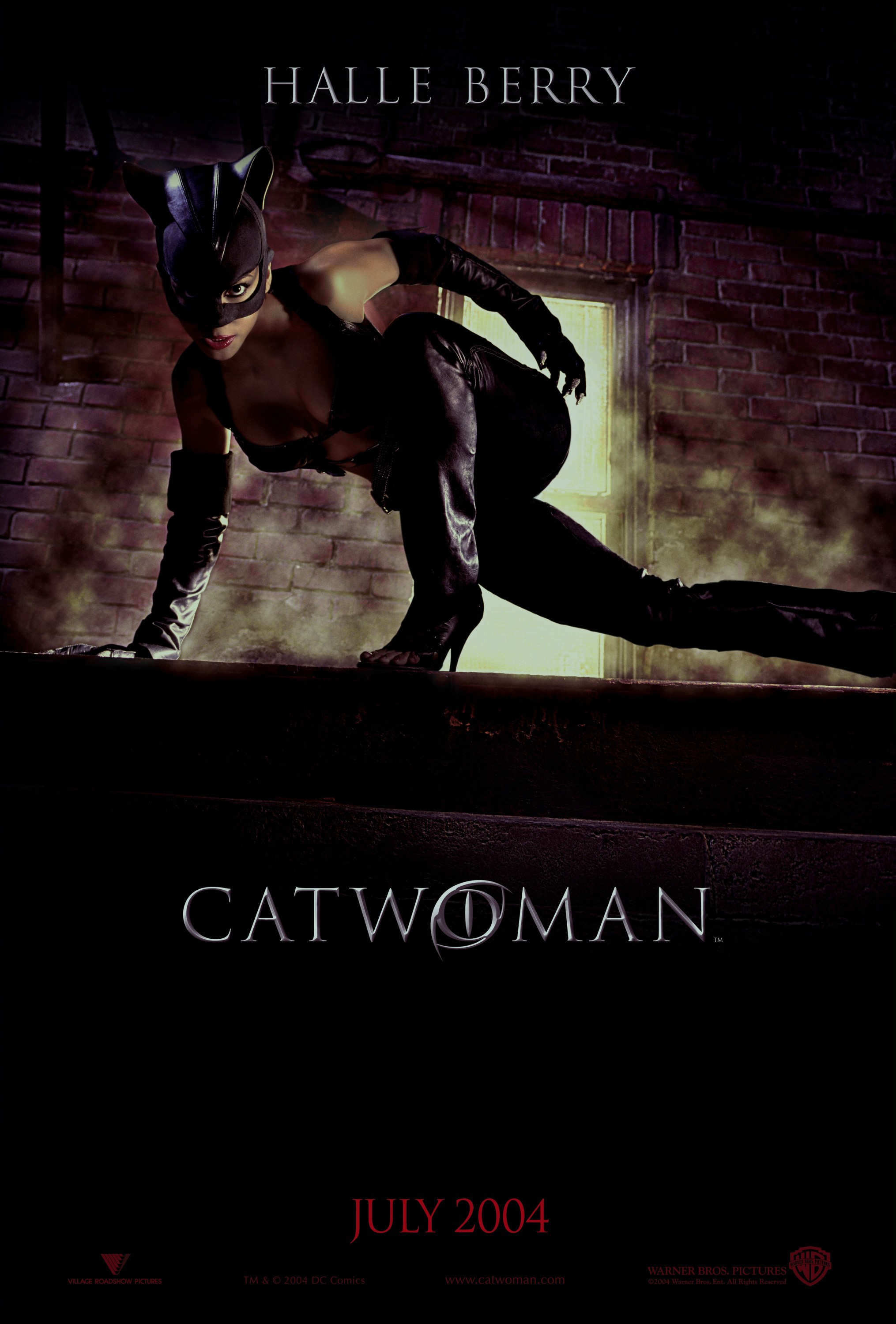
Catwoman (2004) – Film Review

“White Russian… No Ice, No Vodka, Hold the Kahlua.” – Catwoman

Widely considered one of the worst superhero blockbusters of all time, the notorious Catwoman from 2004 is a horrendous combination of an edgy 2000s music video and all of the worst aspects of a modern superhero flick. Harbouring immensely cringey, pun-based dialogue, terrible CG effects and a forced romantic subplot, among many other issues, Catwoman is a nosedive in quality from many of the beloved comic book stories featuring the famed cat burglar of the DC Universe. Still, for those who are fans of the character, there is little concern of character assassination here, as the protagonist of Catwoman is so distant from the feline that debuted in 1940 that she is virtually unrecognisable outside of the signature ears, whip and black leather outfit. As such, this seedy superhero flick is only worth seeing if you can tolerate a thrown-together story and hideous visuals merely for an ironic laugh.

Plot Summary: While toiling as a graphic designer for the cosmetics company Hedare Beauty, a mammoth corporation on the verge of releasing a revolutionary anti-ageing lotion, the shy and sensitive Patience Philips inadvertently happens upon a dark secret regarding the ointment, soon finding herself in the middle of a corporate conspiracy that eventually takes her life. But, after mysteriously reawakening with the newfound abilities of immense speed, strength, agility and ultra-keen senses, Patience transforms into Catwoman, a skilled and stealthy vigilante determined to foil her former employer’s devilish ploy…

Aside from the central (and rather superficial) underlying theme of the film, which relates to the harmful side of the cosmetics industry, naturally depicted in an over-the-top fashion with inhumane suits eager to make a profit, regardless of consumer harm, the plot of Catwoman is a formulaic yet underdeveloped superhero origin story, with most of the film revolving around the corny sequences of Patience (renamed from Selena Kyle in this iteration) discovering her numerous abilities. Similar to the unwarranted rename, this iteration of the character also possesses unexplained, supernatural abilities, unlike the original version of the character, who shared many similarities to her occasional associate, occasional foe, Batman, sporting an imposing outfit, a secret identity and exceptional fighting capabilities, yet no actual superpowers.

Becoming one of only six actors in history to own both an Oscar and a Razzie after her ‘win’ for her infamous performance in the film, Halle Berry also became the first actress to accept her Razzie in person, stepping out on stage proudly holding both Oscar and Razzie aloft, delivering the brief acceptance speech of; “I’d Like to Thank Warner Brothers for Making Me Do this Godawful, Piece of Shit Movie.” With this in mind, it’s likely not a surprise that Berry portrays Catwoman with all of the comic book cheesiness as other superhero performances of the era, from Ben Affleck’s Daredevil to Wesley Snipes’ Blade, over-delivering every line of dialogue and showcasing the cinematic sexualisation (and animalisation) of the titular character to an absurd degree, despite Catwoman’s sexually provocative side being a key part of her character in most media she appears. That said, Halle Berry does commit to her performance, and commendably so, considering that Patience spends most of her time wide-eyed and humiliatingly unhinged with a profound love of tuna. The supporting cast of Benjamin Bratt, Sharon Stone and Lambert Wilson don’t fare much better, with their performances frequently coming across as either lifeless or cartoonish.

Previously set in Catwoman’s usual home of Gotham City, with Michelle Pfeiffer reprising her role from the blockbuster sequel Batman Returns (1992) before this concept was scrapped when Pfeiffer refused to sign on, Catwoman takes place in an anonymous, grimy city that greatly resembles Gotham, yet is never confirmed to be so. Nevertheless, this iconic, fictional city’s aesthetic barely enhances the film’s visuals in the grand scheme, as the cinematography by Thierry Arbogast is continuously cluttered and visually displeasing, a flaw only exacerbated by the equally unpleasant viridescent colour palette. Moreover, the CG effects throughout the runtime are beyond appalling, appearing weightless and unconvincing, namely during scenes where Patience leaps up walls and across rooftops or when a cat is depicted via uncanny CGI, even though forty-three cats were actually trained and used for the film, seemingly removing the need for CG effects in this respect.

On another note, the soundtrack for Catwoman, primarily relying on not-so-timely songs such as Scandalous, Outrageous and Crazy in Love, is just as nostalgic as it is corny and excessively distracting. Likewise, the original score by Klaus Badelt is loud and overbearing, often unintentionally emphasising the film’s poor sound mixing, like with the clamorous track; Felineious Assault.

With Catwoman, it’s clear that the strangely mononymous French director Pitof (Vidocq, Fire & Ice: The Dragon Chronicles) set out to make a film as stylish and sensual as possible within the boundaries of its rating. And, while much of the film’s style is evidently influenced by Pitof’s background in outlandish, sultry music videos, blockbusters generally don’t rely on constant hyperactive shots, and Catwoman is a testament to why.

In summary, Catwoman is a baffling, dated mess of a superhero-led blockbuster, which is unfortunate, given how significant of a character Catwoman is, repeatedly playing a pivotal role in stories across the DC Universe, both featuring the Caped Crusader and otherwise. Thus, it’s not an exaggeration to say that Catwoman is a ‘cat-astrophe’ in practically every aspect, but definitely as an adaptation. Rating: 1/10.
catwoman_ver2_xxlg

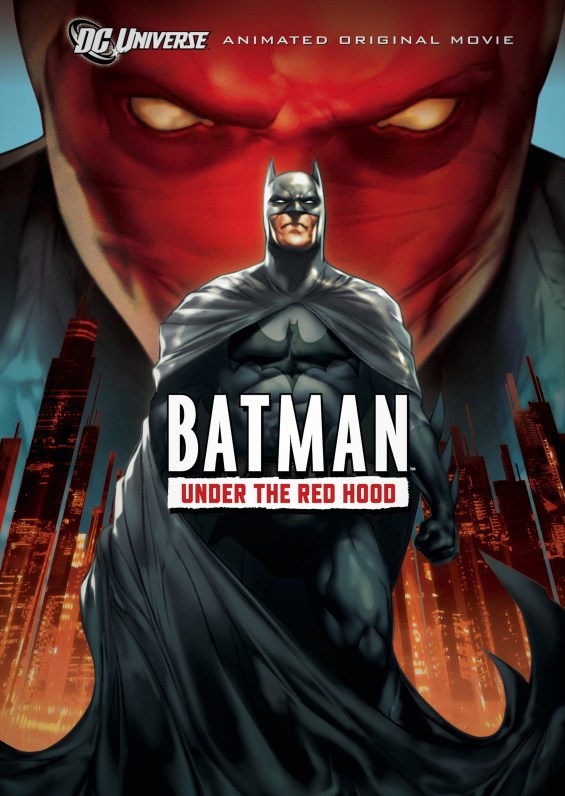
Batman: Under the Red Hood (2010) – Film Review

“Those Are the Heads of All of Your Lieutenants, That Took Me Two Hours. You Wanna See What I Get Done in a Whole Evening?” – The Red Hood

In 1988, the iconic DC Comics storyline; Batman: A Death in the Family, written by Jim Starlin and illustrated by Jim Aparo, was released to a mixture of acclaim and controversy, later becoming the bestselling comic of that year. This particular comic was unique, as readers were encouraged to vote for an ending to the narrative via a pay-per-call service number, deciding to either save or kill Batman’s youthful sidekick, Jason Todd, the second Robin. In the end, over ten thousand votes were cast, with a seventy-two-vote majority choosing to kill Jason, leading to one of the most recognisable comic book panels in literary history. Eventually, however, Jason Todd was brought back as part of a 2005 storyline entitled; Batman: Under the Red Hood, with an animated adaptation following in 2010, employing elements from both storylines to formulate a gripping, swarthy and exhilarating animated flick that examines the Dark Knight’s abiding moral code and its many drawbacks.

Plot Summary: When the mysterious vigilante, Red Hood, emerges in Gotham City, taking the streets by storm with the efficiency and aptitude of Batman without obeying the same moral code of never taking life, the Caped Crusader is forced to go toe-to-toe with the illusive outsider, reopening old wounds as once-buried memories resurface…

For those who haven’t read the source material, I won’t spoil any major plot points of Batman: Under the Red Hood, all I’ll say is that most of the story’s twists and turns won’t come as a shock to those paying attention. Fortunately, this level of predictability doesn’t matter much in the grand scheme, as Batman: Under the Red Hood is at its most compelling when it isn’t focusing on its revelations, but on how the characters endure them, as Red Hood takes Batman’s concept of vigilante justice and pushes it further toward the line between exemplary and immoral, despite his goal of ridding Gotham City of criminal filth being remarkably similar to that of the Cowled One. In fact, compared to many of Batman’s other adversaries, the Red Hood’s objectives are understandable and even somewhat valid, his crooked logic making sense as he asks Batman the formidable questions, forcing him to ask them of himself. Director Brandon Vietti (Superman: DoomsdayScooby-Doo! WrestleMania MysteryBatman: Death in the Family) and writer Judd Winick also seem to understand this, as it’s where the majority of their fixation goes, even if the fleeting runtime is too short to explore some of the film’s underlying themes in greater detail.

For the most part, the central voice cast of Bruce Greenwood, Jensen Ackles, Neil Patrick Harris, Jason Isaacs and Wade Williams portray their characters skillfully, delivering weighty yet not excessively intense vocal performances that embody their esteemed comic book characters, whether heroic or corrupt. For me, the cast has only one weak link, John DiMaggio as the Joker, who, aside from the character’s prominent laugh, doesn’t feel suited to the role, seeming somewhat miscast as he lacks the unvaryingly threatening, psychotic persona of the Clown Prince of Crime.

Visually, while still in line with the typical animation style of the DC Animated Original Movies assemblage, the animation/animated cinematography for Batman: Under the Red Hood is striking and distinctive. From the sharp angles of Batman to the meaty, menacing smile of the Joker, to the gloomy atmosphere of Gotham City with its shady warehouses and towering skyscrapers, usually depicted through enchanting wide shots that exhibit the illuminance of Gotham’s dominating skyline. In many ways, Batman: Under the Red Hood harbours the appearance of a literal animated comic book, rarely exhibiting its age or its undersized animation team.

Perceived as a powerhouse in the realms of both animation and video games, Christopher Drake, the composer for Batman: Under the Red Hood, has previously composed for many DC projects as Warner Bros. Animation frequently entrusts Drake to bolster many of their animated superhero flicks, most notably with projects like the adaptation of the seminal graphic novel; Batman: Year One (2011), as well as Batman: Gotham Knight (2008), Superman/Batman: Public Enemies (2009) and Green Lantern: Emerald Knights (2011). As such, it’s no surprise that Drake also does a terrific job with the original score for Batman: Under the Red Hood, starting the soundtrack off strong with the brooding opening track; Main Title, before supplying the film with further dramatic tracks, all of which seamlessly blend with the crime-ridden metropolis of Gotham City and its shadowy defender.

Intriguingly, Batman: Under the Red Hood was originally intended to be geared towards older audiences, bearing more violence. However, due to the low sales of DC projects in 2009, Warner Bros. Animation ordered the team behind the film to make edits to reduce its brutality and thus, its age rating. Yet, even with these cuts, the myriad of well-executed, easy-to-follow action sequences are thrilling, swift and surprisingly bloody.

In summary, more so than most animated DC projects, Batman: Under the Red Hood truly aims for cinematic storytelling over shallow spectacle and/or vibrance. With its stimulating action sequences, intricate animation and emotional underpinnings, Batman: Under the Red Hood is one of the finest entries in the DC Animated Original Movies catalogue. So much so, that in spite of Warner Bros. Animation continuously overusing the Dark Knight over their many other superheroes and villains, Batman: Under the Red Hood still manages to reveal a largely unexplored side of the celebrated character. Rating: high 7/10.

batman_under_the_red_hood-p527654

Brightburn (2019) – Film Review

“Maybe There Is Something Wrong With Brandon. He May Look Like Us, but He’s Not Like Us!” – Kyle Breyer

An inversion of the illustrious Superman origin story, Brightburn, released in 2019, is a film with an aggressively simple pitch, essentially boiling down to; “What if the Man of Steel was Humanity’s Oppressor Rather Than its Saviour?” And, even though the film doesn’t fully follow through on that enthralling premise, predominantly due to its sketchy screenplay and an often botched sense of dread, Brightburn crossbreeds horror tropes with superhero staples in an effective enough fashion to at least offer something unique for enthusiasts of both genres in the face of its many defects.

Plot Summary: After a difficult struggle with fertility, Tori Breyer’s dreams of motherhood become a reality when a child from another world crash-lands on her farm, later naming the boy; Brandon Breyer. But, years later, as Brandon nears puberty, a darkness begins to manifest within him, leading Tori, and her husband, Kyle, to become overwhelmed with terrible doubts concerning their son, doubts that soon put them in grave danger…

Directed by David Yarovesky (The HiveNightbooks) and written by James Gunn’s brother and cousin, Brian Gunn and Mark Gunn, respectively. Brightburn certainly succeeds in its primary goal: setting up an almost identical scenario to Superman’s origin story before taking the narrative in a far darker direction. And the film clearly has no pretences with what it’s drawing from, as Brightburn actually shares many similarities to Superman’s comic book run beyond just its story. From Brandon Breyer’s name following the comic book convention of superheroes with alliterative first and last names, such as Clark Kent, Peter Parker and Bruce Banner, to the story being set in Kansas, the same state where Kal-El first touched down and later grew up to become Superman. The film’s connections to the Caped Wonder are ever-present, even extending to the costume design in certain scenes as Brandon wears combinations of blue, red and yellow, the principal colours of Superman’s iconic outfit. Still, all this association doesn’t fix what is Brightburn‘s most substantial problem; its runtime. With the plot being squeezed into a very brief ninety-one minutes, the film is unable to waste any time, jumping straight into Brandon discovering his abilities and embracing his detrimental side. Thus, the story allows for little emotional investment, with much of the first act being nothing but scene after scene of what seems like trailer-made moments.

When it comes to the cast, Elizabeth Banks and David Denman share most of the film’s character-related scenes as the pair portray concerned parents starting to suspect that their blessing from the stars might, in actuality, be a scourge. However, whilst this is an acceptable start for writing your central characters, Tori and Kyle have little nuance and barely any development outside of the love (and eventual doubt) they share for their son. Then there is Brandon Breyer himself, portrayed by the young actor Jackson A. Dunn, who does a great job not only considering his age but also a similar lack of characterisation, as once Brandon’s twelfth birthday arrives, his sociopathic behaviour suddenly arises, morphing him from an innocent child to a homicidal supervillain so swiftly it appears absurdly forced, even if Dunn’s performance does help to make the transition feel slightly more believable through his complete absence of emotion during the latter half of the film.

Aside from some pleasant visual nods to further associate itself with the character of Superman, including a sweeping rural setting and accompanying farmhouse, interchangeable with that of Clark Kent’s humble abode. The cinematography by Michael Dallatorre is fairly unremarkable, usually just displaying shots without much thought or creativity put into them. With that said, many of the film’s CG effects are solid, especially when taking into account the film’s budget, which was considerably smaller than most modern superhero blockbusters.

Despite being described as a merging of superhero and horror soundtracks, make no mistake that the bulk of the original score for Brightburn, composed by Tim Williams, is firmly entrenched in the horror genre, with tracks usually starting out slow and composed before warping into something far more nightmarish, likely symbolising Brandon’s gradual corruption from the evil that dwells within him. This idea is further illustrated by the unnerving sound design as the more Brandon falls into the abyss of immorality, the more distorted voices he begins to hear, each speaking an uncanny extraterrestrial language.

Unfortunately, between the two previously mentioned genres that Brightburn attempts to represent, the film undoubtedly appears underbaked on the horror side of things as Brightburn lazily relies on clichéd horror concepts like flickering lights and jolting curtains. Meaning that it’s a rarity the film actually tries to build tension or have any frightening occurrences outside of loud jump-scares or the admittedly gruesome ways Brandon disposes of his victims.

In summary, between the red cape and blazing heat-vision, Brightburn is a film that knows exactly what it is; an immoral retelling of an established superhero’s beginnings, complete with plenty of violence and an abundance of horror trickery. Yet, all of the film’s spectacle ultimately feels meaningless when compared to its deficiency of strong characterisation and emotional depth. As such, a majority of the film’s most entertaining moments come at the expense of understanding any of the characters on a deeper level, consequently leaving Brightburn a film that never manages to strive past the subversive elevator pitch it was originally conceived as. Rating: high 5/10.

brightburn-p1056052

Logan (2017) – Film Review

Even though many comic book fans weren’t delighted when it was first announced that the then-unknown Australian actor Hugh Jackman, would be taking on the pivotal role of ‘Wolverine’ for the first live-action ‘X-Men’ film, nowadays, it’s hard to imagine anyone else in the role, with Jackman appearing in multiple films as the regenerative superhero. Nevertheless, when it finally came time for Jackman to sheathe his claws in 2017 with ‘Logan,’ the foreboding task of bringing this beloved character’s cinematic story to a close fell to director James Mangold (Walk the Line, The Wolverine, Le Mans ’66), who suitably crafted a brutal, bloody and surprisingly thoughtful final outing for the iconic hero.

Plot Summary: In a bleak future where mutants are nearly extinct, a weary ‘Logan’ leads a quiet life as an undercover limo driver, caring for an ailing ‘Charles Xavier’ at a remote outpost on the Mexican border as he awaits his inevitable death, slowly being poisoned by his adamantium skeleton. But, ‘Logan’s plans to hide himself away from the outside world are swiftly upended when he meets ‘Laura,’ a mutant child on the run from a sinister organisation…

Very loosely based on the ‘Old Man Logan’ comic book series, ‘Logan’ is a film free of the baggage that comes with being a part of the ‘X-Men’ franchise, as beyond a couple of nods/references the film essentially ignores much of ‘Logan’s past, which is definitely a decision made for the better, in my opinion, as the now-discontinued franchise was only ever consistent in its lack of consistency, jumping from entertaining entries, such as ‘X-Men: First Class’ and ‘X-Men: Days of Future Past,’ to greatly disappointing ones, like ‘X-Men: The Last Stand’ and ‘X-Men: Apocalypse.’ ‘Logan,’ however, takes a very different route, focusing on a straightforward road-trip narrative that explores ‘Logan’s struggle between his human compassion and animalistic killer instinct.

These ideas all massively benefit from the film’s performances, as ‘Logan’ is without a doubt Jackman’s finest performance as the titular character, when placed alongside Patrick Stewart, who returns as ‘Charles Xavier/Professor X,’ the pair of actors portray far more broken versions of their respective characters, as ‘Logan’ grapples with alcoholism and the immense guilt for all those he has hurt, while ‘Charles’ is now a delusional shell of the man he once was, battling dementia with all the pharmaceuticals that ‘Logan’ can afford. Boyd Holbrook also delivers a praiseworthy performance as ‘Donald Pierce,’ the leader of the merciless security team tasked with capturing ‘Laura’ (portrayed brilliantly by Dafne Keen). And, whilst it’s no easy task to stand toe-to-toe with Jackman’s ‘Wolverine’ and seem like a sincere threat, Holbrook does exactly that. For me, the only out-of-place casting choice is Stephen Merchant as ‘Caliban,’ as although Merchant isn’t awful by any means, I never felt his performance quite matched up to those around him. Though this is somewhat redeemed by the parental relationship between ‘Logan’ and ‘Laura,’ which in many ways, is the true heart of the film.

Taking heavy inspiration from a number of classic westerns, the cinematography for ‘Logan’ handled by John Mathieson gives the film a vastly different appeal than any of the films the character has previously appeared in as James Mangold keeps the film grounded in reality as much as possible, having the story take place primarily in remote towns, barren deserts and wide-reaching woodlands, in addition to filming on-location and utilising a large number of practical effects to avoid becoming too CGI-heavy similar to some of the other entries in the ‘X-Men’ series.

The film’s original score by Marco Beltrami is also incredibly effective at building tension and evoking emotion, as the score combines almost horror-esque tracks with far more dramatic pieces to deliver a varied yet still fitting soundtrack, with tracks, such as ‘The Reavers,’ ‘X-24’ and ‘Farm Aid,’ being almost uncomfortable to listen to, while the score’s final track; ‘Don’t Be What They Made You,’ is a beautifully sombre piece that will undoubtedly bring a tear to any listener’s eye.

Yet, the highlight of Logan’ for most viewers will surely be its thrilling action sequences, as due to ‘Logan’ being the second ‘X-Men’ film to have a higher age rating than 2016’s ‘Deadpool,’ the film never shies away from displaying graphic violence, having scene-upon-scene of criminals and security alike being slashed and torn apart by ‘Logan’ and ‘Laura.’ Finally giving in to comic book enthusiasts’ demands and allowing ‘Wolverine’ to exhibit his animalistic nature and fully unleash his berserker rage, resulting in innumerable moments of blood-spattering, barbarous fight choreography.

In summary, I feel ‘Logan’ earns the gut-wrenching reactions it initially received from ‘Wolverine’ fanatics, as despite the ‘X-Men’ franchise as a whole being extremely inconsistent, ‘Logan’ is a film that proves blockbuster franchises should save their best film for last, as Hugh Jackman’s long-running portrayal of the character will no doubt go down in cinematic history. And, I truly have pity for whichever Marvel executive will be tasked with recasting ‘Wolverine’ when the day eventually arrives for a reboot of the character/franchise, as finding another actor to fill Jackman’s shoes will be no easy task, but for whoever does, I’m sure most fans will need an adjustment period. Final Rating: 8/10.

logan_ver3_xxlg

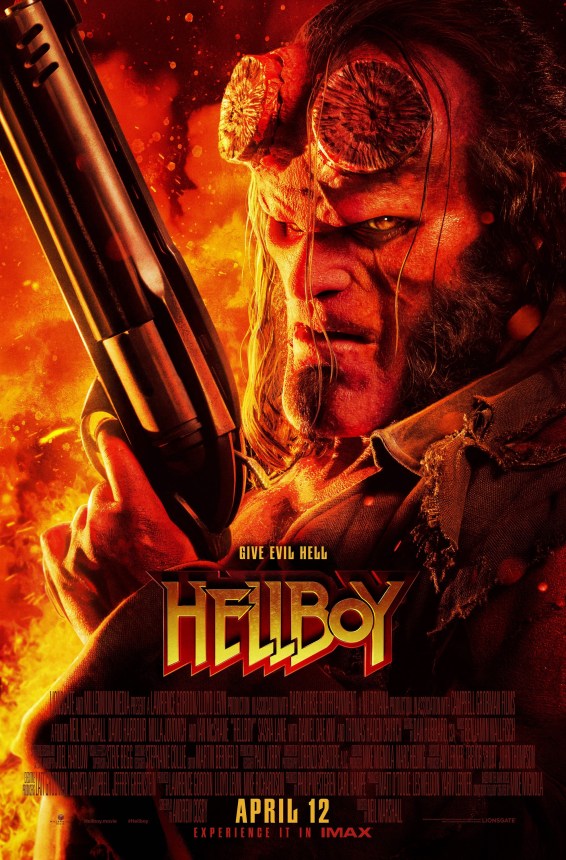
Hellboy (2019) – Film Review

In mid 2012, actor Ron Perlman once again endured the four hour make-up routine required to transform him into his iconic character: ‘Hellboy’ and fulfil the Make-A-Wish request of a six-year-old boy with leukaemia. Director Guillermo del Toro was so touched by this event that it inspired him to start production on a third ‘Hellboy’ instalment. But, following a dispute between del Toro and producer Mike Mignola, the project was soon cancelled, and instead, Mignola and his team began work on a reboot of the franchise, which finally released in 2019, to truly abysmal results.

Plot Summary: Whilst working side-by-side with his adopted father for the ‘Bureau for Paranormal Research and Defence,’ ‘Hellboy,’ a supernatural creature who came into our world in 1944 as a result of a demonic Nazi ritual, struggles to accept which world he belongs to, that being one of monsters, or one of men. All the while, an evil sorceress known as ‘The Blood Queen,’ returns to the modern world, eager to take her revenge on humanity for imprisoning her centuries ago…

According to producer Mike Mignola, the intention with this reboot was to replicant a style and tone closer to that of the original source material, as despite del Toro’s version of ‘Hellboy’ often being light-hearted aside from one or two disturbing moments, the original comic series created by Mike Mignola is, in reality, far darker and more gruesome. And, whilst this goal of wanting to make a ‘Hellboy’ film more horror/fantasy-oriented rather than just a typical superhero blockbuster is commendable, this reboot of the series continuously stumbles due to this tonal shift, even with talented director Neil Marshall (Dog Soldiers, The Descent, Doomsday) overseeing the project. Yet, this is only one of the film’s many problems, as it’s hard to sit through even a single viewing of ‘Hellboy’ without noticing the film’s incredibly fast pacing, awful comedic moments, and beyond messy plot, which for some reason draws, from four separate storylines from the ‘Hellboy’ comics.

‘Hellboy,’ or particularly, David Harbour’s performance as the titular character, is possibly the film’s finest aspect, as rather than just lazily mimicking Perlman’s beloved version of the character, Harbour displays a less mature interpretation of the superhero. Portraying the horned hero as a conflicted character, younger and stronger than Perlman’s version, but unsure as to if he is a real hero, which is an interesting internal conflict to explore and about the only element of the film that is consistent. Then there is Ian McShane as ‘Hellboy’s father figure, who is serviceable in his role alongside Milla Jovovich as the villainous; ‘Blood Queen,’ who, unfortunately, delivers one of the most over-the-top performances of her entire career.

Aside from the small detail of the filmmakers ensuring the colour red is never present in the same scenes as ‘Hellboy’ himself (excluding scenes where blood is shed, of course), the cinematography by Lorenzo Senatore is your usual affair for a superhero flick, having a handful of pleasant shots scattered amongst the plethora of bland hand-held camerawork utilised for action scenes and grand moments of destruction. But, regardless of how impressive the cinematography may or may not be, there is no distracting from the film’s unappealing CG effects, as in spite of the creature department clearly trying their best with the detailed costumes and prosthetic make-up on display, nearly all of the CG effects throughout ‘Hellboy’ appear instantly dated.

The original score by Benjamin Wallfisch is a peculiar concoction, being an odd mish-mash of orchestral and electronic tracks which only succeed in making the soundtrack feel quite dull when it’s not overly loud and irritating. Or at least, that’s the score before mentioning its use of electric guitars, which try desperately to present the soundtrack as something ‘awesome,’ but only emerges as annoying at best, with the film’s signature track; ‘Big Red,’ being the biggest offender for this.

However, an aspect of the film that is more in line with del Toro’s previous ‘Hellboy’ adaptation is its creatures, as although the effects that bring them to life aren’t impeccable, the actual creature designs are truly something be admired, with the ‘Hellboy’ comics clearly providing the filmmakers with plenty of visual influence. Even ‘Hellboy’s redesign was inspired by David Harbour’s own features, with the effects team adding a larger jaw and a heavier brow to further fit with Harbour’s facial structure.

In summary, while I can appreciate the effort that went into ‘Hellboy’ in some areas, the film’s flaws are just so evident it’s nearly impossible to ignore them. From its convoluted and overstuffed story to its dreadful CG effects, ‘Hellboy’s thrilling moments of action or amusing dark humour are minor when compared to its faults. Yet, by far the most frustrating part of this reboot is that it stripped away our final chance of seeing a third entry in the original ‘Hellboy’ series, an instalment myself and many other fans of this beloved character had been wanting to see for quite some time. Instead, we’re now stuck with this disappointing reboot, which failed miserably to reignite the spark of excitement in this superhero franchise. Final Rating: low 3/10.

hellboy_ver6_xxlg

The Amazing Spider-Man 2 (2014) – Film Review

Overstuffed with plot lines, characters, and ideas alike, this sequel to the ‘Spider-Man’ reboot from 2012 lacks much of anything to truly get invested in. As, this time around, returning director Marc Webb alongside the long list of Sony producers seem to be far more focused on setting up future sequels and spin-offs for the franchise rather than the current story, resulting in a superhero flick that’s just as muddled and inconsistent as it is forgettable. And, while the film did receive fairly average reviews upon its initial release, I’ve personally always felt ‘The Amazing Spider-Man 2’ is anything but ‘Amazing.’

Plot Summary: Continuing the adventures of the wall-crawler, New York City’s hero is thrown into action once again as he faces his newest threat; ‘Electro,’ whilst also balancing his normal day-to-day life as ‘Peter Parker’ with that of being ‘Spider-Man.’

It’s easy to see that throughout its production, ‘The Amazing Spider-Man 2’ faced the problem of having far too many creative minds involved, as director Mark Webb fought against producers constantly as to what would be featured and explored within the superhero sequel. This is why the film eventually ended up having three separate antagonists, in addition to also focusing on ‘Peter’s various relationships and the surrounding mystery of his parents, which when all combined, make the film feel completely directionless, as the audience is given very little time to become invested in any specific aspect of the story before quickly moving on.

Andrew Garfield and Emma Stone return to their roles of ‘Peter Parker’ and ‘Gwen Stacey’ for the sequel, whos romantic chemistry is still one of the film’s best elements similar to the previous instalment. New to the cast this time, however, is Jamie Foxx, Dane DeHaan and Paul Giamatti, who, all take on various roles as villains from ‘Spider-Man’s iconic rogues’ gallery, with the three portraying ‘Electro,’ ‘Green Goblin’ and ‘The Rhino,’ respectively. Yet, despite all these actors giving some fantastic performances in the past, most of the cast give extremely over-the-top and sometimes even strange performances here, which is only made worse as a result of the film’s large amount of cringey dialogue and absence of a consistent tone.

The film’s decent yet not overly inventive cinematography by Dan Mindel is, unfortunately, also hurt by the erratic editing throughout the film, as whilst not always present, occasionally, the editing does result in quite rapid cuts, with some shots that utilise slow-motion even being cut to when the ones before/afterwards did not, stopping the film from ever obtaining a smooth flow. Of course, although it’s usually a no-brainer when it comes to modern superhero flicks, the film’s CG effects are one of its most impressive and visually pleasing aspects, with many of ‘Electro’s shocking abilities being visualised as if they were ripped straight from the source material.

One of the most bizarre original scores in Zimmer’s catalogue of work, the original score by both him and Pharrell Williams gives the impression it’s made up of a number of different tracks from other unrelated films. As, aside from the signature track; ‘I’m Spider-Man,’ which does suitably feel like a heroic and upbeat theme for the beloved superhero. Many of the other tracks simply don’t mesh together well when they manage to stray away from being generic. However, it’s the infamous track; ‘I’m Electro,’ which certainly feels the most out-of-place, as the track employs electronic dubstep with vocals underneath by Pharrell himself that give voice to ‘Electro’s compulsive thoughts.

‘The Amazing Spider-Man 2’ is even surprisingly poor when it comes to its action, as whilst the film does attempt to be very ‘large-scale’ with its action set pieces, having many of them take place within the centre of New York City (where nearly all of the sequel was actually filmed). Much of the action also heavily relies on slow-motion, cheesy quips/jokes, and CG effects, all of which give the film’s action scenes an insufficiency of tension due to their over-extravagance.

In summary, after ‘The Amazing Spider-Man 2’s release, it’s fair to say that Sony was put into a tough situation. As in spite of the film doing fairly well at the box-office, it was clear that fans had no further interest in seeing Sony’s many planned franchise instalments, eventually leading them to strike a deal with Disney to bring ‘Spider-Man’ into the Marvel Cinematic Universe, now portrayed by actor Tom Holland. Although some may be saddened this version of the iconic web-head will more than likely never return to our screens, other than the comic-accurate suit and great chemistry between Garfield and Stone, I feel this sequel (and rebooted series in general) had very little to offer to begin with, and I’m thankful Marvel is now taking the character in a different direction rather than just regurgitating the same narrative we’ve seen many times before. Final Rating: low 3/10.

amazing_spiderman_two_ver11_xxlg

Venom (2018) – Film Review

Directed by Ruben Fleischer (Zombieland, Gangster Squad, Zombieland: Double Tap), ‘Venom’ follows in the footsteps of many other mature superhero flicks before it, such as ‘Deadpool’ and ‘Kiss-Ass.’ Attempting to focus more on the story of an anti-hero than the usual heroically noble protagonist we expect from this genre, all alongside some dark comedy and plenty of action scenes for good measure. Just from the first half an hour alone, however, it’s clear that ‘Venom’ bites off far more than it can chew.

Plot Summary: When investigative journalist; ‘Eddie Brock,’ attempts a comeback by investigating recent illegal experiments in San Francisco, he soon end ups accidentally becoming the host of an alien symbiote that gives him a violent super alter-ego known as ‘Venom.’ But, after a shadowy organisation begins looking for a symbiote of their own, ‘Eddie’ must use his newfound powers to protect his planet…

Although it may surprise many, ‘Venom’ has actually an age rating of twelve in the United Kingdom, which is very bizarre as the film clearly tries to appeal to an older audience throughout its runtime, with ‘Venom’ constantly committing horrific acts like biting people’s heads off, yet, of course, in a completely bloodless manor, as ‘Venom’ has always been one of ‘Spider-Man’s most violent and sinister foes, the film feels incredibly inconsistent as a result of this rating, and could’ve been so much more if it indulged further into its dark central character.

Tom Hardy sadly gives one of his weakest performances to date here, as throughout nearly the entirety of the film, Tom Hardy’s portrayal of ‘Eddie’ is very over-the-top, with his overly nervous reactions becoming a obnoxious after a while. This is also due in part to the large amount of improvising Tom Hardy did on set, usually from items he noticed in various filming locations, including the now infamous ‘Lobster Tank’ scene, in which, ‘Eddie’ publicly climbs into a restaurant’s lobster aquarium after claiming he’s burning-up from a fever. The cast also features Michelle Williams as ‘Anne Weying’ and Riz Ahmed as the film’s antagonist, who give fairly underwhelming performances. Unfortunately, the characterisation isn’t much of an improvement either, as every character is nothing more than a cardboard cut-out, with the antagonist; ‘Carlton Drake,’ in particular, having a confusing and undeveloped motivation for his malevolent schemes.

The cinematography by Matthew Libatique is actually quite chaotic during a number of scenes, as the shots attempt to keep-up with ‘Venom’ as he tears his way through various buildings and security guards, yet when the film goes back to its more character-focused scenes, the cinematography is relatively bland, mostly relying on shot-reverse-shot for the majority of these moments. The writing throughout the narrative is also severely lacking, as aside from a couple of humorous conversations between ‘Eddie’ and ‘Venom,’ the film is truly dripping with line-after-line of cheesy dialogue, much of which has been heard time-and-again in other superhero flicks.

Even though there are a number of forgettable superhero scores out there, the original score by Ludwig Göransson is pretty dull, as aside from working decently during some of the more heroic moments within the story, the soundtrack is really nothing more than a straightforward superhero affair with a few inklings of horror thrown in to fit more with the character of ‘Venom.’ However, a few of these tracks do back up the film’s action scenes well, as ‘Venom’ does have its fair share of exciting moments despite its predictable story, many of which make great use of ‘Venom’s unique symbiote abilities.

Without a doubt, the worst aspect of ‘Venom’ is it’s CG effects, as throughout the film both ‘Venom’ and his silver symbiote antagonist; ‘Riot,’ are far too shiny and continuously bounce around the screen as if they are animated cartoon characters, with nearly every visual effect feeling as if it has virtually no weight or density. Although it could probably go without saying, the lack of any kind appearance/reference from/to ‘Spider-Man’ himself is also quite distracting, as Sony didn’t actually obtain the rights to use the character within this film, nor have this film take place within the Marvel Cinematic Universe alongside films, like ‘The Avengers’ and ‘Guardians of the Galaxy,’ despite the Sony’s many attempts at tricking its audience into believing it does.

In summary, while ‘Venom’ is nowhere near as awful as some other superhero blockbusters, with ‘Catwoman,’ ‘Fantastic Four’ and ‘Suicide Squad’ all being far worse in terms of filmmaking. ‘Venom’ is simply a decent idea ruined by its poor execution, as aside from the film’s accuracy to the comic books it’s based on as well as it’s memorable action set pieces, the film feels like nothing more than a cliché superhero story we’ve seen many times before, and I personally don’t feel it deserves the huge amount of praise it’s received from most audiences. Unless you’re an enormous fan of this iconic anti-hero, I’d probably recommend you give this character’s first individual cinematic outing a miss. Final Rating: 3/10.

venom_ver2_xxlg

Joker (2019) – Film Review

Since even the first day of its release, ‘Joker’ has seemingly split audiences straight down the middle, being hit with numerous reviews all with varied ratings. Everything from the film’s violence to its intricate themes to especially its Oscar-nominations, have all been brought up in recent conversation, as this film’s character-driven narrative focuses on the origins of ‘The Joker,’ arch-nemesis of the ‘Caped Crusader,’ ‘Batman.’ Yet, ultimately, becomes far more of an affecting and compelling drama/thriller rather than your standard superhero affair.

Plot Summary: In ‘Gotham City’ during the 1980s, mentally troubled comedian ‘Arthur Fleck,’ is disregarded and mistreated by society. Over time, this leads him to embark on a downward spiral of revolution and bloody crime, eventually bringing him face-to-face with his chaotic alter-ego; ‘The Joker.’

Being directed by Todd Phillips (Old School, The Hangover, War Dogs), throughout ‘Joker’ you really get the sense that Phillips truly puts his all into it, pretty much leaving behind the realm of comedy flicks entirely to craft a film which puts more of an emphasis on character and filmmaking. As every aspect of the film from its performances to it’s writing, cinematography and even original score, all feel as if they’ve been thought over profusely. ‘Joker’ also attempts to back-up its story with plenty of thought-provoking themes of mental health and the cruel nature of modern-day society, which I feel are represented very well throughout the film, giving Phillip’s version of this iconic character more depth beyond him being a mysterious and lawless antagonist.

From ‘Joker’s laugh to his broken mental state, Joaquin Phoenix gives a true powerhouse performance as the classic comic book villain. Making the character sadistic and dangerous yet also sympathetic wherever possible, as even though ‘Arthur’ commits many horrible acts as the runtime continues on. You can’t help but feel sorry for him, being beaten relentlessly by the world he lives within. In my opinion, Joaquin Phoenix’s portrayal of this iconic character truly elevates the film as a whole, and I’d even argue is up there with Heath Ledger’s beloved performance in ‘The Dark Knight’ many years earlier. The supporting cast of Robert De Niro, Zazie Beetz, Frances Conroy and Brett Cullen are all also great within the film, with Robert De Niro’s character, ‘Murray Franklin,’ being an obvious throwback to his character from the classic Martin Scorsese film; ‘The King of Comedy,’ from 1982.

All of the cinematography by Lawrence Sher throughout the film is very impressive, which is actually quite surprising considering ‘Joker’ is shot by the same cinematographer as the rest of Phillip’s work (which all contain mostly bland shots due to their focus on comedic writing). Featuring a variety of both stunning and memorable shots throughout, ‘Joker’s cinematography does serve its narrative and dark tone very well, with the now-iconic scene; ‘Staircase Dance,’ since becoming one of the most recognised and celebrated moments of 2019 pop culture. Additionally, ‘Joker’ continues to steer away from becoming an average superhero flick through its implementation of bloody violence, never shining away from displaying scenes of visceral murder.

Despite feeling a little unfitting during some scenes, the original score by Hildur Guðnadóttir is both very beautiful and also quite tragic, as the score really enhances the audience’s journey into ‘Arthur’s depressing and broken state of mind. However, that being said, some of the tracks can begin to feel a little too similar over time, with the signature track; ‘Bathroom Dance,’ almost beginning to feel replicated later within the film, despite the soundtrack’s many attempts to do otherwise.

The main criticism ‘Joker’ has faced since its release has been its overreliance on borrowing elements from other films, most notably classic Martin Scorsese films, such as ‘Taxi Driver’ and the previously mentioned ‘The King of Comedy.’ As, ‘Joker’ utilises a style very reminiscent of ‘Taxi Driver’ whilst also featuring a protagonist not too dissimilar to the protagonist from ‘The King of Comedy,’ and while I definitely understand these complaints, I also feel many films throughout history have always borrowed elements from others, and in addition to having Martin Scorsese himself on board as an executive producer, ‘Joker’ does include some aspects of its own making to help it stand out.

In summary, ‘Joker’ isn’t perfect, but I do feel the film is successful enough, as while its occasional cheesy dialogue and derivative aspects may drag the film down, its stunning cinematography and haunting original score really lend themselves effectively to the already gripping story. Not to mention Joaquin Phoenix’s captivating performance, all of which leave ‘Joker’ an impactful and refreshing origin story for this cherished comic book character. So, if you’re a huge fan of this iconic antagonist or just have a fondness for character studies/intense dramas, I’d recommend you give ‘Joker’ a watch in spite of its mixed reception. Final Rating: low 8/10.

joker_ver2_xxlg

Iron Man (2008) – Film Review

Before ‘The Avengers’ or the ‘Guardians of the Galaxy’ hit the silver screen, director Jon Favreau began the Marvel Cinematic Universe with its first character; ‘Iron Man.’ Blowing audiences away with some incredible visual effects, thrilling action scenes and a very charismatic lead performance by Robert Downey Jr. as the egotistical; ‘Tony Stark.’ And, considering the film was self-financed by Marvel and had a mostly improvised screenplay, it’s incredibly impressive that ‘Iron Man’ is as entertaining and as exhilarating as it is by today’s standards.

Plot Summary: After being held captive by terrorists in an Afghan cave for months, billionaire and weapons engineer: ‘Tony Stark’ builds a weaponised suit of armour to fight his way out after discovering his weapons are being used for a more sinister purpose. Yet even after safely returning home, ‘Tony’ soon uncovers a nefarious plot with global implications, forcing him to don his new suit once again and vow to protect the world as ‘Iron Man.’

Although most now know ‘Iron Man’ as a superhero icon, at the time in 2008, ‘Tony Stark’ was a relatively unknown character. Similar to ‘Thor’ and ‘Captain America,’ many of Marvel’s ‘B’ listers truly owe their now enormous fan-bases and iconic statuses mostly to their first appearances in Marvel’s live-action universe, with the first ‘Iron Man,’ in particular, adapting the character’s comic book origins fairly closely into a hugely successful action blockbuster.

The supporting cast of Gwyneth Paltrow, Jeff Bridges, Terrence Howard, Clark Gregg and Shaun Toub are great throughout the film, despite only serving small roles within the story. However, it should go without saying that Robert Downey Jr. as ‘Iron Man’ himself absolutely nails the role, as he delivers every line of dialogue as an arrogant, pretentious genius. ‘Tony Stark’ even gives the narrative an engaging thread with his character arc throughout the film, becoming more likeable as the plot continues on, and although done many times before, it still feels pretty satisfying by the end of the runtime. Unfortunately, the biggest problem with Iron Man’ is the same issue that most Marvel flicks suffer from, this being the film’s weak antagonist. Although Jeff Bridges attempts to give his character; ‘Obadiah Stane,’ as much depth as possible, his transformation from a greedy executive to murderous psychopath feels extremely rushed and undeveloped.

Matthew Libatique’s cinematography is fairly creative throughout the film, however, from the various tracking shots of ‘Tony’ soaring through the sky in his suit, through to shots of ‘Iron Man’ taking down groups of terrorists, the majority of the cinematography backs up the quick pacing and utilises movement very effectively. Whilst the film isn’t ever overly focused on its science fiction elements aside from the suit itself, the CG effects throughout the film still hold up very well to say that was it was released in 2008, aside from the occasional shot of ‘Tony Stark’s head being placed atop of the suit.

The original score by Ramin Djawadi is a soundtrack which perfectly fits, alongside the character of ‘Iron Man,’ as the score makes excellent use of electric guitars and a drum kit to match ‘Tony’s young rock-star-like personality and taste in music, as there are multiple scenes of ‘Tony Stark’ listening to rock songs, such as ‘Back in Black’ and ‘Institutionalised,’ throughout the runtime. Not to mention ‘Black Sabbath’s now-iconic; ‘Iron Man,’ played over the end credits.

Even though all of the action scenes throughout the film are quite short, each action set piece is always exciting from start-to-finish, as ‘Iron Man’ takes down his enemies with style every time, utilising an array of different weapons and gadgets the film manages to still represent ‘Tony Stark’s cocky personality through these suited-up action sequences. ‘Iron Man’ was also the first film that kicked off Marvel’s typical style of humour, and while not as noticeable as some of Marvel’s other films, the film still contains plenty of scenes, in which, ‘Tony’ makes sarcastic comments or degrades those around him, and while many of these moments do make for some decent comic relief, I could see many of these scenes becoming irritating for those who don’t enjoy this type of comedy.

In summary, despite its few flaws, ‘Iron Man’ was one hell of an opener for the Marvel Cinematic Universe, as without this film, we truly wouldn’t have what is now considered one of the most successful franchises in cinematic history, even with this ignored, however, the film is still exceedingly fun and is filled with plenty of memorable moments on its own, all of this, of course, held up by the brilliant performance from Robert Downey Jr. If you finally want to get around to watching this long-running film series, I’d say the original ‘Iron Man’ will definitely prepare you for what’s to come. Final Rating: 8/10.

iron_man_ver3_xxlg

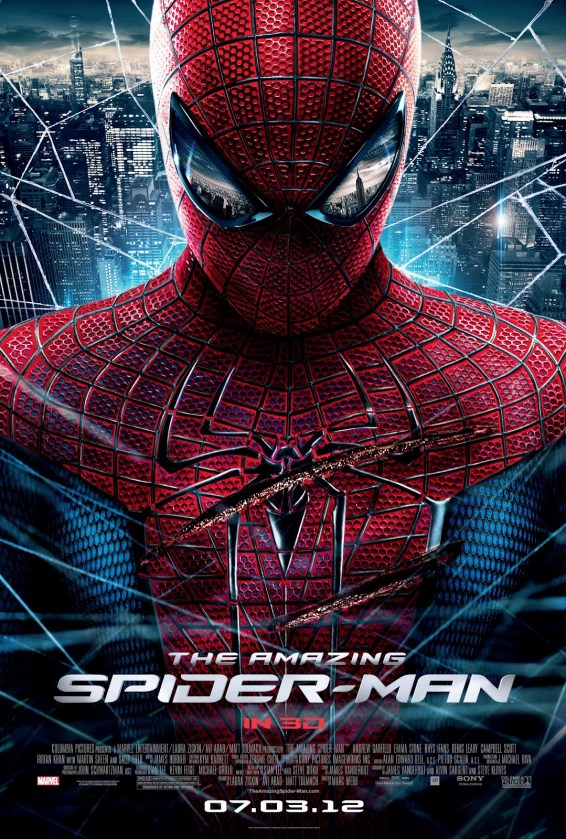
The Amazing Spider-Man (2012) – Film Review

Only five years after the previous ‘Spider-Man’ franchise ended, ‘The Amazing Spider-Man’ attempts to be a fresh and slightly darker reboot of the superhero’s classic origin story yet, sadly, falls pretty flat. Feeling too similar to the previous iteration of the franchise, as well as never really perfecting any of the interesting ideas the film introduces itself.

Plot Summary: When ‘Peter Parker’ is bitten by a genetically altered spider, he gains newfound spider-like powers and ventures-out to solve the mystery of his parent’s mysterious death. Meanwhile, a menacing new threat emerges on the streets of New York City…

Aside from the new focus on his lost parents, the story is far too similar to what we have seen before. Featuring all the classic scenes of ‘Peter’ beating up criminals, making his iconic costume (which now has an unpleasant redesign) and, of course, witnessing his ‘Uncle Ben’s death. This can make the story feel very bland and predictable for the majority of its runtime, if the film was to come out many years after ‘Spider-Man 3,’ then perhaps it wouldn’t have been as bad. But, due to Sony wanting to keep the rights to the Marvel character, a new remake had to be rushed out.

‘Peter Parker’ is this time portrayed by Andrew Garfield (The Social Network, Hacksaw Ridge), and overall, I think he does a decent job here, as while this version of the character isn’t incredibly memorable, he does portray the character as a nervous and awkward yet still likeable teenager, despite looking a little too old for the character’s actual age. The rest of the cast of Emma Stone, Sally Field and Rhys Ifans all do a decent job throughout, but are never really given anything interesting to do when it comes to the story.

The cinematography by John Schwartzman is nothing outstanding, as aside from the unique P.O.V. shots from ‘Spider-Man’s perspective, the cinematography mostly just stays at a consistent level throughout the runtime. However, this is easily redeemed by one of the best elements of the film for me, the great chemistry between Andrew Garfield and Emma Stone, as Stone portrays ‘Gwen Stacy’ (Peter Parker’s first love interest) all of their scenes together are very funny and charming, reminding heavily me of director Mark Webb’s prior film; ‘500 Days of Summer.’

The original score by James Horner is once again nothing amazing, but it does fit the film’s style. Feeling like a classic superhero score, mixed with some more emotional elements, equalling to a pretty varied but not very memorable soundtrack. The majority of the film could be described in this way, however, as many aspects of the film never seem to pass the level of ‘decent,’ which is a real shame, as I think this director and cast have some great potential. But, this simply wasn’t the film for it.

The writing is definitely one of the weakest elements of the film for me, as the film is full of cheesy lines and cliché moments throughout the story. My main issue with the film, however, is the film’s antagonist, the ‘Lizard,’ as his motivation, awful appearance and general lack of an intimidating presence really portray this classic comic book foe in a bad light.

The action sequences throughout the film are nothing really exceptional of note, as although they are decently entertaining, none of them ever manage to become as memorable as anything from the original ‘Spider-Man’ trilogy. My personal favourite most likely being the action scene set in ‘Peter’s high school, as the scene utilises the location very well. It’s also here when we get a great look at the various different CG effects in bright lighting, and I feel overall they look decent.

In summary, although I initially gave this film a lower rating, the actual filmmaking on display here isn’t terrible, and what the film does well such as great chemistry between the lead cast, ‘Spider-Man’s spectacular P.O.V. shots and the occasional entertaining action scene, I simply can’t ignore. Maybe check this one out if you’re a huge fan of the character, if not, you’re not missing out on much. Final Rating: low 5/10.

amazing-spider-man-final-poster