Apollo 18 (2011) – Film Review

“You Knew Something Was Down There… and You Sent Them Anyway.” – John Grey

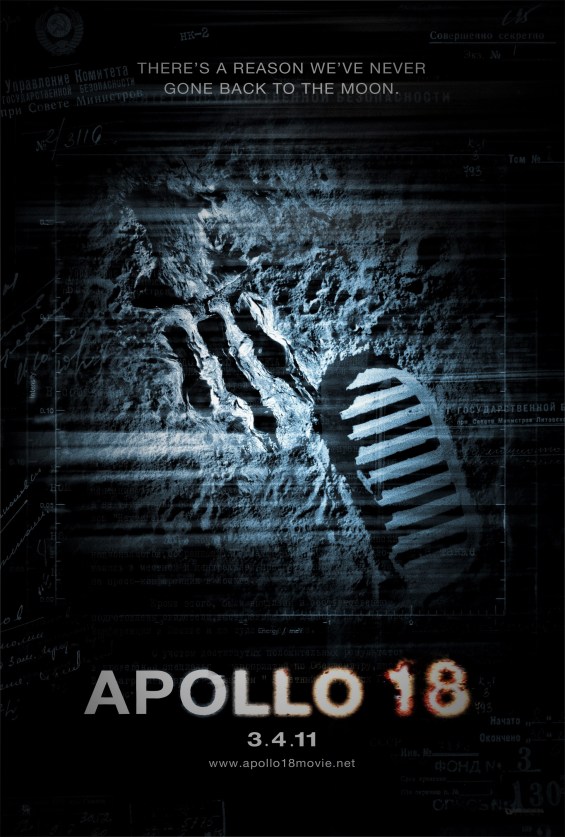
Directed by Gonzalo López-Gallego (King of the HillThe Open GraveThe Hollow Point), Apollo 18 is an intriguing (if infrequently enthralling) found-footage fusion of period-accurate space-flight procedures, U.S. government conspiracy theories and 1970s creature features. Presenting itself as authentic NASA footage through granular shots from astronauts’ suit cams and Lunar Module cameras alike, Apollo 18 is an interesting filmmaking experiment, to be sure. But, as far as its storytelling is concerned, the film is unlikely to leave an impact on general audiences, though it may appeal to a few sci-fi-horror fanatics.

Plot Summary: When decades-old footage from NASA’s abandoned Apollo 18 mission is uncovered, documenting astronauts, Benjamin Anderson, Nathan Walker and John Grey, as they embark on a classified mission to collect geological samples. The ageing footage reveals a disturbing explanation as to why the U.S. has never attempted another mission to the moon…

A mere six months after the triumph of Apollo 11, NASA renounced its plans for Apollo 20 in January, 1970. Soon after, Apollo 18 and 19 were cancelled in the wake of NASA’s planned budgetary cuts for 1971. By this point, public interest in space exploration had declined since Neil Armstrong and Buzz Aldrin’s trip to the moon, with minimal attention paid to Apollo 12. As a result, many newspaper editorials and public figures began calling for the upcoming missions to be cancelled and for the money to be spent on eliminating poverty across America instead. Consequently, many conspiracy theories regarding why NASA never attempted another trip to the moon arose, which is where the filmmakers found their inspiration for the story. And whilst much of this inspiration is rather apparent, it’s even more apparent that the screenwriters lifted a lot from the original Alien (1979), with a later plot twist feeling as if it was ripped straight from the sci-fi-horror classic. To its credit, though, Apollo 18 has no shortage of technically-accurate dialogue throughout its screenplay.

In regard to the cast, Warren Christie, Lloyd Owen and Ryan Robbins are all understated in their performances. Even when their situation escalates, and it becomes increasingly obvious that there is little chance any of them will make it off the moon, the cast reign in their performances so as to not fall into the trap of screaming and wailing for the entire runtime, a common issue many entries into the found-footage subgenre suffer from. Having said that, Apollo 18 does suffer from another well-known shortcoming of found-footage flicks; one-note characters. As, despite the film only containing three characters (excluding the transmissions), the screenplay never takes the time to develop any of them beyond some brief interviews during the first act, introducing each of the astronauts by name.

In addition to utilising a large amount of NASA stock footage to depict the period-accurate space-flight technology and procedures, Apollo 18 was shot using camera lenses from the ’70s, enhancing the visual authenticity of its grainy aesthetic. Furthermore, through a combination of visual effects and sets, Apollo 18 manages to create a convincing imitation of the moon’s barren surface, harkening back to the hours of mission coverage that kept television spectators entertained during the heyday of the Apollo program. Due to this, José David Montero’s cinematography is able to perfectly capture the essence of the cratered lunar landscape, along with the cramped, claustrophobic interiors of the Apollo Lunar Module, making for an ever-present discomfiting atmosphere.

While the original score by Harry Cohen consists of merely a single sombre track for the end credits, the sound design throughout Apollo 18 is quite effective with the continuous breathing from the astronauts’ helmets, as well as the constant static and technical malfunctions of the cameras sounding eerie yet not absurdly frightening as to take away from the sense of realism and isolation that the visuals induce.

A likely divisive aspect of Apollo 18 will be its preference for showing very little for most of its runtime, with a large majority of the story acting out like any routine NASA mission. When Apollo 18 finally reveals what the malevolent threat lurking on the surface of the moon is, however, the film takes a sharp turn into body horror as its malicious, spider-like creatures infiltrate the lunar module and later the astronauts’ suits. And whilst this approach to the horror elements could have worked should the film have stuck with it, Apollo 18 is more of a slow-paced thriller up to that point. So, these sequences of body horror end up seeming somewhat out of place. Additionally, while this complaint undoubtedly comes down to preference, I feel that the designs of the creatures aren’t all that frightening. So much so, I imagine the only audience members that will be terrified of the extraterrestrial entities will be those with severe arachnophobia or petraphobia, both exceedingly rare phobias.

In summary, Apollo 18 certainly had potential, but as a result of its lack of polish, the film is rarely able to provoke intrigue or an underlining sense of dread to the degree it wants to. Nevertheless, Apollo 18 is a unique film, a largely entertaining found-footage sci-fi-horror with an unnerving atmosphere, capitalising on the claustrophobia of 1970s space travel. And while the film isn’t for everyone, I enjoyed Apollo 18 on account of its period-accurate visuals and surprisingly true-to-life sets and technical details. Rating: 6/10.
apollo_18-p480664

The Forest (2016) – Film Review

“Do Not Stay After Dark.” – Michi

The Aokigahara forest, more commonly known as the “Suicide Forest” or the “Sea of Trees,” is a thirty-five-square-kilometre grove lying at the northwest base of Mount Fuji in Japan. The forest is often cited as the most widespread site for suicide in the country, given that in 2003, over a hundred bodies were discovered in the forest, exceeding the previous record of seventy-eight in 2002. The site became so heavily associated with suicide that a sign at the start of the main trail was later installed to urge suicidal visitors to contact a suicide prevention helpline. So, with all of this notoriety, it was merely a matter of time until a film would utilise the infamous location. Enter, 2016’s The Forest, a supernatural horror flick that sacrifices all of its compelling ideas and despairing real-world setting for cheap, predictable scares and an immensely uninteresting story.

Plot Summary: When orphan, Sara Price, receives a phone call from the Japanese authorities informing her that her twin sister, Jess Price, has disappeared and was last seen heading into the Aokigahara forest, Sara decides to travel to Japan to investigate her sister’s disappearance. But, after entering the notorious forest, accompanied by her Japanese guide, Michi, and American reporter, Aiden, Sara’s investigation begins to send her down a dark path of tormented souls and supernatural occurrences…

Whilst two other films were released before The Forest inspired by Aokigahara, those being; Shawn4Ever in 2012 and The Sea of Trees in 2015, neither film could be considered a horror. And this is what ultimately attracted director Jason Zada (Project Dead Zone) to the project, as Zada was surprised to learn that there had never been a horror film based on the ill-famed site. After discovering that the Aokigahara forest also has a strong association with demons in Japanese mythology, Zada’s interest in the project grew as this information opened the door for a more supernatural narrative. However, the story eventually selected for The Forest is hardly what I’d call engrossing, as while the first act sufficiently sets the story in motion, the narrative quickly devolves into Sara simply meandering through the forest getting sporadically interrupted by blaring jump-scares, many of which are easily foreseen.

Portraying twin sisters; Sara and Jess Price, Natalie Dormer delivers a compelling performance throughout The Forest by lending her acting talents to dual characters. Yet, she is frequently burdened by the screenplay’s lack of characterisation and stale dialogue, which is often as wooden as the trees in the forest. Moreover, the supporting cast of Taylor Kinney, Yukiyoshi Ozawa and Eoin Macken give understandably bland performances as their characters are given next-to-no development and little urgency when it comes to their decisions within the plot.

Since the Japanese government would not allow the filmmakers access to the Aokigahara forest for filming, the Tara National Forest in Serbia served as a suitable stand-in for the location. Aside from the forest itself, however, all of the scenes in Japan were shot on location, and this authenticity does come across on camera. Speaking of the camerawork, the cinematography by Mattias Troelstrup is serviceable, for the most part, as the film makes adequate use of the eerie forest backdrop by implementing a large number of environmental shots, lingering on the calming beauty of the forest in contrast to the tragedies that repeatedly occur within it.

Ominous yet forgettable, the original score by Bear McCreary fits the dreary tone of The Forest appropriately yet lacks anything to make itself distinguishable from other horror scores. Furthermore, whilst there are multiple fast-paced tracks, there is a surprising shortage of slow and moody pieces for a film set in a location like the Aokigahara forest. Nevertheless, I will give McCreary credit for integrating a children’s choir into the score, effectively blending the ghostly juvenile vocals with the rest of the instruments (most notably in the track; Into the Forest), almost as if the choir represents the siren call of the forest.

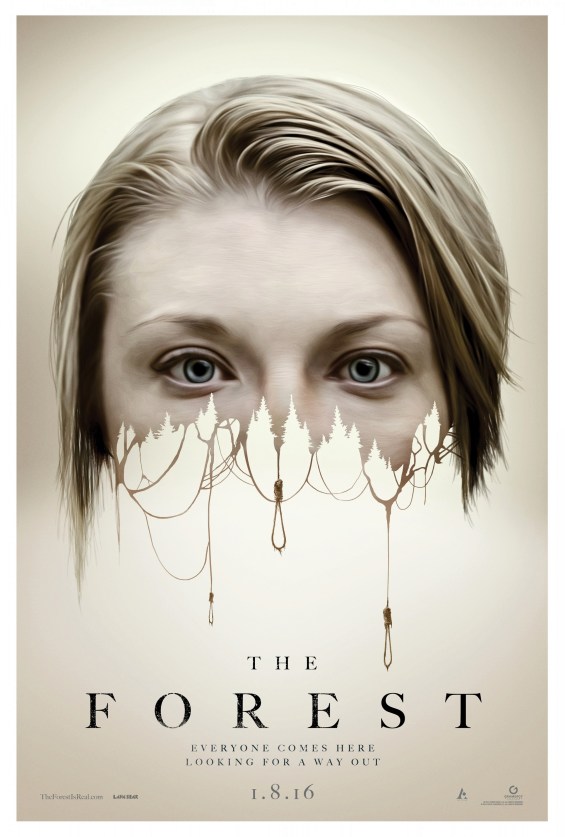
Interestingly, one of the promotional posters for The Forest features the top half of Natalie Dormer’s face with the bottom half removed, the dividing line between them forming a silhouette of treetops and dangling nooses. This imagery carries a clear resemblance to a photograph of an actual suicide victim once found within the Aokigahara forest; a bald man in such a decomposed state that his jaw had fallen off and strips of flesh were hanging from where it had once been. This photograph is also recreated in the film, albeit in a less grotesque form. Fortunately, outside of this scene, The Forest doesn’t contain much blood/gore, which I’d argue was a good decision on behalf of the filmmakers to remain respectful of the families who have lost loved ones to Aokigahara.

In summary, while The Forest offers Natalie Dormer a few chances to showcase her range through a dual role, it isn’t enough to offset the fact that The Forest is just not all that startling or interesting. Of course, these shortcomings could be attributed to Jason Zada being a music video director by trade, harbouring only one other horror flick in his filmography. But, regardless of the cause, it’s unfortunate, as I feel that given the right attention, the Aokigahara forest could make for a phenomenal setting for a minimalist horror, especially if it’s combined with a tasteful narrative that plays upon the site’s infamy. Rating: low 4/10.

forest_xxlg

The Pyramid (2014) – Film Review

“This Pyramid, Unlike Any Structure Other I’ve Ever Encountered, Seems to Have Been Built With the Express Purpose of Keeping Whatever Is Inside From Escaping…” – Holden

Poorly lit, inconsistently shot and lazily written, The Pyramid, released in 2014, is a horror flick that perfectly demonstrates the notion that giving a large budget to a project doesn’t necessarily make it a success. In the case of The Pyramid, this claustrophobic (predominantly) found-footage horror was given a budget of almost £6 million, a rather substantial amount of funding for a modern horror. Yet, even with a budget of this size, the film squanders almost every penny as its potentially captivating delve into Egyptian history/mythology is tainted by repeatedly clunky dialogue and countless lacklustre jump-scares.

Plot Summary: When a team of U.S. archaeologists unearth an ancient pyramid buried beneath the desert just outside Cario, they yearn to explore the interior of the structure despite extensive pushback from locals. Ignoring the residents’ objections, the group decide to head into the depths of the pyramid, soon becoming hopelessly lost in its endless passageways, eventually coming to realise that they aren’t just trapped, they are being hunted…

Directed by Grégory Levasseur, a frequent collaborator of producer Alexandre Aja. The Pyramid was Levasseur’s first and only directorial credit to date, and upon a first watch, it quickly becomes apparent as to why that is as The Pyramid is a horror ripe with imperfections that nearly any critic or casual audience member could spot. However, many of these issues are a result of Levasseur continuously brawling with the constraints of the found-footage subgenre, which might explain why the film makes so many baffling choices when it comes to its cinematography. Moreover, many of the scares throughout are telegraphed well in advance, so if you watch plenty of horror flicks, you’ve likely already seen everything the film has to offer.

When it comes to the story, the first act rushes through a string of contrivances, such as threats of air poisoning following the opening of the pyramid’s entrance, a military-ordered evacuation, and a NASA rover being mysteriously destroyed inside the pyramid, all of which were plainly written into the screenplay in order to get the central group of characters into the foreboding burial site as swiftly as possible. Yet, through this entire act, the screenplay rarely tries to develop any of the characters beyond a few traits, whether that be Dr. Nora Holden; a prodigious prehistorian and graduate of the Christmas Jones Academy of Scientist Couture, portrayed by Ashley Hinshaw, or the dim-witted British cameraman, Fitzie, portrayed by James Buckley. Every one of the characters are remarkably unoriginal and uninteresting. And even though certain supporting cast members, such as Denis O’Hare and Christa Nicola, deliver respectable performances, they ultimately add up to very little as most of the dialogue consists of excessive exposition or generic lines like “This Is the Find of a Century.”

As mentioned previously, The Pyramid bizarrely utilises both a first-person and a third-person perspective. So, despite many of the characters wearing or carrying cameras to present the film as recovered footage, the cinematography by Laurent Tangy frequently reverts to well-presented shots that none of the characters could have realistically obtained. This illogical decision pretty much ensures that the audience will be taken out of the spine-chilling, claustrophobic scenarios the screenplay is trying to craft, in addition to breaking the illusion that what the audience is watching is recovered footage. That being said, The Pyramid does harbour some impressive set design, as from the moment the group enter the pyramid, they are ensnared in narrow chambers and passageways, each retaining sand-littered bases and detailed Egyptian wall hieroglyphics.

Similar to the cinematography, the original score by Nima Fakhrara is rather inconsistent. Although the score clearly takes admirable influences from Egyptian culture and includes a commendable array of effective tracks. In actuality, The Pyramid shouldn’t have an original score, given the film is supposedly a found-footage flick. The end credits sequence is also accompanied by the rock song; 5173 by Kevin Hastings, which only adds to the utter strangeness of the soundtrack.

Perhaps The Pyramid‘s greatest flaw, however, is that even those with a strong interest in Egyptian history/mythology are unlikely to enjoy the story, as many of its ideas are barely explored and there are numerous instances where the Egyptian mythology that the story does integrate is incorrect. For example, near the end of the runtime (spoilers ahead in this section for those who wish to go in blind), the evil entity behind the pyramid’s existence is revealed to be Anubis, an ancient Egyptian deity. In the film, Anubis is composed of terrible CGI and presented as a ferocious beast. Yet, in Egyptian mythology, Anubis was quite benevolent towards humans, treating them with respect as they embarked on their voyage into the afterlife. Hence, his characterisation in The Pyramid is a far cry from how Ancient Egyptians actually viewed him.

In summary, very little of The Pyramid is especially engaging or particularly frightening as many of the characters are portrayed as cardboard cutouts, simply meandering their way through an exceedingly tiresome plot. So, aside from some convincing set design and supporting performances, I feel The Pyramid is undoubtedly a horror worth skipping. Considering that the production company behind the project, 20th Century Fox, decided not to release The Pyramid on physical formats in many territories due to its dismal box office performance, it seems that most have already forgotten this found-footage catastrophe. Rating: low 3/10.

the_pyramid-p905947 (1)

Thoroughbreds (2017) – Film Review

“The Only Thing Worse Than Being Incompetent, or Being Unkind, or Being Evil… Is Being Indecisive.” – Amanda

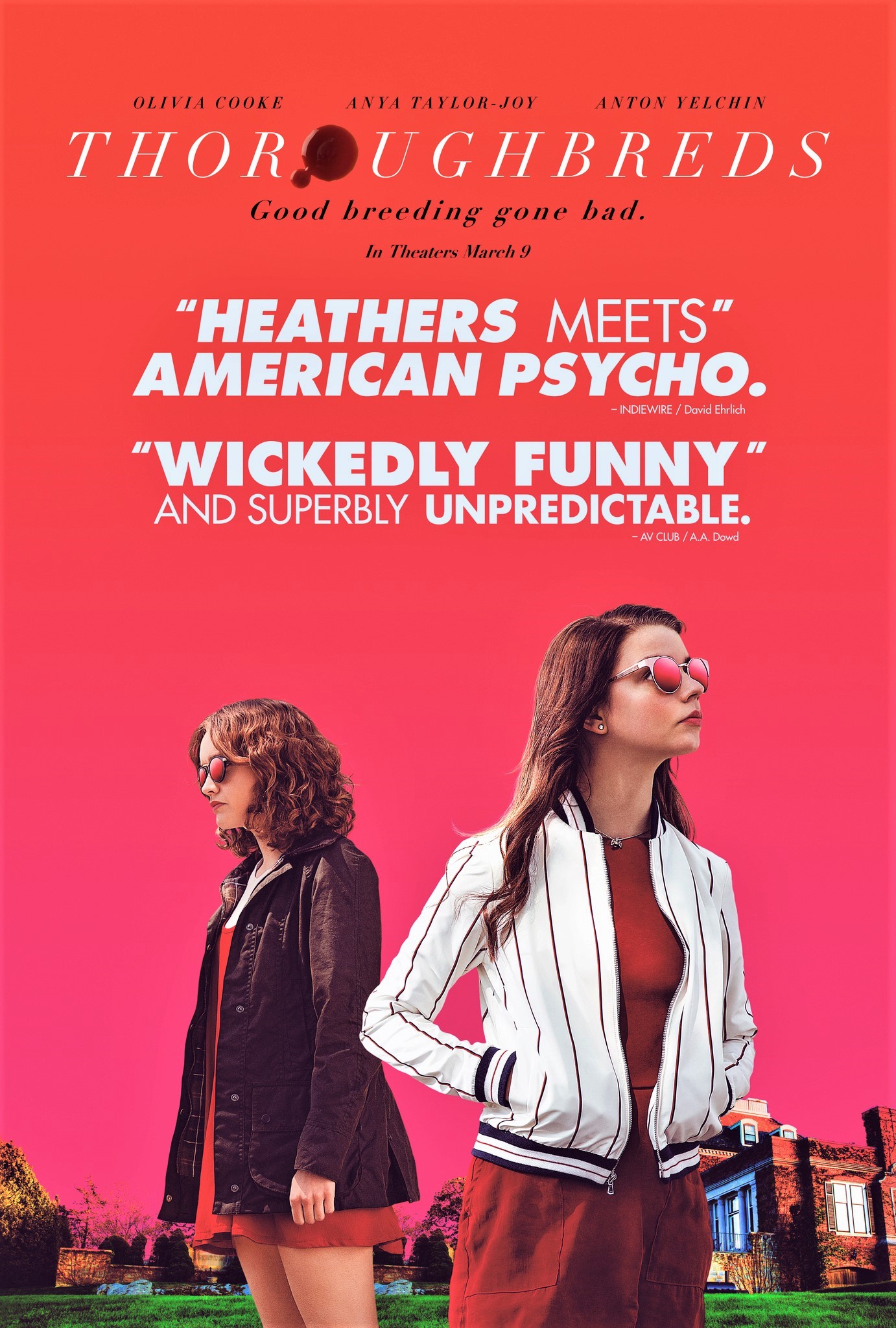
Originally written for the stage, 2017’s Thoroughbreds juggles many conflicting tones, but does so with such panache and charm that it’s rare to find deficiencies within its tonal shifts. With a straightforward yet deeply engrossing plot, elegant visuals and a pair of top-notch performances from Olivia Cooke and Anya Taylor-Joy, Thoroughbreds delivers a sharply written and refreshingly unpredictable entry into the black comedy genre. Placing far more emphasis on its characters and their internal issues than anything other black comedy in recent memory.

Plot Summary: In suburban Connecticut, a pair of childhood friends reconnect after many years when the sharply-witted sociopath, Amanda, arrives at the residence of the wealthy and academically inclined, Lily, for a private tutoring session. After rekindling their friendship, however, Lily soon learns of Amanda’s peculiar philosophy, prompting the pair to hatch a plan to solve both their problems, a plan that begins with the murder of Lily’s detestable stepfather…

Stuck in limbo for almost two years, the production of Thoroughbreds technically ceased in mid-2016, yet the film wasn’t released into cinemas until March 9th, 2018. This was due to several factors, but most notably, this was a result of the film’s lengthy and extensive festival circuit in 2017. During this festival run, Thoroughbreds received many positive reactions, which in a way, surprises me, as even though the plot of Thoroughbreds may sound like a setup for a compelling thriller, the plot twists and suspenseful moments are never the main attributes of the film. Instead, Thoroughbreds is far more focused on having its characters use their words to eke the darkness out of one another, which ultimately, leads to an outcome that, in its theatricality, may feel anticlimactic to some. But, for others, will feel like a unique take on what could’ve been a poorly executed sequence for a lower-budget crime-thriller.

The two central characters of Amanda and Lily, expertly portrayed by Olivia Cooke and Anya Taylor-Joy, are unquestionably the primary focus of Thoroughbreds, with much of the runtime being spent developing the pair and depicting many of the similarities and differences between their respective personalities. For instance, since their early days of horseback riding, Lily has turned into a polished, upper-class teenager with outstanding grades and a coveted internship on her resume. Meanwhile, Amanda has developed a strong sense of perception and a stern attitude, all in the process of becoming a social outcast and unregistered sociopath, which is flawlessly depicted through Cooke’s impassive performance. Sadly, Thoroughbreds was also the final project to feature a terrific performance from actor, Anton Yelchin, as the small-time drug dealer, Tim, before his tragic death on June 19th, 2016, at the age of twenty-seven. As such, the film is dedicated to him.

Despite writer-director Cory Finley (Bad Education) bearing a more extensive background in theatre than filmmaking, Finley displays a natural cinematic instinct right from the opening scene. Depicting the baroque, marble-lined mansion where Lily, her mother and her stepfather reside as more of a prison than a utopia, as the cinematography by Lyle Vincent stalks through the location in lengthy, restless takes. Lingering on specific elements, such as an SUV driving up the gravel driveway or two characters staring at each other from adjacent rooms. Furthermore, the visuals retain a surprisingly vibrant colour palette when considering the grim nature of the story, utilising luminous whites, greens and greys for the majority of the runtime.

For the original score, composer, Erik Friedlander, manipulated various instruments to achieve a number of atonal sounds, like boinks and sproings, which all serve as disconcerting counterpoints to the refined visuals. And, while there are many excellent tracks throughout the seemingly unstructured score as a result of these unusual sounds, the final track; Win Win, is undoubtedly the best track of the original score, concluding the black comedy on a bittersweet note thanks in part to the optimistic piece.

Bleak yet direct in its underlying commentary on the turmoil of being a teenager in the modern world, Thoroughbreds takes the problems of the young and privileged and explores them through the narrative. With many teenagers (particularly teenage girls) often being told to act or react in specific ways, this story of two girls who are both removed yet acutely aware of their emotions is something to be appreciated in modern character studies. Still, as a consequence of this gradual exploration of the two central characters, I believe many audience members will be turned off by the film on account of its slow pacing and total lack of on-screen violence. However, that’s not to say that I agree with these conceivable criticisms, as even with Thoroughbreds‘ slow pacing, I actually feel that the runtime could’ve been slightly extended, providing more time for characterisation in the first act before the girls reunite.

In summary, Thoroughbreds is a quirky, darkly comedic and entertaining crime-thriller anchored by some exceptional performances and praiseworthy filmmaking. Although the film may not be for everyone given its harsh perspective on teenage life, shortage of blood/gore and frequently slow pacing, Thoroughbreds lavish presentation and snappy dialogue are immensely effective. To the point that the screenplay even manages to make the audience empathise with a character that is completely incapable of empathy, which is a rather impressive feat. Rating: 8/10.

thoroughbreds-p1037063

Red Riding Hood (2011) – Film Review

“Full Moon. Lock up Tonight. Better the Wolf Takes the Pig Than You…” – The Reeve

A reinterpretation/modernisation of the centuries-old fairy tale; Little Red Riding Hood; a children’s story centering on a young girl as she encounters the Big Bad Wolf on a journey to visit her grandma. Red Riding Hood, released in 2011, retains the framework of the original story, but not much else, as this reinterpretation aims to be a dark fantasy with elements of romance and gothic horror thrown in. Yet, in almost all of these genres, the film falls flat as a result of its subpar screenplay and direction. That’s not to say that Red Riding Hood doesn’t have any positives, however, as this fantasy flick undoubtedly deserves praise for its outstanding production design and dreary fantasy aesthetic.

Plot Summary: For years, the residents of a remote mountain village have maintained an uneasy truce with a fearsome werewolf by offering the bloodthirsty beast a monthly animal sacrifice. But, when the wolf violates their trust by taking a human life, the village falls into hysteria, prompting the arrival of the famed werewolf hunter, Father Solomon, to assist in their hunt. Meanwhile, Valerie, a beautiful young woman torn between two viable fiancés, begins to suspect that the beast may be someone she knows…

Similar to most European fairy tales, the origins of Little Red Riding Hood lie within the folk tradition of oral storytelling. So, no singular author can be credited for the story’s creation. However, the two most prominent renditions of the fairy tale are proclaimed to have been written by Charles Perrault and the Brothers Grimm in the 17th century. Despite this history, Red Riding Hood seems to largely disregard the various iterations of the fairy tale, to instead take influence from the first instalment of the infamous Twilight series, as the two films share a number of similarities. For example, the opening title sequence where the camera majestically glides over vast snowy landscapes closely resembles the opening title sequence of Twilight. Furthermore, Taylor Lautner, who previously appeared in Twilight, was considered for the role of Peter early in pre-production. Still, these similarities shouldn’t be that surprising, considering that director Catherine Hardwicke (ThirteenLords of DogtownMiss You Already) helmed the first entry in the series in 2008.

In regard to the cast, Amanda Seyfried portrays the titular character of Valerie/Red Riding Hood sufficiently, but her performance is somewhat hindered on account of her placement between Shiloh Fernandez and Max Irons as her love interests, Peter and Henry, whose performances leave a lot to be desired coming across as drab and rather wooden for the majority of their screen-time. As per usual, the highlight of the cast is undoubtedly Gary Oldman as the morally-grey werewolf hunter, Father Solomon. Though Oldman doesn’t get to exhibit immense amounts of emotion (despite his character having a tragic backstory), the veteran actor does stay committed to his detestable character.

Aside from some outlandish CGI and a handful of moments where cast members/props that should seemingly be in focus are not, the cinematography by Mandy Walker is one of the finest components of Red Riding Hood. From the glowing red of Valerie’s hood contrasting against the white snow to the blood-red moon gradually emerging over the village rooftops, Red Riding Hood is a visually stunning fantasy at points. What’s more is that the set, costume and prop design are all exceptional, as every location feels rustic yet fantastical, whilst every costume/prop appears worn and functional. From a design standpoint, even the trees that appear throughout the runtime are visually unique as they harbour cadaverous spikey branches, giving the impression that merely wandering through any of the dense forests surrounding the village could result in a wound and subsequently a trail of blood.

Unsuitable yet well-crafted, the original score by Alex Heffes and Brian Reitzell begins rather promisingly with the track; Towers of the Void, which Reitzell co-wrote with musician, Anthony Gonzalez, of the electronic band; M83. As such, the ominous track contains waves of strings and industrial-sounding electronics, these instruments then persist onto the second track; Kids, where they are accompanied by ghostly vocals and moody synth. Essentially, while not a bad soundtrack, by any means, the score for Red Riding Hood is simply so unfit for a story set in this time period and genre, that it’s difficult to overlook when reviewing the score.

For a significant portion of the runtime, the story of Red Riding Hood unfolds like a mystery, with the human identity of the werewolf being kept a secret to keep the audience guessing. And whilst many suspects are immediately dismissed, the screenplay does a serviceable job of introducing red herrings without seeming overly conspicuous. When the truth is finally revealed, however, the answer as to who is behind the beastly slayings is rather disappointing, especially since the reveal is quickly followed up by an equally disappointing climax and epilogue.

In summary, as far as gloomy retellings of classic fairy tales go, Red Riding Hood is certainly one of them. While Amanda Seyfried and Gary Oldman are magnetic in their respective roles, the unremarkable leading men along with the painfully formulaic screenplay, continuously devalue the beautiful production design and often spectacular visuals. So, whilst it’s possible that the Twilight crowd will find a specific appeal in Red Riding Hood, outside of that devoted fanbase, I doubt many others will. Rating: low 5/10.

red_riding_hood-p509441

Casino Royale (2006) – Film Review

“I’m Sorry, That Last Hand… Nearly Killed Me.” – James Bond

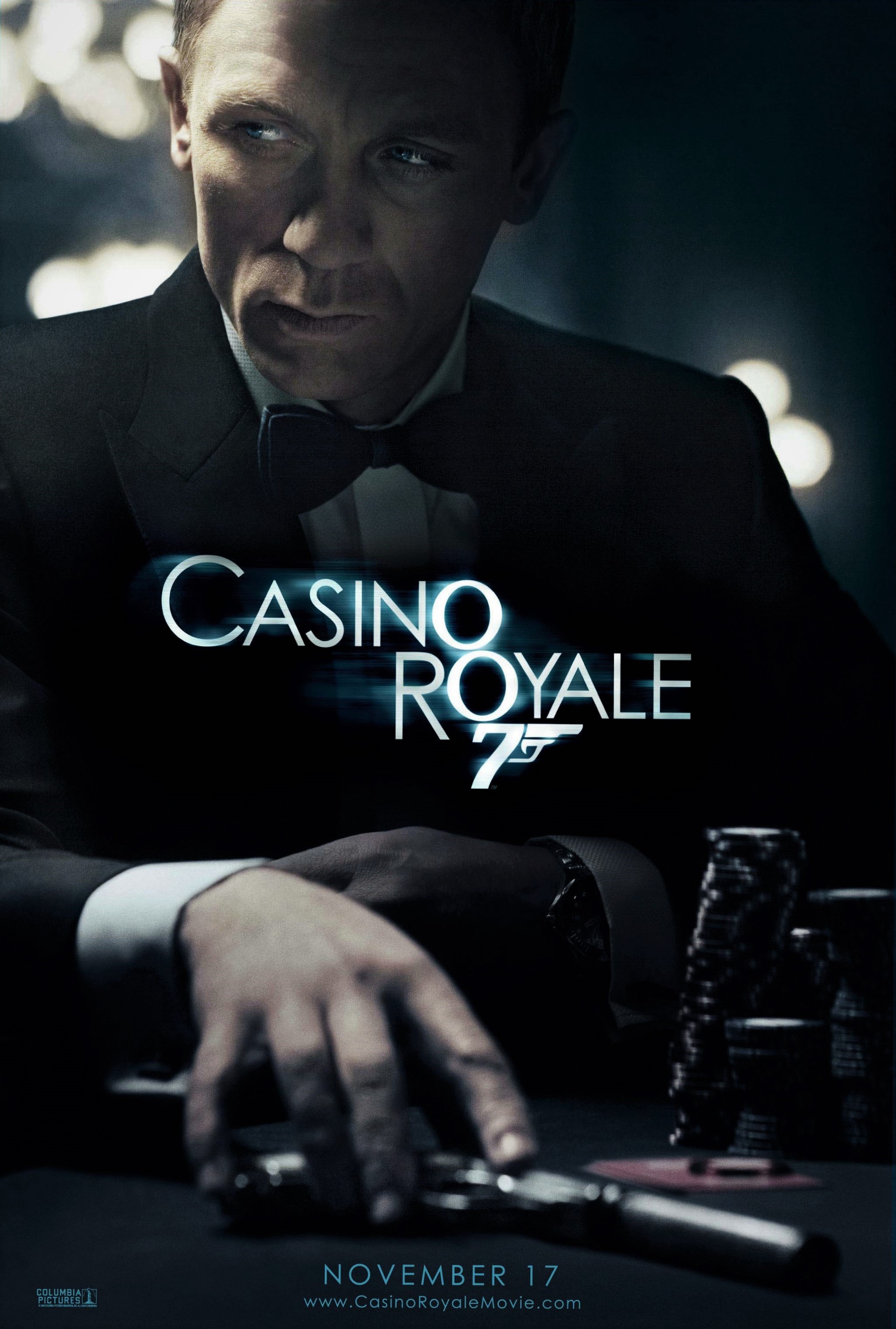
Much like the sci-fi television series; Doctor Who, or any franchise that reboots itself after a certain amount of time. The biggest hurdle the 007 franchise has to overcome with every incarnation is getting die-hard fans of the long-established espionage franchise on board. Luckily, the 2006 reboot of the series; Casino Royale, succeeded in this regard, with Daniel Craig taking on the iconic role of James Bond in a slick and thrilling mission. Doing away with much of the absurdity present in previous instalments, in exchange for pulse-pounding action sequences and an unexpectedly engaging romantic subplot.

Plot Summary: After receiving his license to kill, British Secret Service agent, James Bond, sets out on his first mission as 007, travelling to Madagascar, where he uncovers a link to Le Chiffre, a private banker financing terrorist organisations. Learning that Le Chiffre plans to raise funds through a high-stakes poker game at Casino Royale, Montenegro, Bond is instructed to play against him and thwart his plans…

Holding familiarity with the franchise after directing the Pierce Brosnan-era instalment; GoldenEye, in 1995. Director Martin Campbell (The Mask of ZorroVertical LimitThe Foreigner), along with the series’ producers, decided to take the franchise in a more grounded direction following the bombastic action sequences of the later Brosnan entries. So, there are no high-tech gadgets or tumultuous helicopter chases in Casino Royale. Instead, the poker game at the centre of the story is what holds most of the film’s suspense, occupying the majority of the second act and harbouring some of Bond’s best lines. Moreover, Casino Royale is one of the most faithful adaptations of the 007 source material, adapted from the novel of the same name by Ian Fleming, the first piece of media to feature the character of James Bond.

Despite the casting of Daniel Craig initially sparking outrage amongst the 007 fanbase due to Craig’s blue eyes and blonde hair, the online annoyance didn’t last long as once Casino Royale was released, critics and fans alike instantly fell for Craig’s rendition of the character. This was partially because, unlike the other cinematic portrayals of James Bond, whose kills held no more weight than the cheeky one-liners that accompanied them, Craig’s tussles tend to be intimate, bloody and devoid of glamour. Craig’s brooding persona, dry humour and excellent line delivery also find a close match in Eva Green’s take on the “Bond Girl,” Vesper Lynd, whose intelligence and assertive attitude puts aside any negative traits associated with the supporting role. And while Mads Mikkelsen is merely serviceable as the antagonist, Le Chiffre, with his menacing performance leaving little impact, Judi Dench makes the most of her brief screen-time as M, the head of MI6, exuding both confidence and power.

In terms of visuals, Casino Royale makes one subtle change that results in the instalment looking quite different from the ones that precede it. For most of the 007 entries before Casino Royale, the visuals almost seem to have been an afterthought as the lighting is flat, the composition is dull, and the cinematography never does anything to advance the characters or the story. Yet, with Casino Royale, it’s evident that the main principle that guides the camerawork is to always keep the camera moving. Thus, the cinematography by Phil Meheux repeatedly makes effective use of hand-held close-ups and mid-shots. Furthermore, when it comes to filmmaking, the first ten minutes of screen-time are crucial in establishing the tone, mood and style of a project. Casino Royale clearly understands this, as the opening scene employs canted camera angles and intercuts between past and present, all dosed in a fierce, greyscale colour palette for a striking introduction.

Surprisingly, the classic 007 theme, composed by Monty Norman, appears very rarely in the film’s original score. Supposedly, this is because the filmmakers wanted to emphasise Bond’s inexperience, essentially having 007 earn the theme by the time the end credits roll. However, that’s not to say that the rest of the score is terrible, as composer David Arnold steers the soundtrack away from over-the-top action cues and towards more nuanced tracks like Vesper and Blunt Instrument. And, of course, no 007 entry would be complete without a memorable song to pair with the stylish opening title sequence. In this case, it’s You Know My Name, by Chris Cornell, an alternative rock piece that fits the tone of Casino Royale flawlessly.

The action sequences are where Casino Royale delivers some of its most jaw-dropping moments. Almost every set piece could easily be the climactic action sequence of any typical action flick, which truly demonstrates the impressive stunt work and remarkable fight choreography on display throughout Casino Royale. The action-heavy first act, in particular, boasts one of the finest parkour sequences seen in this franchise to date as Bond chases a terrorist through the streets of a Madagascan village, culminating in an exhilarating hand-to-hand scuffle atop a towering construction crane.

In summary, Casino Royale disposes of the goofiness and gadgetry that plagued older James Bond outings as Daniel Craig delivers what critics and fans have been waiting for; a brutal, haunted and intense reinvention of 007. With rousing action sequences, a compelling narrative and a conclusion filled with plenty of potential. Casino Royale functions as a terrific example of how to reboot a well-known franchise, even if it isn’t particularly distinct when placed alongside other espionage flicks. Rating: high 7/10.

casino_royale-p379801

The Martian (2015) – Film Review

“They Say Once You Grow Crops Somewhere, You Have Officially Colonised It. So, Technically, I Colonised Mars. In Your Face, Neil Armstrong!” – Mark Watney

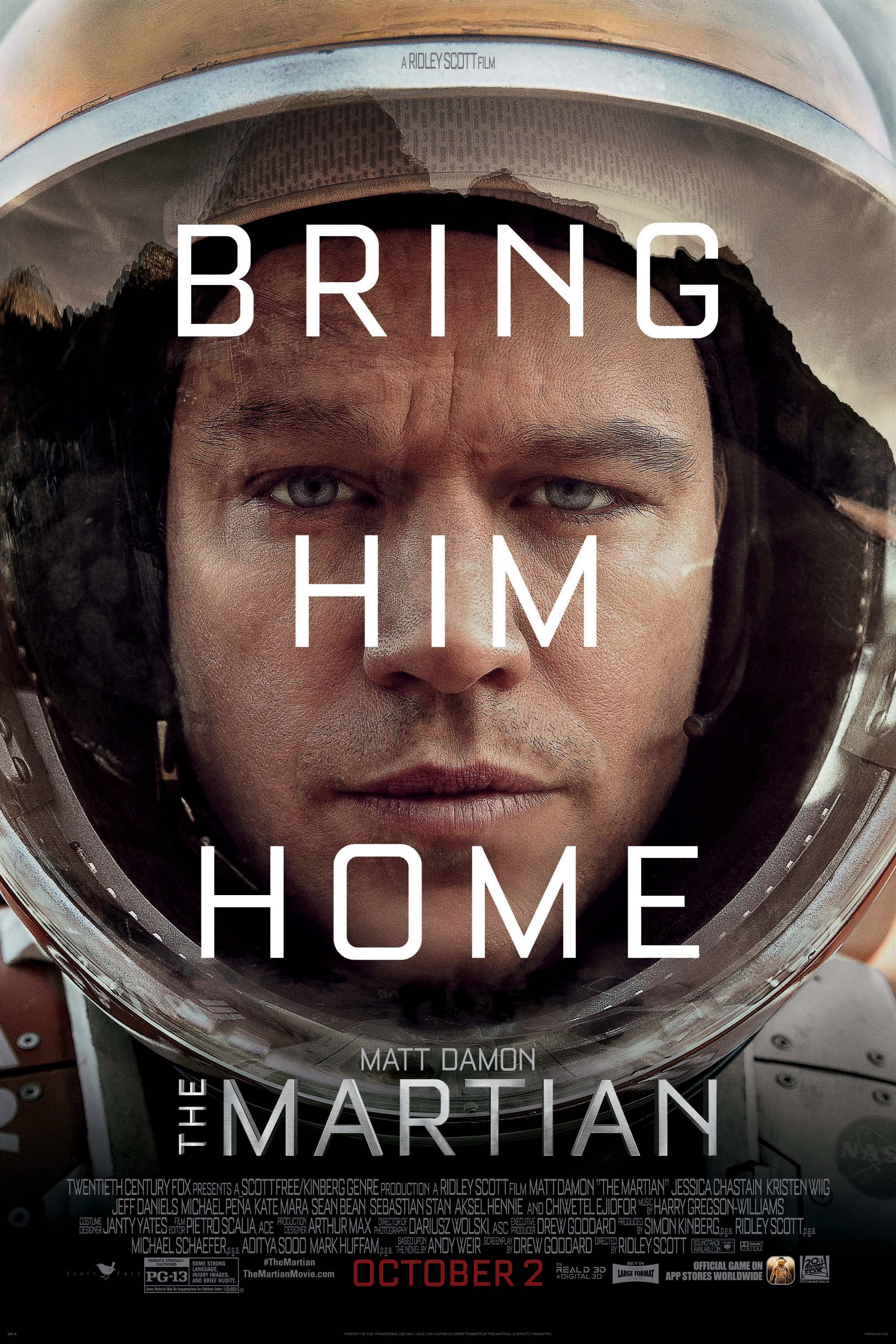
Based on the best-selling novel of the same name by Andy Weir, which was originally self-published on Weir’s personal blog in a serialised format, The Martian, released in 2015, is a sci-fi-drama that combines witty dialogue, stunning cosmic visuals and real-world science to craft a captivating story of survival and innovation. Anchored by a tremendous performance from Matt Damon, The Martian is a cinematic triumph of the science fiction genre, ticking every box that needs to be ticked in this modern era of sci-fi flicks.

Plot Summary: When a fierce storm causes an exploratory mission on Mars to be aborted, astronaut and botanist, Mark Watney, is presumed dead and left behind by his crew. Awakening hours later, injured and alone, Mark is forced to draw upon his wit and scientific ingenuity to endure the hostile surface of the Red Planet. Meanwhile, back on Earth, employees of NASA, alongside a team of international scientists, work around the clock to develop a plan to bring their missing astronaut home…

Just as much a survival thriller as it is a grandiose sci-fi-drama, The Martian is directed by Ridley Scott (Blade RunnerThelma & LouiseGladiator), who, of course, is no stranger to the science fiction genre, with two of the most notable releases of his filmography being Alien in 1979, and Blade Runner in 1982, both renowned as some of the most iconic sci-fi films of all time. And although The Martian likely won’t reach the same level of recognition in ten years, I would say the film has about the same level of directional skill as those well-known flicks. The unsung hero of the film, however, is the screenwriter and executive producer, Drew Goddard, who laces the story with humour and energy, in addition to approaching much of the scientific exposition in a comprehensible yet never overly simplistic fashion.

The incredible all-star cast of Matt Damon, Jessica Chastain, Jeff Daniels, Chiwetel Ejiofor, Kristen Wiig, Sean Bean, Michael Peña, Kate Mara, Sebastian Stan, Aksel Hennie, Benedict Wong and Donald Glover (among others) are all phenomenal in their various roles. And whilst there are a lot of characters, the story juggles them rather efficiently, never taking too much attention away from Mark Watney’s fight for survival, and subsequently, Damon’s terrific performance, which manages to be both humorous and heartfelt. As far as adaptions go, The Martian also solves one of the novel’s biggest issues, that being Mark’s constant internal monologues to provide the reader with commentary on his situation. The film gets around this by having Mark record video logs, in which he explains the science behind what he needs to do to survive, which again, is never dull thanks to Damon’s ceaseless charisma and dry wit.

Primarily filmed in the Middle Eastern desert of Wadi Rum, Jordan. The gorgeous cinematography by Dariusz Wolski emphasises the solitariness of Mars throughout the film, illustrating just how alone Mark truly is and making his line; “I Am the First Man to Be Alone on an Entire Planet,” seem all the more impactful. Furthermore, the colour palette of The Martian is surprisingly diverse considering the story takes place on the Red Planet. While most of the film retains a burnt orange look, many of the shots on Earth or in outer space form a remarkable contrast to the Mars sequences through their use of whites, greys, greens and blues. Much of the set design is also beautifully crafted, riding a careful line between sci-fi futurism and modern comfort. Interestingly, one of the panoramic shots on Mars displays Olympus Mons, the largest volcano discovered in our solar system. Olympus Mons is almost three times larger than Mount Everest and covers an area roughly the size of the U.S. state of Missouri.

Stylistically, the original score for The Martian is an assortment of soothing synth and the orchestral arrangements composer, Harry Gregson-Williams, is best known for. The most notable tracks are Mars, a stark, oppressive track comprised of synth chords and impressionistic processed effects, depicting the planet as a cold, inhospitable place. Making Water, which feels slightly more playful through its use of harps and optimistic strings. And Crossing Mars, the most triumphant-sounding track of the entire score, ultimately comes across as a little generic as it ditches much of the atmospheric synth in exchange for an orchestral motif.

Amidst its many other qualities, The Martian is also a testament to science being employed rather accurately in a science fiction flick, as despite not every line of the screenplay being scientifically exact due to the story taking place in the near future of 2035, The Martian comes pretty close. In fact, NASA was actually consulted on many aspects of the story, specifically regarding Mars, with the film even being supported in its science by the famed author and astrophysicist, Neil deGrasse Tyson.

In summary, The Martian isn’t quite a flawless film as the supporting cast sometimes feels under-served, and at one-hundred and forty-one minutes, the runtime is admittedly rather excessive. But, with the exception of these few (and frankly, minor) flaws, The Martian is a rousing story and an expertly crafted film in which the protagonist recognises he is going to die, and then willfully refuses to accept it. It’s an ennobling and uplifting story delivered with sass, allure and intelligence, essentially being everything a story from the science fiction genre should be. Rating: high 8/10.

martian_xxlg

Left Behind (2014) – Film Review

“I Don’t Have All the Answers, but for Now, Faith Is Enough.” – Buck Williams

Awkwardly combining religious proselytising with a number of well-worn tropes from the disaster genre. Left Behind, released in 2014, is an apocalyptic thriller with a fascinating idea at its core, depicting the events that would transpire if millions of people suddenly vanished off the face of the Earth. A brilliant concept that is utterly squandered due to its horrendous execution, with subpar production values, bewildering dialogue and appalling performances, being just some of the many issues this overtly religious thriller suffers from. As such, Left Behind presents one of the most unintentionally hilarious depictions of the apocalypse ever committed to film, which more often than not, devolves into enunciated Christian propaganda.

Plot Summary: When millions of people suddenly disappear without a trace, throwing the world into disarray as unmanned vehicles crash, planes fall from the sky and mass riots break out. Airline pilot, Ray Steele, struggles to keep composure aboard his proceeding flight to London as he and his passengers try to comprehend the inexplicable scenario they find themselves within. Meanwhile, Ray’s daughter, Chloe Steele, braves the chaos of the city streets below in search of her mother and brother…

If the Left Behind title sounds familiar, that’s likely because the film is actually a reboot of a relatively well-known series, with Left Behind: The Movie, Left Behind II: Tribulation and Left Behind III: World at War being released prior in 2000, 2002 and 2005, respectively. All of them are based on the best-selling series of apocalyptic novels by Jerry B. Jenkins and Tim LaHaye; a series that is essentially a modern-day rendition of the biblical rapture, where all Christians are transported to Heaven as divine forces decimate the Earth. 2014’s Left Behind adapts a small portion of the first book in the series, setting the majority of the story aboard an airliner piloted by Ray Steele, which for an apocalyptic thriller, isn’t the most exciting location to view a large-scale catastrophe from.

Speaking of the protagonist, despite the uproarious actor, Nicolas Cage, portraying the central character of Ray Steele. Left Behind never manages to get an entertaining performance out of the actor as for most of the runtime, Cage, who in interviews has stated that he took the role at the urging of his pastor brother, seems practically sedated, even when his character is convinced that the plane is heading towards certain doom. Regrettably, none of the supporting cast is much better, with Chad Michael Murray, Cassi Thomson, Nicky Whelan and Gary Grubbs (among others) all portraying one-dimensional characters continually reciting unnatural dialogue. From the Southern entrepreneur, Dennis Beese, to Cameron ‘Buck’ Williams, a renowned news reporter, who inadvertently becomes Ray’s co-pilot, none of the characters throughout Left Behind are indelible or significantly developed outside of their lack of devotion to Christianity.

In regard to the visuals, Left Behind doesn’t exhibit much improvement over its dialogue and performances as the set pieces appear small and chintzy, the lighting is flat, Jack Green’s cinematography is largely styleless and the editing between the drama on board Ray’s flight and the disorder on the ground below is a monotonous back-and-forth of plot points with no scene being given enough time to sink in. Moreover, the CG effects for the airliner itself are rather poor, particularly during one of the film’s final moments, where Ray is forced to land the plane on a makeshift runway.

Likewise, the original score by Jack Lenz has no identity or anything even remotely unique about it, subsequently causing the soundtrack to dissolve into the background where the majority of audience members will forget it even exists. Quite surprising considering that Lenz has proven himself to be a capable composer in the past, penning many respectable scores, including the theme for the Goosebumps television series.

Yet, even when overlooking all of the flick’s shortcomings in terms of filmmaking, the film continues to stutter as there are plenty of moments within the film that can be mocked. But, by far the easiest scene that illustrates just how uniquely awful Left Behind is would be the moment in which Irene Steele stares adoringly at a terribly photoshopped picture of her family. It is possible, however, that the film’s flawed execution could be a result of a lack of experience on the part of director Vic Armstrong (Joshua TreeA Sunday Horse), as Armstrong is known for his work as a stunt coordinator/stunt performer, not as a director.

In summary, while Left Behind‘s premise is undoubtedly an interesting one that could’ve made for a compelling apocalyptic thriller, if placed in the hands of the right director and/or screenwriter. The version of Left Behind we did receive is far from compelling as its flaws are nearly endless, consequently leading the film to be panned by critics and perform poorly at the box office. Still, this wasn’t the end for Left Behind as not long after, the producers of the film decided to finance the sequel through an Indiegogo campaign, simply titled; “Help Us Make Left Behind 2.” The campaign received £61,558 out of the half a million asked, with the last update on the project being on May 7th 2015. So, more than likely, the project was cancelled, which I’d say is for the best. Rating: 2/10.

left_behind_ver3_xxlg

Dark Skies (2013) – Film Review

“People Think of Aliens as These Beings Invading Our Planet in Some Great Cataclysm, Destroying Monuments, Stealing Our Natural Resources. But, It’s Not Like That at All. The Invasion Already Happened.” – Edwin Pollard

As much a science fiction flick as it is a horror, Dark Skies, released in 2013, has a solid cast, a fascinating premise and some admirable ambitions, attempting to break away from the familiar tropes of alien abduction stories in favour of delivering its own take on the common phobia of extraterrestrials discreetly arriving on Earth. Unfortunately, however, writer and director Scott Stewart (Legion, Priest, Holidays – Segment: Christmas) doesn’t seem to know how to utilise any of these elements, and as such, Dark Skies ends up being an extremely underwhelming film in more ways than one, even if it is a slight improvement over Blumhouse Productions’ usual jump-scare-filled endeavours.

Plot Summary: Suffering from financial troubles and the slow decline of their marriage, middle-aged couple, Lacy and Daniel Barrett, soon find their suburban life even further disrupted when an escalating series of unexplainable events leads them to discover that a terrifying force is monitoring them, a force which may have arrived from beyond the stars…

Originally pitched as a found-footage film with a screenplay written in only six weeks. Dark Skies curiously borrows more from supernatural horrors than it does from other extraterrestrial stories like Signs (2002), Skinwalker Ranch (2013) and Close Encounters of the Third Kind (1977) as the film somewhat follows the structure of a conventional haunted house/possessed child storyline. And, as a result, suffers from many of the same issues that those films do. Appearing overly formulaic and frequently missing the opportunity to shift into full-on genre mode by the time its final act arrives. Furthermore, this structure results in many of the daytime sequences feeling quite tiresome as almost all of the extraterrestrial-related events don’t transpire until nightfall, leaving the daytime scenes to solely be used for kindred drama than foreboding moments of sci-fi dread.

The central cast of Keri Russell, Josh Hamilton, Dakota Goyo, Kadan Rockett and J.K. Simmons all do a serviceable job throughout the film, portraying members of a family that is slowly growing apart as time goes on. A situation that is only made more difficult by the family’s mounting bills and Daniel’s numerous attempts to find a replacement job falling flat at every turn. And whilst all of this is interesting for a family-centred plot, the problem here is that outside of the family’s general struggles, all of the characters are given very little development, an issue that is only exacerbated by the film’s many altering subplots, which cover everything from Lacy and Daniel’s declining sex life to their teenage son’s developing hormones and subsequent teenage crush.

Moving onto the visuals, with the exception of a couple of bewitching shots, the film’s cinematography by David Boyd is rather bland, primarily relying on hand-held mid-shots and close-ups. Dark Skies also continuously employs dim lighting for the majority of its runtime, meaning that nearly every shot at night is almost pitch-black with only a few small beams of moonlight to illuminate each room in the family’s house. Additionally, the film’s setting is, again, rather bland, as even though the location of a pleasant, everyday American suburb was chosen by Scott Stewart to help ground the story in reality, the setting itself is exceedingly dull, particularly for the horror genre.

Luckily, the original score fares a little better as composer Joseph Bishara, best known for his fear-invoking score on 2010’s Insidious, once again uses his musical skills to craft a chilling soundtrack stocked with eerie futuristic noises and unsettling sound cues most present in the tracks; Two PosibitliesNight RideNot in Control and The Disturbances. Showcasing the true terror that these extraterrestrials are capable of purely through a distorted soundscape.

When it comes to the concept of creatures from another world studying our planet, it isn’t often that this idea drifts into the realm of horror, especially with the cliché image of a small, grey-skinned alien with an oversized head and black eyes, commonly referred to as a Gray, being any but frightening. However, in Dark Skies, the Grays are genuinely unnerving beings, appearing as lanky, shadow-like figures that tower over the Barrett family. In addition to the Grays, the film establishes two other extraterrestrial races known as the Reptilians and the Insectoids. Interestingly, all three of these races are actually based on real-life abduction reports where abductees described their encounters, with Reptilians being described as green-skinned humanoids with attributes of reptiles, such as hairless scaled-skin, concave-vertical pupils and the ability to shapeshift, changing from reptilian to human at will, while Insectoids are described as large beings with a close resemblance to grasshoppers/praying mantises. Playing into the various conspiracies that surround life on other planets.

In summary, whilst Dark Skies doesn’t earn many points for originality. When the film manages to tap into more low-level, relatable anxieties with its family-focused story, it does come far closer to getting under its audience’s skin than your typical horror film ghost or ghoul. That being said, Dark Skies also repeatedly devalues the effectiveness of the alien abduction subgenre with its uninspired visuals and fairly predictable plot. And while I do consider Scott Stewart to be a talented writer and director with the right project, his films occasionally do leave something to be desired, Dark Skies simply being another example. Rating: low 5/10.

dark_skies_xxlg

Leatherface (2017) – Film Review

“You Messed With the Wrong Family…” – Verna Sawyer

Considering the monumental impact of the original Texas Chainsaw Massacre in the annals of horror cinema, it’s peculiar that the film’s ensuing franchise has had such an erratic history, bouncing from excessively jokey entries, like The Texas Chainsaw Massacre 2 in 1986, to absolutely bonkers ones, such as Texas Chainsaw: The Next Generation in 1995. 2017’s Leatherface continues this trend by once again attempting something different; aiming to be a prequel that explores the origins of the face-wearing menace himself. Unfortunately, however, even though the film has good intentions, Leatherface only succeeds in replicating the skin of a Texas Chainsaw Massacre flick and non of the guts within as the journey its titular character embarks upon ultimately doesn’t feel worth the eighty-seven-minute runtime.

Plot Summary: In 1955, the young, Jedediah Sawyer, is assigned the task of luring an unsuspecting traveller into his family’s decrepit barn for the sake of blood. But, when it turns out that this unfortunate victim was actually the lone daughter of Texas ranger, Hal Hartman, Jedediah is forcibly separated from his family and placed in a mental institution. Ten years later, the now near-adult, Jedediah, along with a handful of criminally insane inmates, manage to escape the asylum during a riot, beginning a journey of murder and turmoil as the group trudges across rural Texas, evading the vengeful ranger pursuing them…

Directed by Alexandre Bustillo and Julien Maury (Inside, Among the Living, The Deep House), Leatherface is, for all its flaws, at least an earnest attempt at franchise course correction, avoiding another reboot of the series to instead tell a story that tries to connect a few dots in the very tangled web of this horror franchise. Needless to say, being a prequel, Leatherface still suffers from the usual problem most prequels do: explaining things that don’t need explanation. As in the original film, Leatherface stands out because he is a complete enigma, even in a family of cannibalistic lunatics. We never receive answers to any of the questions we have about him as Leatherface simply exists, which is what makes him so terrifying. So, naturally, exploring his backstory diminishes that aspect. Furthermore, with Leatherface being just one member of a homicidal family, a prequel would be a great opportunity to develop some of the lesser-explored members of the Sawyer family, such as the Proprietor, the Hitchhiker and Grandpa Sawyer, yet none of their backstories are even hinted towards.

Despite their frequently flat dialogue, the film’s main cast of Sam Strike, Vanessa Grasse, Sam Coleman Jessica Madsen, James Bloor and Stephen Dorff all throw themselves into their respective characters with confidence as once Jedediah finds himself inside the mental institution, he encounters several intriguing patients. From the silent brute, Bud, to the callous couple, Ike and Clarice, all of whom make members of the Sawyer family look sane by comparison. Then there is the idealistic nurse, Lizzy, who essentially serves as the story’s final girl, yet due to a severe lack of development similar to many of the other characters, it does become increasingly difficult to empathise with her outside of just acknowledging her horrific situation. However, the highlight of the cast is undoubtedly Lili Taylor as Verna Sawyer, the family matriarch who is bursting with pride for her boys, but devoted to the point where every outsider is seen as an adversary.

When it comes to the visuals, even though Leatherface wasn’t actually shot in Texas, but instead, in Bulgaria for budgetary reasons. The film does utilise its varied colour palette along with natural lighting to create an effective and convincing backdrop of back-country Texas, giving cinematographer Antoine Sanier plenty of opportunities to integrate creative shots, including a shot that references the recognised extreme low-angle dolly shot from the original flick.

Regrettably, the original score by John Frizzell isn’t quite as remarkable as the soundtrack rarely breaks the mould of a typical horror soundscape, being rather forgettable outside of the score’s occasional use of a chainsaw-like rumble. Numerous songs from the 1960s can also be heard throughout the runtime, such as Leave Me Alone, Working on the Line and Don’t Take Me for Granted, which help further ground the story in the ’60s time period alongside the lavish costume and production design.

On another note, for those who desire graphic violence, there is a commendable amount of gore in Leatherface, even if the film is more plot-driven than kill-driven. Still, I will always prefer minimal gore over a constant bombardment of blood when it comes to The Texas Chainsaw Massacre franchise, as whilst no sequel, prequel or spin-off will ever be able to recapture the ominous tone and documentary-like feel of the 1974 classic, depicting minimal violence does, at least, make any later entry in the series seem closer to the original’s deceptive absence of on-screen brutality.

In summary, Leatherface is repulsive and disturbing much like the original film. The only difference is that The Texas Chainsaw Massacre also relied on intrigue and an eerie atmosphere to back up many of its horrifying concepts, whereas Leatherface does not. And while the film does admittedly deserve some credit for doing something different with the franchise, being the eighth instalment in this ongoing series, it’s apparent that Leatherface and his chainsaw slayings are starting to wear thin, becoming less and less enthralling each time they return to the silver screen. Rating: high 3/10.

leatherface-p1002138