Selfie From Hell (2018) – Film Review

“Something Evil Has Already Set Its Eyes on You…” – Hannah

In the horror genre, mystery plays a pivotal role in stories where the characters strive to uncover the cause behind the terrifying events they face, engaging the audience beyond scares via an instinctive desire for answers/explanations. However, in the case of 2018’s hilariously titled, low-budget horror; Selfie From Hell (or Selfieman in some regions), the central mystery frequently works to its detriment, yielding further questions and nonsensical moments rather than deepening the narrative or its underlying themes. Still, that’s not to say that a compelling mystery would’ve salvaged Selfie From Hell, as this social media-focused horror is an utter failure on every front, generally evoking boredom rather than fear.

Plot Summary: When influencer Julia falls mysteriously ill while visiting her cousin Hannah in Oregon, Hannah turns to Julia’s online content in search of an explanation for her unusual ailment. But, as she digs ever deeper, her cousin’s online activity reveals connections to the dark web, a twisted internet challenge and a malevolent, otherworldly force bleeding into reality…

Selfie From Hell, written and directed by Erdal Ceylan (Demon’s Dawn), was expanded from his earlier short film of the same name, also featuring Meelah Adams. The two-minute short consists of Adams’ character taking selfies in her home before noticing a dark figure behind her in the images, which then consumes her. As a concept for a short film, the idea is serviceable, if a little cheesy, yet doesn’t retain nearly enough depth for a feature-length undertaking, even if Ceylan makes a feeble attempt to incorporate an underlying theme of social media addiction and the dangers of careless internet usage, similar to other gimcrack social media-centric horrors, such as Smiley (2012), #Horror (2015) and Friend Request (2016). Furthermore, the previously mentioned ‘mystery’ at the centre of the film is neither intriguing nor well-constructed, presenting conundrums to the audience with little allure or clarity.

The small cast of Alyson Walker, Tony Giroux, Meelah Adams and Ian Butcher delivers fairly lacklustre performances across the board, in part due to the shoddy dialogue and characterisation, which lack depth, intrigue and any semblance of intentional humour. Regarding the characters’ relation to the plot, Hannah’s investigation into her cousin’s ailment leads her down a rabbit hole linked to a secretive website on the dark web. Here, she meets an enigmatic, patently untrustworthy individual, who gives the Selfieman (the titular creature of the film) a run for his money in the absurd name department with the online handle, F34R3473R, or “FearEater,” a character so cartoonishly malicious that his handful of appearances are rarely taken seriously. Outside of her investigation, there is a dreary romantic subplot between Hannah and her tech-savvy friend Trevor, who aids her in her exploration while secretly harbouring a crush on her, which is as predictable as it is vapid.

Visually, the cinematography by Jeremy Walter Cox is somewhat amateurish, seldom allowing for appealing shots. Other elements of the production, such as the lighting and audio, however, are adequate, which is worth noting as this isn’t always the case with low-budget flicks, especially when they place such strong emphasis on the sights and sounds surrounding their characters. What’s more, the design of the supernatural entity, the Selfieman, is rather generic, appearing only a handful of times as a towering, spindly figure with skeletal features, whilst his abilities, motivation, and the rules he abides by never receive any explanation amidst the fleeting runtime.

Being a low-budget project, Selfie From Hell didn’t have an original score composed for it, despite Peter Allen getting credited as the film’s composer. Instead, the Selfie From Hell employs an assortment of stock music, all of which are hackneyed horror tracks. In many instances, the score also telegraphs each character’s actions, often unnecessarily so, with every moment intended to be frightening or impactful, retaining a bothersome sound cue, whether that be a message arising on a laptop screen or catching a glimpse of a figure in the background of an image, which consistently fails to make these instances startling.

Even with a runtime of only seventy-three minutes, Selfie From Hell feels dragged out and overstuffed with too many ideas, all of them poorly illustrated and vying for attention, mainly because the film would rather focus on pushing a vareity of cheap, bombastic jump-scares instead of making the effort to earn its frights, some of which appear even worse as a result of the inclusion of janky, low-grade CGI to depict the Selfieman and several other supernatural elements. While some of these issues could be attributed to the film’s low budget, others certainly cannot.

In summary, clearly hoping to follow in the footsteps of Lights Out, a 2013 short film later expanded into a feature-length horror release, Selfie From Hell was, in actuality, released to little fanfare, and deservedly so. Candidly low-budget and struggling to sustain its runtime, Selfie From Hell was flawed from its very inception, being based on a short film with a rather tacky concept that only functions as a cheap thrill for horror fans. A one-trick pony with dreadful dialogue, bland performances, and a monumental overreliance on jump-scares, leading me to believe that the filmmakers didn’t give much thought to how a short film building up to a single scare could develop into a feature-length project. Rating: 1/10.

The Mouse Trap (2024) – Film Review

“I Can See You… Do You Wanna See Me?” – Mickey Mouse

Announced on January 1st, 2024, the same day Steamboat Willie (1928) entered the public domain, the animated short directed by Walt Disney and Ub Iwerks, considered by many to be Mickey and Minnie Mouse’s public debut, despite both characters actually premiering a few months prior in a test screening of Plane Crazy (1928) and the then-unreleased; The Gallopin’ Gaucho (1928). Mickey’s Mouse Trap, later renamed; The Mouse Trap, due to the Walt Disney Company still retaining the commercial rights to the character’s name, is a tedious and derivative low-budget slasher that merely takes the iconic rodent and distorts him into a thundering serial killer without any semblance of wit, dread or depth, to agonisingly painful results.

Plot Summary: On the evening of her 21st birthday, teenager Alex is surprised with a birthday party by her friends at the arcade where she works. But, not long into their night of celebration, a deranged killer dressed as Mickey Mouse interrupts their get-together, forcing Alex and her friends to use their quick thinking to survive the night…

Writer and actor, Simon Phillips, the man behind the mouse mask, is a self-described; “1980s Baby,” who loved the bloody slasher flicks of the time, explaining in an interview; “So, Mouse Trap, to Me, Was Like the Cheesy, Clichéd 1980s and 1990s Horror Movies. I Was Like, Let’s Do This. Let’s Make Mickey Mouse a Slasher Killer. Let’s Trap These Kids in an Amusement Park or an Arcade. And, Like a 1990s Movie, Don’t Think About It Too Much. Just Have Fun!” While this ambition is admirable, The Mouse Trap undoubtedly fails in the aspect of ‘fun,’ harbouring flat, irritating characters, a needlessly complicated setup and a series of vapid kills, with the obligatory, uninteresting drama of assorted jocks, nerds, goths and popular girls scattered in between. And, with quotes like “How Did I Get Stuck With You?! I’m Too Pretty for This!” the dialogue swiftly announces itself for all the wrong reasons.

The central cast of Sophie McIntosh, Alex Fen, Madeline Kelman, Ben Harris, Callum Sywyk and Mireille Gagné do their best with the weak material they are given, with McIntosh retaining at least some semblance of screen-presence in the leading role as Alex, but that’s about it, as their characters are simply cardboard cutouts, neither entertaining nor likeable, with the shoddy dialogue and scarcity of character development rarely helping in this regard. While Simon Phillips’ physical performance as the titular killer is somewhat eerie, his vocal performance is certainly not, as he utters hokey, intended-to-be-intimidating lines via a ghastly Mickey Mouse impression. Perhaps the worst part of The Mouse Trap, however, is the arbitrary cutaways to a police station where one of the survivors cryptically recounts the night’s events (including moments they weren’t even present for) merely as an excuse to pad out the runtime.

If you enjoy watching monotonous, drawn-out shots of teenagers playing air hockey or drinking seemingly nothing out of plastic party cups, then The Mouse Trap is for you. As, despite being branded as a throwback to 1980s/1990s slashers, the first on-screen kill doesn’t actually occur until almost an hour into the runtime, with each victim getting dispatched in ways that lack both memorability and solid blood/gore effects, in addition to being presented in a visually flat manner as a result of the cinematography by multitasking director Jamie Bailey (Deinfluencer, What Lurks Beneath, The Omor Heist).

On another pessimistic note, the original score by Darren Morze is a rather forgettable horror soundtrack that doesn’t justify its numerous tracks, in spite of their tongue-in-cheek titles, such as The Miracle Survivor, Cat and Mouse, Birthday Wish and Total Serial Killer Vibes. The film also implements an aggravating jump-scare-like audio cue every time Mickey appears on-screen, in what I assume is a lacklustre attempt to startle its audience.

Regarding the titular killer, The Mouse Trap does little to differentiate Mickey from any other slasher, solely depicting him as a large man in a mask with murderous intent. That said, the film does at least attempt to explain the origin of Mickey Mouse as a killer in utterly bizzare fashion, as Tim Collins, the manager of the arcade Alex works at, is soon revealed to be ‘possessed’ by a malvolent entity after watching a film reel of Steamboat Willie while sipping a glass of vodka beside film memorabilia, in a moment that is just as nonsensical as it is ridiculous. Outside of this moment, though, The Mouse Trap could just as well be a slasher headlined by Deadmau5 or any number of other mouse-related characters, as none of the traits associated with the anthropomorphic mouse are here, whether accurate or parodied, with Mickey even harbouring an unexplained ability to teleport, which has an equally unexplained weakness to strobing lights.

In summary, in typical ‘horror parody’ fashion, The Mouse Trap is neither amusing nor high-brow, nor does it make effective use of the character/franchise it is mimicking. Instead, the film struggles to justify its existence as a man in a cheap-looking mouse mask slaughters annoying teens with little personality or charm. Perhaps a trenchant satire of Disney and its squeaky-clean image as a family-friendly entertainment giant is too much to ask for, or too legally treacherous. Either way, the only merriment on offer in The Mouse Trap is the occasional piece of unintentional humour that comes from the killer’s bi-sphere silhouette. Rating: 1/10.

Catwoman (2004) – Film Review

“White Russian… No Ice, No Vodka, Hold the Kahlua.” – Catwoman

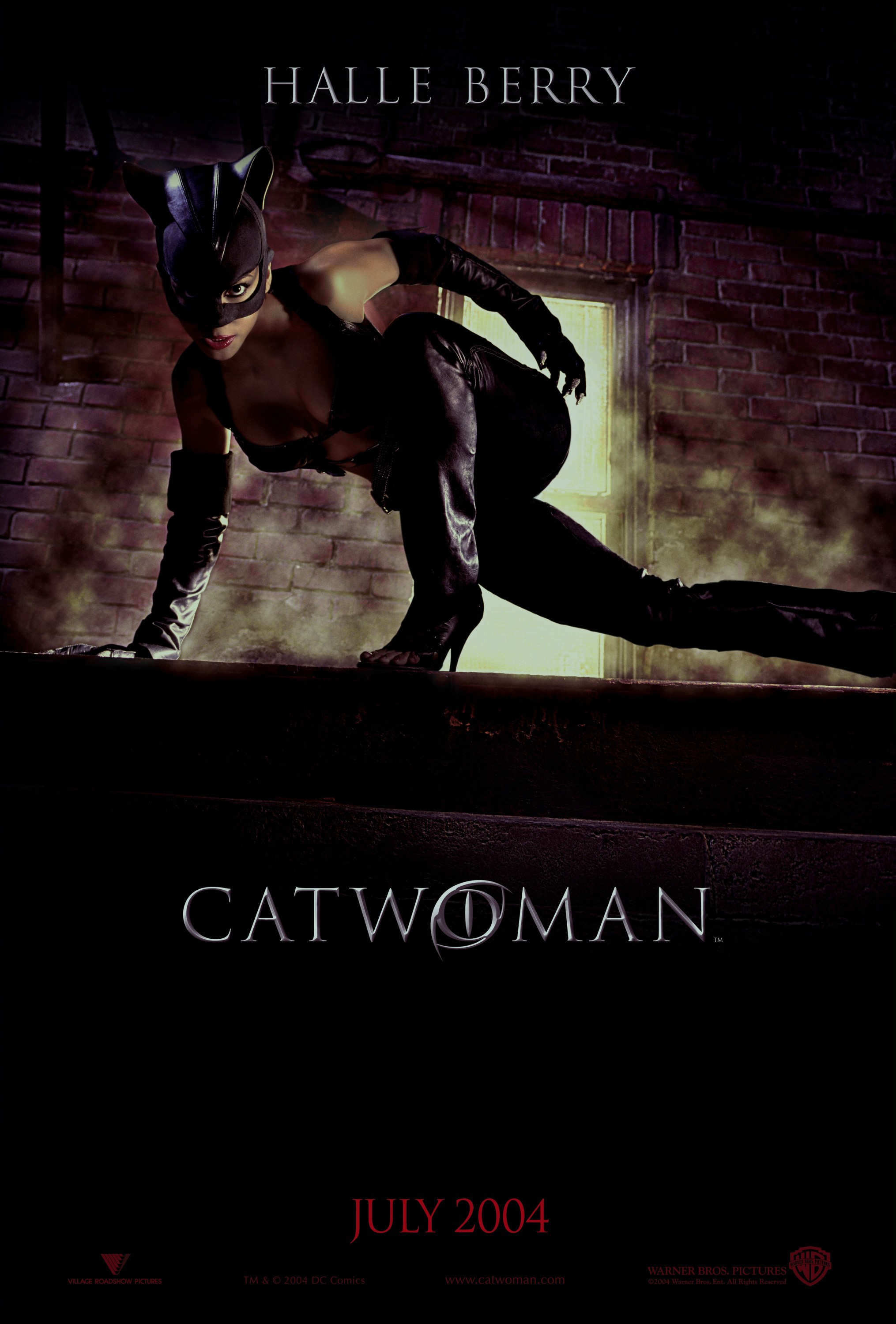
Widely considered one of the worst superhero blockbusters of all time, the notorious Catwoman from 2004 is a horrendous combination of an edgy 2000s music video and all of the worst aspects of a modern superhero flick. Harbouring immensely cringey, pun-based dialogue, terrible CG effects and a forced romantic subplot, among many other issues, Catwoman is a nosedive in quality from many of the beloved comic book stories featuring the famed cat burglar of the DC Universe. Still, for those who are fans of the character, there is little concern of character assassination here, as the protagonist of Catwoman is so distant from the feline that debuted in 1940 that she is virtually unrecognisable outside of the signature ears, whip and black leather outfit. As such, this seedy superhero flick is only worth seeing if you can tolerate a thrown-together story and hideous visuals merely for an ironic laugh.

Plot Summary: While toiling as a graphic designer for the cosmetics company Hedare Beauty, a mammoth corporation on the verge of releasing a revolutionary anti-ageing lotion, the shy and sensitive Patience Philips inadvertently happens upon a dark secret regarding the ointment, soon finding herself in the middle of a corporate conspiracy that eventually takes her life. But, after mysteriously reawakening with the newfound abilities of immense speed, strength, agility and ultra-keen senses, Patience transforms into Catwoman, a skilled and stealthy vigilante determined to foil her former employer’s devilish ploy…

Aside from the central (and rather superficial) underlying theme of the film, which relates to the harmful side of the cosmetics industry, naturally depicted in an over-the-top fashion with inhumane suits eager to make a profit, regardless of consumer harm, the plot of Catwoman is a formulaic yet underdeveloped superhero origin story, with most of the film revolving around the corny sequences of Patience (renamed from Selena Kyle in this iteration) discovering her numerous abilities. Similar to the unwarranted rename, this iteration of the character also possesses unexplained, supernatural abilities, unlike the original version of the character, who shared many similarities to her occasional associate, occasional foe, Batman, sporting an imposing outfit, a secret identity and exceptional fighting capabilities, yet no actual superpowers.

Becoming one of only six actors in history to own both an Oscar and a Razzie after her ‘win’ for her infamous performance in the film, Halle Berry also became the first actress to accept her Razzie in person, stepping out on stage proudly holding both Oscar and Razzie aloft, delivering the brief acceptance speech of; “I’d Like to Thank Warner Brothers for Making Me Do this Godawful, Piece of Shit Movie.” With this in mind, it’s likely not a surprise that Berry portrays Catwoman with all of the comic book cheesiness as other superhero performances of the era, from Ben Affleck’s Daredevil to Wesley Snipes’ Blade, over-delivering every line of dialogue and showcasing the cinematic sexualisation (and animalisation) of the titular character to an absurd degree, despite Catwoman’s sexually provocative side being a key part of her character in most media she appears. That said, Halle Berry does commit to her performance, and commendably so, considering that Patience spends most of her time wide-eyed and humiliatingly unhinged with a profound love of tuna. The supporting cast of Benjamin Bratt, Sharon Stone and Lambert Wilson don’t fare much better, with their performances frequently coming across as either lifeless or cartoonish.

Previously set in Catwoman’s usual home of Gotham City, with Michelle Pfeiffer reprising her role from the blockbuster sequel Batman Returns (1992) before this concept was scrapped when Pfeiffer refused to sign on, Catwoman takes place in an anonymous, grimy city that greatly resembles Gotham, yet is never confirmed to be so. Nevertheless, this iconic, fictional city’s aesthetic barely enhances the film’s visuals in the grand scheme, as the cinematography by Thierry Arbogast is continuously cluttered and visually displeasing, a flaw only exacerbated by the equally unpleasant viridescent colour palette. Moreover, the CG effects throughout the runtime are beyond appalling, appearing weightless and unconvincing, namely during scenes where Patience leaps up walls and across rooftops or when a cat is depicted via uncanny CGI, even though forty-three cats were actually trained and used for the film, seemingly removing the need for CG effects in this respect.

On another note, the soundtrack for Catwoman, primarily relying on not-so-timely songs such as Scandalous, Outrageous and Crazy in Love, is just as nostalgic as it is corny and excessively distracting. Likewise, the original score by Klaus Badelt is loud and overbearing, often unintentionally emphasising the film’s poor sound mixing, like with the clamorous track; Felineious Assault.

With Catwoman, it’s clear that the strangely mononymous French director Pitof (Vidocq, Fire & Ice: The Dragon Chronicles) set out to make a film as stylish and sensual as possible within the boundaries of its rating. And, while much of the film’s style is evidently influenced by Pitof’s background in outlandish, sultry music videos, blockbusters generally don’t rely on constant hyperactive shots, and Catwoman is a testament to why.

In summary, Catwoman is a baffling, dated mess of a superhero-led blockbuster, which is unfortunate, given how significant of a character Catwoman is, repeatedly playing a pivotal role in stories across the DC Universe, both featuring the Caped Crusader and otherwise. Thus, it’s not an exaggeration to say that Catwoman is a ‘cat-astrophe’ in practically every aspect, but definitely as an adaptation. Rating: 1/10.

catwoman_ver2_xxlg

Cats (2019) – Film Review

Despite ‘Cats’ being well-known as one of the longest-running stage shows in West End/Broadway history, it is also widely acknowledged that the cat-centric musical is empty spectacle and not much else. This along with many other reasons, may explain why the adaptation of the musical we received in late 2019 has since gone on to be regarded as one of the worst musicals ever put to film, as director Tom Hooper (The King’s Speech, Les Misérables, The Danish Girl) utterly squanders an enormous budget and a talented cast in exchange for a paper-thin plot, a constant bombardment of irritating songs, and some truly horrendous CG effects that will leave most audience members begging to be put out of their misery.

Plot Summary: A tribe of cats known as ‘The Jellicles’ yearly meet for a ‘Jellicle Ball,’ in which, they decide which of their group will ascend to the ‘Heaviside Layer’ and return to a new life. But, on this year, the mysterious napoleon of crime; ‘Macavity,’ has other, more sinister plans…

Ever since it was first announced that Oscar-winning director Tom Hooper would be adapting the iconic feline-focused musical, the film has become such joke-fodder that it’s hard to see past the countless number of memes mocking the film’s dreadful visuals or comedic moments, which is a shame. Not because the film we received is even remotely entertaining, of course, but because the adaptation we almost received could’ve been fantastic, as originally, animation house, Amblimation, planned to adapt the musical into an animated film before the project was shelved following the company’s closure. This idea of translating ‘Cats’ into a traditionally animated film remained all the way to Hooper coming on board to direct, and, in my opinion, also makes considerably more sense considering the original musical is based on the 1939 poetry collection; ‘Old Possum’s Book of Practical Cats’ by T. S. Eliot, a book brimming with whimsical sketches of various cats from a variety of backgrounds.

Newcomer Francesca Hayward, stands-out as one of the film’s few redeeming aspects, as her character; ‘Victoria,’ serves as an audience surrogate, her empathy occasionally shining through as she is rapidly introduced to character after character, until we uncover which ‘Jellicle’ cat will be chosen to ascend. The rest of the film’s prominent cast, however, including Jennifer Hudson, Taylor Swift, James Corden, Jason Derulo, Idris Elba, Judi Dench, Rebel Wilson, Ian McKellen, and many more, range from extraordinarily cringe-worthy to subpar, although their performances are further hindered by the screenplay’s lack of characterisation and dramatic moments.

Whilst the film’s cinematography by Christopher Ross does a successful job of upgrading the beige setting of the stage show into a vibrant, neon-lit approximation of old London, allowing for a handful of visually pleasing shots, it’s impossible for ‘Cats’ to claw itself away from the rest of its distracting visuals. That not only includes the obvious, but also much of the film’s set design, as several of the locations the cats enter are supposed to appear as if they are far larger than the characters in order to display each cast member as cat-sized, the drawback here being that there is usually no consistency with these scaled-up sets between shots.

Moving onto the music, Andrew Lloyd Webber, creator of the original musical, actually handled the film’s original score in addition to writing a couple of songs exclusively for the film. And, while songs, like ‘Jellicle Songs for Jellicle Cats,’ ‘The Old Gumbie Cat,’ ‘The Rum Tum Tugger’ and ‘Skimbleshanks: The Railway Cat,’ may bring a smile to fanatics of the stage show, in the film, these songs only come across as infuriating as they are so frequent, barely making time for anything else, aside from one or two atrocious cat puns.

Lastly, there is the appearance of the cats themselves, by far the most discussed/mocked element of the entire film, and for good reason, as the uncanny part-human, part-CG appearances of the furred critters appear extremely unnatural and very under-polished. So much so, that a mere two days after the film’s initial release, Universal Pictures announced that they would be releasing an updated version of: ‘Cats’ with enhanced CGI. Whilst this is partly a result of Tom Hooper’s broad direction, an article published the following year by The Daily Beast featured multiple visual effects artists who worked on the film, each claiming they had little-to-no time to finish the film’s huge array of effects, with some artists even having to sleep under their desks to get the film completed on time, at least, if said article is truthful.

In summary, even though I’m personally not an admirer of Tom Hooper’s filmography, Hooper is not a wholly incompetent director, but ‘Cats’ is undeniably, an absolute catastrophe of a fantasy-musical from beginning-to-end. Quickly being placed amongst the one hundred worst films of all-time on IMDb and forcing the plans for its sequel (and spin-off television series) to be immediately scrapped, ‘Cats’ is possibly one of the biggest cinematic failures of the past decade, as its copious number of flaws massively overshadow what few, if any, redeeming factors the film had left, resulting in an insufferable viewing experience that’ll make most film buffs feel remorse for everyone involved in this embarrassing production. Final Rating: high 1/10.

cats_xxlg

The Bye Bye Man (2017) – Film Review

Simply from the laughably atrocious title of the film alone, I’m sure many can guess why 2017’s ‘The Bye Bye Man’ fails so miserably as a horror flick. Coming across more as a student film project rather than a feature that actually made its way into cinemas (mostly due to its amateurish acting and filmmaking alike), ‘The Bye Bye Man’ is an incredibly lacklustre and mindless horror down to even its last few painful minutes of screen-time.

Plot Summary: When three college students move into an old house just off-campus, they unwittingly unleash a supernatural entity known as ‘The Bye Bye Man,’ a dark creature that preys upon any victim that discovers its name. Now, withholding this knowledge, the group attempt to keep the existence of ‘The Bye Bye Man’ a secret whilst also trying to save themselves…

Despite the film’s title implying otherwise, the actual antagonist of the film hardly appears in full throughout the runtime. In fact, the story on which the film is based; ‘The Bridge to Body Island,’ actually has a much more complex mythology for the creature than the film itself. Originally being born albino in New Orleans in 1912, who eventually ran away from home and began murdering people and cutting out their eyes and tongues, which he would then sew together and bring to life using voodoo. The original story of ‘The Bye Bye Man’ is far more interesting and disturbing than what appears in the film, which is nothing short of undeveloped and even fairly boring in terms of both his design and his abilities.

Relatively new actors Douglas Smith, Cressida Bonas and Lucien Laviscount, unfortunately, all lead the film with quite poor performances. As, while the cringey and often moronic writing certainly doesn’t help, their performances are lacking in both urgency and charisma, so it becomes quite difficult to care about them once the supernatural occurrences begin. Surprisingly, though, the actor behind ‘The Bye Bye Man’ himself, is Doug Jones, known for his fantastic creature/character performances, such as ‘Abe Sapien’ in the ‘Hellboy’ series, and ‘The Amphibian Man’ in ‘The Shape of Water.’ Yet, even though Jones may seem like too much of an accomplished actor to be in such a minimal role as this, with talented actress Carrie-Anne Moss also making an appearance, it’s possible that at one point in time the screenplay for this film may have actually contained some creative ideas.

James Kniest’s cinematography is another area in which the film lacks, as the bland camerawork only allows for a couple of visually interesting shots throughout, usually resulting in the film having a very flat and occasionally cheap look. However, one shot the filmmakers must have been pleased with is the shot of a large industrial train traveling at night, as this shot is continuously reused at multiple points. But, what’s confusing here, is that this shot’s inclusion is never explained, nor does it having any bearing on the plot whatsoever, only appearing at random within the protagonist’s dreams and once in the real world nearing the end of the film.

The film’s original score by The Newton Brothers isn’t memorable in the slightest, simply being a standard piano and strings-focused horror score with the exception of the track; ‘The Bye Bye Man,’ which feels very out-of-place when compared to the rest of the film’s soundtrack, as the creature’s main theme sounds like something ripped straight from an episode of ‘Goosebumps.’ Also worth a quick mention is the film’s corny use of the recognisable ’50s song; ‘Bye Bye Love,’ which is just far too on-the-nose for me.

From its constant jump-scares to its many typical horror clichés (e.g. a group of college teens, creepy scribbled drawings, an old foreboding house, a protagonist who looks up the creature’s origins in a library), the film is teeming with much of the usual problematic writing that floods many modern horror screenplays. Only this time, the film has simply nothing else to set itself apart from others within the genre. The only aspect of the film that could’ve been remarkable would’ve been ‘The Bye Bye Man’ himself and his ‘Seeing-Eye Hound,’ made from pieces of his victims. But, as already mentioned, the film does nothing with its antagonist or his hound, only utilising the dog creature to stand alongside ‘The Bye Bye Man’ through some truly abysmal CG effects.

In summary, ‘The Bye Bye Man’ is one of the last films I’d recommend to any horror fanatic. Completely absent of any likeable characters, an intriguing/threatening antagonist or any sense of an eerie atmosphere, it’s hard to believe that the film has any positive reviews at all. And, yet, somehow, it does. All we can do is hope horrors such as this fade into obscurity and never receive a sequel, prequel or anything else of the sort, as this genre has already suffered enough in recent years with the likes of ‘Truth or Dare,’ ‘Chernobyl Diaries,’ and ‘The Gallows,’ just to name a few. Final Rating: 1/10.

bye_bye_man_xxlg

Wish Upon (2017) – Film Review

A hilariously awful attempt at horror, ‘Wish Upon’ comes to us from director John R. Leonetti, mostly known for his cinematography on the first two ‘Insidious’ films as well as the first entry in ‘The Conjuring’ series. With him now recently delving his hand into directing, working on films such as ‘Annabelle,’ ‘The Silence’ and obviously ‘Wish Upon.’ However, after watching all of these films, I think I would really rather he just stick to cinematography from now on.

Plot Summary: When teenager Clare Shannon discovers an old music box that carries strange abilities and can grant her any wish she desires, she believes all her dreams have come true. That is until, she realises that there is a deadly price for each one…

Although the film’s plot does take inspiration from W.W. Jacobs’ iconic short story; ‘The Monkey Paw,’ ‘Wish Upon’ itself rarely feels like an actual horror film. Of course, the fact that the film has little-to-no atmosphere as well as an enormous amount of weak jump-scares throughout, it’s very clear that this film was clearly meant to pander towards horror-loving teenagers. ‘Wish Upon’ is truly one of the least tense horrors I’ve watched in a very long time, even being unintentionally hilarious at various points.

This is also one of the few films where I can safely say that every character in the film is not only poorly portrayed, but also incredibly stupid. As the entire cast of Ki Hong Lee, Sydney Park, Shannon Purser and, of course, Joey King as the protagonist, ‘Clare Shannon.’ All make ridiculous decisions throughout the entire runtime, in addition to never really acting very intensely to anything, no matter what it may be. The writing also doesn’t help, however, as none of the characters in the film talk like actual teenagers, and the screenplay is full of incredibly cringey, cliché and cheesy lines.

All of the cinematography throughout the film by Michael Galbraith is very bland and uninspired. Normally using just simple shots without any attempt to integrate any creepy elements into them. The lighting also doesn’t help, however, as most of the film looks like a cheaply made for TV film due to being very bright and clear throughout.

The original score by ‘tomandandy’ is your usual horror affair, with nothing really interesting or particularly memorable of note about it. However, the choice of songs throughout the film is memorable for all the wrong reasons, as the film chooses to use terrible pop music at various points during the film, which comes completely out of nowhere and ruins whatever little tension or atmosphere the film had up to that point, making the film feel almost like more of a teen comedy than a horror. Simply due to how distracting it is, this was easily the worst element of the film for me.

Only a very small detail, but I feel the only aspect of the film I actually enjoyed is the music box itself, having a very creepy and unique ancient Chinese design. It’s clear the filmmakers were trying hard to make the item iconic in its own right. Whilst obviously not truly successful with this, I still like its design, and the eerie tune that it plays as a horrific event unfolds, the film also has a very surreal and entertaining end title sequence, but this obviously adds very little to the film overall.

In summary, ‘Wish Upon’ is a true mess of a horror film, everything from the writing to the cinematography to the original score is either very poorly done or extremely dull and generic. Often coming across as unintentionally hilarious and lacking any truly terrifying scenes, ‘Wish Upon’ is far beyond saving. But, at the very least, the film does have plenty of memorable moments if you decided to watch it with some friends for a laugh. Final Rating: high 1/10.

wish_upon_xxlg