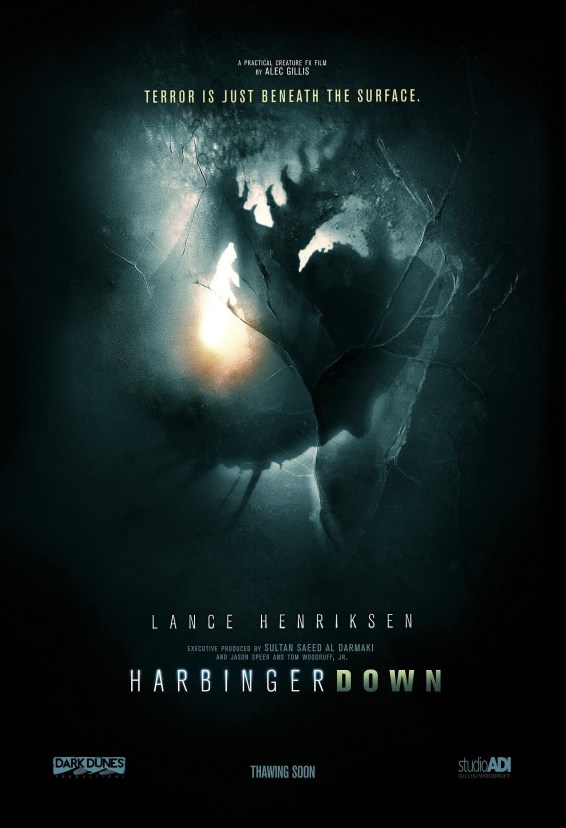
Harbinger Down (2015) – Film Review

In 2010, practical effects company Amalgamated Dynamics (ADI for short) was hired by Universal Pictures to create effects for their upcoming prequel to the 1984 classic; ‘The Thing,’ but just before the film was released, the majority of ADI’s work was digitally replaced by CGI. This decision greatly upset the Amalgamated Dynamics team, especially since ‘The Thing’ wasn’t the first film they had worked on only to later discover their effects had been replaced. So, in response to queries about what became of their effects, the founders of Amalgamated Dynamics uploaded a behind-the-scenes video to YouTube which showcased their original effects, and the overwhelmingly positive response they received began a new phase for the company, as soon after, ADI began a Kickstarter with the intention of creating their own sci-fi-horror, titled; ‘Harbinger Down,’ a film that would exclusively employ practical techniques.

Plot Summary: While studying the effects of global warming on a pod of belugas in the Bering Sea, grad students on a crabbing vessel fortuitously uncover a Soviet space shuttle buried within layers of ice. But, when the ship’s crew bring the Soviet wreckage aboard, they unintentionally release a long-dormant extraterrestrial parasite that relies on the warmth of the human body to survive…

Commonly known by its alternate title; ‘Inanimate,’ ‘Harbinger Down’ was written, directed and produced by Amalgamated Dynamics co-founder Alec Gillis. And although I have a huge admiration for Gillis and his partner Tom Woodruff, Jr. as the duo courageously opposed the mammoth production companies that no longer respected the art of practical effects, ‘Harbinger Down’ frequently suffers as a result of the pairs’ lack of experience when it comes to filmmaking, as is it’s not uncommon to see exaggerated performances, cliché dialogue and messy editing. Furthermore, ‘Harbinger Down’ (like many sci-fi-horrors) takes plenty of inspiration from 1982’s ‘The Thing,’ though in this case, this inspiration is a little too evident in the final film, as many story-beats are either extremely similar or a stark contrast in an attempt to avoid comparisons, such as the creature being maimed by liquid nitrogen rather than fire.

Eminent ‘Aliens’ and ‘Pumpkinhead’ actor Lance Henriksen headlines the film, being by far the most prominent performer present, and suitably gives a stand out performance due to his raspy authority and effortless professionalism. Just like the rest of the cast of forgettable stock characters, however, Henriksen is given very little to work with, only being able to portray his character, ‘Graff,’ as an adept ship captain who cares deeply for his astute granddaughter; ‘Sadie,’ sufficiently portrayed by Camille Balsamo.

The film’s cinematography by Benjamin L. Brown does allow for one or two attractive shots, yet because of its overreliance on hand-held techniques often feels frantic, again playing into the idea of Gillis’ deficiency of filmmaking experience, as whilst Alec Gillis may know how to fabricate outstanding effects, he doesn’t seem sure how to capture them on film or hide them when necessary. As such, the effects on-screen soon become gluttonous, holding on certain shots until the point when the effects begin to appear fake and rubbery. That being said, the film’s setting and production design are brilliant without fault, as the film manages to craft the convincing illusion that the characters are all confined to ‘The Harbinger,’ a vessel that has indeed been set adrift on frigid waters.

Nowhere close to memorable, Christopher Drake’s intense original score does at least add to the film’s atmosphere, but where the score succeeds, the sound design utterly fails. As, in addition to numerous areas of the ship utilising time-worn sound effects, the story’s shapeshifting creature rarely makes any sound beyond generic grunts and growls, none of which are menacing nor daunting, and considering the film had a budget of over £250.000, refining the sound design couldn’t have been that arduous of a task.

Needless to say, all the traction that ‘Harbinger Down’ gained was likely on account of its practical effects, which make use of everything from animatronics to prosthetic make-up to stop-motion and even miniatures, all of which are marvellous to see, particularly for those who enjoy films with little reliance on CGI, as the film’s creature relies on no digital animation whatsoever outside of rod/rig removal. However, as mentioned previously, the way some of these effects are presented occasionally takes away their impact. Another issue arises with the creature design itself, as every form the creature takes is entirely different from its prior appearance, so the creature never has the chance to fully borrow into the audience’s mind as a recognisable extraterrestrial antagonist.

In summary, ‘Harbinger Down’ ultimately falls somewhere between a cheesy SyFy Channel flick and a better-than-average direct-to-video product, which is unfortunate. As for myself, a fan of ’80s creature-features, I truly wanted this low-budget claustrophobic horror to triumph, but as a result of its long list of flaws, many of the film’s practical effects (and the scenes in which they are employed) tend to just be echoes of well-known moments in better films. Be that as it may, ‘Harbinger Down’ does have a captivating backstory when it comes to its creation and the passionate team behind it. Final Rating: low 3/10.
harbinger_down-p999965

Into the Storm (2014) – Film Review

Clumsily written and populated with forgettable characters, ‘Into the Storm,’ released in 2014, has little to offer beyond its admittedly prodigious CG effects. Taking heavy inspiration from the exemplary tornado blockbuster; ‘Twister,’ from 1996, ‘Into the Storm’ plays it fast and loose with its story, jumping from scene-to-scene without much thought as to how well everything connects or even functions, this is especially clear when looking at the film’s visuals, which rarely stick to the found-footage style its camerawork is trying to emulate.

Plot Summary: In the span of a single day, the small town of Silverton, Oklahoma is ravaged by an unprecedented onslaught of tornadoes, forcing residents to abandon their daily duties and seek shelter as fast as they possibly can. But, as the entire town is at the mercy of the destructive cyclones, one group of storm-chasers ride directly into the storm, risking their lives to study the phenomenon and procure that perfect shot…

Directed by Steven Quale (Starfire, Final Destination 5, American Renegades), ‘Into the Storm’ not only takes (perhaps a little too much) inspiration from ‘Twister’ for its plot, but also many real-world events. Specifically, a catastrophe that occurred in Dallas County in 1986, where there were several reported occurrences of multiple tornadoes striking the same county over a roughly one hour time-period. And, whilst the image of a tornado of fire may sound like a creation ripped straight out of a campy ’80s action flick, the cyclone of flames is, in reality, just one of the many seemingly absurd moments in the film that were actually based on real-life events, at least, according to screenwriter John Swetnam.

While disaster films have always valued spectacle over character, ‘Into the Storm’ is on another level, as the entire cast of Richard Armitage, Sarah Wayne Callies, Max Deacon, Nathan Kress, Arlen Escarpeta and Alycia Jasmin Debnam-Carey, are all immensely dull to watch, not necessarily because of their performances, but because of the screenplay. As, aside from the single-minded storm-chaser; ‘Pete,’ portrayed by Matt Walsh, who has at least something resembling a personality, most of the characters feel as if they are made out of wood, exclaiming cringey jokes and unnatural lines of dialogue that come across as nothing but forced. It seems many of the actors even tried to make their characters more interesting where they could, as supposedly there was a fair amount of improvisation on set.

Despite ‘Into the Storm’ apparently also being a found-footage flick, it’s rare that the cinematography by Brian Pearson actually appears like one, from vast wide shots to intimate close-ups, many shots are completely devoid of harsh movements and always retain flawless quality regardless of which character is filming or what device they are filming on. Moreover, with much of the film’s narrative relying on the idea of the film itself being a documentary, various interviews are featured near the beginning and end of the runtime, yet this potentially stimulating concept is soon spoilt as a result of the film’s structure, which is fairly disorganised. The only aspect of this found-footage approach that comes across effectivity is in the final scene, as the film utilises archive footage from news stations that covered a real EF5 tornado that hit Oklahoma in 2013.

Although the original score by Brian Tyler is expectedly quite bland, there are still a few tracks, such as ‘Into the Storm,’ ‘Fate’ and ‘We Stay Together,’ that back up many of the film’s exciting moments successfully. But, the issue here isn’t within the score itself, it’s the fact that there is a score to begin with, as every second ‘Into the Storm’ attempts to be an intense and realistic disaster epic, its simultaneously sabotaging itself by bombarding the audience with a loud, non-diegetic soundtrack, often distracting from the destructive chaos on-screen with its whirling violins and blaring brass horns.

When it comes to realism, some film buffs have questioned whether certain events within the story could occur in real life, such as whether a tornado could actually lift an aircraft off the ground as depicted in one scene. Nevertheless, there’s no denying that the CG effects during these scenes are certainly the finest element of ‘Into the Storm,’ as along with its voluminous set design, which perfectly displays the incredible force of nature that a tornado is with cars, trees, and billboards thrown in every direction, are magnificent in their sheer scale alone. Even if the film would’ve benefited from the use of a few more practical effects to even out its enormous use of CGI, harkening back in a way to the classic disaster films of the ’70s, like ‘Airport’ and ‘Earthquake.’

In summary, ‘Into the Storm’ is essentially just a visual effects showreel lasting over ninety-minutes, as although the film boats some exhilarating yet feasible moments of peril as director Steven Quale crafts plenty of riveting set pieces ranging from crashing trucks to golf ball-sized hail storms. Due to the film’s lack of compelling characters, inconsistent filmmaking, and truly awful lines of dialogue, such thrills soon become monotonous, and by the end of its runtime, ‘Into the Storm’ winds up as either an unimaginative disaster flick or a near-remake of ‘Twister,’ depending on your perspective. Final Rating: 3/10.

into_the_storm-p890380 (1)

The Mummy (2017) – Film Review

When Universal Pictures first announced their plans to build a cinematic universe based around their gallery of iconic monsters, general audiences seemed to roll their eyes at the idea, seeing the forthcoming franchise as nothing more than a shameless attempt to copy and paste the formula of the Marvel Cinematic Universe, with the hopes of making the same box-office returns. Nevertheless, Universal continued with their plan, releasing the first instalment of the series in 2017 with ‘The Mummy,’ a film which even with the star-power of Tom Cruise, failed miserably both critically and commercially, instantly destroying any plans for the future of the franchise and embarrassingly leaving the ‘Dark Universe’ with a single film to its name.

Plot Summary: Once destined to rule all of Egypt, the beautiful princess; ‘Ahmanet’ sees her birthright stolen from her when her father begets an heir. Knowing this boy would be the Pharaoh’s new successor, ‘Ahmanet’ turns to a dark deity, selling her soul for an unholy power, for which, she is captured by the Pharaoh’s priests, mummified alive and buried in a tomb far from Egypt. Five thousand years later, opportunistic U.S. Army reconnaissance sergeant; ‘Nick Morton,’ accidentally discovers her tomb during a firefight in the Middle East, and once venturing inside, inadvertently sets her free…

According to a number of reports, Tom Cruise not only starred in ‘The Mummy,’ but also has an excessive amount of control over the film, having creative oversight on nearly every aspect of the production. So much so, that Cruise even had influence on the film’s screenplay, as it’s been stated that Cruise had his personal writing team rewrite certain scenes to give his character more screen-time and a more dramatic character arc, and even though most Universal executives weren’t thrilled about the rewrite, feeling it was disjointed and insipid, they reluctantly agreed to keep Cruise on board. Regardless, Universal Pictures soon saw the fallacy in their blind faith towards Cruise, as despite ‘The Mummy’ earning nearly £300 million worldwide, it was still considered a financial flop when taking into account its immense marketing campaign, which promoted the film purely as the franchise-vehicle it is as opposed to a riveting blockbuster.

Having both her design and gender altered to avoid any similarities with the titular villain of ‘X-Men: Apocalypse,’ which released just a year prior, ‘The Mummy/Ahmanet’ herself, portrayed by Sofia Boutella, is remarkably forgettable, never developing into a compelling or even threatening antagonist, which should be nearly impossible considering ‘The Mummy’ fills over a quarter of its runtime with extensive exposition regarding her backstory and sinister motives. Likewise, the actual protagonist; ‘Nick Morton,’ rarely benefits from Cruise’s natural charisma and wit, as ‘Nick’ is simply an unlikeable character, emerging as a foolish, self-centred adventurer and leaving in the exact same manner, in addition to being miraculously skilled with/in every type of firearm and hand-to-hand combat, of course.

When it comes to visuals, the film’s cinematography by Ben Seresin is generally visually pleasing, resulting in a fair share of alluring wide shots, yet much of the film’s beauty is consequently hindered by its ghastly colour palette, which hardly ever strays away from greys, blacks and beiges, an issue that is only worsened by the prosaic setting of modern-day London. Furthermore, the film’s action sequences (which are less frequent than most would expect) are fairly unimpressive, with many of the story’s thrilling moments having an overreliance on apace editing and CG creatures. That is, with the exception of the stunt work, which, due to Cruise’s heavy input on the film, is mostly practical and just as awe-inspiring as the stunts in the ‘Mission Impossible’ series, no thanks to director Alex Kurtzman (People Like Us).

Built around two central themes with various less significant tracks cropping up in-between, the film’s original score by Bryan Tyler is serviceable, for the most part, balancing its two signature tracks of ‘The Mummy’ and ‘Nick’s Theme,’ before then switching to far more dramatic orchestral tracks, like ‘Sandstorm,’ ‘Enchantments’ and ‘World of Monsters,’ for the film’s larger scale set pieces and handful of brief dream sequences.

Interestingly, ‘The Mummy’ wasn’t actually Universal’s first venture into crafting a cinematic universe of monsters, as the company originally envisioned 2014’s reboot of the renowned vampire in ‘Dracula Untold,’ as the first instalment in the series. There was even early talk of ‘Dracula’ appearing in ‘The Mummy,’ but this idea was ultimately scrapped, and the film was eventually cited as non-canon to the ‘Dark Universe.’ However, there are still several props alluding to other monsters within the film, as a vampire skull, along with one of the ‘Creature From the Black Lagoon’s hands, can both be seen in ‘Dr. Jekyll’s headquarters.

In summary, I feel it’s easy to see why many avoided ‘The Mummy’ when it first released back in 2017, as this film was merely Universal’s first attempt at revitalising the many well-known creatures locked away in their vault by lazily repackaging them for a new generation. The issue being that general audiences had little interest in this concept, and those that did quickly lost their engrossment as the film failed to capture even a fraction of the adventurous spirit present throughout the ’90s reboot. Instead, it seems ‘The Mummy’ will simply be lost to time, unremembered and disregarded. Final Rating: 3/10.

mummy-poster-1

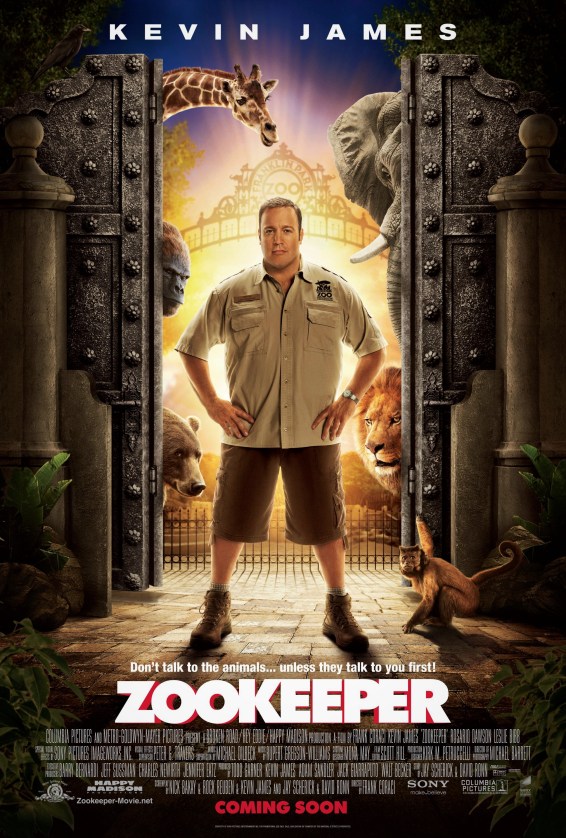
Zookeeper (2011) – Film Review

Another lacklustre comedy from the ill-famed Happy Madison Productions, ‘Zookeeper,’ released in 2011, serves as nothing more than a Adam Sandler-perpetrated ego project for Kevin James, as director Frank Coraci (The Wedding Singer, Click, Here Comes the Boom) adds little flair to a sodden screenplay riddled with clichés, overly long scenes and gags inappropriate for the young viewers that would be intrigued by its juvenile storyline. Essentially leaving ‘Zookeeper’ a film that feels as if it was made for no one, despite the film supposedly being a family-comedy with wide appeal.

Plot Summary: When kind-hearted; ‘Griffin Keyes,’ the head zookeeper at the Franklin Park Zoo, considers leaving his profession for a more glamorous career to impress his ex-girlfriend, the animals within the zoo begin to panic at the thought of their favourite zookeeper departing. So, to keep him from leaving, the animals decide to break their code of silence, revealing to ‘Griffin’ their ability to speak before offering to teach him the rules of courtship…

Shockingly, the screenplay for ‘Zookeeper’ has five credited writers (Kevin James being one of them) and yet the story/dialogue is neither interesting nor memorable, stealing many of its ideas from other live-action animal flicks, such as ‘Dr. Dolittle’ and ‘Marmaduke.’ However, this wouldn’t be so much of an issue if ‘Zookeeper’ was amusing or heartwarming, but, unfortunately, the film falls flat in both of these areas, as instead of exploring the life of an animal born in captivity for comedic and sentimental purposes alike, the film lazily relies on montages to establish a tone and suggest a friendship between ‘Griffin’ and the various zoo animals, when he isn’t taking a pounding with pratfalls and bicycle spills, of course, a.k.a. Kevin James’ usual form of comedy.

Speaking of Kevin James, he is truly one of the most notable ‘love him or hate him’ actors in film, having been in a number of roles as the supposedly loveable all-American hero who relies just as much on his weight as he does his comedic timing to get a laugh out of his audience, it’s not difficult to see why many don’t enjoy his on-screen presence, myself included. But, in ‘Zookeeper,’ James is surprisingly bearable, portraying ‘Griffin’ as a likeable guy who feels more comfortable around animals than people after being dumped by his girlfriend when he proposed to her five years prior, Rosario Dawson as ‘Kate,’ however, is given very little to work with as ‘Griffin’s work colleague and obvious love interest. The numerous animals within the zoo are also voiced by a star-studded yet ultimately squandered cast, with Nick Nolte, Sylvester Stallone, Cher, Maya Rudolph, Judd Apatow, Jon Favreau, Faizon Love and even Adam Sandler as ‘Donald’ the monkey (whose over-the-top voice is the vocal equivalent of fingernails on a chalkboard), all being heard at one point or another.

Bland and uninspired all around, the cinematography by Michael Barrett rarely attempts anything beyond a simple close-up or mid-shot, with even the film’s wide shots being few and far between almost as if the production couldn’t afford to feature any sizeable sets, or something of that description. The only visual aspect of the film that is in anyway beguiling is its colour palette, as all of the evening scenes within the zoo are displayed through dark blacks and blues, a dramatic shift in terms of colour from the bright yellows and oranges that represent midday.

Although composer Rupert Gregson-Williams at least strives to make the score for ‘Zookeeper’ a little more unique through the use of tropical instruments, like bongo drums and maracas, the original score is almost unnoticeable throughout most of the runtime. Alternatively, the film relies on well-known songs for the sake of humour, throwing in musical hits, such as ‘I’ll Supply the Love,’ ‘Low,’ ‘Easy’ and ‘More Than a Feeling,’ in a desperate attempt to make the story feel more emotionally investing than it actually is.

Whilst the film’s CG effects have begun to show their age here and there, the majority of the film’s visual effects are serviceable, this is primarily due to the majority of the animals being real with just one or two CG enchantments including mouth movements or being digitally relocated, as opposed to be represented entirely through CGI. Needless to say, this approach still has its issues, as there are many, many shots of animals standing completely alone where were supposed to believe that ‘Griffin’ is standing just out of frame. But, when it came to the film’s gorilla; ‘Bernie,’ the filmmakers actually decided to take an old-school approach, placing an actor inside of ape suit, which sadly doesn’t look very convincing, especially when the camera moves closer towards his face, placing full emphasis on the suit’s unnatural movements.

In summary, ‘Zookeeper’ isn’t offensive or convoluted, it’s quite the contrary, its immature and simplistic, far too simplistic, in fact. While some children may enjoy the slapstick humour that Kevin James excels at, the film’s mass of adult-centric jokes and typical romantic-comedy structure are likely to turn children off. And, although ‘Zookeeper’ is far from the worst Happy Madison-penned film, it’s still significantly less enjoyable than many of the other talking animal escapades you could be watching instead. Final Rating: 3/10.

zookeeper-p543178

Pixels (2015) – Film Review

Despite its undeniably promising story and talented supporting cast, 2015’s ‘Pixels’ is sure to greatly disappoint any viewer hoping for a hilarious and nostalgic throwback to 1980s arcade classics, as due to heavy involvement from Adam Sandler and his production company, Happy Madison Productions, both on and off screen, ‘Pixels’ massively stumbles in its transition from the low-budget short film it’s originally based on into an explosive blockbuster, losing all of its charm and creative ideas to simply become another Adam Sandler comedy with some inspired visual effects.

Plot Summary: When aliens misinterpret a satellite video feed of 1980s arcade games as a declaration of war, they begin a full-scale invasion of Earth using video games, like ‘PAC-MAN,’ ‘Donkey Kong,’ ‘Centipede,’ and ‘Space Invaders,’ as models for their various assaults. Eventually leading U.S. President; ‘Will Cooper,’ to call on his childhood best friend, ’80s video game champion; ‘Sam Brenner,’ to lead a team of old-school arcaders to help defeat the invaders and save the planet…

As mentioned previously, ‘Pixels’ is actually based on a 2011 short film of the same name by French director Patrick Jean, which since being uploaded to YouTube has raked in well over two million views. And, whilst I personally believe the short film’s story of video game characters invading Earth is a superb setup for sci-fi-comedy, ‘Pixels’ unique plot is quickly butchered by screenwriter Tim Herlihy’s continuous writing fallbacks, as the film is content to stick with the usual Sandler template, using its inventive premise as simply framework to focus on a tired romantic hook-up storyline. Not even talented director Chris Columbus (Home Alone, Mrs. Doubtfire, Harry Potter and the Philosopher’s Stone) manages to elevate the film’s story when the eight-bit antagonists aren’t on-screen, which is all quite frustrating when considering the film’s enormous budget of over £64 million.

Even though the supporting cast of Peter Dinklage, Brian Cox and Sean Bean feel as if they are trying their best, considering the mélange of underwritten characters and awful dialogue they have to work with. Adam Sandler, Kevin James, Josh Gad, and surprisingly, even Michelle Monaghan, are all immensely irritating throughout the film, playing into their standard goofball personas without even a single attempt to lean outside of their comfort zones as actors. Josh Gad certainly suffers the worst in this regard, however, as his character; ‘Ludlow Lamonsoff,’ serves as the cliché for video game enthusiasts, portraying ‘Ludlow’ as a loud yet awkward loner, who spends all of his time playing video games in his room rather than socialising, a gag which gets old after about a minute.

The cinematography by Amir Mokri does allow for a few pleasant shots here and there, but whenever the film focuses more on dialogue than action, the camerawork seemingly takes a swift dive into drabness. Luckily, this is where ‘Pixels’ many, many visual effects shots come into play, adding a great level of colour and 1980s authenticity into the film just as the many arcade cabinets littering the sets do, even if games, such as ‘Asteroids,’ ‘Battle Zone,’ and ‘Gravitar,’ caused issues on set, due to them being vector-class games, meaning the camera couldn’t pick up their gameplay from certain angles without the use of a special monitor.

When it comes to the original score by Henry Jackman, ‘Pixels’ doesn’t improve much here either as tracks, like ‘The Invasion,’ ‘To the White House,’ and ‘Sweet Spot,’ only continue to empathise the true extent of the soundtrack’s bland and forgettable nature, and similar to Jackman’s score for ‘Wreck-It Ralph,’ I couldn’t help but wonder as to why Jackman didn’t strive for a more traditional eight-bit approach.

Whilst we never actually see the invader’s true form at any point during the film, ‘Pixel’s CG effects are consistent and by far the film’s finest attribute, as each iconic video game character is represented exactly as they were in their original game(s), just as colourful and robotic as when they first appeared to gamers during the ’80s. And, just like the original short film, when destroyed the various characters also explode, bursting into pixels (glowing multi-coloured cubes) before then configuring themselves back together to transform into another instantly recognisable hieroglyph from video game history, which never fails to look enticing.

In summary, while I, like many others am not a Sandler fanatic, ‘Pixels’ is a film that truly baffles me as to just how far it is from its original inspiration, as even in spite of its annoying cast, childish characters and forced romantic subplot, there could still be a fairly enjoyable throwback to alien invasion flicks and 1980s gaming hidden somewhere within this mess. But, when looking at the film head on, I now think it’s just too hard to ignore all its problems, and while most had the common sense to stay clear of this abysmal sci-fi-comedy, I’m still amazed ‘Pixels’ managed to ruin all of its fleeting moments of eight-bit invaders wreaking havoc just to fall into Adam Sandler’s long list of detestable comedies. Final Rating: 3/10.

pixels_2015_movie_posters_05

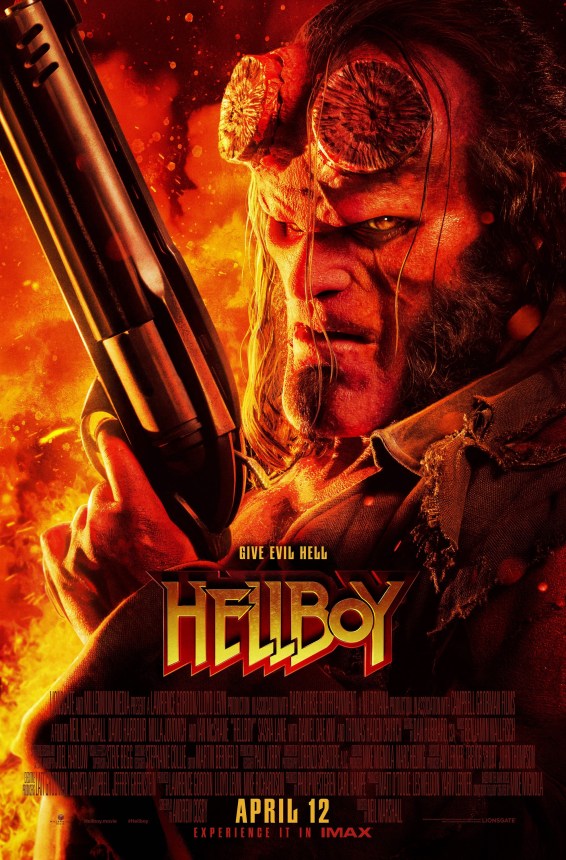
Hellboy (2019) – Film Review

In mid 2012, actor Ron Perlman once again endured the four hour make-up routine required to transform him into his iconic character: ‘Hellboy’ and fulfil the Make-A-Wish request of a six-year-old boy with leukaemia. Director Guillermo del Toro was so touched by this event that it inspired him to start production on a third ‘Hellboy’ instalment. But, following a dispute between del Toro and producer Mike Mignola, the project was soon cancelled, and instead, Mignola and his team began work on a reboot of the franchise, which finally released in 2019, to truly abysmal results.

Plot Summary: Whilst working side-by-side with his adopted father for the ‘Bureau for Paranormal Research and Defence,’ ‘Hellboy,’ a supernatural creature who came into our world in 1944 as a result of a demonic Nazi ritual, struggles to accept which world he belongs to, that being one of monsters, or one of men. All the while, an evil sorceress known as ‘The Blood Queen,’ returns to the modern world, eager to take her revenge on humanity for imprisoning her centuries ago…

According to producer Mike Mignola, the intention with this reboot was to replicant a style and tone closer to that of the original source material, as despite del Toro’s version of ‘Hellboy’ often being light-hearted aside from one or two disturbing moments, the original comic series created by Mike Mignola is, in reality, far darker and more gruesome. And, whilst this goal of wanting to make a ‘Hellboy’ film more horror/fantasy-oriented rather than just a typical superhero blockbuster is commendable, this reboot of the series continuously stumbles due to this tonal shift, even with talented director Neil Marshall (Dog Soldiers, The Descent, Doomsday) overseeing the project. Yet, this is only one of the film’s many problems, as it’s hard to sit through even a single viewing of ‘Hellboy’ without noticing the film’s incredibly fast pacing, awful comedic moments, and beyond messy plot, which for some reason draws, from four separate storylines from the ‘Hellboy’ comics.

‘Hellboy,’ or particularly, David Harbour’s performance as the titular character, is possibly the film’s finest aspect, as rather than just lazily mimicking Perlman’s beloved version of the character, Harbour displays a less mature interpretation of the superhero. Portraying the horned hero as a conflicted character, younger and stronger than Perlman’s version, but unsure as to if he is a real hero, which is an interesting internal conflict to explore and about the only element of the film that is consistent. Then there is Ian McShane as ‘Hellboy’s father figure, who is serviceable in his role alongside Milla Jovovich as the villainous; ‘Blood Queen,’ who, unfortunately, delivers one of the most over-the-top performances of her entire career.

Aside from the small detail of the filmmakers ensuring the colour red is never present in the same scenes as ‘Hellboy’ himself (excluding scenes where blood is shed, of course), the cinematography by Lorenzo Senatore is your usual affair for a superhero flick, having a handful of pleasant shots scattered amongst the plethora of bland hand-held camerawork utilised for action scenes and grand moments of destruction. But, regardless of how impressive the cinematography may or may not be, there is no distracting from the film’s unappealing CG effects, as in spite of the creature department clearly trying their best with the detailed costumes and prosthetic make-up on display, nearly all of the CG effects throughout ‘Hellboy’ appear instantly dated.

The original score by Benjamin Wallfisch is a peculiar concoction, being an odd mish-mash of orchestral and electronic tracks which only succeed in making the soundtrack feel quite dull when it’s not overly loud and irritating. Or at least, that’s the score before mentioning its use of electric guitars, which try desperately to present the soundtrack as something ‘awesome,’ but only emerges as annoying at best, with the film’s signature track; ‘Big Red,’ being the biggest offender for this.

However, an aspect of the film that is more in line with del Toro’s previous ‘Hellboy’ adaptation is its creatures, as although the effects that bring them to life aren’t impeccable, the actual creature designs are truly something be admired, with the ‘Hellboy’ comics clearly providing the filmmakers with plenty of visual influence. Even ‘Hellboy’s redesign was inspired by David Harbour’s own features, with the effects team adding a larger jaw and a heavier brow to further fit with Harbour’s facial structure.

In summary, while I can appreciate the effort that went into ‘Hellboy’ in some areas, the film’s flaws are just so evident it’s nearly impossible to ignore them. From its convoluted and overstuffed story to its dreadful CG effects, ‘Hellboy’s thrilling moments of action or amusing dark humour are minor when compared to its faults. Yet, by far the most frustrating part of this reboot is that it stripped away our final chance of seeing a third entry in the original ‘Hellboy’ series, an instalment myself and many other fans of this beloved character had been wanting to see for quite some time. Instead, we’re now stuck with this disappointing reboot, which failed miserably to reignite the spark of excitement in this superhero franchise. Final Rating: low 3/10.

hellboy_ver6_xxlg

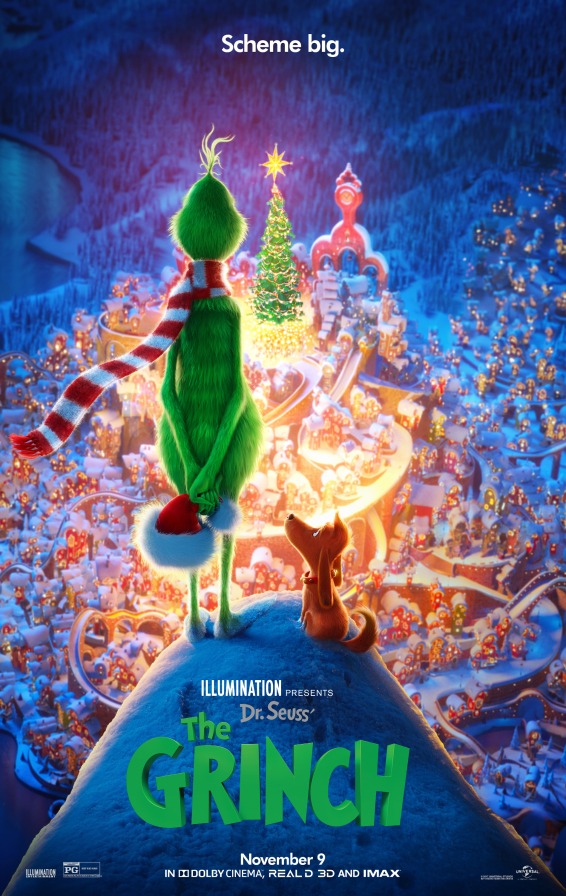
The Grinch (2018) – Film Review

Theodor Seuss Geisel, better known as his pen-name; ‘Dr. Seuss,’ is recognised today as one of the best authors in children’s literature. Through his whimsical writing, memorable characters and surreal illustrations, many of Geisel’s stories have become truly timeless as a result of how original they were compared to other children’s books released around the same period. So, of course, it would only be a matter of time till Geisel’s various characters began making their way to the silver screen, with one of his most villainous characters; ‘The Grinch,’ receiving many adaptations, the most recent of which possibly being the worst to date.

Plot Summary: In the town of ‘Whoville,’ the residents, known as the ‘Whos,’ excitedly await the arrival of Christmas Day. But, just north of ‘Whoville,’ on the top of ‘Mount Crumpit,’ the cantankerous and green-furred; ‘Grinch,’ begins to hatch a plan with his loyal dog; ‘Max,’ crafting a scheme to steal Christmas from the ‘Whos’ in an attempt to silence their irritating holiday cheer once and for all…

This 2018 readaptation of ‘How the Grinch Stole Christmas!’ is animated by Illumination Animation, the animation company behind modern family flicks, like ‘Despicable Me,’ ‘Sing’ and ‘The Secret Life of Pets,’ in addition to a previous ‘Dr. Seuss’ adaptation; ‘The Lorax,’ in 2012. This isn’t surprising of course, as Illumination Animation have truly exploded in popularity since 2010, mostly due to their creation of ‘The Minions.’ And, whilst I personally don’t despise the company as a whole, as I feel many of their films are entertaining enough for younger viewers, it’s fair to say their film catalogue is spotty at best, with many of their films boasting extremely predictable humour and generic animation/character designs, and ‘The Grinch’ is, unfortunately, no exception.

Benedict Cumberbatch portrays the title character, and although Cumberbatch is usually an actor I adore, having given an array of brilliant performances throughout his career. ‘The Grinch’ is without a doubt one of his weakest, as his performance somehow manages to feel both minimum effort and also far too cartoonish. Resulting in this version of the nefarious characters becoming instantly forgettable, especially when put in comparison with Jim Carrey’s beloved performance. Then there is also Cameron Seely and Rashida Jones, who portray ‘Cindy-Lou Who’ and her mother; ‘Donna,’ who this time around have their own subplot mostly unrelated to ‘The Grinch’s scheme, which serves little purpose aside from one particular scene. And, finally, there is Pharrell Williams as the story’s narrator, which is some of the most bizarre casting I’ve ever seen, as his Southern American dialect doesn’t at all fit the role of a traditional Christmas storyteller.

Similar to the rest of Illumination Animation’s releases, ‘The Grinch’ is visually impressive at a first glance, as the film’s animated cinematography and extremely vibrant colour palette is likely to catch any viewer’s eye. Yet, also in line with their other films, Illumination Animation’s style does feel very repetitive after so long, as each character/location does little to make itself stand out. A perfect example of this is ‘The Grinch’ himself, as while ‘The Grinch’ is implied to have very poor hygiene similar to other adaptations of the story, neither ‘The Grinch’ nor his home within ‘Mount Crumpit’ are ever displayed as unpleasant, even though ‘The Grinch’s home being dark and filthy serves as an extension of his vile personality.

Aside from ‘Tyler the Creator’s abysmal new rendition of ‘You’re a Mean One, Mr. Grinch,’ the original score by Danny Elfman is completely unremarkable. From ‘A Wonderful Awful Idea’ to ‘Stealing Christmas,’ all of the film’s tracks lack both memorability and charm, barley embracing the fantastical nature of ‘Dr. Seuss’ stories or the festive season itself, with the rest of the film’s soundtrack just relying on other modern renditions of classic Christmas songs.

Undoubtedly, the most disappointing aspect of this readaptation, however, is the actual animation style as one obvious benefit that this new adaptation has over the live-action adaptation of ‘How the Grinch Stole Christmas!’ is simply being animated, as this allows the film’s designs to greatly lean into the wonderful illustrations of ‘Dr. Seuss,’ as his sketches are incredibly difficult to recreate in real life as result of their harsh curves and gravity-defying architecture. But, strangely, the film doesn’t take advantage of this, with many designs only having a slight ‘Seuss’ influence in spite of the clearly inspired rhyming dialogue.

In summary, ‘The Grinch’ is a worst-case scenario for a readaptation, as I feel this animated film falls flat in most areas, never reaching the emotional or comedic heights of ‘How the Grinch Stole Christmas’ from 2000, or even matching up to the delightful hand-drawn animation seen in the original 1966 short. So, whilst its visuals may appear pleasant at first, it quickly becomes apparent something is missing, as this new adaptation gives the impression it was made by a team of producers rather than just one director, and as a result, fails to breathe new life into this age-old Christmas tale. Final Rating: 3/10.

grinch_ver5_xxlg

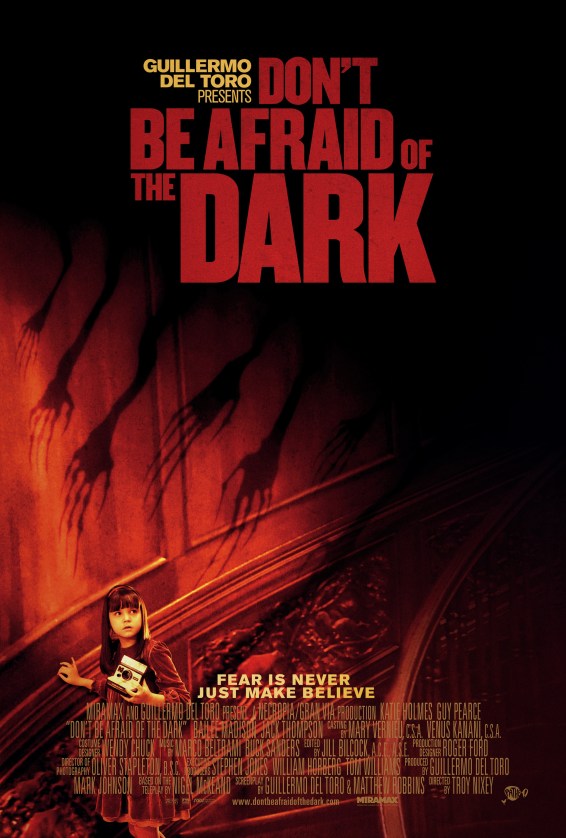
Don’t Be Afraid of the Dark (2010) – Film Review

Co-written/produced by Guillermo del Toro and directed by Troy Nixey, ‘Don’t Be Afraid of the Dark’ embraces many of the same elements as del Toro’s other films, crafting a narrative which combines both traditional gothic horror and childlike fantasy. But sadly, unlike a usual del Toro project, there is a noticeable absence in everything from captivating characters to memorising practical effects/creatures, resulting in a film that feels like a mostly copy-and-paste effort beyond one or two interesting ideas.

Plot Summary: After being sent to live with her father and his new girlfriend at their recently renovated manor, the previous home of the long-missing painter: ‘Emerson Blackwood’. Young ‘Sally’ begins to hear ominous voices emanating from the basement’s ash-pit, soon leading her to discover the cause of the painter’s disappearance…

Taking heavy inspiration from the classic H.P. Lovecraft short story: ‘The Rats in the Walls.’ ‘Don’t Be Afraid of the Dark’ is actually a remake of a low-budget 1973 TV film, as the now-iconic director Guillermo del Toro has stated in the past that he was terrified of the film when he first watched it as a child, later inspiring him to reimagine the mostly-unknown horror flick. Yet even with a much larger-budget and a more well-known cast, the film is still quite underwhelming when it comes to both its scares and story, as the film’s narrative follows a formula almost identical to many other modern horrors.

All of the performances throughout the film aren’t anything overly impressive, as whilst Katie Holmes does try her best to portray a young girl witnessing sights that no one else believes. Her character: ‘Sally’ (similar to the rest of the film’s characters) receives very limited characterisation, which does make many of the scenes revolving around the family-dynamic far less entertaining. Then there is also ‘Sally’s father and his girlfriend: ‘Kim’ portrayed by Guy Pearce and Bailee Madison respectively, and although Madison gives a serviceable performance, Pearce may give one of the weakest performances of his career here. As ‘Sally’s father: ‘Alex,’ always shows little concern or remorse when it comes to his daughter, making the character immensely difficult to resonate with.

The cinematography by Oliver Stapleton is very grand in its execution, allowing for a large number of wide-shots, some of which even flow smootly-around the various rooms of the manor. But it’s the film’s colour palette which is most worth noting, as the film utilises much more red and yellow than many other modern horrors, which is a pleasant change in terms of visuals as the more vibrant colours reflect the manor’s elegant design, which is probably one of the most visually striking ‘haunted houses’ in recent memory, with even the manor’s front entrance having a beautiful carving of an old oak tree merged into the multi-coloured glass.

Marco Beltrami and Buck Sanders provide the original score for the film, which similar to the film’s cinematography, gives the story a much more epic feel. As the heavy orchestral score could’ve easily been taken from any classic gothic horror, lending itself effectively to many scenes aside from a couple of generic tracks. The film often also features some fantastically creepy sound design, as the film’s creatures continuously speak to ‘Sally’ using their ghostly whispering voices, which seemingly echo throughout the usually empty corridors of the manor.

Although many of del Toro’s other outings do provide plenty of wonderful practical effects to gaze at, usually creating an array of unsettling and memorable creatures, ‘Don’t Be Afraid of the Dark’ takes another (less appealing) route to its monsters. As the film’s creatures are brought to life almost entirely though CG effects, which not only makes some shots appear slightly dated, but also manages to take away from nearly all of the film’s tense moments. Additionally, the film’s creature designs aren’t all that menacing, as despite the idea of evil fairytale monsters being quite unique (as the creatures are later revealed to be a sinister incarnation of tooth-fairies). The creature’s extremely small-size does make them feel very unthreatening even if it is a nice change-of-pace over having one large entity, as the film never does enough with its miniature antagonists regardless of what knives/tools they arm themselves with.

All in all, ‘Don’t Be Afraid of the Dark’ is a film that is regrettably just not worth its short runtime. As while I admire the effort to combine famed fairytale stories with a chilling atmosphere, the predominantly poor performances and numerous unexplored concepts leave the film simply another bland horror flick with a surprisingly weak screenplay by del Toro to-boot, especially when compared to much of his other work. Still, with all that said, I feel that Troy Nixey does deserve another shot in the director’s chair someday, as since this film’s initial release, he actually hasn’t worked on any other projects, which is unfortunate, as I do believe he does have some talent as a filmmaker when looking at this film’s merits. Final Rating: high 3/10.

Layout 1

The Amazing Spider-Man 2 (2014) – Film Review

Overstuffed with plot lines, characters, and ideas alike, this sequel to the ‘Spider-Man’ reboot from 2012 lacks much of anything to truly get invested in. As, this time around, returning director Marc Webb alongside the long list of Sony producers seem to be far more focused on setting up future sequels and spin-offs for the franchise rather than the current story, resulting in a superhero flick that’s just as muddled and inconsistent as it is forgettable. And, while the film did receive fairly average reviews upon its initial release, I’ve personally always felt ‘The Amazing Spider-Man 2’ is anything but ‘Amazing.’

Plot Summary: Continuing the adventures of the wall-crawler, New York City’s hero is thrown into action once again as he faces his newest threat; ‘Electro,’ whilst also balancing his normal day-to-day life as ‘Peter Parker’ with that of being ‘Spider-Man.’

It’s easy to see that throughout its production, ‘The Amazing Spider-Man 2’ faced the problem of having far too many creative minds involved, as director Mark Webb fought against producers constantly as to what would be featured and explored within the superhero sequel. This is why the film eventually ended up having three separate antagonists, in addition to also focusing on ‘Peter’s various relationships and the surrounding mystery of his parents, which when all combined, make the film feel completely directionless, as the audience is given very little time to become invested in any specific aspect of the story before quickly moving on.

Andrew Garfield and Emma Stone return to their roles of ‘Peter Parker’ and ‘Gwen Stacey’ for the sequel, whos romantic chemistry is still one of the film’s best elements similar to the previous instalment. New to the cast this time, however, is Jamie Foxx, Dane DeHaan and Paul Giamatti, who, all take on various roles as villains from ‘Spider-Man’s iconic rogues’ gallery, with the three portraying ‘Electro,’ ‘Green Goblin’ and ‘The Rhino,’ respectively. Yet, despite all these actors giving some fantastic performances in the past, most of the cast give extremely over-the-top and sometimes even strange performances here, which is only made worse as a result of the film’s large amount of cringey dialogue and absence of a consistent tone.

The film’s decent yet not overly inventive cinematography by Dan Mindel is, unfortunately, also hurt by the erratic editing throughout the film, as whilst not always present, occasionally, the editing does result in quite rapid cuts, with some shots that utilise slow-motion even being cut to when the ones before/afterwards did not, stopping the film from ever obtaining a smooth flow. Of course, although it’s usually a no-brainer when it comes to modern superhero flicks, the film’s CG effects are one of its most impressive and visually pleasing aspects, with many of ‘Electro’s shocking abilities being visualised as if they were ripped straight from the source material.

One of the most bizarre original scores in Zimmer’s catalogue of work, the original score by both him and Pharrell Williams gives the impression it’s made up of a number of different tracks from other unrelated films. As, aside from the signature track; ‘I’m Spider-Man,’ which does suitably feel like a heroic and upbeat theme for the beloved superhero. Many of the other tracks simply don’t mesh together well when they manage to stray away from being generic. However, it’s the infamous track; ‘I’m Electro,’ which certainly feels the most out-of-place, as the track employs electronic dubstep with vocals underneath by Pharrell himself that give voice to ‘Electro’s compulsive thoughts.

‘The Amazing Spider-Man 2’ is even surprisingly poor when it comes to its action, as whilst the film does attempt to be very ‘large-scale’ with its action set pieces, having many of them take place within the centre of New York City (where nearly all of the sequel was actually filmed). Much of the action also heavily relies on slow-motion, cheesy quips/jokes, and CG effects, all of which give the film’s action scenes an insufficiency of tension due to their over-extravagance.

In summary, after ‘The Amazing Spider-Man 2’s release, it’s fair to say that Sony was put into a tough situation. As in spite of the film doing fairly well at the box-office, it was clear that fans had no further interest in seeing Sony’s many planned franchise instalments, eventually leading them to strike a deal with Disney to bring ‘Spider-Man’ into the Marvel Cinematic Universe, now portrayed by actor Tom Holland. Although some may be saddened this version of the iconic web-head will more than likely never return to our screens, other than the comic-accurate suit and great chemistry between Garfield and Stone, I feel this sequel (and rebooted series in general) had very little to offer to begin with, and I’m thankful Marvel is now taking the character in a different direction rather than just regurgitating the same narrative we’ve seen many times before. Final Rating: low 3/10.

amazing_spiderman_two_ver11_xxlg

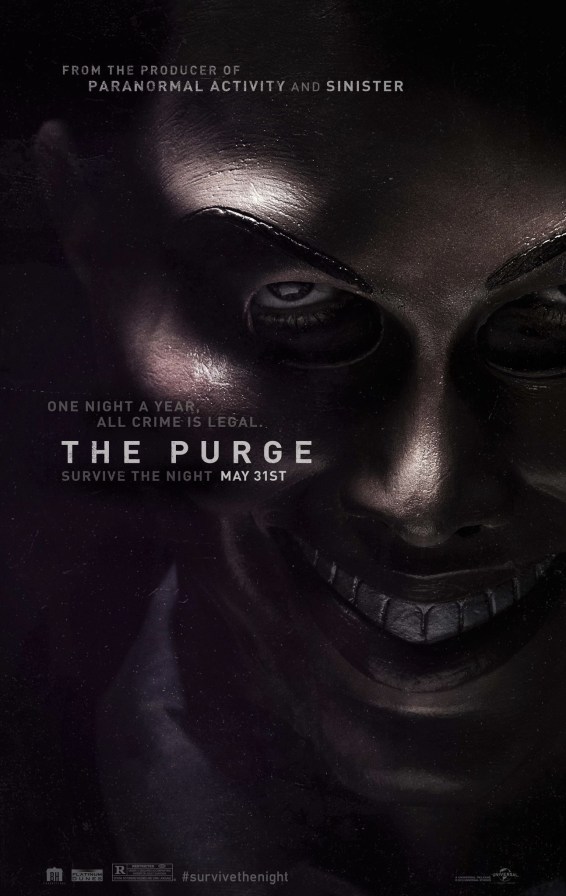
The Purge (2013) – Film Review

The first instalment in the now-iconic horror franchise, the original entry in ‘The Purge’ series is a fantastic idea quickly ruined by its poor execution, as whilst the film’s main concept of one night a year where all crime is legalised is both a terrifying and intriguing notion, the entire series (in particular this first film) seem to explore the horrific world its story is set within in all the least interesting ways.

Plot Summary: In the near future, America celebrates ‘The Purge’ once a year, a national event in which all crime is legal for twelve hours. On this night of chaos and murder, a wealthy family soon find themselves hostages for unintentionally harbouring the target of a murderous syndicate after he gains access into their fortified home…

Directed by James DeMonaco, this director has actually taken on every instalment of ‘The Purge’ series from the original film through to the latest entry; ‘The First Purge,’ in 2018. According to DeMonaco, the idea for the film first came about during a moment of road rage when he and his wife were cut-off in traffic by a drunk driver, resulting in DeMonaco wishing you could have one free murder a year after witnessing the driver’s complete lack of regret. While a creative and disturbing concept by itself, ‘The Purge’ series has also captivated many through its many themes. Although mostly focused on in later films, the various themes of this horror franchise could be interpreted by viewers in a number of different ways, from political to psychological.

Ethan Hawke, Lena Headey, Max Burkholder and Adelaide Kane portray the main family of the film; ‘The Sandins,’ who, unfortunately, with the exception of Ethan Hawke as the father, ‘James Sandin,’ all give relatively weak performances, portraying the family as extremely mundane throughout the runtime. However, this is also heavily due to their actual characters, as nearly every character within the film is written as either very peculiar or very cliché, with the son, ‘Charlie Sandin,’ having a medical problem which he takes medication for, in addition to having a strange character quirk for building and driving a remote control car attached to a disfigured baby doll, which ‘Charlie’ uses to navigate his way around the house. But, due to how specific the latter is, he (and his sister) end up seeming like nothing more than plot devices to put the rest of the family in (or get them out of) peril.

Aside from one or two shots, the cinematography by Jacques Jouffreet is unsurprisingly quite bland. Mostly unitising mid-shots and close-ups, ‘The Purge’ never really attempts to do anything overly inventive with its cinematography, usually relying on rough hand-held shots. Alongside this, the lighting throughout the film is immensely dark, as after the murderous syndicate cut the power to the family’s home, the remainder of the film’s runtime is spent in near-total darkness, which can become a little irritating after a point as the constant dark corridors make the characters even harder to follow than they already were, as the cinematography doesn’t allow the viewer any understanding of the house’s convoluted and confusing layout.

Even though many modern horrors lack an ingenious score, the original score by Nathan Whitehead is fairly uninspired, as in spite of the soundtrack helping to build up a tense atmosphere during a few scenes, the original score simply isn’t memorable in the slightest and is barely distinguishable from any other generic horror/thriller soundtrack, despite the huge list of tracks the film has to offer. However, the excellent costume design of ‘The Purge’ does help redeem the weak score in some respects, as the many different ‘Purge’ masks make for some memorably creepy visuals.

The most obvious issue ‘The Purge’ has been criticised for is its focus on being more of a home invasion thriller than what most would imagine (and desire) a ‘Purge’ film to be, as the original film is actually extremely contained, being set nearly entirely within the family’s home and relying on only a small group of characters. While director James DeMonaco has stated this was mostly due to the film’s small-budget and lack of filming days, you can’t help but feel the film isn’t exploring its chaotic world as effectively as it could whilst watching. Of course, being a modern horror, ‘The Purge’ is also littered with jump-scares throughout, many of which are very predictable due to the build up to each one, eventually making them feel nothing but tedious.

In summary, whilst I personally don’t feel ‘The Purge’ series improves much even throughout its future entries, there are still some aspects I enjoy within this modern horror, from its interesting ideas and themes to its decently entertaining performance from Ethan Hawke and array of menacing masks and costumes, ‘The Purge’ does have great potential, but I simply feel it was just never fully realised. While this horror series does have a devoted fanbase, I’ve never quite understood its appeal. As for me, ‘The Purge’ franchise will always have its intriguing ideas spoiled by its dull filmmaking and storytelling. Final Rating: 3/10.

purge_xxlg