Silent Night (2012) – Film Review

“I’m on His Tail Now. There’s Nowhere Safe…” – Sheriff Cooper

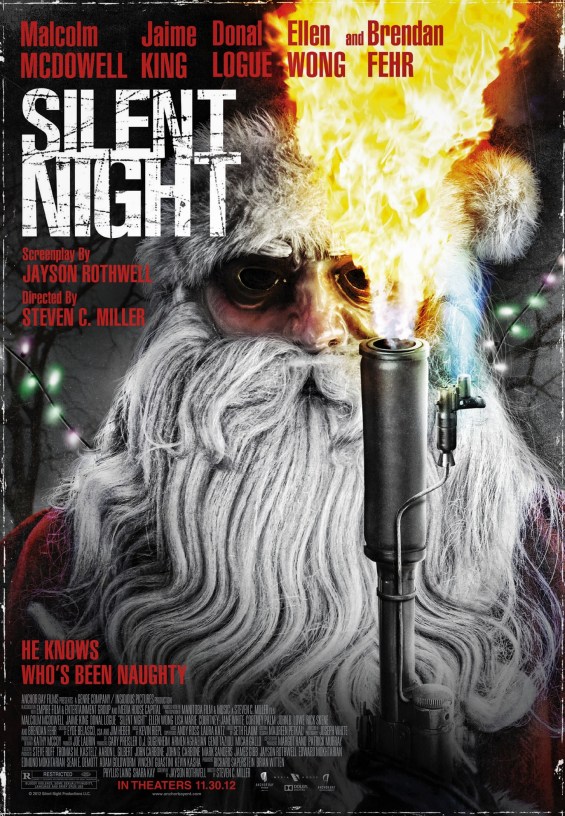
One of the most controversial films of the 1980s, primarily due to its promotional material, which featured a killer Santa Claus brandishing an axe as he emerged from a chimney. Silent Night, Deadly Night, released in 1984, is well-known amongst horror fans for its bizarre legacy, spawning a franchise consisting of four extremely low-budget sequels that had barely any relation to each other, yet still gained a cult following, thanks to their bewildering stories and unintentionally hilarious moments. Years later, in 2012, we received Silent Night, a remake of the original film that reimagines the concept of a murderous Father Christmas for modern audiences, utilising its attractive visuals and creative kills to provide slasher fanatics with their fill of ho-ho-horror, even if Silent Night is filled with many of its own unique issues.

Plot Summary: When a sadistic serial killer dressed as Santa Claus embarks on a Christmas Eve rampage through a remote Midwestern town, the local police force must follow the killer’s trail of victims in the hope of uncovering his identity and averting the rest of his festive bloodbath…

Partially inspired by the 2008 Covina Holiday Massacre, during which forty-five-year-old, Bruce Jeffrey Pardo, killed nine people at a Christmas party whilst wearing a Santa Claus suit. Silent Night isn’t the first voyage director Steven C. Miller (The Aggression ScaleMaraudersThe Line of Duty) has taken into the horror genre, though, it may be his goriest as Miller, along with screenwriter Jayson Rothwell, up the ante from the original film by jumping straight into the violence, having the kills drive the story forward as they occur one after another. However, the screenplay certainly falls short when it comes to some other aspects, like developing the characters or building intrigue regarding the true identity of the masked killer, as the characters are insipid and the mystery uninteresting, making the film’s climactic plot twist feel less than galvanising, which is only made worse by the overcompensating dialogue.

The central cast of Jaime King, Malcolm McDowell, Donal Logue and Ellen Wong all try their hardest at providing their fairly lifeless characters with a personality and a reason for the audience to empathise with them, but it’s a largely wasted effort as King and Logue merely go through the motions as small-town police officers with a few glimmers of characterisation. While McDowell truly steals the spotlight as a dimwitted and pompous sheriff, frequently coming across as if his performance was taken from another film entirely. Then there is veteran stuntman, Rick Skene, who fulfils the demanding physical requirements of the killer Santa without saying a word, using his immense stature and threatening demeanour to great effect.

Contrasting the horrific bloodshed of the story with a candy-coated aesthetic of stereotypical Christmas traditions, the cinematography by Joseph White allows for a number of visually interesting shots throughout the runtime, nearly all of which are enhanced by the festive colour palette, which employs an abundance of bright red, green and blue lights to make potentially bland locations, such as the police station or a motel, more visually appealing. And despite the moments of barbaric murder frequently falling back on hand-held shakiness in a feeble attempt to increase the brutality of said murders, Silent Night does redeem itself during its flashback sequences as these scenes are entirely coated in black and white, aside from the killer Santa’s suit, which remains a glowing red.

Contrarily, the original score by Kevin Riepl is a blaring and often tedious horror soundtrack, as outside of the track; Sheriff Cooper, which strangely contains a guitar riff that sounds as if it’s been taken from a ’70s crime-thriller. The majority of the score, including the tracks; The Chipper and Rack Mounted, are simply loud and unexceptional. Of course, being a film set at Christmas, the film also features a handful of renowned Christmas songs, such as Up on the Housetop and Deck the Halls, which thankfully aren’t overused.

Although Silent Night, Deadly Night had its fair share of gore, Silent Night takes its gruesome violence to another level, as the bloodthirsty Santa make use of a range of tools, including an axe, a cattle prod, a scythe and even a flamethrower, in addition to constantly exploiting the environment around him, such as a scene where he impales a teenager onto a mounted set of deer antlers in a clear reference to the original film. What’s more, all of the practical effects used throughout these moments are magnificent, rarely relying on CG enhancements for further shock factor.

In summary, Silent Night is a modern slasher with its heart firmly in the ’80s, and I say that as a positive thing, as rather than being dull and quickly forgettable, it maintains the same level of cheese, dark humour and seduction as Silent Night, Deadly Night, but as a result of its modern techniques, looks far better than most horror remakes/reimaginings. So, it’s truly a shame that the screenplay and original score continuously let the film down, as with a few improvements, Silent Night could’ve gone down as a certified Christmas horror classic. But, as it stands, while the film is far from a masterpiece, Silent Night will please fans of the series as well as those seeking a festive slasher. Rating: high 5/10.
silent_night_xxlg

Brightburn (2019) – Film Review

“Maybe There Is Something Wrong With Brandon. He May Look Like Us, but He’s Not Like Us!” – Kyle Breyer

An inversion of the illustrious Superman origin story, Brightburn, released in 2019, is a film with an aggressively simple pitch, essentially boiling down to; “What if the Man of Steel was Humanity’s Oppressor Rather Than its Saviour?” And, even though the film doesn’t fully follow through on that enthralling premise, predominantly due to its sketchy screenplay and an often botched sense of dread, Brightburn crossbreeds horror tropes with superhero staples in an effective enough fashion to at least offer something unique for enthusiasts of both genres in the face of its many defects.

Plot Summary: After a difficult struggle with fertility, Tori Breyer’s dreams of motherhood become a reality when a child from another world crash-lands on her farm, later naming the boy; Brandon Breyer. But, years later, as Brandon nears puberty, a darkness begins to manifest within him, leading Tori, and her husband, Kyle, to become overwhelmed with terrible doubts concerning their son, doubts that soon put them in grave danger…

Directed by David Yarovesky (The HiveNightbooks) and written by James Gunn’s brother and cousin, Brian Gunn and Mark Gunn, respectively. Brightburn certainly succeeds in its primary goal: setting up an almost identical scenario to Superman’s origin story before taking the narrative in a far darker direction. And the film clearly has no pretences with what it’s drawing from, as Brightburn actually shares many similarities to Superman’s comic book run beyond just its story. From Brandon Breyer’s name following the comic book convention of superheroes with alliterative first and last names, such as Clark Kent, Peter Parker and Bruce Banner, to the story being set in Kansas, the same state where Kal-El first touched down and later grew up to become Superman. The film’s connections to the Caped Wonder are ever-present, even extending to the costume design in certain scenes as Brandon wears combinations of blue, red and yellow, the principal colours of Superman’s iconic outfit. Still, all this association doesn’t fix what is Brightburn‘s most substantial problem; its runtime. With the plot being squeezed into a very brief ninety-one minutes, the film is unable to waste any time, jumping straight into Brandon discovering his abilities and embracing his detrimental side. Thus, the story allows for little emotional investment, with much of the first act being nothing but scene after scene of what seems like trailer-made moments.

When it comes to the cast, Elizabeth Banks and David Denman share most of the film’s character-related scenes as the pair portray concerned parents starting to suspect that their blessing from the stars might, in actuality, be a scourge. However, whilst this is an acceptable start for writing your central characters, Tori and Kyle have little nuance and barely any development outside of the love (and eventual doubt) they share for their son. Then there is Brandon Breyer himself, portrayed by the young actor Jackson A. Dunn, who does a great job not only considering his age but also a similar lack of characterisation, as once Brandon’s twelfth birthday arrives, his sociopathic behaviour suddenly arises, morphing him from an innocent child to a homicidal supervillain so swiftly it appears absurdly forced, even if Dunn’s performance does help to make the transition feel slightly more believable through his complete absence of emotion during the latter half of the film.

Aside from some pleasant visual nods to further associate itself with the character of Superman, including a sweeping rural setting and accompanying farmhouse, interchangeable with that of Clark Kent’s humble abode. The cinematography by Michael Dallatorre is fairly unremarkable, usually just displaying shots without much thought or creativity put into them. With that said, many of the film’s CG effects are solid, especially when taking into account the film’s budget, which was considerably smaller than most modern superhero blockbusters.

Despite being described as a merging of superhero and horror soundtracks, make no mistake that the bulk of the original score for Brightburn, composed by Tim Williams, is firmly entrenched in the horror genre, with tracks usually starting out slow and composed before warping into something far more nightmarish, likely symbolising Brandon’s gradual corruption from the evil that dwells within him. This idea is further illustrated by the unnerving sound design as the more Brandon falls into the abyss of immorality, the more distorted voices he begins to hear, each speaking an uncanny extraterrestrial language.

Unfortunately, between the two previously mentioned genres that Brightburn attempts to represent, the film undoubtedly appears underbaked on the horror side of things as Brightburn lazily relies on clichéd horror concepts like flickering lights and jolting curtains. Meaning that it’s a rarity the film actually tries to build tension or have any frightening occurrences outside of loud jump-scares or the admittedly gruesome ways Brandon disposes of his victims.

In summary, between the red cape and blazing heat-vision, Brightburn is a film that knows exactly what it is; an immoral retelling of an established superhero’s beginnings, complete with plenty of violence and an abundance of horror trickery. Yet, all of the film’s spectacle ultimately feels meaningless when compared to its deficiency of strong characterisation and emotional depth. As such, a majority of the film’s most entertaining moments come at the expense of understanding any of the characters on a deeper level, consequently leaving Brightburn a film that never manages to strive past the subversive elevator pitch it was originally conceived as. Rating: high 5/10.

brightburn-p1056052

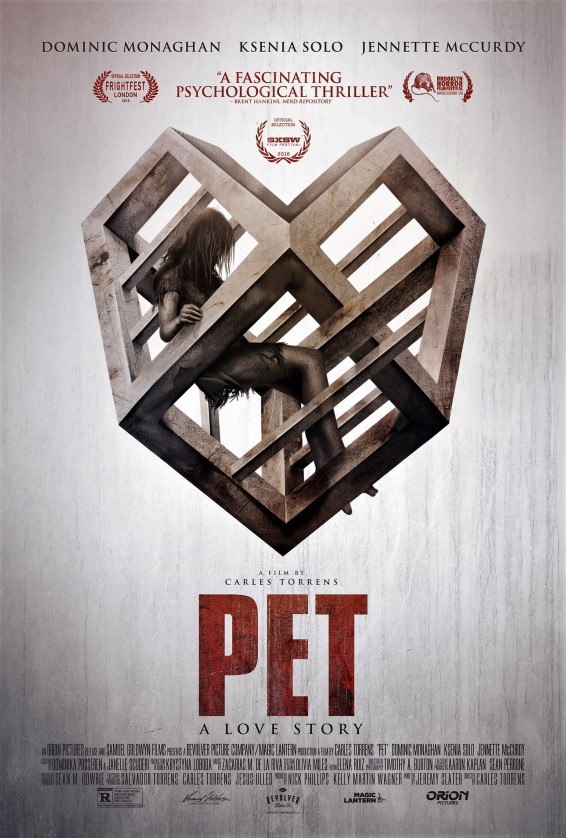
Pet (2016) – Film Review

An unsettling indie horror firmly within the mould of the classic thriller; ‘The Collector,’ from 1965, 2016’s ‘Pet’ takes what could potentially be nothing but an exploitative horror and twists it into a unique story that continuously indulges in defying its audience’s expectations. And, although the film never manages to fully escape its various flaws by the end of its brief runtime, ‘Pet’ is able to achieve a nice balance between many of its best and worst aspects.

Plot Summary: After ‘Seth,’ a socially awkward recluse bumps into his old high school crush; ‘Holly,’ he subsequently becomes obsessed with her just as he was many years ago, ultimately leading him to abduct her and hold her captive beneath the animal shelter where he spends his working days, enclosing her in a cage just as he does with the canines above…

Directed by Carles Torrens (Apartment 143) and written by Jeremy Salter, the writer partly responsible for the disastrous ‘Fantastic Four’ reboot in 2015. ‘Pet’ was considered an utter failure upon its initial release, with the film only earning a box-office gross of around £8,000 on a total budget of £15,800, in addition to receiving a series of extremely mixed reviews from both critics and audiences alike. While this may be due to many fearing ‘Pet’ would be nothing but a grotesque ‘Captive Woman’ flick, ‘Pet’ is actually much more interested in going against the typical clichés many viewers will associate with this idea to delve into the ever-shifting power-dynamic between ‘Seth’ and ‘Holly,’ making for a pretty engrossing and unpredictable watch even if a level of disbelief is surely required as a result of the film’s many, many plot twists.

Much of what makes ‘Pet’ work can be attributed to its two leads, with Dominic Monaghan being hugely effective as ‘Seth,’ portraying him as a soft-spoken introvert who simply meanders his way through life with a small apartment and boring job, looking anyone (or anything) that could make his life truly worth living. And, whilst Monaghan is certainly capable of being intimidating when the story requires it, it is a shame that much of ‘Seth’s transformation from a wholly-reclusive loner to a plotting unhinged stalker feels very rushed. Then, of course, there’s ‘Holly’ portrayed excellently by Ksenia Solo, who is far from your usual helpless victim alluded to almost immediately through Solo’s sly performance and the unhealthy relationship that grows between her and ‘Seth’ as the story continues on. However, ‘Pet’ sadly still features a weak link amongst its cast, as Jennette McCurdy’s performance as ‘Holly’s best friend, ‘Claire,’ feels lacking in nearly every scene she’s in, despite her actual character serving a crucial role in the development of ‘Holly’s character.

A large majority of the cinematography by Timothy A. Burton is visually interesting, but unfortunately, many of the film’s shots are spoilt due to the overreliance on hand-held camerawork, with a number of shots being accomplished through hand-held for seemingly no reason. Nevertheless, the cinematography is varied enough to stop the story’s limited number of locations from becoming monotonous, especially when placed alongside the dramatic lighting and grimy set design.

Similarly, the original score by Zacarías M. de la Riva is competent, yet many tracks do feel more suited to something like a modern crime thriller than a disturbing psychological horror such as this, feeling especially out-of-place during any scenes that feature graphic violence. Furthermore, there are also a number of moments where the film implements its soundtrack during scenes that I personally feel would’ve been far more effective should they have been completely silent or possibly placed more emphasis on sound design.

The main issue ‘Pet’ suffers from is the inconsistency of its writing, as although its many subversions of the horror genre immediately put it on a level higher than a large majority of modern horror flicks that entirely rely on obnoxiously loud jump-scares. Much of the film’s characterisation is ruined as a result of clunky dialogue, whether that’s due to the actual line itself or its delivery, which is unfortunate as many of the film’s extended dialogue scenes are where the story has the most to chew on, developing its characters and their motivations while simultaneously implementing its signature theme of taking advantage of the opposite sex, even if this underlying theme is fairly surface level.

In short, whilst ‘Pet’ undoubtedly has its strengths, many of them do feel undermined by its weaknesses. From Jennette McCurdy’s weak performance to the peculiar dialogue and continuous reliance on hand-held camerawork, ‘Pet’s constant tension-building and subversion of classic horror tropes may not have been enough to draw in horror fans back in 2016, especially with the likes of ‘Don’t Breathe,’ ‘Hush’ and ‘The Autopsy of Jane Doe’ all releasing around the same time. Still, while I understand why ‘Pet’ was given so little attention, I do hope more genre fanatics stumble across this obscure horror, even if that doesn’t necessarily mean it’ll receive praise from all. Final Rating: 5/10.

pet_ver2_xxlg

Escape Room (2019) – Film Review

Divertive yet still rather thrilling in parts, ‘Escape Room’ directed by Adam Robitel (The Taking of Deborah Logan, Insidious: The Last Key) fails to unlock much of the potential in its premise, eventually devolving into what is simply scene-after-scene of the film’s characters solving puzzles in a number of themed rooms whilst on a strict time-limit. Yet, depending on what you desire to see from a modern thriller, this may be enough to serve a passing diversion, as the film chooses to just ignore its lack of realism and originality in favour of distracting its audience through creative set design and tense fast-paced sequences.

Plot Summary: When six strangers are each sent a mysterious black puzzle box withholding an invitation to an immersive escape room, they all make their way to the ‘Minos’ facility on the promise of being able to win a fortune should they escape. But, after entering what seems to be the building’s waiting area, innocent fun soon turns into a deadly game as the group discover that each room thy enter is actually an elaborate trap…

From a mere mention of the film’s plot, the ‘Saw’ and ‘Cube’ franchises are understandably the first two things that come to mind. As, in many ways, ‘Escape Room’ is effectively just a far less violent version of those familiar setups, with a character heading into a room only to be greeted with a convoluted trap that will result in their death should they not escape it. And, while ‘Escape Room’ does contain at least a couple of sparks regarding something original, the film is also far from subtle in both its storytelling and dialogue, with plenty of cheesy lines, implausible events and characters’ backstories being shown through literal flashbacks.

Taylor Russell, Logan Miller, Jay Ellis, Tyler Labine, Deborah Ann Woll and Nik Dodani all give passable performances as the main group of characters forced into a twisted game. Their actual characters, however, are possibly the film’s biggest missed opportunity, as whilst a few of the characters do receive development early on in the narrative, its quickly becomes clear as to which characters the film is favouring, making it easy to predict who is going to live, and who is going to die. But, if the film would’ve managed to better balance its characterisation, then not only would the story have been more compelling, but this would’ve kept the viewer constantly guessing as to who could go next.

Aside from one or two wide shots when the group first enter a new room, the cinematography by Marc Spicer is mostly uninspired, never really attempting to integrate any incredibly innovative or unique shots. Still, the cinematography does serve its purpose for the most part, backing up the story without ever relying too heavily on the use of hand-held camerawork or overly choppy editing. Additionally, the film’s CG effects (as sparsely used as they may be), are serviceable but not much else beyond that.

Contrarily, the original score by Brian Tyler and John Carey is fairly inventive, as the pulsing and suspenseful electronic score utilises everything from ticking clocks to power tools, representing the time-pressed characters and the constantly changing environments from which they are trying to escape. This means tracks, such as ‘Coaster’ and ‘Testing Your Limits,’ massively help to build tension, whereas moody tracks, like ‘The King of Trading’ and ‘Let the Games Begin,’ feel more sci-fi and atmospheric in nature. The film’s main theme, simply titled; ‘Escape Room,’ even receives a dubstep-like remix by musicians ‘Madsonik’ and ‘Kill the Noise,’ which plays over the film’s stylised end credits.

The film’s set-design is possibly its best aspect, as rather than going for the bog-standard look of libraries and basements for the basis of each room, the film explores an array of diverse environments for its puzzles. From a snowy log cabin, complete with a grand mountain vista, to an upside-down billiards bar, the film’s ever-changing locations help keep the story’s signature concept feeling fresh. Many of the rooms also relate to the character’s traumatic backstories, the first room, for example, is essentially a giant oven which will burn the group alive should they not escape, this mimics ‘Amanda’s backstory, who was badly burned after she barely survived an IED explosion while serving her country.

In summary, not only is ‘Escape Room’ similar to the ‘Saw’ series in terms of its story and setup, but, unfortunately, also in terms of its franchise potential, as its pretty obvious from the film’s extremely forced ending that Sony Pictures wanted their own low-budget horror/thriller franchise as an easy way to gain profit, and riffing on an already iconic series is a trouble-free way to achieve this. So, although it’s set-design and original score are admirable, in addition to a large majority of the filmmaking ‘Escape Room’ has on display being above-average, if not better, the film definitely has its share of problems, and, in my opinion, isn’t worthy of an entire film series. Final Rating: 5/10.

escape_room_xxlg

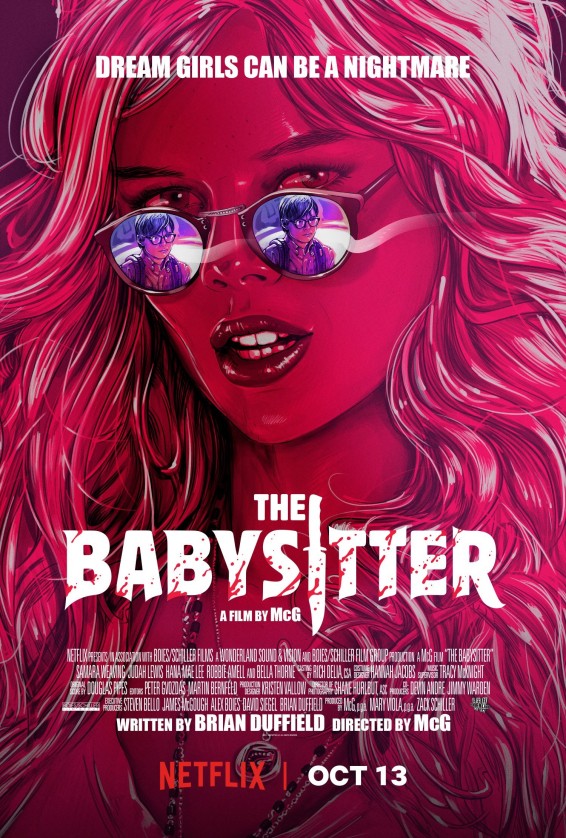
The Babysitter (2017) – Film Review

Originally filmed in 2015 with the intention of playing in cinemas, the horror-comedy; ‘The Babysitter,’ wasn’t seen by any horror fanatics until it released late 2017 after Netflix acquired the rights to the film for streaming. And, although ‘The Babysitter’ doesn’t exactly break any of the rules we’ve come to expect within the horror genre, this horror-comedy with splatterings of style must’ve been entertaining enough for those who decided to watch it, as the film would eventually spawn a Netflix-exclusive franchise with a later sequel.

Plot Summary: Riddled with anxiety, twelve-year-old; ‘Cole,’ has always been bullied and picked on due to his constant panicking, only finding comfort around the one person who understands him, his attractive babysitter, ‘Bee.’ That is, until one night, after ‘Cole’ secretly stays up past his bedtime to discover she’s actually part of a satanic cult, forcing ‘Cole’ to spend the rest of his evening evading ‘Bee’s band of killers who will stop at nothing to prevent him from spilling their dark secret…

Directed by Joseph McGinty Nichol (Charlie’s Angels, Terminator: Salvation, This Means War) or ‘McG’ as he more commonly goes by, ‘The Babysitter’ is a film that has received a number of alterations (both big and small) since even the early stages of its pre-production. For example, in the original screenplay for the film, ‘Sonya’ was actually a cheerleader, ‘Allison’ was a journalist for her high school newspaper, and ‘Max’ had dreadlocks, but eventually it was decided that ‘Bee’s cult followers should be reimagined to more closely reflect the stereotypical characters seen in classic slasher flicks, only in this film, they’re the antagonists. And, this idea is one of the film’s best aspects in terms of its writing, as it gives the film a real sense of self-awareness in addition paying respect to what came before it. Most notably, the ‘Friday the 13th’ series, which ‘Max’ references directly at one point when he chants; “Ch-Ch-Ch-Ah-Ah-Ah,” whilst chasing ‘Cole.’

Judah Lewis does manage to leave an impression in his first film role, portraying protagonist ‘Cole’ as an innocent twelve-year-old with few friends aside from ‘Bee,’ even if a large portion of his anxious characterisation feels far too over-the-top. Then there is also Samara Weaving as the titular babysitter; ‘Bee,’ and her cult followers; ‘Max,’ ‘Allison,’ ‘Sonya’ and ‘John,’ portrayed by Robbie Amell, Bella Thorne, Hana Mae Lee, and Andrew Bachelor, respectively. Who, are all wonderfully devilish throughout the film, having plenty of dark comedic moments between them making their deaths quite unfortunate, as while I’m sure most could’ve guessed their characters do die at some point within the narrative, we don’t get to spend enough time with any of them to get a strong grasp on their exaggerated personalities or any understanding of their malevolent cult.

In spite of the usually dull cinematography by Shane Hurlbut, ‘The Babysitter’ still manages to be one of the more visually interesting Netflix Originals through its unique style, as the film continuously implements different text, graphics and colours to give it a distinct stylistic appeal, not too dissimilar from (although nowhere near impressive as) ‘Scott Pilgrim vs. The World’ from 2010. Many of these editing decisions also help to redeem the film’s humour, which is extremely inconsistent, bouncing from hilarious cutaways and meta horror jokes to embarrassing lines of dialogue which try far too hard.

Whilst composer Douglas Pipes has crafted some great scores in the past, like ‘Monster House’ and ‘Trick ‘r Treat,’ ‘The Babysitter’ is certainly not one of them, as even with the film having many serviceable tracks. The soundtrack in general just lacks anything distinctive, and I believe that if it was ever compared to any other score from Pipes, or even just a handful of random horror scores, I doubt most would be able to tell it apart. The film also throws in the iconic Queen song; ‘We Are the Champions,’ nearing the runtime’s end, which feels immensely out-of-place and comes out of nowhere.

For a large duration of its tight runtime (which the film breezes through as a result of its unrelentingly fast pacing), ‘The Babysitter’s story is predominantly just one long chase sequence, and whilst occasionally tense, I couldn’t help but feel that the film’s screenplay could’ve taken better advantage of its evil babysitter concept or its few supernatural elements, despite the series second entry; ‘The Babysitter: Killer Queen,’ delving much further into the latter. Yet, the film doesn’t disappoint when it comes to its violence, having plenty of fantastically gruesome gore effects which are all successfully played for comedy.

In summary, I could see ‘The Babysitter’ being an enjoyable experience for some and possibly just a boring viewing for others, as when ignoring the film’s graphic gore and fun stylistic choices, the story leaves a lot to be desired, and can often feel derivative of horror classics even if this was the film’s intention to an extent with its focus on horror tropes/clichés. For me, although I do admire the film’s ridiculous tone and dark humour, the disappointing story can often feel sluggish, diminishing the film’s memorability and rewatchability. Final Rating: 5/10.

babysitter_xxlg

As Above, So Below (2014) – Film Review

Co-written and directed by John Erick Dowdle (The Poughkeepsie Tapes, Quarantine, Devil), ‘As Above, So Below’ is certainly an interesting found-footage flick, as while at a first mention the film may just sound like another a stereotypical horror, this claustrophobic delve into the caliginous Paris catacombs does actually have some depth hidden beneath its generic exterior. But, unfortunately, even with the story’s intriguing religious imagery/influences, the film soon plummets into clichéd mediocrity, mostly as a result of its bland characters and weak scares.

Plot Summary: When a team of explorers venture into the miles of twisting catacombs that lie beneath the streets of Paris, all in search of the historical ‘Philosopher’s Stone,’ they encounter far more than they bargained for when they realise they have entered into the first of the nine rings of Hell, where visions of their past sins begin to relentlessly torment them…

From a quick glance at the film’s visuals, its understandable why many would see ‘As Above, So Below’ as just another found-footage horror, only this time capitalising on the daunting real-world location of the Paris catacombs, which hold the remains of more than six million people in the small part of a tunnel network built to consolidate Paris’ ancient stone quarries. But, the film’s setting does heavily relate to the story of ‘Inferno,’ a short poem written by Italian poet Dante Alighieri in the fourteenth century, focusing on the tale of man who journeys through Hell guided by the Roman poet Virgil. Even the film’s title plays into this central idea, as the words; “As Above, So Below,” are derived from “On Earth as it is in Heaven,” which is a line from the ‘Christian Lord’s Prayer,’ which begins with “Our Father, Who Art in Heaven…”

Even though their characters are immensely mundane, Ben Feldman, Edwin Hodge, François Civil, Marion Lambert, and Ali Marhyar are all serviceable in their respective roles, delivering the usual screaming, ventilating and panicking performances that occur in most found-footage films. However, while the film’s protagonist; ‘Scarlett,’ is portrayed well by Perdita Weeks, the character herself is noticeably very unlikeable, mostly due to her constant obsession with the ‘Philosopher’s Stone,’ which she places all of her friend’s lives at risk for without question, and its never made clear whether we should actually be rooting for her to survive or not.

The cinematography by Léo Hinstin is more of the usual for this subgenre, providing the viewer with plenty of shaky and out of focus shots as the characters make their way through the almost pitch-black burial ground. This doesn’t distract from what is easily the film’s most impressive (and most ambitious) filming tip-bit, however, which is that the film was actually shot in the Paris catacombs themselves, not in a soundstage. In fact, this was the first production ever to secure permission from the French government to film within the catacombs, which would have been quite a challenge as the series of narrow, winding tunnels with centuries-old skeletons arranged on the walls would’ve had little room for equipment and crew. Yet, this does payoff as the film utilises its location extremely well, always placing its characters in tight areas to insight a feeling of claustrophobia in the audience.

While the film doesn’t feature a complete original score for obvious reasons, one of the strongest aspects of found-footage flicks, sound design, is actually an area where ‘As Above, So Below’ is lacking, as despite the film’s many attempts to feel impactful when the characters dive into water or are nearly crushed by a collapsing ceiling, a vast majority of the sound effects don’t sound as if they are coming from within the catacombs, usually sounding quite evident they have been added in post-production on account of the absence of echo or density.

With a large portion of the film’s narrative being based on Dante’s ‘Inferno,’ the film’s basic structure revolves around the characters heading further and further into Hell, with each character facing a vision of a personal sin from their past. These rings (or levels) in order are ‘Limbo,’ ‘Lust,’ ‘Gluttony,’ ‘Greed,’ ‘Anger,’ ‘Heresy,’ ‘Violence,’ ‘Fraud,’ and ‘Treachery.’ But, outside of the film’s previously mentioned religious symbolism, after the characters leave the initial catacombs, each ring is represented purely through dark empty caverns, which become quite repetitive after a point.

In summary, despite the Paris catacombs being a very compelling setting for a modern horror film, in addition to much of the film’s religious influences making for quite a unique story. I’d still suggest other claustrophobic horrors, like ‘The Descent’ or ‘The Thing’ before ‘As Above, So Below,’ as not only does the film eventually devolve into the standard horror formula without much experimentation, but if you’re unaware of any of the religious context, then I could definitely see the film being fairly forgettable. In all honesty, I feel this film may have been better off as non-found-footage, as I think this would’ve allowed the film to better explore its story and religious subtext. Final Rating: 5/10.

as_above_so_below-p874968

Scary Stories to Tell in the Dark (2019) – Film Review

Based on the controversial 1980s children’s book series of the same name, written by Alvin Schwartz and nightmarishly illustrated by Stephen Gammell. The film adaptation of ‘Scary Stories to Tell in the Dark’ directed by André Øvredal and co-written/produced by Guillermo del Toro, takes a very different approach than what many may expect when considering its source material, as the film ditches the book’s original anthology structure in favour of a more interconnected story to mixed results.

Plot Summary: On Halloween night, 1968, a group of childhood friends daringly enter the abandoned home of ‘The Bellows’ family, whose shadow has loomed over the small town of Mill Valley for generations as a result of the notorious murder of ‘Sarah Bellows,’ who turned her tortured life into a book of scary stories many years ago. But, these terrifying tales soon have a way of becoming all too real when the reclusive ‘Stella’ decides to take ‘Sarah’s story-filled journal home…

Clearly inspired by Stephen King’s classic novel; ‘It,’ ‘Scary Stories to Tell in the Dark’ takes the now-popular route of focusing on a younger cast, capturing that classic spirit of childhood adventure mixed with plenty of light-horror, but rather than setting the film in the hackneyed time-period of the 1980s, the film actually chooses to set it’s story near the end of the 1960s, which I feel helped the film stand out amongst the ‘It’ remake and it’s many similar incarnations. However, since its release, ‘Scary Stories’ has received plenty of criticism for its underwhelming horror, despite this being a completely intentional decision on behalf of the filmmakers, ensuring the film as a first step into the horror genre for younger audiences, never displaying too much violence or overly intense scares, not too dissimilar to the book series itself.

Zoe Margaret Colletti, Michael Garza, Austin Zajur, Natalie Ganzhorn, Gabriel Rush, and Austin Abrams portray the main group of friends and all do a decent job, as while their individual characters don’t exactly break new ground, they are likeable enough and have their inklings of both personality and humour. Contortionist Troy James, who once appeared on ‘America’s Got Talent,’ also appears in the film as one of the monsters, known as ‘The Jangly Man.’ Who, aside from having some CGI-enhanced facial expressions, actually performed all of his impressively unnatural body movements himself, including walking backwards, twisting his torso and crawling upside-down.

Roman Osin’s cinematography does remain visually interesting for the majority of the runtime, having plenty of creative shots with an effective implementation of colour alongside. But, it’s the film’s monsters that are unquestionably the best aspect of this adaptation, as the film takes the horrifying and abstract illustrations of Stephen Gammell and melds them into live-action flawlessly. So much so, that even in spite of each creature’s very limited screen-time, every monster manages to be quite memorable in its own right, from ‘The Pale Lady’ to ‘The Big Toe’ to the dilapidated poster-child scarecrow; ‘Harold,’ all of which were brought to life through prosthetic make-up and convincing practical costumes, rather than just CGI.

The original score by Marco Beltrami and Anna Drubich is a fairly average horror score, yet does still serve the story well for what it has too, even if most of the tracks aren’t worth looking-up afterwards. But, it’s also within the main score that there a small nod towards the original book series, as one of the tracks that plays throughout the film is titled; ‘The Hearse Song,’ which is actually a short song from the book series’ first entry.

As previously mentioned, the main creative decision that seems very peculiar to me is that the film adaptation of ‘Scary Stories to Tell in the Dark’ is not an anthology film, despite the books the film is based on focusing entirely on different characters/monsters with each new story. Instead, the writers chose to create an original story based-around the depraved spirit of ‘Sarah Bellows’ bringing the stories within her book to life, which was apparently done in order to stop one of the stories from overshadowing the rest, according to Guillermo del Toro. Yet, I personally feel that this makes the film less entertaining, as many of the story’s concepts and creatures feel underutilised, due to this overarching (and occasionally corny) narrative, even if the main story does borrow some of its ideas from other unused tales within the books series.

In summary, ‘Scary Stories to Tell in the Dark’ does triumph in its goal of crafting a horror more accessible for younger audiences, as I could see this film appealing to many young audience members in search of a gateway into the horror genre. If you are already a veteran within the genre, however, then I feel ‘Scary Stories’ will more than likely disappoint, as the film’s many cliché story-beats and lack of any gore or truly tense moments does result in this adaptation becoming a mostly forgettable horror flick with the exception of its many unique creature designs. Final Rating: 5/10.

scary_stories_to_tell_in_the_dark_xxlg

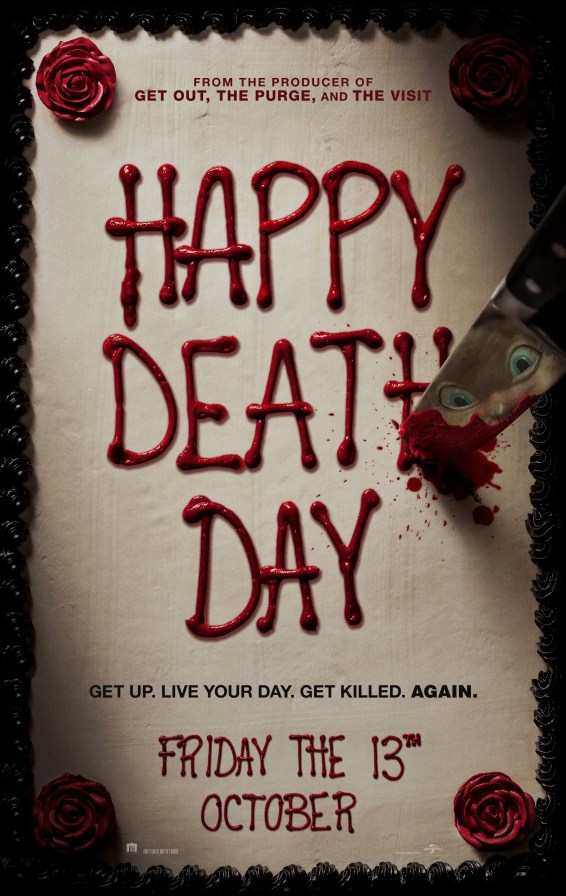
Happy Death Day (2017) – Film Review

Another horror flick from production company Blumhouse Pictures, ‘Happy Death Day,’ released in 2017, does at least extend out of the usual range of Blumhouse horrors to become more of a horror-comedy than just a straightforward teen slasher. But, similar to the rest of their associated franchises, e.g. ‘Insidious,’ ‘The Purge’ and ‘Paranormal Activity,’ both ‘Happy Death Day’ and it’s sequel, have their fair share of issues, with some being far more severe than others.

Plot Summary: Waking up in the dorm room of a boy whose name she can’t remember after a night of heavy drinking, self-centered college student; ‘Tree Gelbman,’ intends to continue her trend of avoiding her birthday, but little does she know that later that night on her way to another party, someone is waiting to murder her. Only after being killed, ‘Tree’ awakens in the same dorm room, soon realising she is being forced to relive her brutal night of murder over-and-over again until she discovers her killer’s identity…

‘Happy Death Day’ similar to many other day-repeating stories in the past, takes most of its inspiration from the comedy classic; ‘Groundhog Day,’ from 1993. Yet, unlike many of the other films that are inspired by this beloved comedy flick, it becomes clear over time that ‘Happy Death Day’ is quite derivative of ‘Groundhog Day,’ as the film’s story not only utilises the comedy’s plot without much innovation (only throwing a killer into the mix). But, the film even steals the main point of the narrative, that being its main character and their correlating character arc, using the time-looping concept to in a way punish the protagonist for their cruel behaviour towards others.

In spite of this, however, the protagonist; ‘Tree,’ portrayed by Jessica Rothe, is by far the best element of the film, as while ‘Tree’ does go through a character arc that is all-too-familiar as previously mentioned, Rothe makes a fantastic first outing as an actress through her very enjoyable performance. Then, of course, there is the killer, whose identity remains a mystery throughout most of the runtime, known as ‘The Babyface Killer,’ the killer’s outfit is actually the mascot of ‘Bayfield University,’ where the film takes place, and although the costume itself is far more goofy then intimidating, the mask/costume was actually designed by Tony Gardner. The costume designer behind the now-iconic; ‘Ghostface,’ costume from the ‘Scream’ series, which does help redeem to the killer’s undoubtedly petty motivation.

The film’s cinematography by Toby Oliver isn’t anything amazing, but does back up the story effectively in a variety of scenes. Whether that’s through its use of wide sweeping shots when the characters are in an intense chase, or when more shaky hand-held camerawork is used to reflect ‘Tree’s breakdown when she first realises she is stuck in her current crisis. Yet, similar to much of its story, the film never leans enough into a more outlandish/experimental nature when considering what the film could accomplish with its cinematography.

Talented composer Bear McCreary handles the film’s original score, which isn’t very distinctive from most of his other work within the horror genre. But, despite the score’s lack of memorability, it still does feel as if there is a decent amount of effort put into it, as the soundtrack actually has quite a lot of range even if some of the tracks don’t always fit with the tone of the film. This also goes for many of the songs used throughout ‘Happy Death Day,’ as nearly all of the film’s song choices massively differ in both genre and general popularity.

Still, the biggest problem ‘Happy Death Day’ suffers from is the inconsistency of its tone, as although the film does attempt to have scenes featuring both scares and humour, alike, many of the film’s jump-scares and jokes range in quality, and occasionally even cancel each other out. Additionally, the film also takes an unusual approach to its violence, as while ‘Tree’ dies countless times throughout the film in a number of different ways. The film never allows for any creative or darkly amusing deaths, due to its lack of any blood or gore. Yet, this wasn’t always the case, as the original screenplay for the film did actually include more violence, so much so, in fact, that it would have gained the film a higher age rating, with plenty of scenes having much grislier deaths that were later altered by director Christopher Landon (Paranormal Activity: The Marked Ones, Scouts Guide to the Zombie Apocalypse) during pre-production.

In summary, whilst the signature performance from Jessica Rothe does help to make ‘Happy Death Day’ a far more enjoyable viewing, in addition to the film’s idea of a protagonist being repeatedly murdered having plenty of potential for a horror-comedy. The film just doesn’t do enough with its story, feeling almost as if its a little restrictive on itself, never delving enough into being either funny or freighting respectively. So, if you desire an amusing horror-comedy to stick on one evening, maybe just go back to your more accustomed choices over this mediocre slasher. Final Rating: 5/10.

happy_death_day_xxlg

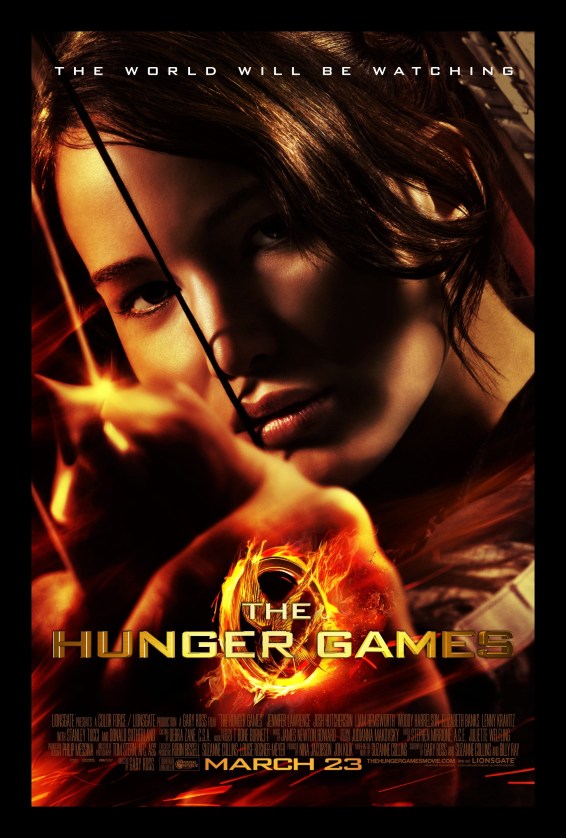
The Hunger Games (2012) – Film Review

While nowadays ‘The Hunger Games’ may be known as an iconic blockbuster franchise, there was a time when most were unfamiliar with ‘Katniss’ and the sovereign state of ‘Panem.’ That until the first adaptation of the novel series by Suzanne Collins was released in 2012, kicking-off a new film franchise which would receive bigger and bigger budgets with each entry. Yet, even with all this success, this science fiction series has always had more issues than most care to admit, which is mostly why I’ve never found as much enjoyment in this franchise as many others.

Plot Summary: In a dystopian future, ‘Katniss Everdeen’ volunteers to take her younger sister’s place in ‘The Hunger Games,’ a televised competition in which two teenagers from each of the twelve districts are chosen at random to fight to the death in a forest arena. Now, ‘Katniss’ and her male counterpart; ‘Peeta,’ find themselves pitted against larger, more fearsome opponents, some of whom have been training their entire lives for this moment…

Alongside the ‘Harry Potter’ series, ‘The Hunger Games’ is one of the main films responsible for creating the rise of teen adaptations in recent years, such as ‘Divergent,’ ‘The Maze Runner,’ ‘Ender’s Game’ and ‘The Host,’ just to name a few. However, similar to many of these other franchises, ‘The Hunger Games’ has always suffered, in my opinion, from attempting too much at one time, as whilst the world the story takes place within is certainly interesting, many ideas and elements feel fairly undercooked or even completely unexplored due to a lack of time, in particular, the aspect of ‘Districts’ within the story, or even the centric “Hunger” part of the film’s title, which along with the many intriguing side characters, is barely developed during the runtime.

Mostly known for her work on indie films at the time, Jennifer Lawrence leads the cast as ‘Katniss Everdeen,’ and while many of the performances she has given throughout her career do tend to flip-flop in quality. She is mostly solid in her role as the film’s protagonist, serving as a likeable character through her actions in addition to also being a strong female icon for young girls. The rest of the cast of Josh Hutcherson, Woody Harrelson, Elizabeth Banks and Liam Hemsworth all give passable performances, despite not being given much to do in this first entry of the series aside from support ‘Katniss.’

The cinematography by Tom Stern is definitely the weakest element of the film, being almost chaotic at points, the cinematography relies nearly entirely on hand-held camerawork. Almost giving the impression the filmmakers had some kind of a phobia of utilising tripods, as aside from the initial moment of ‘Katniss’ entering ‘The Hunger Games,’ I felt the hand-held approach was very necessary, and resulted in plenty of shots losing their alluring potential. Although not often, occasionally, the cinematography even slips in-and-out of focus mid-scene, which alongside the CG effects (which also range drastically throughout the film), can be quite distracting.

Despite James Newton Howard’s original score not becoming as iconic or as beloved as many other signature scores from blockbuster franchises, like ‘Star Wars,’ ‘Jurassic Park’ or the previously mentioned; ‘Harry Potter’ series. Tracks such as ‘The Hunger Games,’ ‘Entering the Capital’ and ‘Rue’s Farewell,’ all serve the narrative well, adding to the drama and tension throughout the film, even if they aren’t some of the most distinctive tracks this talented composer has to offer.

Although ‘The Hunger Games’ doesn’t develop its world as much as I would’ve have personally preferred, there is one detail I did admire within the world of the film. This being the visual contrast between the poverty-stricken and starving ‘District 12’ and the wealthy and futuristic ‘Capitol,’ even if this more futuristic setting allows for more outlandish sci-fi dangers like genetically-engineered hornets and dogs. This alternate version of Earth even plays into the costume design within the film, as many of the wealthy citizens of ‘The Capitol’ wear colourful (and even bizarre) suits, dresses, hats and/or make-up, which excellently displays the difference in opulence throughout the film’s fictional world, purely through clothing.

In summary, ‘The Hunger Games’ does have its entertainment value here-and-there, but just like many other blockbuster franchises, I feel many hardcore fans of the novels and films alike do seem to overlook the flaws this adaptation and its sequels have. From its cheesy and predictable dialogue, to its unexplored story aspects and its absence of both realistic violence and innovative filmmaking. ‘The Hunger Games’ is certainly not the worst sci-fi adaptations has to offer, but it’s still far from the best. If you’re a passionate fan of the novels then I’m sure you’ll thoroughly enjoy this adaptation, but if your just looking for an exciting science fiction flick, maybe look towards some older franchises or possibly even the gruesome Japanese thriller; ‘Battle Royale,’ which shares many of the same ideas. Final Rating: 5/10.

hunger_games_ver24_xxlg

Hot Tub Time Machine (2010) – Film Review

Taking heavy inspiration from the smash-hit comedy: ‘The Hangover’ released a year prior, this 2010 comedy revels in its absurdist tone and nonsensical plot right from its earliest scenes, as despite featuring some very dull cinematography and a completely forgettable original score to boot, ‘Hot Tub Time Machine’ does manage to escape some of its flaws due to the unique story and amusing moments it’s ludicrous title would imply.

Plot Summary: When a group of friends impulsively decide to take their low-life pal; ‘Lou,’ back to the ‘Kodiak Valley Ski Resort’ after a potential suicide attempt, a place that was once their hotspot for thriving party-filled weekends. The group soon find themselves being sent back in time to 1986 after a drunken dip into their malfunctioning hot tub, allowing them to relive one of the best weekends of their entire lives…

Although comedy as a genre has always been quite divisive, ‘Hot Tub Time Machine’ is a film that values its comedy over anything else, as the film continuously throws in as many jokes and references as it possibly can throughout its runtime. Most of which do come at the expense of messing with the film’s structure and pacing (regardless of how comical some of them actually are), as the film goes about its narrative mostly by jumping from comedic scene to comedic scene with most of the character’s different shenanigans having minuscule impact on the others, resulting in the film feeling mostly like a collection of individual comedy skits, with little connection between them aside from their numerous riffs on ’80s pop culture.

At a first mention, John Cusack seems like a slightly odd choice for a straight comedy, in my opinion, as the actor while talented (and even quite amusing at points during the film) usually specialises more in dramas, thrillers and occasionally, even romance over comedies. Whereas the rest of the cast of Rob Corddry, Craig Robinson, Clark Duke, Chevy Chase, are all very experienced within the realm of comedy, which is most likely why many of the film’s funniest moments belong to their characters. The film even features a short appearance from a young Sebastian Stan as the angsty teenager; ‘Blaine,’ many years before his breakout role as ‘Bucky Barnes/The Winter Soldier’ in the Marvel Cinematic Universe.

Similar to many other modern comedies, ‘Hot Tub Time Machine’ nearly always places far more of an emphasis on its comedic writing rather than its cinematography, usually resulting in a large majority of the film’s camerawork being fairly bland. In the case of ‘Hot Tub Time Machine’s cinematography by Jack N. Green, this means having a variety of scenes shot through hand-held camera, in addition to a few moments where shots can make some of the rooms within the ski resort feel far more like sets than they should, usually leave a lot to be desired in terms of visuals.

The original score by Christophe Beck is immensely generic (even in spite of it barely being utilised throughout the film). But, while the score’s lack of memorability is a missed opportunity, it certainly isn’t its biggest; as with the film being set within the 1980s, I felt it was a pretty obvious choice to have a synth/rock soundtrack which would meld perfectly with the long list of famed ’80s songs that also populate the film, the most notable of which definitely being; ‘Safety Dance,’ when the group first realise they have arrived in the past.

However, even if ‘Hot Tub Time Machine’ doesn’t always make the most of its time-period, the film does at least have an interesting location, as the ‘Kodiak Valley Ski Resort,’ the temporary home of the music festival; ‘Winterfest ’86,’ allows for plenty of visually pleasing locations when covered in the snow, ice and vibrant coloured lights alike. Yet, sadly, this still doesn’t manage to make up for what is easily the film’s biggest misstep, as whilst I would say ‘Hot Tub Time Machine’ lands more jokes than it misses, the film does overly rely on gross-out humour for sure, having a number of scenes where simply having a character getting covered in urine/faeces (or something even worse) is the entirety of the joke, which obviously fails to do anything other than disgust its audience through its pathetic idea of comedy.

In summary, even though I personally feel that ‘Hot Tub Time Machine’ is far more problematic than many other modern comedies, I appreciate the film’s effort to scale-up the preposterous nature of many other comedies, taking its ridiculous story concept and managing to make it work better then many would initially think. But, just like many other films within this genre, the bland filmmaking on display and simply unnecessary amounts of gross-out humour leave it a very mixed bag for me, with that said, I could still see the film being enjoyable for anyone in search of a raunchy comedy for a Saturday night with friends. Final Rating: 5/10.

hot_tub_time_machine_xlg