Resistance (2020) – Film Review

“We Have to Save the Children.” – Emma

During the German occupation of France in 1940, a young Jewish man named, Marcel Mangel, fled with his family to Limoges where his cousin, Georges Loinger, a member of the French Resistance, urged him to join the cause. Eventually, both Marcel and his older brother, Alain, would join the French Resistance, adopting the last name, Marceau, and helping rescue countless Jewish children from race laws and concentration camps. Throughout his time in the Resistance, Marcel frequently used his skills as a mime artist to keep the children quiet and entertained as he helped them escape to Switzerland. With all that in mind, it’s difficult to imagine how a filmmaker could possibly disappoint when creating a cinematic interpretation of Marcel’s extraordinary story, but 2020’s Resistance is just that; a disappointment. Serving as a flawed yet honourable biopic that somewhat pushes past its varying performances and peculiar execution to function as an earnest tribute to its real-life protagonist.

Plot Summary: Before he became a world-famous mime, aspiring Jewish actor and artist, Marcel Marceau, joined the French Resistance alongside his brother, Alain, in an effort to save thousands of orphaned Jewish children from the impending threat of the Third Reich…

Written and directed by Jonathan Jakubowicz (Secuestro Express, Hands of Stone). The screenplay for Resistance continuously appears distracted, creating a scattershot portrait of Marcel Marceau’s life when it could’ve easily been a straightforward celebratory biopic documenting his valiant actions and incredible feats throughout the Second World War. The perfect example of the film’s unconventional approach can be seen in the structure as Resistance bizarrely chooses to tell Marceau’s story through the means of a flashback, narrated by General Patten (portrayed by Ed Harris) as he addresses the serried ranks of the U.S. troops who have just liberated France. This flashback structure adds nothing of value to the plot and ultimately only serves as a distraction. However, the film does partially redeem this issue during its epilogue as the filmmakers pay respect to the real-life events they’re documenting, inserting text that states that the Nazis killed over a million children during World War II and that this film is dedicated to them.

When it comes to the cast, the supporting actors of Clémence Poésy, Félix Moati, Vica Kerekes, Bella Ramsey and Matthias Schweighöfer all give serviceable performances as various members of the French Resistance and those who oppose them. The standout, however, is, of course, Jesse Eisenberg, who portrays Marcel Marceau himself. And even though Marcel’s personality is only explored in bullet-point tropes, swiftly moving from one trait to the next, Eisenberg portrays the war hero with complete serenity, his performance only being hindered by his inconsistent French accent. Still, there are plenty of undeniably tense moments that showcase Eisenberg’s ability to jump from comedic to dramatic acting on the fly.

Visually, Resistance is more than competent as the cinematography by Miguel Ioann Littin-Menz has its fair share of attractive shots, often utilising the story’s diverse mix of locations to great effect with symmetrical lines. And for all its unusual choices in terms of structure, it can never be stated that Resistance leans too hard on certain moments to drain them of maximum emotion. Take the opening scene, for example, in which a little girl’s house is raided by Nazis who subsequently kill her parents. A brief scene, during which, we see no on-screen violence whatsoever. With that said, the colour palette of Resistance never tries to be anything but gloomy and grey. Whilst I understand that this was likely done to further establish the story’s World War II setting, even in more cheerful moments where Marcel makes the children laugh, Resistance rarely employs vibrant colours in its visuals.

Similarly, the film’s music is a rather mixed bag, as while the original score by Angelo Milli features a handful of memorable tracks, such as You Are Not Alone and Adagio for a Silent Performance, both of which help add dramatic weight to the scenes they are featured within. There are also plenty of moments where the film is lazily manipulative with its audio as the sound of an angelic children’s choir is contrasted with scenes of brutal executions.

Another problem Resistance suffers from is its overabundance of subplots, an issue that frequently results in a complete lack of narrative focus. From Marcel’s somewhat strained relationship with his father, who after seeing one of his performances as Charlie Chaplin calls him; “A Clown Dressed Like Hitler in a Whore House,” to a similar kind of resentment toward his brother, as well as a romantic fling with fellow Resistance member, Emma. Nearly every subplot in Resistance goes nowhere and practically fades into thin air by the time the end credits roll. Proving that when it comes to biopics, more story doesn’t necessarily mean a better story.

In summary, Resistance is neither a fully drawn biopic nor a thrilling war epic despite its largely convincing performance from Jesse Eisenberg as the mime artist-turned-war hero. The main reason for this is that Resistance constantly feels as if it isn’t sufficiently delving into Marcel’s numerous talents or his brave endeavours within the French Resistance. Nevertheless, I do believe this was a film worth making as its mere existence helps in celebrating Marcel Marceau’s remarkable life. A life that many may not have even been aware of before this film’s release. Rating: low 6/10.

resistance_ver3_xxlg

Extraction (2020) – Film Review

“If You Want to Survive, You Will Do Exactly as I Say…” – Tyler Rake

Based on the graphic novel; Ciudad by Ande Parks, which in itself was based on an unproduced screenplay written by Joe Russo in 2014. 2020’s Extraction transfers the story it’s adapting from the Paraguayan city of Ciudad Del Este to Dhaka in Bangladesh whilst still indulging in all of the same barbaric violence and exciting action set pieces. Yet, despite its spectacular stunt work, impressive long takes and electric performance from Chris Hemsworth, Extraction isn’t entirely saved from its generic complexion, as the film frequently falls back on many of the usual tropes we tend to see in modern action flicks.

Plot Summary: In an underworld of weapons dealers and traffickers, Ovi Mahajan, the son of a notorious drug lord, becomes the pawn in a war between two criminal syndicates. Now, held hostage by a group of kidnappers in one of the world’s most impenetrable cities, his rescue beckons the unparalleled skill of black-market mercenary, Tyler Rake, a broken man with nothing to lose, harbouring a death wish that makes an already dangerous mission near impossible…

Extraction marks the feature-length directorial debut of the stunt coordinator/second unit director for 2019’s Avengers: Endgame, Sam Hargrave, who, producers Joe and Anthony Russo, hand-picked to helm the project following their collaboration on the superhero blockbuster. Meaning, of course, that Hargrave’s profession as a stunt coordinator (and stunt double) repeatedly comes into focus as each of the film’s action sequences are relentlessly thrilling and well-orchestrated. If truth be told, however, most of Extraction‘s faults come not from its directing, but rather its screenplay. As, in many ways, Extraction‘s screenplay is structured much like a video game, continuously introducing new ‘boss levels’ that Tyler must complete before advancing, such as a corrupt general who also happens to be the country’s best sniper. Quickly equalling to tiring formula, especially when the film introduces the odd interesting idea, like a subplot focusing on a troubled teenager taking his first, uneasy steps into the world of organised crime.

Although Chris Hemsworth gives an admirable performance as the film’s protagonist, Tyler Rake, a fearless mercenary and former SASR operator, discreetly mourning the loss of his son who died from lymphoma. The character’s promising (if a little cliché) setup is soon spoilt by the complete lack of development from that point onwards, as Tyler essentially goes nowhere after the groundwork for his character is laid, cementing him as a by-the-book action hero and nothing more. Surprising, considering that Extraction was effectively conceived as a ‘star vehicle’ for Hemsworth, a remarkable actor who has struggled to obtain a signature role outside of the God of Thunder, Thor Odinson. On the flip of this, there is the school-age son of a Mumbai drug lord, Ovi Mahajan, portrayed by Rudhraksh Jaiswal, who, serves his purpose as an innocent child caught in the crossfire between two gangs. It’s just unfortunate that the film tries to build a parental relationship between the two, merely reminding the audience how paper-thin its characters are.

When overlooking the murky, displeasing colour palette, a majority of the visuals throughout Extraction are spellbinding as the film uses its dynamic, hand-held cinematography by Newton Thomas Sigel to place the audience alongside the characters in the busy streets of Dhaka, having Tyler grapple with corrupt police officers while tuk-tuks and scooters disorderly rush past, a feeling that is only amplified by the film’s multiple one-takes. One of these takes, which clocks in at around eleven minutes and twenty-nine seconds, is, in actuality, comprised of thirty-six stitched sequences, some of which took over twenty-five takes to line up correctly, according to Sam Hargrave.

Regrettably, the original score by Henry Jackman and Alex Belcher isn’t as innovative as the soundtrack almost solely consists of indistinguishable ostinato-driven action tracks, such as Police Search and Checkpoint, all of which have a heavy emphasis on percussion, with only the occasional pause for breath. And, whilst there isn’t a standout theme as such, Extraction does have an effective little motif that runs through some of the tracks to give the score a bit of personality.

Naturally, the action sequences of Extraction are what the majority of the film hinders. And, luckily, they deliver, being brutal, bloody and fast-paced as, dissimilar to highly-skilled characters, like John Wick, whose fighting style is inherently tactical and calculated, Tyler Rake engages in combat far more spontaneously, improvising weapons and thinking on his feet whenever he is thrown into a dangerous scenario. As previously mentioned, the film’s camerawork also amplifies many of these exhilarating moments, particularly one car chase sequence, during which, Hargrave actually manned the camera himself whilst he was strapped to the hood of the vehicle pursuing Tyler and Ovi.

In summary, Extraction is slightly contrived and sporadically over-the-top, and there’s no question that the film’s characters are essentially just cardboard cutouts delivering line after line of uninspired dialogue. In fact, for most of its runtime, Extraction almost feels as if you’re watching someone play a video game, which as I’m sure any video game enthusiast will tell you, is only amusing for a short time. But, purely in terms of action, Hargrave and the Russo Brothers bring the noise with a film fueled by the charisma and physicality of its leading actor, suggesting that Hemsworth has found his go-to genre once he retires his iconic superhero. Rating: 6/10.

extraction_netflix_xxlg

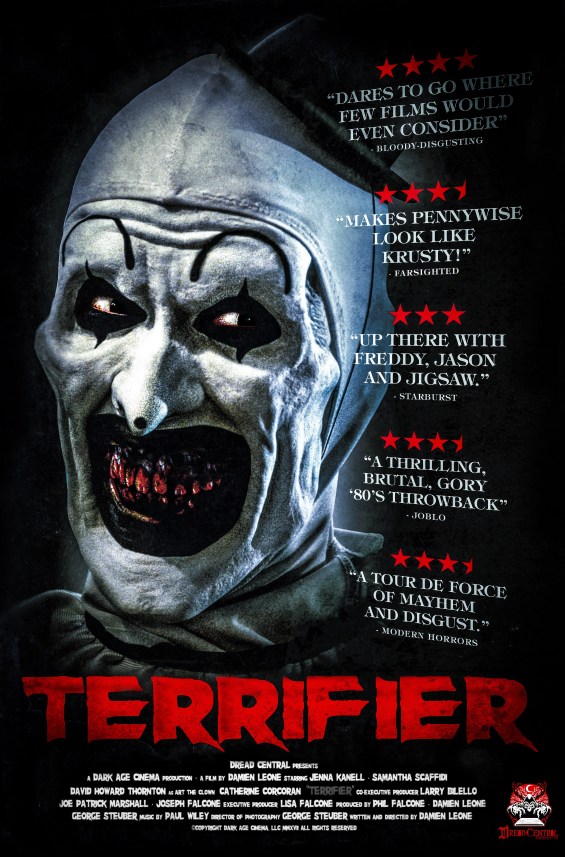
Terrifier (2016) – Film Review

“What? Did You Think He Was Gonna Hack Me up Into Little Pieces or Something?” – Dawn

Grisly, taut and seasonally atmospheric, Terrifier, released in 2016, aims to pay homage to the inexpensive slasher flicks of the 1980s, relishing in the same simplistic approach and over-the-top gore that classic horrors like Friday the 13th and Blood Harvest specialised in. And while the film does admittedly fall prey to many of the usual limitations low-budget horrors tend to have, Terrifier is preserved through a genuinely terrifying performance from David Howard Thornton as Art the Clown, in addition to plenty of fantastically gruesome effects and a willingness from writer-director Damien Leone (All Hallows’ EveFrankenstein vs. The Mummy) to push on-screen violence to its limit.

Plot Summary: On Halloween night, Tara Heyes and her best friend, Dawn, find themselves in the wrong place at the wrong time as they become the unfortunate marks of Art the Clown, a demented serial killer with a morbid sense of humour…

With coulrophobia (the name allocated to the fear of clowns) being one of the most common phobias in the world, it makes sense that the horror genre would try to capitalise on this widespread fear of individuals with white face paint, comical horns and oversized shoes. And if there’s one area Terrifier more than thrives in, it’s fully realising this common phobia as Art the Clown is consistently frightening. The film jumps from moments of complete silence as Art stares down his victims to Art violently murdering the poor souls, showering the sadistic clown’s black and white costume with blood. Terrifier isn’t actually Art the Clown’s first appearance, however, as Damien Leone first introduced the character in his second short film, which not only shared the Terrifier title, but is practically the same storyline just condensed into a brief twenty-minute runtime.

Regarding the characters, the conceited Dawn, somewhat sensible Tara Heyes, and loyal sister, Victoria Heyes, portrayed by Catherine Corcoran, Jenna Kanell and Samantha Scaffidi, respectively, all serve an important purpose within the narrative. Yet, the characters themselves never attain a status beyond generic slasher victim, and although each of the actress’ screams of terror sound as suitably realistic as a director could hope for, the delivery of some lines (specifically from the supporting cast) feels rather clunky. But, the true star of the film is undoubtedly David Howard Thornton as Art the Clown, as Thornton ceaselessly stays in character as the psychotic, clown-dressed murderer, portraying Art as a fun-loving mime whose killings involve a combination of predatory sadism and joyful glee. So much so, that Art will make many audience members nervous purely due to his unpredictability, as the character’s manic actions make it almost impossible to predict what he’ll do next.

On a technical level, Terrifier is top-notch considering its thin budget, as whilst the cinematography by George Steuber is far from groundbreaking, the film has a reasonable amount of creative shots, the majority of which are enhanced by the film’s highly saturated colour palette, thin layer of granularity and scenes primarily lit by natural light, providing the film with an authentic low-budget ’80s appeal. And, as previously mentioned, Terrifier does not hold back when it comes to brutality and depravity, certifying the film as one not for the faint of heart as the gore effects are gut-churning and grotesque, with the amount of labour and detail that has gone into each effect being more than deserving of applause, especially when once again acknowledging the film’s budget, which is estimated to have been around £73,000.

The original score by Paul Wiley is a triumphant blend of 2010 and 1980s horror scores, with tracks such as In Pieces and Clown Car standing as daunting and metallic-sounding pieces similar to many modern horror scores, whereas tracks like Kill Horn and the film’s central theme, simply titled; Terrifier Theme, are reminiscent of the original Halloween score in more ways than one, which by no means a poor comparison when it comes to unnerving horror soundtracks.

These connections to past genre films continue further into the film’s visuals as Damien Leone inserts many explicit nods and visual tributes to everything from Psycho (1960) to Hostel (2005) to everything in-between. And, whilst some may not like when a film relies so heavily on pastiche, it never feels overdone in Terrifier, as the film strikes a satisfying balance between throwbacks and unique ideas, occasionally playing with the conventions of slashers by adding some twists to the killer and final girl dynamic, which will most definitely catch some audience members off-guard.

In summary, Terrifier has plenty of entertainment value should you fit into the film’s principal audience as this modern slasher is an unabashed reminder of the bloodthirsty horror films that populated the 1980s, a.k.a. the kind of nasty flicks that were banned during the video-nasty era. The film has its issue, undeniably, most notably with its shortage of interesting characters and often oversimplified story. But, Terrifier does make the most of its foreboding atmosphere and unsettling killer. While watching, it also quickly becomes clear that Damien Leone wants Art the Clown to join the ranks of Jason Voorhees and Michael Myers as a horror icon in the future, which I think is more than feasible given his appearance in Terrifier, so I’d say it really depends on how the horror community feel about the film years down the line. Rating: high 6/10.

terrifier-p1080489

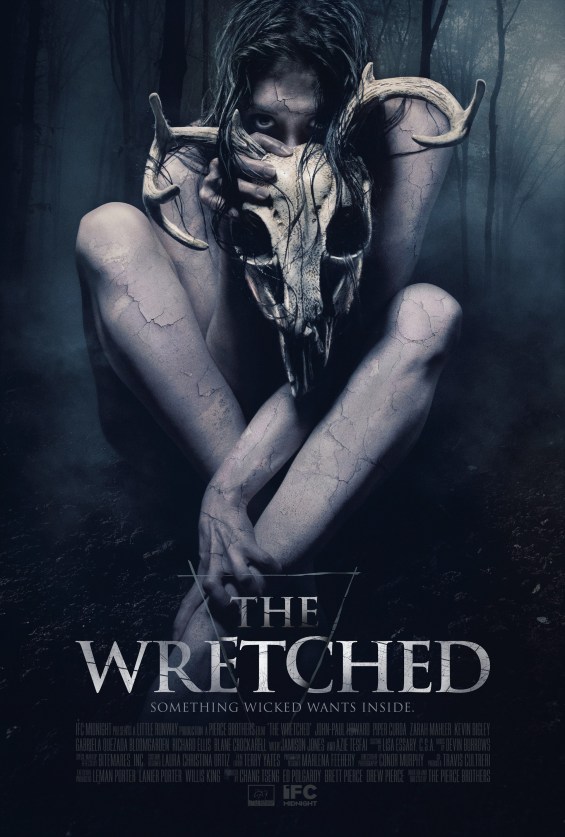
The Wretched (2019) – Film Review

“I Like This House…” – Sara

When it comes to the horror genre, sometimes you don’t desire a film that sets out to rewrite the rules of spine-tingling storytelling. Instead, you occasionally find yourself simply wanting to dim the lights and ensconce with a low-budget popcorn flick, and 2019’s The Wretched is firmly one of those films. With appealingly modest ambitions, The Wretched utilises its cast of unknowns, unique creature design and admirable emphasis on body horror as effectively as its thin budget will allow. And, even though the film is far from a game-changer for the realm of supernatural horror, The Wretched still manages to overcome most of its flaws to serve as an engaging, if fairly foreseeable, tale of witchcraft and body-snatching.

Plot Summary: After being sent to live with his father for the summer on account of his parents’ imminent divorce, defiant teenager Ben begins to suspect there is something wrong with his father’s next-door neighbour, eventually discovering that there is an execrable entity lurking beneath her skin…

Originally titled; Hag, before being changed following negative feedback from test audiences. The Wretched was certainly a departure for writer-director duo Brett Pierce and Drew T. Pierce, as the pair’s prior film, Deadheads, released in 2011, was a zombie road-trip comedy. Even so, this leap in tone and genre rarely seems to impair The Wretched from a directorial standpoint, as the film leaps headfirst into its grim tone and horrifying visuals right from the opening scene. And, whilst the film struggles to balance its plot threads from time to time, it quickly becomes clear that the central source of inspiration for the story was the low-budget creature-features of the 1980s, tied together with a desire to create a newfangled interpretation of witchcraft and revitalise hags into terrifying antagonists.

Acting out since his parents’ separation, seventeen-year-old Ben, competently portrayed by John-Paul Howard, is the protagonist. And, while it’s always challenging to portray an angsty teenager, due to the concern of said character becoming incredibly abrasive, Howard pulls it off successfully, portraying Ben as a frustrated and confused adolescent struggling to come to terms with his altered life. Furthermore, The Wretched even aims to justify the common horror trope of parents not believing their children once the supernatural occurrences begin, as when Ben attempts to explain the situation to his father, Ben’s past transgressions of trespassing and stealing medicine come to light, prompting his father to dismiss his claims as either lies or delusions. The supporting cast, including Piper Curda, Jamison Jones, Azie Tesfai and Zarah Mahler, is also serviceable in their minor roles as members of the lakeside community where his father resides.

Shot near Omena and Northport, Michigan, close to the Pierce brothers’ hometown, the cinematography for The Wretched by Conor Murphy often ranges in quality as some scenes are beautifully shot, with a strong emphasis on close-ups, whereas others (usually during conversations between characters) merely rely on dull, hand-held shots. With that said, when working in synch with each other, the camerawork and lighting do a remarkable job of masking the creature early on in the story, only giving the audience brief glimpses of the witch in her contorted, feral state before later displaying the film’s full range of prosthetic make-up and practical effects.

Excluding the ominous theme for the titular witch heard in the tracks; Woods and The Wretched Appears, both of which feature avant-garde strings led by a manipulated sarangi, the original score by Devin Burrows admittedly has some room for improvement as tracks, like Don’t Let Her In, Honey… Beer? and Broken Window repeatedly overuse strings and brass horns to the point where the tracks become too disruptive to the narrative, often mismatching with whatever shot is on-screen.

Of course, the witch herself is unquestionably the film’s primary draw, and The Wretched presents its titular creature with pride, making sure to include all of the most off-putting aspects of the creature’s devilish design and malicious nature. And, whilst the witch isn’t grounded in any specific mythology, with the screenplay only providing minor hints towards its origins, the witch’s carved symbols, salt fragility and quasi-religious shrines all give the creature an element of personality when outside of its human disguise. Speaking of which, the way the creature is presented when inside a body is just as disturbing as we, the audience, along with Ben, observe how the witch practically lives the life of the person whose skin she now inhabits, caring for her decaying body the best she can as the Wretched attempts to act human, each day climbing closer to feasting on the unfortunate children of the mother she is impersonating.

In summary, although The Wretched isn’t as polished as it could be in certain areas, I feel this well-paced horror flick will please most genre fanatics, even in spite of its occasional visual continuity errors, corny dialogue and lack of focus regarding the dual plot lines. The Wretched still delivers on its promise of a skin-crawling creature-feature reminiscent of ’80s cult classics. The film is also one of the few horror films I’d personally like to see a sequel or prequel to someday, as I feel the concept of a witch that feeds on the forgotten is an intriguing idea that doesn’t reach its full potential here, but undoubtedly could in a more refined film. Rating: 6/10.

wretched_ver2_xxlg

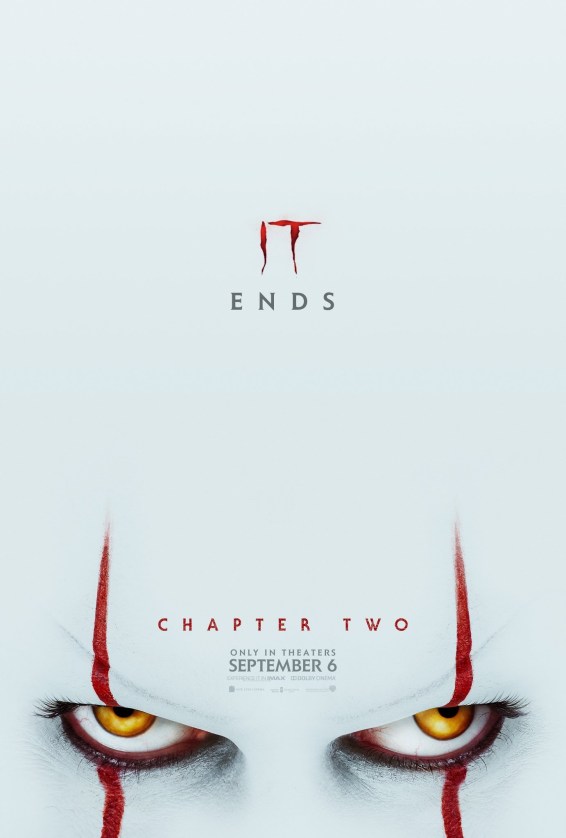
It: Chapter Two (2019) – Film Review

Once again directed by Andy Muschietti, and once again based on the iconic novel by Stephen King (only this time, the adult portions of the story). ‘It: Chapter Two’ is, unfortunately, somewhat of a downgrade from chapter one, as in spite of its excellent cast and continuously impressive visuals, ‘It: Chapter Two’ proves that bigger doesn’t always mean better when it comes to sequels, as the film’s overreliance on giant CG monsters along with its inconsistent tone and unreasonably long runtime of two hours and fifty minutes demonstrate how this spine-chilling follow-up frequently overindulges in its source material.

Plot Summary: After being defeated by ‘The Losers Club’ many years ago, the demonic clown, ‘Pennywise,’ returns twenty-seven years later to terrorise the town of ‘Derry’ once again. And, with the childhood friends who have long since gone their separate ways, ‘Mike Hanlon,’ the only member of the group to remain in ‘Derry,’ calls his friends home for one final stand…

Jumping from character to character, location to location, many of ‘It: Chapter Two’s biggest faults appear within its screenplay, as rather than focusing on a straightforward narrative like the original film, this time around the film revolves most of its plot around a bootless errand of a story where ‘The Losers’ search all over ‘Derry’ to acquire various artefacts from their youth to perform ‘The Ritual of Chud,’ which will supposedly destroy ‘Pennywise.’ The problem is that much of this setup is, ultimately, meaningless, as almost every character receives their own segment in which they simply recall moments from their childhood, which often just recap scenes from the first film or leave the audience bloated as a result of the huge amount of exposition they have to digest.

Yet, it has to be said that James McAvoy, Jessica Chastain, Bill Hader, Isaiah Mustafa, Jay Ryan, James Ranson and Andy Bean all portray the older versions of their characters remarkably, as despite the characters now being much older, each actor/actress recreates the younger actors’ body moments and manner of speaking flawlessly. ‘It: Chapter Two’ also never forgets to reinforce the characters’ trauma, as even though ‘Bill’ is a successful writer and ‘Ben’ has remodelled himself into a muscular architect, etc. Each member of the group is still haunted by their past, or at least, what they can remember from it. Of course, Bill Skarsgård also returns as ‘Pennywise.’ While his performance does occasionally venture into goofy territory due to how over-the-top he becomes, Skarsgård is still endlessly entertaining as the malevolent clown.

This time around, the cinematography is handled by Checco Varese. Still, you’d be forgiven for not knowing that ‘It: Chapter Two’ had a different cinematographer, as the film is just as visually pleasing as its predecessor, with some elegantly orchestrated transitions between the characters’ incarnations thrown in for good measure. The huge increase in the budget also comes across through the film’s visuals, as ‘It: Chapter Two’ feels much grander in scale and presentation alike. However, where the sequel stumbles is with its scares, as instead of utilising ‘Pennywise’s mimicking ability to transform into every character’s greatest fear, the film lazily depends on towering CG creatures, which usually have little relation to the characters or the story at large, and although a number of the monsters are interesting design-wise, it doesn’t stop them from feeling out of place.

Benjamin Wallfisch’s original score effectively continues on from that of the first film, as tracks, such as ‘Losers Reunited,’ ‘Nothing Lasts Forever,’ and ‘Stan’s Letter,’ are calming and beautiful, whereas tracks, like ‘Hall of Mirrors’ and ‘Very Scary,’ are loud and intense to add to the film’s horror. The main issue with the soundtrack is in its lack of distinction from the first film’s score, and while I understand ‘It: Chapter Two’ is essentially just the second part of a larger story, the original score does little to set itself apart, with some tracks sounding near-identical to others.

Even though ‘It: Chapter Two’ is trying to accomplish a great deal within its lengthy runtime, spending a large portion of its story in flashbacks and dream sequences as it attempts to adapt everything not already covered in the first film. The sequel is saddled with an even bigger obstacle; constructing a suitable climax for the story, as although its well-known by this point that Stephen King often has difficulty writing satisfying endings for his novels (a criticism that the film repeatedly mocks), ‘It: Chapter Two’ is faced with this exact task, and even if the story doesn’t completely collapse under the weight of its disappointing finale, its admittedly still lacklustre, especially when the final act veers into metaphysical surrealism.

In summary, ‘It: Chapter Two’ is unquestionably an ambitious horror sequel, with a renowned cast, spectacular set pieces and numerous exciting moments; the film truly goes all out. But, does it work? Well, not entirely, but it’s a diverting horror blockbuster, nonetheless. And, whilst I feel that by splitting the story of ‘It’ into two films, Muschietti has done a gratifying job of commanding the massive blimp that is King’s extensive novel, most of the issues with ‘It: Chapter Two’ boil down to its story and structure, which end up leaving the film a mere pleasurable romp rather than the ghoulish denouement it could have been. Final Rating: 6/10.

it_chapter_two_ver3_xxlg

Saw (2004) – Film Review

Before it became the colossal horror franchise, we know it to be today, ‘Saw’ was originally just a low-budget thriller ingeniously co-written by Leigh Whannell and debuting horror writer-director James Wan. Boasting an intricate structure consisting of flashbacks within flashbacks, the original ‘Saw’ was far more focused on crafting a compelling (and occasionally confusing) mystery that takes place primarily within a single location rather than plainly indulging in blood and guts similar to its many sequels, and as a result, still remains the best entry of the ‘Saw’ franchise to date.

Plot Summary: When two strangers awaken in a grimy bathroom with their ankles chained to pipes and no recollection of how they got there, the pair soon discover they’re pawns in a deadly game perpetrated by the notorious serial killer; ‘Jigsaw.’

Despite the ‘Saw’ series being predominantly known for its constant display of extreme violence, with the franchise even becoming infamous at one time for introducing the ‘Torture Porn’ subgenre to general audiences. The original ‘Saw’ actually contains very little in the way of gore, as director James Wan never intended to make an immensely disturbing film. It was not until the sequels that the films became what he describes as “More Explicitly Nasty.” Still, this wouldn’t stop ‘Saw’ from its rampant train of success, as the first film alone would go on to earn over £90 million on a budget of only £1 million, instantly providing Wan and Whannell with the funds for their next project(s), in addition to placing ‘Jigsaw’ among the ranks of ‘Jason Voorhees,’ ‘Freddy Krueger,’ ‘Leatherface’ and ‘Michael Myers,’ as a horror icon.

Cary Elwes and Leigh Whannell lead the film as ‘Dr. Lawrence Gordon’ and ‘Adam Stanheight,’ respectively, and whilst neither actor gives a truly poor performance, Elwes easily outshines Whannell in many scenes. Obviously, this is due to Whannell being a writer (and now director) first and foremost, but with a better actor in Whannell’s place I feel many moments during the narrative could’ve been greatly enhanced. And, while Danny Glover, Monica Potter, and Tobin Bell all do a serviceable job, due to Elwes and Whannell’s performances taking up nearly the entirety of the film’s runtime, any faults in the actor’s portrayals are tremendously hard to ignore.

The cinematography throughout ‘Saw’ ranges from brilliantly clever to simply irritating, as director James Wan and cinematographer David A. Armstrong wanted the movement of the camera to reflect the central character’s emotions and personality, meaning ‘Dr. Gordon’ is displayed through steady, controlled shots while ‘Adam’ is seen exclusively through hand-held shots. Yet, even with this attention to detail, ‘Saw’s camerawork suffers from its repeated inclusion of the ‘Bullet Time’ shot, first introduced in the sci-fi classic; ‘The Matrix,’ in 1999. As, although this shot was very impressive when it first appeared, by 2004, this overused technique of having the camera rapidly rotate around an actor feels nothing but exasperating, especially when combined with the film’s chaotic editing and often unpleasant green-tinted colour palette.

Aside from the film’s signature track; ‘Hello Zepp’ which would go on to become a staple of the series, being utilised for each film’s final scene, the rest of ‘Saw’s original score isn’t anything special, being a mostly by-the-numbers horror soundtrack consisting of a variety of tense tracks with the occasional metallic effect thrown in to further relate to the industrial nature of ‘Jigsaw’s many traps and devices. The sound design itself, however, significantly adds to the horror, implying much of the gruesome violence that isn’t directly seen.

As a result of its smaller-budget, there are many occasions where director James Wan had to get quite creative with how to execute certain scenes. For example, the car chase that appears later within the film was actually filmed inside of a warehouse garage, with the illusion of being outside being achieved by turning off all of the warehouse lights, adding some fog and aggressively shaking the cars whilst filming directly from the front. This thin budget is also why the film contains no exterior shots whatsoever, as nearly all of the film was shot in a converted warehouse where the bathroom set was built, while any other locations were simply existing rooms redressed. However, even with this restrictive budget, the production crew actually made ‘Jigsaw’s now-iconic wooden puppet; ‘Billy,’ completely from scratch instead of pre-purchasing an antique puppet from a local store.

In summary, the original ‘Saw’ is far from flawless, but considering the film started out as just a low-budget short before attracting the attention of Evolution Entertainment, who immediately formed a horror-centric subcompany with Twisted Pictures, the ‘Saw’ franchise has truly come a long way. And, although the series’ first instalment is certainly plagued with many problems, there is a clear level of passion and effort poured into the project, and whilst I wouldn’t say it deserves to be one of the most profitable horror films of all time, I would say it deserves a watch, even if you’re planning to pass up the rest of the progressively grotesque franchise. Final Rating: high 6/10.

2004-saw-3

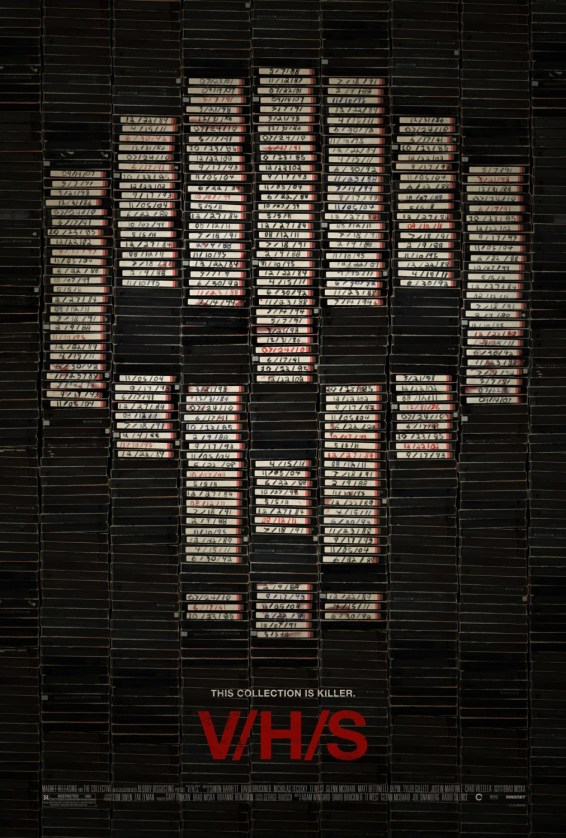
V/H/S (2012) – Film Review

Combining six found-footage horror stories from upcoming filmmakers of the time, 2012’s ‘V/H/S’ was a pretty ambitious indie horror upon its initial release. While the film doesn’t exactly reinvent the found-footage subgenre or avoid the usual problem anthologies tend to run into with their various segments greatly ranging in quality, ‘V/H/S’ does manage to overcome some of its flaws through its eldritch stories and distinct 1990s aesthetic, yet the film still pales in comparison to classic horror anthologies, like ‘Creepshow’ and ‘Body Bags,’ or its much improved sequel; ‘V/H/S/2.’

Plot Summary: When a group of misfits are hired by an unknown party to break into a desolate house and acquire a rare VHS tape, they are surprised to come across the owner’s decomposing body sat in front of a wall of video monitors and an endless supply of VHS tapes, each containing a piece of footage more disturbing than the last…

Although nowadays found-footage horror feels mostly played out and even quite creatively limiting, ‘V/H/S’ does attempt to utilise its concept in the best way possible. Having its wraparound story, titled; ‘Tape 56,’ explain the other five, as every VHS tape a member of the group watches are the same stories we as the audience are seeing, it’s just a shame that this central narrative goes pretty much nowhere, only seeming to exist for the sake of the film’s anthology structure rather than to provide the film with a terrifying and memorable climax. But, it does help that this segment takes place in the same house as the ‘Marble Hornets’ web series, also known as the YouTube series that popularised the internet icon; ‘Slender Man.’

Due to the film featuring multiple stories, the huge cast of ‘V/H/S’ ranges about as much as the segments themselves, as whilst no performance throughout the film is particularly bad, no performance is truly excellent either with the exception of Hannah Fierman as ‘Lily,’ who gives a very animalistic and continuously unnerving performance in the film’s first segment: ‘Amateur Night.’ Yet, I don’t think this is entirely down to the cast, as ‘V/H/S’ does suffer from an overall lack of characterisation, which while hard to avoid in an anthology film where each story is given a limited timeframe, ‘V/H/S’ simply chooses to fit all of its characters into a certain stereotype and not development them at all beyond that.

The cinematography during every segment of ‘V/H/S’ remains fairly consistent despite being handled by an array of cinematographers, and while the camerawork is very familiar for a grungy found-footage flick, the film’s assortment of glitch and static effects, grainy overlays, footage corruptions and occasionally chaotic editing all help to ground many of the segment’s supernatural elements in an almost documentary-like realism. And, in spite of ‘V/H/S’ lower-budget, all the film’s directors including Adam Wingard, David Bruckner, Ti West, Glenn McQuaid alongside Tyler Gillett, Justin Martinez, Matt Bettinelli-Olpin and Chad Villella, under the title of ‘Radio Silence,’ each try their hardest to distinguish their segment from the others.

Being a found-footage film, ‘V/H/S’ doesn’t have an original score, but with the film’s visuals leaning heavily into glitch and static effects, the sound design backs up these effects with a distorted soundscape, adding tension to a number of scenes. And, even though the film only features one licensed song, that being; ‘They Come to Get Us,’ it does fit well over the film’s end credits.

However, ‘V/H/S’ doesn’t escape the most common issue of anthologies, as there is certainly a noticeable shift in quality between its segments, as while I thoroughly enjoy the previously mentioned segment; ‘Amateur Night,’ the second and third stories, titled; ‘Second Honeymoon’ and ‘Tuesday the 17th,’ respectively, are a drastic downgrade, with the first being an incredibly dull slow-burn thriller, and the second being nothing but a corny retelling of a ‘Friday the 13th’ film as its title implies, neither of which are very memorable or creative, and feel like a chore to get through. However, these lacklustre segments are redeemed by the last two stories, as both ‘The Sick Thing That Happened to Emily When She Was Younger’ and ’10/31/98,’ implement more inventive ideas, even if they aren’t totally flawless in execution.

In summary, ‘V/H/S’ has its strengths but also a great deal of weaknesses, having many of its spectacular moments of horror spoilt by weak writing or the restrictions of its anthology structure, making for an occasionally enjoyable but very inconsistent experience. So, while I personally think ‘V/H/S’ is worth at least one viewing for fans of horror anthologies, just bear in mind that the film never quite reaches the same heights as some others including its own sequel. And, despite the third entry in the series; ‘V/H/S: Viral,’ being a major disappointment, I’d still love to see the low-budget franchise continue. But, with a prequel, titled: ‘V/H/S/94,’ being brought to the table by young filmmakers in 2019, only to barely be mentioned since, it seems the future of this series, at least for now, is unforeseeable, even if the first two films are sure-fire candidates for obtaining a cult status. Final Rating: low 6/10.

vhs_xlg

Easy A (2010) – Film Review

Taking inspiration from romantic coming-of-age comedies, like ‘Sixteen Candles,’ ‘Clueless,’ and ‘Mean Girls,’ ‘Easy A’ released in 2010, certainly has its ups and downs, as despite Emma Stone leading the film with an extremely lively and charismatic performance, it’s hard to ignore the film’s immensely corny tone and many, many moments of humour that fall completely flat. Still, for those looking for a light-hearted morality tale about how a small lie can ramify out of control, ‘Easy A’ should suffice.

Plot Summary: After being prompted by her best friend to spill details of her boring weekend, ‘Olive Penderghast,’ a clean-cut seventeen-year-old high-schooler, decides to spice things up by telling a little white lie about losing her virginity. But, when the high school busybody overhears their conversation and spreads it all over campus, ‘Olive’ suddenly becomes popular for all the wrong reasons…

Written by Bert V. Royal and directed by Will Gluck (Friends with Benefits, Annie, Peter Rabbit), ‘Easy A’ doesn’t strive too far from what we usually expect to see in our teenage romantic-comedies, taking place primarily in high school and focusing on the rippling effects of ‘Olive’s constant lies and her growing popularity after she fully embraces her new persona as the school tart. And, while I wouldn’t call ‘Easy A’s portrayal of an American high school realistic per se, many of the teenage characters we meet throughout the story are purposely represented as over-the-top stereotypes or even just one-note jokes through the film’s witty writing, which does vary from being hilarious to tiresome, depending on the scene.

Possibly being the biggest role of her career at the time of the film’s release, Emma Stone’s performance is undoubtedly the film’s finest aspect, as Stone truly brings her all to the role, portraying ‘Olive’ with such self-assurance that she elevates the game of every actor/actress around her. Harbouring perfect comic timing and a strong yet not irritating playful attitude that ensures ‘Olive’ will remain a likeable and intelligent character for audience members to follow. Then there is the supporting cast of Amanda Bynes, Penn Badgley, Stanley Tucci, Patricia Clarkson, Thomas Haden Church and Lisa Kudrow, who all attain at least one or two amusing moments even if many of their characters serve little-to-no purpose within the actual narrative.

With its story being set in California, ‘Easy A’ does utilise it’s West Coast setting for a handful of attractive wide shots. But, aside from these few shots, nearly all of the film’s cinematography by Michael Grady fails to display anything overly interesting or creative. However, with that said, the film does flaunt its opening titles in a pretty imaginative fashion, having every cast/crew credit placed inside the shots themselves, whether that’s on the ground where characters are walking or placed on signs above the character’s heads, which is a fairly inventive way to avoid having each piece of text simply appear at the bottom of the screen.

Although the original score by Brad Segal is barely noticeable, ‘Easy A’ fills a large majority of its short runtime with a huge assortment of various pop songs, from ‘Change of Seasons’ to ‘Cupid Shoot Me,’ ‘Trouble Is a Friend,’ ‘Bad Reputation,’ and, of course, ‘Pocketful of Sunshine’ by Natasha Bedingfield, which essentially becomes a running joke within the film as a result of the song’s catchy nature. Yet, regardless of how widespread or beloved many of these songs may be, the sheer amount of licensed music that appears in the film is almost overwhelming, and when combined with the film’s editing, soon begins to feel quite choppy when rushing from song to song.

While the plot of ‘Easy A’ does parallel the romantic novel; ‘The Scarlet Letter,’ in more ways than one, ‘Easy A’ isn’t exactly a film that’s subtle about its influences. So, just as the film embraces its similarities to that story with ‘Olive’ continuously mentioning both the novel and film in addition to wearing the scarlet letter; ‘A,’ on her clothes, ‘Easy A’ also takes clips from many of the films it is directly inspired by. In particular, when it comes to John Hughes’ iconic filmography, as everything from ‘The Breakfast Club’ to ‘Ferris Bueller’s Day Off,’ to the previously mentioned; ‘Sixteen Candles,’ is not only referenced but eventually, even sampled into the film during a clip montage, which, while unique, I couldn’t but think is a just a clever tactic of escaping criticisms regarding the film’s lack of originality in some areas.

In summary, whilst ‘Easy A’ owes an enormous debt to older (and in all honesty, better) teenage romantic-comedies, it is enjoyable in bit-size chunks, particularly for those who are fond of Emma Stone. As, in many ways, ‘Easy A’ was unknowingly a showcase for the actress, alluding to her future career in Oscar-winning films, such as ‘La La Land’ and ‘The Favourite.’ And, even though I’m certain it’s underlying cheesiness and subplots that feel like afterthoughts will annoy some, in my opinion, ‘Easy A’ has its moments, but it’s unlikely to leave a strong impression. Final Rating: low 6/10.

easy_a_xxlg

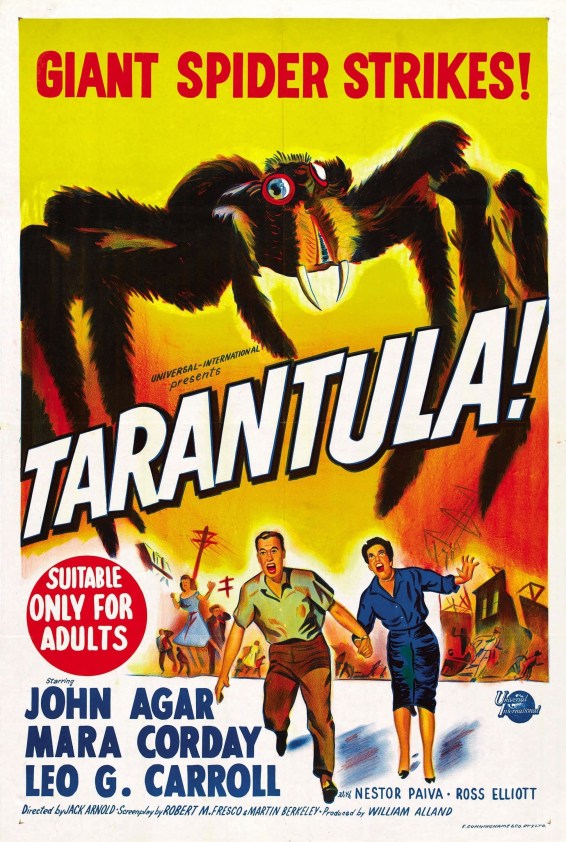
Tarantula (1955) – Film Review

Before the horror genre truly began capitalising on the common phobia of creepy crawlies with films like ‘Arachnophobia,’ ‘Itsy Bitsy,’ ‘Kingdom of the Spiders,’ and ‘Eight Legged Freaks,’ the 1955 sci-fi-horror classic; ‘Tarantula,’ terrified audiences with its marvellous creature effects and continuously unnerving atmosphere. Ensuring the film would go on to be the exemplary for future monster flicks, despite featuring many of the usual problems plaguing creature-features at the time.

Plot Summary: In a remote facility in the Arizona desert, ‘Professor Gerald Deemer’ is conducting a series of experiments in the hopes of finding a way to increase the world’s food supply, injecting growth hormones into various animals to greatly increase their size. But, when a tarantula escapes from the isolated laboratory, still growing at a exponential rate due to the formula, the giant arachnid begins to wreak havoc on a nearby town…

Directed by the late Jack Arnold (With These Hands, Creature from the Black Lagoon, The Incredible Shrinking Man), ‘Tarantula’ was just one of the many science fiction flicks Arnold undertook throughout his career, and in a similar fashion to many of his other stories revolving around horrifying creatures, ‘Tarantula’ was part of the 1950s wave of sci-fi and horror films crafted around the newfound fear of nuclear radiation following World War II. Yet, while we now know ‘Tarantula‘ did greatly help in creating the ‘giant animal’ subgenre, there is an argument to be made that if not for the release of ‘The Beast from 20,000 Fathoms’ just a year prior, ‘Tarantula’ may not even exist, as general audiences only gained interest in creature-features on account of that film’s success.

The late John Agar portrays the film’s square-jawed hero, ‘Dr. Matt Hastings,’ and just like a large majority of male protagonists in ’50s sci-fi, ‘Dr. Hastings’ is charismatic enough to carry the film in spite of the actual character receiving very little development over the course of the runtime. And, as expected, ‘Tarantula’ also includes a romantic subplot between ‘Dr. Hastings’ and secondary protagonist, ‘Stephanie Clayton,’ portrayed by Mara Corday, which although made palatable by Agar and Corday, still feels pretty forced. However, one of the film’s biggest missed opportunities is certainly ‘Professor Gerald Deemer’ portrayed by the late Leo G. Carroll, as whilst Carroll gives a decent performance here, the story sadly pushes his character into the background and nearly entirely ignores the suffering his character later endures after injecting himself with his formula, making his character’s inclusion seem quite superfluous.

Despite the many creature effects throughout ‘Tarantula’ clearly being the film’s main focus, the cinematography by the late George Robinson does have its share of attractive shots even with the film’s lack of colour and camera movement alike due to the technological restrictions of the time-period, as any wide-shots displaying the vast Arizona desert or the fictional town of ‘Desert Rock’ are fairly appealing, and occasionally, even add to the film’s tense atmosphere as the uneven rocky landscape alongside the film’s dim lighting allows the giant arachnid to often lurk unseen.

The original score by the late Herman Stein and the late Henry Mancini is a thunderous and sometimes overly dramatic score, feeling very much like a soundtrack taken from films of the 1950s for better, and for worse. And, while both composers are often uncredited for their work on the film, ‘Tarantula’ is far from the first time Herman Stein has collaborated with director Jack Arnold, providing scores (and having much of his music reused) for a number of his films.

But, of course, ‘Tarantula’ will always be best known for its effects, which are in all fairness the film’s best attribute, as whilst many fondly remembered science fiction and horror films of the 1950s relied on models, costumes and stop-motion to bring their strange creatures to life, many of these filmmaking techniques can feel very dated and tacky by today’s standards for films brimming with CGI. This isn’t the case with ‘Tarantula’s effects, however, as the way the film brings its signature creature to life is quite innovative, as the filmmakers actually used a real tarantula shot separately from the rest of the film, before it was then enlarged and composited/projected onto the desert locations. This clever technique allows the spider to move naturally, and was not only state-of-the-art for the era, but is still quite impressive now, as the matte effect is usually impeccable aside from one or two shots where some of the tarantula’s legs seem to phase through the environment.

In summary, just like many other films released around the time of the 1950s/1960s, ‘Tarantula’ does have its entertainment value, but is also much slower-paced and far more simplistic than many of the sci-fi blockbusters and epic creature-features we’d see released today. Yet, whilst its characters are a little uninspired and the film is more about spectacle than anything else, ‘Tarantula’ definitely has its moments, and, even if just for the effects alone, I think it deserves its place as a ’50s classic, flaws and all. Final Rating: 6/10.

tarantula_poster_05

About Time (2013) – Film Review

Written and directed by Richard Curtis (Love Actually, Pirate Radio), ‘About Time’ would go on to be the final outing for Curtis as a director, as after this time-travelling drama’s release in 2013, Curtis would return to exclusively being a screenwriter, which I feel is probably for the best. As, whilst ‘About Time’ does manage to keep itself afloat thanks to its captivating writing and wonderful performances, the film is often let down by its fairly bland presentation and apparent disinterest in exploring its unique time-travelling concept, ensuring the film’s eventual confusion with many of the other romantic-dramas seen in recent years.

Plot Summary: At the age of twenty-one, the timid; ‘Tim Lake,’ is informed by his father that men in their family have the unique ability to travel through time. Although this ability is restricted to the window of their own lives, it can be used to undo any past mistakes, so ‘Tim’ decides to use his newly found ability to escape his current lonely existence, visiting all of his past loves to find the one who could be his future…

Due to Richard Curtis writing a number of iconic rom-coms from ‘Love Actually’ to ‘Four Weddings and a Funeral’ and ‘Bridget Jones’ Diary,’ in the past, it comes as no surprise that ‘About Time’s screenplay is certainly its finest aspect. As, in many scenes, the film chooses to push ‘Tim’s time-travelling ability aside in favour of delivering sincere character moments, playing into the story’s theme of life itself being the greatest experience. Yet, while I do like both of these ideas, it’s a shame that the film barely touches upon the great deal of consequence time-travelling can have, as scenes focusing on time paradoxes and the butterfly effect could’ve made for some of the film’s most impactful story beats. Sadly, they are incredibly sparse and only appear when the story necessitates them.

The main couple of ‘Tim’ and ‘Mary’ portrayed by Domhnall Gleeson and Rachel McAdams do share a good amount of chemistry and have plenty of charming moments together, as ‘Tim’ tries desperately to impress ‘Mary’ by recalling everything he remembers about her from his past encounters. The supporting cast of Lydia Wilson, Lindsay Duncan, Tom Hollander, and Margot Robbie, are also great, as each member of the cast serves an important purpose within the narrative whether big or small. But, it’s Tim’s father, portrayed by Bill Nighy, who is the true emotional core of the film outside of ‘Tim’s love life, with Nighy doing a fantastic job as usual.

Despite visuals never being the main focus of rom-coms, the cinematography by John Guleserian is the film’s worst element, as even somewhat creative shots are rarely seen throughout the runtime, with the film usually just relying on mid-shots or close-ups to enhance the drama. The film’s colour palette doesn’t help in this regard either, as the pale colours almost present the film as if each scene is an extension of a photo framed in the family’s home, which is ingenious if that was the filmmakers’ attention, yet I’m not entirely sure it was. ‘Tim’s time-travelling ability, however, is a little more visually interesting in spite of its simplicity, as the film makes use of rapid editing to cut between many different events during ‘Tim’s life, a straightforward but understandable method of displaying how ‘Tim’ is flicking through his memories.

Although ‘About Time’s cinematography is lacking, the original score by Nick Laird-Clowes is far more enthralling, as the film’s soundtrack utilises ticking clocks and heart beating sound effects to relate to the story’s aspect of time travel. And, when focusing more on the story’s characters, the score switches things up to be piano-focused, depicting a variety of experiences of life such as joy, heartbreak, reflection and confusion. ‘About Time’ also features a number of recognisable songs similar to much of Richard Curtis’ other work, all of which, luckily, never distract from the story.

While ‘About Time’ does eventually continue on to cover a fair number of years throughout the character’s lives, much of the early portion of the film leans on ‘Tim’ trying to ignite the spark with ‘Mary,’ and with Rachel McAdams,’ previously portraying the titular character in ‘The Time Traveler’s Wife’ from 2009, this should seem like familiar ground. However, unlike McAdams’ character in that romantic sci-fi flick, ‘Mary’ is never made aware of ‘Tim’s time-bending secret, which might make some viewers a little uncomfortable regarding the absence of honesty in their relationship.

In summary, ‘About Time’ is enjoyable, it just doesn’t quite live up to its interesting ideas or nearly two-hour runtime. Unfortunately, whilst the film’s many humorous and heartwarming moments do excel, the story’s huge missed opportunities are always ever-present, and the mostly dull cinematography and colour palette simply can’t be ignored, and even though I would personally only recommend ‘About Time’ to those who have a sweet-tooth for light-hearted romantic-dramas, I can’t deny that the film is heartfelt, with a fragile sort of sincerity at its centre. Final Rating: 6/10.

about_time_xlg