About Time (2013) – Film Review

Written and directed by Richard Curtis (Love Actually, Pirate Radio), ‘About Time’ would go on to be the final outing for Curtis as a director, as after this time-travelling drama’s release in 2013, Curtis would return to exclusively being a screenwriter, which I feel is probably for the best. As, whilst ‘About Time’ does manage to keep itself afloat thanks to its captivating writing and wonderful performances, the film is often let down by its fairly bland presentation and apparent disinterest in exploring its unique time-travelling concept, ensuring the film’s eventual confusion with many of the other romantic-dramas seen in recent years.

Plot Summary: At the age of twenty-one, the timid; ‘Tim Lake,’ is informed by his father that men in their family have the unique ability to travel through time. Although this ability is restricted to the window of their own lives, it can be used to undo any past mistakes, so ‘Tim’ decides to use his newly found ability to escape his current lonely existence, visiting all of his past loves to find the one who could be his future…

Due to Richard Curtis writing a number of iconic rom-coms from ‘Love Actually’ to ‘Four Weddings and a Funeral’ and ‘Bridget Jones’ Diary,’ in the past, it comes as no surprise that ‘About Time’s screenplay is certainly its finest aspect. As, in many scenes, the film chooses to push ‘Tim’s time-travelling ability aside in favour of delivering sincere character moments, playing into the story’s theme of life itself being the greatest experience. Yet, while I do like both of these ideas, it’s a shame that the film barely touches upon the great deal of consequence time-travelling can have, as scenes focusing on time paradoxes and the butterfly effect could’ve made for some of the film’s most impactful story beats. Sadly, they are incredibly sparse and only appear when the story necessitates them.

The main couple of ‘Tim’ and ‘Mary’ portrayed by Domhnall Gleeson and Rachel McAdams do share a good amount of chemistry and have plenty of charming moments together, as ‘Tim’ tries desperately to impress ‘Mary’ by recalling everything he remembers about her from his past encounters. The supporting cast of Lydia Wilson, Lindsay Duncan, Tom Hollander, and Margot Robbie, are also great, as each member of the cast serves an important purpose within the narrative whether big or small. But, it’s Tim’s father, portrayed by Bill Nighy, who is the true emotional core of the film outside of ‘Tim’s love life, with Nighy doing a fantastic job as usual.

Despite visuals never being the main focus of rom-coms, the cinematography by John Guleserian is the film’s worst element, as even somewhat creative shots are rarely seen throughout the runtime, with the film usually just relying on mid-shots or close-ups to enhance the drama. The film’s colour palette doesn’t help in this regard either, as the pale colours almost present the film as if each scene is an extension of a photo framed in the family’s home, which is ingenious if that was the filmmakers’ attention, yet I’m not entirely sure it was. ‘Tim’s time-travelling ability, however, is a little more visually interesting in spite of its simplicity, as the film makes use of rapid editing to cut between many different events during ‘Tim’s life, a straightforward but understandable method of displaying how ‘Tim’ is flicking through his memories.

Although ‘About Time’s cinematography is lacking, the original score by Nick Laird-Clowes is far more enthralling, as the film’s soundtrack utilises ticking clocks and heart beating sound effects to relate to the story’s aspect of time travel. And, when focusing more on the story’s characters, the score switches things up to be piano-focused, depicting a variety of experiences of life such as joy, heartbreak, reflection and confusion. ‘About Time’ also features a number of recognisable songs similar to much of Richard Curtis’ other work, all of which, luckily, never distract from the story.

While ‘About Time’ does eventually continue on to cover a fair number of years throughout the character’s lives, much of the early portion of the film leans on ‘Tim’ trying to ignite the spark with ‘Mary,’ and with Rachel McAdams,’ previously portraying the titular character in ‘The Time Traveler’s Wife’ from 2009, this should seem like familiar ground. However, unlike McAdams’ character in that romantic sci-fi flick, ‘Mary’ is never made aware of ‘Tim’s time-bending secret, which might make some viewers a little uncomfortable regarding the absence of honesty in their relationship.

In summary, ‘About Time’ is enjoyable, it just doesn’t quite live up to its interesting ideas or nearly two-hour runtime. Unfortunately, whilst the film’s many humorous and heartwarming moments do excel, the story’s huge missed opportunities are always ever-present, and the mostly dull cinematography and colour palette simply can’t be ignored, and even though I would personally only recommend ‘About Time’ to those who have a sweet-tooth for light-hearted romantic-dramas, I can’t deny that the film is heartfelt, with a fragile sort of sincerity at its centre. Final Rating: 6/10.

about_time_xlg

Non-Stop (2014) – Film Review

Although ‘Non-Stop’ has been heavily overshadowed by a number of other films within the thriller genre, being mostly forgotten amongst the strew of critically acclaimed films that released in 2014. I personally feel this high-altitude thriller is one of the better stories set within the confines of an aircraft, utilising Liam Neeson’s action expertise to craft a compelling mystery with occasional moments of excitement, even if the film is noticeably lacking in both realism and memorability.

Plot Summary: While on a flight from New York to London, ‘Bill Marks,’ a worn and alcoholic air marshal, receives an anonymous text message, informing him that unless one hundred and fifty million dollars are transferred into an offshore account within the next twenty minutes, someone aboard the plane will die. Now, finding himself in the middle of a deadly cat-and-mouse game, ‘Bill’ desperately searches for the suspect, unintentionally implicating himself into a hostage crisis unfolding at thirty-thousand feet…

‘Non-Stop’ is actually the second of four films directed by Jaume Collet-Serra that feature Liam Neeson, beginning with ‘Unknown’ in 2011, then ‘Run All Night’ in 2015, and lastly ‘The Commuter’ in 2018. And, whilst Collet-Serra’s other films also contain a central mystery, ‘Non-Stop’ certainly has the most interesting location of the bunch, using its tight and claustrophobic setting of an aircraft to great effect as the film never cuts away from the plane itself, even when ‘Bill’s contacts his superiors we the audience remain inside the aircraft with the characters, adding to the suspense. The film also attempts to integrate themes of airline safety and security into its story, which are intriguing though they are never fully explored, nor is the terrorist’s motivation when it’s finally revealed.

Liam Neeson leads the cast as ‘Bill Marks,’ giving his standard action film performance as a mostly straight-faced action hero. But, just as he is in the ‘Taken’ franchise and every other explosive blockbuster, Neeson is an easy protagonist to root for, and ‘Bill’ is given a fair amount of development for what is required. Julianne Moore also makes an appearance in the film as ‘Jen Summers,’ who similar to the rest of the supporting cast of Michelle Dockery, Scoot McNairy, Corey Stoll, Jason Butler Harner, Nate Parker, Omar Metwally, and Lupita Nyong’o, is given limited characterisation and is mostly in the film to serve as a potential suspect, but I suppose considering this is the basis for the story, it would’ve been an enormous challenge to development the huge array of passengers and crew aboard the flight.

The cinematography by Flavio Martínez Labiano is serviceable for the most part, as whilst the film features a few attractive shots and focus pulls throughout its runtime, the majority of the film’s camerawork focuses on hand-held shots, which aside from lending themselves effectively to action sequences and scenes where the plane experiences turbulence, do become a little monotonous. ‘Non-Stop’ also features a couple of scenes that were filmed entirely within a single take, most notably, from the moment ‘Bill’ begins his announcement to the passengers about his phone inspection, through to the moment he duct-tapes a suspect’s hands together, there isn’t a single cut.

John Ottman’s original score does suit the film well, with tracks, like ‘Non-Stop,’ ‘Welcome to Aqualantic,’ and ‘Reluctant Passenger/Blue Ribbon,’ having a nice fusion of synth sounds, percussion, strings, and brass, adding up to simplistic yet competent soundtrack. Constantly pushing or creating the tension in a simple and confined environment while simultaneously fitting with the modern set design of the plane and ‘Bill’ as a reluctant hero forced into action.

With 95% of the film taking place within an aircraft, the set for the plane itself was certainly a crucial detail to get right. Luckily, ‘Non-Stop’ does succeed here, as despite the set having to be built slightly larger than a standard commercial airliner to accommodate for equipment and Liam Neeson’s 6’4′ height. The set does feel like a real plane, having both sleek business class and first class areas as well as lavatories and a crew rest compartment, all of which are very cramped and dimly lit, as the story takes place over the course of one night. This realism is even more impressive considering that the aircraft and airline are clearly fictional, as the aircraft type is never referred to yet its cabin interior and flight deck layout doesn’t match any real aircraft design.

In summary, even though films, like ‘Red Eye’ and ‘Flightplan,’ have taken the enclosed setting of an airplane and made it work before, I believe ‘Non-Stop’ has slightly more entertainment value, as whilst some viewers may find the story’s absence of realism quite frustrating at points, the film distracts from its over-the-top ideas and bland side characters through its tense and fast-paced narrative, making for a thrilling mystery for those that can suspend their disbelief for a few elements. And, with Liam Neeson and the rest of the cast helping ‘Non-Stop’ to collect plenty of air-miles for enjoyability, I’d say the film is worth a watch. Final Rating: 6/10.

nonstop_xxlg

The Man From U.N.C.L.E. (2015) – Film Review

Both a stylish Guy Ritchie comedy as well as a reimagining of the classic 1960s espionage show of the same name, ‘The Man From U.N.C.L.E.’ is a mostly successful modern take on the classic spy-caper. Capturing a familiar tone in spite of its unremarkable story, which the film tries to distract from through its charismatic cast and many exciting set pieces, equalling to a decently entertaining ’60s action/comedy even if it may be on the lower side of Ritchie’s filmography, with ‘Snatch’ and ‘The Gentlemen’ still being far superior films, in my opinion.

Plot Summary: In the early 1960s, CIA agent; ‘Napoleon Solo,’ successfully helps ‘Gaby Teller’ escape East Berlin despite the intimidating opposition of KGB agent, ‘Illya Kuryakin.’ Later, all three unexpectedly find themselves working together on a globe-trotting mission to stop a private criminal organisation that is working to proliferate nuclear weapons…

Being co-written and directed by Guy Ritchie (Snatch, Sherlock Holmes, The Gentlemen), ‘The Man From U.N.C.L.E.’ takes in much of the director’s usual style/humour, having an abundance of witty and amusing dialogue (much of which is brimming with innuendos), in addition to plenty of editing flair. But, ‘The Man From U.N.C.L.E.’ also serves as the first film interpretation of the ’60s espionage show, which Warner Bros. Pictures had actually been trying to adapt for over a decade, director Steven Soderbergh was once even attached to the project with George Clooney, Channing Tatum and Emily Blunt all set to play the three leading characters. The film’s story isn’t just a recreation of a specific episode from the show, however, as Ritchie and his story team actually decided to create an original narrative based around the origin of ‘U.N.C.L.E.’ A backstory that was only hinted at in the show.

Henry Cavill and Armie Hammer portray the film’s protagonist duo, and while neither of their characters are exactly memorable, they do both give great performances, sharing many comedic moments together and bouncing off each other very well, the film even gives its characters a sufficient amount of development early on in the story, though it is delivered through mission briefings and expositional dialogue. Yet, it’s the third member of the cast where some issues begin to arise, as Alicia Vikander as ‘Gaby’ is supposed to be the emotional centre of the story, as her father is being forced to make nuclear weapons, but the film makes it quite hard to resonate with her due to her lack of characterisation and inconsistent German accent, which seemingly disappears at random. Elizabeth Debicki also appears in the film as antagonist, ‘Victoria,’ but similar to Hugh Grant’s character, ‘Waverly,’ she has little impact on the viewer as a result of her very limited screen-time.

Aside from the occasional CGI-enhanced shot, the cinematography by John Mathieson is pretty creative throughout the film, having many unique shots alongside plenty of shots which feel like throwbacks to classic espionage flicks. The film also makes excellent use of Ritchie’s signature editing style, cutting between scenes in a variety of visually interesting ways as well as colourfully implementing the film’s Russian/German subtitles, all of which are displayed in a bright yellow text almost as if they are taken from a 1960s spy poster, not too dissimilar to the film’s opening and ending credits, which are reminiscent of the original show’s intro whilst also feeling fresh.

Daniel Pemberton’s original score is in keeping with the film’s tonal integrity, as Pemberton sought to capture a sound that combined the crispness and sophistication of today with a distinctly 1960s flavour. The first step of which was the venue, as ‘The Man From U.N.C.L.E.’s score was actually recorded in Studio 2 at Abbey Road, where even the most casual music fan likely knows that this is where ‘The Beatles’ recorded many of their iconic albums. Yet, apart from the tracks; ‘His Name is Napoleon Solo’ and ‘Escape from East Berlin,’ the soundtrack feels well-crafted but still falls short, being fairly forgettable in the long run.

However, the world of ‘The Man From U.N.C.L.E.’ isn’t as forgettable, as the film’s 1960s time period mixes together the elegant class of the era with more futuristic spy technology/gadgets. One of the reasons the film stayed in the ’60s time period was to allow the film to have its own reality, setting it apart from films like ‘The Bourne’ franchise and other recent spy thrillers, according to director Guy Ritchie. Obviously, this means that the film constantly revels in its period-accurate vehicles, set design and costumes, a few pieces of which were actually vintage.

In summary, ‘The Man From U.N.C.L.E.’ isn’t a film that will surpass expectations as the film delivers on what it sets out to, for the most part, displaying some fantastic action scenes and enjoyable gags. It’s hard to ignore the film’s uninteresting story, which simultaneously feels drawn out and dull, even branching into convoluted at points with the sheer amount of characters and locations mentioned. But, for myself, and any other classic espionage enthusiasts, ‘The Man From U.N.C.L.E.’ will suffice, even though it could’ve done with some refinement in certain areas. Final Rating: 6/10.

the-man-from-uncle-poster

The Blair Witch Project (1999) – Film Review

Upon its initial release, the original ‘Blair Witch Project’ blew many audiences away with its realistic depiction of found-footage horror, subsequently leading many audience members to believe that the events they were watching on-screen actually took place, making for a truly terrifying experience. However, now, many years after its first appearance, the film’s reputation has significantly altered with both critics and audiences alike, as ‘The Blair Witch Project’ is definitely a film that lies outside of the usual horror clichés.

Plot Summary: When three student filmmakers travel to Burkittsville, Maryland, in attempt to produce a documentary based around the local urban legend of ‘The Blair Witch,’ they mysteriously disappear after traveling into the nearby Black Hills Forest, leaving only their footage behind to be discovered one year later…

Whilst ‘The Blair Witch Project’ wasn’t the original found-footage horror film, with the infamous exploitation flick; ‘Cannibal Holocaust,’ first introducing the horror subgenre in 1980. ‘The Blair Witch Project’ was the first film to popularise the found-footage concept, as this film was at one point in time in the ‘Guinness Book of World Records’ for the largest box-office ratio, as the low-budget film only had a budget of around £45,000 and made back over £189 million, quickly spawning an inconsistent horror franchise despite the film’s only partially complete backstory for its creature and setting.

The three main cast members of Heather Donahue, Joshua Leonard, and Michael C. Williams (who all share their real names with their characters), are all tremendous throughout the film, as while their character’s don’t receive nowhere near as much development as they should considering how much screen-time we spend with them, each one of the actors do give the impression they are becoming more tormented and frustrated the longer they remain in the Black Hills Forest. The main reason the film’s protagonists don’t receive much characterisation, however, is actually due to the film’s production itself, as with the film not focusing very heavily on story, the actors were given no more than a thirty-five page outline of plot points rather than a full screenplay. So, as filming continued, the cast just played out various scenes, only having little knowledge of the mythology behind ‘The Blair Witch’ and improvising the vast majority of their lines.

Practically the entirety of the cinematography by Neal L. Fredericks is exactly what you’d expect from a found-footage horror, featuring an abundance of both shaky and out-of-focus shots, further adding to the idea that just behind the lens is a group of amateur student filmmakers (with some scenes even being shot by the cast themselves). In addition to the hand-held camerawork, the film’s visuals are also quite distinctive when it comes to its visual quality, as throughout the duration of the film, many shots remain incredibly grainy and occasionally even switch to a completely greyscale colour palette, which again, whilst adding to the realism of the film being a no-budget student documentary, does ensure the absence of any genuinely attractive shots.

Although it’s only heard during the film’s atmospheric end credits, ‘The Blair Witch Project’ does actually have an original score composed by Antonio Cora, but obviously being a found-footage horror, the film mostly aims to please with its sound design, as the sounds of crackling leaves and chirping birds are heard continuously. Interestingly, many of the eerie branch-cracking sounds heard at night even being made by the director and his friends simply walking up to the cast’s camp-perimeter and then tossing around twigs, rocks, and branches in various directions.

The main aspect that many will either admire or despise about ‘The Blair Witch Project,’ is its previously mentioned focus on realism and minimalist storytelling, as while the film does utilise its forest setting very effectively throughout the runtime, many who may be expecting a thrilling final act or possibly even a glimpse at ‘The Blair Witch’ herself will be greatly disappointed, as due to the story’s constant emphasis on realism, the film never actually provides any genuine evidence of the supernatural, with many of the film’s tense moments mostly relying on the darkness of the woods or the belligerent quarreling between the characters.

In summary, ‘The Blair Witch Project’ is certainly a fascinating horror film even if it isn’t always a successful one. As, to this day, this found-footage indie flick is a very divisive film for horror fans, with a 86% score on Rotten Tomatoes, the film has the highest-rating of any film that was also nominated for a Razzie Award for Worst Picture. So, even with the cast’s impactful performances and ‘The Blair Witch’ herself being an intriguing urban legend, this is one horror that really depends on your personal taste. For myself, while I find the film far from perfect and considerably less compelling than many other iconic horrors, I can appreciate what this experimental piece of filmmaking (and its marketing) was trying to accomplish, and for that, I feel it’s worth at least one viewing for any fan of the genre. Final Rating: 6/10.

blair_witch_project_ver3_xxlg

Midnight Special (2016) – Film Review

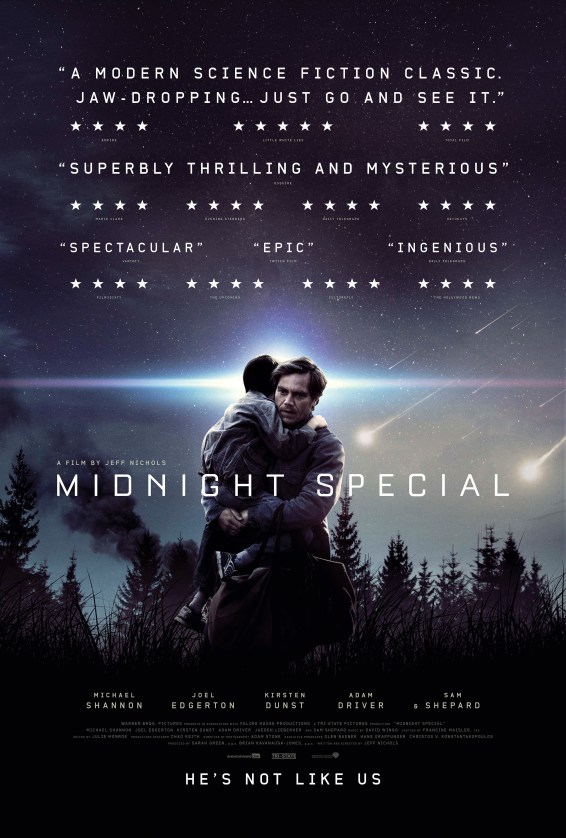
Written and directed by Jeff Nichols (Take Shelter, Mud, Loving), ‘Midnight Special’ may not be one of the most original or imaginative science fiction films to be released in recent years. Yet, regardless of its many recycled story elements and unexplored ideas, this low-budget sci-fi drama/thriller still manages to retain a sufficient amount of entertaining scenes, impressive CG effects and terrific performances to boot. All equalling to a fairly enjoyable experience, even if the film never quite reaches its full potential.

Plot Summary: ‘Alton Meyer’ is a boy unlike any other, a child with powerful abilities and strange weaknesses, alike. But, after ‘Alton’s abilities attract the attention of both an isolated cult and the U.S. government, ‘Alton’s father; ‘Roy,’ vows to protect his son as the two rival forces pursue the pair across the country…

Although ‘Midnight Special’ was Nichols’ first film made in conjunction with a large production company, Nichols wanted to ensure he had full creative control over the project just as he had previously with his low-budget indie films. So, despite Nichols originally considering making the film with an independent film studio rather than with Warner Bros. Pictures during his last meeting with the company, the producers actually agreed to all his demands, due to the small budget needed for the film. Meaning Nichols got his complete control, and the film was more successful at the box-office as a result of its wider release. This did, however, mean many audience members were left a little dissatisfied with the film, as ‘Midnight Special’ doesn’t follow the usual sci-fi clichés many would expect.

Michael Shannon leads the film as the concerned father; ‘Roy Meyer,’ and as per usual, excels in his role as this simple yet engaging character, wanting to protect his son at any cost, occasionally even at the expense of others. Playing into the age-old theme of doing anything to protect your child. Then there is also Jaeden Martell as ‘Alton’ himself, who considering his young age of twelve at the time of filming, delivers a competent performance, as even though ‘Alton’ may look like a normal child, he acts in a very robotic and eccentric manner. And, whilst this is completely intentional, this type of performance does sometimes make it quite difficult to resonate with ‘Alton’ as effectively as his father. The supporting cast of Joel Edgerton, Kirsten Dunst and Adam Driver, are all also great additions to the film, even though their characters don’t add much to the narrative.

Well-shot throughout, Adam Stone’s cinematography for ‘Midnight Special’ may not be some of the most astounding camerawork ever seen within the sci-fi genre, but due to the film mostly being set at night, the film does manage to enhance many of its already attractive shots through its dim lighting. In addition to the cinematography, the film also makes fantastic use of its many CG effects, with the majority of them being used quite sparsely to ensure they all appear as detailed as possible without going over budget.

The original score by David Wingo also isn’t too memorable when compared to some other scores composed for science fiction flicks, but it still greatly adds to the film. Alternating from slow piano-focused tracks to more electronic pulse-pounding tracks when necessary, the entire soundtrack is both atmospheric and suitably sci-fi, with my two personal favourite tracks; ‘Doak and Levi’ and ‘New World,’ being the perfect two examples of this change in tone when it comes to the score. The film also features a new rendition of the classic folk song; ‘Midnight Special,’ during its end credits, which is actually where the film gets its title.

Yet, in spite of its appealing cinematography and remarkable original score, the area where ‘Midnight Special’ falls flat is its story, as whilst many stories similar to this have been executed well in film before, most notably the sci-fi classic; ‘Starman,’ from 1984. ‘Midnight Special’ revels in not providing its audience with much information, keeping many aspects of ‘Alton’s character, his abilities, and the world the story takes place within a mystery. This is most evident when it comes to the (presumably) sinister cult known as ‘The Ranch,’ as while the cult does play a small role in the story, they remain mostly underdeveloped throughout the film, and as the runtime approaches its end, soon disappear entirely.

In summary, ‘Midnight Special’ is a sci-fi film that will appeal to a far more niche audience, as whilst a simple pitch of the plot may sound both familiar and interesting to many fans of the genre, it’s the way ‘Midnight Special’ goes about its story that will divide many viewers. If the film was to provide a little more backstory/exposition here and there, perhaps the story would’ve felt more fleshed out and matched with the brilliant efforts of its filmmaking. But, as it is, ‘Midnight Special’ feels like a bit of a wasted opportunity, as it remains a decent film that could’ve been so, so much more. Final Rating: high 6/10.

MIDNIGHT-SPECIAL-ONE-SHEET

Tron: Legacy (2010) – Film Review

Although Disney has had more than enough success when it comes to its animated filmography, the iconic production company has seemingly always struggled with its live-action endeavours, as aside from the ‘Pirates of the Caribbean’ franchise, many of Disney’s attempts to kick off a live-action film series, such as ‘John Carter,’ ‘The Sorcerer’s Apprentice’ and ‘Tomorrowland,’ have all been relative flops (with the exception of their remakes of animated classics). ‘Tron: Legacy,’ the action-packed sequel to the groundbreaking cult sci-fi hit; ‘Tron,’ from 1982, is a slight improvement in this area, yet still results in a film more focused on style-over-substance.

Plot Summary: After the tech-savvy and rebellious; ‘Sam Flynn,’ begins looking into his father’s disappearance, he soon finds himself pulled into the digital world of ‘The Grid,’ where he discovers his father has been trapped for over twenty years. All the while, his father’s malevolent program; ‘CLU,’ who rules ‘The Grid,’ plans to prevent the pair’s escape and take the real world for himself…

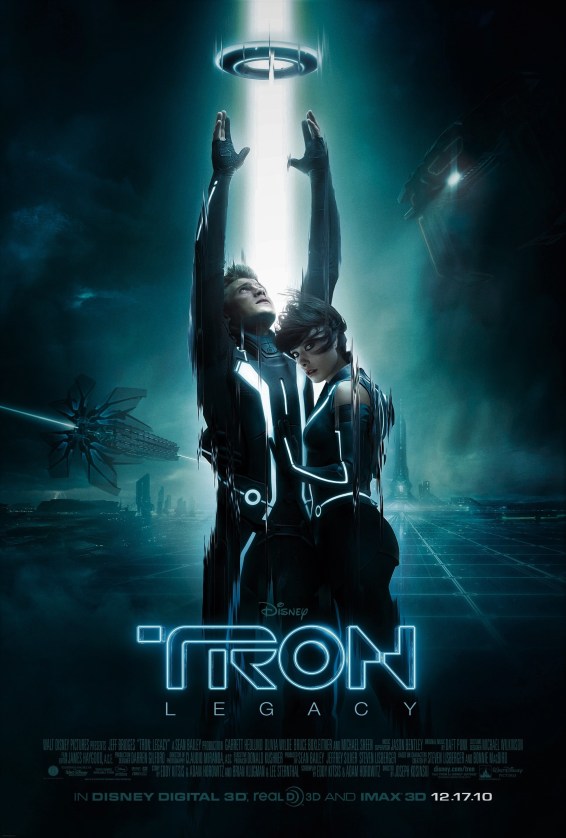
Being set in a virtual world, nearly every scene within ‘Tron: Legacy’ takes place in fully CG locations, and although most of the film’s CG effects do hold up well and are visually appealing. The digital world of ‘The Grid’ does begin to feel quite unvaried after a point, as whilst it may look unique at first glance, the illuminated buildings and vehicles throughout the city of ‘Tron’ feel fairly repetitive, despite the film’s variety of different locations. In fact, it’s the film’s CG visuals that actually made ‘Tron: Legacy’ the most expensive film ever made by a first-time director at the time of its release, with the costume budget alone costing over £10 million.

Garrett Hudlund portrays the film’s protagonist; ‘Sam,’ alongside the supporting cast of Jeff Bridges, Olivia Wilde, and even Michael Sheen in a small role. They all give decent performances despite their dull characters, as ‘Tron: Legacy’s story and characters follow many of the same story beats as any other sci-fi adventure. However, easily the worst element of the film when it comes to its characters is the film’s antagonist. Known only as ‘CLU,’ a corrupt program created by Jeff Bridges’ character; ‘Kevin Flynn,’ as a digital copy of himself, this villain not only suffers from a barely developed motivation, but due to him being a program which doesn’t age, the film utilises CGI to make Jeff Bridges appear a similar age to that of his in the original film, which is one of the few CG effects that hasn’t aged well, appearing almost laughably bad at points.

Claudio Miranda handles the cinematography throughout ‘Tron: Legacy,’ and although the film definitely puts far more of an emphasis on its CG effects than its cinematography, there are still a fair amount of interesting shots including plenty of stunning wide shots to display the true scale of the digital world. The cinematography also makes great use of the film’s few sleek futuristic sets despite their very limited screen-time, most notably, ‘Flynn’s Safehouse,’ located on the edge of ‘The Grid.’

The original score for the film is actually composed by the techno band, ‘Daft Punk,’ whose type of music does suitably fit the sci-fi genre, and whilst some tracks do feel a little too similar to an actual techno album, in my opinion. For the most part, the soundtrack does back up the film’s narrative and adventurous tone very effectively. ‘Daft Punk’ themselves even make a short cameo within the film as a pair of DJs in the ‘End of Line’ nightclub, wearing their iconic helmets as they play one of the film’s most memorable tracks, which share the same title as the club itself.

Another great aspect of ‘Tron: Legacy’ is certainly its action set pieces, as although many of the action scenes throughout the film aren’t anything incredibly inventive. The original ‘Tron’ did introduce the creative concepts of ‘Identity/Light Disks’ and ‘Light Cycles,’ both of which return in the sequel and result in plenty of thrilling and fast-paced action sequences as ‘Sam’ is thrown into an array of gladiator-esque challenges near the beginning of the film. The various costumes worn by the characters who live within ‘The Grid’ are also worth a quick mention, as most of the characters wear a ‘Light Suit,’ which usually features fluorescent-like glowing strips that illuminate each suit in a range of colours, which never fails to be visually striking.

In summary, ‘Tron: Legacy’ is by no means a terrible film, and when it comes to Disney’s other ventures into live-action, ‘Tron: Legacy’ could even be seen as a success by some. But, with its fairly paint-by-numbers story, bland characters and an onslaught of over-done clichés, this sci-fi sequel ends up becoming more of a display for its impressive CG visuals and electronic original score rather than an exhilarating sci-fi odyssey. If you’re a fan of the original ‘Tron’ I feel you will surely enjoy this follow-up. If not, maybe look elsewhere for your fill of original science fiction. Final Rating: 6/10.

tron_legacy_ver11_xxlg

The Christmas Chronicles (2018) – Film Review

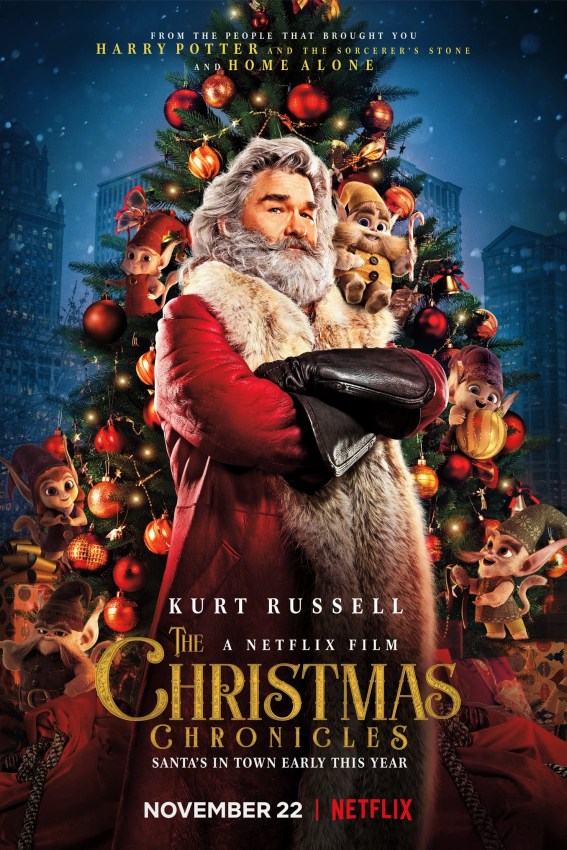
From director Clay Kaytis (The Angry Birds Movie) and producer Chris Columbus comes another Christmas family adventure with ‘The Christmas Chronicles,’ and while the film may be nowhere near as memorable as many other festive classics. I can still see the film being a mostly entertaining ride for families and younger viewers alike.

Plot Summary: When brother and sister; ‘Teddy’ and ‘Kate Pierce,’ are left alone on Christmas Eve, they devise a plan to catch ‘Santa Claus’ on camera, which soon turns into an unexpected journey that most children could only dream of, as they manage to hop aboard ‘Santa’s sleigh and join him on his task of delivering presents all over the world…

Although the two films do differ from each other in many ways, I couldn’t help but notice the similarities between this film and ‘The Santa Clause’ from 1994. As both Christmas flicks focus on characters going on a magical adventure with ‘Santa Claus,’ with them usually having strong themes of family and belief throughout. However, ‘The Christmas Chronicles’ also seems to focus more on exciting set pieces.

Whilst Judah Lewis and Darby Camp portray the siblings decently well throughout the film (aside from the occasional line of dialogue) Kurt Russell is without a doubt the stand out of the cast, as he brings his usual charisma and talent to create a fresh and memorable portrayal of ‘Saint Nick’ himself. This is dragged down by the film’s characterisation, however, as both of the siblings are pretty bland and dull from start-to-finish, as a pleasant little detail, ‘Santa’s list even includes several of Kurt Russell’s real-life grandchildren.

The cinematography by Don Burgess is also mostly generic throughout the film, usually serving its purpose without drawing the audience’s attention away from the action on-screen. Speaking of which, the action sequences throughout the film are handled surprisingly well, from the fast car chase through the streets of Chicago, to ‘Santa’s sleigh soaring through the night sky. The weak CGI throughout the film can detract from some these scenes, however, with ‘Santa’s elves in particular having some very distracting CG effects at points.

The original score by Christophe Beck is decent overall, as while not incredibly memorable, and many could see it as slightly weaker when compared to many of his other soundtracks, such as ‘The Muppets,’ ‘Frozen’ or ‘Ant-Man,’ the score does have a festive and pretty upbeat tone throughout the film’s runtime. ‘The Christmas Chronicles’ even gives us a new spin on the classic song; ‘Santa Claus is Coming to Town,’ as ‘Santa’ shows off some of his style as he sings; ‘Santa Claus is Back in Town,’ in an attempt to add some cheer to those around him.

My main issue with the film is the story’s general cheesiness, as although the film does avoid the occasional Christmas film cliché, the film is still brimming with cheesy lines and scenes throughout the film’s narrative. However, I found this to be a problem mostly around ‘Santa’s elves, as not only did these characters have an awful new redesign, but they seemed to be purely used for the sake of being cute. I also couldn’t help but think the film could’ve been improved if directed by Chris Columbus, as although director Clay Kaytis doesn’t do a terrible job by any means, I feel the director of ‘Home Alone’ (a true Christmas classic for many) could’ve definitely made the film better for what it was.

In summary, ‘The Christmas Chronicles’ is a mostly fun adventure for a film night on Christmas Eve, as while the story isn’t anything we haven’t seen before. Kurt Russell’s memorable performance mixed with some entertaining action scenes and a very festive atmosphere all result in the film being a decent watch. So, maybe check this one out one year if you’re in the need for a festive fantasy adventure, just don’t have your expectations too high. Final Rating: 6/10.

3xGoeE32Dk3KlDADbb8DkYDx1Y7

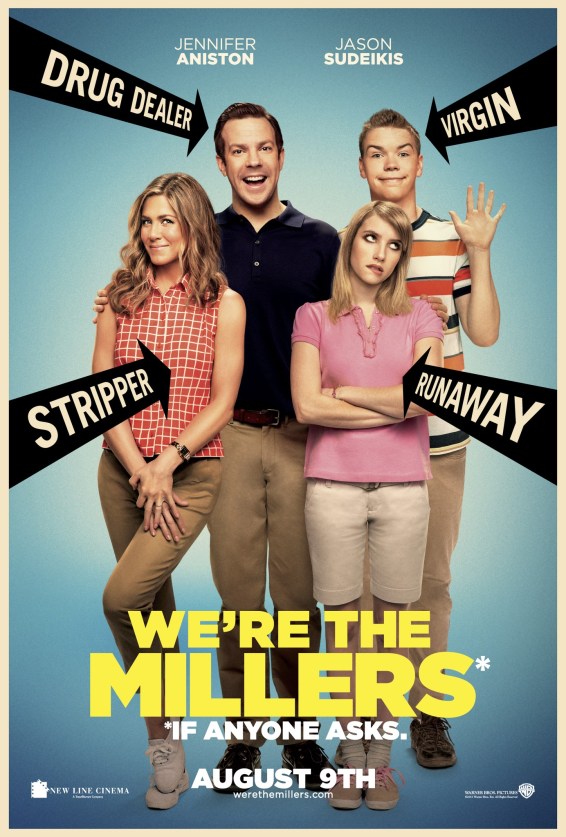
We’re the Millers (2013) – Film Review

Even with a mostly standard plot for a comedy flick, I ended up enjoying ‘We’re the Millers’ more than I initially expected, as the entire cast (especially Jason Sudeikis and Jennifer Aniston) have excellent chemistry with each other, resulting in the majority of the humour throughout the story working quite well, despite the film having a few noticeable flaws throughout its runtime.

Plot Summary: When a middle-aged pot dealer is tasked with moving a huge shipment of weed into the United States from Mexico for a large pay packet, he puts together a fake family of various people he knows from his flat in an attempt to make it over the border…

Comedy as a genre has always been subjective, as everyone obviously has their own taste when it comes to what they find amusing. But, for the most part, I would say enjoyed the humour throughout the runtime, as aside from a few moments where the joke was simply one character saying something disgusting or incredibly stupid out loud to another group of characters (as I personally find this kind of comedy a little lazy), I think most of the jokes land. However, I also feel a few more jokes hidden within the background of shots would’ve also added to the film in more ways than one.

Jennifer Aniston, Jason Sudeikis, Emma Roberts and Will Poulter all portray random people thrown together in the hope of creating this false family, and I would say they work well together throughout the film. Always coming across as a very dysfunctional yet still likeable group, with all of the cast portraying very different personalities without losing any comedic timing. Interestingly, ‘We’re the Millers’ is actually the second film in which Jennifer Aniston plays a character who is recruited to create a fake family, the first being the comedy flick; ‘Just Go With It,’ in 2011.

Whilst the film does have the occasional appealing shot, the cinematography by Barry Peterson isn’t anything spectacular, as the film has mostly generic cinematography for a comedy. However, the original score by Ludwig Göransson and Theodore Shapiro is definitely one of the better elements of the film, as the soundtrack fits the tone of the film perfectly, utilising an acoustic guitar which always manages to make the film feel interesting enough to be somewhat memorable. Considering the first composer has worked on films, such as ‘Creed’ and ‘Black Panther,’ however, this shouldn’t be that much of a surprise.

My main criticism of the film is the overall lack of jokes or comedy set pieces based around the idea of the characters being a fake family, as although there are a few jokes throughout the narrative based around this idea, I never quite felt the film made full use of this concept, and usually just fell back onto your usual comedy writing. I also personally felt the film’s pacing is far too quick, as the film almost rushes through scenes within the story in order to quickly get to another gag, rather than having them happen alongside each other. In addition to this, I also felt more focus on some of the more emotional or serious scenes could’ve really helped build up tension and make the story more engaging.

In summary, ‘We’re the Millers’ is a serviceable comedy, as while I don’t think the film is fantastic by any means. I enjoyed myself with this simple comedy for what it attempted to be, as although I still think the cinematography and some of the humour could be improved, I found the film to be a mostly entertaining ride and a pretty easy watch due to its fun story and brilliant cast. Final Rating: low 6/10.

were_the_millers_xxlg

Halloween (2018) – Film Review

Confusingly titled; ‘Halloween,’ despite not being a remake, this direct sequel to John Carpenter’s 1978 classic ignores all the other entries in the franchise in favour of telling a completely new story set forty years later, with Jamie Lee Curtis even returning to her iconic character of ‘Laurie Strode,’ now much older and much wiser. Yet, while definitely a decent attempt at continuing the ‘Halloween’ series, the film is still far from perfect.

Plot Summary: ‘Laurie Strode’ confronts her long-time foe, ‘Michael Myers,’ once again, as the masked figure who has haunted her since she narrowly escaped his killing spree on Halloween night four decades ago, now begins a new massacre after his recent prison escape…

Although the film’s narrative does have some interesting ideas, the film always felt a little too familiar to me, as I usually found myself correctly predicting what was around the next corner, leaving little to be surprised by. Under the direction of David Gordon Green, best known for his 2017 drama; ‘Stronger.’ The film does pay plenty of respect to the original film, as can always tell whilst watching that Green does have a passion for this horror franchise (as he clearly understands what made the original work so well). I still feel a better director could’ve been chosen, as at points, the story does seem to be slightly lacking in direction, and with his previous work in mind, it’s clear that he doesn’t specialise in horror.

It is great, however, to see Jamie Lee Curtis back as her classic character once again, as she really excels in showing how ‘Laurie Strode’ has been affected by those horrific events many years ago. Alongside the rest of the great cast of Judy Greer, Andi Matichak, Will Patton and especially Haluk Bilginer as ‘Dr. Sartain,’ who I was initially concerned would be nothing more than another ‘Dr. Loomis’ type character, but did actually end up going in a very different direction.

The cinematography by Michael Simmonds is nothing outstanding for the majority of the film, yet is still attractive when combined with the dark lighting throughout, particularly anytime ‘Michael’ is on-screen. Another strong element of the film is the wonderful original score by John Carpenter, his son Cody Carpenter and Daniel A. Davies, as although the soundtrack does slightly rely on tracks from the original film, there is plenty of new tracks here as well. Proving John Carpenter is brilliant at his craft once again, with the tracks; ‘The Shape Hunts Allyson’ and ‘The Shape Burns,’ being some of Carpenter’s best work in a long time, in my opinion.

One of the strongest elements of the film for me are definitely the kills, as it’s clear the filmmakers got very creative with the ways ‘Michael Myers’ disposes of his victims, usually creating very memorable scenes with some fantastic practical gore effects included. I also felt the film represented the iconic slasher very well, as ‘Michael Myers’ is always intimidating through his movements, ‘Michael’ even manages to steal the film for me by being the main focus of my personal favourite scene of the film, as ‘The Shape’ stalks his way through Haddonfield’ with murderous intent, all completed within a single take.

Being produced by Blumhouse Pictures, ‘Halloween’ also, unfortunately, features the company’s usual pandering to younger audiences you’d come to expect by now, as the film is littered with jump-scares throughout the runtime, with little attempt to create an eerie atmosphere or build large amounts of tension. In addition to this, the writing throughout the film is decent when it comes to the characters but usually is very lacking when the film attempts comedy, resulting in plenty of cringey lines of dialogue and out-of-place jokes.

In summary, 2018’s ‘Halloween’ is mostly enjoyable, but with a lack of originality, some cheesy lines and forced comedy (not to mention its strong overreliance on jump-scares) the film doesn’t even come close to replicating the classic horror’s best qualities. I do hold the original film in high regard, of course (it being one of my personal favourite horrors), but with plenty of entertaining moments throughout, this latest entry in the ‘Halloween’ series is definitely on the higher end of long-awaited sequels to classic horrors. Final Rating: 6/10.

halloween_xxlg.jpg

Ready Player One (2018) – Film Review

A triumphant return back to the silver screen for legendary director Steven Spielberg (Jurassic Park, Schindler’s List, Raiders of the Lost Ark), this time taking on an adaptation of a beloved science fiction novel by Ernest Cline. 2018’s ‘Ready Player One’ not only manages to capture that classic Spielberg whimsy all these years later, along with having plenty of breathtaking visuals and thrilling action sequences to boot. But, through its many, many references and appearances to/from iconic properties and characters from all types of media, ‘Ready Player One’ soon becomes a sweetly nostalgic adventure for any age.

Plot Summary: In the dystopian future of 2045, humanity spends their days inside ‘The OASIS,’ a virtual world where the only limits are your own imagination. Until on his deathbed, the original creator of ‘The OASIS’ makes a posthumous challenge, promising his entire fortune as well as complete control over his virtual world to the lucky ‘OASIS’ user that finds his ‘Golden Easter Egg.’

As its story may imply, ‘Ready Player One’ follows its novel counterpart closely by structuring its narrative half in the real world, and half within ‘The OASIS.’ Having all of the scenes set within the virtual world be comprised entirely of CGI, whilst reality is presented through live-action. While many viewers may initially be quite cautious of this (myself included), fearing a barrage of phoney-looking CG set pieces, Spielberg actually pulls this idea off very well, as the film never feels as if its CG visuals are being overused despite them taking-up most of the runtime. Interestingly, Spielberg teamed-up with effects company Industrial Light & Magic for most of ‘Ready Player One’s imagery, the company that previously worked with him for the first ‘Jurassic Park,’ so the Tyrannosaurus Rex that appears in the film is recreated using the same base-model made for the original film.

Best known as ‘Cyclops’ in the latest incarnation of the ‘X-Men’ series, Tye Sheridan does a decent job at portraying the film’s likeable protagonist; ‘Wade Watts.’ Alongside Sheridan, Olivia Cooke as ‘Wade’s love interest; ‘Samantha,’ as well as Mark Rylance as ‘Halliday’ and Ben Mendelsohn and T.J. Miller as the film’s antagonists are all fine throughout the film. Yet, whilst every member of the cast is trying here, the performances in ‘Ready Player One’ are made more impressive considering the film’s extremely weak characters, as, unfortunately, nearly every character we meet within the story is mostly one-note, being nothing more than your traditional hero, companion or villain, etc.

Although an enormous amount of the cinematography by Janusz Kaminski is visually striking, having a large number of moving shots where the camera soars through the limitless world of ‘The OASIS.’ It’s difficult to judge it in its entirety, as a good majority of the camerawork is obviously CG due to half of the film’s story being set within a virtual world, and whenever we cut back to reality, the cinematography usually feels quite bland. However, I do appreciate the gloomy colour palette that’s utilised when the film returns to the real world, as it contrasts well against the incredibly colourful visuals of ‘The OASIS.’

Even though the film’s original score by Alan Silvestri is a serviceable and uplifting score in its own right, sounding subtlety like a Steven Spielberg classic. The film’s score was originally going to be composed by longtime Spielberg collaborator John Williams, but as a result of a scheduling conflict with another Spielberg film, Williams left the project to Alan Silvestri. Making ‘Ready Player One’ the third of only three films where Spielberg didn’t collaborate with Williams.

Many of the main problems I find hard to ignore with ‘Ready Player One’ mostly revolve around its weak writing, as although not continually noticeable, the film has a number of cheesy moments/clichés scattered throughout its story, in addition to many moments of humour which fall completely flat. Some critics have also taken issue with the enormous amount of characters from other media appearing in the film, seeing it as pandering and meaningless. I don’t agree with this criticism, however, as the original novel is full of many of its own (unique) references. Personally, I also feel many of the film’s flaws are made up for by its brilliant action scenes, from the opening race to the explosive final battle, to even a scene where the characters travel into the classic 1980 horror; ‘The Shining,’ every set piece is both creative, and enjoyable to watch.

In summary, ‘Ready Player One’ definitely has its faults, in particular, when it comes to its screenplay. But, even with its problematic writing in mind, I’d still say the film is a great addition to Spielberg’s huge line up of family flicks, as while it may not be on the same level of classics like ‘E.T. the Extra-Terrestrial’ or ‘Hook,’ for example, ‘Ready Player One’ overcomes its weak characterisation and occasional corny dialogue to become an exciting sci-fi/fantasy odyssey, and a film I’d recommend a trip into ‘The OASIS’ for. Final Rating: 6/10.

ready_player_one_ver2_xxlg