Malcolm & Marie (2021) – Film Review

“Cinema Doesn’t Need to Have a Message. It Needs to Have a Heart!” – Malcolm Elliott

A contained and regaling monochrome drama, 2021’s Malcolm & Marie was one of the first feature-length films produced amidst the COVID-19 global pandemic. Written and directed by Sam Levinson (Another Happy Day, Assassination Nation), best known as the creator and lead writer of the hit teen-drama series; Euphoria, Malcolm & Marie was shot during the U.S. COVID-19 lockdown between June and July of 2020, with the approval of the Writers’ Guild of America, Directors’ Guild of America, Screen Actors’ Guild of America, and the American Federation of Television and Radio Artists, as the production followed strict safety protocols to ensure the cast and crew could work safely. With this in mind, Malcolm & Marie makes the best of challenging circumstances, utilising a singular location, minimal cast and sleek visuals to craft a captivating flick that examines how volatile personalities can clash, especially when tangled in a long-standing relationship.

Plot Summary: After returning home from the premiere of his debut project, filmmaker Malcolm Elliott and his girlfriend, Marie Jones, await what is sure to be an imminent critical and financial success. But, as the evening transpires, their celebratory night takes a turn for the worse as revelations begin to surface, testing the strength of their devotion to one another…

Between Marcel Rév’s scrumptious black-and-white cinematography and the no-holds-barred verbal brawl delivered by the central duo of Washington and Zendaya, it’s impossible to discuss Malcolm & Marie without drawing comparisons to the cinematic adaptation of Who’s Afraid of Virginia Woolf? (1966). Like the stage play the film is based upon, first staged in 1962, Who’s Afraid of Virginia Woolf? explores the complexities of the marriage of middle-aged couple Martha and George, where, late one evening, after a university faculty party, they receive an unwitting younger couple, Nick and Honey, as guests and are drawn into their bitter and frustrated relationship. Although Malcolm & Marie only focus on the two titular characters, both stories have more than a few similarities. One element of Malcolm & Marie that is unique to the film, however, is its underlying theme of the essence of cinema, examining this concept through the eyes of Malcolm as a passionate Black filmmaker who loathes the politics surrounding Black filmmakers. In fact, Malcolm’s intense dislike of an anonymous female critic from the L.A. Times is believed to be a reference to L.A. Times writer Katie Walsh, who once wrote an unfavourable review of one of Levinson’s prior directorial outings.

As the sole cast members, John David Washington and Zendaya hold the entire weight of the film on their shoulders. Thankfully, both share amazing chemistry and receive countless chances to let their talent shine as they each deliver lengthy monologues exploding with emotion. Through these monologues and the sharp dialogue, it quickly becomes apparent that the titular, well-defined couple exist in different rhythms, with Malcolm exuberantly (and obnoxiously) extolling the delights of premiering his first film as a writer and director, which pushes him to the cusp of newfound power and prestige, while Marie appears sullen, bored and utterly over Malcolm and his prickly, delicate ego that repeatedly puts strain on the pair’s relationship, often failing to acknowledge Marie’s support. However, this constant back-and-forth does come at a cost, as both characters can come across as somewhat unlikable through their many imperfections being blatantly illustrated on-screen at all times.

One of the few Netflix Originals shot to be on 35mm, the cinematography by Marcell Rév is elegant and sheeny. Yet, what makes these visuals even more impressive is that for the entirety of the runtime, the titular couple never once leave the house, as previously mentioned, merely strolling to different rooms or into the garden with a cigarette in hand as their bickering continues. Some may think this sounds dull, but I feel this approach ensnares much of the tension between the two characters and the heavy air that flows through their temporary, luxurious home. Furthermore, with both characters being chic and sophisticated, as well as returning from the premiere in their formal evening wear, there is a suave feel to the visuals of Malcolm & Marie, making the film seem like a romance from the 1930s, with tight camerawork to intensify the drama.

Likewise, the film’s original score, helmed by British musician Labrinth, reunited with Sam Levinson after composing much of the score for Euphoria, retains a similar tone to that of a 1930s drama, with the delicate, jazzy score meshing flawlessly with cleverly selected needle drops. Famed songs, like I Forgot to Be Your Lover and Get Rid of Him, are also baked into the runtime, doing much of the talking when the characters aren’t.

Interestingly, because Malcolm & Marie was produced during the COVID-19 pandemic, none of the cast or crew associated with the film received any kind of payment or entered into any agreement with the depiction of tobacco products, which is certainly admirable given the current state of cinema, where many films are greenlit purely for the sake of profit.

In summary, due to its entire runtime taking place in one location with a heavy reliance on dialogue, Malcolm & Marie will likely be a divisive flick that won’t please everyone. But, for those it will, I feel it’s more than entertaining, even if the film isn’t as layered or as tightly-knit as it thinks it is. Rating: 7/10.

Leave the World Behind (2023) – Film Review

“A Conspiracy Theory About a Shadowy Group of People Running the World Is Far Too Lazy of an Explanation… Especially When the Truth Is Much Scarier.” – G. H. Scott

Suspenseful, intriguing and enigmatic, 2023’s Leave the World Behind is an adaptation of the novel of the same name by Rumaan Alam. Steadily drawing its audience in through its engaging premise and stunning camerawork, this stylish Netflix Original is an apocalyptic thriller centred around the idea of humanity’s destruction being brought about by our distrust of others, our overreliance on modern technology and our lack of control over the planet. And, although not perfect, the film is a predominantly engrossing and intricate original flick for the streaming service in more ways than one.

Plot Summary: Exchanging New York City for a much-needed family getaway at a luxurious, remote rental home, couple Amanda and Clay Sanford are shaken by the late-night arrival of the sharply-dressed stranger, G. H. Scott, and his daughter, Ruth, bearing troubling news of a regional blackout and communication issues. But, as the pair are invited inside and speculate on why this rapid technological breakdown is occurring, all signs begin to point to more than a temporary malfunction…

Written and directed by Sam Esmail (Comet), creator of the incredibly gripping and considerably underrated crime-thriller television series; Mr. Robot, through which Esmail proves his extraordinary talent as a screenwriter and director. Leave the World Behind proves, once again, that Esmail is an absurdly talented filmmaker, governing the film’s pacing, upsurge in tension and consistently dour tone to an astonishing degree, all whilst enveloping the story in an unpredictable and surprisingly close to reality ‘end of the world’ scenario, even if the narrative unnecessarily harbours a lengthy runtime of almost two and a half hours. I can, however, see some taking issue with the film as a result of its conclusion, which is rather inconclusive and underwhelming after all the film’s build-up, even though the climax does answer many of the questions the audience likely possesses at that time.

The central cast of Julia Roberts, Mahershala Ali, Ethan Hawke, Myha’la, Farrah Mackenzie, Charlie Evans and Kevin Bacon all hold their own throughout the runtime, authentically portraying a concerned family, a pair of fairly unwelcomed guests and a distrustful neighbour with the appropriate dose of awkwardness and apprehension. Yet, the characters themselves aren’t given enough to make them appear memorable or complex, merely functioning as viewpoints for the audience as they piece together the sprinklings of clues and information they uncover in relation to the circumstances that are transpiring around them.

Utilising its colour palette to represent specific characters, like the colour blue, for example, being employed around the Sanford family, with their bedroom, car, clothes and other minor details all sharing this colour. The visuals, specifically the sleek cinematography by Tod Campbell, are inventive and attractive, visually conveying much of the paranoia the characters are feeling while implementing Esmail’s signature style of filmmaking via uncomfortable close-ups on the characters, positioning them in the corner of the frame to further put the audience on edge, with even the wall art in the master bedroom altering over time as Amanda and Clay’s temperament intensifies. Additionally, Leave the World Behind houses a few moments of fairly impressive CGI whenever the characters encounter a CG flamboyance of flamingos or a herd of deer near their rental home, which is certainly abnormal and visually interesting, yet the animals’ significance in the grander narrative is largely lost on me.

Crafting an outstanding score for all four series of Mr. Robot, Mac Quayle is a superb composer and continues to prove his worth with his nail-biting, horror-esque score for Leave the World Behind, continuously adding to the suspense of each and every scene, whether there is any physical peril at that time or not. During tracks such as; Beach Day and Cyberattack, Quayle’s orginal score is led by an isolated, eerie piano piece, placing the audience (for a brief moment) amid the film’s impending apocalypse and the human drama unfurling within. However, as much as the score attempts to immerse the audience in the narrative, some of the licensed songs chosen for the film have the counter effect, seeming unsuitable and irrelevant to both the tone and the story, despite the stylish opening animated sequence where one of these songs is featured, serving as an electrifying curtain-raiser.

On another note, Leave the World Behind interestingly contains several references to Esmail’s previously mentioned television series, including Amanda’s laptop and the yellow emergency kits the character, Danny, purchases both being produced by E-Corp, a fictional corporation featured in the series, as well as a book written by the Mr. Robot character, Irving, also appearing, suggesting that the stories may take place in the same universe, which would make sense, given the stories’ shared notions of hackers, cyberattacks and theories regarding online terrorist groups.

In summary, Leave the World Behind is a Netflix Original that will undoubtedly divide its audience, taking an unconventional approach to the well-known formula of the apocalyptic scenario, leaning more into the isolated paranoia and scepticism of an ordinary American family rather than the grand destruction of famed cities and their associated landmarks across the globe. Even so, whilst not quite as polished or as compelling as Esmail’s masterwork of a television series, Leave the World Behind definitely has its notable elements, in my opinion, grounding itself in reality as much as possible. Rating: 7/10.

leave_the_world_behind_xxlg

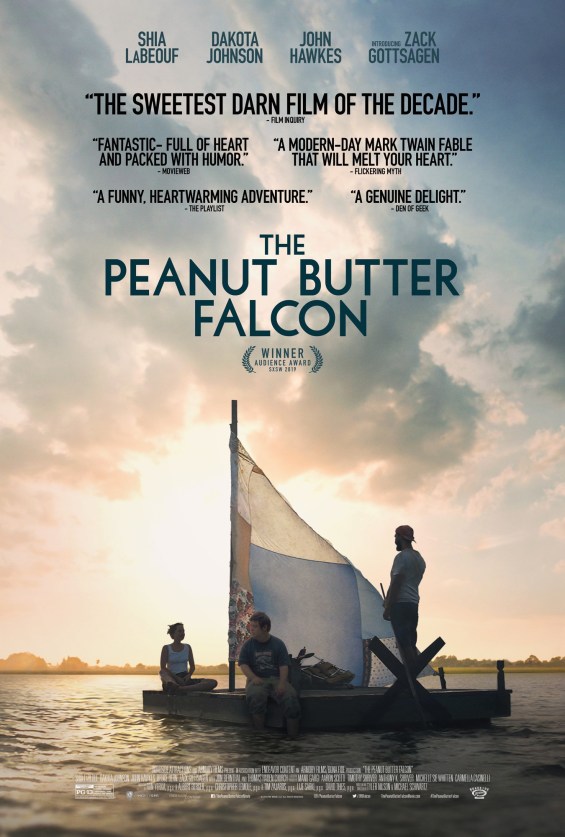
The Peanut Butter Falcon (2019) – Film Review

“Friends Are the Family You Choose.” – Carl

Warm-spirited, humorous and well-acted, 2019’s The Peanut Butter Falcon is a feel-good, modern-day comedy-drama inspired by the celebrated literature of author Samuel Langhorne Clemens, best known by his pen name Mark Twain, who challenged many of the fundamental issues of his time, including racism, evolving landscapes, class barriers and access to education, through notable publications like his renowned novel; The Adventures of Tom Sawyer, and his 1883 memoir; Life on the MississippiThe Peanut Butter Falcon specifically elicits Twain’s 1884 book; Adventures of Huckleberry Finn, finding modern resonance in the classic piece of American literature by incorporating a raft, assorted riverine ventures and luscious swampy landscapes into its entertaining (if occasionally meandering) story, which is frequently elevated by the film’s admirable camerawork and plethora of superb performances.

Plot Summary: When Zak, a twenty-two-year-old orphan with Down Syndrome, escapes the state-run care facility where he resides to pursue his dream of becoming a professional wrestler by attending a wrestling school headed by his favourite grappler, the Salt Water Redneck, he incidentally runs into Tyler, a fisherman turned delinquent fleeing to Florida. Together, the pair embark on a journey of camaraderie as they evade capture, slowly morphing Tyler into an unexpected ally and coach…

The concept for The Peanut Butter Falcon first came about when writer-directors Tyler Nilson and Michael Schwartz, who before this film’s release had only written/directed short films, such as The Moped Diaries (2014), Alex Honnold’s Urban Ascents (2014) and Alex Honnold: At Home Off the Wall (2015), met its forthcoming lead actor, Zack Gottsagen, at a camp for disabled and non-disabled individuals, where he expressed his yearning to be a “Movie Star,” this prompted Nilson and Schwartz to write a screenplay around him, knowing many locals would allow them to film for free, without permits. Given that the story is set within Southern America and features a protagonist with Down Syndrome as a result of this, The Peanut Butter Falcon plays it relatively safe with its judgmental setting to maintain an upbeat tone, only harbouring a few brief moments where Zak is lightly mocked for his disability. Moreover, many of these abusive characters are counterbalanced by jovial individuals who aid Zak and Tyler in their journey, like Blind Jasper John, portrayed by Wayne Dehart, a blind and Black evangelical preacher, who could be seen as somewhat cartoonish and stereotypical, depending on your background.

The remarkable central cast of Shia LaBeouf, Dakota Johnson and Thomas Haden Church (along with a surprise appearance from Jon Bernthal) are all exceptional in their assorted roles, conforming to their surroundings without appearing excessive in their Southern characteristics. However, Zack Gottsagen is understandably the stand out of the cast, as in spite of having only a handful of acting credits to his name, Gottsagen portrays Zak with a cordial, childlike innocent, providing his lonesome character with moments of goofiness and naivety without ever making him seem mindless. Zak is also pivotal to the film’s narrative, as his role in the story is ultimately to redeem Tyler, a flawed yet affable delinquent, who learns to be a better person thanks to Zak’s modest influence. Eventually, Tyler strikes up a serviceable romantic subplot with Zak’s pursuing, kind-hearted carer, Eleanor, but this never detracts from the prominent bond between Tyler and Zak, which remains meaningful and gratifying throughout the runtime.

Beautifully flaunting the rural Georgia landscape (which stands in for the Outer Banks of North Carolin), the cinematography by Nigel Bluck expertly captures the essence of the murky, backwater creeks, decrepit shacks, over-priced gas stations and sludgy shores with grounded boats that serve as the story’s setting, constructing an appealing visual aesthetic that feels naturalistic in its details, but also celebrates the American region for its prominent natural beauty and devil-may-care lifestyle.

Much of the score throughout The Peanut Butter Falcon bears a stripped-down approach to its arrangements, as composers Zachary Dawes, Noam Pikelny, Jonathan Sadoff and Gabe Witcher utilise acoustic instruments and minimal orchestration to provoke the audience with the calming sensation of standing in the open countryside. This is especially true of the tracks; Cold OpenTravelling Theme and Love Me in Kind, which possess simplistic yet breezy banjo-led melodies that correspond with the soothing, swampy visuals.

Interestingly, although The Peanut Butter Falcon received no Academy Award nominations in the face of its positive reception from critics and audiences alike, Gottsagen actually became the first-ever individual with Down Syndrome to present an Academy Award when he and LaBeouf announced the Best Live-Action Short Film on February 9th, 2020, which is an accomplishment in itself.

In summary, The Peanut Butter Falcon‘s triumph as a sleeper hit, becoming the highest-grossing independent film of 2019, was, in my opinion, rightfully deserved, as this low-budget comedy-drama is, above all else, charming, despite its sometimes corny and overly optimistic storyline. And whilst the film is admittedly far from a precise, poignant representation of a community that is rarely represented on-screen, The Peanut Butter Falcon is a step forward with its casting of an unknown lead actor with Down Syndrome, as opposed to acquiring a ‘bigger name’ to boast the film’s notoriety. Nevertheless, if you’d like to see an authentic, cinematic portrait of a life with Down Syndrome, I’d recommend seeking out the 2016 low-budget British drama; My Feral Heart, or the Irish drama; Sanctuary, also released in 2016. Rating: 7/10.

peanut_butter_falcon_xxlg

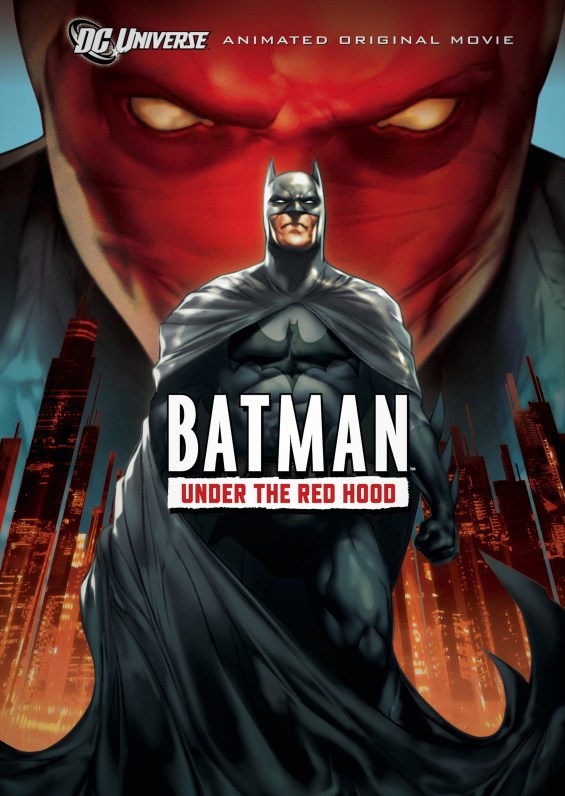
Batman: Under the Red Hood (2010) – Film Review

“Those Are the Heads of All of Your Lieutenants, That Took Me Two Hours. You Wanna See What I Get Done in a Whole Evening?” – The Red Hood

In 1988, the iconic DC Comics storyline; Batman: A Death in the Family, written by Jim Starlin and illustrated by Jim Aparo, was released to a mixture of acclaim and controversy, later becoming the bestselling comic of that year. This particular comic was unique, as readers were encouraged to vote for an ending to the narrative via a pay-per-call service number, deciding to either save or kill Batman’s youthful sidekick, Jason Todd, the second Robin. In the end, over ten thousand votes were cast, with a seventy-two-vote majority choosing to kill Jason, leading to one of the most recognisable comic book panels in literary history. Eventually, however, Jason Todd was brought back as part of a 2005 storyline entitled; Batman: Under the Red Hood, with an animated adaptation following in 2010, employing elements from both storylines to formulate a gripping, swarthy and exhilarating animated flick that examines the Dark Knight’s abiding moral code and its many drawbacks.

Plot Summary: When the mysterious vigilante, Red Hood, emerges in Gotham City, taking the streets by storm with the efficiency and aptitude of Batman without obeying the same moral code of never taking life, the Caped Crusader is forced to go toe-to-toe with the illusive outsider, reopening old wounds as once-buried memories resurface…

For those who haven’t read the source material, I won’t spoil any major plot points of Batman: Under the Red Hood, all I’ll say is that most of the story’s twists and turns won’t come as a shock to those paying attention. Fortunately, this level of predictability doesn’t matter much in the grand scheme, as Batman: Under the Red Hood is at its most compelling when it isn’t focusing on its revelations, but on how the characters endure them, as Red Hood takes Batman’s concept of vigilante justice and pushes it further toward the line between exemplary and immoral, despite his goal of ridding Gotham City of criminal filth being remarkably similar to that of the Cowled One. In fact, compared to many of Batman’s other adversaries, the Red Hood’s objectives are understandable and even somewhat valid, his crooked logic making sense as he asks Batman the formidable questions, forcing him to ask them of himself. Director Brandon Vietti (Superman: DoomsdayScooby-Doo! WrestleMania MysteryBatman: Death in the Family) and writer Judd Winick also seem to understand this, as it’s where the majority of their fixation goes, even if the fleeting runtime is too short to explore some of the film’s underlying themes in greater detail.

For the most part, the central voice cast of Bruce Greenwood, Jensen Ackles, Neil Patrick Harris, Jason Isaacs and Wade Williams portray their characters skillfully, delivering weighty yet not excessively intense vocal performances that embody their esteemed comic book characters, whether heroic or corrupt. For me, the cast has only one weak link, John DiMaggio as the Joker, who, aside from the character’s prominent laugh, doesn’t feel suited to the role, seeming somewhat miscast as he lacks the unvaryingly threatening, psychotic persona of the Clown Prince of Crime.

Visually, while still in line with the typical animation style of the DC Animated Original Movies assemblage, the animation/animated cinematography for Batman: Under the Red Hood is striking and distinctive. From the sharp angles of Batman to the meaty, menacing smile of the Joker, to the gloomy atmosphere of Gotham City with its shady warehouses and towering skyscrapers, usually depicted through enchanting wide shots that exhibit the illuminance of Gotham’s dominating skyline. In many ways, Batman: Under the Red Hood harbours the appearance of a literal animated comic book, rarely exhibiting its age or its undersized animation team.

Perceived as a powerhouse in the realms of both animation and video games, Christopher Drake, the composer for Batman: Under the Red Hood, has previously composed for many DC projects as Warner Bros. Animation frequently entrusts Drake to bolster many of their animated superhero flicks, most notably with projects like the adaptation of the seminal graphic novel; Batman: Year One (2011), as well as Batman: Gotham Knight (2008), Superman/Batman: Public Enemies (2009) and Green Lantern: Emerald Knights (2011). As such, it’s no surprise that Drake also does a terrific job with the original score for Batman: Under the Red Hood, starting the soundtrack off strong with the brooding opening track; Main Title, before supplying the film with further dramatic tracks, all of which seamlessly blend with the crime-ridden metropolis of Gotham City and its shadowy defender.

Intriguingly, Batman: Under the Red Hood was originally intended to be geared towards older audiences, bearing more violence. However, due to the low sales of DC projects in 2009, Warner Bros. Animation ordered the team behind the film to make edits to reduce its brutality and thus, its age rating. Yet, even with these cuts, the myriad of well-executed, easy-to-follow action sequences are thrilling, swift and surprisingly bloody.

In summary, more so than most animated DC projects, Batman: Under the Red Hood truly aims for cinematic storytelling over shallow spectacle and/or vibrance. With its stimulating action sequences, intricate animation and emotional underpinnings, Batman: Under the Red Hood is one of the finest entries in the DC Animated Original Movies catalogue. So much so, that in spite of Warner Bros. Animation continuously overusing the Dark Knight over their many other superheroes and villains, Batman: Under the Red Hood still manages to reveal a largely unexplored side of the celebrated character. Rating: high 7/10.

batman_under_the_red_hood-p527654

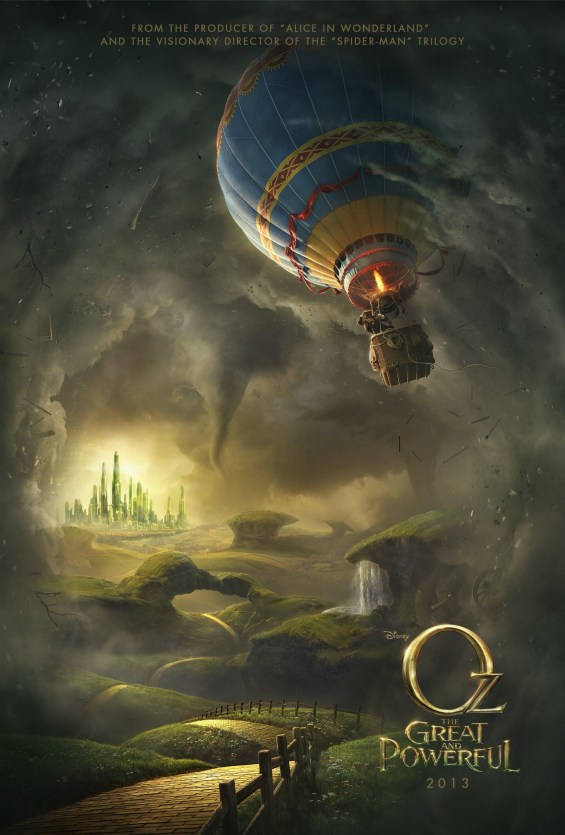
Oz the Great and Powerful (2013) – Film Review

“I Don’t Want to Be a Good Man, I Want to Be a Great One.” – Oscar ‘Oz’ Diggs

Since its release in 1939, the illustrious fantasy-musical; The Wizard of Oz, an adaptation of L. Frank Baum’s beloved children’s novel; The Wonderful Wizard of Oz, has been engraining itself into the memories of adults and youngsters alike through its catchy melodies, imaginative world-building and groundbreaking practical effects. In 2013, Walt Disney Pictures sought to return to the Land of Oz with Oz the Great and Powerful, a prequel to the novel and, in a way, its silver screen counterpart (despite ownership of the harmonious classic belonging to Warner Bros. Pictures), with celebrated director Sam Raimi (The Evil DeadSpider-ManDoctor Strange in the Multiverse of Madness) attached to helm the project, ascertaining its potential as an enchanted prequel. Shortly after its release, however, most seem to forget about the film, which is unfortunate given that Oz the Great and Powerful is a largely enjoyable fantasy adventure that pays homage to the iconography and timeless sense of wonder present in the original musical while avoiding an absence of its own, unique ideas.

Plot Summary: After Oscar ‘Oz’ Diggs, a small-time circus magician with dubious ethics, is hurled away from his dusty abode in Kansas to the vibrant Land of Oz, he believes he’s hit the jackpot as he’s told to assume his rightful place as monarch of Emerald City. But, when Oscar meets the sisters of Theodora and Evanora, who aren’t entirely convinced that he is the great wizard their prophecy has spoken of, Oscar is summoned on a quest to slay the Wicked Witch that threatens Oz and prove his worth…

Whilst Oz the Great and Powerful may seem like just another cinematic interpretation of the whimsical Land of Oz, Walt Disney Pictures actually had to be very cautious with what aspects of the story they utilised, on account of Warner Bros. Pictures owning the rights to specific elements of The Wizard of Oz, as previously mentioned, including the ruby slippers Dorothy Gale dons throughout the runtime. These restrictions even extended to the particular shade of green used for the Wicked Witch’s skin, for which Disney employed what its legal department considered a sufficiently different shade dubbed; “Theostein,” a portmanteau of Theodora and Frankenstein, yet Disney could not use the signature chin mole from Margaret Hamilton’s renowned portrayal of the Wicked Witch of the West.

In terms of the actual narrative, Oz the Great and Powerful tells the origin of the titular Wizard of Oz, whom we all know from previous iterations to be a fraud. Before he was viewed as a mythical wizard, Oscar Diggs was merely a talented illusionist and an egotistical, womanising con man performing at a travelling circus in Kansas. ‘Oz’ (as his friends call him) underpays his assistant and recruits many beautiful women to appear in his performances, manipulating them with lies and empty romantic gestures. However, while Oscar receives an abundance of characterisation during the story and is evidently a gifted magician, James Franco’s performance is primarily to blame for the character’s shortcomings, as Oscar suffers from an underbaked character arc and a lack of empathy in certain scenes, suggesting that Franco lacks the charisma necessary to win over the audience amid Oscar’s immense arrogance. Dissimilarly, the supporting cast of Mila Kunis, Rachel Weisz, Michelle Williams, Zach Braff and Joey King are all sufficient in their varied roles, human and otherwise.

Recreating imagery like the Yellow Brick Road and the Emerald City in addition to introducing a handful of never-before-seen locations, such as a miniature village compromised of larger-than-life crockery and ceramic residents, known as China Town. Oz the Great and Powerful impressively brings the Land of Oz to life via a combination of expansive sets and green screens. Similar to the original musical, Oz the Great and Powerful also opens in a colourless, tight aspect ratio for the Kansas sequences before widening out and blossoming into colour once Oscar enters the Land of Oz, making for an unforgettable visual juncture. Moreover, the cinematography by Peter Deming is frequently effective in implementing Sam Rami’s familiar style of camerawork, as the camera is repeatedly rocketing towards characters’ faces, particularly when they’re reacting to the surprising number of jump-scares.

Although the original score for Oz the Great and Powerful by Danny Elfman isn’t one of the composer’s finest, nor is it exceedingly memorable, tracks, like Main TitlesA Strange World and The Bubble Voyage are all remarkably uplifting, whereas the orchestral tracks; Bad Witch and Witch Fight, are much more ominous in tone, allowing Elfman to exhibit his grand, gothically melodic roots.

On a separate note, all of the CG effects throughout Oz the Great and Powerful hold up well for their age, aside from a few wide shots where the environment surrounding the characters appears excessively distant and overly bright. And, whenever physical sets are employed instead of green screens, they are magnificently multicoloured and extensive.

In summary, while Oz the Great and Powerful suffers from some tonal inconsistency and an underdeveloped character arc for its protagonist, the film retains enough spectacle, wit and creativity to be entertaining in its own right as a bewitched prequel. Faithfully reproducing iconic imagery like flying primates, a golden-bricked road and a cackling, broom-riding Wicked Witch, I feel nearly every fanatic of The Wizard of Oz (and/or its source material) will find amusement in this non-musical, fantasy blockbuster. Rating: low 7/10.

oz_the_great_and_powerful-p680832

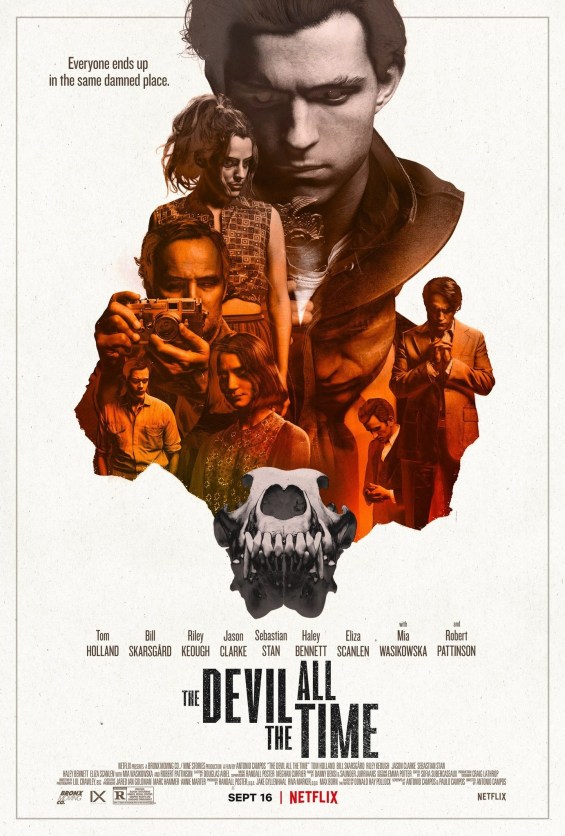
The Devil All the Time (2020) – Film Review

“Blessed Are Those That Hunger and Thirst for Righteousness.” – Reverend Preston Teagardin

A gripping yet troubling exposé of a period in history that frequently appears overly sanitised, 2020’s The Devil All the Time is a superb Netflix Original that utilises its relentlessly grim narrative, stellar all-star cast and period-accurate song choices to explore an underused setting in cinema; Southern Ohio in the 1950s. And, as a result, the film crafts an engaging and thought-provoking tale of backwoods preachers, religious zealots and broken, weathered souls witnessing the atrocities of a post-war world, replenished with sins that even faith is unable to wash away.

Plot Summary: In 1950s-era rural Southern Ohio, an assortment of crooked and sinister individuals intersect paths in the Midwestern town of Knockemstiff, a rustic, sparsely-populated cesspool teeming with corruption and brutality…

Co-written and directed by Antonio Campos (Buy It NowSimon KillerChristine), the screenplay for The Devil All the Time was adapted from the novel of the same name by Donald Ray Pollock, who, interestingly, actually performed the narration for the film, making the role his first-ever narrating position as he avoided performing the voiceover work for his own audiobooks. Similar to the original novel, a large majority of the story revolves around the real-life town of Knockemstiff, Ohio. Here, the non-linear narrative, which examines the violent vestiges of religious iconography, thrusts an array of devilish characters to encounter one another through differing scenarios, often resulting in horrific outcomes. In particular, the opening three arcs produce a distressing first act where death is seemingly always lurking around the corner. However, while most of the characters and their individual storylines are captivating, certain characters (and their continually fiendish actions) can appear somewhat underdeveloped due to a lack of screen-time, along with a few narrative details, namely, the subplot of Deputy Lee Bodecker accepting payments as a corrupt officer, not falling into place.

Regarding one of the finest aspects of the film, the central cast of Tom Holland, Robert Pattinson, Harry Melling, Bill Skarsgård and Sebastian Stan (among many others) are all exceptional in their various roles, with most of the cast’s accents seeming flawless, barring Holland and Pattinson’s accents, which come across as inconsistent and wildly over-the-top, respectively. The cast’s performances are only enriched by their usually well-written characters, however, as their unanswered prayers seem to eventually lead each of them to turmoil as they exist at a bleak point in history where treatments for diseases were scarce and a devastating World War had just wiped out millions, rendering religion to serve as the only recourse for most. What makes the characters more intriguing is that The Devil All the Time is also a multigenerational tale, beginning with the semi-protagonist, Arvin Russell, as a youngster before concluding the story with Arvin as an adult in his early twenties, all the while propelling Arvin and his step-sister, Lenora, to reckon with the ghosts of their parents’ past. That is not to say that any character is represented as exemplary, though, as during the final act, the primarily benevolent Arvin exercises his father’s vengeful tactics for a satisfyingly violent payoff.

In a rather bothersome decision, The Devil All the Time repeatedly feels compelled to remind the audience of earlier sequences in the story that mirror later moments. Yet, most of the time, these flickers of earlier scenes in the film are thoroughly unnecessary and quickly begin to grate on the audience. Aside from this annoyance, the editing and cinematography by Lol Crawley are serviceable, continually being enhanced by the terrific set design and set dressing, which makes every inch of the rundown town of Knockemstiff appear worn and ripe with religious imagery.

Alongside the original score by Danny Bensi and Saunder Jurriaans, which remains nuanced and unpretentious whilst still adding to the cruelty and suspense on-screen at many points, The Devil All the Time employs an extensive selection of traditional gospel tunes and ’50s-era songs, such as Washed in the BloodThe Three Bells and Honeycomb, all beneficially playing into the setting and underlying religious themes of the story with some of the more upbeat songs even prompting certain scenes to develop a moderately satirical tone.

Returning to the visuals, momentarily, crucifixion is a recurring image throughout the runtime, relating to the film’s central underlying theme of the conflict between belief and the horrors of the real world. For example, in the first act, Willard Russell discovers a bloodied, fly-infested serviceman crucified during his deployment on the Solomon Islands during World War II. This image changes the once godly soldier to a religiously apathetic, but more importantly, makes it apparent how closely savagery and sacrifice are exemplified through the image of Jesus Christ tortured on the cross. Later in the film, there is also a painting of Jesus Christ on the cross hanging on the wall in Arvin’s room, reminding the audience of this subtext.

In summary, whilst The Devil All the Time‘s ruthlessly pessimistic narrative can occasionally be harrowing to the point of punishment, much of the dour storytelling is offset by the strong work from the outstanding cast, whose performances are often so compelling they even redeem the rather conventional style of filmmaking the film adopts, which is unlikely to leave any audience member in awe. Still, The Devil All the Time is an effective, religion-centred thriller. Rating: 7/10.

devil_all_the_time_ver2_xxlg

Deepwater Horizon (2016) – Film Review

“I’d Think You Money-Hungry Sons of Bitches Would at Least Be Good at Math…” – Mike Williams

The Deepwater Horizon Oil Spill, commonly referred to as the BP Oil Spill, is, to this day, regarded as one of the widest-reaching environmental disasters in human history. An industrial catastrophe that began on April 20th, 2010, off the coast of the United States in the Gulf of Mexico, the event caused the deaths of eleven oilfield workers and was estimated to have spilt over two hundred and ten million gallons of oil into the ocean, forcing industry giant BP to pay more than $60 billion in criminal and civil penalties, natural resource damages, economic claims and cleanup costs for their reckless corporate culture of cost-cutting and excessive risk-taking. The 2016 cinematic interpretation of this true-to-life tale; Deepwater Horizon, makes effective use of its titular location and subsequent tragedy to deliver a lamentable yet nevertheless gripping thriller, admiring the bravery of those who escaped with their lives whilst never losing sight of the affliction and distress they endured on that faithful day.

Plot Summary: Manned by one hundred and twenty-six workers, the semi-submersible, offshore oil-drilling rig, Deepwater Horizon, operates as usual over the Gulf of Mexico, forty-one miles southeast of the Louisiana Coast. But, before long, chief electronics technician, Mike Williams, and seasoned rig supervisor, Jimmy Harrell, discover that the critical examination of Deepwater Horizon’s cement foundation was bypassed by BP’s frugal executives, consequently inducing a devastating explosion that kills several oilfield workers and traps Mike and his remaining colleagues on the cadaverous rig amidst the flames…

Upon its announcement, many oilfield workers from the Gulf of Mexico were against the production of Deepwater Horizon, declaring that they believed the film would dishonour the men who sadly perished during the event. However, Mike Williams (one of the survivors) thoroughly supported the film, assisting the crew throughout production alongside another survivor, as they felt it was a suitable method of depicting the terrifying circumstances they and the other oilfield workers endured, with the leading intent of director Peter Berg (HancockLone SurvivorPatriots Day) being to make the disaster feel as real as possible for the audience, encapsulating the sensation of workers’ shared dread in 2010.

In keeping with this sense of realism, the dialogue throughout Deepwater Horizon remains authentic to the vocabulary of oilfield workers, repeatedly tossing around the shorthand terminology of the position. Similarly, the screenplay is precise in defining the various components of the oil rig without becoming overwhelmed, making the eventual catastrophe that unfolds appear merited and tangible. Regrettably, however, even with most of the central cast, including Mark Wahlberg, Kurt Russell and Gina Rodriguez, being introduced before they set foot on the rig through an assortment of brief, home-set sequences, the majority of these preliminary scenes only provide insight into their industrial roles along with some clumsy exposition concerning the Deepwater Horizon, conveying that each of the oilfield workers has loved ones, but not much else.

For the production of Deepwater Horizon, an extensive oil rig set was constructed in Chalmette, Louisiana (where filming predominantly took place). One of the largest-scale sets ever built at the time, the rig-inspired set was assembled using over three million pounds of steel in a two-million-gallon water tank. And while this commitment to building an expansive set is indeed impressive, appearing immensely accurate to the actual Deepwater Horizon, the set design is partially hindered by the cinematography by Enrique Chediak, which remains relatively uninspired throughout the runtime, primarily consisting of hand-held mid-shots and the occasional sweeping wide shot of the rig and surrounding ocean.

The third instance composer Steve Jablonsky has collaborated with Peter Berg following 2012’s Battleship and 2013’s Lone Survivor. Berg and Jablonsky’s staple as a director-composer duo seems to be taking sampled mechanical sounds and using them as the cornerstones of each original score. On Battleship, this sound was the whining, clanging cacophony of a medical MRI machine whereas, on Deepwater Horizon, it’s the incessant ping of an active SONAR alongside a combination of electronic tones and instruments. As such, the score lacks melody and harmony, yet successfully creates suspense through tracks like The RigNegative Pressure Test and Cut the Pipe, up to when the rig explodes.

Once the rig does eventually burst into flames, it’s suitably nightmarish as Peter Berg doesn’t attempt to ‘wow’ the audience with impressive visual effects or exhilarating set pieces, but rather never lets the audience forget that this is a man-made disaster, pointing the finger squarely at BP for their monumental mistake and proving that while there may have been some temptation to provide the story with a glossy finish, Berg found a way to present blockbuster-level effects without sacrificing any of the realism or torment of the actual event.

In summary, whilst most disaster flicks are usually guilt-free confections, given that they often centralise on an act of nature and feature destruction so grandiose in appearance that it lessens the impact of the on-screen devastation to the point that the audience can relish in the utter mayhem. Deepwater Horizon takes a drastically different approach to the disaster genre, with its story being based on true events. By embracing this realism, the cataclysm that occurs within the film becomes more immediate and horrifying. And while there are feats of courage here and there, Deepwater Horizon is predominantly presented as a real-world calamity, not a comforting tale of heroism and optimism. Rating: 7/10.

deepwater_horizon_ver7_xxlg

Thirteen Lives (2022) – Film Review

“We Do Nothing, We’ll Be Bringing Them Out Dead for Sure. But, if They Die While We’re Bringing Them Out, at Least We Will Have Tried.” – Rick Stanton

Suspenseful, meticulous and gripping, Thirteen Lives is a diverting, claustrophobic drama/thriller and a hidden gem of the straight-to-streaming releases of 2022. Offering an incomplete yet engrossing dramatisation of an incredible true-to-life tale, Thirteen Lives succeeds in recounting the real story of a global effort to rescue a Thai soccer team who became entrapped in a flooding cave system in 2018. And while some aspects of the film appear rather drab, thanks to director Ron Howard (Apollo 13A Beautiful MindSolo: A Star Wars Story) and his somewhat ‘vanilla’ manner of filmmaking, it’s an immersive and engaging recount, nonetheless.

Plot Summary: Faced with insurmountable odds, a team of the world’s most proficient divers navigate a treacherous maze of flooded, narrow cave tunnels in an attempt to rescue a Thai soccer team of twelve children and their coach after they become trapped in the Tham Luang cave in Thailand following an unexpected rainstorm…

Even though the real story behind Thirteen Lives has been recounted before, most notably in the National Geographic documentary, The Rescue, released in 2021. Thirteen Lives is a similarly fact-based account that holds true to what really occurred, rarely playing with the details to manipulate the audience’s emotions or adhere to a more conventional story structure. The film even retains the involvement of numerous countries in the almost three-week-long rescue as, in reality, multiple nations took part alongside Thailand, such as Australia, Denmark, Japan, China, Laos, Myanmar (Burma), Great Britain and the United States. In fact, around ten thousand people contributed to the rescue effort, including more than one hundred divers, nine hundred police officers, two thousand soldiers and numerous volunteers.

Viggo Mortensen, Colin Farrell, Joel Edgerton, Tom Bateman and Paul Gleeson portray written interpretations of the actual heroes who ventured into Tham Luang cave, portraying them as modest and down-to-Earth and never representing them as hero-like archetypes, despite their unquestionably brave actions. Unfortunately, however, the screenplay doesn’t do so well at detailing who the individuals are outside of their adept diving skills, which is inexcusable given the film’s rather excessive runtime. The only specific trait any of the divers exhibit is their distinctly British obsession with Custard Creams, which I’m assuming was written into the screenplay to make the divers seem more relatable.

Similar to the rest of Ron Howard’s filmography, the cinematography throughout the film is rather bland, as cinematographer Sayombhu Mukdeeprom largely falls back on hand-held close-ups and mid-shots. Yet, in spite of that, the film usually thrives visually due to its enveloping set design and dim lighting, which make the submerged cave tunnels appear tight, precarious and dingy. For many of these scenes, Mukdeeprom actually used the actors themselves as a lighting source, requesting them to lift their heads and look around after delivering a line to throw some light into the cave. This technique (and others) helped with lighting the sets, which were built in an enormous hangar-sized studio using double Olympic-size water tanks. The film also employs an array of on-screen schematics to visually inform the audience of what segment of the cave the children/divers are currently in, as well as text to notify the audience of how much time has passed between certain scenes on account of the film covering most of the three-week-long rescue.

Through tracks like Tham LuangRainDive and Oxygen, the original score by Benjamin Wallfisch predominantly defies musical norms as the filmmakers sought to avoid overly sentimental or manipulative pieces when it came to the soundtrack, concentrating instead on using the score as a tool of abstraction and disorientation. Interestingly, Ron Howard initially sought to work with his collaborator of many years, Hans Zimmer, who subsequently recommended Wallfisch for the project as he was preoccupied. Together Howard and Wallfisch hashed through strategic approaches to the score over several months, seeking ways to incorporate Thai influences and experimental electronic suspense techniques. All to the score’s benefit, I might add. With that said, a few scenes do suffer due to the original score’s presence, where I feel atmospheric sound design would’ve been far more effective.

In regard to realism, professional diver, Rick Stanton, praised the film’s accuracy, stating that one of the only cinematic changes was that the cave water was muddy. In reality, the divers had zero visibility, but “That Would Be Impossible to Demonstrate Because Then the Viewers Would Not See Anything.” Furthermore, the young actors portraying the trapped Thai soccer team were all cast from Northern Thailand, so if they wound up improvising any dialogue the unique dialect and accent would be authentic. This emphasis on accuracy is always something I admire when it comes to adapting true stories, and Thirteen Lives is no exception.

In summary, Thirteen Lives is a predominantly compelling drama/thriller with its own unique selection of minor flaws. While the first half of the film feels like it’s simply treading water, waiting for its tense final act. The second half is a riveting depiction of a daring, foolhardy rescue, capturing much of the same fear, confusion and determination the actual divers must have felt during those fateful few weeks in 2018. As such, even if you already know how the story ends, Thirteen Lives largely prevails in plunging its audience into a submerged rescue scenario. Rating: 7/10.

thirteen_lives-p1174327

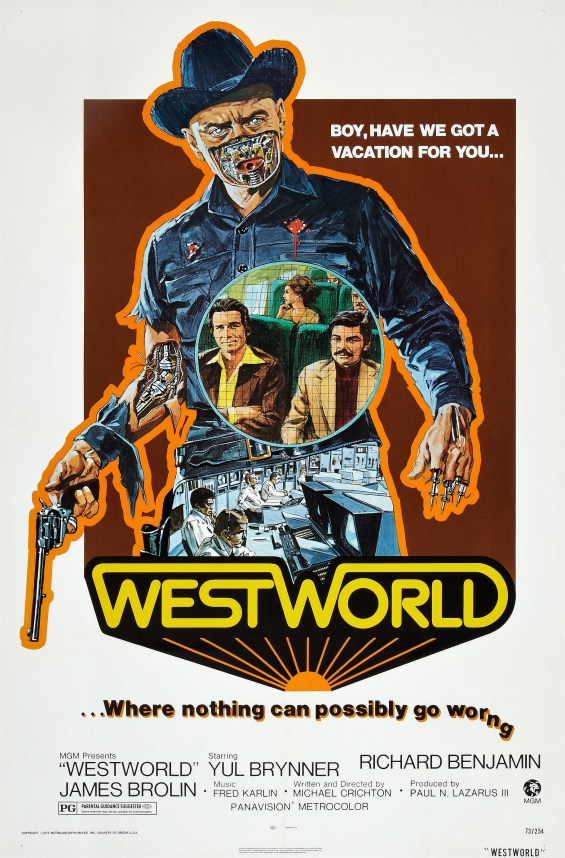
Westworld (1973) – Film Review

“There’s No Way to Get Hurt in Here. Just Enjoy Yourself.” – John Blane

Before the emergence of the hit sci-fi-drama series of the same name, 1973’s Westworld was a pillar of the science fiction genre. With an engaging story, imaginative concepts and a terrific performance from the late Yul Brynner as a lethal, automated gunslinger, the original Westworld is a delightful sci-fi-western hybrid that puts its clever tricks to creative use, rarely getting bogged down by pretentious statements regarding the creation of artificial life (unlike its contemporary television counterpart), to instead concentrate on its visceral style of storytelling and filmmaking.

Plot Summary: In the near future, the Delos Corporation offers the perfect getaway with the entertainment destinations; Medievalworld, Romanworld and Westernworld, where guests can experience life in the time period of their choosing, indulging in their wildest fantasies while interacting with the attendant androids that populate them. But, when Westworld undergoes a system-wide malfunction, causing the androids’ built-in safety features to fail, the safety of the guests is put into question…

Written and directed by Michael Crichton (ComaLookerPhysical Evidence), author of many celebrated novels, including Jurassic Park. Crichton became inspired to write Westworld following his trip to Disneyland, where he rode the water-based attraction, Pirates of the Caribbean, and was impressed by the animatronic pirates. This is also why the iconic attraction is mentioned in the 1993 adaptation of Jurassic Park when Malcolm states; “When the Pirates of the Caribbean Breaks Down, the Pirates Don’t Eat the Tourists.” Crichton effectively utilises this inspiration by playing upon humanity’s fears of artificial intelligence one day overthrowing us. Furthermore, through the characters, Crichton’s screenplay retains a solid amount of satire, with the guests hungry for danger and adventure quickly turning spineless once Westworld becomes truly dangerous, much like the real Wild West that inspired it.

Regarding the characters, the screenplay largely depicts them as if they are the audience themselves, with the protagonist, Peter Martin, portrayed by Richard Benjamin, being a recently-divorced Westworld newcomer, whilst his friend, John Blane, portrayed by James Brolin, is a returning guest eager to jump back into the ways of the Old West. As a result, we get to see how Westworld functions from a guest and staff perspective before the chaos begins. And while neither of the central duo is given a lot of development, both characters serve an important purpose within the narrative as wealthy guests who are visiting Westworld to indulge their desires for pampering and daring escapades, whether that a bank robbery, a bar-room brawl or merely taking sexual advantage of a coy-serving wench. Then, on the android side of things, there’s the Gunslinger, portrayed by the late Yul Brynner, who truly steals the show, becoming fixated on the pair following their confrontation in the first act. The Gunslinger acts as an embodiment of the widespread malfunction, relentlessly hunting his target(s) with a cold, calculating demeanour and a continually menacing presence.

From the vast desert-set Westworld to Medievalworld, a mead and chicken-leg heaven, to the flowery gardens and toga parties of Romanworld, the set design throughout Westworld is excellent, excluding a few barren hallways, here and there. The cinematography by Gene Polito isn’t as remarkable, however, overly depending on close-ups and mid-shots, which becomes rather repetitive, despite appearing reminiscent of the camerawork in classic westerns. In addition to the three entertainment destinations, all of the period-set areas are connected by a web of subterranean passageways and an eerily prescient CCTV system, both of which help provide enticing snippets into the unfolding horror once Westworld collapses, furnishing the film with a healthy amount of edge instead of relying on unwarranted bloody violence for its final act.

An efficacious blend of sci-fi and western, Westworld‘s original score frequently alleviates the atmosphere of scenes that could otherwise appear quite sinister, as the score varies from lively, Wild West-era tracks like The Western Warble and Stagecoach Arrival to scratchy, ominous tones and percussions with tracks like Robot Repair. This switch from passé to futuristic pieces never feels out of place, though, as the distinctive tracks lean into the idea of merging multiple time periods via the entertainment destinations.

Intriguingly, Westworld actually marked the first-ever use of computer-digitised images in a feature film (not merely monitor graphics) with the shots from the Gunslinger’s point-of-view. After the technical process was sufficiently developed to produce satisfactory results, it only took around eight hours to produce every ten seconds of footage for the Gunslinger’s pixelated P.O.V., which is monumental for 1970s filmmaking. However, this praise could be applied to almost all of the film’s effects, which have held up well since the ’70s. That is, aside from the fake blood, which looks closer to bright red paint whenever a guest or android is shot dead.

In summary, in an era of pessimism, it’s refreshing to see a sci-fi flick like Westworld that depicts the future as not dystopian, but an affluent and joyous time with merely detrimental forms of recreation, adding a level of appeal to the world-building that many science fiction releases seem to miss out. As such, Westworld comes across as an innovative sci-fi-western, harbouring an appropriate amount of satire along with an abundance of apprehension regarding the evolution of artificial intelligence, keeping the audience captivated throughout its moderate runtime, even in spite of its occasional time-worn aspects. Rating: high 7/10.

westworld-p692769

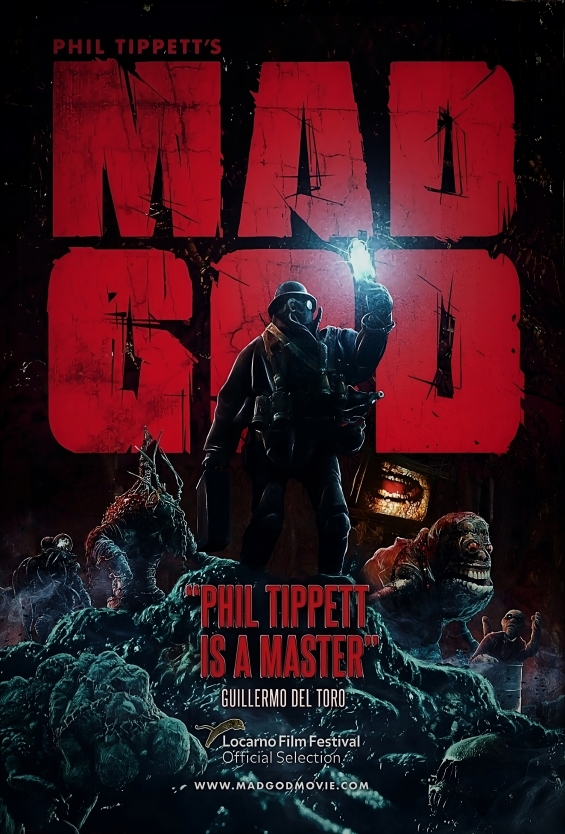
Mad God (2021) – Film Review

“If You Disobey Me and Remain Hostile to Me, I Will Act Against You in Wrathful Hostility. I, for My Part, Will Discipline You Sevenfold for Your Sins…” – Opening Quotation

Written, produced and directed (among many other credits) by Phil Tippett, the founder and namesake of Tippett Studio, whose varied career in visual effects has spanned more than thirty years and includes two Academy Award wins and six nominations. Mad God, released in 2021, is a rich visual treat for enthusiasts of horror and stop-motion animation alike, serving as a harrowing delve into a post-apocalyptic hellscape that is both unique and disturbing. Harbouring a cinematic allure that is equal parts unsettling and mesmerising, Mad God proves that even in the age of CGI, the art form of stop-motion remains strong, even if the story and characters it’s bringing to life are far from well-developed.

Plot Summary: Equipped with a gas mask and an ageing map, the Assassin, a lone iron-clad humanoid, descends into an underworld of tortured souls, ruined cities and wretched monstrosities on a covert mission to reach the heart of this nightmarish realm of suffering…

First starting work on the project in the late 1980s, shortly after creating effects for RoboCop 2, released in 1990. Mad God has been Tippett’s pet project for over thirty years, despite the filmmaker almost considering abandoning the project when Jurassic Park was released in 1993, as CG effects appeared to make stop-motion a thing of the past. After some urging from those around him, however, Tippett decided to create a Kickstarter campaign that allowed him to complete the project. In the following years, three parts of Mad God were released online, which made up around half of the full eighty-two-minute version that was eventually screened at various film festivals. And whilst this story behind the film’s creation is certainly intriguing, Mad God‘s biggest shortcoming is that it lacks a narrative itself, or at least a coherent one. Instead, the film relies on visual storytelling and world-building as the audience follows the Assassin on his lengthy journey, encountering many distinct creatures, locations and civilisations on a mission that is never disclosed. As such, watching Mad God requires a lot of concentration to get the most out of it, much like how the project was crafted, I suppose.

With no dialogue or characterisation to speak of, Mad God‘s characters hinge entirely on their design. Thankfully, every character/creature that appears throughout the runtime is visibly repulsive, unnerving and eccentric. At the core of Mad God‘s story is a character only known as the Assassin, a silent, gas mask-wearing humanoid who also receives no characterisation, instead functioning as an audience surrogate through Tippett’s fever dream of a post-apocalyptic world. As the film features no dialogue, the central cast, including Alex Cox, Niketa Roman and Satish Ratakonda, only appear in a handful of live-action sequences, which similar to the scenes of stop-motion, are grimy and discomforting whilst relying on visuals over direct storytelling. While these sequences are interesting and count towards what little plot there is, many of these moments also pull you out of the experience and are often plagued by the film’s need to implement oral sounds to ensure the human characters don’t appear mute, meaning noises like “Eh?” and “Hmmm” become rather repetitious.

The cinematography by Chris Morley and Phil Tippett allows for spectacular framing within every scene, lending to the atmosphere and intrigue of each setting, whether its an oxidised factory of greasy machinery or a society of helpless slaves ruled over by an electronic screen that speaks in childlike gibberish. Furthermore, each of the surroundings the Assassin treks across is distinguished by the film’s colour palette, which seamlessly jumps from cold blues to vile greens and blood reds, making the stop-motion appear incredibly cinematic. Interestingly, one scene, which features a mountain of dead soldiers, was actually accomplished by melting thousands of plastic army men together on a wire. This scene took six animators around three years to complete, demonstrating the substantial amount of dedication required to animate even a single scene of Mad God.

Through prolonged tracks like Long Way Down and ConveyanceMad God‘s original score by Dan Wool enhances many of the surreal visuals in a relatively nuanced fashion, making for a soundtrack that isn’t all that memorable, but avoids becoming overbearing as to let the visuals speak for themselves. However, the sound design is where the film’s audio truly shines as the countless animalistic growls of the mutated creatures that roam Mad God‘s mystifying world are ghastly and add audible depth to whichever location the Assassin finds himself.

As most would expect from Tippett Studio, the animation itself is smooth yet appropriately unearthly, providing every creature with its own jittery method of walking/crawling that feels remarkably natural. What’s even more impressive is that, according to Tippett, a considerable amount of the animation on Mad God was actually conducted by novice students who wanted to gain some filmmaking experience.

In summary, Mad God will likely be a very divisive film on account of its largely interpretive narrative and absence of well-defined characters. But, these annoyances ultimately don’t matter that much in the grand scheme, as Mad God thrives in what it’s trying to do. Presenting itself as a love letter to stop-motion that could only be realised by a legendary visual effects artist like Phil Tippett. And with stop-motion animation in such short supply nowadays, an outstanding piece of artsy like Mad God will always be a joy to behold, faults or not. Rating: 7/10.

w1cnVYUNJU3NPYh6FBeq0voXD15-transformed