The Magnificent Seven (2016) – Film Review

After taking on a number of successful action flicks in recent years, such as ‘Training Day,’ ‘Olympus Has Fallen’ and ‘The Equalizer,’ director Antonie Fuqua brings this remake of the original 1960s ensemble western to the silver screen. Combining a superb cast with some explosive moments of action and plenty of highly detailed costumes and sets, ‘The Magnificent Seven’ manages to remain an entertaining remake of the beloved western classic despite its few faults.

Plot Summary: In 1897, seven gunmen from a variety of different backgrounds are brought together by a vengeful young widow in an attempt to protect her hometown of ‘Rose Creek’ from the private army of the destructive industrialist, ‘Bartholomew Bogue,’ and his men…

Other than a few changes to the names of its characters, the remake of ‘The Magnificent Seven’ follows a very similar storyline to the original film, which was essentially just a retelling of the iconic Japanese drama; ‘Seven Samurai,’ only now set in the Wild West. As, the remake avoids making any definite changes to the narrative in favour of simply just updating the story for a more modern audience, meaning the film has much faster pacing and more of a focus on creating thrilling action set pieces than the original, which is both a good and a bad thing, as whilst the film does still pay homage to many classic westerns, the film occasionally also adopts many of the issues that plague plenty of modern blockbusters today, the most notable of which being the film’s overabundance of cheesy and predictable dialogue.

Denzel Washington, Chris Pratt, Ethan Hawk, Vincent D’Onofrio, Byung-hun Lee, Manuel Garcia-Rulfo and Martin Sensmeier all give splendid performances as the line-up of ‘The Seven,’ each portraying a different personality and skill set between them. But, of course, similar to many other films lead by a group of characters rather than just a single protagonist. ‘The Magnificent Seven’ suffers from a lack of equal development for its cast as a result of Denzel Washington and Chris Pratt as ‘Chisolm’ and ‘Josh Faraday’ hogging most of the screen-time, with the film’s antagonist; ‘Bartholomew Bogue,’ portrayed by Peter Sarsgaard, also having a deficient intimidating presence when on-screen due to this.

Whilst the film’s cinematography never falls into the category of being exceedingly bland, the cinematography by Mauro Fiore is only above-average, as although the film does feature an array of attractive close-ups and wide shots alongside its many suitably barren locations, the film also has quite a heavy overreliance on shot-reverse-shot for the many conversations between characters. However, a smaller detail that I felt added to the film’s visual appeal (and realism) is definitely its use of nature surrounding/within its various locations, as the film’s main setting of ‘Rose Creek’ is littered with trees and tall grass rather than just continuous desert similar to many other westerns, with some areas of Baton Rouge, Louisiana, where filming took place, even having to be relandscaped to further resemble the Old West.

Being the last film composer James Horner contributed towards before he sadly passed away in an accident in 2015, the original score by him and Simon Franglen does suitably feel like the score of a traditional western for the majority of the film’s runtime. Although there are still a few tracks that feel fairly generic, the soundtrack redeems itself through the great tracks; ‘Rose Creek Oppression’ and ‘Seven Riders,’ in addition to also bringing back the original film’s theme composed by the late Elmer Bernstein for its end credits.

As the remake of ‘The Magnificent Seven’ focuses more on action over anything else (with the entire final act of the film essentially being one long action sequence) a lot of pressure lies on the film to live-up to this intent, which thankfully, it does, as all of the stirring moments throughout the story make fantastic use of their impressive stunt work and subtle CG effects. That being said, nearly all of the action scenes are also distinctly missing an element of both grittiness and violence, which can be fairly distracting. As despite many of ‘Bartholomew Bogue’s guns-for-hire being shot, stabbed and blown-up, blood is barely ever seen, and whilst I understand classic westerns also didn’t really revel in violence, I’ve always seen that as more of a restriction of the time-period rather than just a skimp to lower the film’s age-rating.

In summary, while ‘The Magnificent Seven’ may not fully deliver on the ‘Magnificent’ part of its title, the film is still is an enjoyable throwback to the westerns of old with plenty of exhilarating action set pieces to boot, as even when taking into account all of the remake’s issues and general lack of memorability, I’d still say the film is on the better side of reimagined classics in recent memory and is worth a watch if you’re a true western enthusiast or perhaps just desire to see a remake that doesn’t attempt to simply recreate the original shot-for-shot. Final Rating: 7/10.

magnificent_seven_ver5_xlg

Seven Psychopaths (2012) – Film Review

This slick self-aware crime-comedy from writer and director Martin McDonagh (In Bruges, Three Billboards Outside Ebbing, Missouri) may not appeal to everyone as a result of its over-the-top violence and occasionally absurdist tone. Yet, for me, due to its great cast, fantastic writing, and endless list of quotable lines, ‘Seven Psychopaths’ is certainly worth its runtime, and then some, as the film always remains just as entertaining as it is unconventional, even if ‘Seven Psychopaths’ isn’t quite as pristinely crafted as the rest of McDonagh’s work.

Plot Summary: Struggling alcoholic screenwriter, Marty, in the process of writing a screenplay based around seven separate psychopaths, soon becomes inadvertently entangled in the Los Angeles criminal underworld after his oddball friends accidently kidnap a psychopathic gangster’s beloved Shih Tzu…

Filled with plenty of sly, witty, and memorable dialogue throughout, ‘Seven Psychopaths’ constantly uses its clever writing to create an array of stories within the main narrative, as the screenplay writing protagonist; ‘Marty,’ reels off many of his early ideas for different psychos to get his friend’s opinions on them before implementing them into his latest screenplay. The film also uses this structure to engage in plenty of meta humour, as the characters continuously list off various tropes and clichés of similar action and crime flicks, which the film itself actively avoids, resulting in a well-written film. In fact, the screenplay for ‘Seven Psychopaths’ was actually featured in a 2006 blacklist of the ‘most liked’ unmade screenplays of that year, before it was greenlit many years later.

One of the best elements of the film is undeniably its cast, as Colin Farrell, Sam Rockwell and Christopher Walken as ‘Marty,’ ‘Billy,’ and ‘Hans,’ never fail to be hilarious together, as all three of them share some excellent chemistry, portraying their characters as if they’ve been friends for many years before the current story begins. Woody Harrelson and musician Tom Waits both also make an appearance within the film as the mostly intimidating criminal; ‘Charlie,’ and ‘Zachariah,’ one of the psychopaths that inspires ‘Marty’s screenplay, who is constantly creepy and bizarre whenever he is on-screen. Yet, despite the film’s admirable performances and writing, the female characters within the film are noticeably quite poor, as while the main cast do point this out through some sarcastic dialogue, the few female characters that do appear receive barley any development and feel mostly pointless in the long run.

Although ‘Seven Psychopaths’ cinematography is nowhere near as impressive as the camerawork throughout ‘Three Billboards Outside Ebbing, Missouri,’ for example. The cinematography by Ben Davis is serviceable, with the occasional pleasing shot in between many of the more average ones. However, this is where another one of my criticisms comes into play, this being the story’s setting, as whilst I understand the film’s protagonist is a screenplay writer so it links to the idea of building a career in Hollywood. McDonagh’s other films both manage to make exceptional use of their beautiful and distinct locations, which makes the city of Los Angeles, where ‘Seven Psychopaths’ takes place, feel fairly dull in comparison.

The original score by Carter Burwell isn’t overly memorable yet does suitably fit the film, adding tension to scenes where necessary in addition to feeling quite subtle when in contrast to the film’s outrageous self-aware humour, as according to composer Carter Burwell, his intent with the soundtrack revolved more around wanting to create an emphatic ambience for the film rather than just being your standard, generic action score, this is most obvious in the tracks; ‘Zachariah’ and ‘Billy’s Diary,’ my personal favourite tracks.

Personally, although the story works fine without, I would have desired a little more style when it comes to the film’s visual presentation, in particular, in the editing and title graphics, as with the exception of the typewriter text that is utilised to inform the audience of each psychopath from one through to seven, the filmmaking actually displays barley any style throughout. That being said, ‘Seven Psychopaths’ does still feature a number of dark comedic moments similar to the rest of McDonagh’s filmography, displaying a couple of dramatic scenes alongside plenty of extremely graphic deaths.

In summary, ‘Seven Psychopaths’ definitely isn’t the best director Martin McDonagh has to offer, with both ‘In Bruges’ and ‘Three Billboards Outside Ebbing, Missouri’ being far superior films, in my opinion. ‘Seven Psychopaths’ still delivers on a creative plot and some tremendous writing and performances, even in spite of its lack of style and weak female characters. If you’re a fan of this director’s other films, I’d say ‘Seven Psychopaths’ is worth a watch, just don’t have your expectations too high when going in for the first time. Final Rating: 7/10.

seven_psychopaths_xxlg

Hidden Figures (2016) – Film Review

Based on the book of the same name by Margot Lee Shetterly, the film adaptation of ‘Hidden Figures’ serves as a compelling and entertaining delve into the past as it tells the true story of the mostly unknown women who helped push forward the space program. Through its brilliant performances from Taraji P. Henson and Kevin Costner (among the rest of the cast) alongside its magnificent writing, the film manages to keep its audience constantly invested in spite of its occasionally bland filmmaking.

Plot Summary: Katherine G. Johnson, Dorothy Vaughan, and Mary Jackson, three brilliant African-American women working at NASA during the 1960s cross all race and gender barriers within their workplace to follow their dreams and inspire generations, serving as the brain force to help send astronaut; John Glenn, into Earth’s orbit…

Despite focusing on three separate stories of three independent women, ‘Hidden Figures’ never feels unfocused, as each of the three protagonists receive a decent amount of development as well as at least one or more memorable scenes between them, as the film displays its main theme of female and Black empowerment proudly, without ever becoming overly cliché as it avoids many of the over-done tropes that other films built around the racist barriers of the ’60s can begin to rely on. For example, the film’s opening scene in which the trio of women are confronted by a white police officer, as this moment could’ve easily felt like overly familiar ground should it have been handled poorly, yet aside from some inappropriate stereotyping at first, the scene actually results in the three of them heading to NASA without any horrific racial ridiculing.

The three protagonists, portrayed by Taraji P. Henson, Octavia Spencer and Janelle Monáe, are all excellent throughout the film, as each of them remains determined and outgoing, despite the world’s many attempts to drag them down, always fighting against the unfair judgement of them simply for the way they look, repeatedly with a lack of preachy dialogue. Alongside them, the supporting cast of Kevin Costner, Jim Parsons, Kirsten Dunst, and Mahershala Ali are all great even if some of their characters are a little underutilised within the narrative. One of the reasons the performances within the film are as accurate as they are is, due to some of the cast actually being given the opportunity to meet with the story’s icons before production began. Most notably, Taraji P. Henson met with the real Katherine Johnson (who was ninety-eight years old at the time) after she signed onto the project.

The cinematography by Mandy Walker is serviceable overall, as while the film features a good number of attractive shots, they are dragged down by its many mundane ones. However, ‘Hidden Figures’ does actually make effective yet subtle use of colour throughout its runtime, as the film’s colour palette constantly reflects the mood within each scene, with many of the sets at NASA where calculations and preparations take place utilising mostly pure whites, greys, and silvers, which creates a sharp contrast to the warm/inviting colours of the ladies’ homes.

Hans Zimmer and Benjamin Wallfisch handle the original score for the film, which is an incredibly mixed bag. As, whilst the score does feature some decent tracks. such as ‘Katherine,’ ‘Mission Control,’ and ‘Hidden Figures,’ the soundtrack also features a number of pop songs by Pharrell Williams, which don’t fit the tone of the film or the story’s time-period. Usually resulting in it feeling very forced and sometimes even taking away from the film’s dramatic moments. This is most likely a result of Pharrell Williams overseeing all aspects of the film’s soundtrack, which I personally feel is a huge misstep as his style of music truly isn’t at all suited for a drama such as this.

In addition to portraying the female heroes of the real-life story as accurately as possible, the film also makes substantial use of its time period, as to keep the audience up-to-date with what knowledge the American public had at the time, ‘Hidden Figures’ occasionally cuts away to archive footage of rocket testings or then-president John F. Kennedy making public announcements, both of which are surprisingly effective despite not being used continuously. Personally, however, I still would’ve preferred a bigger presence of songs from the 1960s rather than the constant barrage of pop songs the film contains, as mentioned previously.

In summary, I feel ‘Hidden Figures’ is an important film many should experience, as whilst there has been an array of films based around the misogynistic/racist nature of the 1950s/1960s, ‘Hidden Figures’ is for sure a stand out through its engaging and thought-provoking narrative. Although films, like ‘Do the Right Thing’ and ‘BlacKkKlansman’ may be slightly more powerful with their message(s), I feel ‘Hidden Figures’ is fairly underrated when it comes to historical dramas, as the film is simultaneously both informing and touching. Final Rating: 7/10.

hidden_figures_ver2_xxlg

Maniac (2012) – Film Review

Directed by Franck Khalfoun (P2, I Lived, Amityville: The Awakening) and shot almost entirely through a first-person perspective, 2012’s ‘Maniac’ is a unique and extremely innovative slasher that has been enormously overlooked by fans of modern horror. While the film does admittedly have its issues, the impressive visuals and timid yet creepy performance from Elijah Wood surely make up for most of them, quickly resulting in a discomforting dive into the sadistic mind of a serial killer.

Plot Summary: After working his day job at a mannequin restoration store, the mentally ill and isolated, ‘Frank’ takes to the dark streets of Los Angeles as a serial killer with a fetish for female scalps. But, when a young artist asks him for help with her new exhibition, ‘Frank’s obsessions begin to consume him…

Although it takes a different approach to its story, ‘Maniac’ is actually a remake of the classic 1980 slasher of the same name. However, this is one of the rare occasions where I believe that the remake is possibly an improvement over the original film, as while the ’80s flick does feature plenty of over-the-top gore, the film never manages to elevate itself from being just a fairly straightforward slasher, and although it’s maybe not always successful, the remake does attempt to further develop ‘Frank’ as a character as well as exploring themes of mental health, parental ignorance and identity loss throughout its runtime.

Elijah Wood, best known for his role as ‘Frodo’ in ‘The Lord of the Rings’ series, portrays the serial killer protagonist, ‘Frank,’ as awkward and almost dry at points, making ‘Frank’ feel incredibly deranged when he interacts with other characters. Most notably, the artist and photographer, ‘Anna,’ portrayed by Nora Arnezeder, who is a clear contrast to ‘Frank’ in the way she portrays her simplistic yet likeable and innocent character, completely unaware of ‘Frank’s dark deeds as she grows closer and closer to him. The performances are slightly dragged down by writing throughout the film, however, as although the dialogue is decent for the most part, the film does still have the odd unusual line.

As previously mentioned, the remake of ‘Maniac’ is also shot nearly entirely through P.O.V. shots and it’s this cinematography by Maxime Alexandre that really makes the film stand out from many other slashers. Whilst watching the film, you can’t help but feel the tension as ‘Frank’ goes on dates or has conversations with women who we know will soon meet a gruesome fate, as the audience is fully aware of his sinister intentions, the film almost makes you feel hostage to ‘Frank’s mind. That being said, the film does sometimes take you out of the experience when it leaves the P.O.V. format for a few seconds. While I understand why the film does this (as it’s usually at crucial points within the narrative), I personally feel keeping the audience restricted to looking through ‘Frank’s eyes would’ve made the film more compelling, especially since we don’t even see ‘Frank’s face until twelve minutes into the film.

Serving as a great throwback to the classic ’80s film it’s based on, in addition to adding too many of the film’s best moments. The original score by Robin Coudert (or merely Rob, as he is usually credited) is a slick synth soundtrack. Utilising electronic waves, this underrated score is certainly a high point of the film, with my two favourite tracks; ‘Doll’ and ‘Haunted,’ both being incredibly memorable in their own right, almost feeling as if they were ripped straight from any of the iconic horrors of the 1980s.

Extremely violent and disturbing throughout, ‘Maniac’ truly pulls no punches when delving into the mind of its serial killer, meaning many viewers may be put off by the film’s highly gory deaths and unnerving murder scenes, as ‘Frank’ disposes of his victims with little remorse, dark memories of his mother during childhood fuel his violent actions. This is also where many of the film’s more bizarre moments come into play, as although it may surprise some viewers, ‘Maniac’ is partly an arthouse film as well as a slasher, as the film’s underlying themes as well as ‘Frank’s broken mind is usually displayed visually throughout the film in a variety of ways. Unfortunately, this leads to the film’s weakest aspect, however, as during many of these anomalous scenes, the film’s editing can become quite erratic, sometimes even placing cuts mid-conversation.

In summary, I deeply enjoy ‘Maniac,’ even though the film is quite problematic in some areas, mostly in regard to its unusual editing choices and occasionally lines of strange dialogue. ‘Maniac’s memorable original score, intense violence and, of course, captivating cinematography through its use of P.O.V. The film stands as definitely one of the better horror remakes in recent memory. And, although I probably wouldn’t recommend ‘Maniac’ to everyone, if you’re preferred realm of the horror genre is gory slashers, then this inventive flick is certainly not one to miss. Final Rating: 7/10.

maniac-p797147

It (2017) – Film Review

After many years of waiting, horror and literature fans alike got their wishes granted in mid 2015 as director Andy Muschietti (Mama, It: Chapter Two) signed on to direct a reboot (or readaptation) of one of Stephen King’s most iconic and beloved horror stories, this, of course, being ‘It.’ And, due to its excellent cinematography by Chung-hoon Chung and incredibly memorable performance from Bill Skarsgård as the demonic clown ‘Pennywise,’ ‘It’ is certainly one of the better Stephen King adaptations in recent years, even with the array issues the film still suffers from.

Plot Summary: In the summer of 1989, a group of unpopular kids known as ‘The Losers’ Club,’ band together in order to destroy a shapeshifting monster known only as ‘Pennywise,’ a creature which has been terrorising their home town of ‘Derry’ for decades and can disguise itself as whatever it’s victim fears most…

Following the film’s incredibly successful release in 2017, ‘Pennywise’ has quickly become a modern horror icon despite only having about four minutes of dialogue in the entire film. But, it’s easy to see why this is, as not only does ‘It’ share the familiar fun tone of classic films of the 1980s, such as ‘The Goonies,’ ‘The Gate’ and ‘The Monster Squad,’ yet ‘It’ also manages to adapt the novel’s antagonist; ‘Pennywise,’ fairly closely from the original source material, resulting in a mostly entertaining novel-to-screen transition.

The main cast of ‘The Losers’ Club’ features Jaeden Martell, Sophia Lillis, Finn Wolfhard, Jeremy Ray Taylor, Jack Dylan Grazer, Chosen Jacobs and Wyatt Oleff, who all share pretty great chemistry with each other, as alongside the film’s terrific writing, the children truly feel like an actual group of kids, with the group constantly cursing and sharing in plenty of quippy banter with each other. In addition to the younger cast, ‘Pennywise’ is this time around portrayed by Bill Skarsgård, and while I have always loved Tim Curry’s cheesy yet menacing portrayal of the iconic clown. Bill Skarsgård is a stand out aspect of the film for sure. Capturing the eerie qualities of the character as well as his unworldly nature perfectly, truly embracing the idea that ‘Pennywise’ isn’t just a psychotic murderer dressed as a clown, but something far stranger…

The cinematography by Chung-hoon Chung is surprisingly brilliant for a modern horror, featuring a number of attractive shots which blend extremely well with the film’s story. The film does have one recurring shot which is quite irritating, however, as during many of the scenes where ‘Pennywise’ appears to his victims, the film utilises a shot in which the sinister clown approaches the camera straight on, sprinting directly towards the screen, and while I understand what the filmmakers were trying to accomplish with this shot, I feel it only comes off as fatuous and appears extremely out-of-place when compared to the rest of the film’s visually enthralling camerawork.

Admirable yet flawed, the original score by Benjamin Wallfisch ranges from being your typical horror soundtrack to eventually becoming more emotional for the more character-focused scenes. The main issue I take with the original score are some of the tracks which feature deep bass-like sounds, as I feel these tracks really don’t fit with the film’s tone or time-period. Regardless, the tracks; ‘Paper Boat’ and ‘Derry,’ do serve the film’s story delightfully well, with one of the film’s final tracks; ‘Blood Oath,’ also being a beautiful send-off for these characters before their inevitable return.

From ‘Pennywise’s uncanny appearance to the abandoned house ‘It’ lives within on ‘Neibolt Street,’ many of the film’s designs are also pretty memorable despite their limited screen-time. These fantastic designs are dragged down by the film’s poor CG effects, however, as the film always seems to resort to CG visuals during many of its more tense moments, which can take away from their impact. This is also where ‘It’s most substantial problem comes into play, as ‘It’ has really split audiences down the middle when it comes to its focus on horror, as while the film does have a few eerie scenes and creepy visuals, this adaptation seems to be more focused on being the coming-of-age story the novel mostly is. Although some viewers may be disappointed by this, desiring a narrative based more around the story’s darker elements, I feel the film’s distracting CG effects and constant barrage of jump-scares are made up for by its interesting delve into its themes of childhood fears and growing up.

In summary, 2017’s ‘It’ is a solid Stephen King adaptation, as while certainly let down by its weak CG visuals, overreliance on jump-scares and occasionally inconsistent tone, the film still is a pretty enjoyable watch throughout its two hour runtime, mostly due to the film’s great performances and general memorability, and with ‘It: Chapter Two’ turning out to be an underwhelming experience for most. I’d say it further proves that this film is the direction to go when it comes to adapting King’s work. Final Rating: low 7/10.

it_xxlg

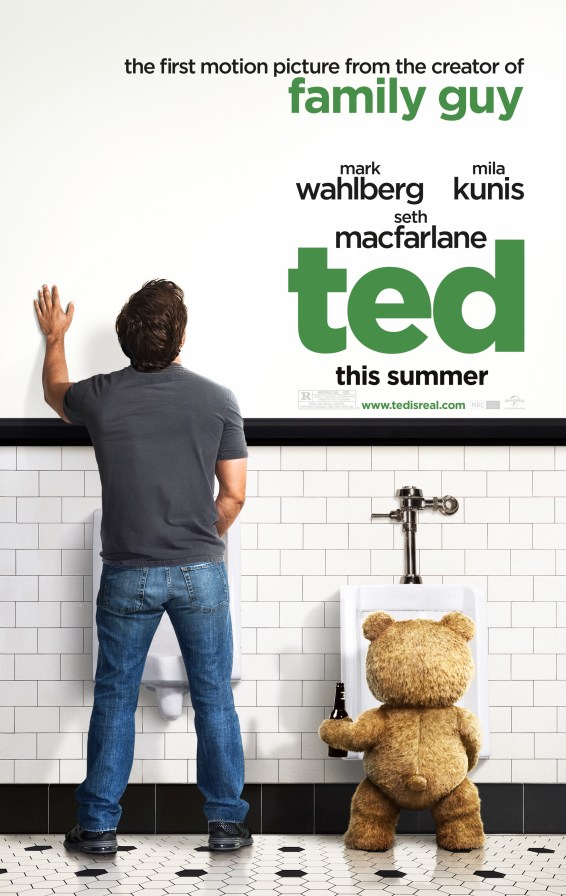
Ted (2012) – Film Review

Written and directed by Seth MacFarlane, the creator of ‘Family Guy,’ ‘American Dad,’ and ‘The Cleveland Show,’ ‘Ted’ is a modern comedy, which takes the childhood desire many had of wishing their teddy bear was alive and gives it an adult comedy spin, and while the film does miss a large number of its jokes. ‘Ted’ is a mostly enjoyable watch through its fun story and entertaining cast, alongside being a pretty strong first outing for MacFarlane’s transition to live-action entertainment.

Plot Summary: When ‘John Bennett’ makes a Christmas miracle occur by bringing his stuffed teddy bear to life, the two grow up together and form a lifelong bond. But, after ‘John’ moves in with his girlfriend; ‘Lori,’ a few years later, he’s forced to choose between them as their relationship is tested…

Though its story is very simple, ‘Ted’ actually balances its comedy and drama surprisingly well, as the film focuses heavily on the rift ‘Ted’ causes between ‘John’ and his girlfriend. Considering MacFarlane’s other work rarely takes itself seriously, the majority of the drama is actually quite effective, as the film does a decent job of keeping the audience invested in its characters. Similar to most modern comedies, the jokes throughout the film do range, however, with some scenes featuring plenty of humorous moments, whilst other scenes can come across as if they are trying far too hard, sometimes even having lines of dialogue which could be seen as a little ‘risky’ (especially if you’re watching the unrated version), but this is pretty familiar ground for MacFarlane.

Mark Wahlberg and Mila Kunis portray the main couple of the film, who do share some decent chemistry and funny moments together, with Mark Wahlberg also doing an excellent job interacting with ‘Ted’ throughout the film considering he is a fully CG character, as ‘Ted’ was brought to life through various teddy bears props on set, in addition to Seth MacFarlane’s movements being mirrored through motion capture. Joel McHale and Giovanni Ribisi also make appearances within the film as ‘Lori’s obnoxious and inappropriate boss; ‘Rex,’ and the film’s antagonist; ‘Donny,’ a shady father who intends to kidnap ‘Ted’ for his son. Both of these characters do have their moments for sure, yet they also both share the same issue of their characters completely disappearing after their purpose to the story is served, which does make the narrative feel a little inconsistent.

The cinematography by Michael Barrett is mostly bland throughout, with film’s focus being placed nearly entirely on its comedic dialogue. Although there is still the occasional appealing shot here and there, it’s nothing overly interesting. However, the CG effects used to create ‘Ted’ are solid for the most part, as despite the few shots where the film is beginning to show its age, the combination of the film’s visual effects and Seth Macfarlane’s very entertaining vocal performance do result in ‘Ted’ becoming a crude yet likeable character.

One of the biggest issues ‘Ted’ suffers from in my opinion is the film’s lack of personality, as a result of the film having little-to-no style, ‘Ted’ sometimes feels too similar to MacFarlane’s other works. This is most noticeable in the original score by Walter Murphy, as the score feels almost identical to the score used throughout FOX’s ‘Family Guy’ series. Whilst this is most likely due to director Seth MacFarlane wanting to work with the same composer as his animated shows, the original score just doesn’t feel even remotely memorable or unique to the film it’s part of.

For me, some of ‘Ted’s funniest moments come from its more absurdist humour, as although the film has plenty of obscure references to celebrities and present-day events similar to kind of humour that’s become rather standard in ‘Family Guy.’ ‘Ted’ is truly at its best in scenes, such as ‘Ted’s Party,’ in which, Sam J. Jones, the actor who portrayed ‘Flash Gordon’ in the 1980 sci-fi classic, begins envisioning ‘Ted’s next door neighbour as the supervillain; ‘Ming the Merciless,’ whilst high on cocaine, or when ‘Ted’ engages in a fist fight with a duck named after actor James Franco, as these moments are usually hilarious simply because of their outlandish nature.

In summary, I think ‘Ted’ is a decently fun comedy flick, as whilst there is definitely room for improvement, Seth Macfarlane does a pretty great job considering this was his directorial debut. And, while I could see many not enjoying ‘Ted’ mostly due to their preference when it comes to humour (or because of its admittedly average filmmaking). I personally feel that ‘Ted’ is Macfarlane’s best film to date, as ‘A Million Ways to Die in the West’ and even this film’s sequel; ‘Ted 2,’ were both very disappointing for me. Although it needs work, I’m sure most will find ‘Ted’ amusing over the course of its runtime. Final Rating: 7/10.

Ted-movie-poster

Bone Tomahawk (2015) – Film Review

Brutal, tense and compelling, ‘Bone Tomahawk’ is one of those rare films that isn’t afraid to mashup genres, as throughout the film we go from a violent horror to a classic western and back again, all without the film ever feeling as if it’s tone is unclear. Whilst I have always enjoyed classics such as ‘True Grit’ or ‘The Good, the Bad and the Ugly,’ I don’t think this is just down to personal bias towards westerns, however, as ‘Bone Tomahawk’ excels in more aspects than one, when it comes to this genre.

Plot Summary: In the dying days of the old west, an outlaw unknowingly leads a band of cannibals to the small town of ‘Bright Hope.’ Leaving the town’s elderly sheriff and his posse to set out on a mission to rescue the town’s residents from the tribe of savage cave dwellers…

Directed by S. Craig Zahler (Brawl in Cell Block 99, Dragged Across Concrete), this underrated director has always had a talent for gritty storytelling, this time crafting a narrative, which is both very engaging and tense, despite being fairly straightforward and simplistic. In addition to this, ‘Bone Tomahawk’ manages to perfectly capture the tone of a classic western, and sometimes even elements of 1970s horror, as the film actually reminded me of ‘The Hills Have Eyes’ at multiple points, although this may just be coincidental.

Kurt Russell leads the brilliant cast of Patrick Wilson, Matthew Fox, Richard Jenkins and Lili Simmons very well, as throughout the runtime all of the characters receive a decent amount of characterisation, with each member of the cast having at least one scene between them. My only issue when it comes to the characters is the lack of a fleshed out character arc for Kurt Russell’s protagonist; ‘Sheriff Hunt,’ as although his character is explored within the film’s story (usually subtlety through dialogue). I personally feel his character arc was never developed quite as much as it could’ve been, despite the fact that this would’ve resulted in a more investing protagonist.

Although the film features a little too much hand-held camera, in my opinion, the cinematography by Benji Bakshi is mostly solid throughout, as the film contains plenty of attractive shots, a few of which even feel like throwbacks to iconic shots from old westerns. The cinematography also makes great use of the film’s variety of remote locations, as the comfort of the small town feels completely distant, when compared to the barren rocky landscape where the cannibals thrive, usually resulting in a very tense atmosphere.

The original score by Jeff Herriott and S. Craig Zahler himself is very similar to the tone of the film, in the sense that it’s a perfect mixture between western and horror, as the soundtrack utilises trumpets and acoustic guitars to perfectly fit with the western visuals, before then completely changing to tenser and more uncomfortable tracks, putting the viewer on edge. However, the original score also manages to have a genuine feeling of tragedy within it, as the score uses intense violin strokes to evoke emotion wherever possible, especially in the track; ‘Four Doomed Men Ride Out,’ which fits this idea perfectly.

Of course, the scene that ‘Bone Tomahawk’ is most known for is without a doubt its infamously violent scene set within the cannibal’s cave, and whilst this scene may be extremely disturbing for a large majority of viewers, I feel that is director S. Craig Zahler’s exact intention, as this moment perfectly displays the horrific nature of the cannibalistic tribe, truly playing into their merciless and barbaric ways of life (despite not actually being that heavily present throughout the story). This scene also displays a range of excellent practical gore effects, making this savage moment even more difficult to watch through its gruesome realism alongside the agonising screams of the cannibal’s victim(s).

In summary, for the most part, ‘Bone Tomahawk’ achieves what it sets out to accomplish, as although the film won’t appeal to everyone through its simplistic plot, slow pacing and graphic violence, the film utilises it’s great performances and isolated locations pretty effectively, resulting in a film that’s just as enjoyable as many other classic westerns despite being a little bland in a few areas. I personally can’t wait to see more of S. Craig Zahler’s work in the future, as I feel this director has some real promise when it comes to telling dark yet gripping stories. Final Rating: 7/10.

bone_tomahawk_ver2_xxlg

Contagion (2011) – Film Review

Strikingly similar to current events in the world, ‘Contagion’ explores a scenario in which nearly every country is rapidly infected from a freak virus, eventually leading to a large number of deaths. Utilising some decent performances and unique story structure alongside its effective original score by Cliff Martinez, the film is both very bleak and realistic through its unnerving portrayal of a worldwide pandemic.

Plot Summary: After her return home from a business trip to Hong Kong, ‘Beth Emhoff’ dies from what is believed to be flu or some other type of infection, soon leading to an enormous outbreak across the world. For doctors and administrators at the U.S. Centre for Disease Control, several days pass before anyone realises the true extent of this new infection, leaving most of the world in the midst of a pandemic as the C.D.C. works desperately to find a cure…

Directed by Steven Soderbergh (Ocean’s Eleven, Side Effects, Unsane), ‘Contagion’ is truly dripping with the Soderbergh’s usual style as a director, as the film is constantly tense and unnerving throughout its tight runtime, with the film even having an element of uncertainty during many scenes, as any of the various characters we cut between within the story could be infected without even knowing it. And, of course, the film has many similarities to the current COVID-19 pandemic, such as the key to growing the virus being a fetal bat cell line from Geelong, Geelong referring to the Australian Animal Health Laboratory, a high-security laboratory for exotic animal diseases located in Geelong, Victoria, Australia.

Despite the film jumping from character to character during its story, the all-star cast of Laurence Fishburne, Matt Damon, Kate Winslet, Marion Cotillard and Gwyneth Paltrow are all great in their portrayals of various characters thrown into this chaotic event, as our perspective changes throughout the narrative, from the eyes of an average family isolated within their home, through to high up government officials scrambling to devise a plan. However, due to the film being structured like this, the film also displays plenty of wasted potential, as Bryan Cranston actually appears in the film as ‘RADM Lyle Haggerty.’ Who is only given a few short scenes and is hardly utilised within the story, making the brilliant actor feel incredibly wasted. There is also a similar issue with the internet blogger; ‘Alan Krumwiede,’ portrayed by Jude Law, as this character actually adds very little to the overall story and barely interacts with any of the other characters, resulting in most of his screen-time feeling like more of a distraction than anything else.

The cinematography within ‘Contagion’ is surprisingly by Steven Soderbergh himself, under the fictional name of ‘Peter Andrews,’ and whilst nothing incredible, it is fairly effective throughout the film. Having said that, I couldn’t help but feel whilst watching that the film could’ve made much better use of close-ups during many scenes, as due to the film’s focus on a spreading virus, I really feel these shots would’ve further added to the building of dread and uncomfortable nature of skin contact the film puts an emphasis on at many points.

Cliff Martinez’s original score does help to add to the drama and tension throughout the film, however, as the score usually appears during key moments to add more impact to the film’s montages of footage. This is most effective during a scene set in the early days of the initial outbreak, or when the film finally reveals where the virus originally came from, and although the soundtrack itself may not be incredibly memorable, I do still feel it suits the film’s tone very well. In particular, the film’s opening track; ‘They’re Calling My Flight,’ which starts the film off strong by jumping straight into the story’s inciting event.

My main issues with ‘Contagion’ are mostly related to the film’s structure, as the pacing nearing the ending of the film seems to slow down drastically in an attempt to wrap up every aspect of the story, and although I feel cutting between multiple different characters is an interesting way to approach a story like this, I could see it being frustrating for some viewers if one character’s plot is more compelling than another. Yet this is somewhat redeemed by ‘Contagion’s realism, as the film has actually been proven to be very accurate when it comes to its science, even receiving praise from ‘New Scientist’ magazine when the film was initially released in 2011.

In summary, whilst ‘Contagion’ doesn’t break any new ground when it comes it’s filmmaking, the film is still fairly entertaining and frightening throughout most of its runtime, while it definitely has its weak aspects, I would say ‘Contagion’ is certainly worth a watch. However, do bear in mind that I probably wouldn’t recommend this film if you are already in a panicked mindset over current events, as I feel this film could make those who are already concerned panic even further through its mostly realistic execution of a story like this. Final Rating: 7/10.

contagion_ver8_xxlg

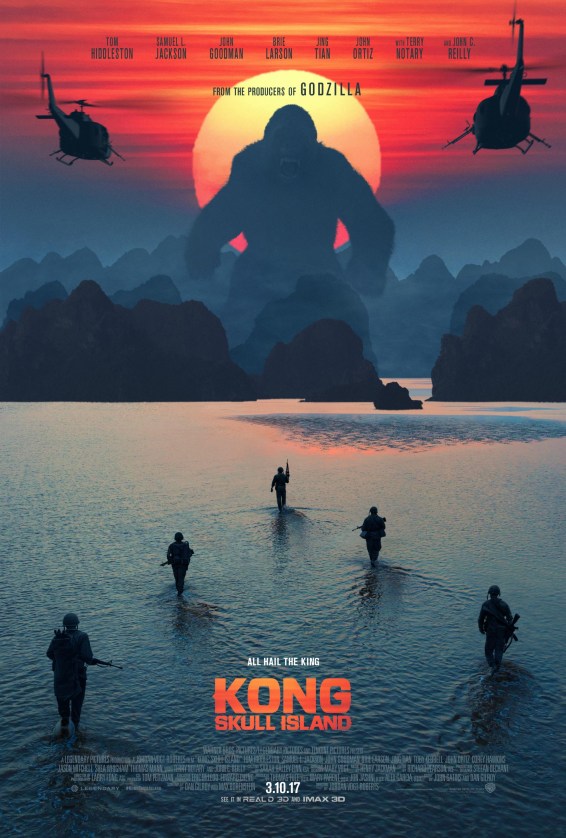
Kong: Skull Island (2017) – Film Review

Jordan Vogt-Roberts directs his first major film with ‘Kong: Skull Island,’ another reboot of the iconic monster this time set within a different time-period and featuring plenty of vibrant visuals. Resulting in ‘Kong: Skull Island’ being a relatively entertaining monster flick, despite the film still being plagued with a range of issues throughout its two-hour runtime.

Plot Summary: Shortly after the Vietnam war in 1973, a team of scientists explore an uncharted, tropical island in the Pacific, without knowing it, they soon venture into the domain of the mighty ‘Kong,’ and must fight their way through an onslaught of dangerous creatures to escape the deadly island…

Just from a quick glance at the film, it’s obvious that the film takes heavy inspiration from the war epic; ‘Apocalypse Now,’ when it comes to its visuals, which is by no means a bad thing as ‘Kong: Skull Island’ truly embraces its 1970s time-period. Making every set, costume, and piece of military equipment fit well within the world the film builds on, which really gives some style to what could’ve just been your standard action blockbuster.

The all-star cast of Thomas Hiddleston, Brie Larson, Samuel L. Jackson, John Goodman, Corey Hawkins, Tian Jing, Thomas Mann, Toby Kebbell and my personal favourite, John C. Reilly, are all decent in their respective roles despite their characters not being given much depth beyond a few short scenes, as due to the enormous size of the cast, many characters end up becoming nothing more than clichés through their rushed introductions. Aside from Samuel L. Jackson and John C. Reilly as ‘Preston Packard’ and ‘Hank Marlow,’ however, as both of their characters receive the most development and play into the film’s main theme of the damage war can have on the mind, which I personally found very interesting and wish the film explored further, rather than focusing so much on many of the awful comedic moments the film crams into the story, which aside from a few improvised lines from John C. Reilly, fall mostly flat.

The cinematography by Larry Fong is fairly creative throughout the runtime as, in addition the film’s ranged colour palette, ‘Kong: Skull Island’ does have an array of visually interesting shots, many of which contain plenty of movement and give the audience some stunning views of the titular island. The cinematography also lacks many of the shots that made the ‘Godzilla’ remake from 2014 so impressive as a creature-feature, that being shots that display the true scale of ‘Kong,’ yet the lack of these shots may also be due to the ‘Kong’s ever-changing size, which did begin to irritate me after a while, despite ‘Kong’ still managing to feel pretty imposing and powerful throughout the film.

The original score by Henry Jackman does help to make up for this, however, it being of his better scores, in my opinion. As, throughout the narrative, the soundtrack always adds to the adventurous tone of the film, utilising large tribal drums to give each character’s confrontation with ‘Kong’ genuine weight. The film also uses a number of classic songs from the ’70s to further push the film’s time-period, and whilst this does sometimes work effectively, with an early helicopter scene featuring the iconic; ‘Fortunate Son,’ being the most memorable. It can also feel very forced at points, mostly due to the sheer amount of songs featured within the film.

One of the best aspects of ‘Kong: Skull Island’ is its action scenes as, throughout the story, the film constantly throws its characters into plenty of intense encounters with the terrifying (and equalling unique) creatures of the island, and whilst the film does have a few too many scenes which feel overly cheesy due to an overreliance on slow-motion. Each action set piece is entertaining in its own way, usually making effective use of each monster’s various abilities and their surrounding locations, with my personal favourites being the sinister and brilliantly designed; ‘Skullcrawlers,’ ‘Kong’s main adversaries. All of these creatures are obviously displayed through the film’s CG effects, which are decent enough throughout the runtime, yet certainly aren’t flawless.

In summary, ‘Kong: Skull Island’ is enjoyable, as whilst the film is undeniably filled with a number of problems, mainly in regards to the film’s weak characterisation and fairly simplistic story, the film still manages to be exciting through its fantastic use of CG effects and thrilling action scenes, all backed up by a great original score and a constructive use of the 1970s time-period. So, although its in need of some improvements, I feel you can still get something out of this big-budget creature-feature. Final Rating: high 6/10.

kong_skull_island_ver2_xxlg

Rise of the Guardians (2012) – Film Review

Truly a very underrated DreamWorks flick, in my opinion, ‘Rise of the Guardians’ is a comedic and action-packed animated adventure. Feeling almost like an ‘Avengers’ blockbuster aimed towards a younger audience at points, filled with plenty of heart, emotion and a wonderful original score by Alexandre Desplat, the film is a genuinely an animated hidden gem.

Plot Summary: When an evil spirit known as ‘Pitch’ lays-down the gauntlet to take over the world, the immortal ‘Guardians,’ a.k.a. ‘Santa Claus,’ the ‘Easter Bunny,’ the ‘Tooth Fairy,’ ‘Sandman’ and ‘Jack Frost’ must join forces for the first-time in millennia to protect the hopes, beliefs, and imagination of children all over the world…

‘Rise of the Guardians’ takes a lot of inspiration from the children’s book series; ‘The Guardians of Childhood’ by William Joyce, as the film has a lot of fun with its plot, playing into the over-the-top ideas of its story resulting in many interesting/unique locations and plenty of little jokes between the characters.

The entire cast of Chris Pine, Alec Baldwin, Hugh Jackman and Isla Fisher, are all fantastic as their various characters. Each giving their character a likeable and amusing but not overly irritating personality, I particularly enjoy Hugh Jackman and Alec Baldwin as the ‘Easter Bunny’ and ‘Santa Claus,’ as I feel these characters were definitely given many of the best jokes and moments throughout the film’s runtime, with the actors behind their voices clearly having a lot of fun of portraying them.

Throughout the film, the animated cinematography is fairly decent, as while by no means anything exceptional. The film does make use of many different moving shots, usually having the camera tracking or spinning around the characters/locations to make the film feel like a true spectacle. The original score by Alexandre Desplat is easily one of my favourite elements of the film however, as while this composer has worked on many other brilliant soundtracks in his past, such as ‘The Imitation Game,’ ‘Harry Potter and the Deathly Hallows’ (Part I and II) and ‘The Shape of Water’ just to name a few. I feel this has to be one of his most underrated scores similar to the film itself, as the tone captures all the elements of wonder, amazement and excitement perfectly.

The animation within the film is stunning throughout, everything from the hairs on top of the character’s heads, to the many sand effects for ‘Sandman’s abilities, alongside ‘Jack Frost’s snow/ice effects all look phenomenal. The film is always very beautiful to look at and has a very diverse colour palette, ranging from light blues, to pale greens and dark blacks, making every scene look appealing and always different from the last.

My main issues with the film mostly revolves around its cheesiness, as while the film isn’t only aimed at children and does manage to reach an adult audience most of the time, the film never quite catches the older audience like a Pixar film would for example. There is also a small group of child characters in the film who play a role in the narrative helping the guardians, unfortunately I found these characters quite irritating, as I felt the film played into their ‘childlike nature’ a little too much, luckily, these characters don’t receive too much screen-time.

In summary, ‘Rise of the Guardians’ is one of those great family films that can entertain most children and a fair few adults, while by no means is it one of the best animated films. It’s certainly up there with some of DreamWorks’ other classics, such as ‘Shrek,’ ‘Kung Fu Panda,’ ‘Megamind’ or ‘How to Train Your Dragon,’ for me, as although the film may not be winning an Oscar for best-animated film anytime soon, I still feel it’s still a great watch around Christmas, Easter, or maybe just your standard family film night. Final Rating: 7/10.

rise_of_the_guardians_ver8_xxlg