Escape From Tomorrow (2013) – Film Review

“I’m Afraid if I Come With You, Something Bad Is Going to Happen…” – Jim

Written and directed by relatively unknown filmmaker Randy Moore, Escape From Tomorrow, released in 2013, serves as a genre-defying, experimental arthouse flick, which, whilst flawed, has to be admired for both its ambition and ingenuity. Produced on a budget of around £502,000 and illicitly shot at the Walt Disney World Resort in Orlando, Florida, and Disneyland in Anaheim, California, without permission or permits from the Walt Disney Company, Escape From Tomorrow attempts to criticise today’s fascination with “Disney Culture” by mocking the company’s rose-tinted reputation (particularly its string of immersive theme parks) to deliver a conceptually audacious, darkly surreal roller-coaster of a film that morphs a miserable father’s seemingly straightforward excursion to Walt Disney World into an other-worldly tale of paranoia, conspiracy, sex and violence, interspersed between visits to iconic attractions, like Space Mountain, Dumbo the Flying Elephant and It’s a Small World.

Plot Summary: While his family frolics, taking in the sights and sounds of the Walt Disney World Resort, discontented and recently discharged father, Jim, finds himself curiously obsessed with a pair of beautiful teenage girls, subsequently leading him to unveil fiendish forces behind the Happiest Place on Earth…

As a result of Disney’s reputation for being immensely protective of its intellectual property, the cast and crew behind Escape From Tomorrow employed a variety of guerrilla filmmaking techniques to avoid attracting attention within the theme parks, such as saving their screenplays on their smartphones and filming on hand-held cameras similar to those used by visitors. After production wrapped, Randy Moore was so determined to keep the film a secret from Disney (and their lawyers) that he decided to edit the project in South Korea. Rather than suppressing the film, however, the Walt Disney Company merely chose to ignore it, with the 2013 Sundance Film Festival likewise declining to discuss Escape From Tomorrow in detail before it premiered. Those who saw the film expressed strong doubts it would ever be widely released, due to the legal issues involved and its negative depiction of Disney’s theme parks, dubbing it; “The Ultimate Guerrilla Film.” This unfavourable portrayal is most evident during the first act, as the film takes a less ‘magical’ glimpse at the Magic Kingdom, focusing on the strain and exertion of the parents taking their children to the consistently clangorous, overcrowded theme park.

As far as characters go, the film’s protagonist, Jim, portrayed by Roy Abramsohn, is rather unpleasant, heading to the Walt Disney World Resort with his family for a sunlit getaway, only to have his trip tarnished by a call informing him he has lost his job, leading him to drink, neglect his children and even make public advances on his wife, whilst there. These traits are later enhanced when Jim begins to undergo increasingly peculiar hallucinations and perverted sexual daydreams following his spotting of two French teenagers. Still, while the character is unquestionably unlikeable, credit must be given to Abramsohn, whose charismatic performance makes Jim an oddly amiable protagonist (one that you even feel some sympathy for), despite his repeatedly deplorable actions. The supporting cast of Elena Schuber, Katelynn Rodriguez and Jack Dalton aren’t quite as stirring as Jim’s sheepish wife and energetic children, though this could be forgiven, given their limited screen-time and experience.

Utilising a greyscale colour palette to disguise cinematographer Lucas Lee Graham’s occasionally amateurish camerawork and provide the film with an aura of visual cynicism and dream-like surrealism, Escape From Tomorrow, though primarily set in the Magic Kingdom, was partially shot at Disneyland on account of production issues, with the resultant theme park seen on-screen being an amalgamation of the two. These production tribulations are sometimes very noticeable, as it’s especially apparent during the second act that the filmmakers had to use shoddy visual effects, green screen composition and digital stabilisation to rescue some of the sloppier (and potentially improvised) monochrome shots.

Fortunately, the fantastical original score by Abel Korzeniowski flawlessly matches the film’s pessimistic outlook, as tracks like Gates of Tomorrow and Fantasy Girl mimic the cheerful, wonderous tone of the actual melodies employed at the Walt Disney World Resort before the score becomes more unearthly and ominous with somewhat futuristic, 1960s-inspired tracks, like Mystery Man and Lost in Caves.

Playing into many of the urban legends surrounding Disney’s illustrious theme parks, Escape From Tomorrow features many references to online conspiracy theories related to the House of Mouse, one being the mention of a location known as “Base 21,” which refers to a real, little-known V.I.P. lounge located inside the Spaceship Earth attraction at Epcot. This fixation on urban legends again ties into the film’s underlying themes, twisting Disney’s adorable, family-friendly brand into a disturbing, perverse satire that finds macabre in the ordinary, comparable to David Lynch’s uncanny style of filmmaking.

In summary, while Escape From Tomorrow retains an undeniably bold vision, the film is only intermittently successful in execution, lacking well-developed characters or consistently striking visuals in spite of its many thoughtful or freakish moments. Nevertheless, I’d be lying if I said I detest Escape From Tomorrow, as I certainly hold a soft spot for the film. And whilst I know it will not be to all tastes, if you’re willing to look beyond the gimmick of its production, Escape From Tomorrow is a fascinating yet largely forgotten cinematic scrutiny of the Walt Disney Company that ultimately became another urban legend encircling their theme parks. Rating: low 5/10.

escape_from_tomorrow_ver2_xlg-transformed

Ten Film Facts You Should Know (Part One) – Film List

Cinema has always been full of surprises, particularly when it comes to the creation of certain projects, as fascinating stories often occur during the pre-production, production and post-production stages of iconic films (some intentional, others happy accidents), with many of these happenings eventually making it onto the silver screen or the furthest reaches of the internet, remaining a sheltered piece of film history. So, here are ten film facts you should know to expand your cinephile knowledge and triumph over your family and friends at your next trivia night.

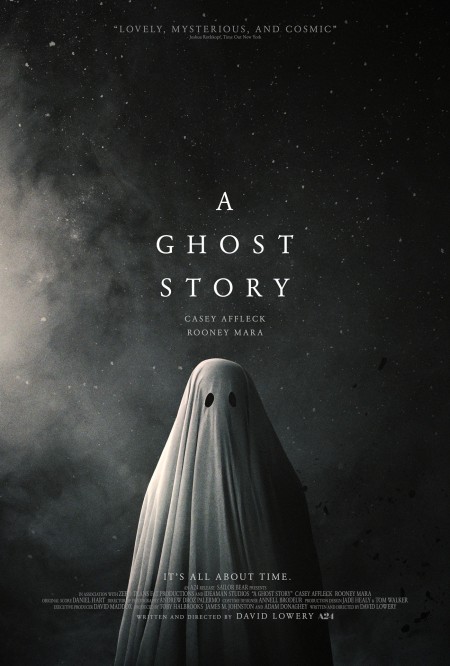
A Ghost Story (2017)

During the production of the indie drama; A Ghost Story, for the prolonged shot in which her character eats a pie, several variations of pies were baked and tested in preparation for the scene. Actress Rooney Mara, a self-confessed picky eater, ultimately opted for a reduced-sugar, gluten-free vegan chocolate pie. Writer-director David Lowery claimed it was delicious, but Mara disagreed, declaring it tasted vile.

ghost_story_xxlg

Jurassic Park (1993)

Following the end of production on the iconic blockbuster; Jurassic Park, all the cast were given a Velociraptor model, signed by director Steven Spielberg, as a gift. The model looked rather frightening, so actress Ariana Richards positioned her model in her house to startle arriving guests. Actress Laura Dern, however, placed her model in her son’s room near his crib. But, when her son was older and witnessed it looking over him, he grew terrified of the model, forcing Dern to put the Velociraptor model into storage.

jurassic_park_ver2_xxlg

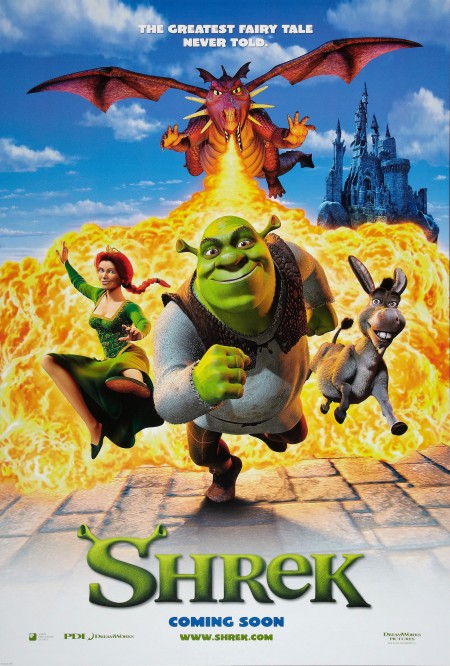
Shrek (2001)

Originally, comedian Chris Farley was cast as the voice of the titular character in the animated smash-hit; Shrek, recording almost all of the character’s dialogue. However, after his sudden death in 1997, the role was given to his then-fellow Saturday Night Live performer, Mike Myers. As such, Shrek’s air quotes in the film are a homage to one of Farley’s most well-known characters, Bennett Brauer, who commonly used air quotes. A story reel featuring a sample of Farley’s recorded dialogue was eventually leaked to the public in 2015.

shrek-p603939

Toy Story 2 (1999)

Whilst working on the sequel to the cherished animated flick; Toy Story, released in 1995, one of the animators accidentally entered the code; “rm *,” which, when entered, deletes everything on the computer as fast as possible. As a result, the team behind Toy Story 2 lost roughly 90% of the film. Fortunately, supervising technical director, Galyn Susman, had recently had a child, so she took a copy of the film home with her so she could work from home, allowing the team to cover the extra copy in blankets and drive it back to Pixar Animation Studios, where they were able to recover the majority of the film.

toy_story_2-p784308

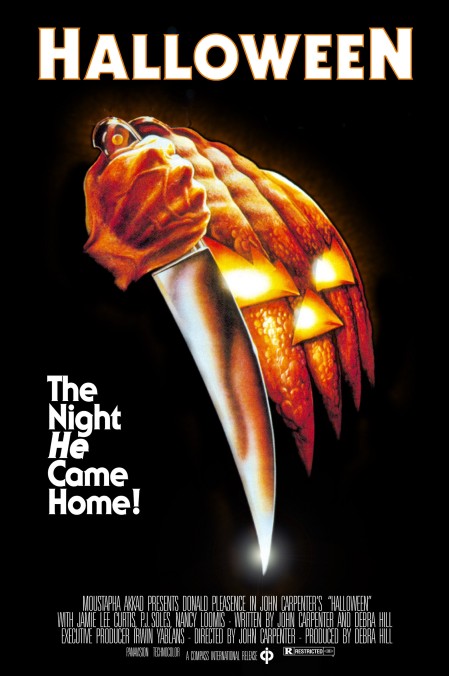
Halloween (1978)

In the original screenplay for the horror classic; Halloween, then-titled; The Babysitter Murders, the events of the story took place over several days. Due to the filmmakers only possessing a budget of around £260,000, however, it was ultimately a budgetary decision to change the screenplay to have everything occur on the same day, reducing the number of costume changes and locations required. Furthermore, it was decided that Halloween, the scariest night of the year, was the perfect night for Michael Myer’s teenage massacre, hence the title change.

halloween-p118793

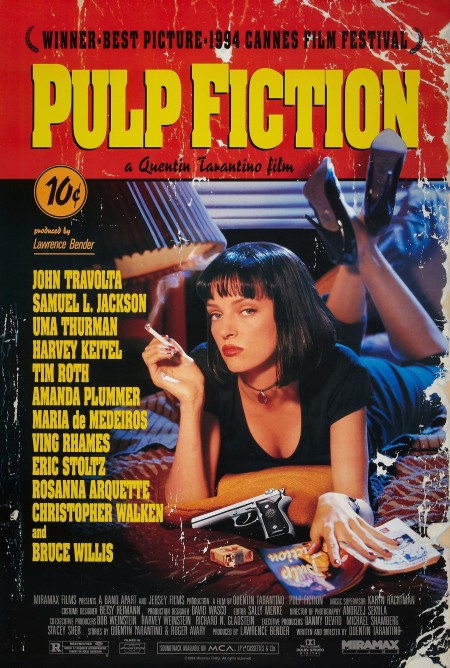
Pulp Fiction (1994)

Forming an interesting link between two quintessential crime-thrillers, Mr. Blonde, a.k.a. Vic Vega, portrayed by Michael Madsen in 1992’s Reservoir Dogs, is actually the brother of Vincent Vega, portrayed by John Travolta, from Pulp Fiction. At one point, the director of both films, Quentin Tarantino, even had a spin-off in development titled; Double V Vega, which would’ve served as a prequel to both films. However, the film was eventually scrapped because both actors were too old to portray younger versions of themselves.

pulp_fiction_ver2_xxlg

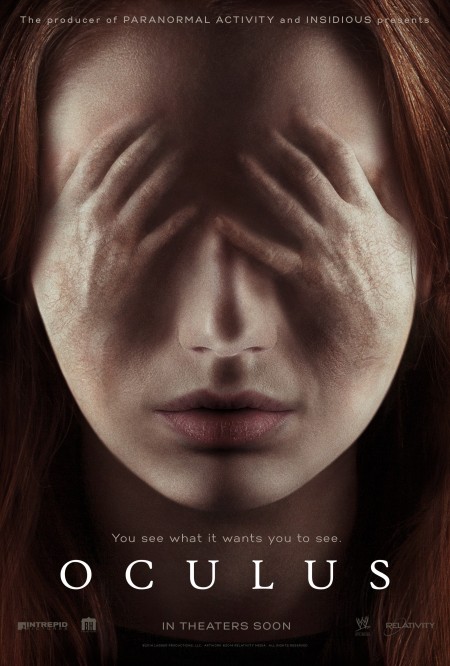
Oculus (2013)

Although the film wasn’t released until 2013, had co-writer and director Mike Flanagan agreed to develop his supernatural horror flick; Oculus, in a found-footage style similar to Paranormal Activity, released in 2007, the film would’ve been released much earlier as a number of production companies were interested in the project, even preparing to back the film as early as 2006. Flanagan, however, refused to do so.

oculus_xxlg

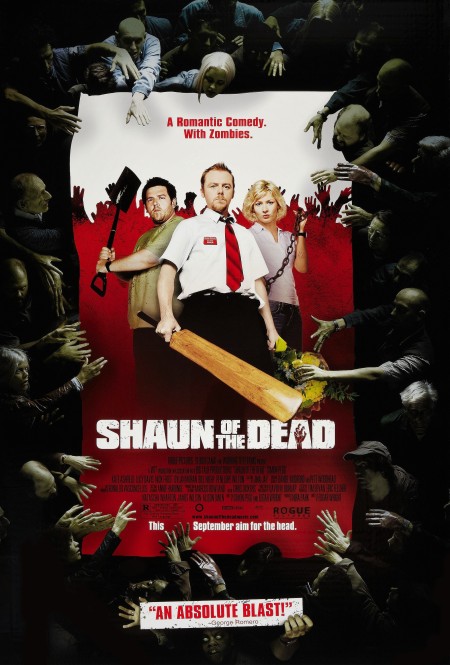
Shaun of the Dead (2004)

After the release of the treasured British horror-comedy; Shaun of the Dead, in 2004, duo Simon Pegg and Edgar Wright considered writing a sequel to the film that would’ve replaced zombies with another monster. But, they ultimately decided against it, as they thought too many characters perished in the original to continue the narrative. The proposed title for this sequel was; From Dusk Till Shaun. Humorously, a mocked-up poster can be seen for the film in Spider-Man: Into the Spider-Verse, released in 2018, a film that takes place in an alternate reality.

shaun_of_the_dead_ver2_xxlg

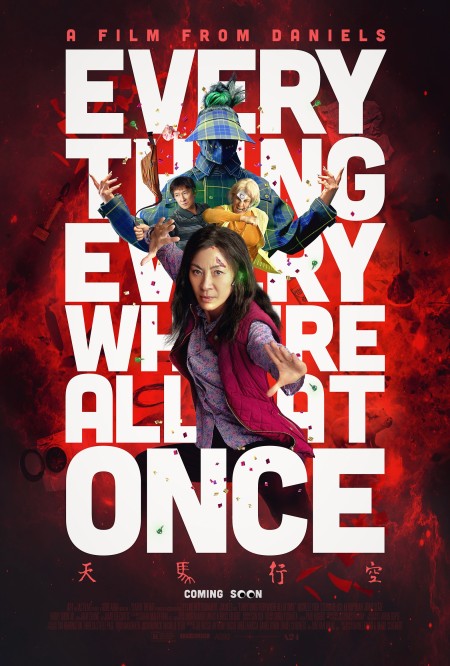
Everything Everywhere All at Once (2022)

All of the visual effects throughout the critically acclaimed, universe-hopping comedy-drama; Everything Everywhere All at Once, were completed by nine people (including the two directors), with most of the visual effects accomplished by a core group of only five individuals. Moreover, none of the visual effects team academically learnt visual effects, they were all friends who simply taught themselves how to create convincing effects with tutorials they found online for free.

everything_everywhere_all_at_once_ver3_xxlg

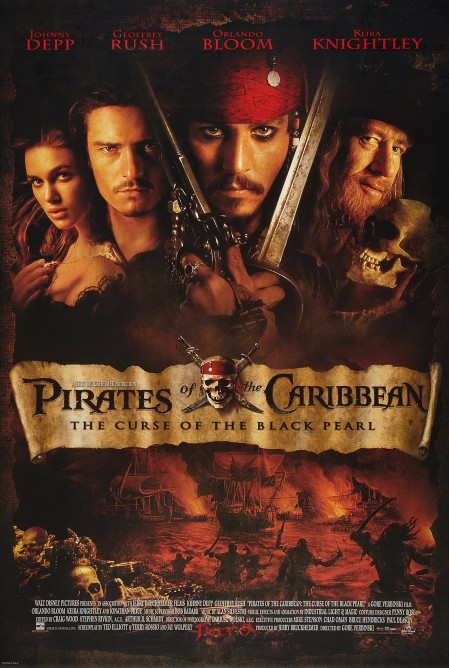
Pirates of the Caribbean: The Curse of the Black Pearl (2003)

In the swashbuckling blockbuster; Pirates of the Caribbean: The Curse of the Black Pearl, Johnny Depp’s beloved character, Captain Jack Sparrow, is shown to have gold teeth, these gold teeth were actually Depp’s idea. However, Depp predicted that the film’s executives would desire fewer gold teeth, so he instructed his dentist to implant more gold teeth in his mouth as a bargaining tool. Jack’s final number of gold teeth in the film was what Depp had envisioned all along for the money-hungry pirate.

pirates_of_the_caribbean_the_curse_of_the_black_pearl-p392846 (1)

Oz the Great and Powerful (2013) – Film Review

“I Don’t Want to Be a Good Man, I Want to Be a Great One.” – Oscar ‘Oz’ Diggs

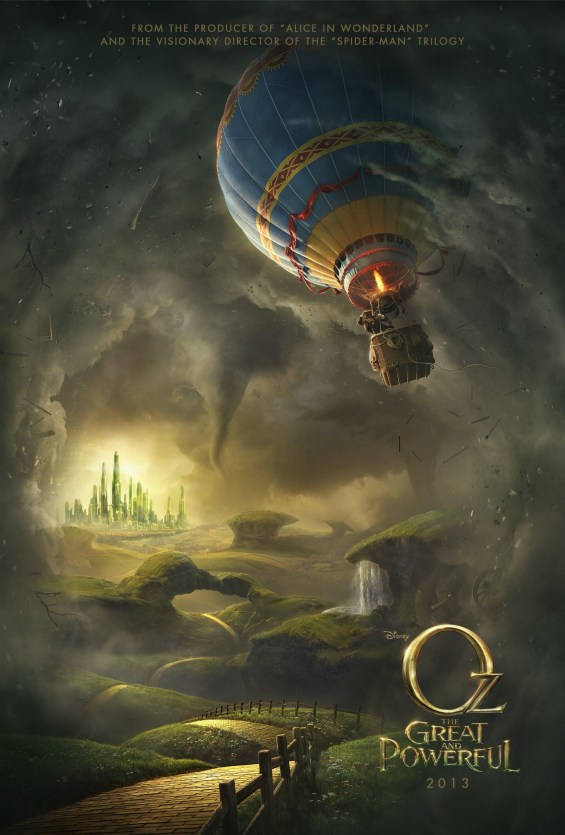
Since its release in 1939, the illustrious fantasy-musical; The Wizard of Oz, an adaptation of L. Frank Baum’s beloved children’s novel; The Wonderful Wizard of Oz, has been engraining itself into the memories of adults and youngsters alike through its catchy melodies, imaginative world-building and groundbreaking practical effects. In 2013, Walt Disney Pictures sought to return to the Land of Oz with Oz the Great and Powerful, a prequel to the novel and, in a way, its silver screen counterpart (despite ownership of the harmonious classic belonging to Warner Bros. Pictures), with celebrated director Sam Raimi (The Evil DeadSpider-ManDoctor Strange in the Multiverse of Madness) attached to helm the project, ascertaining its potential as an enchanted prequel. Shortly after its release, however, most seem to forget about the film, which is unfortunate given that Oz the Great and Powerful is a largely enjoyable fantasy adventure that pays homage to the iconography and timeless sense of wonder present in the original musical while avoiding an absence of its own, unique ideas.

Plot Summary: After Oscar ‘Oz’ Diggs, a small-time circus magician with dubious ethics, is hurled away from his dusty abode in Kansas to the vibrant Land of Oz, he believes he’s hit the jackpot as he’s told to assume his rightful place as monarch of Emerald City. But, when Oscar meets the sisters of Theodora and Evanora, who aren’t entirely convinced that he is the great wizard their prophecy has spoken of, Oscar is summoned on a quest to slay the Wicked Witch that threatens Oz and prove his worth…

Whilst Oz the Great and Powerful may seem like just another cinematic interpretation of the whimsical Land of Oz, Walt Disney Pictures actually had to be very cautious with what aspects of the story they utilised, on account of Warner Bros. Pictures owning the rights to specific elements of The Wizard of Oz, as previously mentioned, including the ruby slippers Dorothy Gale dons throughout the runtime. These restrictions even extended to the particular shade of green used for the Wicked Witch’s skin, for which Disney employed what its legal department considered a sufficiently different shade dubbed; “Theostein,” a portmanteau of Theodora and Frankenstein, yet Disney could not use the signature chin mole from Margaret Hamilton’s renowned portrayal of the Wicked Witch of the West.

In terms of the actual narrative, Oz the Great and Powerful tells the origin of the titular Wizard of Oz, whom we all know from previous iterations to be a fraud. Before he was viewed as a mythical wizard, Oscar Diggs was merely a talented illusionist and an egotistical, womanising con man performing at a travelling circus in Kansas. ‘Oz’ (as his friends call him) underpays his assistant and recruits many beautiful women to appear in his performances, manipulating them with lies and empty romantic gestures. However, while Oscar receives an abundance of characterisation during the story and is evidently a gifted magician, James Franco’s performance is primarily to blame for the character’s shortcomings, as Oscar suffers from an underbaked character arc and a lack of empathy in certain scenes, suggesting that Franco lacks the charisma necessary to win over the audience amid Oscar’s immense arrogance. Dissimilarly, the supporting cast of Mila Kunis, Rachel Weisz, Michelle Williams, Zach Braff and Joey King are all sufficient in their varied roles, human and otherwise.

Recreating imagery like the Yellow Brick Road and the Emerald City in addition to introducing a handful of never-before-seen locations, such as a miniature village compromised of larger-than-life crockery and ceramic residents, known as China Town. Oz the Great and Powerful impressively brings the Land of Oz to life via a combination of expansive sets and green screens. Similar to the original musical, Oz the Great and Powerful also opens in a colourless, tight aspect ratio for the Kansas sequences before widening out and blossoming into colour once Oscar enters the Land of Oz, making for an unforgettable visual juncture. Moreover, the cinematography by Peter Deming is frequently effective in implementing Sam Rami’s familiar style of camerawork, as the camera is repeatedly rocketing towards characters’ faces, particularly when they’re reacting to the surprising number of jump-scares.

Although the original score for Oz the Great and Powerful by Danny Elfman isn’t one of the composer’s finest, nor is it exceedingly memorable, tracks, like Main TitlesA Strange World and The Bubble Voyage are all remarkably uplifting, whereas the orchestral tracks; Bad Witch and Witch Fight, are much more ominous in tone, allowing Elfman to exhibit his grand, gothically melodic roots.

On a separate note, all of the CG effects throughout Oz the Great and Powerful hold up well for their age, aside from a few wide shots where the environment surrounding the characters appears excessively distant and overly bright. And, whenever physical sets are employed instead of green screens, they are magnificently multicoloured and extensive.

In summary, while Oz the Great and Powerful suffers from some tonal inconsistency and an underdeveloped character arc for its protagonist, the film retains enough spectacle, wit and creativity to be entertaining in its own right as a bewitched prequel. Faithfully reproducing iconic imagery like flying primates, a golden-bricked road and a cackling, broom-riding Wicked Witch, I feel nearly every fanatic of The Wizard of Oz (and/or its source material) will find amusement in this non-musical, fantasy blockbuster. Rating: low 7/10.

oz_the_great_and_powerful-p680832

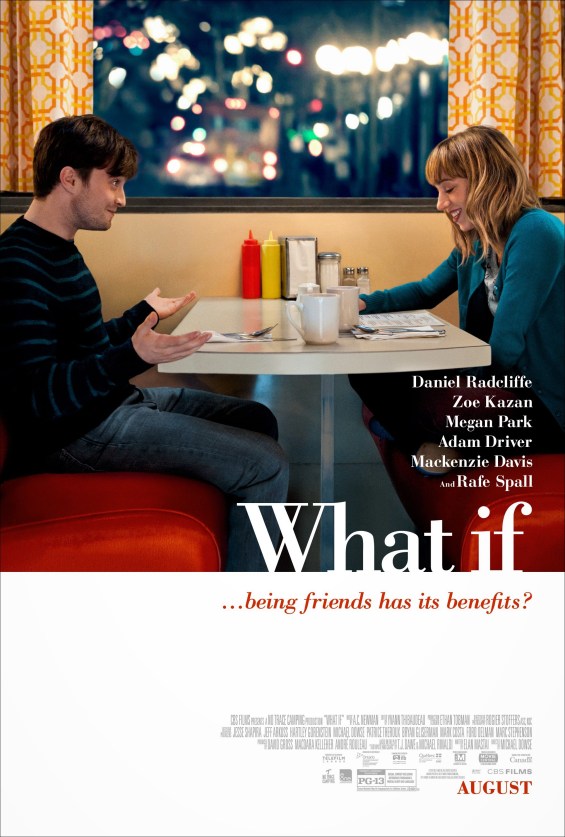
What If (2013) – Film Review

“In Fairy Tales, Love Inspires You to Be Noble and Courageous, but in Real Life, Love Is Just an All-Purpose Excuse for Selfish Behavior. You Can Lie and Cheat and Hurt People and It’s All Okay Because You’re in Love.” – Wallace

Based on the novel and later stage play; Toothpaste & Cigars by T.J. Dawe and Michael Rinaldi, 2013’s What If (alternatively titled; The F Word), is a light-hearted romantic-comedy that largely overcomes its familiar framework and few derivative elements. Continuously mindful of the many clichés associated with rom-coms, What If employs an abundance of witty dialogue, subversive story decisions and the effervescent chemistry of its leads: Daniel Radcliffe and Zoe Kazan, to deliver a charming, self-aware romantic-comedy that will appeal to those well-acquainted with the genre (and its typical shortcomings), as well as those who prefer the ‘com’ to the ‘rom’ portions of a rom-com.

Plot Summary: After being repeatedly burned by bad relationships, medical school dropout, Wallace, decides to put his love life on hold while everyone around him seems to be finding the perfect partner. But, when Wallace meets Chantry at a house party, an endearing animator who lives with her long-time boyfriend, Ben. The pair form an instant connection, striking up a close friendship and leaving Wallace to contemplate whether his newly-found friend could also be the love of his life…

Directed by Michael Dowse (It’s All Gone Pete TongGoonStuber) and written by Elan Mastai. In many ways, the screenplay for What If feels as if it was conceived as an unabashed tribute to the exemplary romantic-comedy; When Harry Met Sally from 1989. Primarily due to its underlying theme/question of whether a man and a woman can truly just be friends. However, unlike that renowned rom-com, What If places a heavy emphasis on its characters and their relationships, alongside its hilarious gags. As a result, many of the cringe-inducing comedic moments feel very natural and in-character, as opposed to feeling like embarrassing scenarios the screenwriter conjured up on the spot. As previously mentioned, What If is also continually conscious of the numerous painful clichés that plague the rom-com genre, attempting to avoid them at every turn. As such, the film crafts many of its amusing yet romantically uncomfortable situations in unpredictable ways, rather than what the audience would typically expect, which works remarkably well.

Portrayed by Daniel Radcliffe, the story’s polite and self-effacing protagonist, Wallace, is close enough to Radcliffe’s actual personality that the actor rarely feels as if he is portraying a fictional character, yet he is immensely entertaining to watch, nonetheless. And when paired with the charismatic and equally likeable Zoe Kazan, whose character, Chantry, is luminously quirky, the pair’s excellent chemistry quickly bubbles to the surface. In addition to the leading duo, Wallace’s outlandish best friend, Allan, portrayed by Adam Driver, provides a considerable amount of the film’s most amusing moments, as his wild personality is a fantastic foil to Wallace’s often pessimistic view of the world. Then there is Rafe Spall as Chantry’s long-lasting boyfriend, Rob, who, thankfully isn’t written as a simplistic, cheating miscreant designed to simply push his girlfriend into the arms of the protagonist. If truth be told, the only character the film squanders is Wallace’s sister, Ellie, portrayed by Jemima Rooper, as she is incredibly underutilised, only appearing in two (inconsequential) scenes.

When it comes to visuals, the cinematography by Rogier Stoffers maintains a light touch throughout the runtime, allowing the photogenic city of Toronto to function as a vibrant setting without ever seeming overly romanticised, which is a satisfying contrast to many other city-set romantic-comedies. Additionally, to correspond with Chantry working at an animation studio, What If seizes the opportunity to add some flair to its visuals by having many of its characters sporadically daydream. These mental fabrications are represented by Chantry’s cartoonish sketches coming to life and appearing alongside the characters, usually in a projection-like form via their surroundings.

Despite What If presenting its song choices as the focal point of its audio instead of its acoustic-led original score, many of the tracks by composer A.C. Newman, including Beach Bummer and Packing with Dalia, are cordial and possess a delightful little motif. Still, the licensed songs are naturally the most memorable part of the soundtrack, with upbeat tunes like Best of FriendsBig Bird in a Small Cage and Let’s Get High, sufficiently supporting the story and its central underlying theme.

Sticking with the notion of avoiding romantic-comedy tropes, the ending of What If is a rather restrained piece of storytelling that merely gets across what details it needs to before cutting to black. The ending is a terrific throwback to a line of dialogue from earlier in the film, bringing the story to completion. That is essentially why I prefer that original ending to the extended ending that was shot eighteen months later, as where the original climax is drawn-back and concise, the extended ending feels unnecessarily long and even falls into a couple of the stale plot points What If was trying to sidestep throughout its narrative.

In summary, What If is a feel-good flick that frequently flirts with rom-com clichés yet skillfully evades the worst of them, all while traversing into unexpected territory, both comedically and dramatically. Whilst I’d argue the film has widespread appeal, those who enjoyed Michael Dowse’s previous outings are especially likely to appreciate What If, as it similarly blends a warm, earnest attitude with shocking, irreverent jokes. Repeatedly pointing out how much better romantic-comedies can be when you have fully-formed characters and exceptional performances, in addition to side-splitting wisecracks. Rating: low 8/10.

what_if_xxlg

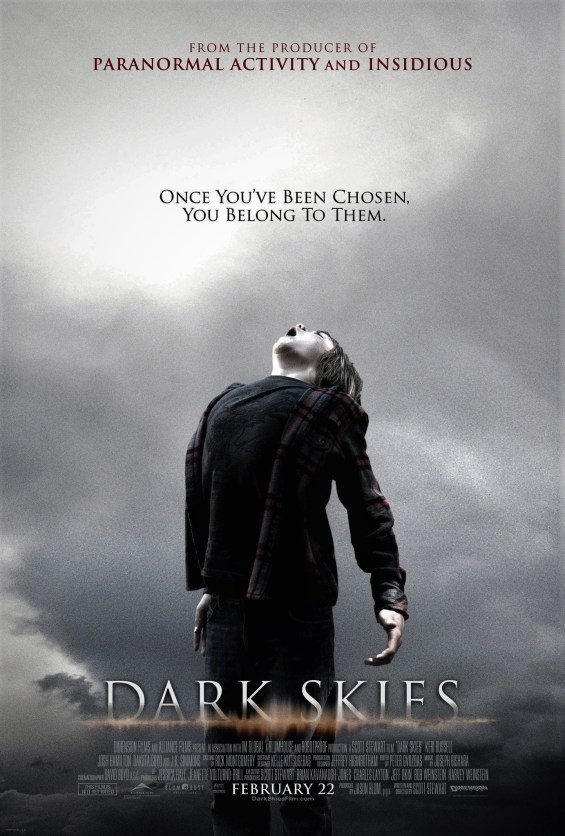
Dark Skies (2013) – Film Review

“People Think of Aliens as These Beings Invading Our Planet in Some Great Cataclysm, Destroying Monuments, Stealing Our Natural Resources. But, It’s Not Like That at All. The Invasion Already Happened.” – Edwin Pollard

As much a science fiction flick as it is a horror, Dark Skies, released in 2013, has a solid cast, a fascinating premise and some admirable ambitions, attempting to break away from the familiar tropes of alien abduction stories in favour of delivering its own take on the common phobia of extraterrestrials discreetly arriving on Earth. Unfortunately, however, writer and director Scott Stewart (Legion, Priest, Holidays – Segment: Christmas) doesn’t seem to know how to utilise any of these elements, and as such, Dark Skies ends up being an extremely underwhelming film in more ways than one, even if it is a slight improvement over Blumhouse Productions’ usual jump-scare-filled endeavours.

Plot Summary: Suffering from financial troubles and the slow decline of their marriage, middle-aged couple, Lacy and Daniel Barrett, soon find their suburban life even further disrupted when an escalating series of unexplainable events leads them to discover that a terrifying force is monitoring them, a force which may have arrived from beyond the stars…

Originally pitched as a found-footage film with a screenplay written in only six weeks. Dark Skies curiously borrows more from supernatural horrors than it does from other extraterrestrial stories like Signs (2002), Skinwalker Ranch (2013) and Close Encounters of the Third Kind (1977) as the film somewhat follows the structure of a conventional haunted house/possessed child storyline. And, as a result, suffers from many of the same issues that those films do. Appearing overly formulaic and frequently missing the opportunity to shift into full-on genre mode by the time its final act arrives. Furthermore, this structure results in many of the daytime sequences feeling quite tiresome as almost all of the extraterrestrial-related events don’t transpire until nightfall, leaving the daytime scenes to solely be used for kindred drama than foreboding moments of sci-fi dread.

The central cast of Keri Russell, Josh Hamilton, Dakota Goyo, Kadan Rockett and J.K. Simmons all do a serviceable job throughout the film, portraying members of a family that is slowly growing apart as time goes on. A situation that is only made more difficult by the family’s mounting bills and Daniel’s numerous attempts to find a replacement job falling flat at every turn. And whilst all of this is interesting for a family-centred plot, the problem here is that outside of the family’s general struggles, all of the characters are given very little development, an issue that is only exacerbated by the film’s many altering subplots, which cover everything from Lacy and Daniel’s declining sex life to their teenage son’s developing hormones and subsequent teenage crush.

Moving onto the visuals, with the exception of a couple of bewitching shots, the film’s cinematography by David Boyd is rather bland, primarily relying on hand-held mid-shots and close-ups. Dark Skies also continuously employs dim lighting for the majority of its runtime, meaning that nearly every shot at night is almost pitch-black with only a few small beams of moonlight to illuminate each room in the family’s house. Additionally, the film’s setting is, again, rather bland, as even though the location of a pleasant, everyday American suburb was chosen by Scott Stewart to help ground the story in reality, the setting itself is exceedingly dull, particularly for the horror genre.

Luckily, the original score fares a little better as composer Joseph Bishara, best known for his fear-invoking score on 2010’s Insidious, once again uses his musical skills to craft a chilling soundtrack stocked with eerie futuristic noises and unsettling sound cues most present in the tracks; Two PosibitliesNight RideNot in Control and The Disturbances. Showcasing the true terror that these extraterrestrials are capable of purely through a distorted soundscape.

When it comes to the concept of creatures from another world studying our planet, it isn’t often that this idea drifts into the realm of horror, especially with the cliché image of a small, grey-skinned alien with an oversized head and black eyes, commonly referred to as a Gray, being any but frightening. However, in Dark Skies, the Grays are genuinely unnerving beings, appearing as lanky, shadow-like figures that tower over the Barrett family. In addition to the Grays, the film establishes two other extraterrestrial races known as the Reptilians and the Insectoids. Interestingly, all three of these races are actually based on real-life abduction reports where abductees described their encounters, with Reptilians being described as green-skinned humanoids with attributes of reptiles, such as hairless scaled-skin, concave-vertical pupils and the ability to shapeshift, changing from reptilian to human at will, while Insectoids are described as large beings with a close resemblance to grasshoppers/praying mantises. Playing into the various conspiracies that surround life on other planets.

In summary, whilst Dark Skies doesn’t earn many points for originality. When the film manages to tap into more low-level, relatable anxieties with its family-focused story, it does come far closer to getting under its audience’s skin than your typical horror film ghost or ghoul. That being said, Dark Skies also repeatedly devalues the effectiveness of the alien abduction subgenre with its uninspired visuals and fairly predictable plot. And while I do consider Scott Stewart to be a talented writer and director with the right project, his films occasionally do leave something to be desired, Dark Skies simply being another example. Rating: low 5/10.

dark_skies_xxlg

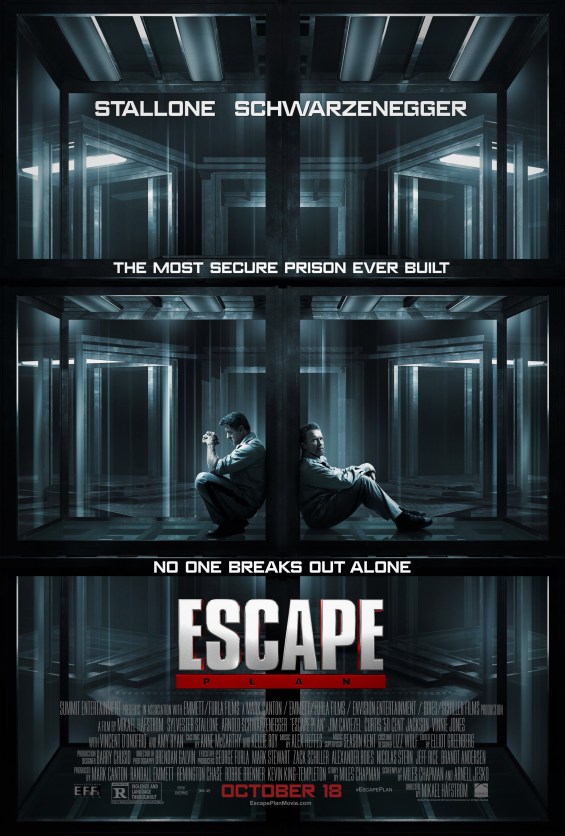
Escape Plan (2013) – Film Review

“This Can Go Two Ways. You Let Me Go, and I’ll Pretend This Never Happened. If You Don’t, I’ll Burn This Fucking Place to the Ground on My Way Out…” – Ray Breslin

Bringing together two action legends, Escape Plan, released in 2013, was an action-thriller long in the making as the idea of a film co-starring Sylvester Stallone and Arnold Schwarzenegger had been discussed between the pair for many years, as far back as the mid-1980s. Over time, many different screenplays were pitched or written for the duo, but Schwarzenegger and Stallone’s schedules were continuously unable to match up. That is until Schwarzenegger landed a cameo appearance in 2010’s The Expendables, alongside Stallone, prompting the two to revisit the idea of working together. Yet, after all this build-up, Escape Plan is a fairly unremarkable film, simply plodding through its predictable screenplay with little charm or wit outside of the mere sight of seeing these two ’80s action icons share the silver screen.

Plot Summary: Having committed his life to search for weak spots in the reliability of high-security prisons, Ray Breslin, the leading authority on penitentiary security, goes against his own policies when he accepts an offer from the CIA to infiltrate their new black-site prison facility, the Tomb, where the world’s most dangerous criminals are admitted. But, shortly after arriving, Ray discovers that he has been double-crossed, lured into a trap and an inescapable fate. Now, with no alternative, Ray must put his faith in his fellow cell-block inmate, Emil Rottmayer, to forge a daring escape plan that can save them both…

Even though Escape Plan is a great harken back to 1990s action flicks, such as Fortress (1992), No Escape (1994) and Death Warrant (1990), primarily thanks to the film’s prison setting and total absence of pretensions. The interplay in the screenplay frequently ping-pongs between banal and idiotic, yet this is still preferable to the incoherence of the final act, in which Ray spends most of his time trapped inside a chamber that seemingly fills and subsequently drains itself of water between shots, all whilst a riot breaks out on a lower floor. The absurdities only continue to mount near the end of the film as director Mikael Håfström (1408, The Rite, Outside the Wire) reveals who’s been in cahoots with who. All of this alongside some of the screenplay’s baffling dialogue does secure Escape Plan‘s place as one of the more half-witted releases into the prison escape subgenre.

Playing into their personas as courageous action heroes, both Sylvester Stallone and Arnold Schwarzenegger give the exact performances you’d expect from a film like this as Stallone portrays Ray Breslin as a gruff prison expert constantly analysing everything around him. While Schwarzenegger’s Emil Rottmayer is the charismatic engine that drives the film, picking up the pace when Stallone’s slow performance threatens to diminish it. And although we do get to see many of Ray’s skills in action through a fast-paced opening sequence that depicts how Ray accomplishes what seems like impossible feats using nothing more than patience, observation and the assistance of his trusty team. Both characters suffer from a lack of development beyond their basic skillsets and amusing quips. The rest of the cast, including Jim Caviezel, Faran Tahir, Amy Ryan, Sam Neill and Vincent D’Onofrio are all solid in their respective roles, whether big or small.

The other star of the show is the prison itself, with its perspex cells and spartan layout converging to give the Tomb a striking appearance that makes superb use of the New Orleans facility where 90% of the film was shot, being a windowless facility previously used by NASA to construct space shuttles. However, this sleek appearance as well as the handful of alluring shots by cinematographer Brendan Galvin, are soon shattered by a drought of consistency as whilst some areas of the prison share this semi-futuristic feel, other areas often appear rusty and run-down. This issue also carries over to the prison guards that patrol the facility as the guards are kitted out in black jumpers and unadorned black masks which, while distinct, continually appear out-of-place and look quite cheap.

Unfortunately, the original score by Alex Heffes is nothing more than a generic action soundtrack with the exception of the foremost track; Bendwater High-Security Prison, which gets the score off to a substantial start, employing electronic beats that flow into the following track; Escaping Bendwater, with high-energy rhythms that trickle excitement just as much as the opening sequence they are both a part of.

On a positive note, despite much of the on-screen action being limited to punches and judo holds with barely any blood to be seen, the fight choreography itself is efficiently constructed. The only distracting aspect of these action-filled sequences is that Ray and Emil somehow turn out to be more accurate shots than the prison’s highly-trained guards as they gun them down one at a time without breaking a sweat.

In summary, although action fanatics will get their fill of violence, thrills and cheesy one-liners, Escape Plan is a relatively uninspired action-thriller when compared to any of the 1980s and 1990s classics that made Stallone and Schwarzenegger’s careers skyrocket. With strange dialogue, inconsistent production design and a forgettable original score, it’s a shame that Escape Plan couldn’t reach the high levels of excitement that uniting two action legends brings with it, even if there’s still satisfaction in seeing Stallone and Schwarzenegger fighting side-by-side at long last. Rating: high 4/10.

escape_plan-p877555

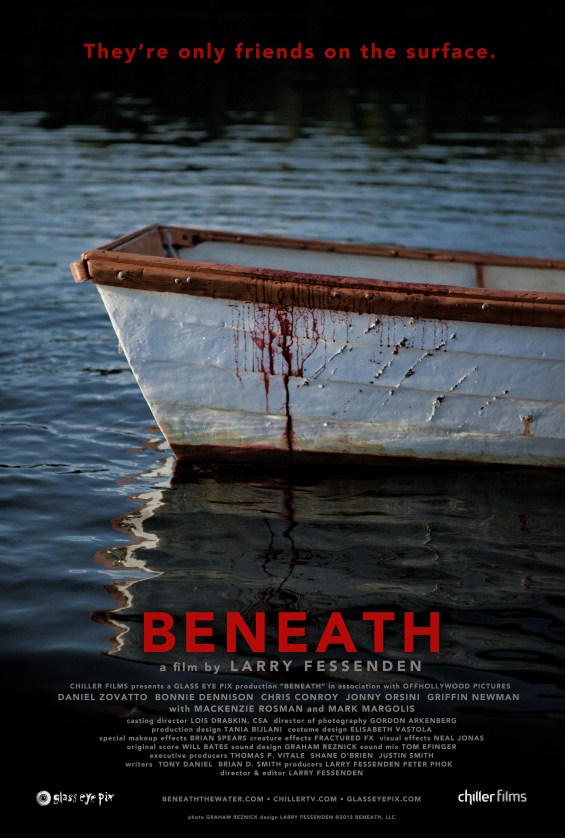
Beneath (2013) – Film Review

 “There’s Something Out There!” – Deb

Directed by Larry Fessenden (HabitWendigoDepraved) and distributed by the horror-centric production company, Chiller Films, a now-defunct television network responsible for many low-budget supernatural horrors, including Siren (2016), Animal (2014) and Dead Souls (2012). Beneath, released in 2013, may have sounded like an estimable idea during its conception, being pitched as a minimalist creature feature that explores the direful outcomes of human behaviour under the influence of extreme isolation and fear. As a result of its overemphatic performances, mindless screenplay and frequently mishandled visuals, however, whatever little tension and intrigue Beneath manages to build up is completely capsized by the time the end credits roll.

Plot Summary: Following their high school graduation, a group of friends decide to spend one last summer outing together at Black Lake before going their separate ways. But, when their rowboat is struck by an amphibious creature, subsequently killing a member of the group and destroying their oars, the five remaining friends find themselves trapped in the middle of the reservoir, contemplating whether one of them should be thrown overboard as a distraction…

While the original screenplay for the film had flashbacks that further developed the characters and explored their individual journeys throughout high school, Fessenden ultimately decided to remove them. This allowed the entire project to be shot in a mere eighteen days, which certainly shows, as Beneath is a largely dull affair, following the usual formula for a creature feature outside of one or two subversive moments. Given Fessenden’s past work, it would also make sense that the film could go so far as to suggest that the creature in the lake doesn’t actually exist and is, in reality, just a physical manifestation of the characters’ ulterior motives. Yet, regrettably, this is not the case, and Beneath opts to play things relatively straight, with the characters being devoured one by one in equally idiotic ways.

On a similar note, the title of the film doesn’t just refer to what lurks in the tranquil water, but is also a guide to where Beneath‘s substance lies with the film’s unbearable roster of characters, compromising of Johnny, a brooding, long-haired loner, Kitty, the rotating object of desire for practically every male character in the film, Matt, the golden-boy jock whose prospects seem to be going downhill since graduating, his younger, less athletic but more intelligent brother, Simon, along with Kitty’s best friend, Deb, and the hyperactive filmmaker, Zeke, each having a respective outburst as simmering high school grudges, rivalries and romantic betrayals factor into the survival stakes. But, on account of the exceptionally awful dialogue, the prospect of any tension within the story soon becomes virtually non-existent, even with the cast of Daniel Zovatto, Bonnie Dennison, Chris Conroy, Jon Orsini, Mackenzie Rosman and Griffin Newman sharing their fleeting moments of promise in a film brimming with atrocious performances. Moreover, the friendship between the characters feels so unnatural from the outset, considering their vastly different backgrounds and personalities.

Cinematographer Gordon Arkenberg tries his best at keeping the solitary setting of a stranded rowboat visually interesting, which beyond some oddly framed shots and sequences that can only be described as ‘visual disarray,’ is a goal he somewhat succeeds in, particularly whenever the camera is pointed towards the beautiful scenery, where the stillness of the lake accentuates the ominous threat of the creature prowling just beneath its surface. Nevertheless, these shots are soon defaced by harsh shadows and a bleached colour palette due to the whole film being shot with natural light. Judging by the editing, you would also be forgiven for thinking that Black Lake is the largest lake in America as the characters spend hours upon hours rowing with their broken oars (and eventually hands) only to make zero progress in a poor attempt of elongating the runtime.

Even though there is next to no emphasis placed on the original score by Will Bates, the score for Beneath is competent, if very forgettable, making a fair effort to enhance the supposed tension on-screen. Except for the semi-final track; Last Stand, that is, which sounds as if it’s from another soundtrack entirely, mimicking the score from a light-hearted romantic-comedy more than any horror flick.

As for the film’s main feature, the creature itself closely resembles the appearance of a giant anglerfish. And whilst I can respect this decision given the anglerfish is one of the most naturally frighting animals on the planet, this choice also displays a great deal of laziness on behalf of the filmmakers as taking what is already an intimidating-looking animal and simply enlarging it is a rather indolent approach to designing your marketable monstrosity. Having said that, the combination of animatronics and puppetry that brings the creature to life is impressive, despite its limited range of movements.

In summary, while some may get an ironic laugh out of this ninety-minute trainwreck, I feel most will agree that Beneath is above all else just a frustrating experience, with one of the film’s only positives being its commendable reliance on practical effects over CGI. But, truthfully, the effects alone don’t even come close to rectifying what are the film’s many, many other shortcomings, distinguishing Beneath from other films within the genre solely on how moronic and tiresome of a horror/thriller it is, paling in comparison to Fessenden’s other low-budget efforts. Rating: low 2/10.

beneath-p823208

Captain Phillips (2013) – Film Review

The story of Captain Richard Phillips, the Massachusetts seafarer who was kidnapped by four Somali pirates during a routine cargo ship excursion, took the world by storm in 2009, as the then fifty-four-year-old captain was taken hostage, threatened and beaten for over five days before being rescued by Navy SEALS. So, it was inevitable that a film adaptation would soon be in the works once Phillips returned home, and who better to direct the film than Paul Greengrass (The Bourne Supremacy, United 93, News of the World), a director well-known for turning real-life catastrophes into gripping yet still emotionally investing thrillers.

Plot Summary: Assigned the dangerous task of navigating the unarmed cargo ship: Maersk Alabama, from Oman to Mombasa, Kenya. Captain Richard Phillips and his crew soon see their worst fears become reality when an opportunistic gang of armed Somali pirates seize the American vessel, threatening the crew and demanding a ransom of millions…

Based on the book; ‘A Captain’s Duty: Somali Pirates, Navy SEALS and Dangerous Days at Sea,’ which was written by Richard Phillips shortly after he returned home. Greengrass’ fast-paced and true-to-life treatment of the story fully realises the tense scenario that Richard and his crew once found themselves within, with constant shouting, overlapping dialogue and threats of violence, no one aboard the Maersk Alabama ever truly feels safe, not too dissimilar to the director’s other delves into real-world tragedies with ‘Bloody Sunday’ and ‘United 93.’ Yet, interestingly, Greengrass wasn’t actually the first choice to direct, as Ron Howard was originally supposed to direct the film before he eventually left the project to peruse another 2013 biopic; ‘Rush,’ leaving Greengrass to head ‘Captain Phillips.’

Leading the cast through his resilient performance as Captain Richard Phillips, Tom Hanks does a phenomenal job throughout the film, quickly ensuring the audience emphasises with Richard’s struggle as he internally confronts the idea of never seeing his family again. Upcoming actor Barkhad Abdi is equally remarkable in his role as Abduwali Muse, the captain of the Somali pirates, as despite the actor’s small physique, Abdi is immensely menacing, asserting dominance over the crew in nearly every scene he is in, with even the iconic line; “Look at Me! I’m the Captain Now,” being an ad-lib by Barkhad Abdi. Abdi’s performance is also helped by Paul Greengrass’ strong direction, as Greengrass represents the Somali pirates more as common criminals rather than terrorists, presenting each of them with an element of desperation behind their actions, as if they taking part in illegal and violent schemes in the hope of having a better life in Somalia.

Shot in an almost documentary-like fashion, the cinematography by Barry Ackroyd is both chaotic and fluid, constantly switching focus from one actor to another without hesitation, truly emphasising the panic and tension we see unfolding on-screen. However, whilst this approach is extremely effective when it comes to sequences of the pirates/crew negotiating or being held at gunpoint, the relentless persistence of the hand-held shots does start to become tiresome the further the runtime continues, and especially during the story’s quieter moments, such as the film’s opening scene where Richard and his wife Andrea drive to the airport. Nevertheless, this style of camerawork is in-character with much of Greengrass’ other work, as there’s no denying the director has a fixation with shaky, intimate close-ups.

Furthermore, the original score by Henry Jackman greatly adds to the film in more ways than one, as tracks, like ‘Second Attack,’ ‘End This Peacefully’ and ‘Two in the Water,’ are both foreboding and fast-paced, utilising an endless stream of percussion, sampled strings, occasional ethnic wind solos, and synthetic horn pads that fade in and out, while the film’s final track; ‘Safe Now,’ sounds considerably hopeful in comparison. Yet, this positive outcome is quite surprising, as, during the film’s production, the soundtrack was a fairly problematic area, with legendary composer Hans Zimmer initially being attached before backing down from the project after Greengrass continuously bombarded him with demands for rewrites of the score.

Another impressive aspect of ‘Captain Phillips’ is its set design and set dressing, as although a large portion of the film was shot aboard a real cargo ship, all of the interior lifeboat scenes were filmed inside a replica that was on water at all times, which, according to Tom Hanks, resulted in him being vomited on by numerous crew members while inside the cramped space. But, as disgusting as that may be, it may have been worthwhile, as this enclosed set is where a majority of the film’s third and final act takes place, as the hostage drama transfers to the claustrophobic confines of a hijacked lifeboat floundering toward the Somali coastline, where the story somehow becomes even more nail-biting.

In summary, ‘Captain Phillips’ serves as not only a well-executed, edge-of-your-seat thriller, but also a terrifying reminder of the real-world horrors that lie just outside our front door. With a pair of astounding performances, an intricately crafted original score and a plethora of tense moments, ‘Captain Phillips’ prolonged final act and occasionally ill-suited camerawork hardly diminish what is one of the strongest entries into Greengrass’ filmography, in addition to an excellent biopic for Captain Richard Phillips and his courageous crew. Final Rating: low 8/10.

captain_phillips-p821611

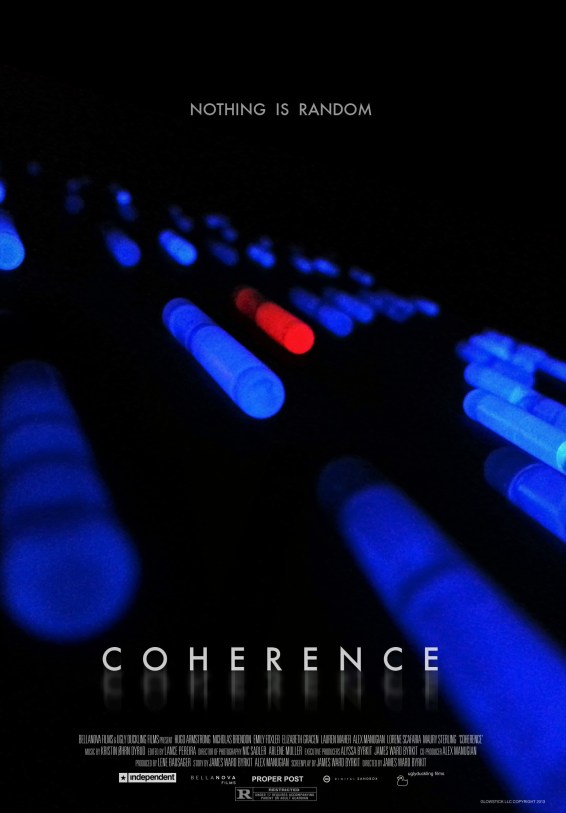
Coherence (2013) – Film Review

A case study in less-is-more filmmaking, 2013’s ‘Coherence’ is a taut puzzle box of a film, brimming with scenes of both existential terror and multidimensional weirdness as its reality-bending story unravels further and further. And, even though this sci-fi/drama is by no means a masterpiece, ‘Coherence’ does demonstrate a willingness to embrace the unknown, the implied and the mysterious, in addition to serving as a strong calling card for debuting writer and director James Ward Byrkit, a long-time storyboard artist for Oscar-winning director Gore Verbinski.

Plot Summary: On the night of an astronomical anomaly, eight friends meeting for a dinner party in Northern California, experience a series of troubling events following a street-wide blackout. But, when the group venture outside to investigate a lone house that seemingly still has power, they soon find themselves in an alternate reality where identical versions of themselves exist…

Shot over five nights on an extremely low budget of around £36,000, ‘Coherence’ is a true indie film, treating every shred of its thin-budget, short production schedule and a small crew of only two sound operators, a cinematographer, a producer and writer-director James Ward Byrkit as a virtue. This is best seen in Byrkit’s unorthodox directing style, with Byrkit only giving each of his actors a note (that only they would see) as their goals for the day instead of the full screenplay, this approach allows the story to naturally unfold and implies that many of the reactions from the actors are genuine, as they were unaware of what their co-stars would say/do. Yet, this method does have one major flaw, as due to a large amount of the film’s dialogue being improvised, a good portion of lines end up sinking into audio muck as a result of the sheer number of characters present, even if most of the overlapping dialogue is comprehensible.

Primarily being a drama despite its initial sci-fi setup, it was essential that ‘Coherence’ feature as many strong performances as possible and, luckily, this is the case, as the entire cast of Emily Baldoni, Maury Sterling, Nicholas Brendon, Lorene Scafaria, Elizabeth Gracen and Hugo Armstrong (among others) are solid, balancing their fear, confusion and frustration regarding their bizarre situation without ever seeming too outlandish. And, while certain characters do receive far more characterisation than others, the central conflict within the group focusing on ‘Em’ and the issues she is currently facing with her boyfriend, ‘Kevin,’ is interesting, though, it is ultimately there for the sake of the climax, which leaves plenty of room for speculation.

Shot chronologically to further fit with the film’s largely improvised production, ‘Coherence’ is shot almost entirely through hand-held claustrophobic close-ups, and even though this was a stylistic choice as Byrkit wanted to give his actors the freedom to move anywhere they wanted during filming, I feel it works both for and against the film, as this idea of making use of the film’s limited resources through shaky and focus-blurring shots draws thin by the end of the runtime, especially when the film has no reason to be shot in hand-held when it comes to the story’s quieter moments. However, whilst the cinematography by Arlene Muller and Nic Sadler leaves much to be desired, I did enjoy how ‘Coherence’ uses shadows, as the many alternate realities that lie just outside the house are only hinted at, with anything outside of the property being shrouded in near-total darkness.

Kristin Ohrn Dyrud’s minimal yet atmospheric original score makes excellent use of eerie drones and moans, amplifying the film’s sense of creeping dread, which is present even from early on with tracks, like ‘The Box,’ ‘Lights Out’ and ‘Schroedinger’s Cat.’ What’s more impressive, however, is that ‘Coherence’ is one of the few films Dyrud has actually composed for, with most of her career revolving around producing electronic music. But, if this score is anything to go by, then I personally can’t wait to see more from her as a composer.

When ignoring its science fiction elements, ‘Coherence’ is predominantly a film about the choices we make in life and the idea that making a specific choice won’t necessarily lead to happiness. This underlying theme is most evident in the film’s opening conversation, as the various characters discuss their successful careers while simultaneously ignoring their inner struggles, which could also be seen as a sly dig towards the vapid state of American privilege. It’s also during this first act that ‘Coherence’ attempts to utilise editing to display a passage of time, but rather than achieving this in a creative fashion, the film merely cuts to black before then cutting to a scene later in the evening, which is continuously jarring.

In summary, considering how much of the film consists of a group of friends becoming increasingly unhinged as they pace around a residential living room, it’s impressive how effectively Byrkit manages to suggest multiple realities and ominous threats, even if it’s trembling camerawork, odd editing choices and occasionally untapped potential cause the film to stumble now and then. Yet, whatever its imperfections, ‘Coherence’ is still a thought-provoking and well-crafted experiment in micro-budget sci-fi working best as a cautionary tale about the paths we choose in life and the alternate selves we sometimes dream of becoming. Final Rating: low 7/10.

coherence-p882722

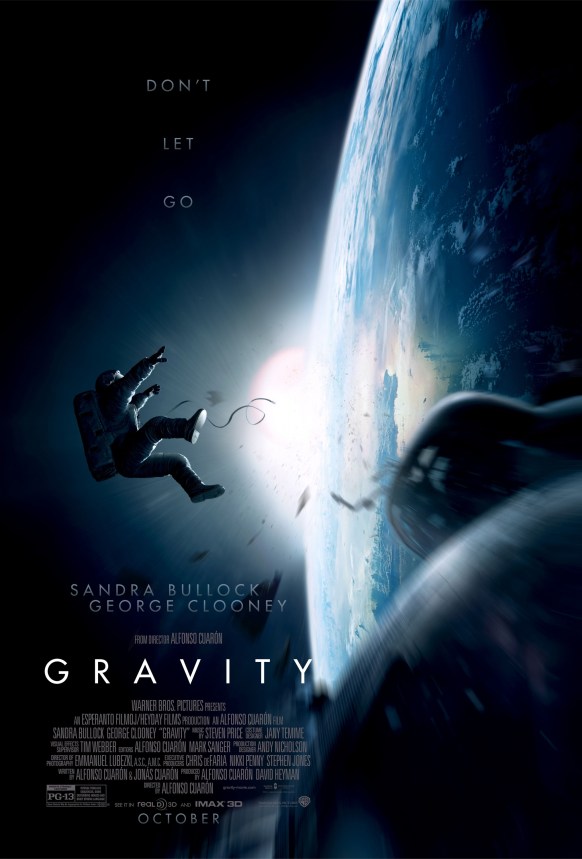
Gravity (2013) – Film Review

A survival drama set almost entirely in the unfathomable abyss of outer space, 2013’s ‘Gravity’ is equal parts tense and beautiful. Taking over four years to produce and winning numerous Oscars back in 2014 for everything from its effects to its cinematography to its sound editing, ‘Gravity’ serves as not only the long-awaited follow-up to director Alfonso Cuarón’s previous sci-fi film; ‘Children of Men,’ but also as one of the most immersive films to ever take place in the hostile, inhospitable vacuum of space.

Plot Summary: On her very first mission aboard the NASA space shuttle; ‘The Explorer,’ novice biomedical engineer; ‘Dr. Ryan Stone,’ and her accompanying seasoned astronaut; ‘Matt Kowalski,’ come face-to-face with an irrevocable disaster during a routine spacewalk when a barrage of debris from a crippled Russian satellite inflicts devastating damage to their shuttle, leaving them both stranded in orbit…

Co-written by Alfonso Cuarón and his son Jonás Cuarón, ‘Gravity’ is many ways less of a science fiction flick than it is a film grounded in real-world science, as it quickly becomes clear whilst watching ‘Gravity’ that the pair did their research into the fundamentals of space, presenting the narrative almost as if it’s based on a true story oppose to relying on flashy explosions to morph the film into a generic sci-fi blockbuster. Yet, interestingly, author Tess Gerritsen actually filed suit against Warner Bros. Pictures following ‘Gravity’s release, claiming the film was unofficially based on her novel and that she was entitled to a screen credit and a fair percentage of the film’s profits, but this was never proven to be true, even if both stories do share many similarities.

With around 80% of the film being shot on a green screen or consisting of CGI, there were plenty of opportunities for the performances throughout ‘Gravity’ to be underwhelming. And, yet, this is not the case, as Sandra Bullock and George Clooney both give brilliant performances here, with Bullock in particular impressing not only due to her acting chops, but also her memorisation skills, as with Alfonso Cuarón bringing his signature lengthy takes into ‘Gravity,’ Bullock had to memorise long combinations of precise movements in order to hit her marks for each shot, often even having to coordinate her movements with those of the wire rig and the camera, which is no easy task.

Brimming with many, many stunning shots, in addition to the previously mentioned one-takes. ‘Gravity’s cinematography by Emmanuel Lubezki rarely ceases to amaze, as the film wastes no time in capturing the audience’s attention by jumping straight into the story with its opening scene, which begins with the camera travelling from an establishing shot of Earth over to ‘Dr. Stone’ detaching from a structure all without a single cut, which in total, lasts around twelve and a half minutes. That being only one aspect of the impressive camerawork ‘Gravity’ displays, another being the film’s excellent use of P.O.V. shots which place the audience directly into ‘Dr. Stone’s space suit, further adding to the film’s tense atmosphere. Furthermore, all of the film’s cinematography is greatly elevated by the magnificent lighting, editing and CG effects, which back it up.

As a result of ‘Gravity’s realistic approach, for a large majority of the film’s ninety-nine-minute runtime there is little sound heard aside from dialogue, this places a lot of pressure on the film’s original score by Steven Price, which luckily, manages to strike the perfect balance between terror and wonder, as tracks, like ‘Above Earth,’ ‘Debris,’ and ‘Don’t Let Go,’ push the score into becoming a remarkable exploration of the absolute isolationism of outer space. Gradually building up with pulsing electronic beats and gloomy vocals, until it eventually expands in intensity and volume, capturing the fear of what lies beyond the stars just as it does with the beauty.

The most common criticism ‘Gravity’ has faced since its release is that the film is focused more on spectacle than anything else, as while all of ‘Gravity’s large-scale set pieces are usually beyond thrilling, some shots do feel as if they were implemented purely for the sake of 3D and IMAX screenings, which is difficult to ignore. This alongside the film’s lack of development in some areas does leave ‘Gravity’ a little devoid of memorability, when compared to some other iconic films set within the vast emptiness of space, e.g. ‘Ad Astra,’ ‘2001: A Space Odyssey’ and ‘Moon.’

In summary, whilst ‘Gravity’ may not live up to the immensely positive reviews it has received in recent years, it is still a captivating piece of science fiction and a true marvel of filmmaking. It’s just for me personally, I find the actual filmmaking process and behind-the-scenes material of ‘Gravity’ far more interesting than the story itself, perhaps that’s due to its underdeveloped characters or another element entirely. Regardless, I feel even with its issues, ‘Gravity’ will remain a testament to what can truly be achieved with modern technology when it comes to film. Final Rating: 7/10.

gravity_xxlg