It: Chapter Two (2019) – Film Review

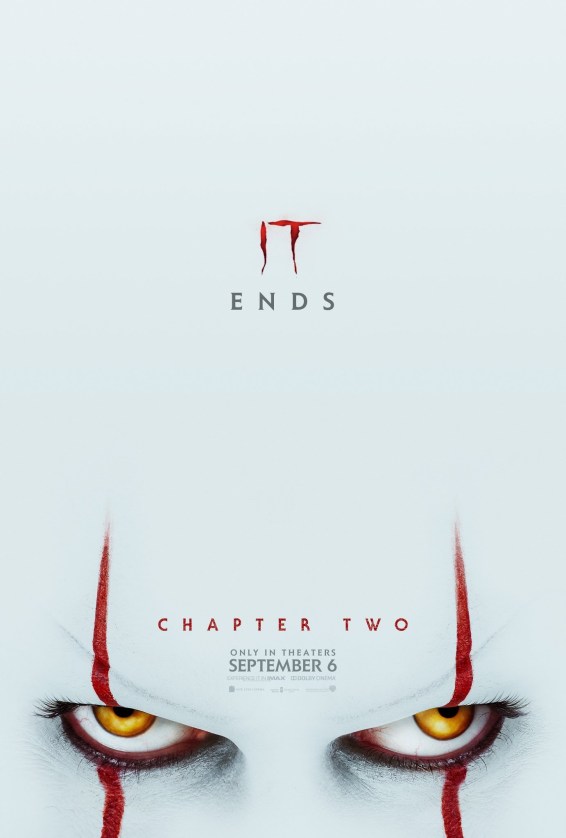
Once again directed by Andy Muschietti, and once again based on the iconic novel by Stephen King (only this time, the adult portions of the story). ‘It: Chapter Two’ is, unfortunately, somewhat of a downgrade from chapter one, as in spite of its excellent cast and continuously impressive visuals, ‘It: Chapter Two’ proves that bigger doesn’t always mean better when it comes to sequels, as the film’s overreliance on giant CG monsters along with its inconsistent tone and unreasonably long runtime of two hours and fifty minutes demonstrate how this spine-chilling follow-up frequently overindulges in its source material.

Plot Summary: After being defeated by ‘The Losers Club’ many years ago, the demonic clown, ‘Pennywise,’ returns twenty-seven years later to terrorise the town of ‘Derry’ once again. And, with the childhood friends who have long since gone their separate ways, ‘Mike Hanlon,’ the only member of the group to remain in ‘Derry,’ calls his friends home for one final stand…

Jumping from character to character, location to location, many of ‘It: Chapter Two’s biggest faults appear within its screenplay, as rather than focusing on a straightforward narrative like the original film, this time around the film revolves most of its plot around a bootless errand of a story where ‘The Losers’ search all over ‘Derry’ to acquire various artefacts from their youth to perform ‘The Ritual of Chud,’ which will supposedly destroy ‘Pennywise.’ The problem is that much of this setup is, ultimately, meaningless, as almost every character receives their own segment in which they simply recall moments from their childhood, which often just recap scenes from the first film or leave the audience bloated as a result of the huge amount of exposition they have to digest.

Yet, it has to be said that James McAvoy, Jessica Chastain, Bill Hader, Isaiah Mustafa, Jay Ryan, James Ranson and Andy Bean all portray the older versions of their characters remarkably, as despite the characters now being much older, each actor/actress recreates the younger actors’ body moments and manner of speaking flawlessly. ‘It: Chapter Two’ also never forgets to reinforce the characters’ trauma, as even though ‘Bill’ is a successful writer and ‘Ben’ has remodelled himself into a muscular architect, etc. Each member of the group is still haunted by their past, or at least, what they can remember from it. Of course, Bill Skarsgård also returns as ‘Pennywise.’ While his performance does occasionally venture into goofy territory due to how over-the-top he becomes, Skarsgård is still endlessly entertaining as the malevolent clown.

This time around, the cinematography is handled by Checco Varese. Still, you’d be forgiven for not knowing that ‘It: Chapter Two’ had a different cinematographer, as the film is just as visually pleasing as its predecessor, with some elegantly orchestrated transitions between the characters’ incarnations thrown in for good measure. The huge increase in the budget also comes across through the film’s visuals, as ‘It: Chapter Two’ feels much grander in scale and presentation alike. However, where the sequel stumbles is with its scares, as instead of utilising ‘Pennywise’s mimicking ability to transform into every character’s greatest fear, the film lazily depends on towering CG creatures, which usually have little relation to the characters or the story at large, and although a number of the monsters are interesting design-wise, it doesn’t stop them from feeling out of place.

Benjamin Wallfisch’s original score effectively continues on from that of the first film, as tracks, such as ‘Losers Reunited,’ ‘Nothing Lasts Forever,’ and ‘Stan’s Letter,’ are calming and beautiful, whereas tracks, like ‘Hall of Mirrors’ and ‘Very Scary,’ are loud and intense to add to the film’s horror. The main issue with the soundtrack is in its lack of distinction from the first film’s score, and while I understand ‘It: Chapter Two’ is essentially just the second part of a larger story, the original score does little to set itself apart, with some tracks sounding near-identical to others.

Even though ‘It: Chapter Two’ is trying to accomplish a great deal within its lengthy runtime, spending a large portion of its story in flashbacks and dream sequences as it attempts to adapt everything not already covered in the first film. The sequel is saddled with an even bigger obstacle; constructing a suitable climax for the story, as although its well-known by this point that Stephen King often has difficulty writing satisfying endings for his novels (a criticism that the film repeatedly mocks), ‘It: Chapter Two’ is faced with this exact task, and even if the story doesn’t completely collapse under the weight of its disappointing finale, its admittedly still lacklustre, especially when the final act veers into metaphysical surrealism.

In summary, ‘It: Chapter Two’ is unquestionably an ambitious horror sequel, with a renowned cast, spectacular set pieces and numerous exciting moments; the film truly goes all out. But, does it work? Well, not entirely, but it’s a diverting horror blockbuster, nonetheless. And, whilst I feel that by splitting the story of ‘It’ into two films, Muschietti has done a gratifying job of commanding the massive blimp that is King’s extensive novel, most of the issues with ‘It: Chapter Two’ boil down to its story and structure, which end up leaving the film a mere pleasurable romp rather than the ghoulish denouement it could have been. Final Rating: 6/10.
it_chapter_two_ver3_xxlg

Guns Akimbo (2019) – Film Review

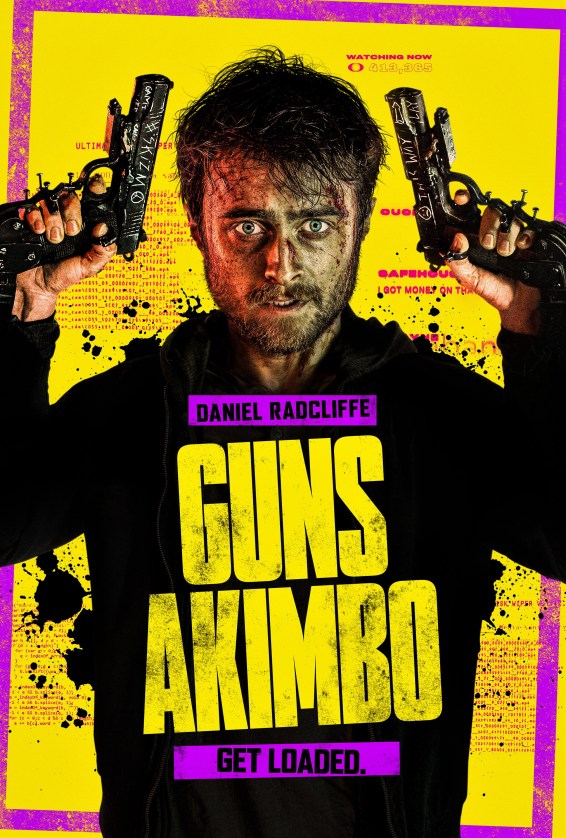
Frenetic to a fault, 2019’s ‘Guns Akimbo’ relishes in its video game-like violence, utilising its fluid editing, fast pacing and wild visuals to construct a thrilling action-comedy inspired by riveting 1980s blockbusters, like ‘The Terminator’ and ‘The Running Man.’ Yet, with all this insanity, it’s inevitable that ‘Guns Akimbo’ will alienate some viewers, especially those hoping for plenty of engrossing commentary concerning televised violence and online culture, but for many others, the film’s super-charged, energetic action sequences along with Daniel Radcliffe’s committed performance will surely hit the spot as an explosive jaunt.

Plot Summary: When ‘Miles Lee Harris,’ a spineless video game programmer, awakens one morning to discover that his hands have been bloodily bolted to a pair of pistols, ‘Miles’ is forced to use the fused-firearms to his advantage to save his ex-girlfriend from a group of kidnappers working for a criminal organisation, named; ‘Skizm,’ which pits maniacal criminals against each other in live-streamed deathmatches…

Written and directed by Jason Lei Howden (Deathgasm), ‘Guns Akimbo’ is, in many ways, trying to be a satire of the digital age we currently live in, displaying how apps like Instagram and YouTube have made us cynical, and in some instances, even dehumanised us. The problem here being that the film soon becomes exactly what it’s satirising, constantly mocking the online community of ‘Skizm’ for watching the grisly live streams, even though the film itself is taking just as much pleasure in displaying them to its audience, but considering ‘Guns Akimbo’ is primarily an action flick over anything else, I feel this muddled message is far from the film’s central focus. An issue the film does actually suffer from, however, is its screenplay, as by the time it’s third act arrives, the film is clearly beginning to run out of steam, devolving into essentially just non-stop action with little charm when compared to the first half of the film.

By far one of the film’s best aspects, Daniel Radcliffe’s performance as asthmatic protagonist; ‘Miles Lee Harris,’ is both hilarious and manic, as ‘Miles’ is forced to leave his boring life as a programmer for a company whose games are designed to exploit children for micro-transactions, to undertake a whole new identity after unwillingly entering ‘Skizm’ and their city-wide game of death. And, whilst ‘Miles’ continuous moments of cowardice and constant wheedling over his ex-girlfriend could’ve been annoying if they were over-played, Radcliffe portrays the character in such a way where it’s easy for the audience to root for him similar to how ‘Skizm’s online audience do. On the flip side of this matchup there is ‘Nix,’ a cocaine-fuelled killer, who relishes in profane one-liners and is brilliantly, portrayed by Samara Weaving, being the current reigning champion of ‘Skizm,’ ‘Nix’ serves her purpose as a baleful adversary to ‘Miles,’ in addition to harbouring a surprisingly dramatic backstory.

An utterly merciless blend of ‘Crank,’ ‘Shoot ‘Em Up’ and ‘Scott Pilgrim vs. The World,’ the cinematography throughout ‘Guns Akimbo’ never fails to be visually dynamic, as cinematographer Stefan Ciupek aims to make the camera feel completely unrestricted, having it flow freely through a variety of techniques including making superb use of body-rigs and car-mounts alike, which does help to redeem some of the uninspired firefight choreography. Moreover, as ‘Guns Akimbo’ frequently has the appeal of a vibrant graphic novel, the on-screen graphics and highly saturated lighting lend themselves remarkably well, with many of the lighting rigs used also being controlled via an iPad, so they could easily be adjusted to fit with the mood and colour of any scene.

Enis Rotthoff’s original score is just as hyperactive as the rest of the film, as any scenes that aren’t filled with iconic songs, such as ‘We’ll Be Good Friends,’ ‘Super Freak’ or ‘You Spin Me Round,’ are amplified by Rotthoff’s thumping techno soundtrack, with tracks like ‘Neon Grey’ and ‘Playcare,’ being perfectly in tune with whatever moment of the story they are a part of.

However, even when keeping all these elements in mind, whether you enjoy ‘Guns Akimbo’ or not will ultimately have to do with whether you find the distinctively zany concept endearing, as the film greatly leans into the comedy of its premise, imagining what it would be like to try and use the bathroom or attempt to call someone when you literally have pistols for hands, which has always been the film’s most notable distinction. In fact, during the film’s pre-production, an image of Daniel Radcliffe panicking and holding a pair of pistols whilst wearing a robe went viral as soon as it surfaced online, creating an aura of awareness for the film before it even had an official trailer.

In summary, ‘Guns Akimbo’ is bloody, brutal and ballistic, colourful and stylish yet admittedly fairly empty-minded. But, for a film like this, I don’t think that’s such a bad thing, as while some may argue the film starts to lose its desirability once you realise it doesn’t have much to offer beyond its high-octane action sequences, ‘Guns Akimbo’ never lies to you about what it is, as the action is every bit as ludicrously over-the-top as it would be in the fictional reality of violent video games, like ‘Grand Theft Auto’ or ‘Doom.’ Final Rating: 7/10.

guns_akimbo_xxlg

Cats (2019) – Film Review

Despite ‘Cats’ being well-known as one of the longest-running stage shows in West End/Broadway history, it is also widely acknowledged that the cat-centric musical is empty spectacle and not much else. This along with many other reasons, may explain why the adaptation of the musical we received in late 2019 has since gone on to be regarded as one of the worst musicals ever put to film, as director Tom Hooper (The King’s Speech, Les Misérables, The Danish Girl) utterly squanders an enormous budget and a talented cast in exchange for a paper-thin plot, a constant bombardment of irritating songs, and some truly horrendous CG effects that will leave most audience members begging to be put out of their misery.

Plot Summary: A tribe of cats known as ‘The Jellicles’ yearly meet for a ‘Jellicle Ball,’ in which, they decide which of their group will ascend to the ‘Heaviside Layer’ and return to a new life. But, on this year, the mysterious napoleon of crime; ‘Macavity,’ has other, more sinister plans…

Ever since it was first announced that Oscar-winning director Tom Hooper would be adapting the iconic feline-focused musical, the film has become such joke-fodder that it’s hard to see past the countless number of memes mocking the film’s dreadful visuals or comedic moments, which is a shame. Not because the film we received is even remotely entertaining, of course, but because the adaptation we almost received could’ve been fantastic, as originally, animation house, Amblimation, planned to adapt the musical into an animated film before the project was shelved following the company’s closure. This idea of translating ‘Cats’ into a traditionally animated film remained all the way to Hooper coming on board to direct, and, in my opinion, also makes considerably more sense considering the original musical is based on the 1939 poetry collection; ‘Old Possum’s Book of Practical Cats’ by T. S. Eliot, a book brimming with whimsical sketches of various cats from a variety of backgrounds.

Newcomer Francesca Hayward, stands-out as one of the film’s few redeeming aspects, as her character; ‘Victoria,’ serves as an audience surrogate, her empathy occasionally shining through as she is rapidly introduced to character after character, until we uncover which ‘Jellicle’ cat will be chosen to ascend. The rest of the film’s prominent cast, however, including Jennifer Hudson, Taylor Swift, James Corden, Jason Derulo, Idris Elba, Judi Dench, Rebel Wilson, Ian McKellen, and many more, range from extraordinarily cringe-worthy to subpar, although their performances are further hindered by the screenplay’s lack of characterisation and dramatic moments.

Whilst the film’s cinematography by Christopher Ross does a successful job of upgrading the beige setting of the stage show into a vibrant, neon-lit approximation of old London, allowing for a handful of visually pleasing shots, it’s impossible for ‘Cats’ to claw itself away from the rest of its distracting visuals. That not only includes the obvious, but also much of the film’s set design, as several of the locations the cats enter are supposed to appear as if they are far larger than the characters in order to display each cast member as cat-sized, the drawback here being that there is usually no consistency with these scaled-up sets between shots.

Moving onto the music, Andrew Lloyd Webber, creator of the original musical, actually handled the film’s original score in addition to writing a couple of songs exclusively for the film. And, while songs, like ‘Jellicle Songs for Jellicle Cats,’ ‘The Old Gumbie Cat,’ ‘The Rum Tum Tugger’ and ‘Skimbleshanks: The Railway Cat,’ may bring a smile to fanatics of the stage show, in the film, these songs only come across as infuriating as they are so frequent, barely making time for anything else, aside from one or two atrocious cat puns.

Lastly, there is the appearance of the cats themselves, by far the most discussed/mocked element of the entire film, and for good reason, as the uncanny part-human, part-CG appearances of the furred critters appear extremely unnatural and very under-polished. So much so, that a mere two days after the film’s initial release, Universal Pictures announced that they would be releasing an updated version of: ‘Cats’ with enhanced CGI. Whilst this is partly a result of Tom Hooper’s broad direction, an article published the following year by The Daily Beast featured multiple visual effects artists who worked on the film, each claiming they had little-to-no time to finish the film’s huge array of effects, with some artists even having to sleep under their desks to get the film completed on time, at least, if said article is truthful.

In summary, even though I’m personally not an admirer of Tom Hooper’s filmography, Hooper is not a wholly incompetent director, but ‘Cats’ is undeniably, an absolute catastrophe of a fantasy-musical from beginning-to-end. Quickly being placed amongst the one hundred worst films of all-time on IMDb and forcing the plans for its sequel (and spin-off television series) to be immediately scrapped, ‘Cats’ is possibly one of the biggest cinematic failures of the past decade, as its copious number of flaws massively overshadow what few, if any, redeeming factors the film had left, resulting in an insufferable viewing experience that’ll make most film buffs feel remorse for everyone involved in this embarrassing production. Final Rating: high 1/10.

cats_xxlg

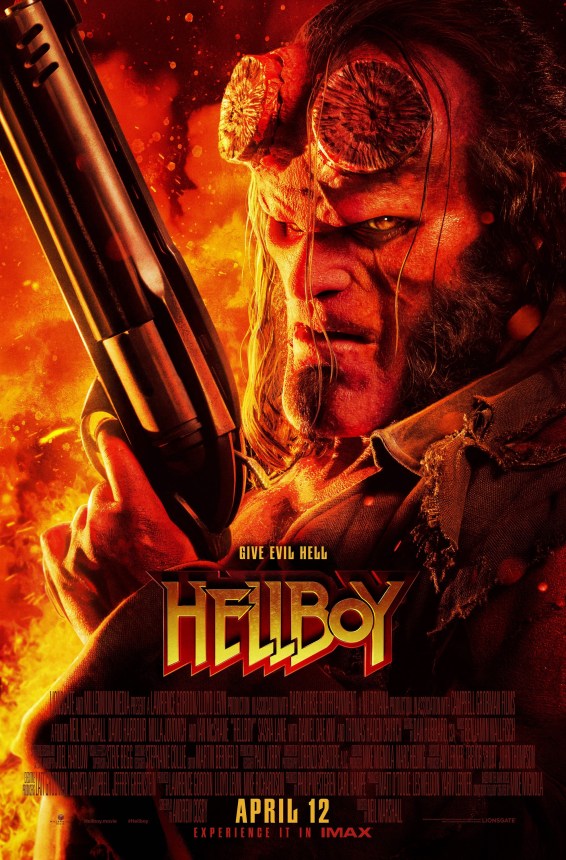
Hellboy (2019) – Film Review

In mid 2012, actor Ron Perlman once again endured the four hour make-up routine required to transform him into his iconic character: ‘Hellboy’ and fulfil the Make-A-Wish request of a six-year-old boy with leukaemia. Director Guillermo del Toro was so touched by this event that it inspired him to start production on a third ‘Hellboy’ instalment. But, following a dispute between del Toro and producer Mike Mignola, the project was soon cancelled, and instead, Mignola and his team began work on a reboot of the franchise, which finally released in 2019, to truly abysmal results.

Plot Summary: Whilst working side-by-side with his adopted father for the ‘Bureau for Paranormal Research and Defence,’ ‘Hellboy,’ a supernatural creature who came into our world in 1944 as a result of a demonic Nazi ritual, struggles to accept which world he belongs to, that being one of monsters, or one of men. All the while, an evil sorceress known as ‘The Blood Queen,’ returns to the modern world, eager to take her revenge on humanity for imprisoning her centuries ago…

According to producer Mike Mignola, the intention with this reboot was to replicant a style and tone closer to that of the original source material, as despite del Toro’s version of ‘Hellboy’ often being light-hearted aside from one or two disturbing moments, the original comic series created by Mike Mignola is, in reality, far darker and more gruesome. And, whilst this goal of wanting to make a ‘Hellboy’ film more horror/fantasy-oriented rather than just a typical superhero blockbuster is commendable, this reboot of the series continuously stumbles due to this tonal shift, even with talented director Neil Marshall (Dog Soldiers, The Descent, Doomsday) overseeing the project. Yet, this is only one of the film’s many problems, as it’s hard to sit through even a single viewing of ‘Hellboy’ without noticing the film’s incredibly fast pacing, awful comedic moments, and beyond messy plot, which for some reason draws, from four separate storylines from the ‘Hellboy’ comics.

‘Hellboy,’ or particularly, David Harbour’s performance as the titular character, is possibly the film’s finest aspect, as rather than just lazily mimicking Perlman’s beloved version of the character, Harbour displays a less mature interpretation of the superhero. Portraying the horned hero as a conflicted character, younger and stronger than Perlman’s version, but unsure as to if he is a real hero, which is an interesting internal conflict to explore and about the only element of the film that is consistent. Then there is Ian McShane as ‘Hellboy’s father figure, who is serviceable in his role alongside Milla Jovovich as the villainous; ‘Blood Queen,’ who, unfortunately, delivers one of the most over-the-top performances of her entire career.

Aside from the small detail of the filmmakers ensuring the colour red is never present in the same scenes as ‘Hellboy’ himself (excluding scenes where blood is shed, of course), the cinematography by Lorenzo Senatore is your usual affair for a superhero flick, having a handful of pleasant shots scattered amongst the plethora of bland hand-held camerawork utilised for action scenes and grand moments of destruction. But, regardless of how impressive the cinematography may or may not be, there is no distracting from the film’s unappealing CG effects, as in spite of the creature department clearly trying their best with the detailed costumes and prosthetic make-up on display, nearly all of the CG effects throughout ‘Hellboy’ appear instantly dated.

The original score by Benjamin Wallfisch is a peculiar concoction, being an odd mish-mash of orchestral and electronic tracks which only succeed in making the soundtrack feel quite dull when it’s not overly loud and irritating. Or at least, that’s the score before mentioning its use of electric guitars, which try desperately to present the soundtrack as something ‘awesome,’ but only emerges as annoying at best, with the film’s signature track; ‘Big Red,’ being the biggest offender for this.

However, an aspect of the film that is more in line with del Toro’s previous ‘Hellboy’ adaptation is its creatures, as although the effects that bring them to life aren’t impeccable, the actual creature designs are truly something be admired, with the ‘Hellboy’ comics clearly providing the filmmakers with plenty of visual influence. Even ‘Hellboy’s redesign was inspired by David Harbour’s own features, with the effects team adding a larger jaw and a heavier brow to further fit with Harbour’s facial structure.

In summary, while I can appreciate the effort that went into ‘Hellboy’ in some areas, the film’s flaws are just so evident it’s nearly impossible to ignore them. From its convoluted and overstuffed story to its dreadful CG effects, ‘Hellboy’s thrilling moments of action or amusing dark humour are minor when compared to its faults. Yet, by far the most frustrating part of this reboot is that it stripped away our final chance of seeing a third entry in the original ‘Hellboy’ series, an instalment myself and many other fans of this beloved character had been wanting to see for quite some time. Instead, we’re now stuck with this disappointing reboot, which failed miserably to reignite the spark of excitement in this superhero franchise. Final Rating: low 3/10.

hellboy_ver6_xxlg

Escape Room (2019) – Film Review

Divertive yet still rather thrilling in parts, ‘Escape Room’ directed by Adam Robitel (The Taking of Deborah Logan, Insidious: The Last Key) fails to unlock much of the potential in its premise, eventually devolving into what is simply scene-after-scene of the film’s characters solving puzzles in a number of themed rooms whilst on a strict time-limit. Yet, depending on what you desire to see from a modern thriller, this may be enough to serve a passing diversion, as the film chooses to just ignore its lack of realism and originality in favour of distracting its audience through creative set design and tense fast-paced sequences.

Plot Summary: When six strangers are each sent a mysterious black puzzle box withholding an invitation to an immersive escape room, they all make their way to the ‘Minos’ facility on the promise of being able to win a fortune should they escape. But, after entering what seems to be the building’s waiting area, innocent fun soon turns into a deadly game as the group discover that each room thy enter is actually an elaborate trap…

From a mere mention of the film’s plot, the ‘Saw’ and ‘Cube’ franchises are understandably the first two things that come to mind. As, in many ways, ‘Escape Room’ is effectively just a far less violent version of those familiar setups, with a character heading into a room only to be greeted with a convoluted trap that will result in their death should they not escape it. And, while ‘Escape Room’ does contain at least a couple of sparks regarding something original, the film is also far from subtle in both its storytelling and dialogue, with plenty of cheesy lines, implausible events and characters’ backstories being shown through literal flashbacks.

Taylor Russell, Logan Miller, Jay Ellis, Tyler Labine, Deborah Ann Woll and Nik Dodani all give passable performances as the main group of characters forced into a twisted game. Their actual characters, however, are possibly the film’s biggest missed opportunity, as whilst a few of the characters do receive development early on in the narrative, its quickly becomes clear as to which characters the film is favouring, making it easy to predict who is going to live, and who is going to die. But, if the film would’ve managed to better balance its characterisation, then not only would the story have been more compelling, but this would’ve kept the viewer constantly guessing as to who could go next.

Aside from one or two wide shots when the group first enter a new room, the cinematography by Marc Spicer is mostly uninspired, never really attempting to integrate any incredibly innovative or unique shots. Still, the cinematography does serve its purpose for the most part, backing up the story without ever relying too heavily on the use of hand-held camerawork or overly choppy editing. Additionally, the film’s CG effects (as sparsely used as they may be), are serviceable but not much else beyond that.

Contrarily, the original score by Brian Tyler and John Carey is fairly inventive, as the pulsing and suspenseful electronic score utilises everything from ticking clocks to power tools, representing the time-pressed characters and the constantly changing environments from which they are trying to escape. This means tracks, such as ‘Coaster’ and ‘Testing Your Limits,’ massively help to build tension, whereas moody tracks, like ‘The King of Trading’ and ‘Let the Games Begin,’ feel more sci-fi and atmospheric in nature. The film’s main theme, simply titled; ‘Escape Room,’ even receives a dubstep-like remix by musicians ‘Madsonik’ and ‘Kill the Noise,’ which plays over the film’s stylised end credits.

The film’s set-design is possibly its best aspect, as rather than going for the bog-standard look of libraries and basements for the basis of each room, the film explores an array of diverse environments for its puzzles. From a snowy log cabin, complete with a grand mountain vista, to an upside-down billiards bar, the film’s ever-changing locations help keep the story’s signature concept feeling fresh. Many of the rooms also relate to the character’s traumatic backstories, the first room, for example, is essentially a giant oven which will burn the group alive should they not escape, this mimics ‘Amanda’s backstory, who was badly burned after she barely survived an IED explosion while serving her country.

In summary, not only is ‘Escape Room’ similar to the ‘Saw’ series in terms of its story and setup, but, unfortunately, also in terms of its franchise potential, as its pretty obvious from the film’s extremely forced ending that Sony Pictures wanted their own low-budget horror/thriller franchise as an easy way to gain profit, and riffing on an already iconic series is a trouble-free way to achieve this. So, although it’s set-design and original score are admirable, in addition to a large majority of the filmmaking ‘Escape Room’ has on display being above-average, if not better, the film definitely has its share of problems, and, in my opinion, isn’t worthy of an entire film series. Final Rating: 5/10.

escape_room_xxlg

Jojo Rabbit (2019) – Film Review

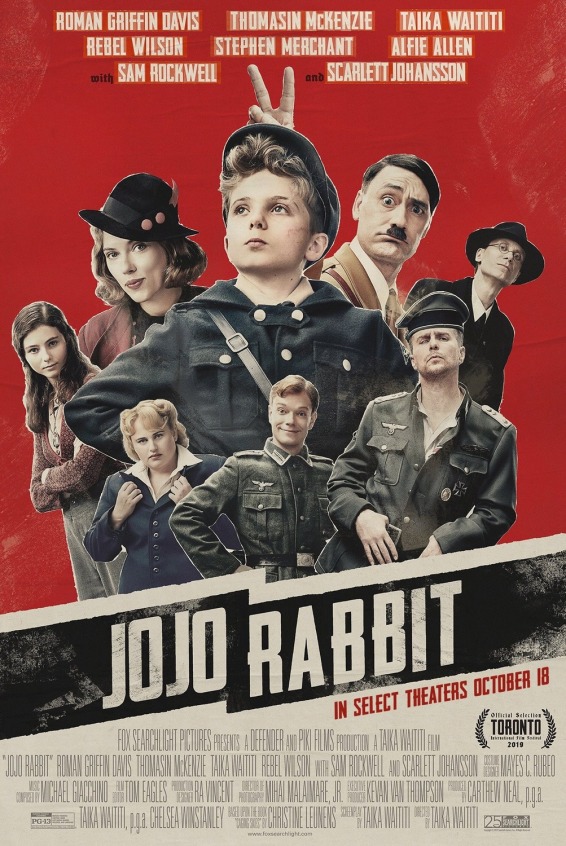
From Taika Waititi, the now-esteemed comedy director behind modern comedy classics, like ‘What We Do in the Shadows,’ ‘Hunt for the Wilderpeople,’ and ‘Thor: Ragnarok,’ comes a beautifully crafted war film with a strangely pleasant sense of humour, as ‘Jojo Rabbit’ really stands out within the war genre for being one of the first films set during World War II to be an anti-hate satire, telling it’s heartwarming and optimistic story in an amusing yet respectful fashion. Soon cementing itself as one of the most noteworthy releases of 2019.

Plot Summary: Nearing the end of the Second World War, a lonely German boy named: ‘Jojo’ aspires to be a Nazi, hoping to one day fight on the frontline. But, ‘Jojo’ soon finds his worldview turned upside-down when he discovers his mother is hiding a young Jewish girl in their attic. Aided only by his idiotic imaginary friend, who takes the form of ‘Adolf Hitler,’ ‘Jojo’ must confront the unexpected guest in his home, and in doing so, confront his blind nationalism…

Partly based on the novel; ‘Caging Skies’ by Christine Leunens, the screenplay for ‘Jojo Rabbit’ was actually written back in 2011, putting it in-between ‘Boy,’ released in 2010, and ‘What We Do in the Shadows,’ released in 2014, in the chronology of Taika Waititi-penned films. And, while ‘Jojo Rabbit’ is certainly one of Waititi’s finest films to-date, it is also one of his most controversial, as whilst I personally feel the film goes about its comedy in a tasteful manner, never undercutting the story’s message and mostly just poking-fun at ridiculous Nazi protocols and beliefs. ‘Jojo Rabbit’ did receive plenty of flack from critics as soon as it was even announced the film would contain any kind of humour, which I find quite unfair on behalf of the film, as it’s clear to me that the humour is crucial in what the story is trying to accomplish.

The young and impressive Roman Griffin Davis leads the cast excellently as ‘Jojo,’ portraying the young boy as simply a regular kid who has a fascination with this ideology the Nazis are fighting for, even though he has little understanding of it nor its horrific consequences. Then there is Thomasin McKenzie, who portrays the opposite side of this, as her character; ‘Elsa,’ is a resourceful and intelligent Jewish girl who attempts to open ‘Jojo’s eyes to the real-world, rather than the warped-reality his fellow Nazis have burned into him. Scarlett Johansson is also fantastic in the film as ‘Jojo’s mother, ‘Rosie,’ having the most consistent German accent of the cast by far. But, it’s the director himself, Taika Waititi, who takes the short straw portraying the infamous Adolf Hitler, or at least ‘Jojo’s imaginary interpretation of him, as ‘Hitler’ is always presented in a very discriminating way, with Waititi portraying the dictator like a complete tool, only ever having as much information and maturity as ‘Jojo’ does, and occasionally, even less so.

Oppose to many other war films, ‘Jojo Rabbit’ features a very vibrant colour palette, as Waititi actually discovered through much of his research that Germany during World War II was both colourful and fashionable, and was interested in shying away from war films only ever displaying World War II as dark and dreary. So, through this, as well as the fairly creative cinematography by Mihai Malaimare, ‘Jojo’s small town is presented as a seemingly celebratory place with stylishly dressed citizens. Almost as if the town is trying to ignore the impending threat, only semi-aware that the Third Reich is crumbling beneath them.

The film’s original score by Michael Giacchino is another wonderful effort from the composer, as the score features a number of memorable tracks, from ‘Jojo’s Theme’ to ‘A Butterfly’s Wings,’ and ‘Rosie’s Nocturne.’ In many ways, the score for ‘Jojo Rabbit’ almost sounds as if it’s a military march composed by a group of children, which works perfectly considering the film’s story is told through a child’s perspective. Furthermore, the original score also utilises German vocals to more accurately fit with the story’s setting.

Although the supporting cast of Archie Yates, Rebel Wilson, Stephen Merchant, and Alfie Allen are all brilliant within the film, I really do wish their characters were featured more throughout the narrative. As, aside from Sam Rockwell’s ‘Captain Klenzendorf,’ who receives a respectable amount of screen-time, many of the story’s side characters are seemingly only in the film for the sake of a couple of humorous scenes, which is unfortunate, as every member of the cast portrays their Nazi characters as hilariously over-the-top as possible.

In summary, ‘Jojo Rabbit’ isn’t only another extraordinary entry into Taika Waititi’s catalogue of comedy flicks. But, I’d argue it’s his best project thus far, a daring and charming film that simultaneously explores the horrors of war, yet also the compassion in people. And, while the film may not be for everyone, with many reviews clearly indicating how divisive the film is with its implementation of comedy, I feel the film juggles its humour and emotional moments immensely well, with its remarkable original score and bright colour palette only helping the film stand further out from the crowd. Final Rating: 8/10.

jojo_rabbit_ver2_xlg

Scary Stories to Tell in the Dark (2019) – Film Review

Based on the controversial 1980s children’s book series of the same name, written by Alvin Schwartz and nightmarishly illustrated by Stephen Gammell. The film adaptation of ‘Scary Stories to Tell in the Dark’ directed by André Øvredal and co-written/produced by Guillermo del Toro, takes a very different approach than what many may expect when considering its source material, as the film ditches the book’s original anthology structure in favour of a more interconnected story to mixed results.

Plot Summary: On Halloween night, 1968, a group of childhood friends daringly enter the abandoned home of ‘The Bellows’ family, whose shadow has loomed over the small town of Mill Valley for generations as a result of the notorious murder of ‘Sarah Bellows,’ who turned her tortured life into a book of scary stories many years ago. But, these terrifying tales soon have a way of becoming all too real when the reclusive ‘Stella’ decides to take ‘Sarah’s story-filled journal home…

Clearly inspired by Stephen King’s classic novel; ‘It,’ ‘Scary Stories to Tell in the Dark’ takes the now-popular route of focusing on a younger cast, capturing that classic spirit of childhood adventure mixed with plenty of light-horror, but rather than setting the film in the hackneyed time-period of the 1980s, the film actually chooses to set it’s story near the end of the 1960s, which I feel helped the film stand out amongst the ‘It’ remake and it’s many similar incarnations. However, since its release, ‘Scary Stories’ has received plenty of criticism for its underwhelming horror, despite this being a completely intentional decision on behalf of the filmmakers, ensuring the film as a first step into the horror genre for younger audiences, never displaying too much violence or overly intense scares, not too dissimilar to the book series itself.

Zoe Margaret Colletti, Michael Garza, Austin Zajur, Natalie Ganzhorn, Gabriel Rush, and Austin Abrams portray the main group of friends and all do a decent job, as while their individual characters don’t exactly break new ground, they are likeable enough and have their inklings of both personality and humour. Contortionist Troy James, who once appeared on ‘America’s Got Talent,’ also appears in the film as one of the monsters, known as ‘The Jangly Man.’ Who, aside from having some CGI-enhanced facial expressions, actually performed all of his impressively unnatural body movements himself, including walking backwards, twisting his torso and crawling upside-down.

Roman Osin’s cinematography does remain visually interesting for the majority of the runtime, having plenty of creative shots with an effective implementation of colour alongside. But, it’s the film’s monsters that are unquestionably the best aspect of this adaptation, as the film takes the horrifying and abstract illustrations of Stephen Gammell and melds them into live-action flawlessly. So much so, that even in spite of each creature’s very limited screen-time, every monster manages to be quite memorable in its own right, from ‘The Pale Lady’ to ‘The Big Toe’ to the dilapidated poster-child scarecrow; ‘Harold,’ all of which were brought to life through prosthetic make-up and convincing practical costumes, rather than just CGI.

The original score by Marco Beltrami and Anna Drubich is a fairly average horror score, yet does still serve the story well for what it has too, even if most of the tracks aren’t worth looking-up afterwards. But, it’s also within the main score that there a small nod towards the original book series, as one of the tracks that plays throughout the film is titled; ‘The Hearse Song,’ which is actually a short song from the book series’ first entry.

As previously mentioned, the main creative decision that seems very peculiar to me is that the film adaptation of ‘Scary Stories to Tell in the Dark’ is not an anthology film, despite the books the film is based on focusing entirely on different characters/monsters with each new story. Instead, the writers chose to create an original story based-around the depraved spirit of ‘Sarah Bellows’ bringing the stories within her book to life, which was apparently done in order to stop one of the stories from overshadowing the rest, according to Guillermo del Toro. Yet, I personally feel that this makes the film less entertaining, as many of the story’s concepts and creatures feel underutilised, due to this overarching (and occasionally corny) narrative, even if the main story does borrow some of its ideas from other unused tales within the books series.

In summary, ‘Scary Stories to Tell in the Dark’ does triumph in its goal of crafting a horror more accessible for younger audiences, as I could see this film appealing to many young audience members in search of a gateway into the horror genre. If you are already a veteran within the genre, however, then I feel ‘Scary Stories’ will more than likely disappoint, as the film’s many cliché story-beats and lack of any gore or truly tense moments does result in this adaptation becoming a mostly forgettable horror flick with the exception of its many unique creature designs. Final Rating: 5/10.

scary_stories_to_tell_in_the_dark_xxlg

Secret Obsession (2019) – Film Review

Other than providing the viewer with plenty of unintentionally comedic moments to laugh at, ‘Secret Obsession’ fails to do much of anything as a thriller, a mystery, or even a drama, being incredibly predictable and formulaic from start-to-finish, in addition to lacking in both interesting characters and a real sense of dread throughout. ‘Secret Obsession’ remains to this day Netflix’s attempt at an ominous thriller that was quickly swept under-the-rug shortly after its release, only being known now as a poorly thought out thriller that would seem more at home on the Lifetime Channel.

Plot Summary: After being brutally attacked by a mysterious stranger at a rest-stop one night, newlywed; ‘Jennifer Williams,’ awakens in hospital healing from her injuries. Now unable to recall her past, her husband; ‘Russell Williams,’ is simply thankful she’s alive and is eager to get her home. But, as he reintroduces her to their secluded mountain estate, ‘Jennifer’ begins to realise she may not be as safe as she initially believed…

Even though ‘Secret Obsession’ received nearly universally negative reviews upon its initial release, in just twenty-eight days, over forty million viewers watched the thriller, placing it in the top ten most viewed Netflix Original films in the history of the streaming service (despite the film’s absence of anything truly unique). This is even more surprising considering the film wasn’t the only psychological thriller released on Netflix in 2019, as another entry in the genre titled; ‘Fractured,’ appeared on viewer’s accounts months later, sharing many similarities in story and setup to ‘Secret Obsession.’

Brenda Song and Mike Vogel are both fine within the film, delivering serviceable performances with the exception of the occasional corny line which can feel quite over-acted. Neither one of these performances improve the film much, however, as ‘Secret Obsession’ is anything but subtle in terms of both its dialogue and its characterisation. A perfect example of this is the character; ‘Detective Frank Page,’ portrayed by Dennis Haysbert, as not only is this character very cliché and only in the film to serve as a plot device later down the line. ‘Detective Frank’ also has a character arc which receives almost no development and makes little sense, in spite of Haysbert possibly giving the best performance of the film without being anything extraordinary.

The film’s cinematography by Eitan Almagor does manage to be at least somewhat visually interesting for majority of the runtime. With that said, much of the film’s visual style doesn’t fit with the actual narrative, as the film’s main setting of the Colorado Mountains feels like a far too beautiful and scenic location for a dark thriller, such as this. This also goes for the film’s colour palette and lighting, which are both overly bright, resulting in the film sharing a similar visual appeal to a modern comedy rather than a suspenseful thriller/mystery.

Just as bland as it is cheesy, the original score by Jim Dooley doesn’t fare much better either, usually landing on either side of the scale: immensely generic or overly loud and extravagant. Almost giving the impression it’s taken from the soundtrack of a live-action ‘Scooby-Doo’ flick at points with how aggressively its orchestral score alludes to danger. But, considering this composer hasn’t worked on many well-known films throughout his career, I feel Dooly is still yet to create a beloved (or even memorable) original score for a film.

Nevertheless, the film’s main hook is, of course, it’s signature plot twist, as even hinted at by the ‘Secret’ part of its title. Yet, in my opinion, the story’s ‘twist’ is revealed far too early on within the runtime as a result of the screenplay’s extremely blunt hints and clues, which leave little to the imagination. While you could argue the film intends for the audience to know what’s going on so early in the narrative in order to build tension, the lack of any likeable or engrossing characters makes this a mostly fruitless effort, and with the film never delving much into the details of its twist, it soon leaves the viewer pondering the believability of its story. Alongside the obvious fact that a continuous and overarching mystery always helps to make a story more compelling, with iconic thrillers, such as ‘Seven’ and ‘Shutter Island,’ knowing this full well.

In summary, ‘Secret Obsession’ is a film no one is likely to obsess over, with its unfitting location and colour palette, dull characters and constant illogical moments throughout its story, the film has little to offer for fans of psychological thrillers. Whilst some may see the film as a ‘so bad it’s good’ flick, similar to other comically awful films, like ‘The Room,’ ‘Battlefield Earth’ and ‘Batman and Robin,’ I personally find the film a very forgettable and occasionally irritating experience. So, unless you’re on the hunt for a thriller that soon evolves into an unintended comedy, definitely give this dreadful Netflix Original a miss. Final Rating: 2/10.

secret_obsession_xxlg

The Problem with Live-Action Disney Remakes – Film Discussion

In years recent years, Disney has noticeably been taking quite an aggressive approach to reimagining many of the company’s classic animated adventures into live-action blockbusters, which I personally feel is having a bad influence on the rest of the film industry in more ways than one…

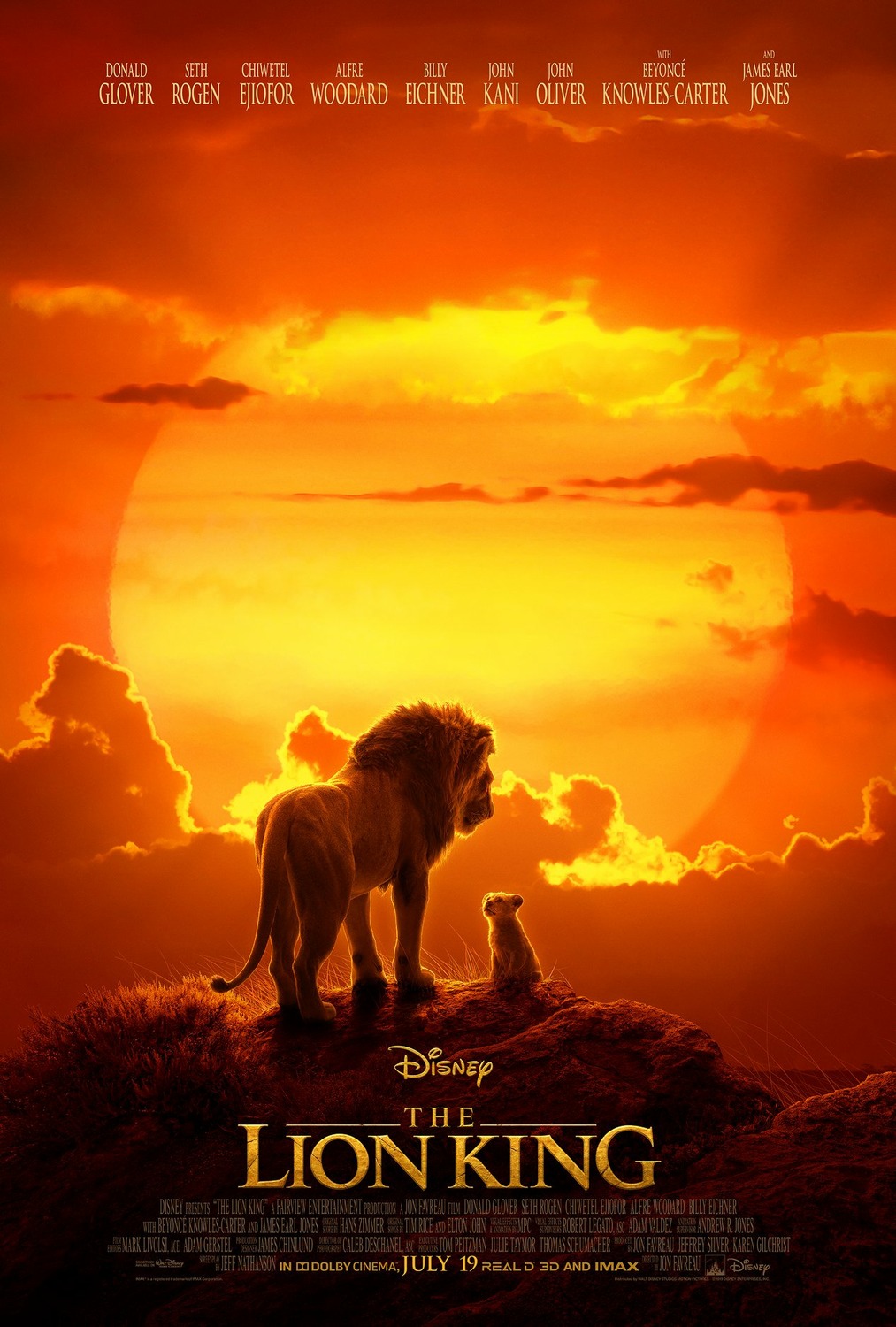
Despite Disney actually began the trend of remaking their classic films all the way back in 2010 with the semi-sequel/remake of ‘Alice in Wonderland,’ directed by Tim Burton. Disney didn’t begin to get truly rampant with its approach until the later successes of ‘Cinderella’ and ‘The Jungle Book’ in 2015 and 2016, respectively, with ‘Beauty and the Beast,’ ‘Dumbo’ and ‘Aladdin’ following not far behind, eventually leading to their most recent releases, that being ‘The Lion King’ and ‘Lady and the Tramp.’ Yet, whilst all of these films did receive mostly positive reviews from both critics and audiences upon their initial release, I personally have never understood why. As, for me, none of these remakes ever manage to really justify their existence, with each new film simply feeling like nothing more than a product, a money machine disguised as a film created purely to rinse profit out of Disney fans who desire to see their childhood classics recreated in a new light and, by this point, I just find it irritating.

Of course, remaking iconic films is nothing new for the film industry, with dreadful remakes, such as ‘RoboCop,’ ‘Ghostbusters’ and ‘Robin Hood,’ all being great examples of how taking a classic film and giving it a sleek modern aesthetic doesn’t automatically make it superior to the original. However, it’s the way Disney goes about executing their remakes that makes them even more frustrating, as even though most reimaginings may not differ too much from the original story, the majority of Disney remakes feel almost identical to their animated counterparts, featuring nearly all of the same scenes and dialogue, now just dragged down by much weaker visuals, vocal performances, and songs. This, in turn, also allows directors and writers to simply borrow material from previous filmmakers without having to innovate much themselves. Another issue I have with Disney converting their animated classics into live-action is that many of the original stories were always envisioned to be animated as they were being written, meaning when transferred into a different style of filmmaking, they usually are forced to rely on enormous amounts of CGI.

Although most audiences seemingly don’t take issue with Disney’s constant remakes, there are still some Disney fans who have spoken out about losing interest in Disney’s future live-action endeavours. In particular, I personally recall many weren’t looking forward to watching the ‘Aladdin’ remake around the time of its release, which I feel is understandable, as just from its trailer alone, it was clear that not only would the film intensely mirror the original, but it was obvious just from a glance that its visuals were also far, far duller, as the remake was lacking in both colour and style. Focusing more on being semi-realistic rather than fully engaging in its elements of fantasy (which, for a narrative revolving around a powerful genie who grants three magical wishes, feels like a huge mistake to me). Whilst the original ‘Aladdin’ may not be the most visually enthralling of Disney’s catalogue of family flicks, the classic style of 2D hand-drawn animation is still very pleasing to look at, even by today’s standards for CG animated films.

It may even surprise some to know that many of these bland remakes were actually directed by talented filmmakers like Jon Favreau and the previously mentioned Tim Burton. Yet, with each new film, every director’s unique style always seems to be stripped away or completely absent, as not only does each remake barely utilise any creative cinematography or editing, relying nearly entirely on CG effects to impress the audience. But usually inventive directors such as Guy Ritchie, who has made phenomenal use of his unique style of editing and humour in the past within his films, like ‘Snatch’ and ‘The Gentlemen,’ suffers as a result of how simply generic and even somewhat boring his reimagining of ‘Aladdin’ is, and while Disney may not be entirely to blame for this, I do believe the company would prefer to keep each remake fairly easy to digest in order to appeal to a wider audience.

In addition to both the visuals and directing, however, the cast of the original animated flicks were also a huge contributing factor to them becoming as beloved as they now are, with not only actors like Robin Williams as the original ‘Genie,’ of course, but also lesser-known actors such as Nathan Lane and Ernie Sabella as ‘Timon’ and ‘Pumbaa,’ to Jodi Benson and Pat Carroll as ‘Ariel’ and ‘Ursula,’ as all these voices not only gave the characters great comedic timing and a distinct tone, but they soon even became an extension of the characters themselves, making them recognisable purely through their voice. Whereas Disney’s newer remakes prefer to just take the much easier approach of simply casting the most relevant actors at the time and throwing them into an iconic role, and whilst actors, like Donald Glover and Chiwetel Ejiofor, will always be superb at their craft, forcing these performers into roles within ‘The Lion King’ simply due to their popularity will always make their vocal performance feel very out-of-place when in comparison with the original film.

The final area I find Disney remakes to be most lacking is the tampering of classic Disney songs, as although I’m personally not an enormous fan of musicals within the realm of live-action, I’ve always enjoyed many of the songs in Disney animated classics. As, not only do I feel these songs add to the characters and the story of each film immensely, but many classic Disney songs also manage to become iconic amongst themselves, with nearly any fan of animation more than likely know all the words to ‘Be Our Guest,’ ‘The Circle of Life,’ and ‘Under the Sea’ (just to name a few). But, when it comes to the remakes, once again, both the original score and songs feel far duller, even in spite of the legendary Hans Zimmer returning for ‘The Lion King’ remake to recreate many of his classic tracks. Still, a few of the reimaginings do at least attempt to throw in some original songs, which unfortunately end up being mostly forgotten due to them being overshadowed by the classic songs audiences are more familiar with.

In summary, it seems the influx of live-action Disney remakes won’t be stopping anytime soon, with ‘The Lion King’ racking in over £1 billion worldwide, Disney will most likely continue this remaking trend until their audience completely loses interest, as reimaginings of ‘Mulan,’ ‘Peter Pan,’ ‘The Little Mermaid,’ ‘Pinocchio,’ The Sword in the Stone’ and ‘Lilo and Stitch,’ as well as many, many more, are already set for release. Whilst the House of Mouse does still have a few original films on the horizon, Disney seems to be heading down a similar path to their paired animation company Pixar, that being one of laziness, relying mostly on their previous stories and franchises for profit rather than creating something new which, in turn, is also encouraging other production companies to do the same. So, if you share my opinion, perhaps sit out Disney’s next live-action release, stay at home, and just relive many of the beautifully animated stories from the past, as I honestly believe many of these films are timeless.

lion_king_ver2_xlg

Joker (2019) – Film Review

Since even the first day of its release, ‘Joker’ has seemingly split audiences straight down the middle, being hit with numerous reviews all with varied ratings. Everything from the film’s violence to its intricate themes to especially its Oscar-nominations, have all been brought up in recent conversation, as this film’s character-driven narrative focuses on the origins of ‘The Joker,’ arch-nemesis of the ‘Caped Crusader,’ ‘Batman.’ Yet, ultimately, becomes far more of an affecting and compelling drama/thriller rather than your standard superhero affair.

Plot Summary: In ‘Gotham City’ during the 1980s, mentally troubled comedian ‘Arthur Fleck,’ is disregarded and mistreated by society. Over time, this leads him to embark on a downward spiral of revolution and bloody crime, eventually bringing him face-to-face with his chaotic alter-ego; ‘The Joker.’

Being directed by Todd Phillips (Old School, The Hangover, War Dogs), throughout ‘Joker’ you really get the sense that Phillips truly puts his all into it, pretty much leaving behind the realm of comedy flicks entirely to craft a film which puts more of an emphasis on character and filmmaking. As every aspect of the film from its performances to it’s writing, cinematography and even original score, all feel as if they’ve been thought over profusely. ‘Joker’ also attempts to back-up its story with plenty of thought-provoking themes of mental health and the cruel nature of modern-day society, which I feel are represented very well throughout the film, giving Phillip’s version of this iconic character more depth beyond him being a mysterious and lawless antagonist.

From ‘Joker’s laugh to his broken mental state, Joaquin Phoenix gives a true powerhouse performance as the classic comic book villain. Making the character sadistic and dangerous yet also sympathetic wherever possible, as even though ‘Arthur’ commits many horrible acts as the runtime continues on. You can’t help but feel sorry for him, being beaten relentlessly by the world he lives within. In my opinion, Joaquin Phoenix’s portrayal of this iconic character truly elevates the film as a whole, and I’d even argue is up there with Heath Ledger’s beloved performance in ‘The Dark Knight’ many years earlier. The supporting cast of Robert De Niro, Zazie Beetz, Frances Conroy and Brett Cullen are all also great within the film, with Robert De Niro’s character, ‘Murray Franklin,’ being an obvious throwback to his character from the classic Martin Scorsese film; ‘The King of Comedy,’ from 1982.

All of the cinematography by Lawrence Sher throughout the film is very impressive, which is actually quite surprising considering ‘Joker’ is shot by the same cinematographer as the rest of Phillip’s work (which all contain mostly bland shots due to their focus on comedic writing). Featuring a variety of both stunning and memorable shots throughout, ‘Joker’s cinematography does serve its narrative and dark tone very well, with the now-iconic scene; ‘Staircase Dance,’ since becoming one of the most recognised and celebrated moments of 2019 pop culture. Additionally, ‘Joker’ continues to steer away from becoming an average superhero flick through its implementation of bloody violence, never shining away from displaying scenes of visceral murder.

Despite feeling a little unfitting during some scenes, the original score by Hildur Guðnadóttir is both very beautiful and also quite tragic, as the score really enhances the audience’s journey into ‘Arthur’s depressing and broken state of mind. However, that being said, some of the tracks can begin to feel a little too similar over time, with the signature track; ‘Bathroom Dance,’ almost beginning to feel replicated later within the film, despite the soundtrack’s many attempts to do otherwise.

The main criticism ‘Joker’ has faced since its release has been its overreliance on borrowing elements from other films, most notably classic Martin Scorsese films, such as ‘Taxi Driver’ and the previously mentioned ‘The King of Comedy.’ As, ‘Joker’ utilises a style very reminiscent of ‘Taxi Driver’ whilst also featuring a protagonist not too dissimilar to the protagonist from ‘The King of Comedy,’ and while I definitely understand these complaints, I also feel many films throughout history have always borrowed elements from others, and in addition to having Martin Scorsese himself on board as an executive producer, ‘Joker’ does include some aspects of its own making to help it stand out.

In summary, ‘Joker’ isn’t perfect, but I do feel the film is successful enough, as while its occasional cheesy dialogue and derivative aspects may drag the film down, its stunning cinematography and haunting original score really lend themselves effectively to the already gripping story. Not to mention Joaquin Phoenix’s captivating performance, all of which leave ‘Joker’ an impactful and refreshing origin story for this cherished comic book character. So, if you’re a huge fan of this iconic antagonist or just have a fondness for character studies/intense dramas, I’d recommend you give ‘Joker’ a watch in spite of its mixed reception. Final Rating: low 8/10.

joker_ver2_xxlg