Nocturnal Animals (2016) – Film Review

Part thriller, part drama and part literature fever dream, 2016’s ‘Nocturnal Animals’ may not appeal to every viewer, but those it will, it will certainly leave an impression, as this extremely underrated thriller led by some sublime performances from Amy Adams and Jake Gyllenhaal is incredibly dark and compelling from start-to-finish. Directed by former fashion designer turned director Tom Ford (A Single Man) and based on the novel; ‘Tony and Susan’ by Austin Wright, ‘Nocturnal Animals’ may not be flawless in its execution, but it is definitely worth a watch.

Plot Summary: An unhappy and lamenting art curator (Susan Morrow) begins to imagine herself within the pages of a novel manuscript sent to her by her former husband, whose negative associations of their relationship take on a fictionalised violent direction in a symbolic tale of revenge…

Split between two different storylines, one set in the real world and one set within the pages of the fictional crime novel. ‘Nocturnal Animals’ definitely has some changes in tone, as every scene with ‘Susan’ usually focuses on her broken marriage and current lifestyle, which feels very different when compared to the tense revenge story of the novel, and yet, neither of these stories ever feel dull, as they both are engaging for different reasons. Tom Ford also makes brilliant use of this structure, as for those more keen-eyed viewers, there are a variety of visual links between the two narratives, the most obvious of which being how ‘Susan’ imagines her ex-husband; ‘Edward,’ as the father character within the novel, meaning Jake Gyllenhaal takes on two separate roles.

The central cast of Amy Adams, Jake Gyllenhaal, Michael Shannon, Aaron Taylor-Johnson, Isla Fisher, Ellie Bamber and Armie Hammer, are all brilliant throughout the film as everyone one of the film’s characters gets plenty of development, usually all playing a crucial role within the film regardless of whichever storyline they are in. Although Jake Gyllenhaal does a pretty great job taking on two separate roles, the plot of the novel primarily takes place within the Texas desert, meaning the father character, ‘Tony Hastings,’ possesses a Texas accent, and whilst not terrible, it is a little inconsistent. This is quickly redeemed by the stand out performance from Aaron Taylor-Johnson as ‘Ray Marcus,’ however, as this usually vapid actor gives an amazing performance as a redneck delinquent, who is just as intimidating as he is erratic.

Although the cinematography by Seamus McGarvey is nothing extraordinary, there are still plenty of attractive shots throughout the runtime as the film uses its cinematography fairly effectively to create a contrast between the two stories, using an array of wide shots when focusing on the story within the novel adding too many of its tense moments, whereas the majority of the scenes within the real world mostly use a large number of close-ups and mid-shots to add to the film’s drama.

Without a doubt, however, my personal favourite aspect of the film is the original score by Abel Korzeniowski. Utilising an ensemble of violins, the score for ‘Nocturnal Animals’ is very memorable and excellently builds tension throughout the runtime as the soundtrack always remains very beautiful despite also feeling quite haunting. The original score even manages to capture the feeling of loneliness and sadness from ‘Susan’s storyline, with the tracks; ‘A Solitary Women’ and ‘City Lights,’ fitting this idea perfectly, yet neither of these two tracks beat out my personal favourite; ‘Revenge,’ referred to by most as the film’s signature track.

Throughout either of the two plots, the film is also filled with plenty of themes and underlying messages, many of which relate to the idea of expression through art, which does help distract slightly from the main issue I have with ‘Nocturnal Animals,’ this being the editing, although it may be intentional. At points, the editing throughout the film is rather fast-paced, cutting between shots rapidly, sometimes even using jump-cuts during some of the more drawn-out shots. If this style of editing was present continuously throughout the film, then perhaps it wouldn’t have been as noticeable, but as it was only occasionally, I personally found it quite distracting.

In summary, while ‘Nocturnal Animals’ may not be a shining masterpiece, but I do believe this film is very overlooked when it comes to thrillers, as the outstanding performances from the cast mixed in with the array of very tense moments and wonderful original score make for a genuinely gripping and interesting experience. So, whilst some audience members may not completely understand the themes and messages behind the story, I do feel this film will leave an impact on those it does appeal to. Final Rating: 8/10.

nocturnal_animals_ver5_xlg

Moonrise Kingdom (2012) – Film Review

Although it may not quite reach the heights of some of his other work, director Wes Anderson (The Royal Tenenbaums, Fantastic Mr. Fox, The Grand Budapest Hotel) crafts another wonderful story with ‘Moonrise Kingdom,’ as throughout its tight runtime, the film is filled with plenty of heartfelt moments and mature humour all backed up by an effective original score by Alexandre Desplat. Resulting in a very enjoyable comedy/drama, despite Anderson not utilising his style to its best extent.

Plot Summary: On a small island off the coast of New England in the 1960s, a young boy-scout and the eldest daughter of unhappy household fall in love after a few weeks of back and forward letters. Soon inspiring them to run away together, leading various factions of the island to mobilise in search of them…

The story itself is definitely one of the best aspects of ‘Moonrise Kingdom,’ as although the film is brimming with plenty of the usual Wes Anderson style. The film’s story is always so enjoyable to watch, as the film’s two protagonists carry the narrative with great comedic charm and an almost childlike innocence. The dialogue throughout the film is also very well-written, as every character is usually extremely specific about everything they say, leading to many quirky moments.

Initially, the thought of a film lead by two very young actors did concern me, as there has been plenty of films throughout history that have been severely let down when it comes to child actors in important roles. ‘Moonrise Kingdom’ is certainly an exception to this, however, as Jared Gilman and Kara Hayward are both brilliant as the young couple; ‘Sam’ and ‘Suzy,’ as the two have excellent chemistry and perfectly fit the hilarious awkwardness of usual Wes Anderson stories. In addition to the two leads, the supporting cast of Bruce Willis, Edward Norton, Bill Murray, Frances McDormand, Tilda Swinton and Jason Schwartzman, are all fantastic within their various roles. Yet, even with these brilliant performances, the film still does suffer from a mostly pointless adultery subplot, whilst this does provide some characterisation at points, it felt mostly meaningless to me by the time the film’s credits rolled.

The cinematography by Robert D. Yeoman is your standard affair for a Wes Anderson film, having the usual array of very appealing shots, most of which make great use of some of the beautiful natural locations the film’s story takes place within. Also featuring a variety of panning shots and perfect symmetry wherever possible, the cinematography even manages to make an ordinary room look far more interesting purely through it’s framing and use of colour. In spite of this, however, ‘Moonrise Kingdom’ did actually have a smaller budget than some of Anderson’s other flicks, which does result in the film feeling slightly held-back from taking its visuals all of the way.

Whilst fairly simplistic when compared to some of his other scores, the original score by Alexandre Desplat is somewhat unique and does suitably fit the tone of the film pretty well, as ‘Moonrise Kingdom’ attempts to add a more scout-troop feel to further add to the film’s narrative. In particular, with the track; ‘The Heroic Weather-Conditions of the Universe Parts 4-6: Thunder, Lightning and Rain’ (what a mouthful), as this track uses trumpets and horns throughout, almost reflecting how the scouts are woken up by their scoutmaster each morning.

One of the most striking elements of ‘Moonrise Kingdom’ certainly has to be it’s bright colour palette, as the film is constantly dripping with beautifully bright colours. From greens to yellows, to blues, the film is always incredibly vibrant and extremely visually appealing to the eye and, of course, as the film’s tone is already fairly fun and light-hearted, the colour palette doesn’t feel even remotely out-of-place. However, I do feel the film could’ve indulged further into the 1960s time-period, as aside from the occasional mention of the date, or piece of technology, the film never really makes use of the ’60s era its set within.

In summary, ‘Moonrise Kingdom’ is definitely an underappreciated gem in director Wes Anderson’s collection, as although the film does have phenomenal reviews from critics and audiences, alike. I can’t help but the feel the film never gets talked about enough, as ‘Moonrise Kingdom’ has all the unique style of Anderson’s other films alongside a heartfelt story and plenty of memorable scenes/dialogue. Despite not being my personal favourite flick from Wes Anderson, the film is undeniably worth a watch, if you’re a fan of the talented director. Final Rating: 8/10.

moonrise_kingdom_xxlg

Bone Tomahawk (2015) – Film Review

Brutal, tense and compelling, ‘Bone Tomahawk’ is one of those rare films that isn’t afraid to mashup genres, as throughout the film we go from a violent horror to a classic western and back again, all without the film ever feeling as if it’s tone is unclear. Whilst I have always enjoyed classics such as ‘True Grit’ or ‘The Good, the Bad and the Ugly,’ I don’t think this is just down to personal bias towards westerns, however, as ‘Bone Tomahawk’ excels in more aspects than one, when it comes to this genre.

Plot Summary: In the dying days of the old west, an outlaw unknowingly leads a band of cannibals to the small town of ‘Bright Hope.’ Leaving the town’s elderly sheriff and his posse to set out on a mission to rescue the town’s residents from the tribe of savage cave dwellers…

Directed by S. Craig Zahler (Brawl in Cell Block 99, Dragged Across Concrete), this underrated director has always had a talent for gritty storytelling, this time crafting a narrative, which is both very engaging and tense, despite being fairly straightforward and simplistic. In addition to this, ‘Bone Tomahawk’ manages to perfectly capture the tone of a classic western, and sometimes even elements of 1970s horror, as the film actually reminded me of ‘The Hills Have Eyes’ at multiple points, although this may just be coincidental.

Kurt Russell leads the brilliant cast of Patrick Wilson, Matthew Fox, Richard Jenkins and Lili Simmons very well, as throughout the runtime all of the characters receive a decent amount of characterisation, with each member of the cast having at least one scene between them. My only issue when it comes to the characters is the lack of a fleshed out character arc for Kurt Russell’s protagonist; ‘Sheriff Hunt,’ as although his character is explored within the film’s story (usually subtlety through dialogue). I personally feel his character arc was never developed quite as much as it could’ve been, despite the fact that this would’ve resulted in a more investing protagonist.

Although the film features a little too much hand-held camera, in my opinion, the cinematography by Benji Bakshi is mostly solid throughout, as the film contains plenty of attractive shots, a few of which even feel like throwbacks to iconic shots from old westerns. The cinematography also makes great use of the film’s variety of remote locations, as the comfort of the small town feels completely distant, when compared to the barren rocky landscape where the cannibals thrive, usually resulting in a very tense atmosphere.

The original score by Jeff Herriott and S. Craig Zahler himself is very similar to the tone of the film, in the sense that it’s a perfect mixture between western and horror, as the soundtrack utilises trumpets and acoustic guitars to perfectly fit with the western visuals, before then completely changing to tenser and more uncomfortable tracks, putting the viewer on edge. However, the original score also manages to have a genuine feeling of tragedy within it, as the score uses intense violin strokes to evoke emotion wherever possible, especially in the track; ‘Four Doomed Men Ride Out,’ which fits this idea perfectly.

Of course, the scene that ‘Bone Tomahawk’ is most known for is without a doubt its infamously violent scene set within the cannibal’s cave, and whilst this scene may be extremely disturbing for a large majority of viewers, I feel that is director S. Craig Zahler’s exact intention, as this moment perfectly displays the horrific nature of the cannibalistic tribe, truly playing into their merciless and barbaric ways of life (despite not actually being that heavily present throughout the story). This scene also displays a range of excellent practical gore effects, making this savage moment even more difficult to watch through its gruesome realism alongside the agonising screams of the cannibal’s victim(s).

In summary, for the most part, ‘Bone Tomahawk’ achieves what it sets out to accomplish, as although the film won’t appeal to everyone through its simplistic plot, slow pacing and graphic violence, the film utilises it’s great performances and isolated locations pretty effectively, resulting in a film that’s just as enjoyable as many other classic westerns despite being a little bland in a few areas. I personally can’t wait to see more of S. Craig Zahler’s work in the future, as I feel this director has some real promise when it comes to telling dark yet gripping stories. Final Rating: 7/10.

bone_tomahawk_ver2_xxlg

The Snowman (2017) – Film Review

Despite being directed by Tomas Alfredson, head of some great films in the past, such as ‘Let the Right One In’ and ‘Tinker Tailor Soldier Spy,’ ‘The Snowman’ is a complete mess of a thriller from start-to-finish. Mostly as a result of the variety of issues it faced during its production, from a rushed filming schedule to plenty of scenes and story elements being left on the cutting-room floor. Although the film’s isolated location alongside the visually pleasing cinematography by Dion Beebe may be very effective at points, they simply aren’t enough to save the film from its weak writing and boring/confusing narrative, even with the film’s decent source material.

Plot Summary: As rough detective, Harry Hole, investigates the disappearance of a woman whose scarf is found wrapped around an ominous-looking snowman, he begins to fear an elusive serial killer may be active again. So, with the help of a brilliant recruit, ‘Harry’ must now connect decades-old cold cases in the hopes of outwitting this threat before the next snowfall…

‘The Snowman’ is based on the novel of the same name by Jo Nesbø, also known as: ‘Snømannen’ in Norwegian. However, although this is the first time audiences are seeing the character of: ‘Harry Hole’ portrayed on-screen, ‘The Snowman’ is actually the seventh entry in the character’s novel series. Making the narrative itself feel very underdeveloped and even a little out-of-place, almost as if the viewer hasn’t been informed of any of the film’s in-world events before the current story begins (this may also be why the film is brimming with overly long flashbacks).

Michael Fassbender portrays the protagonist; ‘Harry Hole,’ which is, unfortunately, one of his weakest performances to date, not only due to his poorly-written character (who is incredibly cliché as an uncaring alcoholic detective) but also as a result of his fairly bland line delivery. The rest of the cast featuring Rebecca Ferguson, Charlotte Gainsbourg, Jonas Karlsson and even a short appearance from J.K. Simmons, are all decent with what they are given, although they also suffer from similar poorly-written characters. Many of the characters throughout the film also never seem to react very realistically to situations, as characters usually just shrug off horrific sights with ease, never delving into how traumatic these experiences would actually be for a person to witness.

The cinematography by Dion Beebe is undoubtedly the best aspect of the film, however, as the beautiful yet isolated locations of the story really add to the film’s enormous array of wide shots and uncomfortable close-ups. Needlessly to say, this doesn’t really help with the lack of tension within the film, as although the film makes more than a few attempts at crafting tension-filled moments when ‘Harry’ investigates various crime scenes, the film never quite manages it, usually failing to build-up much of an eerie atmosphere.

Marco Beltrami handles the original score for the film, and although this composer usually does terrific work, his score for ‘The Snowman’ is mostly very dull. As with the exception of the tracks; ‘Main Titles’ and ‘Down the Harry Hole,’ the entire soundtrack feels as of it could’ve been taken from almost any other generic thriller, which is a huge shame, as I personally feel a more impactful score could’ve really helped with the film’s total lack of tension.

The film’s location probably intrigued a large number of viewers just on itself, clearly taking inspiration from films, such as ‘Deadfall’ and the dark comedy classic; ‘Fargo,’ from 1996, the film’s snowy Norway setting really gives the film a distinct look, with the bright red blood from many of the killer’s victims standing-out immensely amongst the white snow. These visuals also help to distract from the film’s slow pacing, as the film’s main mystery usually feels like quite a drag, with clues only being revealed very slowly over the course of the film.

In summary, ‘The Snowman’ definitely fails in more categories than one, as despite its interesting location and pretty fantastic cinematography, the film’s messy story and bland performances make the film pretty unappealing when considering it’s over two-hour runtime. Whilst I’m sure ‘The Snowman’ had the potential to be a great semi-Noir thriller at some-point in time, especially considering it was initially going to be directed by the legendary Martin Scorsese, who, eventually left the film to pursue other projects. ‘The Snowman’ is still far from the chilling crime tale it attempted to be and is a complete disappointment. Final Rating: 3/10.

snowman_ver3_xlg

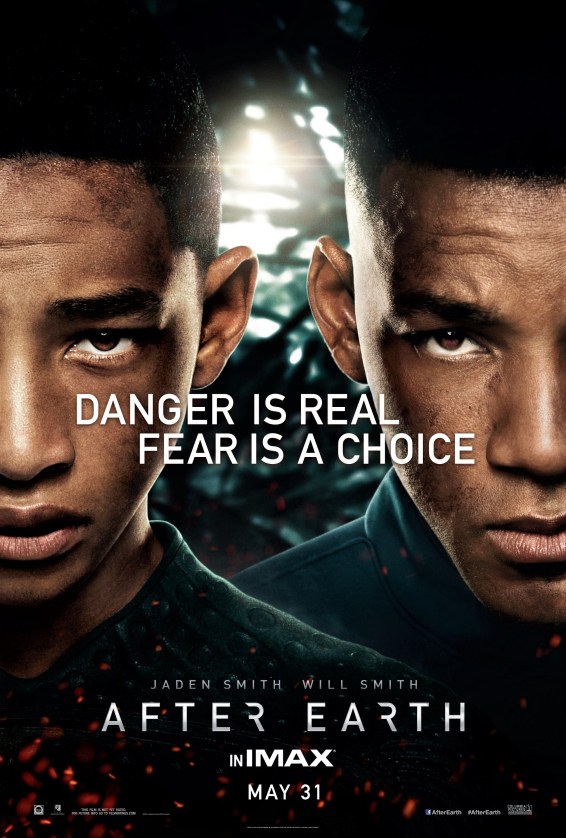
After Earth (2013) – Film Review

‘After Earth’ attempts to be a thrilling sci-fi adventure following a father and son as they crash on a hostile planet, surviving together, and bonding every step of the way, and with real-life father and son Will and Jaden Smith as the main two cast members, the film should be a recipe for success. But, due to its awful CG effects along with plenty unexplored story ideas and even some surprisingly poor performances, ‘After Earth’ is far more of a comedy than it is the exciting science fiction flick it set-out to be.

Plot Summary: In the far future, a crash landing leaves ‘Kitai Raige’ and his father, ‘Cypher,’ stranded on Earth, a millennium after catastrophic events forced humanity to abandon the planet, with ‘Cypher’ injured, ‘Kitai’ must embark on a perilous journey alone to signal for help. Little do they know, ‘Kitai’ is being hunted by a deadly creature every step of the way…

Co-written and directed by the once great M. Night Shyamalan (The Sixth Sense, Unbreakable, Signs), ‘After Earth’ is just another one of the many duds Shyamalan has directed in recent memory, as while many scenes throughout ‘The Sixth Sense’ will always be iconic and beautifully crafted alongside some of his other work, many feel that this director has simply had his day as aside from the semi-sequel to ‘Unbreakable,’ ‘Split,’ back in 2016. Shyamalan has directed nothing but dreadful attempts at horrors and thrillers, before now turning his eye towards the sci-fi genre.

Unfortunately, the majority of the performances throughout ‘After Earth’ range from very bland to simply laughable, as although not quite as bad as some of the unintentionally hilarious performances in director M. Night Shyamalan’s other film; ‘The Happening,’ the film isn’t far off this standard, with one scene in particular where ‘Kitai’ is bitten by a poisonous insect coming off as purely comedic. What makes this so surprising, however, is that this acting duo have worked well together previously in ‘The Pursuit of Happyness.’ Yet, this time around, the two seem to have very little chemistry with each other throughout most of the film’s runtime in addition to feeling very miscast in their respective roles, as Will Smith who is usually known for being incredibly charismatic and funny portrays ‘Cypher Raige’ as a cold, emotionless warrior, completely going against his best qualities as an actor.

Throughout ‘After Earth,’ the cinematography by Peter Suschitzky is just serviceable, as whilst the film doesn’t really contain many inventive or memorable shots, the cinematography does make great use of many of the film’s spectacular natural locations, as the large variety of wide-shots do effectively display the true scale of the newly formed forests, waterfalls, and mountains that now inhabit this new era of Earth.

The original score by James Newton Howard is another dull aspect of the film, as the film’s score is barely recognisable from any other action or sci-fi film, despite this composer actually crafting many wonderful soundtracks in the past, including the original score for ‘The Sixth Sense.’ The film’s problems even extend into its narrative structure, as during the early stages of the film, ‘After Earth’ bombards the audience with information regarding the story’s world, cutting rapidly between an enormous array of different clips, often leaving the audience with far more questions than answers as the film forces exposition down the audiences’ throat through one overly long scene.

The film’s CG effects sadly don’t show much improvement either, as the huge variety of creatures within the story ranging from tigers to birds, to savage monkeys, all look less than mediocre. However, to give the film credit, the film’s main antagonist known as the ‘Ursa,’ does have a pretty interesting design, as although the creature does share some weak CG visuals similar to many of the other creatures, the ‘Ursa’ simply has more of a presence within the film, and does feel somewhat intimidating and unique despite barley being utilised or developed. The film’s underdeveloped ideas are even more bizarre considering originally, the film wasn’t even supposed to be a sci-fi, as Will Smith’s first concept for the film focused on a farther and son on a camping trip in modern-day, which I personally think sounds far more interesting and enjoyable as opposed to viciously morphing the project into a science fiction story.

In summary, ‘After Earth’ is a complete disaster of a science fiction blockbuster, as the film’s terrible performances alongside its abysmal CG effects and mostly bland filmmaking, all result in the film being extremely boring and even sometimes laughably bad. Another unfortunate flop for director M. Night Shyamalan, and definitely a huge dent in Jaden Smith’s acting career, as the young actor hasn’t appeared on-screen since. Despite some great ideas here and there, ‘After Earth’ is certainly a low-point in Will Smith’s film catalogue, Final Rating: high 2/10.

after_earth_xxlg

Contagion (2011) – Film Review

Strikingly similar to current events in the world, ‘Contagion’ explores a scenario in which nearly every country is rapidly infected from a freak virus, eventually leading to a large number of deaths. Utilising some decent performances and unique story structure alongside its effective original score by Cliff Martinez, the film is both very bleak and realistic through its unnerving portrayal of a worldwide pandemic.

Plot Summary: After her return home from a business trip to Hong Kong, ‘Beth Emhoff’ dies from what is believed to be flu or some other type of infection, soon leading to an enormous outbreak across the world. For doctors and administrators at the U.S. Centre for Disease Control, several days pass before anyone realises the true extent of this new infection, leaving most of the world in the midst of a pandemic as the C.D.C. works desperately to find a cure…

Directed by Steven Soderbergh (Ocean’s Eleven, Side Effects, Unsane), ‘Contagion’ is truly dripping with the Soderbergh’s usual style as a director, as the film is constantly tense and unnerving throughout its tight runtime, with the film even having an element of uncertainty during many scenes, as any of the various characters we cut between within the story could be infected without even knowing it. And, of course, the film has many similarities to the current COVID-19 pandemic, such as the key to growing the virus being a fetal bat cell line from Geelong, Geelong referring to the Australian Animal Health Laboratory, a high-security laboratory for exotic animal diseases located in Geelong, Victoria, Australia.

Despite the film jumping from character to character during its story, the all-star cast of Laurence Fishburne, Matt Damon, Kate Winslet, Marion Cotillard and Gwyneth Paltrow are all great in their portrayals of various characters thrown into this chaotic event, as our perspective changes throughout the narrative, from the eyes of an average family isolated within their home, through to high up government officials scrambling to devise a plan. However, due to the film being structured like this, the film also displays plenty of wasted potential, as Bryan Cranston actually appears in the film as ‘RADM Lyle Haggerty.’ Who is only given a few short scenes and is hardly utilised within the story, making the brilliant actor feel incredibly wasted. There is also a similar issue with the internet blogger; ‘Alan Krumwiede,’ portrayed by Jude Law, as this character actually adds very little to the overall story and barely interacts with any of the other characters, resulting in most of his screen-time feeling like more of a distraction than anything else.

The cinematography within ‘Contagion’ is surprisingly by Steven Soderbergh himself, under the fictional name of ‘Peter Andrews,’ and whilst nothing incredible, it is fairly effective throughout the film. Having said that, I couldn’t help but feel whilst watching that the film could’ve made much better use of close-ups during many scenes, as due to the film’s focus on a spreading virus, I really feel these shots would’ve further added to the building of dread and uncomfortable nature of skin contact the film puts an emphasis on at many points.

Cliff Martinez’s original score does help to add to the drama and tension throughout the film, however, as the score usually appears during key moments to add more impact to the film’s montages of footage. This is most effective during a scene set in the early days of the initial outbreak, or when the film finally reveals where the virus originally came from, and although the soundtrack itself may not be incredibly memorable, I do still feel it suits the film’s tone very well. In particular, the film’s opening track; ‘They’re Calling My Flight,’ which starts the film off strong by jumping straight into the story’s inciting event.

My main issues with ‘Contagion’ are mostly related to the film’s structure, as the pacing nearing the ending of the film seems to slow down drastically in an attempt to wrap up every aspect of the story, and although I feel cutting between multiple different characters is an interesting way to approach a story like this, I could see it being frustrating for some viewers if one character’s plot is more compelling than another. Yet this is somewhat redeemed by ‘Contagion’s realism, as the film has actually been proven to be very accurate when it comes to its science, even receiving praise from ‘New Scientist’ magazine when the film was initially released in 2011.

In summary, whilst ‘Contagion’ doesn’t break any new ground when it comes it’s filmmaking, the film is still fairly entertaining and frightening throughout most of its runtime, while it definitely has its weak aspects, I would say ‘Contagion’ is certainly worth a watch. However, do bear in mind that I probably wouldn’t recommend this film if you are already in a panicked mindset over current events, as I feel this film could make those who are already concerned panic even further through its mostly realistic execution of a story like this. Final Rating: 7/10.

contagion_ver8_xxlg

Snowpiercer (2014) – Film Review

One of my favourite sci-fi films from this past decade, 2014’s ‘Snowpiercer’ is constantly engaging, rousing and gritty throughout both its original plot and exploration of the interesting world its story takes place within, as the film chooses to explore the worst of humanity through some gorgeous cinematography by Kyung-pyo Hong and some truly brilliant writing. Making ‘Snowpiercer,’ a superb science fiction thriller, all under the genius hand of director Bong Joon-Ho, who, recently gained a large amount of traction through his Oscar-winning flick; ‘Parasite.’

Plot Summary: In a future where a failed climate change experiment has killed all life except for the lucky few who boarded the ‘Snowpiercer,’ a train that travels around the globe, a new class system begins to emerge on board as ‘Curtis’ leads a revolution with the train’s lower-class citizens…

Despite director Bong Joon-Ho (Memories of Murder, The Host, Okja) usually sticking to this style, the very bleak tone of ‘Snowpiercer’ may leave many audience members in a depressing mindset long after their initial viewing, as the film deals with a variety of themes such as poverty, social class and survivalism, all portrayed in a dark and negative fashion. However, in spite of this, the film never fails to still be very entertaining and thrilling, mostly as a result of its fairly quick pacing and exhilarating action sequences. Although it may surprise many, ‘Snowpiercer’ also takes heavy inspiration from the French graphic novel; ‘Le Transperceneige’ by Jacques Lob, with the two stories sharing many similarities and many differences throughout their respective mediums.

Chris Evans, Jamie Bell, Tilda Swinton, Song Kang-ho, Octavia Spencer, John Hurt and Ed Harris are all fantastic throughout the film within their various roles, especially Tilda Swinton as the villainous and oppressive; ‘Manson’ (who completely nails many of the film’s most memorable lines). In addition to this, the film’s characters also get plenty of development throughout the narrative, to be specific, the film’s protagonist; ‘Curtis,’ as this character becomes far more tragic nearing the end of the film, eventually leading him to devolve from what we would usually expect to see from our main character.

The cinematography by Kyung-pyo Hong is pretty creative and visually impressive throughout the majority of the runtime, as the film’s cinematography backs up it’s story and drama very effectively. The film’s colour palette also plays into this, as the dirty greys, greens and blacks of the train’s tail all further display the contrast between the wealth of the different people on board. Of course, due to the film also being packed with a large number of action scenes, the cinematography does become slightly shakier during many of these moments, yet it is still clear what is happening throughout. One of these scenes in particular, known as ‘The Tunnel,’ I found extremely inventive, as this entire scene takes place in total darkness, with night-vision being utilised exceptionally well, shot without any additional lighting, according to director Bong Joon-Ho.

Although a little uninspired during some of the action scenes, the original score by Marco Beltrami does fit the story perfectly throughout most of the film. Especially when it comes to tracks, such as ‘This is the End’ or ‘Yona’s Theme,’ as the soundtrack matches the bleak tone of the film extremely well. The score also helps to add more impact to many of the more shocking moments within the story, as at multiple points during the narrative, the film reveals certain aspects of this twisted train society which really deepens film’s world.

As the film is set entirely within the futuristic train, the film does do a surprisingly excellent job of the keeping the film’s set pieces unique through the sheer variety of sets on display, as the film takes the audience from the dirty tail of the train, through to a classroom, a nightclub, and, eventually, even a spar, further emphasising ‘Snowpiercer’s underlying themes of social class. Another element of the film I adore is Joon-Ho’s focus on small details, as the film always alludes to smaller aspects of the story or characters which aren’t fully delved into, only hinted at. Despite all of this, however, ‘Snowpiercer’ isn’t totally flawless, as the film does become a little cheesy at points, mostly due to the occasional editing choice or line of dialogue, but this is very rare.

In summary, even though ‘Snowpiercer’ isn’t the best modern sci-fi to date, I personally don’t think the film is far off, from its creative ideas through to its beautiful cinematography and great original score. The film easily overcomes its few cheesy moments and slightly dated CG effects here and there, with a few tiny changes, I honestly believe that this exciting sci-fi flick could be up there with the likes of ‘Arrival’ or ‘Ex_Machina,’ when it comes to modern science fiction. Final Rating: 8/10.

snowpiercer_ver27_xlg

The Nice Guys (2016) – Film Review

This ’70s throwback to classic buddy-cop comedy films hits all the right marks, as the fantastic chemistry between Russell Crowe and Ryan Gosling alongside the film’s great visuals and hilarious comedic moments, all make ‘The Nice Guys’ certainly worth a watch, whether you are incredibly fond of action-comedies or not, as I feel this humorous flick definitely deserves more attention.

Plot Summary: In 1970s Los Angeles, bumbling private eye; ‘Holland March,’ and muscle-for-hire; ‘Jackson Healy,’ become unlikely partners when they find themselves both looking for a missing woman, named; ‘Amelia,’ following the death of a high-profile porn star. ‘Amelia’s ties to the deceased actress are unclear, but as other members of the porn industry turn up dead, ‘March’ and ‘Healy’s investigation reveals a much bigger conspiracy than the duo could have ever anticipated…

Heavily inspired by action/comedy classics, such as ‘Lethal Weapon’ and ‘Rush Hour,’ ‘The Nice Guys’ is directed by Shane Black (Kiss Kiss Bang Bang, Iron Man 3, The Predator), who clearly brings all his love for this genre to the forefront. As, despite the film doing quite poorly in cinemas upon its initial release, the film is clearly a true passion project for Shane Black, being filled with the director’s usual style and classic witty dialogue from start-to-finish.

Russell Crowe and Ryan Gosling make an excellent pairing as ‘Jackson Healy’ and ‘Holland March’ throughout the film’s story, as both actors have an enormous amount of chemistry with each other and add plenty of humour into the plot through their interactions with their opposite, as well as ‘Holland’s daughter; ‘Holly March,’ portrayed by Angourie Rice, who is very sarcastic and angsty towards many of the other characters (which can become a little irritating after a while). Matthew Bomer, Margaret Qualley, Yaya DaCosta and Keith David also have small roles within the film, and are all decent, despite not being given much screen-time.

Philippe Rousselot handles the cinematography throughout ‘The Nice Guys,’ and although attractive throughout most of the runtime, the variety of shots is probably the weakest aspect of the film just down to elimination. Still, the cinematography does back-up the story very effectively, never taking the audience’s attention away from the mystery unravelling throughout the narrative. I also feel the film’s colour palette could’ve really added to the film’s visual flair more, as the colour palette doesn’t really delve much into the 1970s style aside from the occasional vibrant shot. However, the film does integrate ’70s style in its opening titles which I appreciated, as the Warner Brothers’ logo seen in the beginning of the film is the actual graphic Warner Bros. Pictures used during the 1970s for their films.

The original score by John Ottman and David Buckley fits the film’s style and time-period perfectly, as the soundtrack attempts to replicate the music of the time through its use of trumpets and a drum kit to add to many of the comedic moments and establishing shots, with the tracks; ‘Cars That Drive Themselves’ and ‘P.I. Life,’ being my two personal favourites (in addition to the film’s main theme). Many of the film’s action scenes do slightly weaken the score, however, as anytime the screen is filled with bullets and fist fights, the original score suddenly becomes a lot more generic.

The majority of the jokes throughout the film do land very successfully, in my opinion, as ‘The Nice Guys’ has a pretty wide range of comedy throughout its runtime. From the hilarious and quippy dialogue between the two main protagonists to the parodying of classic action tropes and even a little bit of slapstick thrown in for good measure, all of the comedy throughout the film is pretty inventive and ensures that the film is filled with humour for every kind of viewer.

Despite the film’s main focus being its humour, however, the action throughout the film is actually very well-executed, from a high-speed car chase through to chaotic shoot outs and bare-fist scuffles. ‘The Nice Guys’ nails it’s action scenes just as well as it’s jokes, as each action set piece is always exciting and brilliantly choreographed. My only real criticism of the film is probably it’s length, as I feel the film does go on for slightly too long nearing end of its story.

In summary, it’s a real shame many that audiences had no interest in ‘The Nice Guys,’ as although many would consider buddy-cop action flicks a dead genre similar to westerns. I personally feel we need more films like this, as bringing back these old kinds of stories really makes the film stand out amongst the complete onslaught of modern superhero blockbusters and generic horror scare-fests. So, although I feel a sequel to ‘The Nice Guys’ is very unlikely to ever be made, the mere mention of one as even a possibility still gets me excited to this day, as I would love to see these characters return to the silver screen. Final Rating: 8/10.

nice_guys_ver2_xlg

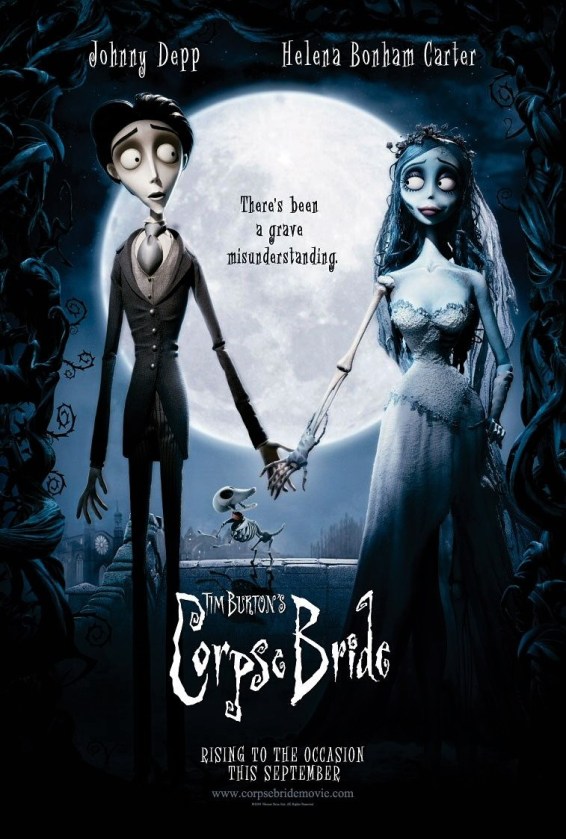
Corpse Bride (2005) – Film Review

Tim Burton’s twisted story of a man accidentally marrying a deceased bride could certainly be seen as too dark for an animated family adventure by some, but the film actually blends many of its dark scenes with plenty of gothic charm, heart and humour throughout. Making this stop-motion flick not quite one of the director’s best, but definitely a must-watch for fans of the unique director.

Plot Summary: When shy groom, Victor Van Dort, practices his wedding vows in the inadvertent presence of a deceased young woman, she rises from her grave assuming he has married her. Before he knows it, ‘Victor’ soon finds himself in the land of the dead, and now must find a way to return to the land of the living before he loses his still-living wife forever…

Alongside the entertaining narrative, throughout the film there are various different musical sequences, which were surprisingly entertaining considering I’m usually not a huge fan of musical numbers in film. But, I actually found many of the songs throughout the film actually added to the plot and gave the film another creative element which worked really well when combined with the brilliant original score by Danny Elfman.

Johnny Depp and Helena Bonham Carter portray ‘Victor’ and his accidental ‘Corpse Bride,’ alongside the supporting cast of Emily Watson and Paul Whitehouse. Who, are all terrific, with the two leads in particular having pretty some great chemistry with each other, which really added to some of the romantic scenes throughout runtime (especially when it comes to an animated film). The cast also features Richard E. Grant, who portrays the villainous, ‘Barkis Bittern,’ perfectly, coming across as very sly, rude and intelligent from start-to-finish.

The cinematography by Pete Kozachik is pretty effective considering his previous work is usually far from the realm of stop-motion animation, as although there is definitely room for improvement, the cinematography is interesting enough to keep the viewer engaged throughout the film’s story.

Without a doubt, the original score by Danny Elfman is definitely one of the best elements of the film, as well as being one of my favourites for a Tim Burton flick, as while not quite on the level of the original ‘Batman’ or ‘Edward Scissorhands,’ for example, the entire soundtrack still perfectly captures the creepy tone of the film, as well as many of it’s more emotional moments, all adding to both an extremely memorable and beautiful score. Especially the tracks; ‘Main Titles’ and ‘End Credits Pt. 1,’ which are my two personal favourites from the film.

The stop-motion animation throughout the film is simply outstanding, as each character’s unique design influences their movements, with many of the characters having very interesting and over-the-top designs which perfectly fit within the world of a Tim Burton story. The film also has an unexpectedly ranged colour palette, as in addition to the usual dark Burton-esque colours. The film surprisingly also uses a large range of bright greens, purples and reds in a few scenes, which all really help the film stand out, and give a little more light to many of the miniature sets and various characters.

In summary, while I didn’t expect to enjoy ‘Corpse Bride’ as much as I did, the film’s fantastic stop-motion animation, great humour and emotional scenes all topped with the unique Tim Burton style, I’d say the film is a pretty solid watch aside from the occasional cheesy joke or scene. Final Rating: 8/10.

corpse_bride_xlg

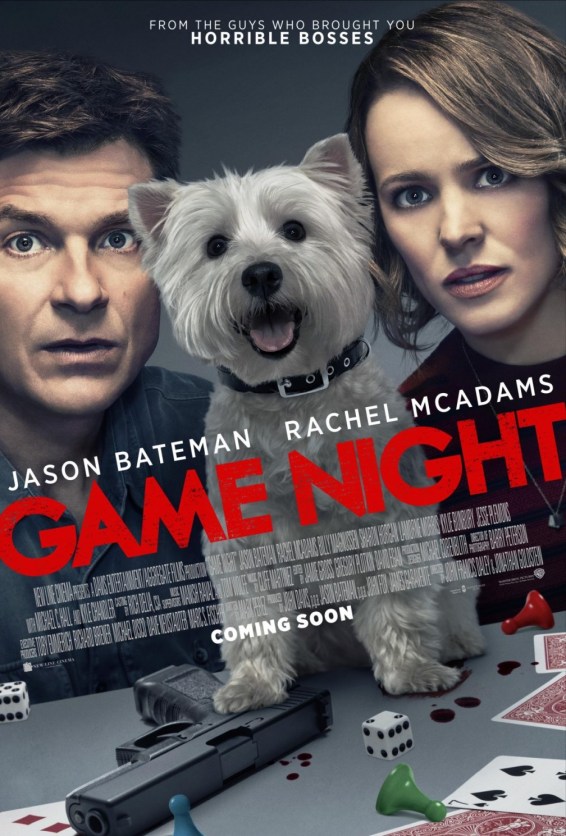
Game Night (2018) – Film Review

Going in initially, I had very little expectations for ‘Game Night,’ as although I mostly enjoyed ‘Horrible Bosses’ (which was written by this film’s directors), I’ve always found most modern comedies to be very hit-or-miss. However, as the runtime continued on, I soon realised ‘Game Night’ was far more than just your disposable comedy flick, as the great cinematography by Barry Peterson and the excellent original score by Cliff Martinez made the film just as stylish as it was entertaining.

Plot Summary: A group of friends who meet regularly for game nights soon find themselves entangled in a real-life mystery when the shady brother of one of them is kidnapped by a group of dangerous criminals…

Right from the opening titles, which are displayed through various falling board game pieces, through to the end credits, which entirely cover a pinboard with names of both the cast and crew (as well as an array of jokes). ‘Game Night’ is constantly brimming with style throughout its story, despite first appearing as nothing more than a straightforward comedy as the film uses its terrific editing to add to the humour at many different points, giving the impression that no corners were cut by the filmmakers when it comes to the filmmaking itself.

Jason Bateman, Rachel McAdams, Kyle Chandler as well as the large supporting cast are all fantastic within their roles, with each member of the cast having decent chemistry with each other and plenty of great comedic moments between them (which is most likely a result of the cast actually taking-part in their own game night prior to filming). Jesse Plemons has without a doubt the film’s best character, in my opinion, as he portrays the game night-obsessed police officer; ‘Gary,’ who is just as creepy as he is hilarious every time he is on-screen. Unlike most modern comedies, the characters throughout the film also get a surprising amount of characterisation, as there are plenty of scenes throughout the story in which the pacing slows down to develop each one of the characters individually, which makes the film more engaging, and is a complete breath of fresh air after so many bland comedies with over-acted goofballs as their protagonists.

The cinematography by Barry Peterson is very creative throughout the film, as in addition to a variety of visually appealing shots, ‘Game Night’ also frames many of its locations as if they are pieces on a game board, almost as if every time the characters arrive at a building, it’s as if they are arriving at a stop whilst playing ‘The Game of Life,’ which is exceedingly inventive. As well as this, the film features a variety of interesting transitions between scenes and even a moment which is filmed entirely within a single-take, both of which I felt really added to the film’s overall visual presentation and enjoyable flow.

Although it doesn’t quite fit every scene, the original score by Cliff Martez is both unique and memorable, as the soundtrack uses a minimalist techno feel to mesh-well alongside the film’s stylistic editing and cinematography. Whether a light-hearted comedic scene or even one of the more tense moments nearing the end of the film, the score itself is brilliant. I’m too surprised by this, however, as this composer has done some phenomenal scores in his past, such as ‘Drive,’ ‘Contagion’ and ‘The Neon Demon,’ to name a few. So, ‘Game Night’ is simply just another great soundtrack to add to his sublime catalogue of work.

The film really only has one major issue for me, which it’s the song choice, as although I understand the film is mostly light-hearted fun, the use of iconic songs, such as ‘Don’t Stop Me Now’ and ‘Quando, Quando, Quando,’ don’t really fit with the film’s tone, and can make the film feel a little cheesy at points. Of course, as the film is a comedy, there is also plenty of jokes that don’t quite hit the mark, but I’d say there are definitely far more that do than don’t in this case, as the film avoids the lazily written gross-out jokes and shock humour that infests a large number of modern comedies.

In summary, it’s fair to say that ‘Game Night’ was definitely a pleasant surprise for me on my initial watch, as I never expected this comedy to be as memorable or as well-crafted as it actually is. Although it’s not perfect due to its unusual song choices and a couple of overly long jokes, ‘Game Night’ is possibly one of the best comedies of the last few years, and while there are better displays of great filmmaking out there, I do feel this film should be higher on many cinephile’s watchlists. Final Rating: 8/10.

game_night_ver4_xlg