It (2017) – Film Review

After many years of waiting, horror and literature fans alike got their wishes granted in mid 2015 as director Andy Muschietti (Mama, It: Chapter Two) signed on to direct a reboot (or readaptation) of one of Stephen King’s most iconic and beloved horror stories, this, of course, being ‘It.’ And, due to its excellent cinematography by Chung-hoon Chung and incredibly memorable performance from Bill Skarsgård as the demonic clown ‘Pennywise,’ ‘It’ is certainly one of the better Stephen King adaptations in recent years, even with the array issues the film still suffers from.

Plot Summary: In the summer of 1989, a group of unpopular kids known as ‘The Losers’ Club,’ band together in order to destroy a shapeshifting monster known only as ‘Pennywise,’ a creature which has been terrorising their home town of ‘Derry’ for decades and can disguise itself as whatever it’s victim fears most…

Following the film’s incredibly successful release in 2017, ‘Pennywise’ has quickly become a modern horror icon despite only having about four minutes of dialogue in the entire film. But, it’s easy to see why this is, as not only does ‘It’ share the familiar fun tone of classic films of the 1980s, such as ‘The Goonies,’ ‘The Gate’ and ‘The Monster Squad,’ yet ‘It’ also manages to adapt the novel’s antagonist; ‘Pennywise,’ fairly closely from the original source material, resulting in a mostly entertaining novel-to-screen transition.

The main cast of ‘The Losers’ Club’ features Jaeden Martell, Sophia Lillis, Finn Wolfhard, Jeremy Ray Taylor, Jack Dylan Grazer, Chosen Jacobs and Wyatt Oleff, who all share pretty great chemistry with each other, as alongside the film’s terrific writing, the children truly feel like an actual group of kids, with the group constantly cursing and sharing in plenty of quippy banter with each other. In addition to the younger cast, ‘Pennywise’ is this time around portrayed by Bill Skarsgård, and while I have always loved Tim Curry’s cheesy yet menacing portrayal of the iconic clown. Bill Skarsgård is a stand out aspect of the film for sure. Capturing the eerie qualities of the character as well as his unworldly nature perfectly, truly embracing the idea that ‘Pennywise’ isn’t just a psychotic murderer dressed as a clown, but something far stranger…

The cinematography by Chung-hoon Chung is surprisingly brilliant for a modern horror, featuring a number of attractive shots which blend extremely well with the film’s story. The film does have one recurring shot which is quite irritating, however, as during many of the scenes where ‘Pennywise’ appears to his victims, the film utilises a shot in which the sinister clown approaches the camera straight on, sprinting directly towards the screen, and while I understand what the filmmakers were trying to accomplish with this shot, I feel it only comes off as fatuous and appears extremely out-of-place when compared to the rest of the film’s visually enthralling camerawork.

Admirable yet flawed, the original score by Benjamin Wallfisch ranges from being your typical horror soundtrack to eventually becoming more emotional for the more character-focused scenes. The main issue I take with the original score are some of the tracks which feature deep bass-like sounds, as I feel these tracks really don’t fit with the film’s tone or time-period. Regardless, the tracks; ‘Paper Boat’ and ‘Derry,’ do serve the film’s story delightfully well, with one of the film’s final tracks; ‘Blood Oath,’ also being a beautiful send-off for these characters before their inevitable return.

From ‘Pennywise’s uncanny appearance to the abandoned house ‘It’ lives within on ‘Neibolt Street,’ many of the film’s designs are also pretty memorable despite their limited screen-time. These fantastic designs are dragged down by the film’s poor CG effects, however, as the film always seems to resort to CG visuals during many of its more tense moments, which can take away from their impact. This is also where ‘It’s most substantial problem comes into play, as ‘It’ has really split audiences down the middle when it comes to its focus on horror, as while the film does have a few eerie scenes and creepy visuals, this adaptation seems to be more focused on being the coming-of-age story the novel mostly is. Although some viewers may be disappointed by this, desiring a narrative based more around the story’s darker elements, I feel the film’s distracting CG effects and constant barrage of jump-scares are made up for by its interesting delve into its themes of childhood fears and growing up.

In summary, 2017’s ‘It’ is a solid Stephen King adaptation, as while certainly let down by its weak CG visuals, overreliance on jump-scares and occasionally inconsistent tone, the film still is a pretty enjoyable watch throughout its two hour runtime, mostly due to the film’s great performances and general memorability, and with ‘It: Chapter Two’ turning out to be an underwhelming experience for most. I’d say it further proves that this film is the direction to go when it comes to adapting King’s work. Final Rating: low 7/10.

it_xxlg

Ted (2012) – Film Review

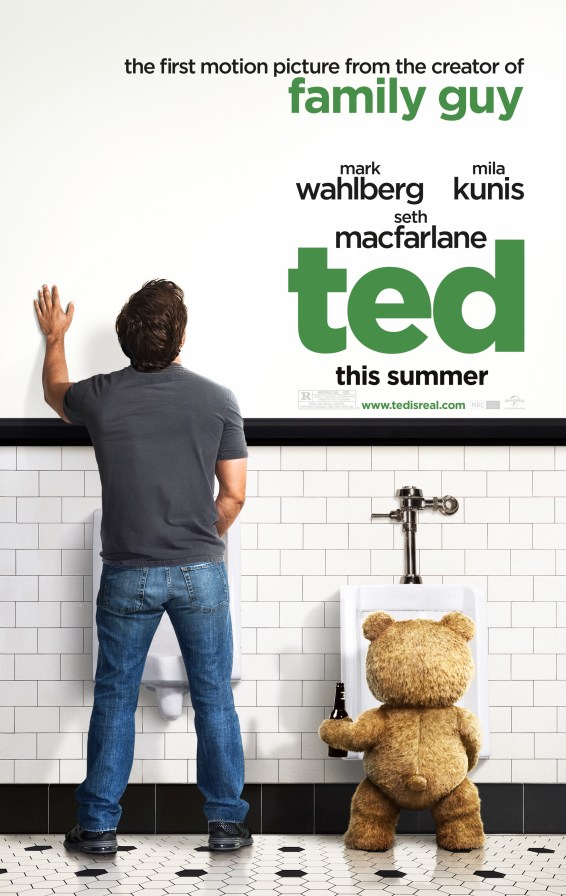
Written and directed by Seth MacFarlane, the creator of ‘Family Guy,’ ‘American Dad,’ and ‘The Cleveland Show,’ ‘Ted’ is a modern comedy, which takes the childhood desire many had of wishing their teddy bear was alive and gives it an adult comedy spin, and while the film does miss a large number of its jokes. ‘Ted’ is a mostly enjoyable watch through its fun story and entertaining cast, alongside being a pretty strong first outing for MacFarlane’s transition to live-action entertainment.

Plot Summary: When ‘John Bennett’ makes a Christmas miracle occur by bringing his stuffed teddy bear to life, the two grow up together and form a lifelong bond. But, after ‘John’ moves in with his girlfriend; ‘Lori,’ a few years later, he’s forced to choose between them as their relationship is tested…

Though its story is very simple, ‘Ted’ actually balances its comedy and drama surprisingly well, as the film focuses heavily on the rift ‘Ted’ causes between ‘John’ and his girlfriend. Considering MacFarlane’s other work rarely takes itself seriously, the majority of the drama is actually quite effective, as the film does a decent job of keeping the audience invested in its characters. Similar to most modern comedies, the jokes throughout the film do range, however, with some scenes featuring plenty of humorous moments, whilst other scenes can come across as if they are trying far too hard, sometimes even having lines of dialogue which could be seen as a little ‘risky’ (especially if you’re watching the unrated version), but this is pretty familiar ground for MacFarlane.

Mark Wahlberg and Mila Kunis portray the main couple of the film, who do share some decent chemistry and funny moments together, with Mark Wahlberg also doing an excellent job interacting with ‘Ted’ throughout the film considering he is a fully CG character, as ‘Ted’ was brought to life through various teddy bears props on set, in addition to Seth MacFarlane’s movements being mirrored through motion capture. Joel McHale and Giovanni Ribisi also make appearances within the film as ‘Lori’s obnoxious and inappropriate boss; ‘Rex,’ and the film’s antagonist; ‘Donny,’ a shady father who intends to kidnap ‘Ted’ for his son. Both of these characters do have their moments for sure, yet they also both share the same issue of their characters completely disappearing after their purpose to the story is served, which does make the narrative feel a little inconsistent.

The cinematography by Michael Barrett is mostly bland throughout, with film’s focus being placed nearly entirely on its comedic dialogue. Although there is still the occasional appealing shot here and there, it’s nothing overly interesting. However, the CG effects used to create ‘Ted’ are solid for the most part, as despite the few shots where the film is beginning to show its age, the combination of the film’s visual effects and Seth Macfarlane’s very entertaining vocal performance do result in ‘Ted’ becoming a crude yet likeable character.

One of the biggest issues ‘Ted’ suffers from in my opinion is the film’s lack of personality, as a result of the film having little-to-no style, ‘Ted’ sometimes feels too similar to MacFarlane’s other works. This is most noticeable in the original score by Walter Murphy, as the score feels almost identical to the score used throughout FOX’s ‘Family Guy’ series. Whilst this is most likely due to director Seth MacFarlane wanting to work with the same composer as his animated shows, the original score just doesn’t feel even remotely memorable or unique to the film it’s part of.

For me, some of ‘Ted’s funniest moments come from its more absurdist humour, as although the film has plenty of obscure references to celebrities and present-day events similar to kind of humour that’s become rather standard in ‘Family Guy.’ ‘Ted’ is truly at its best in scenes, such as ‘Ted’s Party,’ in which, Sam J. Jones, the actor who portrayed ‘Flash Gordon’ in the 1980 sci-fi classic, begins envisioning ‘Ted’s next door neighbour as the supervillain; ‘Ming the Merciless,’ whilst high on cocaine, or when ‘Ted’ engages in a fist fight with a duck named after actor James Franco, as these moments are usually hilarious simply because of their outlandish nature.

In summary, I think ‘Ted’ is a decently fun comedy flick, as whilst there is definitely room for improvement, Seth Macfarlane does a pretty great job considering this was his directorial debut. And, while I could see many not enjoying ‘Ted’ mostly due to their preference when it comes to humour (or because of its admittedly average filmmaking). I personally feel that ‘Ted’ is Macfarlane’s best film to date, as ‘A Million Ways to Die in the West’ and even this film’s sequel; ‘Ted 2,’ were both very disappointing for me. Although it needs work, I’m sure most will find ‘Ted’ amusing over the course of its runtime. Final Rating: 7/10.

Ted-movie-poster

Lucy (2014) – Film Review

Luc Besson, the iconic director behind ‘Léon: The Professional,’ ‘The Fifth Element’ and ‘Valerian and the City of a Thousand Planets,’ returns to the sci-fi genre with ‘Lucy,’ a very strange and original science fiction thriller focusing on a young woman whose intellect begins to evolve after being kidnapped, eventually transforming her into something more than human. Although this interesting plot does feel like a departure from what we usually expect within this genre, I personally feel this doesn’t always work within the film’s favour.

Plot Summary: After a young woman (Lucy) gets accidentally caught in a drug deal, she is captured and taken to the feet of a powerful drug lord. Before long, she finds herself a victim of illegal drug trafficking, in which an experimental synthetic drug is implanted inside her lower abdomen to transport it into Europe. But, when the blue chemical leaks into her bloodstream, she turns the tables on her captors and transforms into a merciless creature that has evolved beyond human logic…

Even though the narrative of ‘Lucy’ is definitely a unique one, I personally feel the film doesn’t explore its various ideas and concepts as effectively as it could, as ‘Lucy’ introduces a number of interesting elements when it comes to human evolution, usually without ever fully releasing them. The film does still manage to contain plenty of astonishing and colourful visuals as well as a few memorable scenes throughout its runtime, yet it simply isn’t enough to save the film from the issues that litter its story, despite the film’s screenplay being in development for over nine years.

The film’s protagonist ‘Lucy’ is portrayed fairly well by Scarlett Johansson, as she gives a very robotic and cold performance throughout the film the more intelligent her character becomes. However, the character of ‘Lucy’ is actually one of the film’s biggest missteps, as throughout the narrative, ‘Lucy’ always feels incredibly underdeveloped, as we barely spend any time with her before she begins to evolve after being contaminated with the chemical. Meaning she quickly turns into a calculating killing machine without emotion, as a result of this, it’s extremely difficult to connect with her, or even like her, as we are given very little characterisation before her change. The supporting cast of Morgan Freeman, Amr Waked, and Pilou Asbæk are all decent, with the exception of Min-sik Choi as the film’s antagonist, ‘Mr. Jang,’ who actually gives the brutal drug lord a very intimidating presence despite his limited screen-time.

Thierry Arbogast’s cinematography unfortunately, doesn’t really reflect the film’s many creative CG effects, as although the film does contain the occasional pleasing shot, they are simply too few and far between, with an strong overreliance on shot-reverse-shot during many scenes. ‘Lucy’ also contains some fairly unusual editing, as the film constantly cuts away to symbolic images of animals, the environment, populated cities and cells materialising, etc. And, even though this does give the film some style, it also makes some scenes come across as unintentionally comedic.

The original score by Eric Serra, plays very well into the film’s story, as this fitting techno score alters over the course of the film, with tracks such as ‘First Cells’ and ‘Taipei Airport,’ feeling very unique, not too different from the film’s story itself. My personal favourite track has to be ‘Flickering Through Time,’ however, as this beautiful yet haunting piece plays over one of the film’s most memorable and effective scenes as ‘Lucy’ soars through time.

Although the CG effects do range in quality throughout the film, ‘Lucy’ does get very inventive with its visuals when it comes to its CGI, as the film features an array of colourful and trippy CG effects the further ‘Lucy’ evolves, which does help redeem ‘Lucy’s lack of scientific accuracy (which the film has actually been heavily criticised for since its release). As whilst I personally don’t feel being less-accurate to real-world science is a problem when it comes to science fiction. ‘Lucy’ rests a large amount of its story on the idea that humans only use 10% of their brains, which has actually been debunked by neurological scientists many times over, as humans typically use about 10%-12% of their brains at a time.

In summary, whilst I’m sure ‘Lucy’ had the potential to be an eccentric and original sci-fi flick at one point in time, the film’s cons simply outweigh its pros, in my opinion. From its cheesy dialogue through to its poor editing choices and flawed story, ‘Lucy’ feels almost as if it gets bogged-down by itself, almost becoming a little too pretentious for its own good. While I do appreciate the film’s more ‘out there’ story and great original score, I’d recommend you stick to ‘The Fifth Element’ for your fill of a Luc Besson sci-fi. Final Rating: 4/10.

lucy_xxlg

Rango (2011) – Film Review

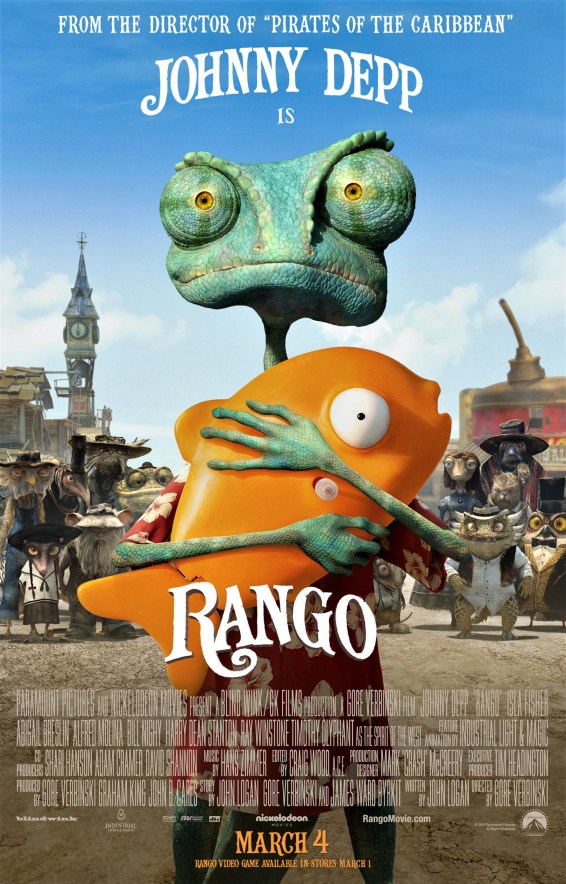
From the director of ‘The Ring’ and the first three entries in the ‘Pirates of the Caribbean’ series, Gore Verbinski, comes ‘Rango,’ an animated western featuring a bizarre cast of comically grotesque animals. And, even though that strange concept may not sound as if it couldn’t possibly work, ‘Rango’ is without a doubt one of my favourite animated films in recent memory, as the film’s entertaining story and classic western visuals make the film an incredibly fun watch, regardless of your age.

Plot Summary: When ‘Rango,’ an ordinary pet chameleon accidentally winds up in the small town of ‘Dirt’ following a car accident, he begins to realise the dry, lawless outpost is in desperate need of a new sheriff. Being the talented actor that he is, ‘Rango’ poses as the answer to their problems…

Whilst ‘Rango’ is front and foremost a family flick, ‘Rango’ also serves a pretty successful throwback to classic westerns, balancing plenty of hilarious moments with more serious scenes and even some exciting action sequences throughout its story. The film even features a reference to the icon of the western-era himself, that being Clint Eastwood as the ‘Spirit of the West,’ which I really appreciated as a fan of the genre. However, the character himself isn’t actually portrayed by Clint Eastwood, which I did feel slightly took away from the scene he appears in despite its short length.

Although the supporting cast of Isa Fisher, Abigail Breslin, Bill Nighy, Alfred Molina, and Ned Beatty are all fantastic as the residents of the small town of ‘Dirt,’ each having a western accent which sometimes even makes their voice unrecognisable in Isla Fisher’s case. Johnny Depp as the protagonist ‘Rango’ is truly some flawless casting, as Depp always portrays ‘Rango’ as likeable and funny, yet cowardly, with plenty of humorous lines throughout the runtime. The film’s antagonist ‘Rattlesnake Jake’ is also worth mentioning, as Bill Nighy lends his voice to this gigantic menacing gunslinger, actually mirroring the two actor’s characters within the ‘Pirates of the Caribbean’ series, whether intentional or not.

‘Rango’ is also one of the rare animated films which actually has some pretty stunning cinematography, as all of the film’s animated cinematography is very reminiscent of classic westerns. From extreme close-ups of characters’ faces during stand-offs to wide shots of the barren desert, to even close-ups of broken bottles hanging above a door-frame, every shot really adds to the narrative, whilst also displaying the film’s large variety of distinct locations. Truly utilising the limitless potential of animated cinematography. Legendary cinematographer, Roger Deakins, who worked on iconic films, like ‘The Shawshank Redemption,’ ‘No Country for Old Men’ and ‘Skyfall,’ in the past, was even consulted when it came to the film’s cinematography.

Revered composer Hans Zimmer returns to the work once again with director Gore Verbinski, and once again with another magnificent original score. This time replicating classic western scores without taking away from the film’s adventurous tone. Making fantastic use of both electric and acoustic guitars, tracks such as ‘Rango and Beans’ and ‘Rango Returns,’ feel as if they were ripped straight out of the golden age of film. The soundtrack even includes a unique western-esque version of the orchestral classic; ‘Ride of the Valkyries,’ which backs up what is already a memorable action sequence.

The animation itself is wonderful throughout the film, as ‘Rango’ takes a more daring and unique route when it comes to its animation, as rather than being overly colourful and cartoonishly attractive similar to films, like ‘Toy Story,’ ‘Frozen,’ or ‘Despicable Me,’ ‘Rango’ focuses far more on being rather realistic and dirty, with each location always feeling very old and rustic. The character designs themselves also reflect this, as every piece of clothing and every object is enveloped in scratches and dirt, giving the film an unpleasant yet not necessarily unattractive look. This animation style also continues to the film’s colour palette, as the pale beiges and browns give the film a true western feel. Due to ‘Rango’s reliance on this highly detailed kind of animation, however, there is the occasional shot where the animation looks slightly dated by today’s standards.

In summary, packed with plenty of great comedic moments, attractive visuals, a great original score and, of course, its marvellous cast. ‘Rango’ stands as one of the best modern animated films to date, as this western adventure truly does anything it can to make itself stand out. As, despite the film’s few fourth-wall-breaking moments (which come across as slightly cheesy) and the film’s sometimes overly fast pacing, ‘Rango’ still remains an enthralling ride. Although this animated flick may seem pretty unusual when compared to many other films the family can enjoy together, this true oddball of a film is sure to please those who decide to give it a chance. Final Rating: 8/10.

rango_ver2_xxlg

Buried (2010) – Film Review

Ryan Reynolds impressively carries an entire film on his shoulders with ‘Buried,’ as this fast-paced and extremely tense thriller focuses entirely on a single character trapped within an enclosed space, building up a tension-filled atmosphere and displaying constant filmmaking talent throughout (especially since the film was shot in only seven days). ‘Buried’ manages to keep its audience on constant edge as we experience this terrifying event right alongside our protagonist.

Plot Summary: ‘Paul Conroy,’ a U.S. truck driver currently working in Iraq, wakes up to find he is buried alive inside a wooden coffin after being attacked by terrorists, with only a cigarette lighter and a phone by his side, it’s a race against time for him to contact whoever he can and escape before it’s too late…

In concept, ‘Buried’ is truly a brilliant idea for a low-budget flick, as the entire film takes place within a single location with only the protagonist ever being psychically seen on-screen, the film never breaks from its tension or narrative, with not even a single shot outside of the coffin itself, and yet, the film never fails at keeping those watching glued to the screen, as after the admittedly fairly cheesy opening title sequence, the film never seems to slows down, almost refusing to give the viewer a moment to breathe as ‘Paul’ is faced with one difficult task after the next.

As already mentioned, Ryan Reynolds is the only member of the cast to physically appear on-screen, meaning he has the monumental task of delivering a very emotional and gripping performance to keep the audience engaged, which, thankfully, he does a phenomenal job of, as throughout the film’s tight runtime the actor going against his usual comedic casting to mostly excellent results. ‘Buried’ even manages to give the protagonist some characterisation through his various phone conversations with the other characters, adding the film’s compelling story even further. The various characters who appear as voices through ‘Paul’s phone consist of his wife; ‘Linda Conroy,’ portrayed by Samantha, Mathis alongside José Luis García Pérez, Ivana Miño, Robert Paterson and Stephen Tobolowsky, who give the best performances possible even with their limiting roles.

The cinematography by Eduard Grau has a surprising amount of range, despite the extremely restrictive location, as the majority of shots get uncomfortably close to ‘Paul’s face, almost placing the viewer in the position of the protagonist themselves, pretty much ensuring a feeling of claustrophobia by the film’s end. The film’s dim lighting also adds to its uncomfortable nature, as ‘Paul’ only has a cigarette lighter and small glow stick by his side, the film consists entirely of bright orange and green colour palette, alongside the occasional glow of blue from ‘Paul’s phone. That is, at least when the screen isn’t covered in complete darkness. Another small detail I appreciate about ‘Buried’ is how ‘Paul’ being underground is displayed, as when shots pull outwards from ‘Paul’ within the coffin, nothing but total blackness is shown around him, really emphasising the true loneliness and desperation he feels in his situation.

Victor Reyes handles the original score for the film, and whilst the soundtrack is decent is some scenes where it is used quite subtly, the score is sadly one of the film’s worst aspects, as the original score for ‘Buried’ is usually very generic and feels almost a little too over-the-top for a film as subdued and relentless as this one. Personally, I actually think the film would’ve been improved if more focus was placed on the film’s solid sound design rather than its weak soundtrack.

The film also has some strange editing choices during its runtime, as although not present continuously throughout the film. Many scenes do have short moments where the editing becomes rather erratic, sometimes having shots which quickly close in on ‘Paul’s face as he looks upwards, and whilst I understand this may have been done to add to the film’s tension-building, I feel it only really takes away from it in the long-run.

In summary, I feel ‘Buried’ is a film you can truly immerse yourself in, as this film makes such outstanding use out of its simplistic yet effective script and small budget. Although the film does suffer from an excessive original score and some bizarre editing choices, the remainder of film’s execution alongside Ryan Reynold’s tremendous performance is really something to admire, making an already compelling story even more interesting. If you’re a fan of thrillers in particular, then I’m sure you’ll thoroughly enjoy this inventive indie flick. Final Rating: 8/10.

buried_xlg

Iron Man (2008) – Film Review

Before ‘The Avengers’ or the ‘Guardians of the Galaxy’ hit the silver screen, director Jon Favreau began the Marvel Cinematic Universe with its first character; ‘Iron Man.’ Blowing audiences away with some incredible visual effects, thrilling action scenes and a very charismatic lead performance by Robert Downey Jr. as the egotistical; ‘Tony Stark.’ And, considering the film was self-financed by Marvel and had a mostly improvised screenplay, it’s incredibly impressive that ‘Iron Man’ is as entertaining and as exhilarating as it is by today’s standards.

Plot Summary: After being held captive by terrorists in an Afghan cave for months, billionaire and weapons engineer: ‘Tony Stark’ builds a weaponised suit of armour to fight his way out after discovering his weapons are being used for a more sinister purpose. Yet even after safely returning home, ‘Tony’ soon uncovers a nefarious plot with global implications, forcing him to don his new suit once again and vow to protect the world as ‘Iron Man.’

Although most now know ‘Iron Man’ as a superhero icon, at the time in 2008, ‘Tony Stark’ was a relatively unknown character. Similar to ‘Thor’ and ‘Captain America,’ many of Marvel’s ‘B’ listers truly owe their now enormous fan-bases and iconic statuses mostly to their first appearances in Marvel’s live-action universe, with the first ‘Iron Man,’ in particular, adapting the character’s comic book origins fairly closely into a hugely successful action blockbuster.

The supporting cast of Gwyneth Paltrow, Jeff Bridges, Terrence Howard, Clark Gregg and Shaun Toub are great throughout the film, despite only serving small roles within the story. However, it should go without saying that Robert Downey Jr. as ‘Iron Man’ himself absolutely nails the role, as he delivers every line of dialogue as an arrogant, pretentious genius. ‘Tony Stark’ even gives the narrative an engaging thread with his character arc throughout the film, becoming more likeable as the plot continues on, and although done many times before, it still feels pretty satisfying by the end of the runtime. Unfortunately, the biggest problem with Iron Man’ is the same issue that most Marvel flicks suffer from, this being the film’s weak antagonist. Although Jeff Bridges attempts to give his character; ‘Obadiah Stane,’ as much depth as possible, his transformation from a greedy executive to murderous psychopath feels extremely rushed and undeveloped.

Matthew Libatique’s cinematography is fairly creative throughout the film, however, from the various tracking shots of ‘Tony’ soaring through the sky in his suit, through to shots of ‘Iron Man’ taking down groups of terrorists, the majority of the cinematography backs up the quick pacing and utilises movement very effectively. Whilst the film isn’t ever overly focused on its science fiction elements aside from the suit itself, the CG effects throughout the film still hold up very well to say that was it was released in 2008, aside from the occasional shot of ‘Tony Stark’s head being placed atop of the suit.

The original score by Ramin Djawadi is a soundtrack which perfectly fits, alongside the character of ‘Iron Man,’ as the score makes excellent use of electric guitars and a drum kit to match ‘Tony’s young rock-star-like personality and taste in music, as there are multiple scenes of ‘Tony Stark’ listening to rock songs, such as ‘Back in Black’ and ‘Institutionalised,’ throughout the runtime. Not to mention ‘Black Sabbath’s now-iconic; ‘Iron Man,’ played over the end credits.

Even though all of the action scenes throughout the film are quite short, each action set piece is always exciting from start-to-finish, as ‘Iron Man’ takes down his enemies with style every time, utilising an array of different weapons and gadgets the film manages to still represent ‘Tony Stark’s cocky personality through these suited-up action sequences. ‘Iron Man’ was also the first film that kicked off Marvel’s typical style of humour, and while not as noticeable as some of Marvel’s other films, the film still contains plenty of scenes, in which, ‘Tony’ makes sarcastic comments or degrades those around him, and while many of these moments do make for some decent comic relief, I could see many of these scenes becoming irritating for those who don’t enjoy this type of comedy.

In summary, despite its few flaws, ‘Iron Man’ was one hell of an opener for the Marvel Cinematic Universe, as without this film, we truly wouldn’t have what is now considered one of the most successful franchises in cinematic history, even with this ignored, however, the film is still exceedingly fun and is filled with plenty of memorable moments on its own, all of this, of course, held up by the brilliant performance from Robert Downey Jr. If you finally want to get around to watching this long-running film series, I’d say the original ‘Iron Man’ will definitely prepare you for what’s to come. Final Rating: 8/10.

iron_man_ver3_xxlg

The Open House (2018) – Film Review

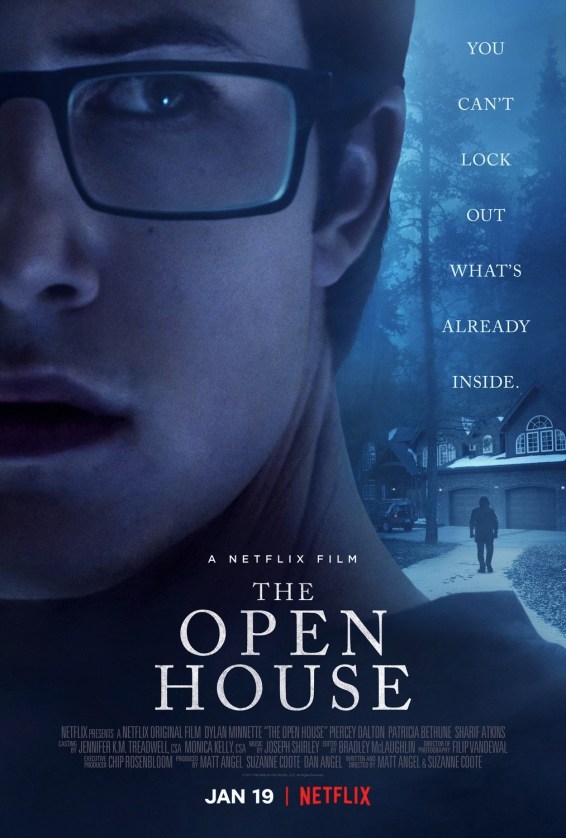
Netflix has always enormously ranged in quality when it comes to their original films and the horror genre, as despite films such as ‘The Ritual’ and ‘Gerald’s Game’ displaying some great promise for the streaming service, many horror duds, like ‘Malevolent,’ ‘Eli,’ ‘Rattlesnake’ and ‘The Silence’ just to name a few, leave ‘The Open House’ feeling like just another bland and (sometimes even moronic) entry into this ongoing trend.

Plot Summary: Following a recent family tragedy, athletic teenager, Logan, and his mother, Naomi, find themselves besieged by a threatening force when they temporarily move into a new house currently up for sale…

By far the worst element of ‘The Open House’ is its writing, as in addition to the film’s extremely dim-witted characters and bizarre misdirections. ‘The Open House’ almost feels as if it has a disconnect from reality at points, as the main antagonist of the film, ‘The Man in Black,’ lurks within the mother and son’s home unbeknown to them, usually hiding in their basement. Yet, somehow, also manages to navigate through the house without ever being seen, even going-up and down the single staircase to the basement constantly. The closest ‘The Man in Black’ ever comes to being found is through the noises he makes at night, and although these moments do give ‘The Man in Black’ the perfect opportunity to depose of his victims, he never does for reasons that go unexplained.

Dylan Minnette and Piercey Dalton portray the main duo of the film, ‘Logan’ and ‘Naomi Wallace,’ a mother and son broken apart by the recent death of their father/husband, and although neither of the two actors give a truly bad performance throughout the film, none of the characters ever really feel that likeable or interesting, even continuing onto the supporting cast of Sharif Atkins, Patricia Bethune, Paul Rae and Aaron Abrams. Who, all attempt to give each one of the small-town residents a distinct and out-of-touch personality, which usually fall quite flat. ‘Logan’ and ‘Naomi’ also suffer from one of the biggest issues for horror characters, that being their nonsensical decisions, as during many points within the story, the characters don’t react to situations how most people realistically would, sometimes even missing very obvious signs of danger.

Surprisingly, the cinematography by Filip Vandewal does allow for a number of attractive shots. Whilst still fairly dull overall, usually not really adding much to any of the film’s tension-filled moments (what little there are) through the film’s strong overreliance on its static shot-reverse-shot formula during many scenes. ‘The Open House’ does at least attempt to use a variety of wide-shots and focus-pulls to make effective use of its isolated yet beautiful location in the snowy mountains of Ohio, despite the story itself barely utilising this location aside from a scene nearing the end of the film.

The original score by Joseph Shirley is pretty much exactly what you’d expect, being the usual generic and sometimes even overbearing strings score composed for the majority of horror flicks. From the opening scene to the end of the film’s credits, every track is very forgettable and is barley distinct from each other. So much so, that it seems that the soundtrack is barley even findable online, as it actually took me quite a while to locate the score afterwards.

Another poorly-executed aspect of the film is its many misdirections, as already mentioned, as despite hinting at numerous different paranormal events throughout its runtime, ‘The Open House’ is actually a mostly grounded modern horror. As whilst the film constantly alludes to supernatural occurrences, the film then always undermines itself by completely ignoring them. This also isn’t just limited to the paranormal aspects, however, as the film also introduces a variety of loose-ends which the film never ties-up, and whilst some could see this as setting-up a layer of mystery, I personally feel it’s just lazy writing and bad red-herrings. This is most notable when it comes to the character of ‘Martha’ portrayed by Patricia Bethune, who repeatedly refers to her dead husband throughout the film and always acts very unusual. Yet, nothing ever comes of his, and by the end of the narrative, her character is almost completely forgotten about.

In summary, ‘The Open House’ is a truly dismal Netflix Original, with some weak performances, a forgettable original score, atrocious writing and an enormous amount of clichés. Aside from the occasional piece of decent cinematography, ‘The Open House’ simply feels like a ‘nothing’ experience as, for me, these kinds of low-effort and low-budget horrors are only dragging the genre down further than it already has been in recent years. Final Rating: 2/10.

open_house_xlg

Nocturnal Animals (2016) – Film Review

Part thriller, part drama and part literature fever dream, 2016’s ‘Nocturnal Animals’ may not appeal to every viewer, but those it will, it will certainly leave an impression, as this extremely underrated thriller led by some sublime performances from Amy Adams and Jake Gyllenhaal is incredibly dark and compelling from start-to-finish. Directed by former fashion designer turned director Tom Ford (A Single Man) and based on the novel; ‘Tony and Susan’ by Austin Wright, ‘Nocturnal Animals’ may not be flawless in its execution, but it is definitely worth a watch.

Plot Summary: An unhappy and lamenting art curator (Susan Morrow) begins to imagine herself within the pages of a novel manuscript sent to her by her former husband, whose negative associations of their relationship take on a fictionalised violent direction in a symbolic tale of revenge…

Split between two different storylines, one set in the real world and one set within the pages of the fictional crime novel. ‘Nocturnal Animals’ definitely has some changes in tone, as every scene with ‘Susan’ usually focuses on her broken marriage and current lifestyle, which feels very different when compared to the tense revenge story of the novel, and yet, neither of these stories ever feel dull, as they both are engaging for different reasons. Tom Ford also makes brilliant use of this structure, as for those more keen-eyed viewers, there are a variety of visual links between the two narratives, the most obvious of which being how ‘Susan’ imagines her ex-husband; ‘Edward,’ as the father character within the novel, meaning Jake Gyllenhaal takes on two separate roles.

The central cast of Amy Adams, Jake Gyllenhaal, Michael Shannon, Aaron Taylor-Johnson, Isla Fisher, Ellie Bamber and Armie Hammer, are all brilliant throughout the film as everyone one of the film’s characters gets plenty of development, usually all playing a crucial role within the film regardless of whichever storyline they are in. Although Jake Gyllenhaal does a pretty great job taking on two separate roles, the plot of the novel primarily takes place within the Texas desert, meaning the father character, ‘Tony Hastings,’ possesses a Texas accent, and whilst not terrible, it is a little inconsistent. This is quickly redeemed by the stand out performance from Aaron Taylor-Johnson as ‘Ray Marcus,’ however, as this usually vapid actor gives an amazing performance as a redneck delinquent, who is just as intimidating as he is erratic.

Although the cinematography by Seamus McGarvey is nothing extraordinary, there are still plenty of attractive shots throughout the runtime as the film uses its cinematography fairly effectively to create a contrast between the two stories, using an array of wide shots when focusing on the story within the novel adding too many of its tense moments, whereas the majority of the scenes within the real world mostly use a large number of close-ups and mid-shots to add to the film’s drama.

Without a doubt, however, my personal favourite aspect of the film is the original score by Abel Korzeniowski. Utilising an ensemble of violins, the score for ‘Nocturnal Animals’ is very memorable and excellently builds tension throughout the runtime as the soundtrack always remains very beautiful despite also feeling quite haunting. The original score even manages to capture the feeling of loneliness and sadness from ‘Susan’s storyline, with the tracks; ‘A Solitary Women’ and ‘City Lights,’ fitting this idea perfectly, yet neither of these two tracks beat out my personal favourite; ‘Revenge,’ referred to by most as the film’s signature track.

Throughout either of the two plots, the film is also filled with plenty of themes and underlying messages, many of which relate to the idea of expression through art, which does help distract slightly from the main issue I have with ‘Nocturnal Animals,’ this being the editing, although it may be intentional. At points, the editing throughout the film is rather fast-paced, cutting between shots rapidly, sometimes even using jump-cuts during some of the more drawn-out shots. If this style of editing was present continuously throughout the film, then perhaps it wouldn’t have been as noticeable, but as it was only occasionally, I personally found it quite distracting.

In summary, while ‘Nocturnal Animals’ may not be a shining masterpiece, but I do believe this film is very overlooked when it comes to thrillers, as the outstanding performances from the cast mixed in with the array of very tense moments and wonderful original score make for a genuinely gripping and interesting experience. So, whilst some audience members may not completely understand the themes and messages behind the story, I do feel this film will leave an impact on those it does appeal to. Final Rating: 8/10.

nocturnal_animals_ver5_xlg

Moonrise Kingdom (2012) – Film Review

Although it may not quite reach the heights of some of his other work, director Wes Anderson (The Royal Tenenbaums, Fantastic Mr. Fox, The Grand Budapest Hotel) crafts another wonderful story with ‘Moonrise Kingdom,’ as throughout its tight runtime, the film is filled with plenty of heartfelt moments and mature humour all backed up by an effective original score by Alexandre Desplat. Resulting in a very enjoyable comedy/drama, despite Anderson not utilising his style to its best extent.

Plot Summary: On a small island off the coast of New England in the 1960s, a young boy-scout and the eldest daughter of unhappy household fall in love after a few weeks of back and forward letters. Soon inspiring them to run away together, leading various factions of the island to mobilise in search of them…

The story itself is definitely one of the best aspects of ‘Moonrise Kingdom,’ as although the film is brimming with plenty of the usual Wes Anderson style. The film’s story is always so enjoyable to watch, as the film’s two protagonists carry the narrative with great comedic charm and an almost childlike innocence. The dialogue throughout the film is also very well-written, as every character is usually extremely specific about everything they say, leading to many quirky moments.

Initially, the thought of a film lead by two very young actors did concern me, as there has been plenty of films throughout history that have been severely let down when it comes to child actors in important roles. ‘Moonrise Kingdom’ is certainly an exception to this, however, as Jared Gilman and Kara Hayward are both brilliant as the young couple; ‘Sam’ and ‘Suzy,’ as the two have excellent chemistry and perfectly fit the hilarious awkwardness of usual Wes Anderson stories. In addition to the two leads, the supporting cast of Bruce Willis, Edward Norton, Bill Murray, Frances McDormand, Tilda Swinton and Jason Schwartzman, are all fantastic within their various roles. Yet, even with these brilliant performances, the film still does suffer from a mostly pointless adultery subplot, whilst this does provide some characterisation at points, it felt mostly meaningless to me by the time the film’s credits rolled.

The cinematography by Robert D. Yeoman is your standard affair for a Wes Anderson film, having the usual array of very appealing shots, most of which make great use of some of the beautiful natural locations the film’s story takes place within. Also featuring a variety of panning shots and perfect symmetry wherever possible, the cinematography even manages to make an ordinary room look far more interesting purely through it’s framing and use of colour. In spite of this, however, ‘Moonrise Kingdom’ did actually have a smaller budget than some of Anderson’s other flicks, which does result in the film feeling slightly held-back from taking its visuals all of the way.

Whilst fairly simplistic when compared to some of his other scores, the original score by Alexandre Desplat is somewhat unique and does suitably fit the tone of the film pretty well, as ‘Moonrise Kingdom’ attempts to add a more scout-troop feel to further add to the film’s narrative. In particular, with the track; ‘The Heroic Weather-Conditions of the Universe Parts 4-6: Thunder, Lightning and Rain’ (what a mouthful), as this track uses trumpets and horns throughout, almost reflecting how the scouts are woken up by their scoutmaster each morning.

One of the most striking elements of ‘Moonrise Kingdom’ certainly has to be it’s bright colour palette, as the film is constantly dripping with beautifully bright colours. From greens to yellows, to blues, the film is always incredibly vibrant and extremely visually appealing to the eye and, of course, as the film’s tone is already fairly fun and light-hearted, the colour palette doesn’t feel even remotely out-of-place. However, I do feel the film could’ve indulged further into the 1960s time-period, as aside from the occasional mention of the date, or piece of technology, the film never really makes use of the ’60s era its set within.

In summary, ‘Moonrise Kingdom’ is definitely an underappreciated gem in director Wes Anderson’s collection, as although the film does have phenomenal reviews from critics and audiences, alike. I can’t help but the feel the film never gets talked about enough, as ‘Moonrise Kingdom’ has all the unique style of Anderson’s other films alongside a heartfelt story and plenty of memorable scenes/dialogue. Despite not being my personal favourite flick from Wes Anderson, the film is undeniably worth a watch, if you’re a fan of the talented director. Final Rating: 8/10.

moonrise_kingdom_xxlg

Bone Tomahawk (2015) – Film Review

Brutal, tense and compelling, ‘Bone Tomahawk’ is one of those rare films that isn’t afraid to mashup genres, as throughout the film we go from a violent horror to a classic western and back again, all without the film ever feeling as if it’s tone is unclear. Whilst I have always enjoyed classics such as ‘True Grit’ or ‘The Good, the Bad and the Ugly,’ I don’t think this is just down to personal bias towards westerns, however, as ‘Bone Tomahawk’ excels in more aspects than one, when it comes to this genre.

Plot Summary: In the dying days of the old west, an outlaw unknowingly leads a band of cannibals to the small town of ‘Bright Hope.’ Leaving the town’s elderly sheriff and his posse to set out on a mission to rescue the town’s residents from the tribe of savage cave dwellers…

Directed by S. Craig Zahler (Brawl in Cell Block 99, Dragged Across Concrete), this underrated director has always had a talent for gritty storytelling, this time crafting a narrative, which is both very engaging and tense, despite being fairly straightforward and simplistic. In addition to this, ‘Bone Tomahawk’ manages to perfectly capture the tone of a classic western, and sometimes even elements of 1970s horror, as the film actually reminded me of ‘The Hills Have Eyes’ at multiple points, although this may just be coincidental.

Kurt Russell leads the brilliant cast of Patrick Wilson, Matthew Fox, Richard Jenkins and Lili Simmons very well, as throughout the runtime all of the characters receive a decent amount of characterisation, with each member of the cast having at least one scene between them. My only issue when it comes to the characters is the lack of a fleshed out character arc for Kurt Russell’s protagonist; ‘Sheriff Hunt,’ as although his character is explored within the film’s story (usually subtlety through dialogue). I personally feel his character arc was never developed quite as much as it could’ve been, despite the fact that this would’ve resulted in a more investing protagonist.

Although the film features a little too much hand-held camera, in my opinion, the cinematography by Benji Bakshi is mostly solid throughout, as the film contains plenty of attractive shots, a few of which even feel like throwbacks to iconic shots from old westerns. The cinematography also makes great use of the film’s variety of remote locations, as the comfort of the small town feels completely distant, when compared to the barren rocky landscape where the cannibals thrive, usually resulting in a very tense atmosphere.

The original score by Jeff Herriott and S. Craig Zahler himself is very similar to the tone of the film, in the sense that it’s a perfect mixture between western and horror, as the soundtrack utilises trumpets and acoustic guitars to perfectly fit with the western visuals, before then completely changing to tenser and more uncomfortable tracks, putting the viewer on edge. However, the original score also manages to have a genuine feeling of tragedy within it, as the score uses intense violin strokes to evoke emotion wherever possible, especially in the track; ‘Four Doomed Men Ride Out,’ which fits this idea perfectly.

Of course, the scene that ‘Bone Tomahawk’ is most known for is without a doubt its infamously violent scene set within the cannibal’s cave, and whilst this scene may be extremely disturbing for a large majority of viewers, I feel that is director S. Craig Zahler’s exact intention, as this moment perfectly displays the horrific nature of the cannibalistic tribe, truly playing into their merciless and barbaric ways of life (despite not actually being that heavily present throughout the story). This scene also displays a range of excellent practical gore effects, making this savage moment even more difficult to watch through its gruesome realism alongside the agonising screams of the cannibal’s victim(s).

In summary, for the most part, ‘Bone Tomahawk’ achieves what it sets out to accomplish, as although the film won’t appeal to everyone through its simplistic plot, slow pacing and graphic violence, the film utilises it’s great performances and isolated locations pretty effectively, resulting in a film that’s just as enjoyable as many other classic westerns despite being a little bland in a few areas. I personally can’t wait to see more of S. Craig Zahler’s work in the future, as I feel this director has some real promise when it comes to telling dark yet gripping stories. Final Rating: 7/10.

bone_tomahawk_ver2_xxlg