Terminator: Dark Fate (2019) – Film Review

“Come With Me or You’ll Be Dead in Thirty Seconds…” – Grace

After bringing the titular, wise-cracking anti-hero to the silver screen with his 2016 directorial debut; Deadpool, filmmaker Tim Miller lept onto a series with evenly iconic characters, the Terminator franchise. Kicking off with the original sci-fi-action classic in 1984, Miller’s entry in the series; Terminator: Dark Fate, released in 2019, functions as both a sequel to the first two installments and a reboot of the franchise, aiming to breathe new life into this ageing sci-fi saga. Unfortunately, however, Terminator: Dark Fate is an unremarkable, mean-spirited and overly familiar affair, lacking thrilling, fast-paced action sequences and imaginative concepts, all whilst occasionally spitting in the face of the series’ most dedicated fans through its handful of baffling creative decisions.

Plot Summary: Twenty-five years after the elimination of Cyberdyne, the company that would one day create the world-ending network of supercomputers known as Skynet, another seemingly unimportant human, this time car assembly worker, Dani Ramos, is inexplicably targeted by a Terminator from the future as the shapeshifting, nearly indestructible, REV-9, is sent to eliminate her in present-day Mexico City. Luckily for Dani, a fearless protector also arrives from the future, the bionically-enhanced Resistance solider, Grace, along with a custodian from the past, a bitter, armed-to-the-teeth Sarah Connor…

Disappointed and uninvolved with Terminator 3: Rise of the Machines (2003), Terminator Salvation (2009) and Terminator Genisys (2015), producer James Cameron considers Terminator: Dark Fate to be a direct sequel to his projects; The Terminator (1984) and Terminator 2: Judgment Day (1991), remarking that while he was generally supportive of those films due to his close friendship with actor Arnold Schwarzenegger, he jumped at the offer to produce Terminator: Dark Fate, seeing it as an opportunity to oversee his franchise’s future. However, Cameron’s inherently controlling attitude did come with drawbacks as he claimed that, although he was involved in the writing process, he didn’t interfere with Miller’s oversight and never visited the set. Yet, Miller recalls things differently, claiming Cameron stepped in for some uncredited editing, finding his cut somewhat rough and prolonged. Cameron also admitted that he and Miller had their share of disagreements, ultimately leading Miller to state it’s unlikely he would work with Cameron again. These creative differences are noticeable in the final product as there is a shortage of polish in some areas, primarily in the subpar CGI and conversational dialogue, which is often corny and crass.

Blending the original’s cast with fresh faces, the central cast of Linda Hamilton, Arnold Schwarzenegger, Mackenzie Davis and Gabriel Luna all do a serviceable job of portraying their respective characters, regardless of whether they are humans or machines, newcomers or returning legends. That is, excluding Natalia Reyes as Dani Ramos, who frequently fails to believably portray Dani as a fearless and firm figure due to her short stature and rather weak line delivery.

Standing as the only Terminator film where none of the action takes place in Los Angeles, Ken Seng’s cinematography is one of the few positive aspects of Terminator: Dark Fate, as the camerawork is dynamic and favourably supports the numerous action sequences, making extensive use of the latest setting for the sci-fi saga; Mexico City. Alas, the action set pieces aren’t as arresting, lacking the physicality and grittiness of the series’ first two entries, despite the admirable inclusion of their bloody brutality.

The original score by Tom Holkenborg (a.k.a. Junkie XL) is habitually loud and imposing, initiating with the track; Terminated, and continuing with tracks like My Name Is Dani, The Wall and Screaming Turbines, the foremost of which softens the score up via Mexican-style guitars, lending a lighter tone to some scenes. Still, it likely goes without saying that, although adequate, the soundtrack doesn’t hold a candle to the original Terminator score, even if the film attempts to earn nostalgia points by implementing its well-known mix of synth, drums and electronics whenever possible, including the audible motif; “Dun Dun Dun Dun Dun.”

Spoilers ahead in this section for those who wish to go into their viewing blind, but I’m sure many are wondering where the significant character, John Conner, is in all of this. Well, in the opening scene of the film, young John is actually shot dead by a Terminator. Whilst shocking, this moment not only deprives the audience of any screen-time with the fan-favourite character, but also renders the conclusion of the second entry meaningless. Moreover, with Skynet no longer existing, thanks to the events of that film, the screenplay conjures up a ‘new’ antagonist with Legion. This almost indistinguishable, equally hostile A.I. force is just far too similar to what the series has attempted previously to appear innovative, alongside its use of an already comparable narrative structure.

In summary, Terminator: Dark Fate is just as uninspired as its bland sub-title suggests, often feeling like a sequel/reboot made out of obligation than anything else. And, with the franchise’s previous restart attempts in Terminator Salvation and Terminator Genisys, each written to be the first of a trilogy before that idea was scrapped due to a lack of critical and commercial success. Terminator: Dark Fate is yet another series revamp succumbing to a disappointing box office gross and lacklustre reviews, the rough outline written for its two sequels being discarded, leaving the future of the franchise uncertain and, in my opinion, indicating that the Terminator franchise needs to be ‘terminated’ itself, evidently running low on ingenuity and relevance. Rating: 3/10.

terminator_dark_fate_xxlg

Casino Royale (2006) – Film Review

“I’m Sorry, That Last Hand… Nearly Killed Me.” – James Bond

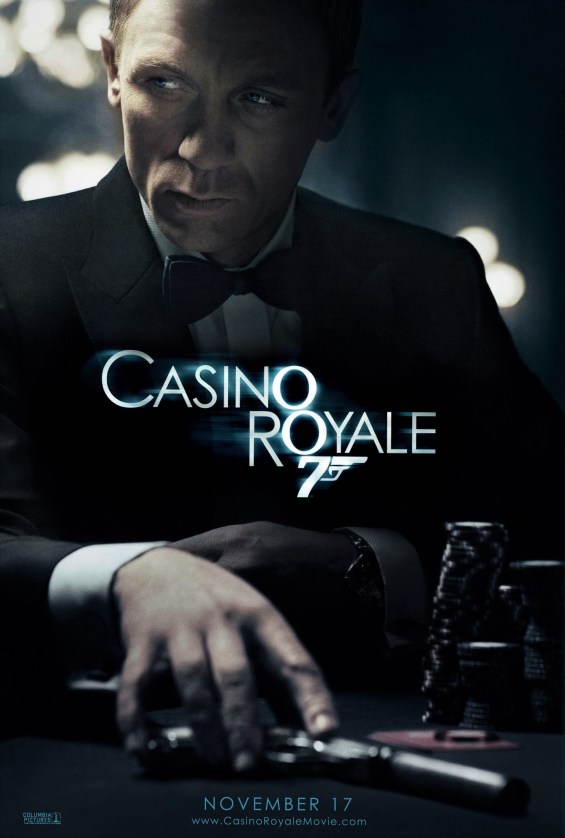
Much like the sci-fi television series; Doctor Who, or any franchise that reboots itself after a certain amount of time. The biggest hurdle the 007 franchise has to overcome with every incarnation is getting die-hard fans of the long-established espionage franchise on board. Luckily, the 2006 reboot of the series; Casino Royale, succeeded in this regard, with Daniel Craig taking on the iconic role of James Bond in a slick and thrilling mission. Doing away with much of the absurdity present in previous instalments, in exchange for pulse-pounding action sequences and an unexpectedly engaging romantic subplot.

Plot Summary: After receiving his license to kill, British Secret Service agent, James Bond, sets out on his first mission as 007, travelling to Madagascar, where he uncovers a link to Le Chiffre, a private banker financing terrorist organisations. Learning that Le Chiffre plans to raise funds through a high-stakes poker game at Casino Royale, Montenegro, Bond is instructed to play against him and thwart his plans…

Holding familiarity with the franchise after directing the Pierce Brosnan-era instalment; GoldenEye, in 1995. Director Martin Campbell (The Mask of ZorroVertical LimitThe Foreigner), along with the series’ producers, decided to take the franchise in a more grounded direction following the bombastic action sequences of the later Brosnan entries. So, there are no high-tech gadgets or tumultuous helicopter chases in Casino Royale. Instead, the poker game at the centre of the story is what holds most of the film’s suspense, occupying the majority of the second act and harbouring some of Bond’s best lines. Moreover, Casino Royale is one of the most faithful adaptations of the 007 source material, adapted from the novel of the same name by Ian Fleming, the first piece of media to feature the character of James Bond.

Despite the casting of Daniel Craig initially sparking outrage amongst the 007 fanbase due to Craig’s blue eyes and blonde hair, the online annoyance didn’t last long as once Casino Royale was released, critics and fans alike instantly fell for Craig’s rendition of the character. This was partially because, unlike the other cinematic portrayals of James Bond, whose kills held no more weight than the cheeky one-liners that accompanied them, Craig’s tussles tend to be intimate, bloody and devoid of glamour. Craig’s brooding persona, dry humour and excellent line delivery also find a close match in Eva Green’s take on the “Bond Girl,” Vesper Lynd, whose intelligence and assertive attitude puts aside any negative traits associated with the supporting role. And while Mads Mikkelsen is merely serviceable as the antagonist, Le Chiffre, with his menacing performance leaving little impact, Judi Dench makes the most of her brief screen-time as M, the head of MI6, exuding both confidence and power.

In terms of visuals, Casino Royale makes one subtle change that results in the instalment looking quite different from the ones that precede it. For most of the 007 entries before Casino Royale, the visuals almost seem to have been an afterthought as the lighting is flat, the composition is dull, and the cinematography never does anything to advance the characters or the story. Yet, with Casino Royale, it’s evident that the main principle that guides the camerawork is to always keep the camera moving. Thus, the cinematography by Phil Meheux repeatedly makes effective use of hand-held close-ups and mid-shots. Furthermore, when it comes to filmmaking, the first ten minutes of screen-time are crucial in establishing the tone, mood and style of a project. Casino Royale clearly understands this, as the opening scene employs canted camera angles and intercuts between past and present, all dosed in a fierce, greyscale colour palette for a striking introduction.

Surprisingly, the classic 007 theme, composed by Monty Norman, appears very rarely in the film’s original score. Supposedly, this is because the filmmakers wanted to emphasise Bond’s inexperience, essentially having 007 earn the theme by the time the end credits roll. However, that’s not to say that the rest of the score is terrible, as composer David Arnold steers the soundtrack away from over-the-top action cues and towards more nuanced tracks like Vesper and Blunt Instrument. And, of course, no 007 entry would be complete without a memorable song to pair with the stylish opening title sequence. In this case, it’s You Know My Name, by Chris Cornell, an alternative rock piece that fits the tone of Casino Royale flawlessly.

The action sequences are where Casino Royale delivers some of its most jaw-dropping moments. Almost every set piece could easily be the climactic action sequence of any typical action flick, which truly demonstrates the impressive stunt work and remarkable fight choreography on display throughout Casino Royale. The action-heavy first act, in particular, boasts one of the finest parkour sequences seen in this franchise to date as Bond chases a terrorist through the streets of a Madagascan village, culminating in an exhilarating hand-to-hand scuffle atop a towering construction crane.

In summary, Casino Royale disposes of the goofiness and gadgetry that plagued older James Bond outings as Daniel Craig delivers what critics and fans have been waiting for; a brutal, haunted and intense reinvention of 007. With rousing action sequences, a compelling narrative and a conclusion filled with plenty of potential. Casino Royale functions as a terrific example of how to reboot a well-known franchise, even if it isn’t particularly distinct when placed alongside other espionage flicks. Rating: high 7/10.

casino_royale-p379801

Left Behind (2014) – Film Review

“I Don’t Have All the Answers, but for Now, Faith Is Enough.” – Buck Williams

Awkwardly combining religious proselytising with a number of well-worn tropes from the disaster genre. Left Behind, released in 2014, is an apocalyptic thriller with a fascinating idea at its core, depicting the events that would transpire if millions of people suddenly vanished off the face of the Earth. A brilliant concept that is utterly squandered due to its horrendous execution, with subpar production values, bewildering dialogue and appalling performances, being just some of the many issues this overtly religious thriller suffers from. As such, Left Behind presents one of the most unintentionally hilarious depictions of the apocalypse ever committed to film, which more often than not, devolves into enunciated Christian propaganda.

Plot Summary: When millions of people suddenly disappear without a trace, throwing the world into disarray as unmanned vehicles crash, planes fall from the sky and mass riots break out. Airline pilot, Ray Steele, struggles to keep composure aboard his proceeding flight to London as he and his passengers try to comprehend the inexplicable scenario they find themselves within. Meanwhile, Ray’s daughter, Chloe Steele, braves the chaos of the city streets below in search of her mother and brother…

If the Left Behind title sounds familiar, that’s likely because the film is actually a reboot of a relatively well-known series, with Left Behind: The Movie, Left Behind II: Tribulation and Left Behind III: World at War being released prior in 2000, 2002 and 2005, respectively. All of them are based on the best-selling series of apocalyptic novels by Jerry B. Jenkins and Tim LaHaye; a series that is essentially a modern-day rendition of the biblical rapture, where all Christians are transported to Heaven as divine forces decimate the Earth. 2014’s Left Behind adapts a small portion of the first book in the series, setting the majority of the story aboard an airliner piloted by Ray Steele, which for an apocalyptic thriller, isn’t the most exciting location to view a large-scale catastrophe from.

Speaking of the protagonist, despite the uproarious actor, Nicolas Cage, portraying the central character of Ray Steele. Left Behind never manages to get an entertaining performance out of the actor as for most of the runtime, Cage, who in interviews has stated that he took the role at the urging of his pastor brother, seems practically sedated, even when his character is convinced that the plane is heading towards certain doom. Regrettably, none of the supporting cast is much better, with Chad Michael Murray, Cassi Thomson, Nicky Whelan and Gary Grubbs (among others) all portraying one-dimensional characters continually reciting unnatural dialogue. From the Southern entrepreneur, Dennis Beese, to Cameron ‘Buck’ Williams, a renowned news reporter, who inadvertently becomes Ray’s co-pilot, none of the characters throughout Left Behind are indelible or significantly developed outside of their lack of devotion to Christianity.

In regard to the visuals, Left Behind doesn’t exhibit much improvement over its dialogue and performances as the set pieces appear small and chintzy, the lighting is flat, Jack Green’s cinematography is largely styleless and the editing between the drama on board Ray’s flight and the disorder on the ground below is a monotonous back-and-forth of plot points with no scene being given enough time to sink in. Moreover, the CG effects for the airliner itself are rather poor, particularly during one of the film’s final moments, where Ray is forced to land the plane on a makeshift runway.

Likewise, the original score by Jack Lenz has no identity or anything even remotely unique about it, subsequently causing the soundtrack to dissolve into the background where the majority of audience members will forget it even exists. Quite surprising considering that Lenz has proven himself to be a capable composer in the past, penning many respectable scores, including the theme for the Goosebumps television series.

Yet, even when overlooking all of the flick’s shortcomings in terms of filmmaking, the film continues to stutter as there are plenty of moments within the film that can be mocked. But, by far the easiest scene that illustrates just how uniquely awful Left Behind is would be the moment in which Irene Steele stares adoringly at a terribly photoshopped picture of her family. It is possible, however, that the film’s flawed execution could be a result of a lack of experience on the part of director Vic Armstrong (Joshua TreeA Sunday Horse), as Armstrong is known for his work as a stunt coordinator/stunt performer, not as a director.

In summary, while Left Behind‘s premise is undoubtedly an interesting one that could’ve made for a compelling apocalyptic thriller, if placed in the hands of the right director and/or screenwriter. The version of Left Behind we did receive is far from compelling as its flaws are nearly endless, consequently leading the film to be panned by critics and perform poorly at the box office. Still, this wasn’t the end for Left Behind as not long after, the producers of the film decided to finance the sequel through an Indiegogo campaign, simply titled; “Help Us Make Left Behind 2.” The campaign received £61,558 out of the half a million asked, with the last update on the project being on May 7th 2015. So, more than likely, the project was cancelled, which I’d say is for the best. Rating: 2/10.

left_behind_ver3_xxlg

Dredd (2012) – Film Review

“Negotiation’s Over. Sentence Is Death.” – Judge Dredd

A considerably overlooked film in terms of sci-fi-action flicks, 2012’s Dredd, written by Alex Garland and directed by Pete Travis (Vantage PointEndgameCity of Tiny Lights), centres on said character. Whose comic strip in the science fiction anthology series; 2000 AD, created by Kelvin Gosnell, Pat Mills and John Wagner, was one of the longest-running in the comic magazine’s history, being featured since its second issue in 1977. Merging futurism with law enforcement, Dredd and his fellow Judges are empowered to arrest, sentence and even execute criminals on the spot, and this modern, cinematic adaptation, fuelled by much of the same bombastic violence and sci-fi imagery, does a remarkable job of capturing the source material’s gritty spirit.

Plot Summary: In a dystopian future on the American East Coast lies the overpopulated and crime-ridden metropolis of Mega-City One, where officers have the authority to act as judge, jury and executioner. Within this city, the resolute Judge Dredd is assigned to assess rookie Cassandra Anderson, as the two are ordered to reach the top of an apartment complex and stop the nefarious crimelord, Ma-Ma, from manufacturing and distributing narcotics. But, as the duo enter the complex, they quickly find themselves trapped as Ma-Ma locks the building down, forcing Dredd and his newfangled partner to fight their way out, one level at a time…

Technically a reboot following the character’s first cinematic interpretation with Judge Dredd in 1995, which featured Sylvester Stallone as the titular character. Dredd is a far more faithful adaptation, as while Stallone may have looked the part, it was clear that the film itself thoroughly misunderstood the source material. Dredd, however, immediately thrusts its audience into a riveting and intense story, which considering how self-contained it is, also manages to fit a surprising amount of world-building in between, hinting towards the many other districts of Mega-City One we could’ve seen should the film have been a box office success rather than the commercial disappointment it sadly was, earning a little over £41 million on a budget of around £45 million.

Speaking only when necessary and never giving even the slightest hint of emotion, Karl Urban portrays protagonist Judge Dredd with extreme accuracy, as Dredd never breaks temperament or goes through a satisfying character arc. Instead, Dredd is simply a well-built, incorruptible officer with no time for low-life criminals (just as he is in the original comic strips), and Urban nails this portrayal, even with half of his head obscured by a helmet for the entirety of the runtime, illustrating Urban’s clear understanding of the role. Dredd’s partner, Cassandra Anderson, portrayed by Olivia Thirlby, is also a compelling character, demonstrating a benchmark of skill far below her superior yet possessing psychic abilities, which make her too valuable to dismiss. Lastly, there’s the film’s antagonist, Ma-Ma, who was originally written as an elderly woman before Lena Headey convinced Alex Garland to make her a middle-aged misandrist. And although the character doesn’t receive the same level of depth as Dredd or his rookie partner, Ma-Ma is still a convincing felon, as Headey portrays her as a ruthless individual living in an equally ruthless world.

Playing into the idea of Dredd‘s post-apocalyptic world being in constant disarray, the grimy set design of Dredd, along with its murky brown colour palette, presents the setting of Mega-City One (a.k.a. Johannesburg with a few CG enhancements) as a rundown municipality with similarly rundown technology. Correspondingly, the filthy hallways of the central apartment complex, Peach Trees, are always permeated with litter, aged sci-fi scrap and spray-painted surfaces. Moreover, the film is given a great sense of style through the energetic camerawork by Anthony Dod Mantle and the smooth integration of CG effects, which outside of a handful of moments where the film fully indulges in its graphic violence by flinging blood towards the camera, have aged admirably.

As you’d expect from a pessimistic sci-fi flick, the original score by Paul Leonard-Morgan is both rousing and brooding, with tracks like Mega-City One and You Look Ready all perfectly accompanying what’s on-screen through their heady mix of guitar riffs and thumping electronic beats, making for a score that has no filler, as every track flawlessly correlates with the fast-paced action.

Continuing to be true to the original comic strips, Dredd’s primary form of transportation, the Lawmaster Motorcycle, is faithfully recreated for the film, as the production team constructed a series of functional motorbikes for production. They achieved this by taking the chassis of standard motorbikes, extending them, adding custom fairings, and then fitting them with larger tires so they remained operable, a level of effort that I feel was certainly worth it, as Dredd’s renowned motorcycle is featured front and centre during the film’s thrilling opening sequence.

In summary, though many may see this sci-fi action-thriller as unadulterated style-over-substance and nothing more, Dredd is a film deeply committed to the genres it’s trying to represent. With thrilling action sequences, substantial world-building and impressive visual effects, all rooted in deadpan humour, Dredd is a more than entertaining ride. And, in a world full of compromised adaptations where self-indulgent directors/screenwriters make whatever changes they desire without much thought or consideration, Dredd is something of a triumph, as the film avoids the common misstep adaptations tend to take, where the cinematic adaptation ends up bearing little resemblance to its source material, aside from the title. Rating: low 8/10.

dredd-p689332

The Mummy (2017) – Film Review

When Universal Pictures first announced their plans to build a cinematic universe based around their gallery of iconic monsters, general audiences seemed to roll their eyes at the idea, seeing the forthcoming franchise as nothing more than a shameless attempt to copy and paste the formula of the Marvel Cinematic Universe, with the hopes of making the same box-office returns. Nevertheless, Universal continued with their plan, releasing the first instalment of the series in 2017 with ‘The Mummy,’ a film which even with the star-power of Tom Cruise, failed miserably both critically and commercially, instantly destroying any plans for the future of the franchise and embarrassingly leaving the ‘Dark Universe’ with a single film to its name.

Plot Summary: Once destined to rule all of Egypt, the beautiful princess; ‘Ahmanet’ sees her birthright stolen from her when her father begets an heir. Knowing this boy would be the Pharaoh’s new successor, ‘Ahmanet’ turns to a dark deity, selling her soul for an unholy power, for which, she is captured by the Pharaoh’s priests, mummified alive and buried in a tomb far from Egypt. Five thousand years later, opportunistic U.S. Army reconnaissance sergeant; ‘Nick Morton,’ accidentally discovers her tomb during a firefight in the Middle East, and once venturing inside, inadvertently sets her free…

According to a number of reports, Tom Cruise not only starred in ‘The Mummy,’ but also has an excessive amount of control over the film, having creative oversight on nearly every aspect of the production. So much so, that Cruise even had influence on the film’s screenplay, as it’s been stated that Cruise had his personal writing team rewrite certain scenes to give his character more screen-time and a more dramatic character arc, and even though most Universal executives weren’t thrilled about the rewrite, feeling it was disjointed and insipid, they reluctantly agreed to keep Cruise on board. Regardless, Universal Pictures soon saw the fallacy in their blind faith towards Cruise, as despite ‘The Mummy’ earning nearly £300 million worldwide, it was still considered a financial flop when taking into account its immense marketing campaign, which promoted the film purely as the franchise-vehicle it is as opposed to a riveting blockbuster.

Having both her design and gender altered to avoid any similarities with the titular villain of ‘X-Men: Apocalypse,’ which released just a year prior, ‘The Mummy/Ahmanet’ herself, portrayed by Sofia Boutella, is remarkably forgettable, never developing into a compelling or even threatening antagonist, which should be nearly impossible considering ‘The Mummy’ fills over a quarter of its runtime with extensive exposition regarding her backstory and sinister motives. Likewise, the actual protagonist; ‘Nick Morton,’ rarely benefits from Cruise’s natural charisma and wit, as ‘Nick’ is simply an unlikeable character, emerging as a foolish, self-centred adventurer and leaving in the exact same manner, in addition to being miraculously skilled with/in every type of firearm and hand-to-hand combat, of course.

When it comes to visuals, the film’s cinematography by Ben Seresin is generally visually pleasing, resulting in a fair share of alluring wide shots, yet much of the film’s beauty is consequently hindered by its ghastly colour palette, which hardly ever strays away from greys, blacks and beiges, an issue that is only worsened by the prosaic setting of modern-day London. Furthermore, the film’s action sequences (which are less frequent than most would expect) are fairly unimpressive, with many of the story’s thrilling moments having an overreliance on apace editing and CG creatures. That is, with the exception of the stunt work, which, due to Cruise’s heavy input on the film, is mostly practical and just as awe-inspiring as the stunts in the ‘Mission Impossible’ series, no thanks to director Alex Kurtzman (People Like Us).

Built around two central themes with various less significant tracks cropping up in-between, the film’s original score by Bryan Tyler is serviceable, for the most part, balancing its two signature tracks of ‘The Mummy’ and ‘Nick’s Theme,’ before then switching to far more dramatic orchestral tracks, like ‘Sandstorm,’ ‘Enchantments’ and ‘World of Monsters,’ for the film’s larger scale set pieces and handful of brief dream sequences.

Interestingly, ‘The Mummy’ wasn’t actually Universal’s first venture into crafting a cinematic universe of monsters, as the company originally envisioned 2014’s reboot of the renowned vampire in ‘Dracula Untold,’ as the first instalment in the series. There was even early talk of ‘Dracula’ appearing in ‘The Mummy,’ but this idea was ultimately scrapped, and the film was eventually cited as non-canon to the ‘Dark Universe.’ However, there are still several props alluding to other monsters within the film, as a vampire skull, along with one of the ‘Creature From the Black Lagoon’s hands, can both be seen in ‘Dr. Jekyll’s headquarters.

In summary, I feel it’s easy to see why many avoided ‘The Mummy’ when it first released back in 2017, as this film was merely Universal’s first attempt at revitalising the many well-known creatures locked away in their vault by lazily repackaging them for a new generation. The issue being that general audiences had little interest in this concept, and those that did quickly lost their engrossment as the film failed to capture even a fraction of the adventurous spirit present throughout the ’90s reboot. Instead, it seems ‘The Mummy’ will simply be lost to time, unremembered and disregarded. Final Rating: 3/10.

mummy-poster-1

Hellboy (2019) – Film Review

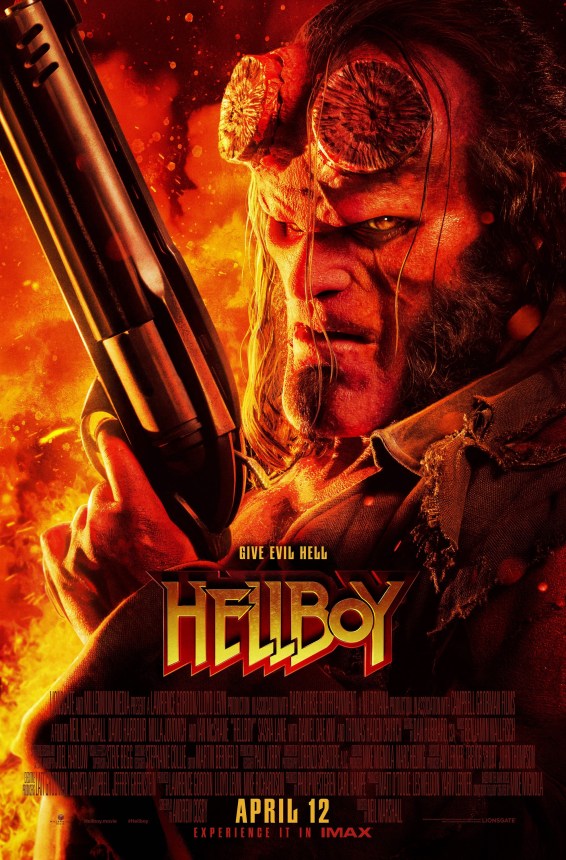
In mid 2012, actor Ron Perlman once again endured the four hour make-up routine required to transform him into his iconic character: ‘Hellboy’ and fulfil the Make-A-Wish request of a six-year-old boy with leukaemia. Director Guillermo del Toro was so touched by this event that it inspired him to start production on a third ‘Hellboy’ instalment. But, following a dispute between del Toro and producer Mike Mignola, the project was soon cancelled, and instead, Mignola and his team began work on a reboot of the franchise, which finally released in 2019, to truly abysmal results.

Plot Summary: Whilst working side-by-side with his adopted father for the ‘Bureau for Paranormal Research and Defence,’ ‘Hellboy,’ a supernatural creature who came into our world in 1944 as a result of a demonic Nazi ritual, struggles to accept which world he belongs to, that being one of monsters, or one of men. All the while, an evil sorceress known as ‘The Blood Queen,’ returns to the modern world, eager to take her revenge on humanity for imprisoning her centuries ago…

According to producer Mike Mignola, the intention with this reboot was to replicant a style and tone closer to that of the original source material, as despite del Toro’s version of ‘Hellboy’ often being light-hearted aside from one or two disturbing moments, the original comic series created by Mike Mignola is, in reality, far darker and more gruesome. And, whilst this goal of wanting to make a ‘Hellboy’ film more horror/fantasy-oriented rather than just a typical superhero blockbuster is commendable, this reboot of the series continuously stumbles due to this tonal shift, even with talented director Neil Marshall (Dog Soldiers, The Descent, Doomsday) overseeing the project. Yet, this is only one of the film’s many problems, as it’s hard to sit through even a single viewing of ‘Hellboy’ without noticing the film’s incredibly fast pacing, awful comedic moments, and beyond messy plot, which for some reason draws, from four separate storylines from the ‘Hellboy’ comics.

‘Hellboy,’ or particularly, David Harbour’s performance as the titular character, is possibly the film’s finest aspect, as rather than just lazily mimicking Perlman’s beloved version of the character, Harbour displays a less mature interpretation of the superhero. Portraying the horned hero as a conflicted character, younger and stronger than Perlman’s version, but unsure as to if he is a real hero, which is an interesting internal conflict to explore and about the only element of the film that is consistent. Then there is Ian McShane as ‘Hellboy’s father figure, who is serviceable in his role alongside Milla Jovovich as the villainous; ‘Blood Queen,’ who, unfortunately, delivers one of the most over-the-top performances of her entire career.

Aside from the small detail of the filmmakers ensuring the colour red is never present in the same scenes as ‘Hellboy’ himself (excluding scenes where blood is shed, of course), the cinematography by Lorenzo Senatore is your usual affair for a superhero flick, having a handful of pleasant shots scattered amongst the plethora of bland hand-held camerawork utilised for action scenes and grand moments of destruction. But, regardless of how impressive the cinematography may or may not be, there is no distracting from the film’s unappealing CG effects, as in spite of the creature department clearly trying their best with the detailed costumes and prosthetic make-up on display, nearly all of the CG effects throughout ‘Hellboy’ appear instantly dated.

The original score by Benjamin Wallfisch is a peculiar concoction, being an odd mish-mash of orchestral and electronic tracks which only succeed in making the soundtrack feel quite dull when it’s not overly loud and irritating. Or at least, that’s the score before mentioning its use of electric guitars, which try desperately to present the soundtrack as something ‘awesome,’ but only emerges as annoying at best, with the film’s signature track; ‘Big Red,’ being the biggest offender for this.

However, an aspect of the film that is more in line with del Toro’s previous ‘Hellboy’ adaptation is its creatures, as although the effects that bring them to life aren’t impeccable, the actual creature designs are truly something be admired, with the ‘Hellboy’ comics clearly providing the filmmakers with plenty of visual influence. Even ‘Hellboy’s redesign was inspired by David Harbour’s own features, with the effects team adding a larger jaw and a heavier brow to further fit with Harbour’s facial structure.

In summary, while I can appreciate the effort that went into ‘Hellboy’ in some areas, the film’s flaws are just so evident it’s nearly impossible to ignore them. From its convoluted and overstuffed story to its dreadful CG effects, ‘Hellboy’s thrilling moments of action or amusing dark humour are minor when compared to its faults. Yet, by far the most frustrating part of this reboot is that it stripped away our final chance of seeing a third entry in the original ‘Hellboy’ series, an instalment myself and many other fans of this beloved character had been wanting to see for quite some time. Instead, we’re now stuck with this disappointing reboot, which failed miserably to reignite the spark of excitement in this superhero franchise. Final Rating: low 3/10.

hellboy_ver6_xxlg

It (2017) – Film Review

After many years of waiting, horror and literature fans alike got their wishes granted in mid 2015 as director Andy Muschietti (Mama, It: Chapter Two) signed on to direct a reboot (or readaptation) of one of Stephen King’s most iconic and beloved horror stories, this, of course, being ‘It.’ And, due to its excellent cinematography by Chung-hoon Chung and incredibly memorable performance from Bill Skarsgård as the demonic clown ‘Pennywise,’ ‘It’ is certainly one of the better Stephen King adaptations in recent years, even with the array issues the film still suffers from.

Plot Summary: In the summer of 1989, a group of unpopular kids known as ‘The Losers’ Club,’ band together in order to destroy a shapeshifting monster known only as ‘Pennywise,’ a creature which has been terrorising their home town of ‘Derry’ for decades and can disguise itself as whatever it’s victim fears most…

Following the film’s incredibly successful release in 2017, ‘Pennywise’ has quickly become a modern horror icon despite only having about four minutes of dialogue in the entire film. But, it’s easy to see why this is, as not only does ‘It’ share the familiar fun tone of classic films of the 1980s, such as ‘The Goonies,’ ‘The Gate’ and ‘The Monster Squad,’ yet ‘It’ also manages to adapt the novel’s antagonist; ‘Pennywise,’ fairly closely from the original source material, resulting in a mostly entertaining novel-to-screen transition.

The main cast of ‘The Losers’ Club’ features Jaeden Martell, Sophia Lillis, Finn Wolfhard, Jeremy Ray Taylor, Jack Dylan Grazer, Chosen Jacobs and Wyatt Oleff, who all share pretty great chemistry with each other, as alongside the film’s terrific writing, the children truly feel like an actual group of kids, with the group constantly cursing and sharing in plenty of quippy banter with each other. In addition to the younger cast, ‘Pennywise’ is this time around portrayed by Bill Skarsgård, and while I have always loved Tim Curry’s cheesy yet menacing portrayal of the iconic clown. Bill Skarsgård is a stand out aspect of the film for sure. Capturing the eerie qualities of the character as well as his unworldly nature perfectly, truly embracing the idea that ‘Pennywise’ isn’t just a psychotic murderer dressed as a clown, but something far stranger…

The cinematography by Chung-hoon Chung is surprisingly brilliant for a modern horror, featuring a number of attractive shots which blend extremely well with the film’s story. The film does have one recurring shot which is quite irritating, however, as during many of the scenes where ‘Pennywise’ appears to his victims, the film utilises a shot in which the sinister clown approaches the camera straight on, sprinting directly towards the screen, and while I understand what the filmmakers were trying to accomplish with this shot, I feel it only comes off as fatuous and appears extremely out-of-place when compared to the rest of the film’s visually enthralling camerawork.

Admirable yet flawed, the original score by Benjamin Wallfisch ranges from being your typical horror soundtrack to eventually becoming more emotional for the more character-focused scenes. The main issue I take with the original score are some of the tracks which feature deep bass-like sounds, as I feel these tracks really don’t fit with the film’s tone or time-period. Regardless, the tracks; ‘Paper Boat’ and ‘Derry,’ do serve the film’s story delightfully well, with one of the film’s final tracks; ‘Blood Oath,’ also being a beautiful send-off for these characters before their inevitable return.

From ‘Pennywise’s uncanny appearance to the abandoned house ‘It’ lives within on ‘Neibolt Street,’ many of the film’s designs are also pretty memorable despite their limited screen-time. These fantastic designs are dragged down by the film’s poor CG effects, however, as the film always seems to resort to CG visuals during many of its more tense moments, which can take away from their impact. This is also where ‘It’s most substantial problem comes into play, as ‘It’ has really split audiences down the middle when it comes to its focus on horror, as while the film does have a few eerie scenes and creepy visuals, this adaptation seems to be more focused on being the coming-of-age story the novel mostly is. Although some viewers may be disappointed by this, desiring a narrative based more around the story’s darker elements, I feel the film’s distracting CG effects and constant barrage of jump-scares are made up for by its interesting delve into its themes of childhood fears and growing up.

In summary, 2017’s ‘It’ is a solid Stephen King adaptation, as while certainly let down by its weak CG visuals, overreliance on jump-scares and occasionally inconsistent tone, the film still is a pretty enjoyable watch throughout its two hour runtime, mostly due to the film’s great performances and general memorability, and with ‘It: Chapter Two’ turning out to be an underwhelming experience for most. I’d say it further proves that this film is the direction to go when it comes to adapting King’s work. Final Rating: low 7/10.

it_xxlg

Kong: Skull Island (2017) – Film Review

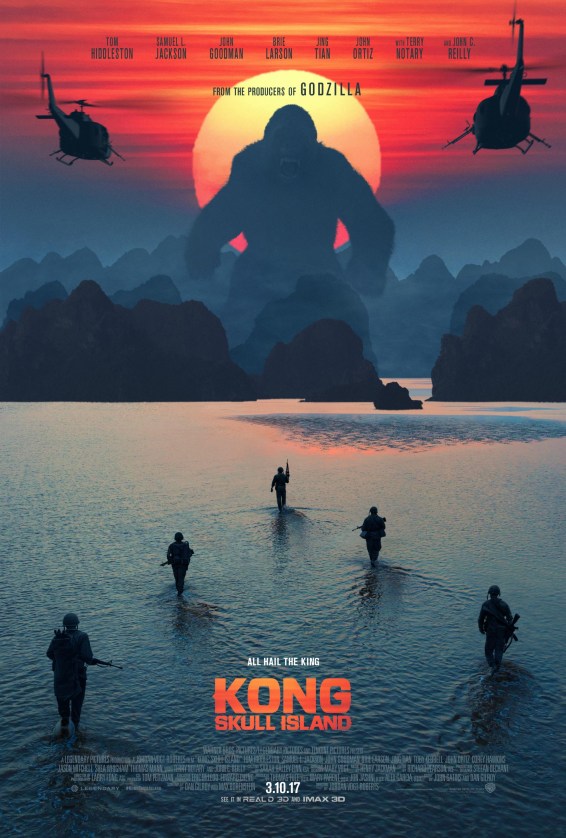
Jordan Vogt-Roberts directs his first major film with ‘Kong: Skull Island,’ another reboot of the iconic monster this time set within a different time-period and featuring plenty of vibrant visuals. Resulting in ‘Kong: Skull Island’ being a relatively entertaining monster flick, despite the film still being plagued with a range of issues throughout its two-hour runtime.

Plot Summary: Shortly after the Vietnam war in 1973, a team of scientists explore an uncharted, tropical island in the Pacific, without knowing it, they soon venture into the domain of the mighty ‘Kong,’ and must fight their way through an onslaught of dangerous creatures to escape the deadly island…

Just from a quick glance at the film, it’s obvious that the film takes heavy inspiration from the war epic; ‘Apocalypse Now,’ when it comes to its visuals, which is by no means a bad thing as ‘Kong: Skull Island’ truly embraces its 1970s time-period. Making every set, costume, and piece of military equipment fit well within the world the film builds on, which really gives some style to what could’ve just been your standard action blockbuster.

The all-star cast of Thomas Hiddleston, Brie Larson, Samuel L. Jackson, John Goodman, Corey Hawkins, Tian Jing, Thomas Mann, Toby Kebbell and my personal favourite, John C. Reilly, are all decent in their respective roles despite their characters not being given much depth beyond a few short scenes, as due to the enormous size of the cast, many characters end up becoming nothing more than clichés through their rushed introductions. Aside from Samuel L. Jackson and John C. Reilly as ‘Preston Packard’ and ‘Hank Marlow,’ however, as both of their characters receive the most development and play into the film’s main theme of the damage war can have on the mind, which I personally found very interesting and wish the film explored further, rather than focusing so much on many of the awful comedic moments the film crams into the story, which aside from a few improvised lines from John C. Reilly, fall mostly flat.

The cinematography by Larry Fong is fairly creative throughout the runtime as, in addition the film’s ranged colour palette, ‘Kong: Skull Island’ does have an array of visually interesting shots, many of which contain plenty of movement and give the audience some stunning views of the titular island. The cinematography also lacks many of the shots that made the ‘Godzilla’ remake from 2014 so impressive as a creature-feature, that being shots that display the true scale of ‘Kong,’ yet the lack of these shots may also be due to the ‘Kong’s ever-changing size, which did begin to irritate me after a while, despite ‘Kong’ still managing to feel pretty imposing and powerful throughout the film.

The original score by Henry Jackman does help to make up for this, however, it being of his better scores, in my opinion. As, throughout the narrative, the soundtrack always adds to the adventurous tone of the film, utilising large tribal drums to give each character’s confrontation with ‘Kong’ genuine weight. The film also uses a number of classic songs from the ’70s to further push the film’s time-period, and whilst this does sometimes work effectively, with an early helicopter scene featuring the iconic; ‘Fortunate Son,’ being the most memorable. It can also feel very forced at points, mostly due to the sheer amount of songs featured within the film.

One of the best aspects of ‘Kong: Skull Island’ is its action scenes as, throughout the story, the film constantly throws its characters into plenty of intense encounters with the terrifying (and equalling unique) creatures of the island, and whilst the film does have a few too many scenes which feel overly cheesy due to an overreliance on slow-motion. Each action set piece is entertaining in its own way, usually making effective use of each monster’s various abilities and their surrounding locations, with my personal favourites being the sinister and brilliantly designed; ‘Skullcrawlers,’ ‘Kong’s main adversaries. All of these creatures are obviously displayed through the film’s CG effects, which are decent enough throughout the runtime, yet certainly aren’t flawless.

In summary, ‘Kong: Skull Island’ is enjoyable, as whilst the film is undeniably filled with a number of problems, mainly in regards to the film’s weak characterisation and fairly simplistic story, the film still manages to be exciting through its fantastic use of CG effects and thrilling action scenes, all backed up by a great original score and a constructive use of the 1970s time-period. So, although its in need of some improvements, I feel you can still get something out of this big-budget creature-feature. Final Rating: high 6/10.

kong_skull_island_ver2_xxlg

Halloween (2018) – Film Review

Confusingly titled; ‘Halloween,’ despite not being a remake, this direct sequel to John Carpenter’s 1978 classic ignores all the other entries in the franchise in favour of telling a completely new story set forty years later, with Jamie Lee Curtis even returning to her iconic character of ‘Laurie Strode,’ now much older and much wiser. Yet, while definitely a decent attempt at continuing the ‘Halloween’ series, the film is still far from perfect.

Plot Summary: ‘Laurie Strode’ confronts her long-time foe, ‘Michael Myers,’ once again, as the masked figure who has haunted her since she narrowly escaped his killing spree on Halloween night four decades ago, now begins a new massacre after his recent prison escape…

Although the film’s narrative does have some interesting ideas, the film always felt a little too familiar to me, as I usually found myself correctly predicting what was around the next corner, leaving little to be surprised by. Under the direction of David Gordon Green, best known for his 2017 drama; ‘Stronger.’ The film does pay plenty of respect to the original film, as can always tell whilst watching that Green does have a passion for this horror franchise (as he clearly understands what made the original work so well). I still feel a better director could’ve been chosen, as at points, the story does seem to be slightly lacking in direction, and with his previous work in mind, it’s clear that he doesn’t specialise in horror.

It is great, however, to see Jamie Lee Curtis back as her classic character once again, as she really excels in showing how ‘Laurie Strode’ has been affected by those horrific events many years ago. Alongside the rest of the great cast of Judy Greer, Andi Matichak, Will Patton and especially Haluk Bilginer as ‘Dr. Sartain,’ who I was initially concerned would be nothing more than another ‘Dr. Loomis’ type character, but did actually end up going in a very different direction.

The cinematography by Michael Simmonds is nothing outstanding for the majority of the film, yet is still attractive when combined with the dark lighting throughout, particularly anytime ‘Michael’ is on-screen. Another strong element of the film is the wonderful original score by John Carpenter, his son Cody Carpenter and Daniel A. Davies, as although the soundtrack does slightly rely on tracks from the original film, there is plenty of new tracks here as well. Proving John Carpenter is brilliant at his craft once again, with the tracks; ‘The Shape Hunts Allyson’ and ‘The Shape Burns,’ being some of Carpenter’s best work in a long time, in my opinion.

One of the strongest elements of the film for me are definitely the kills, as it’s clear the filmmakers got very creative with the ways ‘Michael Myers’ disposes of his victims, usually creating very memorable scenes with some fantastic practical gore effects included. I also felt the film represented the iconic slasher very well, as ‘Michael Myers’ is always intimidating through his movements, ‘Michael’ even manages to steal the film for me by being the main focus of my personal favourite scene of the film, as ‘The Shape’ stalks his way through Haddonfield’ with murderous intent, all completed within a single take.

Being produced by Blumhouse Pictures, ‘Halloween’ also, unfortunately, features the company’s usual pandering to younger audiences you’d come to expect by now, as the film is littered with jump-scares throughout the runtime, with little attempt to create an eerie atmosphere or build large amounts of tension. In addition to this, the writing throughout the film is decent when it comes to the characters but usually is very lacking when the film attempts comedy, resulting in plenty of cringey lines of dialogue and out-of-place jokes.

In summary, 2018’s ‘Halloween’ is mostly enjoyable, but with a lack of originality, some cheesy lines and forced comedy (not to mention its strong overreliance on jump-scares) the film doesn’t even come close to replicating the classic horror’s best qualities. I do hold the original film in high regard, of course (it being one of my personal favourite horrors), but with plenty of entertaining moments throughout, this latest entry in the ‘Halloween’ series is definitely on the higher end of classic horror sequels. Final Rating: low 7/10.

halloween_xxlg.jpg

The Amazing Spider-Man (2012) – Film Review

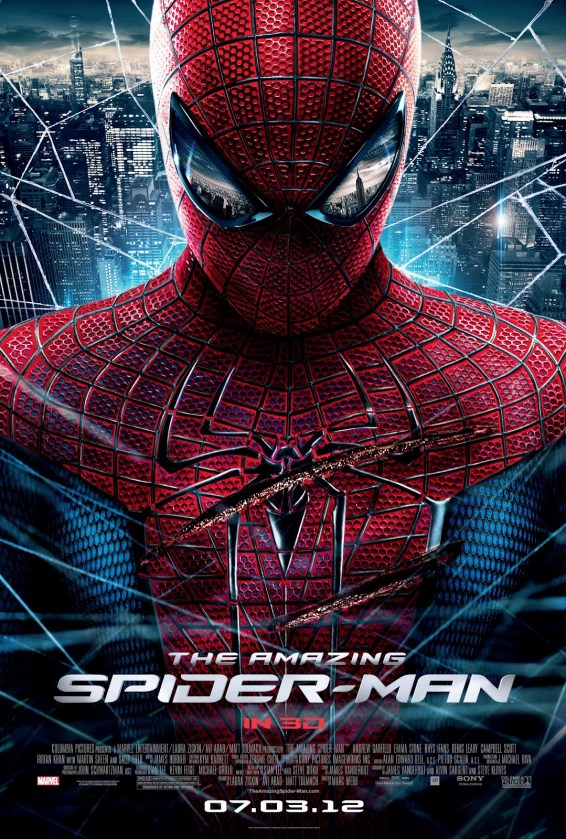
Only five years after the previous ‘Spider-Man’ franchise ended, ‘The Amazing Spider-Man’ attempts to be a fresh and slightly darker reboot of the superhero’s classic origin story yet, sadly, falls pretty flat. Feeling too similar to the previous iteration of the franchise, as well as never really perfecting any of the interesting ideas the film introduces itself.

Plot Summary: When ‘Peter Parker’ is bitten by a genetically altered spider, he gains newfound spider-like powers and ventures-out to solve the mystery of his parent’s mysterious death. Meanwhile, a menacing new threat emerges on the streets of New York City…

Aside from the new focus on his lost parents, the story is far too similar to what we have seen before. Featuring all the classic scenes of ‘Peter’ beating up criminals, making his iconic costume (which now has an unpleasant redesign) and, of course, witnessing his ‘Uncle Ben’s death. This can make the story feel very bland and predictable for the majority of its runtime, if the film was to come out many years after ‘Spider-Man 3,’ then perhaps it wouldn’t have been as bad. But, due to Sony wanting to keep the rights to the Marvel character, a new remake had to be rushed out.

‘Peter Parker’ is this time portrayed by Andrew Garfield (The Social Network, Hacksaw Ridge), and overall, I think he does a decent job here, as while this version of the character isn’t incredibly memorable, he does portray the character as a nervous and awkward yet still likeable teenager, despite looking a little too old for the character’s actual age. The rest of the cast of Emma Stone, Sally Field and Rhys Ifans all do a decent job throughout, but are never really given anything interesting to do when it comes to the story.

The cinematography by John Schwartzman is nothing outstanding, as aside from the unique P.O.V. shots from ‘Spider-Man’s perspective, the cinematography mostly just stays at a consistent level throughout the runtime. However, this is easily redeemed by one of the best elements of the film for me, the great chemistry between Andrew Garfield and Emma Stone, as Stone portrays ‘Gwen Stacy’ (Peter Parker’s first love interest) all of their scenes together are very funny and charming, reminding heavily me of director Mark Webb’s prior film; ‘500 Days of Summer.’

The original score by James Horner is once again nothing amazing, but it does fit the film’s style. Feeling like a classic superhero score, mixed with some more emotional elements, equalling to a pretty varied but not very memorable soundtrack. The majority of the film could be described in this way, however, as many aspects of the film never seem to pass the level of ‘decent,’ which is a real shame, as I think this director and cast have some great potential. But, this simply wasn’t the film for it.

The writing is definitely one of the weakest elements of the film for me, as the film is full of cheesy lines and cliché moments throughout the story. My main issue with the film, however, is the film’s antagonist, the ‘Lizard,’ as his motivation, awful appearance and general lack of an intimidating presence really portray this classic comic book foe in a bad light.

The action sequences throughout the film are nothing really exceptional of note, as although they are decently entertaining, none of them ever manage to become as memorable as anything from the original ‘Spider-Man’ trilogy. My personal favourite most likely being the action scene set in ‘Peter’s high school, as the scene utilises the location very well. It’s also here when we get a great look at the various different CG effects in bright lighting, and I feel overall they look decent.

In summary, although I initially gave this film a lower rating, the actual filmmaking on display here isn’t terrible, and what the film does well such as great chemistry between the lead cast, ‘Spider-Man’s spectacular P.O.V. shots and the occasional entertaining action scene, I simply can’t ignore. Maybe check this one out if you’re a huge fan of the character, if not, you’re not missing out on much. Final Rating: low 5/10.

amazing-spider-man-final-poster