Cloverfield (2008) – Film Review

Personally, I’m not an enormous fan of found-footage horror films (especially when it comes to many modern horrors). However, ‘Cloverfield’ is a rare exception to this, as when this film was first announced, it was surrounded in mystery, as the images and clips that were released revealed literally nothing about the film’s plot. Now, years after its release, we know it’s a large-scale classic monster throwback, all brought-together with a dark atmosphere, clearly inspired by classic monster flicks, such as the original ‘Godzilla,’ ‘King Kong’ and ‘Gorgo.’

Plot Summary: After the U.S. Defense Department discover a videotape in the former Central Park, the located footage reveals a group of friends celebrating a surprise farewell party in the apartment of ‘Rob Hawkins’ in Lower Manhattan, that is until the footage continues on, and soon begins to show an event far more disturbing…

The film opens with a U.S. Defense Department logo, shortly followed by footage of our main protagonist and his girlfriend in bed. This blending of old footage mixed in with the new footage of the attack is a great way of giving some development to the characters, alongside breaking up the large amounts of chaotic action the film sometimes falls into. The film’s reasoning for this is explained early on in it’s runtime, as the current tape we are watching is recording over another.

Aside from Lizzy Caplan and T.J. Miller, the rest of the cast are mostly unknown. I would say they all did a decent job, as the majority of their screen-time is consisted of running and panicking as they make their way through the streets of New York, however. I really enjoyed Lizzy Caplan’s performance, in particular, as her character ‘Marlena’ gets thrown into an intense and painful situation later in the story. This also results in one of the most disturbing/memorable scenes of the film. Unfortunately, the characters aren’t given a huge amount of development, aside from a few short scenes throughout the film.

Being a found-footage film as it is, the cinematography within the film is almost entirely hand-held. Usually utilising a large amount of camera movement to block the audience’s view of the creature in the early stages of the film. Which does really help build tension and excitement, as well as add to the overall mystery that initially surrounded the film. However, the constant and aggressive shaking of the camera can sometimes become a little overwhelming, even if it does result in some thrilling action scenes. The film obviously also doesn’t have an original score due to its found-footage style.

Another element of the film I quite is the design of the monster, as the design seen throughout the film is very original and really gives off a powerful and intimidating feel, which does enhance the film’s visuals. However, one element of the visuals I don’t enjoy is the film’s colour palette, as it can make the film feel a little too much like a typical action blockbuster or cliché horror at points.

The film does also have plenty of memorable moments throughout, as the film’s narrative goes on, New York City becomes more and more destroyed. This allows our group of characters to make their way through the monster’s path of destruction, avoiding dangerous areas and making fantastic use of the large sets and CG effects the film presents on-screen.

In summary, I quite enjoy ‘Cloverfield,’ although it’s now become part of a strange almost anthology-like film franchise with the likes of ’10 Cloverfield Lane’ and ‘The Cloverfield Paradox.’ The initial idea of a simple found-footage monster film always intrigued me, and I’m happy to say director Matt Reeves, producer J.J. Abrams and writer Drew Goddard all did a decent job here, as even though weak characterisation and overly shaky cinematography do let the film down somewhat, great tension building as well as the film’s superb level of realism and some brilliant creature designs, keep the film interesting enough to enjoy. Final Rating: 7/10.

cloverfield_ver2_xlg

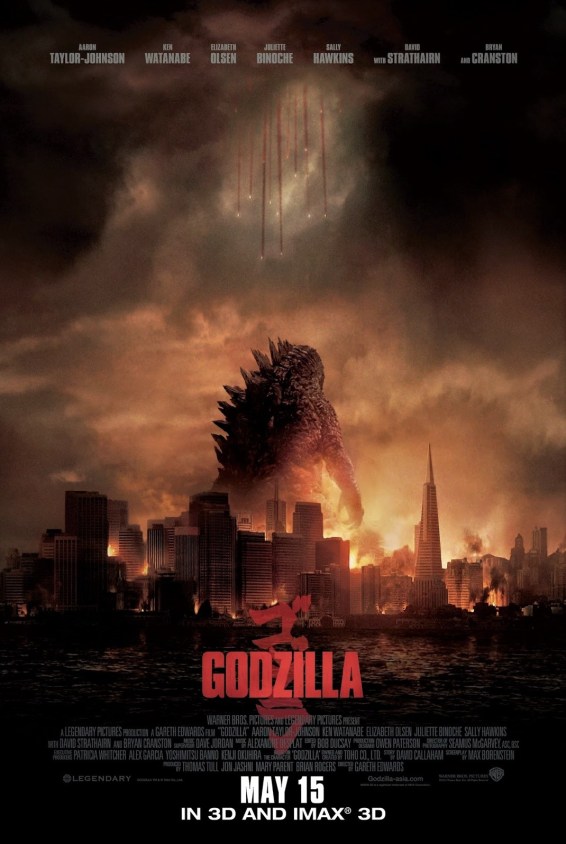
Godzilla (2014) – Film Review

‘Godzilla’ has always been an interesting franchise to me, with the Japanese film series spanning over sixty years and introducing new directors, new production teams and new foes for the gigantic lizard to face time after time, with the franchise even devolving into more of a self-parody nearing the end of it’s run, ‘The King of Monsters’ was still (and probably always will be) immensely popular. So, of course, it was only a matter of time until America decided to once again try their hand at the iconic monster franchise.

Plot Summary: When scientists discover a giant ancient spore underneath the Philippines, they decide to preserve it for research for fifteen years until it eventually hatches. Now, with malevolent creatures from the inside threatening the existence of all of mankind, another ancient creature known only as ‘Godzilla,’ rises from the depths of the ocean to restore balance to nature once again…

America first attempted a ‘Godzilla’ film back in 1998, with many feeling the film differed far too much from the original source material. Featuring an awful redesign for the classic monster and no actual antagonist for him to face. Now, returning back to the classic formula but with a more grounded tone and some fresh creature designs, director Gareth Edwards (Monsters, Rogue One: A Star Wars Story) does a mostly solid job with this remake, even if the film can sometimes focus far too much on the humans and other creatures within the story then ‘Godzilla’ himself.

Although much of the narrative focuses on the ‘Ford’ family, portrayed by Aaron-Taylor Johnson, Elizabeth Olsen, Carson Bolde, Bryan Cranston, and Juliette Binoche. With all the cast doing a decent job (Cranston being the obvious stand out with a few amazing scenes showcasing his true talent) their characters are given very little development, as although I do believe the human characters are an important element to break up the constant chaos from the massive monsters, the entire family of characters could have definitely used more characterisation when it comes to the writing.

However, in addition to the fantastic use of CGI throughout the film, the cinematography by Seamus McGarvey is actually pretty great, as while there are a few bland shots throughout the film, the majority of the shots involving the giant creatures are used to great effect, with an enormous amount of wide shots showcasing the creature’s true scale. Whilst the original score by Alexandre Desplat is also pretty effective, as although it’s nothing incredibly memorable by itself, it’s still very effective, backing up both the film’s exciting action, as well as some of its more unnerving, eerie and emotional scenes.

My primary issues are in relation to the film’s general pacing and diminutive amount of action set pieces throughout the runtime as although I usually have no issue with story or character moments over action when it comes to your average blockbuster, the film does build up a large amount of excitement towards the final battle between the monsters for a large portion of the narrative. Even cutting away from some action scenes to tease the audience early on in the film, and although the final confrontation is entertaining, I wouldn’t say it makes up for the amount of time it makes its audience wait.

In summary, despite its flaws, I actually quite enjoy ‘Godzilla,’ as although it’s by no means perfect and I do hope the inevitable sequel improves upon many of its flaws. The film is still engaging enough throughout to keep its audience engaged, despite its lack of action and rather weak characterisation. The film’s brilliant visuals and surprising grasp on realism during many scenes are probably enough to elevate this monster flick for most. Final Rating: 7/10.

Godzilla 2014 movie poster large malaysia release

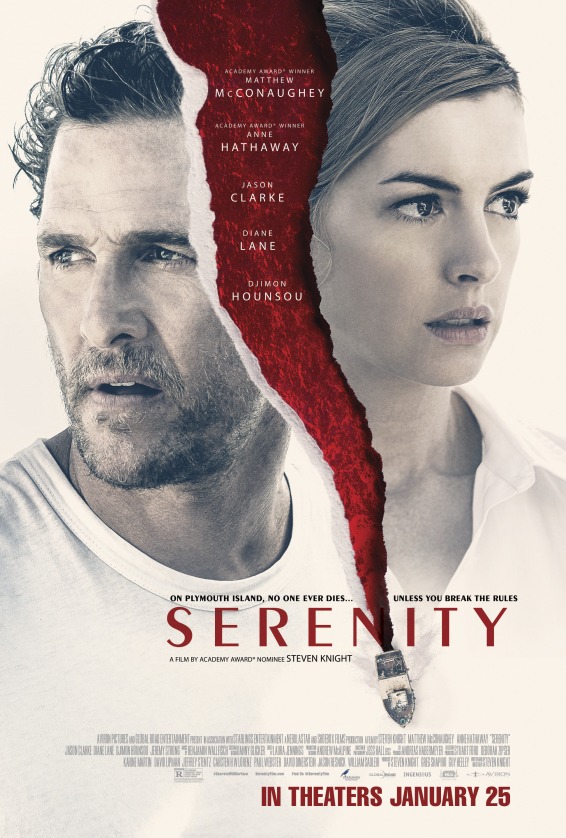
Serenity (2019) – Film Review

A film I only heard about very recently, ‘Serenity’ is a sci-fi mystery written and directed by Steven Knight, best known for his work on the smash-hit television series; ‘Peaky Blinders.’ Although I thought the film looked interesting initially, it has received a lot of bad reviews since it’s release from both critics and audiences alike, so I decided I’d give it a watch and decide for myself.

Plot Summary: When ‘Baker Dill,’ a lone fisherman who escaped from his past to a remote island, meets with his ex-girlfriend; ‘Karen.’ She begs ‘Dill’ to save her and their young son from her new, violent husband by taking them out to sea on a fishing excursion, where, when the time is right, they can throw him to the sharks and leave him for dead…

The story and setting of the film definitely feel very fresh for this genre, mostly due to the film seeming like more of a straight drama at first before changing drastically later down the line. ‘Serenity’ also delivers its narrative in a very unusual fashion, editing between scenes at a very quick pace. Keeping the story always in constant motion and placing small seeds leads to bigger reveals later in the runtime. Some of which only get small appearances for viewers paying close attention. Sadly, for these same viewers, the CGI on display here isn’t the most impressive.

Matthew McConaughey, Anne Hathaway and Jason Clarke all give decent performances here, at points, however, they do feel a little ‘off.’ Whilst I’m sure this is intentional, as it fits with the film’s atmosphere, it can sometimes be distracting from the story itself. Particularly, I deeply enjoyed Jason Clarke’s performance as ‘Karen’s abusive husband: ‘Frank Zariakas,’ as here, Clarke portrays a completely different character than the ones we are used to seeing him take on.

The cinematography by Jess Hall is most certainly one of the highlights of the film for me, resulting in many beautiful and interesting shots. The film also uses the panoramic pivot point camera movement technique (spinning the camera around the actor) for many shots, similar to how the ‘Saw’ franchise does. Personally, though I’m not a huge fan of this technique, as it makes the film feel a little cheap. The cinematography also helps with many of the more emotional or tension-filled moments throughout the narrative of the film.

The original score by Benjamin Wallfisch really lends itself to the strange atmosphere of the film for the most part, aside from when the tension rises in a few scenes, as then I felt the soundtrack begin to feel a little generic and action-heavy. However, when you consider the twist at the end of the film, I feel the score could’ve taken some ideas from it into account, which would’ve perhaps made it a little more memorable.

When it comes to the editing, it can definitely vary, as in some scenes the editing can be a little messy or overly quick, for the most part, the editing is decent and the transitions between scenes are very effective. Even with the quick editing, however, the runtime is still overly long and could easily be cut down to at least an hour and a half. In addition to this, when the editing is combined with some unintentionally amusing writing, it can lead to some oddly comedic moments.

In summary, ‘Serenity’ is a very different kind of film, it begins as almost a character drama before completely spiralling into its science fiction mystery elements. I can see that if you weren’t prepared for the change in direction, it may come across as very sudden and out-of-place. Soon becoming a film not intended for everyone, but with some great cinematography and some occasional impressive editing alongside an incredibly strange atmosphere. I personally found some entertainment value in this film, but not much. Final Rating: 4/10.

serenity_xxlg

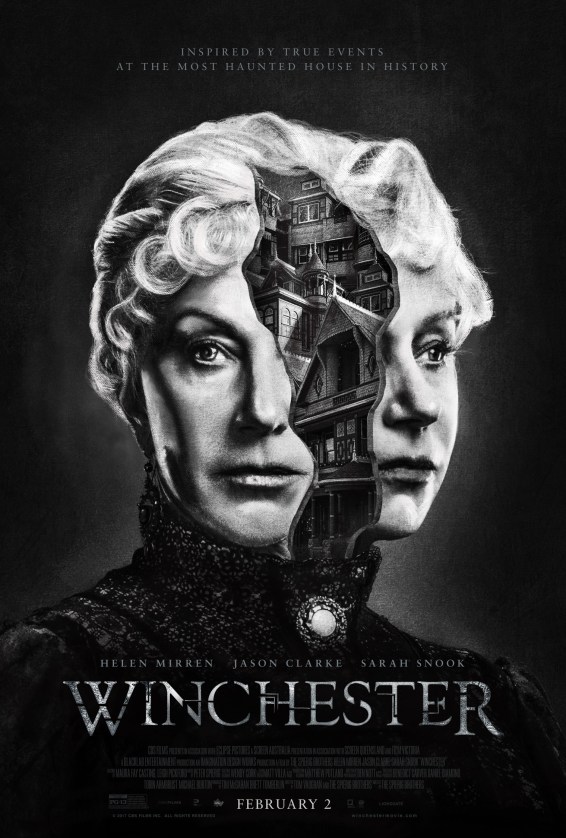
Winchester (2018) – Film Review

Although slightly better than some other modern horrors, ‘Winchester’ is nothing incredibly memorable. Despite the film’s story being based on true events and having some decent performances throughout, the film still suffers from mostly a bland atmosphere and enormous overreliance on jump-scares, resulting in a mostly boring experience.

Plot Summary: In 1906, ‘Sarah Winchester’ the firearm heiress mourning the loss of her family. Begins to believe she is being haunted by the souls of people killed by the ‘Winchester’ repeating rifle. So, ‘Dr. Eric Price’ is sent by order of her company to her ever-growing home in California in order to inspect her sanity, discovering for himself the disturbing history of ‘Sarah’s home…

A story like this isn’t anything new for sure, we’ve all heard the ‘based on a true story’ or ‘haunted by my past’ storyline a thousand times before. However, they were a few elements of this story I did enjoy, the main two protagonists of the film, that being ‘Dr. Eric Price’ portrayed by Jason Clark and ‘Sarah Winchester’ portrayed by Helen Mirren, are both given some depth. The same cannot be said for the side characters of ‘Marion Marriott’ and ‘Henry Marriott,’ however, as these characters are given no characterisation barley and do so little within the narrative I was constantly questioning their inclusion.

The film overall has an extremely bland look, as the dim grey colour palette alongside the mostly still and uninventive cinematography by Ben Nott make the film very dull visually. The original score by Peter Spierig also doesn’t benefit the film much as the soundtrack is you usual horror score with nothing really interesting about it, other than the occasional moment when it becomes uncomfortably loud. There is the occasional pleasing shot or interesting idea here, but it’s definitely few and far between.

Despite the location and the time-period of the film actually being some of the main draws towards it (considering most horrors are usually set in modern-day) and with the ‘Winchester Mansion’ being a real haunted attraction in America. I was very disappointed to find the location barley utilised, as aside from one short scene in the film where ‘Eric’ explores a dark hallway, what we see of the mansion is mostly confined to a few different rooms throughout the runtime.

The film also (as usual) has a heavy reliance on jump-scares, which means the film barely even makes an attempt to build tension. The film seems more in favour of fading out all of the audio before leading into a loud screeching sound while a ‘terrifying’ face appears on-screen. This is an issue with many modern horrors in all fairness, and feels like nothing other than laziness on the part of the filmmakers.

In summary, ‘Winchester’ is certainly not one of the worst horrors I’ve ever seen. However, it is a big waste of potential, as I feel a story set within the walls of the ‘Winchester Mansion’ could have been really interesting if the film would’ve gotten inventive with the iconic location they had at their disposal. But, as is, the weak characters, bland visuals and dull atmosphere add-up to a very forgettable modern horror. Final Rating: 3/10.

winchester_the_house_that_ghosts_built_ver5_xxlg

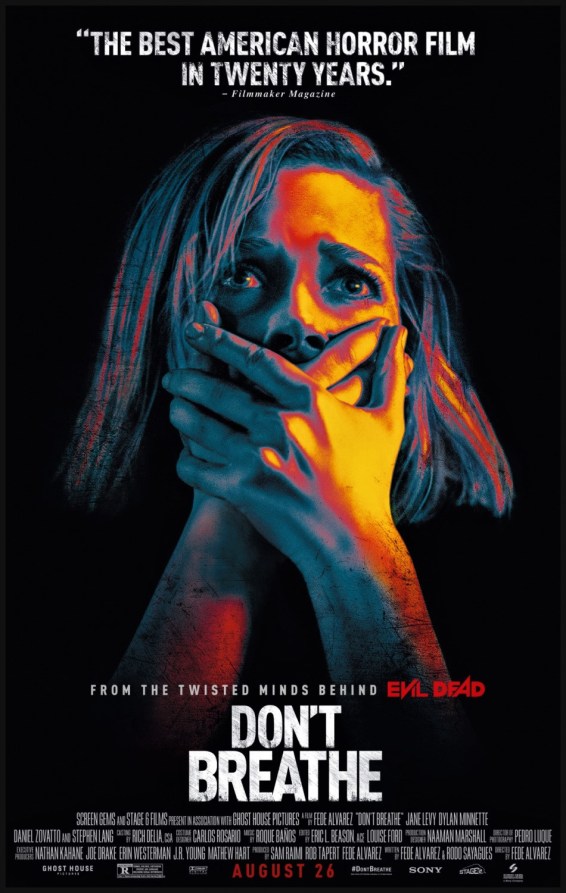
Don’t Breathe (2016) – Film Review

Truly a visual treat when it comes to the film’s lighting and attractive colour palette, ‘Don’t Breathe’ is the second big-screen outing for director Fede Alvarez after he took on the extremely gory ‘Evil Dead’ remake a few years prior. Through its original story, incredibly tense atmosphere, brilliant cast as well as iconic horror director Sam Raimi on board as a producer, ‘Don’t Breathe’ manages to constantly remain both entertaining and thrilling in spite of nearly all its runtime taking place within a single location.

Plot Summary: When a trio of thieves break into an elderly blind man’s home in an attempt to steal the loan given to him as a settlement for his daughter’s death. They soon begin to realise that the old man isn’t as helpless as first seems, leaving the group to find a way out before it’s too late…

This simple yet unique plot is truly ripe for creating tense moments, as the film utilises its main location of the ‘Blind Man’s house to the best of its advantage. Having the trio of characters make their way through the house’s tight corridors and dark rooms with plenty of extremely close encounters with the blind old man. Even having to hold their breath at points so he can’t hear them breathe (as the title of the film implies). Alongside this, ‘The Blind Man’ also has a pet Rottweiler, which lends itself to creating even more intense scenes as the characters get pursed by the vicious canine. Who was actually portrayed by three different dog actors, named; Athos, Astor, and Nomad, respectively.

Stephen Lang, best known for his role as ‘Colonel Miles Quaritch’ in 2009’s ‘Avatar,’ portrays the film’s antagonist only ever known as ‘The Blind Man,’ and does a phenomenal job of it. Giving the audience an almost sympathetic view of the character through his innocent performance early on before then quickly becoming far more unhinged and incredibly intimidating every-time he is on-screen. The rest of the cast of Jane Levy, Dylan Minnette and Daniel Zovatto also give remarkable performances as the young group of thieves, despite their characters only receiving a small amount of characterisation near the beginning of the film.

The cinematography by Pedro Luque is surprisingly inventive throughout, as in addition to the film’s array of visually-pleasing shots. ‘Don’t Breathe’ actually uses its cinematography to allude to moments that come later within the narrative. In particular, in the scene where the trio first break into ‘The Blind Man’s house, as the camera glides through the various different rooms focusing on key objects or areas for reasons that are revealed later down the line. However, the real visual flair of the film is definitely the stunning lighting and colour palette as already mentioned, from dirty blues and greens to overly bright oranges. Each location (whether inside or out) is always given its own distinct appeal, sometimes even replicating what the audience should be feeling at that point, whether that is fear or relief.

Roque Baños, the same composer who previously worked with director Fede Alvarez on the ‘Evil Dead’ remake, returns to work alongside him once again. This time around crafting an original score which is both eerie and memorable, as the score uses metallic bangs and crashes to fit with the story’s location, giving the soundtrack a real personality similar to the film itself. ‘Don’t Breathe’ also uses its score very effectively, only placing it within more fast-paced moments after the tension has already risen, rather than overusing the original score in scenes where silence is mostly required.

When it comes to its runtime, ‘Don’t Breathe’ is actually quite short, as due to the film wanting to keep its viewer on edge throughout nearly the entirety of its narrative, ‘Don’t Breathe’ is cautious not to overstay its welcome, an issue that many horror flicks have suffered from as many horrors in the past have overplayed their concepts, eventually making them far less frightening/interesting by the time the credits roll. That being said, I couldn’t help but feel a few more scenes with our protagonists wouldn’t have gone amiss, as there were actually a number of more character-focused scenes shot for the film before inevitably being cut.

In summary, I deeply enjoy ‘Don’t Breathe,’ as this horror/thriller is, in my opinion, a genuine pleasure to watch every time. As, aside from desiring a little more characterisation for the protagonists, I have very few issues with this one, as Stephen Lang’s sensational performance, in addition to the film’s great visuals and large number of tension-filled moments, leave ‘Don’t Breathe’ one of the most memorable lower-budget horrors made in quite some time, and I personally am really looking forward to seeing what other stories director Fede Alvarez has up his sleeve, horror or not. Final Rating: high 8/10.

dont_breathe_ver4_xlg

The Shape of Water (2017) – Film Review

Without question one of my favourite films from director Guillermo del Toro (Hellboy, Pacific Rim, Crimson Peak), ‘The Shape of Water’ is for sure not a film that everyone will enjoy, but for those who do, this strange story of a woman falling in love with an otherworldly fish creature inspired by the horror classic; ‘Creature from the Black Lagoon,’ will truly push visuals and storytelling to their limits. Combining some outstanding cinematography with stunning make-up effects and plenty of absorbing performances from Sally Hawkins, Doug Jones and Michael Shannon, all equalling to one truly incredible cinematic experience.

Plot Summary: In the midst of the 1960s, inside a high-security government facility, lonely cleaner, ‘Elisa,’ is trapped in a life of silence and isolation, stuck in a familiar and mundane routine. But, when the facility she works within captures a mysterious fish creature in order to study its unique physiology, ‘Elisa’s life changes forever as she becomes more and more attached to the creature…

‘The Shape of Water’ is undoubtedly a Guillermo del Toro film through and through, as with another director at the helm, I could definitely see this film not working, as the completely bazaar plot is no doubt an instant turn-off for some viewers. But, del Toro truly brings his ‘A’ game here, bringing every inch of his creativity and passion to the film. And, as such, the film is an absolute pleasure to watch from beginning-to-end, which is even more impressive considering both of the film’s protagonists, a.k.a. ‘Elisa’ and ‘The Amphibian Man,’ are completely mute for the entirety of the runtime. In fact, one of Octavia Spencer’s favourite things about the film was that by the main couple being mute, most of the dialogue comes from a black woman and a closeted gay man, who would’ve both experienced real oppression during the 1960s setting of the film.

Despite actor Doug Jones being in heavy make-up prosthetics to portray ‘The Amphibian Man’ for all his screen-time, he actually is able to invoke a variety of emotions, and shares plenty of chemistry with his co-star Sally Hawkins as ‘Elisa,’ with the supporting cast of Michael Shannon, Richard Jenkins, Octavia Spencer and Lauren Lee Smith also being surprisingly excellent given their character’s limited time on-screen. As well as the marvellous cast, the writing throughout the film is also fantastic, as del Toro writes the screenplay almost like poetry. Forming a romantic bond between the two main protagonists as the film progresses, all the while integrating plenty of social commentary on the time-period, backing-up the film’s main theme of what makes us different, whether that be because we are deaf, blind or possibly, not even human, which I personally found very compelling.

The phenomenal cinematography by Dan Laustsen elevates ‘The Shape of Water’ drastically, which contains an unbelievable amount of beautiful shots throughout the narrative, with the film’s dark blue/green colour palette only helping to add to the film’s visuals. Furthermore, many shots within the film play into aspects of various characters, most notably, ‘Elisa’s isolated life, displaying the facility where she works as a cold, dirty and segregating place.

Additionally, ‘The Shape of Water’ adds another remarkable score to composer Alexandre Desplat’s already-overflowing catalogue of work, as this unusually-beautiful romantic score with an almost French-esque feel, is very impactful in many moments throughout the film. Particularly with the opening scene however, as the opening shot glides slowly through a flooded room set to the my personal favourite track of the film; ‘The Shape of Water,’ preparing the viewer for the strange story that lies ahead. Desplat also provided recordings of his own whistling to be featured in the soundtrack, as del Toro wanted the score to feature whistling so it could contrast with the film’s many scenes that feature water.

One of my personal favourite elements of the film is definitely the make-up and prosthetics, as every second of screen-time we get with ‘The Amphibian Man’ the make-up effects look completely flawless, with many aspects of the strange and original design being inspired by real animals. Which is nothing new to this director however, as del Toro has always been known for creating incredible creatures of dark fantasy, such as in ‘Pan’s Labyrinth’ and the ‘Hellboy’ series. Although used less than what many may initially think, the CGI throughout the film is also very effective, amplifying many of the small effects around the creature rather than distracting from (or overpowering) them.

In summary, I honestly believe ‘The Shape of Water’ may be one of my all-time favourite films, and certainly one of favourite films of 2017, as the relationship between the two protagonists and the journey their relationship represents is truly memorising from start-to-finish. Backed-up by some amazing cinematography, a great original score as well as the make-up and CG effects, whilst perhaps not a film for every cinephile, it is an extremely well-made film regardless, and one that I would surely recommend. Final Rating: 9/10.

shape_of_water_ver3_xxlg

What’s Wrong With Modern Horror? – Film Discussion

What’s wrong with the majority of modern horror films?

In my opinion, there are many different issues that modern horrors/thrillers suffer from nowadays, although there are a few films that manage to avoid these problems, such as ‘It Follows,’ ‘The Descent,’ ‘A Quiet Place,’ ‘Don’t Breathe’ and ‘The Void,’ to name a few. The majority of modern horrors follow a very similar formula, a group of stereotypical teenagers do something they shouldn’t, e.g. find a certain object (an Ouija board, a cursed book or a dead friend/relative’s photo), or a loving family moves into their new home only for it to be haunted by ghosts/demons. These two plot lines are the go-to for most of the new horror releases, despite being unbelievably drawn out by this point.

Similar to how nearly every horror plot of the 1980s involved a group of teenagers visiting a cabin deep in the woods only to get slaughtered one by one at the hands of a psychotic serial killer. Sticking to stories that we have become so familiar with means that there is little surprise left for the audience, and the narrative soon becomes very predictable. Another issue with the majority of the stories that are told is the weak characters, nearly every modern horror has such bland characters it’s difficult to get invested in the story at all. Just because these characters may be killed off doesn’t mean you don’t have to write for them, having some likeable or interesting characters actually makes the audience care whether they live or die, therefore increasing the film’s tension. Of course, hiring unknown actors who aren’t the most amazing at their craft also doesn’t help this issue.

Another thing that’s always bothered me in regards to the characters in most modern horrors, is the character’s extreme stupidity. The film actually falls less out of reality due to the characters being so unbelievably oblivious to everything around them. It’s understandable the characters would have some doubts the first time one of their friends dies. But, after two or three, it’s ridiculous the characters still haven’t figured out what the audience has half an hour ago, even if they’re curious but not concerned, it’s nothing but frustrating and less believable. This unbelievability also applies to the attractiveness of the cast, as although I think a film featuring a few attractive cast members is perfectly fine, casting nothing but models pulls the audience out of the narrative. A film particularly guilty of both of these things is the Blumhouse supernatural flick; ‘Truth or Dare.’ As this film is a perfect example of the problems I have with most modern horrors, both in regard to their characters, actors and screenplays.

It isn’t just the screenplay or actors that are an issue when it comes to modern horror, however, as the overall filmmaking of the picture is usually extremely bland. Again, due to the genre, some people may believe that filmmaking isn’t important. This isn’t true. The filmmaking can still be impressive while building tension and fear. ‘It Follows’ is a great example of this, the beautiful lighting, cinematography and original score all give the film style without taking anything away from the eerie atmosphere. Horror soundtracks are a huge issue for me when it comes to most films, as it is possible to create a great memorable score without making it just sound eerie, e.g. ‘Halloween’ or ‘The Shining.’

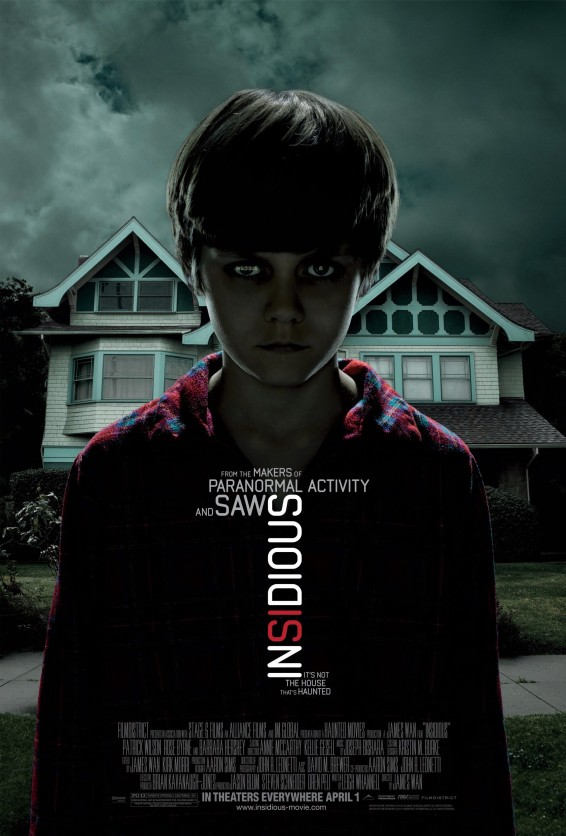
Finally, we get to the biggest problem with modern horror, the classic; jump-scare. Jump-scares only really came around in the early 2000s, but since then they have completely invaded the film industry. Not only appearing in horror but everything from action to sci-fi to even superhero films, they’ve now become almost a staple of modern filmmaking. I don’t believe they are an entirely awful idea, they can be used correctly every so often to shock the audience and give them a quick rush before the next scene. However, most modern horrors now essentially rely on jump-scares (most James Wan films are particularly guilty of this, in my opinion) and I believe this is incredibly lazy. Horror should be about creating an eerie atmosphere, having creepy visuals and giving the audience some likeable characters to fear for, essentially placing the audience in that situation themselves. ‘Pyewacket’ from 2016 is a terrific example of this, drawing out shots and using dim lighting/shadows and silhouettes, can all help build fear in the audience, rather than just throwing ‘frightening’ faces at the screen alongside loud noises to see what sticks.

The primary reason all these bad decisions are made when it comes to the horror/thriller genre is mostly due to money, no matter how awful the majority of these horrors are, the reality is that they make money as these films can be made on modest budgets as they utilise mostly unknown actors and very little CGI or make-up effects, with a target audience consisting of teenagers or horror fanatics who will pay to see the film, no matter how terrible the trailers may look. For example, the first ‘Paranormal Activity’ had a budget of only £11,800 and grossed over £151 million. The film only has an hour and twenty-minute runtime, along with very few ‘ghosts’ even being displayed on-screen. ‘The Bye Bye Man’ also being another example, harbouring a tiny budget of £6 million, with a total gross of £21 million, despite awful reviews from both critics and audiences.

In summary, modern horror films are suffering due to both a lack of creativity and a heavy focus on profit. I’m, of course, aware that film is a business, but, in my opinion, creativity is the most important aspect, as without creativity film doesn’t exist. Horror is a fantastic genre that isn’t reaching its full potential a majority of the time due to production companies/directors not caring. There’s a reason a lot of indie horrors are praised, as they don’t set out to only make money, many of them are extremely creative and make amazing use of their micro-budgets. Although horror also wasn’t perfect in the past, I definitely preferred it. At least back in the ’80s/’90s we still had some creative concepts, from killers invading their victim’s dreams to murderous children’s dolls to even a hand-held documentary on teenagers finding an ancient evil witch in a forest. The possibilities were (and still are) truly endless. Hopefully soon, filmmakers and producers alike will look past the profit and truly see this.

insidious_xxlg

Welcome to JoeBakerReviews.com

Hello, my name is Joe Baker. In addition to scouring for opportunities within the creative industry across the United Kingdom, I am also a passionate cinephile/film critic and have been ever since I first stumbled upon cinematic classics, like Alien (1979), Jaws (1975) and Jurassic Park (1993), during my younger days. Since then, I’ve only become more captivated by the filmmaking craft and the wonders of storytelling that the medium showcases.

Thus, I decided to create this website to share my thoughts and opinions with other film fanatics around the world through a variety of content. So, feel free to explore, and remember that you can keep up-to-date with the site via an email subscription or any of my social media pages, as I post new content regularly.

The latest post is listed below.