Godzilla: King of the Monsters (2019) – Film Review

Serving as a sequel to the 2014 American ‘Godzilla’ remake, as well as standing as another chapter in this new franchise of monster films by Legendary Pictures. ‘Godzilla: King of the Monsters’ delivers more on of the exciting monster action and amazing visuals that the first film somewhat lacked, but the film does cut down on many other aspects to make this possible.

Plot Summary: When the world is threatened with extinction, the crypto-zoological agency; ‘Monarch,’ is forced to face off against a roster of God-sized monsters, including the mighty ‘Godzilla,’ who soon collides with the fearsome; ‘Mothra,’ ‘Rodan,’ and his ultimate nemesis, the three-headed titan; ‘King Ghidorah.’

As the runtime goes on, the narrative does go a little deeper, but I personally feel the plot gets a little absurd as it continues, becoming almost too layered at points for a simple monster flick. Of course, it can probably go without saying, that every action scene featuring the creatures is phenomenal as each monster is always given its own unique way to combat the others, and the film always finds time to give each creature at least one or two memorable scenes. The film also features a lot more action than the previous ‘Godzilla’ film, due to the film’s quick pacing and as it jumps from location-to-location constantly, always trying to increase the spectacle with each cut.

The three main members of the cast, that being Kyle M. Chandler, Vera Farmiga and Millie Bobby Brown, portray a broken family, forced apart by various responsibilities as well as the loss of one of their children in the past, and while their performances are decent throughout the film. I was disappointed by the lack of any further development for their characters, as I found the setup for their story very interesting and wish the film went more in depth with this idea rather than indulging in one more fight scene, this same issue unfortunately also applies to Charles Dance’s antagonist; ‘Alan Jonah,’ within the story.

The cinematography by Lawrence Sher is decent, as while there are many beautiful and simply awesome shots with the monsters themselves, many of the shots with human characters are rather bland, as there is definitely an overreliance on hand-held shots every time ‘Godzilla’ (or one of his counterparts) isn’t on-screen, despite the film’s colour palette actually being very ranged and pretty visually appealing. The original score by Bear McCreary is very different, however, as the composer crafts a score which captures the enormous scale of the monsters and their chaotic nature very well, with the soundtrack even going to the extent of giving each one of the creatures their own unique and intimidating theme.

The film’s best aspect, in my opinion, is definitely the creature designs, as each one is always very creatively designed, and is given many unique features to fit with its abilities and make it stand out from the rest of the monsters. Of course, the CG effects throughout the film also add to this, as although the film can sometimes be bombarded with far too many elements on-screen at once (becoming a little overwhelming at points). Despite this, everything visual effects we see is usually incredibly well-detailed and doesn’t feel at all out-of-place.

One element I felt didn’t reach the level of the first film from 2014 was how the film captured the true scale of the creatures, as while director Michael Dougherty clearly puts his all into pleasing fans and creating a fun experience, even having the classic theme for ‘Godzilla’ make a welcomed return. The film simply doesn’t capture the same feeling of being within the real-world as these massive creatures roam quite like the first film did.

In summary, ‘Godzilla: King of the Monsters’ is the definition of a mixed-bag for me, even with its explosive monster fights, some amazing visuals, and a great original score. It’s over-the-top story displayed through it’s extremely fast pacing and weak characterisation simply can’t be ignored, leaving the film a fun creature-feature with some serious flaws. Still, there is some enjoyment to be had with ‘Godzilla: King of the Monsters,’ so maybe check this one out if you’re a big fan of the iconic monster. Final Rating: 6/10.

godzilla_king_of_the_monsters_ver4_xxlg

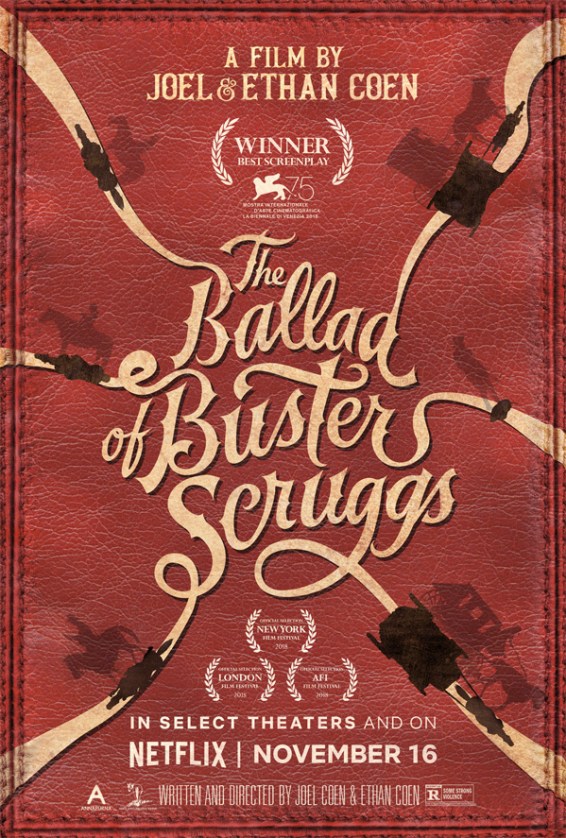
The Ballad of Buster Scruggs (2018) – Film Review

The western genre used to be extremely popular back in the golden age of Hollywood, but in recent years the western genre has mostly died off, as aside from a few honourable mentions, such as ‘True Grit,’ ‘The Sisters Brothers,’ and ‘Django Unchained.’ The western genre as a whole has run mostly dry, until now that is, as iconic directors Joel Coen and Ethan Coen (The Big Lebowski, Fargo, No Country for Old Men) return to the silver screen for this brilliant western anthology.

Plot Summary: Consisting of six different stories of life and violence in the Old West, including the tales of a singing gunslinger, a bank robber, a travelling impresario, an elderly prospector, a wagon train and a perverse pair of bounty hunters…

This diverse set of stories and characters really keep the film engaging from start-to-finish, as the film constantly jumps between characters and locations, all whilst ensuring that it keeps its decent pacing and usual Coen Brothers’ dark sense of humour intact. Resulting in the film feeling extremely refreshing, as superhero blockbusters and jump-scare filled horrors have really taken over the film industry in recent years. So, revisiting an old yet classic genre (especially with this modern spin and the Coen Brothers’ brilliant direction) is truly a breath of fresh air.

The performances by every member of the enormous cast are pretty excellent all around, as Tim Blake Nelson, James Franco, Liam Neeson, Thomas Waits, Zoe Kazan, Jonjo O’Neill and Brendan Gleeson (just to name a few) are all brilliant when portraying their varied and interesting characters, with Tim Blake Nelson definitely being the clear stand out for me with his extremely funny and charming portrayal of the title character; ‘Buster Scruggs.’

Throughout the runtime, the cinematography by Bruno Delbonnel is almost flawless, as the film utilises a variety of beautiful shots which perfectly capture the visual appeal of classic westerns. The original score by Carter Burwell is also great, as the soundtrack uses slow guitar strings and an enormous list of classic country songs to build up atmosphere, with the best of these definitely being ‘When a Cowboy Trades His Spurs for Wings.’

One aspect of the film I absolutely adore is the Coen’s usual style of writing, as every character throughout the film is given plenty of comedic moments and memorable lines, which really helped make many of the characters with slightly less development more likeable. Another element that also really drew my attention during my first viewing was the incredible sets and costumes the film had on full display, as considering the locations/costumes are some of the main factors of engaging the audience into the story and it’s time-period. It was clear they were pulling out all the stops, as every location always feels real and lived in, with the character’s costumes being no different.

My personal favourite narrative of the six would most likely be the opening story, sharing the same name as the title of the film; ‘The Ballad of Buster Scruggs.’ This opening was just such as joy to watch, balancing dark humour with a classic western setup brilliantly, in addition to the fantastic performance from Tim Blake Nelson as already mentioned. However, this is also where my biggest criticism of the film comes in, as although they definitely aren’t awful, the last two stories are easily the weakest of the film, as although we do get some great character moments and fun scenes within these stories, I couldn’t help but feel they simply weren’t as memorable or as charming as the others leading up to them. Perhaps if these two stories we’re placed earlier in the film it wouldn’t be such an issue, but it simply leaves the viewer with a bad taste in their mouth afterwards.

In summary, ‘The Ballad of Buster Scruggs’ proves once again that westerns are far from gone when it comes to film, as the Coen brothers once again take the audience for a trip into the wild west with complete success, as this anthology is just as hilarious as it is visually impressive and well-acted, regardless of whether or not the stories are quite on the same level. Final Rating: low 8/10.

busterscruggsredfinalposterbig59902

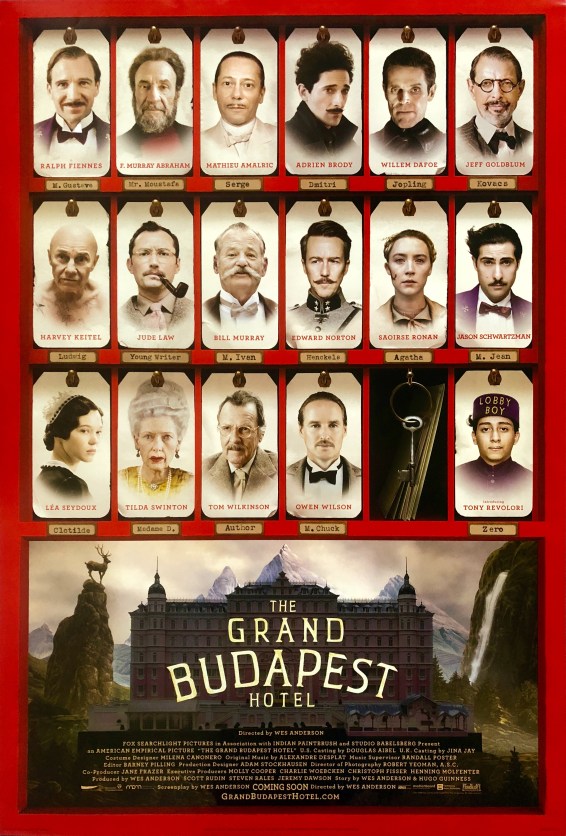
The Grand Budapest Hotel (2014) – Film Review

Wes Anderson’s visually spectacular tale of murder, elegance and crime is far more light-hearted than I was initially expecting. Utilising a bright colour palette, unique cinematography and a wonderful score by Alexandre Desplat, the film brings all the usual elements of Wes Anderson’s style that I adore, especially coming straight off the back of Anderson’s animated flicks.

Plot Summary: ‘Gustave H,’ a concierge of the legendary ‘Grand Budapest Hotel,’ alongside his new lobby boy, ‘Zero.’ Embark on a dangerous journey following a mysterious murder and the disappearance of a priceless Renaissance painting, soon leading them into the middle of a feud over an enormous family fortune…

The film definitely does have a particular artistic flair which his animated flicks do not carry, as in nearly every wide shot in the film we are greeted with what almost looks like a painting. These paintings are almost used as backdrops throughout the film, and blend seamlessly with the bright pale colour palette of the film. Even with this colour palette and mostly upbeat tone, however, the film is not afraid to dive into darker territory if needed in order to serve the story.

In addition to his style, Anderson also does a brilliant job when it comes to the writing, as the film is gushing with hilarious and memorable lines throughout. Many of the comedic lines caught me completely off-guard, with some of the humour being extremely dark. But, with a cast this large and talented, you’re almost guaranteed to get comedic gold. In particular, I really enjoyed the performances by Ralph Fiennes, Bill Murray and Willem Dafoe, who you could really tell they enjoyed their time on-set.

Robert D. Yeoman handles the cinematography within the film, which is, of course, brilliant, as not only does it contain the usual style expected from Anderson, but the cinematography even backs-up the narrative of the film, as many characters within the story feel isolated, and as a result are framed completely alone. But, pretty much all the cinematography throughout the runtime is fantastic. The original score by Alexandre Desplat is also a great aspect of the film, as he creates a very memorable soundtrack here which fits the tone of the film perfectly and really backs up many of the comedic scenes, with the tracks; ‘Mr. Moustafa’ and ‘The Cold-Blooded Murder of Deputy Vilmos Kovacs,’ being my personal favourites.

For the most part, the protagonists of the film are well-written, we understand who they are within the early stages of the story. Yet, as the story continues along, we continue to learn more about them. However, if I had to point out a flaw in the film it’s definitely the antagonists of the film, Willem Dafoe does an excellent job as the deadly hitman, whilst Adrien Brody also does a decent job as his boss. Beyond that, however, the characters are very flat and are given little to no development throughout the film.

Wes Anderson once again also pays serious attention to detail, as in many shots there’s always small hidden gags or visual references hidden away to spot. The filmmaking itself is also used for a lot of visual storytelling, e.g. the lonely characters and their framing within the shots, as already mentioned.

In summary, I was very impressed with ‘The Grand Budapest Hotel,’ as aside from the issue I have with the antagonists of the narrative, the film succeeds in nearly every category for me, and was a very enjoyable watch throughout. Combining Wes Anderson’s great visual style with a brilliant main and supporting cast as well as many comedic moments, the film is certainly worth a watch, and it’s fair to say that Wes Anderson will always have a viewer in me going forward in his career. Final Rating: 9/10.

IMG_3176

The Woman in Black (2012) – Film Review

Fresh off the success of the final ‘Harry Potter’ instalment, Daniel Radcliffe now takes on a paranormal horror story in this adaptation of the classic British gothic horror novel; ‘The Woman in Black,’ by Susan Hill. Yet, sadly, the film ends up being a pretty lacklustre (and even somewhat boring) experience overall.

Plot Summary: In 1906, a young solicitor travels to a remote village where he discovers the vengeful ghost of a scorned woman is terrorising the locals and stealing their children. But, as he begins to investigate further, he soon uncovers a darker history than he initially thought possible…

Although this type of plot is nothing new for the horror genre, the film does attempt to experiment slightly to engage its audience more through mystery and tension. This is especially clear in the eerie opening stinger, which is probably my favourite scene within the film, but I still personally feel the film doesn’t have quite enough experimentation to stand out that much, as I initially hoped due to its distinct British roots and story based on a successful novel, the film would be somewhat memorable. Unfortunately, the film is mostly quite bland, having a few eerie visuals, but nothing overly exceptional in terms of filmmaking.

Daniel Radcliffe portrays the protagonist of the story, ‘Arthur Kipps,’ very similar to how he has portrayed many of his other characters in the past. Coming across as a mostly likeable character with a little bit of development but nothing extremely major, this is an issue with the majority of the characters, however, which leads me onto the fairly dreadful writing throughout the film, as the film always talks directly to the audience, usually leaving no room for subtlety and coming as mostly cliché and cheesy throughout. Despite the rest of the cast of Ciarán Hinds, Janet McTeer and Liz White, also doing a decent job with what little they are given.

The cinematography by Tim Maurice-Jones is mostly fine throughout the film, having the occasional attractive shot, but never really anything overly interesting. Although I was actually impressed with a variety of the transitions throughout the films, as many of them really utilised the location they were set in very well. Interestingly, many of the music boxes and mechanical toys in the nursery scenes weren’t created for the film, but were genuine antique toys from the time-period, loaned to the production by a collector, which I feel really enhances the film’s set design. However, the film’s original score by Marco Beltrami is sadly also very mediocre, never really becoming very memorable or unique other than the occasional scene where the soundtrack is overly loud and extremely irritating.

Being a modern-day horror film, it’s also probably not much of a surprise that ‘The Women in Black’ is littered with jump-scares, with many of them even being false scares, such as birds appearing out of nowhere, slamming doors and loud screams without a source. All of this adding to the mostly weak atmosphere and many slow scenes, leaving the film with not much to offer beyond its pretty average filmmaking.

One element of the film I did enjoy is the production design, as despite the film definitely not delivering on an eerie atmosphere or well-developed characters, the film does truly feel like it is set in the twentieth century, as every location/set, prop and costume all feel used/lived-in and are very accurate to the story’s time-period. However, I’m personally not an enormous fan of the design of the title character herself, ‘The Woman in Black,’ as even although this may be more of an issue with the novel rather than the film, I find her design simply lacks in many aspects, as every-time she is on-screen she feels very generic and bland for what is attempting to be a tense paranormal horror story.

In summary, ‘The Woman in Black’ didn’t really impress me all that much, as while not completely awful, it felt very similar to 2018’s ‘Winchester,’ to me, as the film does have some great elements, yet gets completely bogged down by its overreliance on jump-scares rather than a creepy atmosphere, alongside a fairly uninteresting story and characters, and is, by the end of its runtime, a lot of wasted potential for a classic British horror. Final Rating: low 4/10.

woman_in_black_ver9_xxlg

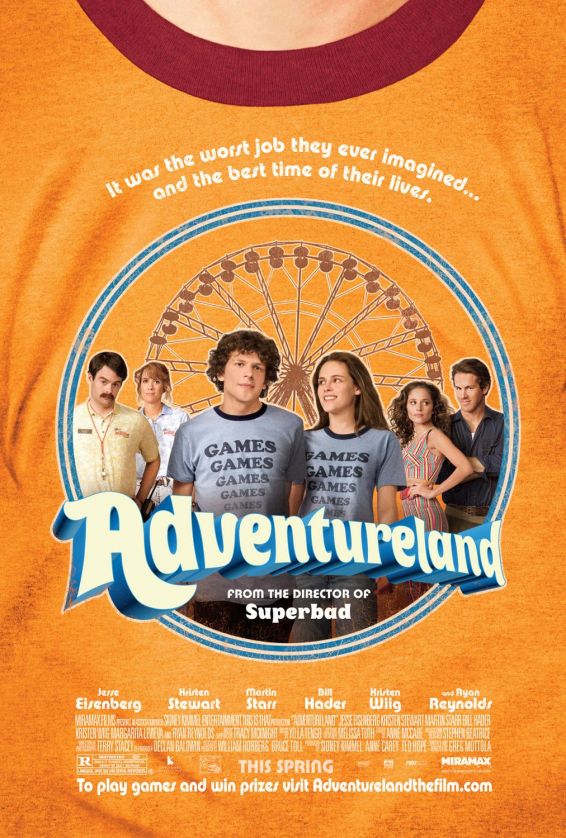
Adventureland (2009) – Film Review

This comedy-drama from 2009 is an underrated classic, in my opinion, as director Greg Mottola (Superbad, Paul, Keeping Up with the Joneses) brings us a simple yet effective story of two young people from different worlds meeting over one memorable summer, and while it may not be as hilarious as some of his other films. I do feel Mottola has brought us a much more emotional story this time around, with the comedy not too far behind.

Plot Summary: In the summer of 1987, teenage college graduate, James Brennan, takes a ‘nowhere’ job at his local theme park as he awaits to leave his hometown. Only for him to soon find it’s the perfect course to get him prepared for the real world, meeting new friends and sending him down a different life path…

For a film like this, it’s crucial that the characters are likeable and are given plenty of development as, in my opinion, drama really only works within film if the characters are developed enough to be invested in. Luckily, the film does succeed here, crafting some very funny and (mostly) realistic characters within only a short amount of time, as the film doesn’t waste screen-time setting up its narrative and characters, but always does so in a way that doesn’t feel too fast-paced.

All of the cast are also pretty great here, as Jesse Eisenberg, Kristen Stewart, Kristen Wiig and Ryan Reynolds all have decent chemistry with each other, and don’t simply treat their characters as joke machines. Despite Bill Hader as the park manager, ‘Bobby,’ definitely being my personal favourite, however, purely through his hilarious dialogue leading to many brilliant moments throughout the runtime.

Being set in a theme park local to the home of the protagonist, this is where the cinematography by Terry Stacey really shines, as the film really uses the different rides, games and attractions as well as the colourful lighting as a beautiful backdrop for many great scenes, as the film is always very inventive with the different locations of the park, exploring new areas in each scene, with some locations even being used to reflect a character’s personality. The film also uses a bright orange, yellow and blue colour palette throughout the story, which really helps to enhance the film’s visuals, and meshes perfectly with the film’s more light-hearted tone.

The original score by Yo La Tengo also helps add to the 1980s atmosphere, being mostly subtle yet still effective in many scenes in spite of its general lack of memorability. Various songs from the ’80s are also used throughout the film, everything from iconic classics to more unknown songs get a short appearance, with all of it eventually adding up to a pretty fantastic soundtrack, as well as another link back to the time period.

The main issue with the film for me is its comedy, as already mentioned. Although the film does have plenty of comedic moments throughout. I simply feel the film has far more in regard to drama than comedy, as the majority of its memorable moments are for more emotional purposes. There was also a subplot between two characters which I personally felt was a little rushed over, but as this was near the end of the film, this may have been done to avoid a lack of focus and conclusion.

In summary, even though ‘Adventureland’ is nothing incredible in relation to its filmmaking, I personally really enjoy the film, as I’ll always find myself turning back to it when in need of a more upbeat comedy-drama, as with a unique location and a great cast of characters, there isn’t really much to dislike here. Although some of the film’s comedy could be improved, I wouldn’t say this drags the entire film down. Check this one out, if you can, as I feel it really deserves more attention from audiences. Final Rating: low 8/10.

adventureland_xlg

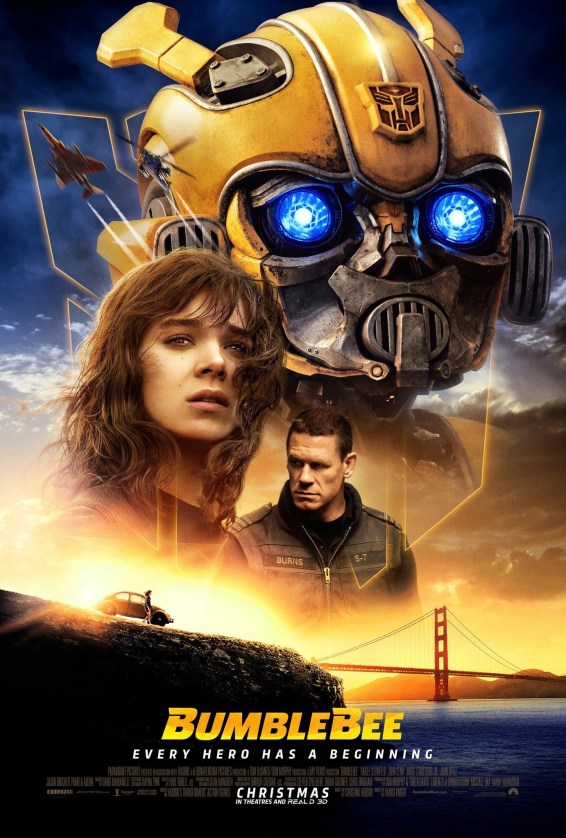
Bumblebee (2018) – Film Review

Serving as both a prequel and a reboot of the ‘Transformers’ series as a whole, 2018’s ‘Bumblebee’ is a fresh take on the sci-fi/action film series. But, going off the back of its outstanding reviews and director Travis Scott’s prior film; ‘Kubo and the Two Strings,’ on my initial watch, I was expecting a little more, both in terms of storytelling and filmmaking.

Plot Summary: On the run from his alien home-world of ‘Cybertron’ in 1987, ‘Bumblebee’ manages to find refuge through a junkyard in a small California beach town. Where ‘Charlie,’ on the edge of turning eighteen and trying to find her place in the world, discovers him, battle-scarred and broken…

Whilst the film is definitely an improvement over Michael Bay’s various attempts at the shape-shifting machines, ‘Bumblebee’ isn’t overall anything outstanding. Mostly been a very comedic sci-fi action-adventure with a few emotional moments thrown in. This version almost seems to be leaning more towards the iconic cartoon series from 1984 to 1987, as many of the ‘Transformer’s designs are ripped straight from the beloved television show, even featuring a few cameos from classic characters.

Hailee Steinfeld and Jorge Lendeborg Jr. both portray young characters who attempt to help ‘Bumblebee’ finish his mission throughout the film, and while their characters of ‘Charlie’ and ‘Memo’ only receive a basic amount of development. They are likeable and serve their purpose within the story. A member of the cast I wasn’t aware of at first, however, was the infamous John Cena. Who, actually portrays one of the main antagonists of the film, aside from the ‘Decepticons’ themselves, and despite his mostly decent performance throughout the film, I simply just couldn’t take seriously, mostly due to his ‘meme’ status and internet reputation.

Luckily, the colourful visuals throughout the film definitely add to the cinematography by Enrique Chediak, as although the cinematography isn’t bad by any means, the cinematography is mostly generic for an action flick like this. But, due to the great lighting and colour palette, ‘Bumblebee’ is easily the most visually appealing entry in the blockbuster franchise, ditching the ugly Michael Bay blue and orange colour palette in exchange for more of a summer-like feel for nearly the entirety of its runtime.

The original score by Dario Marianelli is your generic score for an action flick, with some heroic tones alongside it. The soundtrack isn’t really anything memorable, and despite also not being anything amazing, I think I still prefer the original score for the 2007 ‘Transformers’ film by Steve Jablonsky, which has since been regarded by many as the primary theme for the ‘Transformers’ on-screen.

The action throughout the film is fun for the most part, not simply being another constant barrage of explosions and actually trying to utilise the various ‘Transformers’ abilities in different ways. However, it still doesn’t quite reach the level of fun the original cartoon series had, always feeling a little toned down. One compliment I can give the film, however, is the comedy. As again whilst not landing every joke, the film does have its fair share of funny moments, which did give me a short chuckle at times, and not simply just a sigh or a cringe as many of Michael Bay’s extremely poor attempts at humour did.

In summary, it’s definitely a pleasant surprise to have an entry in the ‘Transformers’ franchise that isn’t just explosions and loud noises from start-to-finish, with a great visual appeal and plenty of humour throughout, I could see most having a lot of fun with this film, especially families. However, it might be that I simply don’t have a huge love for these characters, but I although I found it enjoyable whilst watching, it wasn’t super memorable for me. Final Rating: 6/10.

bumblebee_ver6_xxlg

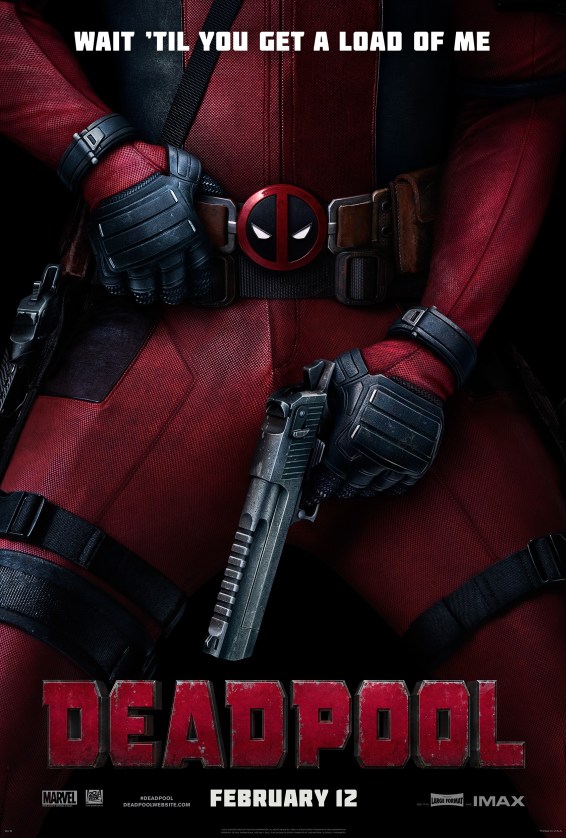
Deadpool (2016) – Film Review

Extremely meta, violent and hilarious from start-to-finish, ‘Deadpool’s first on-screen appearance is exactly what hardcore fans of the character would want from their favourite potty-mouthed anti-hero. Despite being made on a lower budget than the most superhero blockbusters, ‘Deadpool’ still manages to avoid the variety of issues that may come from this by having a ‘different’ kind of appeal for superhero fans.

Plot Summary: After the wisecracking ex-mercenary; ‘Wade Wilson,’ volunteers for an experiment to save his life from cancer, only to awaken superpowered and immortal… but also very ugly, ‘Wade’ begins to track-down the man who ruined his good-looks, and execute his revenge…

Despite the narrative being very simplistic, the story is actually surprisingly engaging. Giving the audience plenty of exciting action scenes, whilst still delivering on a decent romantic subplot between ‘Deadpool’ and his girlfriend, ‘Venessa,’ even managing to give the anti-hero a decent character arc by the end of the runtime.

Morena Baccarin, Ed Skrein, T.J. Miller and Stefan Kapicic are all decent in their respective roles, with Ryan Reynolds, who, portrays the protagonist; ‘Deadpool,’ extremely well, also having a hand in the production process, being a producer on the film as well as having a large impact on the screenplay, and I definitely feel he is a big reason as to why the film works as well as it does, as it’s clear that Reynolds works very well with director Tim Miller, who, I personally know for his work on Netflix’s sci-fi/horror/action anthology series; ‘Love, Death + Robots.’

The cinematography by Ken Seng is nothing spectacular, but it does have its moments. In a similar way to the editing, the cinematography can even be used for a little gag at various points within the film. The original score by ‘Junkie XL’ or Thomas Holkenborg, best known for his work on ‘Mad Max: Fury Road’ and ‘Batman vs. Superman: Dawn of Justice,’ really helps back up the exciting over-the-top tone of the film, combing a rock-like soundtrack with minor, almost dubstep elements, which works perfectly for many of the action scenes throughout the runtime.

The film also delivers on plenty of the meta jokes fans would expect from this character, having many references to Ryan Reynolds past career choices, other characters from the Marvel universe, and even past iterations of ‘Deadpool’ himself, which I really enjoyed. Unfortunately, due to the film’s smaller budget, the film can have some distractingly rough visuals. Having many action scenes with tons of CGI, along with plenty of explosions and gore effects. I found myself sometimes be taken out of the film through the overuse of these visual effects. However, on a more positive note, having a smaller budget than most superhero flicks is also often used for short gag by ‘Deadpool’ himself.

Of course, with a character as loud and over-the-top as ‘Deadpool,’ it’s always possible that not everyone would find the character so likeable and funny, as sometimes the constant bombardment of humour can be overwhelming, and in large doses, I could definitely see ‘Deadpool’ becoming very irritating for some. This is really one of the only complaints I have with the film, however, and after watching this film’s underwhelming sequel; ‘Deadpool 2.’ It’s fair to say I found myself missing the original, mostly for its originality and structure.

In summary, ‘Deadpool’ delivers on what everyone would expect to see from a film like this. It’s not perfect of course, but the film does always manage to be funny, gory and exciting throughout. Not landing every joke of course, but making the audience burst into tears with every joke that it does. Overall, a great comedy/comic book flick, and I really hope films, such as ‘Deadpool,’ ‘Logan’ and ‘The New Mutants’ (should it ever be released), continue to greenlit in upcoming years, as with how oversaturated the superhero genre is today, it could really do with some more variety, now and then. Final Rating: 8/10.

deadpool_ver4_xxlg

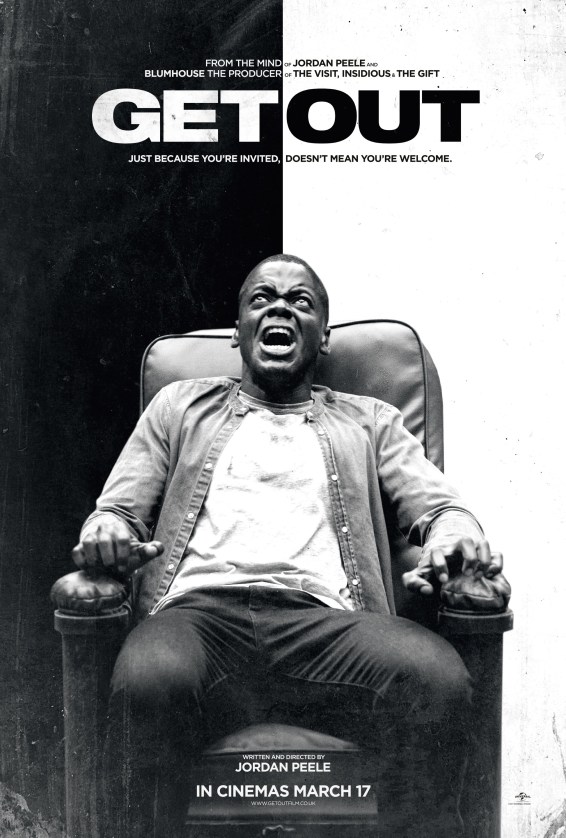
Get Out (2017) – Film Review

Actor and comedian Jordan Peele tests his hand at directing for the first time with this intelligent thriller, as ‘Get Out’ utilises its original story and some great performances to become a definite step-up from Blumhouse Productions’ usual standard for films. However, although many viewers think this film is phenomenal throughout it’s most of its runtime, I personally don’t agree, as I actually feel there is more than a few areas in need of some improvement.

Plot Summary: When a young African-American man visits his white girlfriend’s parents for the weekend, his simmering uneasiness about their reception of him eventually reaches an extreme boiling point. Leading ‘Chris’ to believe more sinister forces may be at work…

As already mentioned, the film’s narrative is original, and any regardless of quality, I always appreciate originality when it comes to storytelling. Despite ‘Get Out’ being initially pitched and advertised a horror, however, the film is really anything but, as the film actually has many inclines of comedy mixed-in with some tension-filled moments here and there, and although the film is entertaining, ‘Get Out’ never really manages to build-up an eerie atmosphere or becomes particularly creepy, which is why I believe that the film is now classed as a thriller rather than a horror by most.

The best aspect of the film for me is by far the performances by the cast, as Daniel Kaluuya, Allison Williams, Bradley Whitford, and Catherine Keener are all exceptional throughout, with Daniel Kaluuya as the protagonist; ‘Chris Washington,’ in particular, really keeping me engaged, as he delivers a very ranged performance, managing to portray a very likeable and realistic character within only a short period of time. Unfortunately, not all of the supporting cast quite level-up to this standard.

The cinematography by Toby Oliver is a decent throughout the film, as although there are plenty of attractive shots (most of which make great use of the large open spaces the majority of the story takes place in (especially in the opening scene of the film, which is executed perfectly). There are also a variety of fairly bland shots, this may also be due to the film’s colour palette, however, as throughout the film the use of a very restrictive colour palette results in the film feeling a little visually dull, rather than using its colours to play into its story or genre.

Personally, the weakest element of the film for me is the original score by Michael Abels, as the entire soundtrack itself feels very unusual, and although unique, it usually comes off as incredibly distracting throughout many scenes within the film. Using an orchestra as well as vocals, the score attempts to reflect some of the more surreal scenes nearing the end of the film, and although I appreciate the attempt, I simply don’t think it works, with the track; ‘Sikiliza Kwa Wahenga,’ feeling particularly out-of-place as a result of its bizarre lyrics.

Although the original score may be lacking, the writing throughout the film is brilliant throughout, as writer and director Jordan Peele balances the screenplay’s comedy and horror, in addition to building-up an engaging mystery throughout the story, as every piece of dialogue contains many subtle clues and hidden meanings which come into play later in the narrative. Of course, with a plot such as this one, there is also an enormous amount of themes and social commentary underneath the story itself, and while I did find the majority of the film’s ideas very interesting and thought-provoking, I also found that some of the themes of racism and social issues can often overshadow the film’s main story.

In summary, ‘Get Out’ is a decent thriller, as despite the fact that the performances and writing on display throughout the film is definitely impressive, I still feel the lack of an eerie atmosphere in addition to a suitable original score for the film’s tone really hurt the film. Regardless of this, ‘Get Out’ is still a thriller will plenty of entertainment value, while nothing absolutely amazing, the film definitely has its moments, and I would say the film is a solid watch if you enjoy the occasional thriller. Final Rating: 7/10.

get_out_ver4_xxlg

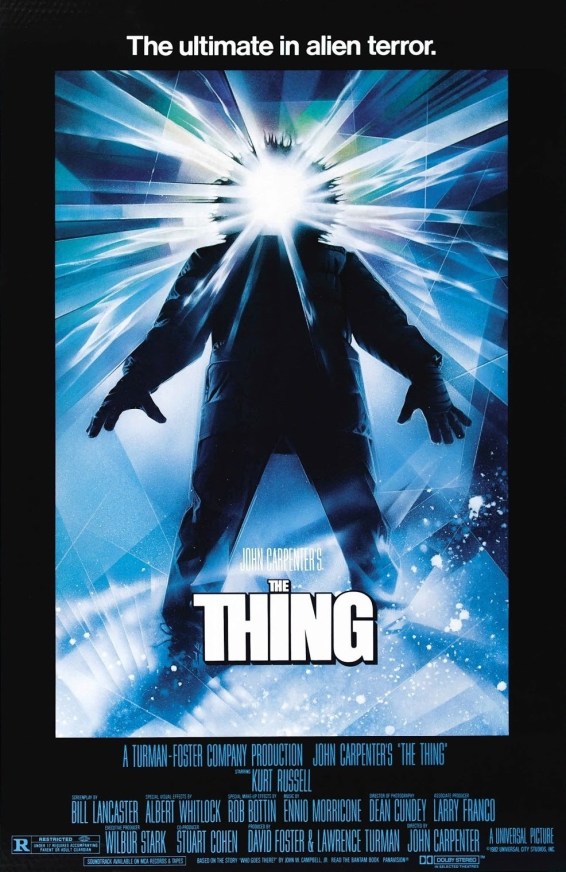
The Thing (1982) – Film Review

One of John Carpenter’s many horror classics, and one of my all-time favourites, ‘The Thing’ is a violent, eerie and creative sci-fi/body horror icon, as I personally adore this film and believe it’s one of Carpenter’s best, as the film always uses isolation and paranoia to its best extent, never failing to keep you on edge and invested throughout the entirety of its narrative and runtime.

Plot Summary: Members of an American research outpost in Antarctica find themselves battling a parasitic alien organism capable of perfectly imitating its victims. As time passes, they realise that killing the creature will be harder than they initially thought, as paranoia begins to sink in as to who has already been assimilated by the shape-shifting entity…

Although ‘The Thing’ is actually a remake of the classic; ‘The Thing from Another World,’ from 1957, I would say this is one of the rare times that a remake is better than the original as it’s constant tension building alongside the outstanding practical creature effects, make the film an incredible experience. Similar to films, such as ‘Alien’ or ‘The Fly,’ ‘The Thing’ also has a very slow opening, using its introduction to build tension and give the audience a great view of the location before the film descends into the gory, suspenseful chaos.

Kurt Russell, Keith David, Wilford Brimley, David Clennon and the rest of the cast are all decent, while Kurt Russell’s character, ‘MacReady,’ is easily my favourite simply due to his charisma, but none of the cast are terrible, by any means. However, I do feel there are too many characters within the story, as it can get confusing at many points as to which character is wrapped up within their large fluffy coats. And while I understand the need for a high body count for a film like this (which is the reason for the lack of development for many of the characters), I simply find it a little too easy to get lost at points.

Dean Cundey handles the cinematography within the film, which is decent throughout but nothing amazing, placing more of an emphasis on the practical effects within the shots, rather than the shots themselves. The cinematography, however, does still help to build tension effectivity through its many still shots and dark colour palette. Furthermore, all of the creature effects throughout the film are completely practical, giving the amazing creature designs true life by many of them being puppets or costumes rather than CGI, like most modern-day horror or sci-fi flicks. These effects truly create some very memorable scenes, as make-up effects artist, Rob Bottin, known for his work on ‘RoboCop’ and ‘Total Recall,’ truly did some of his best work on ‘The Thing.’

The original score (surprisingly not composed by John Carpenter himself) is by Ennio Morricone, but suitably does feel like a traditional Carpenter soundtrack and helps towards the eerie atmosphere as soon as the opening begins, as while maybe not as iconic as some of Carpenter’s other scores, such as ‘Halloween’ or ‘The Fog,’ etc. The original score is still brilliant in its own right and truly sets the tone for the film.

As the film takes place in an extremely isolated location and features a creature that can morph into any character, the film also never fails to keep the viewer on constant edge, as one of the best elements of the film is the paranoia the runtime continues, as any of the characters could be infected with the extraterrestrial creature. So, we never know who is going to be the next unfortunate victim, and who is their killer. Interestingly, during filming, John Carpenter didn’t even tell the actors who was the creature on set, only adding to the mystery.

In summary, ‘The Thing’ is a phenomenal entry into the genres of science fiction and horror, truly being an iconic staple of what to expect from an extraterrestrial film from then on. From its building of tension to the outstanding phenomenal practical effects as well as the constant threat, we feel whilst watching, almost placing us into the shoes of the characters themselves. Soon going on to be a true sci-fi/horror classic and becoming one of the best remakes to ever grace the silver screen. Final Rating: 9/10.

The Thing (1982) Original

Pyewacket (2018) – Film Review

From director Adam MacDonald (Backcountry, Out Come the Wolves, This Is Not a Test) ‘Pyewacket’ is a Canadian, character-focused indie horror. The film mostly being a small-scale narrative, having a very refreshing look and feel for a modern horror, complete with an eerie location and a brilliantly tense atmosphere. Containing very little jump-scares, CG effects or gore, in favour of eerie silence and well-written dialogue.

Plot Summary: After Leah, a grieving, occult-obsessed teen, performs a ritual in the woods to summon a demon to kill her estranged, newly widowed mother in a fit of rage, she immediately regrets her impulsive act, attempting to undo the curse as strange, terrifying events escalate around her…

Although I’m personally not a huge fan of jump-scares, and I do very much appreciate the film’s draw towards creating an eerie atmosphere. I do feel one or two scattered throughout the film wouldn’t have done any harm, as I feel they would’ve done a great job of scaring the audience when they least expect it and would’ve broken-up some scenes of tension nicely. The film does succeed in creating tension in other ways, however, as MacDonald manages to incorporate darkness extremely well throughout the film, using dark lighting and colour palette to focus on the audience’s paranoia of what lurks in the dark corners of the screen. However, the scenes are never overly dark to the point of obscuring the audience’s view, and this works very effectively.

Nicole Muñoz portrays the protagonist; ‘Leah,’ as a mostly unknown actress, Nicole does a fantastic job of playing an angry teenager dealing with a broken family. Laurie Holden from AMC’s ‘The Walking Dead’ is also surprisingly great as her mother, which I definitely wasn’t expecting as I never really cared much for her character in the TV show, believing her to be very annoying and unlikeable. But, it’s clear to me now that this was mostly an issue with the writing on the show, and not with her performance, as here she really does a well with her character.

Alongside the use of darkness and great performances, the film also has amazing cinematography by Christian Bielz, as the film always uses the camera to the best of its advantage to create fear and tension. One shot in particular was a fast-paced P.O.V. shot, which reminded me very heavily of the classic; ‘Evil Dead’ trilogy, and really sent a shiver down my spine when it first encounters one of the characters. The original score by Lee Malia is, unfortunately, nothing too memorable, however, coming across as a mostly cliché horror soundtrack with the odd emotional tone mixed in. 

My main issue with the film is the pacing, as the film is a rather slow build, it can sometimes drag. The film mostly does a good job at keeping the audience invested with that brilliant horror atmosphere and great character drama. But, some of the scenes set at ‘Leah’s’ high school can really feel somewhat bland and drawn out, especially when you compare these scenes to the scenes in the forest surrounding ‘Leah’ and her mother’s home, as these are always brimming with tension and are incredibly fun to experience at any point during the film’s runtime.

In addition to this, without spoiling anything, the ending of the film is also very memorable, as the film truly leaves the audience on a dark and shocking note, which is sure to stick with you long after the credits have rolled, and genuinely helps the film become far more of a standout when compared to similar film’s in its genre. The film also has many small details, one being the title of the film itself, as the name ‘Pyewacket’ comes from the 1647 British pamphlet; ‘The Discovery of Witches,’ in which author Matthew Hopkins claims to have interrogated witches in Essex County. One witch names many familiars, including the spirit; ‘Pyewacket,’ which appeared to her as some sort of animal.

In summary, although ‘Pyewacket’ probably isn’t one of my favourite all-time horror flicks, it is one I would recommend to most. Although the slow pace and lack of jump-scares may frustrate some viewers, the film does build up an amazing atmosphere, with great performances from the small cast and some decent dialogue to back it up. The film isn’t perfect but it does mostly contain what I personally desire from a modern horror film, and I think ‘Pyewacket’ can be a great watch for a ‘different’ kind of horror fan. Final Rating: 6/10.

pyewacket_xxlg