Halloween (2018) – Film Review

Confusingly titled; ‘Halloween,’ despite not being a remake, this direct sequel to John Carpenter’s 1978 classic ignores all the other entries in the franchise in favour of telling a completely new story set forty years later, with Jamie Lee Curtis even returning to her iconic character of ‘Laurie Strode,’ now much older and much wiser. Yet, while definitely a decent attempt at continuing the ‘Halloween’ series, the film is still far from perfect.

Plot Summary: ‘Laurie Strode’ confronts her long-time foe, ‘Michael Myers,’ once again, as the masked figure who has haunted her since she narrowly escaped his killing spree on Halloween night four decades ago, now begins a new massacre after his recent prison escape…

Although the film’s narrative does have some interesting ideas, the film always felt a little too familiar to me, as I usually found myself correctly predicting what was around the next corner, leaving little to be surprised by. Under the direction of David Gordon Green, best known for his 2017 drama; ‘Stronger.’ The film does pay plenty of respect to the original film, as can always tell whilst watching that Green does have a passion for this horror franchise (as he clearly understands what made the original work so well). I still feel a better director could’ve been chosen, as at points, the story does seem to be slightly lacking in direction, and with his previous work in mind, it’s clear that he doesn’t specialise in horror.

It is great, however, to see Jamie Lee Curtis back as her classic character once again, as she really excels in showing how ‘Laurie Strode’ has been affected by those horrific events many years ago. Alongside the rest of the great cast of Judy Greer, Andi Matichak, Will Patton and especially Haluk Bilginer as ‘Dr. Sartain,’ who I was initially concerned would be nothing more than another ‘Dr. Loomis’ type character, but did actually end up going in a very different direction.

The cinematography by Michael Simmonds is nothing outstanding for the majority of the film, yet is still attractive when combined with the dark lighting throughout, particularly anytime ‘Michael’ is on-screen. Another strong element of the film is the wonderful original score by John Carpenter, his son Cody Carpenter and Daniel A. Davies, as although the soundtrack does slightly rely on tracks from the original film, there is plenty of new tracks here as well. Proving John Carpenter is brilliant at his craft once again, with the tracks; ‘The Shape Hunts Allyson’ and ‘The Shape Burns,’ being some of Carpenter’s best work in a long time, in my opinion.

One of the strongest elements of the film for me are definitely the kills, as it’s clear the filmmakers got very creative with the ways ‘Michael Myers’ disposes of his victims, usually creating very memorable scenes with some fantastic practical gore effects included. I also felt the film represented the iconic slasher very well, as ‘Michael Myers’ is always intimidating through his movements, ‘Michael’ even manages to steal the film for me by being the main focus of my personal favourite scene of the film, as ‘The Shape’ stalks his way through Haddonfield’ with murderous intent, all completed within a single take.

Being produced by Blumhouse Pictures, ‘Halloween’ also, unfortunately, features the company’s usual pandering to younger audiences you’d come to expect by now, as the film is littered with jump-scares throughout the runtime, with little attempt to create an eerie atmosphere or build large amounts of tension. In addition to this, the writing throughout the film is decent when it comes to the characters but usually is very lacking when the film attempts comedy, resulting in plenty of cringey lines of dialogue and out-of-place jokes.

In summary, 2018’s ‘Halloween’ is mostly enjoyable, but with a lack of originality, some cheesy lines and forced comedy (not to mention its strong overreliance on jump-scares) the film doesn’t even come close to replicating the classic horror’s best qualities. I do hold the original film in high regard, of course (it being one of my personal favourite horrors), but with plenty of entertaining moments throughout, this latest entry in the ‘Halloween’ series is definitely on the higher end of long-awaited sequels to classic horrors. Final Rating: 6/10.

halloween_xxlg.jpg

ParaNorman (2012) – Film Review

From Laika animation studios, the production company behind many beautifully animated stop-motion flicks, such as ‘Coraline,’ ‘The Boxtrolls’ and ‘Kubo and the Two Strings’ to name a few, comes another mostly enjoyable creepy family adventure, thanks mostly to some fantastic stop-motion animation as well as it’s great cast. Even if the film may not be as entertaining as some other films from Laika’s animated line-up.

Plot Summary: Norman Babcock’ is a misunderstood boy who can speak to the dead, but when ‘Norman’s estranged uncle tells him of an important ritual he must perform in order to protect his home town of ‘Blithe Hollow’ from a centuries-old witch’s curse. He must take on ghosts, zombies, and grown-ups in order to stop the curse from destroying everything he’s ever known…

The weakest element of the film for me is, unfortunately, the story, as although the idea of having a young boy who can see ghosts is a decent idea in itself, almost serving as ‘The Sixth Sense’ for families, in a way. The rest of the narrative never reaches the eerie tone of ‘Coraline’ or the fun of ‘Missing Link,’ with the film even attempting to have a few emotional scenes, but most of them fall a little flat, mostly due to never truly having the impact they need. However, the humour throughout the film is mostly decent as whilst not every joke lands, the majority of them do, and the film usually has a range of comedy for all ages, despite a few jokes going on for far too long.

Kodi Smit-McPhee gives a solid performance as ‘Norman Babcock,’ as well as Tucker Albrizzi, Christopher Mintz-Plasse, and John Goodman. However, my personal favourites of the cast have to be Anna Kendrick, and Casey Affleck as ‘Courtney’ and ‘Mitch’ without a doubt, as the two of them portray two weak-minded teenagers helping ‘Norman’ on his paranormal adventure, with ‘Courtney’ clearly having an interest in ‘Mitch’ which he is completely oblivious towards.

Tristan Oliver handles the cinematography throughout ‘ParaNorman,’ which is definitely a weaker element of the film, as the cinematography simply backs-up the animation rather than doing anything incredibly interesting with the shots, there still is the occasional pleasing shot, however, and the cinematography does display many of the miniature sets very well.

The original score by Jon Brion is very reminiscent of classic 1980’s horror flicks, which is suitable considering the film’s opening scene has ‘Norman’ watching an old zombie flick, and while the soundtrack isn’t incredibly memorable on itself, it works well enough in the film to increase some of the comedy and atmosphere when it can, with the track; ‘Zombie Attack in the Eighties,’ being my personal favourite for this exact reason.

Unsurprisingly, the stop-motion animation is phenomenal throughout the film, as every character and every miniature set looks incredible, having a creepy and exaggerated yet still appealing look. All with smooth motions similar to any other animated film, whether animated through CGI or not. In the few short instances where CGI is used within the film, however, it’s normally used to great effect, usually to simply improve the visuals rather than taking the emphasis away from the hand-crafted animation itself. And, in order to generate the film’s 3D effects, the camera was cleverly mounted on a rig, which would take one shot, then slide to a slightly different viewpoint to take another, allowing for more less movement in the figures themselves.

In summary, despite ‘ParaNorman’ not quite managing to craft an incredibly memorable story for the majority of its runtime, I would say I enjoyed myself. As although ‘ParaNorman’ still isn’t my favourite of Laika’s film catalogue, as I personally feel there isn’t many areas the film overly succeeds in. The film is decently entertaining for the most part. Final Rating: 7/10.

paranorman-p660191

The Conjuring (2013) – Film Review

From director James Wan (Saw, Dead Silence, Insidious), comes another modern horror based on real-life events, this time focusing on one of the many cases of the Warrens set in the year of 1971, and while the film does succeed more so than many other modern horrors, soon leading the ‘The Conjuring’ to become an enormous horror franchise, with the likes of its sequels and spin-offs, such as ‘Annabelle’ and ‘The Nun.’ The original film does suffer from a variety of issues, which leads it to become more forgettable than anything else by the end of its runtime.

Plot Summary: In 1971, after ‘Carolyn’ and ‘Roger Perron’ move their family into a dilapidated Rhode Island farmhouse, they soon begin to suspect there may be a dark presence haunting them. So, as the abnormalities begin to increase, ‘Carolyn’ contacts famed paranormal investigators; Ed and Lorraine Warren, for help, who together, begin delving into the disturbing history behind the family’s new home in an attempt to stop the evil…

Whilst more enjoyable than a large number of other modern horrors as already mentioned, I wasn’t overly invested in the film’s story, as although the film is effective in some areas, in others the film simply doesn’t stick the landing. Feeling mostly like your standard horror story without ever delving too deep into the characters or time-period, as despite a few thrilling scenes with the spirits themselves, I always felt a slightly more character-driven narrative would have benefited the film.

The cast is definitely one of the film’s better aspects, as Patrick Wilson and Vera Farmiga do have a decent amount of chemistry together as the married paranormal investigators the Warrens. Lili Taylor also does a decent job as the family’s concerned mother, especially further into the film as the story becomes more intense. Unfortunately, however, Ronald Livingston who portrays the father of the family, is easily the weakest actor within the film, as he never really seems overly panicked or scared of these paranormal events, regardless of the scene (which becomes especially clear nearing the end of the film).

The cinematography by John R. Leonetti is definitely an improvement over his previous work on the ‘Insidious’ series, as the film does have a few appealing shots here and there despite never really being anything exceptional. The film does, however, make excellent use of P.O.V. shots during many of the tense scenes at night within the farmhouse, placing the audience in the position of the characters themselves, which I personally found very effective. As, according to director James Wan, much of the film’s visual design was actually inspired by classic 1970s horrors, such as ‘The Exorcist,’ ‘The Omen’ and ‘The Amityville Horror.’

Although not quite as distinctive as some other modern horror soundtracks, the original score by Joseph Bishara isn’t completely forgettable, as the score does help to build tension during quite a few scenes, as well as also back up some of the emotional moments between characters (as short as they may be).

I was also surprised to learn that the film doesn’t entirely rely on jump-scares, as although they are present within the film, ‘The Conjuring’ does feel more focused on creating an eerie atmosphere and having many creepy visuals throughout. Rather than the usual bombardment of jump-scares, which was definitely a breath of fresh air. One element I thought was a little weaker than some of James Wan’s other films was the design of the ghosts themselves, as the design of the spirit haunting family’s farmhouse is one of the most generic and dull designs you could think of when it comes to creating a horror antagonist. Especially when compared to the many memorable designs of the spirits/demons within the ‘Insidious’ franchise.

In summary, whilst ‘The Conjuring’ does have some great elements, and at least attempts to create something slightly different from your typical horror flick. I never really felt the film excelled in any particular area, as the majority of the film felt mostly bland, despite its decent cast and creepy atmosphere in some scenes. So, while there are definitely worse modern horrors, I feel there is also much better out there, perhaps even in this very same franchise. Final Rating: 5/10.

conjuring_ver2_xlg

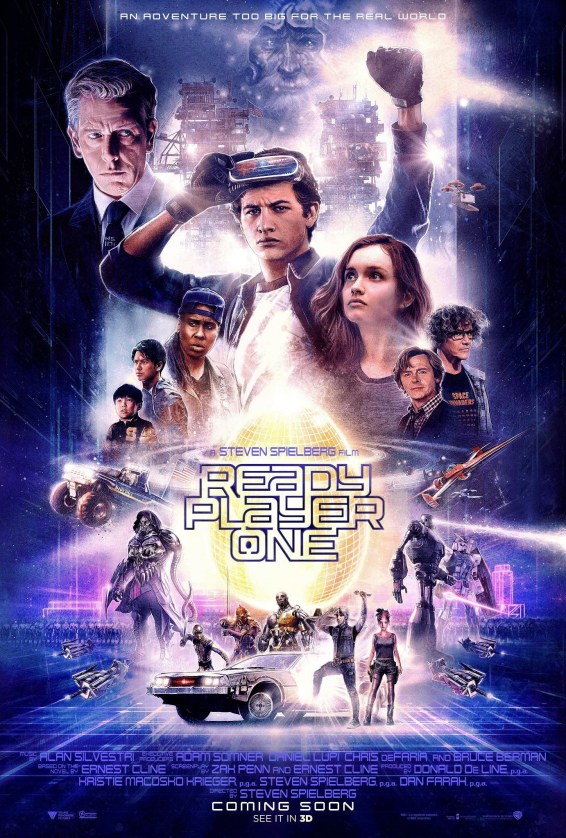
Ready Player One (2018) – Film Review

A triumphant return back to the silver screen for legendary director Steven Spielberg (Jurassic Park, Schindler’s List, Raiders of the Lost Ark), this time taking on an adaptation of a beloved science fiction novel by Ernest Cline. 2018’s ‘Ready Player One’ not only manages to capture that classic Spielberg whimsy all these years later, along with having plenty of breathtaking visuals and thrilling action sequences to boot. But, through its many, many references and appearances to/from iconic properties and characters from all types of media, ‘Ready Player One’ soon becomes a sweetly nostalgic adventure for any age.

Plot Summary: In the dystopian future of 2045, humanity spends their days inside ‘The OASIS,’ a virtual world where the only limits are your own imagination. Until on his deathbed, the original creator of ‘The OASIS’ makes a posthumous challenge, promising his entire fortune as well as complete control over his virtual world to the lucky ‘OASIS’ user that finds his ‘Golden Easter Egg.’

As its story may imply, ‘Ready Player One’ follows its novel counterpart closely by structuring its narrative half in the real world, and half within ‘The OASIS.’ Having all of the scenes set within the virtual world be comprised entirely of CGI, whilst reality is presented through live-action. While many viewers may initially be quite cautious of this (myself included), fearing a barrage of phoney-looking CG set pieces, Spielberg actually pulls this idea off very well, as the film never feels as if its CG visuals are being overused despite them taking-up most of the runtime. Interestingly, Spielberg teamed-up with effects company Industrial Light & Magic for most of ‘Ready Player One’s imagery, the company that previously worked with him for the first ‘Jurassic Park,’ so the Tyrannosaurus Rex that appears in the film is recreated using the same base-model made for the original film.

Best known as ‘Cyclops’ in the new incarnation of the ‘X-Men’ series, Tye Sheridan does a decent job at portraying the film’s likeable protagonist; ‘Wade Watts.’ Alongside Sheridan, Olivia Cooke as ‘Wade’s love interest; ‘Samantha,’ as well as Mark Rylance as ‘Halliday’ and Ben Mendelsohn and T.J. Miller as the film’s antagonists are all fine throughout the film. Yet, whilst every member of the cast is trying here, the performances in ‘Ready Player One’ are made more impressive considering the film’s extremely weak characters, as, unfortunately, nearly every character we meet within the story is mostly one-note, being nothing more than your traditional hero, companion or villain, etc.

Although an enormous amount of the cinematography by Janusz Kaminski is visually striking, having a large number of moving shots where the camera soars through the limitless world of ‘The OASIS.’ It’s difficult to judge it in its entirety, as a good majority of the camerawork is obviously CG due to half of the film’s story being set within a virtual world, and whenever we cut back to reality, the cinematography usually feels quite bland. However, I do appreciate the gloomy colour palette that’s utilised when the film returns to the real world, as it contrasts well against the incredibly colourful visuals of ‘The OASIS.’

Even though the film’s original score by Alan Silvestri is a serviceable and uplifting score in its own right, sounding subtlety like a Steven Spielberg classic. The film’s score was originally going to be composed by longtime Spielberg collaborator John Williams, but as a result of a scheduling conflict with another Spielberg film, Williams left the project to Alan Silvestri. Making ‘Ready Player One’ the third of only three films where Spielberg didn’t collaborate with Williams.

Many of the main problems I find hard to ignore with ‘Ready Player One’ mostly revolve around its weak writing, as although not continually noticeable, the film has a number of cheesy moments/clichés scattered throughout its story, in addition to many moments of humour which fall completely flat. Some critics have also taken issue with the enormous amount of characters from other media appearing in the film, seeing it as pandering and meaningless. I don’t agree with this criticism, however, as the original novel is full of many of its own (unique) references. Personally, I also feel many of the film’s flaws are made up for by its brilliant action scenes, from the opening race to the explosive final battle, to even a scene where the characters travel into the classic 1980 horror; ‘The Shining,’ every set piece is both creative, and enjoyable to watch.

In summary, ‘Ready Player One’ definitely has its faults, in particular, when it comes to its screenplay. But, even with its problematic writing in mind, I’d still say the film is a great addition to Spielberg’s huge line up of family flicks, as while it may not be on the same level of classics like ‘E.T. the Extra-Terrestrial’ or ‘Hook,’ for example, ‘Ready Player One’ overcomes its weak characterisation and occasional corny dialogue to become an exciting sci-fi/fantasy odyssey, and a film I’d recommend a trip into ‘The OASIS’ for. Final Rating: low 7/10.

ready_player_one_ver2_xxlg

Children of Men (2006) – Film Review

An intelligent, dark, and grounded sci-fi film, with ‘Children of Men’ director Alfonso Cuaron (Harry Potter and the Prisoner of Azkaban, Gravity, Roma) crafts a truly memorable experience, as the film’s fresh take on the science fiction genre combines some great performances, alongside decent writing and some absolutely incredible cinematography by Emmanuel Lubezki, alongside many scenes throughout the film being done within a single take.

Plot Summary: In a world in which women have somehow become infertile, former activist; ‘Theo Faron,’ agrees to help transport a miraculously pregnant woman across a war-ridden country out to a sanctuary at sea in order to save the human race…

Based on the acclaimed novel; ‘The Children of Men’ by P. D. James, the film adaptation begins its narrative in a similar fashion to its source material, as the story kicks off with a quick peek into the grim world of the film, as the protagonist; ‘Theo,’ makes his way into a small café to grab a coffee. This soon leading onto a very shocking moment, which instantly establishes the tone of the film, and really helps give the audience a clear understanding of how these characters are coping with this reality. This soon leads onto the opening becoming very iconic in its own right (as well as my personal favourite scene of the film) and still feels effective, even today.

When it comes to the characters, all the performances throughout the film are pretty great, as every actor is really giving their all here regardless of the importance of their roles within the story as Clive Owen, Clare-Hope Ashitey, Chiwetel Ejiofor and Michael Caine are all terrific. Julianne Moore as ‘Julian,’ in particular, was a stand out for me, however, having some very memorable moments within only a short amount of screen-time. This is also one of the few films where I must really praise the extras, as many of the continuous takes are done using enormous amounts of extras, and from the foreground through to the background, there isn’t one out-of-place extra.

Every piece of the cinematography by Emmanuel Lubezki throughout the film is nothing short of phenomenal, using hand-held shots to the best of their advantage. Many scenes are filmed from the perspective of the characters, placing the audience in their own tense scenarios. Furthermore, the dark grey colour palette of the film also lends itself well to the war-ridden country setting, as every location always feels rustic, dirty, and lived-in. The original score by John Tavener is also effective, despite being used sparingly throughout the film to further add to the bleak atmosphere.

My only real criticisms with the film are related to the lack of character depth and the film’s overall pacing, as the pacing throughout the film is extremely slow, leading to many scenes feeling a little drawn out at points. Despite this slow pace sometimes adding to the building of tension, it feels mostly unnecessary for most of the film’s runtime. The lack of characterisation throughout the film is also a problem, as although a few characters do get some development, it’s usually few and far between, as I found myself finding more information about the characters online than within the film itself, luckily, however, the decent writing does save this from being a huge issue.

In summary, ‘Children of Men’ is an exceptional piece of the sci-fi genre. Coming across as a very different approach than what you’d usually expect from a film such as this one, the film almost feels like more of an apocalyptic drama at points. But, with a thought-provoking narrative, some amazing cinematography, and a fantastic cast, ‘Children of Men’ truly is a very captivating (if not a very bleak) piece of entertainment, which never fails to impress me every time I revisit it. Final Rating: 8/10.

kinopoisk.ru

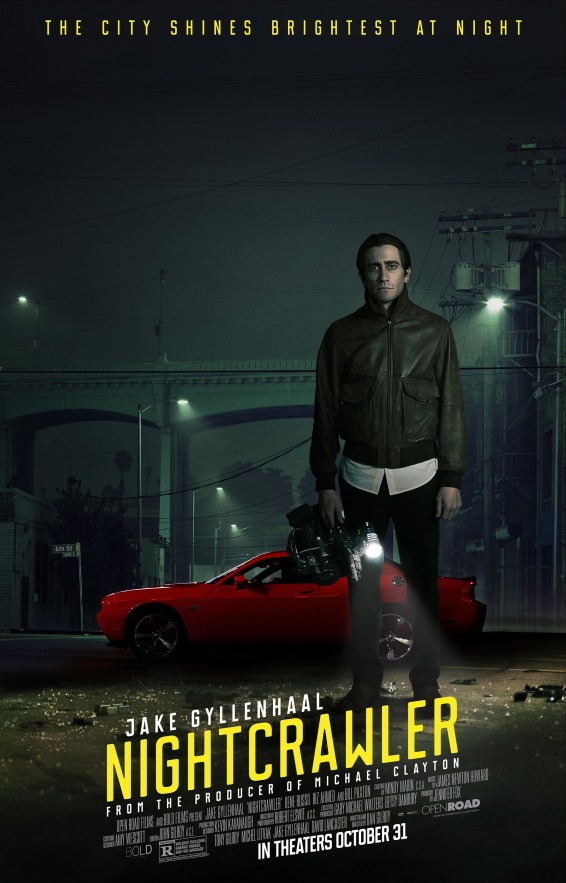
Nightcrawler (2014) – Film Review

Held up by an incredible performance from Jake Gyllenhaal, ‘Nightcrawler’ is a visually beautiful and very tense thriller from director Dan Gilroy (Roman J. Israel Esq, Velvet Buzzsaw), focusing on the dangerous life of a freelance journalist who ends up falling deeper and deeper into a world of greed and accomplishment. Gripping from start-to-finish (as well as being one of my personal all-time favourite films), ‘Nightcrawler’ is truly an amazing experience any film fan is sure to enjoy.

Plot Summary: When ‘Louis Bloom,’ a con-man desperate for work, muscles his way into the world of Los Angeles crime journalism, he blurs the line between observer and participant to become the star of his own story, determined to rise to the top regardless of competition, or even morals…

Being shot over the course of twenty-eight nights, the film does a brilliant job of blending a narrative of what the life for a freelance journalist is actually like, as well as focusing on the more personal story of ‘Louis’ at the same time, with both of them fitting the dark tone of the film extremely well. This alongside the exploration of the city of Los Angeles gives the film a great personality, as the film explores every seedy corner of the city, always using real locations over any visual effects, unlike many other films nowadays.

Jake Gyllenhaal also gives one of the best performances of his career here, portraying ‘Louis Bloom’ as a creepy, sly and selfish character who excels at his work, yet despite being mostly unlikeable. He still manages to be an engaging protagonist mostly through his charisma and intelligence, even as he descends further and further down the line. Gyllenhaal even went to the extent of losing over twenty-pounds for the role, which was actually Gyllenhaal’s own idea, as he visualised ‘Louis’ as a hungry coyote. Riz Ahmed also appears in the film as ‘Rick,’ ‘Louis’ underpaid and underappreciated partner who serves as almost his complete opposite in many different ways. These two alongside the supporting cast of Rene Russolate and the late Bill Paxton are all brilliant throughout the film, never failing to impress within their respective roles.

The cinematography by Robert Elswit is some of the best cinematography I’ve seen in a film in a long time, utilising an enormous amount of varied shots, including a large amount of wide and mid-shots, which are always a joy to see, with the film always using its cinematography to increase the amount of tension or drama that’s on-screen. The film also makes great use of it’s dark blue and orange colour palette as well as large amounts of street lighting, which both definitely help give the film a distinct visual flair and make many of the bright colours stand out amongst the darkness of Los Angeles late at night.

This is also backed up by the calming and yet also eerie original score by James Newton Howard, and while perhaps not incredibly memorable on itself, I do like this composer for much of his previous work (The Sixth Sense, King Kong, I Am Legend) and the soundtrack here does back up the film pretty well for the majority of its runtime, aside from the occasional track which can come across as slightly cliché.

Another element of the film I really enjoy is it’s grasp on realism, as although I’m no expert in regards to the world of crime journalism. The film never really seems to go beyond believability within its story, even when the story begins to enter more dangerous territory for its characters. One element of the film that didn’t really exceed my expectations, however, was the film’s editing, as although the editing throughout the film is decent, I was never overly impressed by it, as I always felt it was one of the few areas of the film which could’ve been slightly improved.

In summary, ‘Nightcrawler’ still retains it’s spot on my list of favourites, with its outstanding cinematography in addition to the pretty fantastic original score and performances throughout. The film has a lot to offer, and I’m still thrilled the film came out as well as I did, due to both its filmmaking and it’s appeal, I’d absolutely recommend anyone give ‘Nightcrawler’ a watch. Final Rating: 9/10.

nightcrawler_ver4_xxlg

World War Z (2013) – Film Review

Very loosely based on the novel of the same name by Max Brooks, ‘World War Z,’ directed by Marc Forster, attempts to tell an enormous globe-trotting story of a spreading virus, and although it does have a few entertaining elements here and there, so much so that it was one of the highest grossing films of 2013. I personally found the film to be extremely messy, and, in general, rather forgettable.

Plot Summary: After narrowly escaping an attack in Philadelphia, former United Nations employee, ‘Gerry Lane,’ traverses the world in a race against time to stop a deadly pandemic that is toppling armies and governments, soon threatening the survival of humanity itself…

Even with a pretty standard plot for a zombie flick, the film is, unfortunately, still brimming with plenty of cliché moments and jump-scares throughout, in addition, of course, to the film’s overall lack of style. Making the entire experience really struggle to stand on its own amongst the many other films within its genre, which I do feel can be mostly put down to director Marc Forster (Finding Neverland, Stranger Than Fiction, Christopher Robin).

Brad Pitt, Mireille Enos both do a decent job as ‘Gerry’ and ‘Karin Lane’ within the film, despite their characters having pretty much no characterisation outside of them being a loving family. Their children, however, portrayed by Sterling Jerins and Abigail Hargrove. I found very irritating, as aside from their constant screaming and crying, their child performances weren’t very convincing to me at all. Strangely, Peter Capaldi also has a small role within the film, despite barley adding anything to the narrative.

Ben Seresin handles the cinematography throughout the film, and aside from a few scenes were hand-held camera techniques are used to reflect the chaos we see during many of the infected’s attacks, many of the visuals are extremely flat, as the cinematography is very bland and uninspired, usually sticking to very standard shots and never really experimenting with anything incredibly interesting. The CG effects throughout the film’s runtime are also very inconsistent, as in some scenes the visual effects work perfectly fine. Whereas in others, they look truly awful, with many of the infected bouncing around as if they were made out of rubber. I do appreciate the various aerial shots which are used during many of these scenes, however, as I feel these shots really incapsulate the enormous scale of the film’s devastating pandemic.

The film’s original score by Marco Beltrami is decent overall, it works within the film to increase what tension and drama there is on-screen. But, outside of the film, it isn’t memorable in the slightest. Coming off as your standard blockbuster soundtrack with the occasional ‘Inception’ noise thrown in for good measure, it is very possible the score was rushed, as for those who may not know, ‘World War Z’ actually went through a very troubled production process, as multiple different directors, writers and producers were brought onboard and then dropped off constantly. This is mostly why the film sometimes feels very unconnected and messy (which also isn’t helped by its quick pacing). Taking this into account, the film definitely could’ve been far worse, but I still found it very noticeable.

Despite all of this, the film does still have some elements I enjoy, as it is simply fun to watch the madness ensue at various points during the film, as the hordes of infected bring chaos to the streets of whatever city the film finds itself in. My favourite scene within the film is definitely near it’s ending, as the film takes a very different direction in choosing to focus on a small tension-filled scenario, which I thought was decently well-executed for the most part. That said, most of the climax is remarkably dull, grinding the film’s pacing to a halt to focus on a small group of infected over an exciting, climatic set-piece.

In summary, ‘World War Z’ isn’t the worst big-budget film you could spend your time watching, it definitely has a variety of problems. From the predictable and generic plot, to the boring characters and the mix of poor CG effects and writing. Which all ensured that I wasn’t such a huge fan, but if you enjoy a mindless zombie blockbuster every so often, then there may be some enjoyment in this for you. But, for me personally, ‘World War Z’ simply felt like a hollow experience, and is nothing more than a generic zombie flick when it’s at it’s best. Final Rating: 3/10.

world_war_z_ver3_xlg

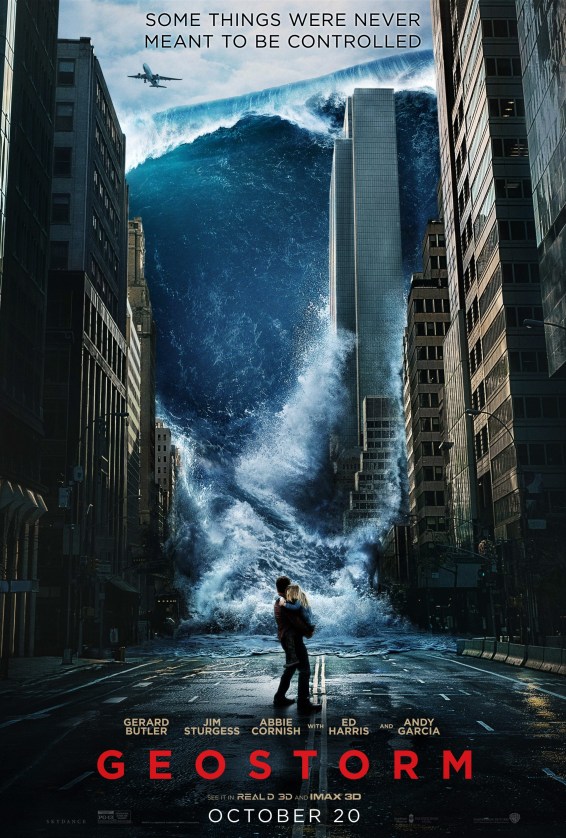
Geostorm (2017) – Film Review

Directed by Dean Devlin, best known for producing the original ‘Independence Day,’ as well as the first (infamous) American ‘Godzilla’ remake from 1998. ‘Geostorm’ takes a much more traditional disaster route for Devlin’s directorial debut, attempting to capture the usual scale and destruction associated with the genre, along with a few elements of international terrorism and sleek science fiction thrown in for good measure. Unfortunately, however, this still isn’t enough to save the film from its many, many faults.

Plot Summary: When a network of satellites designed to control the global climate begins to attack Earth, it’s a race against time for its original creator to uncover the real threat before a worldwide ‘Geostorm’ wipes out everything and everyone…

From the first scene all the way through to the very last, the film felt incredibly cliché to me, as the film definitely follows a very similar structure to the majority of other disaster flicks, as well as also carrying over much of the cheesiness and terrible comedy from many of them, as although the film does have a few exciting action scenes and some entertaining weather-related chaos throughout its runtime, the film never really manages to break-out of its predictability.

Gerard Butler, Jim Sturgess, and Abbie Cornish are all decent throughout the film, as while they still suffer from having the usual generic characters for a blockbuster. They do the best they can to keep the audience engaged throughout the story (for the most part). However, the film also has a few side characters which left we more than often questioning their inclusion in the film, as most of them added very little to the plot and only appeared in a few short scenes.

Roberto Schaefer handles the cinematography within ‘Geostorm,’ which aside from the occasional attractive shot is mostly bland and uninspired, with many scenes throughout the film also seeming to have far too many different shots, as a simple scene of two people talking could have anywhere from three to seven different shots. The CGI within the film is also another unusual aspect, as although it’s decent throughout most of the film, there are quite a few shots where I felt it dipped massively in quality. Some of the NASA scenes during the film were actually filmed at a NASA facility in New Orleans, however, which I did feel added to the film’s story despite the location’s limited appearances.

There are also multiple points where the film attempts to be very emotional and dramatic, yet usually falls completely flat, with the film putting a large amount of focus on the original score by Lorne Balfe, which is your standard action film score, coming off as an almost entirely forgettable and bland soundtrack.

Whilst watching the film I also couldn’t help but think that there were many missed opportunities throughout, as due to the film’s mostly serious and grounded tone, the film never takes any of its weather attacks to any truly creative places, with the film usually just going for a decently entertaining, (if not very experimental) action set piece. Although I understand the lack of disaster films in modern cinema is a great way to make the film stand out, I still feel a more absurdist tone, along with over-the-top action sequences, could’ve at the very least, made the film more memorable and unique.

In summary, whilst I didn’t really have high expectations when I first sat down to watch ‘Geostorm’ going off the mostly inexperienced director and the poor reviews from both critics and audiences alike, the was a genuinely dull experience, which I’d say isn’t really worth a watch, being a mostly bland and boring disaster flick, despite some original aspects. There is the odd entertaining action scene or interesting visual for any massive fans of the disaster genre, but for me, I don’t feel any desire to return to ‘Geostorm,’ especially not anytime soon. Final Rating: low 3/10.

geostorm_xxlg

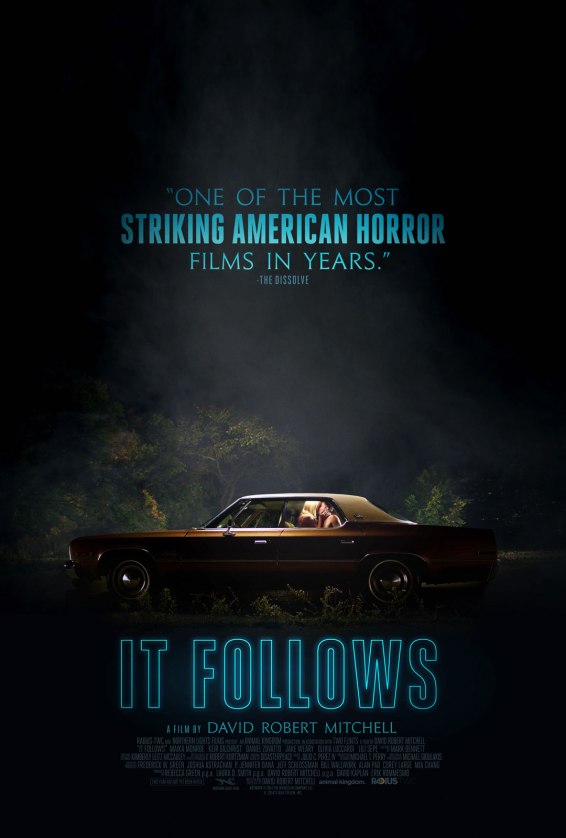
It Follows (2015) – Film Review

‘It Follows’ is easily one of my favourite modern horrors to date, as the film utilises some amazing cinematography by Mike Gioulakis, alongside an extremely eerie atmosphere and some decent performances. All tied in perfectly with an original and engaging story, resulting in a film that’s both very memorable, and very tense throughout.

Plot Summary: After a seemingly innocent sexual encounter, teenager ‘Jay’ finds herself plagued by strange visions and the inescapable sense that someone (or something) is following her. Faced with this burden, ‘Jay’ and her friends must find a way to escape their new nightmare, that seems to always be just a few steps behind…

Mostly due to the direction by David Robert Mitchell (The Myth of the American Sleepover, Under the Silver Lake), ‘It Follows’ feels very polished throughout, as every scene usually plays out very slowly, always using the screen-time to build more tension, which I quite enjoyed, I also found the underlying themes of the film very interesting, as the film’s narrative subtly explores ideas of sexual diseases through its unique plot. However, one element of David’s direction I personally don’t like is the lack of any specific time-period for the film’s setting, as although the majority of the film does feel like a classic 1980s monster flick, the film constantly shows many modern devices and cars, in addition to a variety of old horror films on ‘Jay’s television. Making the film feel very inconsistent, despite this being an intentional decision.

As a cast of mostly unknown actors, Keir Gilchrist, Daniel Zovatto, Lili Sepe, and Olivia Luccardi all give decent performances here, as while nothing truly phenomenal of note, all the characters do feel as if they have chemistry with each other, with Maika Monroe being the obvious stand out, of course, as although her character doesn’t get much development, she portrays ‘Jay’ quite well, coming off as a mostly innocent and likeable teenager.

The cinematography by Mike Gioulakis is nothing short of brilliant, especially in regards to many other horrors. As aside from a few too many hand-held shots, the film constantly uses the camera to build tension and paranoia throughout the entirety of its tight runtime, as in addition to filling the film with a variety of beautiful shots (many of which contain large amounts of movement). The film also uses plenty of P.O.V. shots to see through ‘Jay’s eyes, placing the audience in the terrifying position of the protagonist themselves. ‘It Follows’ is also mainly using wide-angle lenses, which according to David Robert Mitchell, was done in order to give the film a more expansive, intimidating feel.

One of my favourite aspects of the film is definitely the original score by ‘Disasterpeace,’ as this synth score (which was composed in only three weeks) really lends itself well to the film’s eerie atmosphere, creating an original soundtrack which is just as tense and chaotic as it is memorable. This does fall back on the problem of the film not being set within the ’80s again, however, as this original score would fit in perfectly, especially with the tracks; ‘Heels,’ ‘Title,’ ‘Jay’ and ‘Pool.’

As opposed to many other modern horrors, ‘It Follows’ has a noticeable lack of jump-scares, as the film is usually in favour of attempting to use simple yet creepy visuals hidden within the background of shots, which really gives the film a very fresh feel. ‘It Follows’ also separates itself from many other modern horrors by having many of the scenes involving the creature take place during the daytime and/or in locations such as a bright sandy beach or even ‘Jay’s bedroom, locations many would think to be safe for our characters.

In summary, I truly enjoy ‘It Follows’ from beginning-to-end, as the film is a genuine horror experience which takes risks and doesn’t simply feel like more of the same ideas we have seen before, as the fantastic cinematography and original score help create a film that we keep any horror fan engaged in this thrilling story, and while the film may not be entirely flawless, I really do hope more films within this genre can succeed as well as this one does. Final Rating: 8/10.

it-follows-poster

Free Fire (2017) – Film Review

An interesting film for sure, ‘Free Fire’ directed by Ben Wheatley (Kill List, Sightseers, High-Rise), thrusts it’s audience straight into a world of blood, bullets, and amusing quips. Setting the entire story in one single location, which truly helps the film in setting itself apart from other films within its genre, and I really do appreciate the effort that went into this film in order for it to be as entertaining as it is, and whilst not perfect, the film is still mostly entertaining and amusing throughout.

Plot Summary: In an abandoned Boston warehouse in 1978, a small-scale arms deal goes awry, turning the warehouse into a chaotic fight for survival with bullets flying in every direction…

As the film is set in the 1970s, the film is littered with ’70s style. Everything from the costumes, to the original score, to even the colour palette gives fit extremely well with the film’s tone. It’s clear from the style of the film and the witty dialogue that director Ben Wheatley was obviously inspired by early Quentin Tarantino and Martin Scorsese films, which makes complete sense as crime seems to be his go-to genre for the most part.

The entire cast here are all doing a great job of fitting film’s tone, as although there are a few comedically dark moments, the film is mostly light-hearted, as the cast’s performances back up this tone very well, giving the film an over-the-top and comedic outlook on the situation. I also enjoyed the sound design for the weapons in this picture, as I felt like each gunshot actually had an impact, not just that the actors were playing with props. I would say Armie Hammer as ‘Ord’ as well as Cillian Murphy as ‘Chris’ were easily my personal favourites of the cast, as I always found myself enjoying their very charismatic and cocky personas throughout the runtime.

Despite it being nothing amazing, the cinematography by Laurie Rose is decent enough throughout the majority of the film. Although I do believe there is a bit too much of a reliance of a hand-held camera at points, as I feel a still shot would be welcome more than a few times and as already mentioned, the original score by Geoff Barrow backs up that time-period very well. However, the soundtrack itself is pretty forgettable outside the rest of the film.

The best compliment I can give this film is without a doubt the writing, as even though the characters get barely any development throughout the narrative (relying mostly on the actor’s charismatic performances) the writing never fails to implement humour, or extremely tense scenarios nearing the end of the film. This is a shame, however, as I do feel a character arc would have worked very effectively for one of the greedy, egotistical characters on display.

In summary, I would say I enjoyed ‘Free Fire.’ The film definitely isn’t perfect due to its weak characterisation, overreliance on hand-held shots and maybe a few missed jokes here and there. But, still an enjoyable watch, and a nice 1970s throwback, nevertheless, plus the original concept of the narrative always intrigued me, and must be appreciated for its creativity alone. Final Rating: 6/10.

free_fire_ver18_xlg