Dredd (2012) – Film Review

“Negotiation’s Over. Sentence Is Death.” – Judge Dredd

A considerably overlooked film in terms of sci-fi-action flicks, 2012’s Dredd, written by Alex Garland and directed by Pete Travis (Vantage PointEndgameCity of Tiny Lights), centres on said character. Whose comic strip in the science fiction anthology series; 2000 AD, created by Kelvin Gosnell, Pat Mills and John Wagner, was one of the longest-running in the comic magazine’s history, being featured since its second issue in 1977. Merging futurism with law enforcement, Dredd and his fellow Judges are empowered to arrest, sentence and even execute criminals on the spot, and this modern, cinematic adaptation, fuelled by much of the same bombastic violence and sci-fi imagery, does a remarkable job of capturing the source material’s gritty spirit.

Plot Summary: In a dystopian future on the American East Coast lies the overpopulated and crime-ridden metropolis of Mega-City One, where officers have the authority to act as judge, jury and executioner. Within this city, the resolute Judge Dredd is assigned to assess rookie Cassandra Anderson, as the two are ordered to reach the top of an apartment complex and stop the nefarious crimelord, Ma-Ma, from manufacturing and distributing narcotics. But, as the duo enter the complex, they quickly find themselves trapped as Ma-Ma locks the building down, forcing Dredd and his newfangled partner to fight their way out, one level at a time…

Technically a reboot following the character’s first cinematic interpretation with Judge Dredd in 1995, which featured Sylvester Stallone as the titular character. Dredd is a far more faithful adaptation, as while Stallone may have looked the part, it was clear that the film itself thoroughly misunderstood the source material. Dredd, however, immediately thrusts its audience into a riveting and intense story, which considering how self-contained it is, also manages to fit a surprising amount of world-building in between, hinting towards the many other districts of Mega-City One we could’ve seen should the film have been a box office success rather than the commercial disappointment it sadly was, earning a little over £41 million on a budget of around £45 million.

Speaking only when necessary and never giving even the slightest hint of emotion, Karl Urban portrays protagonist Judge Dredd with extreme accuracy, as Dredd never breaks temperament or goes through a satisfying character arc. Instead, Dredd is simply a well-built, incorruptible officer with no time for low-life criminals (just as he is in the original comic strips), and Urban nails this portrayal, even with half of his head obscured by a helmet for the entirety of the runtime, illustrating Urban’s clear understanding of the role. Dredd’s partner, Cassandra Anderson, portrayed by Olivia Thirlby, is also a compelling character, demonstrating a benchmark of skill far below her superior yet possessing psychic abilities, which make her too valuable to dismiss. Lastly, there’s the film’s antagonist, Ma-Ma, who was originally written as an elderly woman before Lena Headey convinced Alex Garland to make her a middle-aged misandrist. And although the character doesn’t receive the same level of depth as Dredd or his rookie partner, Ma-Ma is still a convincing felon, as Headey portrays her as a ruthless individual living in an equally ruthless world.

Playing into the idea of Dredd‘s post-apocalyptic world being in constant disarray, the grimy set design of Dredd, along with its murky brown colour palette, presents the setting of Mega-City One (a.k.a. Johannesburg with a few CG enhancements) as a rundown municipality with similarly rundown technology. Correspondingly, the filthy hallways of the central apartment complex, Peach Trees, are always permeated with litter, aged sci-fi scrap and spray-painted surfaces. Moreover, the film is given a great sense of style through the energetic camerawork by Anthony Dod Mantle and the smooth integration of CG effects, which outside of a handful of moments where the film fully indulges in its graphic violence by flinging blood towards the camera, have aged admirably.

As you’d expect from a pessimistic sci-fi flick, the original score by Paul Leonard-Morgan is both rousing and brooding, with tracks like Mega-City One and You Look Ready all perfectly accompanying what’s on-screen through their heady mix of guitar riffs and thumping electronic beats, making for a score that has no filler, as every track flawlessly correlates with the fast-paced action.

Continuing to be true to the original comic strips, Dredd’s primary form of transportation, the Lawmaster Motorcycle, is faithfully recreated for the film, as the production team constructed a series of functional motorbikes for production. They achieved this by taking the chassis of standard motorbikes, extending them, adding custom fairings, and then fitting them with larger tires so they remained operable, a level of effort that I feel was certainly worth it, as Dredd’s renowned motorcycle is featured front and centre during the film’s thrilling opening sequence.

In summary, though many may see this sci-fi action-thriller as unadulterated style-over-substance and nothing more, Dredd is a film deeply committed to the genres it’s trying to represent. With thrilling action sequences, substantial world-building and impressive visual effects, all rooted in deadpan humour, Dredd is a more than entertaining ride. And, in a world full of compromised adaptations where self-indulgent directors/screenwriters make whatever changes they desire without much thought or consideration, Dredd is something of a triumph, as the film avoids the common misstep adaptations tend to take, where the cinematic adaptation ends up bearing little resemblance to its source material, aside from the title. Rating: low 8/10.

dredd-p689332

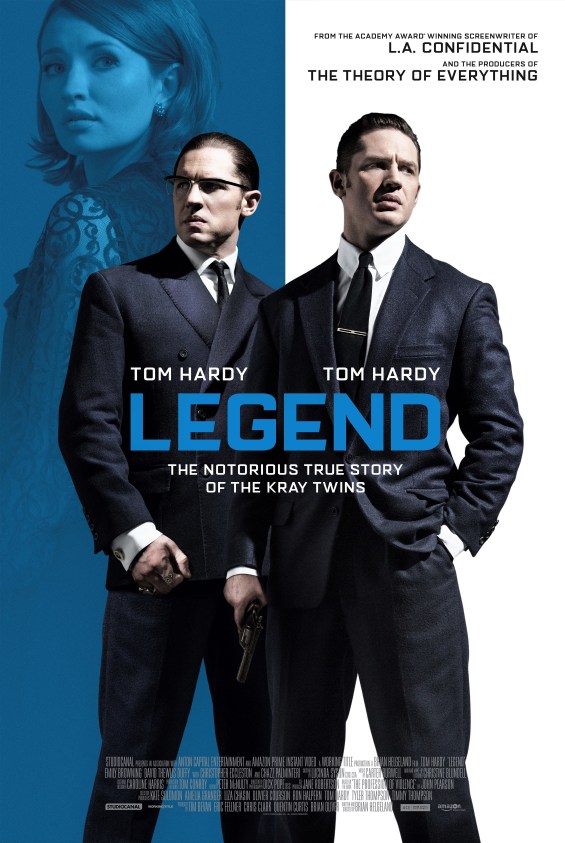
Legend (2015) – Film Review

“Me and My Brother, We’re Gonna Rule London!” – Ronald ‘Ronnie’ Kray

Recognised as some of the most notorious gangsters in British history, Ronald ‘Ronnie’ Kray and Reginald ‘Reggie’ Kray were identical twin brothers and the foremost perpetrators of organised crime in the East End of London during the 1960s. With the help of their gang, known as the Firm, the Krays were involved in numerous murders, armed robberies, protection rackets, arsons and assaults. And, in 1965, as West End nightclub owners, the Krays even mingled with politicians and prominent entertainers, subsequently becoming ’60s icons themselves before both brothers were ultimately arrested and sentenced to life imprisonment in 1967. Therefore, even if the twin crimelords were convicted murderers, their rise to power was ripe for a cinematic interpretation, and 2015’s Legend more than succeeds in converting the brothers’ riotous downfall into an enthralling biopic, thanks largely to Tom Hardy’s mesmerising dual performance.

Plot Summary: Identical twins, Ronald ‘Ronnie’ Kray and Reginald ‘Reggie’ Kray, have risen through the ranks of the criminal underworld in 1960s London, with Ronnie advancing the family business through violence and intimidation, while Reggie struggles to go legitimate with his girlfriend, Frances Shea. But, with Detective Superintendent Leonard Read hot on their heels, Ronnie’s unpredictable tendencies along with the slow disintegration of Reggie’s relationship, threaten to bring the brothers’ criminal empire tumbling to the ground…

Written and directed by Brian Helgeland (PaybackA Knight’s TaleMan on Fire), Legend is partially an adaptation of the true-crime book; The Profession of Violence: The Rise and Fall of the Krays Twins by John Pearson. I say ‘partly’ as the film (unlike the book) begins well into the Kray’s criminal career, steering clear of the twins’ East End childhood, their early days as boxers or their time spent behind bars during National Service. Even the pair’s beloved mother, Violet Lee Kray, is barely glimpsed outside of one or two scenes, seemingly unaware of her boys’ violent actions. And whilst this could be seen as a positive, as Legend doesn’t waste any of its runtime on frivolous flashbacks to the twins’ adolescence, it could also be seen as a negative, as I feel that witnessing the Kray’s childhood would’ve provided a clear view of their personalities before their rampant path of butchery began.

Taking on dual roles for the film, Tom Hardy had thirty-five filming days in which he had to portray both brothers, meaning Hardy would have to film scenes as the twin who had the most dialogue first, then return to hair and make-up to be transformed into the opposing twin. Originally, Hardy was only offered the role of Reggie, but Brian Helgeland was persuaded to let Hardy tackle the role of Ronnie, as well. I’d say this was for the best, as Tom Hardy taking on both roles not only adheres to the idea of the Krays being identical twins, but truly allows him to display his full acting range, continually upstaging himself as he switches from brother to brother on a dime. The rest of the cast, including Emily Browning, Taron Egerton, Paul Anderson, David Thewlis and Christopher Eccleston, is also marvellous in their supporting roles, whether they are in pursuit or service of the Krays.

Exceedingly lavish in its presentation, Legend often possesses the tone of an American gangster epic like Goodfellas and Casino, despite being so distinctly British, contrasting its bloodletting and depravity with elegant shots from cinematographer Dick Pope, in addition to plenty of wonderful set-dressing as the film was shot almost entirely on location, with very few sets used. The camerawork also allows for a few long takes, with Reggie and Frances’ first evening out together being one continuous five-minute and forty-second shot.

When it comes to the original score by Carter Burwell, tracks such as LegendElegy for Frances and Your Race is Run, serve their purpose effectively as part of the narrative. The main focus of Legend‘s soundtrack, however, is the film’s long list of recognisable songs, which further help cement the story within the 1960s time period. And whoever compiled this soundtrack clearly has a great deal of expertise in that area, not only in selecting songs that one would hope to hear from a film set in the swinging sixties like Green Onions and Cissy Strut, but also in selecting long-forgotten gems.

From costumes to vehicles to props, the production design throughout Legend is again nothing short of exceptional. To the extent that even Ronnie and Reggie’s tailored suits are almost indistinguishable from the suits the twins wore in real life. Additionally, the utilisation of digital compositing and body doubles for whenever two versions of Tom Hardy are required on-screen at one time rarely has a faulty moment, auspiciously tricking the audience at multiple points.

In summary, while most will agree that any glorification of real-world criminals is questionable, with Legend often having a mythologist and, at times, even romanticised approach to its low-life protagonists, the film is a well-crafted biopic, nonetheless. Through its retro style, brilliant production design and copious comedic moments, Legend is a solid crime-drama even in spite of its occasionally overblown scenes or on-the-nose song choices, such as Chapel of Love for Reggie and Frances’ wedding. But, the main reason to watch Legend is unquestionably the spectacular dual performance from Tom Hardy, who confidently steals every scene he appears in. Rating: 7/10.

legend-p1006732

Hellraiser (1987) – Film Review

“Oh, No Tears, Please. It’s a Waste of Good Suffering!” – Pinhead

Written, directed and based on the novella; The Hellbound Heart by Clive Barker (NightbreedLord of Illusions), 1987’s Hellraiser is truly a fiendishly unique vision. Offering a discomfiting and sadistically smart alternative to mindless gore, this classic horror rarely has a tiresome moment, utilising its outstanding practical effects and an onslaught of intriguing ideas to great effect, to the point where the film sequentially became a victim of its own success, becoming so influential that it not only spawned a decades’ worth of poor imitations, but even its own series of continuously disappointing sequels. Nevertheless, it can’t be denied that the original Hellraiser is an unforgettable excursion into a netherworld of monsters, murder and disloyalty.

Plot Summary: When Kirsty’s father, Larry, and stepmother, Julia, move into Larry’s childhood home, Julia discovers the newly resurrected, partially-formed body of her brother-in-law, Frank, a sexual deviant who lost his physical form after solving a supernatural puzzle box which summons a group of multi-dimensional demon sadists known as the Cenobites. Now, to reclaim his body, Frank convinces Julia, his one-time lover, to lure unsuspecting men back to the house so he can use their blood to revitalise himself and escape the clutches of the demonic beings pursuing him…

One of the central concepts of the Hellraiser franchise; a seemingly innocuous puzzle box that is, in reality, a gateway to Hell, has its basis in the urban legend of The Devil’s Toy Box, which concerns a six-sided cube constructed of inward-facing mirrors. According to the legend, individuals who enter the structure will undergo disturbing phenomena that will simultaneously grant them a revelatory experience while permanently warping their minds. This story has heavy ties to the idea of insanity, which is certainly prevalent throughout Hellraiser, as the film, similar to the rest of Clive Barker’s work, is very surreal in nature. However, unlike the rest of Barker’s work, the budget for Hellraiser was astonishingly low at around £730,000. Whilst this was most likely due to Barker’s lack of filmmaking experience (only having directed two short films at the time), Hellraiser quickly earned over £14 million, immediately cementing Barker as a promising writer and director in addition to establishing Hellraiser as a series we’d still see years down the line.

The superb cast of Andrew Robinson, Clare Higgins, Sean Chapman and Ashley Laurence all effectively serve their purpose within the narrative, as Hellraiser admirably values its characters more than many other horror films, developing each of the family members, so they feel both genuine and distinct from one another, ensuring the pivotal plot threads of adultery and Julia’s subsequent guilt remain riveting. Then, of course, there is Doug Bradley as the film’s icon, Pinhead, who, despite being kept in the background for a majority of the runtime, gives a solid performance, especially considering Pinhead, like the rest of the Cenobites, has very limited dialogue and screen-time.

Speaking of iconography, while Hellraiser no doubt has its fair share of recognisable shots, much of this iconic imagery isn’t due to the cinematography by Robin Vidgeon, but more so because of the film’s masterful creature, costume and prop design. As the camerawork itself, although dynamic, often just falls back on conventional close-ups and mid-shots, with the occasional zoom or tilt thrown in to further magnify the effects on-screen.

For the original score, Clive Barker originally wanted the experimental electronic music group, Coil, to compose music for the film. But, when that notion was rejected, the film’s editor Tony Randel, suggested composer Christopher Young as a replacement. And truthfully, I feel this was for the better, as Young’s score perfectly lends itself to the dreamlike, otherworldly tone of the film, with the opening theme; Hellraiser, standing as a grand orchestral piece with a dark, fairytale-like undertone, whilst tracks like Resurrection and The Lament Configuration have an unnerving, almost gothic quality to them.

Yet, it’s undoubtedly the artful designs of Hellraiser that make the film so unique, with the grotesque and somewhat fetishistic designs of Pinhead and the other Cenobites being particularly striking as Barker drew inspiration for their diverse looks from punk fashion, catholicism and visits he took to S&M clubs in New York and Amsterdam. Interestingly, in spite of the character’s reputation, in the novella, Pinhead is present but is not the lead Cenobite. The Female Cenobite, the Chatterer and the Engineer, all have more prominent roles, but as a result of the visually impressive yet extremely restrictive prosthetic make-up for the respective characters, Pinhead took point on account of Doug Bradley’s prosthetics allowing for the most facial movement, promptly resulting in Pinhead becoming the face of the horror franchise.

In summary, Hellraiser is truly one of the most gruesome, captivating and indelible horror films of the 1980s, even though it’ll no longer leave audiences chilled to the bone, just as it did way back when. Despite rarely receiving the attention it deserves, Hellraiser is not only an exceptionally eerie slice of ’80s pop culture, but an important entry in the history of cinema, as not only did the film force ostentatious critics to accept that the horror genre could have artistic weight, but it also pushed the boundaries of practical effects, with many of its costumes, animatronics and prosthetic make-up effects even outshining today’s CG efforts. Rating: 8/10.

hellraiser_xxlg

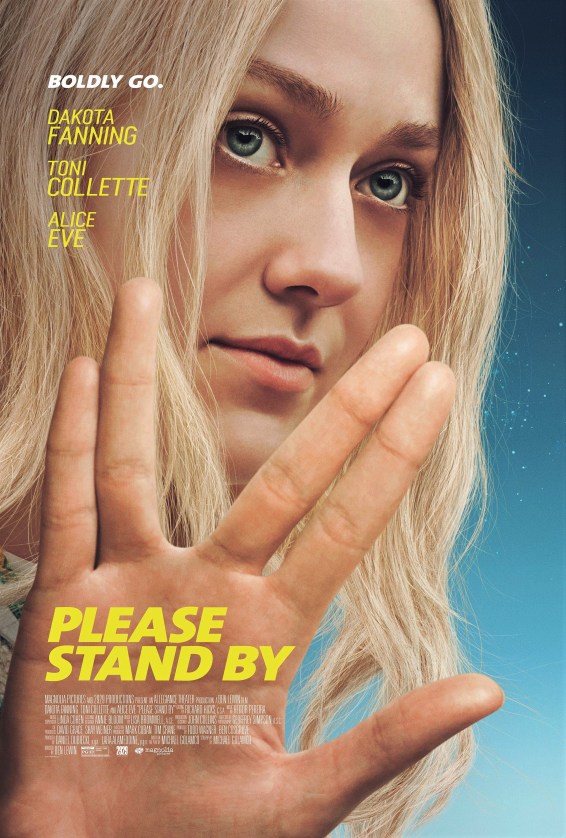
Please Stand By (2017) – Film Review

While in years gone by many films surrounding the subject of autism have been seen as overly simplistic or even offensive, with Hollywood often treating characters with ASD like an immeasurable burden upon their entire family, every now and then we receive a film, which presents its autistic character (or characters) with respect and authenticity, 2017’s ‘Please Stand By,’ being one such example. Directed by Ben Lewin (Georgia, The Sessions, Falling for Figaro) and based on the 2008 play of the same name by Michael Golamco, ‘Please Stand By’ may hit many familiar beats for a coming-of-age comedy-drama, but with an excellent cast and a subtle sci-fi twist, thanks to its focus around all things ‘Star Trek,’ ‘Please Stand By’ manages to keep its story diverting throughout its brief runtime.

Plot Summary: When ‘Wendy Welcott,’ a young autistic woman with a gift for writing, learns that Paramount Pictures is holding a screenwriting competition to celebrate ‘Star Trek’s 50th anniversary, she swiftly writes her own screenplay for submission. But, on account of her condition and a great deal of ignorance from those around her, ‘Wendy’ is unable to submit her screenplay in time. So, seeing no other option, ‘Wendy’ decides to leave her group home in Oakland and travel to Los Angeles to deliver her screenplay in person…

Although the film’s screenplay (which is actually written by Michael Golamco) rarely breaks the mould of your typical coming-of-age narrative, ‘Please Stand By’ still has more than its fair share of heartwarming moments. And, whilst some may argue that the film’s continuously upbeat tone robs the story of any real stakes, ‘Please Stand By’ isn’t really a film that aims to paint an incredibly dramatic tale of self-realisation, family and belonging, but instead a film that effectively balances all of those themes through a charming and light-hearted story of a woman embarking on a journey across California in dedication of her favourite science fiction franchise.

In what would’ve been the film’s most criticised performance should it have been executed poorly, Dakota Fanning’s performance as ‘Wendy’ is one of the more thoughtful and accurate portrayals of on-screen autism in quite some time. From her social awkwardness to her flailing arm movements and stiff dialogue readings, Fanning successfully captures the functional spectrum of autism in a delightful and intriguing expression of independence and passion, as due to ‘Wendy’ having few experiences outside of her sheltered routine, the road-trip she embarks upon makes her feel truly unconstrained for the first time in her entire life, both for better and for worse. Meanwhile, her caregiver and older sister wonderfully portrayed by Toni Collette and Alice Eve, respectively, attempt to track her down and bring her home, fearing for her safety and greatly doubting her abilities.

When it comes to visuals, despite the ceaselessly vibrant colour palette, the cinematography by Geoffrey Simpson hardly ever veers away from immobile close-ups and/or mid-shots. But, where the camerawork truly shines is during the scenes where the film attempts to recreate shots from classic ‘Star Trek’ episodes, as the Mediterranean climate of Los Angeles is quickly swapped out for the strange alien worlds of ‘Wendy’s imagination, all the while we hear ‘Wendy’ as she reads excerpts from her ‘Star Trek’ screenplay through calming voice-over.

In a similar sense to the visuals, the original score by Heitor Pereira rarely does anything exceedingly innovative as far as soundtracks go, with the majority of the runtime relying more on the use of lesser-known indie songs, such as ‘Take Me as I Am,’ ‘All or Nothing’ and ‘Waves.’ Yet, the score once again becomes much more interesting once we are transported into ‘Wendy’s screenplay, as the original score morphs into something that wouldn’t seem out-of-place in an actual ‘Star Trek’ episode.

Along with recreating shots, ‘Please Stand By’ also pays homage to ‘Star Trek’ history in nearly every aspect of its production. Firstly, the name tags of ‘Wendy’s work colleagues use the same font as the opening titles of ‘Star Trek: The Original Series.’ Secondly, the mountain ranges seen in the background of the screenplay sequence are the Vasquez Rocks located in Agua Dulce, California, this area has been an extensively used location for many ‘Star Trek’ films and series, but, most notably, for the 1966 episode; ‘Arena.’ Lastly, the suits worn by ‘Captain Kirk’ and ‘Spock’ during this same sequence are similar to suits worn by the characters in the 1968 episode; ‘The Tholian Web,’ visibly proving that the filmmakers did their research when it came to the franchise and its ardent followers.

In summary, whilst Golamco’s admittedly predictable screenplay does place the film more in the mid-range of coming-of-age comedy-dramas, by letting the talented actors simply do what they do best, director Ben Lewin does make ‘Please Stand By’ palatable, even in its most commonplace moments. And, although I obviously can’t speak for everyone in regard to how well the film truly portrays autism, given my position, in my eyes, this low-budget flick handles the potentially challenging concept adroitly, displaying the challenges of a life with ASD without ever devolving into a exaggerated collection of tics and quirks, insulting those who may be on the spectrum. Final Rating: 7/10.

please_stand_by_xxlg

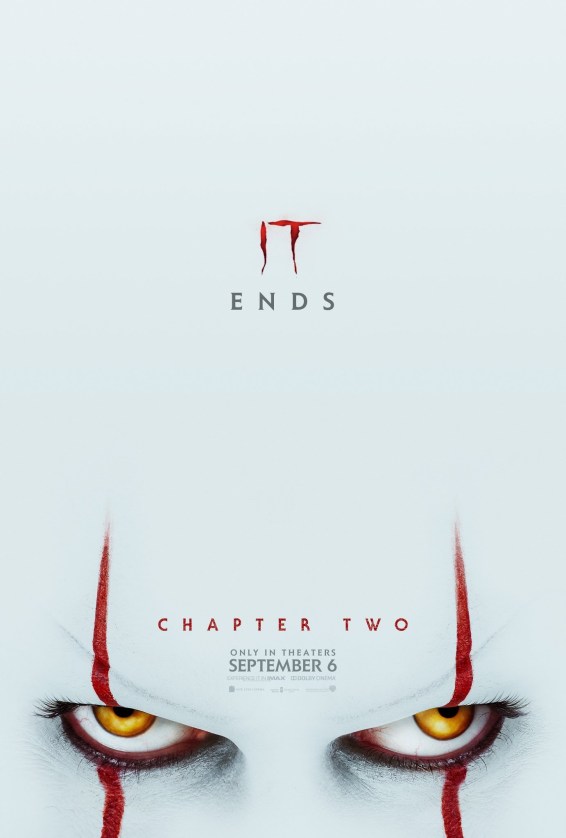
It: Chapter Two (2019) – Film Review

Once again directed by Andy Muschietti, and once again based on the iconic novel by Stephen King (only this time, the adult portions of the story). ‘It: Chapter Two’ is, unfortunately, somewhat of a downgrade from chapter one, as in spite of its excellent cast and continuously impressive visuals, ‘It: Chapter Two’ proves that bigger doesn’t always mean better when it comes to sequels, as the film’s overreliance on giant CG monsters along with its inconsistent tone and unreasonably long runtime of two hours and fifty minutes demonstrate how this spine-chilling follow-up frequently overindulges in its source material.

Plot Summary: After being defeated by ‘The Losers Club’ many years ago, the demonic clown, ‘Pennywise,’ returns twenty-seven years later to terrorise the town of ‘Derry’ once again. And, with the childhood friends who have long since gone their separate ways, ‘Mike Hanlon,’ the only member of the group to remain in ‘Derry,’ calls his friends home for one final stand…

Jumping from character to character, location to location, many of ‘It: Chapter Two’s biggest faults appear within its screenplay, as rather than focusing on a straightforward narrative like the original film, this time around the film revolves most of its plot around a bootless errand of a story where ‘The Losers’ search all over ‘Derry’ to acquire various artefacts from their youth to perform ‘The Ritual of Chud,’ which will supposedly destroy ‘Pennywise.’ The problem is that much of this setup is, ultimately, meaningless, as almost every character receives their own segment in which they simply recall moments from their childhood, which often just recap scenes from the first film or leave the audience bloated as a result of the huge amount of exposition they have to digest.

Yet, it has to be said that James McAvoy, Jessica Chastain, Bill Hader, Isaiah Mustafa, Jay Ryan, James Ranson and Andy Bean all portray the older versions of their characters remarkably, as despite the characters now being much older, each actor/actress recreates the younger actors’ body moments and manner of speaking flawlessly. ‘It: Chapter Two’ also never forgets to reinforce the characters’ trauma, as even though ‘Bill’ is a successful writer and ‘Ben’ has remodelled himself into a muscular architect, etc. Each member of the group is still haunted by their past, or at least, what they can remember from it. Of course, Bill Skarsgård also returns as ‘Pennywise.’ While his performance does occasionally venture into goofy territory due to how over-the-top he becomes, Skarsgård is still endlessly entertaining as the malevolent clown.

This time around, the cinematography is handled by Checco Varese. Still, you’d be forgiven for not knowing that ‘It: Chapter Two’ had a different cinematographer, as the film is just as visually pleasing as its predecessor, with some elegantly orchestrated transitions between the characters’ incarnations thrown in for good measure. The huge increase in the budget also comes across through the film’s visuals, as ‘It: Chapter Two’ feels much grander in scale and presentation alike. However, where the sequel stumbles is with its scares, as instead of utilising ‘Pennywise’s mimicking ability to transform into every character’s greatest fear, the film lazily depends on towering CG creatures, which usually have little relation to the characters or the story at large, and although a number of the monsters are interesting design-wise, it doesn’t stop them from feeling out of place.

Benjamin Wallfisch’s original score effectively continues on from that of the first film, as tracks, such as ‘Losers Reunited,’ ‘Nothing Lasts Forever,’ and ‘Stan’s Letter,’ are calming and beautiful, whereas tracks, like ‘Hall of Mirrors’ and ‘Very Scary,’ are loud and intense to add to the film’s horror. The main issue with the soundtrack is in its lack of distinction from the first film’s score, and while I understand ‘It: Chapter Two’ is essentially just the second part of a larger story, the original score does little to set itself apart, with some tracks sounding near-identical to others.

Even though ‘It: Chapter Two’ is trying to accomplish a great deal within its lengthy runtime, spending a large portion of its story in flashbacks and dream sequences as it attempts to adapt everything not already covered in the first film. The sequel is saddled with an even bigger obstacle; constructing a suitable climax for the story, as although its well-known by this point that Stephen King often has difficulty writing satisfying endings for his novels (a criticism that the film repeatedly mocks), ‘It: Chapter Two’ is faced with this exact task, and even if the story doesn’t completely collapse under the weight of its disappointing finale, its admittedly still lacklustre, especially when the final act veers into metaphysical surrealism.

In summary, ‘It: Chapter Two’ is unquestionably an ambitious horror sequel, with a renowned cast, spectacular set pieces and numerous exciting moments; the film truly goes all out. But, does it work? Well, not entirely, but it’s a diverting horror blockbuster, nonetheless. And, whilst I feel that by splitting the story of ‘It’ into two films, Muschietti has done a gratifying job of commanding the massive blimp that is King’s extensive novel, most of the issues with ‘It: Chapter Two’ boil down to its story and structure, which end up leaving the film a mere pleasurable romp rather than the ghoulish denouement it could have been. Final Rating: 6/10.

it_chapter_two_ver3_xxlg

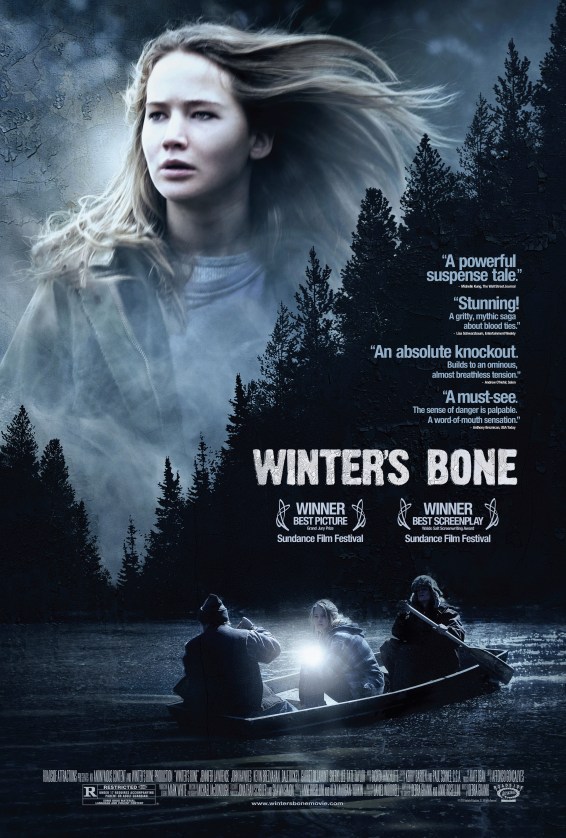
Winter’s Bone (2010) – Film Review

Based on the novel of the same name by Daniel Woodrell, ‘Winter’s Bone’ is a bleak, haunting and yet still somehow hopeful story set in rural America, acting as both a captivating drama and a suspenseful crime-thriller. The film is an intense and uncompromising look at the Missouri underclass through the eyes of a diligent teenager, blending its star-making performance from Jennifer Lawrence with skilfully shot sequences and incredible set-dressing to create a stunning and authentic portrait of Missouri life, all under the capable hand of writer and director Debra Granik (Down to the Bone, Leave No Trace).

Plot Summary: With an absent father and a mute, mentally ill mother, seventeen-year-old; ‘Ree Dolly,’ acts as the primary guardian for her household, caring for her younger siblings with minimal funds. But, when the local Sheriff appears at her door, informing her that their house has been put up as collateral bail by her missing father, ‘Ree’ is forced to use what little knowledge she has of her father’s nefarious activities to find him before it’s too late, soon discovering that many locals don’t appreciate her poking her nose into their business…

Despite her many previous successes, Debra Granik still had a great deal of difficulty finding funding for ‘Winter’s Bone,’ as after the screenplay had been written, Granik and her co-writer Anne Rosellini budgeted the film at around £3 million, but every potential group of financiers they approached all said the same thing; “Cast the Film, and Then We’ll Talk.” Thus, casting directors Paul Schnee and Kerry Barden began approaching various actresses and eventually settled on the then unknown eighteen-year-old actress, Jennifer Lawrence, as although she had never carried a film before, only having taken small roles in the past, both Schnee and Barden felt Lawrence had the perfect tomboyish demeanour for the character, in addition to having strong roots in Kentucky.

Winning an Oscar for her performance in 2011, ‘Winter’s Bone’ greatly benefits from ‘Ree Dolly’ as a character and Jennifer Lawrence’s portrayal of her. This is mostly due to ‘Ree’ being such a rare female protagonist for a film such as this, as with her errant father’s only bankable skill being his ability to cook methamphetamine, ‘Ree’ is left to care for her family, teaching her younger siblings survival skills to prepare them for when they are older (for which Jennifer Lawrence had to learn how to correctly skin squirrels and chop wood). And, after she is informed of the limited time she and her family still have within their house, ‘Ree’ becomes relentlessly determined to save her home, occasionally even risking her life all in pursuit of caring for her loved ones and ensuring her siblings have a future.

Michael McDonough’s stark cinematography captures the essence of what life in the brutal and sparsely populated Ozark, Missouri (a.k.a. the Ozark Mountains) is like, as the camerawork allows for many delectable shots, from the camera peeking around corners to lurking over character’s shoulders, the cinematography constantly lends itself to the film’s frostbitten colour palette and beautiful bitterness of the story’s setting, which is all enhanced by the entire film being shot on-location.

Furthermore, the original score by Dickon Hinchliffe utilises instruments common to the Ozark region, making use of violins, guitars, mandolins and banjos, in a way that is unique to the film. For example, the way banjos are used throughout the soundtrack, particularly in the tracks; ‘I’ll Find Him,’ ‘Hardscrabble Elegy,’ ‘Down the Road’ and ‘The Trees,’ deviates from the instrument’s stereotypical image of being associated with hillbillies and rednecks. One of the film’s final tracks; ‘The Lake,’ is also worth a quick mention, purely for how unnerving and incredibly atmospheric it is.

For authenticity purposes, most of the supporting cast of ‘Winter’s Bone’ weren’t actual actors/actresses, but locals from the surrounding area. ‘Ree’s sister for instance, was one of these actresses, and the exterior of her home we see in the film is actually her house in real life. Sticking to this idea of authenticity, nearly all of clothes that the characters wear are clothes provided by the locals, as the production crew gave locals brand new clothes in exchange for their old, frayed items. If I had to guess, I’d also assume many of the houses we set foot within belonged to these same locals, as every room we enter appears genuine, with no area ever seeming as if it was set-dressed with thought as to how many items are in one space at one time.

Im summary, ‘Winter’s Bone’ is spectacular in its efforts as a drama and a crime-thriller alike, as it’s intelligent, well-written and entirely non-patronising story is as tense and as entertaining as these respective genres come. And, whilst many Oscar-winning films can often be disappointing beyond whatever aspect is their main talking point, ‘Winter’s Bone’ is also beautifully shot and well-paced, with Jennifer Lawrence’s career-defining performance simply being the icing on top of the cake. So, even if the first act of ‘Winter’s Bone’ is slightly slow and repetitive, after that initial hump, the film thrives as a rewarding and richly detailed exploration of the strength required when being confronted with unpleasant truths. Final Rating: low 8/10.

WINTERS BONE 1SHT.indd

The Ritual (2017) – Film Review

Based on the bestselling novel of the same name by Adam Nevill, 2017’s ‘The Ritual’ is possibly one of my favourite horrors from Netflix’s extensive list of original films, as although its story revolves around a scenario that many horror enthusiasts will likely be familiar with, ‘The Ritual’ effectively uses its sound design and adept visual obfuscation to create an immensely unsettling atmosphere. All the while, developing its characters and exploring themes of grief and manhood in equal measure, turning what could’ve been a wearisome adaptation into an efficient and discomfiting low-budget British horror.

Plot Summary: Haunted by the death of his best friend who was killed during a liquor store robbery six months prior, ‘Luke’ and a group of his former university housemates reunite to mark his passing, hiking across the Scandinavian mountains as a tribute to their lamented friend. But, when one of them sprains their ankle, the group are forced to take a shortcut through a nearby forest in order to arrive at their lodge before nightfall, a forest which unbenounced to them, is actually the domain of an ancient evil…

Directed by David Bruckner (The Signal, Southbound – Segment: The Accident, The Night House) and executively produced by well-known motion capture performer, Andy Serkis, ‘The Ritual’ takes a large amount of inspiration for its story from classic 1970s horror films in addition to the obvious influences forest-set horrors, like ‘The Blair Witch Project’ and ‘Deliverance.’ Yet, ‘The Ritual’ helps itself stand out amongst these other ‘lost in the woods’ films predominantly due to its implementation of Norse mythology, as the film continuously integrates many of the darker, more disturbing elements of Norse folklore into its plot, linking back to the film’s Scandinavian setting.

In a refreshing turn for a modern horror, the four central characters of ‘The Ritual’ frequently act as if they have actually seen a horror film before, but the film doesn’t use this self-awareness to simply indulge in cheeky one-liners and pop culture references. Instead, the characters use this perspective to make insightful decisions, almost immediately realising there is something trailing them. The group of friends, led by Rafe Spall as ‘Luke,’ are all in fine form when it comes to their performances, even if the other three members of the group, portrayed by Robert James-Collier, Sam Troughton and Arsher Ali, all receive less characterisation when compared to ‘Luke,’ which in a way also makes sense, as ‘Luke’ is the cause of the lingering tension among the quartet, with group seemingly believing if ‘Luke’ would’ve intervened as opposed to being frozen in fear, their friend would still be alive. And, this resentment comes boiling to the surface over time, giving Spall the perfect opportunity to convey a real sense of frustration and guilt as the group begins to splinter.

The film’s forest setting is utilised incredibly well throughout the film, as the cinematography by Andrew Shulkind treats the vast wilderness as a formidable presence, crafting a sense of pervasive doom with each step the characters take. From extreme wide shots to uncomfortable P.O.V.s, the camerawork remains both inventive and visually appealing until the end of the runtime, almost luring the audience in with its breathtaking locations before putting them on edge through the abnormal emptiness. Additionally, more observant viewers may be able to spot many minor details hidden within the background of certain shots, some being far more frightening than others.

The original score by Ben Lovett expertly and artfully taps into the film’s arboreal vibe of Norse mythology, as aside from a handful of tracks which more on synthwave to add to the story’s various dream sequences, most of the soundtrack makes marvellous use of strings, horns and a small choir, giving the film an old-world feel in the same spirit of modern horrors, like ‘The Witch.’ With tracks such as ‘Four Tents,’ ‘The Ritual,’ ‘Through the Trees’ and ‘Fear God,’ all reflecting the horror elements of the story as well as the fractured relationship between the characters.

As mentioned previously, ‘The Ritual’ heavily leans into many of the dourer aspects of Norse folklore when it comes to its story, as the film explores ritual sacrifices and everlasting life, following the reveal of the film’s antagonist, who is a towering elk-like creature known as ‘Jōtunn,’ one of the children of ‘Loki,’ the God of mischief and mayhem. And, whilst ‘Loki’ is famously known to have fathered a multitude of strange beings, including a giant wolf, named; ‘Fenrir’ and the colossal sea serpent; ‘Jörmungandr,’ ‘Jōtunn’ is an ideal pick for the film. Being brought to life through some above-average CG effects and an exceptional design by renowned concept artist Keith Thompson, ‘Jōtunn’ is a fascinating and distinctive creature, even having many of its attributes further relate back to other stories within Norse mythology.

In summary, ‘The Ritual’ is a solid entry into the horror genre for more reasons than one, as despite its story not being anything revolutionary and occasionally falling back into skilfully delivered horror tropes. ‘The Ritual’ still manages to construct a mature and slow-burning narrative, only elevated by its fantastic filmmaking, mythological influences and strong direction from David Bruckner, playing upon the Scandinavian tales of old to deliver something truly alluring. Final Rating: low 8/10.

the_ritual-p1100318

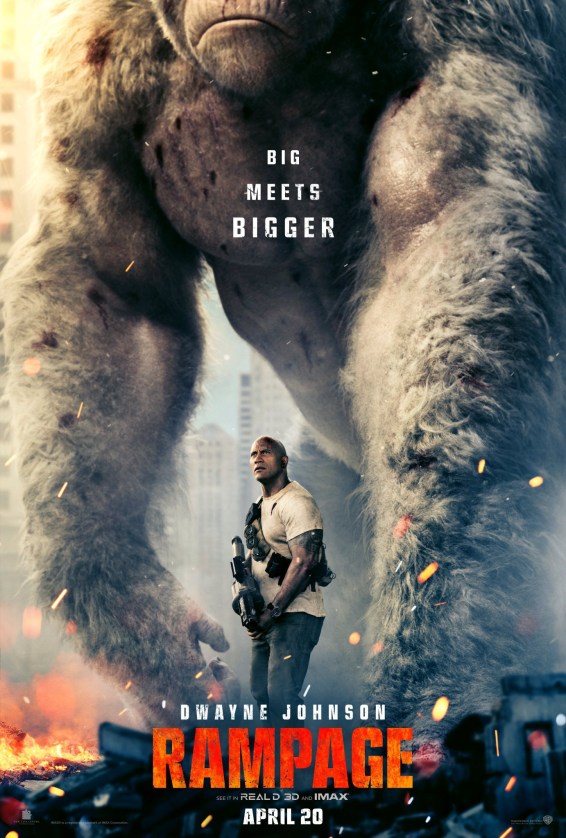
Rampage (2018) – Film Review

There has been a debate amongst film buffs for many years now regarding whether it’s possible to make a great film based on a video game, and whilst I’ve always strongly believed it is, I feel the reason we haven’t received a great film as of yet is that many of the video games chosen for adaptations were simply not the right choices, nor did the films have talented writers or directors behind them. ‘Rampage,’ released in 2018, is the perfect example of this, as this moronic blockbuster is actually based on the arcade classic of the same name, a video game which contained no characters and little-to-no story, and the film faces all of the repercussions as a result.

Plot Summary: Sharing a special bond with ‘George,’ an extraordinarily intelligent albino gorilla, ‘Davis Okoye,’ a retired U.S. Army soldier and now a San Diego Wildlife Preserve primatologist, sees his world turned upside-down when his primate companion is accidentally exposed to a gene-mutating pathogen. Morphing ‘George’ along with an unsuspecting wolf and crocodile into ravenous monsters as they grow to gargantuan proportions, thrusting ‘Davis’ and ‘Dr. Kate Caldwell’ into a race against time as they struggle to find an antidote….

Even when ignoring its video game origins, ‘Rampage’ is merely a predictable and at times fairly dull creature-feature, as director Brad Peyton (Cats and Dogs: The Revenge of Kitty Galore, Incarnate, San Andreas) never attempts to do anything to set the film apart from other action blockbusters. For instance, in the original 1986 arcade game, players controlled one of three giant monsters, playing as either; a wolf, a lizard or a gorilla, as they are tasked with destroying cities before the military can shoot them down and transform them back into the humans they once were. This aspect of the creatures being mutated humans could have added a more emotional viewpoint to the film not present in many other action flicks, as the characters deal with the morality of their actions, yet the film just abandons this idea in exchange for oblivious animals simply having their growth and aggression altered, which is a far less engrossing concept.

Reteaming with Peyton after the pair worked together on 2015’s ‘San Andreas,’ Dwayne ‘The Rock’ Johnson flashes the same effortless, self-deprecating appeal that’s always been the hallmark of his work. And, although I’m personally rather weary of the ‘muscular action hero’ stereotype, there’s no denying Johnson has a natural charisma as ‘Davis Okoye’ beyond his constant smouldering. Naomi Woods, however, is nowhere near her best here, as her character; ‘Dr. Caldwell,’ is nothing more than a sassy female scientist with little to offer aside from exposition dumps and an unnecessary romantic subplot with ‘Davis.’ Then there are the film’s antagonists portrayed by Malin Akerman and Jake Lacy, who fully embrace the absurdity of the film they are in, overacting in every scene alongside Jeffrey Dean Morgan, a government agent who saunters around the screen like a modern-day cowboy, speaking in painfully forced good-old-boy idioms.

Aside from one rip-roaring sequence where the trio of monsters rage through the streets of Chicago destroying everything in their path, which is supposed to appear as one singular take. The majority of the film’s cinematography by Jaron Presant is fairly standard for a modern blockbuster, primarily utilising mid-shots for conversations between characters, and wide shots whenever possible to display the huge scale of the creatures, which luckily helps to distract from the film’s innumerable lines of cringey dialogue.

As the creatively named tracks; ‘Gorillas,’ ‘Kate,’ ‘Cornfield,’ ‘Chicago’ and ‘George,’ would imply, the original score by Andrew Lockington is a minimal-level effort from the composer at best, as the predominantly orchestral score is instantly forgettable, but does its job well enough during the film’s few tender moments. Still, with action dominating a large portion of ‘Rampage’s runtime, the score mostly has to rely on aggressive string ostinatos and a collection of simplistic motifs, all of which simply enter one ear and fall out of the other.

While I can appreciate that there was a clear level of effort put into ‘Rampage’s visual effects, with a small crew from Weta Digital even traveling to Chicago to examine the materials and architecture style of each building before creating a virtual model of the Chicago Loop that could be destroyed in the film’s climactic battle. Many of the CG effects throughout ‘Rampage’ range in quality all the same, specifically with the scene; ‘Plane Crash,’ which looks absolutely horrendous during a handful of shots as Johnson and Woods are digitally recreated as they fall out of the sky.

In summary, whilst ‘Rampage’ does feature some entertaining action sequences and the occasional piece of self-aware humour, I mostly just find the film to be an exasperating waste of potential considering the film is a video game adaptation, as when there are so many video games with riveting stories, worlds, and characters, with ‘BioShock,’ ‘Portal,’ ‘Mirror’s Edge,’ ‘Gears of War’ and ‘Red Dead Redemption,’ being just a few considerable options, it’s insulting that production companies continue to adapt games with barely any plot or characters to speak of. And, with so many of them ultimately ending up as your run-of-the-mill summer blockbuster, is it even worth the effort? Final Rating: low 4/10.

rampage_xxlg

The Grey (2012) – Film Review

Directed by Joe Carnahan (Smokin’ Aces, The A-Team, Boss Level) and based on the short story; ‘Ghost Walker’ by Ian Mackenzie Jeffers, 2012’s ‘The Grey’ is a sombre tale of survival populated with fleshed-out characters and some surprisingly compelling themes, as Liam Neeson throws aside his stereotypical action-hero role in exchange for a far more realistic protagonist. Which, in turn, allows the film to fully indulge in its dreary nature and overcome many of its screenplay-related faults to ensure its perilous journey through the Alaskan mountains remains engaging.

Plot Summary: Following a gruelling five-week shift at an Alaskan oil refinery, a team of oil workers, including skilled huntsman; ‘John Ottway,’ are flying home for a much-needed rest. But, when a savage storm causes their plane to crash in the Alaskan wilderness, the group are forced to trek southward toward civilisation, with a pack of ravenous wolves trailing their every step…

Although ‘The Grey’ is very reminiscent of the 1993 survival-thriller; ‘Alive,’ in more ways than one, it’s apparent that Carnahan had something more ambitious in mind than just your conventional story of survival when directing ‘The Grey,’ as the film focuses a large amount of its overly long runtime on extensive dialogue scenes which attempt to develop the film’s characters. And, while all of this talk could’ve been dull if executed poorly, ‘The Grey’ is never tedious to watch, as the film intercuts many of its moments of characterisation with uncomfortably tense sequences of the wolf pack stalking (or killing) members of the group.

Speaking of the characters, the whole cast of Liam Neeson, Frank Grillo, Dermot Mulroney, Dallas Roberts, Joe Anderson, Nonso Anozie and James Badge Dale, all portray men on the brink of defeat extremely well, as the further the story goes on, the more tired and desperate they look, making the viewer feel genuine empathy for every one of them as they remain stuck in their horrific situation with so sign of rescue. However, Liam Neeson especially never fails to impress throughout the film, giving a truly committed performance as he portrays ‘John Ottway,’ a hunter who since the tragic death of his wife suffers from suicidal tendencies and a lack of self-worth, often leading him to become distant from those he still has left.

Masanobu Takayanagi handles the film’s cinematography, which is, in my opinion, the weakest element of the film, as despite ‘The Grey’ featuring a number of attractive shots, I feel this is less to do with the actual camerawork (which is often hand-held) and more to do with the copious number of beautiful locations the story is set within. As, despite my initial belief that ‘The Grey’ was primarily filmed in a temperature-controlled soundstage, according to Liam Neeson, much of the film was shot on-location in Smithers, British Columbia, where temperatures were as low as -40 degrees Celsius. Meaning that all of the snowstorms seen within the film were actual prevailing weather conditions and not visual effects, so whether the characters were next to an snowy cliff or a flowing stream, I couldn’t help but gaze at the natural beauty of each scenic location the film presented. And, just as its title would imply the colour palette of ‘The Grey’ relies heavily on greys, blues and whites, which only add to the film’s bleak tone.

Throughout the film, the original score by Marc Streitenfeld is dramatic, atmospheric and fairly minimal, with the final track; ‘Into the Fray,’ being without a doubt being my personal favourite (and most iconic) track from the film, as the largely orchestral soundtrack sustains long notes accompanied by the twinkle of a keyboard or the occasional brass stinger. All being elevated through the score’s exceptional use of howling wolves, glacial winds and most disturbingly, complete silence. Ultimately, adding up to a chilling yet not exceedingly memorable original score.

An aspect of ‘The Grey’ that I could see some viewers taking issue with may be how the film’s wolves are represented, as while I personally enjoy how the wolves are depicted in ‘The Grey,’ essentially serving as a pack of ruthless, brutal creatures that will stop at nothing to kill our characters, the animals aren’t exactly treated that realistically with the exception from one or two lines from ‘John’ regarding their protective behaviour. Be that as it may, visually the wolves are brought to life through CGI, which could’ve been a disaster considering the film’s moderate-budget, but director Joe Carnahan made the clever decision to obscure the wolves whenever they are on-screen through everything from fog to snow to shadows. So, ‘The Grey’ manages to avoid its CG effects becoming dated as a result of this technique.

In summary, “Grim” is truly the perfect word to describe ‘The Grey,’ as this harrowing and merciless story of survivalism with very little in the way of positivity or hope. Yet for those who can look past its relentlessly depressing outlook, ‘The Grey’ is a captivating story about pushing through melancholy to reach contentment, which is greatly amplified by its strong cast, prepossessing CG effects and visually stunning locations even in spite of its occasionally bland cinematography and frequently chaotic editing whenever the wolves are on-screen. Final Rating: low 7/10.

grey_xxlg

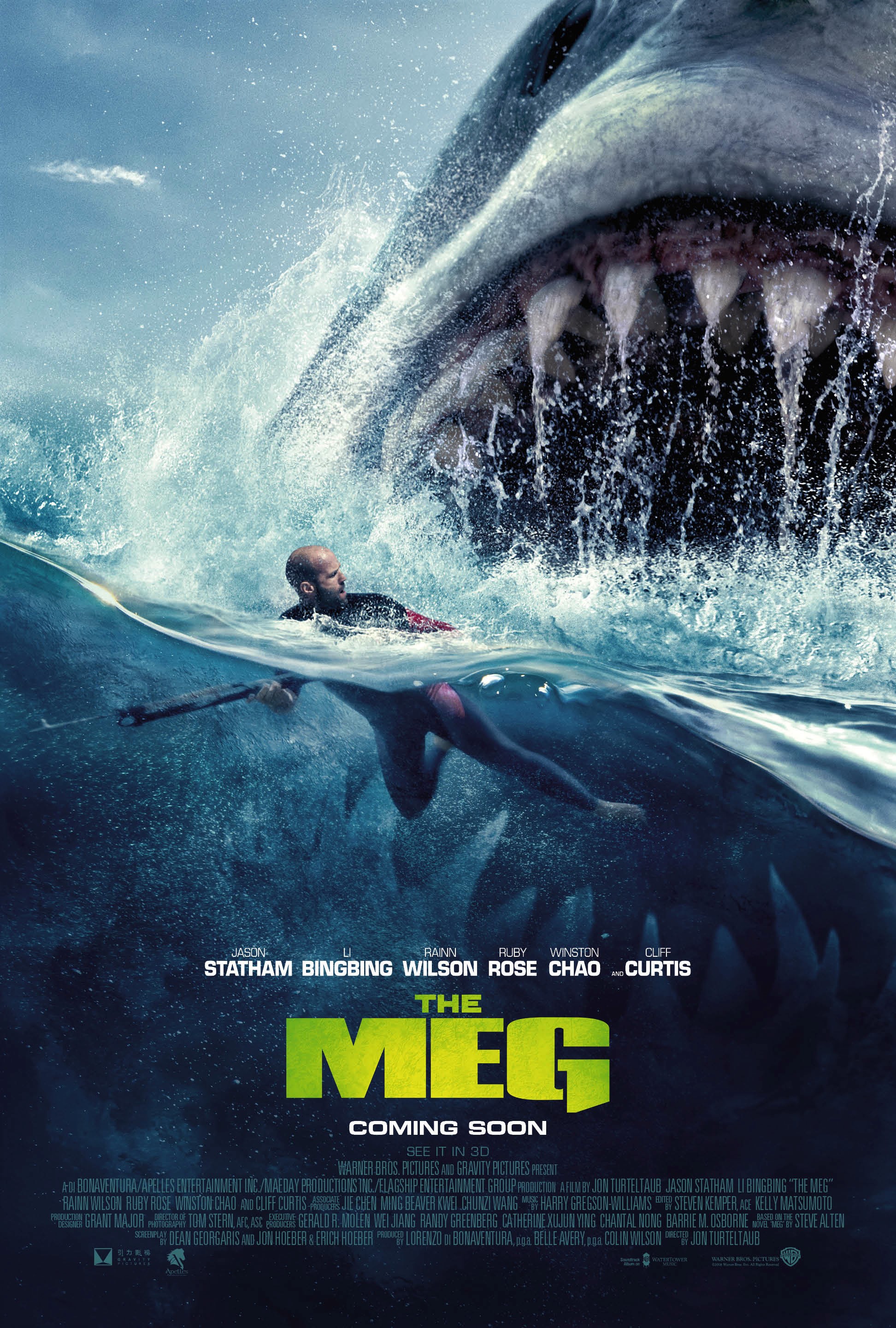
The Meg (2018) – Film Review

Following the endless string of horrendous, ultra-low-budget shark films produced for the Syfy Channel, some notable releases of which being ‘Toxic Shark,’ ‘Ghost Shark,’ ‘Sand Sharks,’ ‘Shark Exorcist,’ ‘6-Headed Shark Attack’ and ‘Mega-Shark vs. Giant Octopus.’ ‘The Meg,’ released in 2018, attempted to be an explosive and humorous action blockbuster inspired by these risible science fiction flicks, yet due to its less-than-mediocre writing, predictable story and often dreadful supporting cast, the film noticeably lacks the thrills or overt cheesiness that make cult sci-fi and horror films so enticing for many.

Plot Summary: Deemed insane for claiming that a failed submarine rescue was doomed due to an enormous creature lurking within the ocean depths, deep-sea rescue diver, ‘Jonas Taylor,’ finds himself heading into the Mariana Trench, five years later, as a team of scientists working for an underwater research facility become trapped inside a crippled submersible after sharing a similar encounter. Soon discovering that the colossal creature corning them is one of the largest marine predators to ever exist… the megalodon.

Even though it’s incredibly rare nowadays to stumble upon a genuinely great shark film, I can appreciate what director Jon Turteltaub (Cool Runnings, While You Were Sleeping, National Treasure) and his crew set out to do with this film, as it’s obvious quite early on that ‘The Meg’ doesn’t take itself that seriously, having numerous jokes and self-aware lines scattered throughout its runtime, a clear departure from the mostly straight-faced novel; ‘MEG: A Novel of Deep Terror’ by Steve Alten, which the film is partly an adaptation of. However, that isn’t to say that the humour within ‘The Meg’ is quality comedy, as a large majority of the film’s comedic lines feel either forced or childish, with any lines that aren’t intended for humour usually being clichéd pieces of dialogue along the lines of “What Have We Done?” and “There’s Something Out There!”

While there is an argument to be made that all you really need for an enjoyable summer action flick is Jason Statham and something for Jason Statham to kill, I feel ‘The Meg’ is another film that further proves this method of casting for blockbusters isn’t always the right call, as whilst Statham’s actual talent for swimming is put to fantastic use in this film, Statham often just plays himself, rarely even making an effort to make ‘Jonas’ an actual character. The film’s supporting cast are, unfortunately, even worse, as whilst Rainn Wilson seems to at least be having fun portraying ‘Jack Morris,’ the smug billionaire funding the underwater research facility, the rest of the cast, e.g. Bingbing Li, Cliff Curtis, Ruby Rose, Page Kennedy and Winston Chao, are all saddled with roles that can barely be described as archetypes.

The film’s cinematography by Tom Stern is creative when it wants to be, occasionally dragging the camera in and out of the water almost as if the camera operator is in the middle of the ocean just beside the characters, which is even more impressive as all of the film’s ocean sequences were filmed within two large water tanks built in Kumeu, New Zealand, with one tank utilising a two-hundred-foot green screen on one side for shots above the ocean’s surface. Yet, where the film falters in terms of visuals is with the meg itself, as although the CGI that brings the gigantic apex-predator to life is more than serviceable, the film’s camerawork rarely displays the creature’s size in full through wide-shots, which is an abysmal waste of potential considering the film’s megalodon is over seventy-five foot-long.

Furthermore, Harry Gregson-Williams’ original score for ‘The Meg’ has its moments, but is often disappointing, as despite the film’s signature track; ‘Mana One,’ being a coruscating way to introduce the underwater research facility. This track is sadly very underused, only making two more appearances from that point onwards, which is frustrating as the rest of the soundtrack, in particular, the tracks; ‘Prehistoric Species,’ ‘Tracker,’ ‘Shark Cage’ and ‘Beach Attack,’ merely sound like tracks taken from any generic action blockbuster score.

When it comes to the film’s titular creature, many of the visual effects artists who worked on ‘The Meg’ did research into how sharks swim, breathe and hunt in real life in an attempt to understand how a creature of that scale could realistically be presented on-screen. Most of these supposed details are generally unavailing, however, as the film constantly plays fast and loose with the laws of deep-water biology similar to most shark films, in addition having nearly all of the meg’s kills be entirely devoid of blood.

In summary, whilst ‘The Meg’s goal of modernising a creature-feature storyline and then transferring it into an exciting summer blockbuster is certainly commendable, I’d rather stick to ‘Deep Blue Sea’ for my fill of a cheesy shark flick, as when ‘The Meg’ is lacking, it’s truly lacking, becoming nothing more than a trite and stereotypical mess that is often too formulaic for its own good. Still, the film’s flaws didn’t stop it from becoming a worldwide success, as ‘The Meg’ grossed over £383 million, meaning its very likely that we’ll be receiving a sequel (with many of the same problems, no doubt) in the near future. Final Rating: 4/10.

meg_ver7_xxlg